




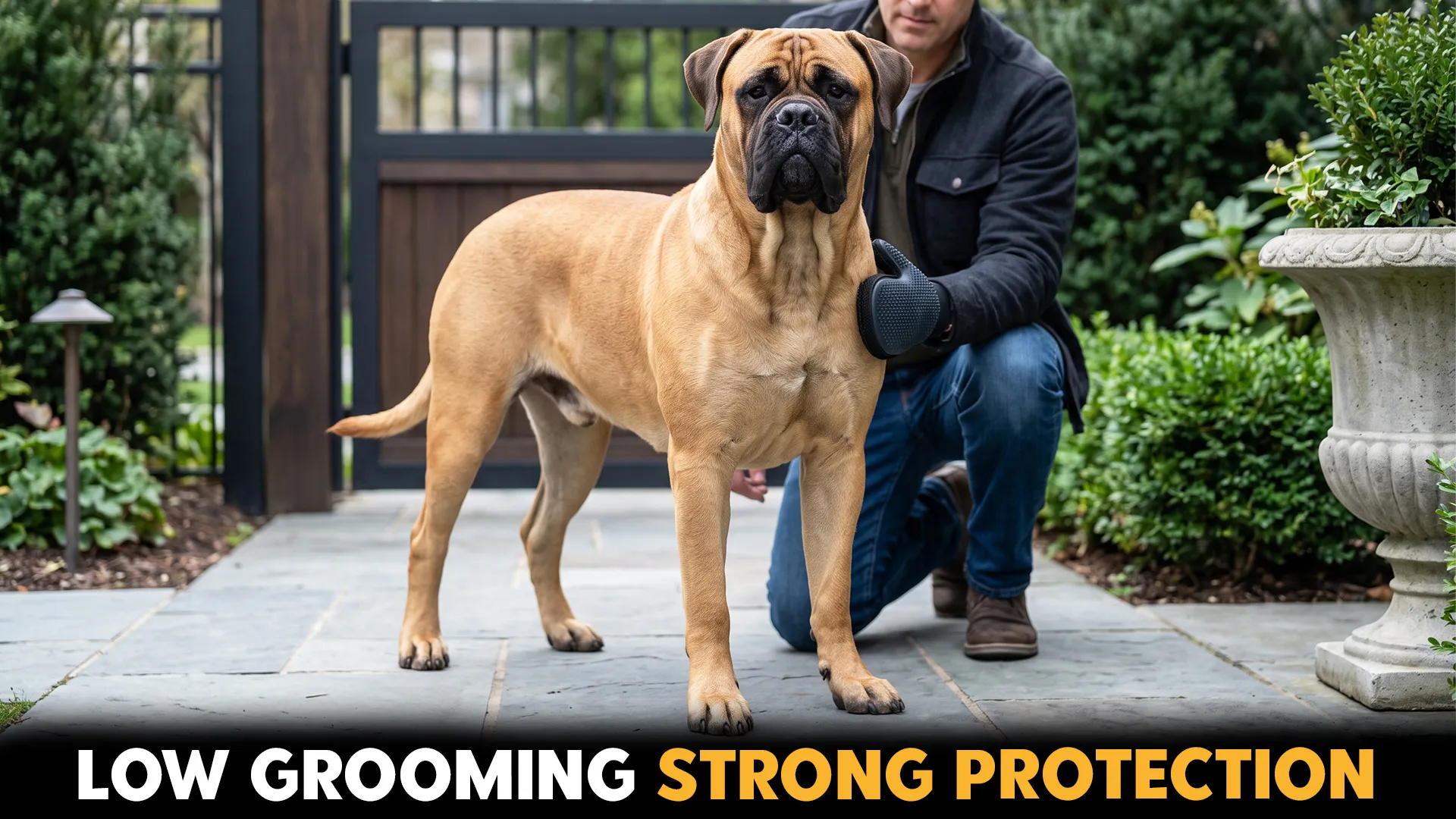
An effective guard dog doesn’t need a coat that takes hours to maintain.
Some of the most impressive guard dogs have short or single coats that only need regular brushing and an occasional bath. Many are big, strong, and territorial, so your experience level and lifestyle matter just as much as the breed.
Fortunately, several protective breeds pair relatively simple coat care with an alert, imposing presence.
If you’re looking for good guard dogs that don’t demand much grooming, here are seven true guard dog breeds. Let’s look at what to consider before adopting one.
Guard Dog Breeds with Low Grooming Needs
1. Mastiff
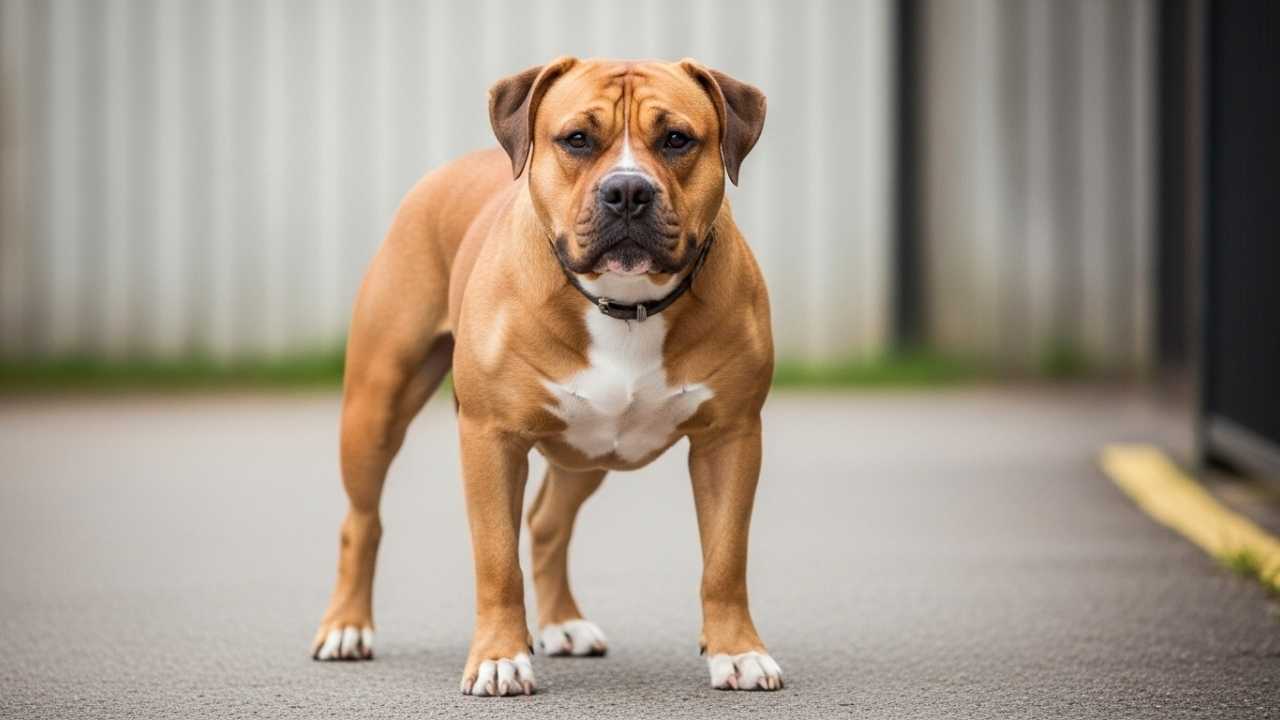
The Mastiff is an extremely intimidating breed. According to PetMD, this ancient protector has a long history of safeguarding people and property.
In general, Mastiffs don’t need complicated coat care, which makes them easier to handle for first-time dog owners. Their short, dense fur needs brushing a few times a week to remove loose hair and keep the coat healthy.
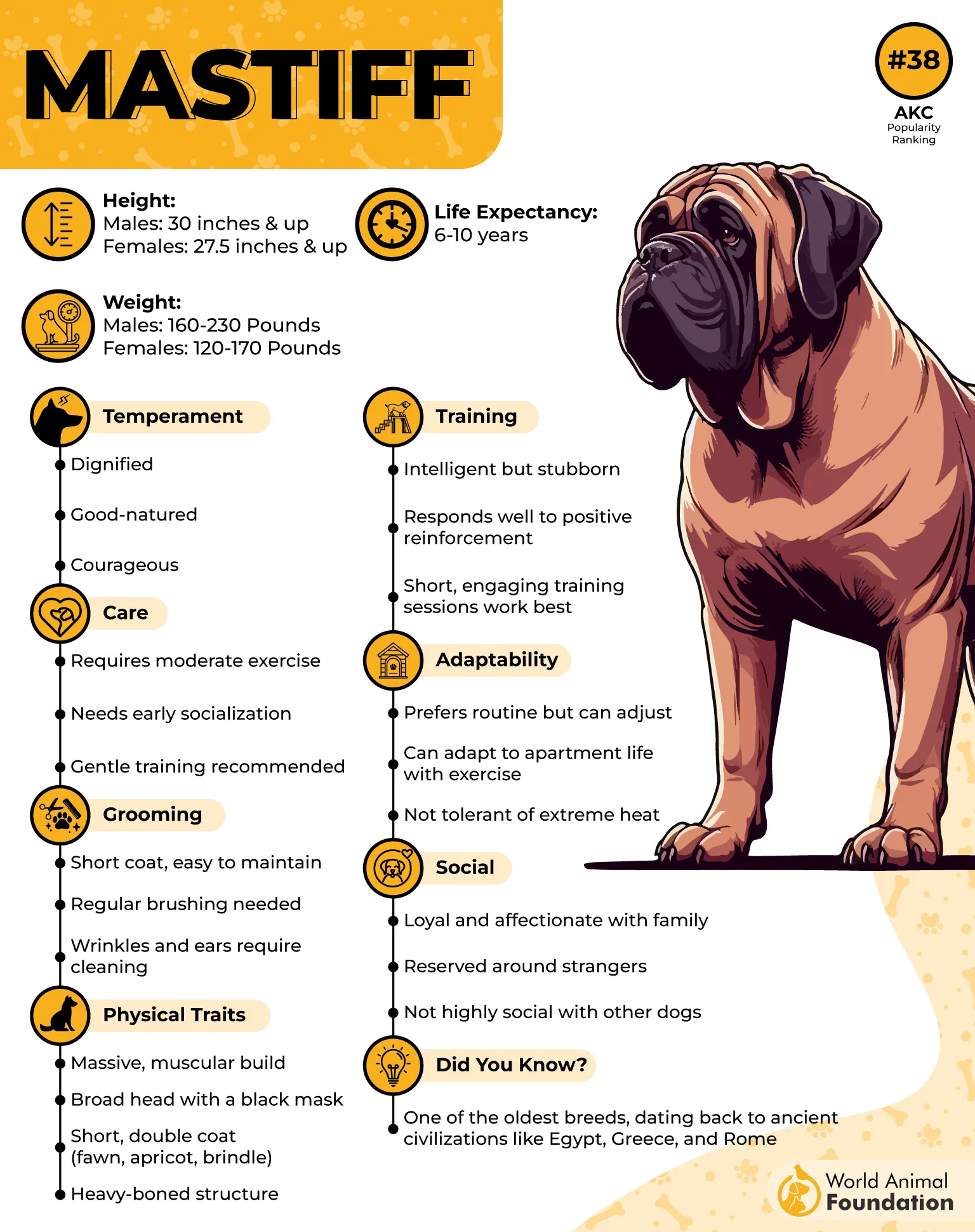
One thing owners should expect from a Mastiff is drooling. These dogs leave wet spots on floors, furniture, and just about anywhere else, so keep a towel handy for everyday situations.
Mastiffs aren’t known for a strict watchdog mentality and tend to be more focused on their family members. They’re large, naturally alert dogs, and their sheer size can help keep intruders away. Early training is important, though, because even a friendly Mastiff can knock someone over.
If you want a calm, laid-back guard dog that is devoted to its family, the Mastiff is a good choice.
2. Rhodesian Ridgeback
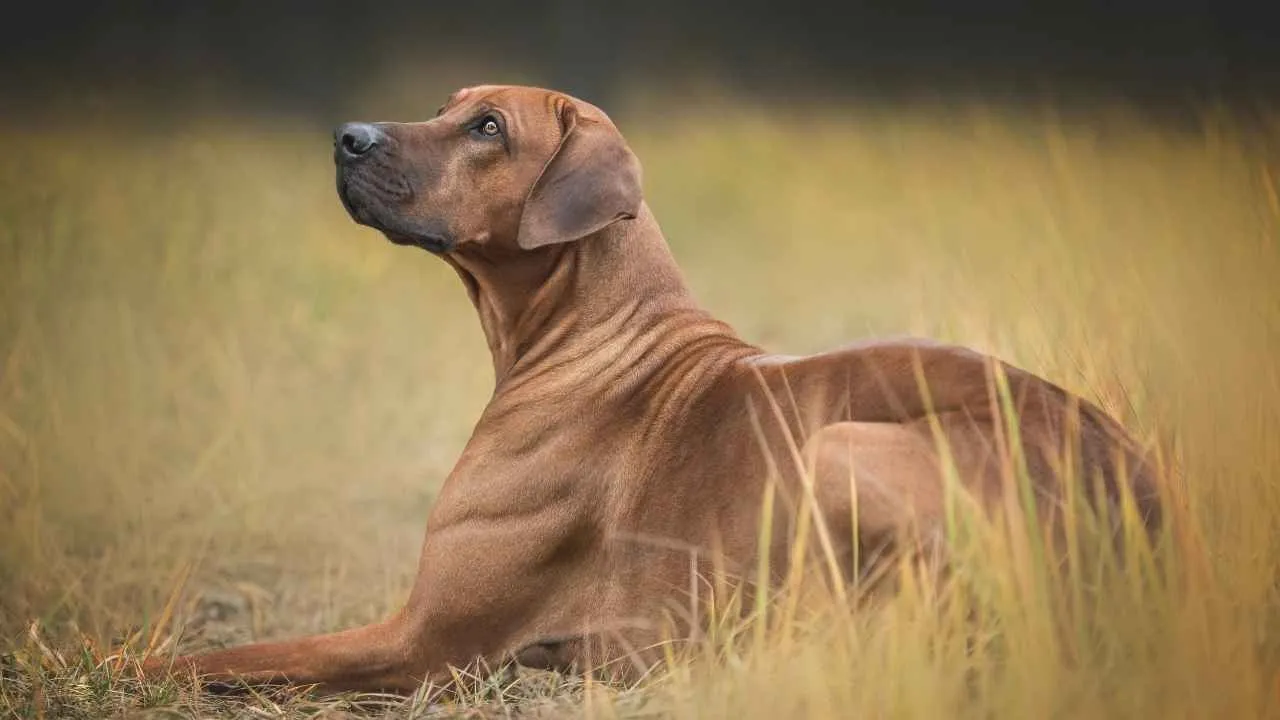
According to Orvis, the Rhodesian Ridgeback was developed in southern Africa, particularly in what is now Zimbabwe. This breed is athletic, confident, and quite distinctive compared to other dogs. It’s named for the strip of hair that grows in the opposite direction along its back, and beneath that famous trait is a strong, independent dog.
The Ridgeback has a short coat. Weekly brushing with a grooming mitt or soft brush helps spread natural oils evenly across the skin. A bath every once in a while is plenty, unless it gets very dirty during outdoor activities.
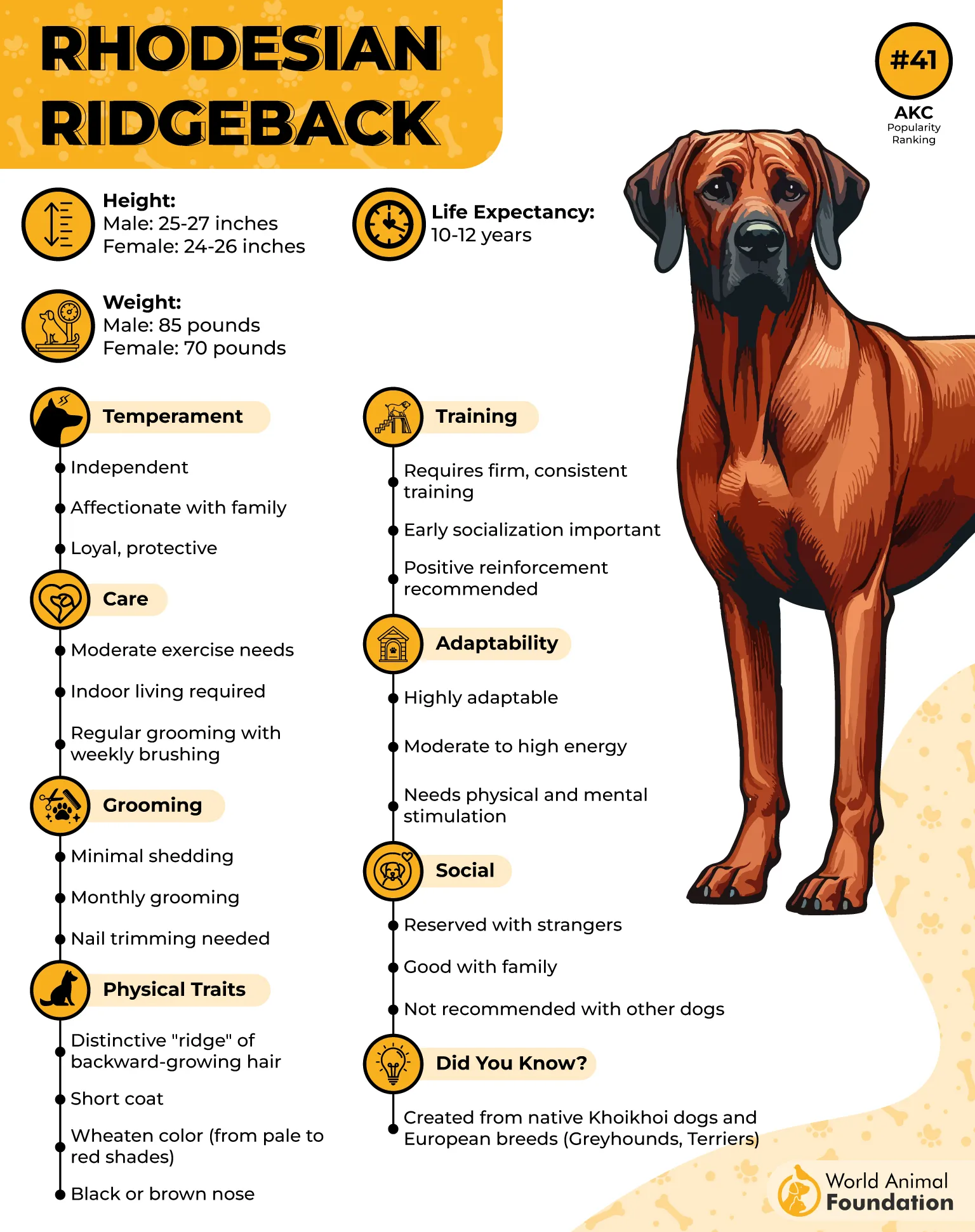
A low-maintenance coat doesn’t mean a low-maintenance lifestyle, though. The Rhodesian Ridgeback is a sporty breed that needs plenty of physical activity and mental stimulation. It’s best suited to an experienced owner who can provide vigorous exercise and professional training.
A Ridgeback is protective and very loyal to its family. It can be a watchful companion and a capable watchdog, but early socialization is important so the dog doesn’t treat every stranger as a threat. This breed is a great match for an active household that wants a watchful, athletic dog that’s easy to groom.
3. Bullmastiff
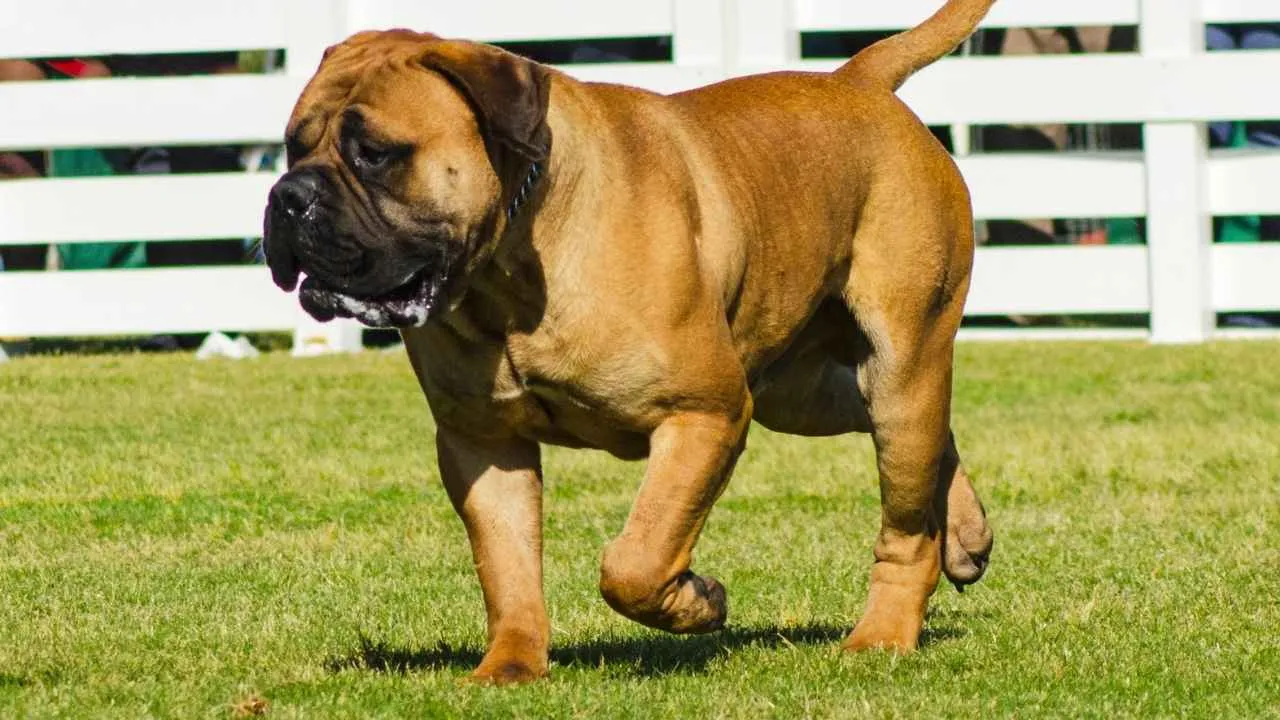
The Bullmastiff originated in Britain, where it was bred to guard estates from intruders. It has a heavy body, a wide head, and a serious stance, but beneath that stern look is a gentle, loving dog that likes to stay close to its human family.
One of its best traits is its short coat. Brushing once a week clears away loose hair, and baths can wait until they’re needed. There’s no long hair to trim and no coat that needs regular professional styling.
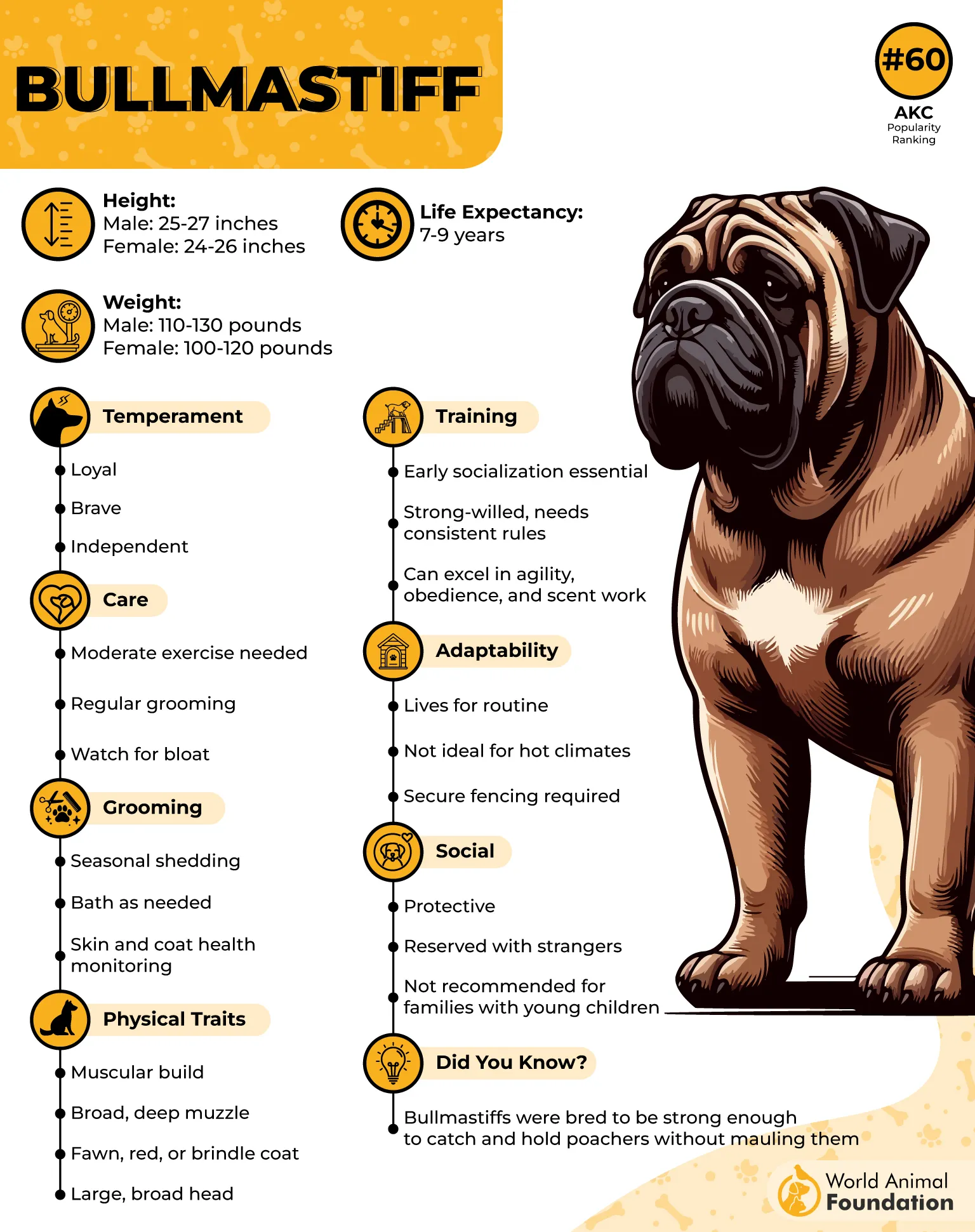
The Bullmastiff does have care needs beyond grooming, though. Its facial folds should be checked and cleaned, and regular ear, teeth, and nail care helps head off health problems. You may need to brush more often during heavier shedding seasons.
Bullmastiffs are fearless, hardy, and loyal to their families. Proper obedience training keeps them under control, and good socialization teaches them that not everyone is a threat. Moderate daily walks and exercise are essential, but avoid hot weather, since these dogs can overheat easily.
The Bullmastiff may suit owners who want a large home guardian with a coat that needs relatively little grooming. It’s a big, strong, protective dog best suited to responsible owners.
4. Boerboel
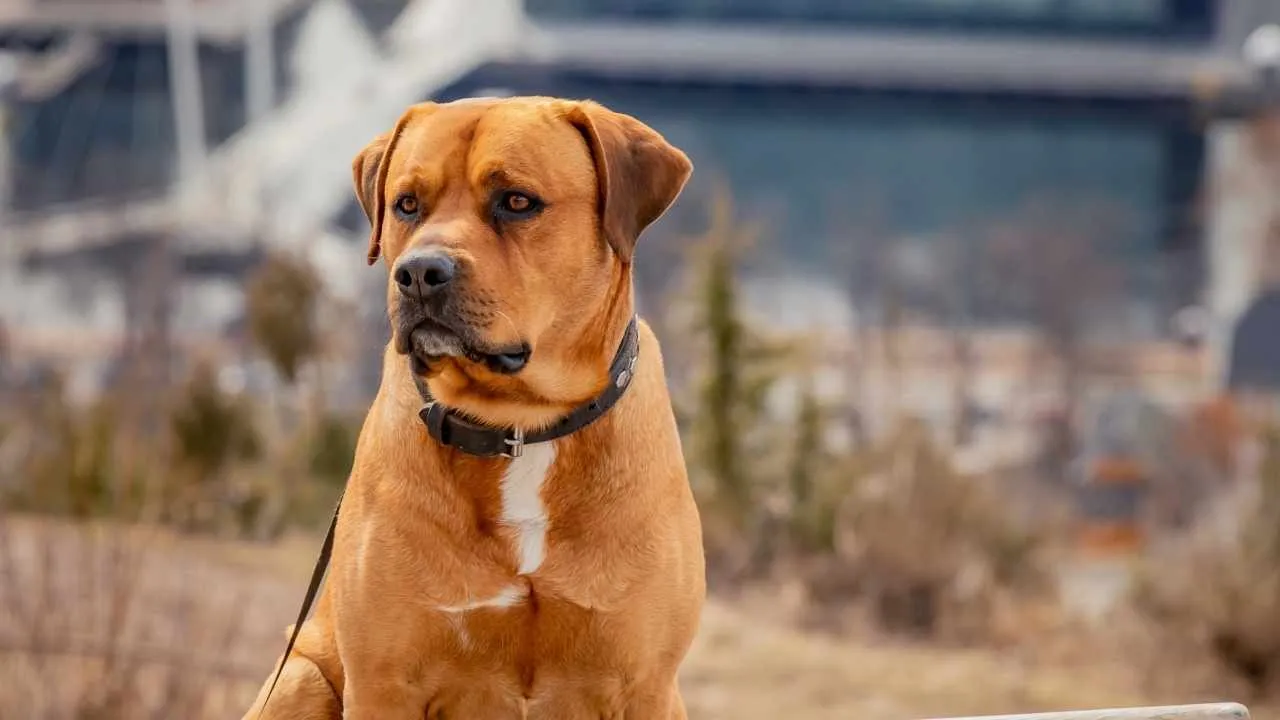
The Boerboel originated in South Africa, where it was bred as a farm dog and guard dog. This breed is muscular, confident, and very protective of its home base, which makes it a dependable security system.
Its short, dense coat doesn’t need much grooming. Brushing once a week with a rubber grooming mitt or soft brush removes loose hair and keeps the coat in good condition. Baths usually aren’t necessary unless the dog gets dirty.
The Boerboel’s temperament deserves careful thought. According to the AKC, it’s confident and can be dominant, but it’s also bright and eager to learn.
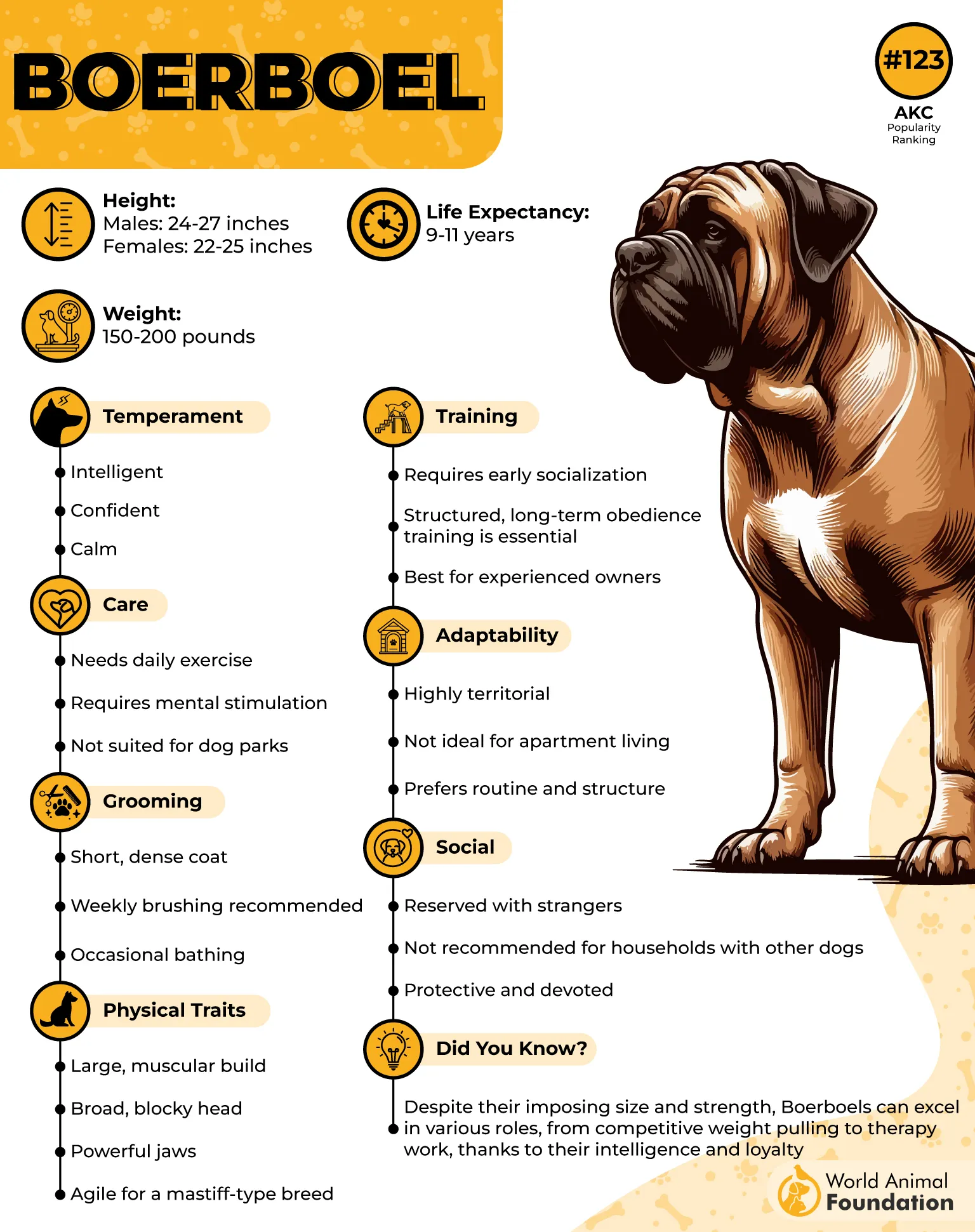
A Boerboel needs space to move around, meaningful exercise, and secure boundaries. Problems can crop up if it’s left to make all the decisions itself, particularly when visitors arrive or new animals are introduced.
The Boerboel is a formidable guard dog for experienced owners who can channel its guarding instinct and manage it responsibly. Just keep in mind that it isn’t the right dog for first-time owners.
5. Broholmer
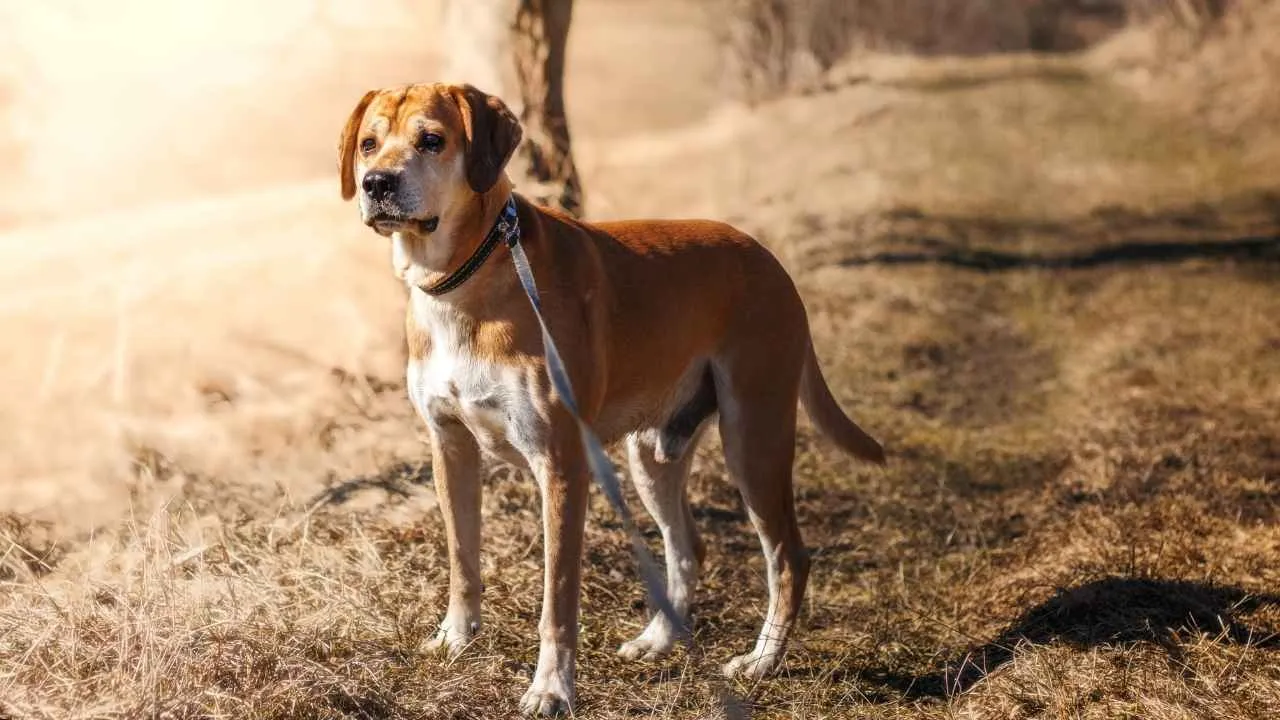
The Broholmer is a large, well-muscled, calm, and alert Danish Mastiff. In the past, this dog guarded estates and farms as a full-time job. The breed is still fairly rare today, but its strength makes it a fascinating pick for this list.
Its short, close-fitting coat is a plus. Regular brushing with a soft brush or grooming mitt removes loose hair, and occasional baths keep the coat clean. It needs far less grooming than long-haired breeds.
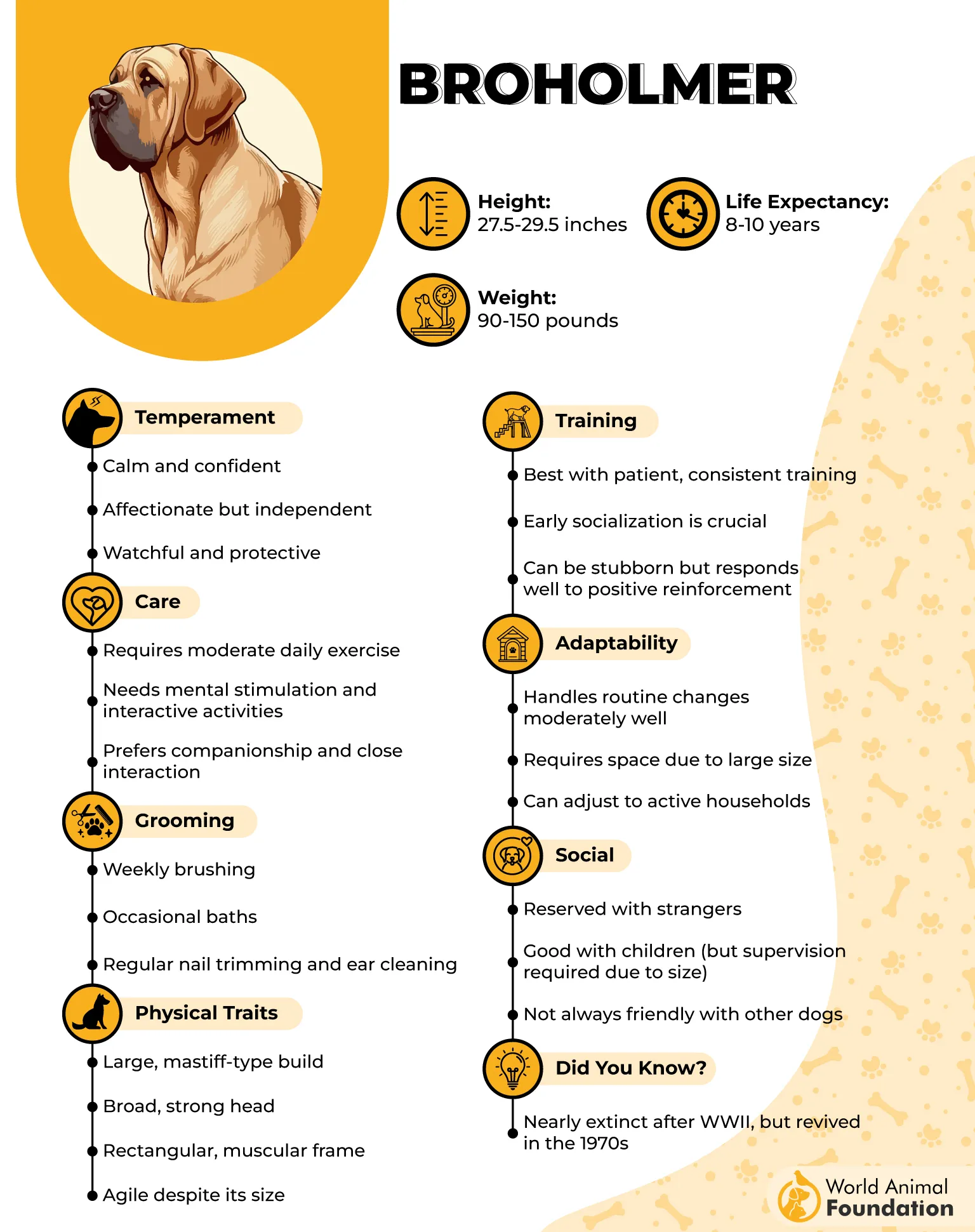
Still, don’t forget the Broholmer’s size. It needs regular exercise and walks, along with nail trimming, dental care, and routine vet check-ups. Because it’s a large breed, careful growth management during the puppy years is essential.
Broholmers can be alert around strangers, so early socialization and consistent training help them develop a balanced response. Owners should also remember that this big dog needs plenty of room to move around and should learn good manners well before it reaches full size.
6. Dogue de Bordeaux
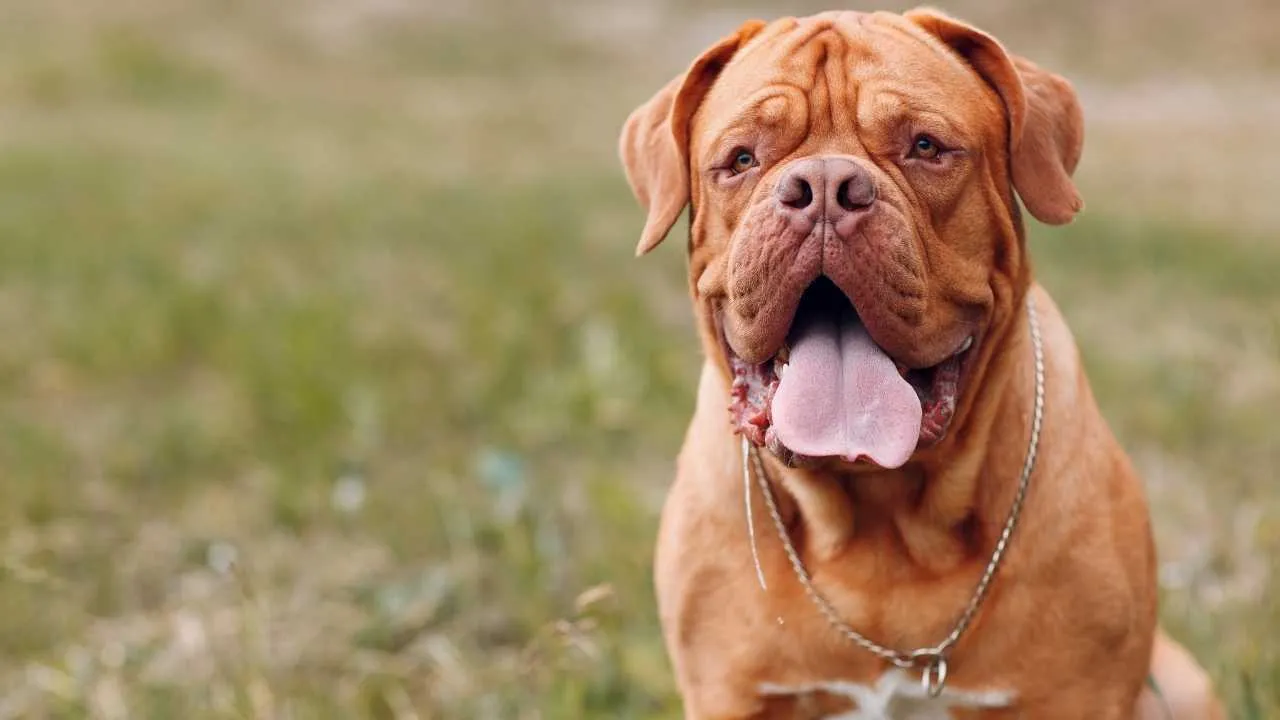
The Dogue de Bordeaux is a formidable dog, with a large head, a powerful body, and a deeply wrinkled face. It has a long history and a loyal, protective nature, and it can be very affectionate, preferring quiet companionship with its family.
Its short coat is relatively easy to maintain. Brushing once a week removes loose hair, and an occasional bath keeps it clean. The bigger grooming task is the face. The folds around the muzzle should be cleaned and dried regularly so they don’t collect moisture and debris.
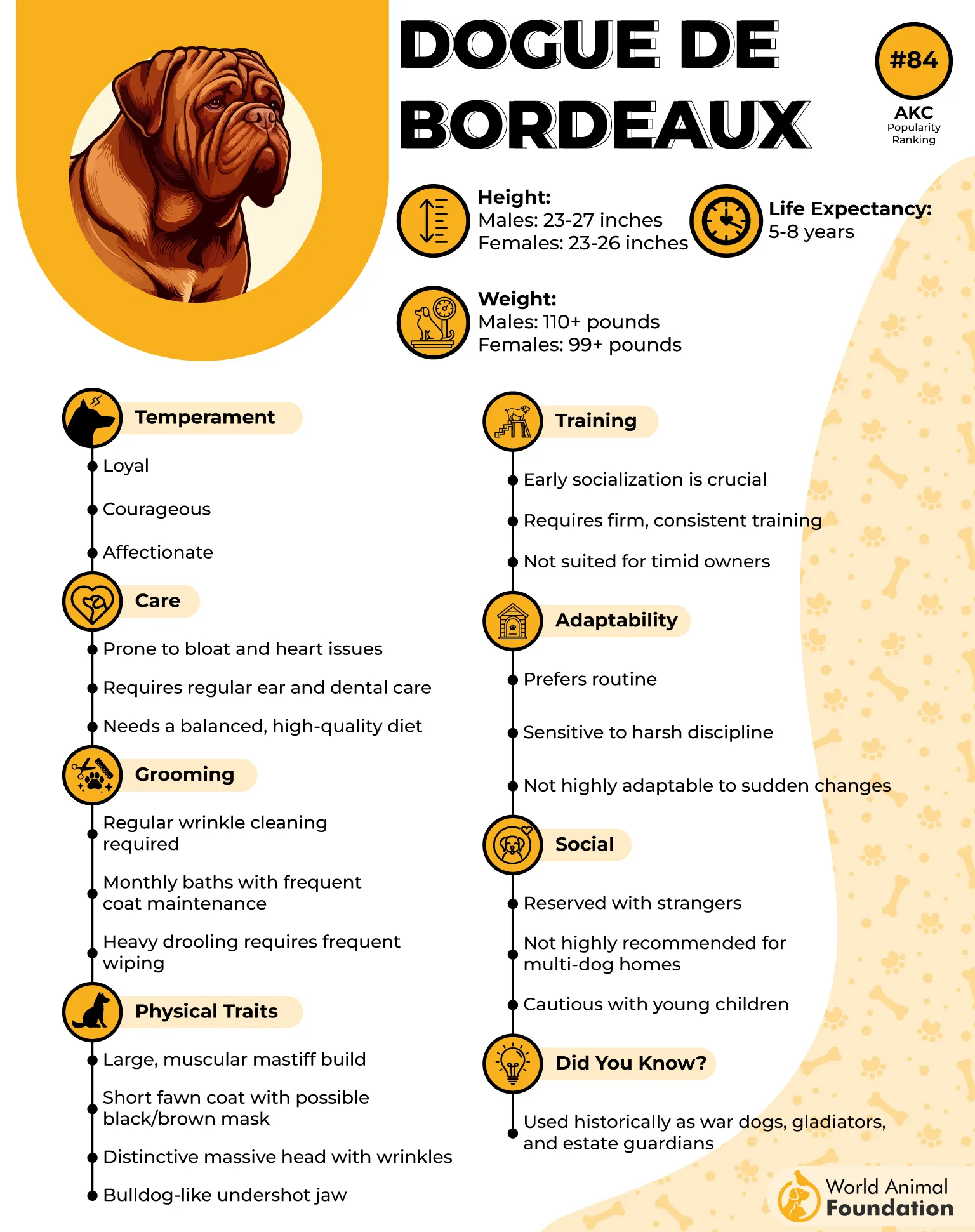
This is a strong breed that should be socialized early and trained with rewards. Good leash manners matter, given how powerful it can be. The breed can also be prone to serious health problems, so prospective owners should look for reputable breeders and keep up with regular veterinary care.
This imposing, loyal breed has a coat that’s easy to care for, though its facial folds need regular cleaning and drying.
7. Doberman Pinscher
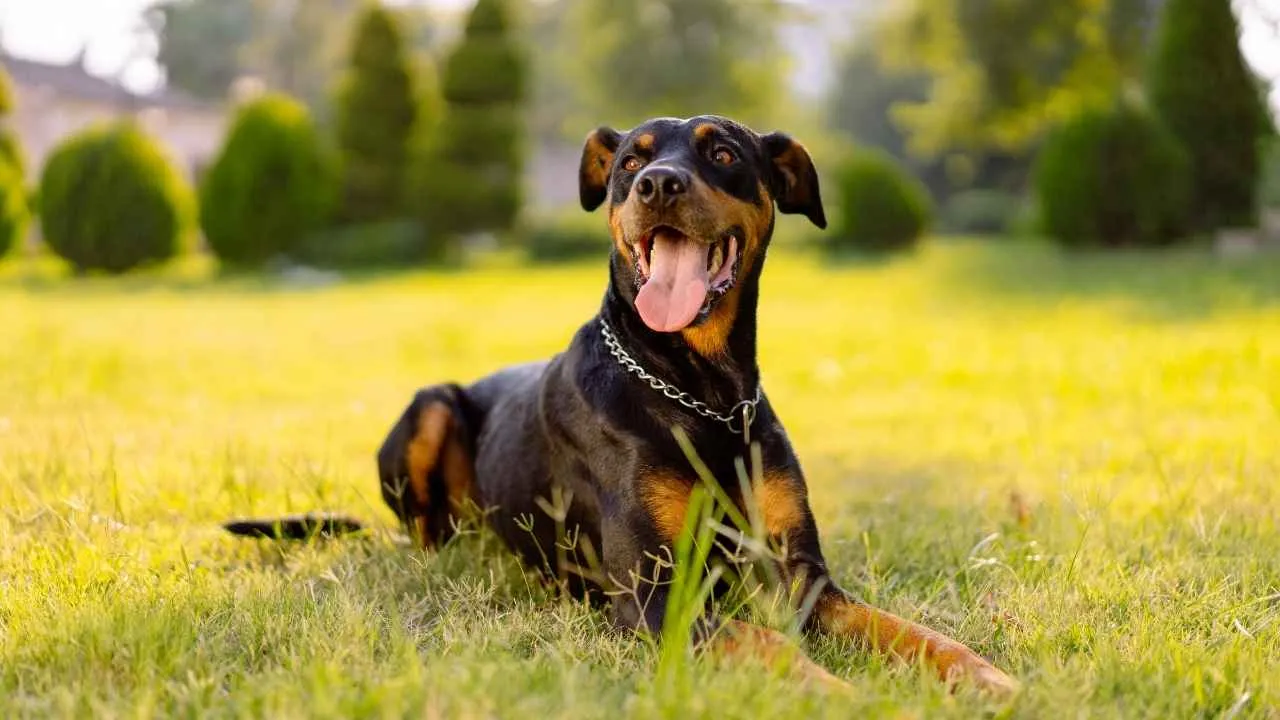
The Doberman Pinscher is lean, energetic, and always on the go. It’s a quick learner and bonds closely with its family.
Its short, smooth coat only needs an occasional brushing to stay neat and tidy. There’s no heavy coat to trim or untangle, and baths can be given as needed.
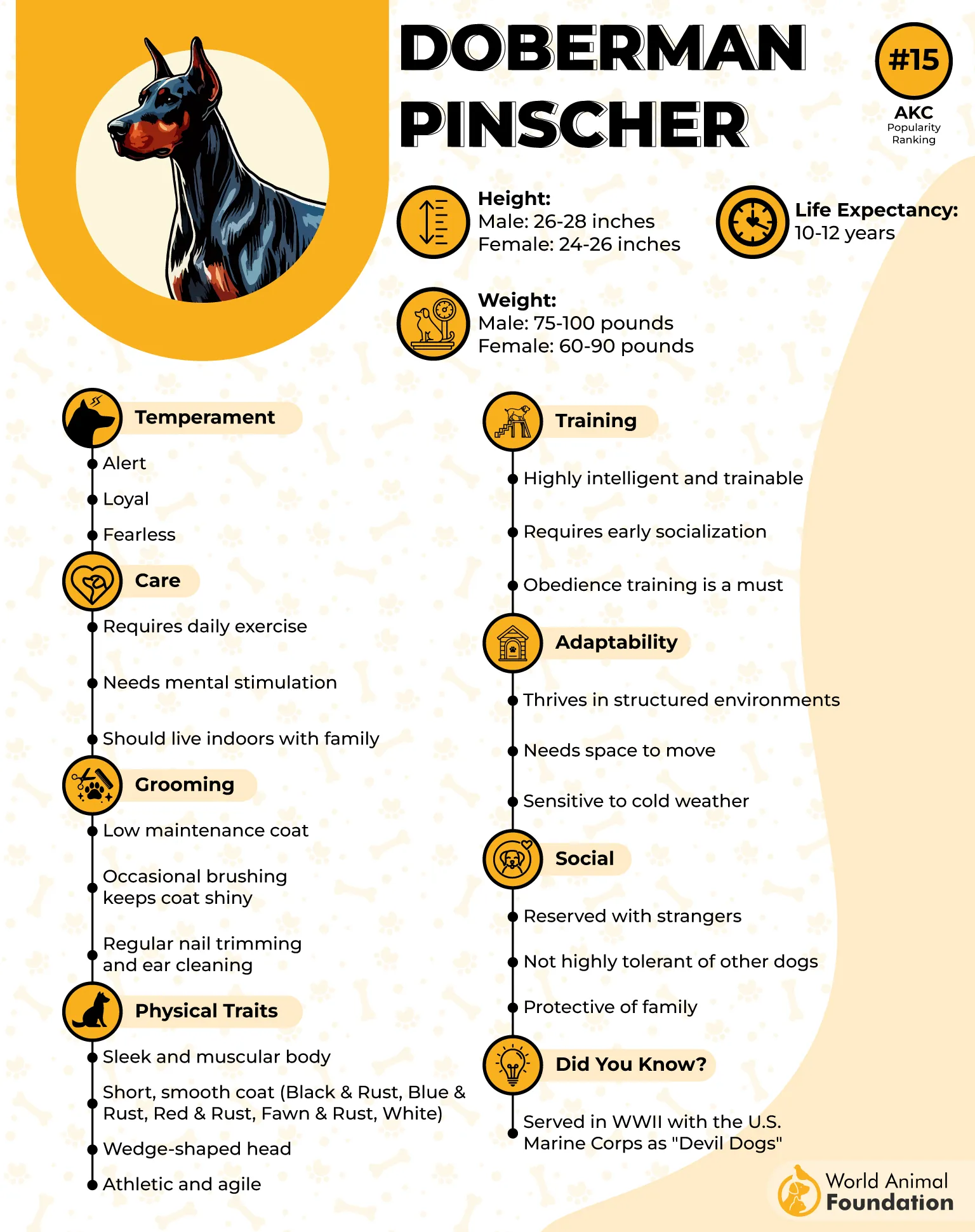
The Doberman trades grooming time for training and activity time. It’s a smart, active dog that needs daily exercise, learning, and mental stimulation. If it isn’t properly engaged, it can become restless and turn to destructive behavior.
Dobermans tend to be loyal to their family members and naturally wary of strangers. With good socialization, they stay calm in everyday situations, and with solid training, they become dependable companions. Their protective instincts should be managed with care and not encouraged too often.
Conclusion
Having a protective dog with a simple coat makes everyday maintenance easier, but there’s far more to the decision than that. Calmness might suit one household, while high athleticism and trainability might suit another.
Before you decide, think about how much exercise you can provide, how comfortable you are handling a strong dog, and how much time you’re willing to put into early socialization and consistent training.
The goal is a well-cared-for, responsibly trained dog. Check the coat and skin regularly, trim nails, brush teeth, and talk to your vet about health issues specific to your breed. With a little planning, you can enjoy the peace of mind of a watchful guard dog without devoting all your free time to grooming.
