




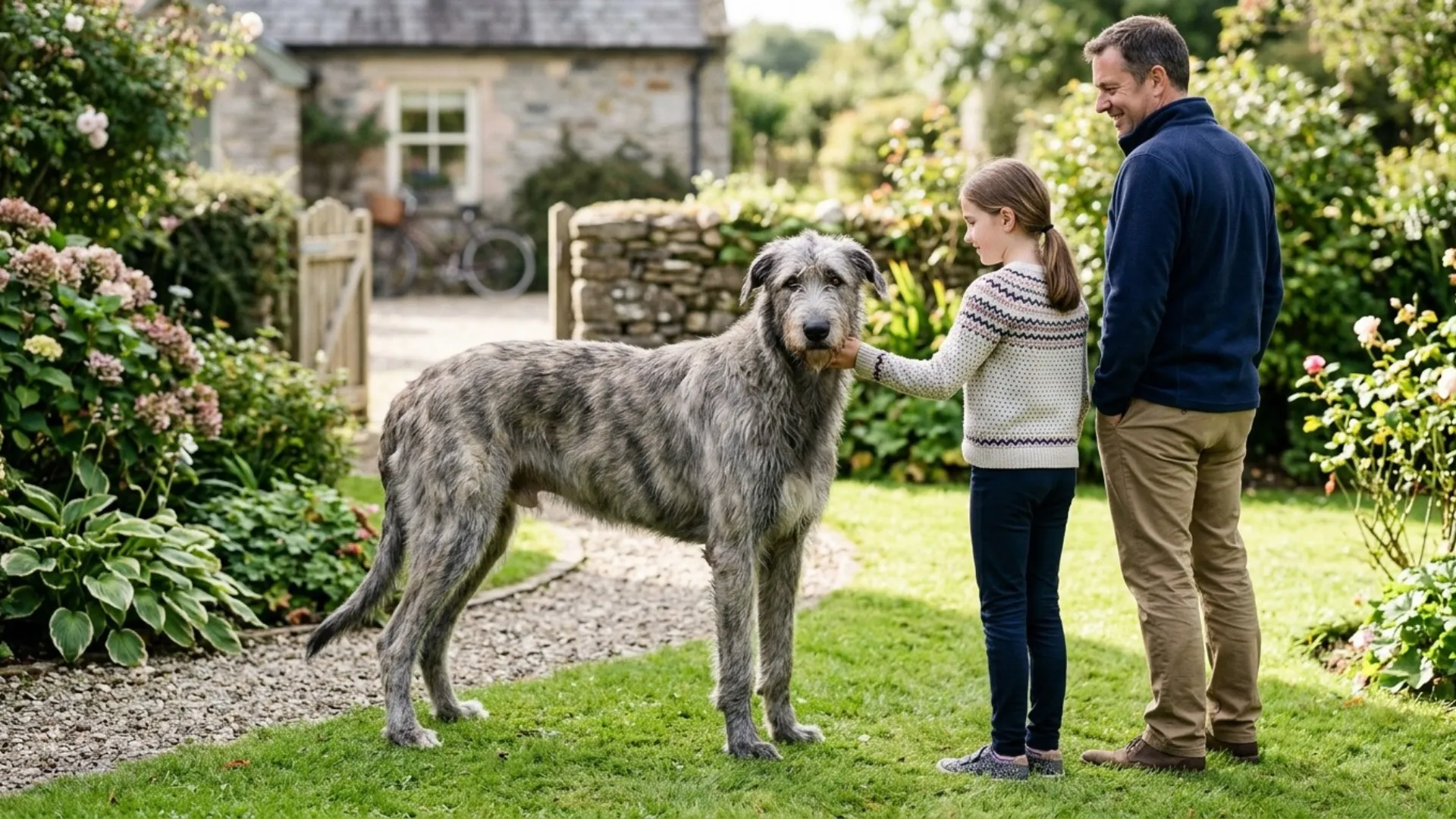
A family dog needs more than an affectionate personality. Busy households bring unexpected noises, visiting guests, changing routines, and the occasional burst of children’s excitement. Dogs with patient temperaments and steady responses may find these situations easier to navigate, especially when they receive proper training and socialization.
Several large breeds have historically worked alongside people as livestock guardians, rescue dogs, or dependable farm companions. These backgrounds helped develop traits such as patience, confidence, and close bonds with their handlers. However, even naturally calm dogs need exercise, clear boundaries, and safe spaces where they can rest undisturbed.
The seven breeds below are known for qualities that can make them rewarding family companions. Their sizes, activity levels, and care requirements differ considerably, so choosing the right dog means considering the needs of everyone in the household.
Family‑Friendly Dog Breeds That Stay Cool Under Pressure
1. Newfoundland
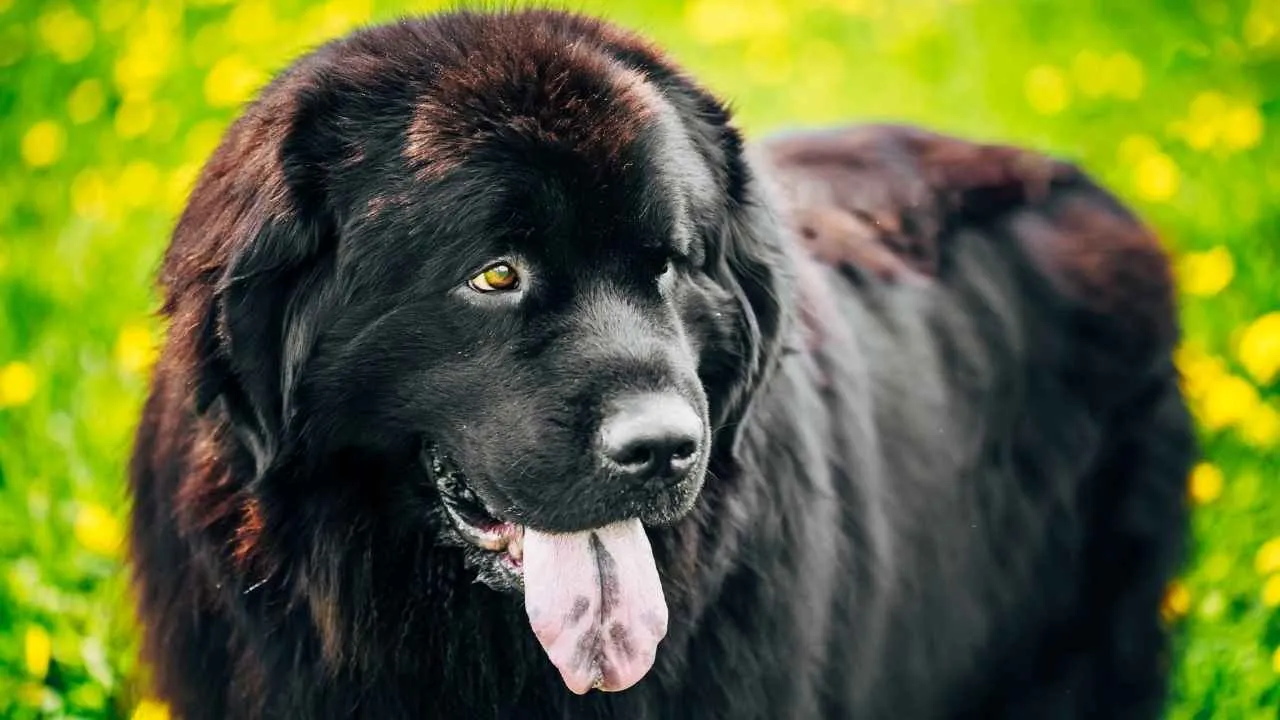
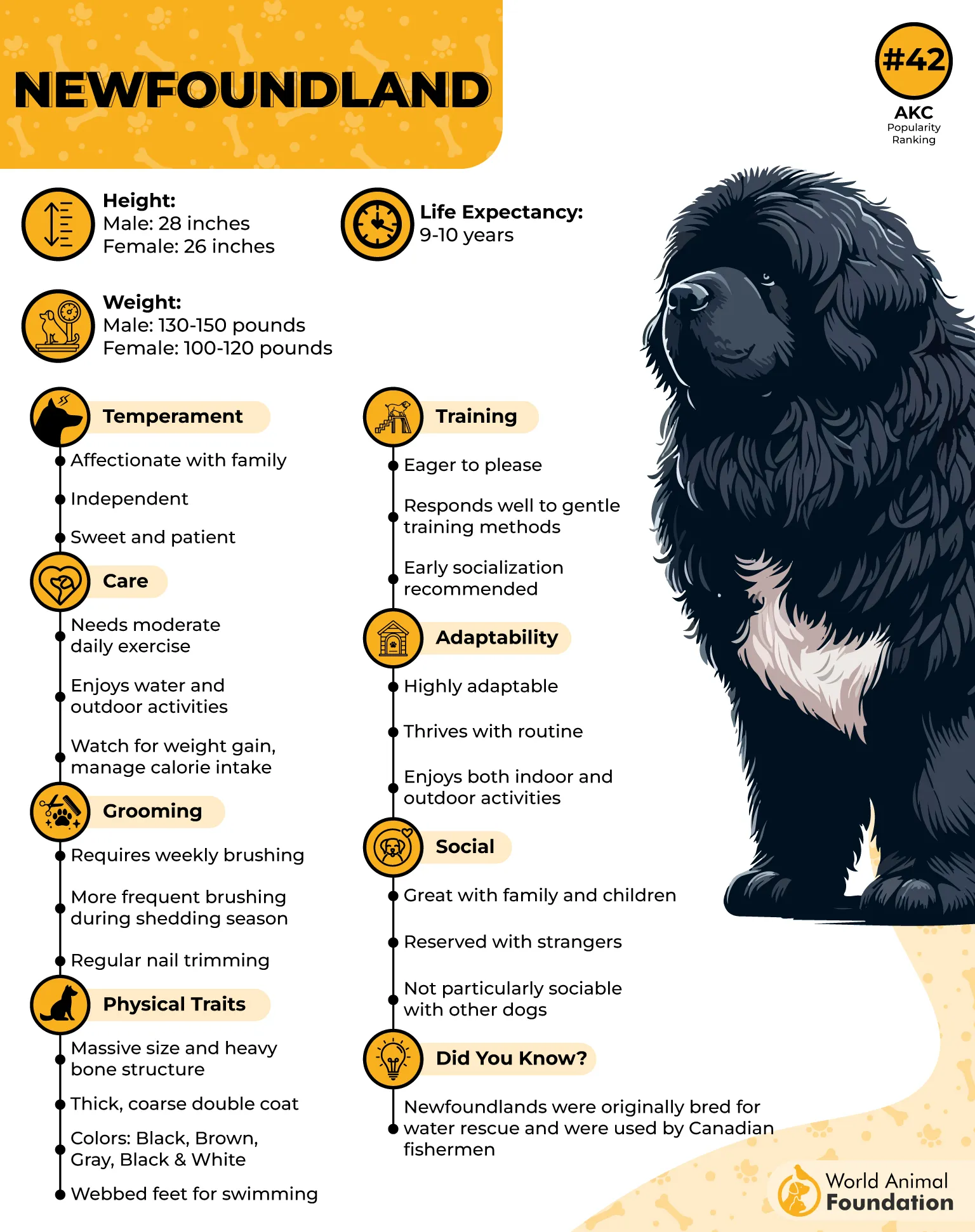
The Newfoundland originated on the Canadian island of Newfoundland, where fishermen relied on strong dogs for hauling equipment and assisting with water-related tasks. Their swimming ability and cooperative nature made them valuable working partners. Over time, they also became admired for their patient dispositions and gentle companionship.
Exercise and Training for a Gentle Giant
Newfoundlands need regular walks, moderate activity, and safe swimming opportunities. Early obedience training helps establish polite greetings and reliable leash manners. Puppies require carefully managed exercise to protect developing joints. Families should also prepare for heavy shedding, drooling, and the grooming demands of this giant breed.
A Patient Protector With a Soft Side
Newfoundlands are often affectionate, steady companions that enjoy staying near their families. Their patient nature can suit households with children who understand respectful handling. Despite their gentle reputation, their enormous size can cause accidental knocks. Adult supervision and appropriate training are essential for safe family interactions.
2. Bernese Mountain Dog
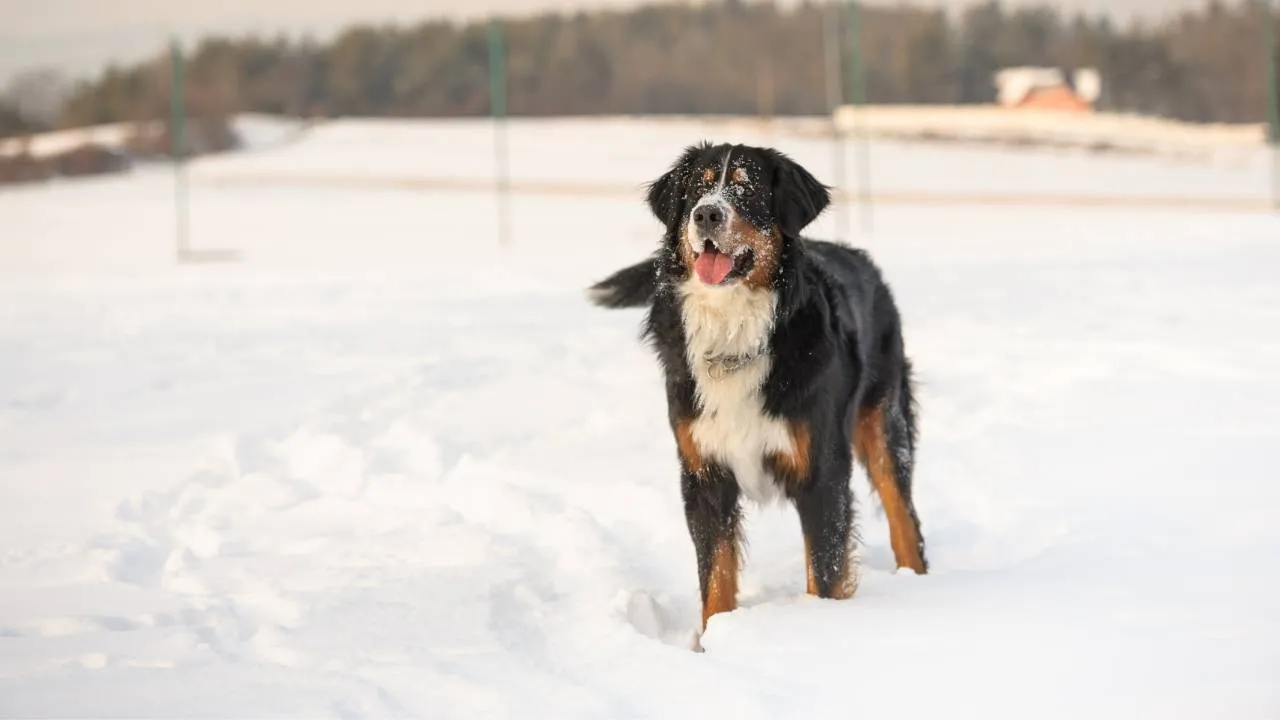
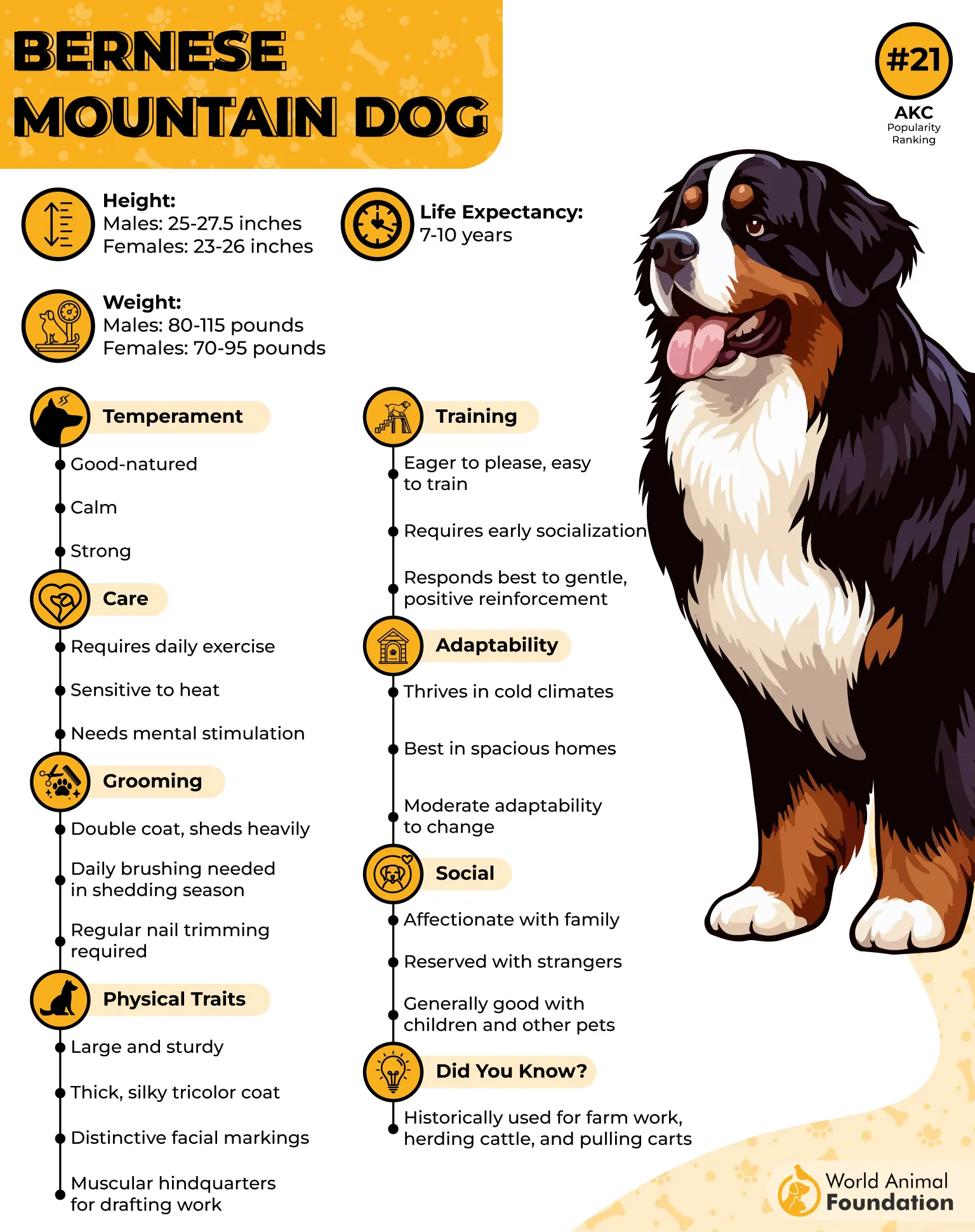
The Bernese Mountain Dog developed in Switzerland, where farmers used these muscular dogs for pulling carts, guarding property, and assisting with livestock. Their thick coats suited cold mountain conditions, while their cooperative nature made them useful around people. Today, they are valued for their loyalty and affectionate personalities.
Daily Movement and Consistent Family Manners
Bernese Mountain Dogs benefit from daily walks, moderate play, and consistent training. Early leash training and socialization help manage their strength around visitors and children. Their thick coats need regular brushing, particularly during seasonal shedding. Families should also research breed-related health concerns before choosing a puppy.
A Steady Companion Who Enjoys Family Life
Bernese Mountain Dogs often form strong bonds with their households and enjoy participating in daily activities. Many are affectionate without requiring constant high-energy entertainment. Their sociable nature can support positive family relationships when properly socialized. However, their size makes supervision and consistent household rules important.
3. Irish Wolfhound
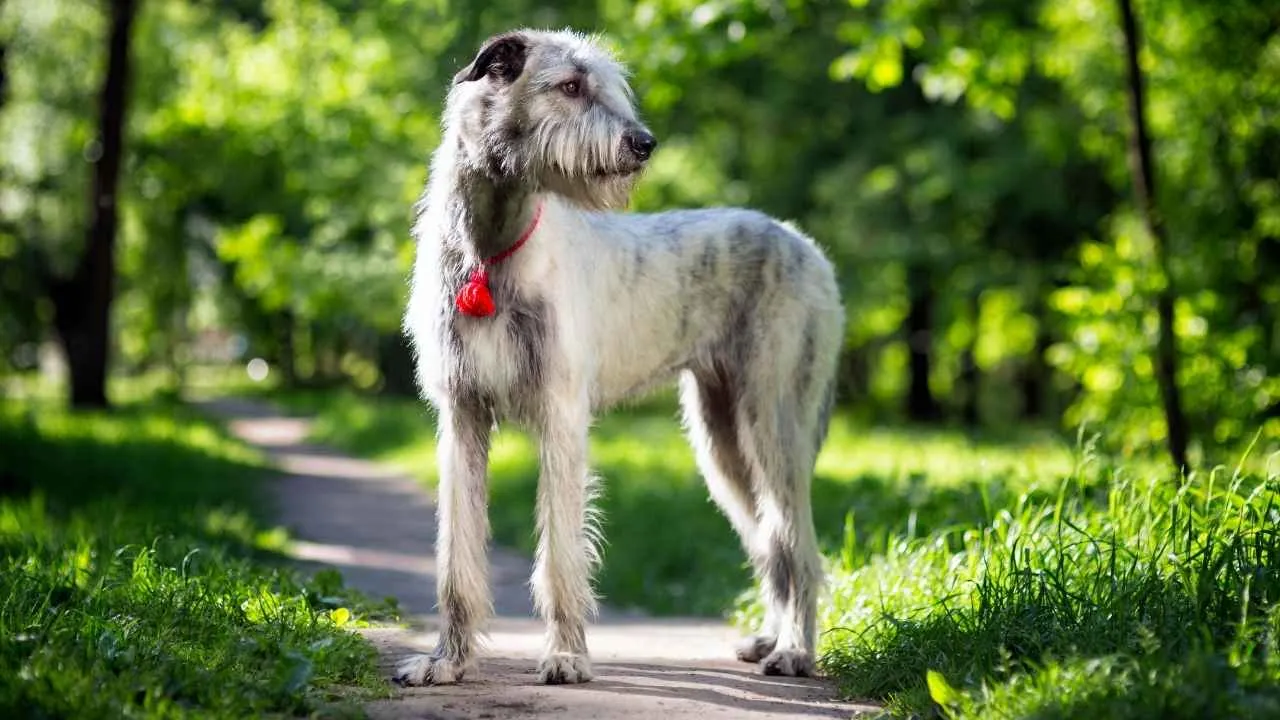
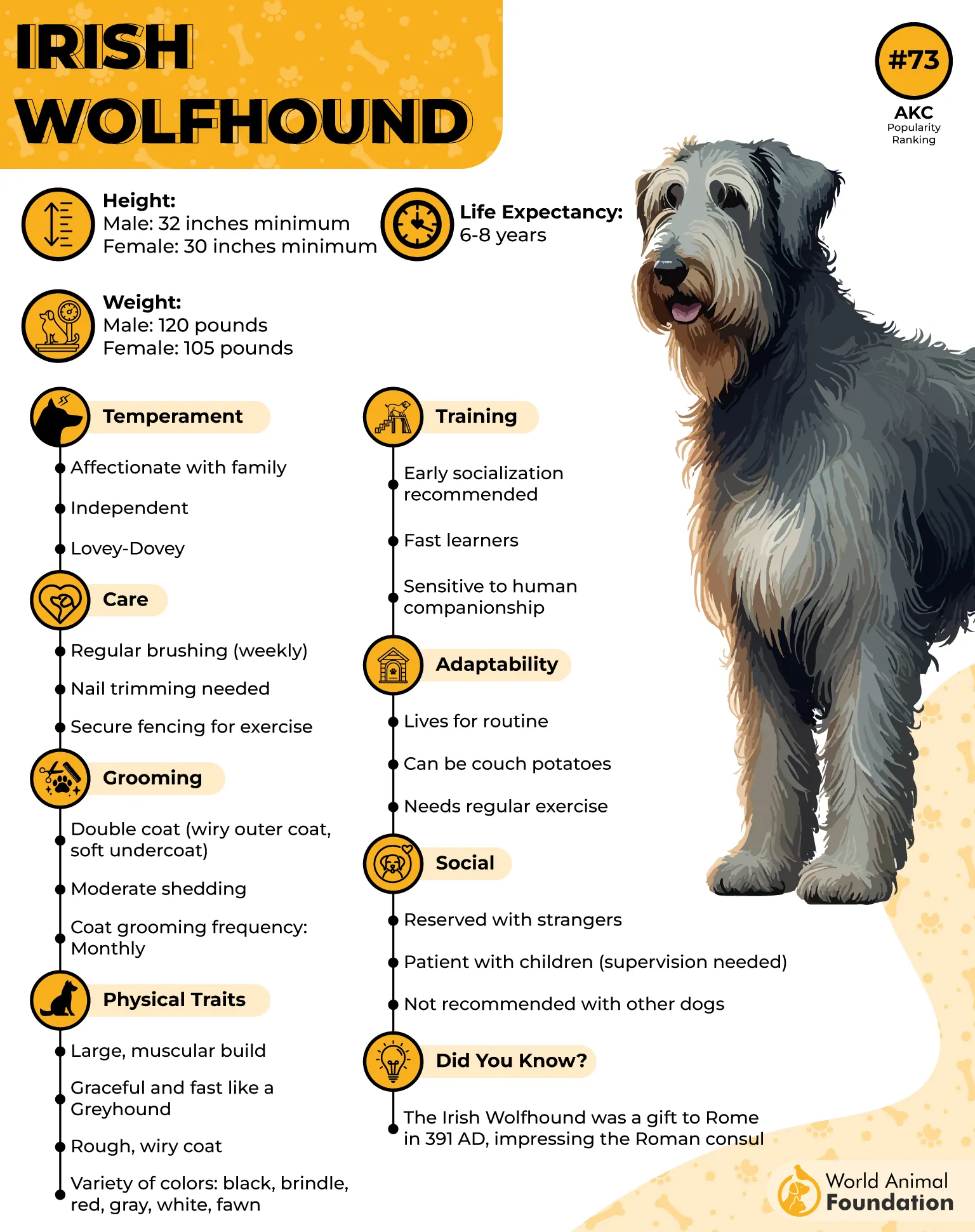
The Irish Wolfhound has a long history in Ireland, where large sighthounds were bred to hunt wolves and other substantial game. Historical accounts associate these loyal dogs with warriors and noble families. Modern Irish Wolfhounds are primarily companions, admired for their dignified appearance and generally gentle approach to family life.
Exercise and Guidance for a Tall, Athletic Breed
Irish Wolfhounds need regular walks and secure spaces for movement. Growing dogs require carefully managed exercise to protect developing joints. Reward-based training helps establish reliable manners, while early socialization builds confidence. Prospective owners should also understand the breed’s relatively short lifespan and significant health considerations.
A Quiet Giant With a Gentle Disposition
Irish Wolfhounds often display a calm, affectionate manner around familiar people. Many enjoy relaxing nearby rather than constantly demanding attention. Their size, however, can make accidental collisions dangerous for young children. Supervision, appropriate training, and sufficient indoor space help make family life safer.
4. Saint Bernard
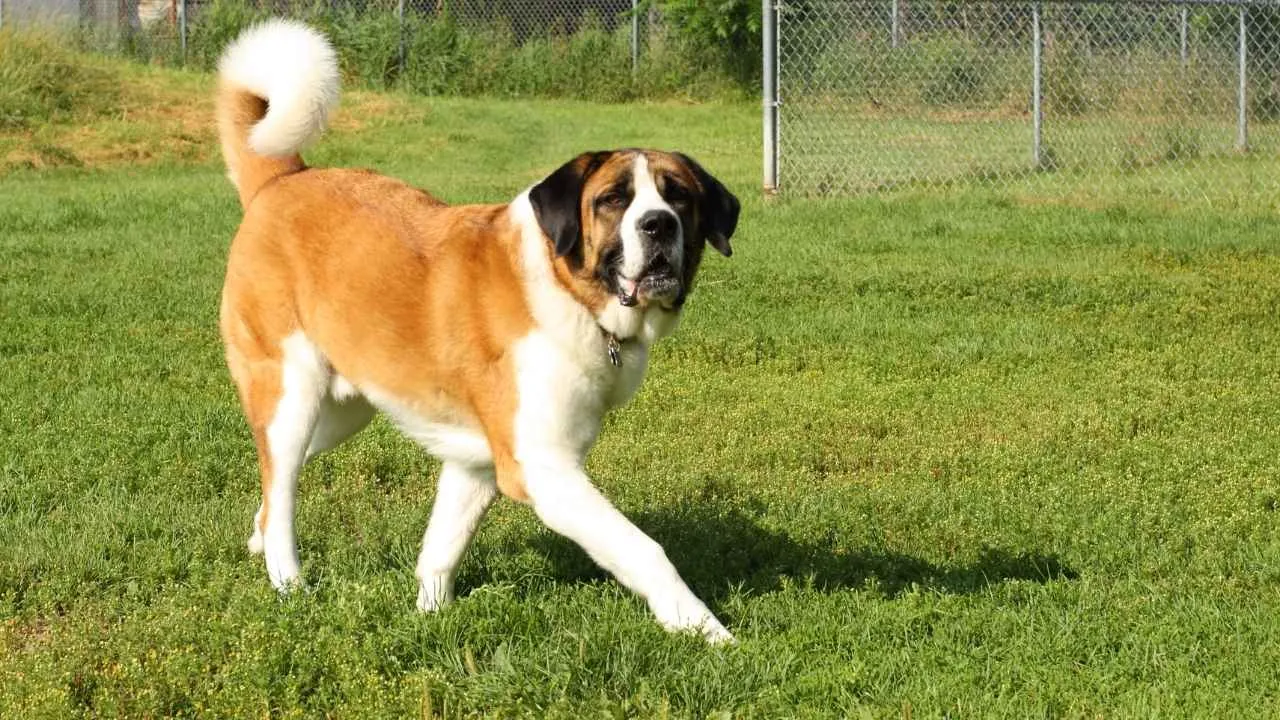
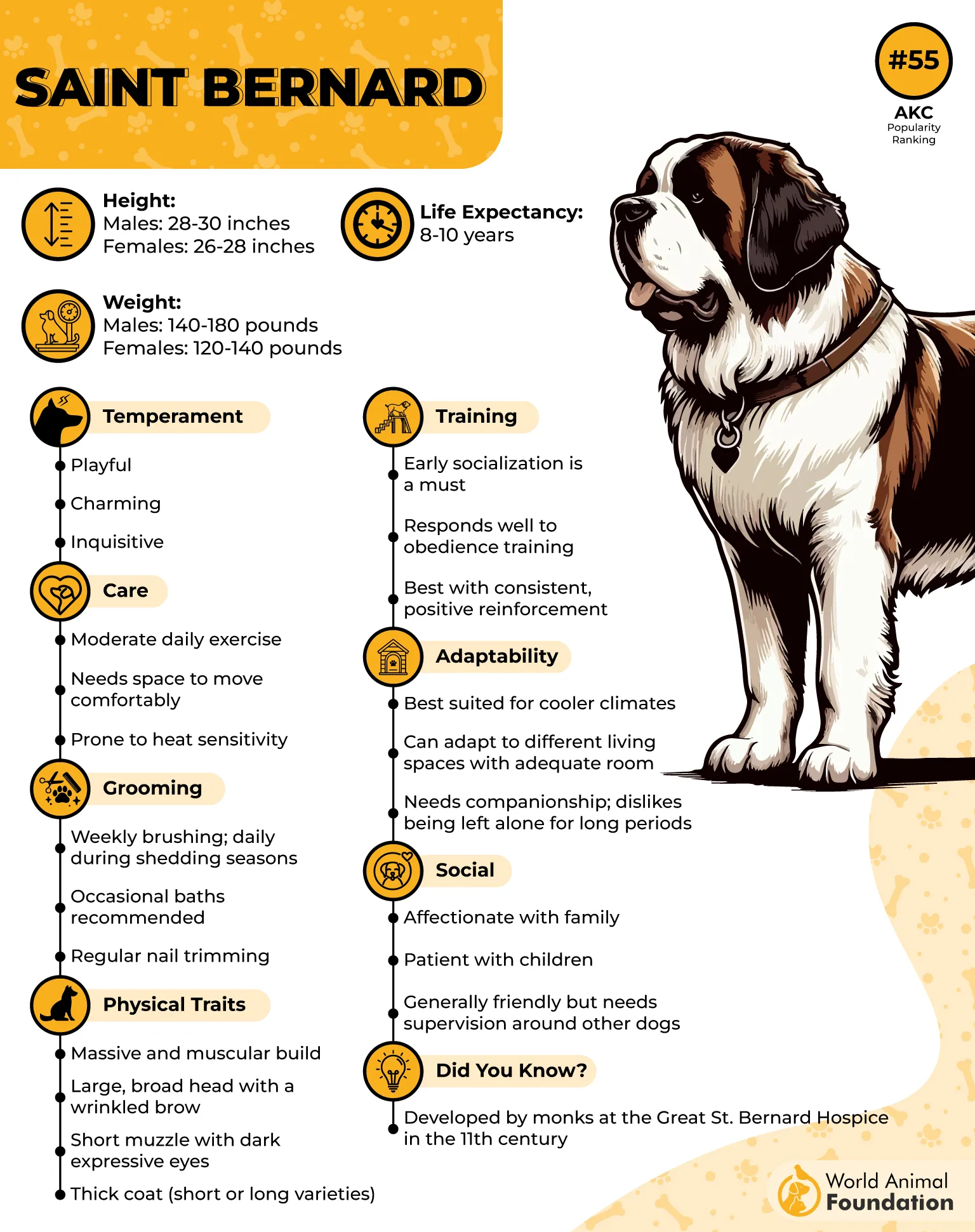
The Saint Bernard originated in the Swiss Alps, where monks at the Great St Bernard Hospice used large dogs to assist travelers in difficult mountain conditions. The breed became famous for rescue work requiring strength and endurance. Today, Saint Bernards are appreciated for their imposing appearance and patient companionship.
Building Good Habits Through Gentle Training
Saint Bernards need moderate daily walks and controlled activity suited to their size. Early obedience training helps establish manageable leash behavior and calm greetings. Puppies should avoid excessive high-impact exercise while growing. Regular grooming, weight management, and a cool resting area are also important for their well-being.
A Big-Hearted Dog With a Patient Nature
Saint Bernards are often affectionate and relaxed around familiar family members. Well-socialized individuals can be remarkably gentle despite their substantial size. Many enjoy staying close to their people and participating in quiet routines. Supervision around toddlers remains essential because even friendly movements can accidentally cause injuries.
5. Dogue de Bordeaux
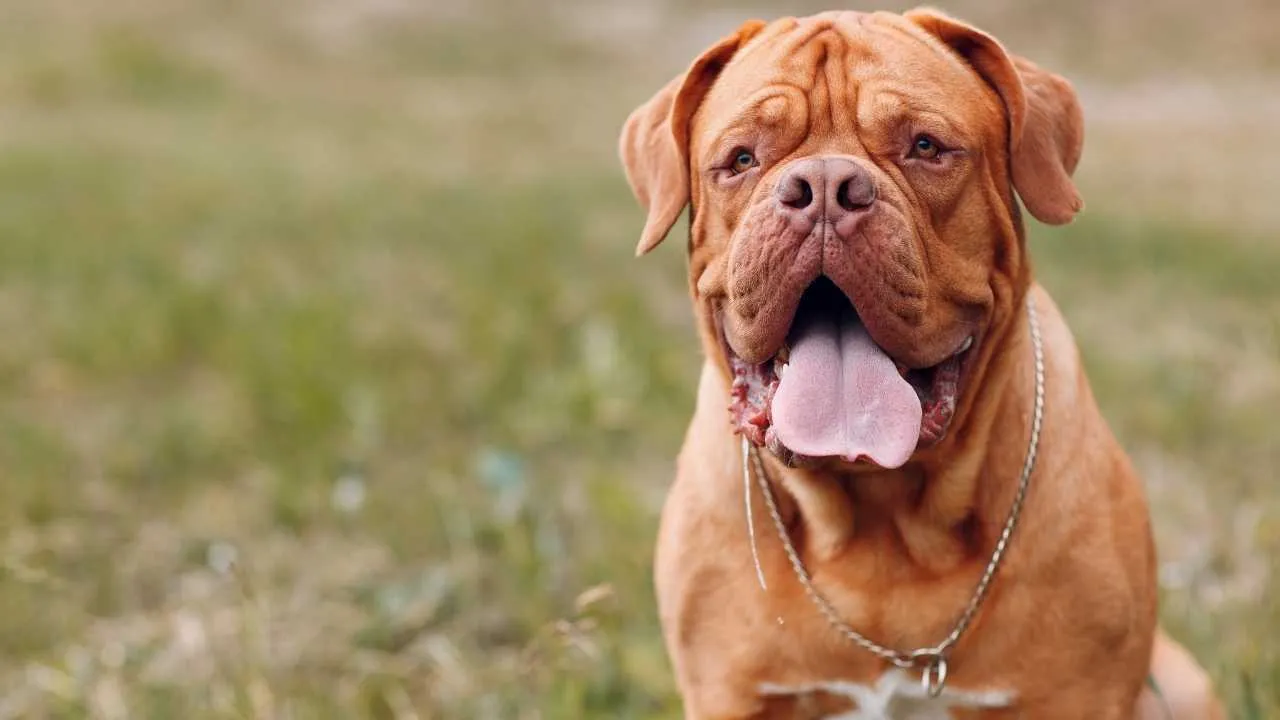
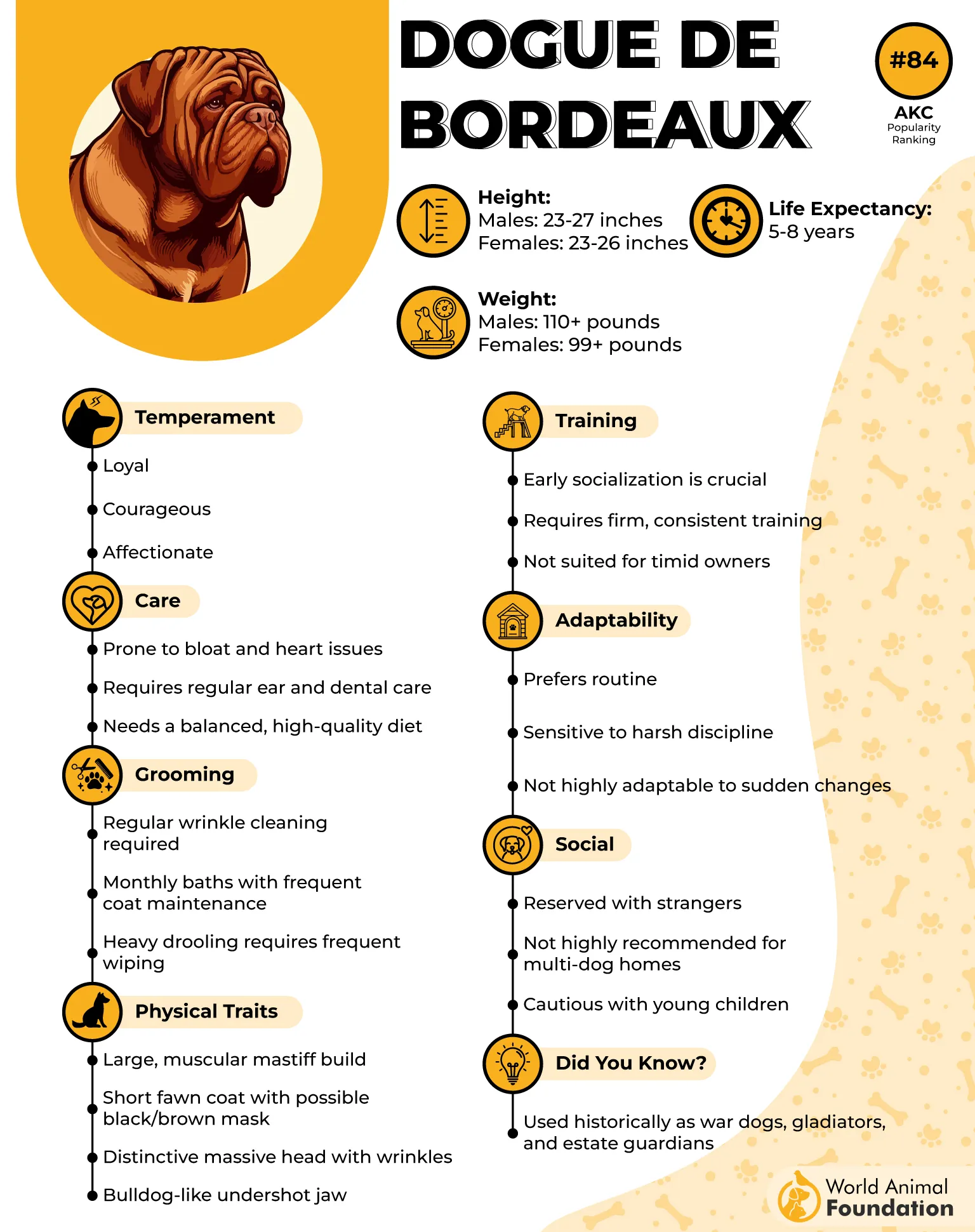
The Dogue de Bordeaux is an ancient French mastiff-type breed historically used for guarding property and performing demanding working tasks. Its powerful build reflects a history shaped by strength and protection. Over time, the breed also became a companion. Its loyalty is appealing, but its guarding instincts require responsible training.
Structured Exercise and Confident, Calm Training
Dogue de Bordeaux dogs need moderate walks, controlled play, and consistent obedience training. Early socialization helps them respond appropriately to unfamiliar people. Their strength makes leash manners especially important. Because their short muzzles can affect breathing and heat tolerance, owners should avoid strenuous activity in hot weather.
A Loyal Family Dog That Needs Clear Boundaries
A well-socialized Dogue de Bordeaux can be deeply devoted to its household and relaxed in familiar surroundings. Its protective instincts may make it cautious around strangers. Consistent training and supervised introductions are important, particularly with children and visitors. This powerful breed suits owners prepared for careful management.
6. Great Dane
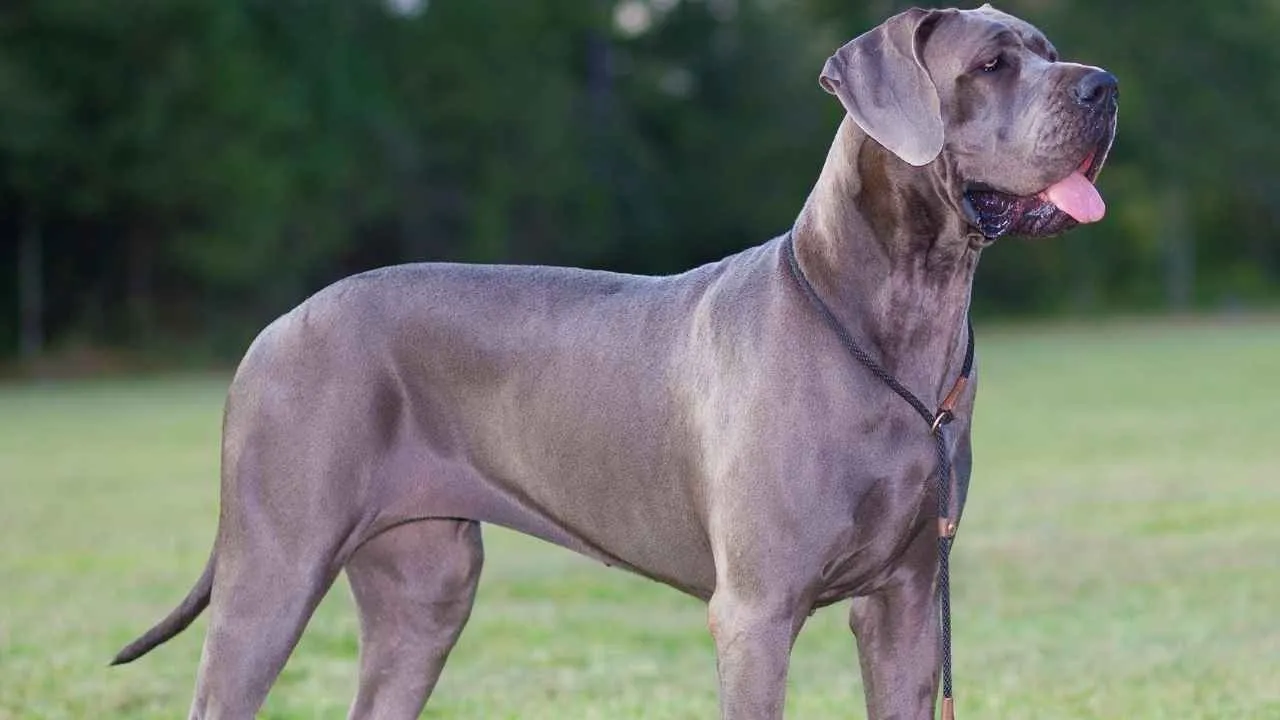
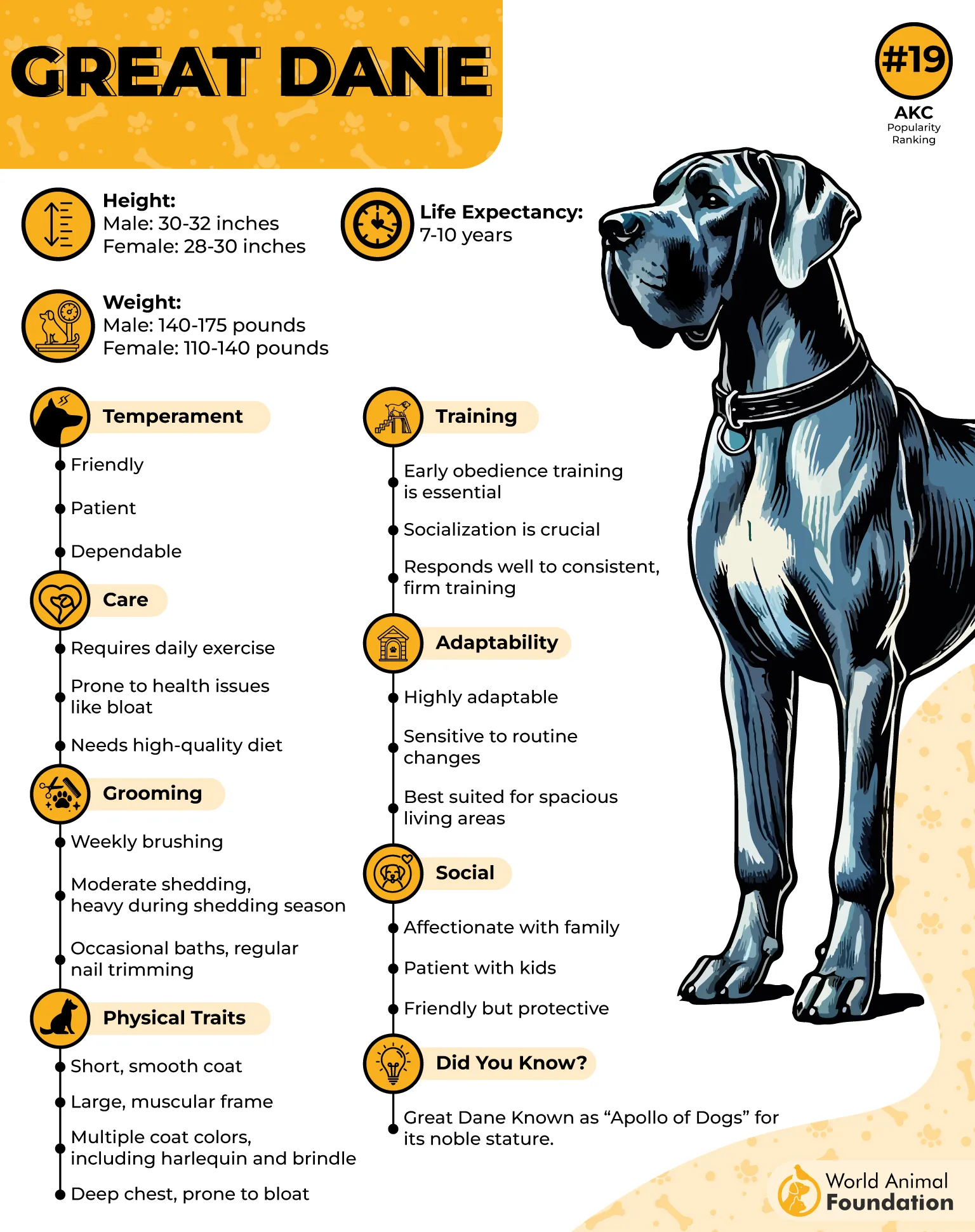
The Great Dane developed in Germany from dogs used to hunt large game, including wild boar, as per the AKC. Selective breeding eventually produced a tall, powerful dog that also became valued as a companion. Today, Great Danes are known for combining impressive stature with an often affectionate, people-oriented temperament.
Moderate Activity and Manners for a Giant Breed
Great Danes need daily walks, controlled play, and early obedience training. Their height and strength make polite greetings and loose-leash walking important. Puppies require careful exercise management to protect developing joints. Owners should also discuss bloat prevention with their veterinarian and plan for the costs of caring for a giant dog.
A Towering Companion With an Affectionate Side
Great Danes often enjoy close contact with their families and may seek affection despite their size. Many relax comfortably indoors after suitable exercise. Their friendly nature can suit family life when paired with proper socialization. However, excited movements can knock over children, making supervision and calm greeting routines essential.
7. Great Pyrenees
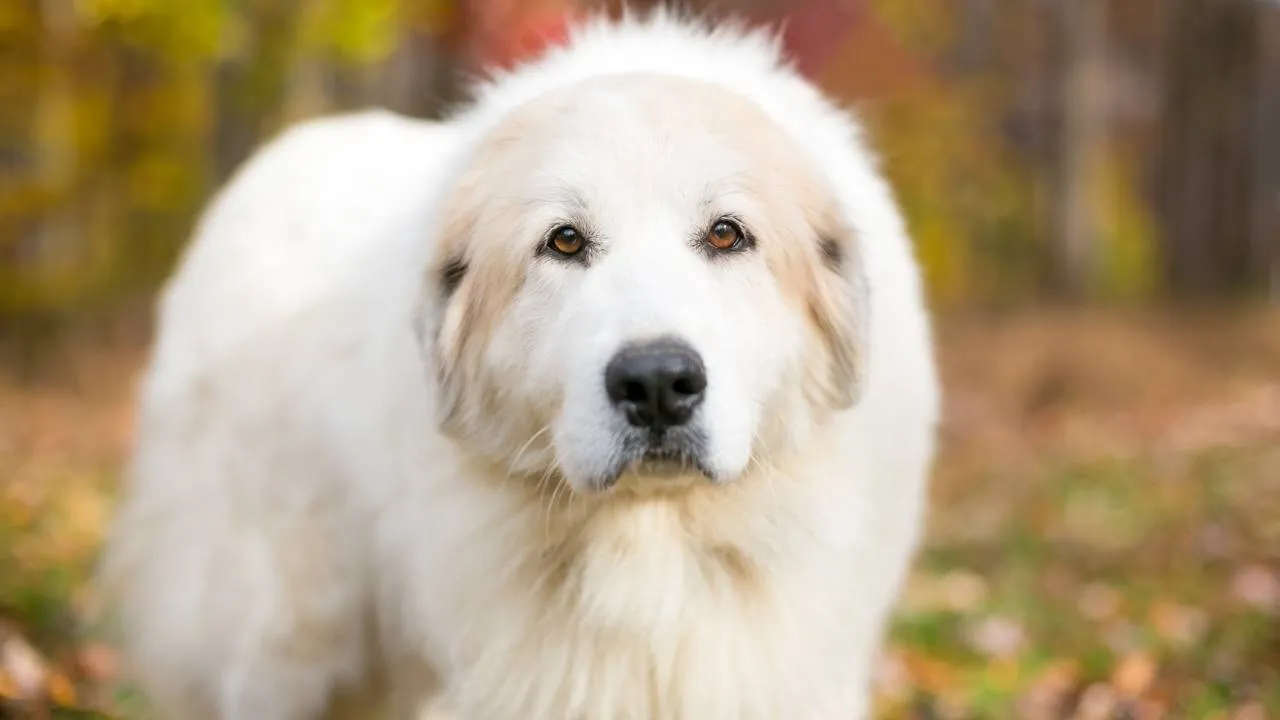
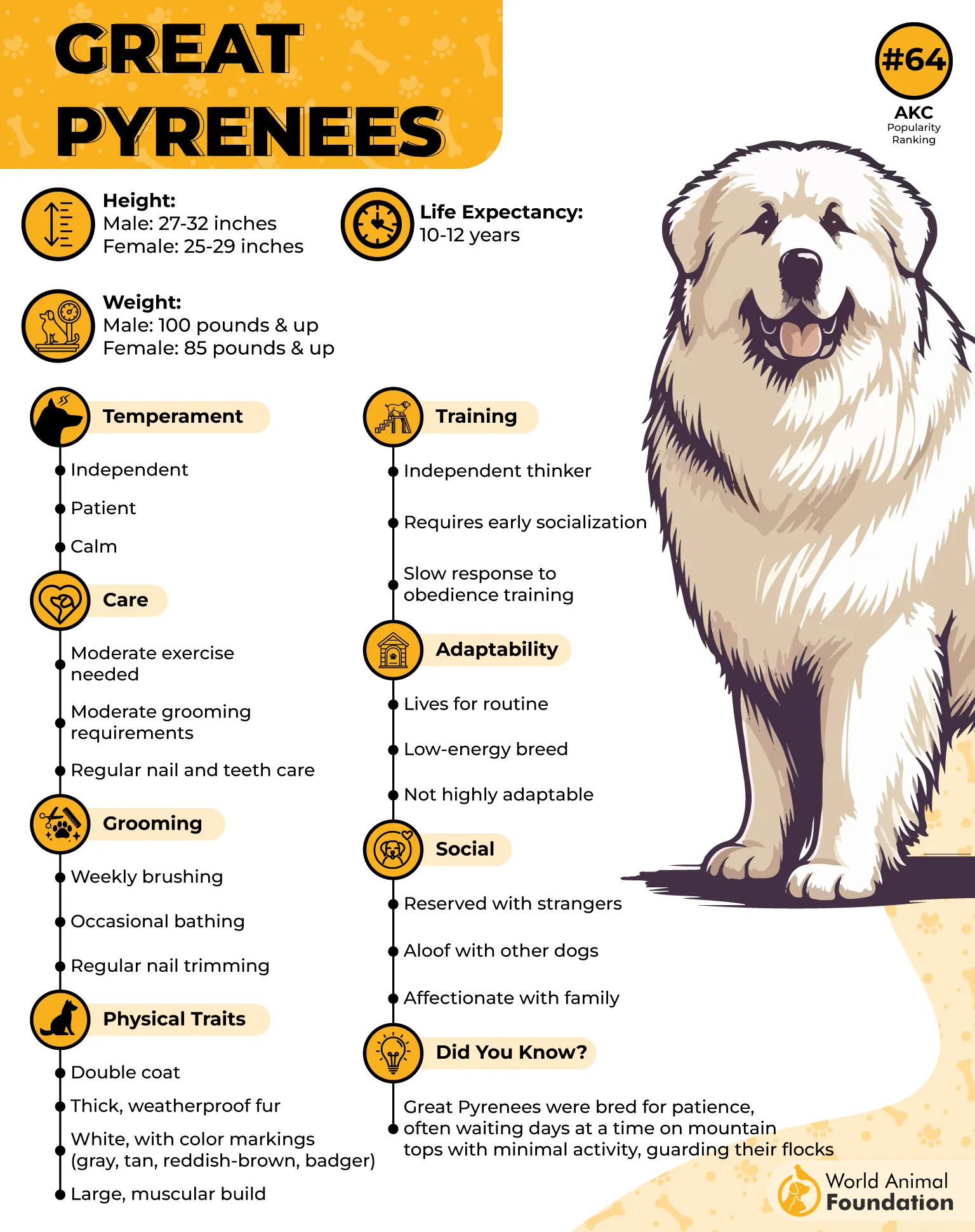
The Great Pyrenees originated in the mountainous regions between France and Spain, where shepherds relied on it to guard livestock against predators, as per Purina. Its work demanded patience, independence, and constant awareness of its surroundings. These historical responsibilities shaped a breed known for protective instincts and strong loyalty to its household.
Exercise, Socialization, and Training for an Independent Guardian
Great Pyrenees dogs need daily walks, secure outdoor exploration, and consistent training. Their independent nature can make obedience challenging, so patient, reward-based methods are useful. Early socialization helps them distinguish everyday activity from genuine concerns. Secure fencing is important because roaming and barking may accompany their guardian instincts.
A Watchful Family Guardian With a Calm Presence
Great Pyrenees dogs often remain composed around familiar people while monitoring their surroundings. Their loyalty frequently appears through quiet vigilance rather than constant affection. Proper socialization can help them become gentle household companions. However, their protective instincts require clear boundaries and careful supervision around children and unfamiliar visitors.
Conclusion
Newfoundlands, Bernese Mountain Dogs, Irish Wolfhounds, Saint Bernards, Dogues de Bordeaux, Great Danes, and Great Pyrenees offer different forms of family companionship. Many are known for their steady temperaments and strong attachments to their households. However, their sizes, exercise requirements, health concerns, and protective instincts vary considerably.
A calm reputation does not guarantee that a dog will remain relaxed in every situation. Children should learn to respect a dog’s space, while adults must supervise interactions and provide consistent training. Early socialization helps dogs become more comfortable around household noise, visitors, and changing routines.
Ultimately, choosing a family dog means matching its needs with your lifestyle. With appropriate exercise, patient training, and responsible supervision, these breeds can become devoted companions. Careful preparation helps create a safer home and a rewarding relationship for the entire family.
