




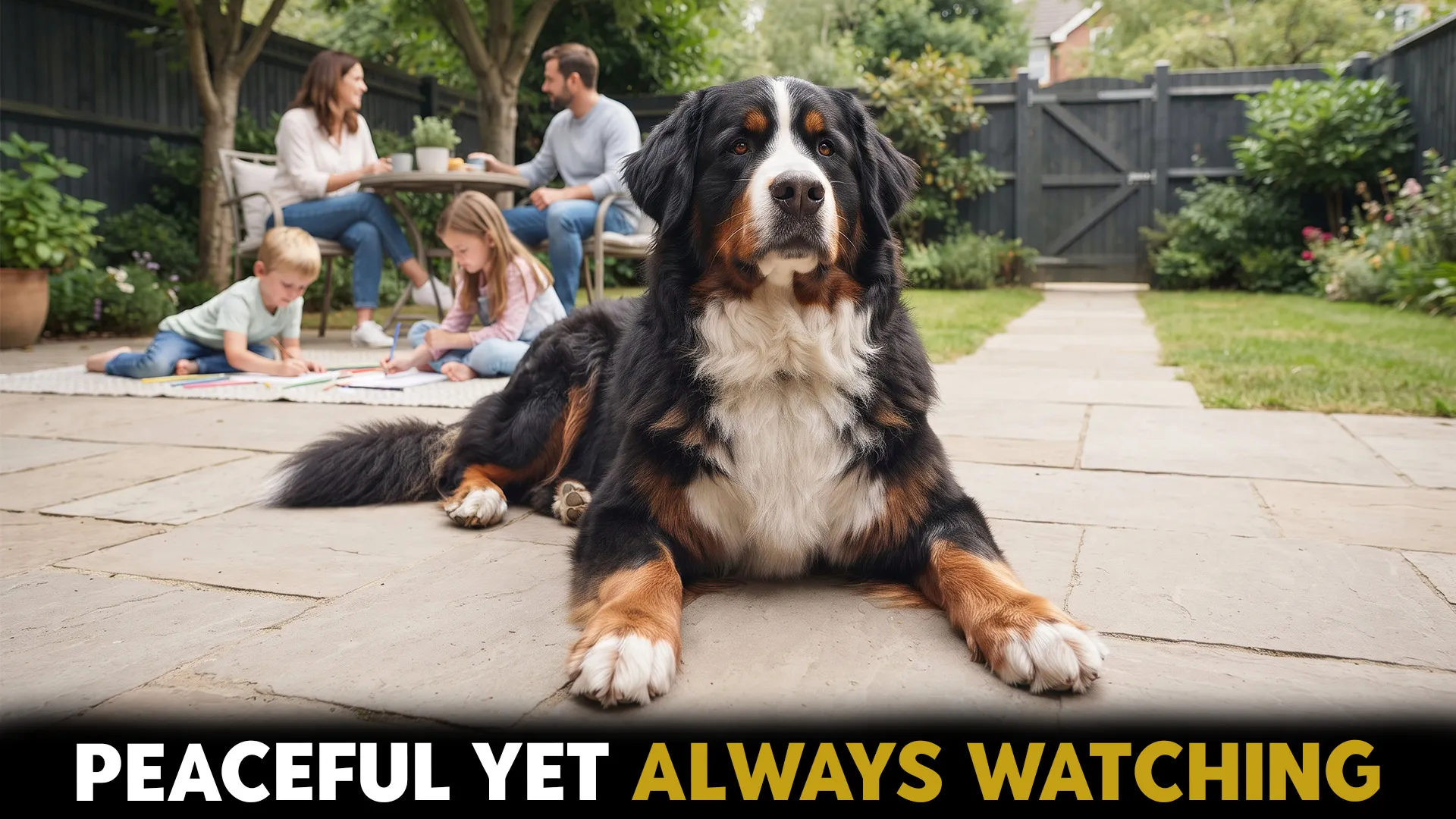
The strongest-looking dog is not automatically the most suitable guard dog for a peaceful home. A serious guarding role involves awareness, control, and a dependable response to familiar situations, not simply size or strength.
Dogs can have excellent hearing and a strong instinct to notice movement or unfamiliar sounds, but those abilities need proper direction and control. Socialization and training help dogs learn how to behave calmly around visitors, other animals, household activity, and everyday distractions.
Calm temperament matters too because a dog that cannot settle can create more problems than it solves. For many households, the appealing combination is a dog that stays attentive. That kind of presence can provide companionship and a sense of watchfulness while fitting into ordinary routines.
The dogs discussed here reflect that quieter side of guarding, where loyalty and awareness matter as much as physical presence.
Key Takeaways
A dog can be gentle around the family and still take its job of watching the home seriously, which is exactly where these breeds get interesting.
Broholmer is affectionate at home, while the Bullmastiff has a fascinating past as a night guardian bred to quietly deal with poachers.
Great Dane, Kuvasz, and Newfoundland each bring a different kind of strength, whether it comes from sheer size, endurance, or an instinctive comfort in the water.
Then come the Bernese Mountain Dog and Rhodesian Ridgeback, showing why training and maturity matter just as much as natural guarding instincts.
Serene Guard Dog Breeds: Calm, Loyal, and Alert
1. Broholmer
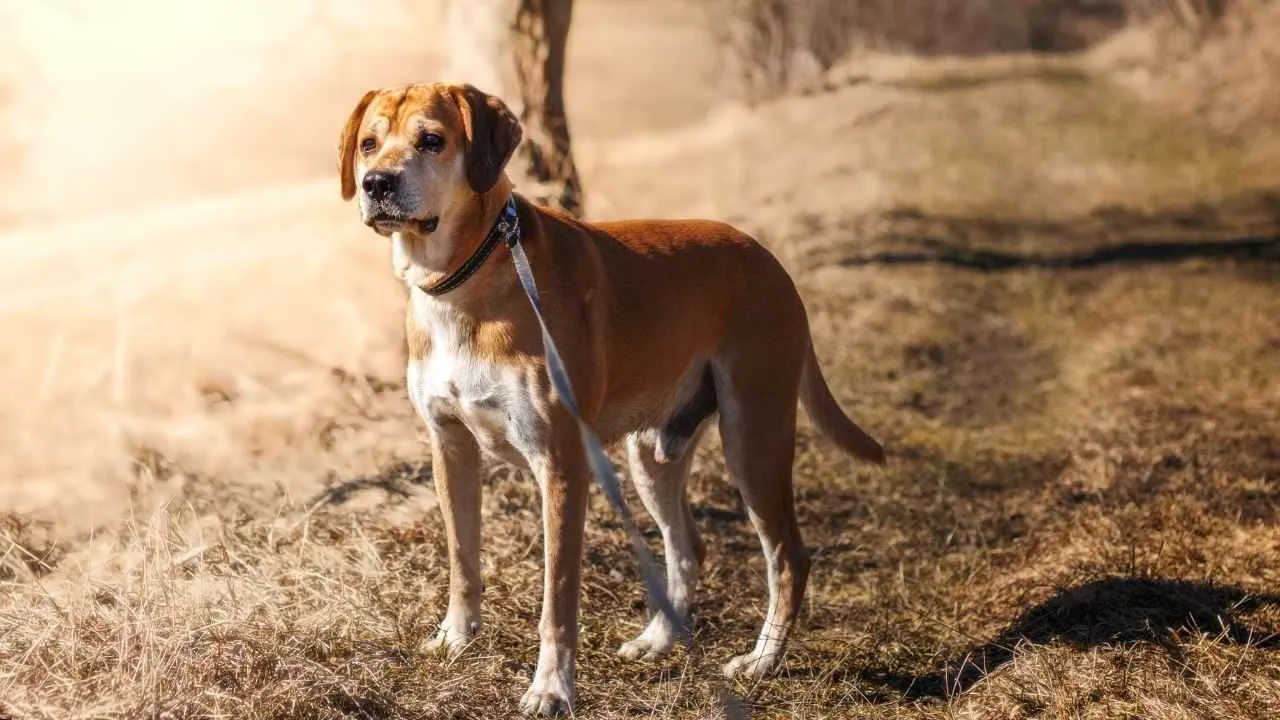
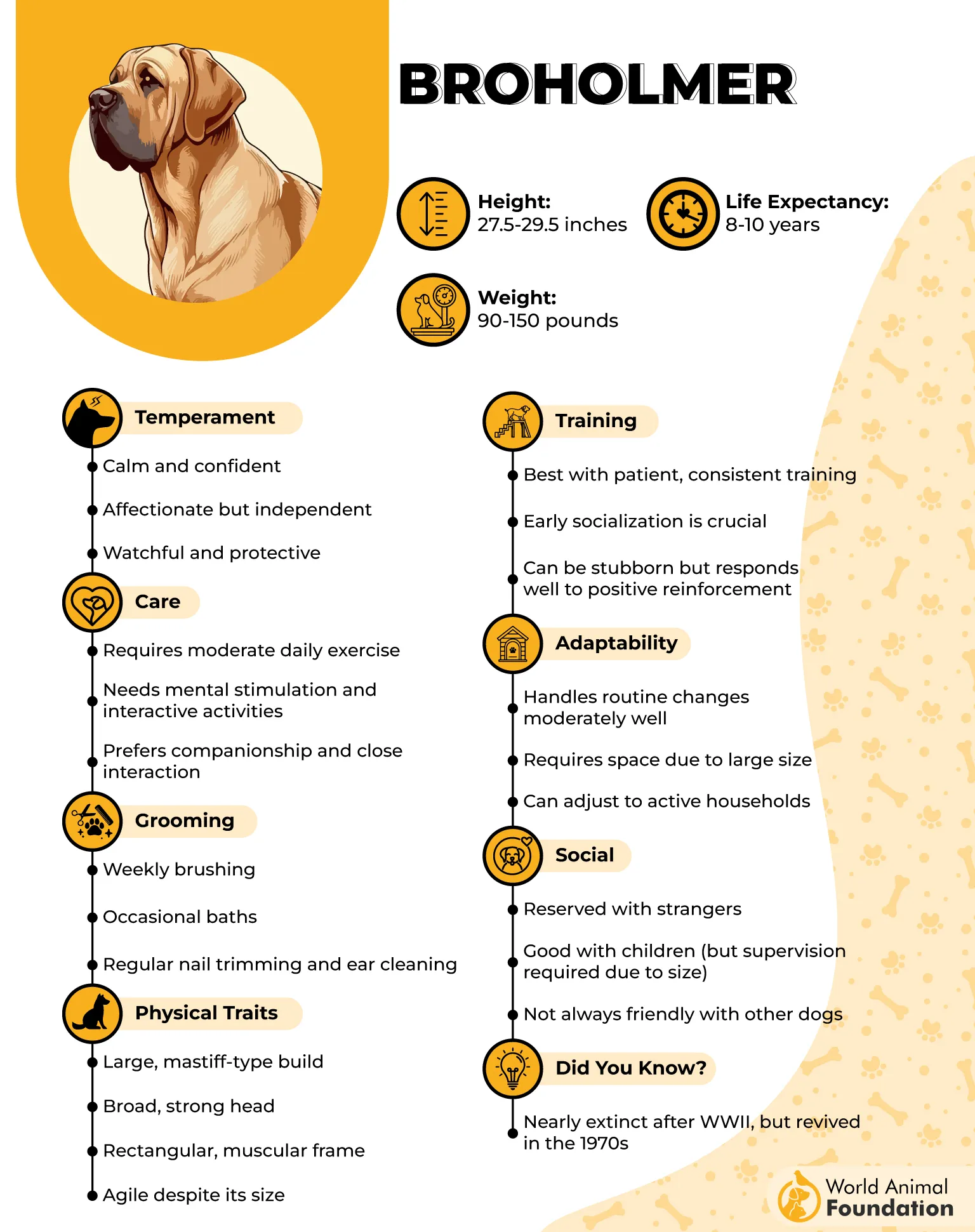
Broholmer comes from Denmark and belongs to the large Molosser group, with its lineage linked to English Mastiffs and local German dogs. Its numbers dropped sharply during World War II, followed by a gradual population recovery that began in the 1970s.
Calm on Guard
This family guard dog brings a composed presence to a home, paired with alertness and a deep protective instinct toward its family. Its confident walk and powerful bark can make its presence known when unfamiliar people approach the property.
There is more to this guardian than its size:
Surprisingly agile for such a large dog
Generally non-aggressive with other dogs
Needs early socialization
Gentle at Home
Broholmer is calm and affectionate with its family and often seeks close contact, sometimes treating a family member’s lap as its favorite resting place, as Royal Canin claims.
Training needs consistency because intelligence and willingness to learn can come alongside a stubborn streak, while daily activity helps prevent behavioral problems.
2. Bullmastiff
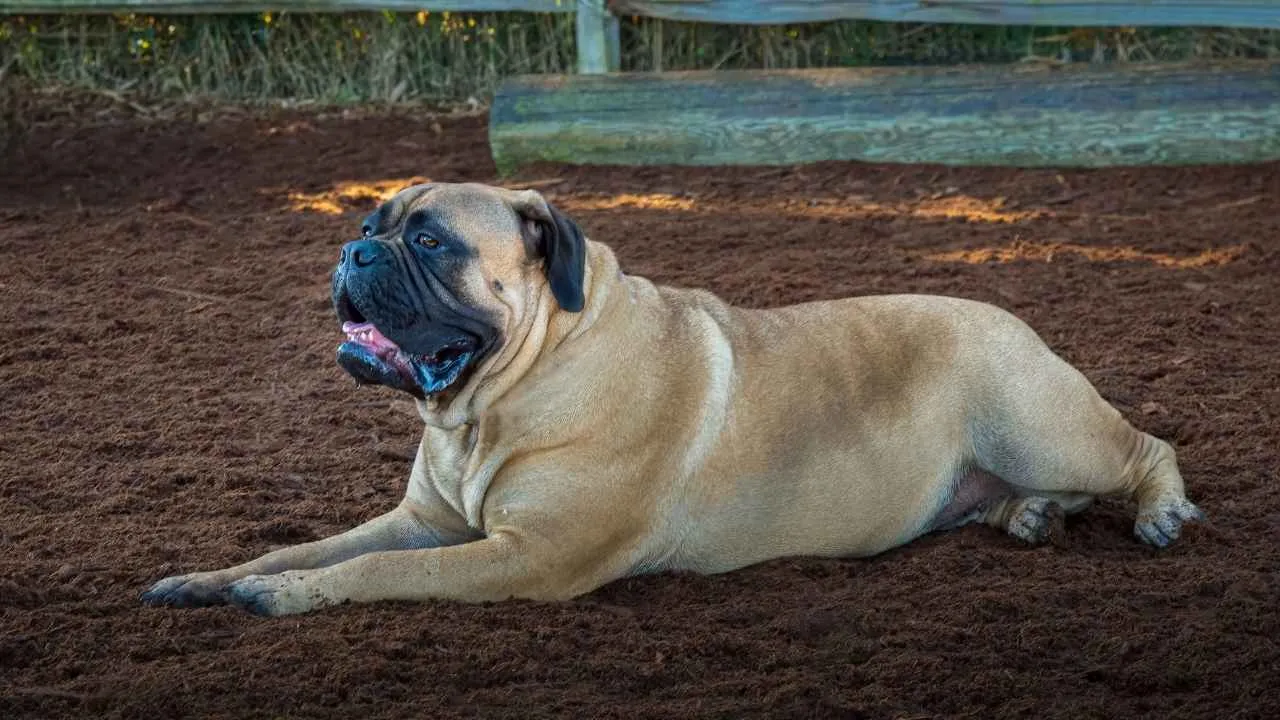
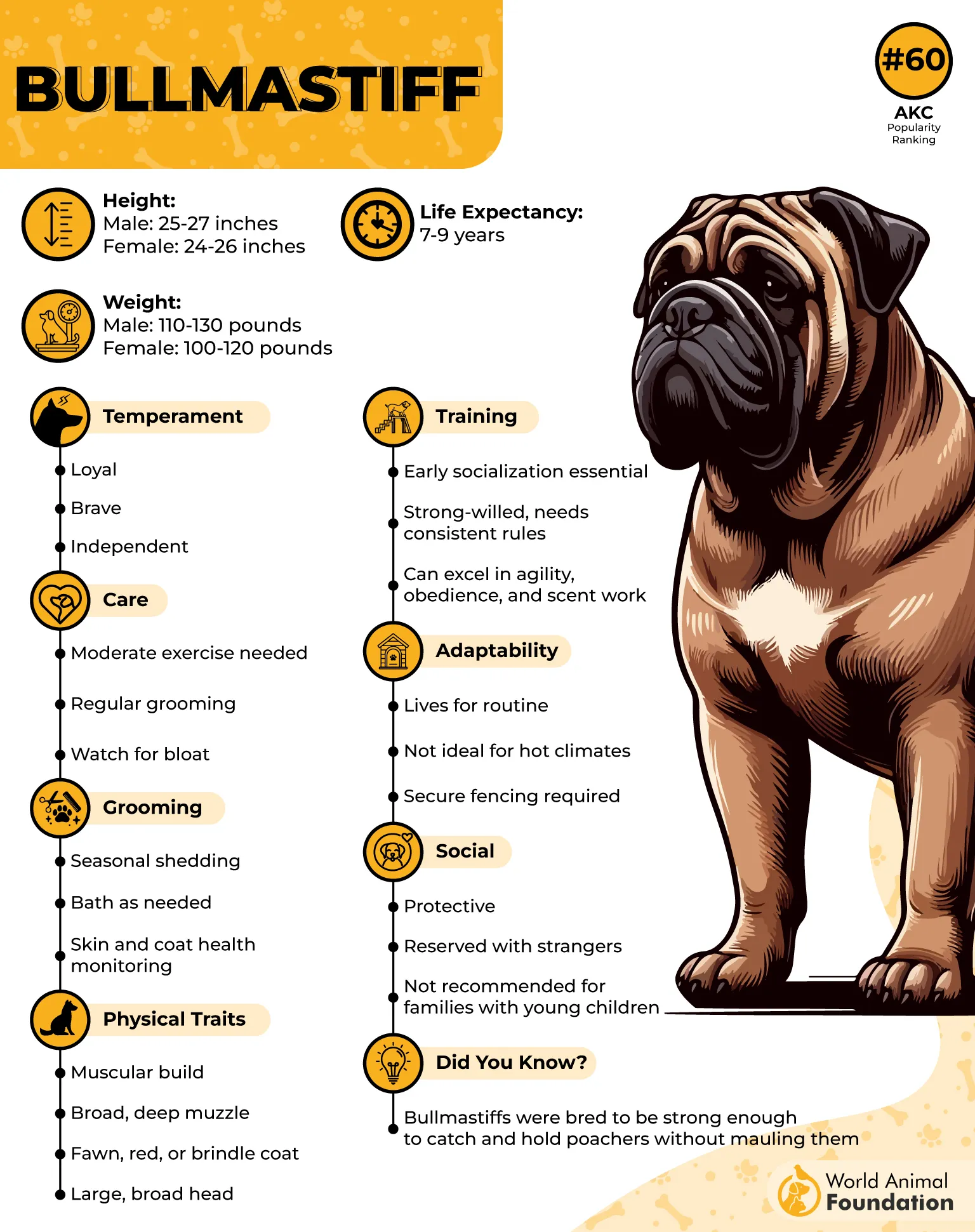
Bullmastiff first appeared in records in the late 1800s, when English estates faced serious problems with poaching. Breeders crossed Bulldogs with Mastiffs to create a powerful night guardian that could quietly wait for a poacher and restrain him until the landowner arrived.
Quiet Perimeter Guard
This large breed has a naturally protective nature and pays close attention to what happens around its home and family. Its size alone can make an intruder think twice, while its usual quietness means barking is more likely when the dog senses a genuine threat.
These traits make its guarding style especially distinctive:
Deeply attached to its household
Gentle with well-socialized children
Follows favorite people around the home
Training Needs Variety
Bullmastiffs can become stubborn when training relies on repeating the same command again and again. Mixing commands with play, praise, and affection can make lessons more effective, while early exposure to strangers is important because reactions at the door can become intense without proper socialization.
3. Great Dane
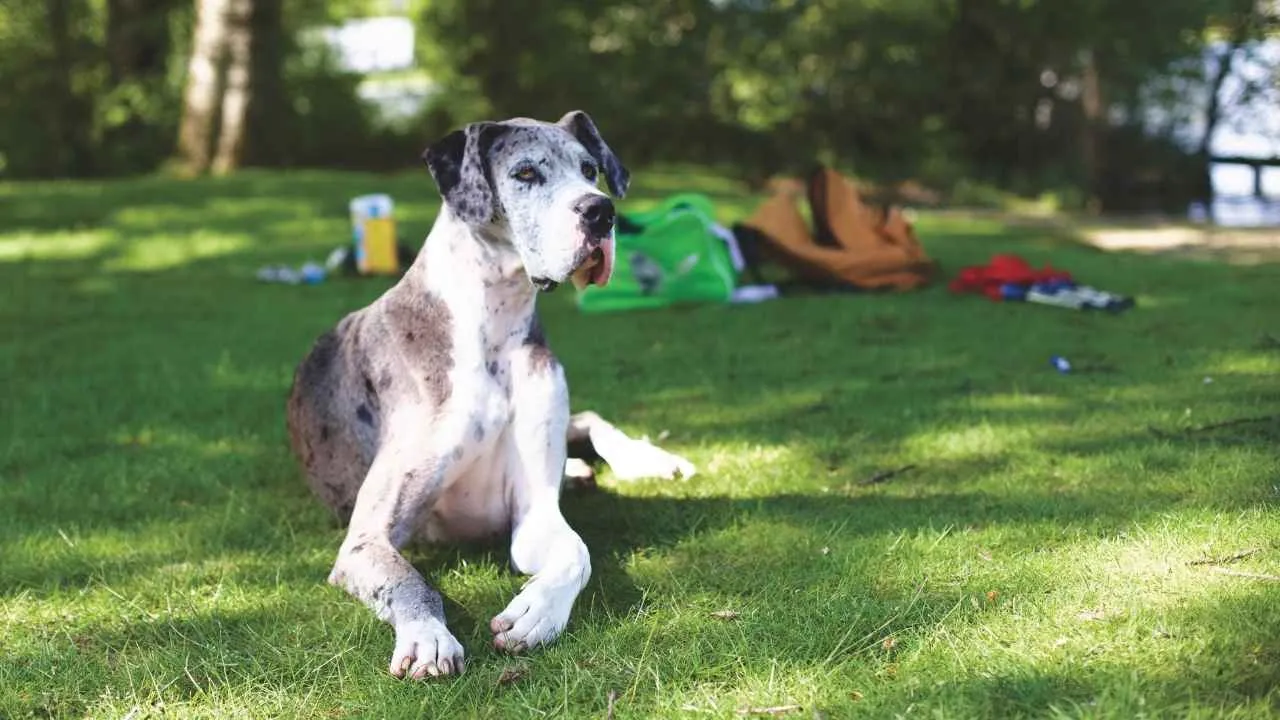
Great Dane originated in Germany, where it was used to hunt wild boar and was valued for pursuing and bringing down powerful, aggressive game. British writers called these dogs “German Boarhounds,” while Germany still uses the name Deutsche Dogge, or German Mastiff.
A Serious Presence
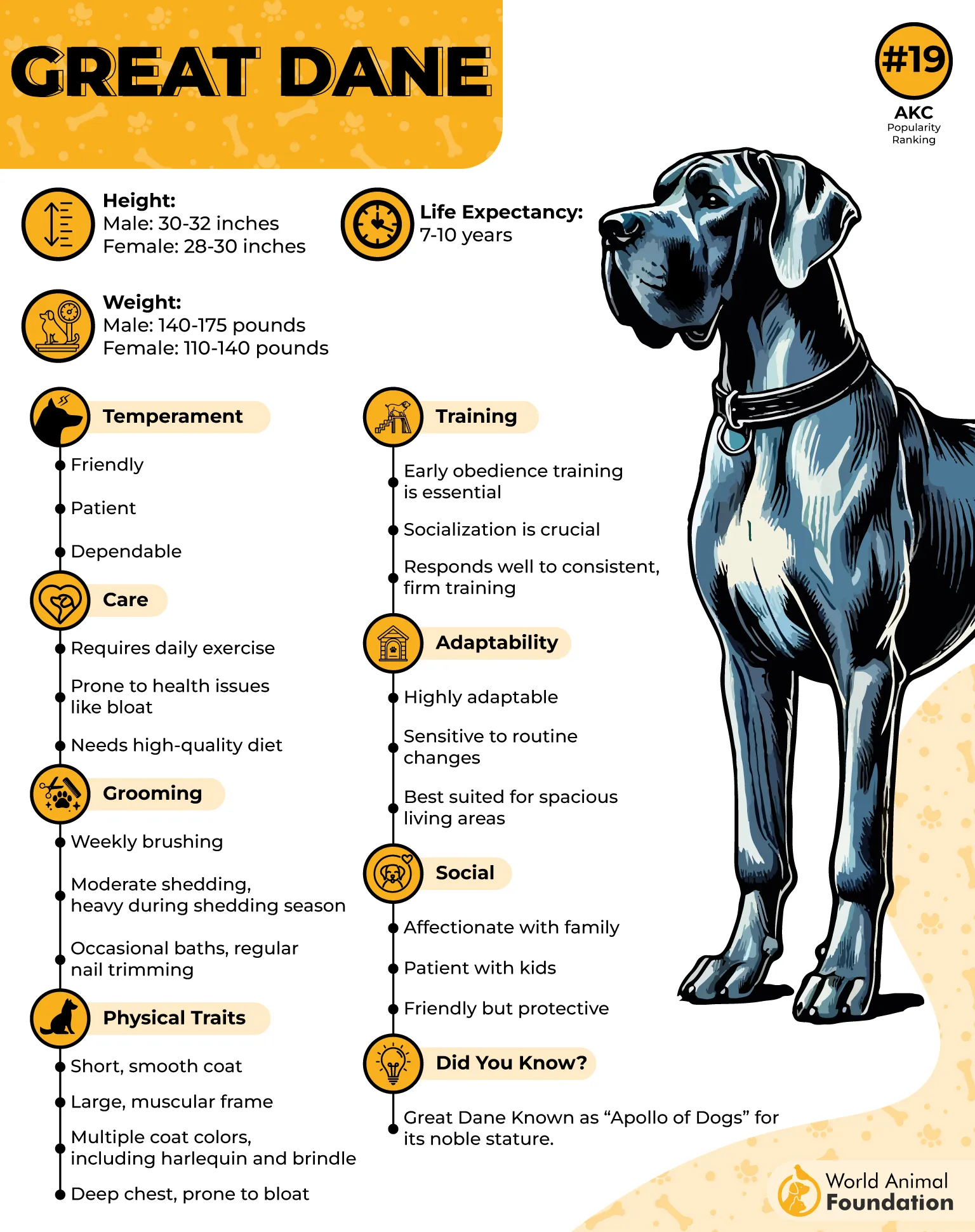
This loyal companion can make an imposing guard dog simply through its enormous size and powerful bark, which may discourage an intruder before a closer encounter.
Some lines also retain stronger protective instincts, so breeding choices matter when looking for a dog suited to guarding work.
This is what matters when considering that role:
44-inch shoulder record recorded in 2014
Vigilant toward changes around the property
Can compete successfully in training events
Family Comes First
Great Danes form close attachments to family members, including children, and careful training can help channel that loyalty appropriately. Early socialization also matters because regular exposure to unfamiliar people helps the dog distinguish ordinary visitors from genuine concerns.
4. Kuvasz
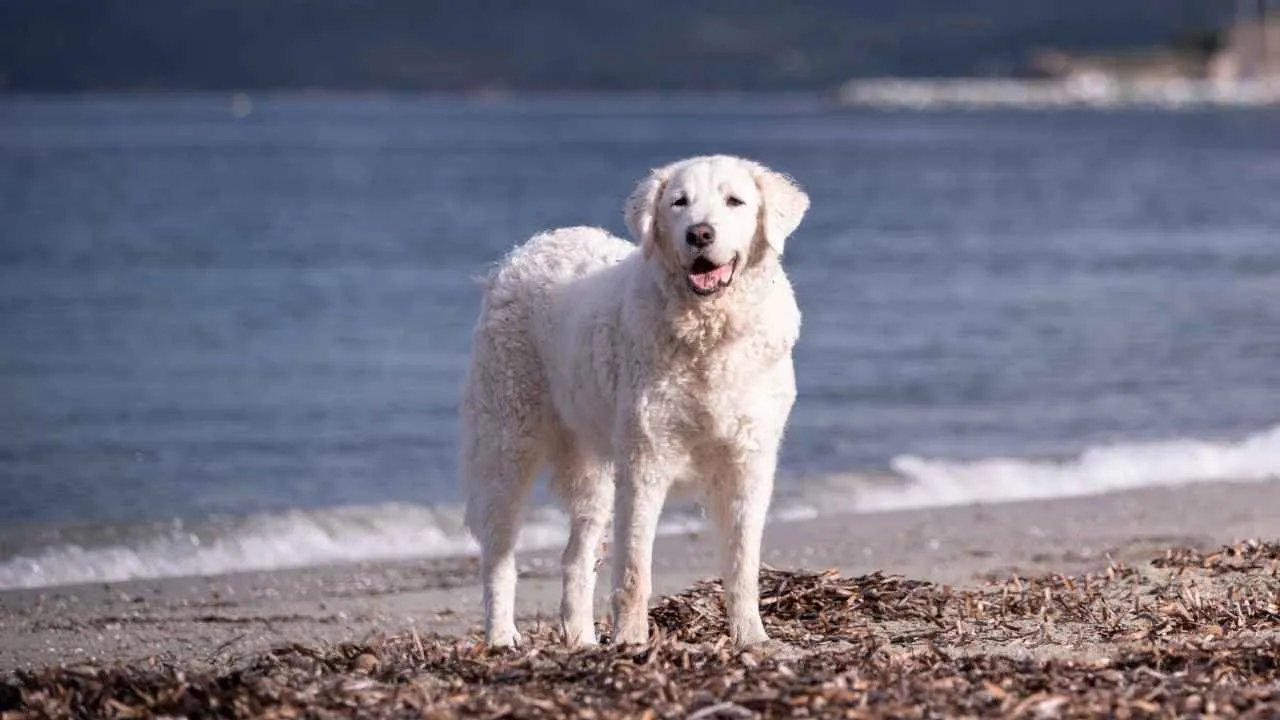
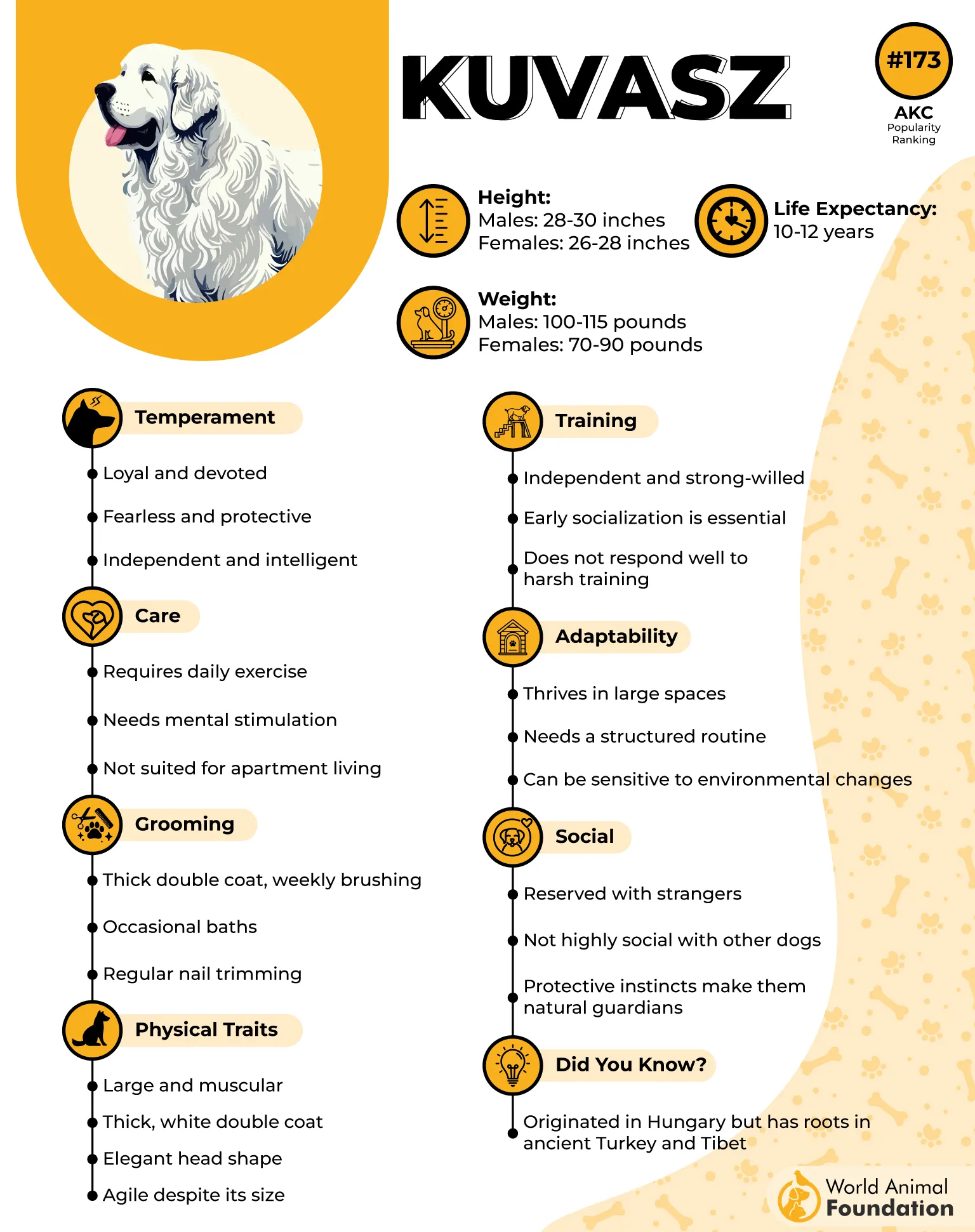
Kuvasz is an ancient Hungarian breed, though its deeper roots are often linked to large dogs from Tibet. Once reserved for royalty, it later became valued by farmers for guarding livestock, with its pure white coat helping distinguish it clearly from wolves in the field.
A Serious Guardian
Kuvasz has the size and stamina suited to serious protective work, with the ability to patrol property and cover long distances. Its independent nature allows it to assess unfamiliar situations without waiting for constant direction from a person.
The following characteristics give its behaviour more context:
Loud bark used to warn of intruders
Older dogs tend to be gentle and respectful with children
Younger dogs may misjudge their strength during play
Training With Patience
This protection dog needs meaningful work and has immense stamina, with enough endurance to run for miles and potentially outlast a jogging partner. Training calls for a gentle approach because harsh words can produce a poor response, while play, treats, and consistent guidance work better.
5. Newfoundland
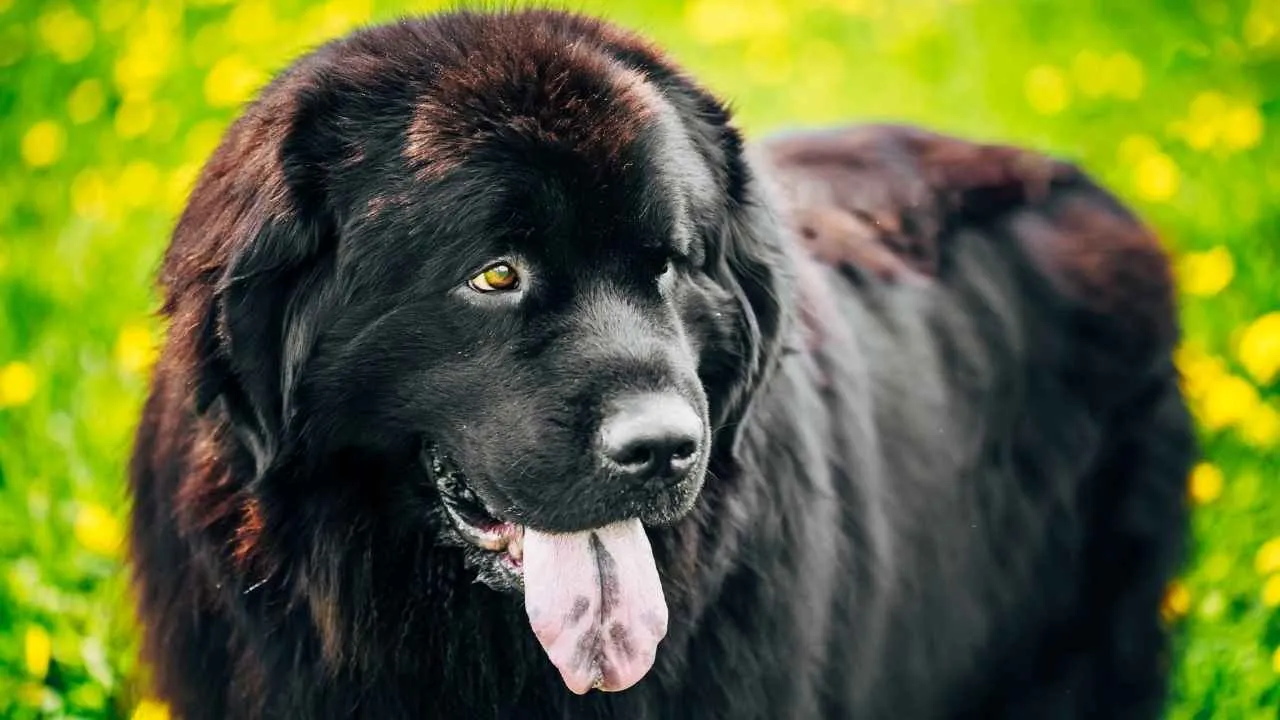
Newfoundland was developed on the Canadian island that shares its name, where early examples were shaped by the demanding work of local fishermen.
Portuguese Fishermen’s Mastiffs are believed to have influenced the breed during the 16th century, when these dogs helped with nets and hauled carts.
Made for the Water
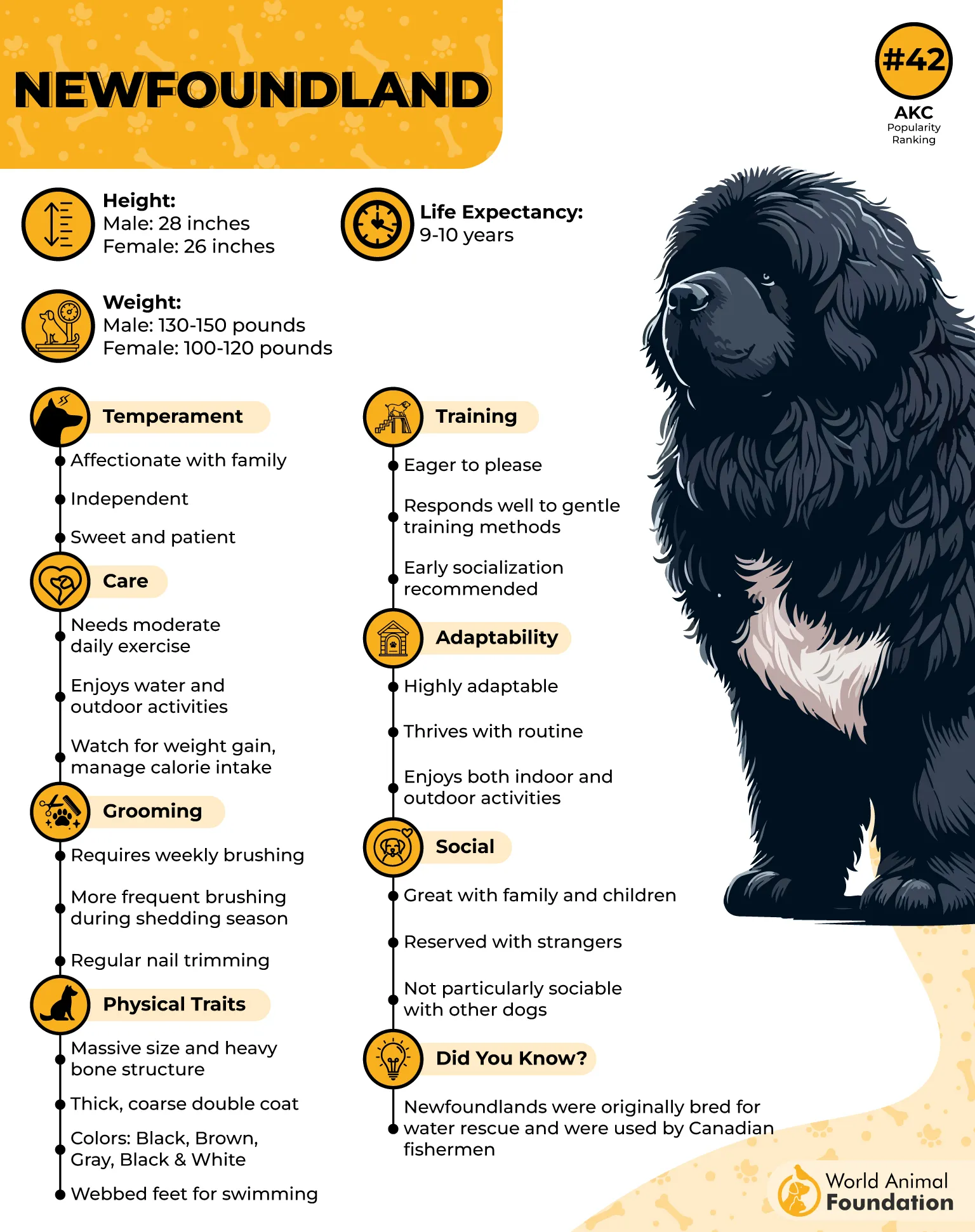
Newfies bring unusual water skills to guarding tasks, with a strong swimming ability and an instinctive response when someone appears to be in danger. Its working role included pulling loads for fishermen, giving the breed practical strength alongside its natural comfort in the water.
A few specific details add another layer:
Can tow distressed swimmers to safety
Known for an exceptionally gentle temperament
Its enormous size requires care around very small animal
Quiet Protection
This docile guard dog can place themselves between their family and danger when a genuine threat arises, giving its protective nature a physical presence.
It generally uses its voice sparingly, yet can raise an alarm when something seems wrong, with its size placing it among the giant breeds, as Orvis highlighted.
6. Bernese Mountain Dog
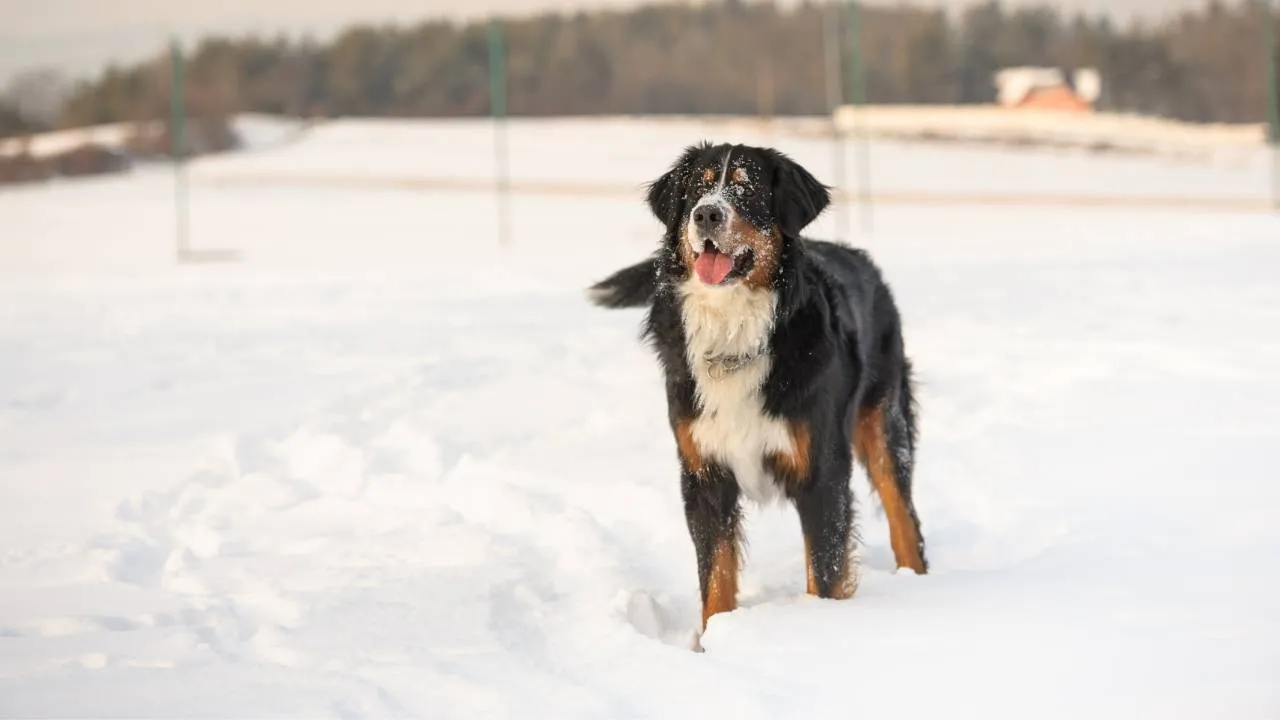
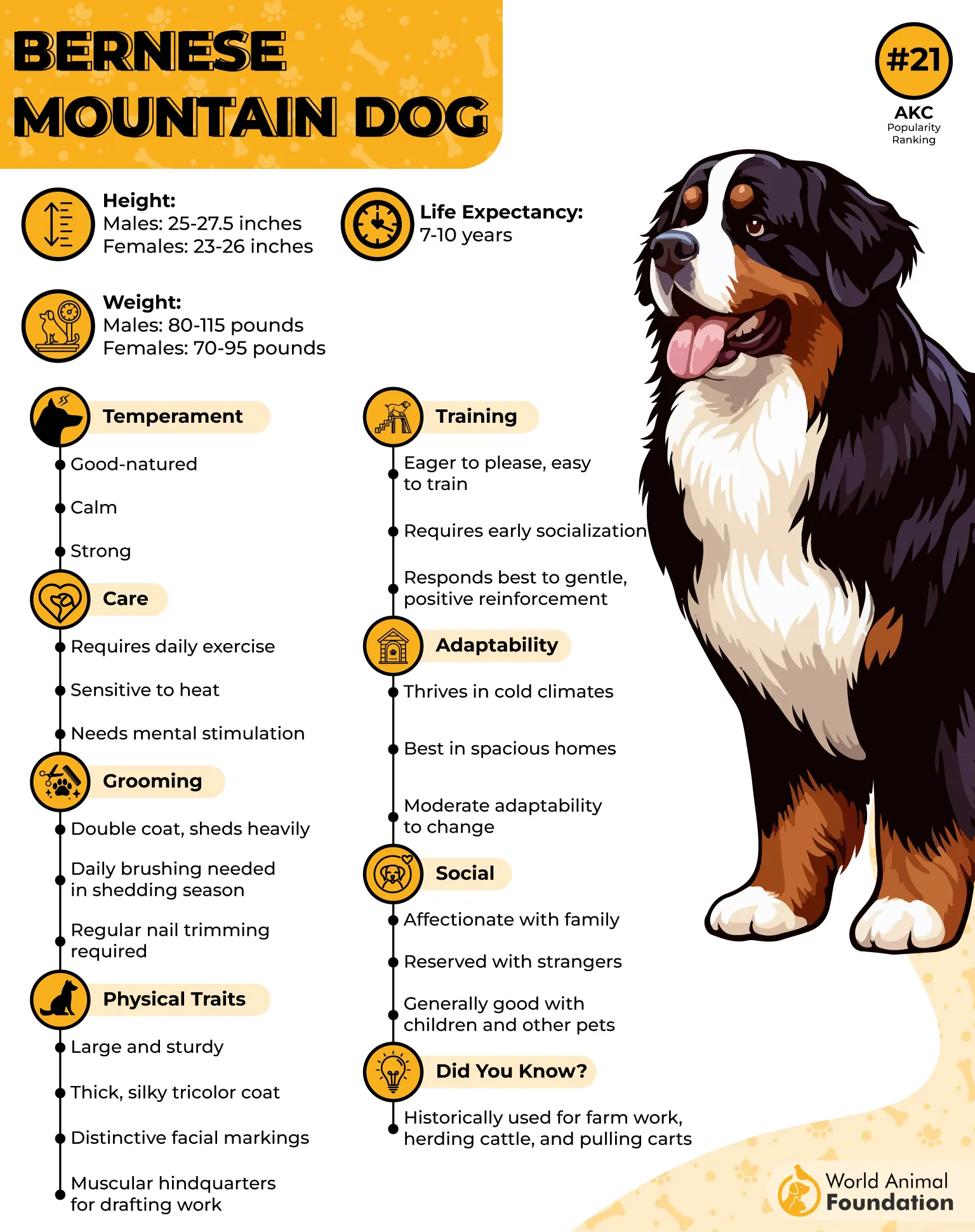
Bernese Mountain Dog spent centuries around Swiss Alpine farms, particularly in the Durrbach area, where it worked as a farm helper and was once called the Durrbachler.
Its jobs included driving dairy herds and pulling carts before the breed later took the name Bernese Mountain Dog.
A Calm Watch
For a large guardian, this breed has a measured approach to family protection. It can bark when an unfamiliar person approaches the home or property, while reassurance from its family can help it accept a stranger.
A few practical details matter for this role:
Generally placid with unfamiliar people
Adolescent clumsiness can knock over small children
Can live well with cats and other dogs
Slow to Grow Up
Bernese Mountain Dog matures gradually in both body and behavior, often keeping puppy-like habits for its first couple of years. Regular obedience work is important because this intelligent breed can test boundaries, especially when its considerable size makes poor manners harder to manage.
7. Rhodesian Ridgeback
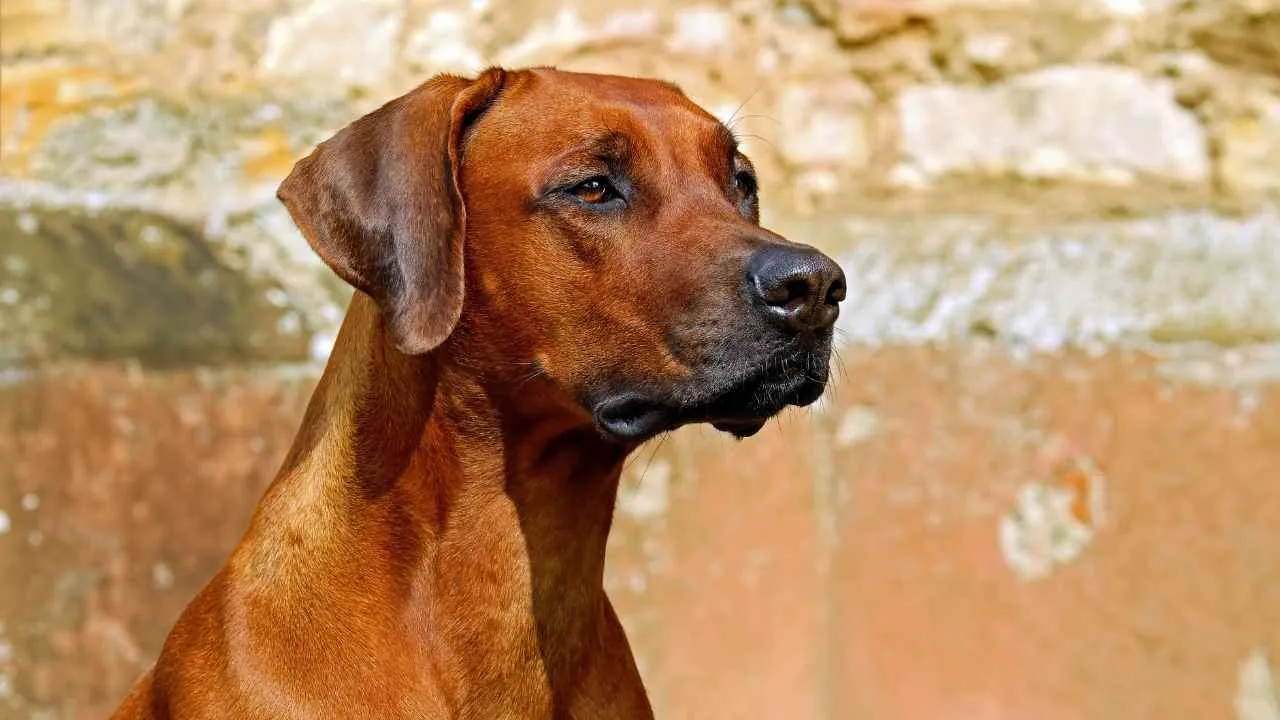
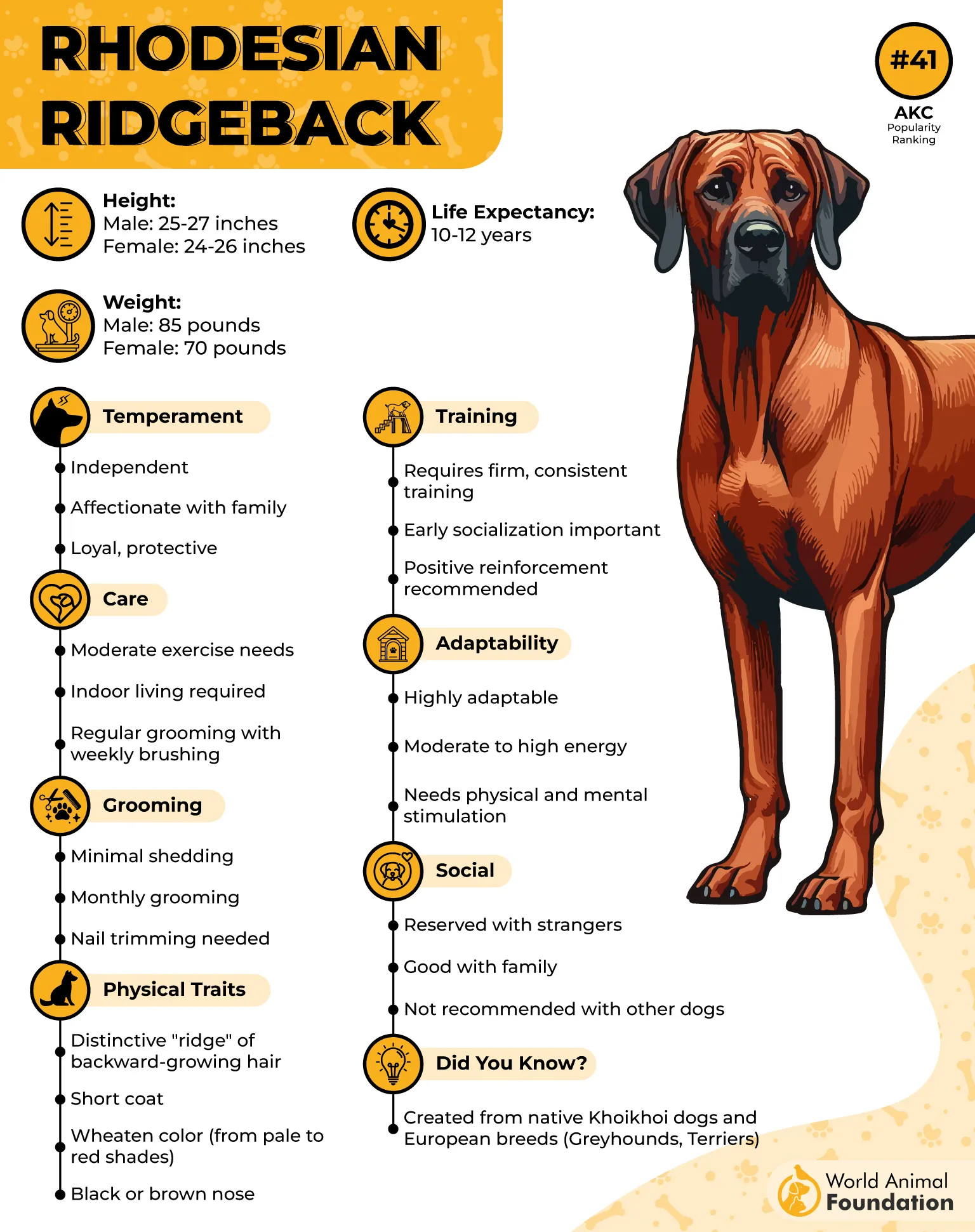
Rhodesian Ridgeback traces its roots to the 16th and 17th centuries, when European settlers crossed Mastiffs, Bloodhounds, Great Danes, Pointers, and Greyhounds with native hunting dogs. By the late 1800s, these powerful dogs were taken to Rhodesia, now Zimbabwe, where they tracked lions and held them at bay during hunts.
Built for Active Living
According to the AKC, they have the stamina for running and jogging, while younger dogs can have almost boundless energy. Their keen eyesight and strong sense of smell also make safe walking areas important, especially when something as simple as a windblown carrier bag can trigger a chase.
That high energy can change as they mature:
Excellent jogging companion
High prey drive around smaller animals
Can become calmer with age
Training Matters Early
This loyal dog is intelligent and capable of learning quickly, although stubbornness and selective deafness can complicate lessons. Early, firm, consistent obedience training helps establish boundaries, particularly with a powerful dog that already possesses strong natural guarding instincts.
Conclusion
A peaceful home can still benefit from a dog that takes notice when something feels unusual. Natural guarding ability becomes more useful when paired with a calm temperament, reliable training, and good socialization. Exercise remains important because even composed dogs need physical and mental activity throughout the week.
Owners should also think about maturity, size, independence, and how much time they can give each day. A protective companion should be able to settle around familiar people while responding appropriately to unfamiliar situations. Finding that balance takes patience, but it can make everyday companionship feel both comfortable and reassuring at home for everyone.
