




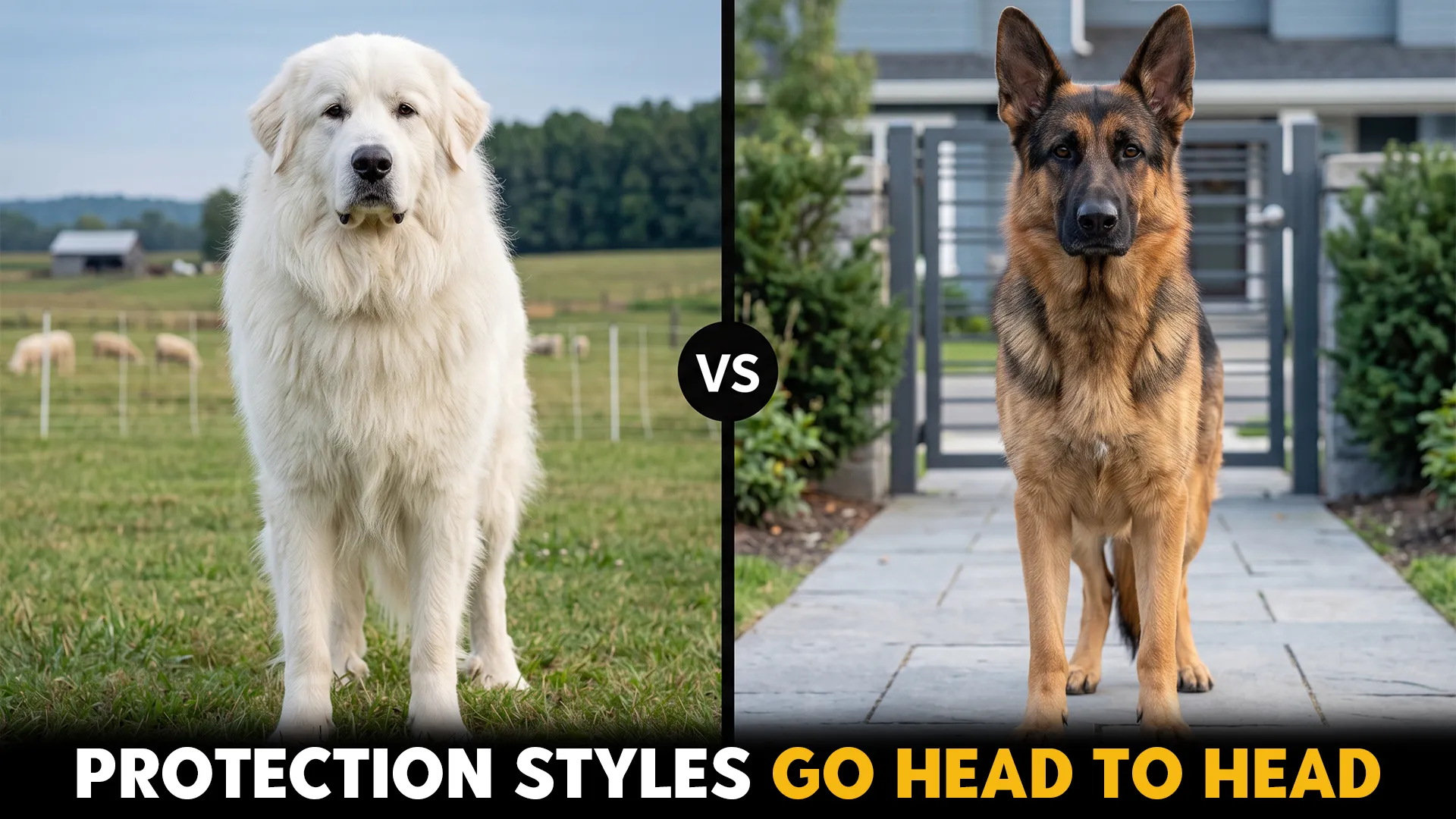
Great Pyrenees and German Shepherds may seem like two sides of the same coin. Both are large dogs with powerful builds and make perfect farm dogs due to their histories. But they actually differ in their temperament, instincts, and daily needs.
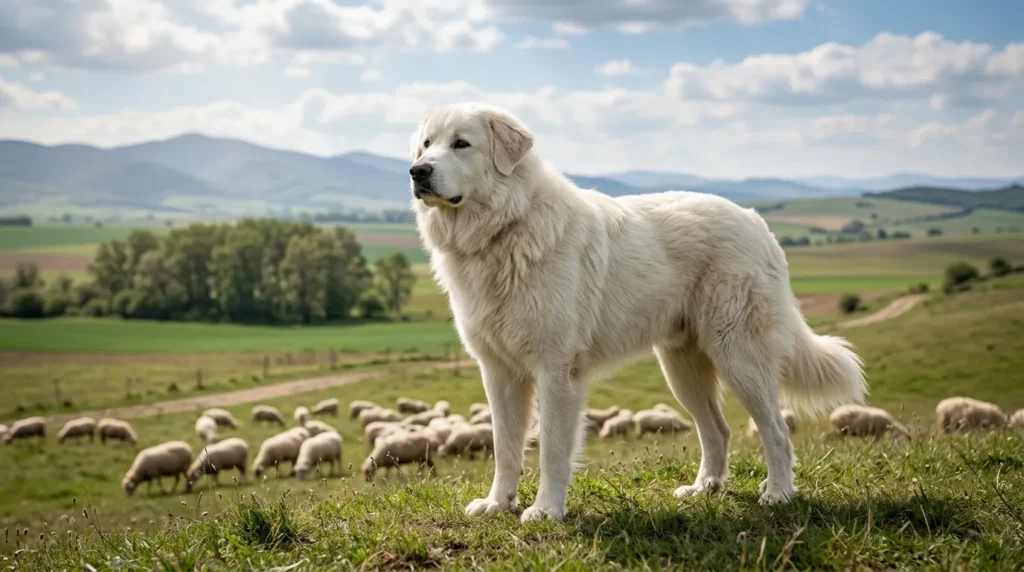
The Great Pyrenees were born to be patient and independent livestock guardians that assess threats and keep predators at bay without human direction. On the other hand, German Shepherds are highly trainable dogs originally bred for herding sheep.
They are also quite famous for search and rescue missions and even worked as military and police dogs.
So they are both for farm work, but they differ in their styles and what they do. Likewise, there are a lot more differences in their trainability, coats, energy, and activity levels.
If you are confused between the two, stick around as we are going to discuss the differences in detail. We will discuss their physical features, speed, and strength so you can make a wiser decision.
Great Pyrenees vs. German Shepherd Dog Breeds: Which Wins?
1. Physical Features
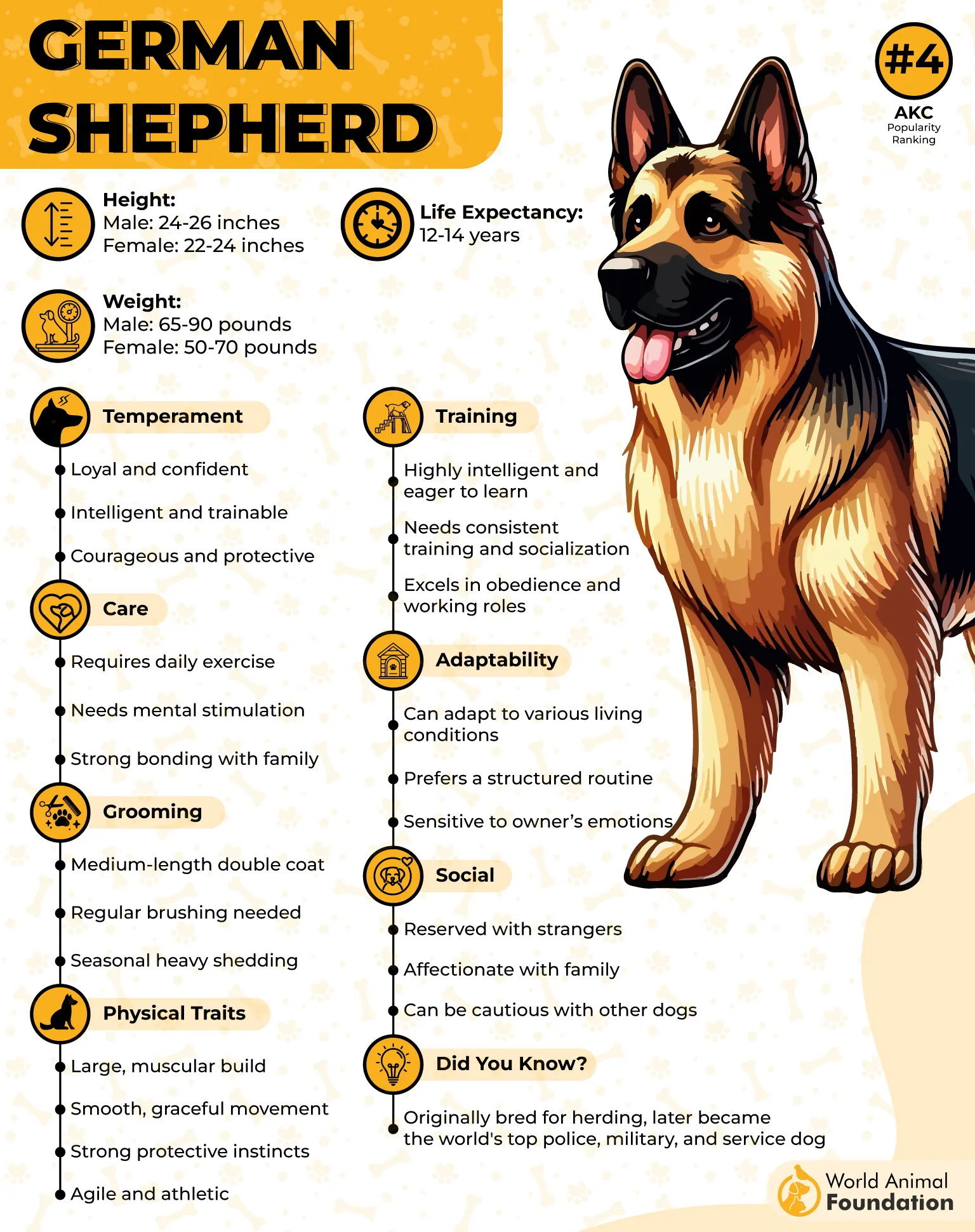
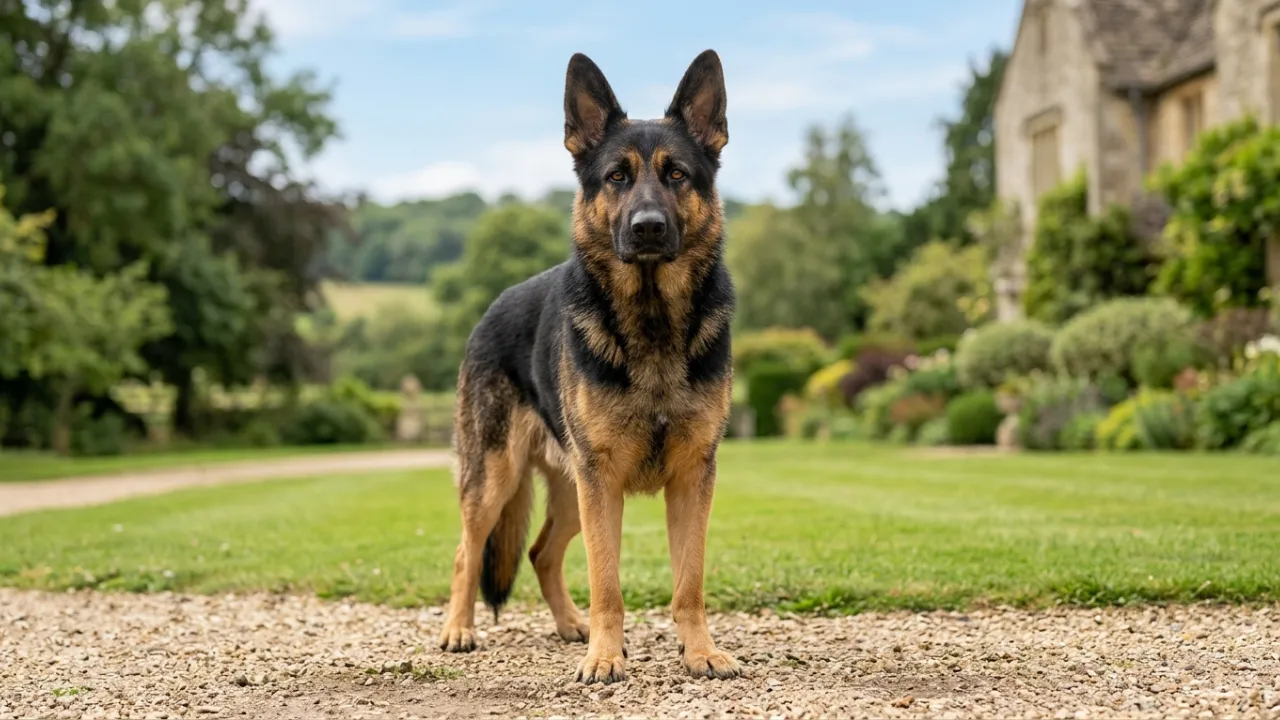
German Shepherds are athletic, noble, and large dogs with a lean frame. Males typically stand 24-26 inches tall and weigh 65-90 pounds, while females typically stand 22-24 inches. They have a wedge-shaped muzzle, a dark nose, almond-shaped eyes, and a dense, weather-resistant coat.
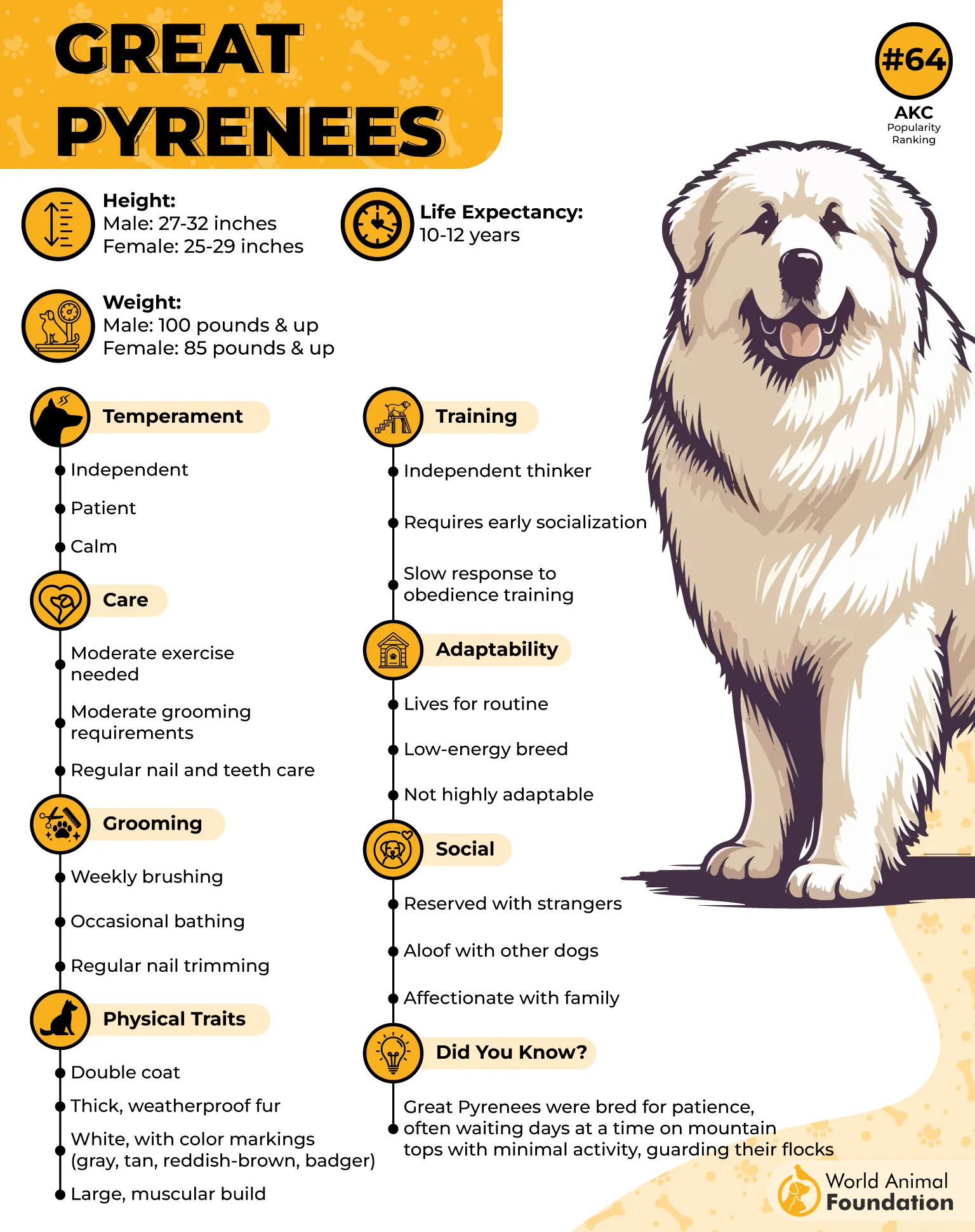
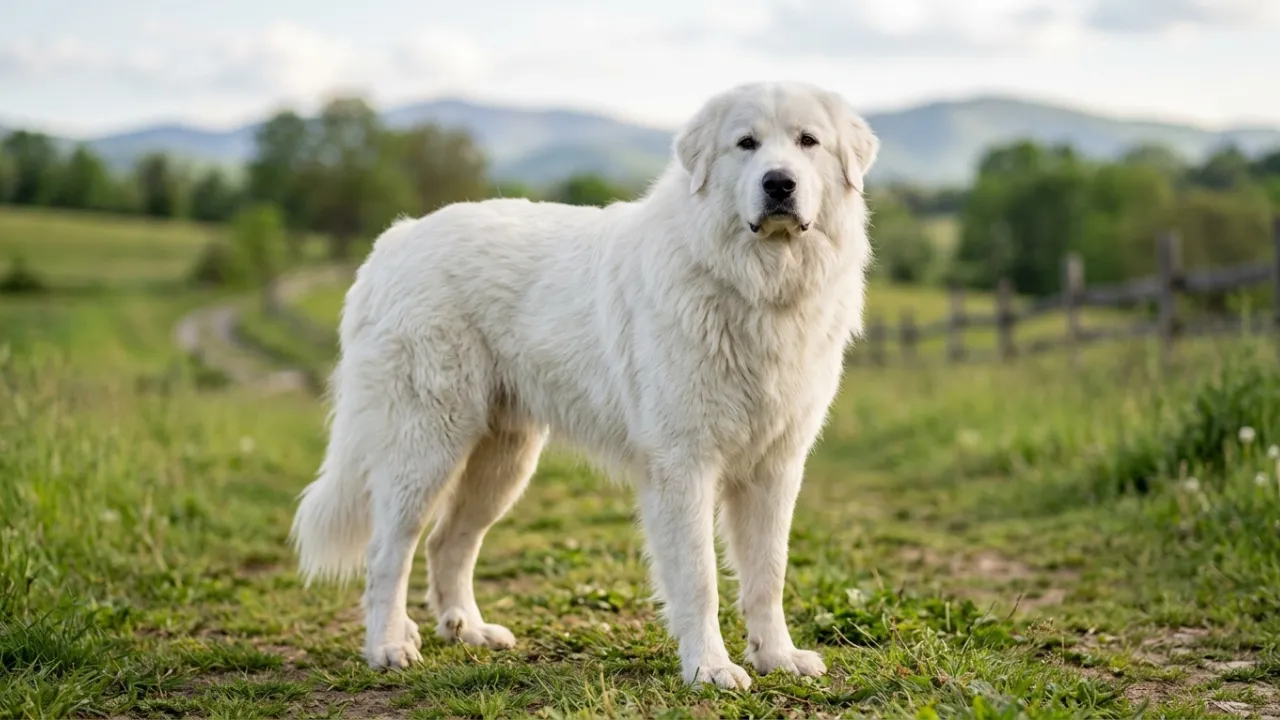
In comparison, Great Pyrenees are immense, imposing, and gentle giants. The male dogs usually stand 27-32 inches tall and weigh 100-160 pounds. They carry a heavy boned, broad-chested frame and extreme power rather than high-speed agility.
They have a gentle crown, a broad muzzle, and black lips with V-shaped ears. Their coat is also weatherproof, with a woolly undercoat and heavily padded paws. So GSDs are athletic, explosive, and have a lighter frame, while Great Pyrenees have immense strength and mountain durability.
2. Speed & Strength
German Shepherds are built like high-performance sprinters. They can reach impressive speeds of up to 30 mph and also have a flexible spine that allows them to quickly change directions. GSDs have immense muscular strength and stamina, along with a 238 PSI bite force.
On the other hand, the Great Pyrenees can reach bursts of speed up to 25 mph when defending their territory. These livestock guardians work on energy conserving model so they save their energy for short and sudden chases. However, they have immense strength and power that often intimidates predators.
GSDs are great in terms of speed, agility, reflexes, and stamina. But Great Pyrenees often win when talking about dogs with massive physical weight and force. They absorb hits and hold ground when resisting predators.
3. Exercise & Energy Levels
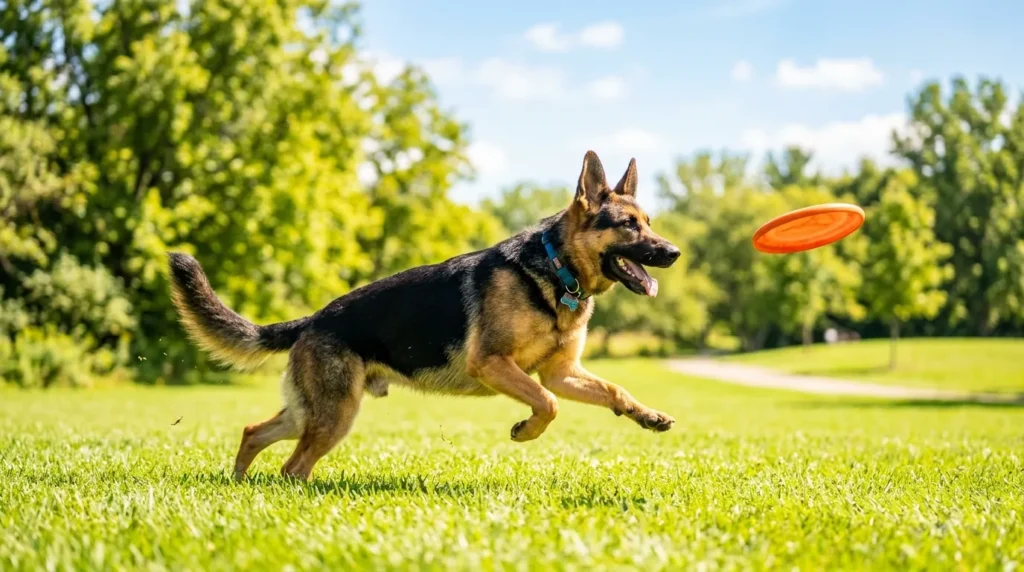
German Shepherds have high energy levels and require about 1-2 hours of vigorous exercise for mental stimulation. They enjoy activities that engage their muscles and lungs such as brisk hiking, tug of war, flirt pole, agility drills, trailing, or intense games of fetch.
In contrast, Great Pyrenees are low-energy dogs, as PetMD shared. They are usually calm and require about 30-45 minutes of daily activity so they stay active and don’t gain weight. These big dogs enjoy relaxed walks in a securely fenced yard.
So both dogs have quite different energy levels and exercise needs. GSDs are active and agile while Great Pyrenees are low-energy and relaxed dogs. If you are a calm or busy owner, then this is something you need to look up when choosing.
4. Training & Intelligence
German Shepherds are often ranked as the #3 smartest dog breeds due to their ability to learn commands and their intelligence. They are super easy to train due to their eager-to-please nature but also have a strong will and require early socialization.
These large dogs respond best to consistent and positive training methods that keep them engaged. On the other hand, Great Pyrenees have highly adaptive and problem-solving skills. They are independent and not perfect for first-time owners.
They require patient, gentle, and calm handlers as they respond best to short positive training sessions and food rewards. Both of these breeds are intelligent but require confident handlers due to their strong-willed and independent decision-making skills.
5. Socialization & Living Environment
German Shepherds are naturally reserved toward strangers, so early socialization is important to diverse people, sights, and environments. This is to make sure they don’t become overreactive or excessively suspicious of everyone around them.
They generally do well in multi-pet households if properly trained and enjoy being at home with large fenced yards so they can run around. In comparison, socialization is also non-negotiable for Great Pyrenees, and they are also suspicious of strangers.
They don’t do well in apartments or humid regions, as Hill’s Pet described. These gentle giants require big yards like GSDs. Their calm nature makes them perfect for multi-pet households. So, being large, both breeds may not fit into compact homes as they need space to move around.
6. Coat Grooming Needs
German Shepherds have a medium-length double coat with a soft, thick undercoat to withstand the changing weather. They shed heavily throughout the year, and that’s how they got the nickname of ‘German Shedders’. In addition, they blow their coat twice a year seasonally.
They need brushing 2-3 times a week using a slicker brush to remove loose hair and keep their coat clean. In comparison, Great Pyrenees have a coarse, dirt-repellent coat that also sheds heavily, as per Purina, with massive seasonal shedding twice a year.
These giant breeds have a self-cleaning coat but still require weekly brushing using a slicker brush and pin brush to reach the dense undercoat. However, make sure to pay special attention to the long fur behind the ears, thighs, and double hind dewclaws.
7. Health & Lifespan
German Shepherds have an average lifespan of around 9-13 years. They may experience hip dysplasia, elbow dysplasia, and degenerative myelopathy at some point in their life. These Shepherds are also at high risk of bloating, sensitivities, and cancers.
On the other hand, Great Pyrenees have an average life expectancy of around 10-12 years. They are susceptible to hip and elbow dysplasia, patellar luxation, and bone cancers. These gentle giants may also experience bloat (GDV) and some eye conditions (cataracts).
Make sure to provide them with a quality, balanced diet and visit the vet regularly to catch these diseases on time. Meet their energy needs, focus on dental care, and maintain a grooming routine to make sure your puppies grow into healthy and happy dogs.
Conclusion
German Shepherds and Great Pyrenees are both farm dogs but perform different tasks. GSDs are best at herding while Pyrenees are exceptional in guarding livestock. They also differ in their temperament, energy levels, exercise needs, coat, and grooming needs, as shared above in detail.
Choose GSDs if you want an active dog breed with exceptional trainability and watchdog instincts. However, go for Great Pyrenees if you prefer a calm and gentle giant for an easygoing household. They are also a perfect match for owners looking for independent property guardians and low-energy dogs.
