




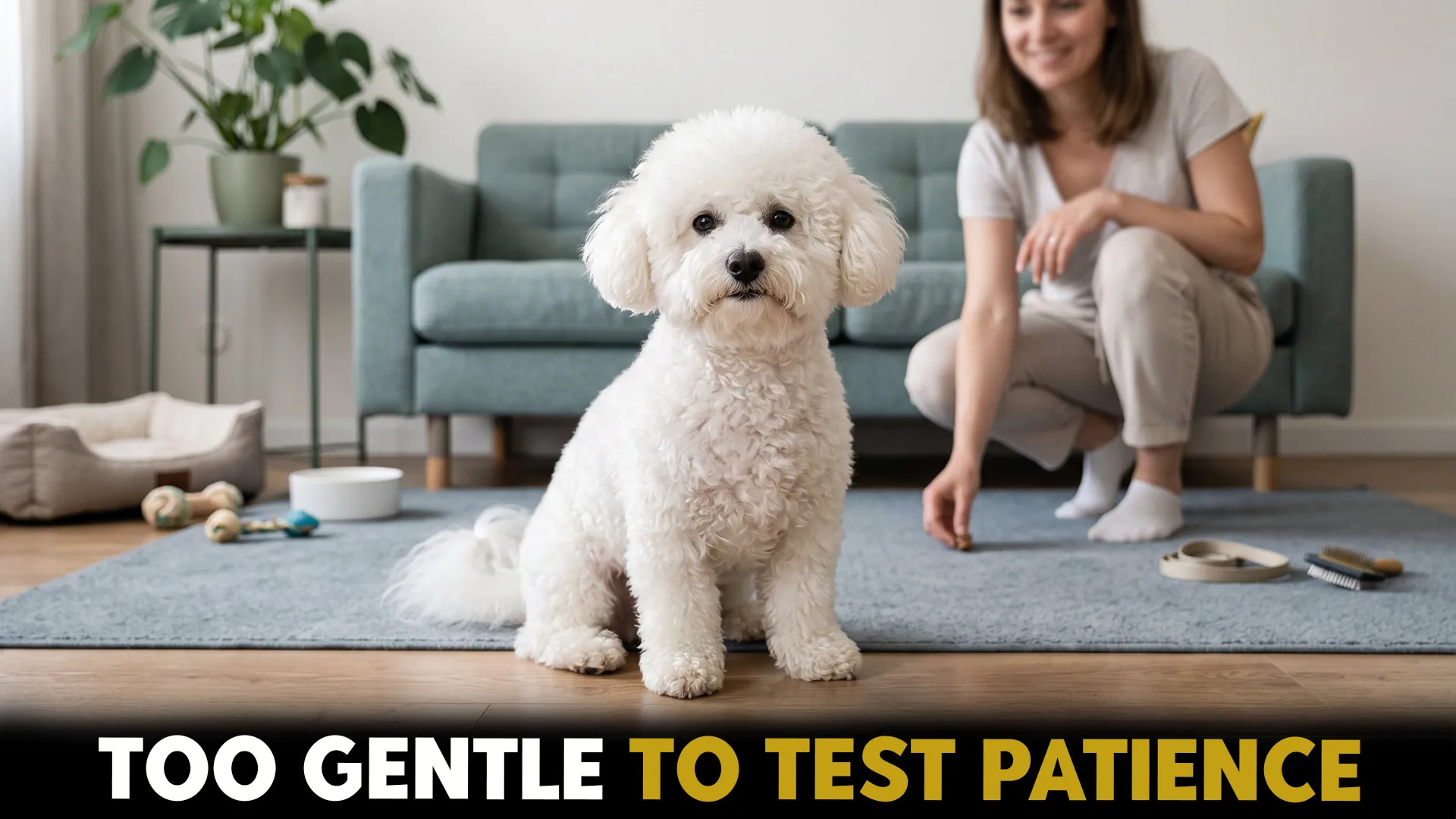
Getting your first dog is one of those life upgrades that sounds ridiculously wholesome until you realize you are suddenly responsible for feeding schedules, bathroom breaks, grooming appointments, training sessions, and a tiny creature that may consider your favorite shoe a legitimate snack.
Every dog needs veterinary care, socialization, training, exercise, nutritious food, companionship, and plenty of patience, and personalities can vary significantly even within the same breed. Still, some breeds have qualities that often make the learning curve friendlier for new owners.
For first-time owners looking for breeds with affectionate personalities, established companion histories, manageable temperaments, and good potential for reward-based training, the following seven dogs deserve serious consideration.
Best Dog Breeds for a Stress-Free First Pet Experience
1. Golden Retriever
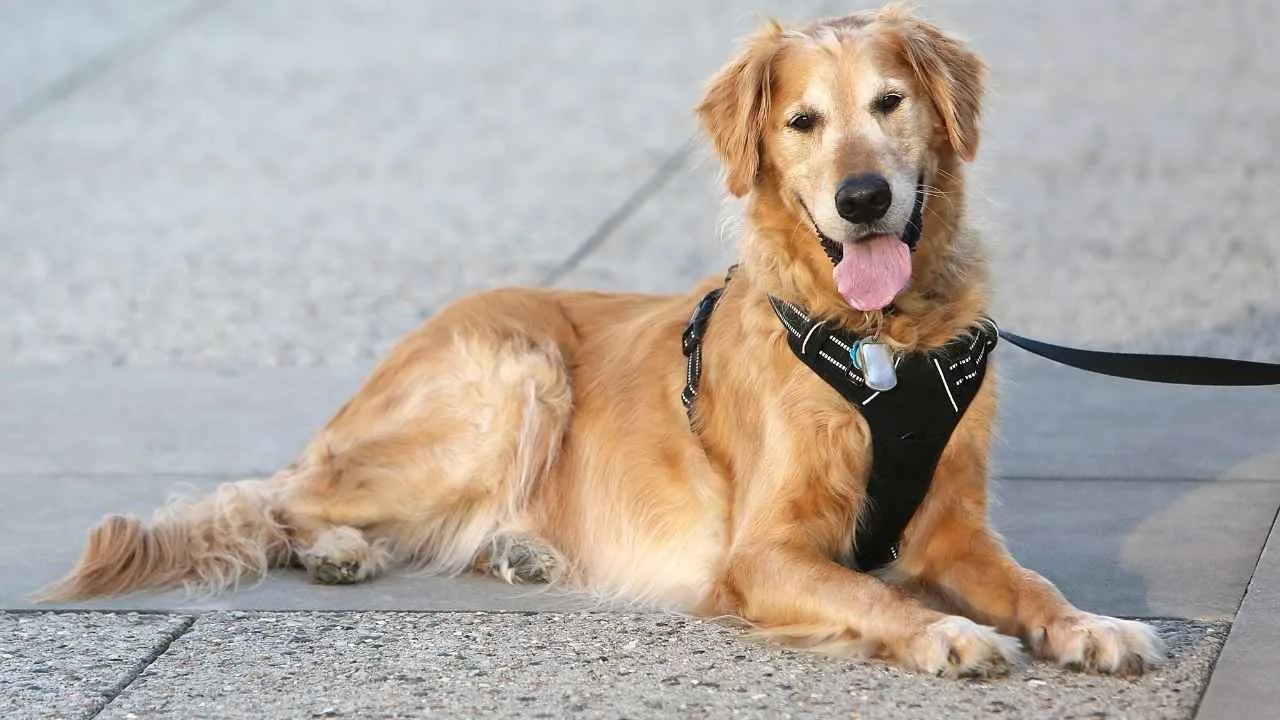
Golden Retrievers have basically built an entire brand around being lovable, cooperative, and aggressively happy to see you. They were developed as sporting dogs that retrieve game, so beneath that sunny personality is a clever working dog that enjoys learning and interacting with people.
Purina specifically notes that Goldens are often suitable for first-time owners because of their trainability, friendly temperament, and adaptability. As one of the most intelligent dog breeds in this list, this furry friend shows great behavior with consistent training.
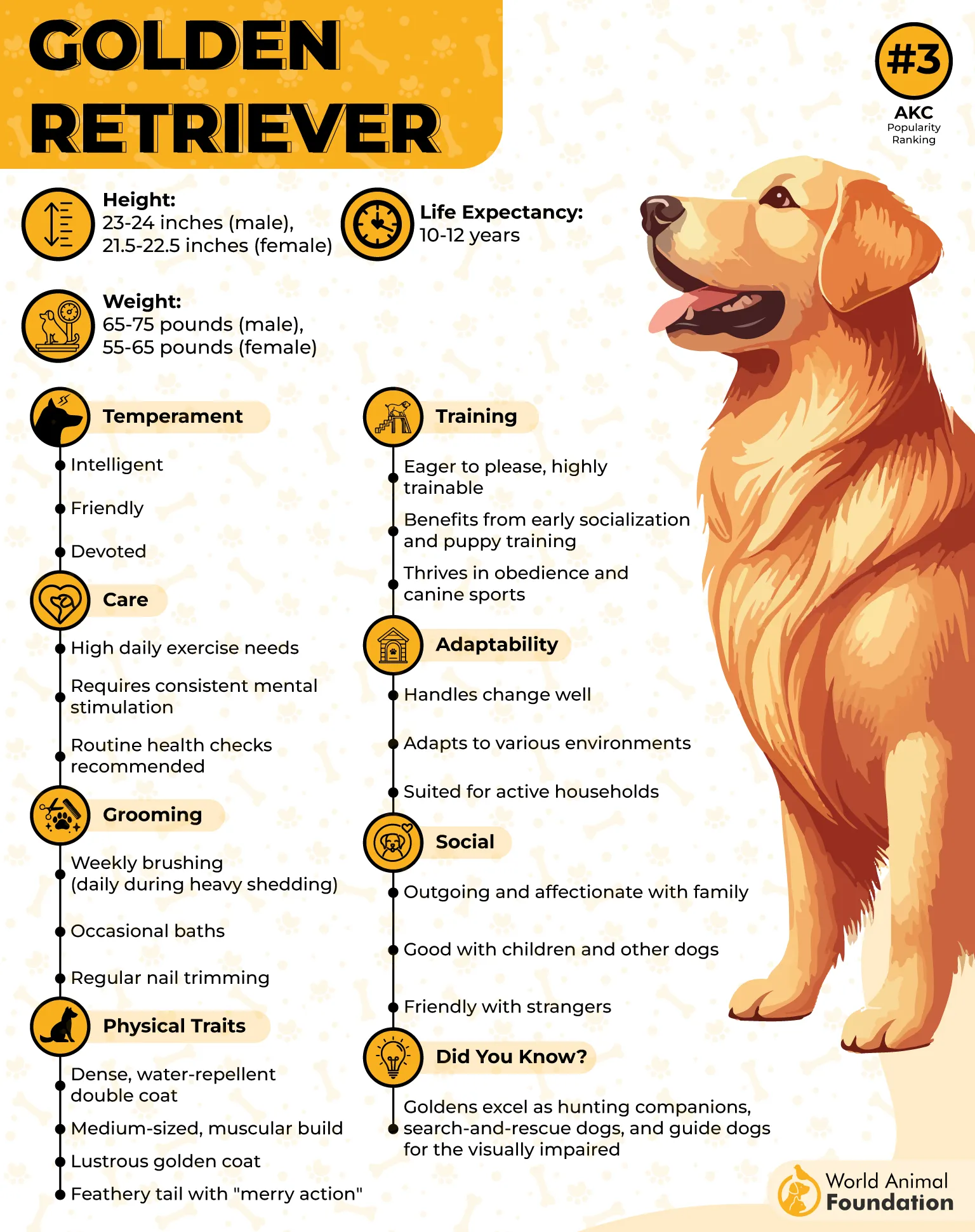
That willingness to cooperate can make basic obedience far less intimidating when you are learning alongside your first dog. Food rewards, toys, praise, retrieving games, and short positive sessions can turn training into something that feels more like quality time than homework.
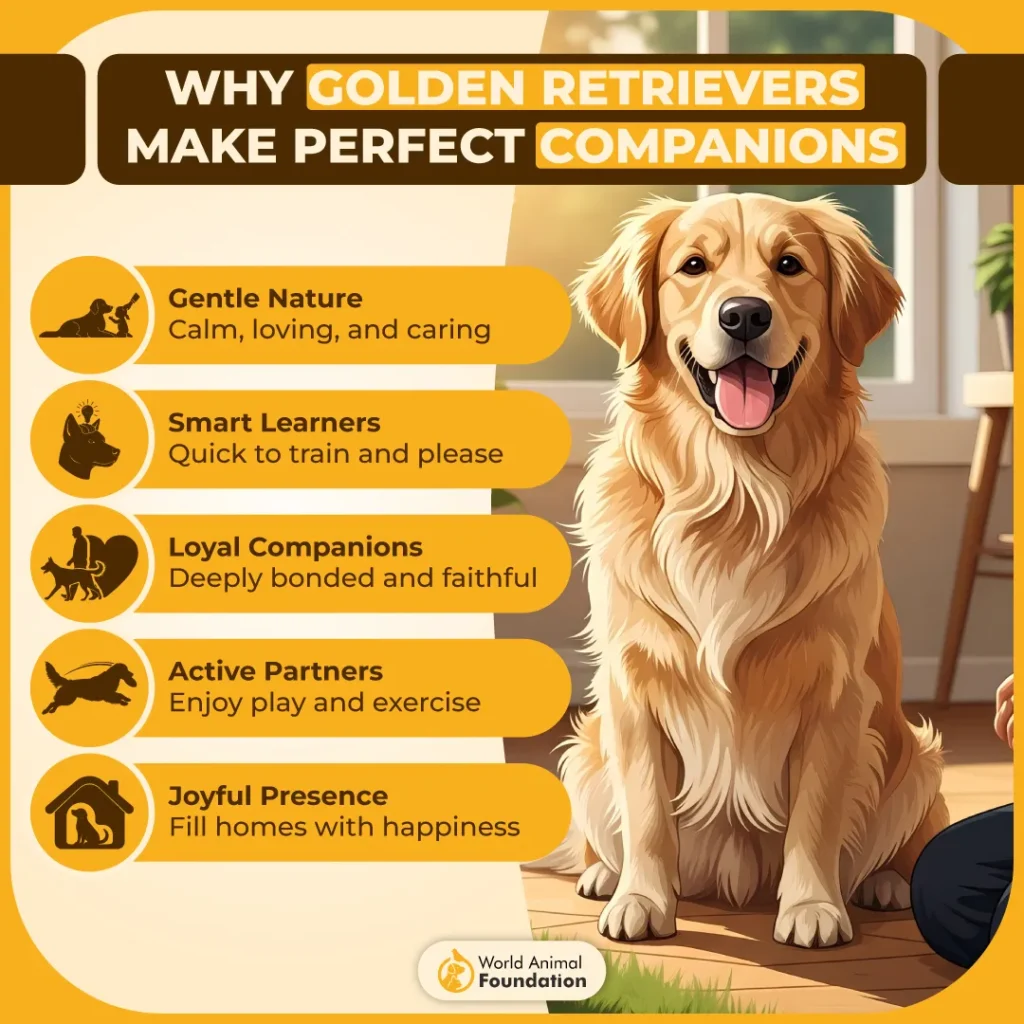
Golden Retrievers need meaningful daily physical exercise along with mental enrichment, whether that comes from retrieving, swimming, hikes, obedience games, scent work, or energetic play.
The Most Stress-Free Part Of Parenting Them
Training usually feels rewarding: Their people-focused attitude can make beginner obedience sessions much easier to understand and enjoy.
Social life is often simpler: A well-socialized Golden generally has the outgoing temperament needed for busy households, visitors, and family activities.
2. Labrador Retriever
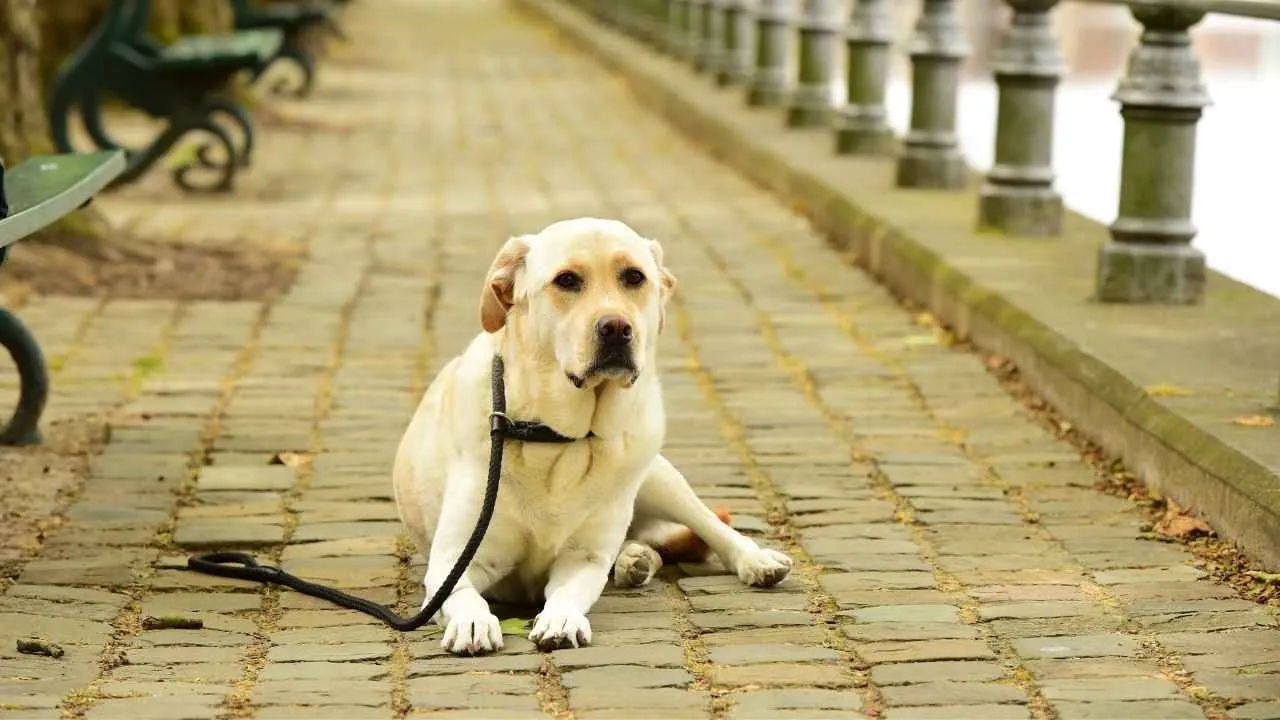
Labrador Retrievers bring big “everyone at this party is my new best friend” energy. They are outgoing, affectionate, enthusiastic dogs that tend to bond closely with their families while remaining sociable with unfamiliar people and dogs.
Training a Lab can be ridiculously satisfying because many of them are eager to participate, especially when rewards are involved. Their history as retrieving dogs means carrying, fetching, swimming, and working alongside humans often come naturally, giving owners plenty of productive ways to channel that enthusiasm.
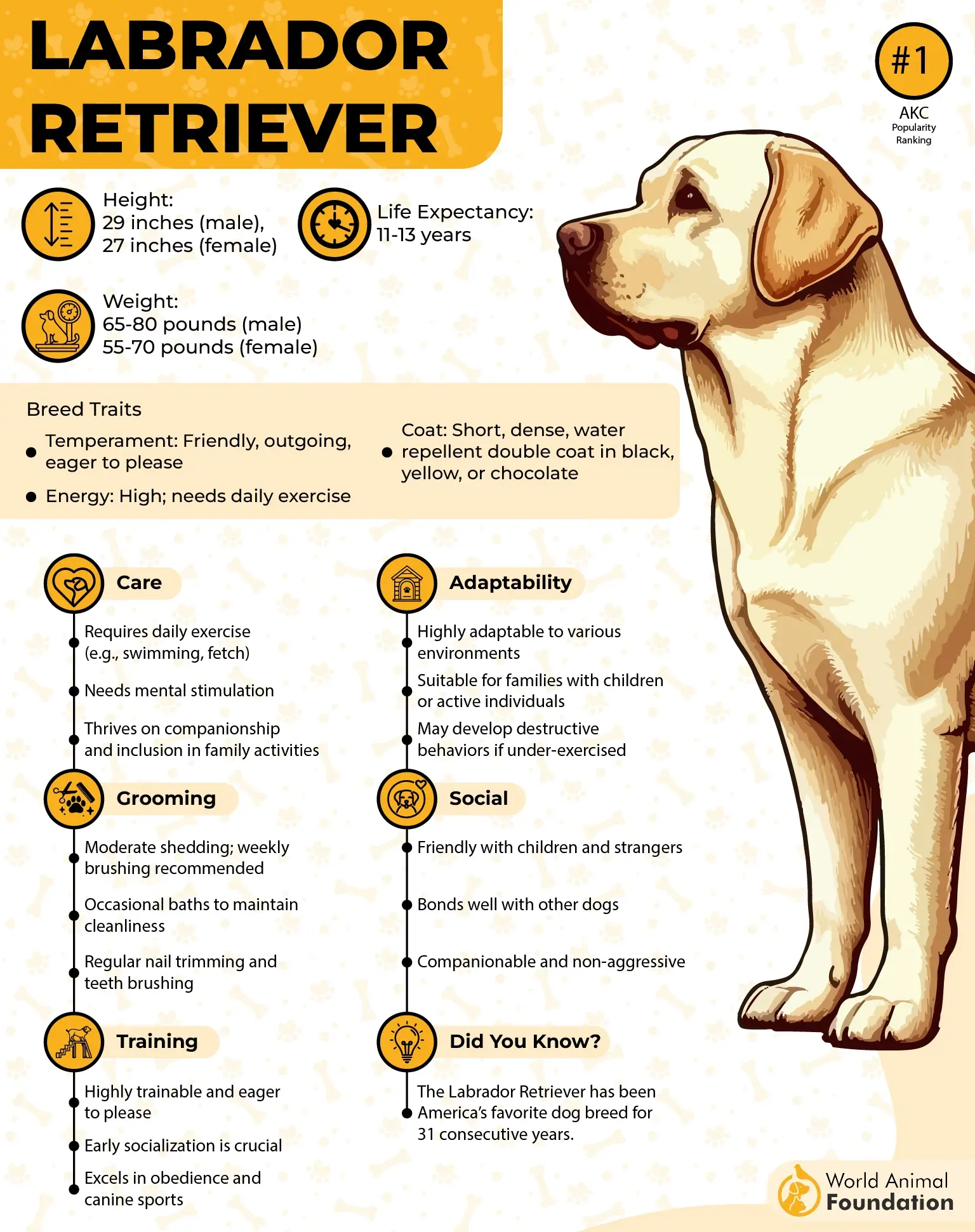
Don’t mistake “beginner-friendly” for “low-energy,” though, because Labradors are enthusiastic athletes. They need substantial daily exercise, and too little activity can lead to hyperactive or destructive behavior.
Their grooming routine is refreshingly straightforward compared with several fluffy companion breeds on this list, but Labradors definitely shed. Their dense, water-resistant double coat benefits from routine brushing, and they often need more cleanup when shedding increases.
The Most Stress-Free Part Of Parenting Them
Motivation is rarely mysterious: Food, games, praise, retrieving, and human attention give beginners plenty of training currency.
Everyday adventures become enrichment: Walks, swimming, fetching, and outings satisfy both their social and physical needs.
3. Cavalier King Charles Spaniel
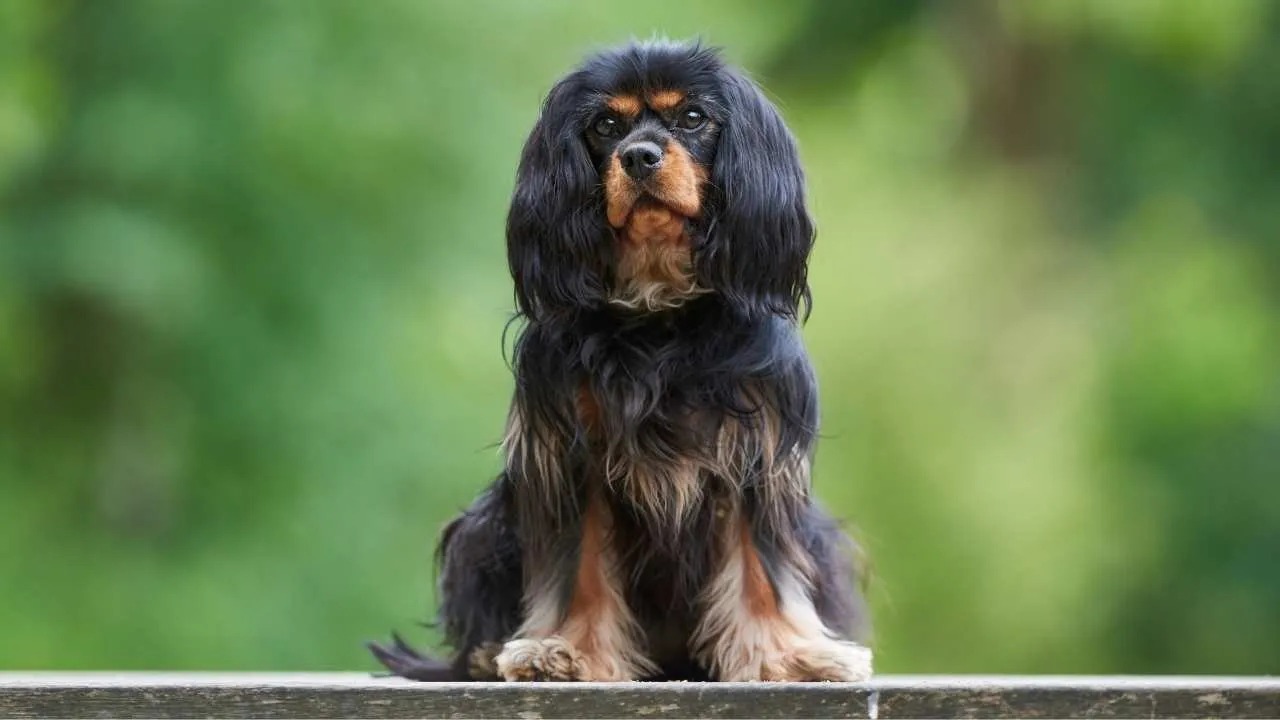
Cavaliers were developed as companions, and their affectionate, gentle style makes them especially appealing to people who want a dog deeply involved in everyday home life.
One major perk is adaptability. Cavaliers can enjoy walks, play sessions, training games, and outdoor adventures, yet they are also famously enthusiastic about quality sofa time once their needs are met. Their compact body makes travel, bathing, handling, and apartment living easy for many first-time owners.
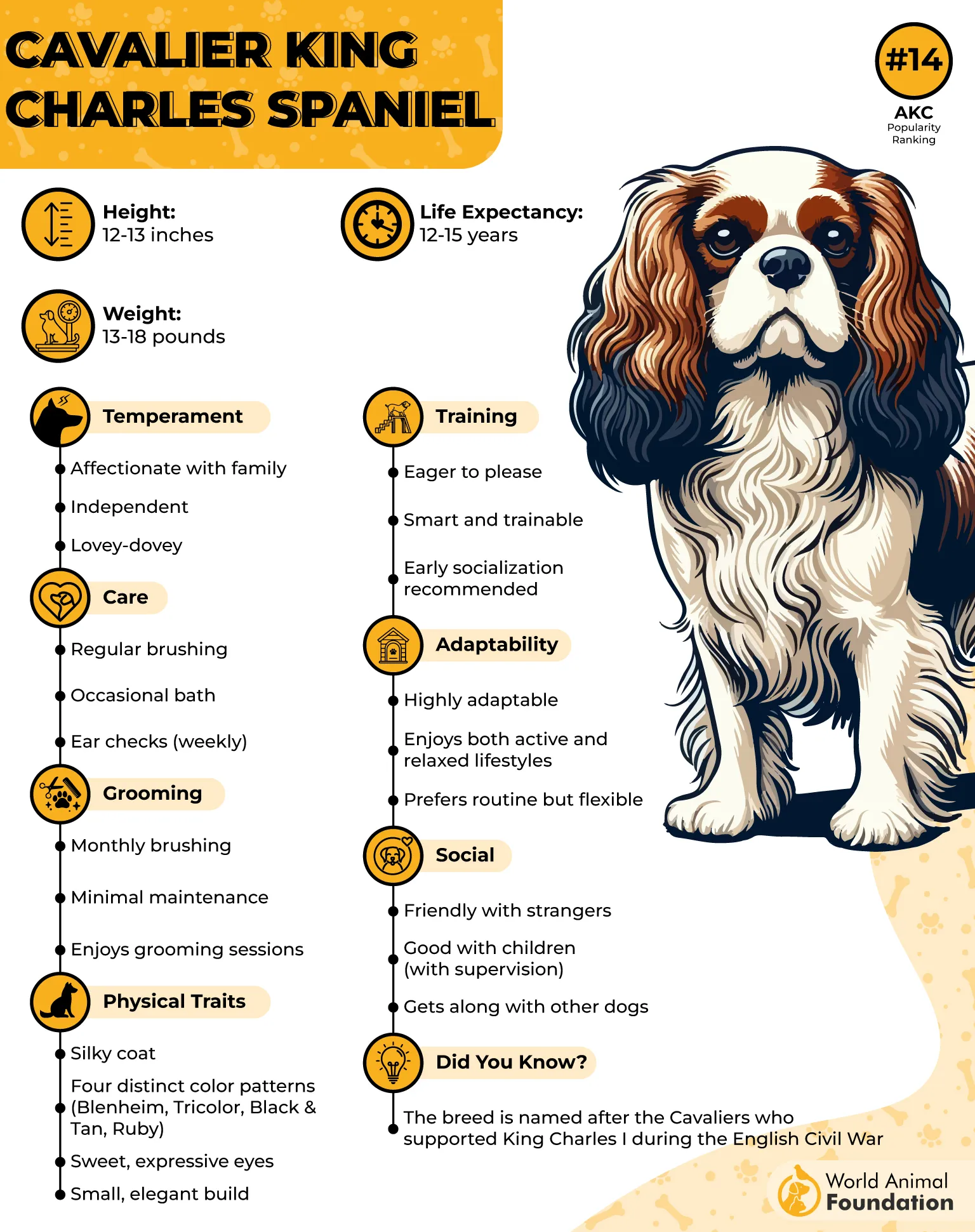
The coat looks royal without necessarily requiring royal-household staffing. According to the Hills Pet, regular brushing and occasional bathing can maintain the Cavalier’s silky coat, while owners should check their ears routinely and trim their nails regularly.
Training generally works best when it feels upbeat rather than confrontational. Cavaliers tend to be emotionally tuned in to their humans, so praise, treats, games, and short lessons usually work better than harsh correction.
The Most Stress-Free Part Of Parenting Them
Their size is wonderfully manageable: Everyday handling, car travel, bathing, and living in smaller homes can feel less overwhelming.
They balance play with relaxation: You get an interactive companion without necessarily signing up for retriever-level daily athletics.
4. Bichon Frise
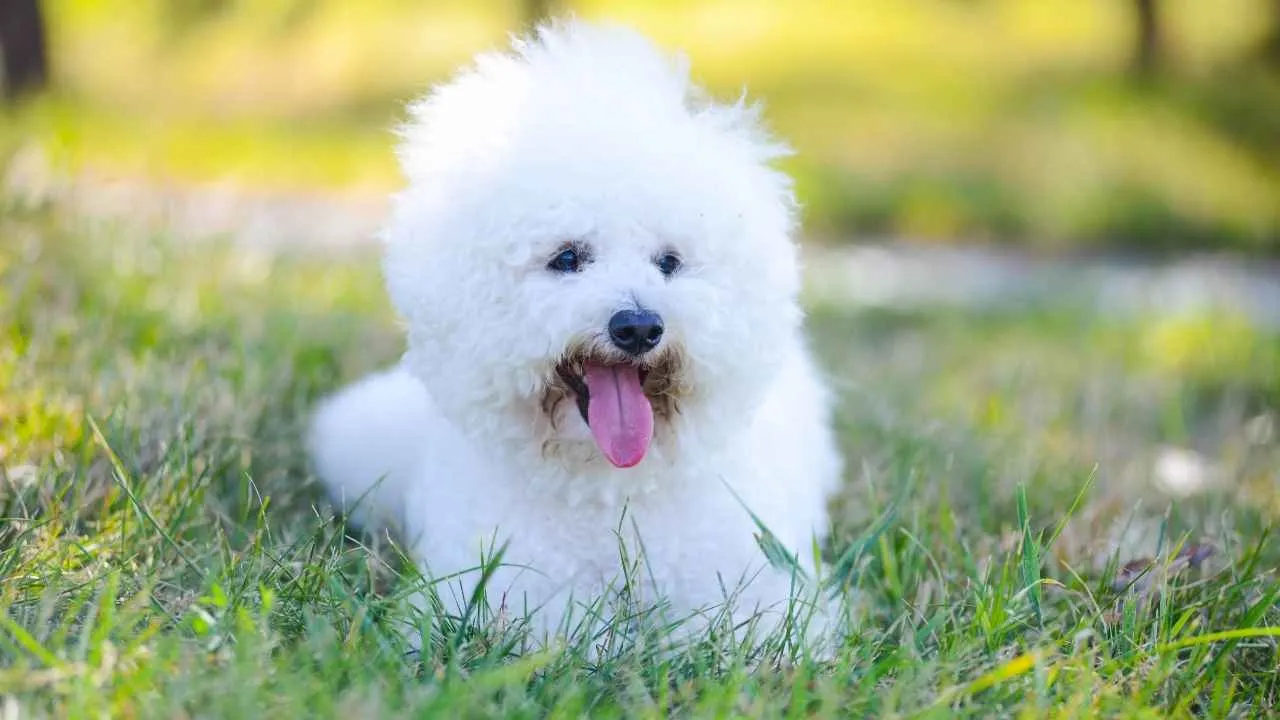
The Bichon Frise looks like someone gave a cloud four legs and a social calendar. Its manageable size can help first-time owners living in apartments or smaller homes, especially when lifting a dog for bathing or transportation becomes necessary.
It is lively enough to be entertaining without generally demanding the same exercise schedule as a large working or sporting breed.
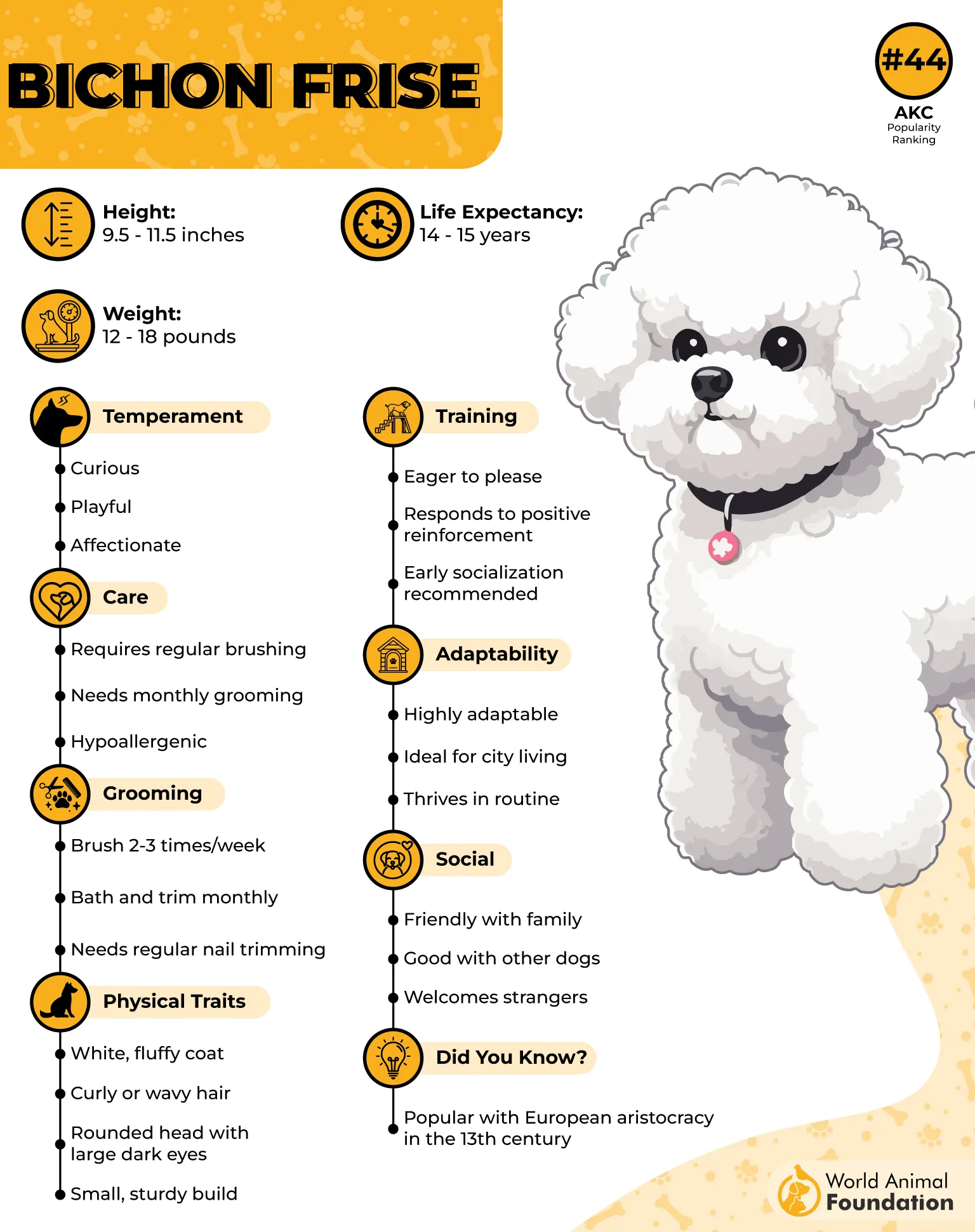
Their activity often comes in hilarious little bursts. PDSA describes this hypoallergenic dog breed as somewhat active, with calmer stretches interrupted by energetic play and zoomies, so daily walks and interactive games usually fit into an ordinary routine. Puzzle toys, beginner tricks, sniffing games, and short training sessions work nicely for this dog.
Now for the plot twist hiding inside that marshmallow coat: grooming is not low maintenance. PetPlan recommends brushing at least two or three times weekly, preferably daily, and notes that many pet Bichons are professionally groomed every four to six weeks.
The Most Stress-free Part Of Parenting Them
Exercise fits ordinary schedules: Playtime plus sensible daily walks can meet their needs without turning your life into endurance training.
They bring serious social energy in a small package: Their compact build works well for owners who want a highly interactive companion without a large dog.
5. Havanese
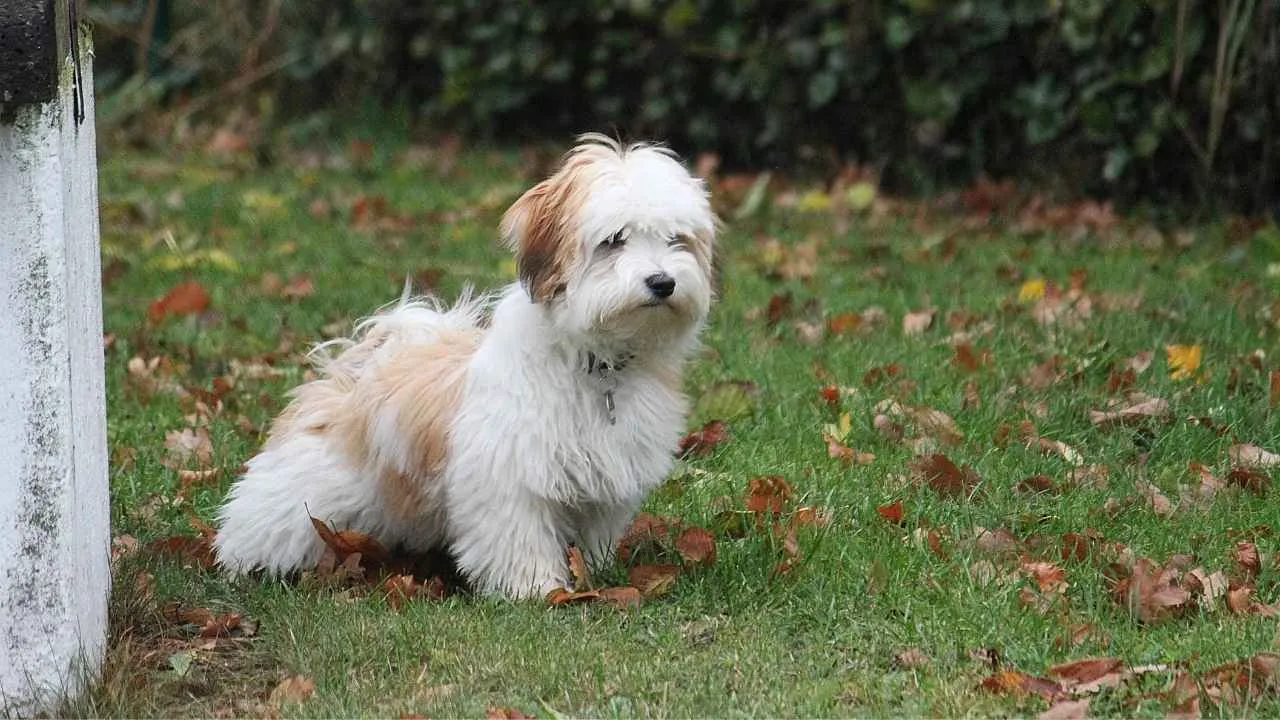
The Havanese is basically a tiny Cuban extrovert wearing excellent hair. It is Cuba’s national dog breed and was developed as a companion, which explains why these dogs tend to be extremely invested in whatever their humans are doing.
Their exercise needs are moderate, and brisk walks, indoor games, or backyard play often provide enough activity. They are happy to participate, but they generally don’t demand that you become a half-marathon enthusiast just because you bought a leash.
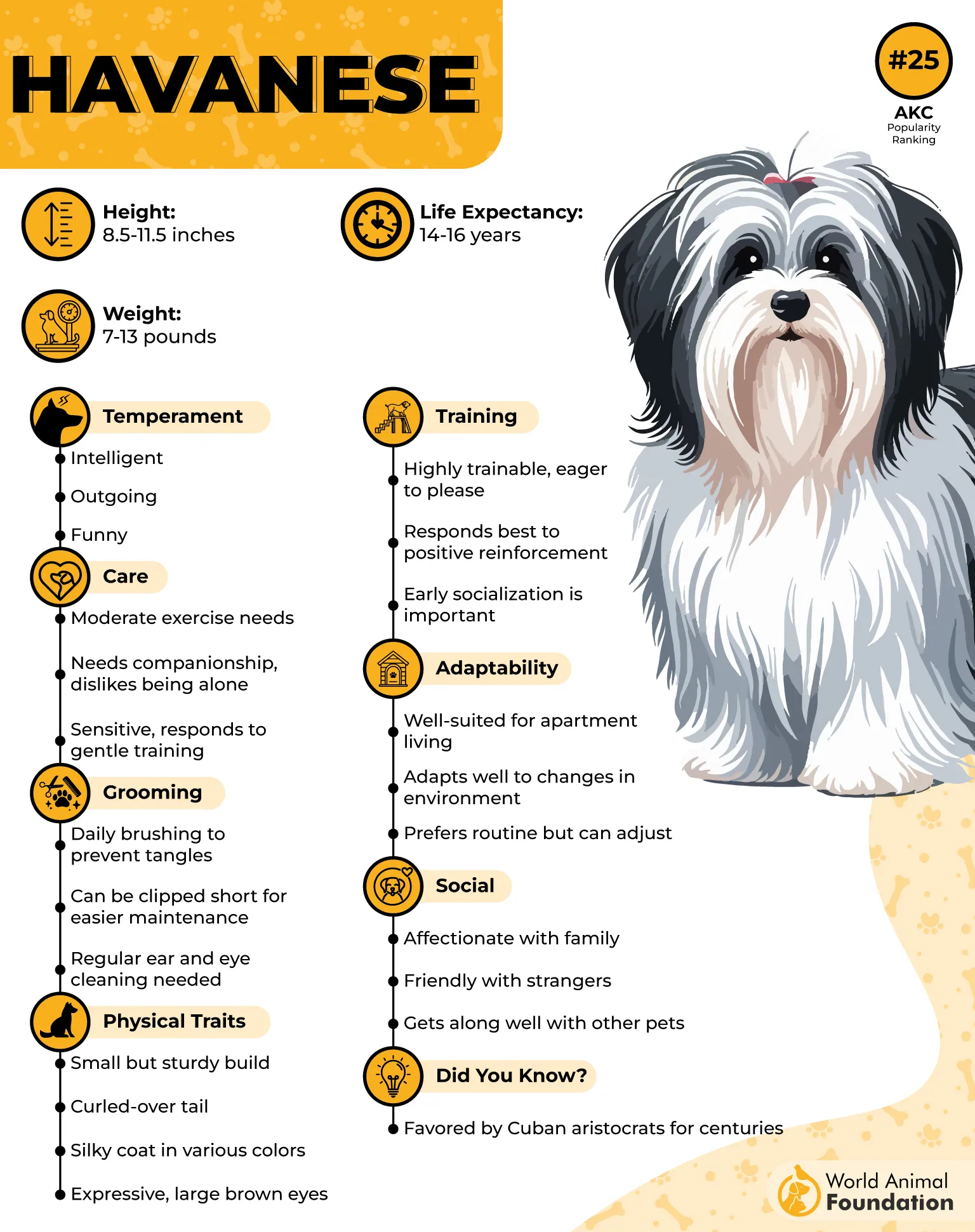
Training is another beginner-friendly highlight, according to the American Kennel Club (AKC). Havanese are intelligent and eager to please, but the breed can also be sensitive, so gentle positive reinforcement is usually the winning strategy. Teach tricks, reward calm behavior, practice polite greetings, and make new situations fun.
The biggest maintenance commitment is that gorgeous silky coat. Their long-coated Havanese need daily grooming to help prevent mats and tangles, although many pet owners choose shorter trims to reduce the workload.
The Most Stress-Free Part Of Parenting Them
You get intelligence without giant-dog logistics: Their small body and trainable brain are a very beginner-friendly pairing.
They naturally want to cooperate: Gentle teaching works well with a breed that generally enjoys making its people happy.
6. Toy Poodle
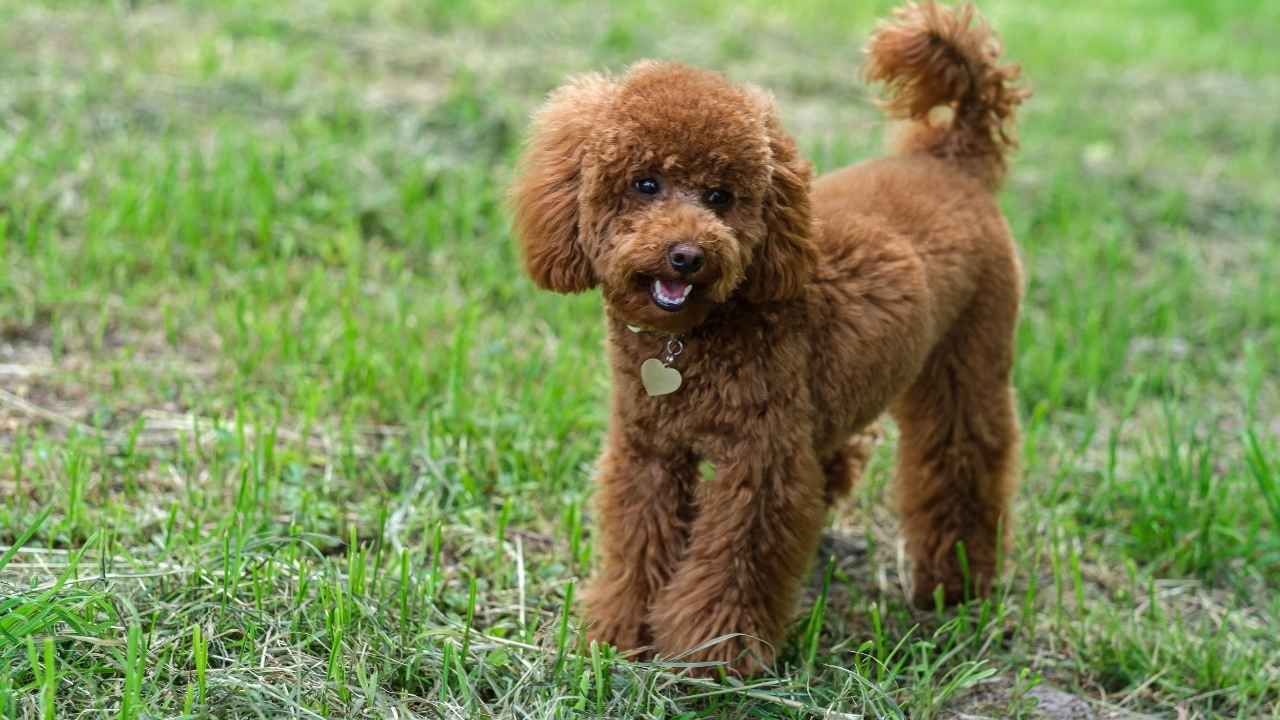
Never let the fancy haircut fool you: the Toy Poodle is carrying an alarming amount of brainpower inside that tiny head. These small dogs were developed from working retrievers, and even the Toy variety retains the breed’s trademark intelligence, athleticism, and enthusiasm for interacting with humans.
This makes training one of the most entertaining parts of Toy Poodle ownership. This intelligent dog breed learns patterns quickly, so basic obedience can soon evolve into tricks, puzzle toys, scent games, retrieving, or canine sports scaled to its size.
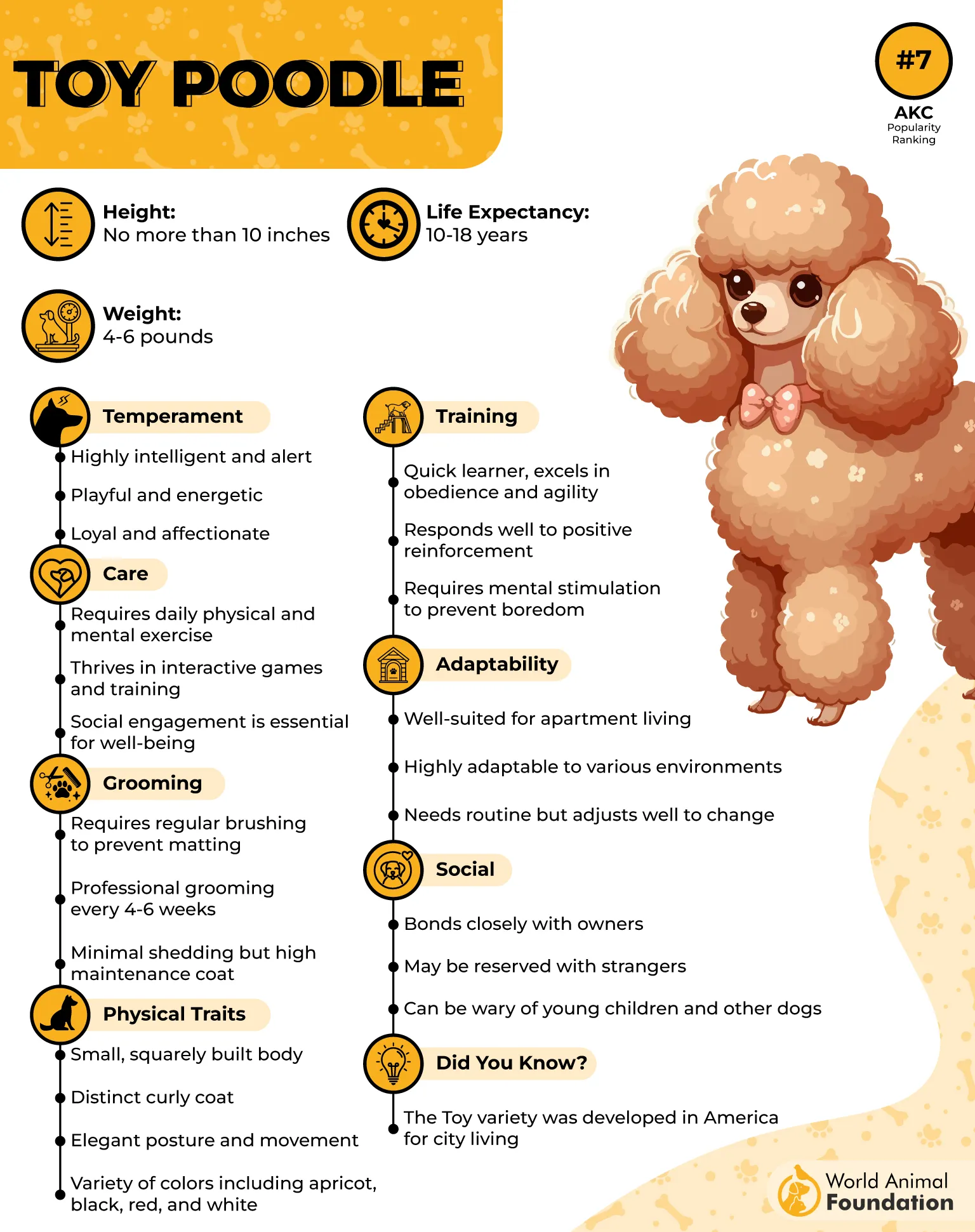
Adult dogs still need exercise despite their miniature size. They are active dogs that need good daily activity, and retrieving and swimming connect directly to the breed’s sporting heritage. For a Toy Poodle, walks, indoor games, trick sessions, supervised retrieving, and mentally demanding activities can deliver stimulation without requiring acres of land.
Toy size also requires a little practical common sense. Small dogs can be injured by rough handling, falls, or overly enthusiastic larger animals, so supervision matters in households with young children or big pets.
The Most Stress-Free Part Of Parenting Them
They learn fast: Beginners can get quick feedback from training instead of repeating the same cue fifty times and questioning every life decision.
Shedding stays relatively limited: Routine professional grooming is the trade-off for having less loose coat drifting around the house.
7. Shih Tzu
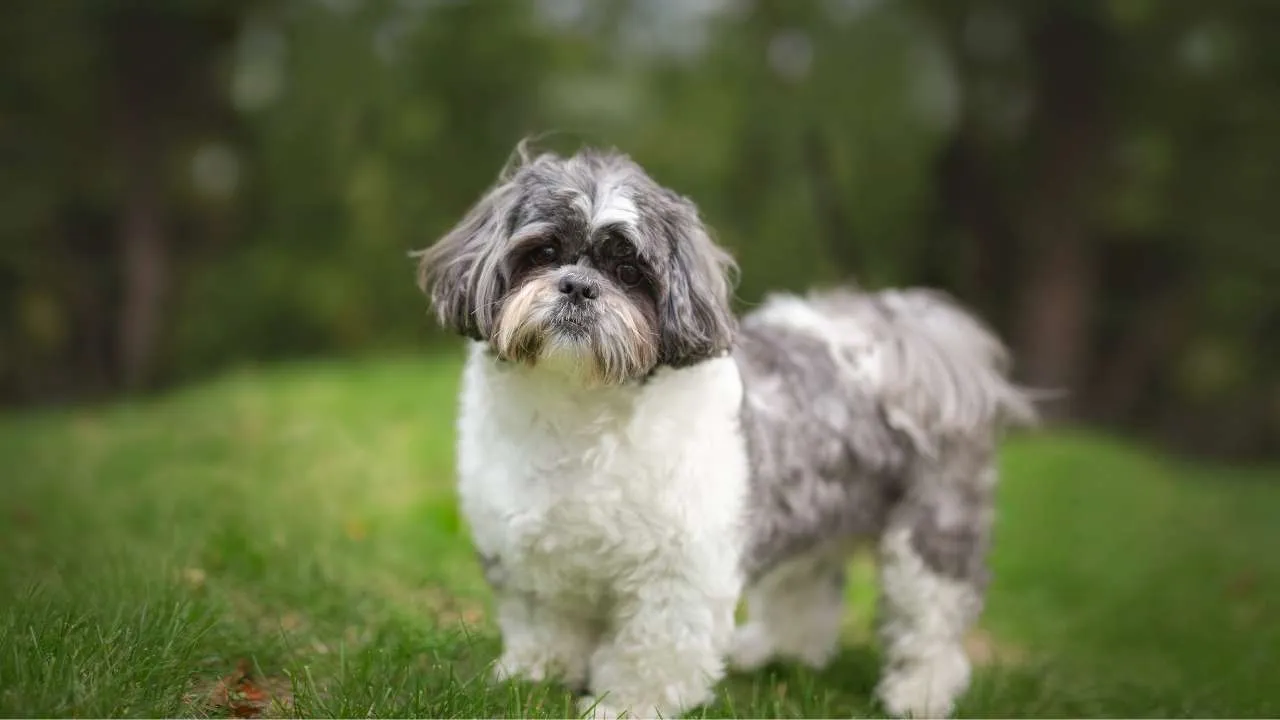
The Shih Tzu entered the chat with one clear career objective: hang out with humans and look fabulous while doing it. These compact companion dogs have deep historical associations with China and were developed primarily for life close to people rather than chasing livestock across twelve muddy acres.
That companion background is fantastic news for first-time owners who want a lower-energy household dog. The Royal Kennel Club says short daily walks and indoor play can generally satisfy the breed’s exercise requirements, making a Shih Tzu far easier to fit into apartment life than a high-drive sporting breed.
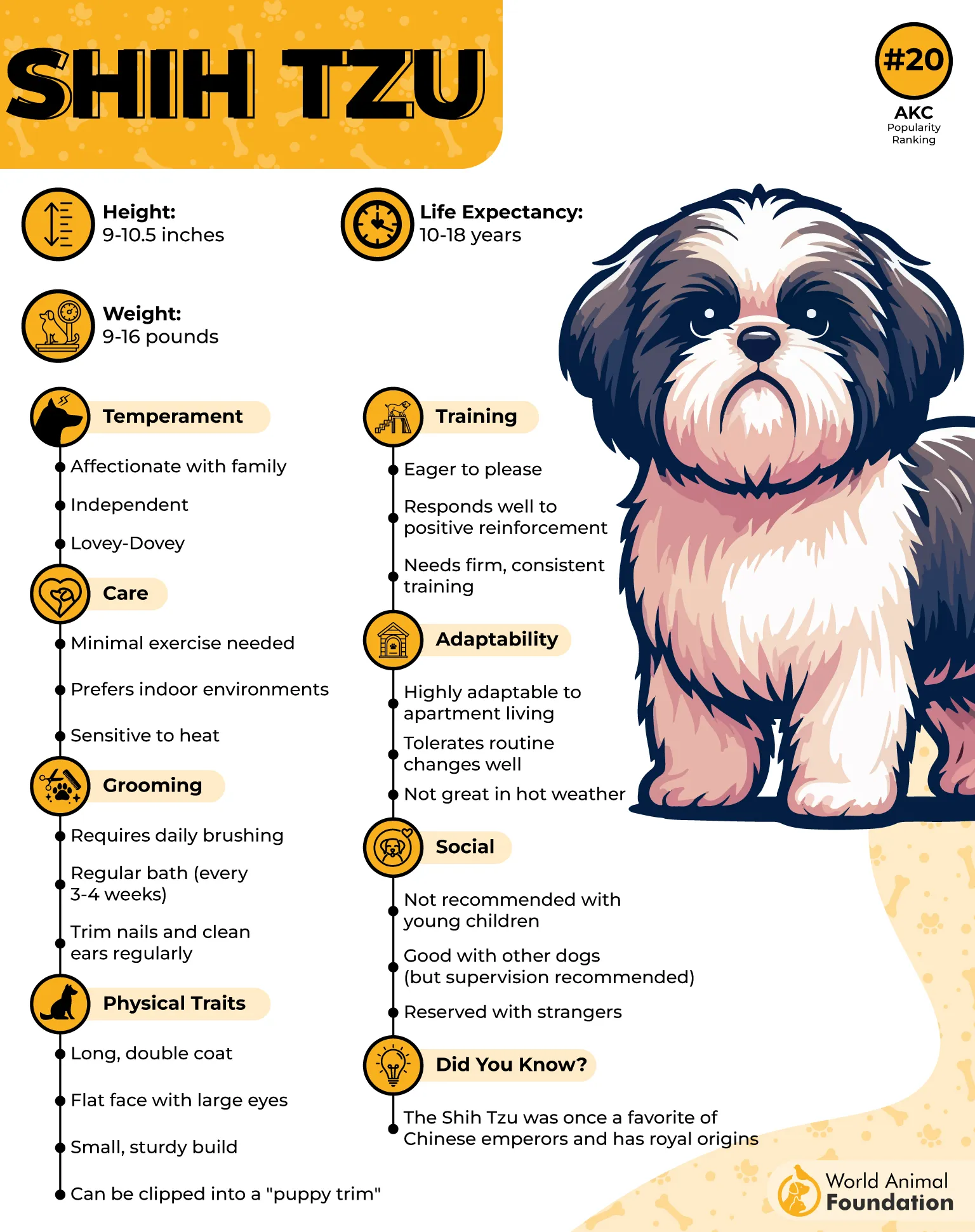
Their training style calls for patience and a sense of humor. Shih Tzus learn well through praise and rewards, but their charm may tempt beginners to let boundaries slip because rules apparently become negotiable when your face is that cute.
Grooming is where this loyal companion stops pretending to be effortless. Long coats require daily brushing, while routine bathing, eye-area cleaning, face care, nail trimming, and ear maintenance all belong on the schedule; many pet owners simplify matters with a shorter puppy trim.
The Most Stress-free Part Of Parenting Them
No marathon lifestyle required: Short walks and indoor games make their exercise needs practical for busy or less-active households.
Apartment life suits them nicely: Their small dimensions and companion-oriented personality work beautifully where space is limited.
Conclusion
Your first dog does not need to turn your life into a full-time crisis-management internship.
Breed is only part of the equation because individual dogs have their own personalities, experiences, energy levels, and quirks.
An adult rescue dog with an established temperament may actually be easier for some first-time owners than raising any eight-week-old puppy, since puppies bring toilet training, teething, socialization, sleep disruption, and approximately fourteen thousand questionable decisions per afternoon.
Choose thoughtfully, train kindly, establish routines early, and allow yourself to learn along the way. Your first dog does not need a perfect owner; they need a prepared, patient, consistent human who is willing to understand them.
