




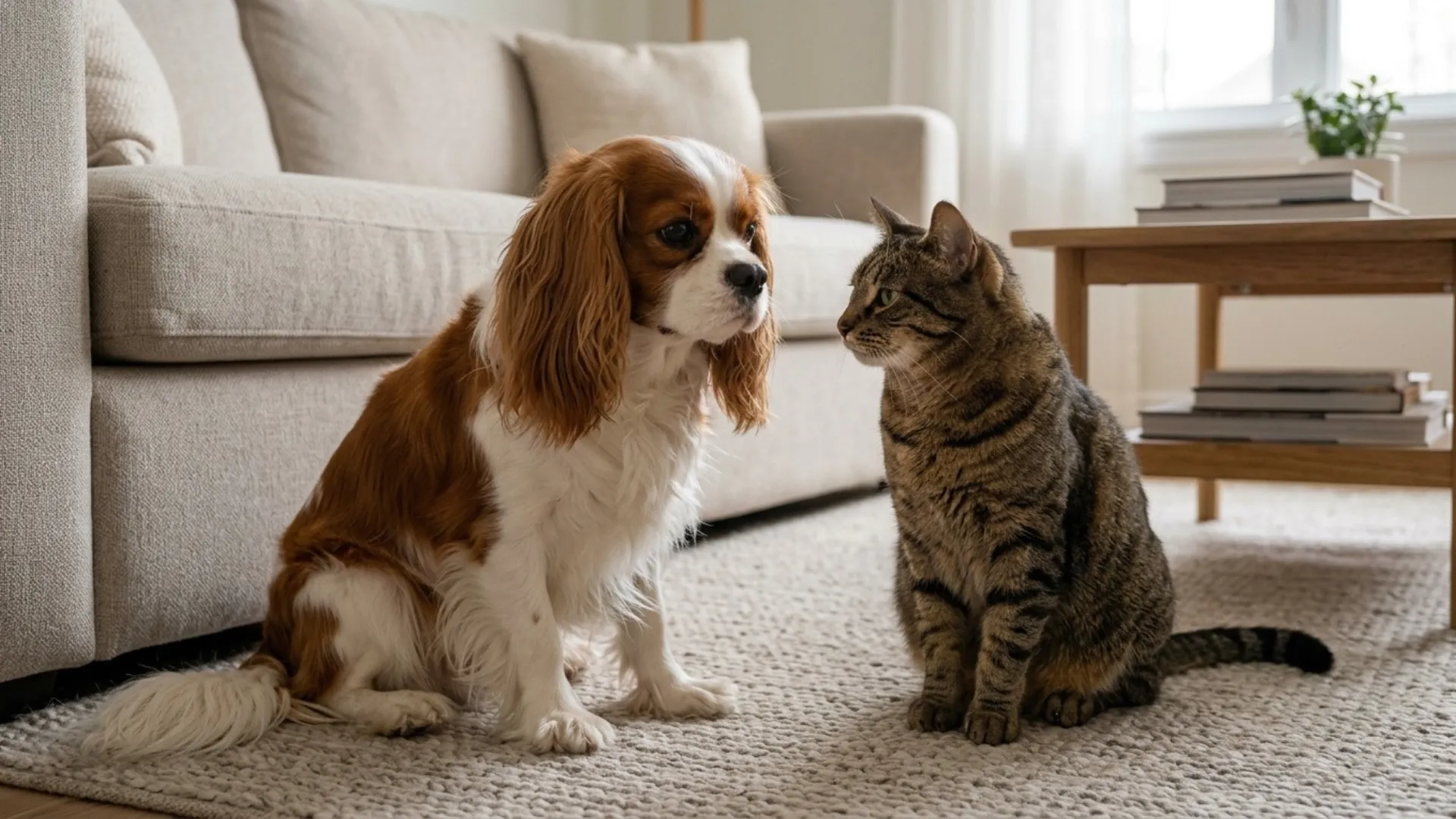
Bringing a dog into a home that already has a cat can feel like a risky move. Will they become instant friends, politely ignore each other, or turn your living room into a daily chase scene?
The good news is that dogs and cats can absolutely learn to live together peacefully, and with the right match, they may even form a close bond.
A dog’s breed can offer useful clues about how naturally they may get along with cats. Dogs bred for companionship are often social and people-focused, while some working, hound, sporting, and other groups may have traits that help them live comfortably around other animals.
The key is to give both pets time to adjust and make sure your cat always has a safe space to retreat when needed. A thoughtful introduction, close supervision, and plenty of patience can help set the tone for a peaceful relationship.
If you’re hoping for a household where paws, whiskers, and wagging tails can happily share the same space, these ten dog breeds are worth getting to know.
Dog Breeds That Promptly Bond With Cats for Harmony
1. Labrador Retriever
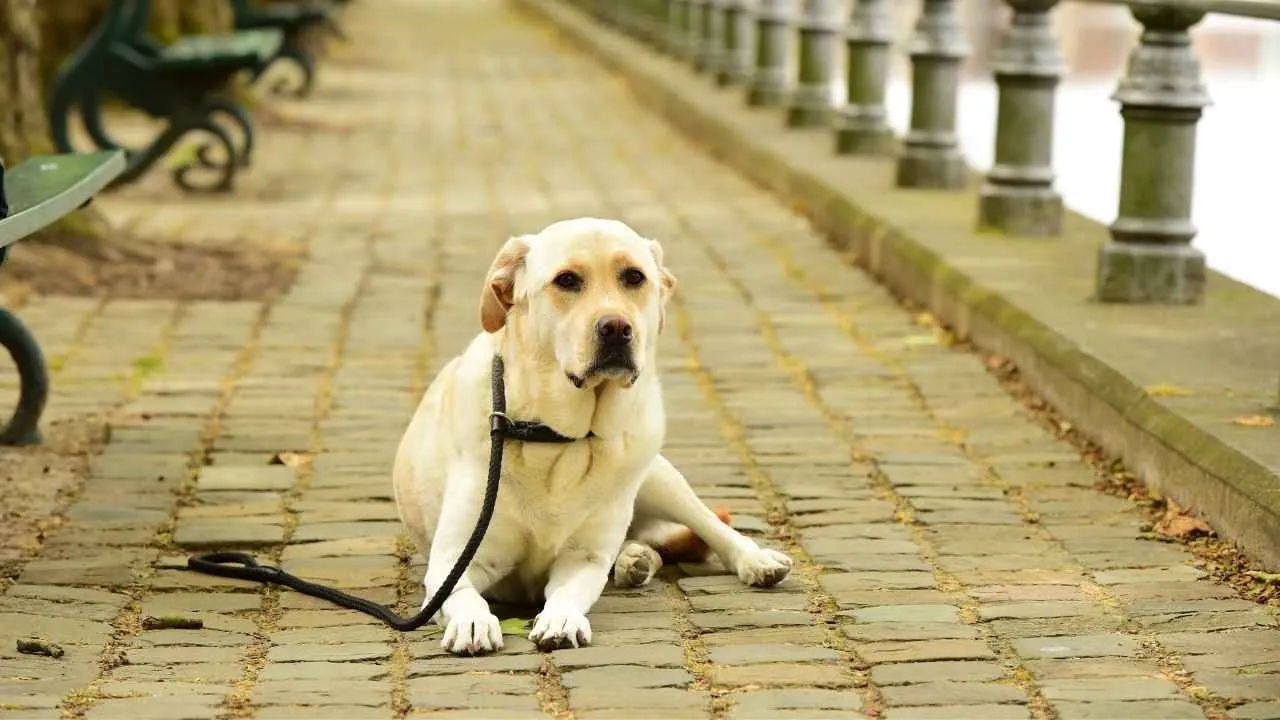
Labrador Retrievers were developed in 19th-century Newfoundland as water dogs. They worked alongside fishermen and were bred to retrieve from the water.
Their working background helped shape their energetic, willing, and dependable nature. Today, they remain active sporting dogs and popular family companions.
Friendly and Eager to Please
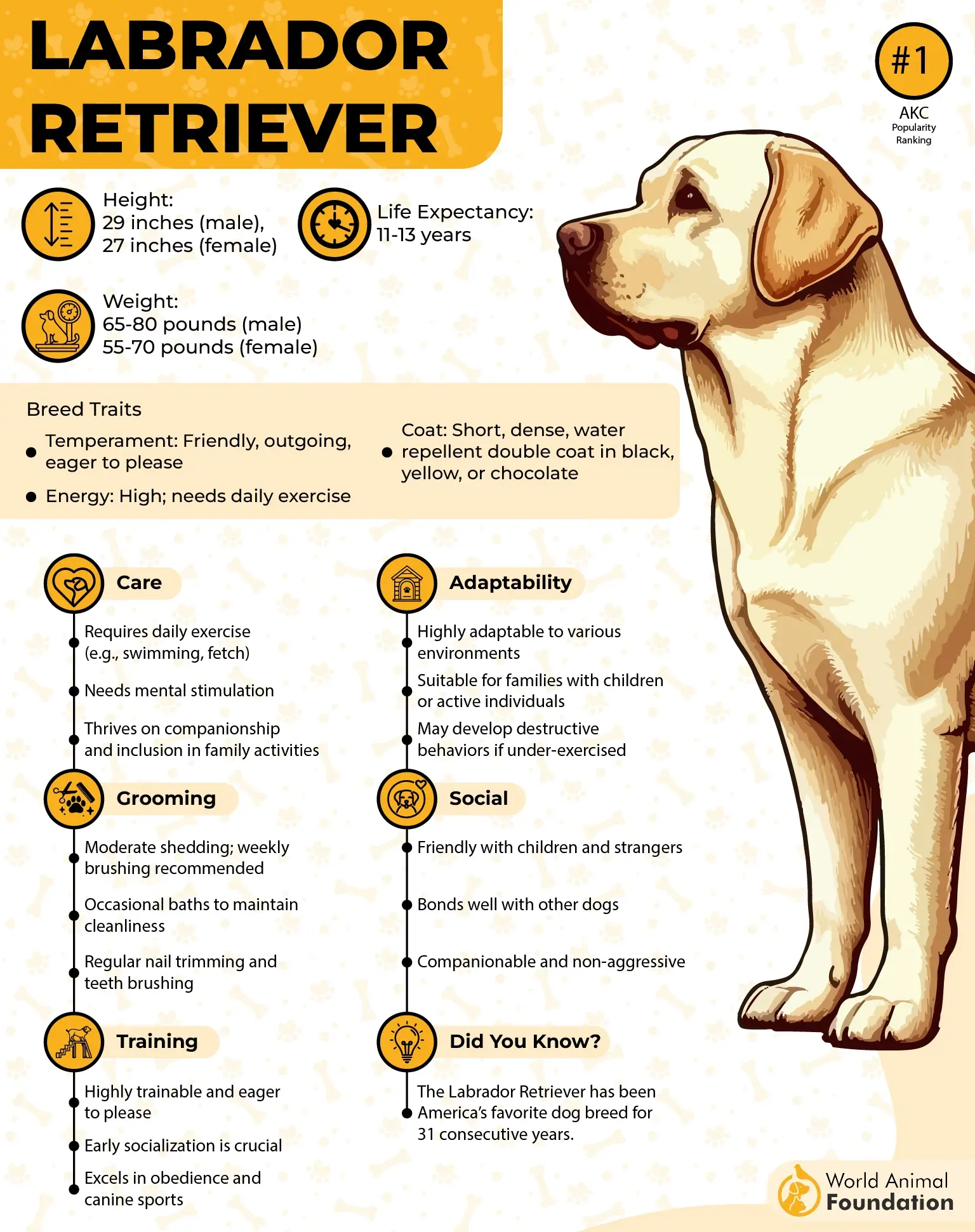
Labs are affectionate, friendly, and eager to please. They usually do well with children and other pets when properly socialized. Their stable, outgoing nature and willingness to learn can make them a good fit for homes with cats. They are also highly adaptable and respond well to positive training.
Active and Trainable Companions
Labradors need plenty of daily exercise, including walking, retrieving, swimming, and training games. According to VCA, young Labs can be strong-willed and may chew, carry, or mouth objects because of their strong retrieving instinct. Their dense, water-resistant double coats shed heavily and need regular brushing.
2. Golden Retriever
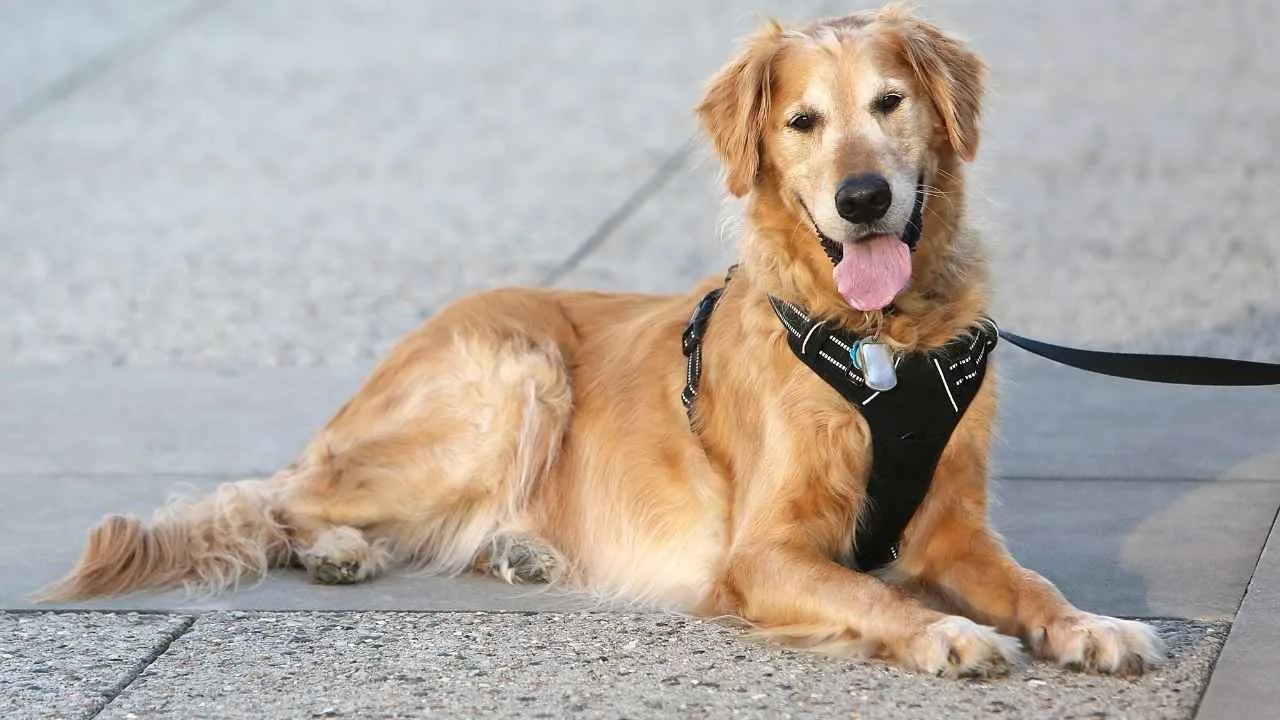
Golden Retrievers were developed in the Scottish Highlands in the late 1800s by Lord Tweedmouth. They were originally bred to help hunters retrieve birds. Their gentle retrieval style allowed them to carry items without applying too much pressure.
Today, their intelligence and eager-to-please nature also make them suitable for guide, therapy, service, and search-and-rescue work.
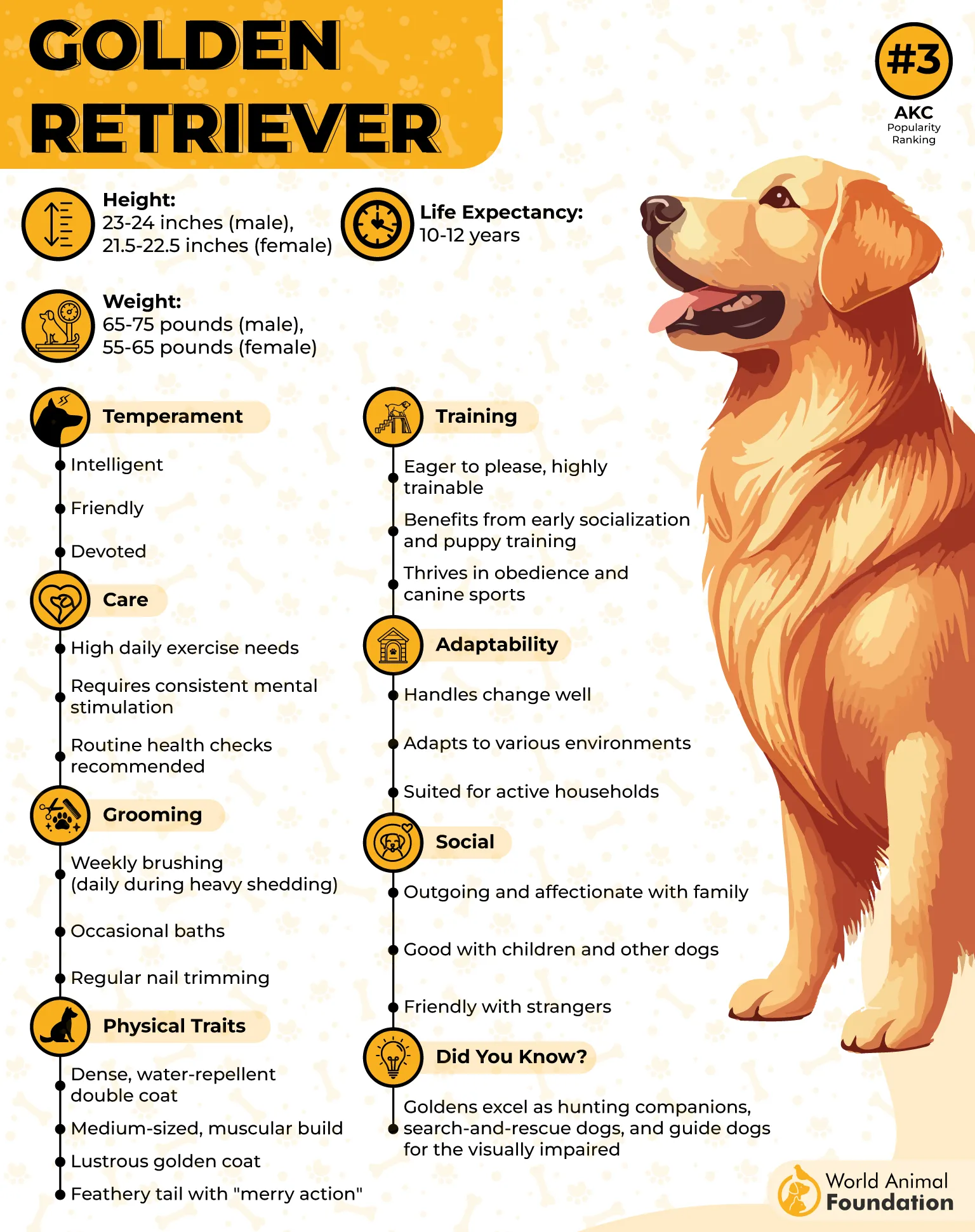
Friendly and Social
Golden Retrievers are naturally outgoing, affectionate, and eager to make people happy. They enjoy being around people and often treat everyone as a new friend.
Their patient and kind nature makes them popular family dogs. When socialized from puppyhood, they can also live happily with other household animals, including cats.
Active and Involved
Goldens have a moderate energy level and enjoy long walks, running, retrieving, swimming, and other outdoor activities. They love being involved in family life, whether indoors or outdoors.
Their thick double coats shed heavily and can become matted, especially behind the ears and on the hind limbs, so regular grooming is needed. They are also strong retrievers and may try to carry, pull, or drag objects they can fit in their mouths.
3. Basset Hound
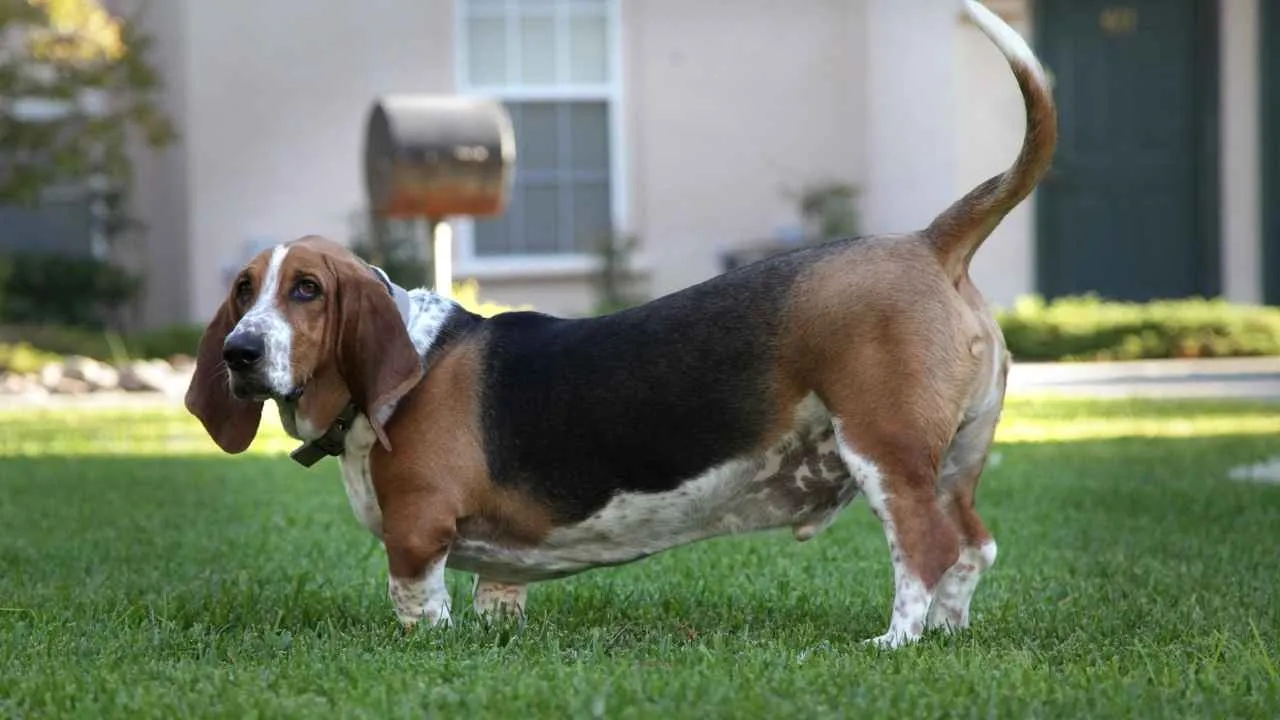
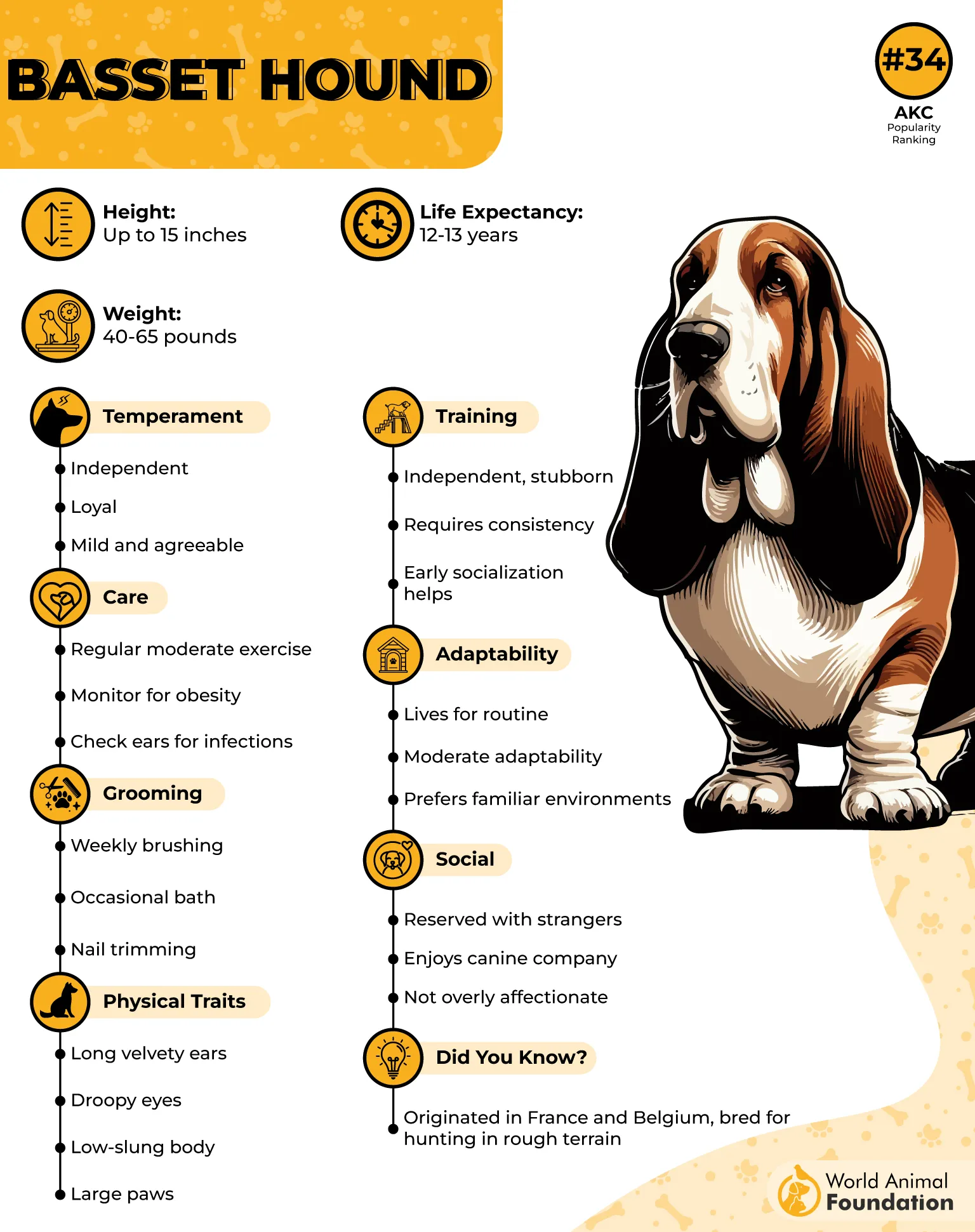
Basset Hounds are hound dogs that originated in France. They descend from the St. Hubert Hound, a now-extinct breed that resembled modern Bloodhounds, according to PetMD. Originally bred to hunt rabbits and hares, their low-set build helped them work close to the ground while following scents.
Calm and Sociable Companions
Basset Hounds are good-natured, calm, and friendly dogs. They are affectionate with familiar people and generally get along well with children, other dogs, and, with some training, other animals in the home.
Their laid-back nature makes them comfortable as indoor companions, although they still enjoy outdoor time.
Clever Dogs With Strong Noses
Despite their relaxed appearance, Basset Hounds are intelligent and have a powerful sense of smell. They can easily become distracted by interesting scents and may follow their noses wherever they lead.
Daily walks and scent-based activities can keep them active and mentally stimulated. They can be slow to respond to training because they are not natural people-pleasers, so keeping training fun works best.
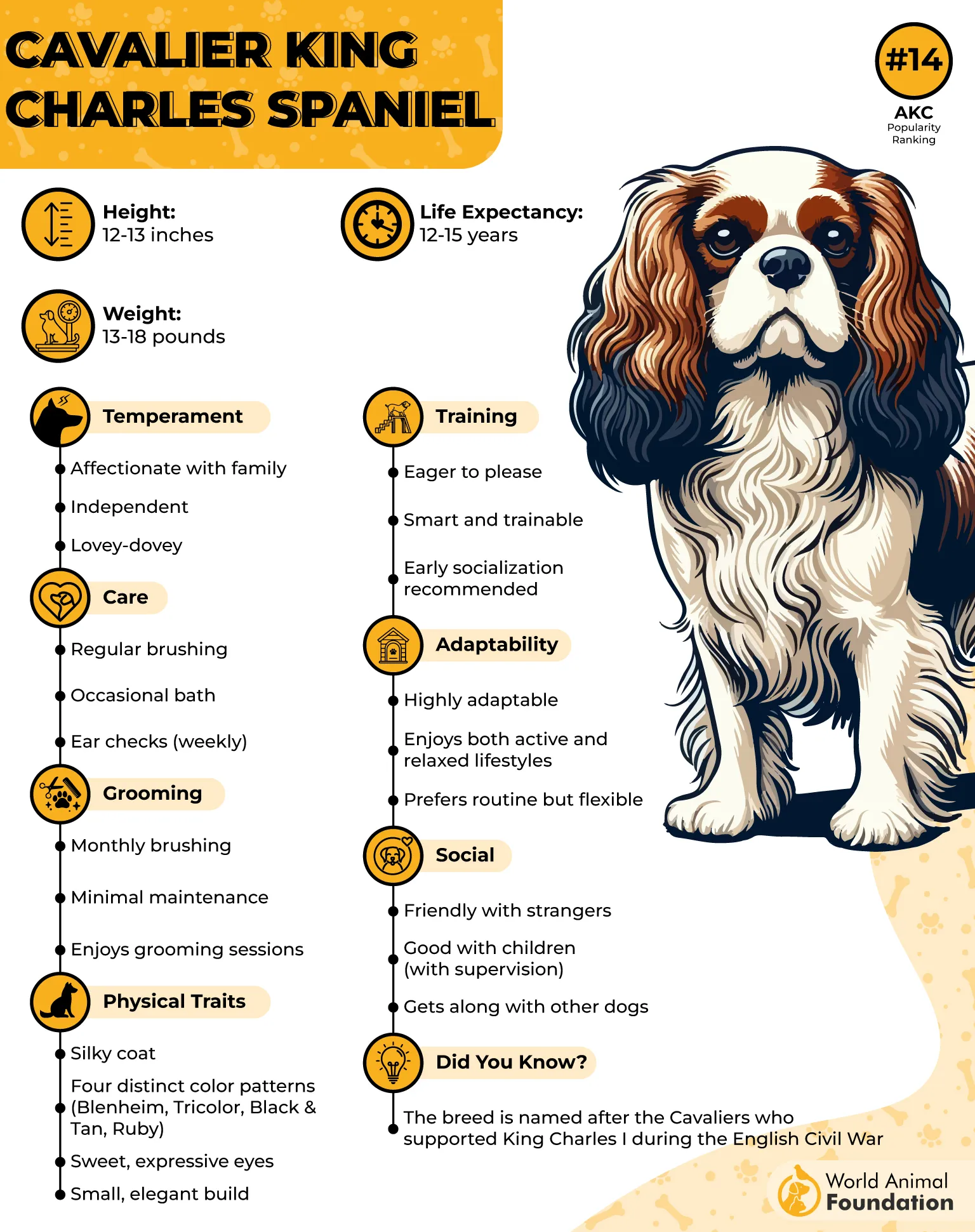
4. Cavalier King Charles Spaniel
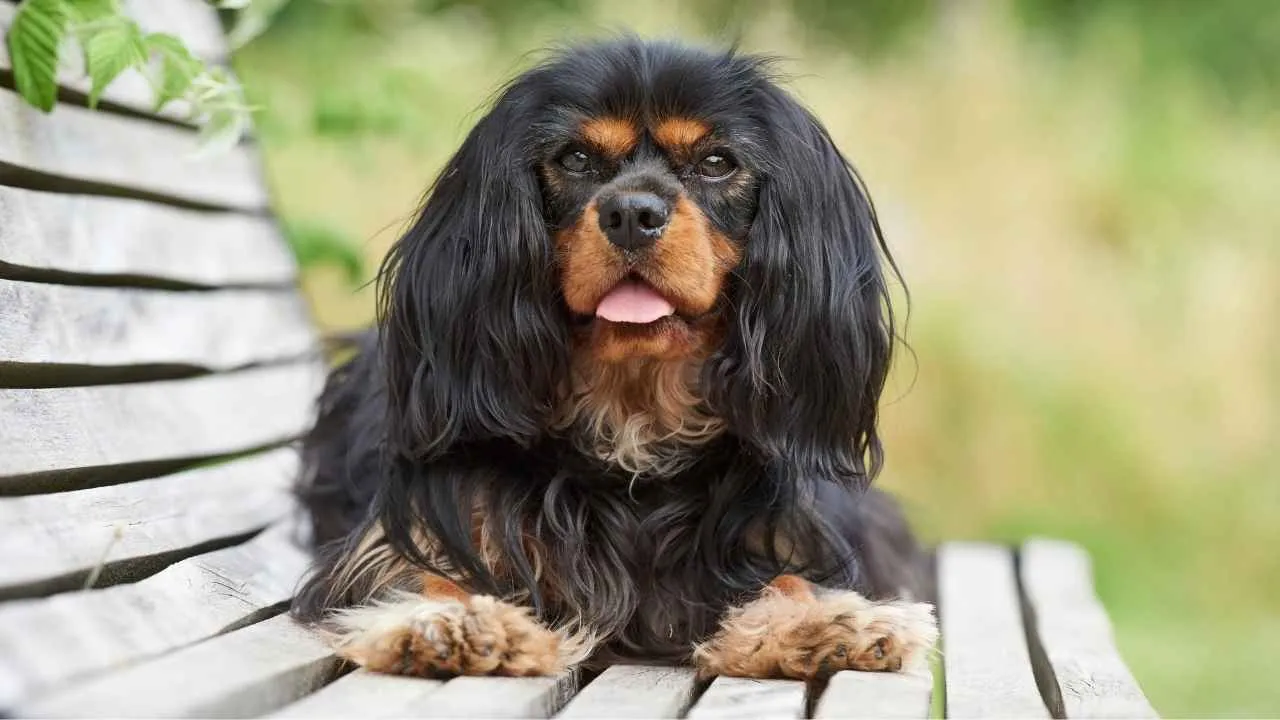
Cavalier King Charles Spaniels have a long connection with British royalty. They were named after King Charles I and his son Charles II, who were known for taking their dogs with them everywhere.
The breed was originally developed as a companion, warming laps in chilly castles and carriage rides. Today, they remain affectionate and devoted companions.
Gentle and Social Personalities
Cavalier King Charles Spaniels are cheerful, friendly, and sociable dogs. They generally get along well with children, other dogs, and cats.
Their gentle nature and eagerness to please also make them relatively easy to train with positive reinforcement. They enjoy human company and can adapt well to different households.
Moderate Exercise and Companionship
Cavaliers have moderate exercise needs and enjoy daily walks, playtime, and outdoor activities. After their energy needs are met, they are happy to relax with their families.
They need regular brushing to manage loose hair and benefit from weekly ear and eye checks. Since they thrive on human interaction, they should not be left alone for long periods.
5. Pug
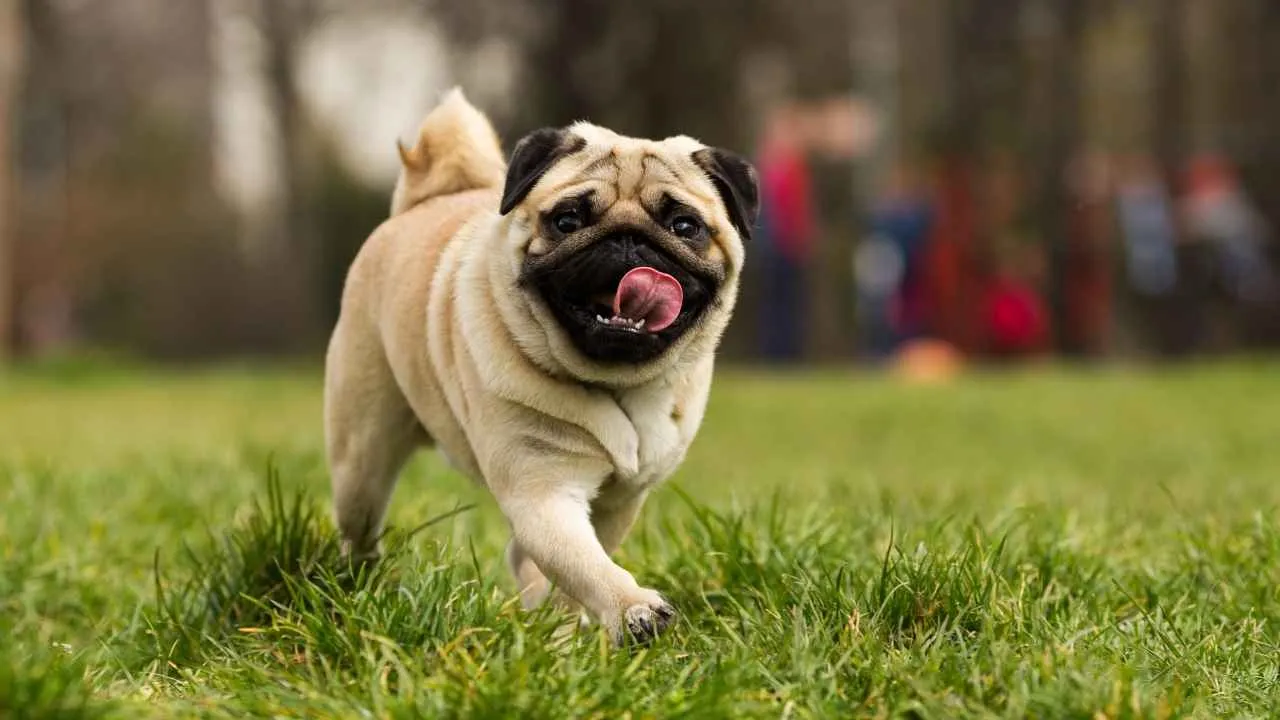
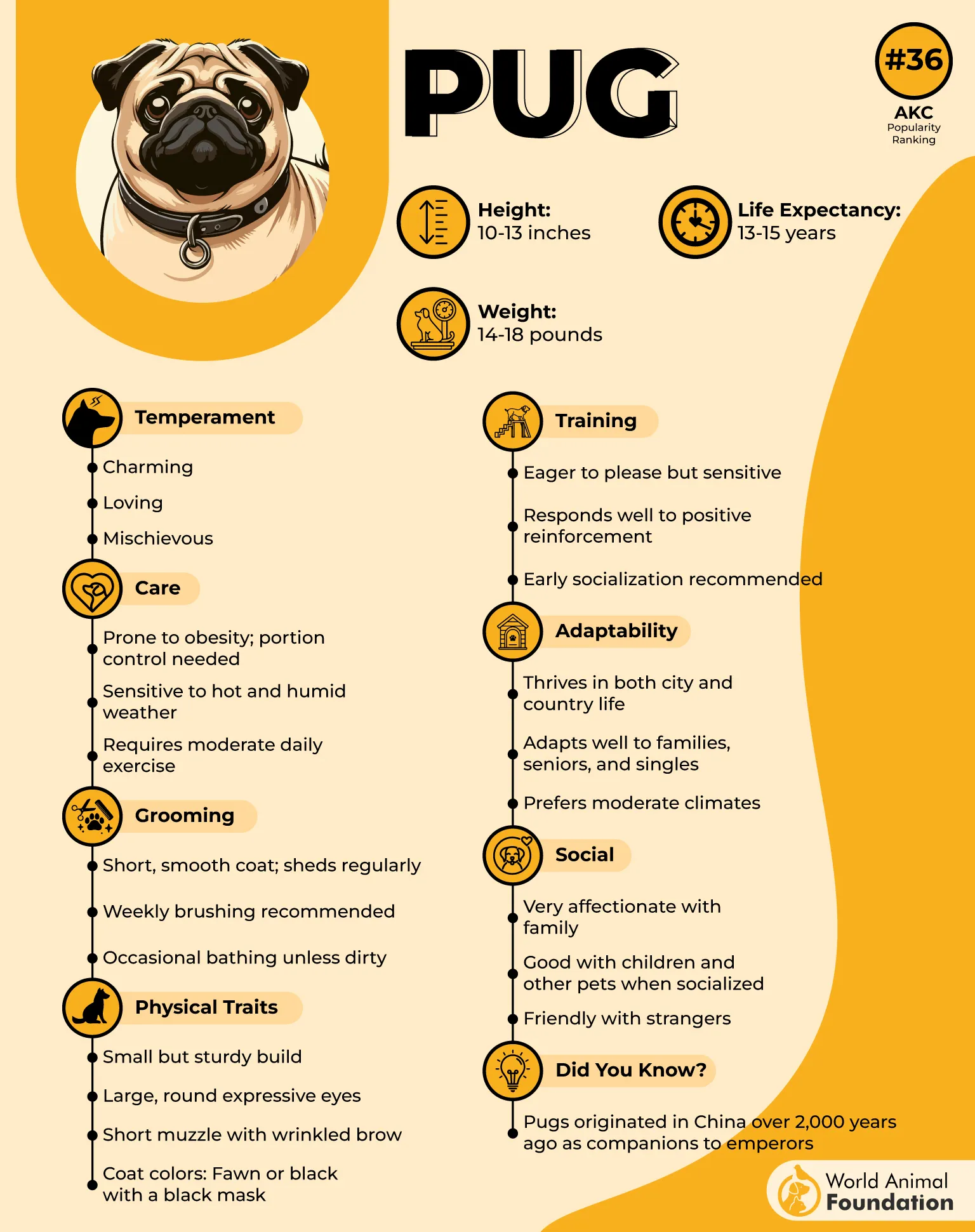
Pugs are an ancient breed that originated in China around 2,000 years ago. They later became favorites of royals around the world.
Bred to be companion dogs, Pugs love staying close to their people and being part of daily activities. Their friendly and affectionate nature still makes companionship one of their strongest traits.
Friendly and Easygoing
Pugs are outgoing, playful, and eager to please. They enjoy attention, cuddles, and spending time with their families. They generally do well with children and other pets when properly socialized.
Their easygoing nature can help them settle into homes with other animals, although calm introductions are still important.
Playful but Low-Key
Pugs enjoy playtime but are generally calm and prefer short, casual activities over intense exercise. Several short walks of around 15–20 minutes can provide suitable activity.
Because of their flat faces and narrow airways, they do not handle extreme exercise or hot weather well. Their short coats shed moderately and need regular brushing, while their stubborn side means training may require patience.
6. Bichon Frise
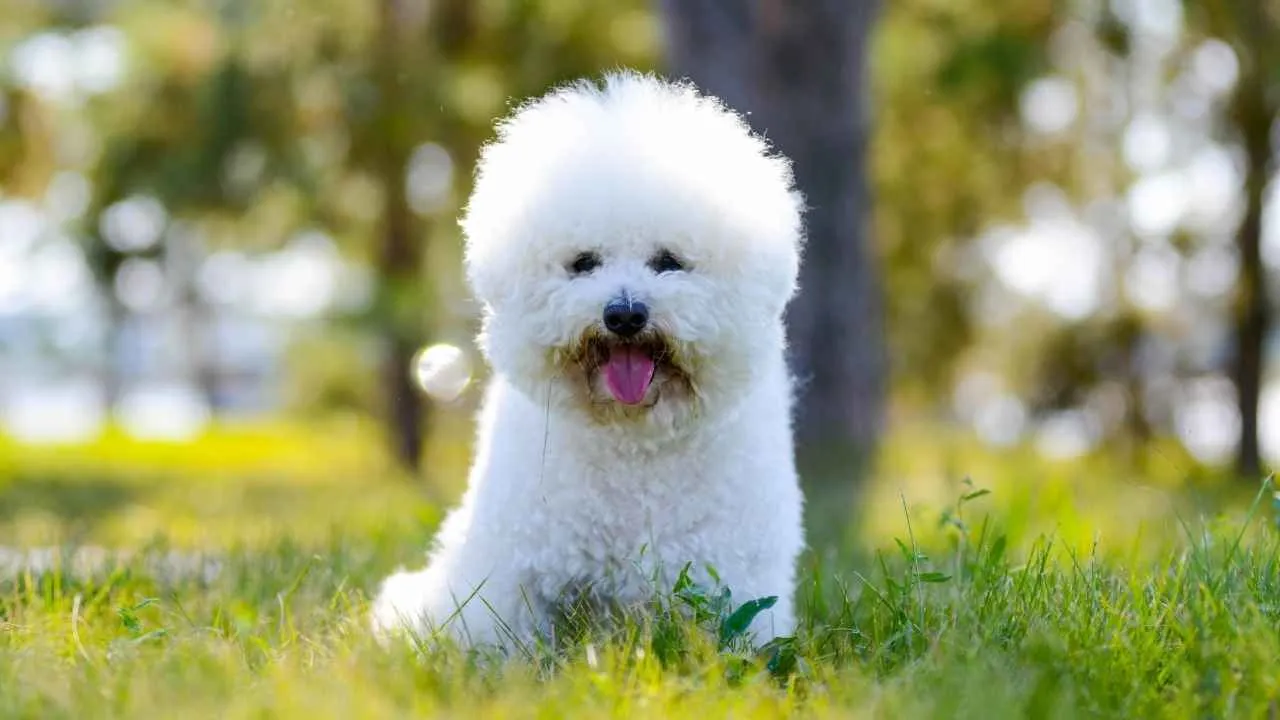
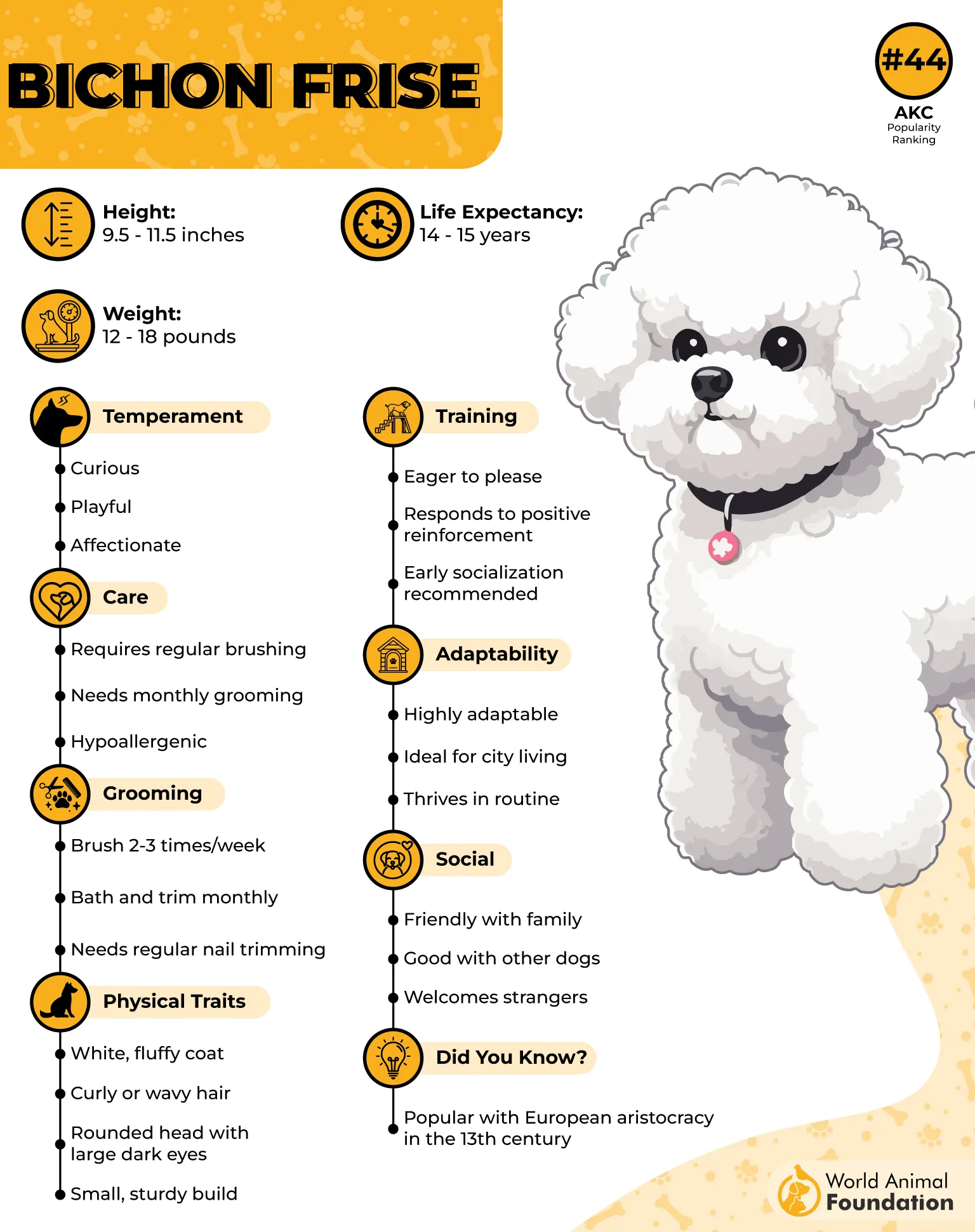
Bichon Frises are small non-sporting dogs known for their playful and affectionate personalities. They are Barbichon-type dogs and are closely related to breeds such as the Bolognese, Havanese, and Maltese. Their cheerful nature and love of companionship have made them popular family dogs.
Social and Friendly Personalities
Bichons are curious, lively, and enjoy meeting new friends. They generally do well with children, other dogs, and other household pets.
Their friendly nature can help them settle well into homes with cats. They are also eager to please and easy to train, although they may bark when alerted to unfamiliar sounds.
Playful Yet Happy to Relax
Bichons enjoy playing with toys and learning new tricks, but they are also happy to relax with their families once their energy needs are met. Their small size makes them suitable for many homes, including apartments.
They need consistent grooming, including daily brushing, monthly baths, and regular professional grooming. They also enjoy being around their families and may not like being left alone for long periods.
7. Papillon
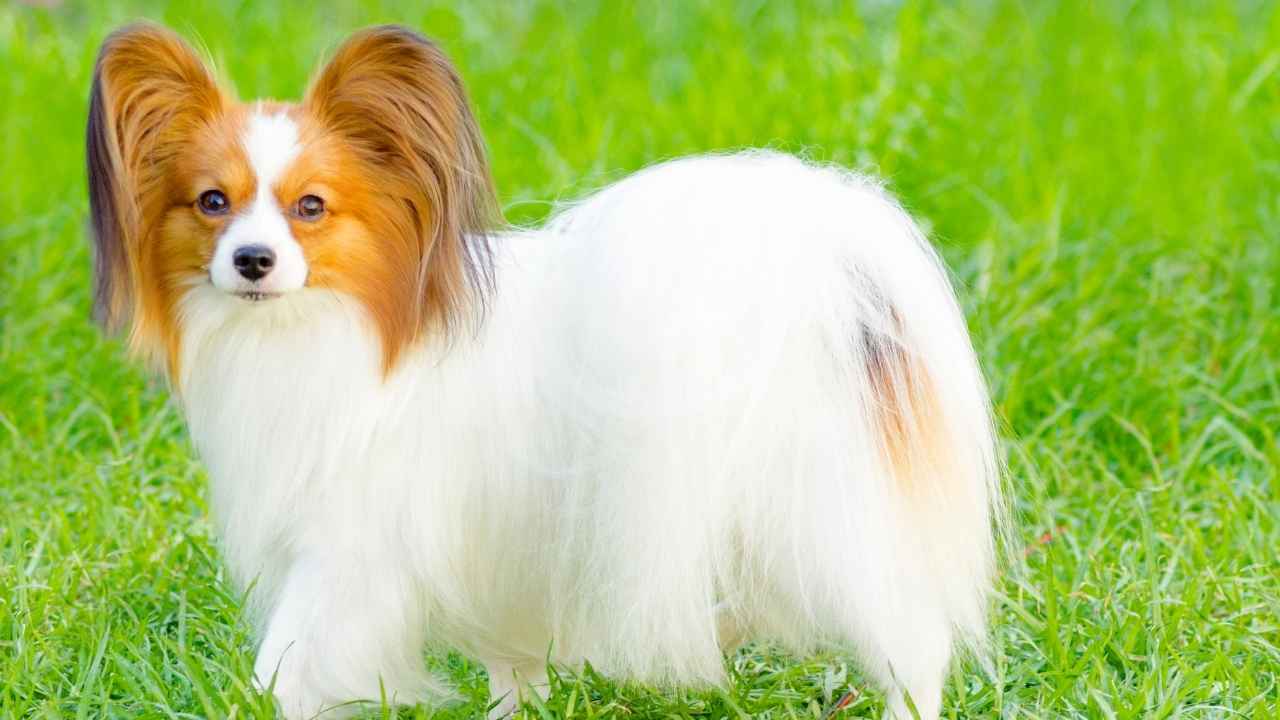
Papillons are small companion dogs with a history dating back hundreds of years. Their presence has been depicted in Western European artwork as early as the 16th century, and they were especially associated with royalty.
The name Papillon is French for “butterfly,” referring to their large ears with long, wispy hairs that resemble butterfly wings. Today, they remain popular family dogs and companions.
Intelligent and Social Personalities
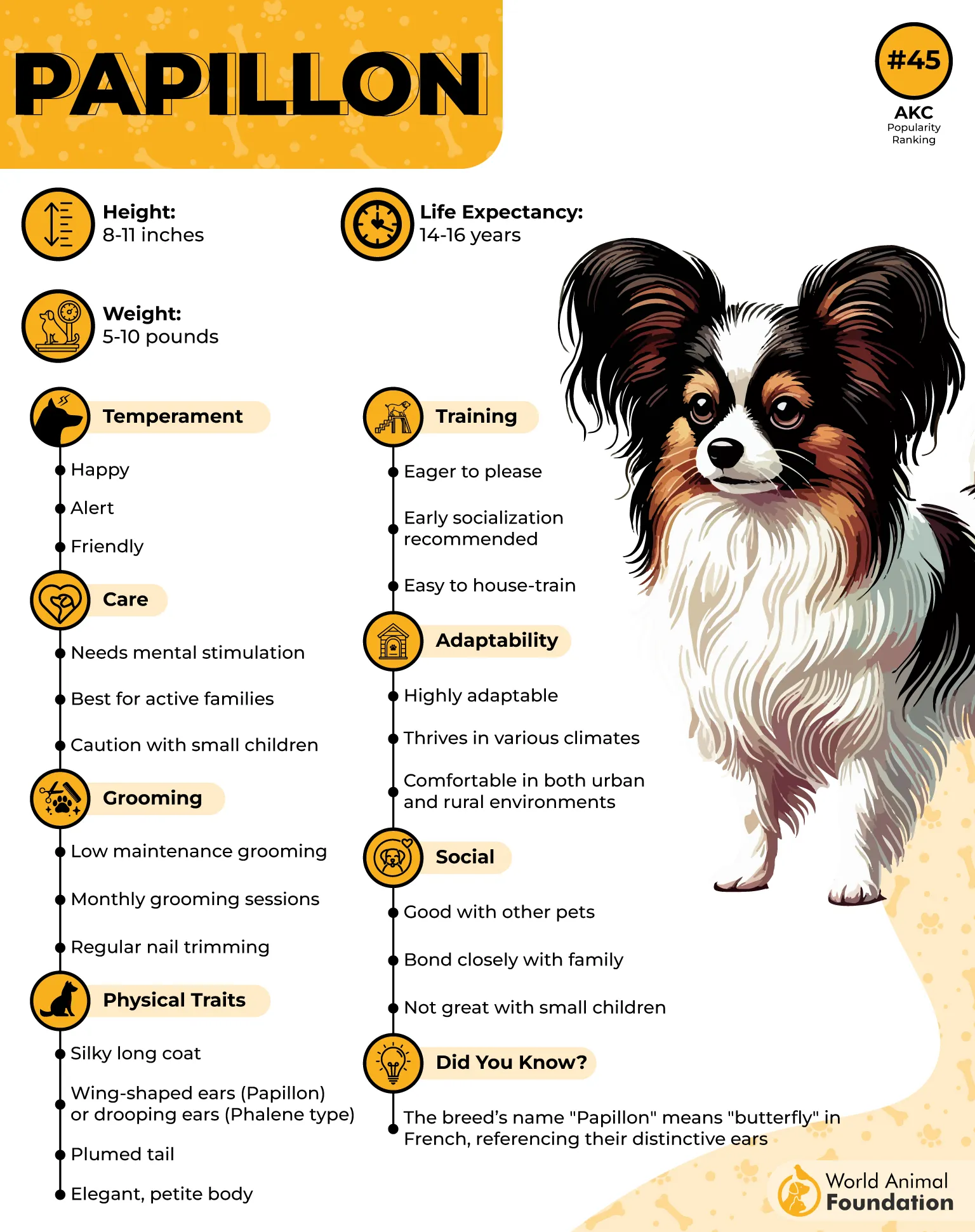
Papillons are highly intelligent, energetic, and eager to please. They are considered among the smartest and most trainable toy breeds and can excel in obedience and agility. They enjoy learning tricks, playing catch, and performing for their owners.
They are friendly with people of all ages and generally get along well with dogs, cats, and other pets when socialized from puppyhood. Their lively nature can also make them bark when excited or alert to someone at the door.
Active and Easy to Train
Papillons are more active than many other toy breeds and need plenty of mental stimulation, attention, play, and exercise. They enjoy indoor games, walks, and having space to run and play.
Training is usually straightforward with praise, positive reinforcement, and play. They enjoy being around people but are not always typical lap dogs, often preferring to have some space of their own.
8. Toy Poodle
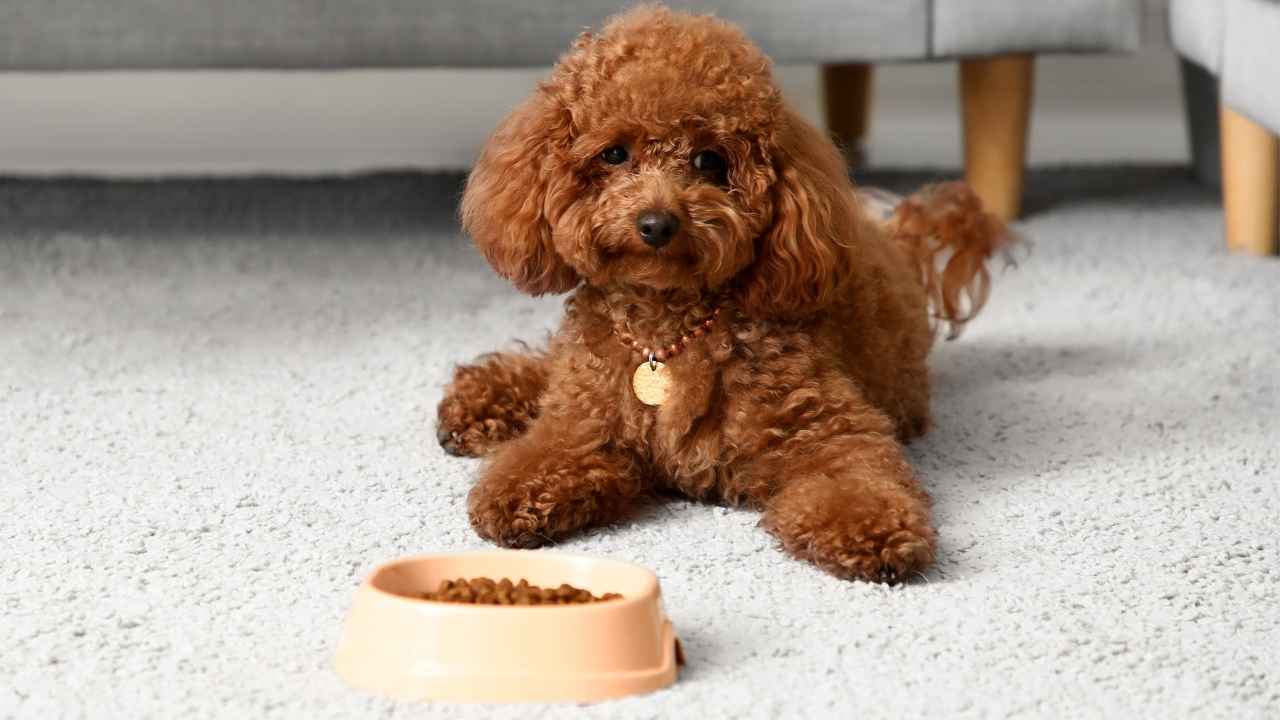
Toy Poodles are the smallest variety of the Poodle, developed from the larger Standard Poodle. Although Poodles are often associated with France, the breed originated in Germany, where Standard Poodles were used for duck hunting.
Breeders later bred Toy Poodles down from the larger varieties, and they became popular as companion dogs.
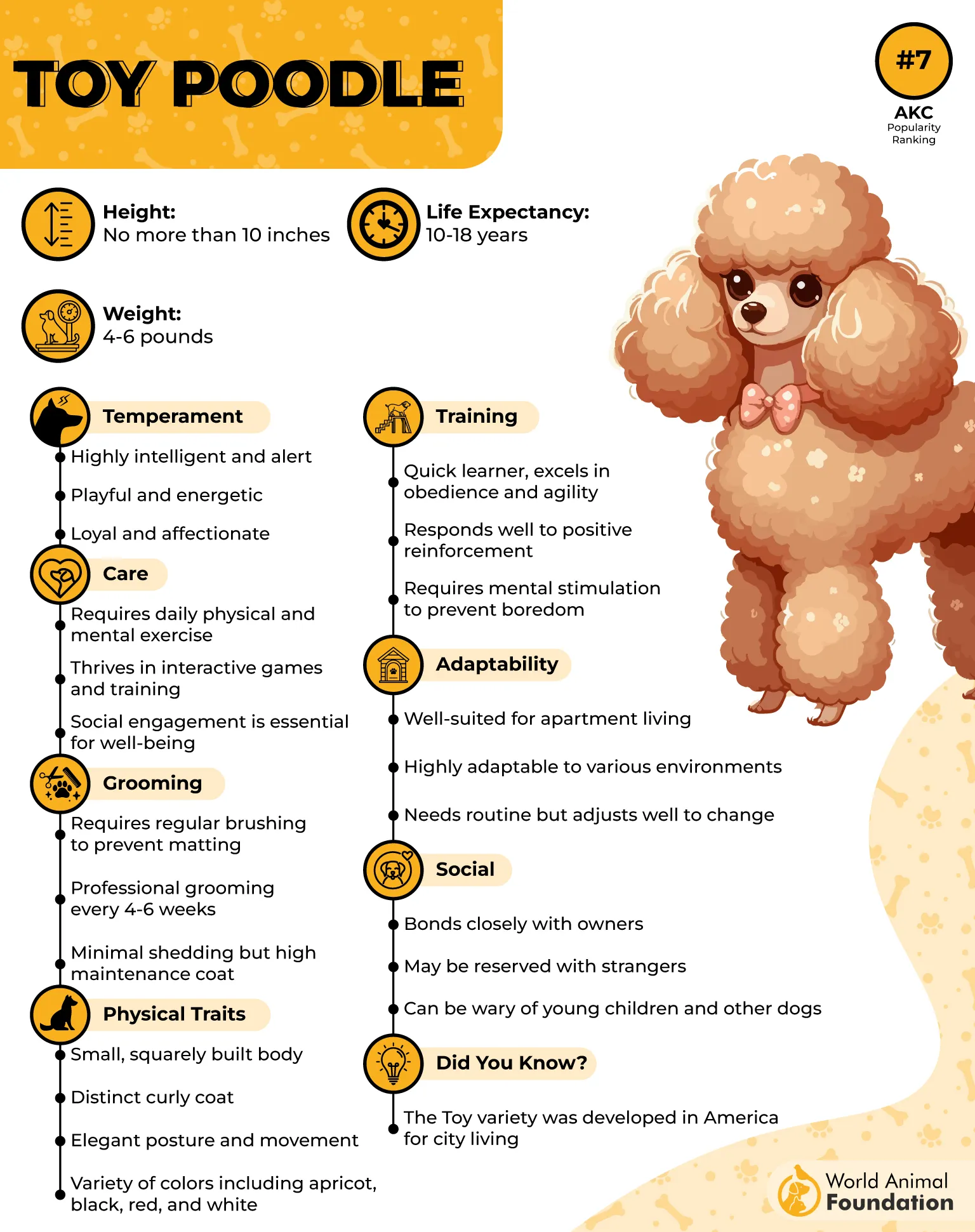
Smart and Affectionate Personalities
Toy Poodles are exceptionally intelligent, playful, and eager to please. They learn quickly and enjoy performing tricks, obedience, agility, and Flyball. They are affectionate attention-seekers who love spending time with their families and generally do well with children, other dogs, and other pets.
Their friendly nature can make them a good fit for homes with cats, although interactions with children and larger dogs should be supervised because of their small size.
Active and Easy to Train
Despite their tiny size, Toy Poodles have plenty of energy and need regular play, mental stimulation, and short walks.
They enjoy being involved with their people and may become mischievous or destructive if they do not get enough interaction. Training should be fun, consistent, and reward-based, as they pick things up quickly.
9. Boston Terrier
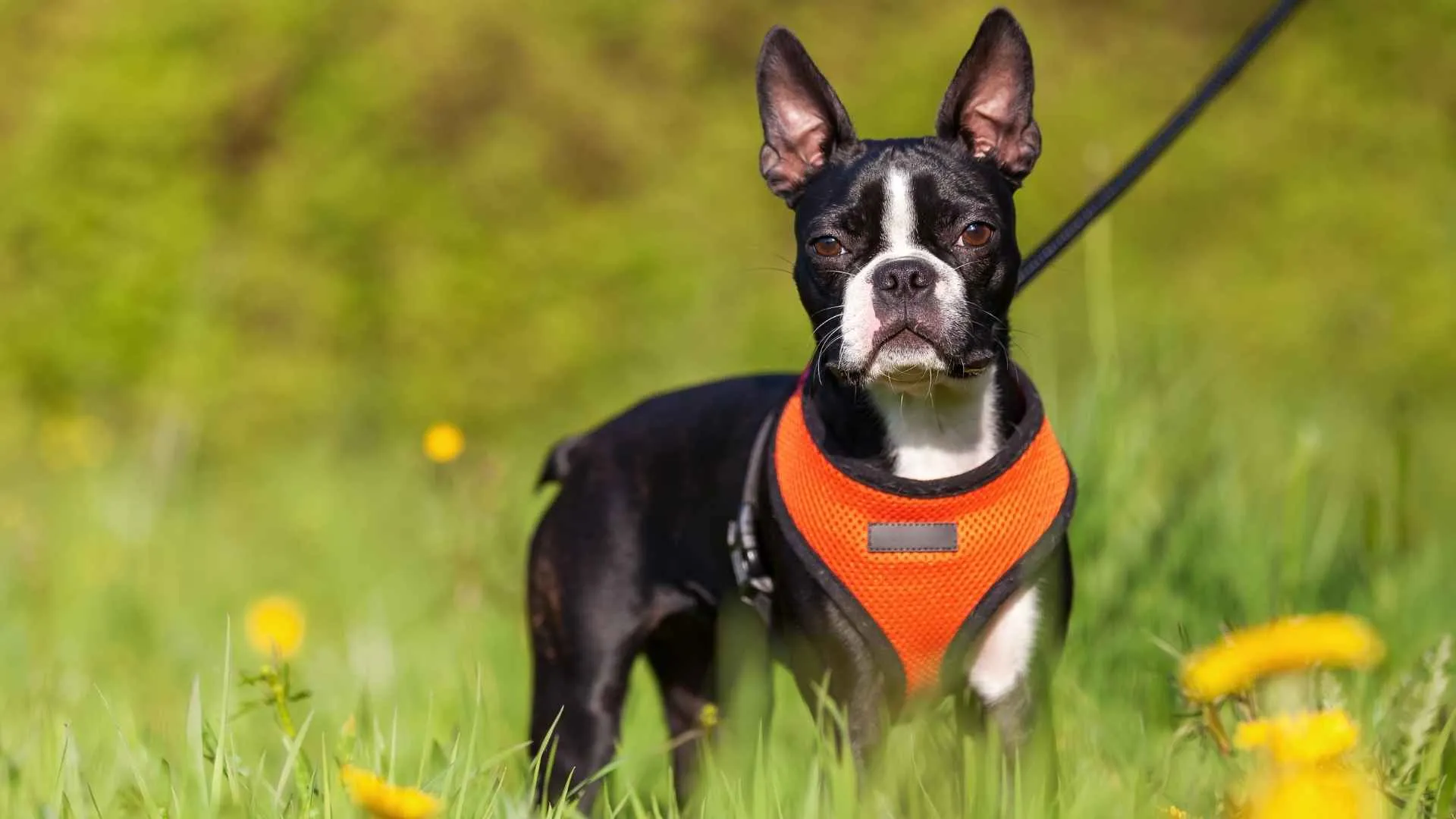
Boston Terriers originated in Boston, which is where they got their name. They are often called the “American gentleman” because of their good manners and distinctive tuxedo-like coat.
Although they were originally bred as fighting dogs, Boston Terriers are now known for their calm, affectionate temperament.
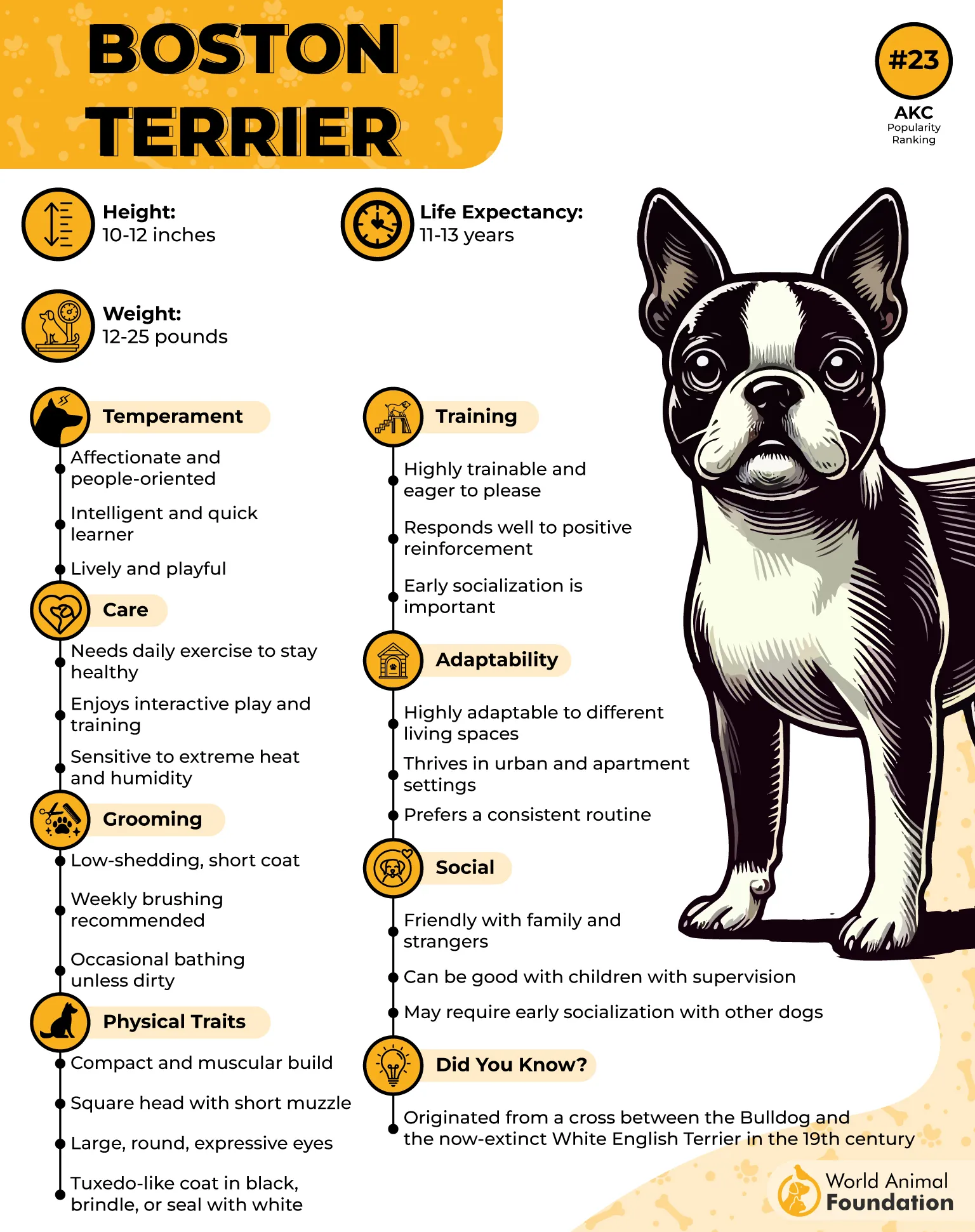
Lively and Affectionate Personalities
Boston Terriers are playful, social, and full of personality. They love being around their families and enjoy joining in with whatever is happening at home.
They are generally good with children and other household pets, making them a potential fit for homes with cats. They can be stubborn but are intelligent and respond well to treats, games, and encouragement.
Moderate Exercise and Companionship
Boston Terriers have plenty of energy but do well with regular, moderate exercise. One or two half-hour walks a day can provide suitable activity, and they are also happy in apartments and other home settings.
As brachycephalic dogs, they can experience breathing problems and do not handle heat or prolonged exercise well, according to Britannica. They enjoy training and can also take part in canine sports when breathing issues are not a concern.
10. Maltese
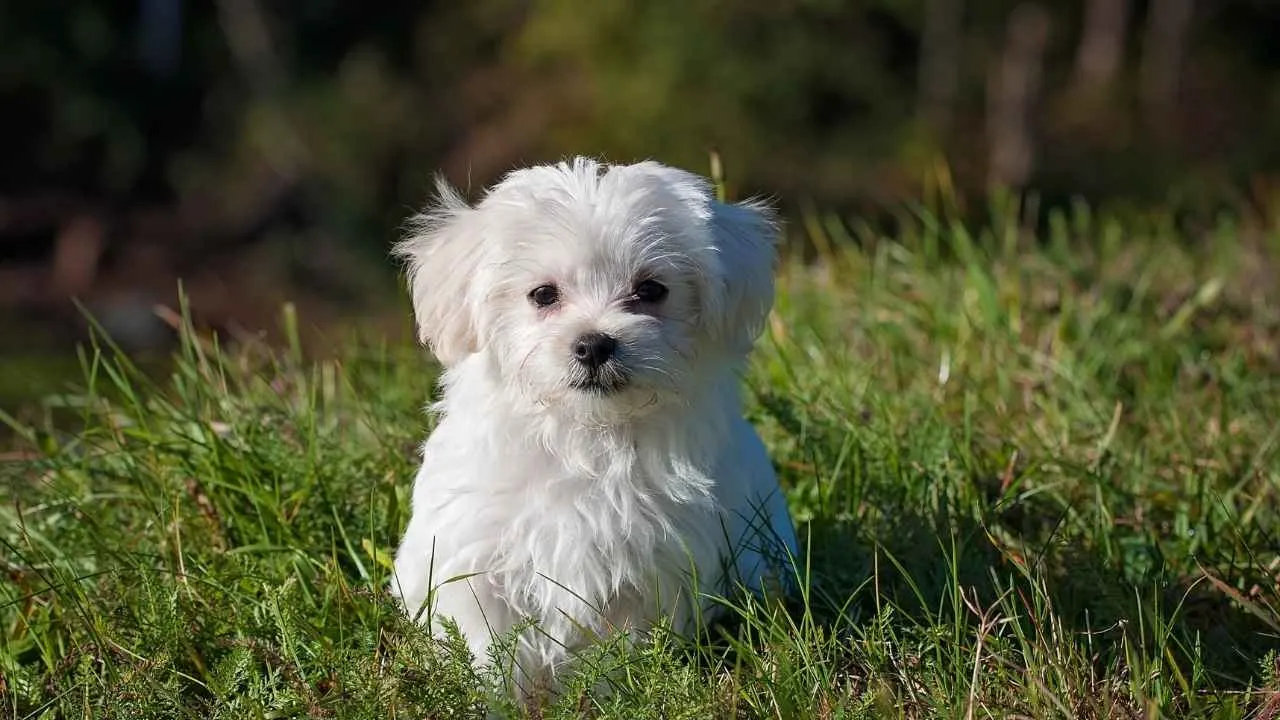
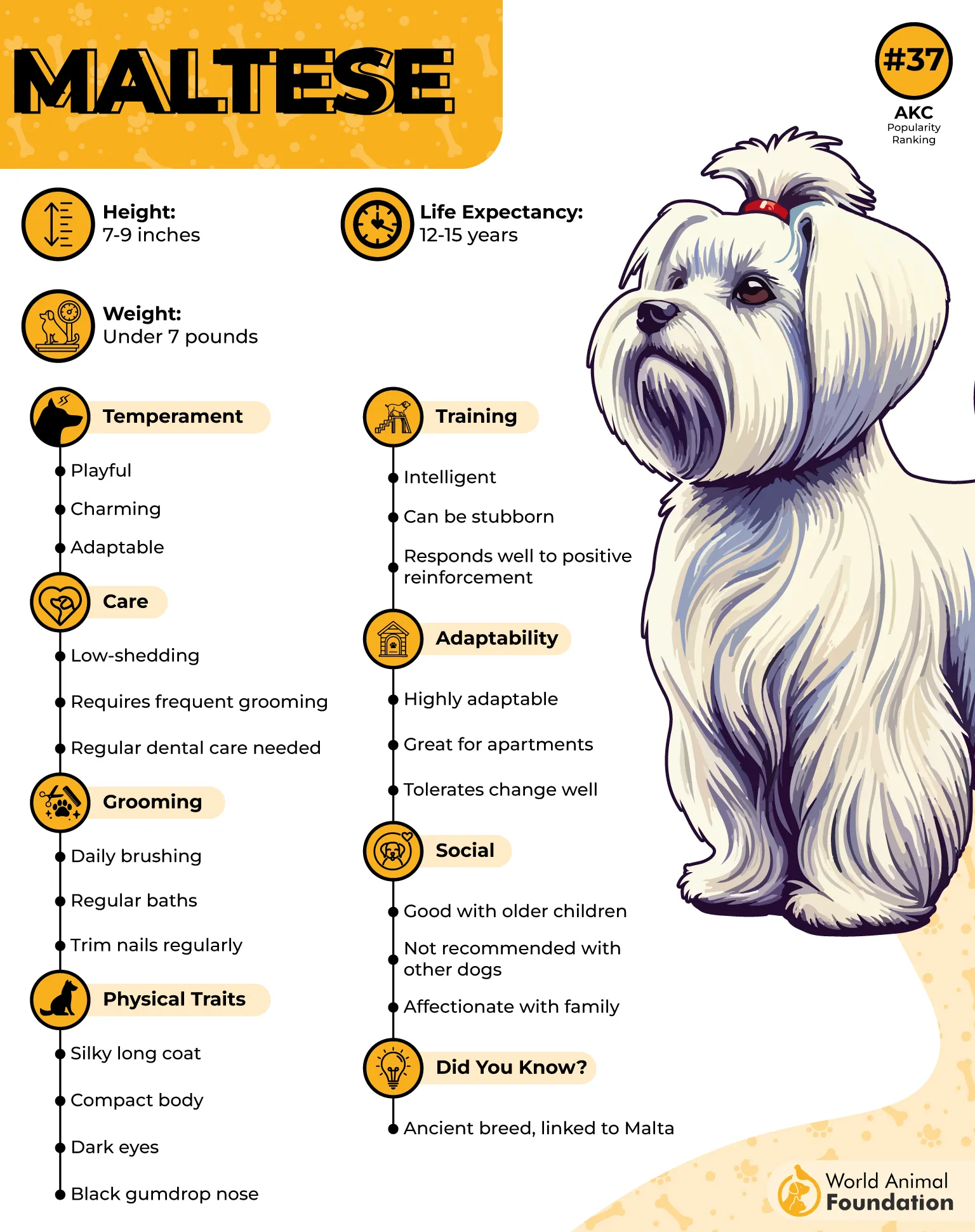
The Maltese originated on the Mediterranean island of Malta and has been a companion dog for centuries. References to the breed can be found in Ancient Greek and Roman literature, and it has been known as the ancient dog of Malta for more than 28 centuries.
Bred to be a companion, the Maltese remains a devoted and affectionate family dog today.
Affectionate and Playful Personalities
Maltese are friendly, lively, cuddly dogs who love human attention. They enjoy spending time with their families and are happy to sit on a lap after burning off their energy.
They generally get along well with other dogs and pets and can be good with children when properly socialized. Their small size means young children should be supervised, as they can accidentally hurt the dog during rough play.
Playful Companions With Grooming Needs
Maltese are playful and enjoy learning tricks when rewarded. They can be fairly easy to train and benefit from positive reinforcement, socialization, mental stimulation, and daily activity.
They enjoy running around the house or garden and usually need only short walks. They are also highly people-oriented and may struggle when left alone, so companionship and training around separation are important.
Conclusion
Dogs and cats can share a home peacefully when their personalities, energy levels, and needs are a good fit. The breeds covered here are known for being friendly, social, adaptable, or easygoing, which can help create a calmer relationship with feline companions.
Still, breed is only part of the picture. Take time to introduce pets slowly, provide safe spaces, and supervise their early interactions. With patience and the right approach, a home with both a dog and a cat can become a happy space where both pets feel comfortable and secure.
