




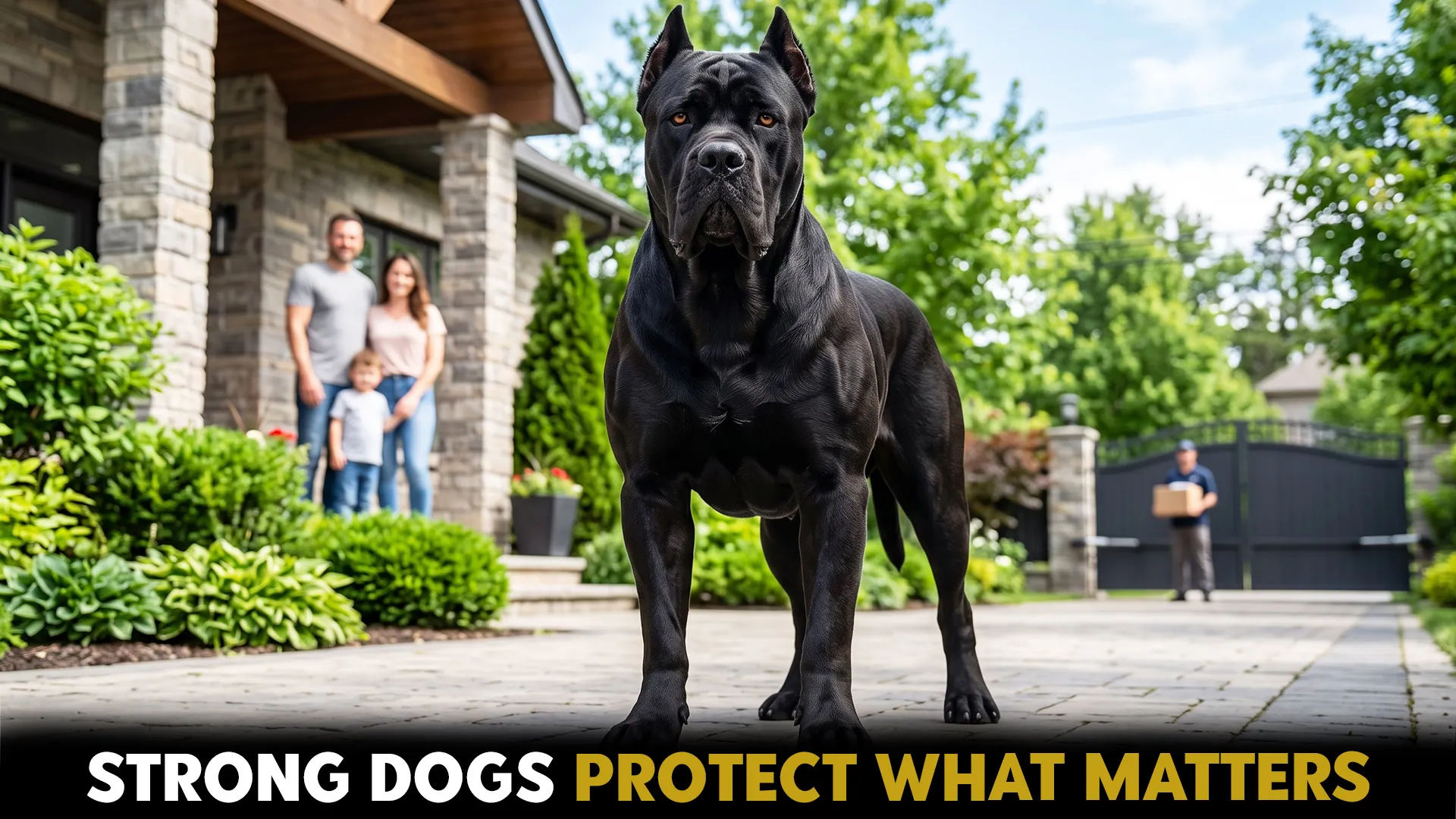
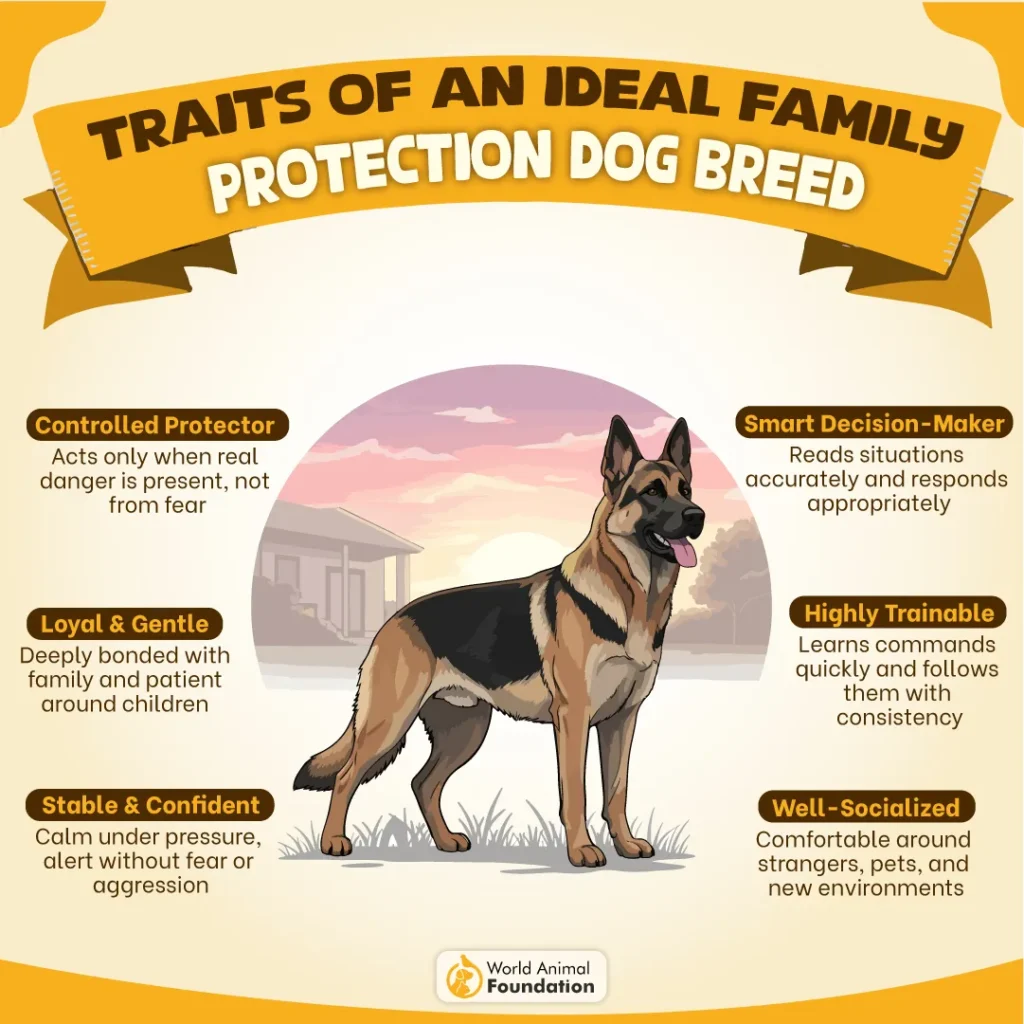
A family protection dog needs more than a good bark; it needs powerful muscles and stamina to guard against intruders. It also has to be loyal, fast, and smart. Those traits should be non-negotiable when you’re shopping for a guard dog, because power without a brain is just chaos.
Worrying about aggression is a fair concern, and plenty of people assume guard breeds are aggressive. That’s only partly true. These dogs can be possessive at times, but that’s usually their way of protecting you, and families sometimes mistake it for aggression. Still, you shouldn’t rule out a protective breed just because Uncle Bob said they’re aggressive.
How a dog behaves depends a lot on how it’s raised. With proper training and early socialization, protective breeds can grow into well-mannered, gentle guardians.
In this guide, we’re sharing seven top protective breeds, along with their temperaments and what makes each one a good choice for family protection, so stick around.
Super-Strong Dog Breeds Ideal for Families Seeking a Loyal Protector
1. Rottweiler
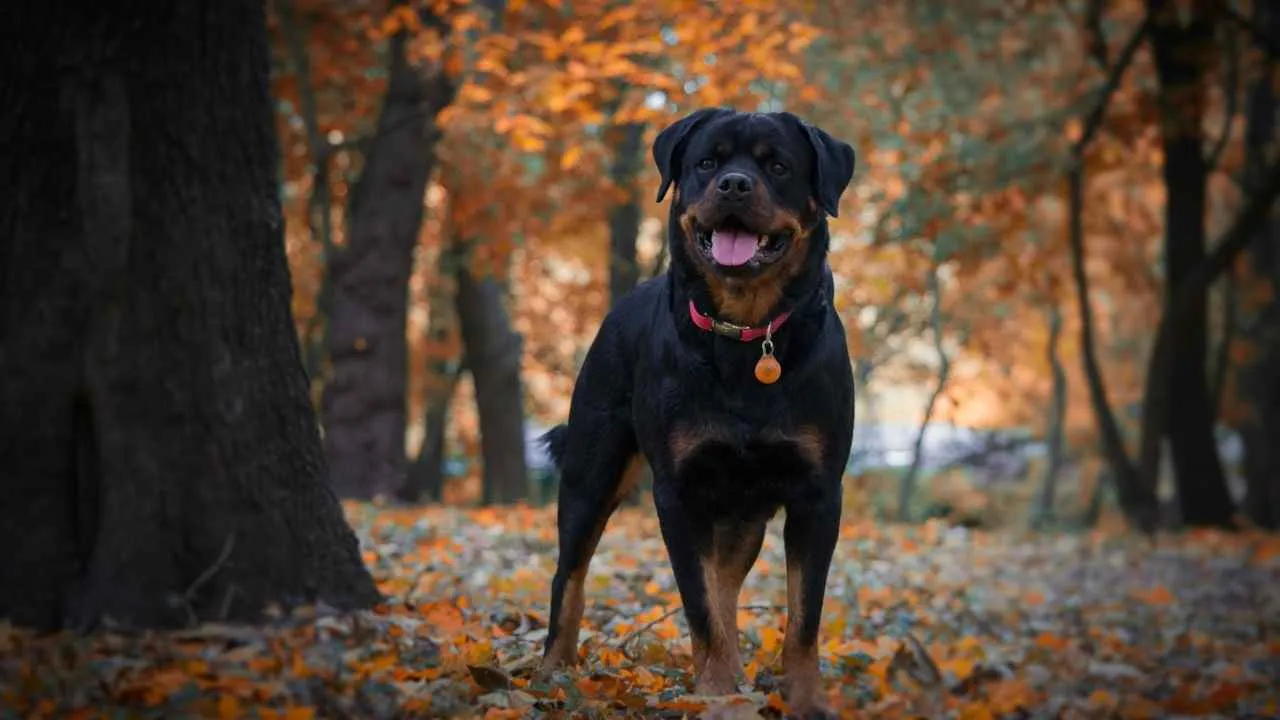
Rottweilers are calm, confident, deeply loyal, and courageous. They’re aloof and naturally wary of strangers, a trait that comes from their herding and guarding background. They don’t tend to be aggressive without a reason, and their heavy-boned, muscular frame makes them excellent personal protection dogs.
These working dogs also have a strong bite, often cited at around 328 PSI. Beyond that, they’re sharp, observant, and tuned in to their people. A properly trained Rottweiler can tell the difference between a friendly visitor and a genuine threat, which is a valuable skill in a family guardian.
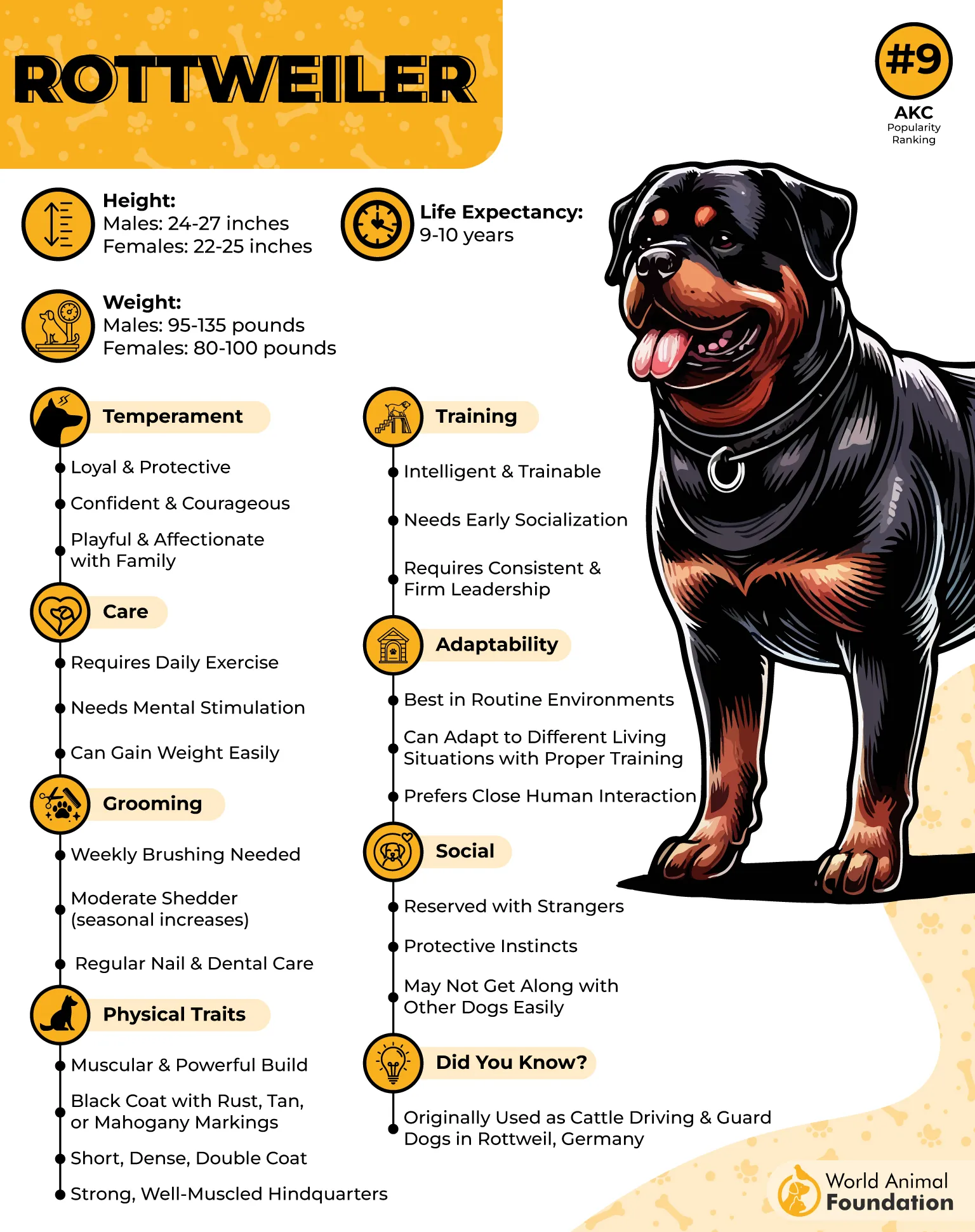
That said, they have high energy levels and need around two hours of exercise a day, according to PDSA. They’re eager to work, but they also need consistent training and early socialization to keep their protective instincts in check. Their short coat sheds an average amount.
2. Cane Corso
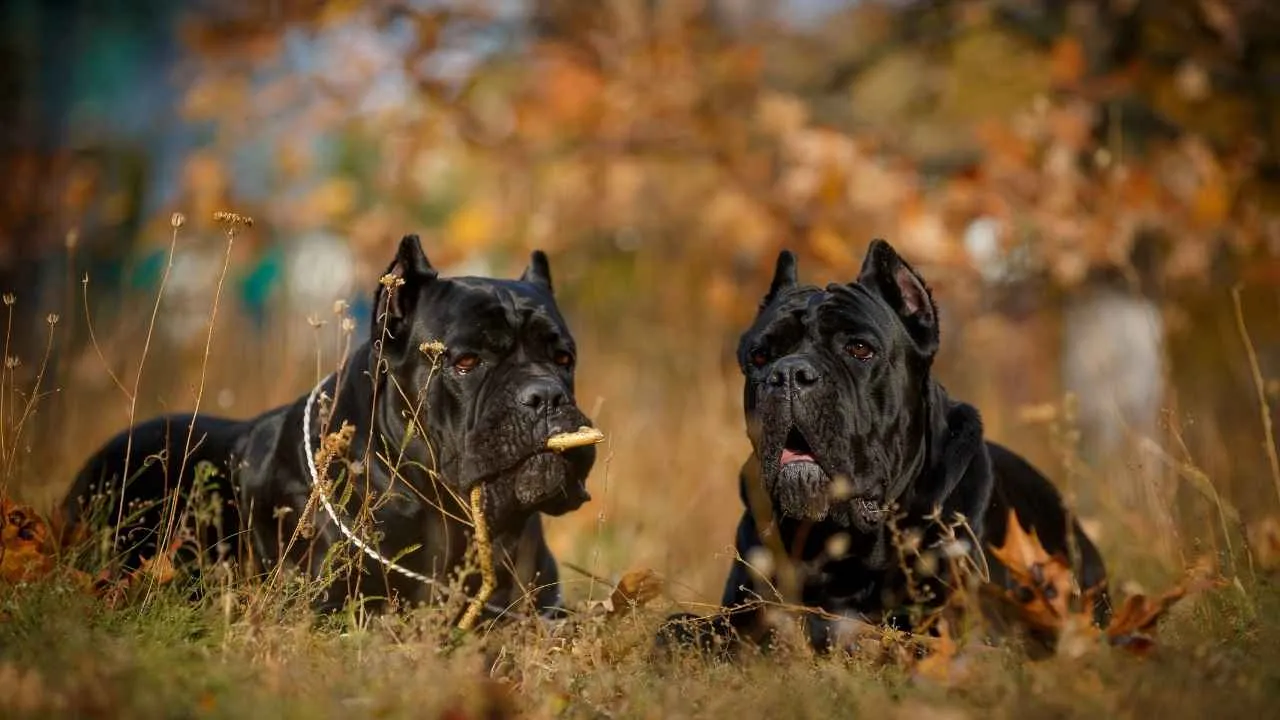
Cane Corsos are noble, loyal, and powerful dogs with a confident temperament. They form deep bonds with their owners and tend to stay calm and gentle at home. They were originally bred for big-game hunting, though, so they have chasing instincts that take some work to manage if you have kids in the house.
These large dogs have a heavily muscular body, a broad chest, and a massive head, with a bite force often cited at around 700 PSI. That strength, along with their loyalty, is why they’re among the best protection breeds for active families. They’re also good at reading human body language and tone of voice.
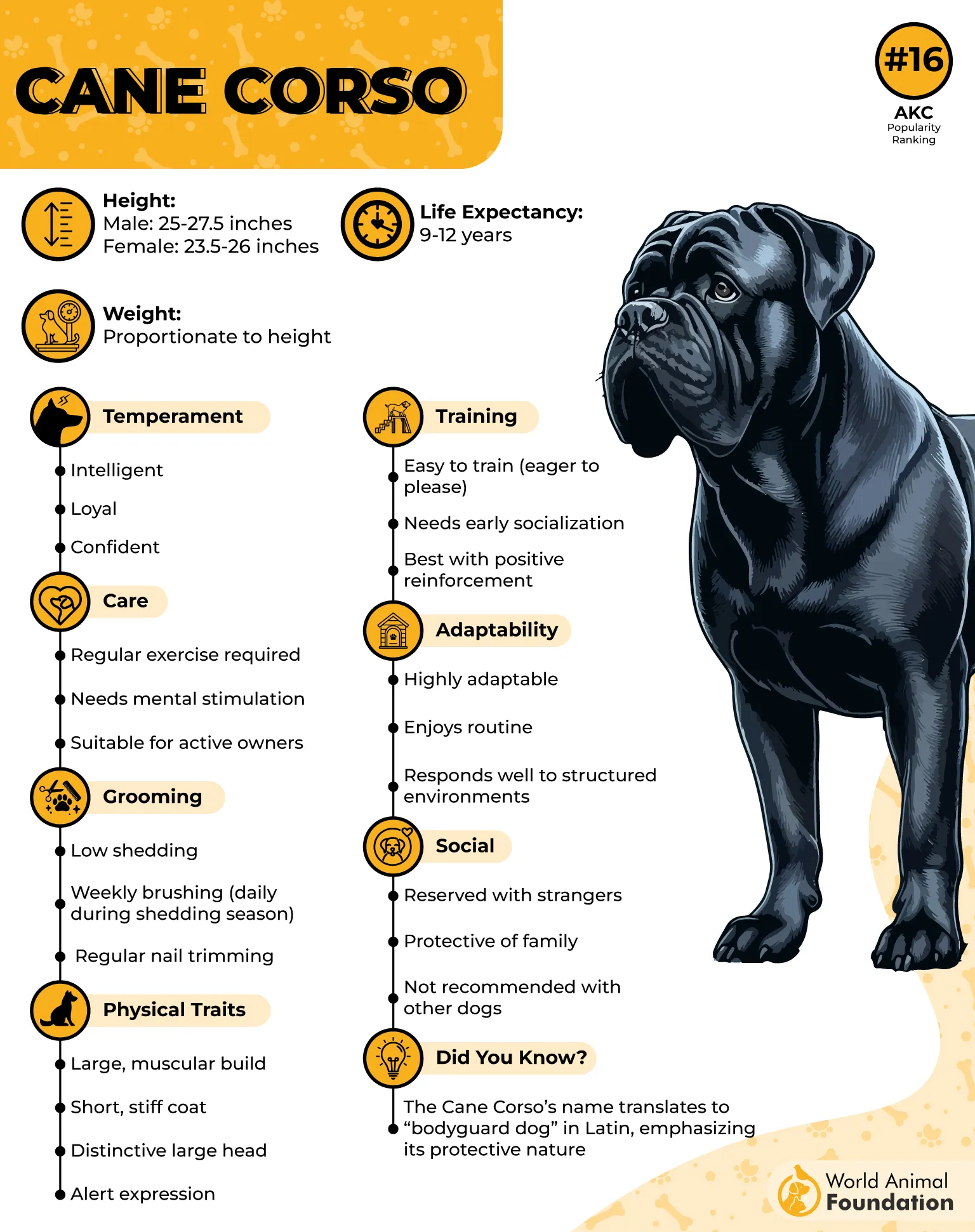
Cane Corsos have strong guarding instincts, and their name is commonly translated as “bodyguard dog.” They need structured training, thorough socialization, and 60 to 90 minutes of vigorous exercise a day to stay mentally stimulated. Their short coats are low maintenance.
3. Bullmastiff
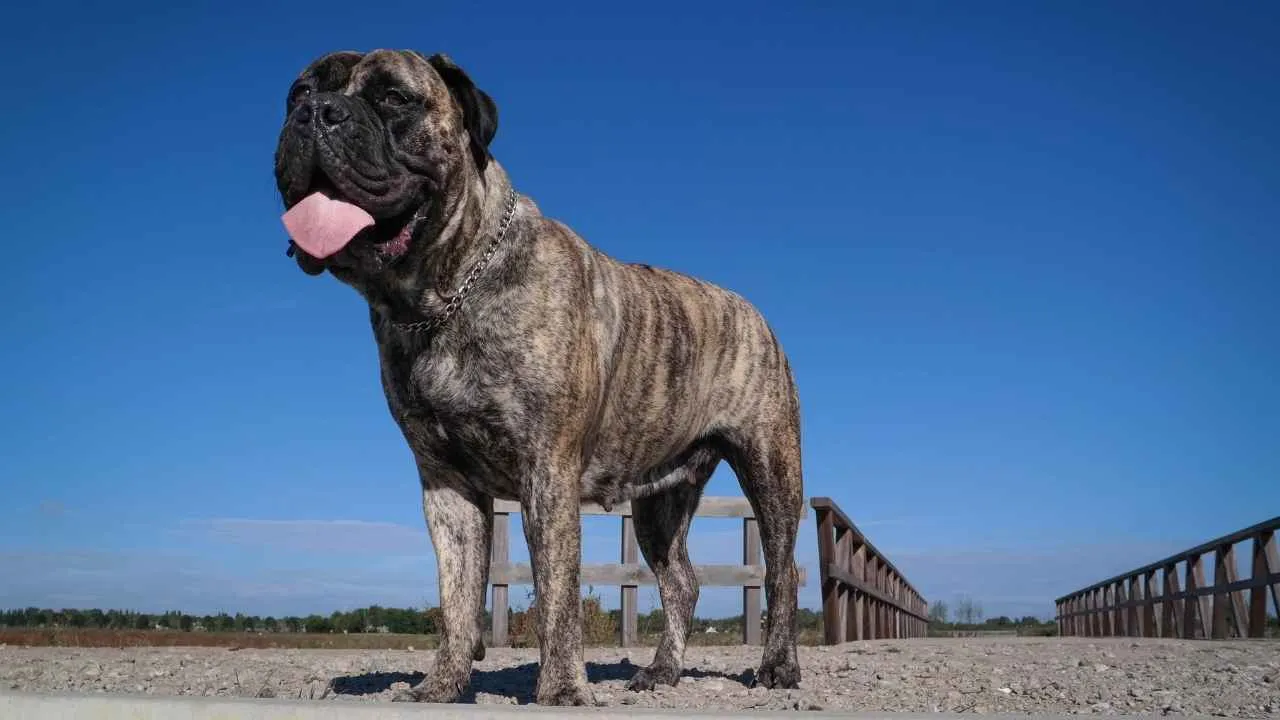
Bullmastiffs are fearless, deeply gentle giants. They’re also known as the “Gamekeeper’s Night Dog” because they were used to guard estates against poachers, according to the AKC, so protective instincts come naturally to them. These extra-large dogs have a deep chest and a massive bone structure.
Their bite force is often cited at around 550 PSI, but their protection strategy is mostly about using their sheer size and strength. They have a calm temperament and rarely bark without a reason, which makes them good family pets. They do need around 45 to 60 minutes of exercise a day.
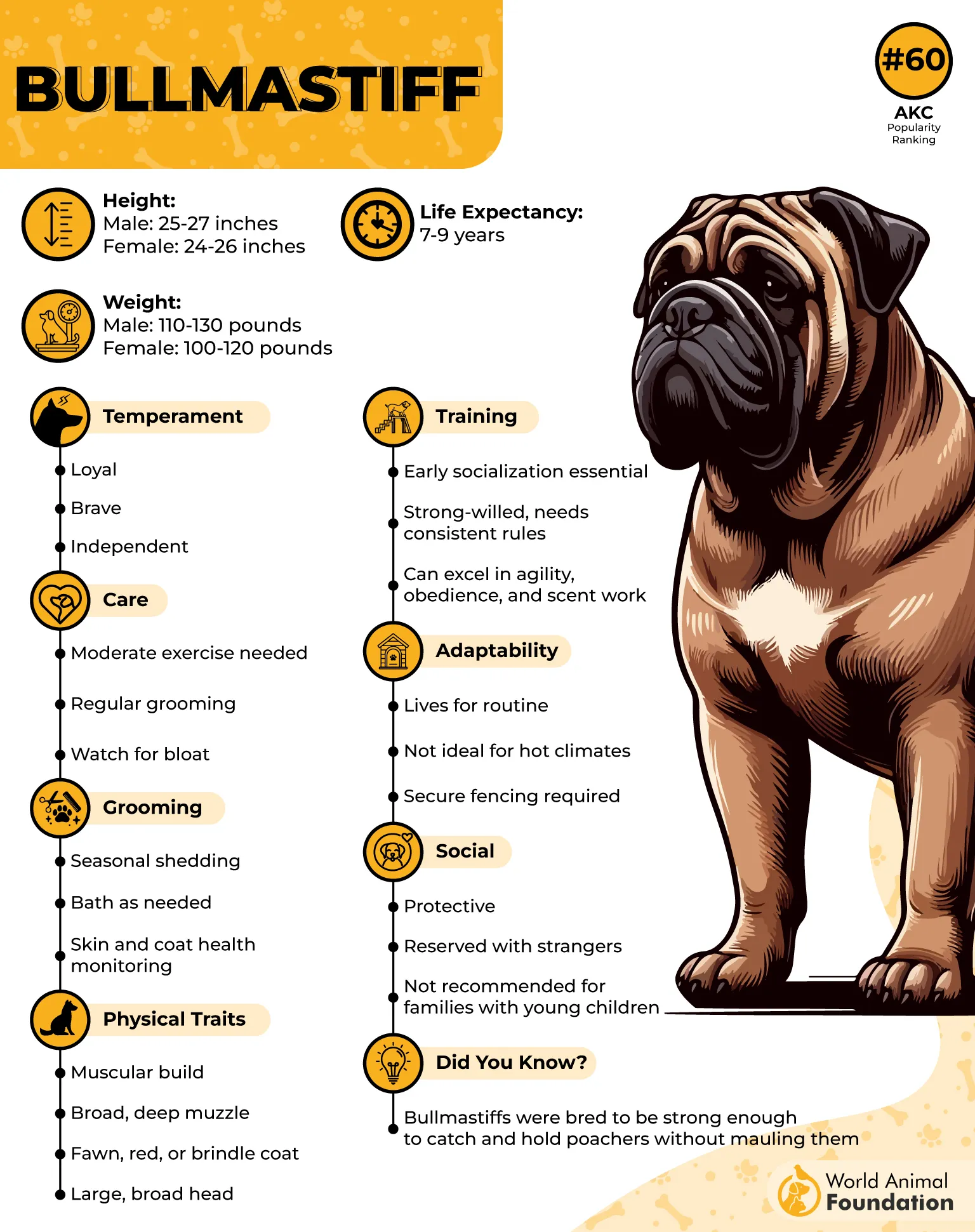
Bullmastiffs are moderately easy to train, but they benefit from professional training and early socialization. They’re sensitive to harsh tones and do best with experienced owners. Their short, low-maintenance coat sheds moderately and needs brushing once or twice a week.
4. Doberman Pinscher
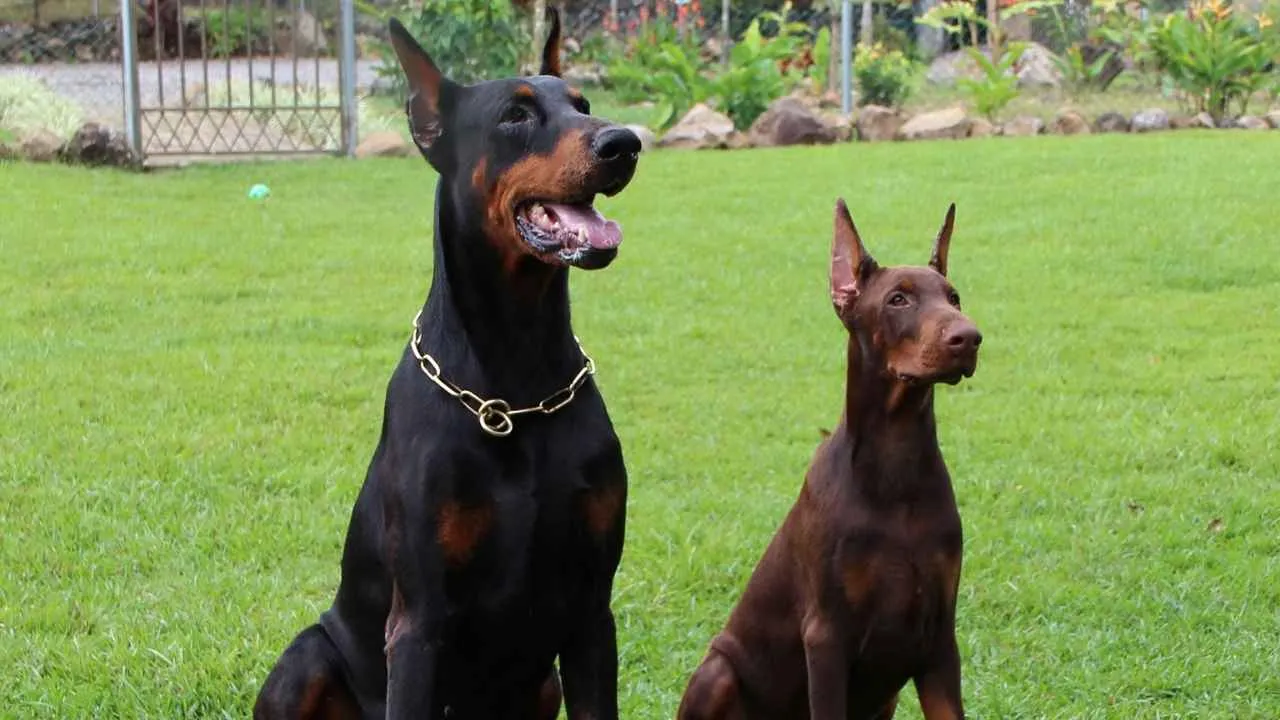
Doberman Pinschers were bred as personal protection dogs by Louis Dobermann, a German tax collector. They’re highly alert, loyal, and intelligent guard dogs, known for their devotion and watchful presence. They’re also velcro dogs, which is a bonus for families who want a companion that stays close.
They have a muscular, athletic build and a bite force often cited at around 245 to 305 PSI. Dobermans are among the smartest dog breeds, which is why they’ve served as police, military, and therapy dogs, as Orvis mentions. They also have high energy levels and need plenty of exercise to stay mentally stimulated.
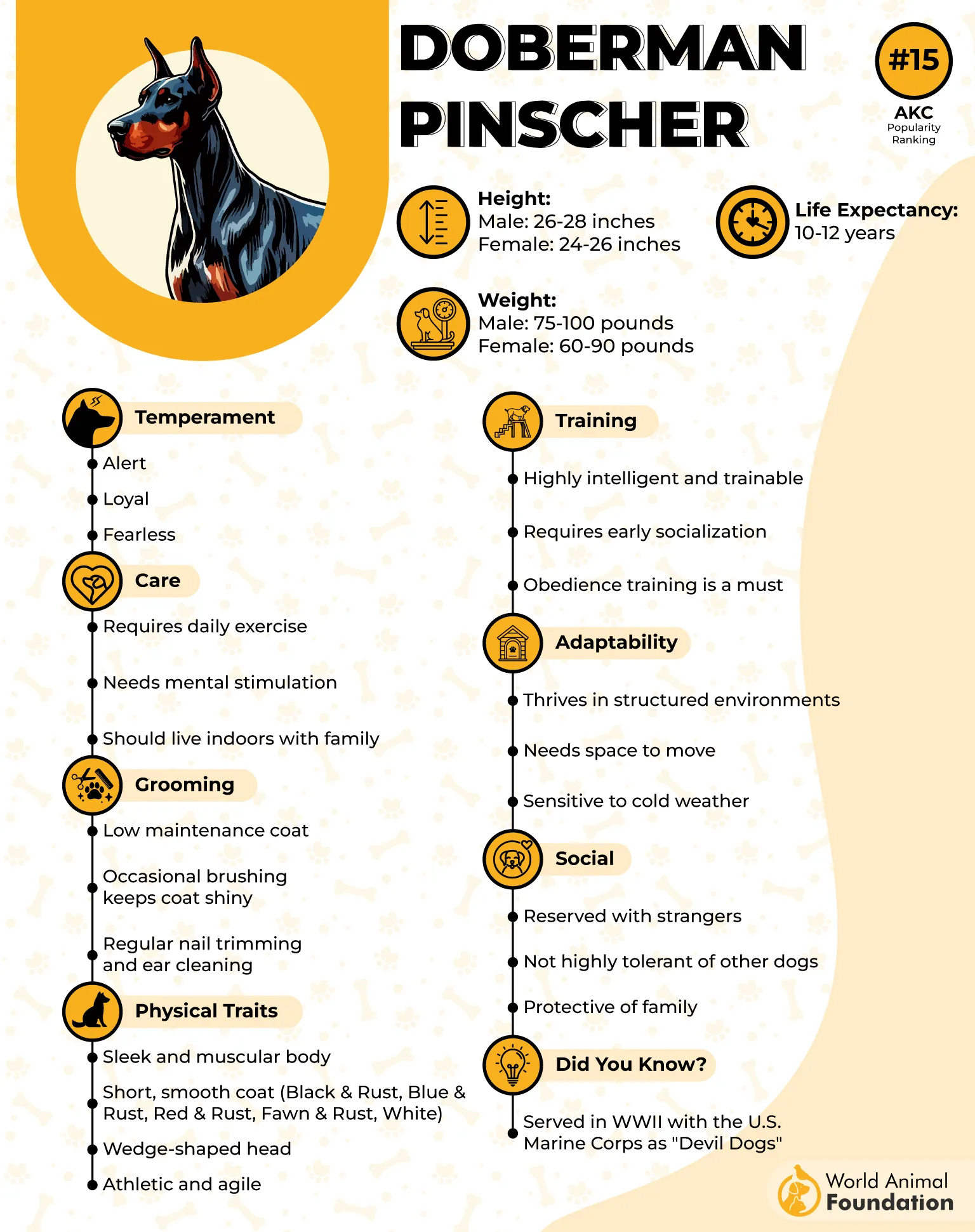
That said, these medium-to-large dogs are highly trainable and respond well to consistent, reward-based training. Their short, low-maintenance coat sheds moderately throughout the year and needs weekly brushing.
5. German Shepherd
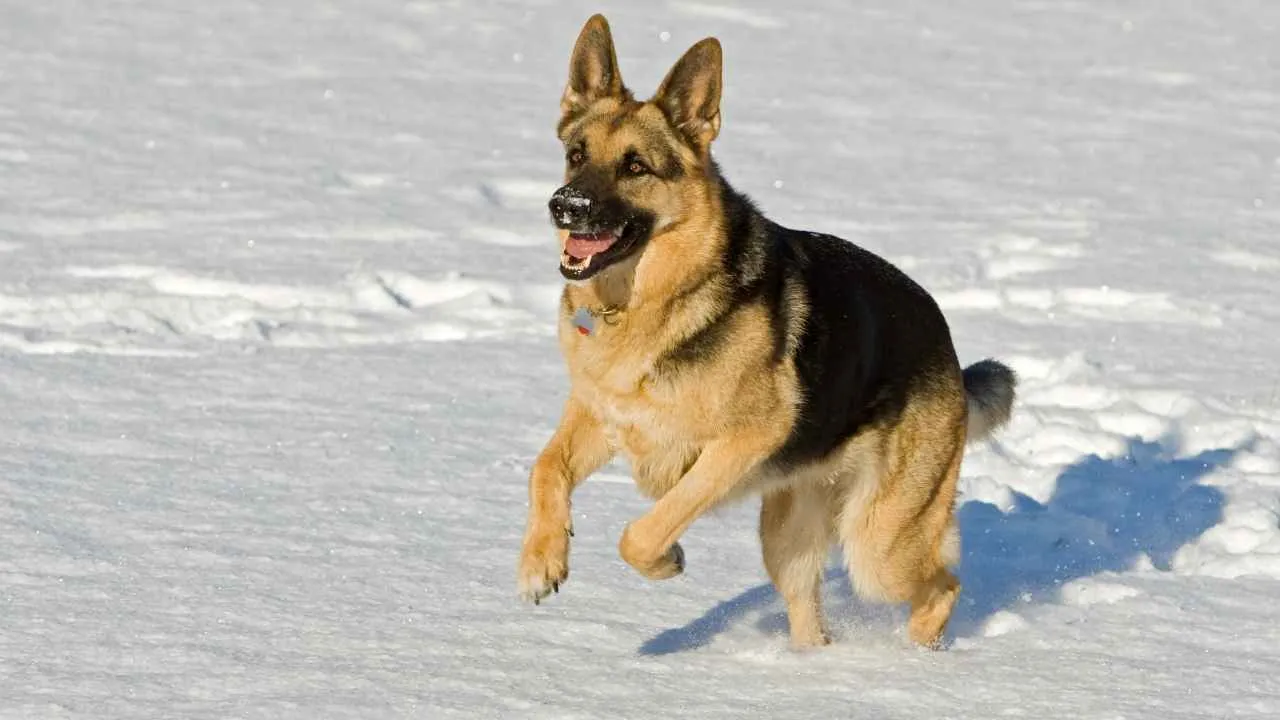
German Shepherds are courageous, highly intelligent, and deeply loyal working dogs. They were bred as farm guardians and herders. These large dogs have an athletic, muscular, well-balanced frame, along with speed, agility, stamina, and natural guarding instincts.
Their bite force is often cited at around 228 PSI, but their real strengths are strong problem-solving ability and emotional awareness. German Shepherds have high energy levels and need 60 to 90 minutes of vigorous exercise a day to stay mentally stimulated. They make excellent family protection dogs and are easy to train with structured, consistent training.
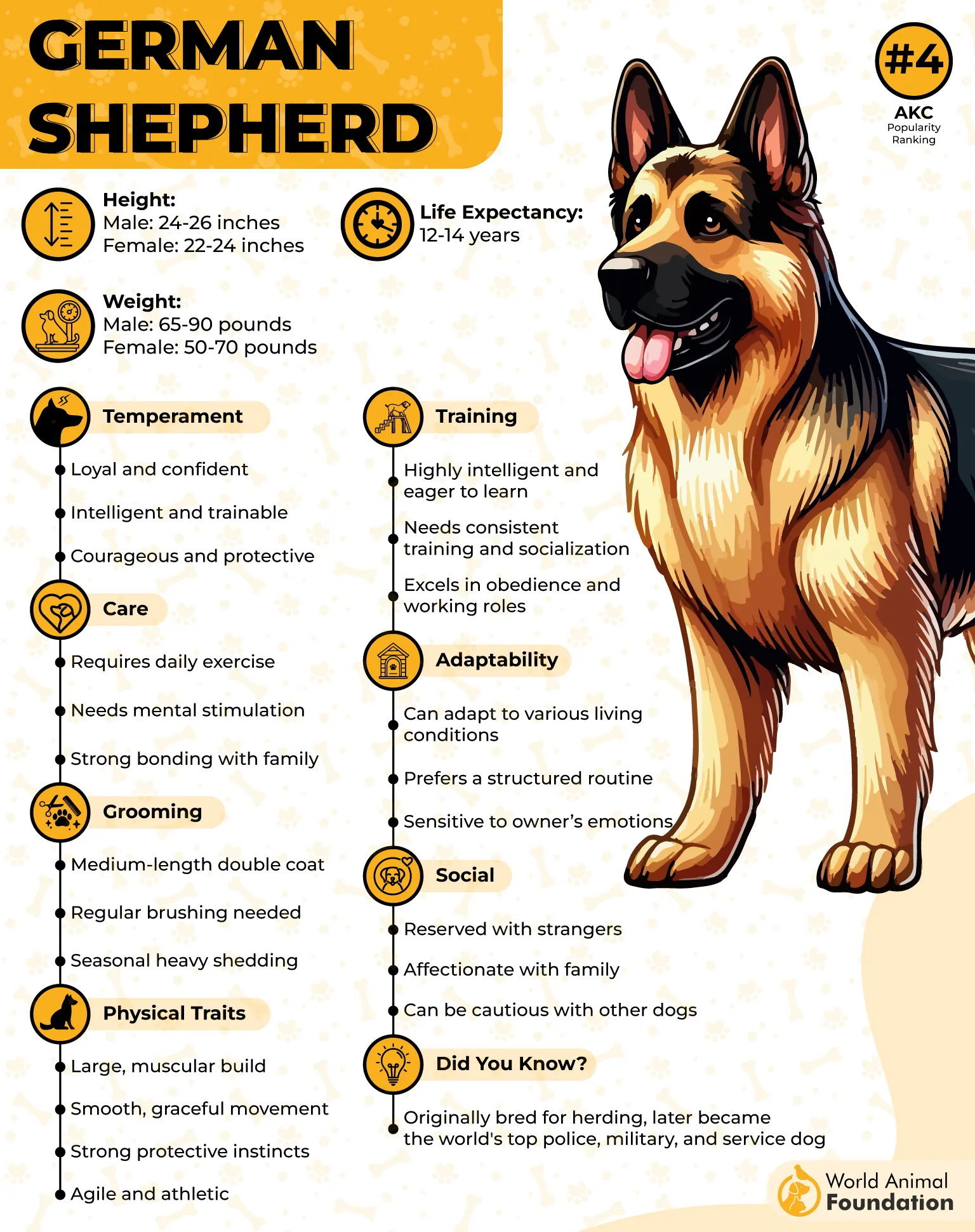
That said, GSDs are best suited to experienced owners. They have a double coat that sheds heavily year-round, with even heavier seasonal blowouts in spring and fall. That’s how they earned the nickname “German Shedders,” and they need brushing two to three times a week.
6. American Bulldog
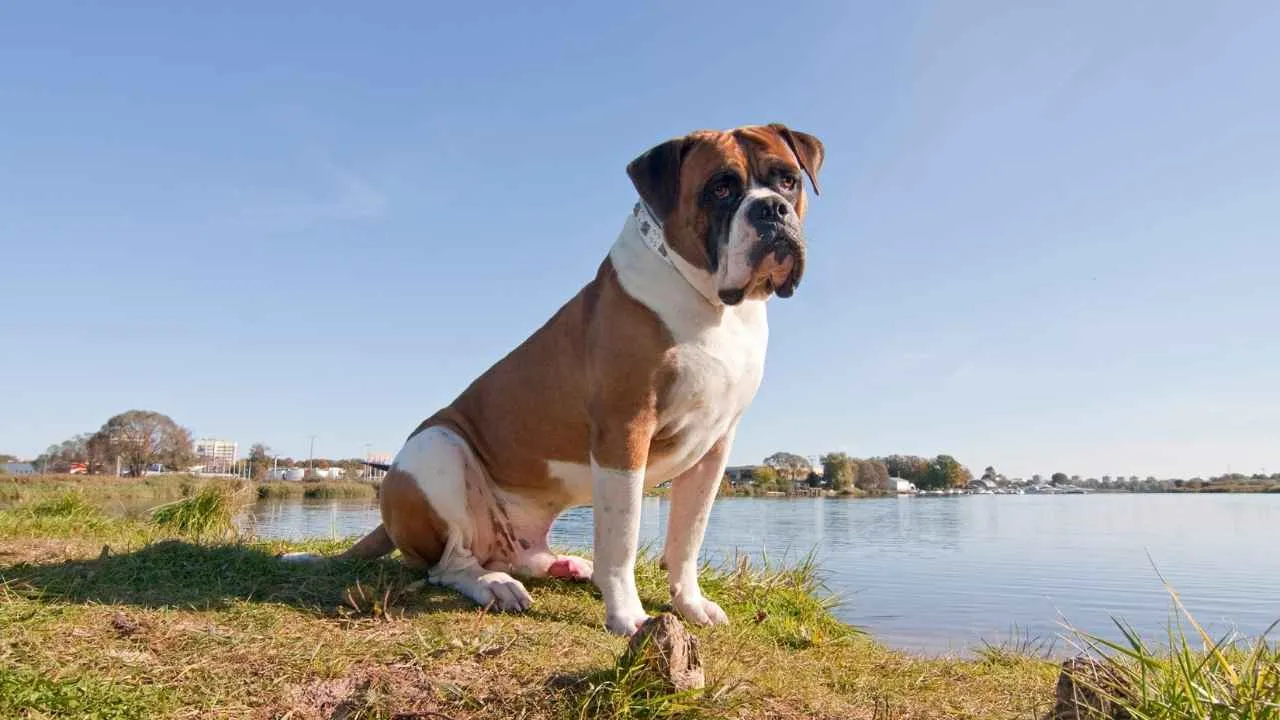
American Bulldogs are confident, athletic, and deeply affectionate guard dogs, known for their brave hearts and gentle devotion to their families. They’re friendly, cheerful, and intensely loyal. The breed was developed as an all-around farm dog to catch wild hogs and control cattle, so it has a pretty active history.
These naturally protective dogs have heavy bones, a broad, muscular head, and a wide chest. Their bite force is often cited at around 305 PSI, which is part of why they’re such a good fit for home protection. American Bulldogs are also quick to read the mood of a household.
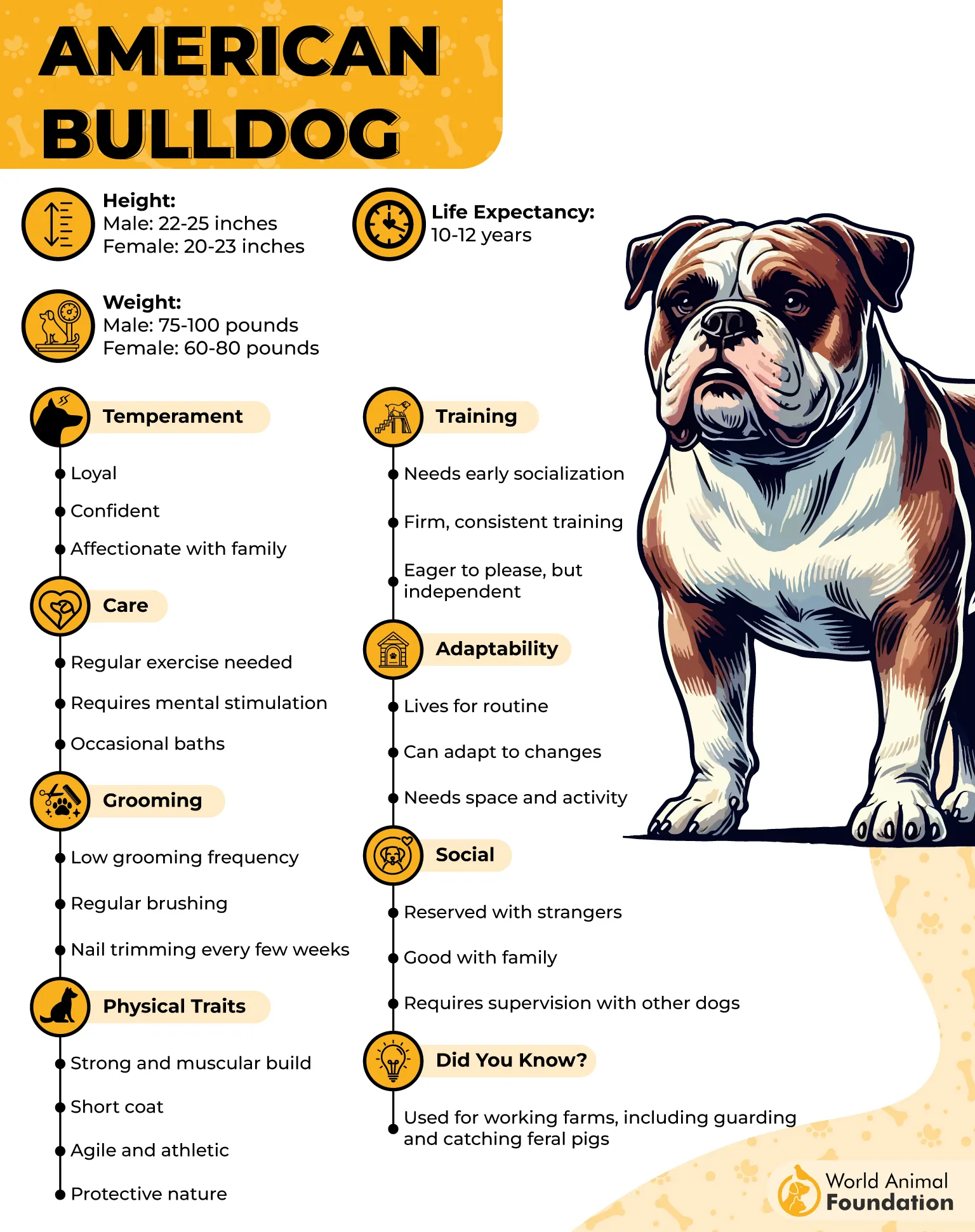
These medium-to-large dogs have moderate energy levels, as Chewy shares. They have a strong-willed streak and need structured obedience training to manage the breed’s natural drive. On the grooming side, they’re low maintenance, with a short coat that sheds an average amount.
7. Boerboel
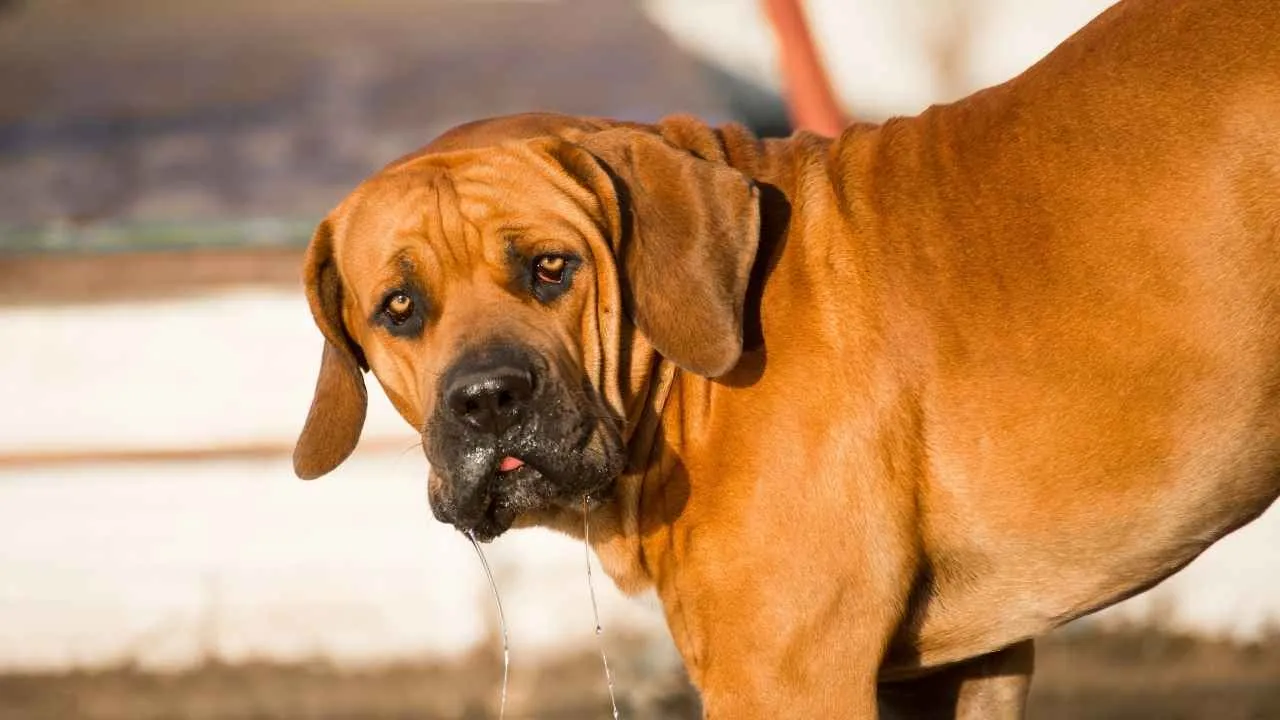
Boerboels, or South African Mastiffs, are calm, confident dogs that bond closely with their families. They were bred as livestock guardians to protect remote farms and families from dangerous predators. These large dogs have a massive, heavy-boned frame and a bite force often cited at around 450 to 800 PSI.
These gentle giants are observant and emotionally intuitive. They have strong territorial instincts and a calm, calculating nature that sizes up a threat long before they act. They also need around 60 to 90 minutes of daily exercise, including yard play and long walks, to stay mentally stimulated.
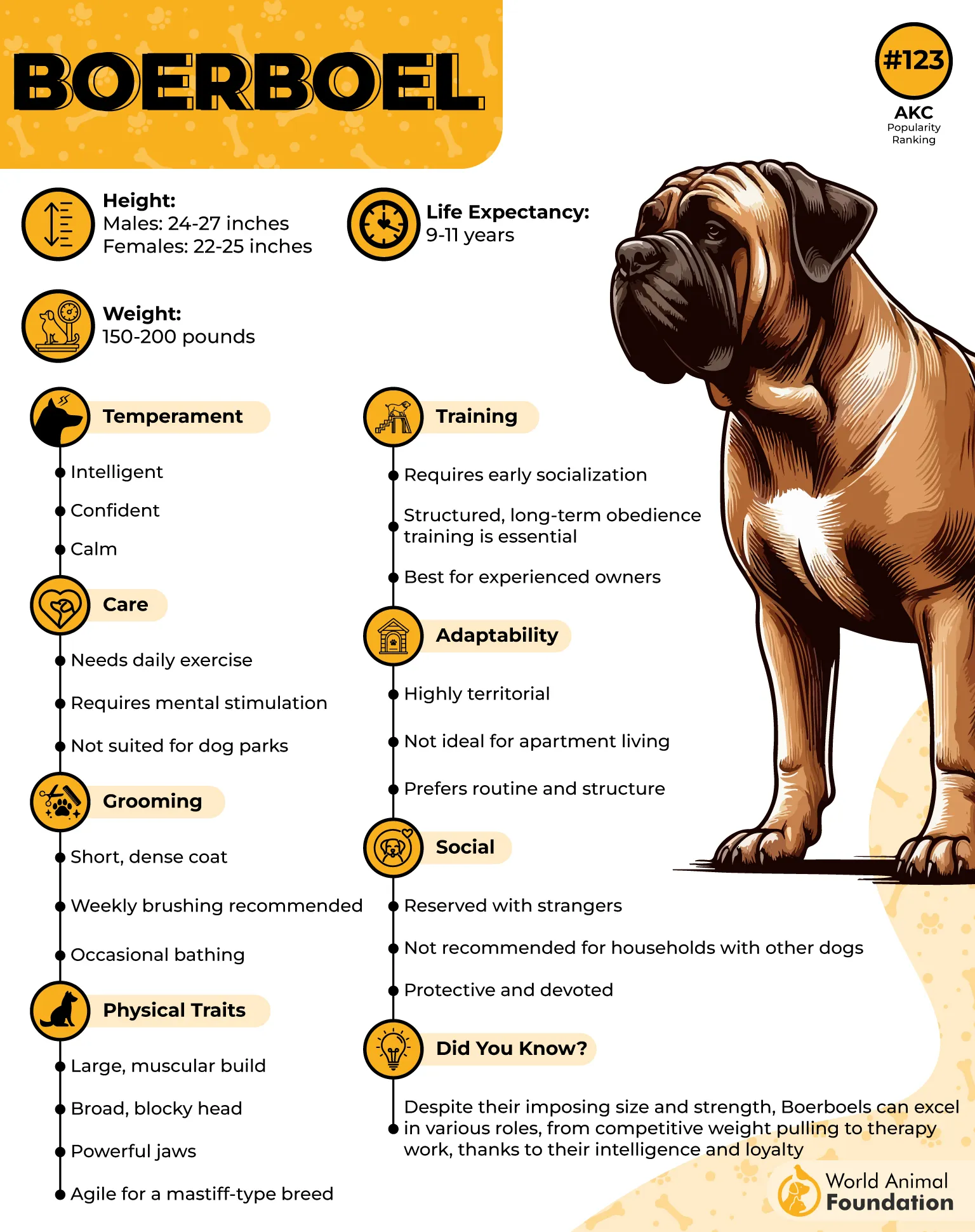
Boerboels are dominant and independent, so they need consistent guidance from an early age to keep their strong instincts in check. They aren’t for first-time owners and do best with experienced handlers. Their short, low-maintenance coat sheds moderately year-round.
Conclusion
The seven dogs above are excellent choices for family protection, thanks to their strength and stamina. Most are calm and gentle at home, but every one of them needs proper training and early socialization. These protection dog breeds demand time and effort, so only bring one home if you’re ready to make that commitment.
