




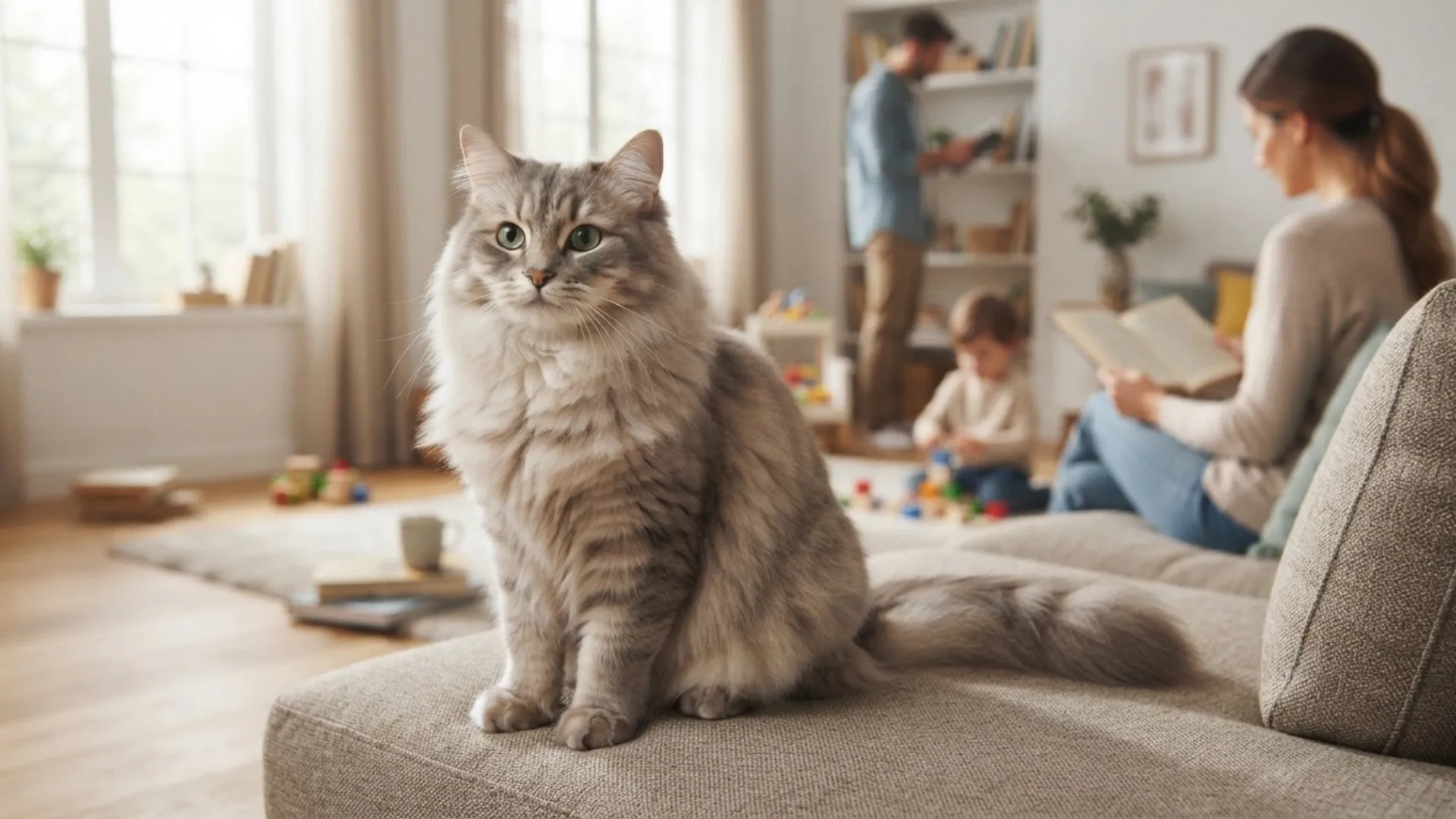
A large family home can be full of activity, laughter, children, and different routines, so choosing a cat with the right temperament matters. The ideal feline companion should be comfortable around people while still having space to relax.
Some breeds are naturally sociable and enjoy being involved in family life, while others prefer a quieter connection with their favorite people. Size, energy, grooming needs, and personality can also influence how well a cat fits into a bustling household.
From playful companions to gentle cats that enjoy curling up with their humans, these breeds offer different qualities for family life. Explore the best options to find a feline companion that complements your household.
Best Cat Breeds for Large Families
1. Maine Coon
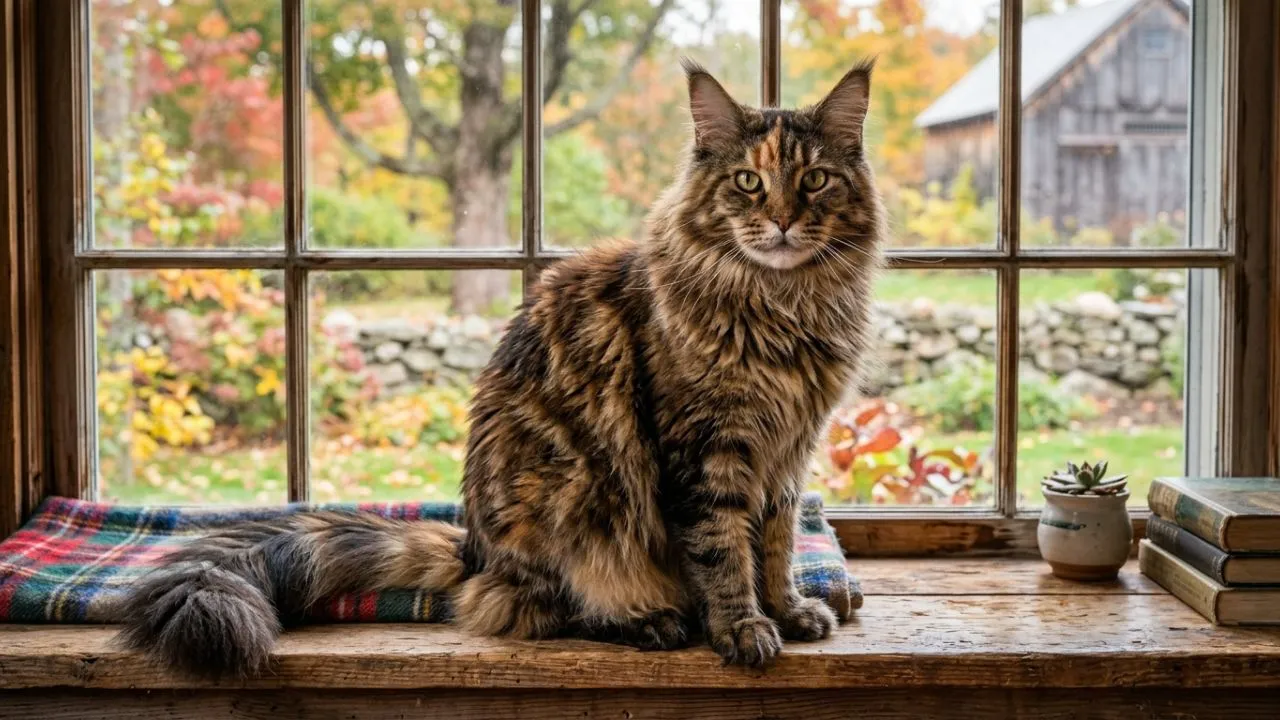
The Maine Coon is a gentle giant with a friendly, easygoing personality that suits busy family households. Intelligent and sociable, these big cats enjoy staying involved in household activity and generally get along well with children and other pets.
According to PDSA, Maine Coons can be quite vocal with their owners and enjoy being around people. While they appreciate companionship, they are not always eager to sit on laps, often preferring to stay active and explore at floor level.
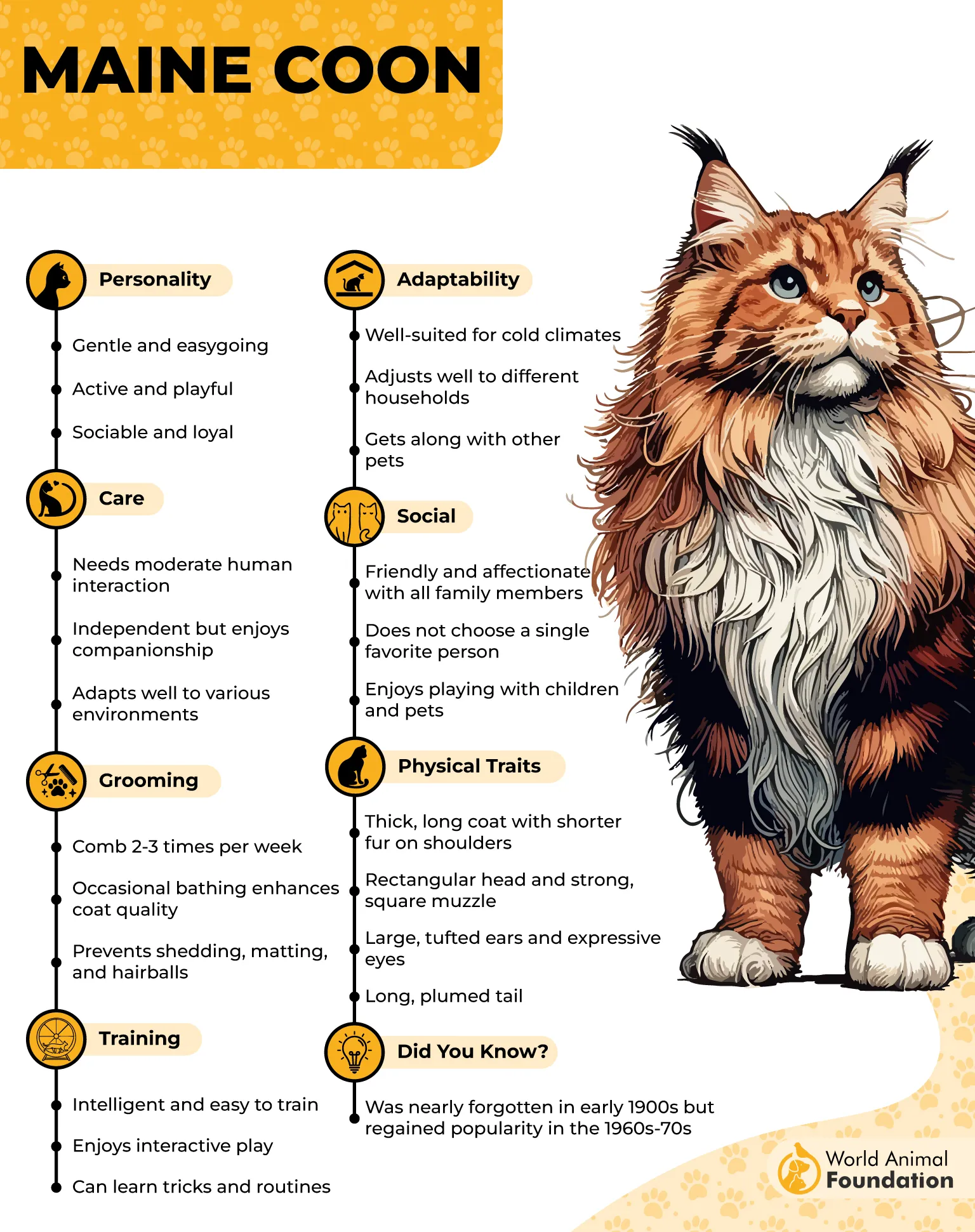
Their curiosity also makes them enthusiastic learners, with puzzle toys and positive training providing useful mental stimulation. Despite their imposing appearance, Maine Coons are known for their sweet nature and may even enjoy playing in water, dipping their paws into it, or swimming.
How This Breed Stands Out
Impressive size and stature: Their massive build and shaggy coat give Maine Coons a distinctive presence among domestic cats.
Fascinated by water: Unlike many cats, they may willingly play with water, dip their food or paws into it, and even swim.
2. Ragdoll
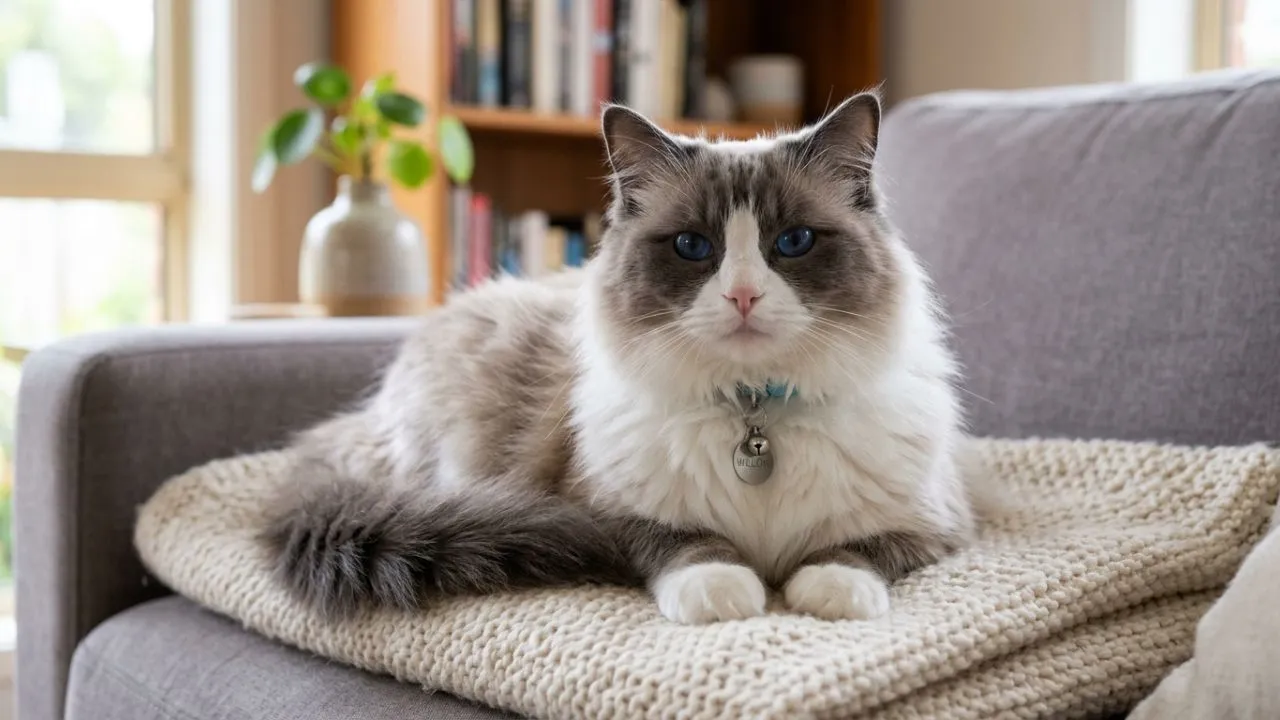
Ragdolls are gentle, affectionate cats that suit families with children, seniors, and other pets, including cats and dogs. These laid-back cats love to follow you from room to room. They make great lap cats and are known to greet family members at the door. They can even learn to play fetch.
Known for their sweet temperaments, they actively lack a sense of personal space, following their humans from room to room like Velcro. They frequently wait by the front door to greet family members when they return home.
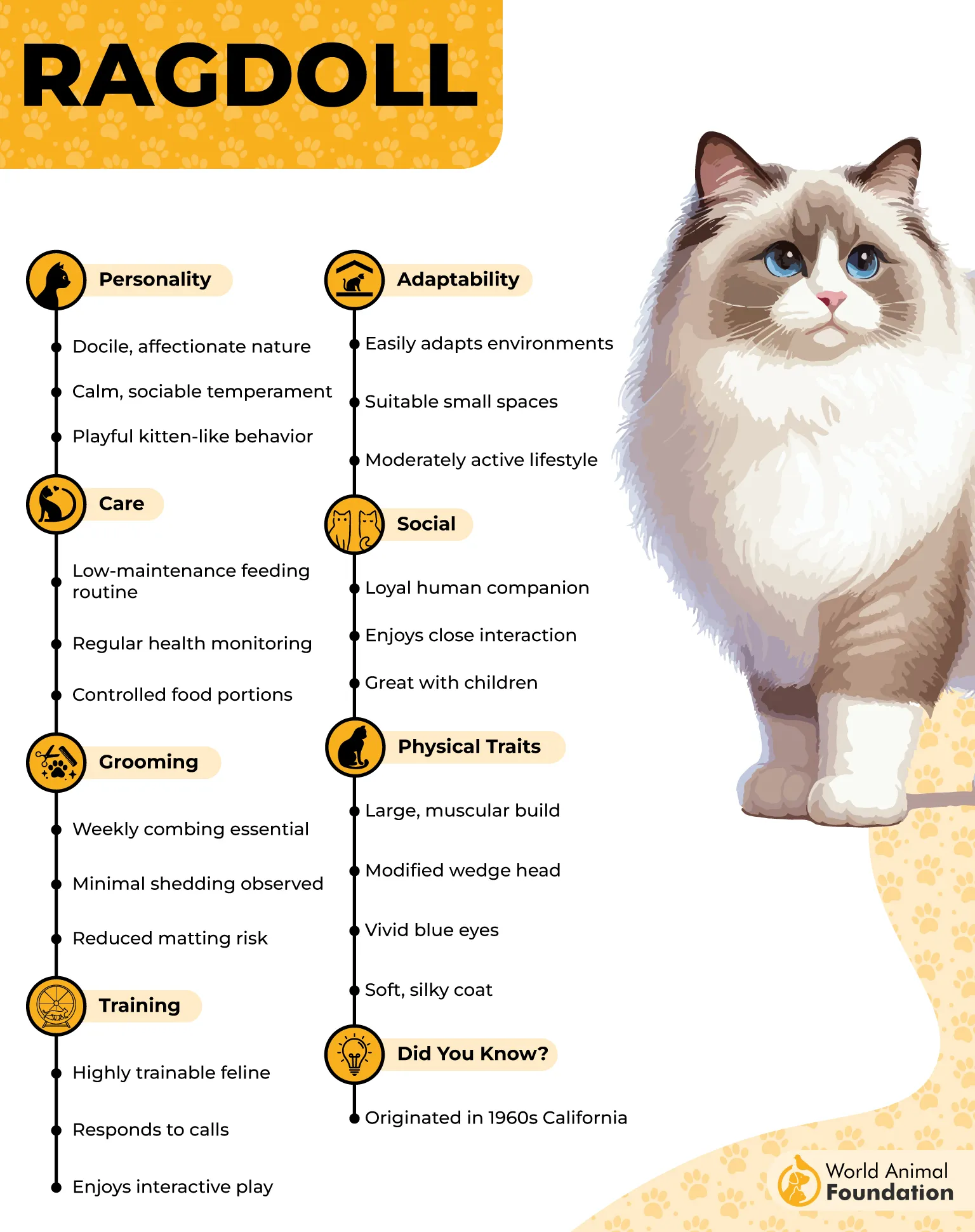
While they’re playful, they’re not overly active. They’d rather lounge on the floor than hunt for a high perch.
How This Breed Stands Out
Incredibly Devoted and Loving: Ragdolls are often called the “dogs of the cat world” because of their devotion to their human families.
Impressive Trainability and Smartness: They’re also intelligent and can be taught to fetch, sit, or walk on a leash.
3. Ragamuffin
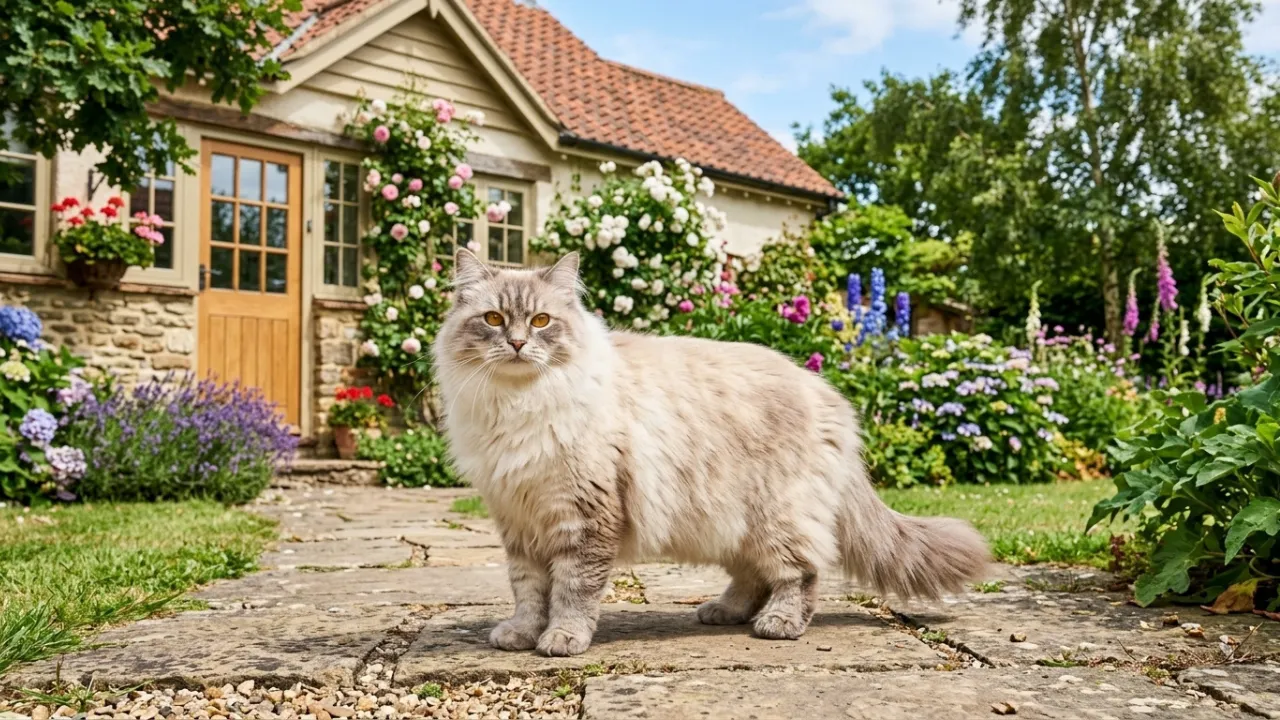
Ragamuffins are large, affectionate breed cats with a notably tolerant and easygoing temperament. Their calm, affectionate nature allows them to adapt well to different households, while their fondness for cuddling makes them especially suited to families seeking a close, affectionate companion.
Beneath their sweet personality is a playful side, and they enjoy interactive games and attention from their people. They are a good fit for families who want a calm, close companion.
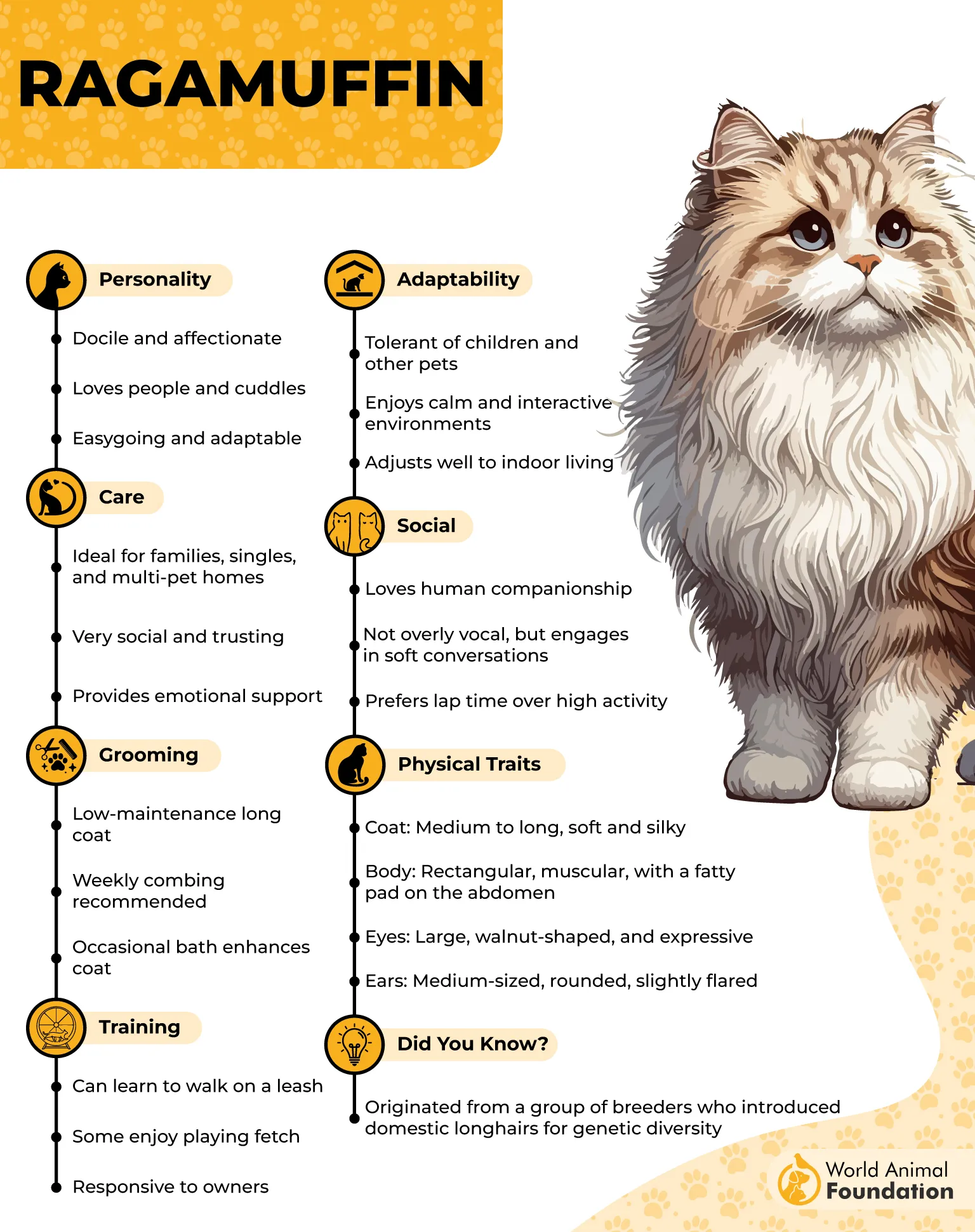
Their thick, medium-length coat has an unusually plush texture, often compared to rabbit fur, adding to their soft and cuddly appeal.
How This Breed Stands Out
Exceptionally patient temperament: Their mild, tolerant nature helps them remain comfortable around children and other household pets.
Plush, rabbit-soft coat: Their dense, medium-length fur has a remarkably soft texture reminiscent of a rabbit’s coat.
4. Birman
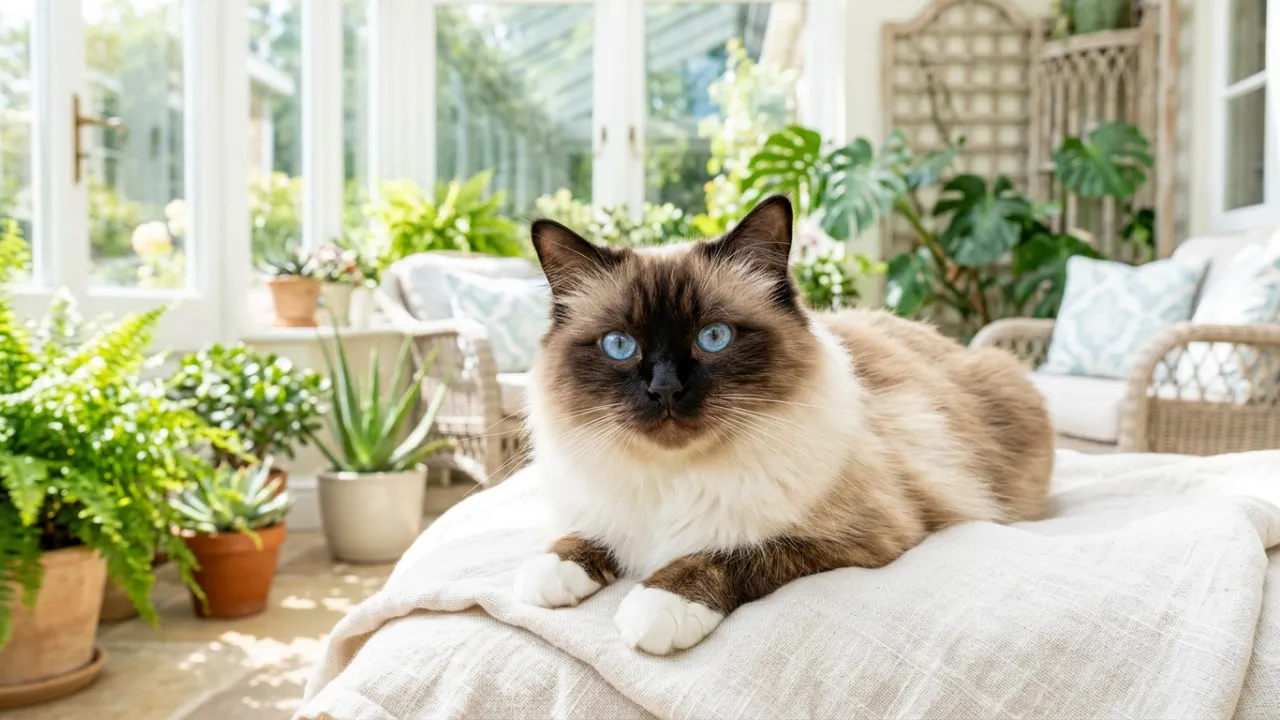
Birmans are gentle, loyal cats with an adaptable nature that fits many family settings. They enjoy staying close to their people without being excessively demanding, while their curious personality and playful streak make them engaging companions for households with children and other pets.
According to PetMD, Birmans mature gradually and can retain their playful, kitten-like nature into their third or fourth year before eventually settling into a calmer temperament.

Their moderate exercise needs can be met through interactive toys, games, and mental challenges. They are admired around the world for their striking appearance and family-friendly balance of playfulness and calm.
With their creamy, color-pointed coats, striking blue eyes, and distinctive markings, Birmans are especially recognizable for the contrasting white markings on their paws.
How This Breed Stands Out
Sociable without demanding attention: Birmans enjoy companionship and interaction while maintaining a comparatively quiet, easygoing presence.
Distinctive white-gloved paws: Their color-pointed appearance is complemented by characteristic white “gloves” on the front paws and “laces” on the back.
5. Siberian
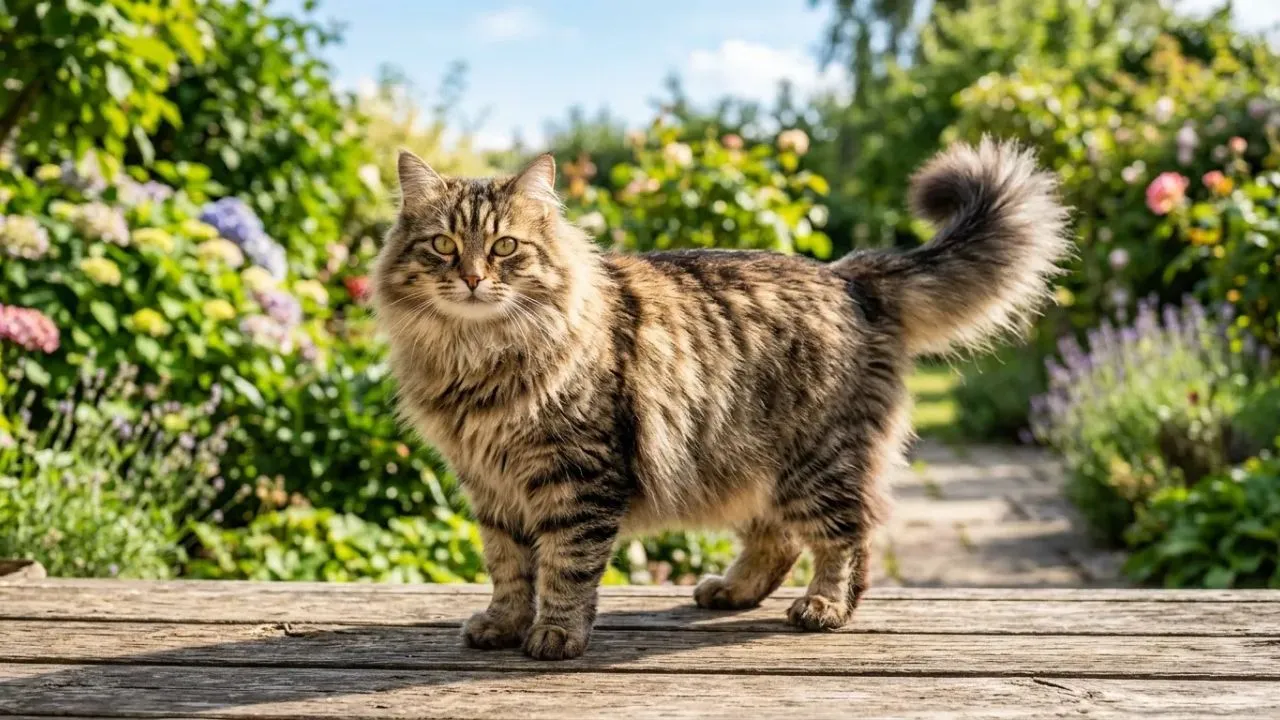
Siberians are intelligent, athletic cats that bring plenty of energy to a family household. Their love of adventure makes them enthusiastic climbers and explorers, while their friendly disposition allows them to interact well with both people and other pets.
This domestic breed thrives with daily play, interactive toys, and opportunities to investigate different spaces around the home.
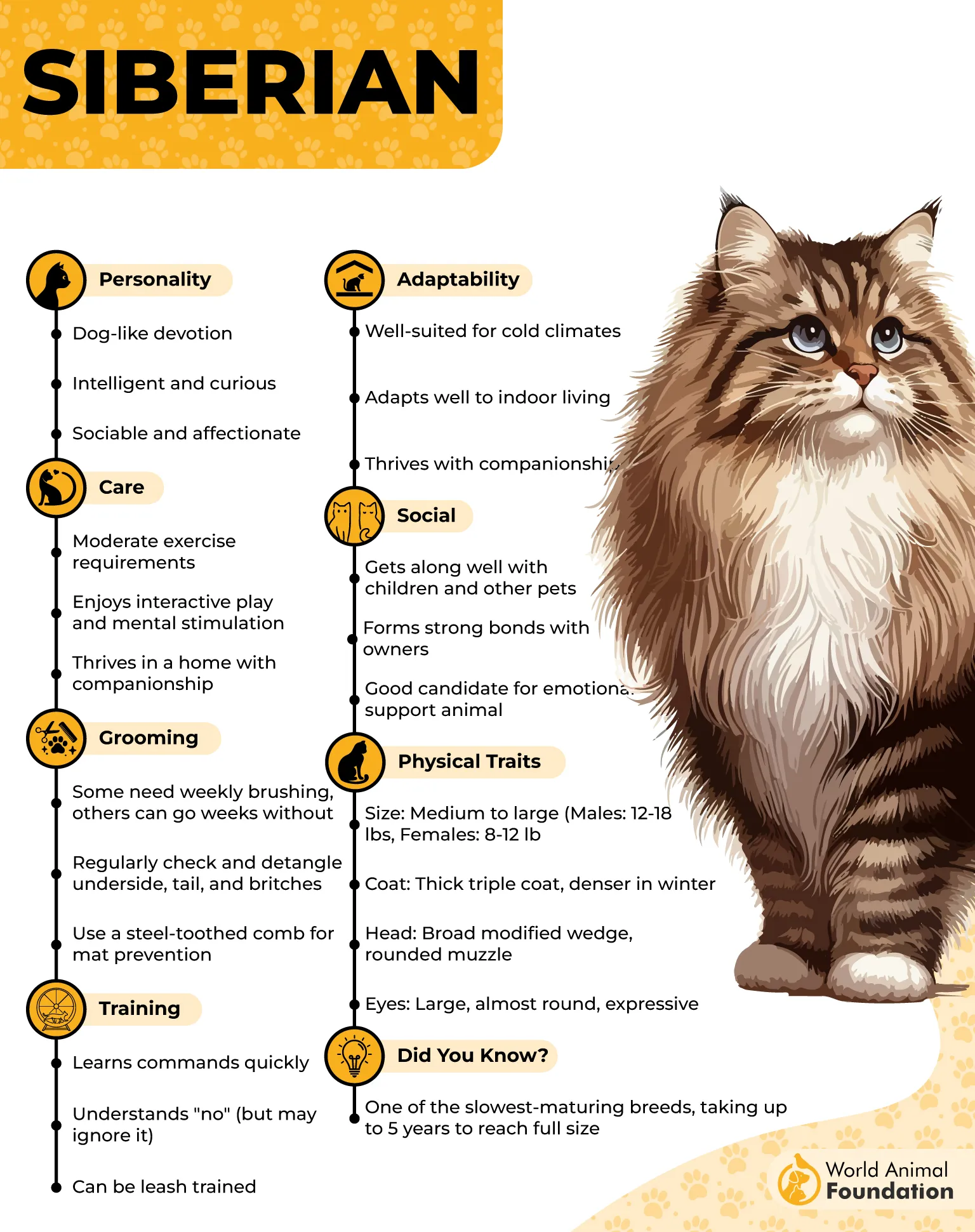
Their distinctive coat includes three layers, along with a fluffy tail and prominent neck ruff, helping create their characteristic rugged appearance. Siberians are also often noted for producing lower levels of the allergen Fel d1, which may matter to some families.
How This Breed Stands Out
Energetic climbing ability: Siberians enjoy jumping, climbing, and exploring elevated spaces, making vertical enrichment especially valuable.
Dense triple-layered coat: Their distinctive three-layer coat, fluffy tail, and neck ruff give them a thick, weather-ready appearance.
6. Norwegian Forest Cat
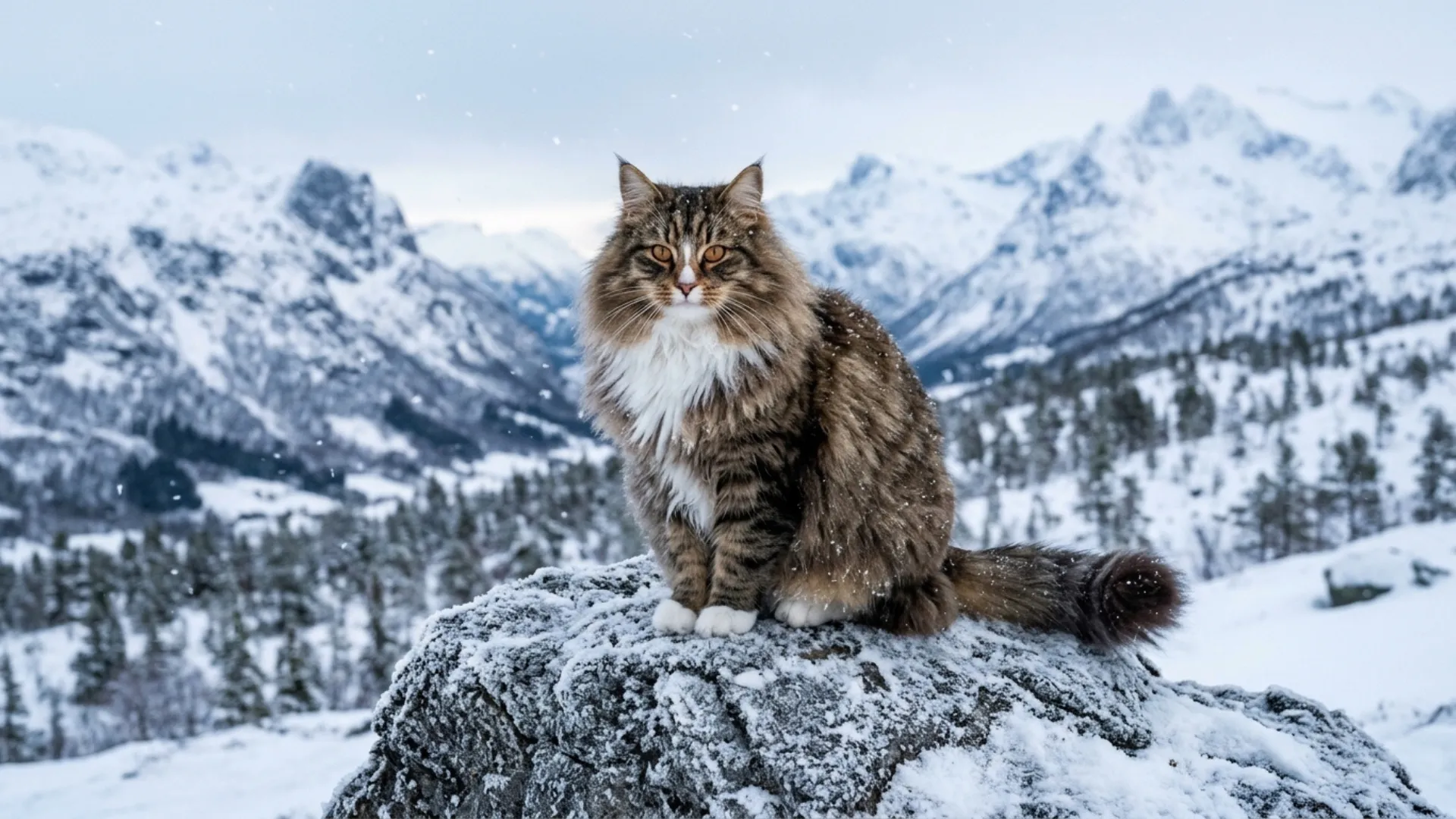
The Norwegian Forest Cat combines an easygoing personality with impressive size, making it well suited to bustling family homes. Friendly and adaptable, this breed enjoys being around people without constantly demanding attention and can adjust well to children and other pets.
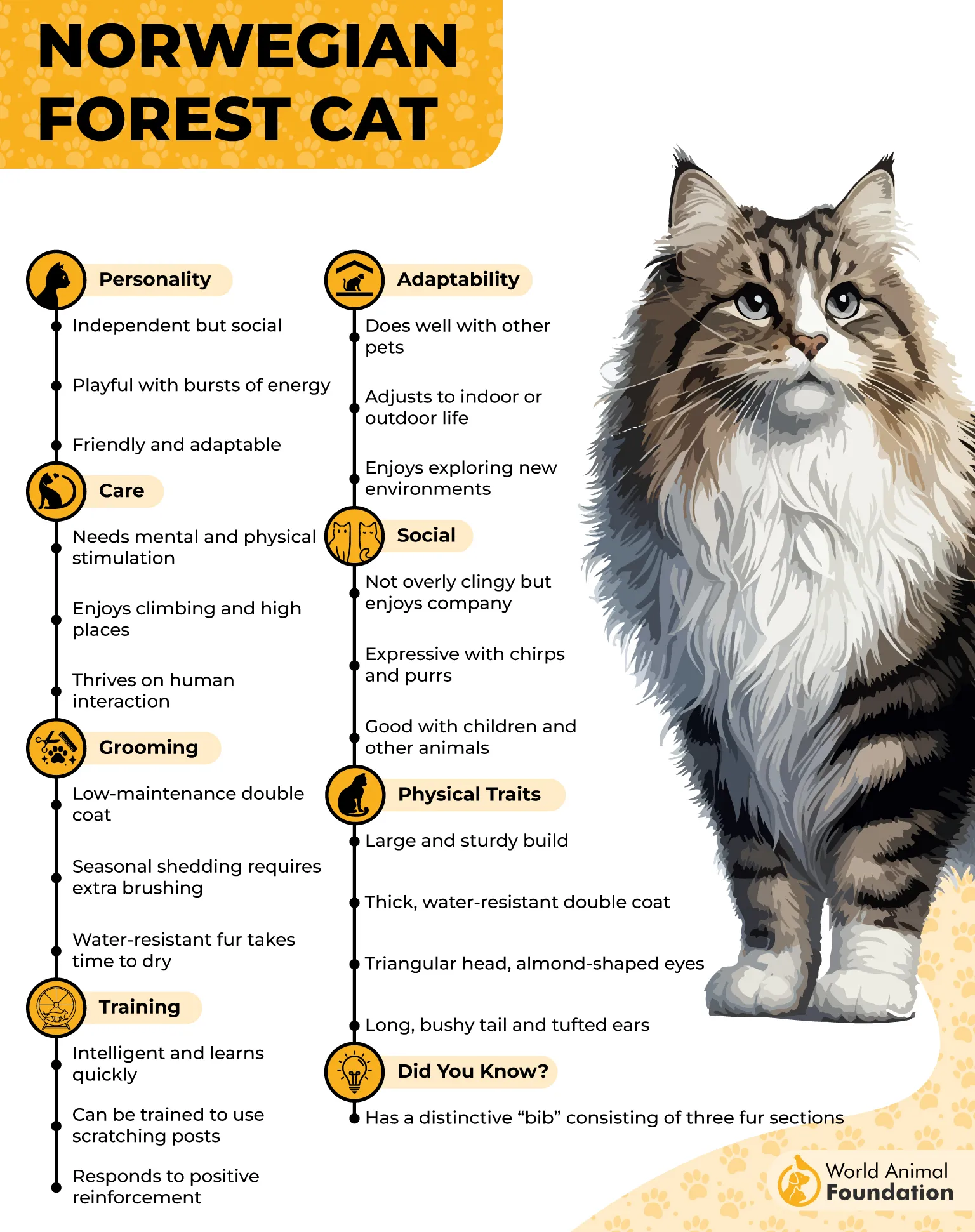
Naturally curious, Norwegian Forest Cats need opportunities to climb, explore, and play throughout the day. Their long, luxurious coat is designed with a dense undercoat and a water-repellent outer layer, while their powerful hind legs help them reach surprisingly high places.
How This Breed Stands Out
Natural tree-climbing talent: Powerful hind legs and strong climbing ability allow these cats to confidently explore elevated spaces.
Water-resistant outer coat: Their semi-long coat features a protective outer layer that helps repel water.
7. Burmese
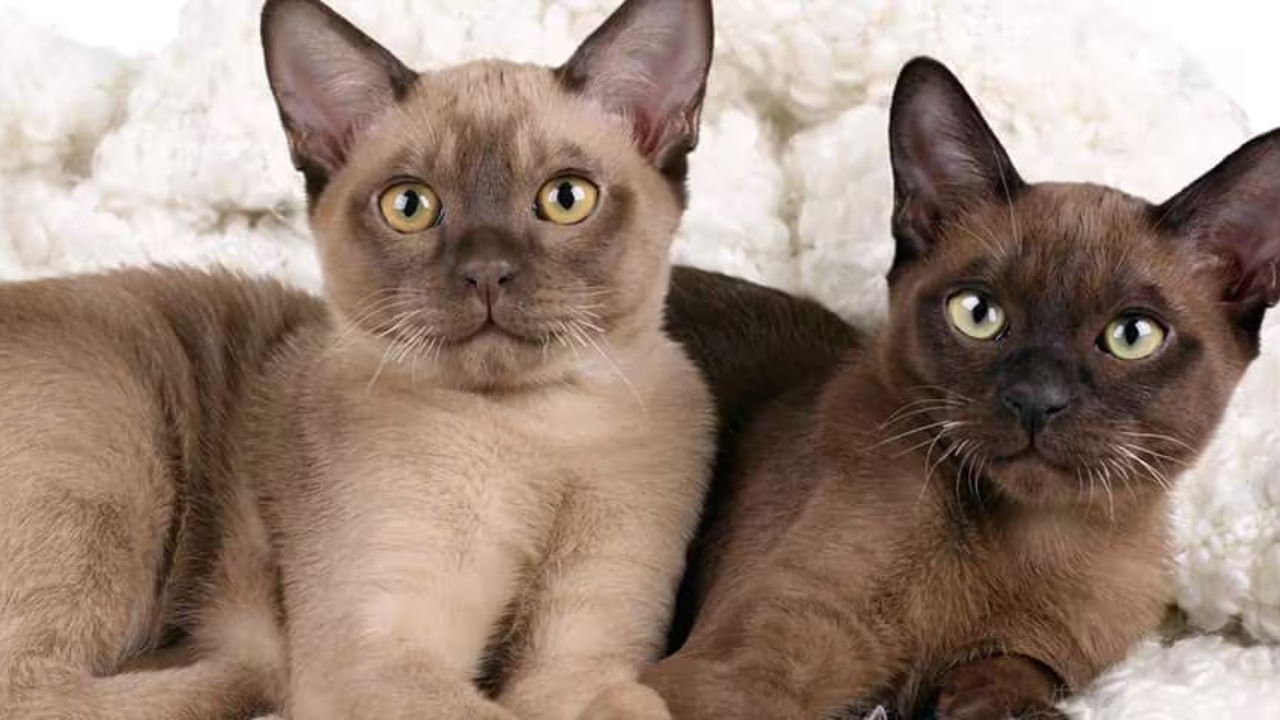
Burmese cats are highly social and people-oriented, making them well suited to households where family members can provide plenty of interaction. They generally enjoy children, strangers, and other pets when introductions are handled properly, and many seek out cuddles and close companionship.
According to Purina, the Burmese is a sturdy, muscular cat with a sweet expression, neatly rounded paws, and a short coat.
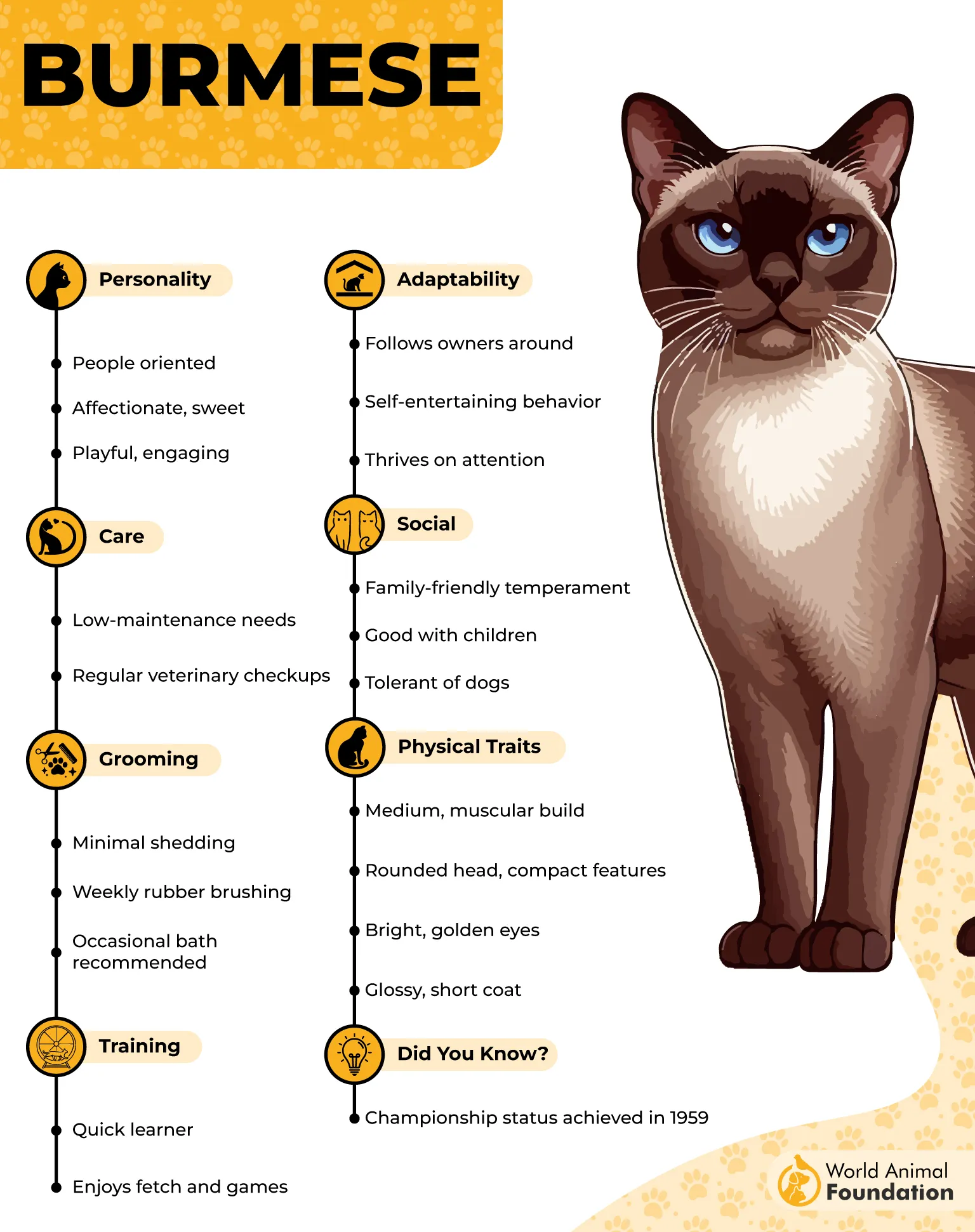
Clever and energetic, Burmese cats need regular play, exploration, and mental stimulation to stay content. Their curious nature and desire for company make interactive games particularly valuable, while their youthful enthusiasm often remains strong well beyond kittenhood.
How This Breed Stands Out
Highly interactive personality: Burmese cats often follow their people around the home and involve themselves in everyday family activities.
Retains kitten-like playfulness: Their active, curious nature keeps them eager for games, exploration, and engagement with their families.
Conclusion
Choosing a cat for a large family means considering temperament, sociability, and how comfortably the breed interacts with different household members. The breeds discussed offer a range of personalities suited to busy family environments.
Maine Coons and Norwegian Forest Cats bring gentle, adaptable temperaments, while Ragdolls and Ragamuffins are especially comfortable with close companionship and cuddling.
Birmans and Burmese cats thrive on family interaction, whereas Siberians offer an energetic nature that suits households ready to provide play and exploration. Each breed also brings distinctive traits, from water-loving Maine Coons to the climbing abilities of Norwegian Forest Cats.
Ultimately, the right choice depends on your family’s lifestyle, space, and ability to provide companionship, stimulation, and care. Understanding each breed’s personality and needs can help create a harmonious relationship between your cat and the entire household.
