




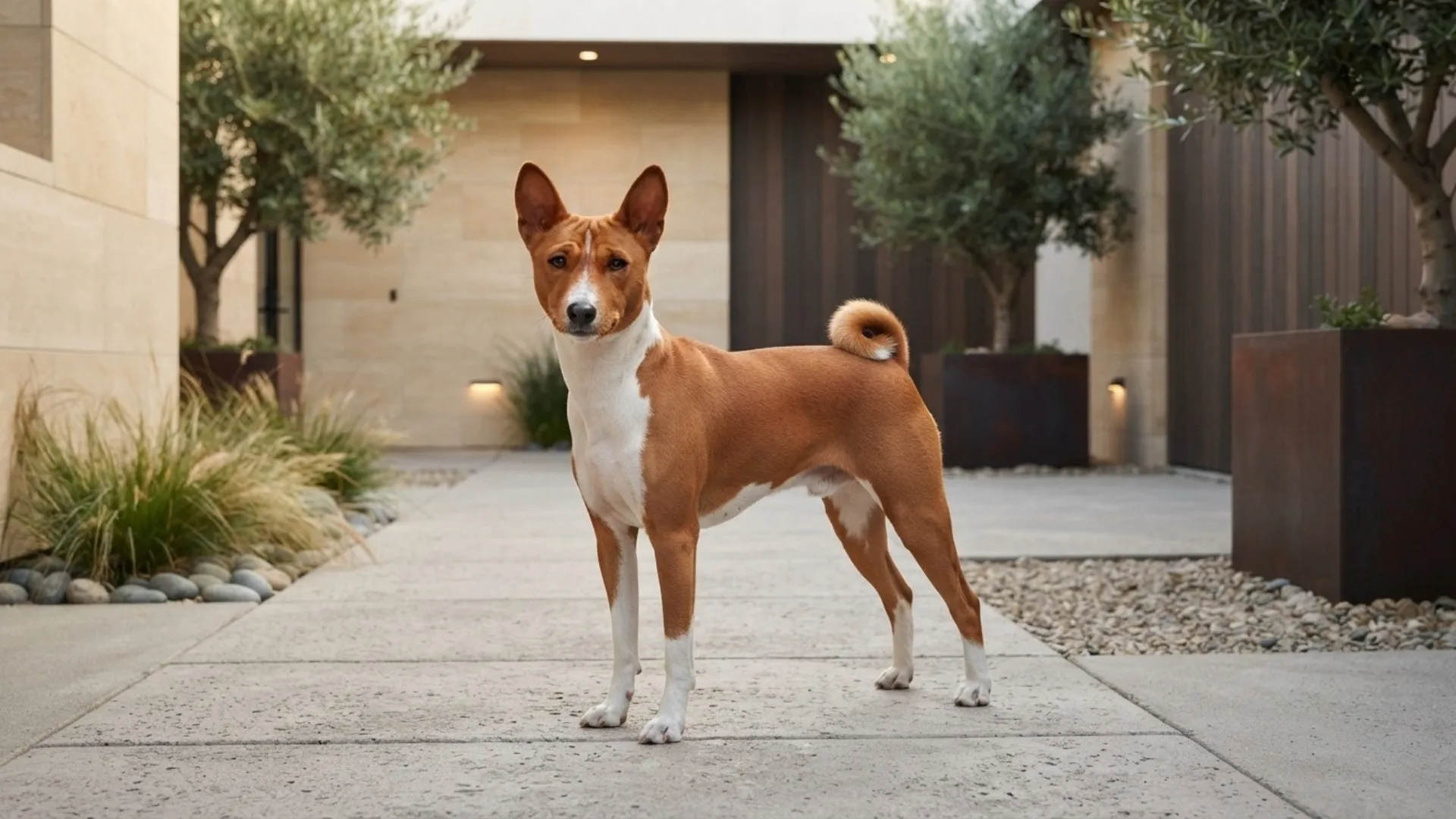
Some dogs simply know how to steal the spotlight. From elegant looks and flowing coats to striking faces and graceful movements, certain dogs have a natural wow factor that makes people stop and stare.
But beauty is personal, and what looks stunning to one dog lover may be completely different from another’s idea of a gorgeous pup.
For some people, it’s all about a silky coat or unique coloring. Others are drawn to expressive eyes, a regal appearance, a compact little frame, or an athletic build.
And while appearance can catch your attention, a dog’s personality, health, and overall well-being matter just as much when bringing one into your life.
So, which dogs have that extra touch of style and charm? We’ve rounded up some of the most beautiful dog breeds that are sure to turn heads. Whether you love glamorous coats, elegant features, or simply a dog with serious star quality, there’s plenty here to admire.
Top Most Stunning Dog Breeds for Style Seekers
1. Afghan Hound
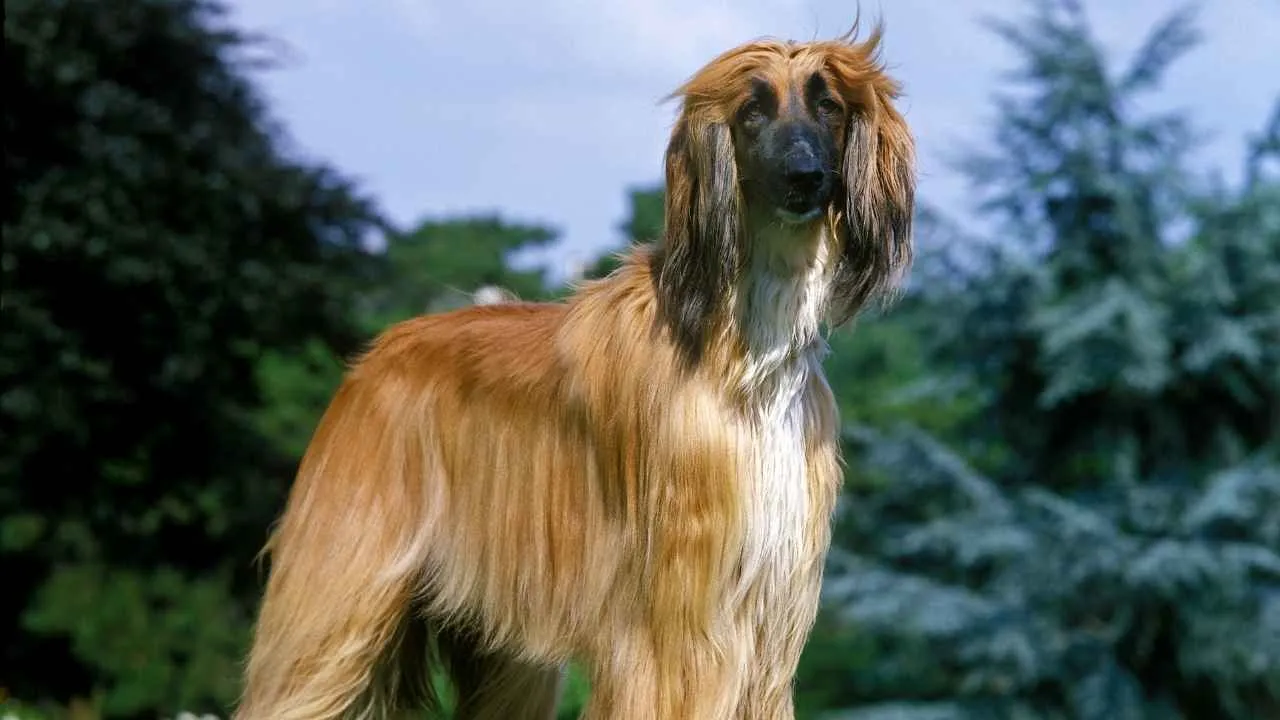
Few dogs have the same glamorous look as Afghan Hounds. Originally developed as hunters in the mountains of Afghanistan, they were bred to chase prey such as hare, gazelles, wolves, and even snow leopards.
Their long, silky coats helped protect them from the harsh mountain climate. They were highly valued by Afghan nomads, who even celebrated their dogs with festivals, traditional necklaces, and flowers.
Looks and Personality
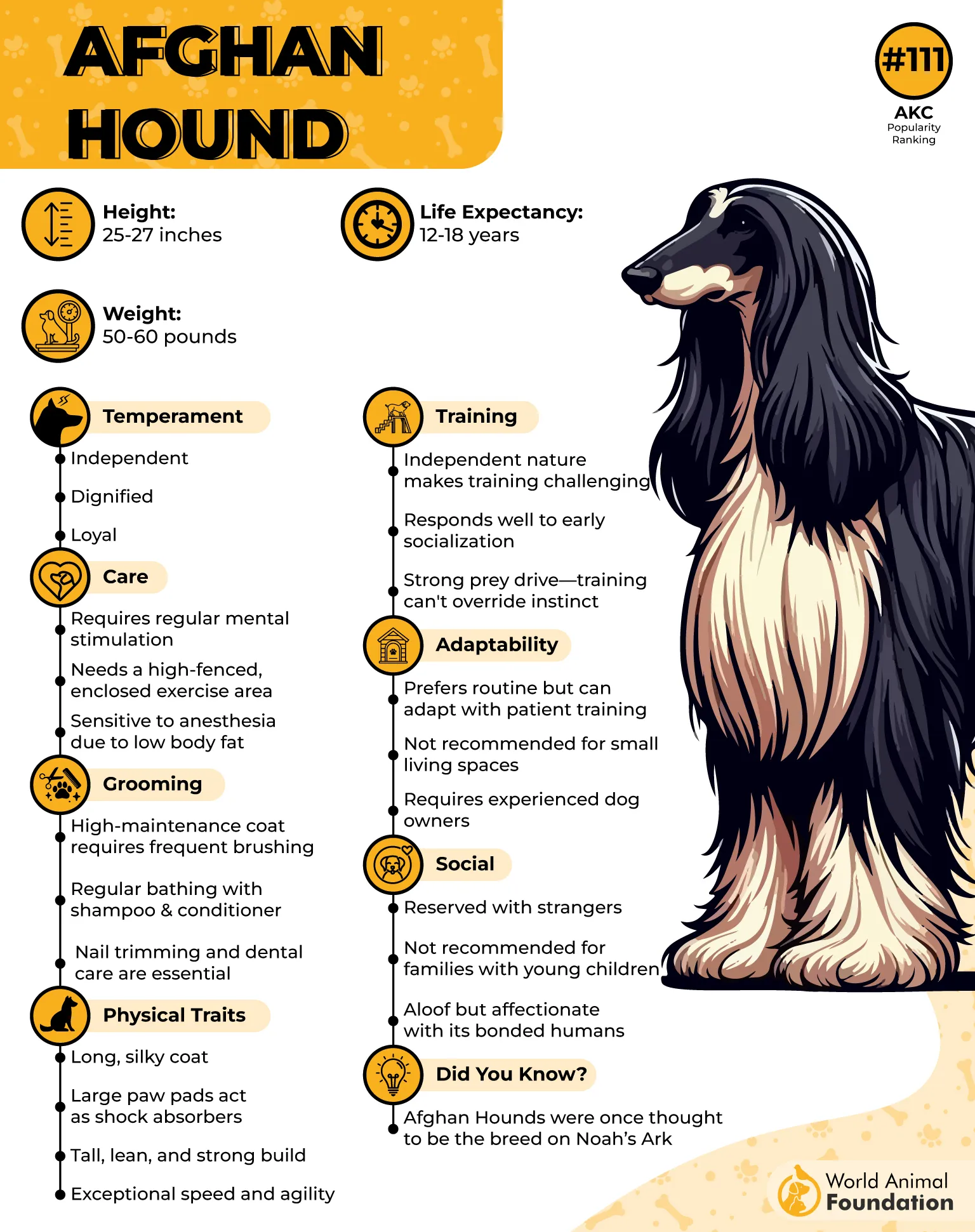
The Afghan Hound’s flowing coat and elegant appearance give it serious style. Their coats can come in colors such as black, cream, blue, tan, red, and brindle. Behind their glamorous looks is an independent and confident personality.
Purina says they can be aloof with strangers but are loyal, loving, and playful with their families. They are also known for being fairly quiet and humorous around people they trust.
Exercise and Care
Afghan Hounds are athletic dogs with sharp eyesight and a strong prey drive. They need regular daily exercise, such as long walks or jogs, and can enjoy activities like lure coursing.
Consistent training and early socialization are important because of their independent nature. They should stay in securely fenced areas, as they are high jumpers and may chase smaller animals.
2. Basenji
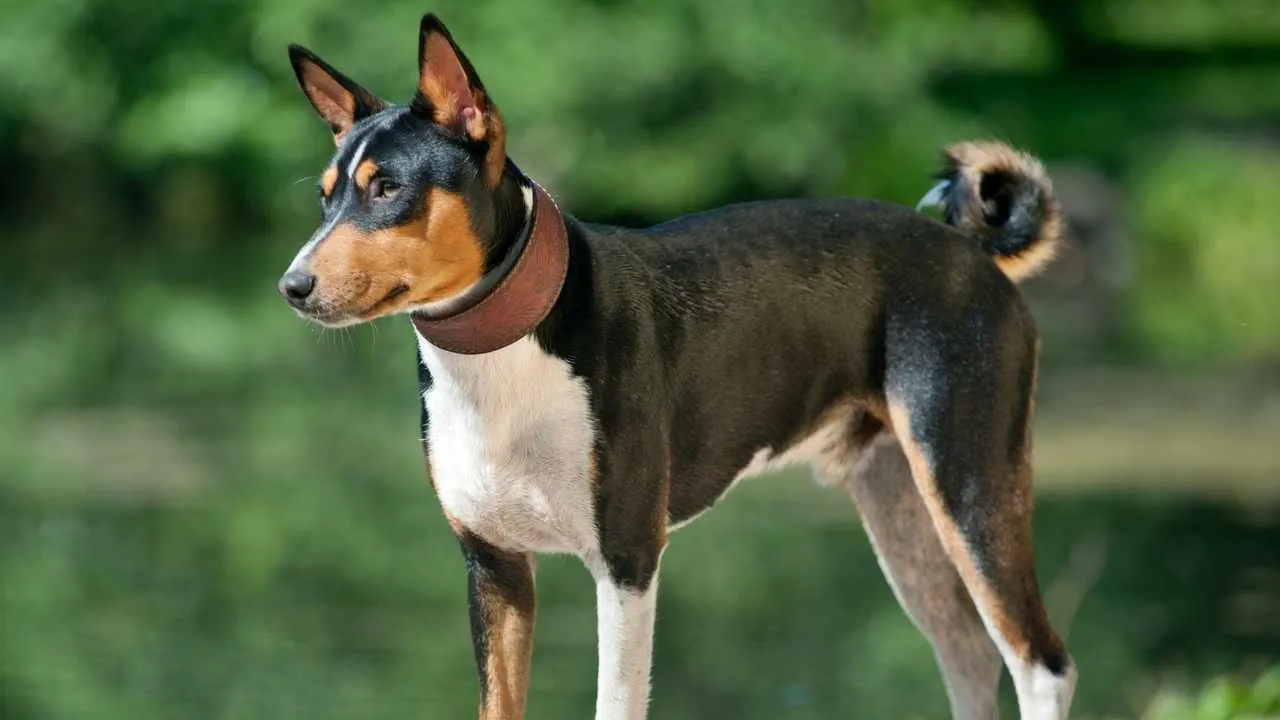
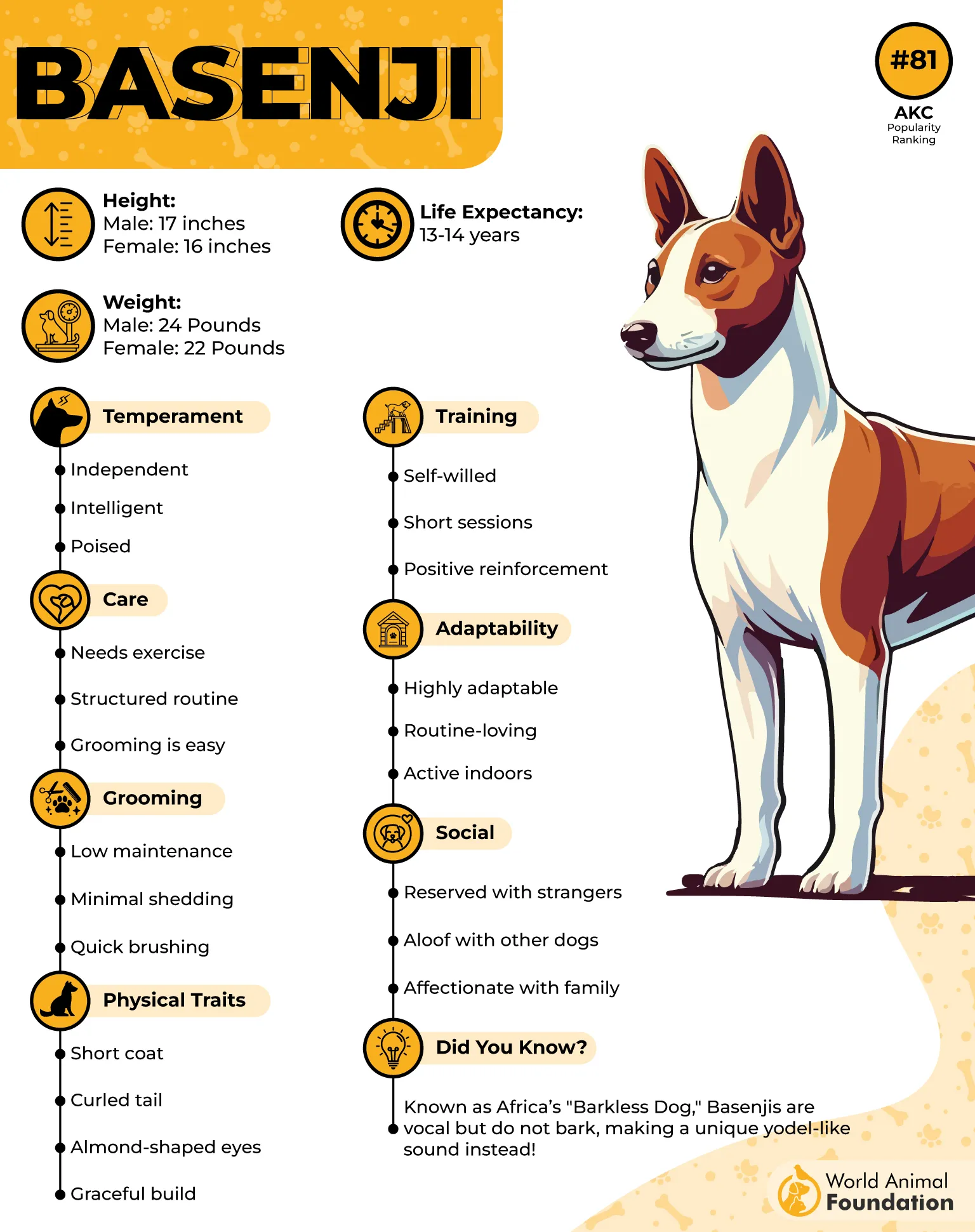
Basenjis originated in the Congo region of Africa, where they lived among Pygmy hunters and were used as pack hunters to herd game.
They are an ancient breed, with Basenji-type dogs shown in cave paintings in Libya dating as far back as 6000 BCE. A few were imported to England in 1930, later becoming popular as pets and show dogs.
Looks and Personality
Basenjis have a graceful, agile look, with short, smooth coats and tightly curled tails. They are often called “barkless dogs,” but they can yodel, howl, chortle, or crow when excited.
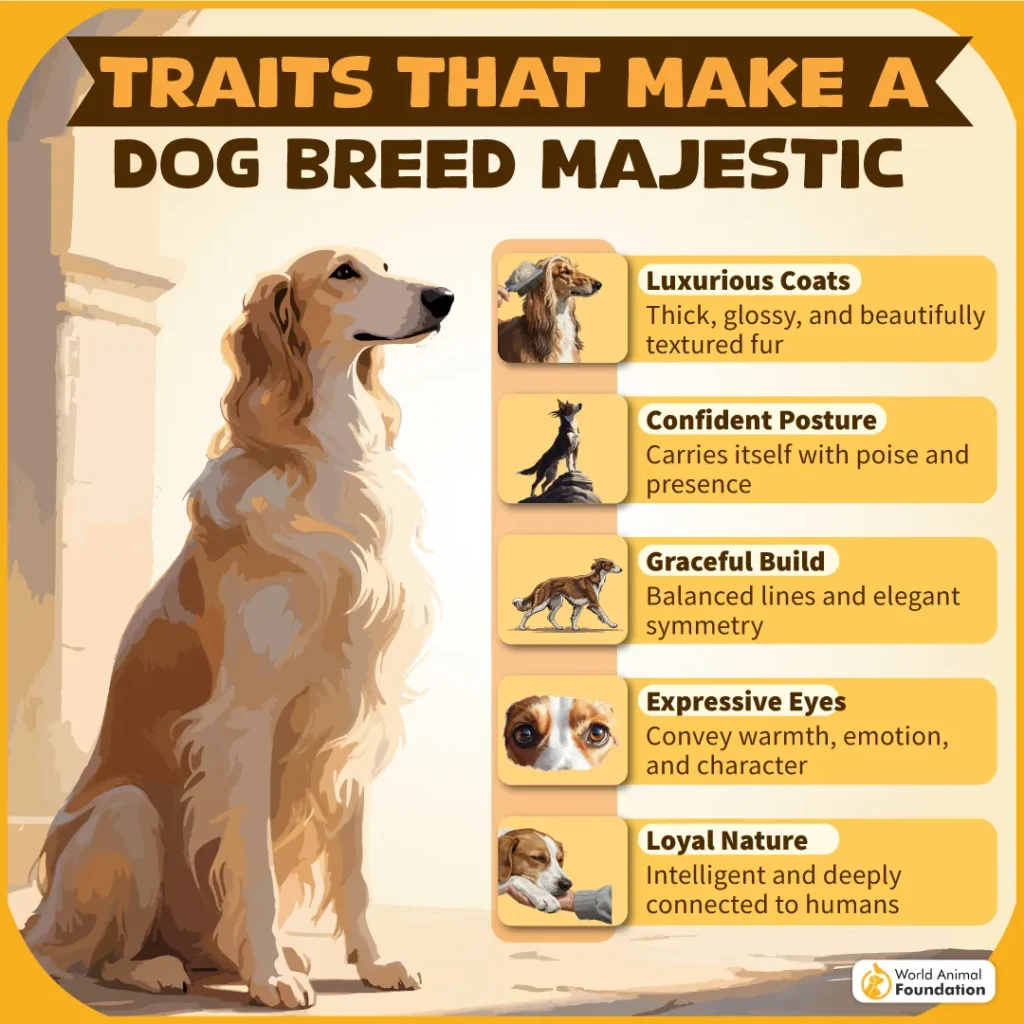
They are watchful and may spend hours looking out windows. They can be playful and comical with their pet parents, but are often reserved with strangers and may prefer one person. They are also famously clean and groom themselves much like cats.
Exercise and Training
Basenjis are energetic and easily bored, so daily play, training, or activities such as agility and lure coursing help keep their minds busy. Their strong prey drive means they should be kept on a leash or in a secure fenced area.
They are excellent climbers, fast runners, and can be difficult to recall once they escape. Their independent and stubborn nature can make training challenging, so patience and treat-based rewards work better than shouting.
3. Dalmatian
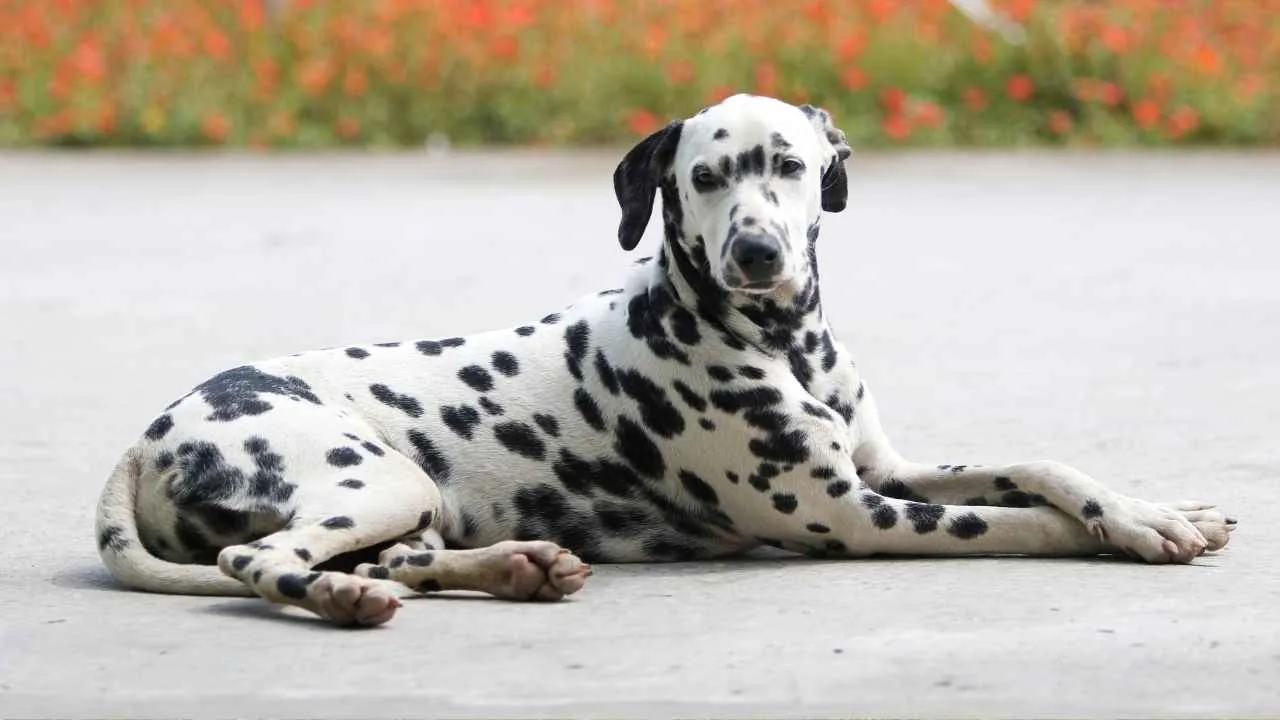
Dalmatians are hard to miss, thanks to their famous spotted coats. They were originally bred to run alongside horse-drawn carriages and later became known as firehouse dogs.
In the 1700s, they ran with fire carriages and barked to warn people to clear the way. Their other roles included guarding horses and coaches, working as ratters, and serving as sentinels.
Looks and Personality
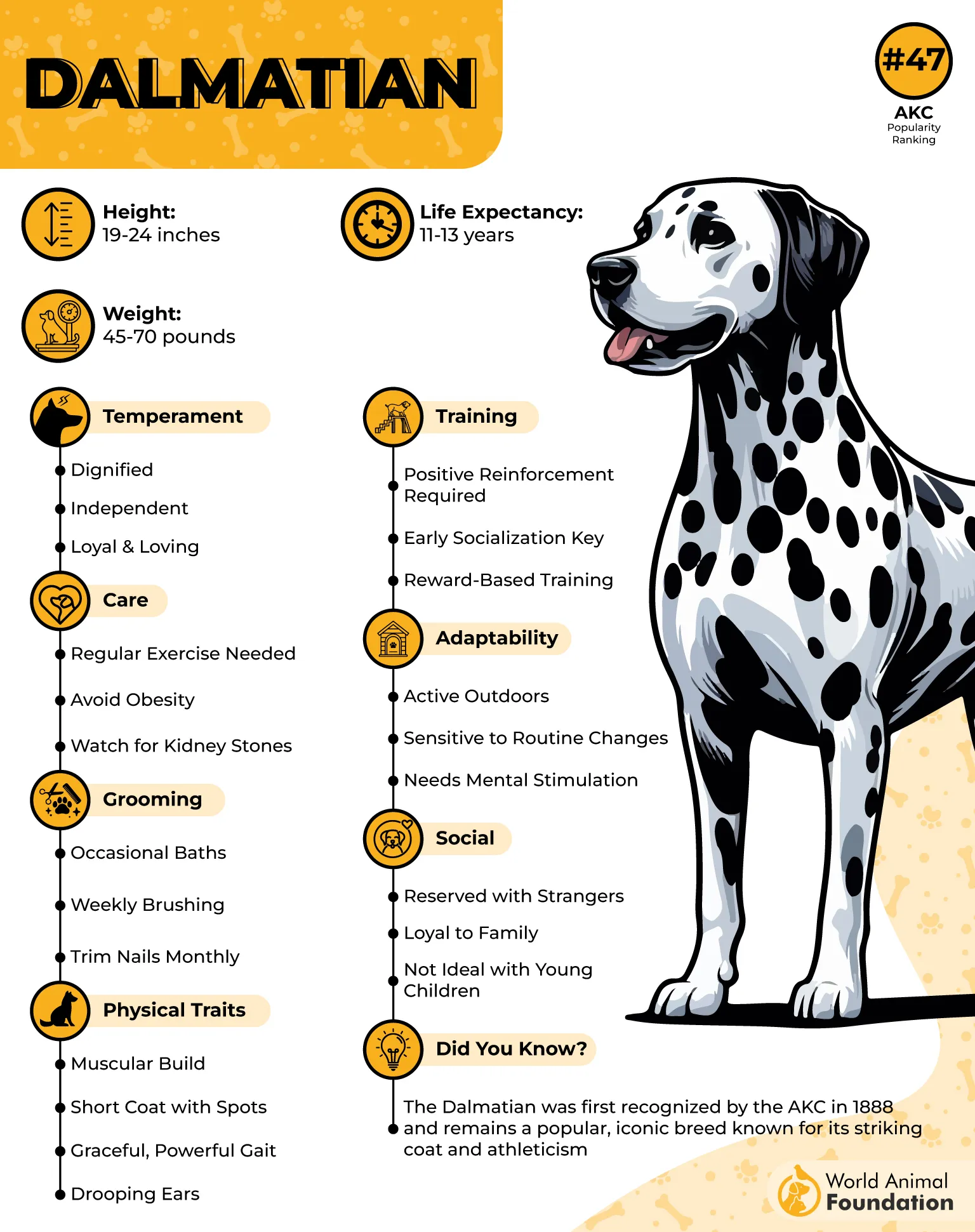
Their white coats covered in black or brown spots give them a truly striking appearance. Dalmatians are actually born without spots, which begin to appear at around two weeks old. They are loyal, intelligent, affectionate, and often playful with their families.
They can get along well with other household pets, although some may be aggressive toward unfamiliar dogs. Their natural watchdog instincts also remain strong.
Exercise and Training
Dalmatians are energetic dogs that need plenty of daily exercise. They suit active families and make great companions for running, hiking, and dog sports such as agility.
They learn quickly but can be easily distracted and may try to take charge, so early training is important. They also dislike being left alone for long periods.
4. Labrador Retriever
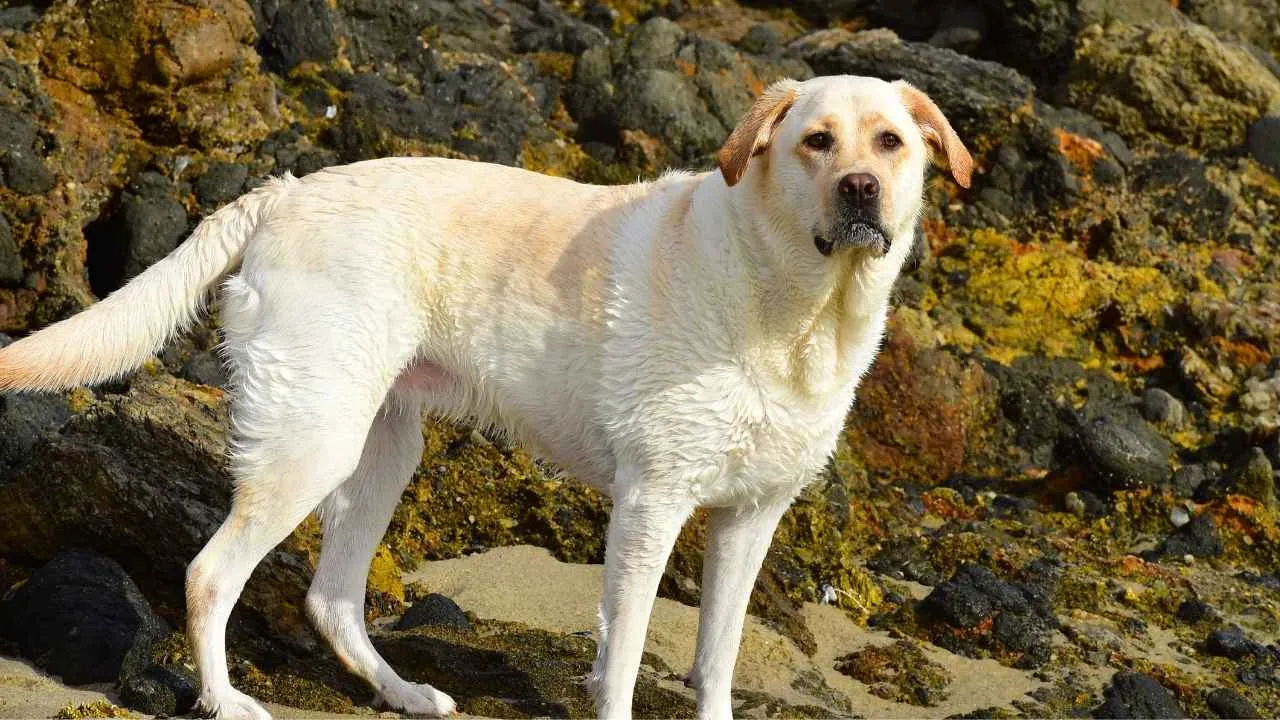
Labrador Retrievers are known for their friendly nature, athletic build, and classic good looks. They were developed as water dogs in Newfoundland and later became popular in the U.K.
Their working background made them energetic, determined, and eager to retrieve. Today, they are also valued as service, therapy, search and rescue, water rescue, and detection dogs.
Looks and Personality
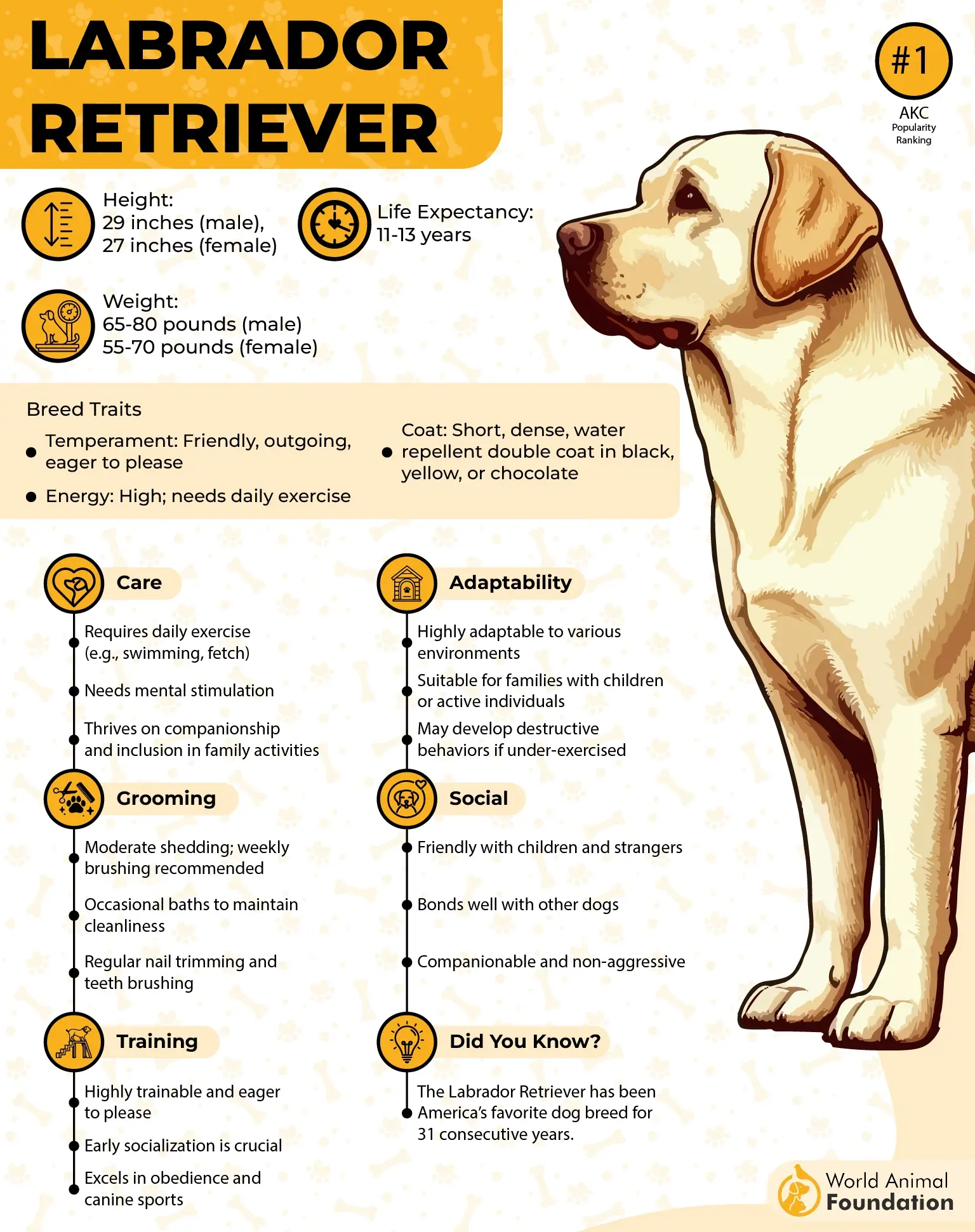
Labs have a strong, muscular build with a broad skull, deep chest, and powerful tail. Their short, dense coats come in yellow, black, and chocolate.
They are affectionate, intelligent, gentle, and eager to please. Most are friendly with people, children, and other dogs. Young Labs can be strong-willed, though, and may need patient training.
Exercise and Care
Labrador Retrievers need an active lifestyle and plenty of exercise. They enjoy swimming, hiking, hunting, and outdoor activities with their families.
Their water-resistant double coat sheds heavily, especially during seasonal shedding, so regular brushing is needed. With their adaptable nature and trainability, Labs can fit well into active homes that can keep them busy and involved.
5. Doberman Pinscher
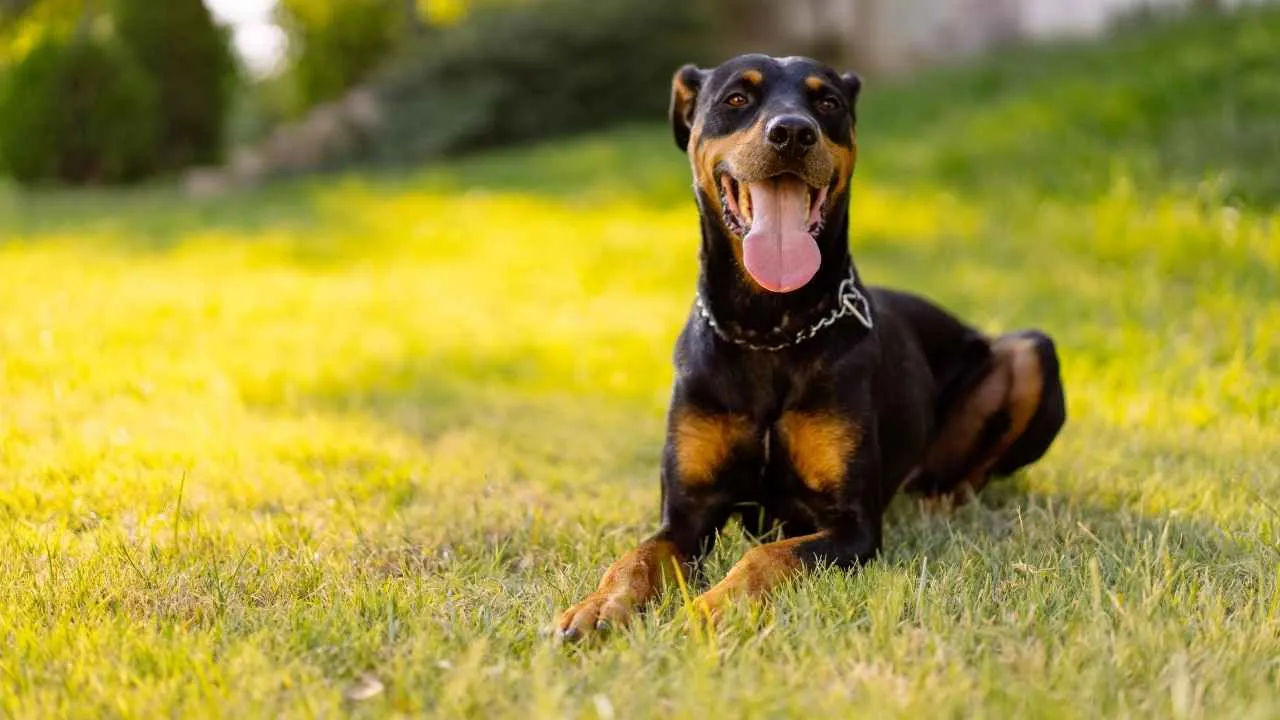
Doberman Pinschers are known for their sleek, elegant appearance and powerful build. They were developed in Germany in the late 1800s by Louis Dobermann, a tax collector, as both guard dogs and companions.
Their working background shaped their alert, loyal, and intelligent nature. Today, they are also used in security, police work, and search and rescue.
Looks and Personality
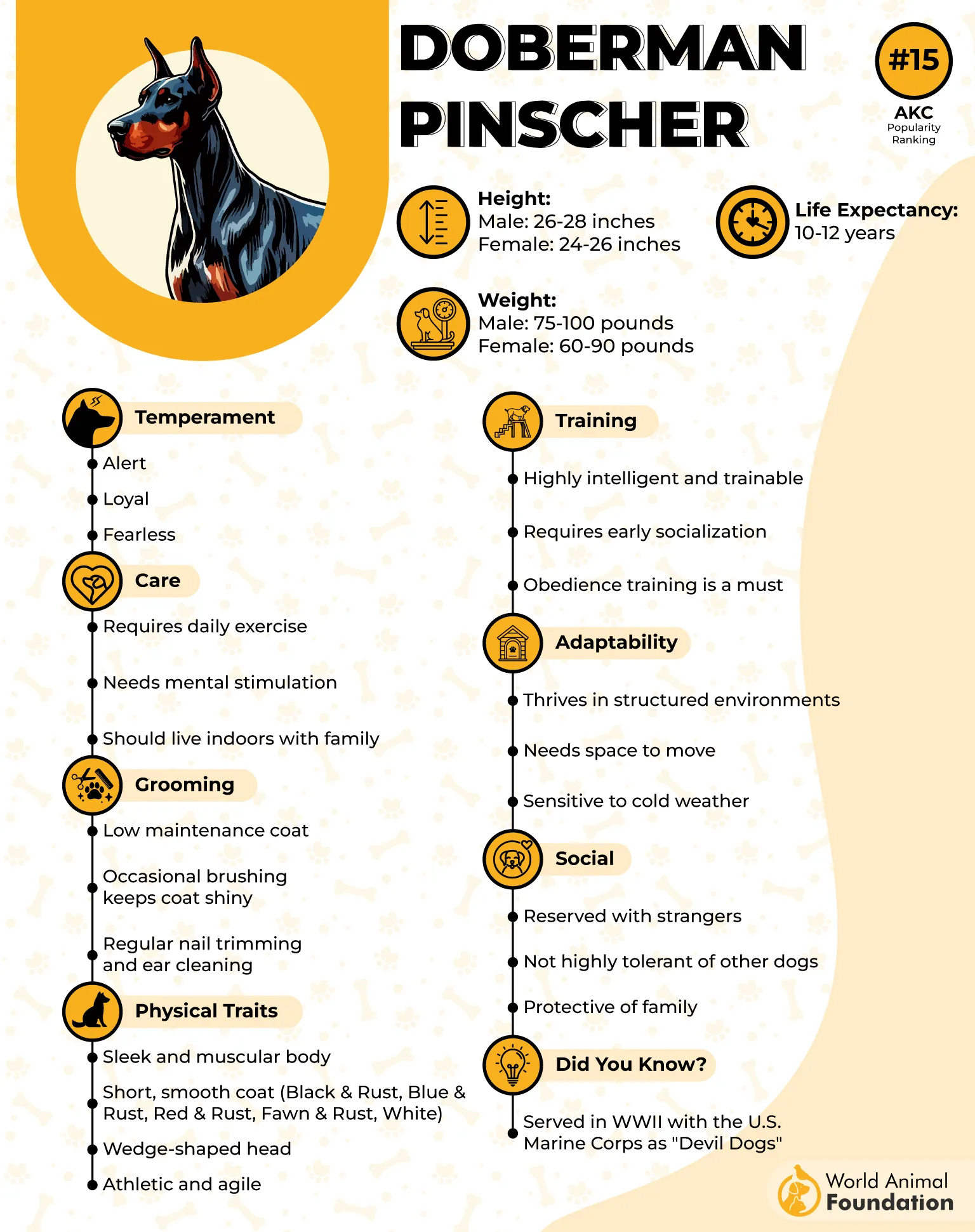
With their lean muscles, sculpted heads, and almond-shaped brown eyes, Dobermans have a naturally striking look. They are protective, fearless, and alert, but can be loving, playful, and loyal with their families.
According to Britannica, they may be reserved around strangers and can be domineering toward unfamiliar dogs. With early socialization, they can also live well with children and other pets.
Exercise and Training
Dobermans are energetic dogs that need regular exercise and mental stimulation. They enjoy long walks, runs, hikes, and playtime in a fenced yard.
Their intelligence helps them learn quickly, but they can become bored with repetitive training. Consistent and engaging sessions are important for this strong-willed breed.
6. Shiba Inu
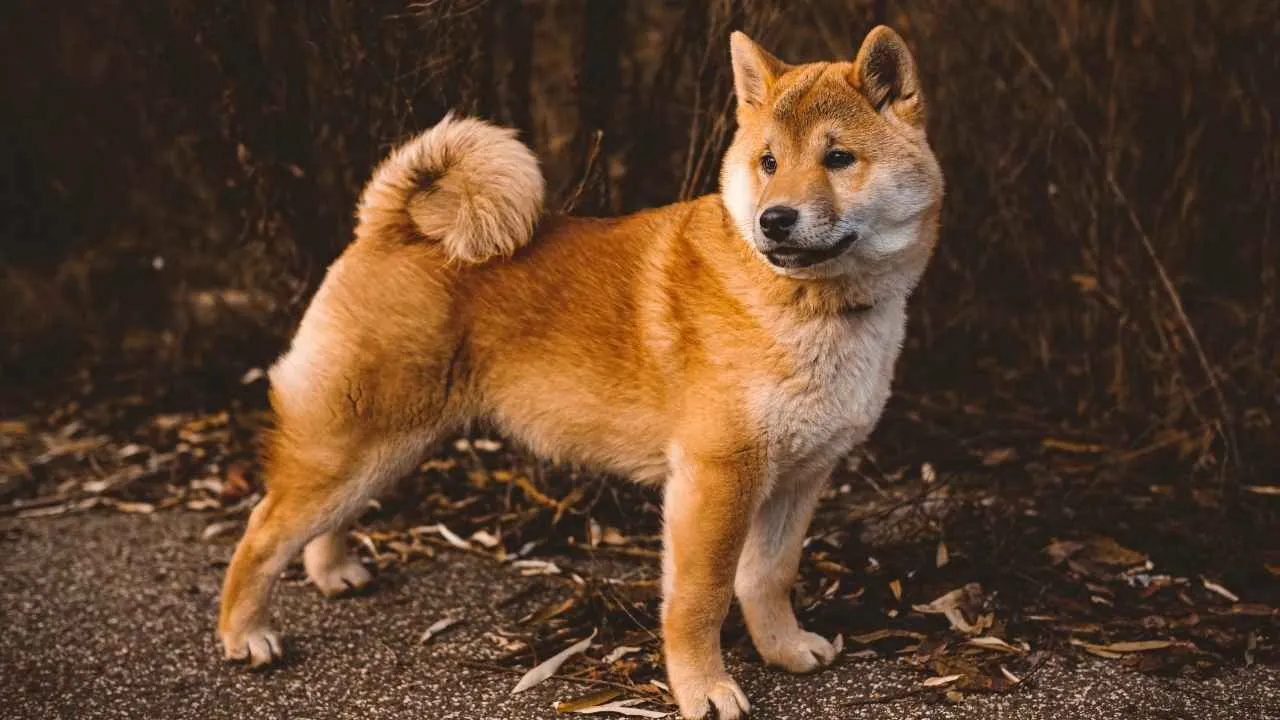
Shiba Inus are ancient Japanese dogs originally bred to hunt birds, small game, and sometimes wild boar. Today, they are better known as lively and entertaining companions.
Their fox-like faces, upright ears, curled tails, and soft coats give them a distinctive look that easily catches attention. They are also adaptable and can enjoy life in both city and country settings.
Looks and Personality
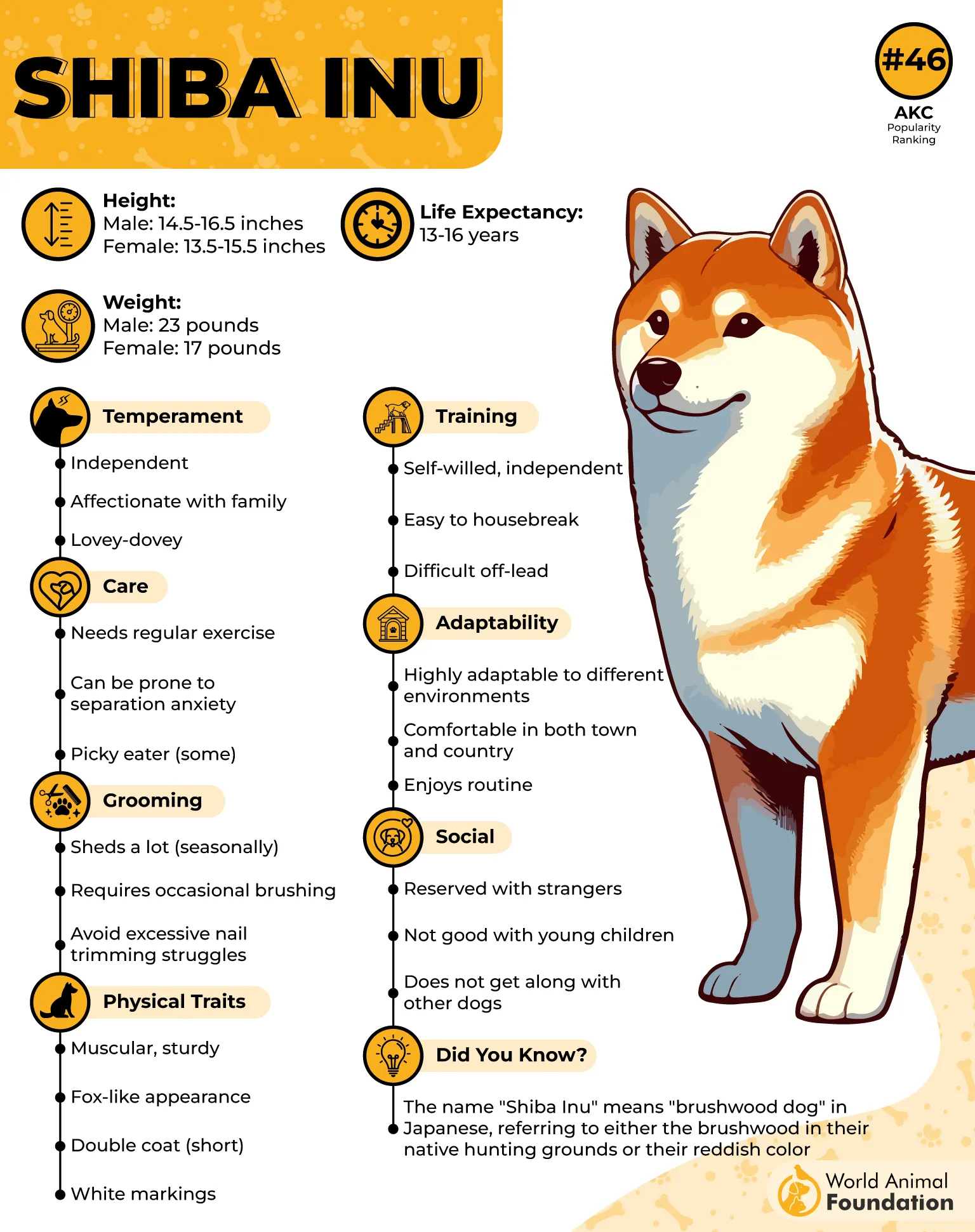
Shiba Inus have a compact, well-muscled build and a thick double coat. Their colors include red, cream, black and tan, and sesame, with white markings on areas such as the chest, cheeks, legs, and inner ears. They are bold, confident, alert, and curious.
At the same time, they can be independent, headstrong, and opinionated. Some are quite vocal and may produce the famous “Shiba scream” when stressed or anxious, as PetMD states.
Exercise and Training
Shibas are energetic and intelligent, so they need regular exercise and mental stimulation. Daily walks and activities can help keep their busy minds occupied.
Their independent nature can make training challenging, so patience, consistency, and positive reinforcement are important. They are curious hunters and should not be trusted off-leash outside a secure area.
7. Great Dane
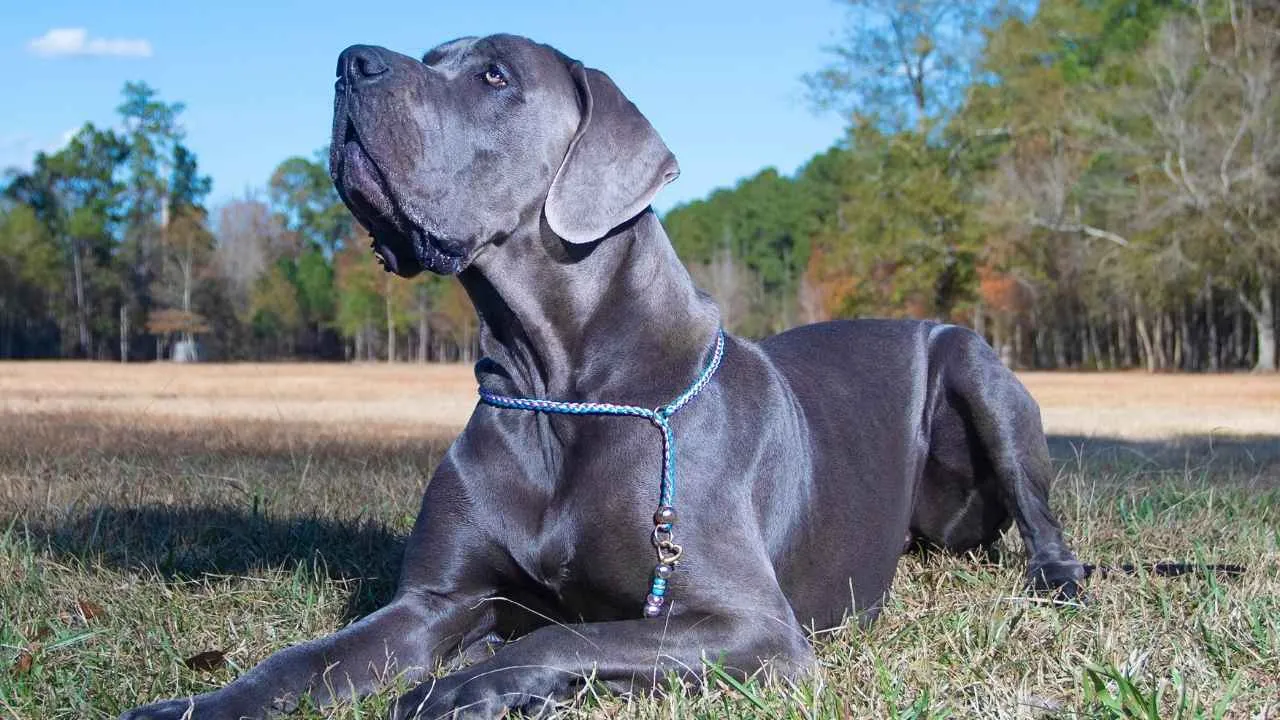
Great Danes are famous for their impressive size and gentle nature. Originally bred in Germany in the 1800s, they were used to hunt wild boar and guard estates.
Despite their working background, these dogs are known for being calm, affectionate, and devoted to their families. Their nickname, the “Apollo of Dogs,” reflects their tall and regal appearance.
Looks and Personality
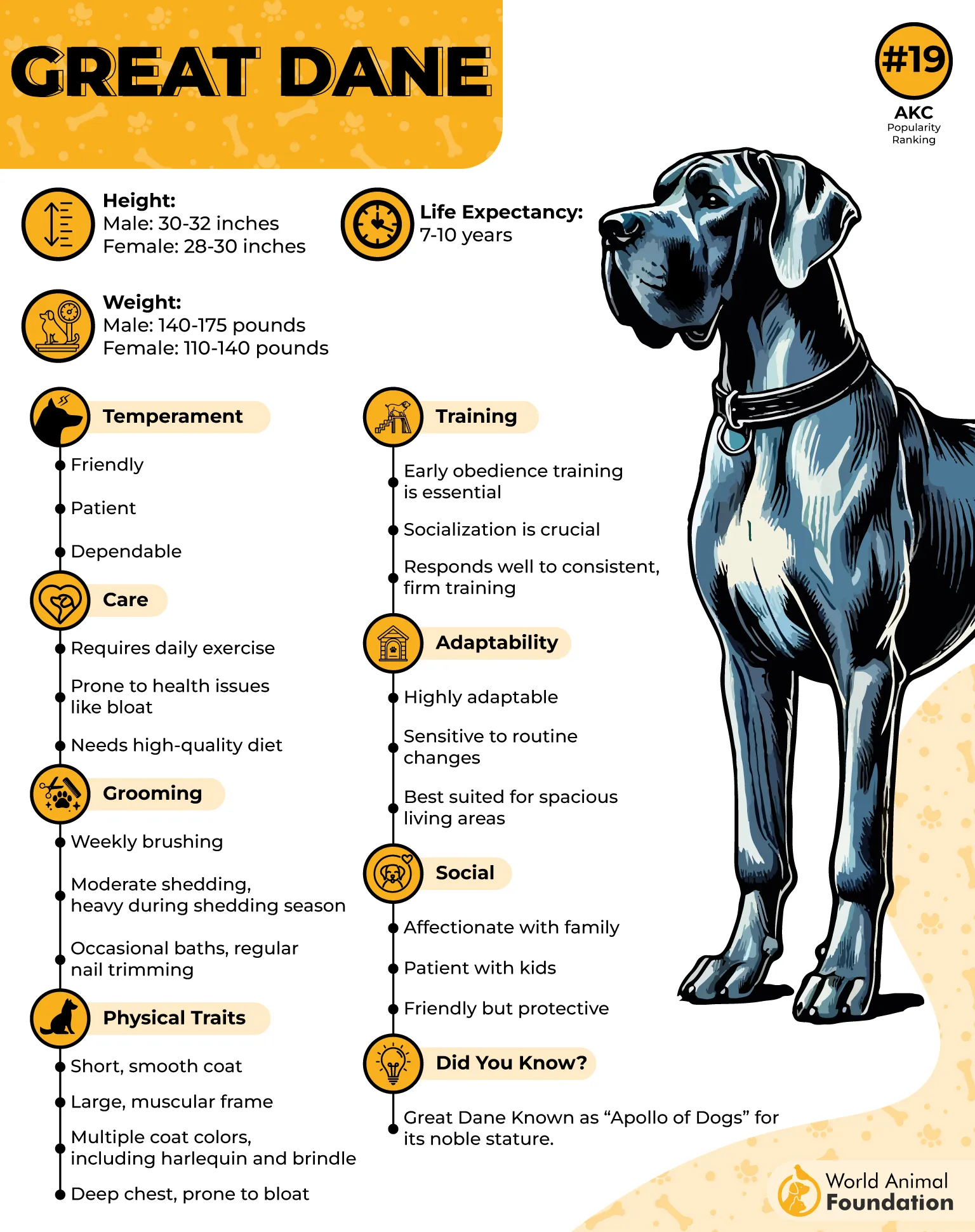
Great Danes have large heads, long limbs, lean bodies, and short coats. Their colors and patterns include black, white, fawn, blue, merle, and harlequin. Despite their intimidating appearance, they are generally friendly with both family and strangers.
They can be playful but usually have a fairly low energy level and are happy to relax after some activity. They are also loyal, intelligent, and generally get along well with other dogs and household pets.
Exercise and Care
Great Danes need regular activity but do not require endless exercise. They are generally easy to train, although they may not respond quickly. Their size and strength make early training and supervision important, especially around children and seniors. Their short coat needs only weekly brushing.
8. Siberian Husky
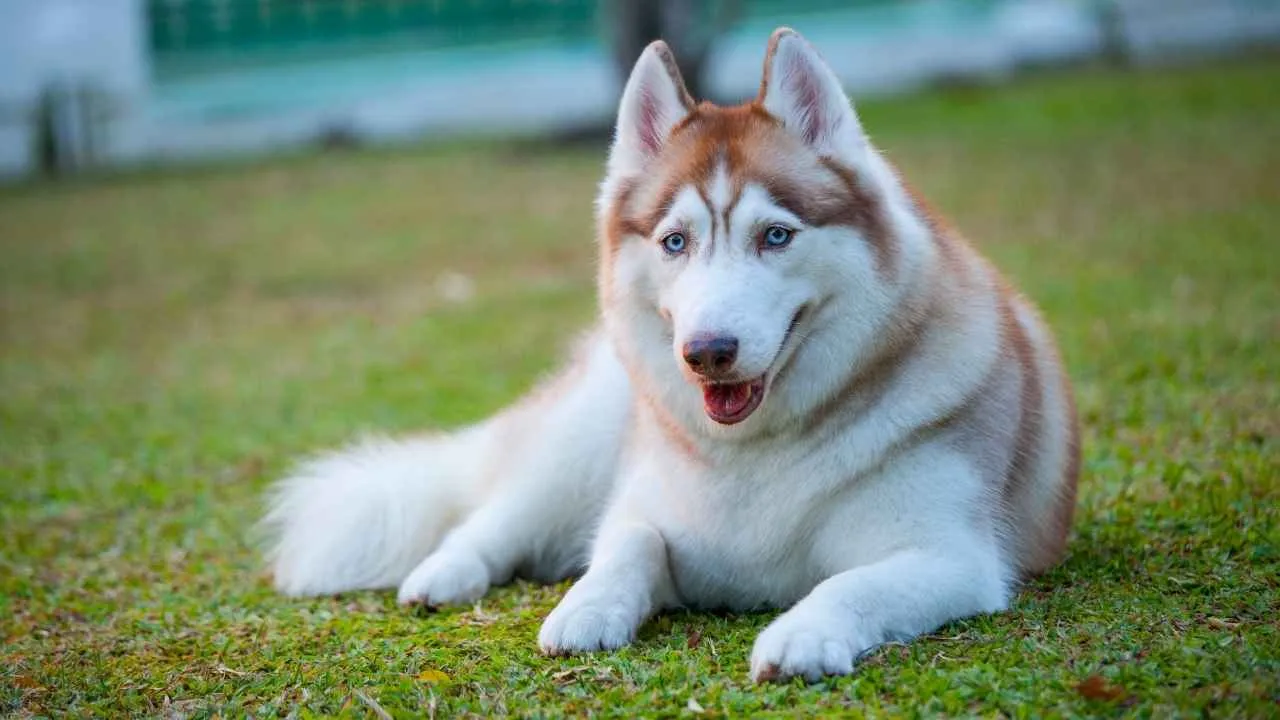
Siberian Huskies are graceful, athletic dogs known for their striking appearance and lively personalities. Originally developed in Northeast Asia as sled dogs, they were brought to Nome, Alaska, in 1908 by Russian fur trader William Goosak.
Although they were not immediately popular, Huskies later became one of the best-known breeds in the U.S. Their endurance and eagerness to work remain important parts of their character.
Looks and Personality
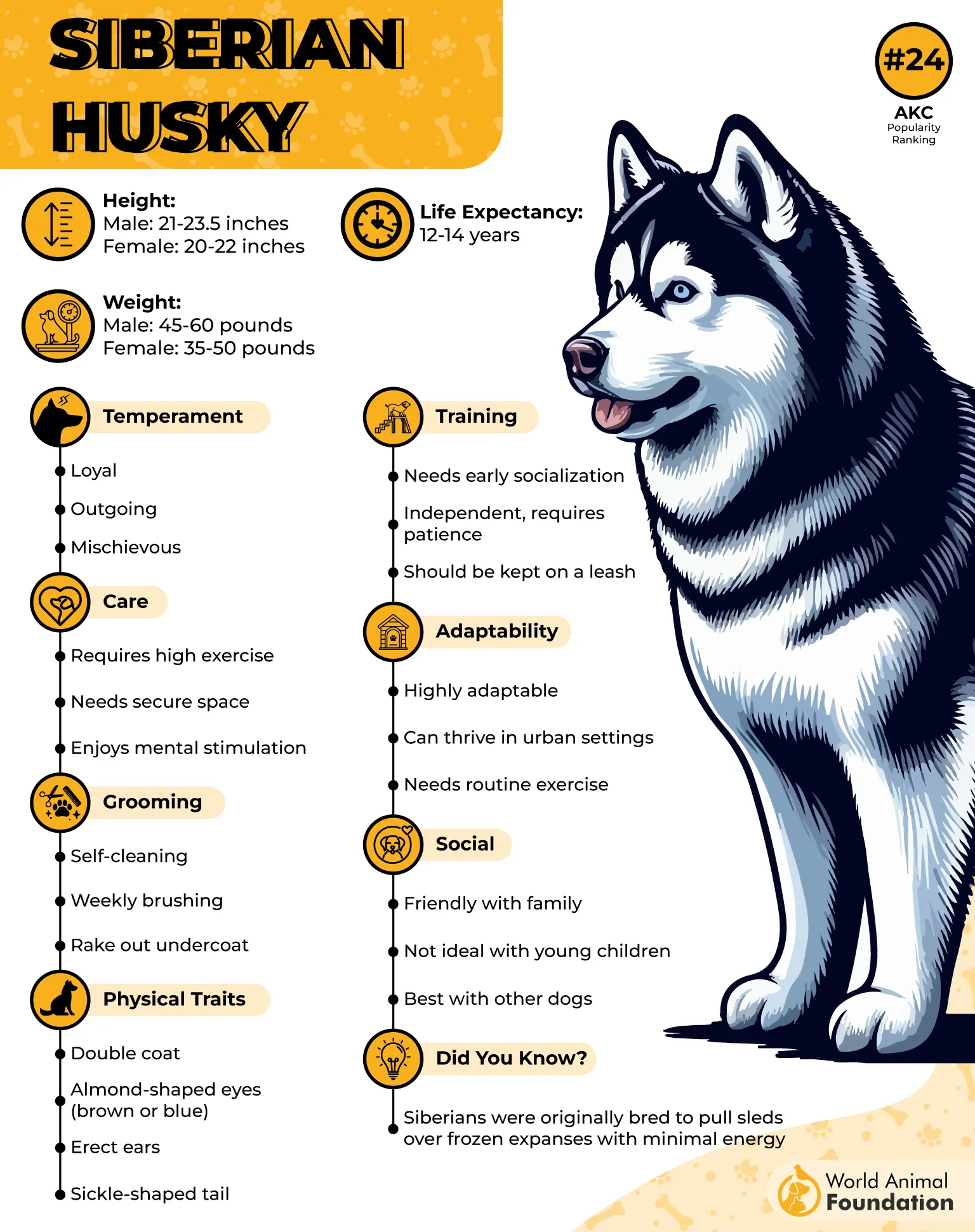
Huskies have an athletic build and a distinctive appearance that easily catches attention. They are active, playful, independent, and mischievous. They are usually friendly with people and can get along well with other dogs and pets.
Their friendly nature means they are not ideal guard dogs. Huskies are also famous for being vocal, using howls, chirps, and “woos” to communicate.
Exercise and Training
Siberian Huskies need plenty of exercise, space to move, and mental stimulation. They are best suited to active families who can keep them busy and involved.
Their intelligence and independence can make training challenging, so consistent training and early socialization are important. They enjoy the company of people and other animals but can become bored with a sedentary lifestyle.
9. German Shepherd
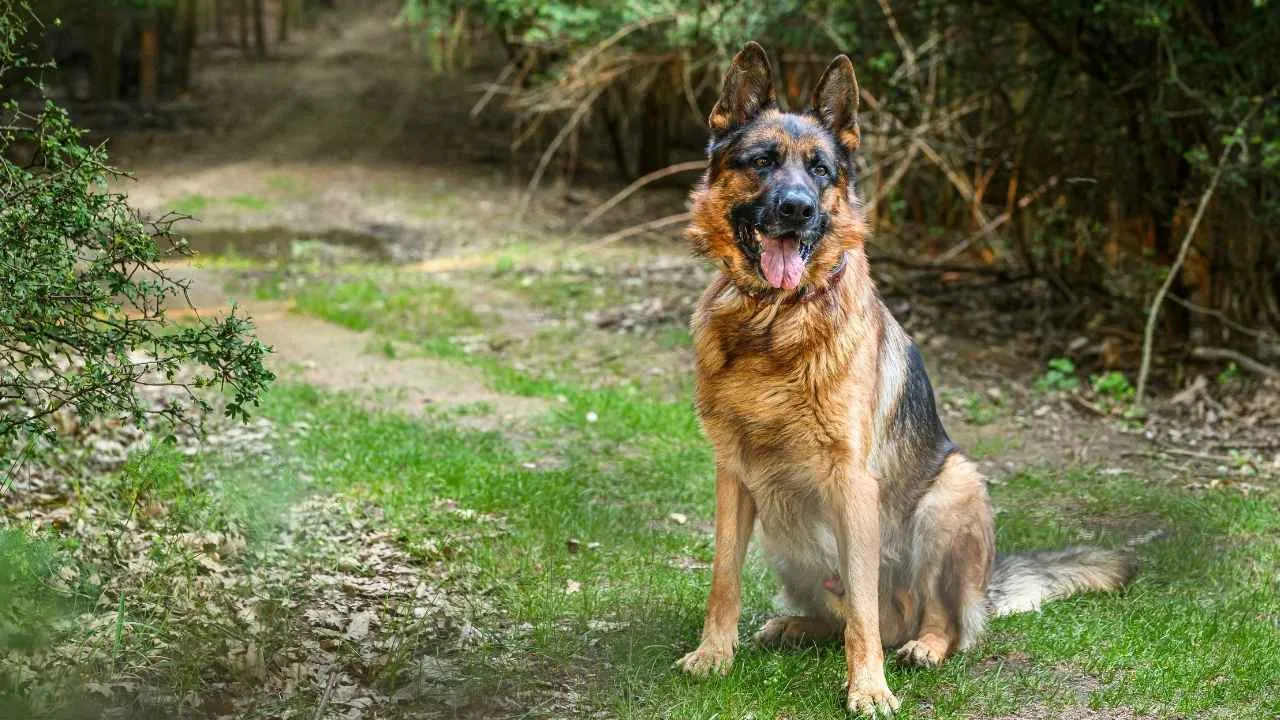
German Shepherds are striking dogs known for their athletic build, intelligence, and loyal nature. Originally developed as herding dogs, they have become valued working dogs in many fields.
They serve with police and military forces in tracking, search and rescue, patrol, and detection work. Their intelligence and versatility have also made them popular service animals and even actors in film and television.
Looks and Personality
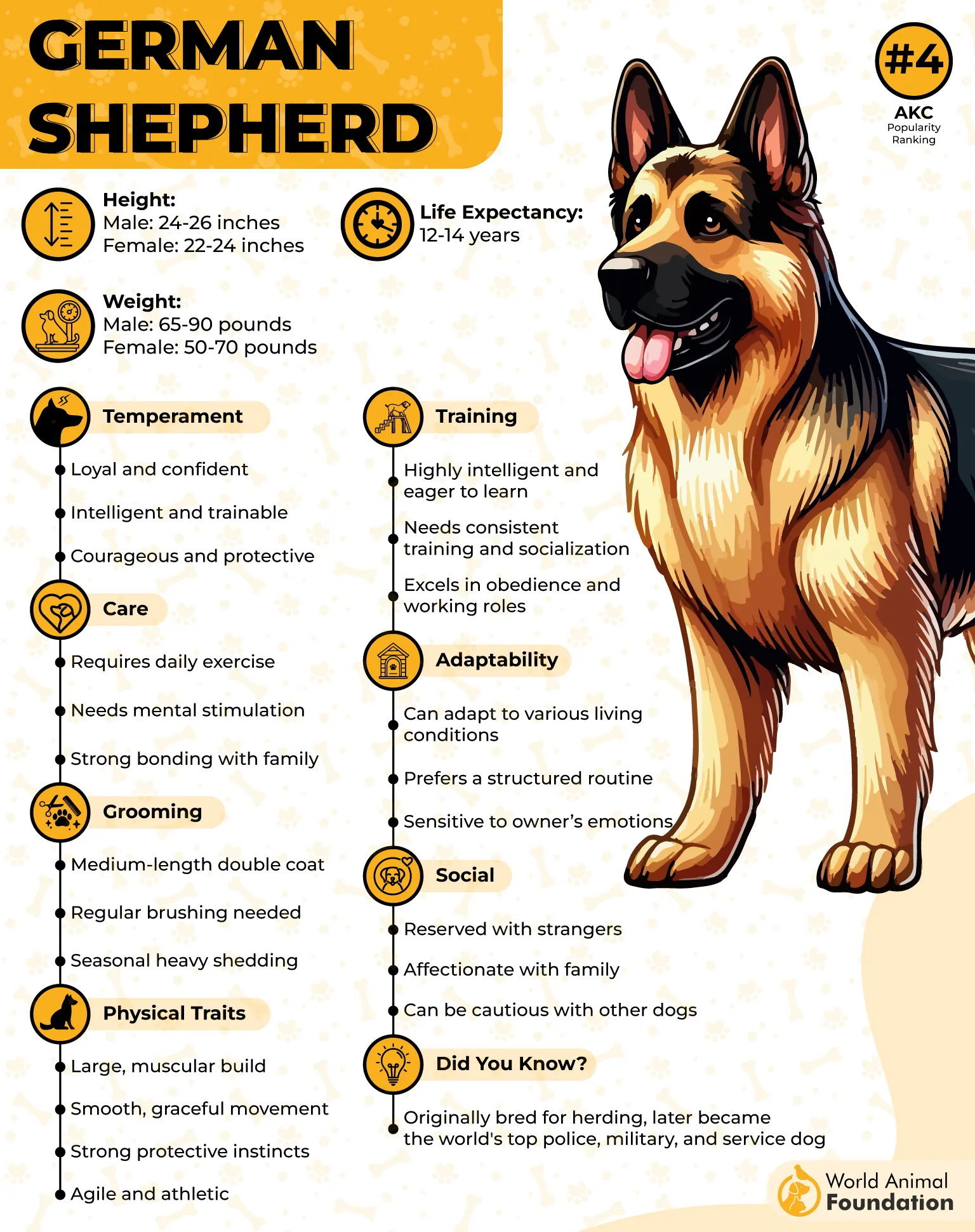
German Shepherds are muscular, agile, confident, and energetic. They form strong bonds with their families and are devoted and protective companions. They can be playful and often do well with children and seniors.
Their natural guarding instincts also make them excellent watchdogs. However, they need clear guidance and early socialization to ensure their protective nature is well directed.
Exercise and Training
These energetic dogs need regular exercise, mental stimulation, and something meaningful to do. They enjoy training and learn quickly, although they can test their handler’s patience.
Consistent training with kindness, patience, and positive reinforcement works well. Without enough activity or guidance, they may develop unwanted behaviors.
10. Poodle
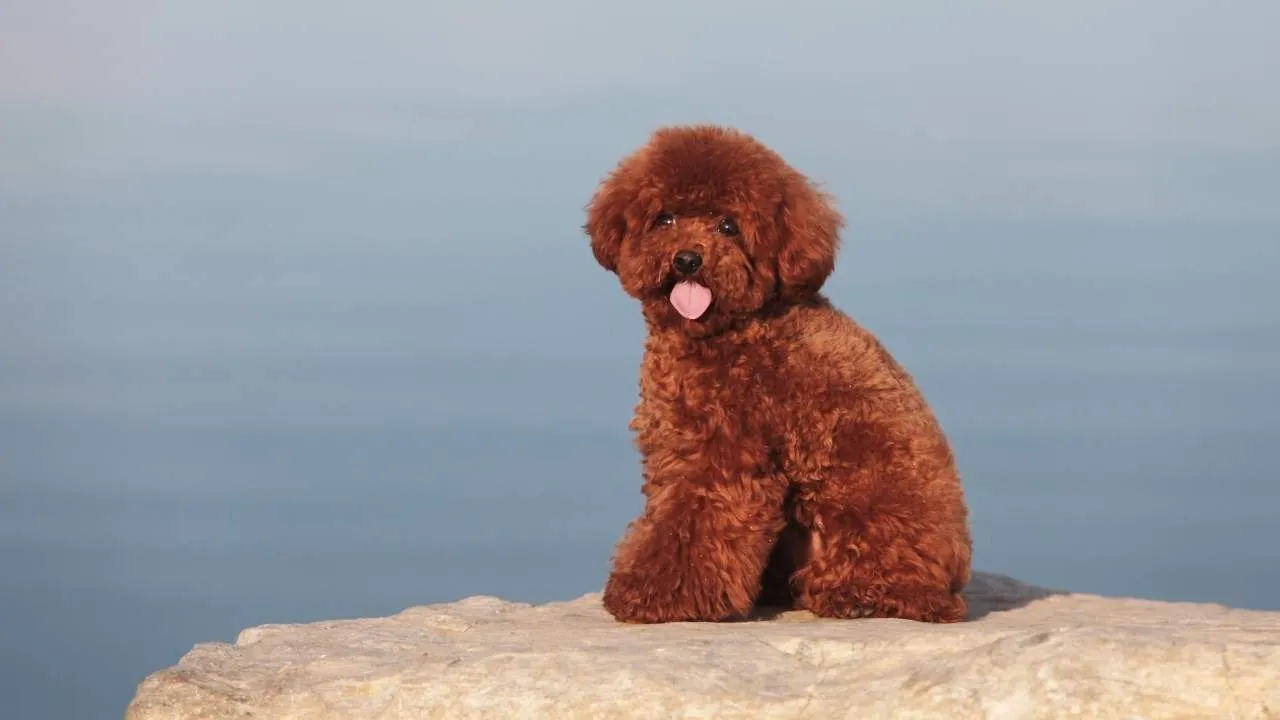
Poodles are elegant, intelligent dogs that come in three varieties: Standard, Miniature, and Toy. All three share the same breed standard and are known for their proud appearance and curly coats.
Although they are strongly associated with France, the breed is thought to have originated in Germany as a water retriever. Their name comes from the German word pudel, meaning “to splash in the water.”
Looks and Personality
Poodles have a distinctive, stylish appearance, with a long straight muzzle, hanging ears, a pompon tail, and a proud way of carrying themselves. Their dense, wiry coats can be gray, white, black, brown, apricot, or cream.
Their curly coats shed very little. Despite their aristocratic reputation, Poodles are friendly, outgoing, and happy around both family and new people.
Exercise and Training
Poodles are active athletes who like to stay busy and receive daily exercise. Their history as water retrievers makes swimming and energetic games of fetch especially enjoyable.
They can also happily join their owners for brisk walks or jogs. Their intelligence allows them to learn a variety of tasks, including service and therapy work.
Conclusion
From elegant coats and striking markings to graceful builds and expressive faces, these stunning dog breeds each have their own way of turning heads. But their appeal goes beyond appearance, with different personalities, energy levels, and needs making every breed unique.
If you’re drawn to one of these beautiful dogs, take some time to learn about its personality, exercise needs, and care before making a decision. The right dog is not just one that looks stunning, but one whose traits fit naturally into your everyday life.
Looking for more pretty dog breeds? You can also check out the Cavalier King Charles Spaniel, Border Collie, Golden Retriever, Bernese Mountain Dog, Australian Shepherd, Alaskan Malamute, Yorkshire Terrier, Shetland Sheepdog, Akita Inu, and Irish Setter.
