





Choosing between a German Shepherd and a Labrador Retriever is basically choosing between two canine overachievers with very different personalities. Both breeds are intelligent, loyal, athletic, people-oriented, and capable of serious working roles, but they approach life differently. One often brings focused guardian energy, while the other tends to arrive with a wagging tail and the social confidence of someone who already knows everyone at the party.
Today, German Shepherds commonly appear in obedience, scent detection, service work, search and rescue, and protection-oriented jobs. At the same time, Labs are famous for retrieving, guide and assistance work, detection, hunting, and family companionship. Both breeds need a real lifestyle commitment, not just a food bowl and a backyard.
Let’s compare these two breeds in detail.
German Shepherd vs. Labrador Retriever: What Owners Should Know
German Shepherds and Labrador Retrievers are both loyal, intelligent, and popular family dogs, but they differ in temperament, energy, and care needs. Knowing these differences can help owners understand which breed may fit their lifestyle and home better.
Origins & Purpose
The German Shepherd is relatively young compared with many ancient working breeds, but its development was extremely deliberate. German breeders selected sheep-herding dogs for intelligence, athleticism, trainability, confidence, and usefulness, ultimately creating an adaptable working dog rather than a specialist with only one job.
The Labrador Retriever has a completely different history. Despite the name, its roots trace primarily to Newfoundland, where ancestors of the modern Labrador helped fishermen and later developed into highly capable retrieving dogs used around water and upland game.
Their working histories influence what owners frequently see around the house. German Shepherds may monitor doors, windows, visitors, unusual sounds, and family movements like unpaid security consultants. At the same time, Labradors often carry toys, socks, slippers, or suspiciously valuable household objects around in their mouths.
That heritage matters when choosing between them because instincts do not disappear just because a dog lives in suburbia. A German Shepherd without enough mental direction may invent a security job nobody asked for, while an under-stimulated Labrador may turn the living room into a chewing laboratory.
Size & Build
German Shepherd Dogs are powerful, athletic large dogs with noticeably longer outlines and upright ears. According to the AKC, males typically stand 24–26 inches and weigh 65–90 pounds, while females usually stand 22–24 inches and weigh 50–70 pounds.
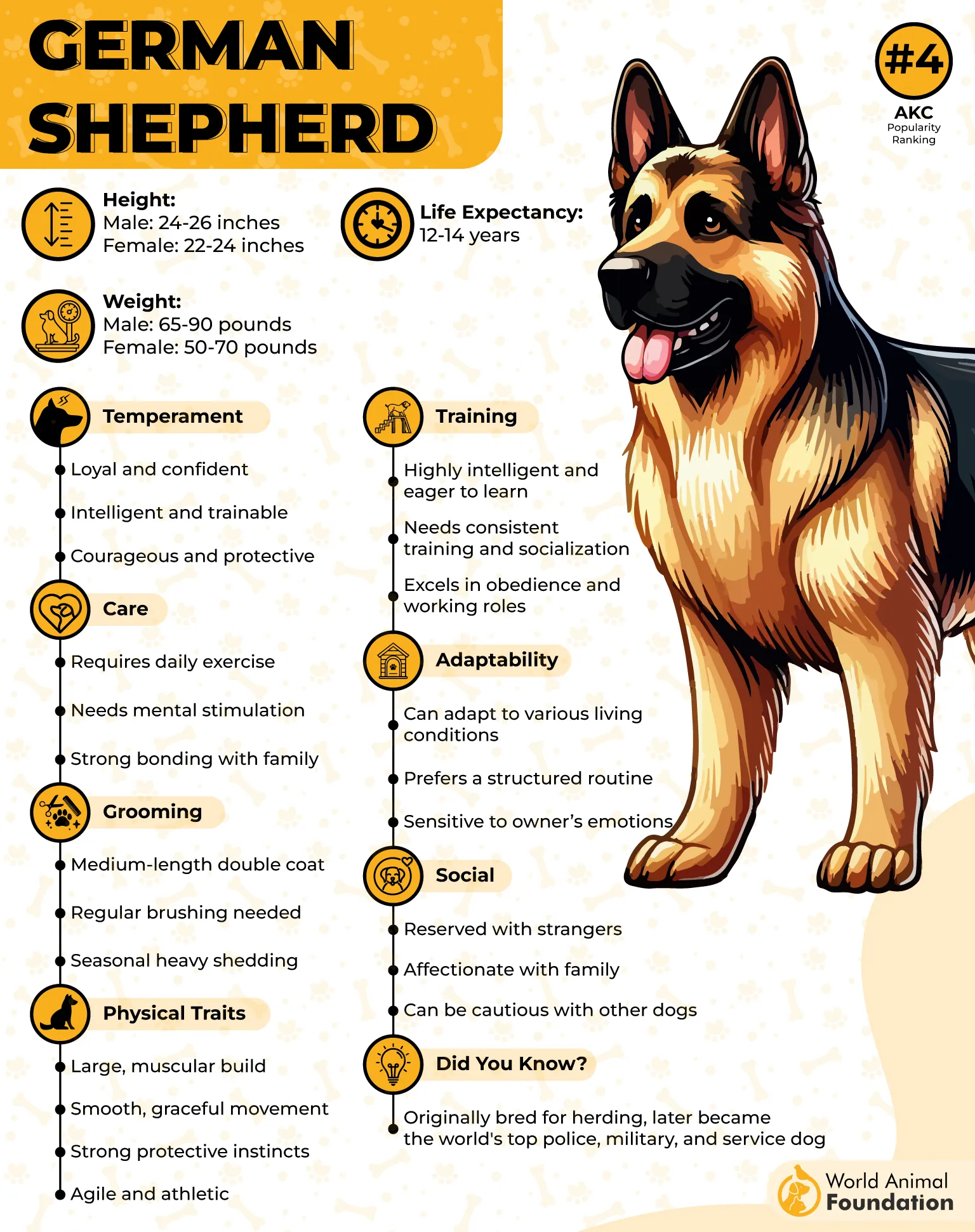
Labrador Retrievers are more compact and broad through the body. Males are 22.5–24.5 inches tall and 65–80 pounds in weight, while females are generally 21.5–23.5 inches and 55–70 pounds. Labs tend to look blockier, with a broad head, muscular body, dense coat, and the famous thick “otter” tail.
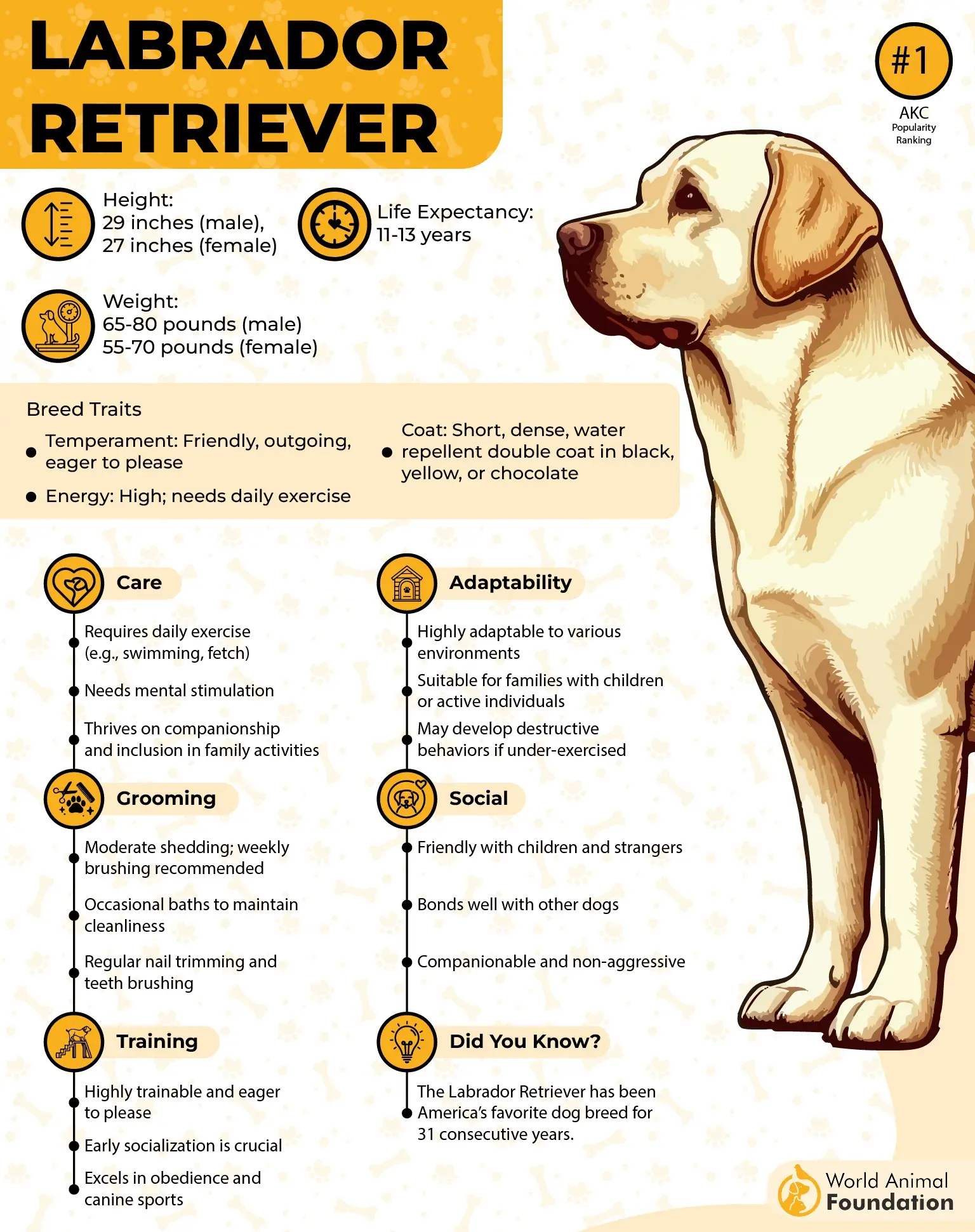
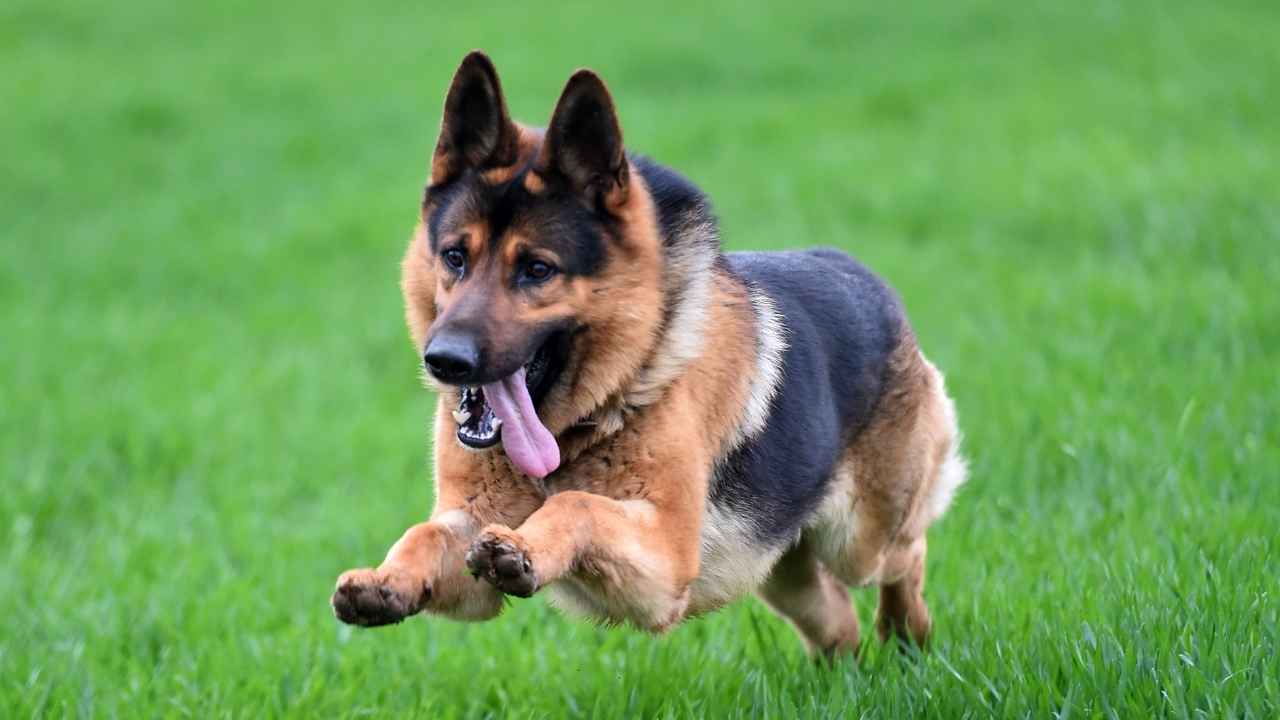
Put the two side by side and their working backgrounds become visually obvious. German Shepherds have a more elongated, trotting-athlete silhouette, while Labradors look like sturdy swimming and retrieving machines designed to power through water, vegetation, and mud.
Space matters too, though square footage alone doesn’t determine whether either dog can live happily somewhere. A well-exercised Lab or German Shepherd may settle better in a smaller home than an ignored dog living on a huge property.
Purchase Cost & Availability
Neither breed is particularly rare, giving prospective owners more options than they would with an uncommon purebred. Availability, however, should not be confused with responsible breeding because popularity also attracts people who produce puppies without adequate health testing, socialization, or attention to temperament.
German Shepherd puppies cost around $1,500–$2,500, while reputable-breeder puppies commonly cost $1,500–$3,500, with specialized working or imported lines sometimes costing substantially more. The average cost of a Labrador Retriever puppy is $1,900.
For Labrador buyers, look for reputable breeders who document important health screenings such as hips, elbows, eyes, EIC testing, and the D-locus test, with additional tests also recommended.
Adoption can also be a fantastic route for either breed. German Shepherd and Labrador rescues often work with adult dogs whose size and temperament are already more visible, which can actually make matching easier for some homes.
Temperament & Personality
German Shepherds tend to form deep relationships with their families while remaining more selective socially. They are affectionate with family but show a characteristic aloofness that does not naturally translate into instant friendship with every stranger.
Labradors are basically the opposite social strategy. They are widely described as friendly, outgoing, affectionate, and generally comfortable meeting people and other dogs.

Genetics, socialization, breeder selection, training, early experiences, and individual personality all influence adult behavior. Breed tendencies give you probabilities, not a guaranteed personality downloaded at birth.
German Shepherds often seem more environmentally aware and take unusual activity more seriously. They may notice footsteps outside, someone arriving at the gate, a strange object on a walking route, or a guest entering the home before the owner has processed what is happening.
Exercise Needs & Energy Levels
German Shepherds were bred to work for long periods and need a combination of physical activity, training, problem-solving, and structured engagement. The Royal Kennel Club specifically advises prospective owners that German Shepherds require extensive physical and mental exercise every day.
Labradors can surprise people who mistake friendliness for low energy. They are exuberant and energetic, and insufficient exercise can contribute to hyperactive or destructive behavior. Fetching, swimming, hiking, retrieving work, obedience, tracking, agility, and dock diving all fit naturally into the breed’s athletic toolbox.
The difference often comes down to the exercise style each breed enjoys. Many German Shepherds thrive when movement has structure—heel work, tracking, scent searches, obedience sequences, tug with rules, hiking with training stops, or dog sports.
Training & Obedience
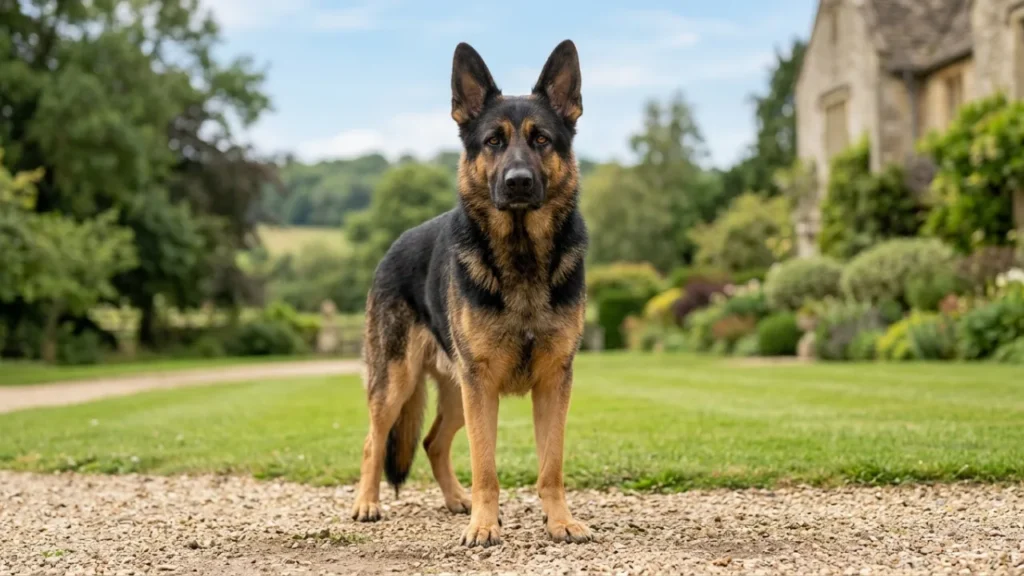
German Shepherds are highly trainable and have historically succeeded in assistance work, police and military roles, tracking, protection sports, competitive obedience, search and rescue, herding, and service tasks.
Labradors are also extremely trainable but often bring a more openly enthusiastic energy to lessons. Food motivation, retrieving instincts, social engagement, and eagerness to cooperate help explain why the breed appears so frequently in assistance and detection work.
German Shepherd training often benefits from clear, consistent communication. Because these dogs can become deeply tuned into handlers and surroundings, sloppy communication can create confusion, frustration, or unwanted self-appointed decision-making.
With Labs, one common challenge is managing enthusiasm rather than creating motivation. A young Labrador may fully understand “sit” but temporarily forget the concept because someone opened a cheese wrapper eight meters away.
Grooming Needs & Shedding
Here comes the bad news for people dreaming of a fur-free sofa: both breeds shed. German Shepherds have a double coat and shed heavily, and PDSA recommends grooming more often than once a month. Seasonal coat changes can make it feel like your dog has quietly reproduced across every carpet in the building.
Labradors also have a dense double coat designed to protect them around cold water. Their coat is shorter and may look lower-maintenance, but Labs still shed quite a lot and benefit from regular brushing. You generally shouldn’t clip or shave a Labrador’s coat just because hair is showing up around the house.
Long-coated German Shepherd varieties require more brushing than standard medium-coated dogs because tangles can form in feathering around the legs, tail, ears, and underside. Standard-coated Shepherds are simpler but still generate an impressive quantity of undercoat.
In both cases, routine coat inspection also gives owners a chance to notice lumps, skin problems, ticks, wounds, or other issues early.
Outdoor Adventure & Exploration
German Shepherds tend to make focused hiking and exploration partners because they are athletic, handler-oriented, and naturally attentive to their surroundings. A conditioned adult can enjoy trails, tracking games, obedience outdoors, scent work, and other adventures where both body and brain have something to do.
Labs bring a different type of outdoor chaos—in the best way. Water, mud, lakes, fetch, beaches, retrieving, camping, hiking, and anything involving a suspiciously large stick can be extremely appealing to them.

German Shepherds may be especially attractive to people who want outdoor activities to include structured teamwork. Their strong engagement with handlers can make advanced hiking manners, tracking, scent trails, obedience games, and sport training feel like genuine collaboration.
Labs also need heat precautions, especially because excitement can make them feel invincible. Swimming is excellent exercise for many healthy adult Labs because it engages the body while reducing repetitive impact compared with hard running.
Never turn a Lab loose in unfamiliar wilderness because “they usually come back.” Wildlife, roads, livestock, cliffs, poisonous substances, environmental hazards, and other dogs can quickly turn freedom into an emergency.
Health & Lifespan
The German Shepherd Dog’s typical life expectancy is 12–14 years, and the Labrador Retriever’s is 11–13 years. These figures describe breed-level expectations rather than guarantees, and actual lifespan depends on genetics, body condition, preventive care, environment, disease, and plain old biological luck.
Labs address breed-specific concerns that responsible breeders can screen for. At the same time, tests for conditions such as CNM and certain retinal diseases may also be relevant depending on the breeding program.
German Shepherd health discussions frequently include degenerative myelopathy as well as orthopedic issues. The GSDCA currently includes DM testing in its broader Health Award of Merit framework and emphasizes that research into the condition’s predictability and genetics continues.
Weight management may be one of the least glamorous but most useful things an owner can control. Keeping either breed lean reduces unnecessary mechanical stress on joints and makes exercise easier as the dog ages.
German Shepherd vs. Labrador Retriever: Which Loyal Family Dog Is Right for You?
The Labrador Retriever often makes sense for families wanting a highly social dog that usually enjoys meeting people, joining outings, retrieving toys, swimming, and participating in everyday family chaos. Labs are trainable and adaptable, but owners still need to manage high energy, jumping, chewing, food obsession, and adolescent enthusiasm.
The German Shepherd usually suits owners who enjoy more deliberate training and appreciate a dog with stronger watchful tendencies. They tend to thrive with structure, ongoing mental work, thoughtful socialization, and owners who are comfortable guiding a powerful working breed.
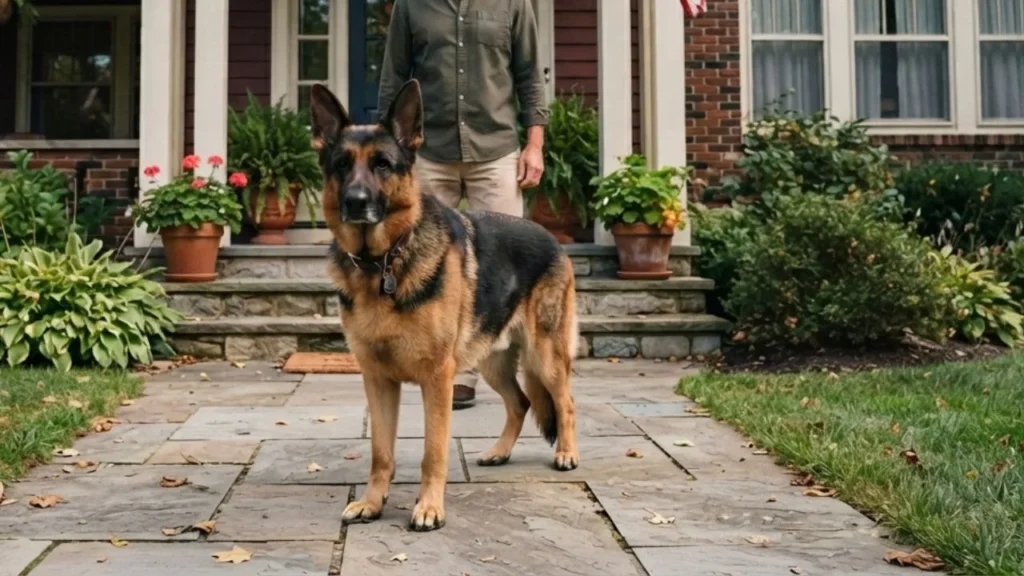
For a first-time owner, the Labrador may feel more socially forgiving, although “beginner-friendly” definitely does not mean low maintenance. A German Shepherd can absolutely succeed with a committed newer owner too, but inadequate socialization and inconsistent handling can be harder to manage in a naturally vigilant breed.
Families who frequently host visitors or want a dog comfortable in busy social environments may appreciate the Lab’s generally outgoing style. People who want a companion that naturally pays closer attention to the environment may appreciate the Shepherd’s more reserved personality.
Neither trait should be exaggerated into stereotypes, because individual dogs can sit anywhere along a fairly wide behavioral spectrum.
Conclusion
German Shepherds and Labrador Retrievers became iconic for good reasons. Both are intelligent, athletic, trainable, loyal dogs with remarkable working histories. Still, the German Shepherd generally brings more vigilance and intensity while the Labrador typically brings greater social openness and retrieving enthusiasm. Those differences can completely change what daily ownership feels like.
So before falling for floppy Labrador ears or the German Shepherd’s iconic silhouette, look at your actual schedule. Ask yourself how much training, exercise, grooming, socialization, travel, veterinary care, and everyday involvement you can realistically sustain for the next decade or longer.
