




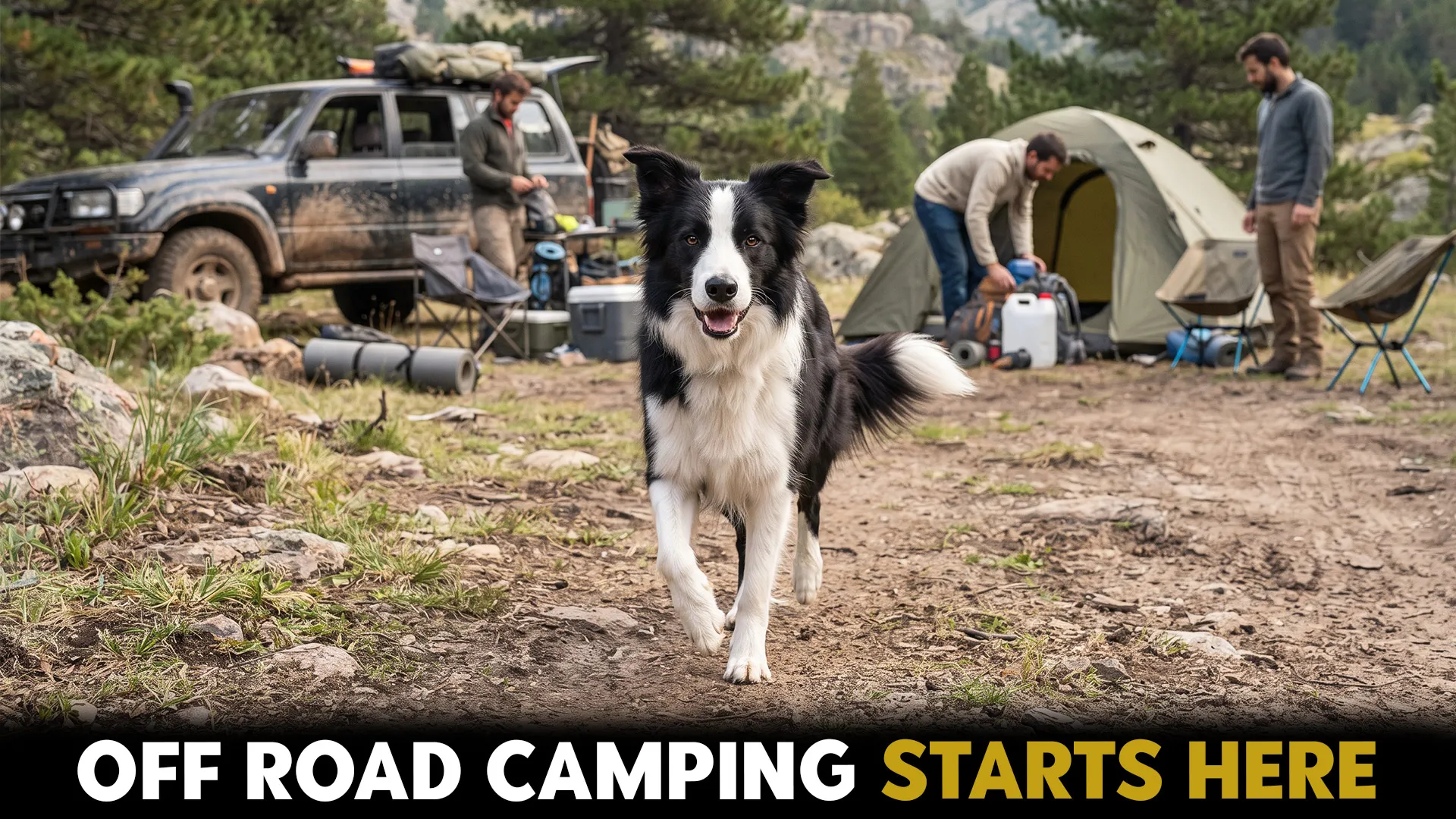
Off-road camping can turn an ordinary weekend outdoors into a genuine adventure, with rough trails, changing terrain, open campsites, and long stretches away from paved roads. A dog that joins these trips needs more than enthusiasm. Adaptability, physical ability, trainability, and a willingness to remain close to its people can all make a difference when traveling through unfamiliar environments.
One interesting fact about canine camping companions is that several breeds commonly seen on outdoor trips were originally developed for completely different jobs. Retrievers were bred to collect game, Beagles followed scent trails, Border Collies managed livestock, and Dalmatians once traveled alongside horse-drawn vehicles.
The following breeds offer different qualities for people who enjoy bringing a four-legged companion along on off-road excursions. Their exercise requirements, coat care, temperament, and outdoor instincts vary considerably, so understanding those differences is important before choosing a trail companion.
Pack‑Friendly Dog Breeds Ideal for Off‑Road Camping Trips
1. Labrador Retriever
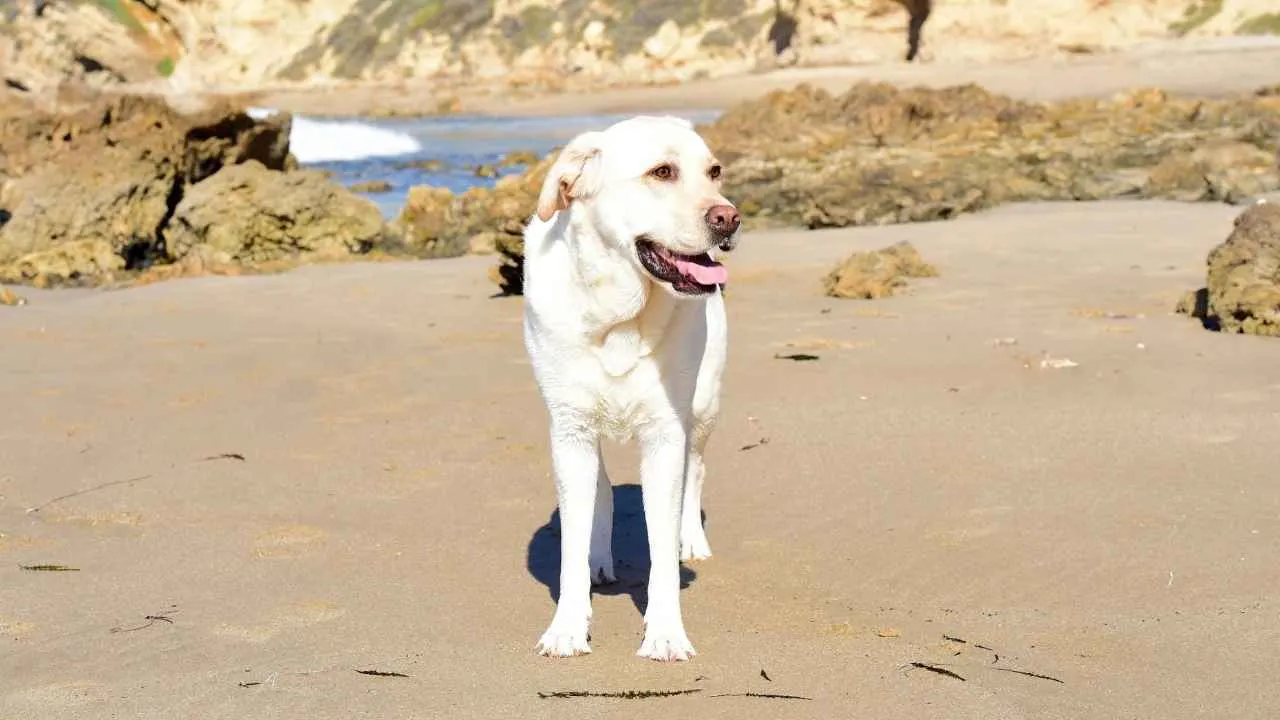
The Labrador Retriever developed from working dogs associated with Newfoundland, Canada, where early Labradors assisted fishermen by retrieving nets, lines, and fish from cold waters, as per WebMD.
The breed was later refined in Britain, where its retrieving ability and cooperative temperament made it increasingly popular among sporting enthusiasts. Its background around both water and people helped produce the adaptable companion known today./
A Water-Ready Coat With Plenty of Exercise Needs
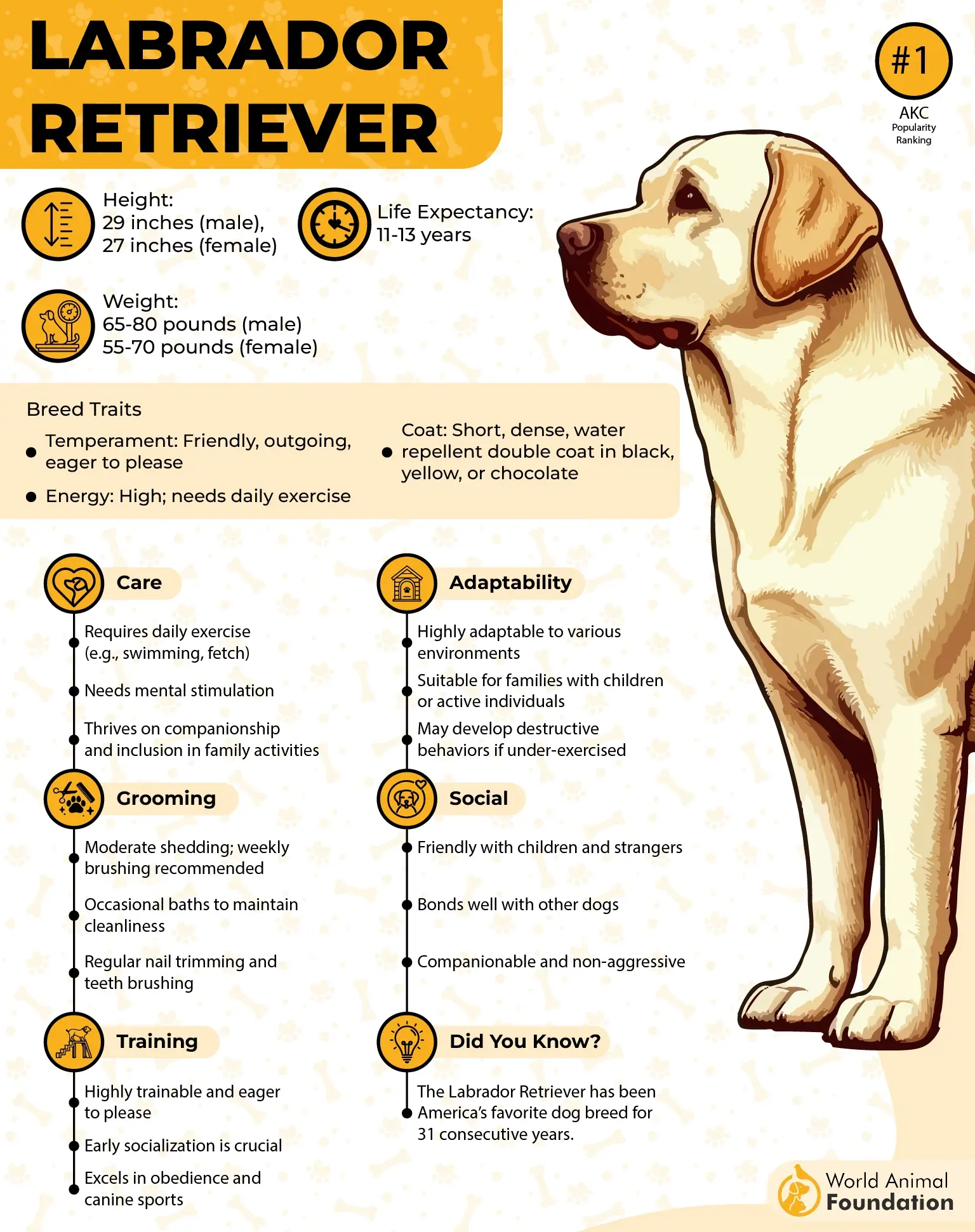
The Labrador’s short, dense double coat provides useful protection from water and changing weather conditions. Regular brushing can remove loose hair and help keep the coat in good condition, particularly during shedding seasons.
Exercise is equally important, with swimming, hiking, retrieving games, brisk walks, and outdoor exploration providing appropriate outlets for their energetic nature.
A Sociable Companion for the Campsite
Labradors are generally known for their friendly and people-oriented personalities, which can make them comfortable participating in group outings. Their eagerness to interact with their owners can also be helpful when navigating unfamiliar environments.
Reliable recall and basic trail manners are particularly valuable, as an enthusiastic Labrador may otherwise wander toward interesting smells, water, or other campers.
2. Golden Retriever
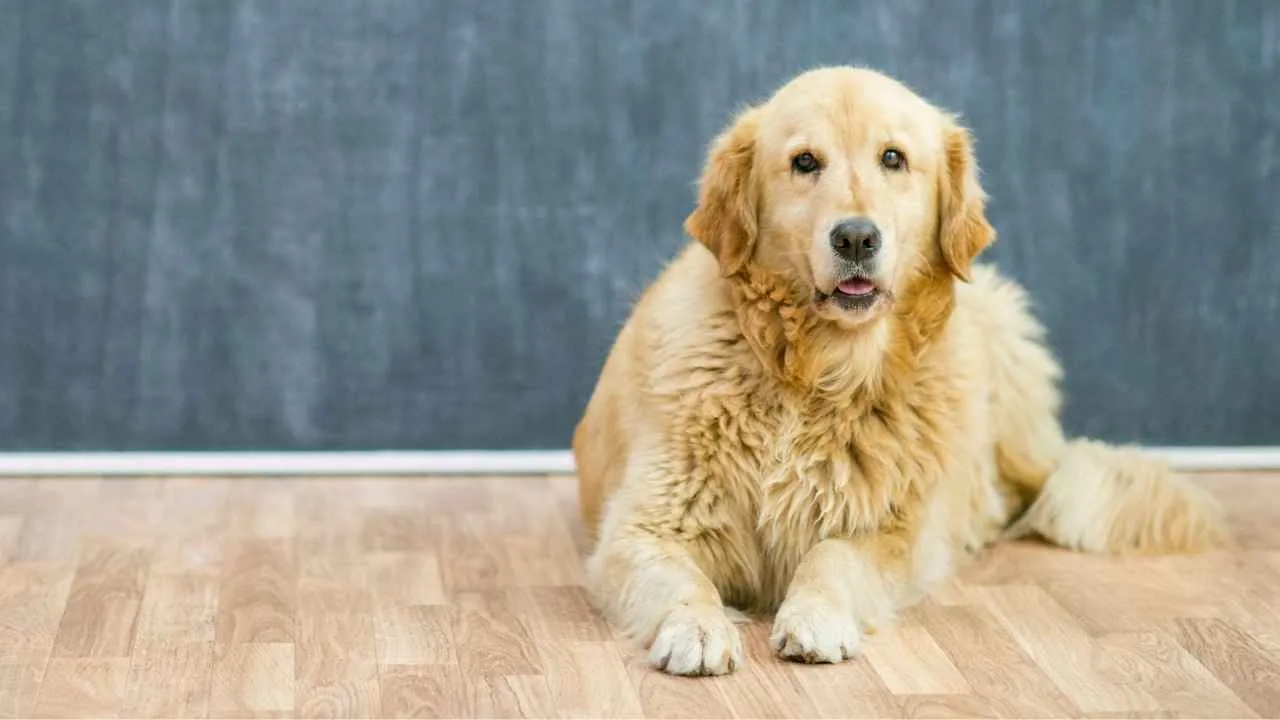
The Golden Retriever originated in Scotland during the 19th century, where breeders developed a capable gundog suited to retrieving waterfowl across the country’s challenging landscape, as per the AKC.
Lord Tweedmouth played a major role in its development, selectively breeding dogs for retrieving ability, temperament, and stamina.
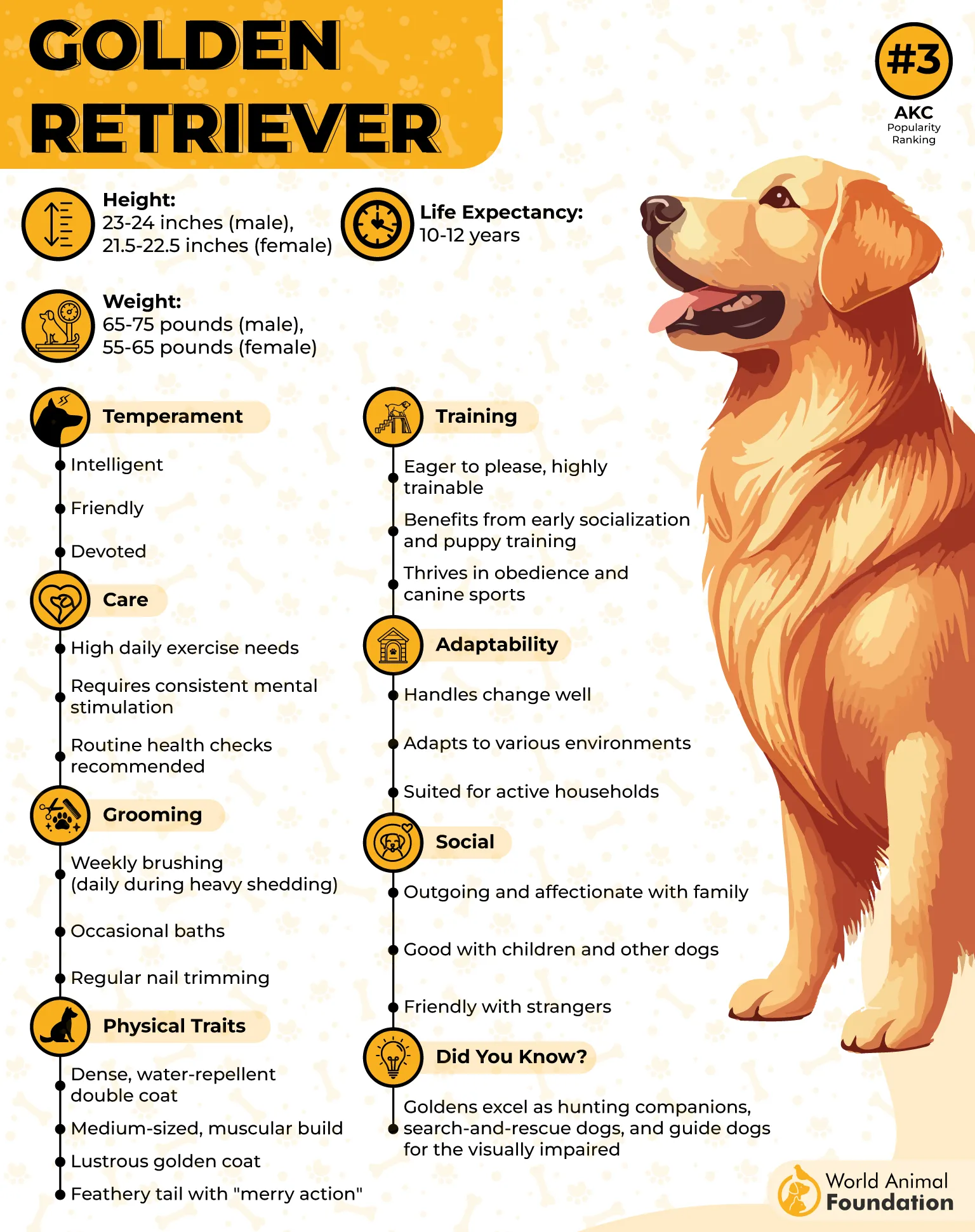
Feathered Fur Requires Regular Attention
Golden Retrievers have a dense double coat with substantial feathering around the legs, tail, chest, and underside. Frequent brushing helps reduce loose hair and prevents outdoor debris from becoming tangled in the coat.
Their active nature calls for daily physical activity, including long walks, hiking, swimming, retrieving, and interactive games that allow them to remain engaged.
A Cooperative Personality Around the Camp
Golden Retrievers often form close relationships with their families and tend to enjoy participating in shared activities.
Their willingness to work alongside people can be useful during camping trips, particularly when learning commands for staying near the group or settling around camp. Their natural enthusiasm for exploration should still be paired with dependable recall and supervision in open areas.
3. Cavalier King Charles Spaniel
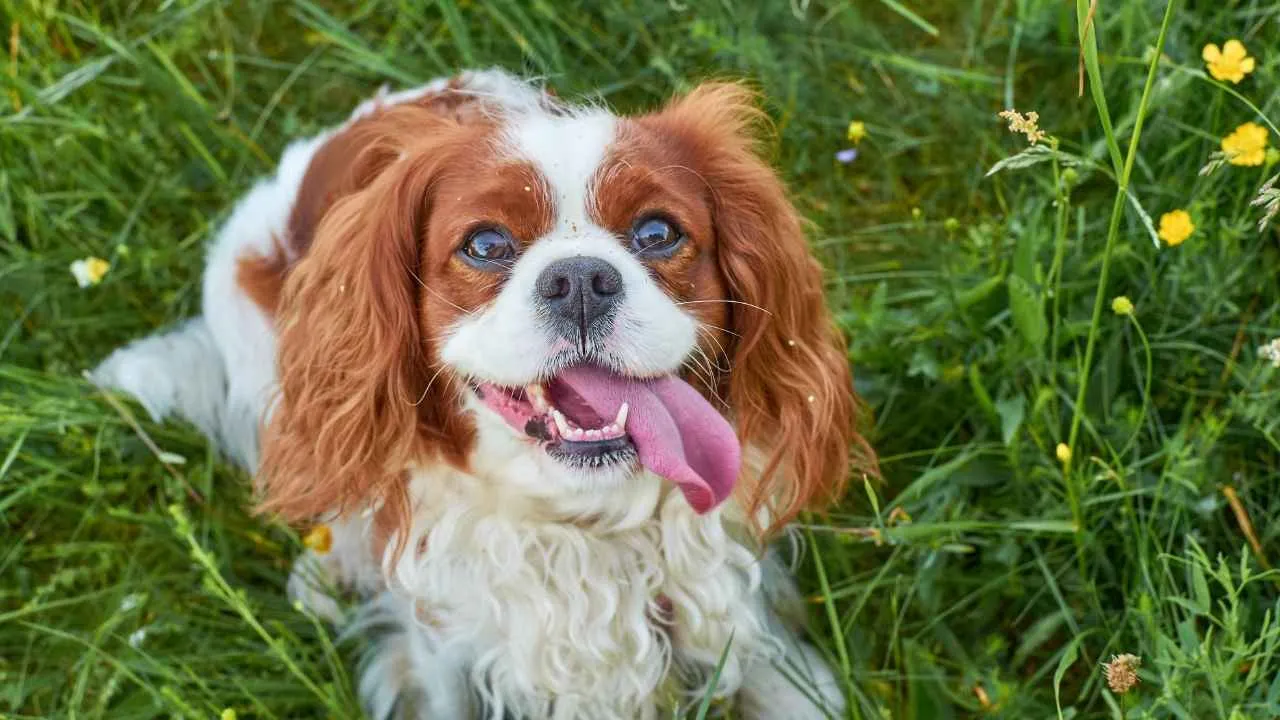
The Cavalier King Charles Spaniel has a long association with British royalty and aristocratic households, particularly during the 17th and 18th centuries.
Although its ancestors were valued primarily as companion dogs, the affectionate breed retained the lively, spaniel-like qualities associated with its sporting heritage. The modern Cavalier was developed separately from the larger King Charles Spaniel and became recognized as a distinct breed in the 20th century.
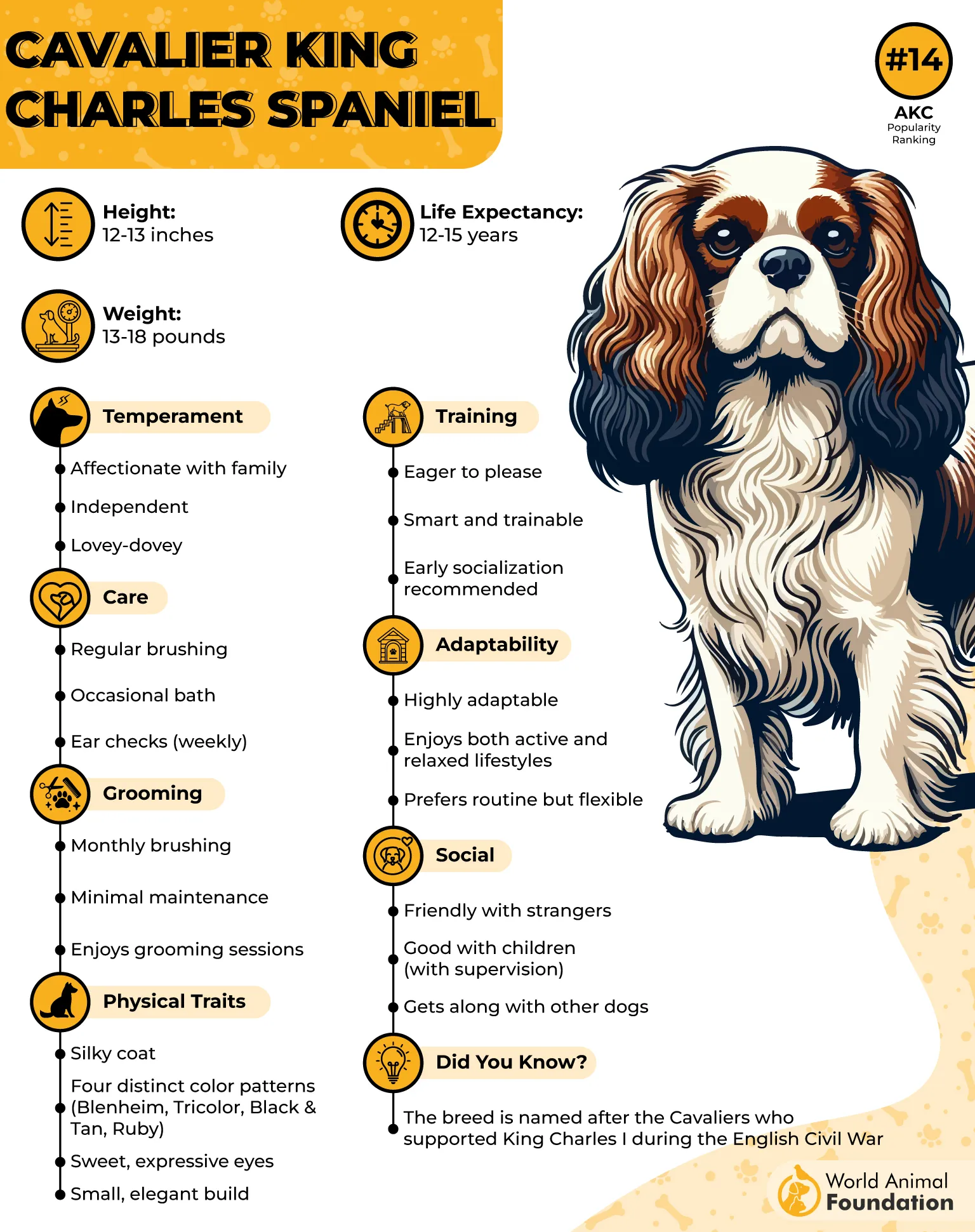
Silky Ears Need Care After Outdoor Adventures
The Cavalier’s long, silky coat requires regular brushing, with particular attention to its feathered ears, chest, legs, and tail. Outdoor trips can leave burrs, leaves, and dirt caught in these areas, so checking the coat after every excursion is worthwhile.
It does not require the same intense exercise as larger sporting breeds, but daily walks, gentle hikes, play sessions, and opportunities to investigate new surroundings can keep it active.
A Small Companion That Likes Staying Close
Cavaliers are generally affectionate and strongly people-focused, making them naturally inclined toward staying with their owners rather than traveling independently. Their compact size can also make them easier to accommodate in a vehicle or campsite.
However, their smaller build means rugged terrain, extreme temperatures, and lengthy hikes should be approached according to the individual dog’s fitness and tolerance.
4. Beagle
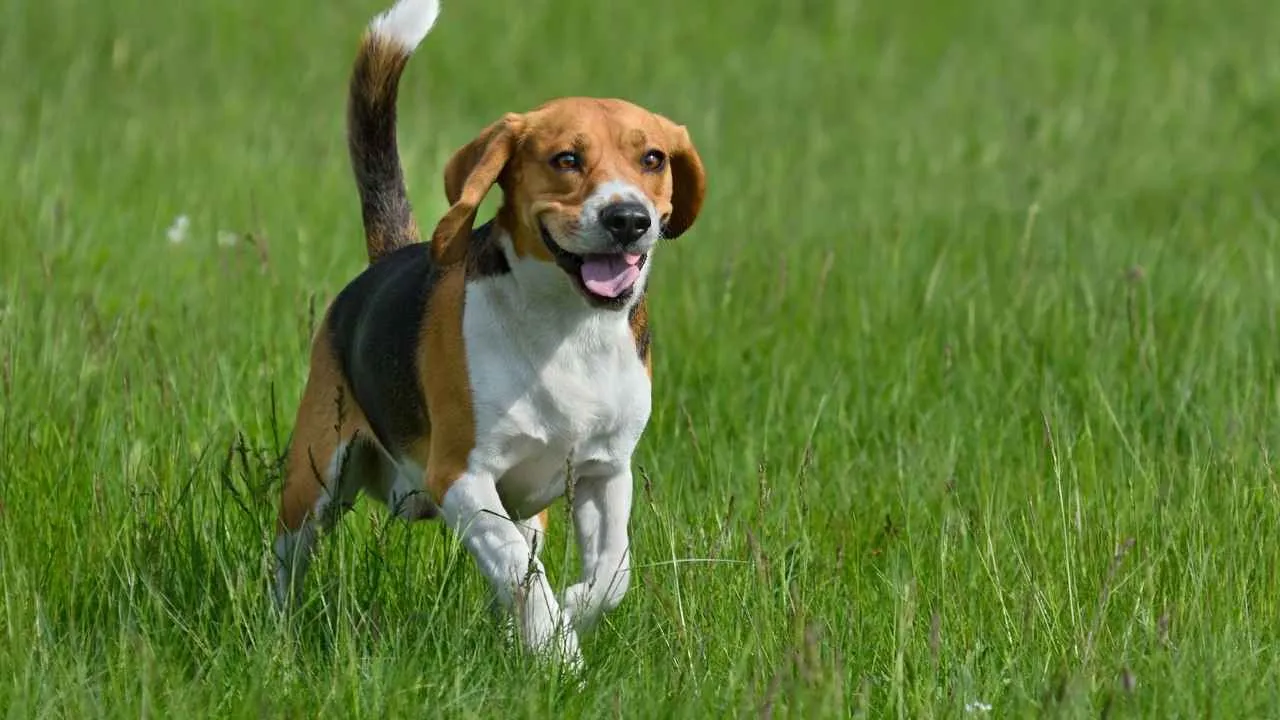
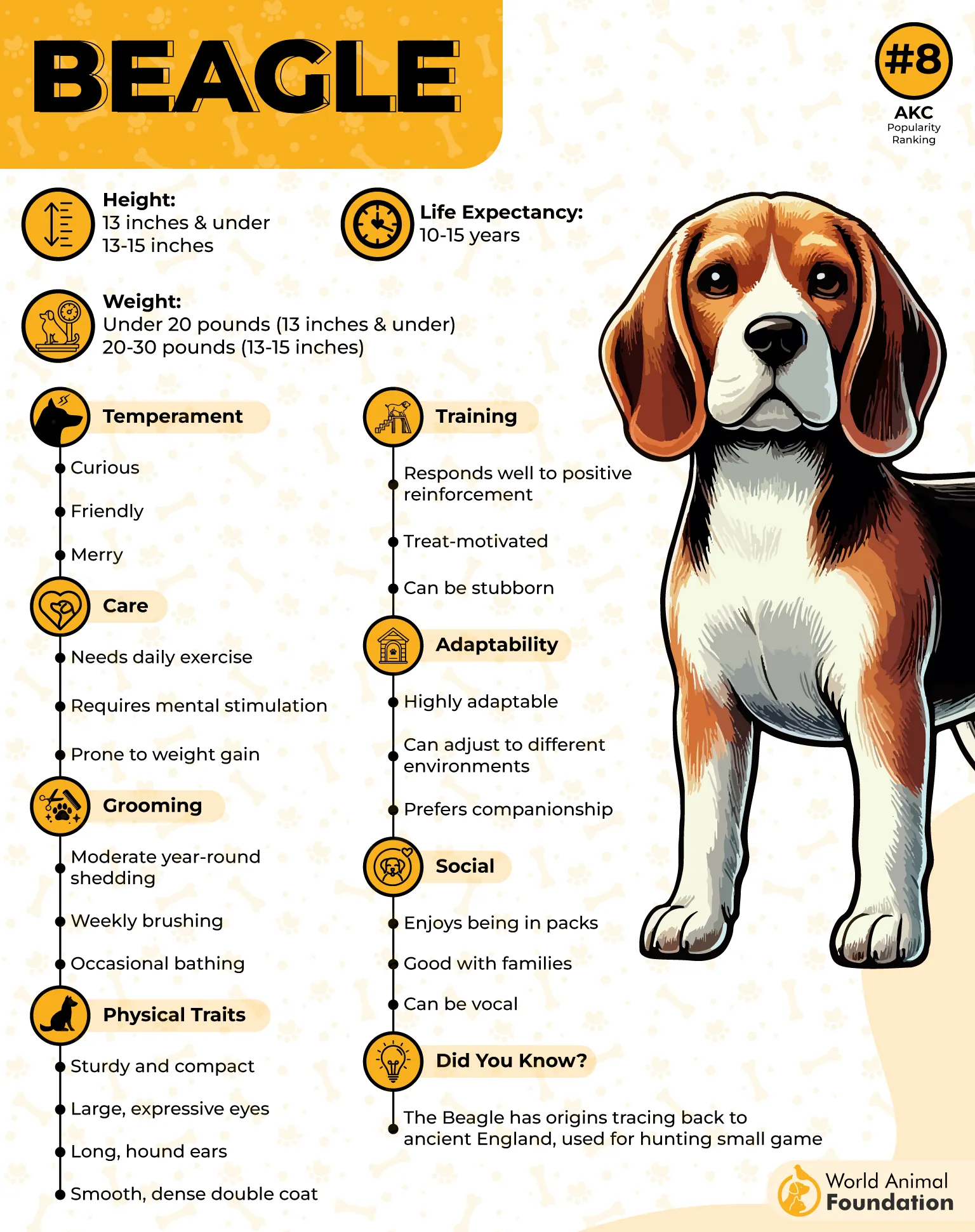
The Beagle developed in Britain as a small scent hound used for tracking rabbits and other small game. Its history is closely connected with hunters who needed a small dog capable of following a scent while working over varied terrain.
Centuries of selective breeding for scenting ability produced the distinctive hound that remains famous for its nose and persistent tracking behavior.
A Short Coat Made for Active Excursions
Beagles have short, close-fitting coats that are relatively simple to maintain. Occasional brushing can remove loose hair and help keep dirt under control after time outdoors.
Their physical requirements are more significant than their medium-small stature might suggest. Walks, hikes, scent games, tracking exercises, and supervised exploration can provide the activity they need.
A Nose That Can Complicate Off-Road Freedom
A Beagle’s exceptional sense of smell is both an asset and a potential challenge during camping trips. An intriguing scent can quickly become more interesting than whatever its owner is saying, especially in a remote environment filled with wildlife odors.
Keeping the dog leashed or in a secure area is therefore particularly important, while recall training and scent-based activities can give this instinct a productive outlet.
5. Border Collie
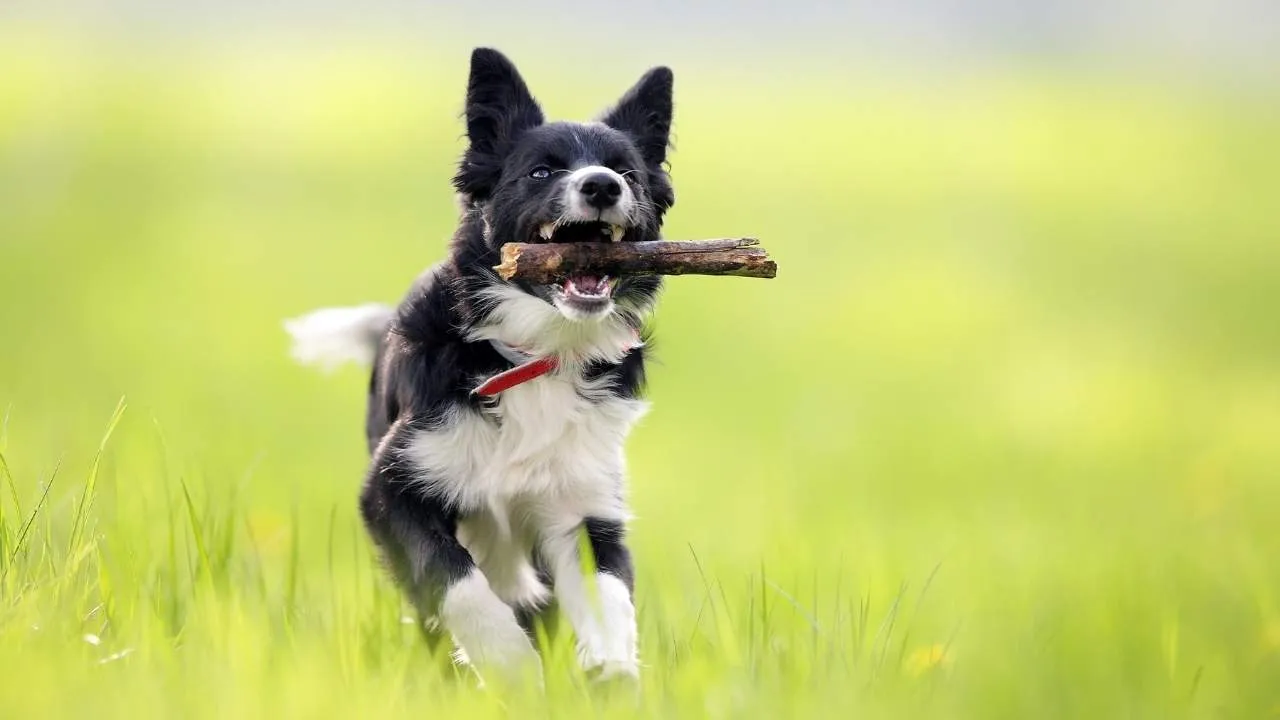
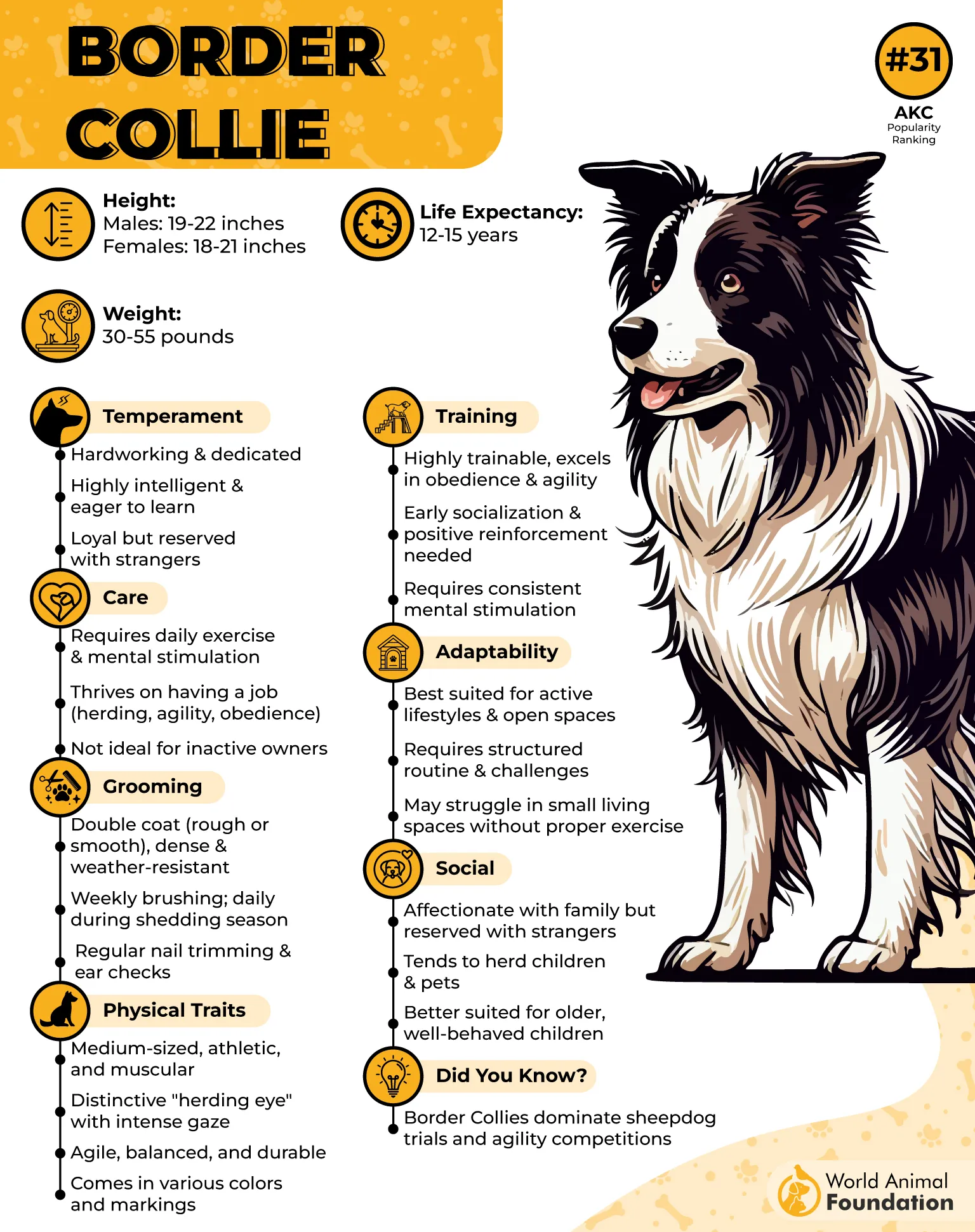
The Border Collie was developed along the border region between England and Scotland, where shepherds needed highly responsive dogs capable of managing sheep across difficult countryside.
Selective breeding emphasized intelligence, agility, stamina, and the ability to respond to subtle human signals. The breed eventually became renowned as one of the most capable working sheepdogs in the world.
A Practical Coat for Variable Weather
Border Collies may have either a rough or smooth coat, with both varieties featuring a protective double layer. Brushing several times a week can help manage loose hair and remove vegetation picked up during trail outings.
Their exercise demands are considerable, and a simple walk may not be enough. Hiking, running, agility, herding-style games, obedience work, and mentally challenging activities can help meet their needs.
An Intelligent Partner for Complicated Trails
A Border Collie’s greatest advantage on an outdoor trip may be its ability to learn and respond to direction. These muscular dogs can excel when taught boundaries, trail commands, and reliable recall.
Their intelligence also means they need meaningful engagement; without enough activity or mental stimulation, a long camping weekend may leave them looking for their own entertainment.
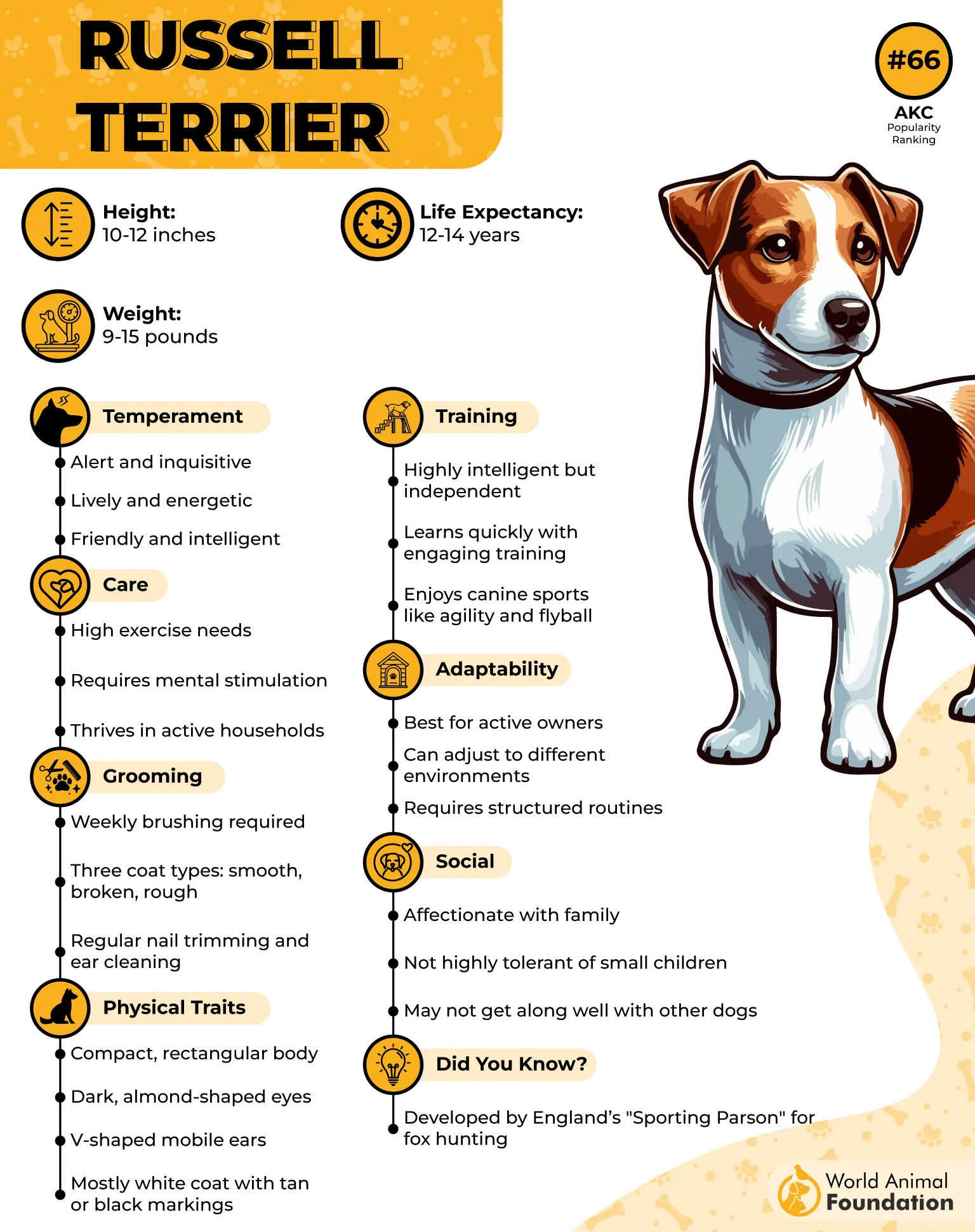
6. Jack Russell Terrier
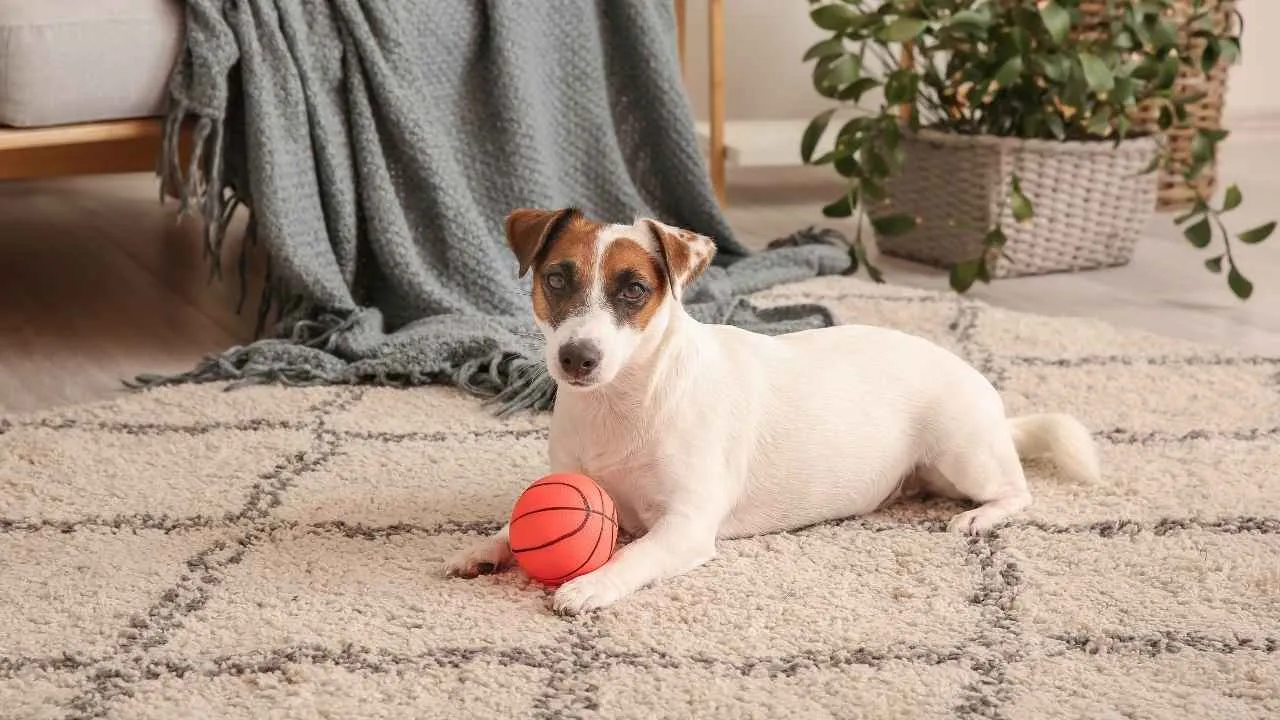
The Jack Russell Terrier originated in England during the 19th century through the work of Reverend John Russell, who wanted a small terrier capable of working foxes.
The breed was developed for courage, determination, and the ability to follow quarry underground. Those origins produced a compact dog with an energetic personality that can be surprisingly formidable for its size.
A Simple Coat With a Big Energy Requirement
Jack Russell Terriers can have smooth, broken, or rough coats, with grooming requirements varying somewhat between coat types. Routine brushing is generally enough to manage loose hair and outdoor debris.
Their energy level is much more demanding than their small stature suggests, making active walks, trail exploration, games, training exercises, and supervised digging or scent activities useful outlets.
A Compact Explorer With Terrier Determination
A Jack Russell can bring tremendous enthusiasm to an outdoor trip. Its curiosity and physical confidence allow it to navigate many environments with enthusiasm, but those same qualities require careful supervision.
Wildlife, holes, unfamiliar animals, and interesting scents can trigger a rapid response. Secure restraint and solid recall training are especially important when camping in open country.
7. Dalmatian
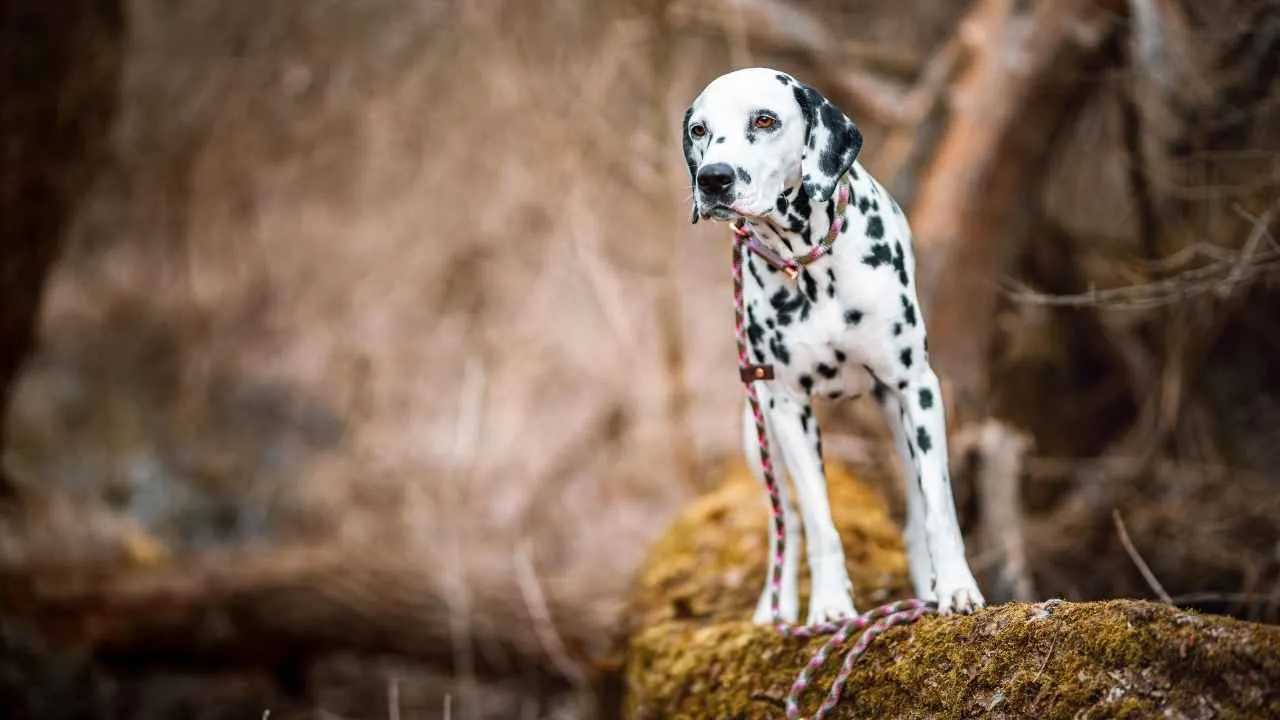
The exact origins of the Dalmatian remain debated, although the breed became strongly associated with Croatia’s Dalmatia region and later gained fame in Britain. Dalmatians were historically used in several roles, including accompanying horse-drawn carriages and serving as coaching dogs.
Their stamina and distinctive appearance eventually helped establish them as one of the world’s most recognizable breeds.
A Short Coat With Straightforward Grooming
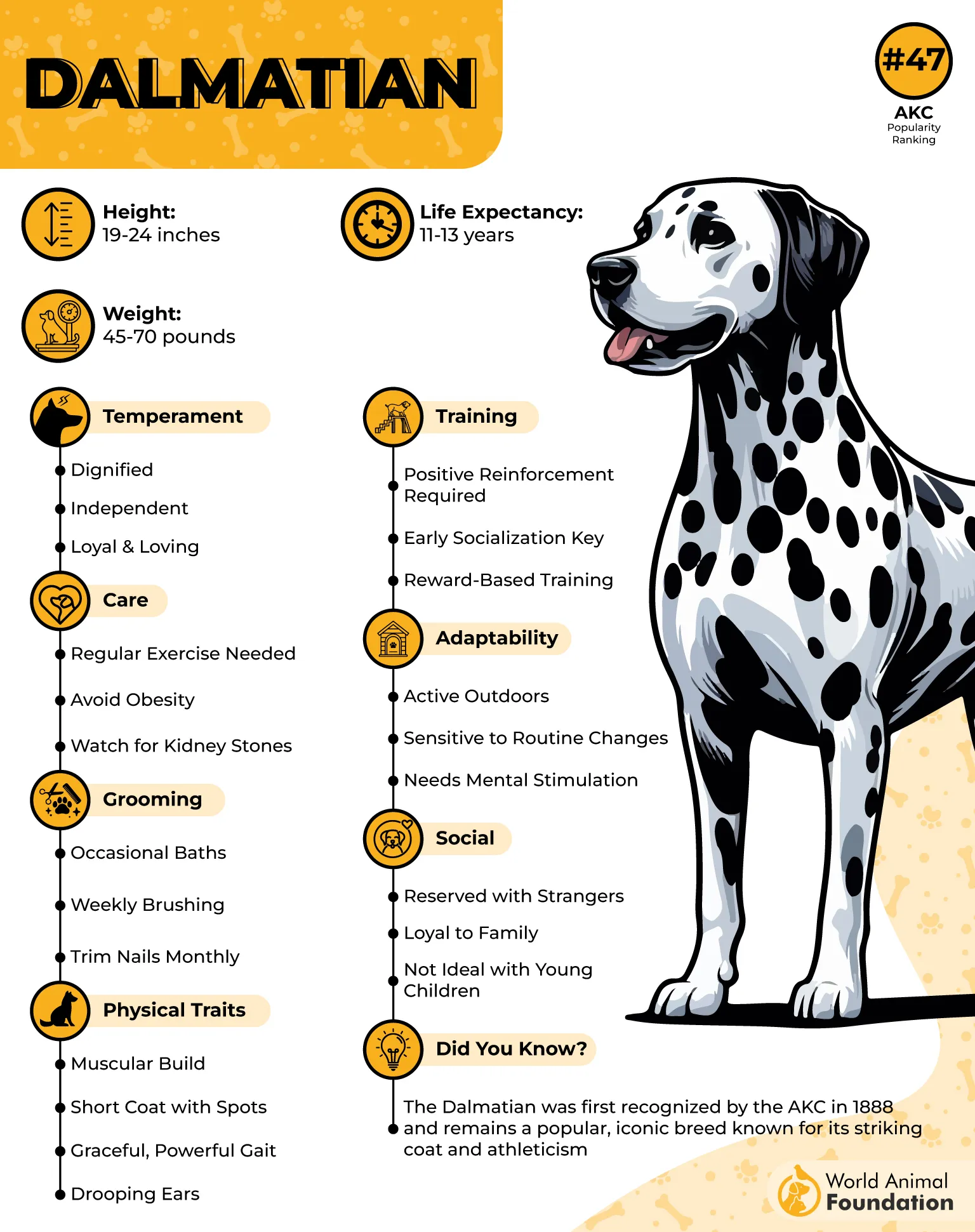
The Dalmatian’s short coat requires relatively little maintenance compared with long-haired outdoor breeds, as per Hill’s Pet. Regular brushing can help manage its continual shedding and remove dirt after time outside.
Its athletic nature demands considerably more physical activity, with long walks, running, hiking, structured play, and other endurance-based activities helping it stay physically satisfied.
A High-Stamina Traveler for Active Adventures
Dalmatians are built for movement, and their history alongside horse-drawn vehicles reflects their considerable endurance. Their lean, athletic bodies can make them well suited to longer outdoor excursions when properly conditioned.
They can also be energetic and independent, so off-road adventures should include clear boundaries, dependable commands, and suitable opportunities to burn off excess energy.
Conclusion
The above dog breeds bring something different to an off-road camping trip.
The right companion ultimately depends on the nature of the adventure. A dog joining extended hikes through rugged terrain may have different needs from one accompanying its family on a relaxed weekend at a drive-in campsite. Size, stamina, coat type, temperament, training, and tolerance for changing weather should all be considered before heading into remote areas.
Regardless of breed, preparation can make outdoor travel safer and more enjoyable. Gradually building a dog’s fitness, carrying sufficient water and food, checking paws after rough terrain, keeping identification information current, and using a leash or secure restraint when appropriate can help prevent common problems.
With suitable preparation and responsible supervision, a well-matched canine companion can become an enjoyable part of many off-road camping adventures.
