




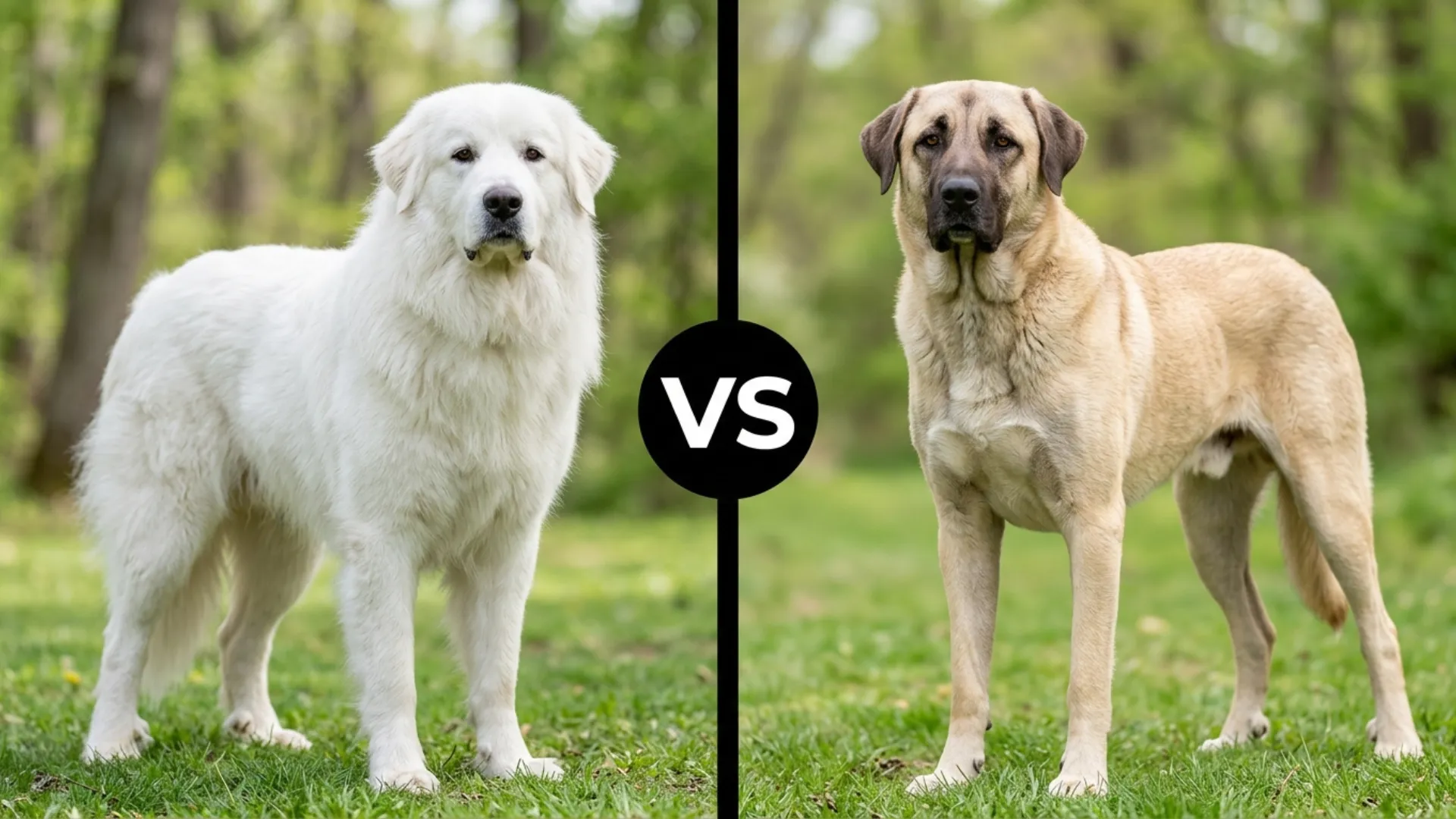
Two towering guardians, two distinct working personalities, and one fundamental question: which companion matches your lifestyle? This breakdown examines two ancient working dogs under the spotlight, tracing their mountain origins and everyday behavioral instincts.
The Great Pyrenees spent centuries beside alpine flocks, deterring threats through calm deterrence. Meanwhile, the Anatolian Shepherd developed across Anatolian plains, where protecting vulnerable livestock demanded independence, physical endurance, and decisive action.
Neither canine evolved for easy obedience or constant games. Their history required patience, territorial awareness, and self-reliance without human direction. That working background still drives their modern temperaments and handling requirements today.
Read on to discover how these two gentle giants compare in real-life settings and which guardian truly belongs in your home.
Great Pyrenees vs. Anatolian Shepherd
The Great Pyrenees and Anatolian Shepherd are both strong, protective breeds known for guarding livestock and families. This comparison highlights their key differences in size, temperament, training needs, and overall lifestyle.
Origins & Purpose
Long before either became a household dog, life revolved around one precious responsibility: protecting livestock.
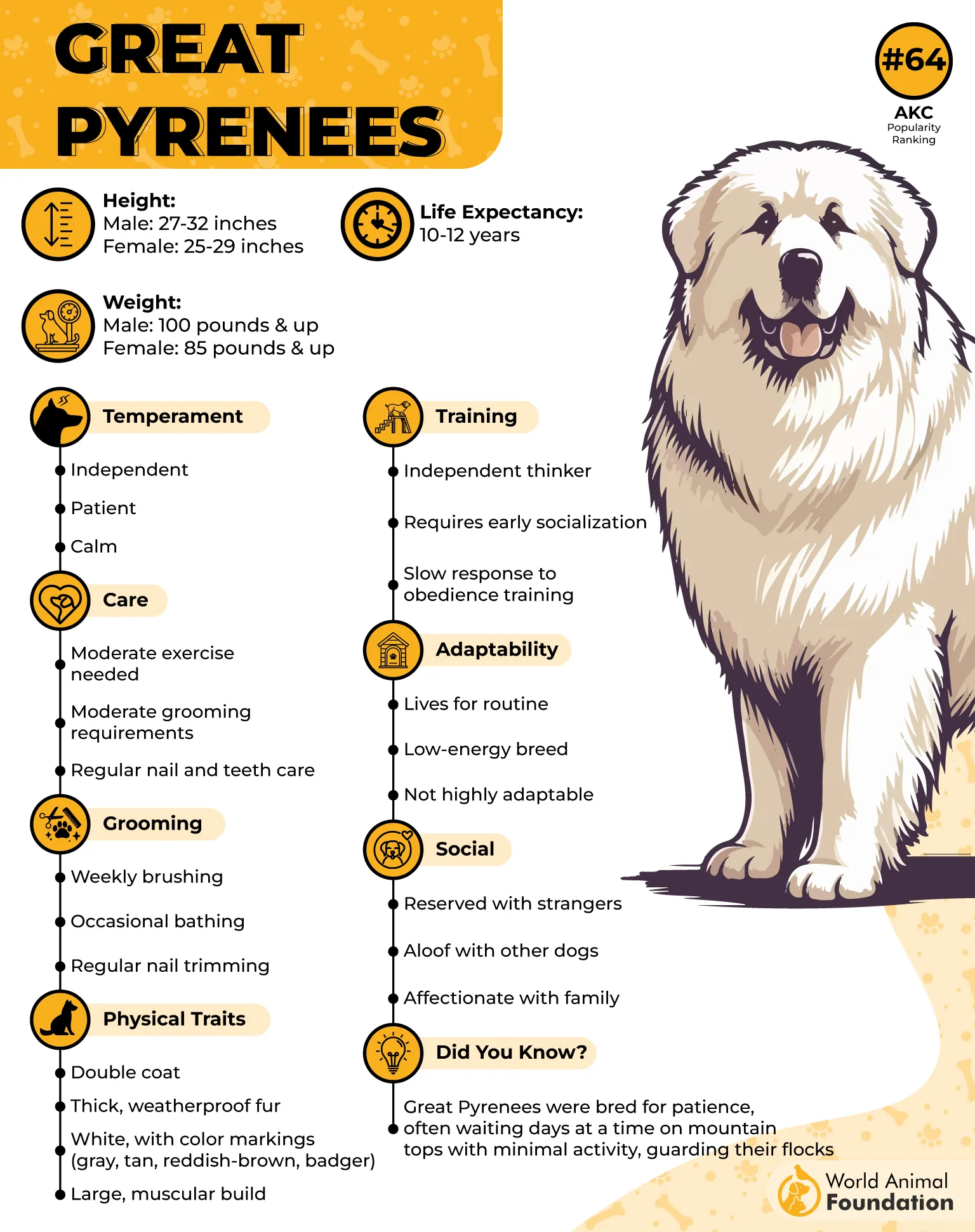
According to PetMD, the Great Pyrenees originated in the Pyrenees Mountains between France and Spain. Shepherds relied on these imposing guardians to stay beside sheep and deter wolves, bears, and other predators.
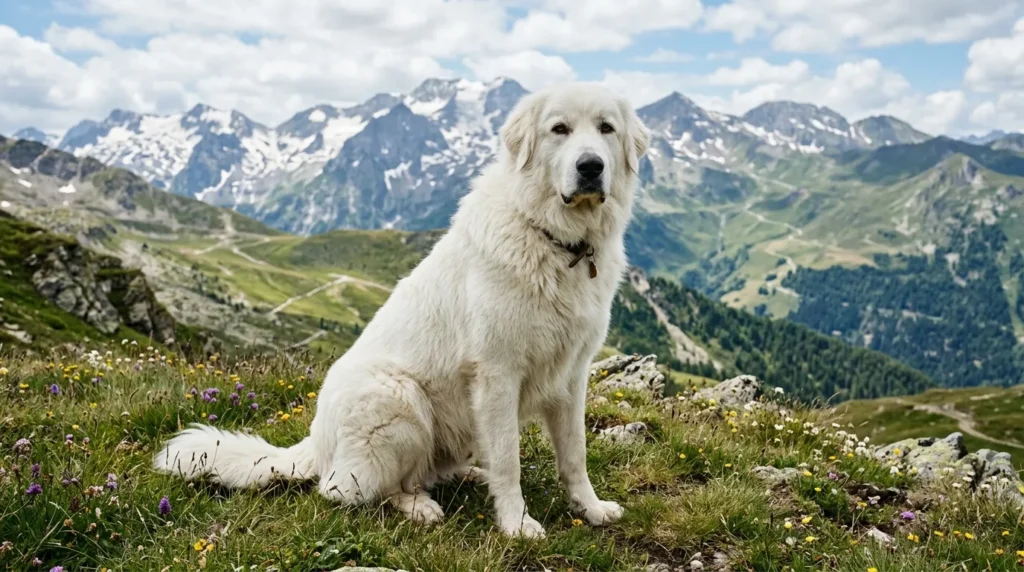
Its white coat blended beautifully into the mountain landscape, while its quiet patience allowed it to remain close to the flock without constantly disturbing it.
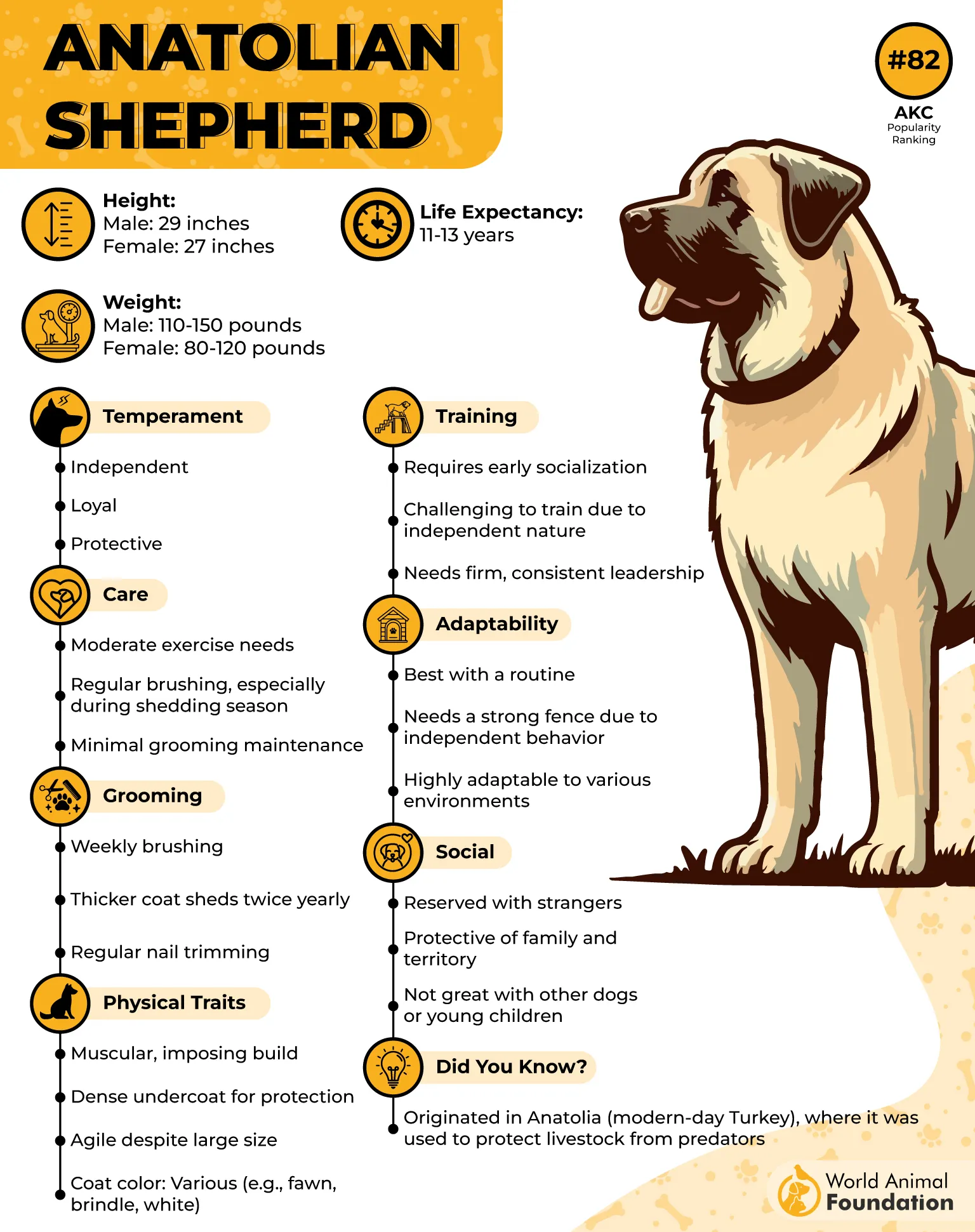
Farther east, the Anatolian shepherd dog developed in Anatolia. Generations of these dogs watched over sheep and goats, often covering huge stretches of land alongside a herd. Instead of driving animals in a particular direction, it stayed with them and responded when danger appeared.
That old working life explains why these two breeds rarely behave like eager-to-please obedience stars. Their ancestors needed enough judgment to assess a threat and make their own decisions when a shepherd was nowhere nearby.
Size & Physical Build
One glance tells you these are not ordinary backyard companions.
A male Great Pyrenees usually reaches 27–32 inches at the shoulder and weighs at least 100 pounds. A female generally stands around 25–29 inches and weighs 85 pounds or more. Beneath that impressive frame sits a thick double coat, designed to handle severe mountain weather.
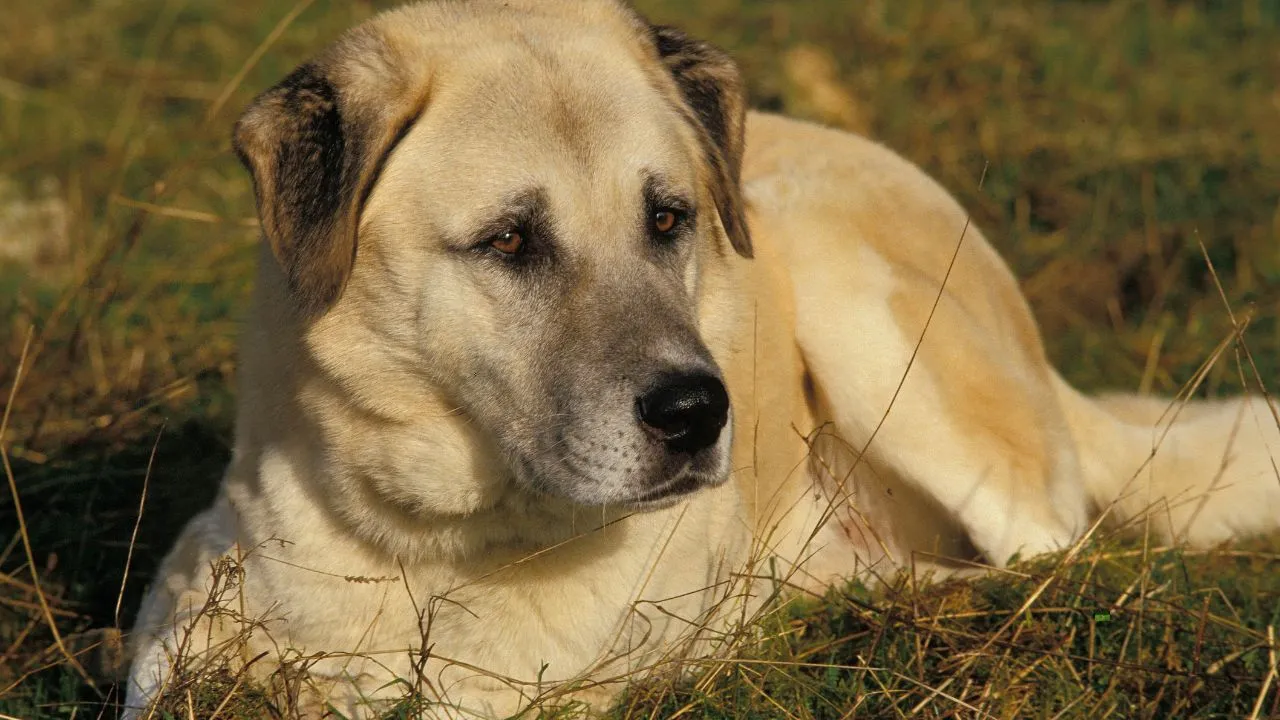
The Anatolian Shepherd cuts a different silhouette. Males generally stand around 29 inches and weigh 110–150 pounds, while females reach roughly 27 inches and weigh 80–120 pounds. Its body looks leaner and more athletic, with a shorter coat that comes in shades such as fawn, along with different markings.
The contrast is striking. The Great Pyrenees has the grand, flowing appearance of a snowy mountain dog. The Anatolian looks more like a rugged athlete built to cover ground.
Their size brings practical considerations, too. Both need generous space, sturdy fencing, and owners prepared for the sheer physical presence of a giant working companion.
Temperament & Personality
The real personality test begins when the excitement fades, and everyday life takes over.
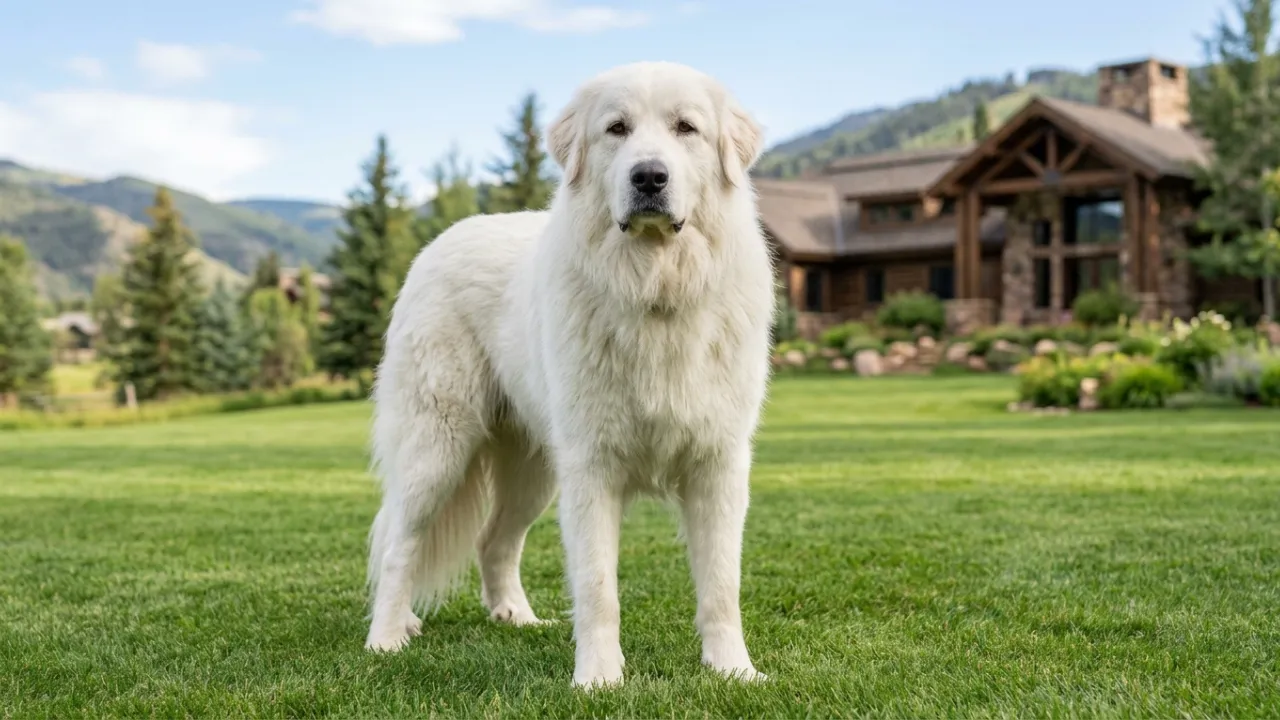
The National Pyr Rescue informs that Great Pyrenees dogs often settle into the household with a calm, gentle confidence. Familiar people receive warmth and loyalty, and a relaxed evening at home suits this giant surprisingly well. Yet darkness may switch on its old watchman instincts, bringing a deep barking session when something suspicious enters its awareness.
The Anatolian takes a more serious approach to unfamiliar situations. It forms strong bonds with its household but tends to study strangers before accepting them. That reserved attitude makes early socialization especially important.
Neither dog needs constant attention to feel content. Both appreciate a little independence, although that same quality requires thoughtful handling.
Around children, introductions should remain controlled and supervised because even a friendly giant carries considerable strength. The same care matters around cats and other household animals, especially when their relationship starts from puppyhood.
Exercise & Energy Levels
A giant body does not automatically equal nonstop energy.
The Great Pyrenees follows a surprisingly measured rhythm. Its original work involved conserving strength while remaining ready for a sudden threat, so regular walks, outdoor wandering, and relaxed movement suit it better than endless high-intensity exercise.
The AKC states that the Anatolian Shepherd brings more athletic drive to the table with its high energy level. Long walks and active outdoor time give it an outlet for the stamina developed through generations of roaming across a broad range of terrain.
Neither needs hours of frantic play simply to stay happy. Purpose matters more than chaos. A secure yard offers room to investigate, stretch, and move naturally without turning exercise into an exhausting chore.
This is one reason a rural farm environment often feels more natural for these guardians. A home with very limited outdoor access demands considerably more planning.
Young dogs need extra care here. Giant-breed puppies grow for a long time, so exercise should support healthy development rather than push growing joints too hard.
Training & Intelligence
Training these giants feels less like giving orders and more like earning cooperation.
The Great Pyrenees understands what you ask, but blind repetition rarely sparks enthusiasm. Its ancestral work rewarded judgment rather than instant obedience, so short sessions, positive reinforcement, and clear boundaries make lessons more productive.
The Anatolian Shepherd brings that independent thinking into training with an especially strong sense of territory. Its working history encouraged observation and self-reliance, which explains why consistency matters more than constant repetition.
Harsh corrections only muddy that relationship. WebMD adds that calm direction gives these intelligent dogs a clearer path, while rewarding desirable behavior makes household rules easier to understand.
A responsible breeder should prepare future owners for these realities rather than presenting either dog as an effortless companion. From an early age, owners need to teach basic manners, calm responses, appropriate boundaries, and reliable recall.
The goal is not to erase their working instincts. Good training gives those instincts a sensible place to live.
Health & Lifespan
Big bodies deserve thoughtful care from the first year onward.
The Great Pyrenees generally lives around 10–12 years. Its size makes joint health an important consideration, so maintaining a healthy body condition, providing suitable nutrition, and choosing puppies from responsible breeding programs all matter.
The Anatolian Shepherd generally reaches around 11–13 years. Responsible breeding programs screen for hip and elbow concerns, while veterinary care helps monitor breed-specific issues throughout adulthood.
Grooming creates another clear divide. The Great Pyrenees needs regular brushing to keep its dense coat manageable, with heavier shedding during seasonal changes. The Anatolian has a shorter coat and a simpler routine, although seasonal shedding still sends plenty of hair around the home.
Nutrition deserves equal attention. Proper food for a giant breed’s age and growth stage supports healthy development, particularly during puppyhood.
Routine veterinary visits complete the picture. Prevention, weight control, dental care, and prompt attention to unusual changes give these powerful companions a stronger foundation for a long life.
Great Pyrenees vs. Anatolian Shepherd: Suitability as Family Pets vs. Guard Dogs
The better match depends less on looks and more on the life waiting on the other side of your front door.
The Great Pyrenees often brings a softer household presence. It develops close bonds with its family, enjoys familiar humans, and carries a patient temperament beneath that enormous frame. Its guardian nature never disappears, though. Nighttime barking, roaming instincts, heavy shedding, and the sheer size of the dog all require preparation.
The Anatolian Shepherd enters family life with a more intense working mindset. This large dog stays loyal to its owners, yet unfamiliar visitors may receive scrutiny rather than instant friendship. Its territorial nature makes secure boundaries, early training, and confident handling particularly important.

Neither should become a casual impulse purchase. These dogs need thoughtful protection management rather than encouragement to become aggressive. In fact, their natural guarding instincts already run deep.
A household with kids needs sensible supervision, especially because these giants could accidentally knock over a small child during an enthusiastic greeting. Homes with other pets deserve equally careful introductions.
For someone seeking a large companion with a calmer household personality, the Great Pyrenees offers a distinctive blend of devotion and watchfulness. For someone managing livestock or living on substantial property, the Anatolian Shepherd’s working heritage may align more naturally with daily life.
The deciding factor should therefore be your space, experience, routine, and expectations rather than which dog looks more impressive.
Conclusion
Place these two breeds side by side and their contrasting working styles stand out instantly.
The Pyrenees combines a massive frame with a remarkably serene domestic demeanor, while the Anatolian displays a more pragmatic, hard-edged protective instinct.
Neither belongs in a home expecting effortless obedience or a passive living room ornament. Success takes physical space, structured guidance, thorough early exposure, and genuine respect for their working heritage.
Ground your choice in these realities, and you gain an exceptionally devoted defender whose loyalty far exceeds its physical scale.
