





Leaving your dog home alone can feel a little worrying, especially when you know those puppy eyes would rather have you around all day. The good news is that some dogs are more comfortable with quiet time than others.
Of course, being comfortable alone doesn’t mean a dog should be left for hours on end. Every dog has different needs, and age, personality, training, and daily routine can all affect how they handle alone time.
If your busy schedule means your dog will occasionally have to stay home without you, choosing a breed known for a gentle and more independent nature may help.
In this article, we’ll look at seven independent dog breeds that can handle being home alone for short periods, while keeping in mind that every dog is an individual.
Gentle Dog Breeds That Can Be Left Home Safely
1. Pug
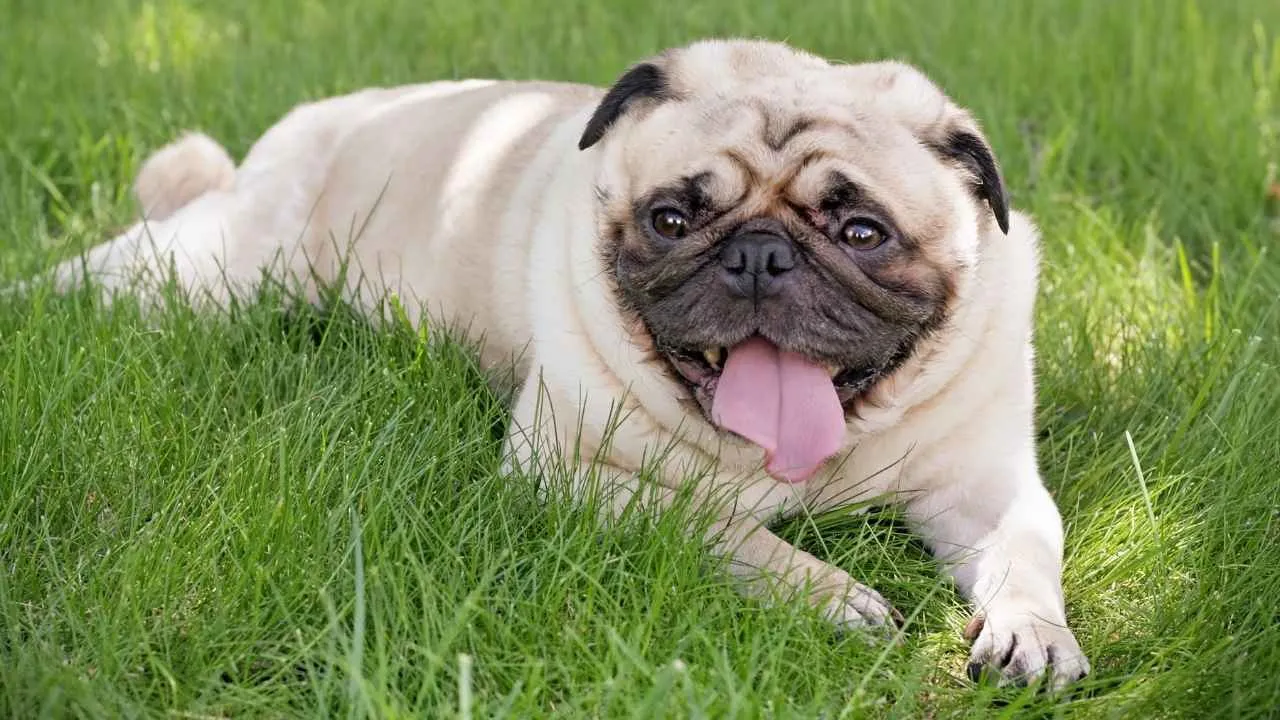
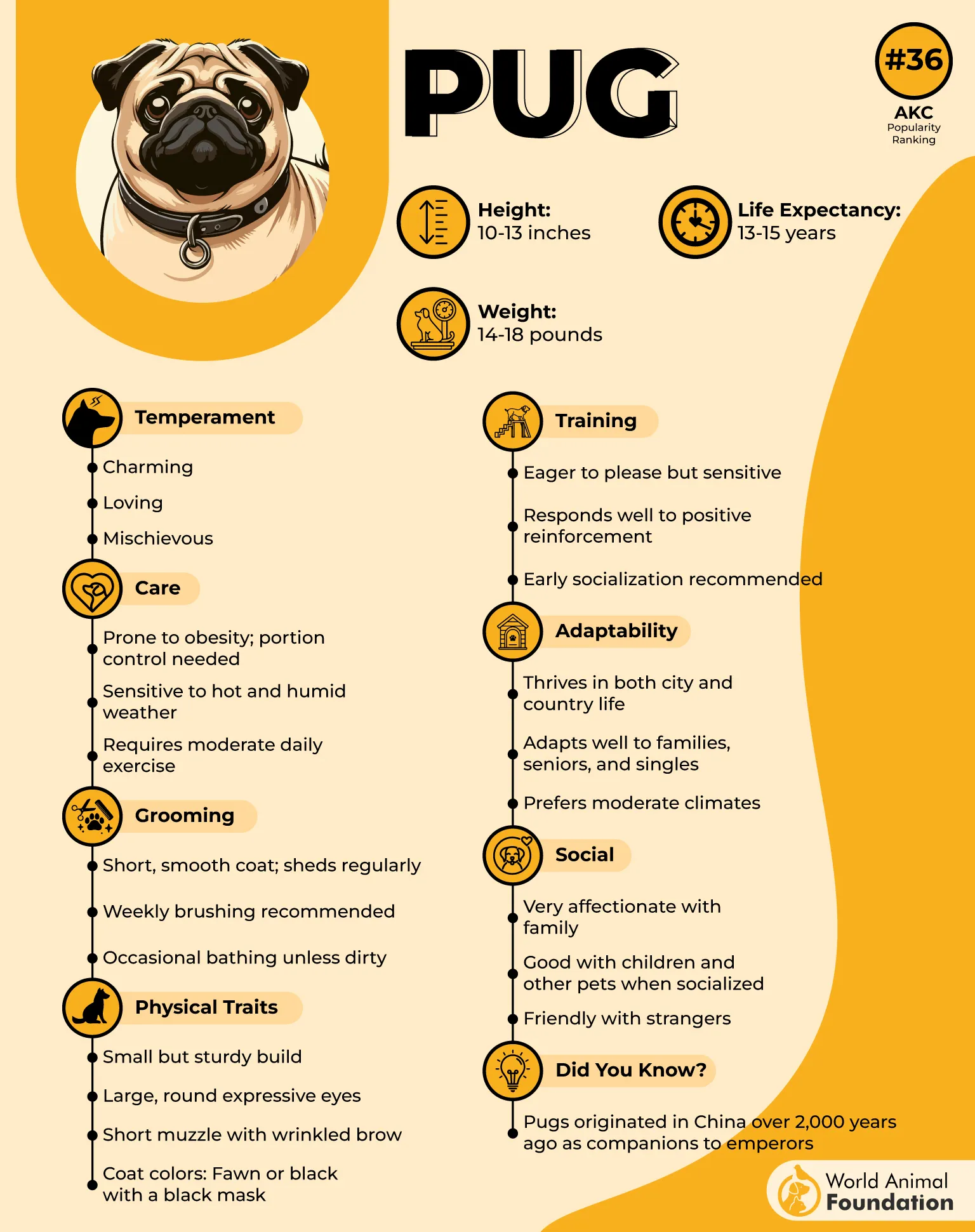
Pugs are an ancient companion breed from China, dating back around 2,000 years. They were once favorites of royalty and remain popular today. Their short, smooth coats can be fawn or black, while their wrinkled faces and curled tails give them their distinctive look.
Friendly, cheerful, and playful, Pugs enjoy being part of family life and are usually accepting of people, children, and other pets.
Personality and Lifestyle
Pugs are affectionate dogs that love attention and staying close to their people. They can be playful and confident, but they also enjoy quiet time and plenty of naps. They are adaptable and can do well in different homes and living situations.
Pugs can be stubborn and may learn slowly, but they are trainable with patience. They are moderate barkers and may act as little watchdogs, although they are not suited for protection work.
Exercise and Care
Pugs need regular but gentle activity. Several short walks of around 15–20 minutes can work well for many of them. They enjoy casual walks and simple games but are not built for running, agility, or intense exercise.
Their flat faces can make breathing harder, so they may struggle in hot weather or during extreme exercise. They are best kept mainly indoors, and their food intake should be watched because they can be lazy and prone to obesity.
2. Maltese
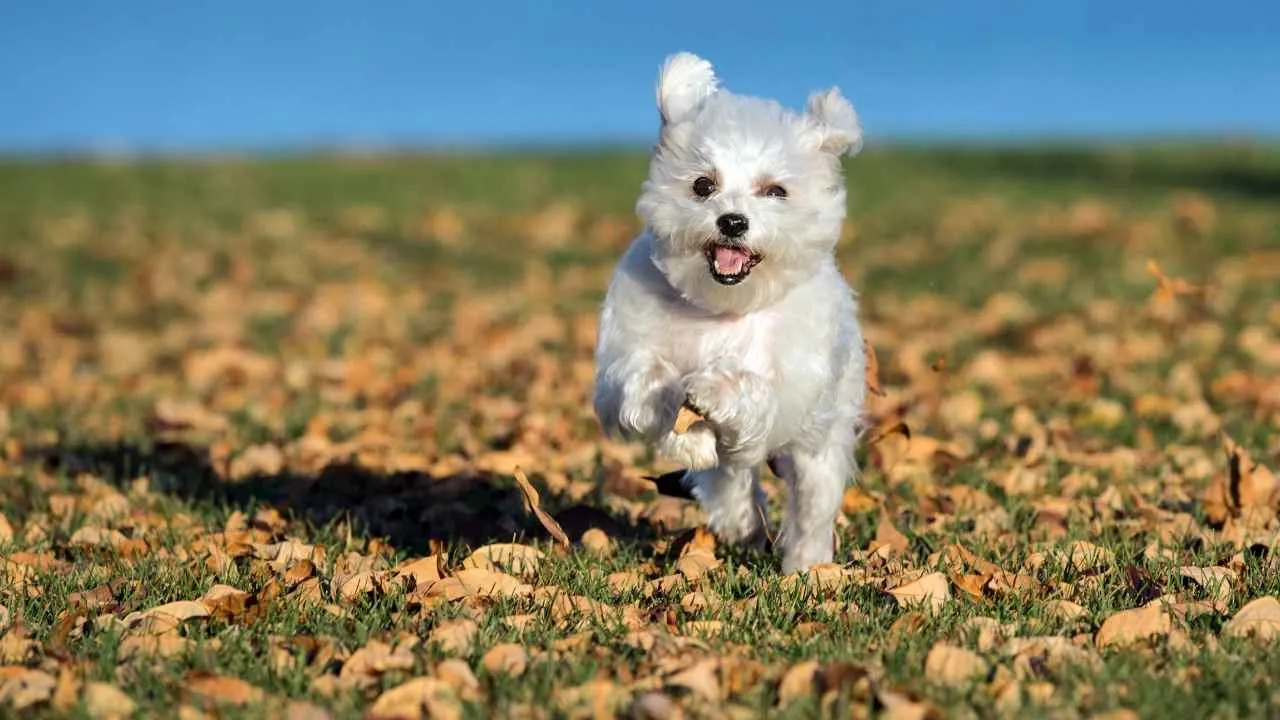
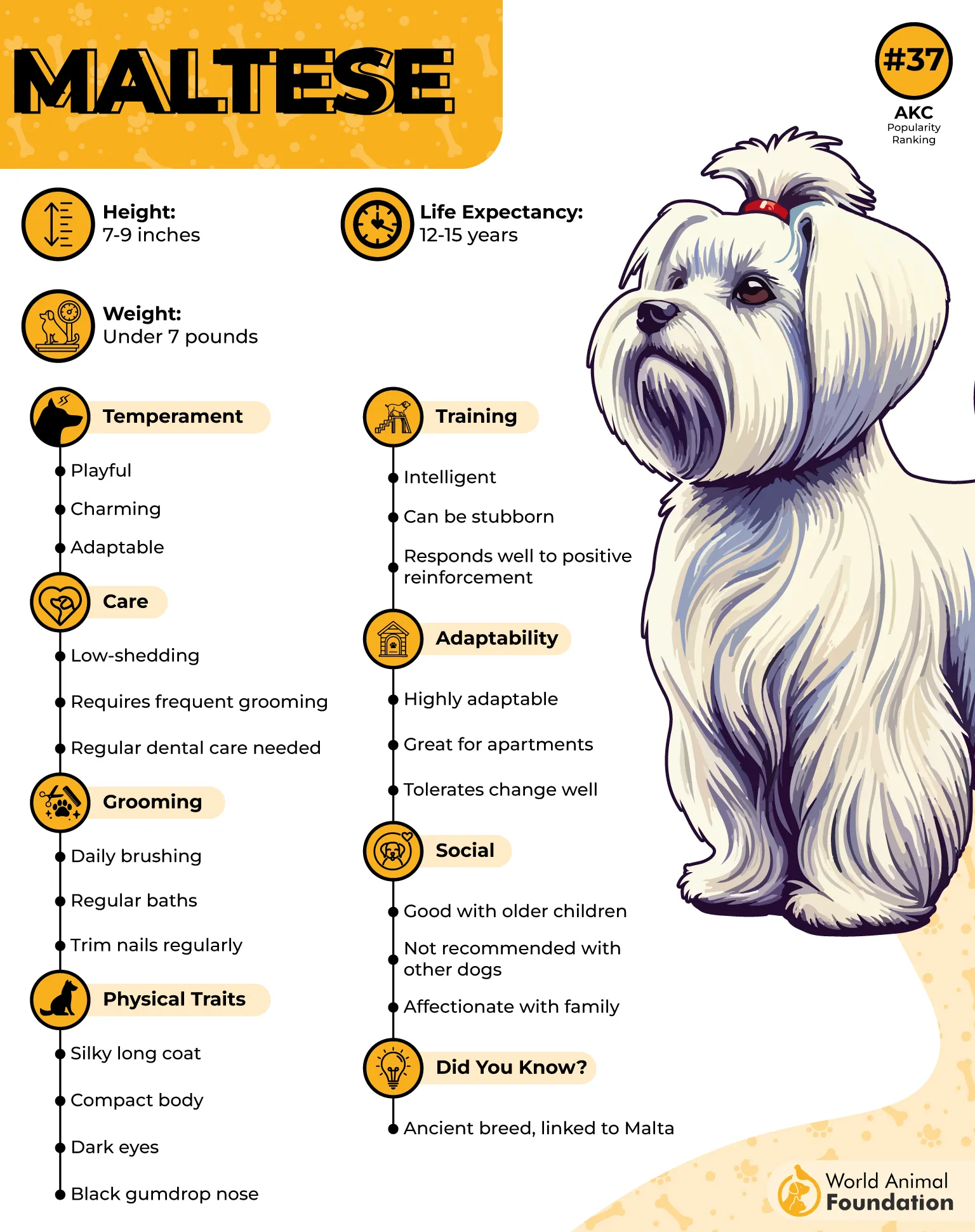
Maltese are small companion dogs known for their long, silky white coats and lively personalities. They originated on the Mediterranean island of Malta and have been companions for centuries, with references to them appearing in Ancient Greek and Roman literature.
Despite their tiny size, they are bold, playful, and affectionate dogs that can adapt well to different homes, including small apartments.
Personality and Lifestyle
Maltese are friendly, cuddly, and very people-oriented. They enjoy attention, playing, and spending time with their families. Britannica mentions they can also be alert watchdogs and will often bark when someone comes to the door. They are fairly easy to train and enjoy learning tricks when rewarded.
Early socialization is important, especially around young children, as some Maltese may become snappy. They can be lively indoors and usually need only short walks.
Grooming and Care
Their long, flat, silky coat needs daily brushing and frequent bathing to prevent mats. Maltese also need daily exercise, mental stimulation, training, and positive reinforcement. Their playful nature means they enjoy activities that keep them busy and engaged.
Although they love human company, their adaptable nature can make them suitable for households where they occasionally need some quiet time, provided their daily needs are met.
3. Japanese Chin
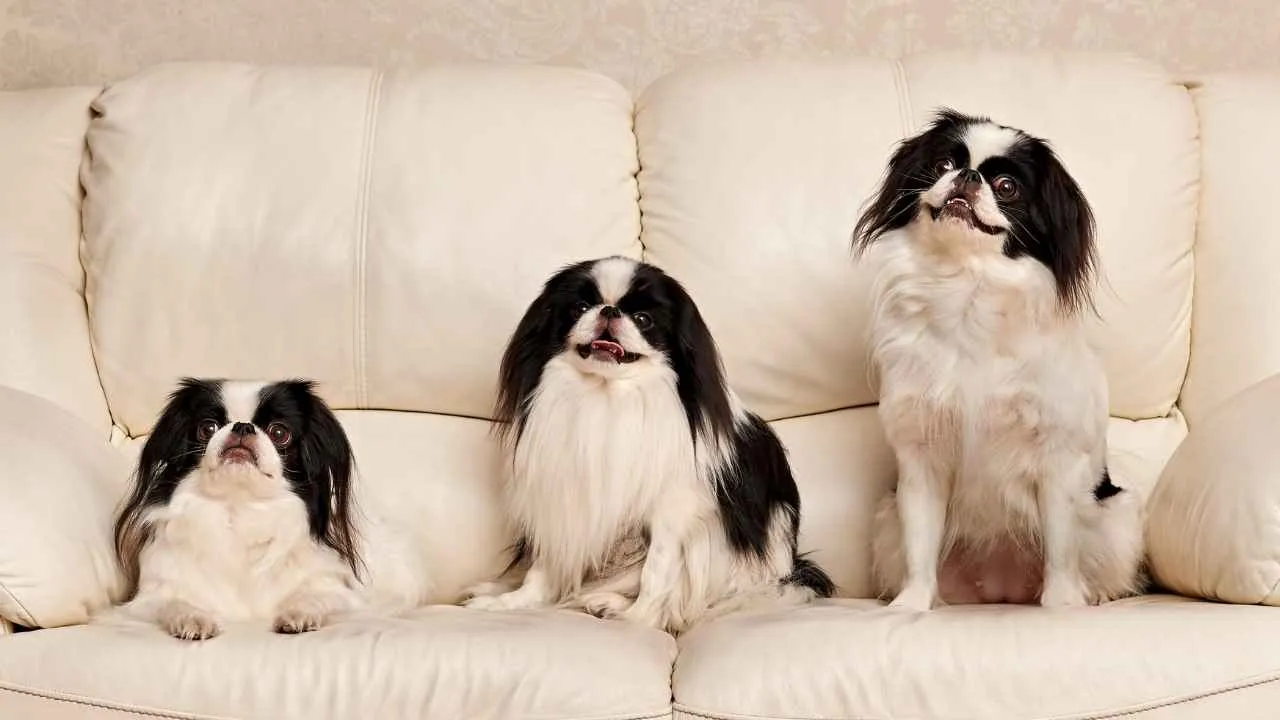
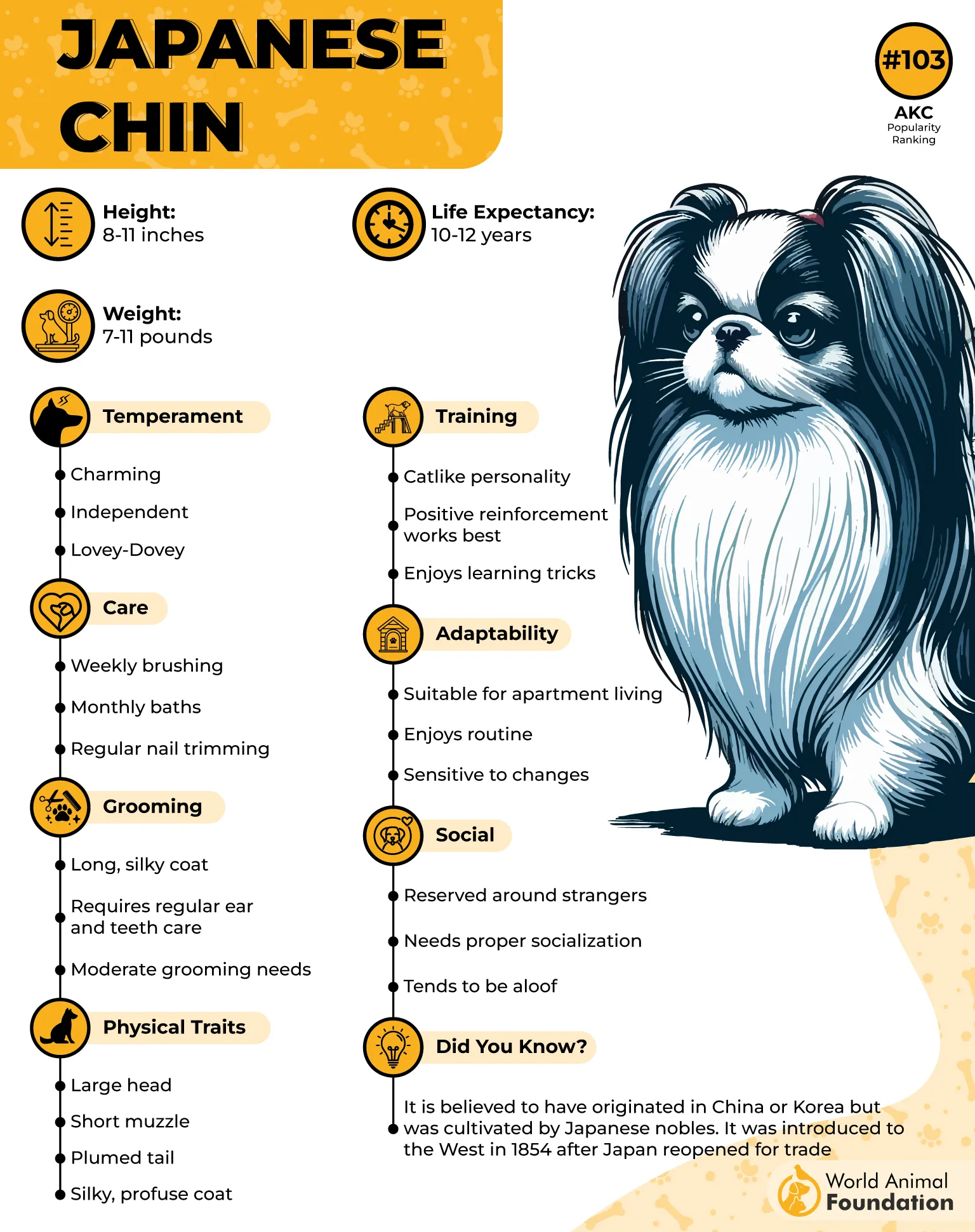
Japanese Chins are ancient companion dogs known for their gentle, loving nature and cat-like behavior. Their history is closely linked with Chinese and Japanese nobility, and they were kept as companions rather than working dogs. They are relaxed indoors but still enjoy walks, play, and performing tricks.
Personality and Lifestyle
Japanese Chin are affectionate, intelligent, and playful, but they also have an independent streak. They enjoy being close to their people and can be reserved in new situations. Their cat-like habits make them especially amusing.
They may groom themselves with their paws, climb onto furniture, or perch on high spots to watch what is happening. They usually get along well with children and other animals when properly introduced. Some Chins also make unique singing sounds rather than simply barking.
Training and Care
These dogs can be stubborn and easily bored, so short and fun training sessions work best. They respond well to attention, praise, cuddles, and playful tricks. Repetition can quickly make them lose interest, while harsh words may make them refuse to cooperate.
They do enjoy company and attention, so although their independent side can help them settle during short periods alone, they still need regular interaction and companionship from their families.
4. Shih Tzu
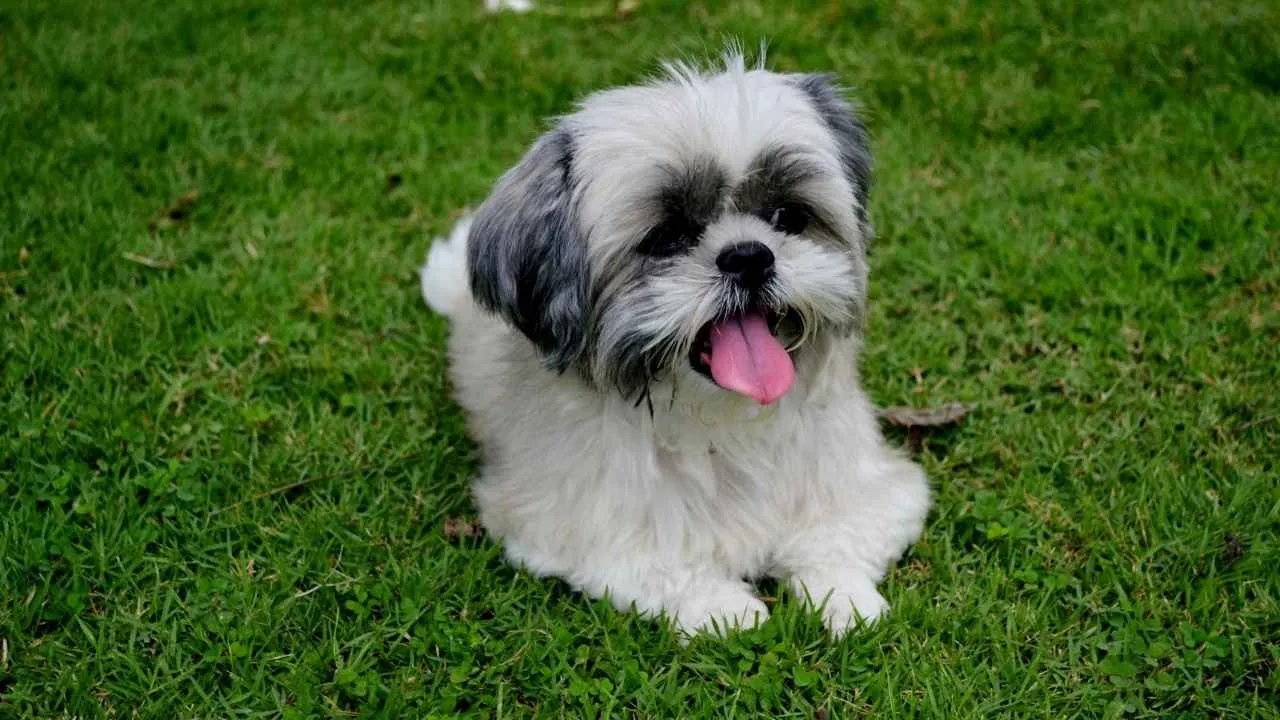
Shih Tzus are small companion dogs that were bred to be affectionate family pets. Their history dates back centuries, and they were once pampered companions of Chinese royalty.
According to PetMD, their name means “lion dog,” and they were bred to resemble lions. Today, they are known for being friendly, playful, and outgoing.
Personality and Lifestyle
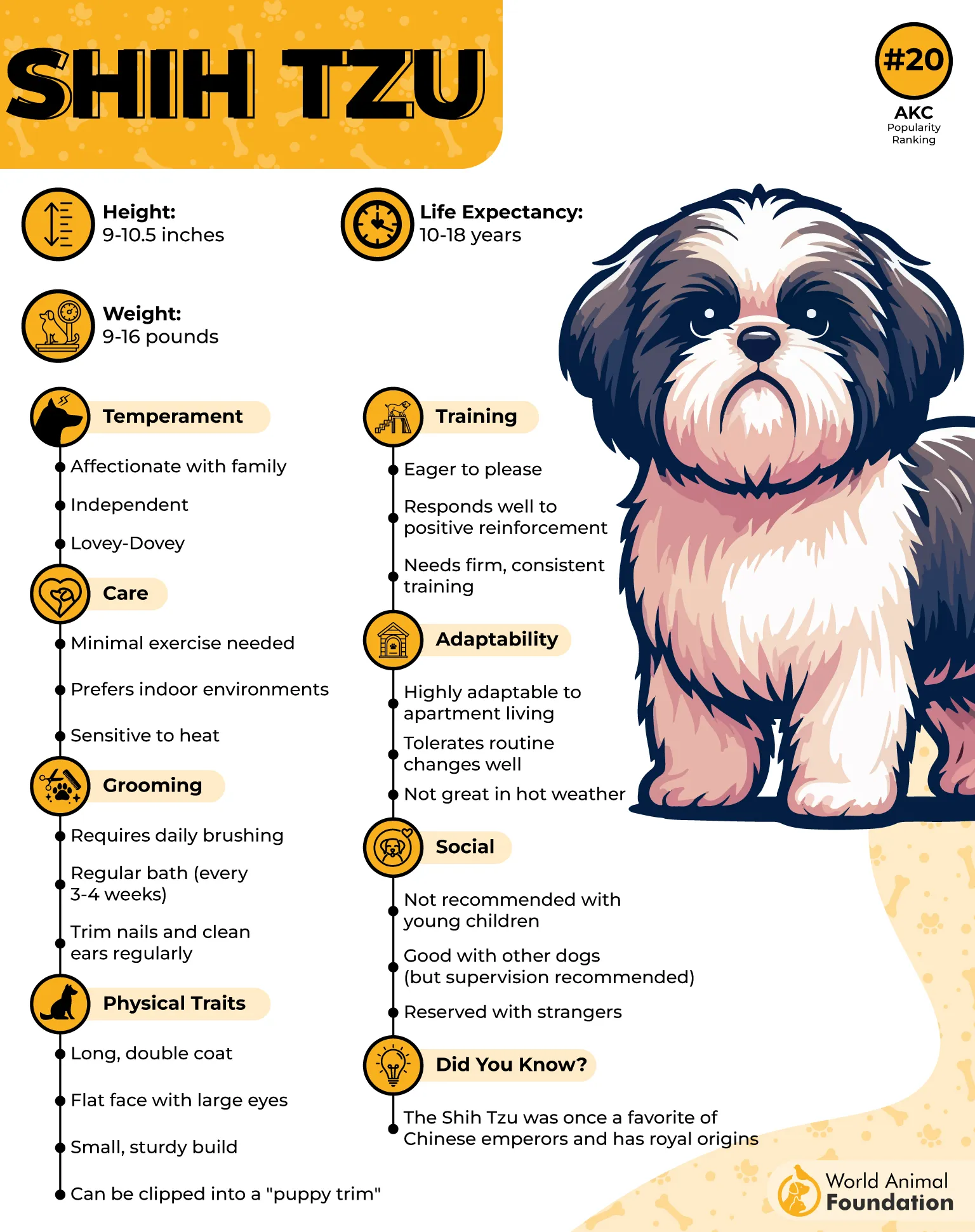
Shih Tzus are happy, sociable dogs that enjoy attention and companionship. They can easily switch from an energetic playmate to a relaxed sofa companion. They are affectionate and playful, but they can also be slow to obey.
With patience, they can learn quickly once they decide to cooperate. Early socialization is helpful because a lack of it may lead to excessive barking or digging.
Exercise and Care
Shih Tzus usually do well with around 30 minutes of walking along with playtime at home. Their playful nature also gives them plenty of ways to stay active indoors.
Although they enjoy company, Shih Tzus can learn to stay home alone for four to eight hours when properly trained. Too much boredom or too little exercise may lead to destructive behavior, so a safe area or crate training can be useful when they are left alone.
5. Papillon
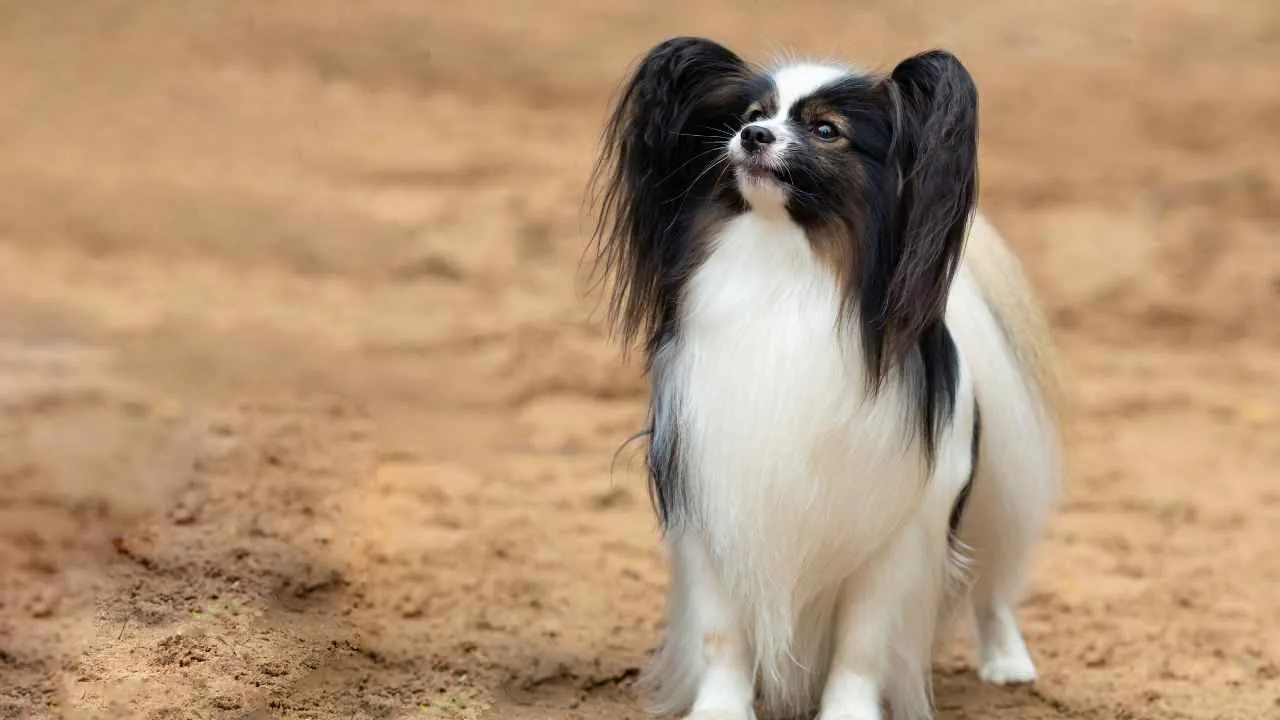
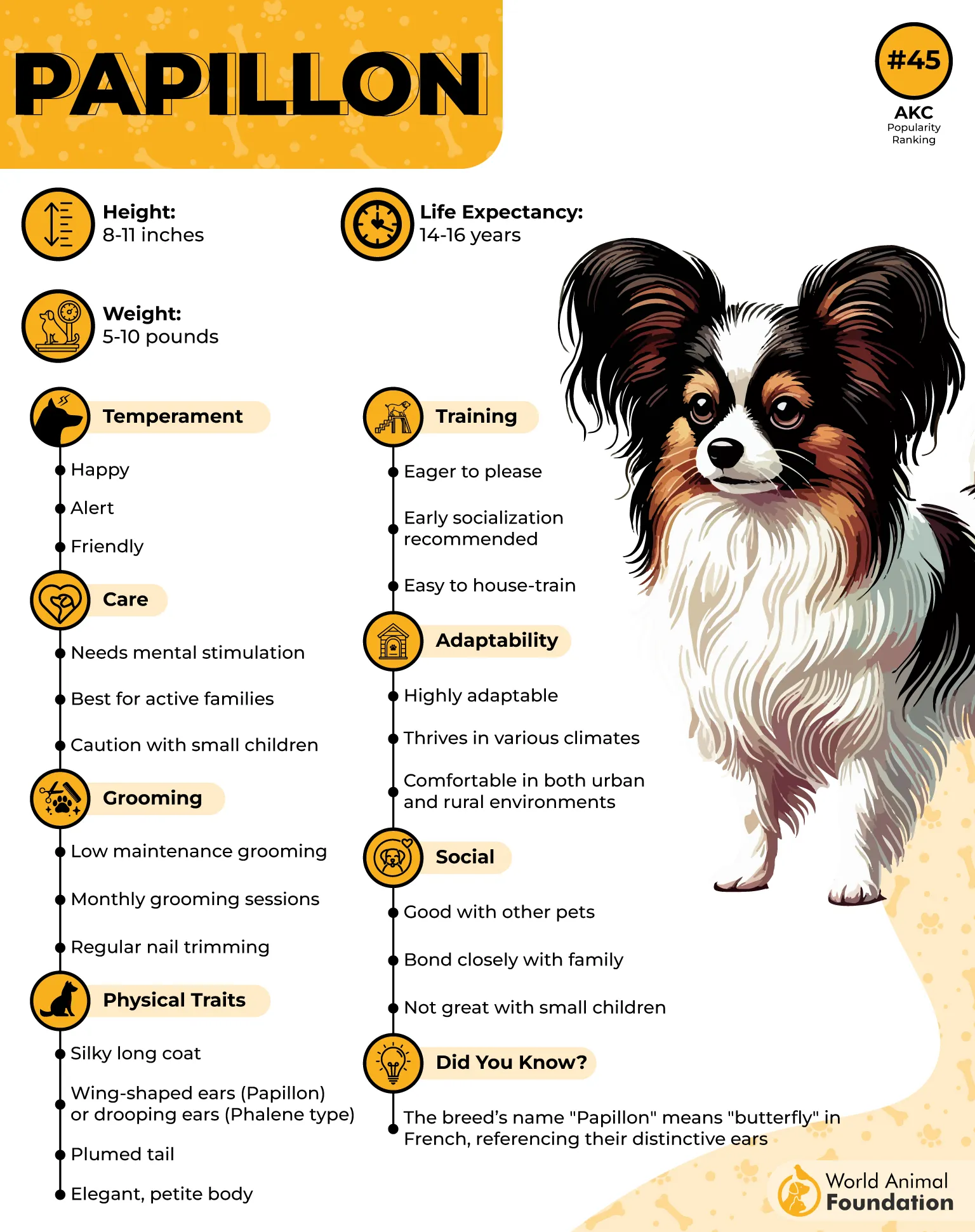
Papillons are small, friendly, and adventurous dogs known for their intelligence and distinctive butterfly-like ears. Their name comes from the French word for butterfly, inspired by their large ears and long, wispy hair.
The breed dates back centuries and was favored by ladies of the royal court, with paintings featuring similar dogs appearing as early as the 13th century.
Personality and Lifestyle
Papillons are active, enthusiastic, and people-oriented dogs that enjoy being around their families. They usually get along well with adults, children, dogs, cats, and other pets when socialized from puppyhood.
They are friendly with strangers but may bark when someone comes to the door, making them useful watchdogs. Unlike typical lap dogs, they also like having their own space, although they are happy to cuddle on the sofa when they choose.
Training and Exercise
Papillons are highly intelligent and considered one of the most trainable toy breeds. They enjoy learning tricks, playing catch, and pleasing their owners, while praise, positive reinforcement, and play can make training easier.
Their energy and athleticism mean they need regular exercise and plenty of mental stimulation. Indoor games, walks, and safe spaces to run and play can help keep them busy.
6. Cavalier King Charles Spaniel
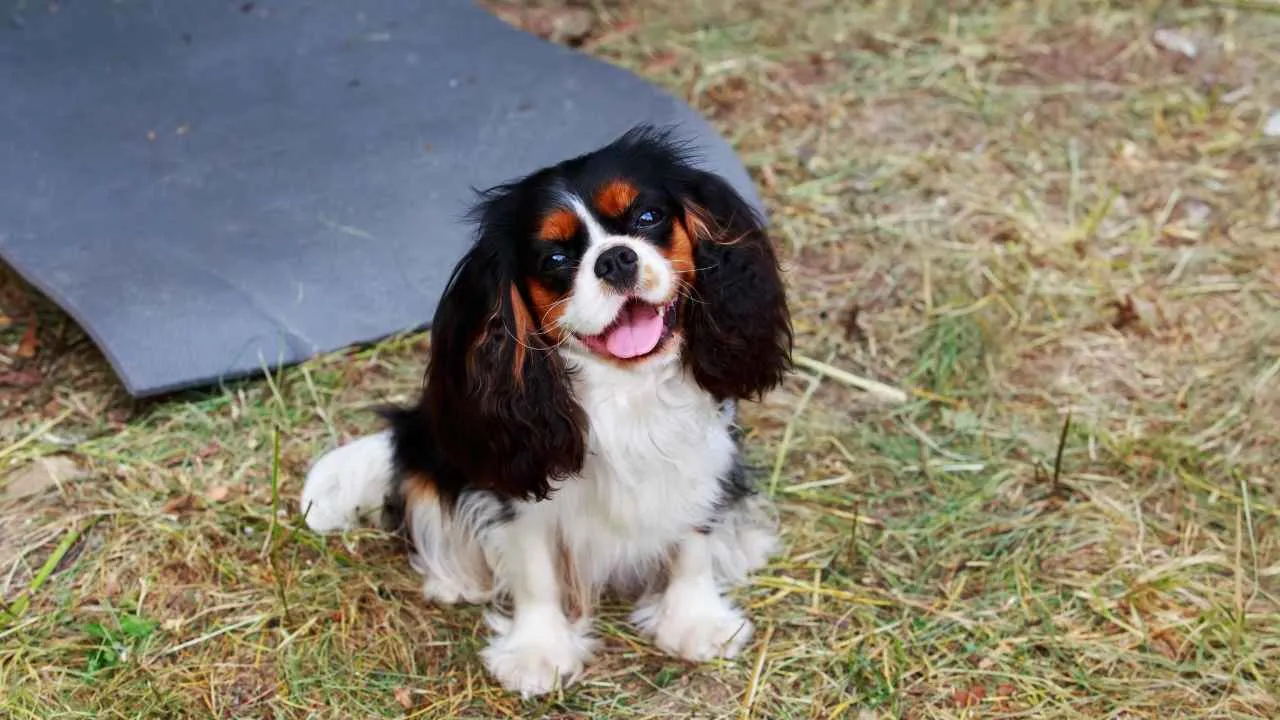
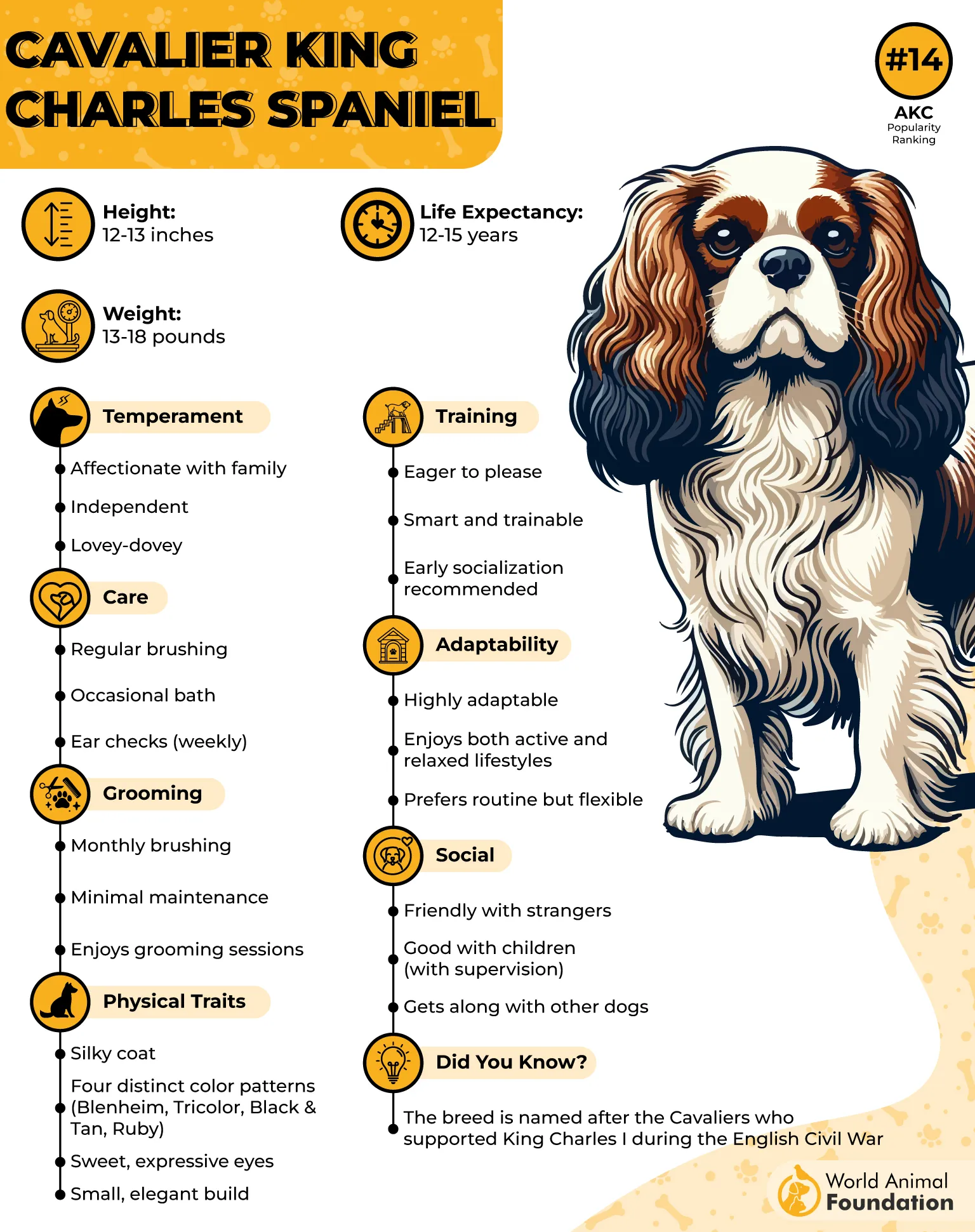
Cavalier King Charles Spaniels are loving, affectionate companion dogs with a long connection to British royalty. They got their name from King Charles I and Charles II, who were known for taking their dogs with them everywhere.
Originally bred to warm laps in drafty castles and chilly carriages, Cavaliers remain gentle and people-focused dogs today. Their friendly nature also makes them suitable for first-time dog parents.
Personality and Lifestyle
Cavaliers are cheerful, loyal, and gentle dogs that usually get along well with children, other dogs, cats, and strangers. They enjoy staying close to their families and are happiest when they have plenty of human company. They can adapt to different homes and are fairly playful and easy to train.
Exercise and Care
Cavalier King Charles Spaniels have moderate exercise needs. Two 20- to 30-minute walks each day, along with playtime and mental stimulation, can help keep them happy and active.
Once their energy needs are met, they are often content to relax on the couch with their family. Young Cavaliers can also benefit from crate training, which gives them a comfortable place to settle during short periods alone.
7. Yorkshire Terrier
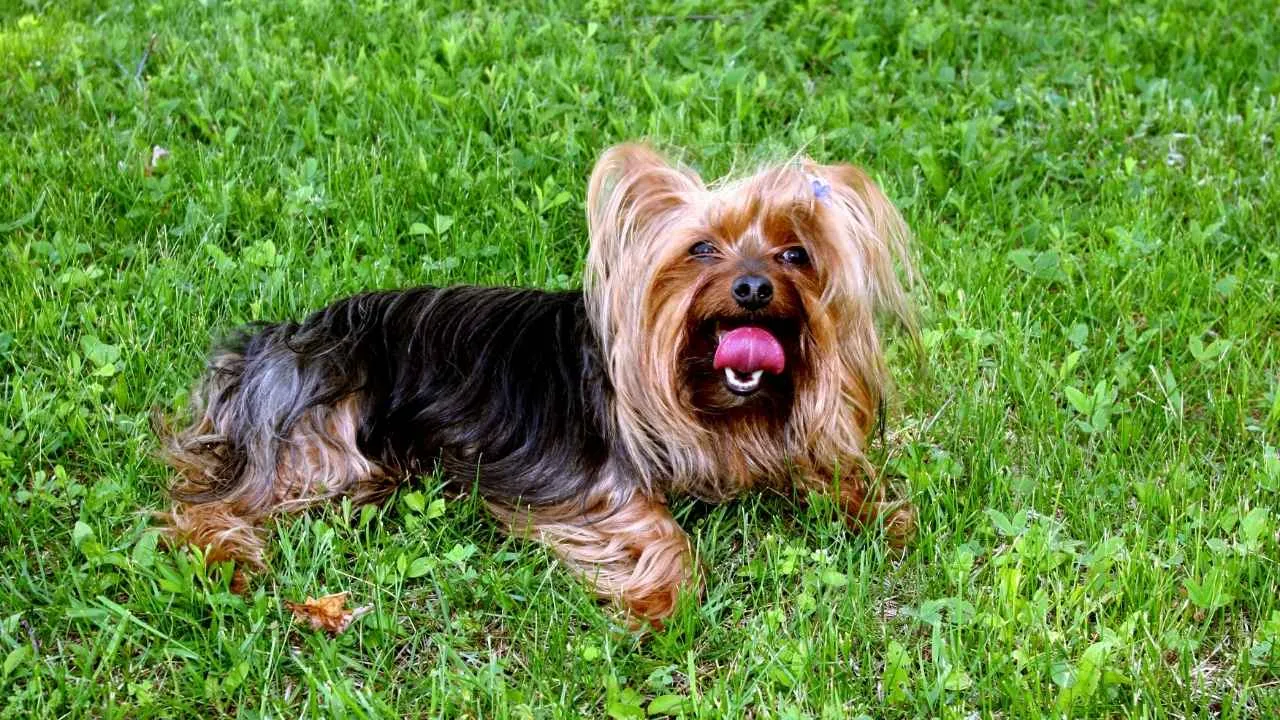
Yorkshire Terriers, often called Yorkies, are tiny dogs with lively and confident personalities. They were originally thought to have chased rodents in textile mills before becoming popular companion dogs.
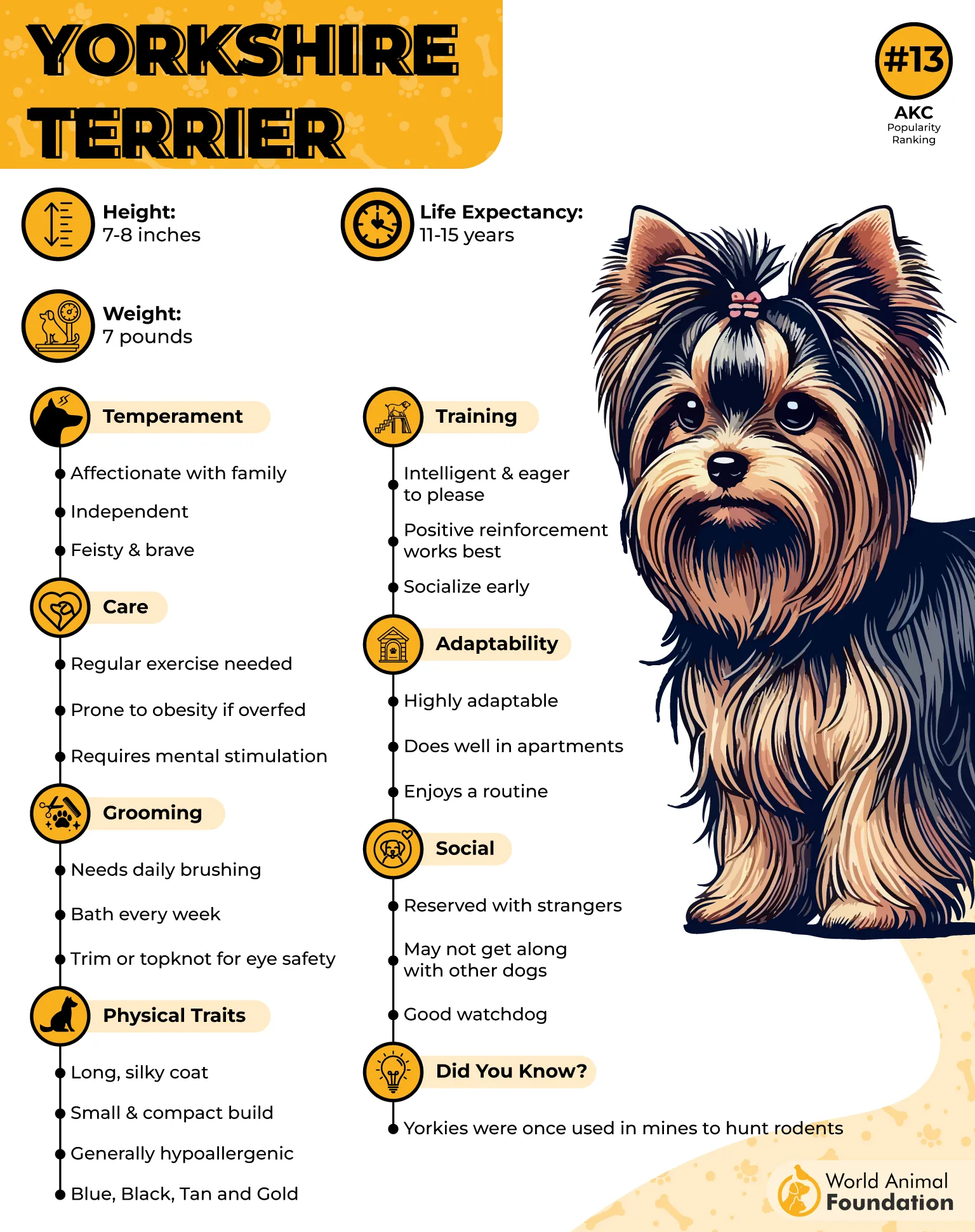
Despite their small size, Yorkies are energetic, curious, and sometimes bossy. Their long, straight blue and tan coat is one of their most recognizable features and needs regular grooming.
Personality and Lifestyle
Yorkies are affectionate, playful, and closely attached to their families. They can be brave, independent, and full of personality, often following their owners around the house. They usually do well in both apartments and larger homes when they receive enough mental stimulation and playtime.
Omlet mentions Yorkies can bark frequently and make good watchdogs, but early socialization and training can help manage this behavior.
Exercise and Care
Yorkies have moderate exercise needs and can stay active with two short walks of around 15 minutes, along with indoor games such as fetch.
They are intelligent and quick learners, and training can help keep their busy minds occupied. Their long, hair-like coat requires regular grooming, and they may need extra protection in cold weather.
Conclusion
Choosing a dog that can handle some time alone starts with understanding their personality, energy levels, and need for companionship.
Before bringing an independent breed home, consider how much time you can realistically spend with your dog each day.
A consistent routine, a comfortable space, and gradual training can make alone time easier. The right balance can help your pup feel secure while still giving you the freedom to manage your daily schedule.
