





“Dogs and cats fighting like sworn enemies” is such an old cliché, but is it actually true anymore, or just something we all repeat without checking?
According to Forbes Advisor, over one-third of Americans own more than one pet, which means the real question for most homes isn’t if cats and dogs can coexist peacefully; it’s which breeds make it easiest.
Some dogs are simply wired for calm, low-drama companionship, from their energy level down to their prey drive. Early socialization, careful introductions, and respect for each pet’s boundaries all play an important role in building a peaceful relationship.
Stick around, because the cat-friendly dog breeds coming up might be the multi-pet household match you didn’t know you needed.
Dog Breeds That Coexist Peacefully With Cats
1. Golden Retriever
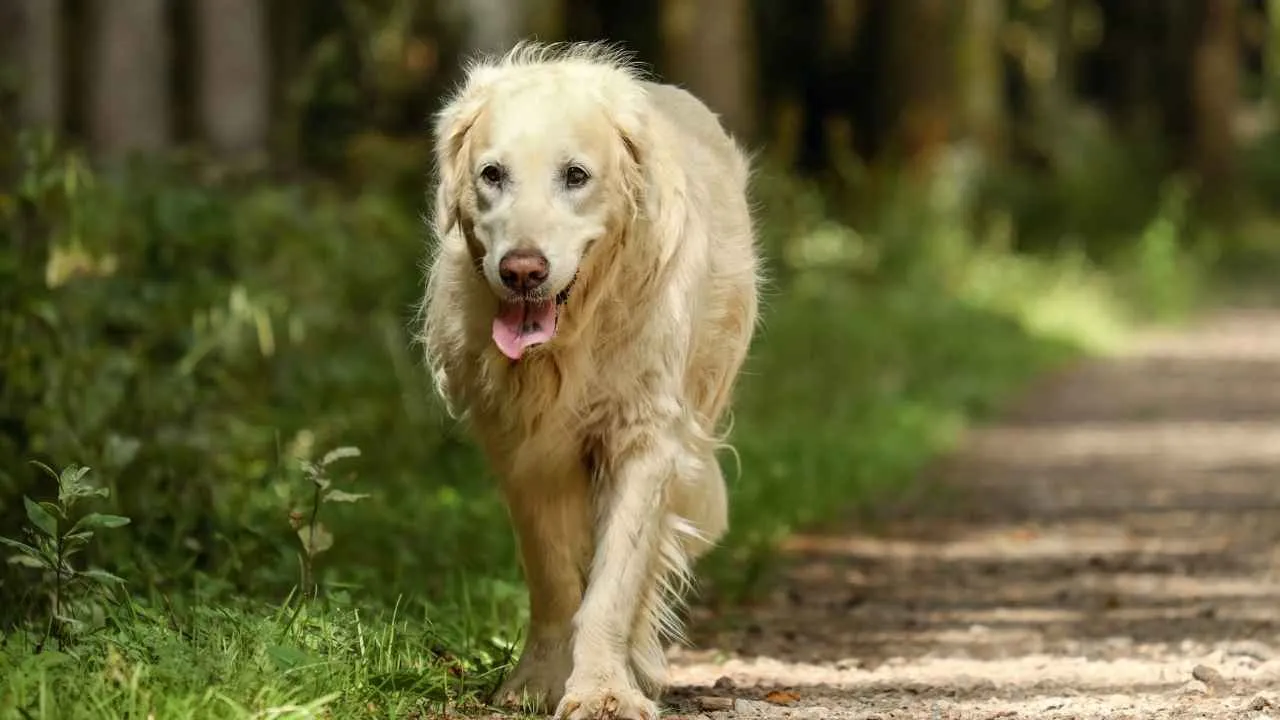
Golden Retrievers are the golden children of good manners. They’re playful and easygoing, with barely a jealous bone in their body, so cats feel like flatmates, not intruders. This friendly nature is exactly why the AKC lists Golden Retrievers among the top cat-friendly breeds.
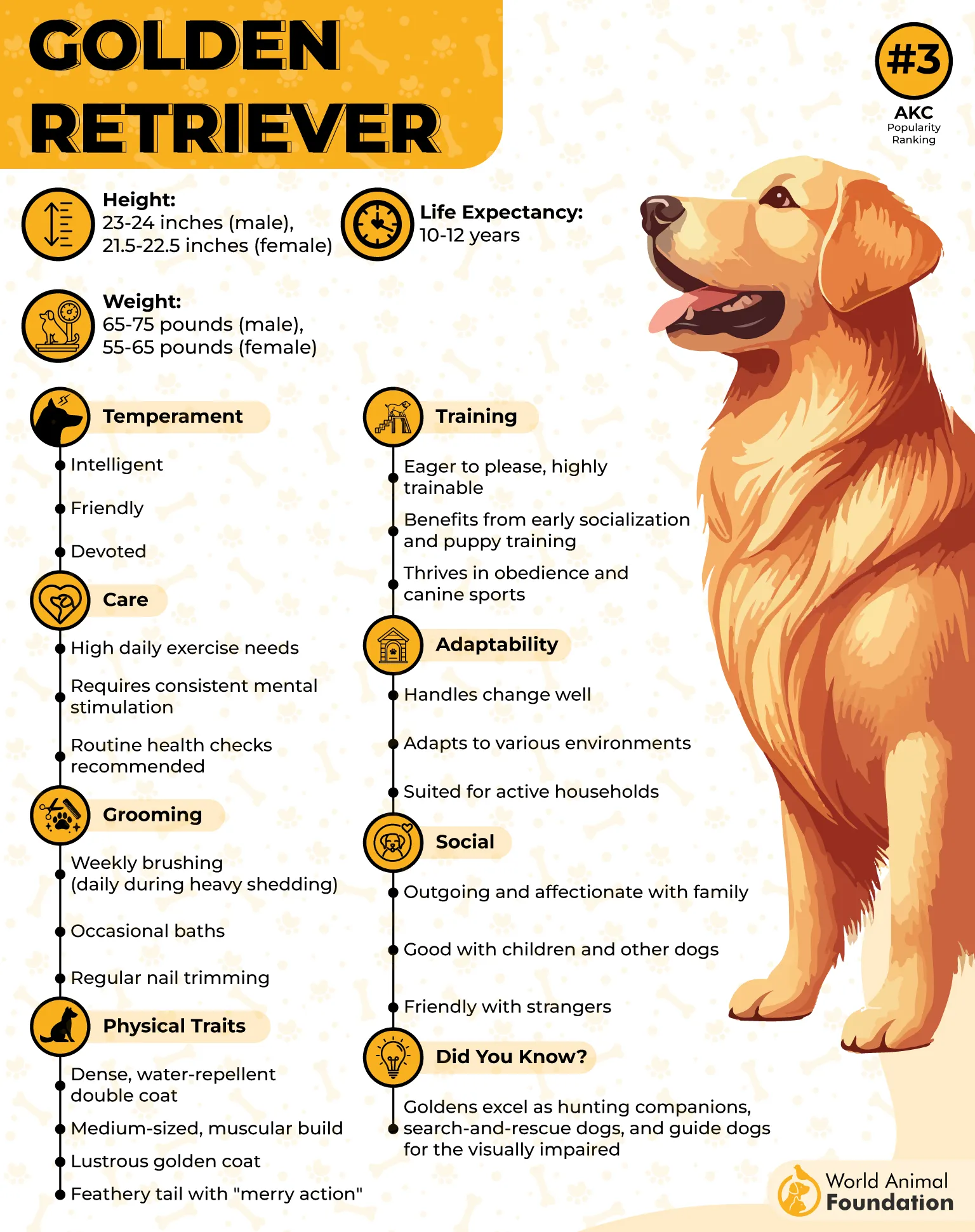
Start socialization as early as 8 weeks — Goldens imprint fast on new housemates.
Swap scented items (a blanket, a toy) between the dog’s and cat’s areas during the first week.
Save free-roam time for calm activities, like quiet evenings, rather than high-energy play sessions.
Training a Golden is refreshingly simple. They live for praise and treats, so basic cues like “leave it” stick fast. Add daily exercise, and a Golden’s extra energy goes into fetch, not chasing the cat.
Introduce them slowly on a leash, and let the cat set the pace. Watch for a stiff posture or fixed staring; that’s the cue to pause and try again later. A calm first greeting usually leads to a lasting friendship.
2. Labrador Retriever

Labradors have a reputation as gentle giants with zero interest in trouble. Purina notes they get on well with other household animals, and their retrieving instinct is aimed at tennis balls, not tabby cats. Playful energy aside, friendly is their default setting.
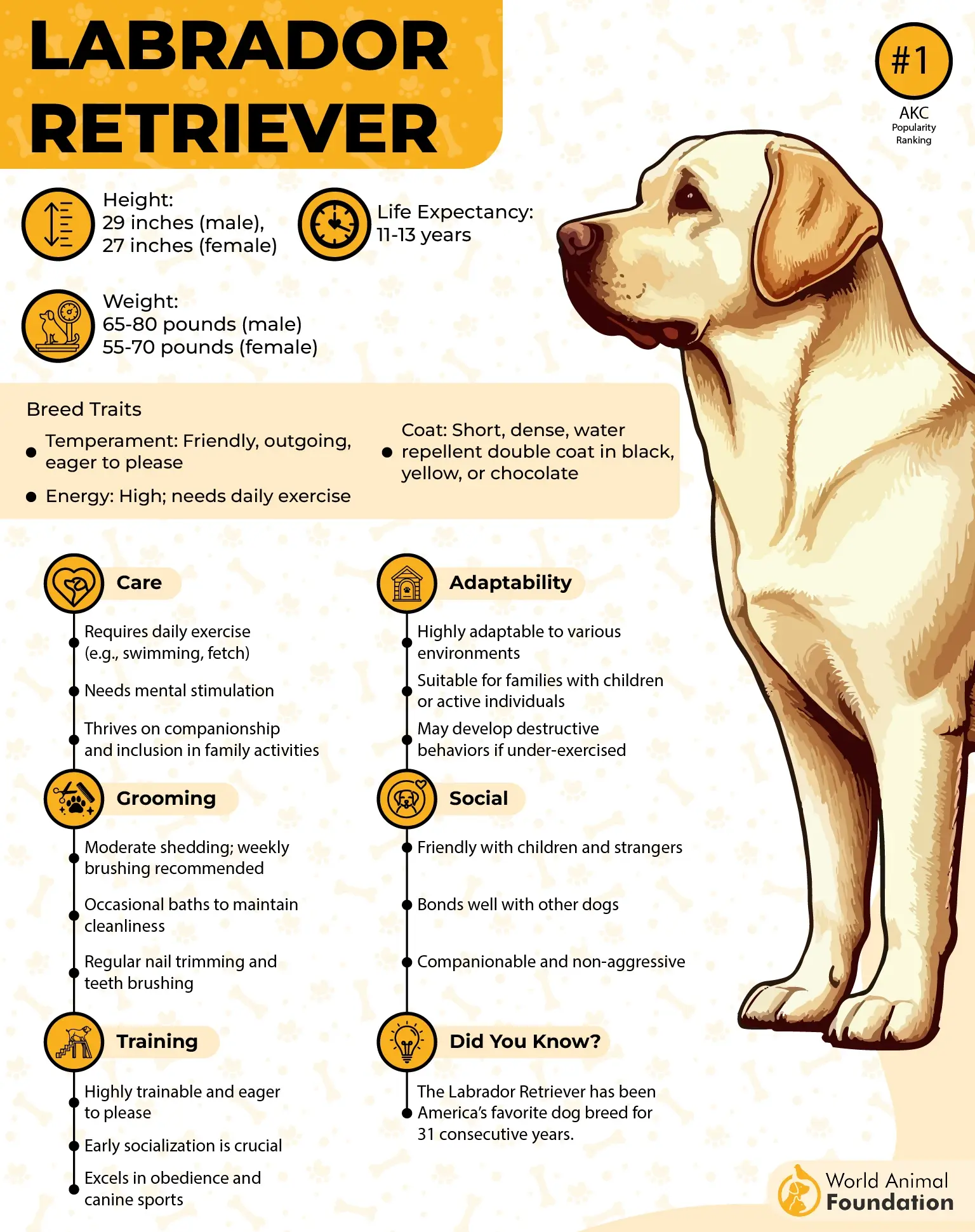
Adult rescue Labs often need several weeks of scent and sound exposure before a face-to-face meeting; puppies adjust faster.
Feed on a strict schedule, away from the cat’s bowl, to prevent food-guarding tension before it starts.
Burn off energy with fetch or a flirt pole before each session so the dog arrives calmer.
Because Labs are eager to please, training sessions rarely feel like a battle. Teaching “sit” and “stay” early channels their enthusiasm, so greetings with the cat stay calm instead of chaotic.
Keep first meetings on a leash, since a Lab’s size alone can startle a cat before any real mischief starts. Watch for excessive sniffing or bouncing, and give the cat an easy escape route. Slow and steady wins this particular race.
3. Cavalier King Charles Spaniel

Small, affectionate, and close to cat-sized, Cavaliers rarely come across as a threat. VCA notes the breed gets along well with other pets, and its gentle, people-pleasing nature carries over nicely to feline roommates.
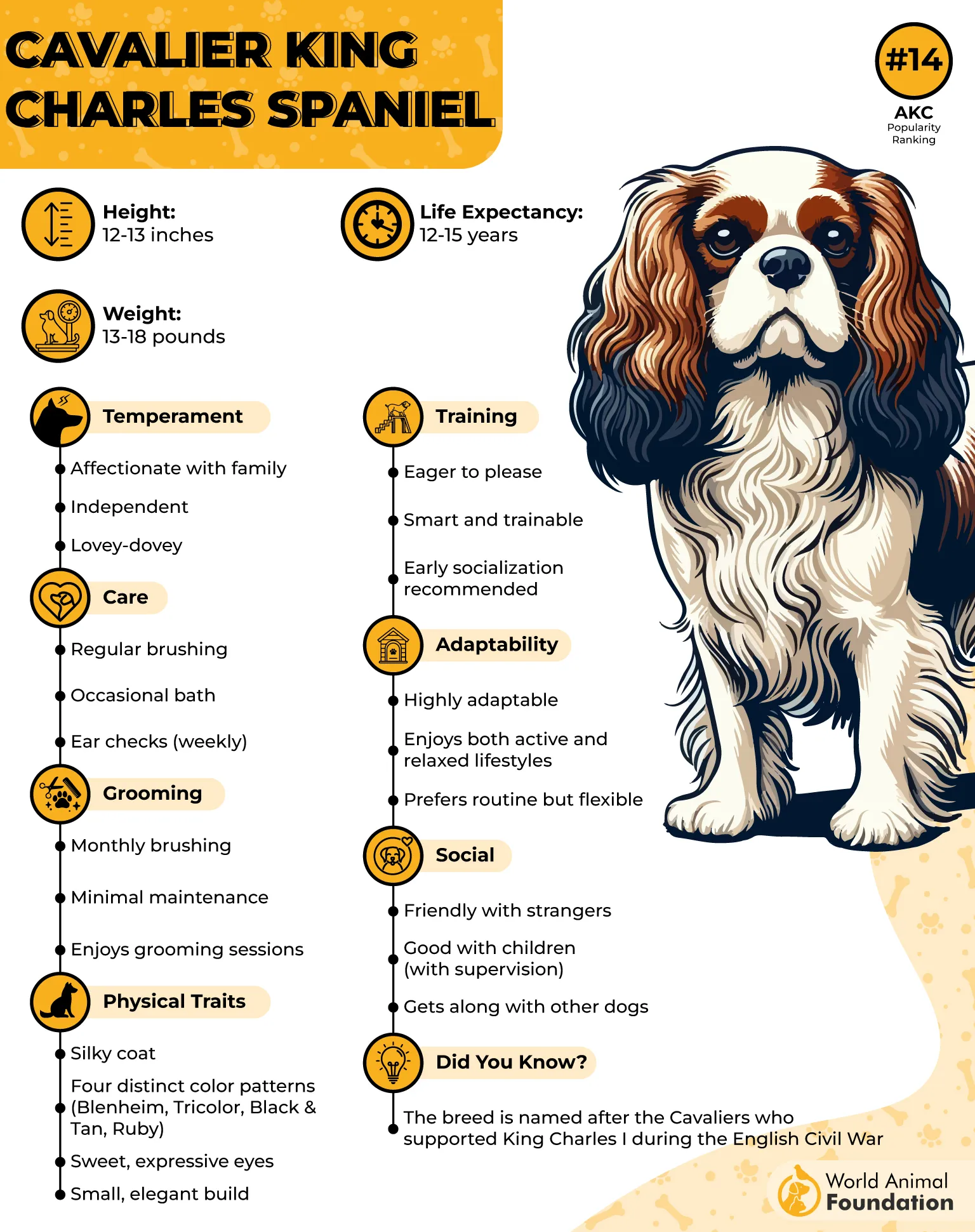
Stay present during early sessions — Cavaliers read their owner’s energy before they read the cat’s.
Give the dog its own resting spot, separate from the cat’s favorite perch, to reduce competition over cozy space.
Reward quiet moments around the cat specifically, since excitement (not aggression) is what typically shows up first
This small dog breed responds best to reward-based training, so a pocket of treats goes a long way toward teaching calm cat manners. Their sensitive side means harsh corrections tend to backfire; patience always wins here.
Introduce them gradually, letting the cat approach first. Watch for barking or a sudden lunge toward a moving cat, since Cavaliers still carry a mild chase instinct from their spaniel roots. A few calm sessions usually settle any early jitters.
4. Basset Hound

Basset Hounds bring low energy and an even lower interest in drama. Britannica describes the breed as friendly toward other pets, and that laid-back attitude makes it one of the easiest hounds to pair with a cat.
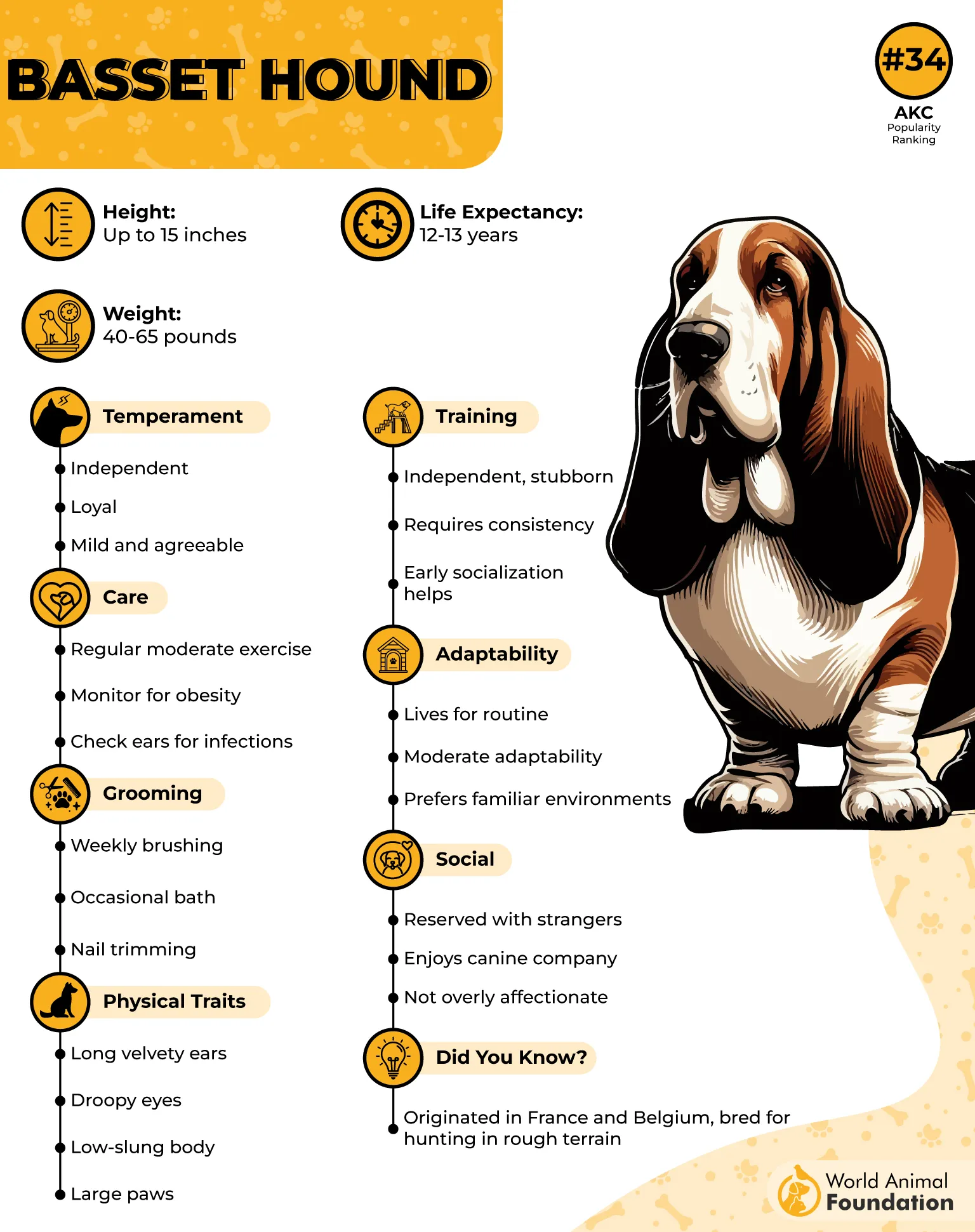
Let the Basset investigate the cat’s bedding before any visual introduction; the nose leads before the eyes do.
Avoid introductions right after an outdoor walk full of new scents; an indoor, “reset” nose focuses better.
Expect a slower settling-in period than food- or people-driven breeds; give it several weeks of casual coexistence first.
Training a Basset takes patience, since its nose often outvotes its ears. Short, food-based sessions work best, and reinforcing “leave it” helps redirect attention when a scent, or a cat, tries to steal the show.
Let introductions happen on a leash, at the cat’s pace. Watch for intense sniffing or a sudden nose-to-the-ground fixation; it’s usually curiosity, not aggression. Given time, most Bassets settle into easy, calm cohabitation.
5. Papillon

Don’t let the dainty size fool you. Papillons are curious, upbeat little dogs that tend to treat a cat as a new playmate, not prey. Orvis describes the breed as lively and friendly, and that outgoing streak makes early introductions less nerve-wracking.
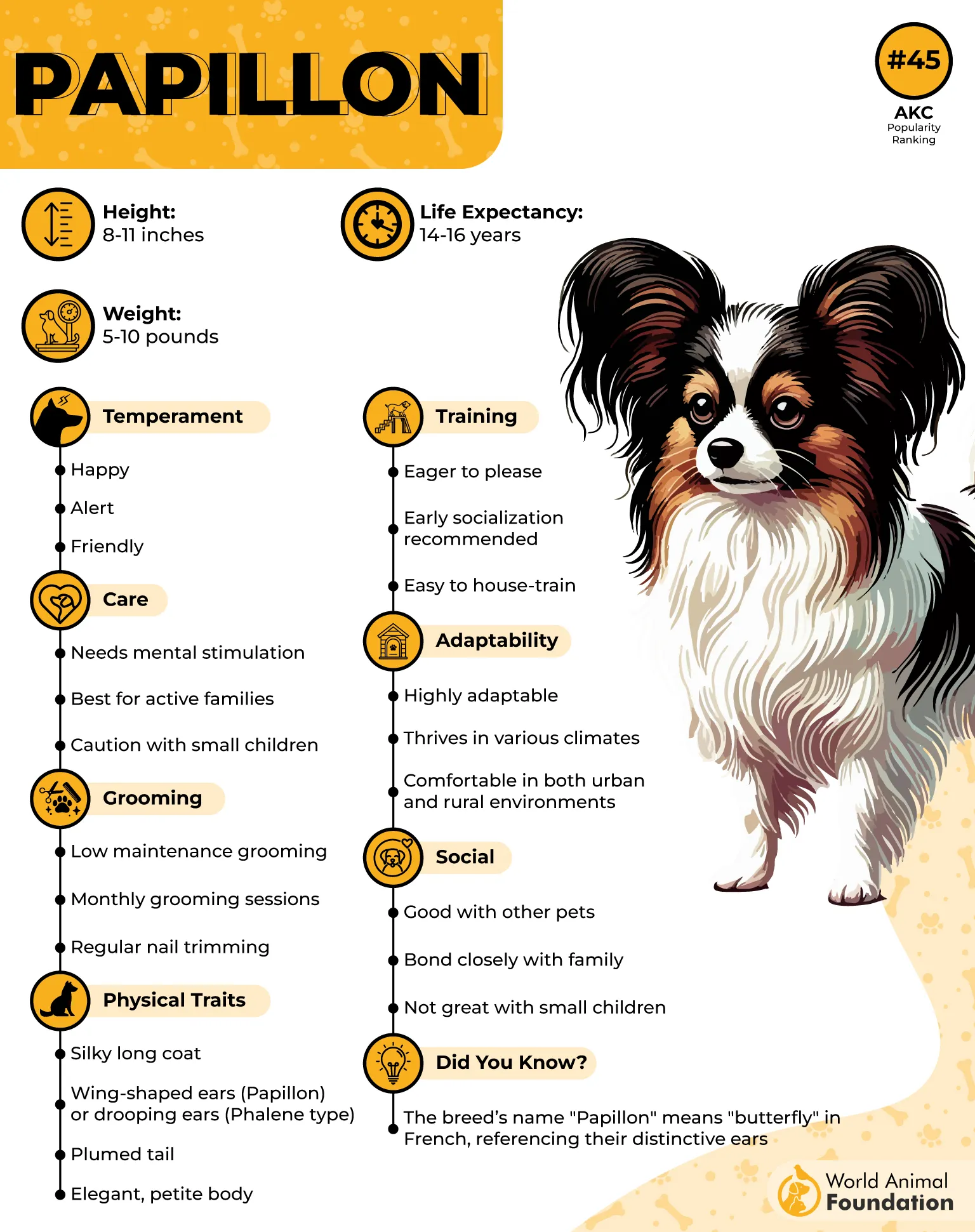
Expose this toy breed to a range of people, sounds, and small animals early to prevent nervousness later.
Use a low platform bed so the Papillon isn’t constantly looking up at the cat, which can spike excitement.
Reward a slow approach-then-retreat pattern rather than direct chasing play.
This toy breed is genuinely trainable, quick to learn commands, and eager to work for a reward. Short, consistent sessions on cues like “leave it” keep that big personality from turning into overenthusiastic chasing.
Introduce them at a slow pace, since a Papillon’s small size means rough play could hurt the dog, not just the cat. Watch for high-pitched barking or frantic circling, and step in calmly. Given time, most Papillons and cats settle into easy companionship.
6. Pug
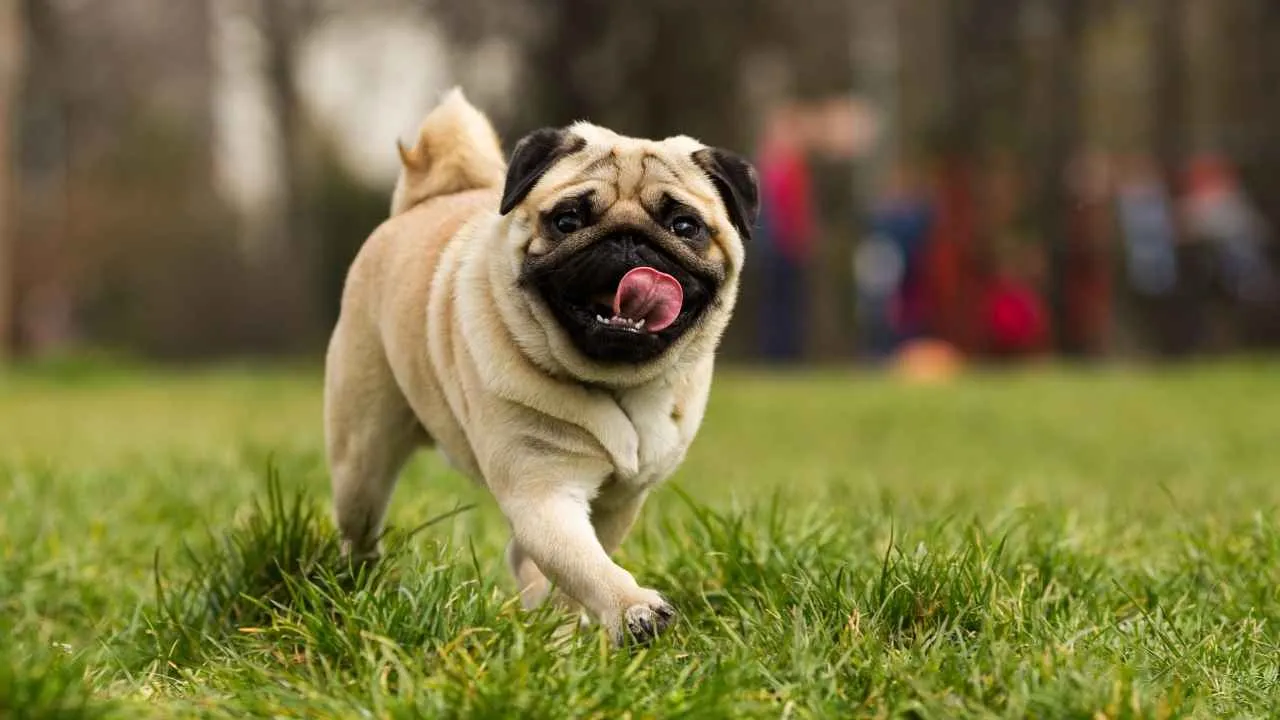
Pugs pack a lot of personality into a small, wrinkly package. They’re affectionate, low-key, and tough enough to handle a feline roommate without flinching. A Pug is more likely to nap beside the cat than chase it around the living room.
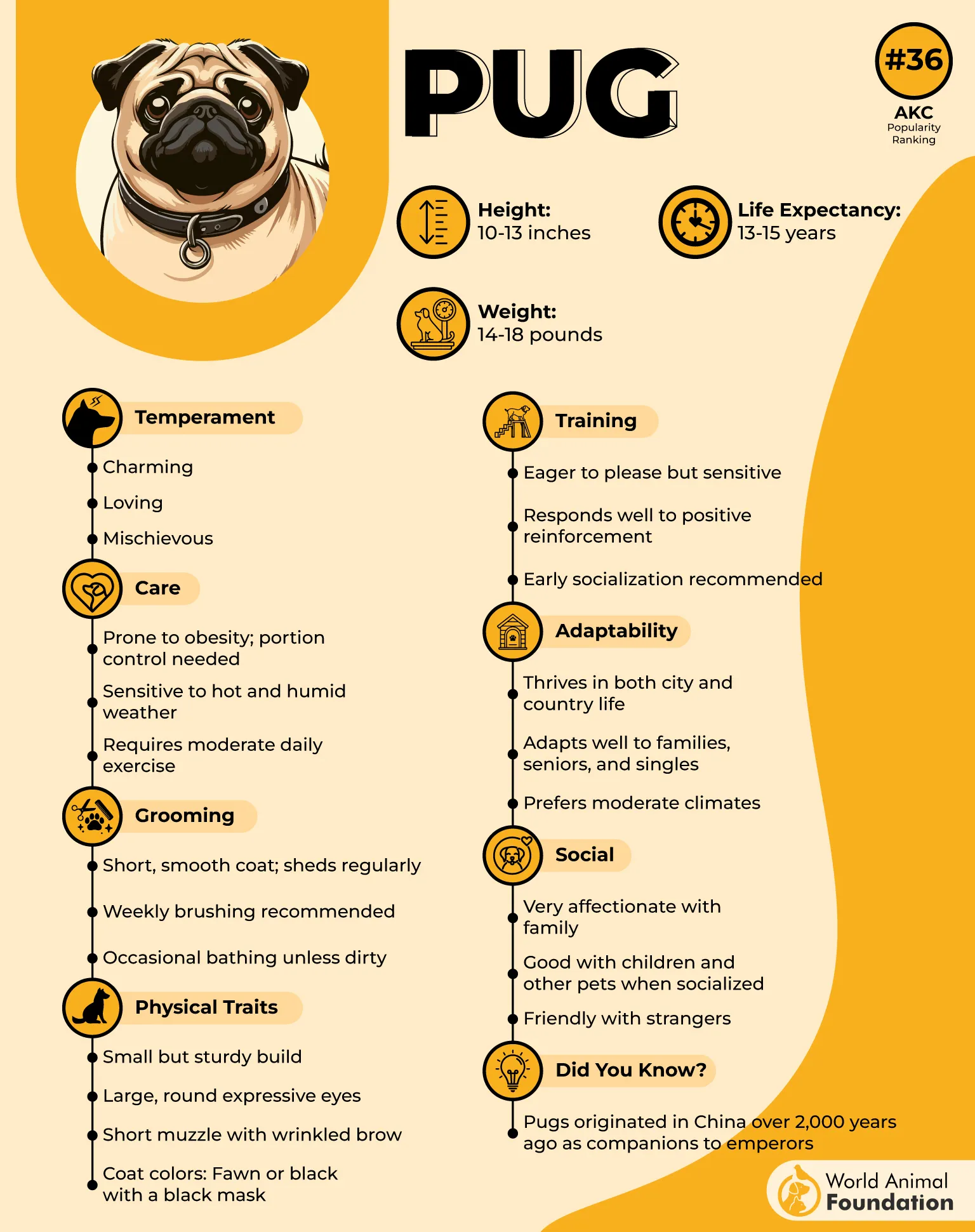
Schedule sessions during the coolest part of the day, given this breed’s limited heat tolerance.
Use a food puzzle to occupy the Pug during moments when the cat is nearby but not interacting.
Treat a rising pant rate as a training cue to pause, not just a warning sign to react to.
Training works best in short bursts, since Pugs are smart but easily distracted by snacks and attention. Positive reinforcement and a slow, steady pace teach calm cat manners without overwhelming this breed’s stubborn streak.
Introduce them gently, and keep sessions brief given how easily Pugs overheat and tire. Watch for heavy panting or wheezing during play, and give both animals breaks. Once settled, most Pugs treat the cat like just another napping buddy.
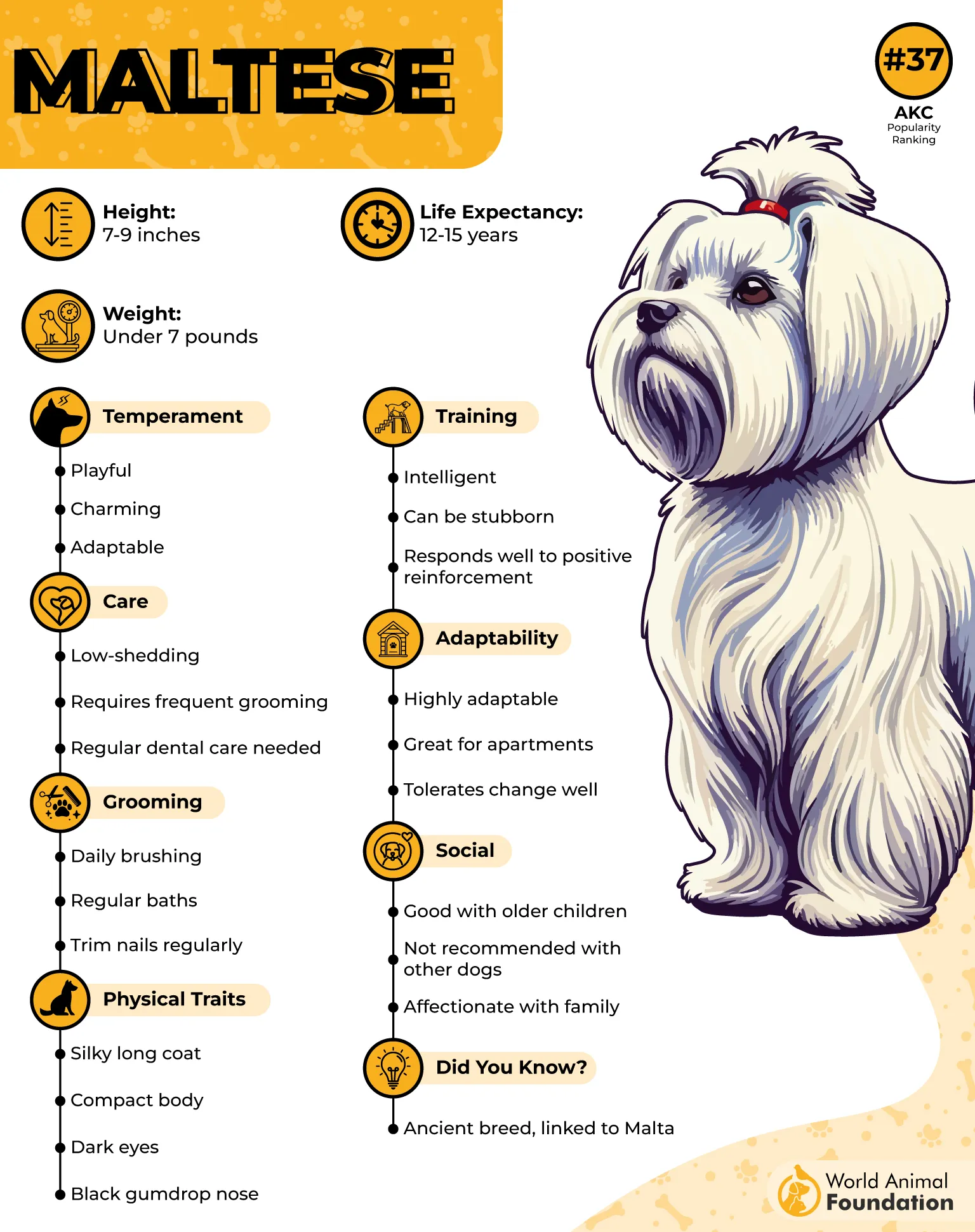
7. Maltese

Maltese dogs are tiny, fluffy, and generally too busy being adored to bother with a cat. Their low prey drive and closeness in size to most cats make early friendships surprisingly smooth. Big personality, small threat level.
Practice “come” and basic recall indoors before allowing off-leash proximity to the cat.
Rotate which room the cat and dog spend time in, so neither claims exclusive territory early.
Handle grooming and handling exercises separately from cat introductions, so new experiences don’t stack into one stressful event.
Because Maltese are intelligent and food-motivated, training calm behavior around a cat rarely takes long. Their one hiccup is a stubborn streak, so short, upbeat sessions work better than long, repetitive ones.
Keep the first few meetings calm and quiet, since Maltese take cues from their owner’s energy. Watch for excessive barking or an intense stare, both signs of overexcitement rather than aggression. Given patience, this toy breed usually settles into an easy, cat-friendly routine.
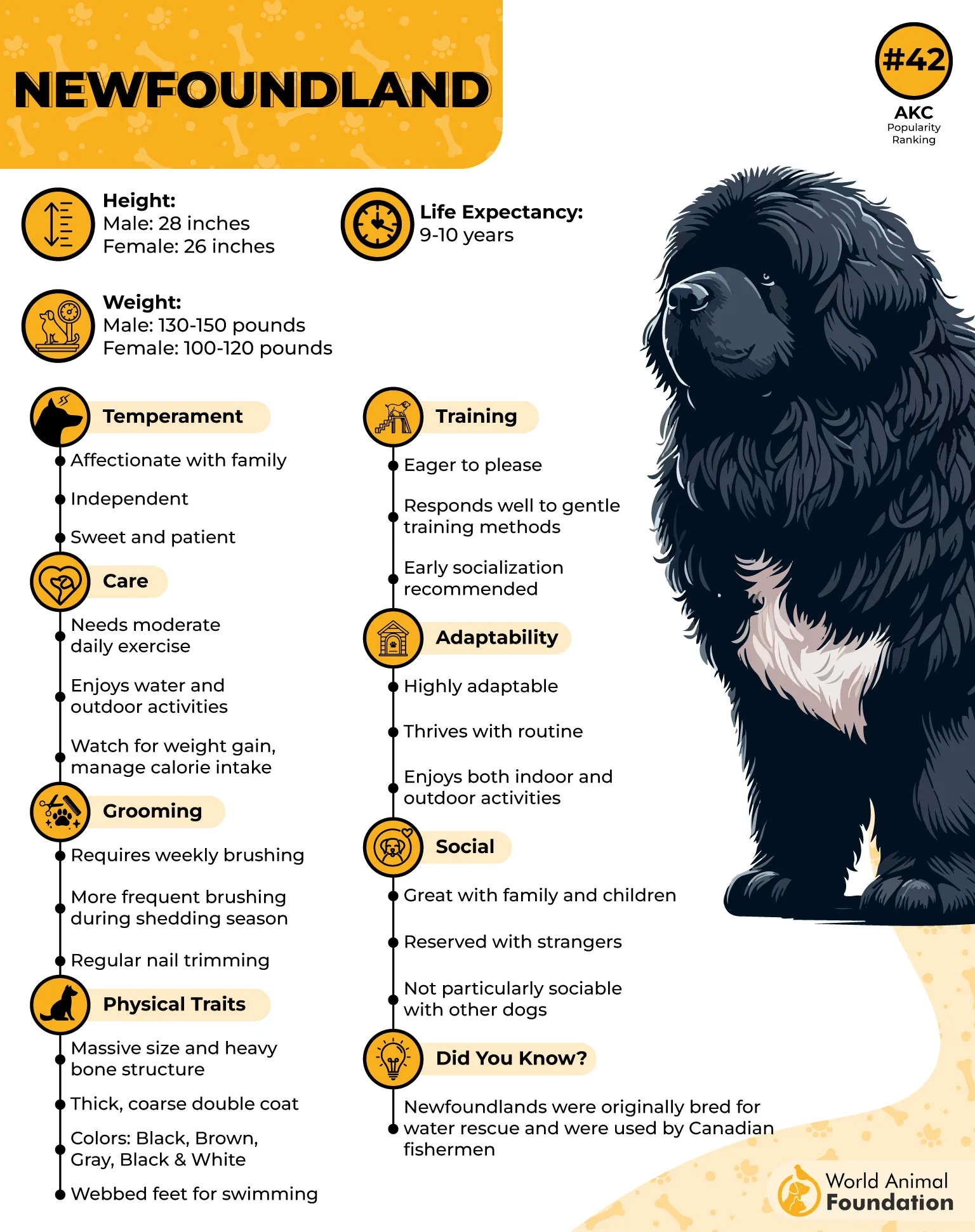
8. Newfoundland
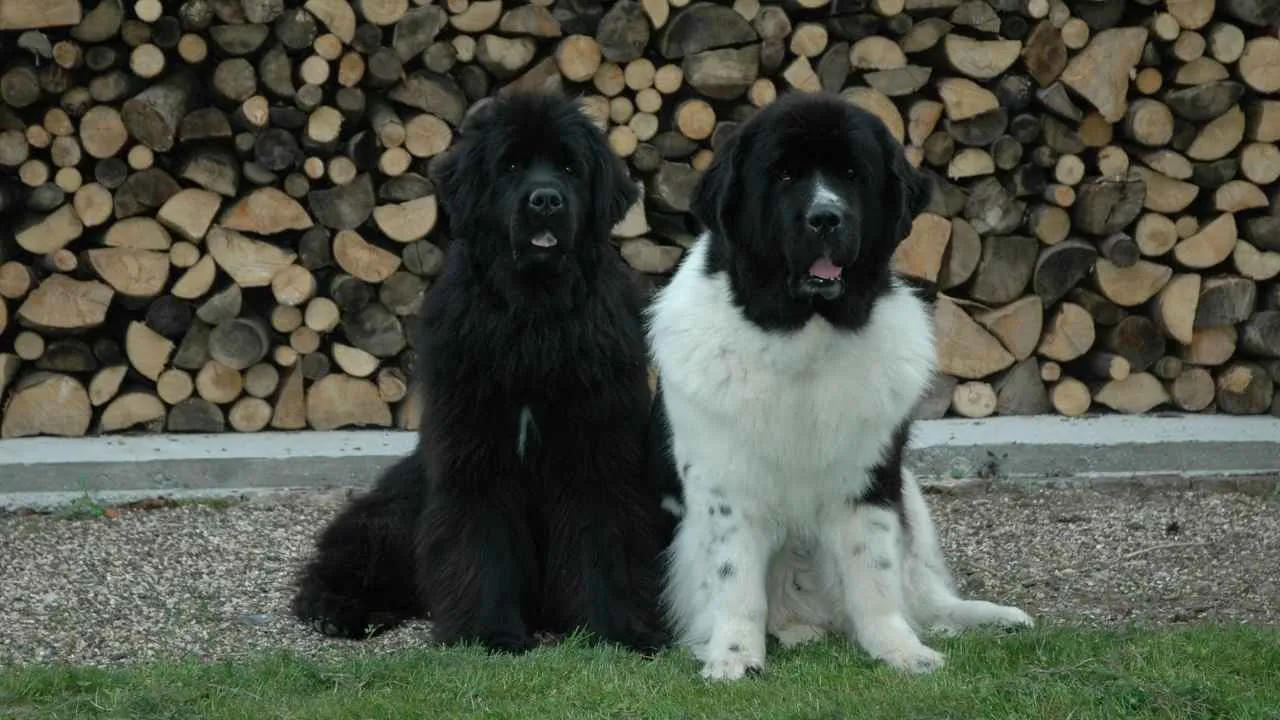
Newfoundlands are proof that size has nothing to do with gentleness. This “gentle giant” breed carries a naturally low prey drive, often acting more like a protector than a predator around a resident cat.
Prioritize leash and body-awareness training before the actual cat introduction; deliberate movement matters more than commands here.
Spread the introduction over several weeks of short sessions rather than rushing a faster timeline.
Set up elevated, dog-proof zones for the cat, and reinforce the boundary from day one.
Training is straightforward thanks to their calm, willing nature, though early socialization matters more here than with smaller breeds. A well-trained Newfoundland learns quickly to move carefully around a much smaller housemate.
The real risk with this breed isn’t temperament; it’s sheer size, so introductions should stay slow and supervised. Watch for clumsy movements near the cat rather than aggressive ones, and give the cat plenty of high, dog-free perches. Patience turns this giant into a surprisingly careful companion.
9. Collie
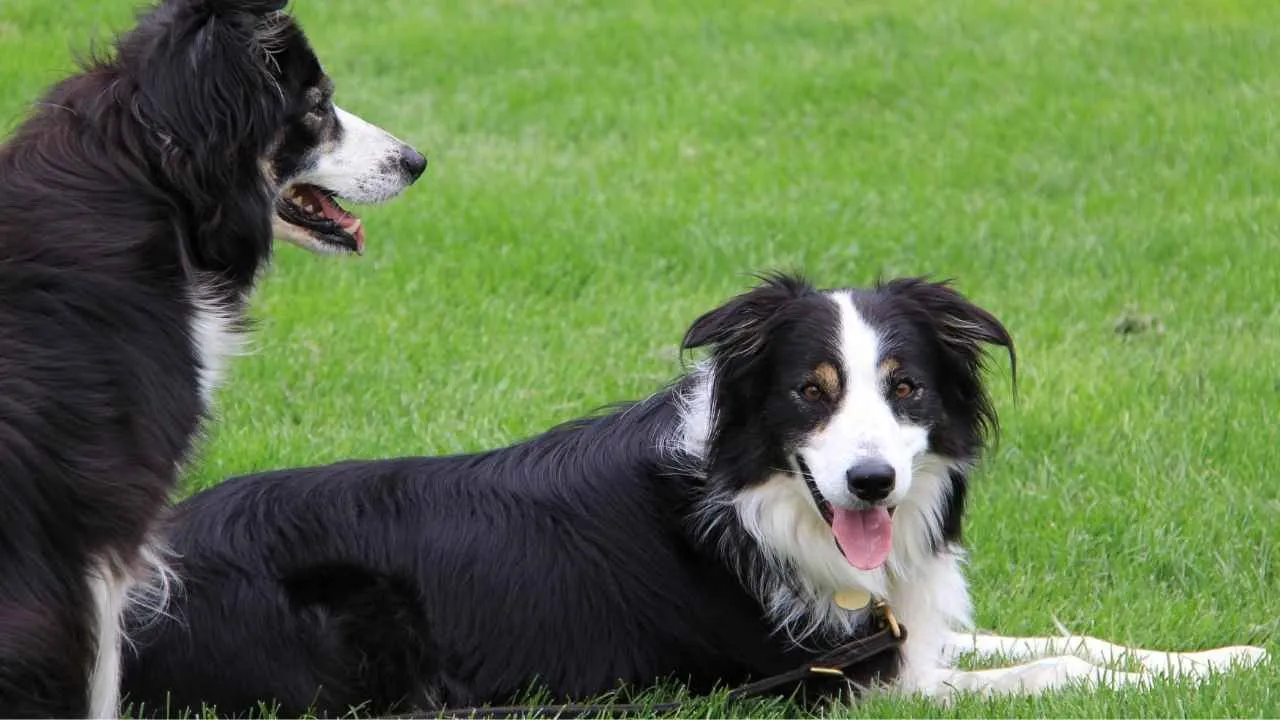
Collies bring intelligence, loyalty, and one quirky habit to the table: herding. Rather than chasing a cat out of aggression, a Collie is more likely to nip at heels or trail behind it like a tiny sheep that needs rounding up.
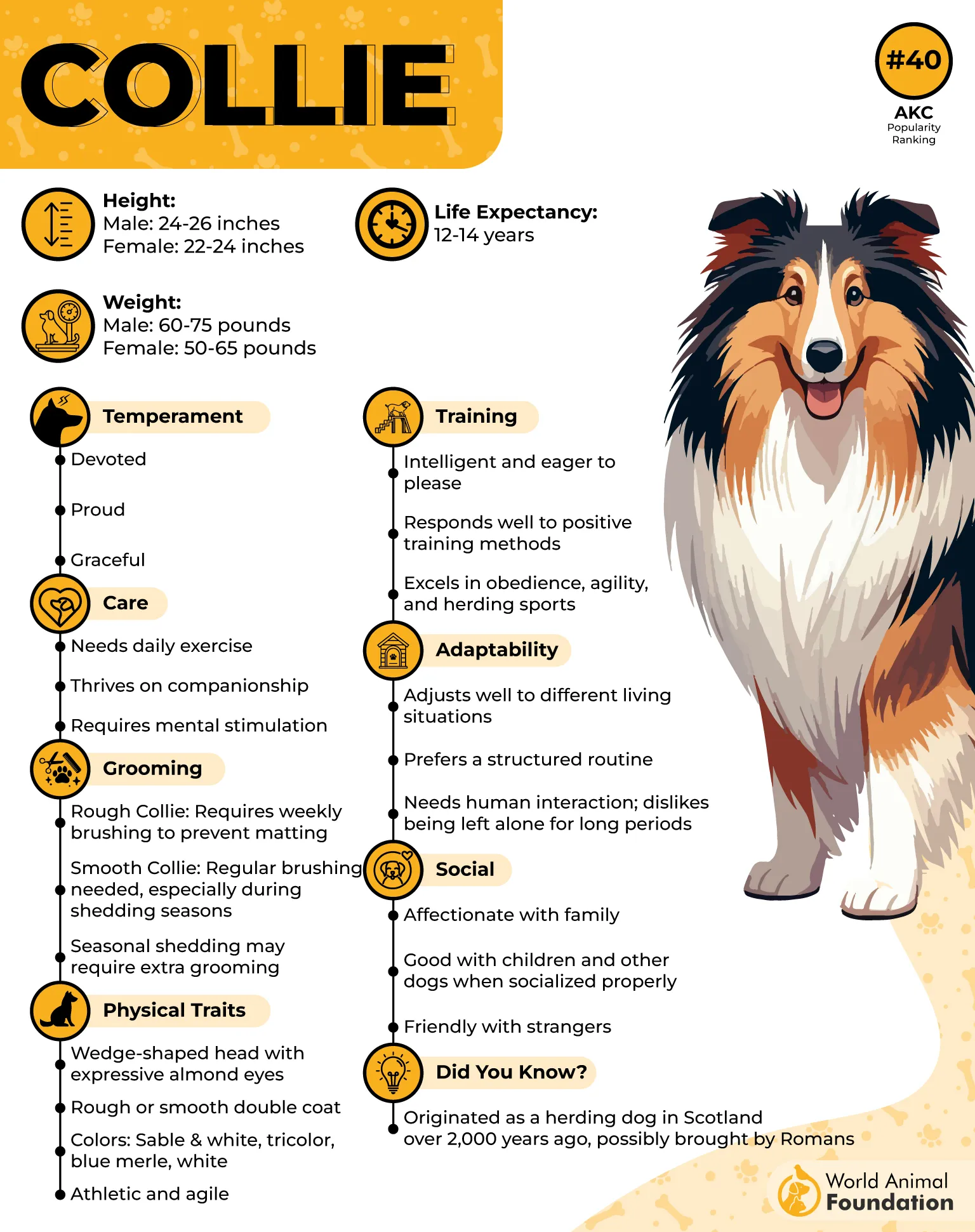
Use fetch or agility games before sessions to burn off the energy that fuels herding behavior.
Reward the dog for looking away from the cat on cue, not just for passive ignoring.
Practice around other small, moving animals when possible to generalize calm behavior around anything unpredictable.
Training channels that herding instinct in a useful direction. Teaching “leave it” early helps a Collie learn that the cat isn’t a job to complete, and regular exercise burns off the energy that fuels the habit.
Introduce them on a leash and reward calm, non-herding behavior right away. Watch for persistent following or heel-nipping, and redirect with a toy or command. Most Collies settle down once they realize the cat isn’t part of the flock.
10. English Bulldog
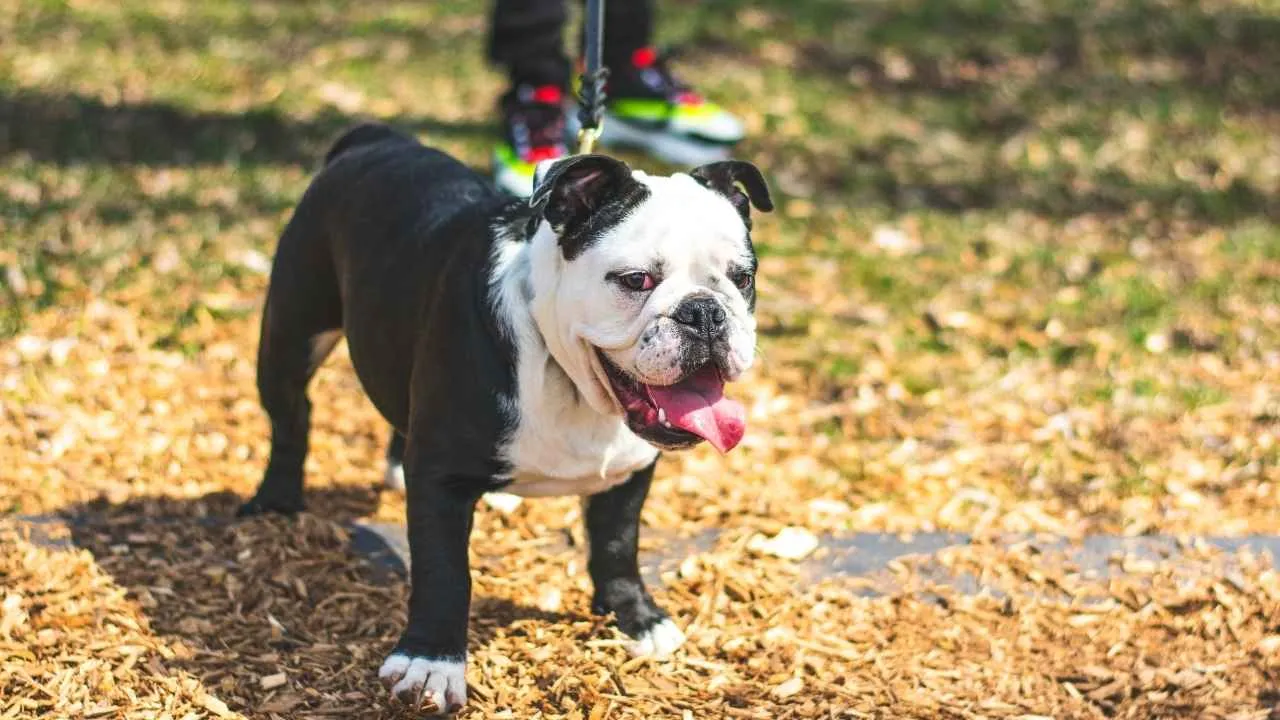
English Bulldogs look like trouble and act like teddy bears. Their calm, easygoing personality tends to win out over their tough appearance, and most Bulldogs are far too laid-back to bother chasing a cat around.
Use low-pressure, food-forward methods, since this breed responds poorly to repetition-heavy or corrective techniques.
Keep the pace slow and infrequent; there’s no need to rush multiple sessions into one day.
Set up a dedicated napping zone away from the cat’s high-traffic areas, so both animals get guaranteed downtime.
Training takes patience since this breed can be stubborn, but short sessions with high-value treats go a long way. Bulldogs respond better to consistency than repetition, so little and often beats one long session.
Keep introductions slow and low-key, since Bulldogs run warm and shouldn’t get worked up during play. Watch for heavy breathing or overheating rather than aggression, and keep sessions brief in warm weather. Once comfortable, a Bulldog usually treats the cat as just another couch companion.
Conclusion
The common thread running through every breed above isn’t size, breed group, or even reputation. It’s temperament: a calm, low prey drive dog settles into a multi-pet household far faster than one that’s simply labeled friendly on a breed chart.
Before you bring a new dog home, set up a supervised meet-and-greet with your cat in the room, and ask the shelter or breeder exactly how that specific dog has reacted around cats before. That one conversation will tell you more than any breed list ever could, so book it before you sign any adoption papers.
