




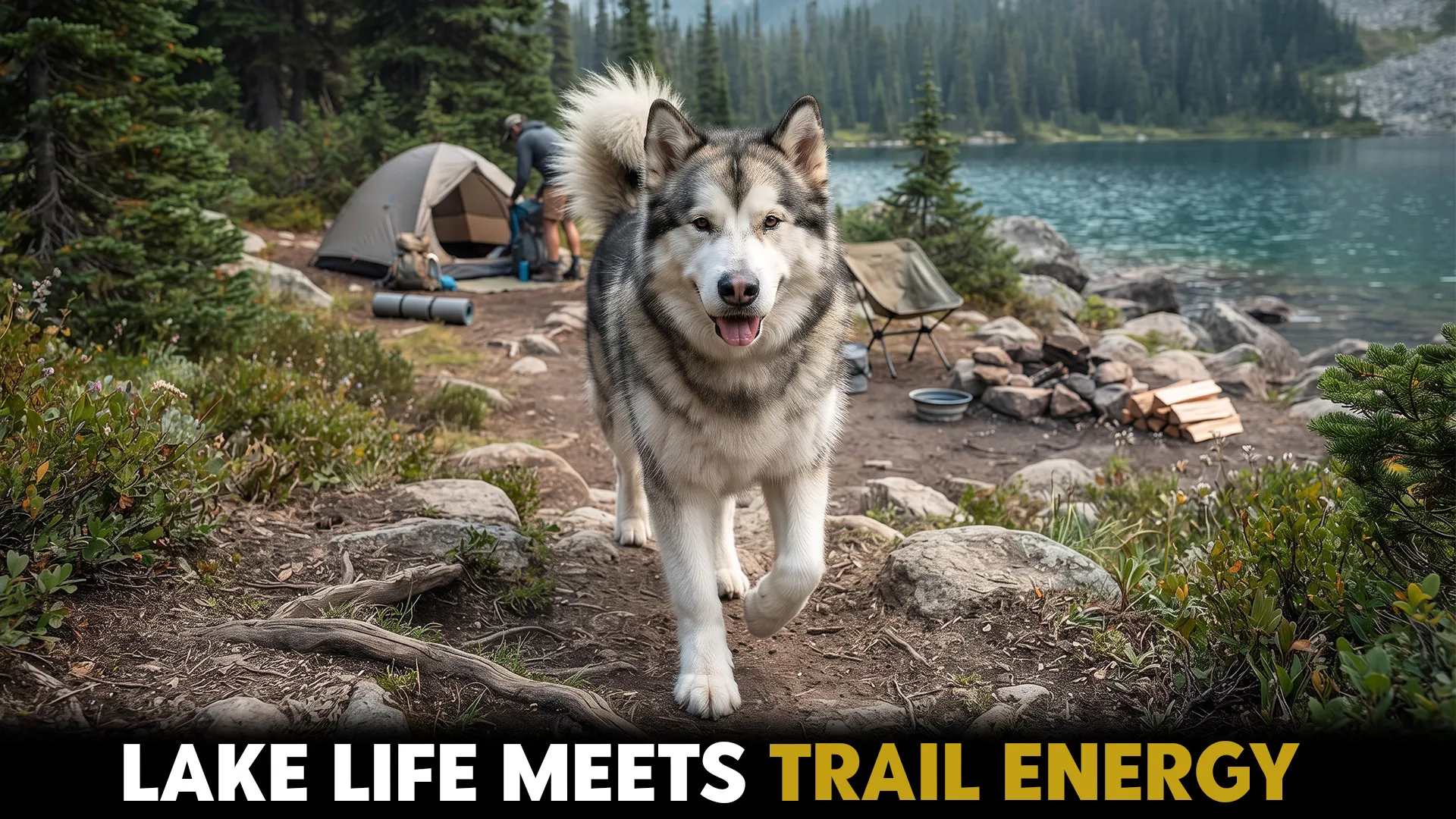
Lakeside camping with a dog sounds simple until the trail gets longer, the shoreline gets busy, and your companion finds every smell, sound, and splash impossible to ignore.
The right dog can make those moments easier because camping calls for more than a love of the outdoors. A good camp companion needs enough stamina for trails, confidence in unfamiliar surroundings, and the ability to settle when the day slows down. Water adds another layer.
Dogs should have fresh drinking water because lakes can contain harmful organisms, and swimming should always be supervised. A properly fitted life jacket can add safety around deeper water or boats. Trail rules matter too, since many parks restrict where dogs can go and require leashes.
With the right match, a lakeside campsite can become a place for morning walks, cool swims, muddy paws, and quiet evenings by camp. These explorer-ready breeds bring those qualities together.
Key Takeaways
Give an adventurous dog a lakeside campsite, and there is suddenly a whole day of trails, scents, water, and open space to explore.
Bloodhounds may follow one interesting scent with complete focus, while Redbone Coonhounds can keep pace on long hikes and steady runs.
Black and Tan Coonhounds bring their tracking talent, then the Alaskan Malamute and Siberian Husky raise the bar with the endurance that comes from their working past.
Further down the list, you’ll find dogs that can handle serious mileage, chase new scents, and stay busy from morning until evening.
Explorer‑Ready Dog Breeds for Lakeside Camping
1. Bloodhound
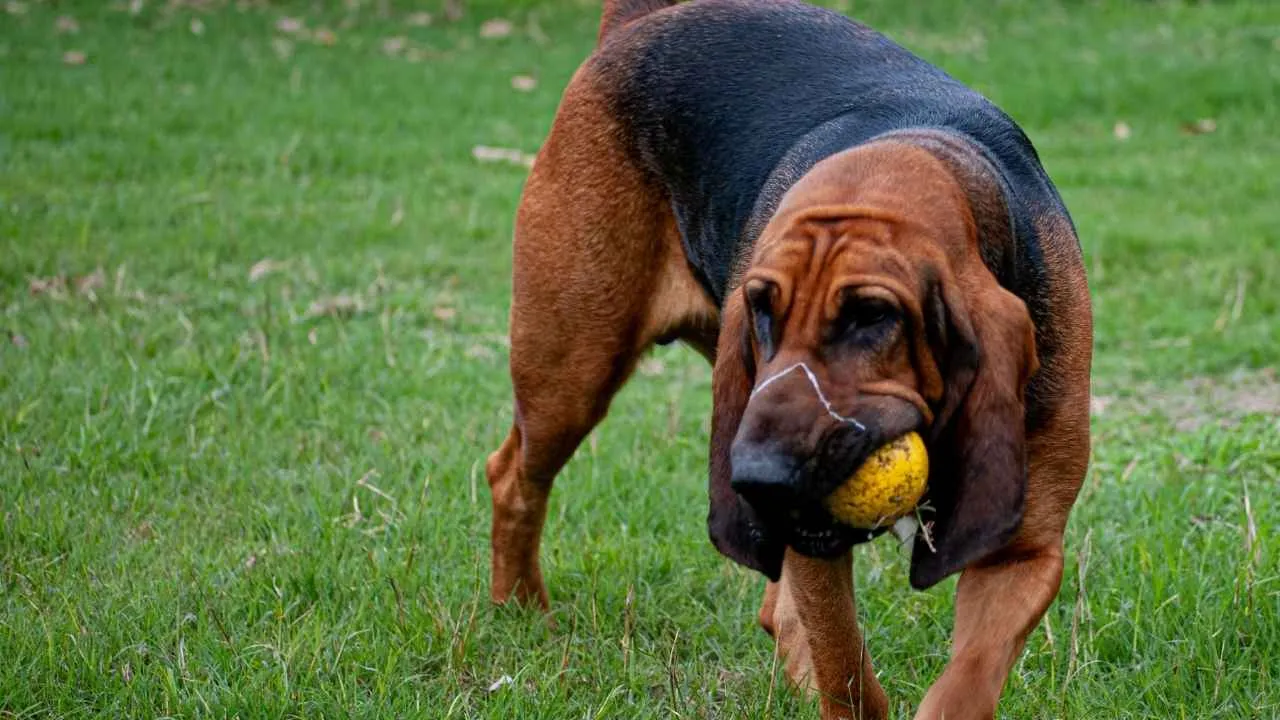
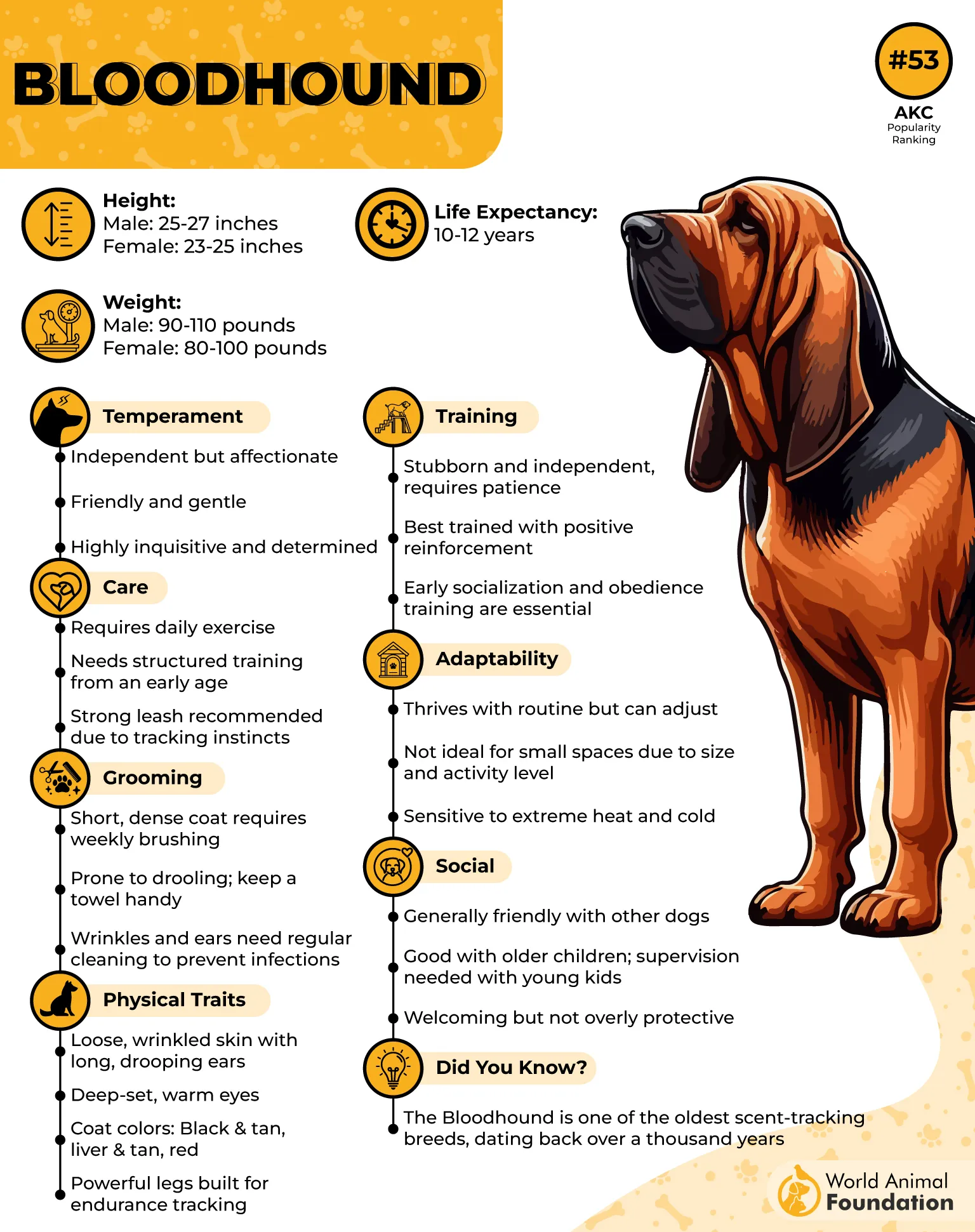
Bloodhounds were originally bred as a respected hunting dog in medieval Europe, with early examples associated with French monasteries and referred to as “blooded hounds” because of their noble bloodlines. By the 1800s, English police had turned to their exceptional scenting ability for tracking criminals.
A Nose for the Trail
Their extraordinary sense of smell makes scent-based exploration especially relevant on lakeside trips, where an interesting trail can quickly capture their full attention. Once a scent grabs them, they may follow it with intense determination, so secure leashes and enclosed areas matter.
Their love of exploring needs the right boundaries:
At least one hour of outdoor activity daily
Six-foot fencing is recommended
Some need supervision outdoors
Trail Time
Bloodhounds enjoy activities such as hiking, jogging, fetch, and nose work, giving a lakeside outing plenty of ways to keep those instincts engaged.
Their friendly nature usually extends to other dogs when everyone has been properly socialized, while unfamiliar people may receive a more reserved greeting, as Orvis noted.
2. Redbone Coonhound
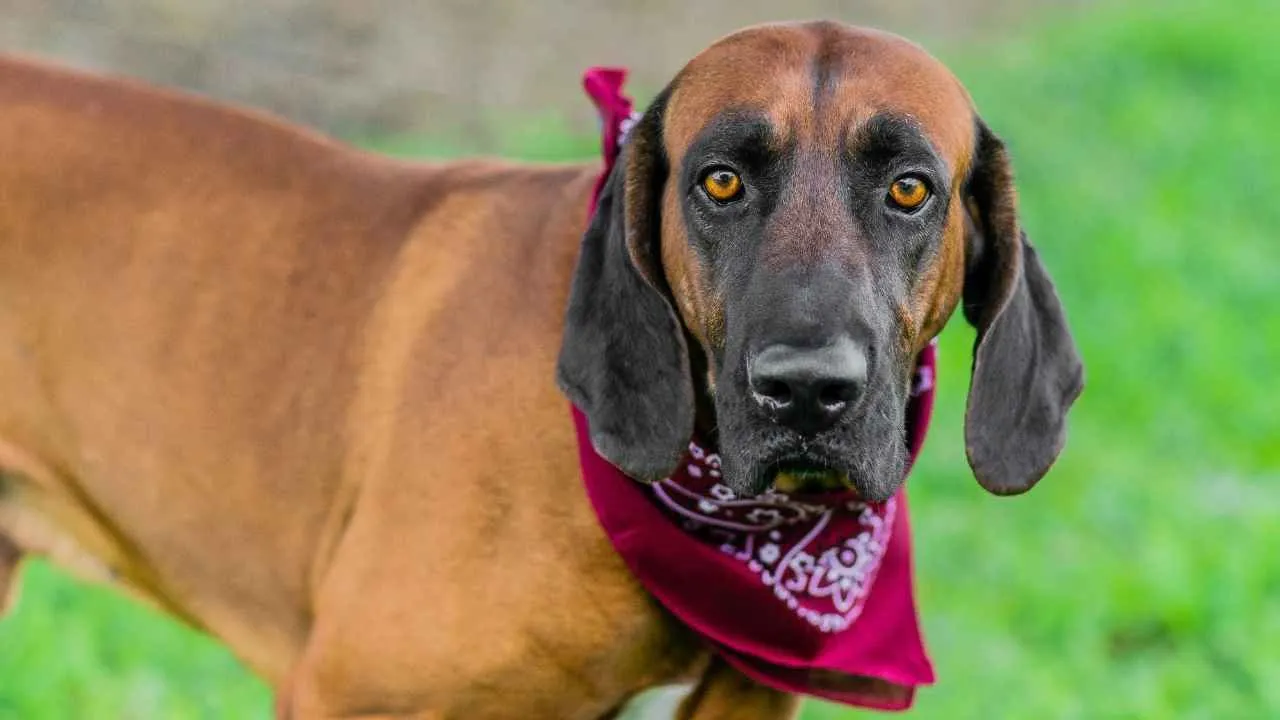
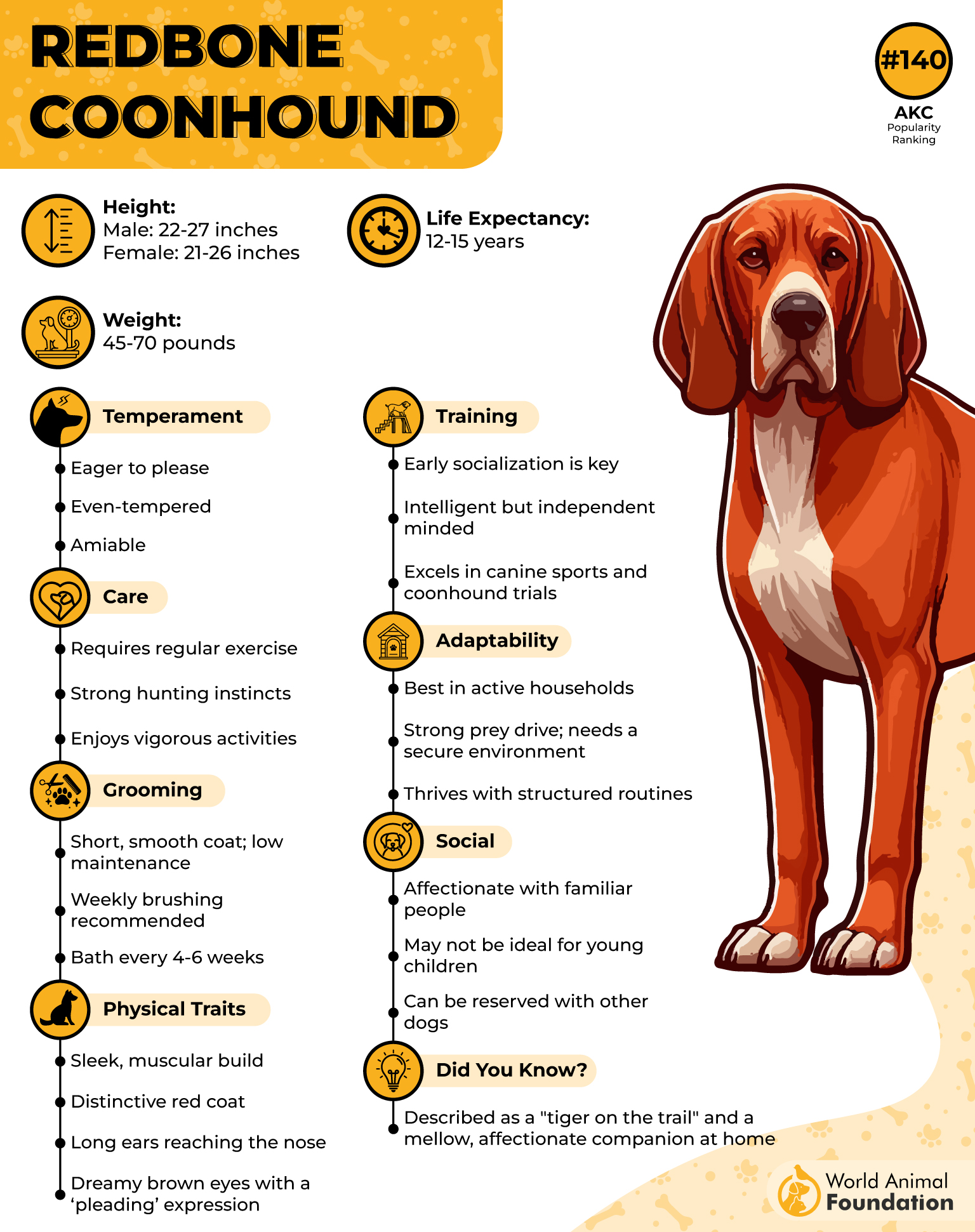
Redbone Coonhound came to the southeastern United States with Scottish immigrants, who relied on these dogs for tracking game and pursuing foxes and raccoons. Early Redbones had red coats with black saddle-like markings, while the breed seen today is entirely red.
Trail-Tested Abilities
Redbone Coonhound brings serious stamina to outdoor adventures, with healthy adults able to jog five miles or more at an easy, steady pace. Half-day to full-day hikes also fit their capabilities, giving them plenty of ground to explore around a lakeside campsite.
Its energy needs plenty of purposeful outlets:
One to two hours of vigorous activity daily
Hunting remains a favorite activity
Cats and small animals may trigger its prey drive
Social Around Camp
This adventure dog is highly social and enjoys sharing activities with its family, including hiking, fetch, agility, and nose work, as reported by PetMD. Its playful nature can make it a lively companion for older children, while its size and exuberance call for supervision around younger kids.
3. Black and Tan Coonhound
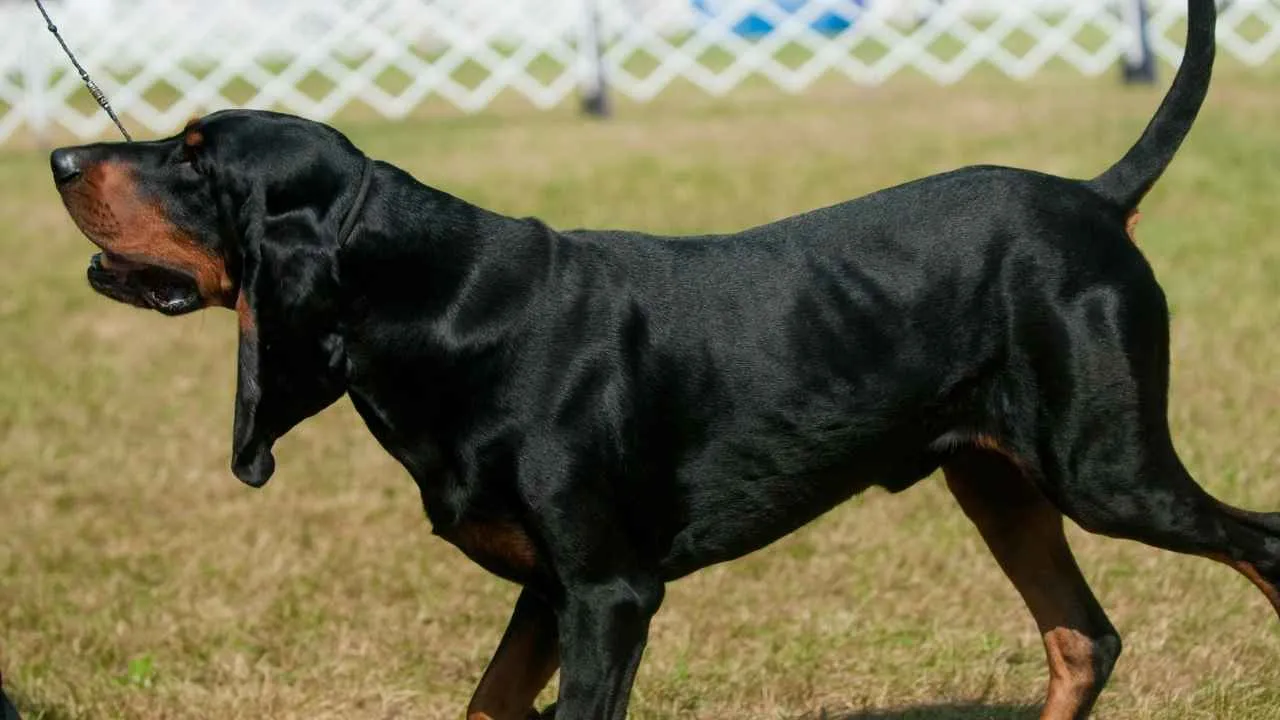
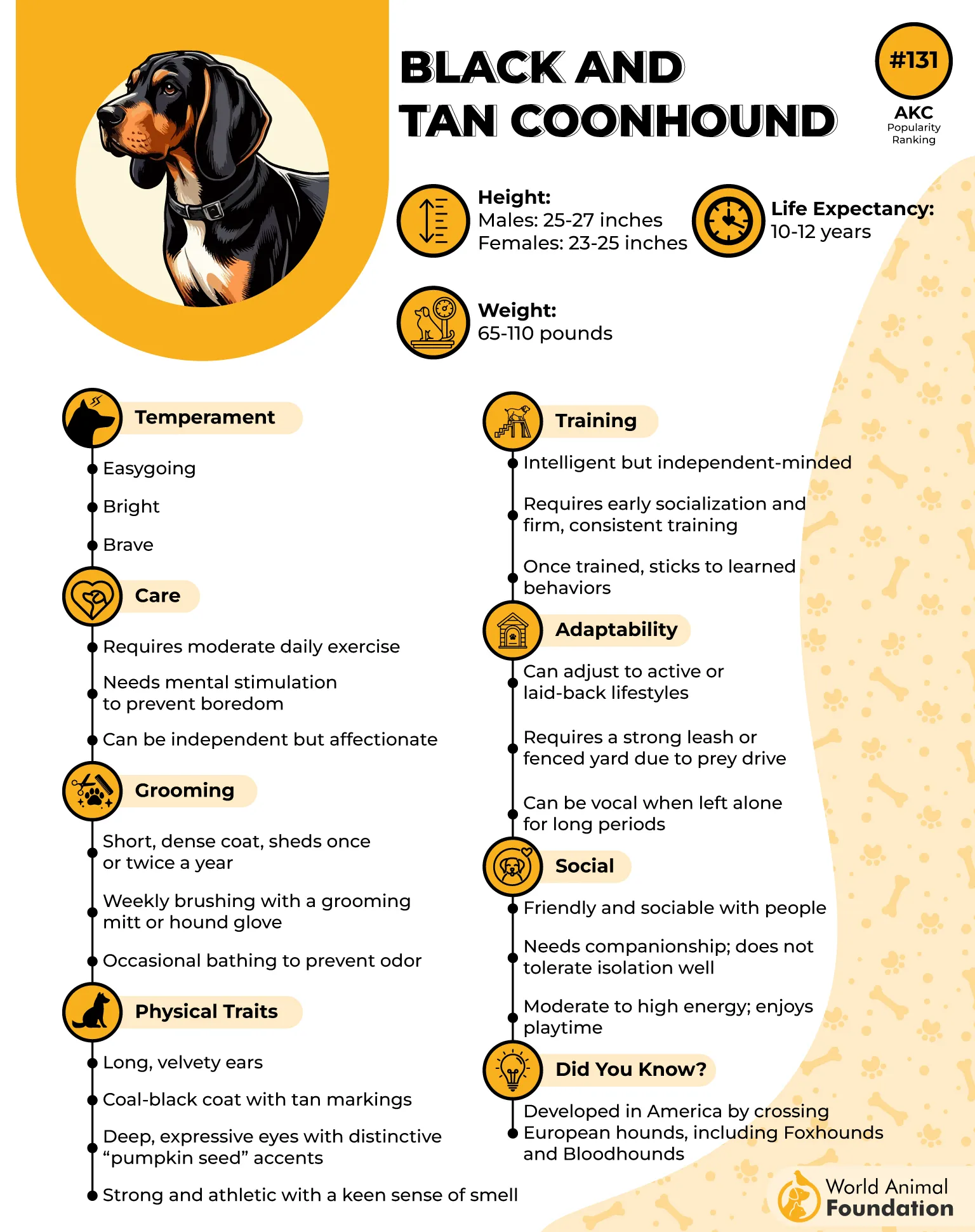
Black and Tan Coonhound was established in the United States as a hunting dog for tracking and treeing raccoons and other game. The breed was formally recognized by the American Kennel Club in 1945, after its American development around the turn of the century.
Strong on the Trail
This best dog breed has a remarkable sense of smell for wilderness outings, with the ability to follow old, faint scent trails for long distances, as Purina writes. Its rugged build and endurance also suit rough and varied terrain and extended days outdoors.
This is what makes lakeside exploration more interesting:
Can follow faint, aging scent trails
Enjoys nature, long hikes, and tracking work
May excel in search-and-rescue tasks
Easygoing at Camp
After sufficient activity, Black and Tan Coonhounds can become a relaxed indoor companion and may happily rest close to their people. Its deep bay can be surprisingly mournful, while the breed generally prefers being near its family rather than spending time alone in an outdoor kennel.
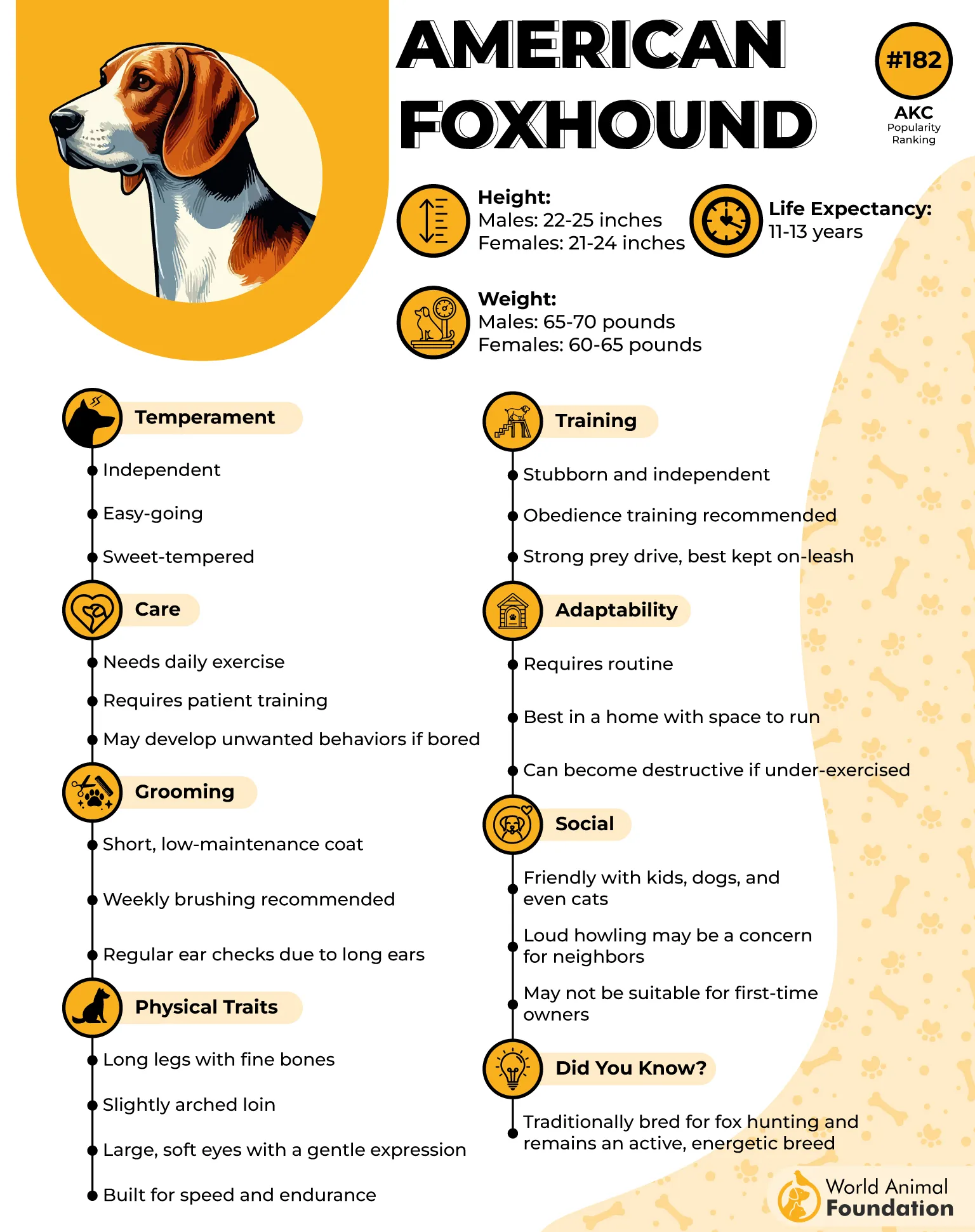
4. American Foxhound
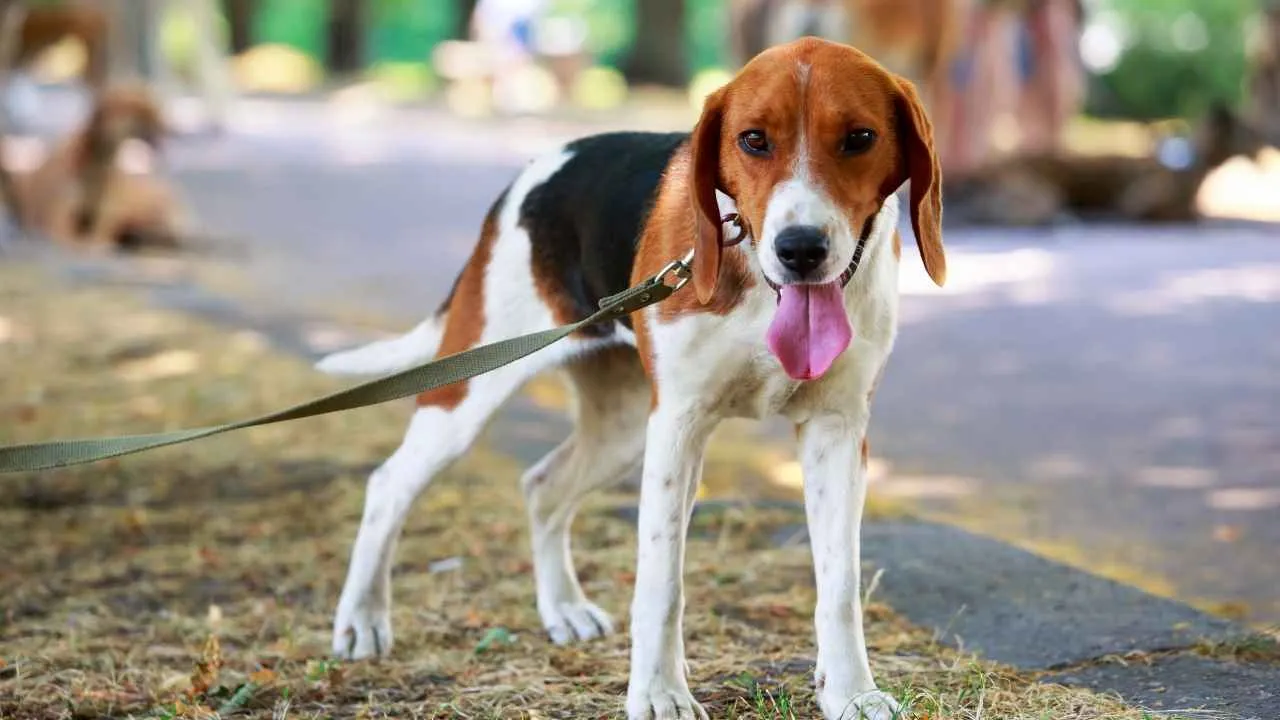
American Foxhound arrived in America during the 1650s through English imports, and fox hunting became especially fashionable among wealthy colonists by the 1700s. Later crosses with American Coonhounds and Irish Foxhounds helped produce the leaner, faster type recognized today.
At Home on the Trail
This athletic dog used to follow a fox scent across rough terrain for long distances, making hiking and rugged outdoor routes a natural fit. Its powerful nose can keep the dog focused on a scent for miles, so leash use or secure fencing is essential near open areas.
That outdoor profile includes some useful specifics:
At least an hour of daily exercise
Swimming and tracking suit the breed
Competitive sports include agility and rally
Social Around Camp
American Foxhound has an easygoing, mild-mannered personality and often warms up quickly to unfamiliar people. After hiking, swimming, or camping, this outgoing hound can happily spend the evening near its family while still needing consistent training to manage its strong chase instinct.
5. Alaskan Malamute
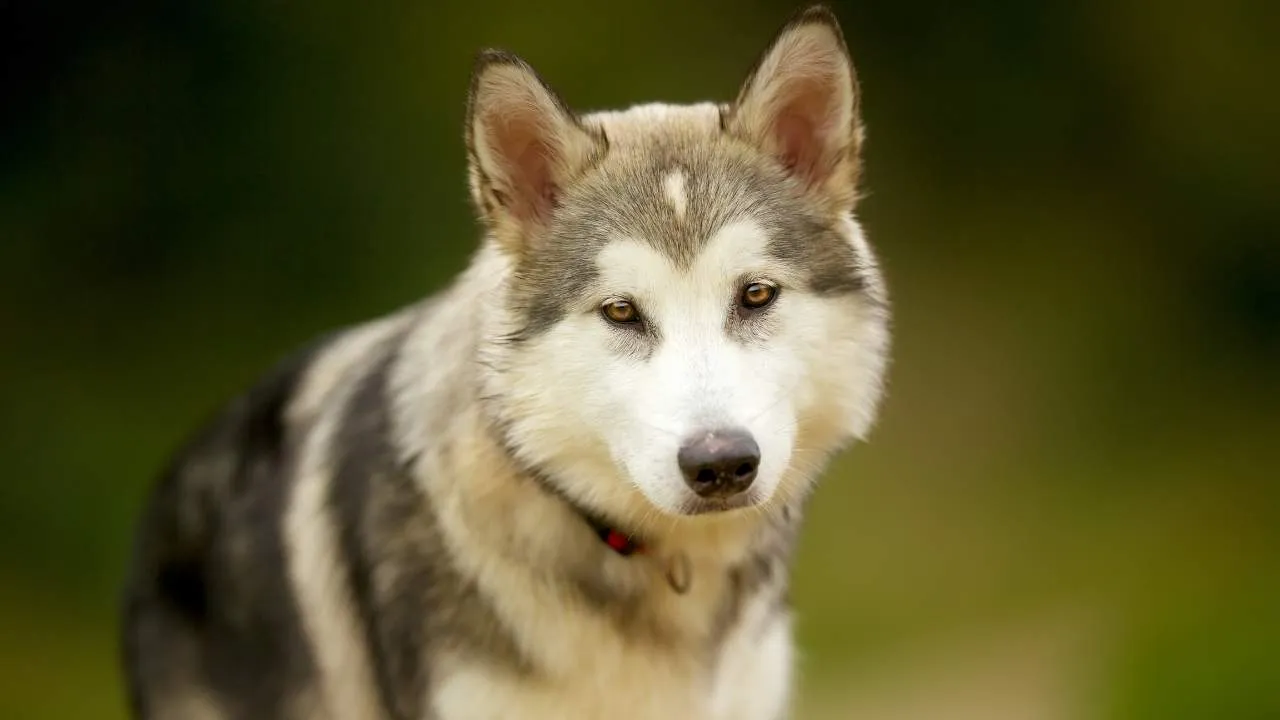
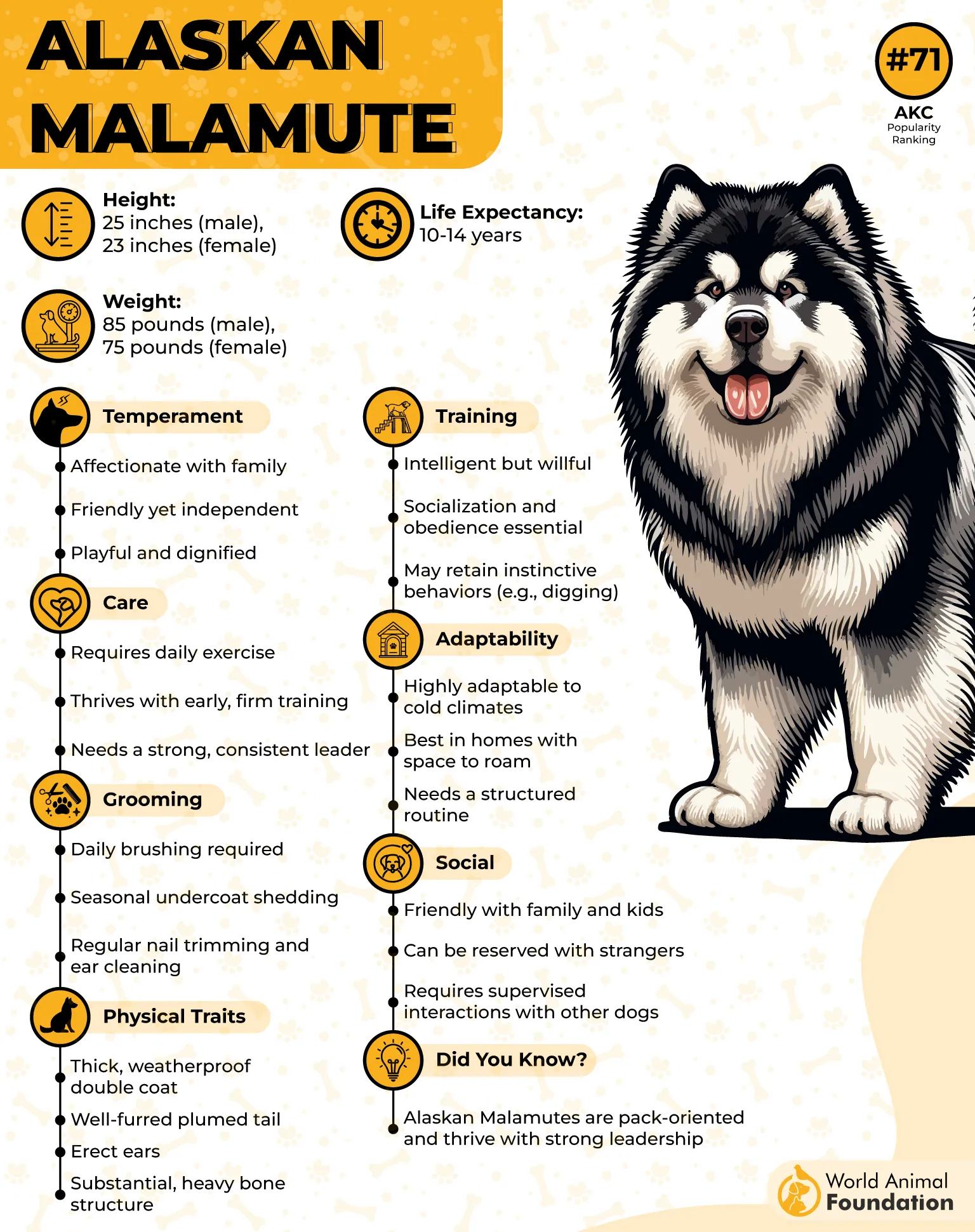
Alaskan Malamute emerged from Alaska’s Arctic regions, where it lived and worked alongside Native Inuit communities along the northern coast. Hunters relied on these powerful dogs to help bring large prey, including seals and bears, back to their villages across demanding and rugged terrain.
Made for the Miles
This hiking dog has the stamina for long wilderness outings, with enough strength to pull heavy sleds loaded with supplies over many miles. Its thick double coat and broad feet are suited to snow, while a highly developed sense of smell adds another useful outdoor skill.
These points reflect the adventurous side of this big dog:
Can manage day-long hikes
May run 10 miles or more when fit
Participates in skijoring and sledding
A Dog With a Job
Alaskan Malamute needs more than an hour of vigorous activity each day, with running, swimming, agility, and obedience among its possible outlets. When daily work is missing, howling, digging, and destructive chewing can become ways to release unused energy.
6. Siberian Husky
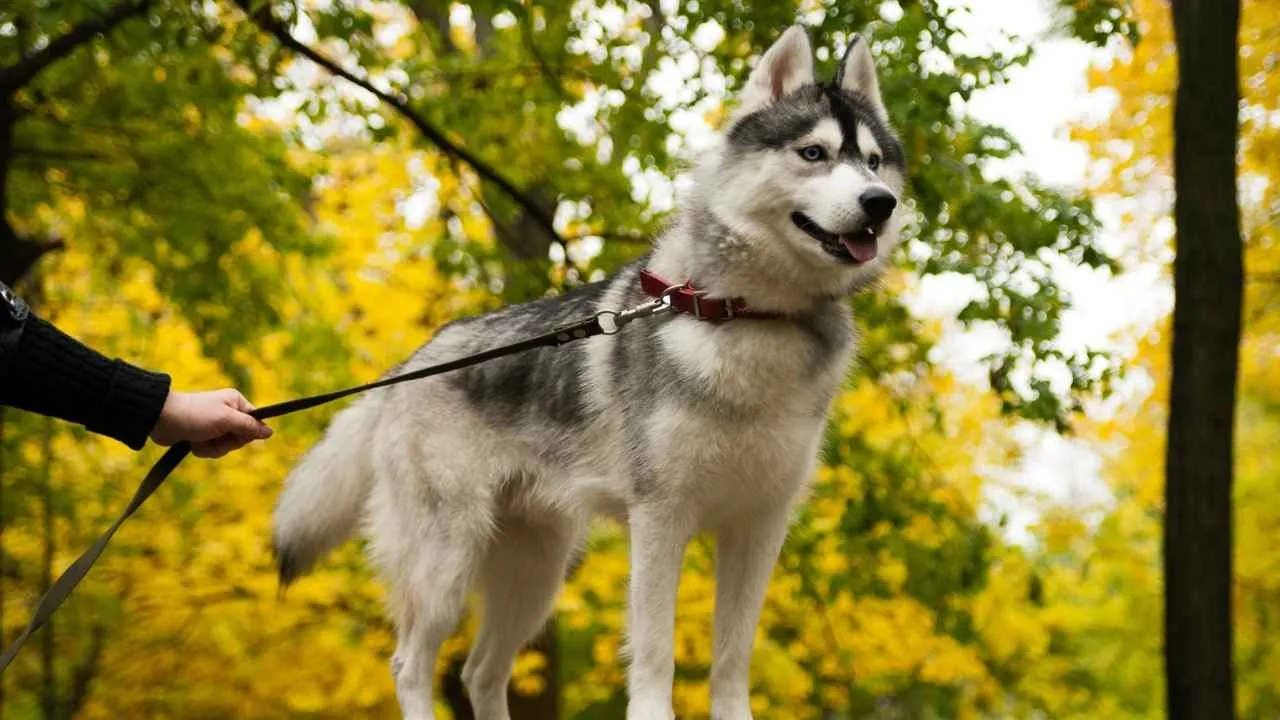
Siberian Husky originated in Northeast Asia, where the Chukchi people relied on these dogs for sled work and transportation across the harsh Arctic. Their Spitz ancestry and long association with nomadic communities gave the breed a clear purpose as a dependable and enduring traction dog.
Natural Trail Companions
These wonderful companions have impressive endurance for long outdoor routes, with the ability to run for hours once properly conditioned. For lakeside camping, running, hiking, and sledding can give this tireless working breed the sustained activity it naturally seeks.
The following considerations matter on longer outings:
Better suited to distance than sprinting
Needs protection from warm-weather overheating
Strong pulling instinct can complicate loose-leash walking
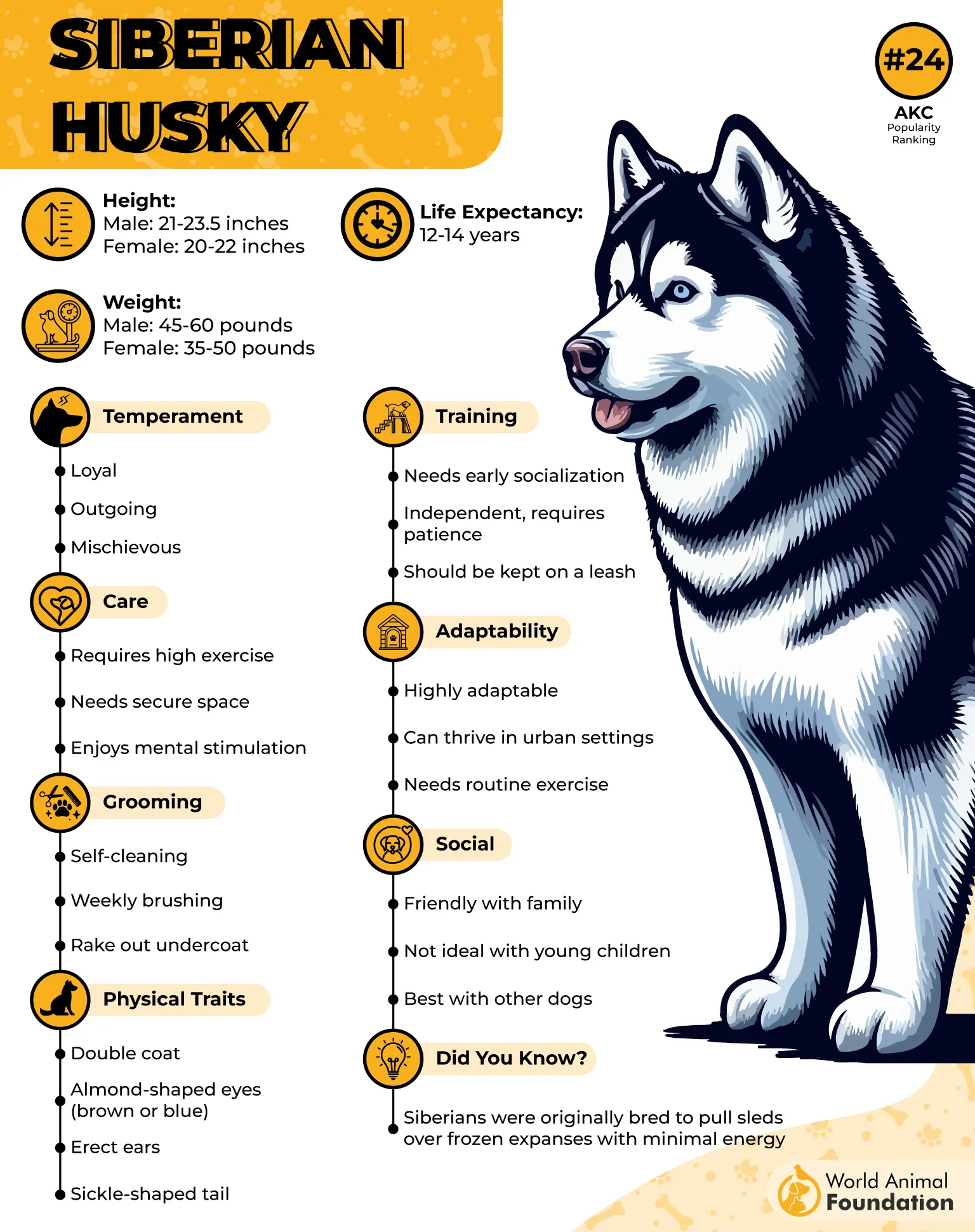
Wanderlust Included
Siberian Husky has a powerful urge to explore and can take off when an opportunity appears, making reliable recall especially difficult. Secure fencing, a leash, or a harness becomes important around campsites, trails, and unfamiliar outdoor areas.
7. Great Pyrenees
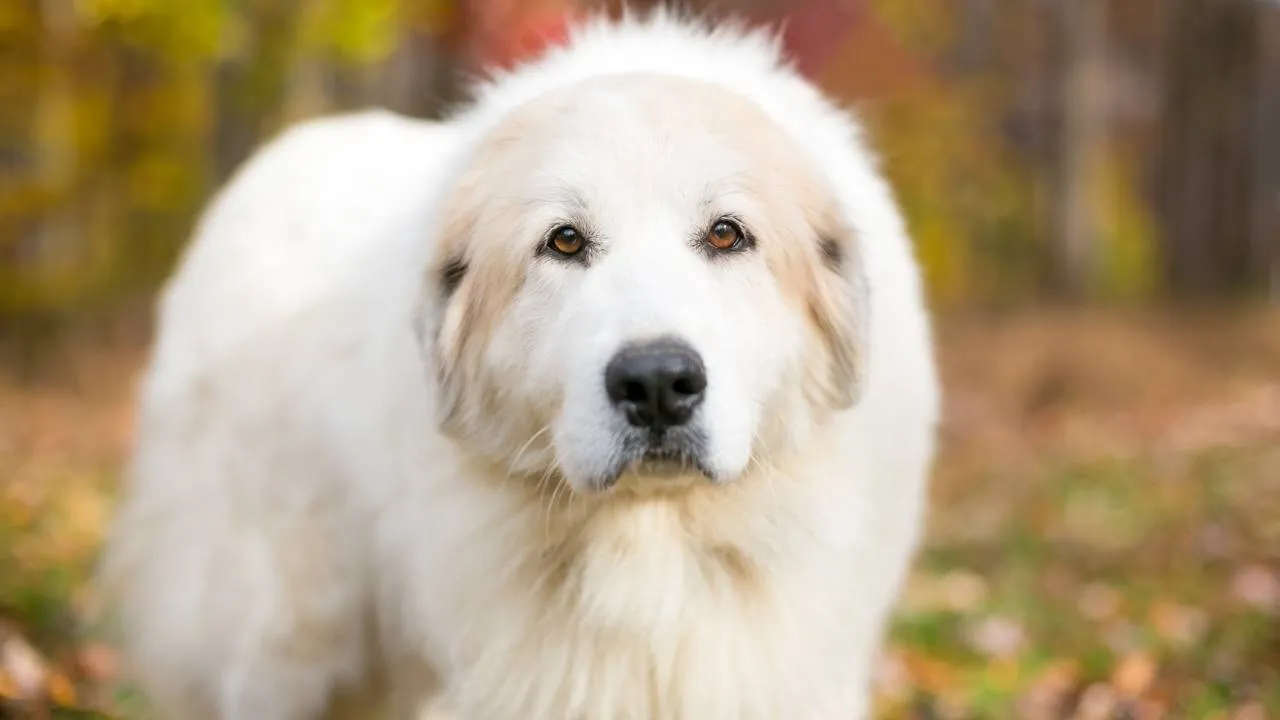
Great Pyrenees spent centuries guarding sheep and goats across mountainous regions, a role that demanded judgment and independence. In 1675, Louis XIV named the breed the royal dog of France, after which its guarding work also extended to large estates.
Adventure-Ready Breeds
This hiking companion has a useful mix of size, endurance, and measured energy for outdoor environments, with hiking being one of its suitable activities. Cool-weather trails are especially appropriate, while hot or humid conditions can create a serious overheating risk.
Its activity needs leave room for flexible outings:
Hiking suits their natural working style
Short jogs may be manageable
About 20 to 30 minutes of daily exercise can suffice
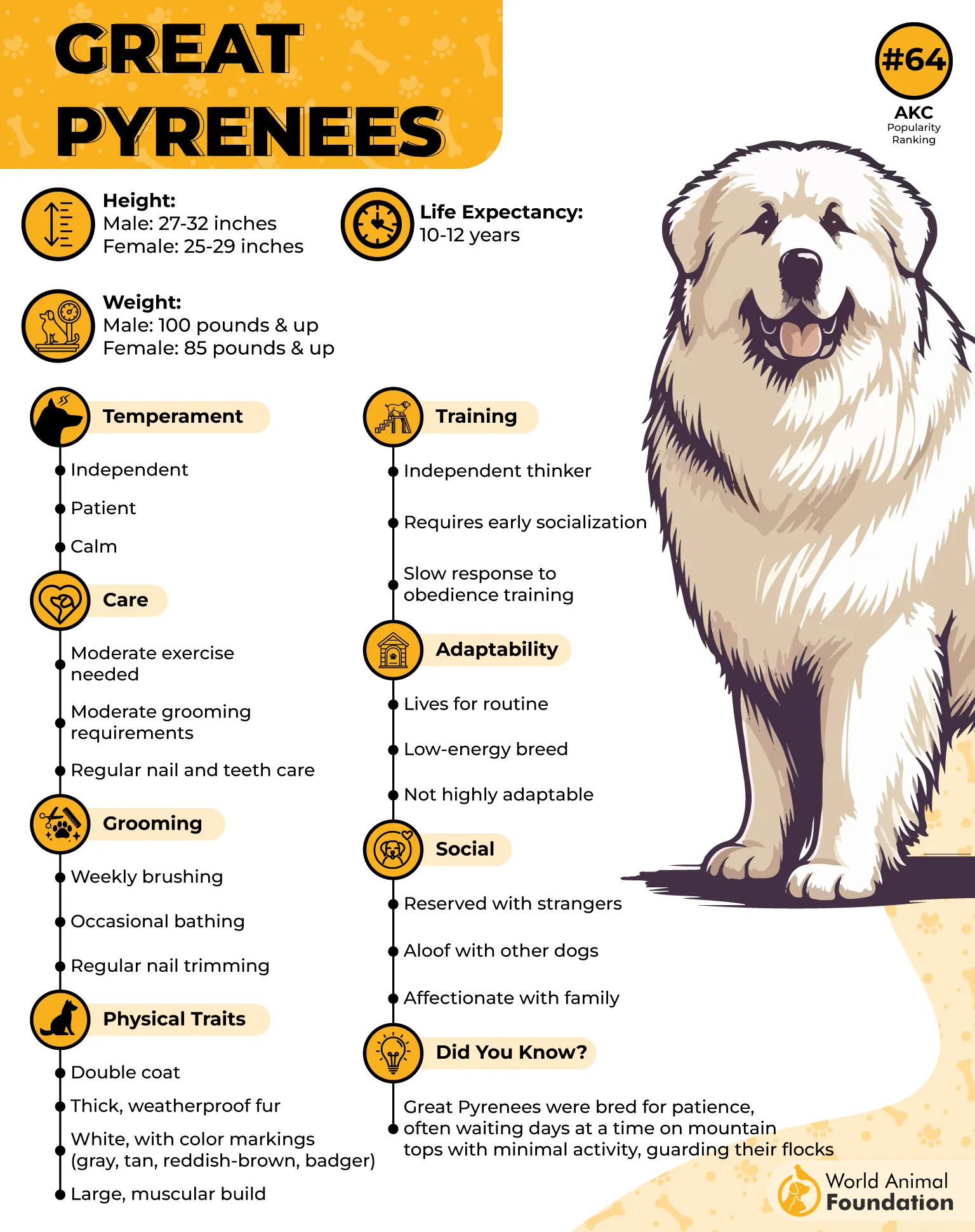
A Watchful Campmate
Great Pyrenees has a strong protective instinct and tends to alert its family when unfamiliar people approach. Its flock-guarding role also means it can make independent decisions, so consistent training and early socialization are important around new people and animals.
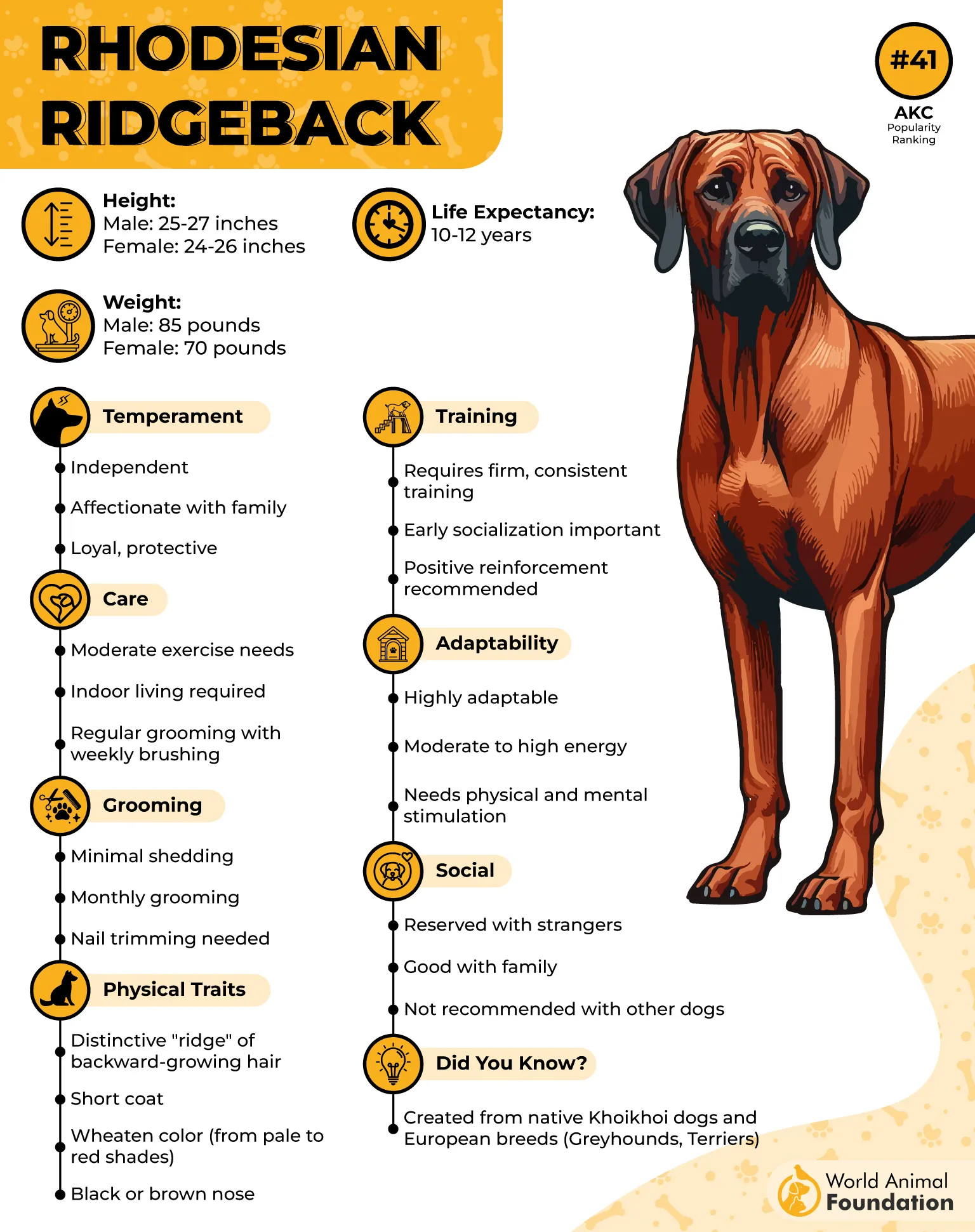
8. Rhodesian Ridgeback
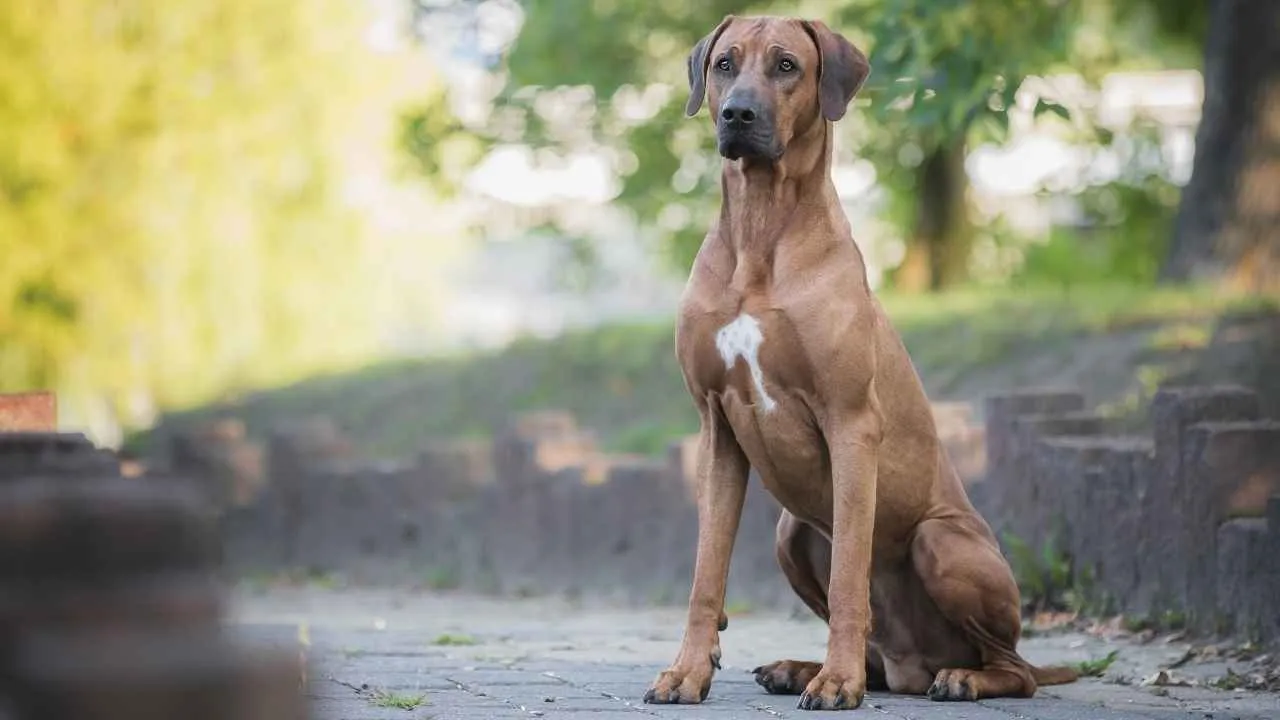
Rhodesian Ridgeback traces its early lineage to dogs brought by European settlers in the 16th and 17th centuries, including Mastiffs, Bloodhounds, Great Danes, Pointers, and Greyhounds. These were crossed with native hunting dogs, eventually producing the ridge-backed hunter associated with southern Africa.
Born for the Outdoors
They have athleticism and remarkable endurance for outdoor adventures, with keen eyesight and a strong sense of smell that can pick up distant activity.
Its ability to tolerate heat and keep pace over demanding distances makes long hikes, jogging, and active trail days especially suitable.
Its stamina opens the door to longer adventures:
More than 30 minutes of brisk activity is needed daily
Six to eight miles can suit a fit, conditioned dog
A healthy dog may handle hikes of around 10 miles
Serious Senses
This intelligent dog can spot something long before a person notices it, thanks to its sharp vision and strong scenting ability. Its high prey drive also means a blowing bag or other fast-moving object can trigger a sudden chase, making secure trail control important.
9. Weimaraner
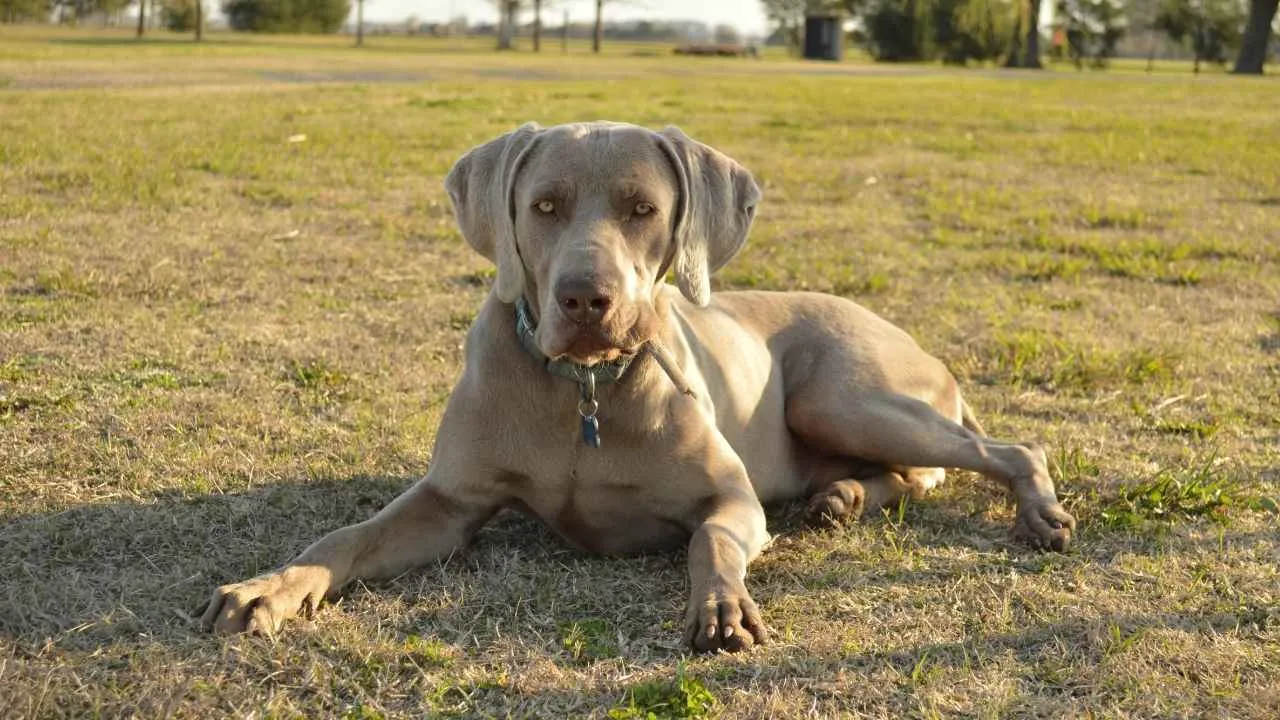
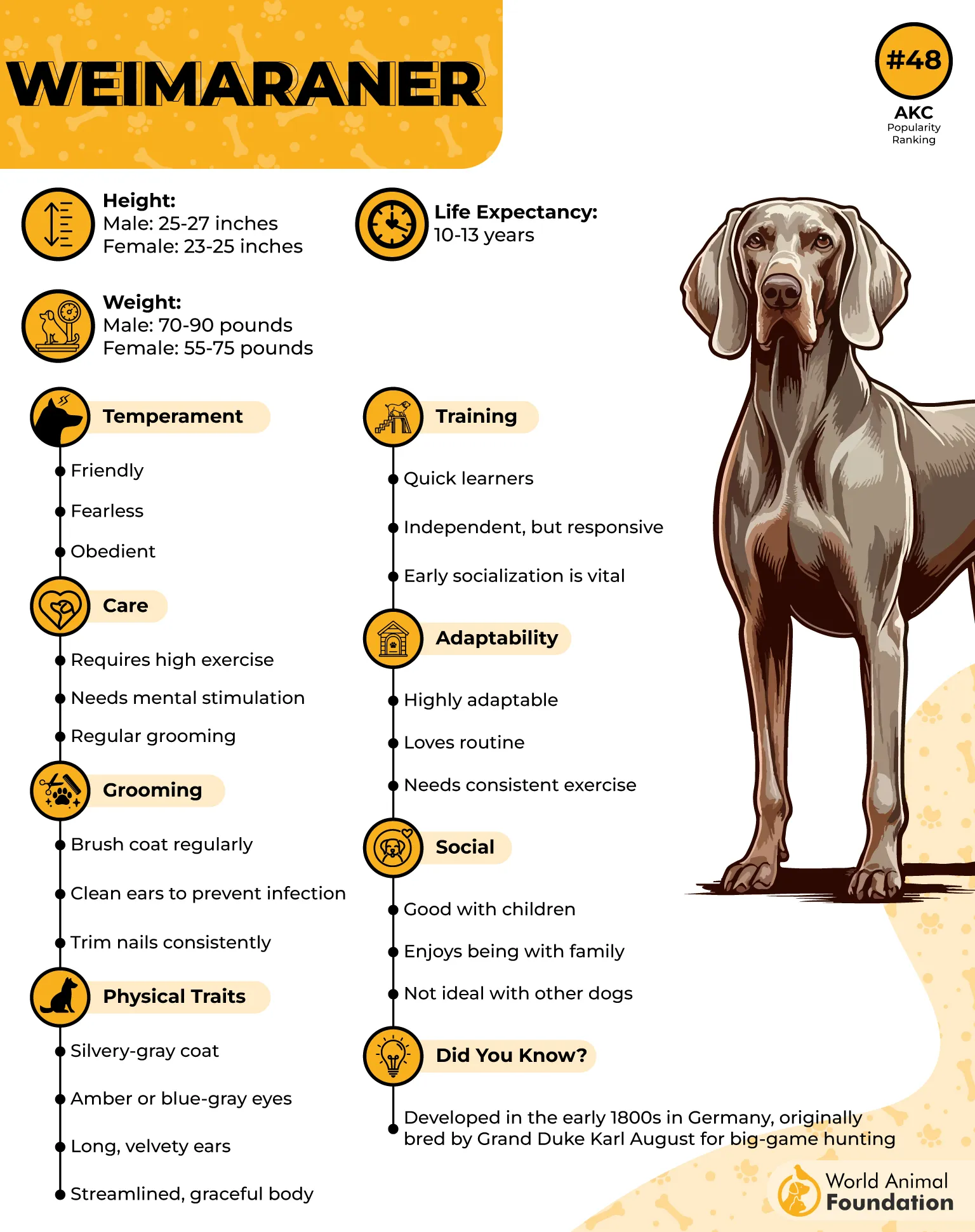
Weimaraner was bred in the 19th century as a hunting companion for nobility, with the breed named after the Grand Duke of Weimar. Earlier records and artwork suggest similar dogs may have appeared in the court of Louis IX of France centuries earlier.
Made for the Outdoors
Built for demanding outdoor pursuits, this good hiking dog can accompany an active family on long days around lakes, trails, and open ground. Its endurance is substantial, with a well-conditioned adult potentially handling runs of up to 10 miles or hikes reaching 20 miles.
Several traits contribute to its outdoor abilities:
Needs one to two hours of high-impact exercise daily
Running and jogging suit its energy better than casual walks
Swimming, fetch, hiking, and agility provide varied outlets
A Dog That Wants Company
Weimaraner enjoys being close to people and can become restless when separated from them for long periods during the day. It also needs close supervision outdoors because it may chase small animals, roam beyond boundaries, or even figure out how to unlatch gates and kennel doors.
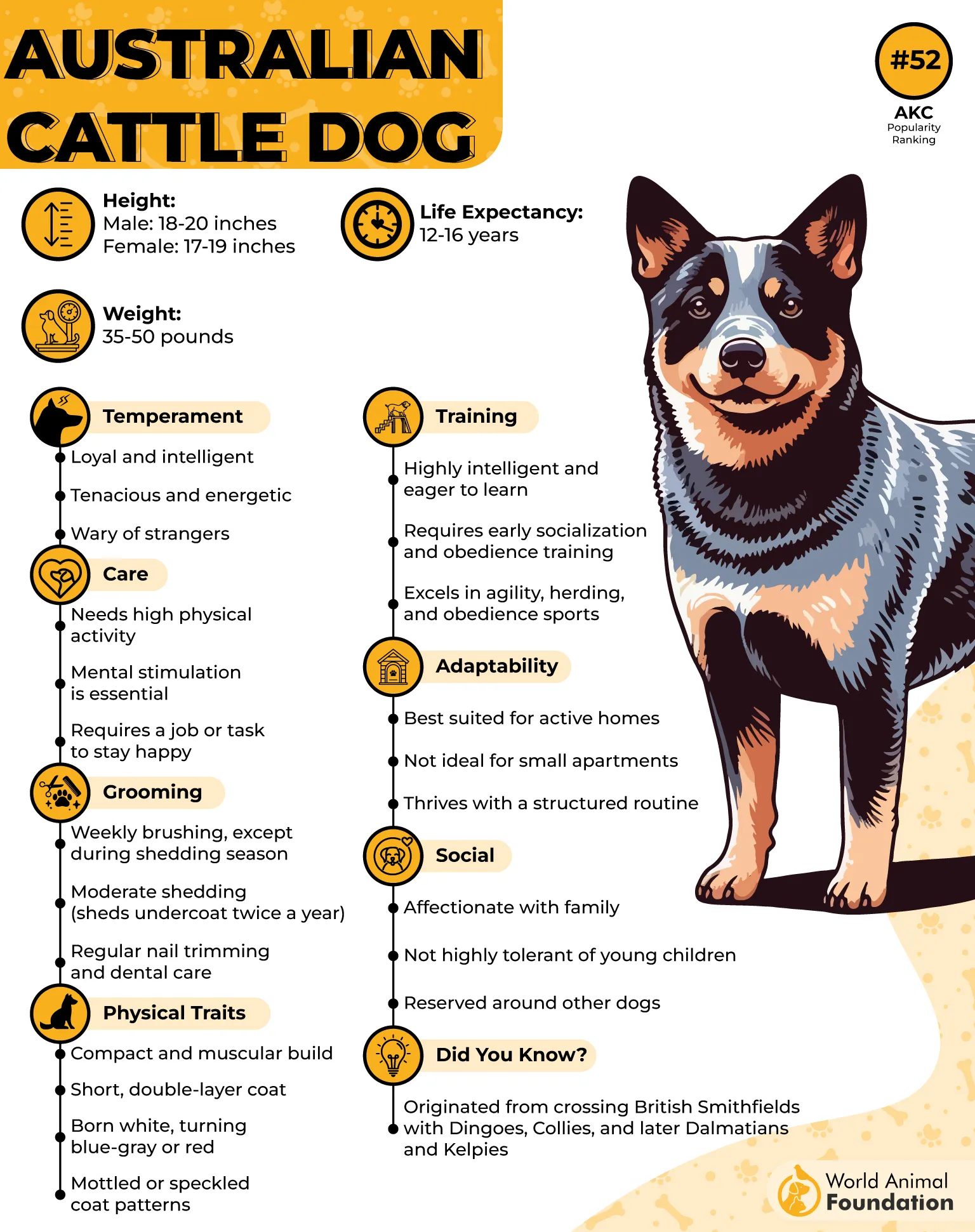
10. Australian Cattle Dog
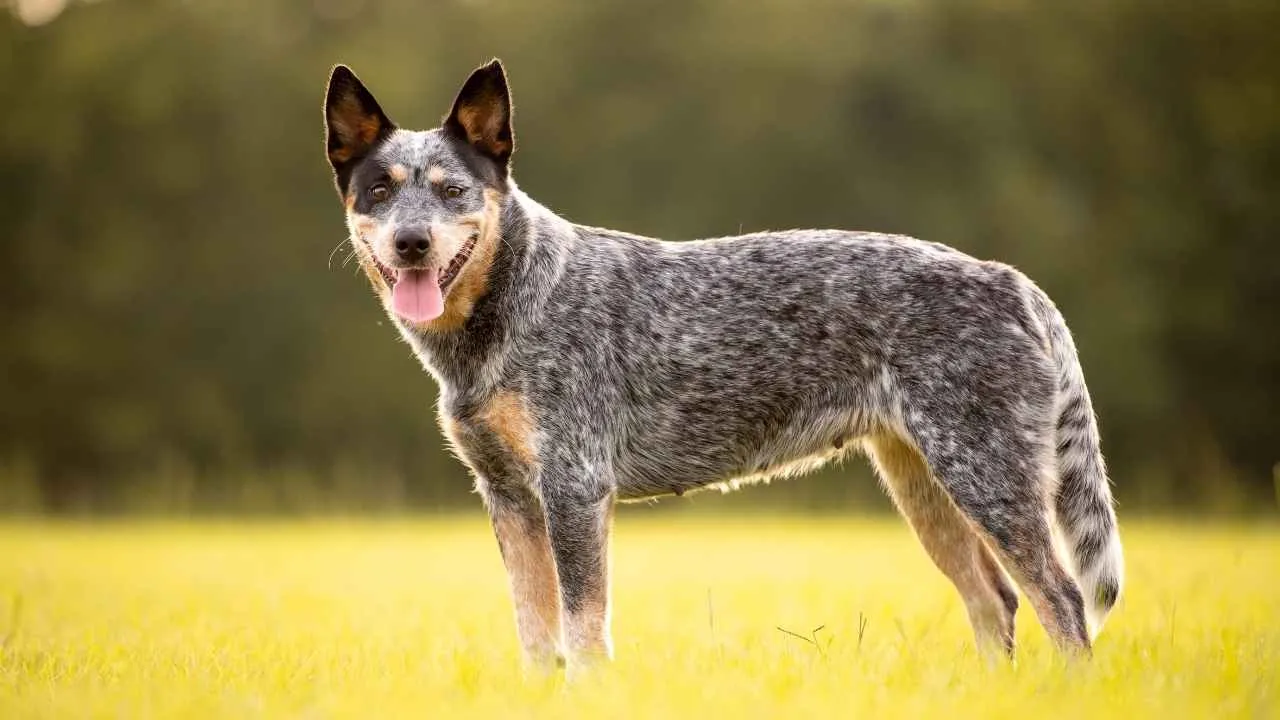
Australian Cattle Dog emerged in early 1800s Australia when cattle grazing expanded across vast, difficult country. In 1840, Thomas Hall crossed Blue Merle Highland Collies with tame Dingoes, producing the dogs later known as Hall’s Heelers for working cattle across rough terrain.
Made for Wild Terrain
ACDs can handle demanding outings far beyond a casual walk, making endurance especially relevant for lakeside hikes and extended outdoor days.
Healthy dogs can run for more than five miles and manage half-day hikes, with full-day hikes possible when rest stops are included.
This is what adds another layer to their outdoor profile:
Strong heel-nipping herding method
Can work from sunrise to sunset
Excels in agility and obedience sports
A Job for That Drive
This herding dog needs frequent physical activity and mental stimulation, with running and herding providing useful outlets. A routine without enough purpose can leave this intensely active breed restless and prone to nuisance barking or destructive chewing.
Conclusion
Lakeside camping can give an active dog plenty to explore, from wooded trails and scents to cool water on longer outings. The right companion needs stamina for the distance, confidence in unfamiliar surroundings, and the natural endurance athletes need for moderate hikes. Water safety also matters around deep areas, boats, and changing shorelines.
Dog owners should carry fresh drinking water, use a life jacket when appropriate, and follow park leash rules. Secure control is important for dogs with boundless energy that wander or chase wildlife.
With thoughtful planning, outdoor adventures can offer exercise, exploration, and relaxed evenings without turning camp into a constant challenge.
