




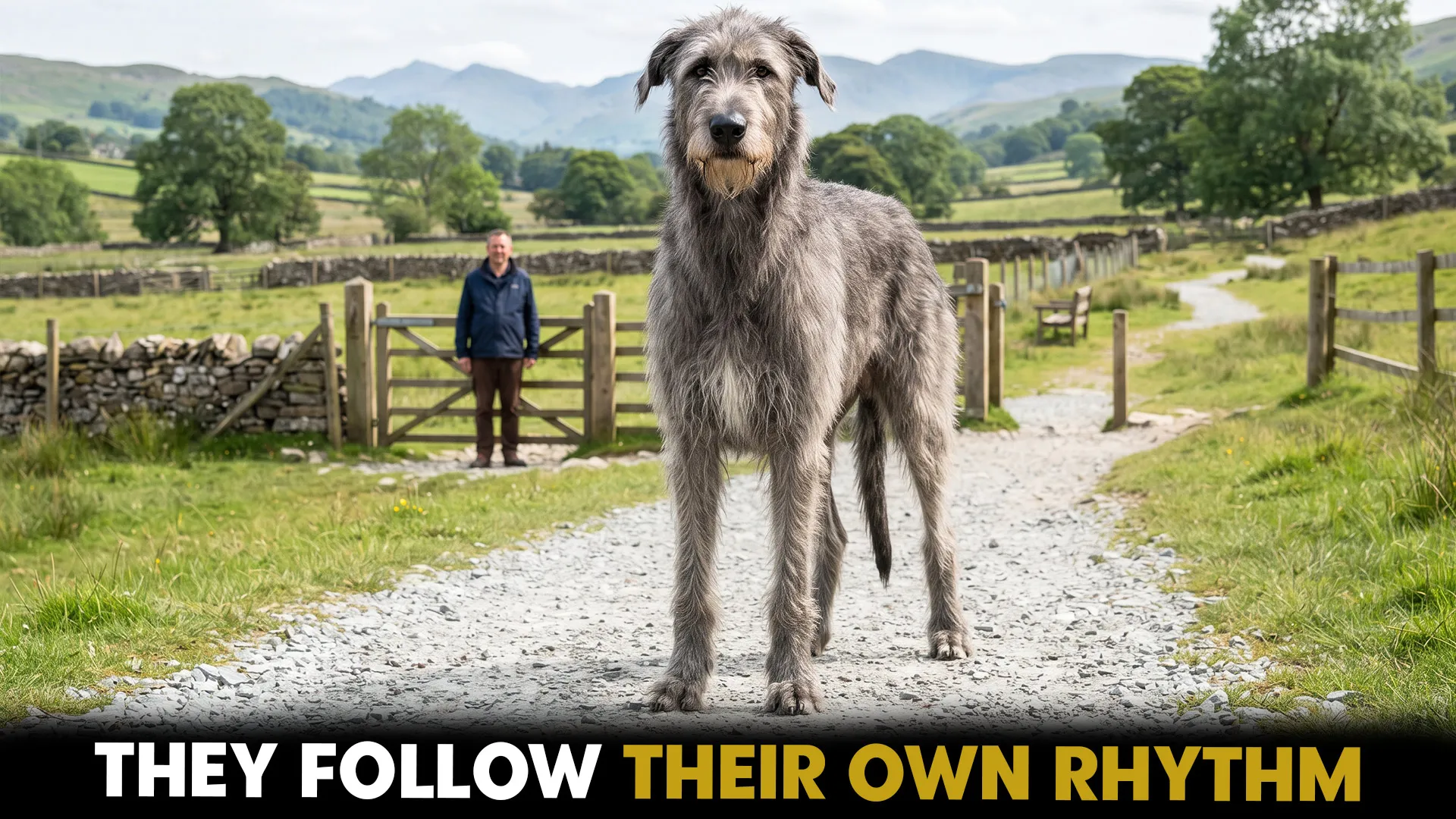
If you’ve ever lived with a giant breed, you know the drill: you give a command, and they take a full five seconds to decide if it’s actually worth their time.
That pause isn’t stubbornness; it’s pure working instinct. Built to guard livestock and secure vast properties without human direction, 100-plus-pound working dogs are wired to make their own decisions.
That built-in independence is also what makes many of them surprisingly low-maintenance guard dog breeds. They don’t need non-stop training or constant micro-management to do their job; their size, confidence, and natural protective instincts do all the work.
Here are seven powerful, self-reliant giant breeds that naturally hold down the fort and what life with them is really like.
Big Dog Breeds with the Most Independent Spirits
1. Tibetan Mastiff
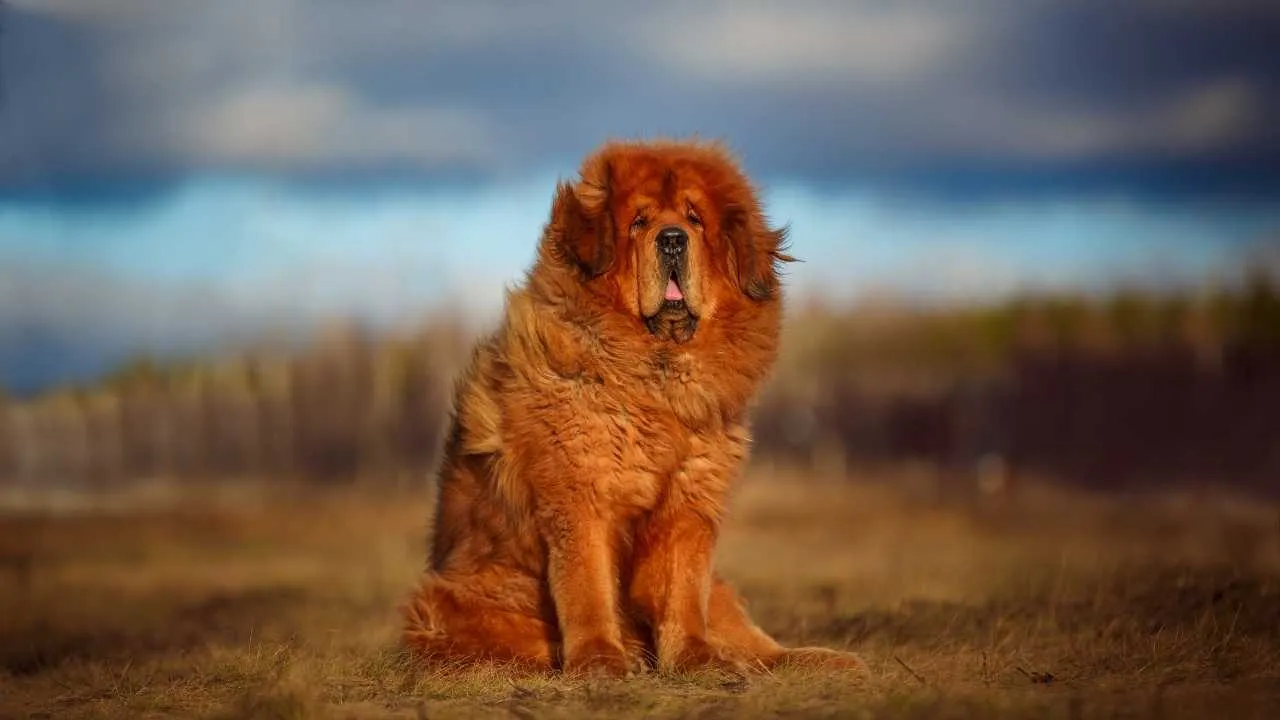
Some dogs guard the house. A Tibetan Mastiff seems to guard the entire horizon. They can stand quietly at the edge of the yard, watching everything with the seriousness of a seasoned security chief.
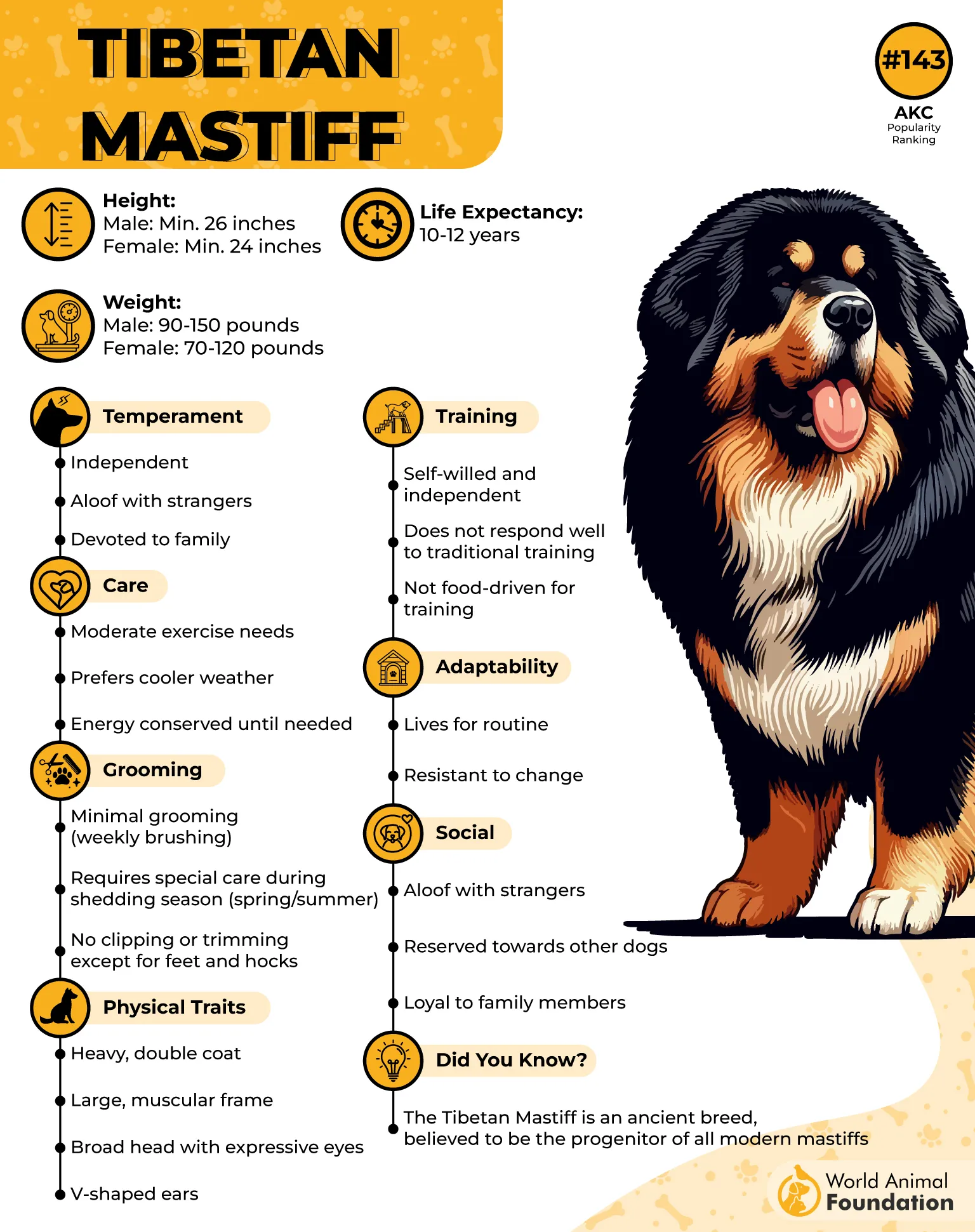
This giant dog breed developed in Tibet and nearby Himalayan regions to guard homes, monasteries, and livestock. Their massive head, muscular frame, curled tail, and heavy double coat suited harsh mountain life. Their greatest asset, though, was judgement. They were expected to assess situations without constant human direction.
At home, Tibetan Mastiffs can be devoted without becoming clingy. They tend to be reserved around strangers and alert to anything unusual near their territory. Their impressive bark can turn a quiet night into an unexpected neighborhood announcement.
They are highly intelligent, but that intelligence comes with opinions and disobedience, as Greencross Vets added. They might understand your request perfectly before deciding whether it deserves their attention.
Training & Exercise
Early socialization is essential around people and other pets. Positive reinforcement, patience, and consistency work better than force.
Daily walks, supervised outdoor exploration, and mental activities suit them well. They need room to patrol safely, and secure fencing is important because this independent guardian should not wander off-leash.
2. Great Pyrenees
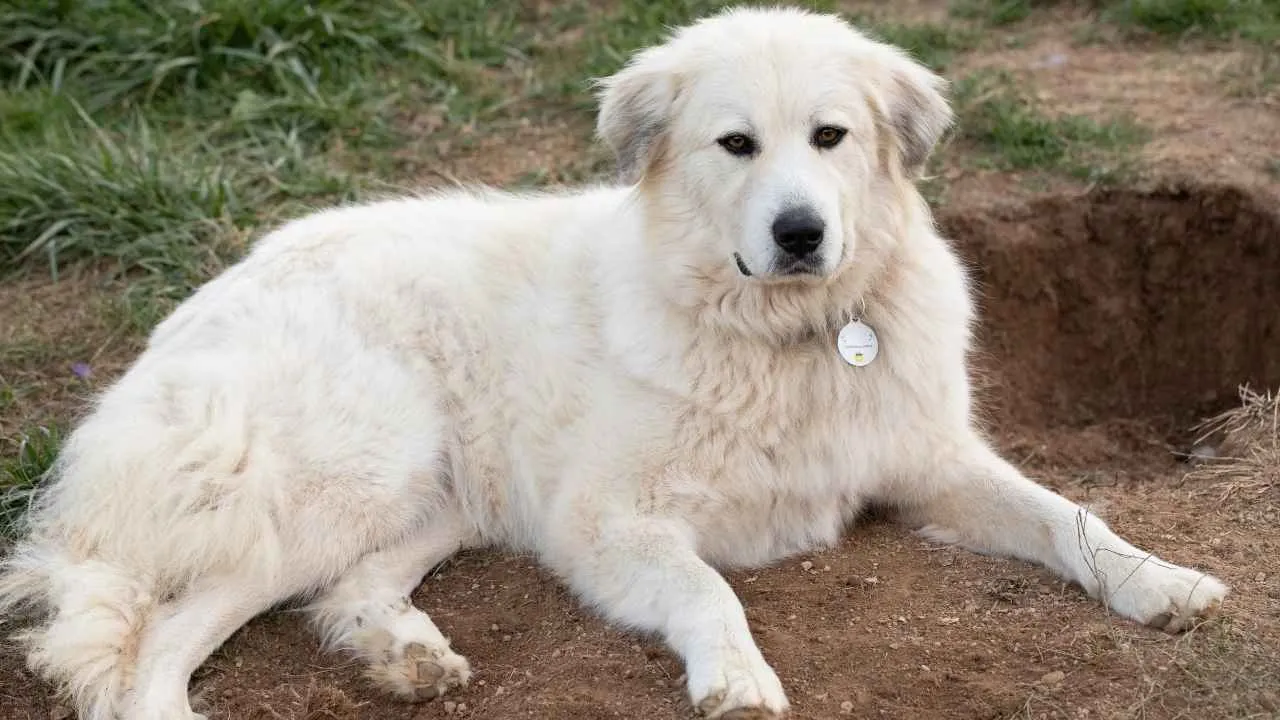
A Great Pyrenees can make a pasture feel like a fortress simply by standing in it. That peaceful expression hides a serious, imposing guardian with an incredibly strong body shaped by generations of independent work.
This majestic breed was developed in the Pyrenees Mountains to protect livestock from predators. Their substantial frame, flowing white coat, and weather-resistant double coat helped them handle rugged conditions. Their work demanded patience, awareness, and confidence.
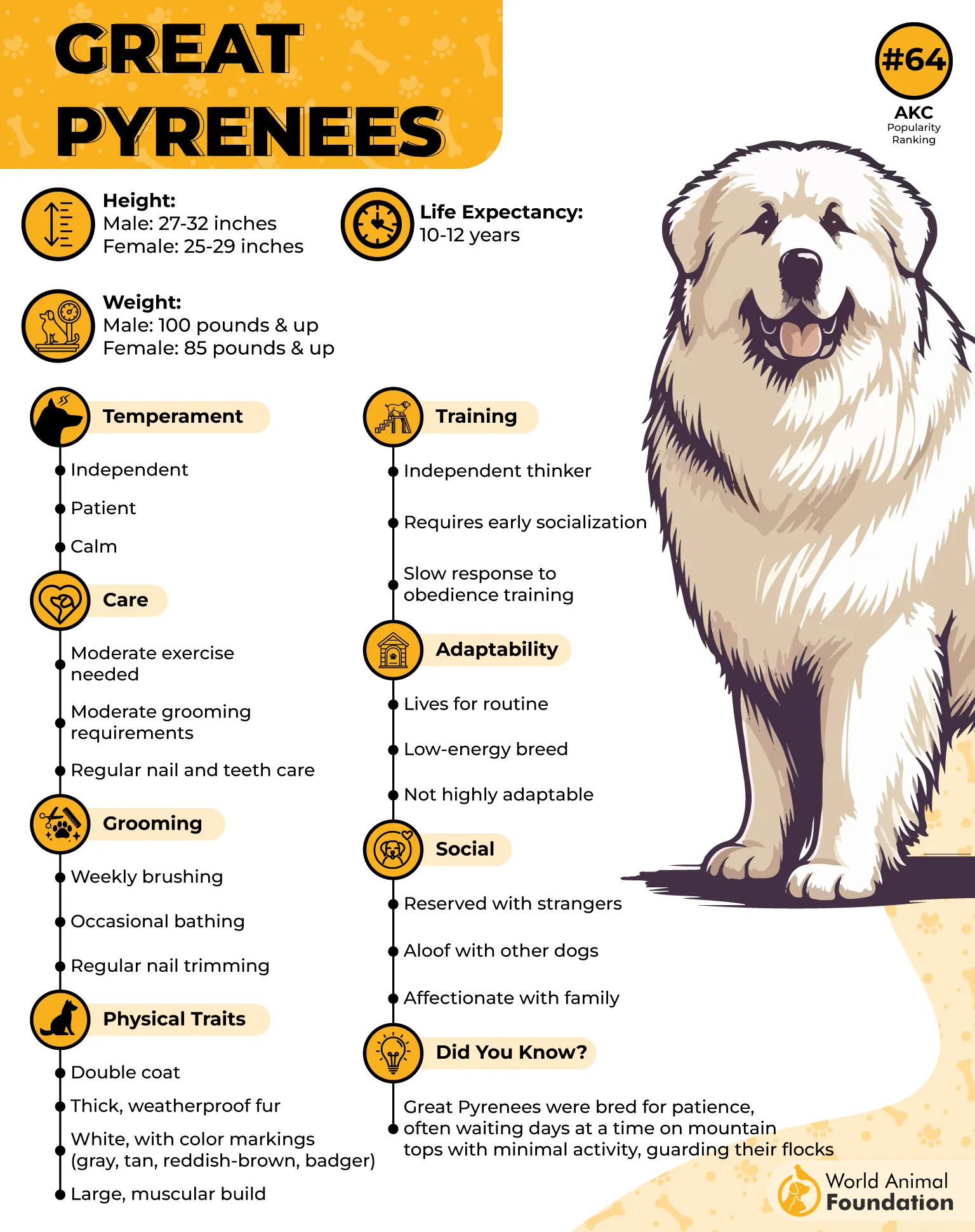
Gentle giants with a heart of gold, the Great Pyrenees flips the script the second they step inside the house. They are affectionate softies who love nothing more than lounging alongside their favorite humans.
Exceptionally patient and amazingly gentle, especially with kids, they make wonderfully sweet family companions. But the moment an unfamiliar rustle, distant footsteps, or mysterious shadow catches their attention, this calm couch sidekick instantly morphs into a vigilant, laser-focused protector on duty.
And then there is the nighttime barking. A Great Pyrenees can hear something distant, decide it matters, and make sure the whole household knows.
Training & Exercise
Early training helps establish boundaries before this enormous pup develops their own rules. Keep sessions short, positive, and varied.
These mountain dogs are generally low-energy dogs. Daily walks and supervised time in a secure yard provide useful activity. A sturdy fence is valuable because their patrol instincts can send them farther than expected.
3. Anatolian Shepherd
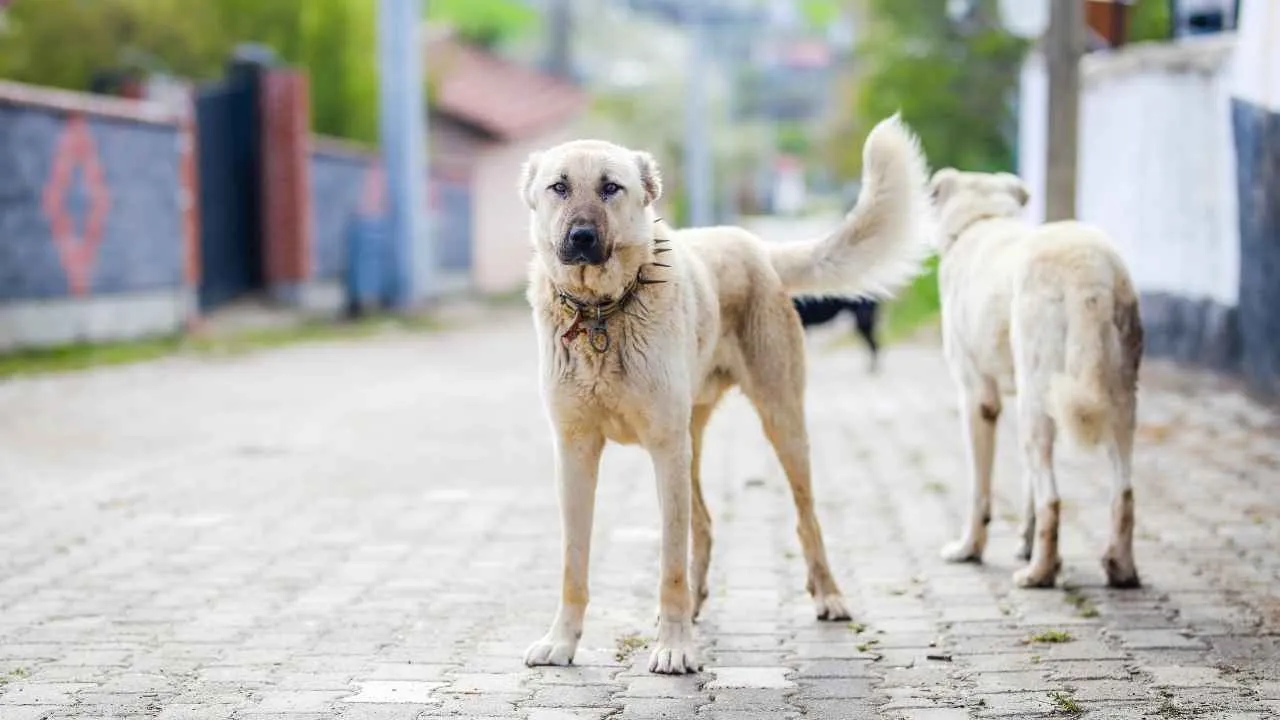
Give an Anatolian Shepherd Dog a flock to watch, and they will not spend the day waiting for instructions. Their working history revolves around observation, judgment, and decisive action.
This rugged shepherd dog developed in Turkey as a livestock guardian. Their job required them to recognize threats and protect animals without constant human supervision.
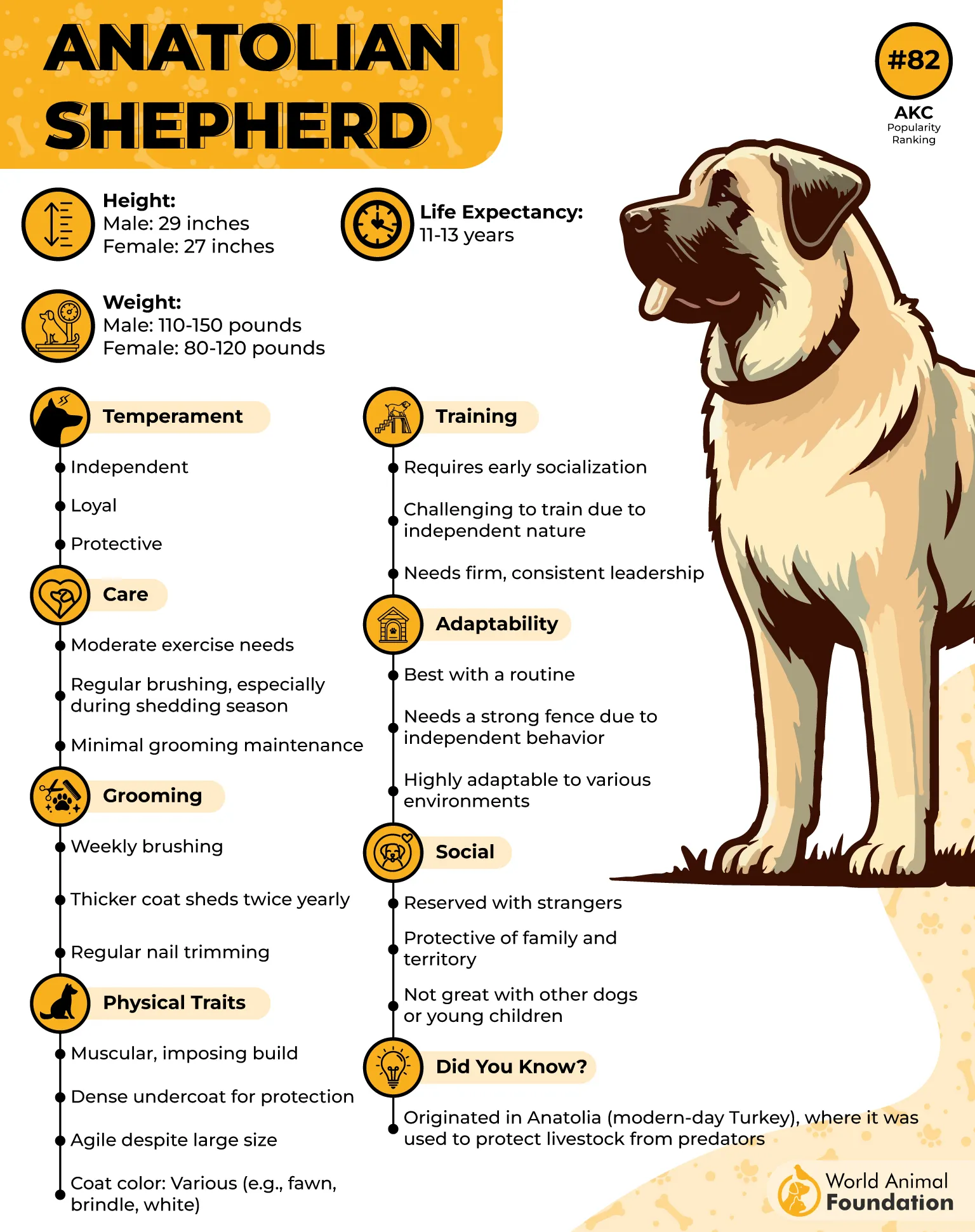
Their muscular build, strong neck, weather-resistant coat, and watchful expression reflect that practical history. They were shaped for responsibility, not endless command-following.
Anatolian Shepherds tend to be loyal to their families and committed to the animals or property in their care. Unfamiliar people can receive a cooler reception. They prefer assessing a situation before deciding what deserves attention.
That independent nature also explains why they are not always desperate to please. Their instincts were built for making choices, not mechanically following instructions.
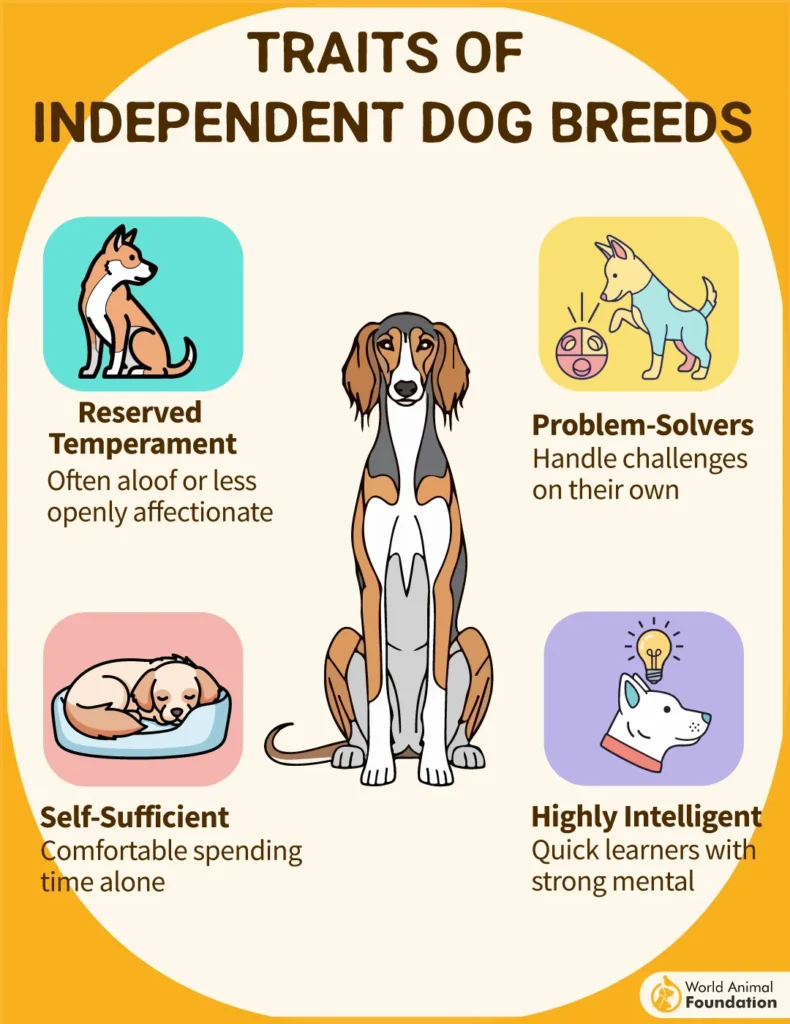
For experienced owners, that confidence is impressive. For someone expecting an endlessly obedient companion, it can be an adjustment.
Training & Exercise
Training should combine clear boundaries with positive reinforcement. Socialization needs to begin young and continue consistently.
Moderate daily exercise suits the breed. Long walks, secure outdoor exploration, and purposeful activities keep their body and brain engaged. They thrive when their routine gives them something meaningful to do.
4. Caucasian Shepherd Dog
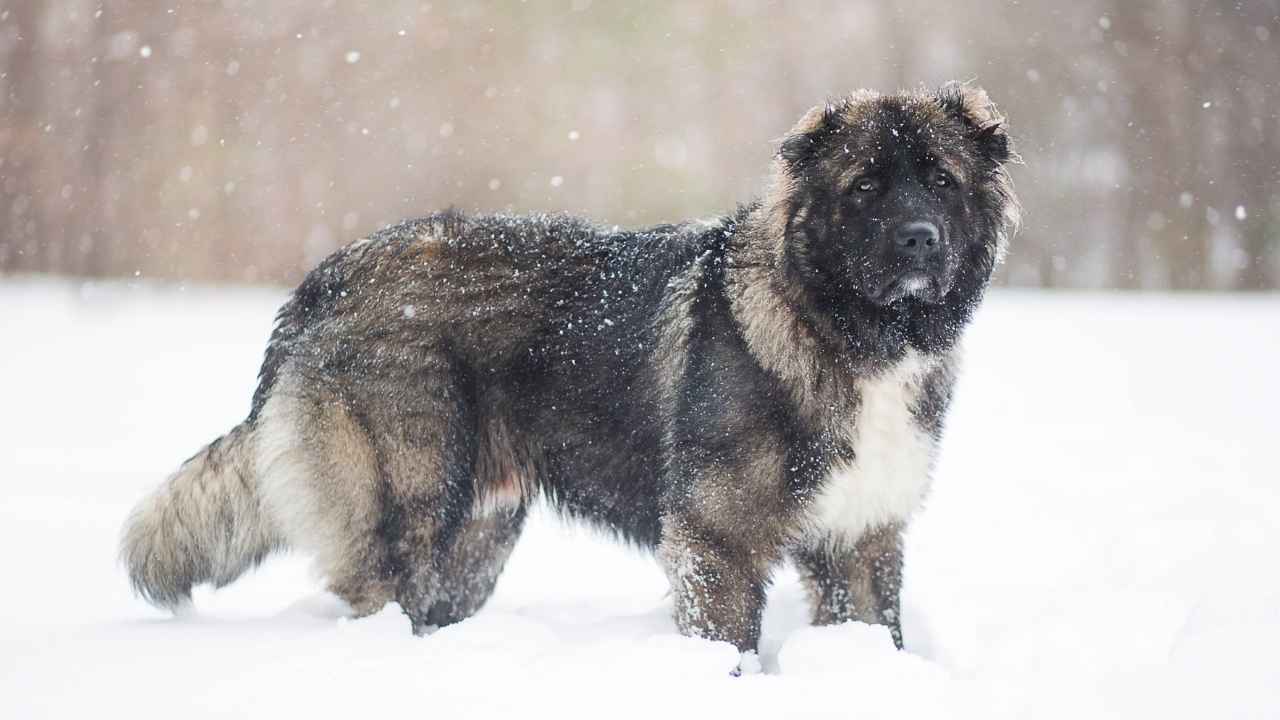
Some dogs look like guardians. The Caucasian Shepherd Dog looks like the guardian has arrived to inspect the entire property. Their enormous frame and serious expression leave little doubt about their purpose.
This is one of the oldest dog breeds developed across the Caucasus region to protect livestock and property from predators. Heavy bones, a broad head, dense double coat, and powerful body helped them handle demanding environments.
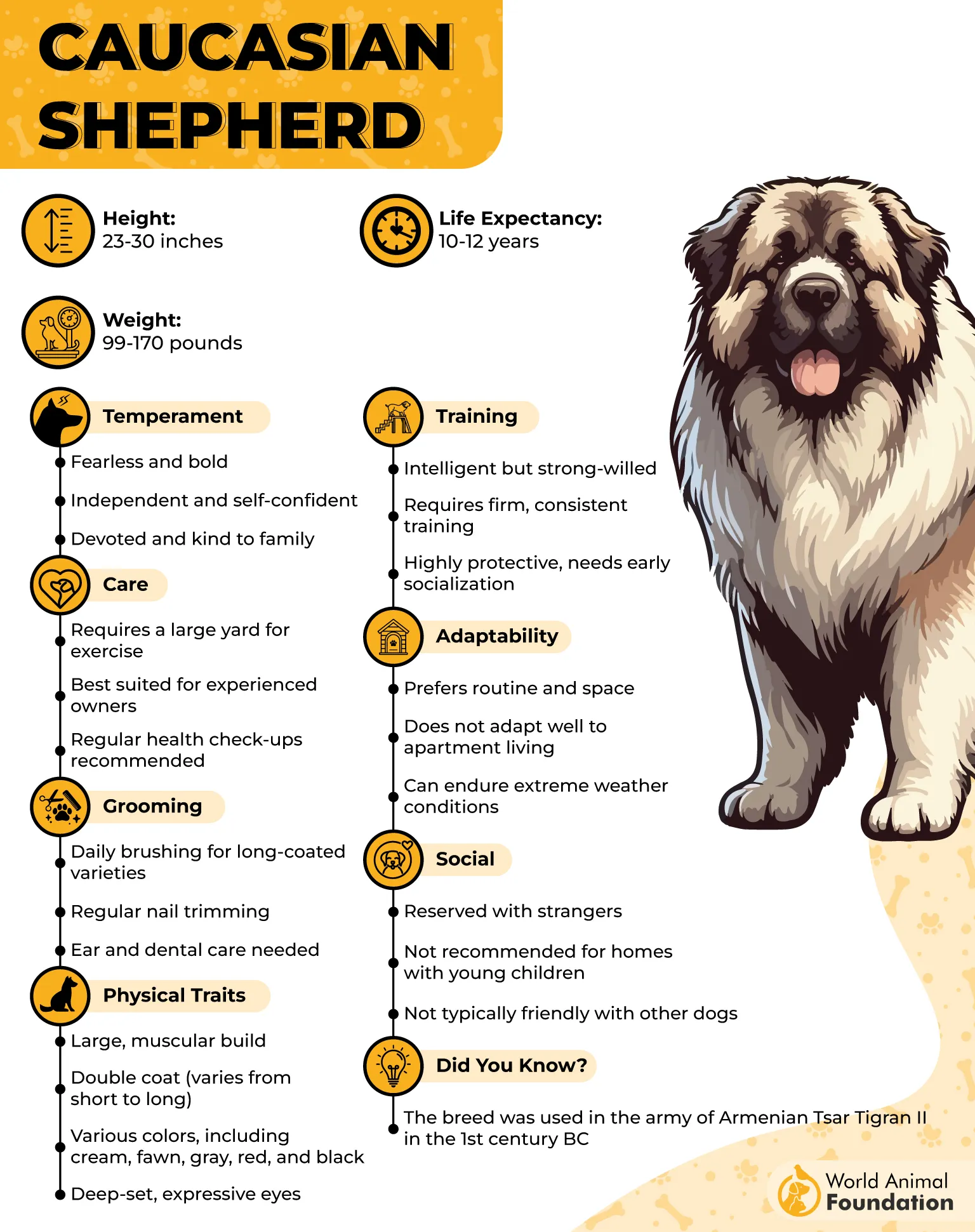
Their personality is just as formidable. Caucasian Shepherds are confident, observant, and strongly territorial. They can be deeply loyal to their families, but unfamiliar people do not automatically receive a warm welcome.
They tend to evaluate new situations carefully rather than rushing into interactions. That thoughtful approach is part of their independent character and a key reason responsible ownership matters.
This is a breed where physical strength and temperament must be taken seriously. Their guardian instincts need direction, boundaries, and proper social exposure from an early age.
Training & Exercise
Training needs to begin early and remain consistent. Positive reinforcement and gradual exposure to unfamiliar people, places, and animals help build reliable manners.
They need regular walks, hiking, play, and secure outdoor movement. A fenced area offers safer freedom, and mental enrichment through toys or simple tasks keeps their thoughtful brains busy.
5. Irish Wolfhound
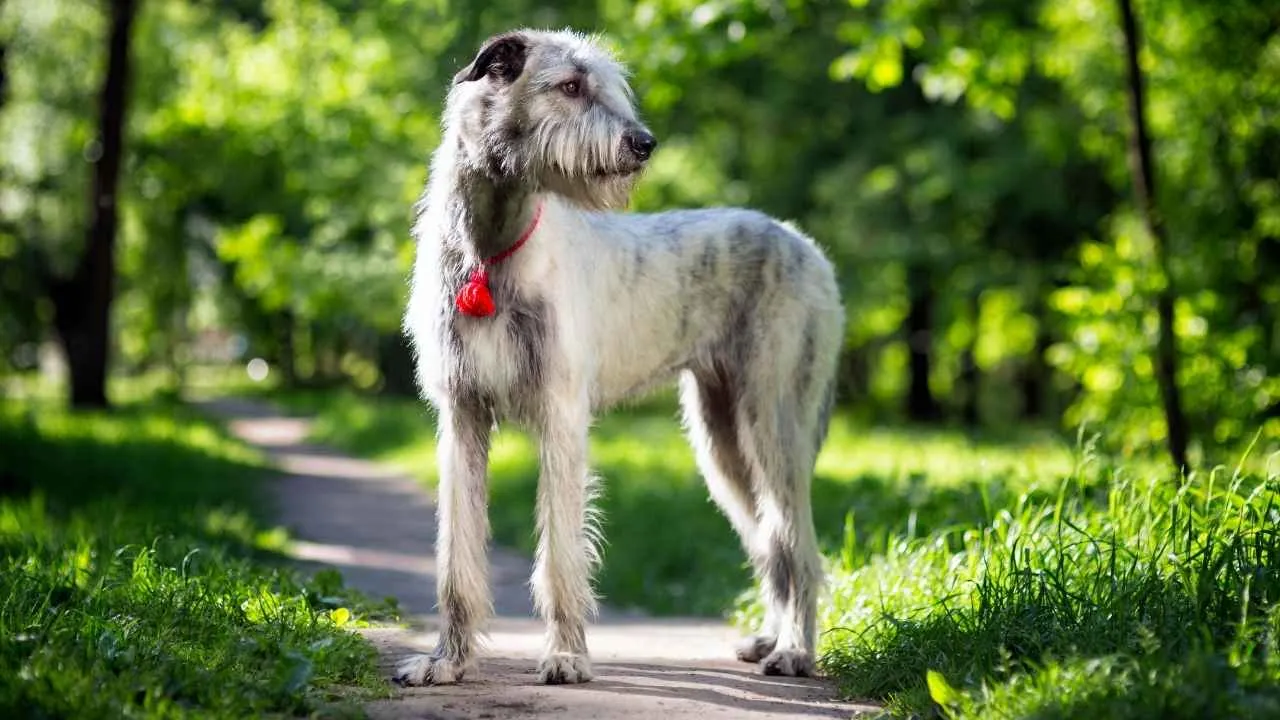
The Irish Wolfhound proves that a dog can be enormous, athletic, and still have the energy of someone who would happily nap beside you afterward. Their towering silhouette commands attention, but their gentle personality tells another story.
This ancient Irish hunting breed was built to pursue large prey. Their long legs, deep chest, muscular build, and powerful stride reflect that athletic history.
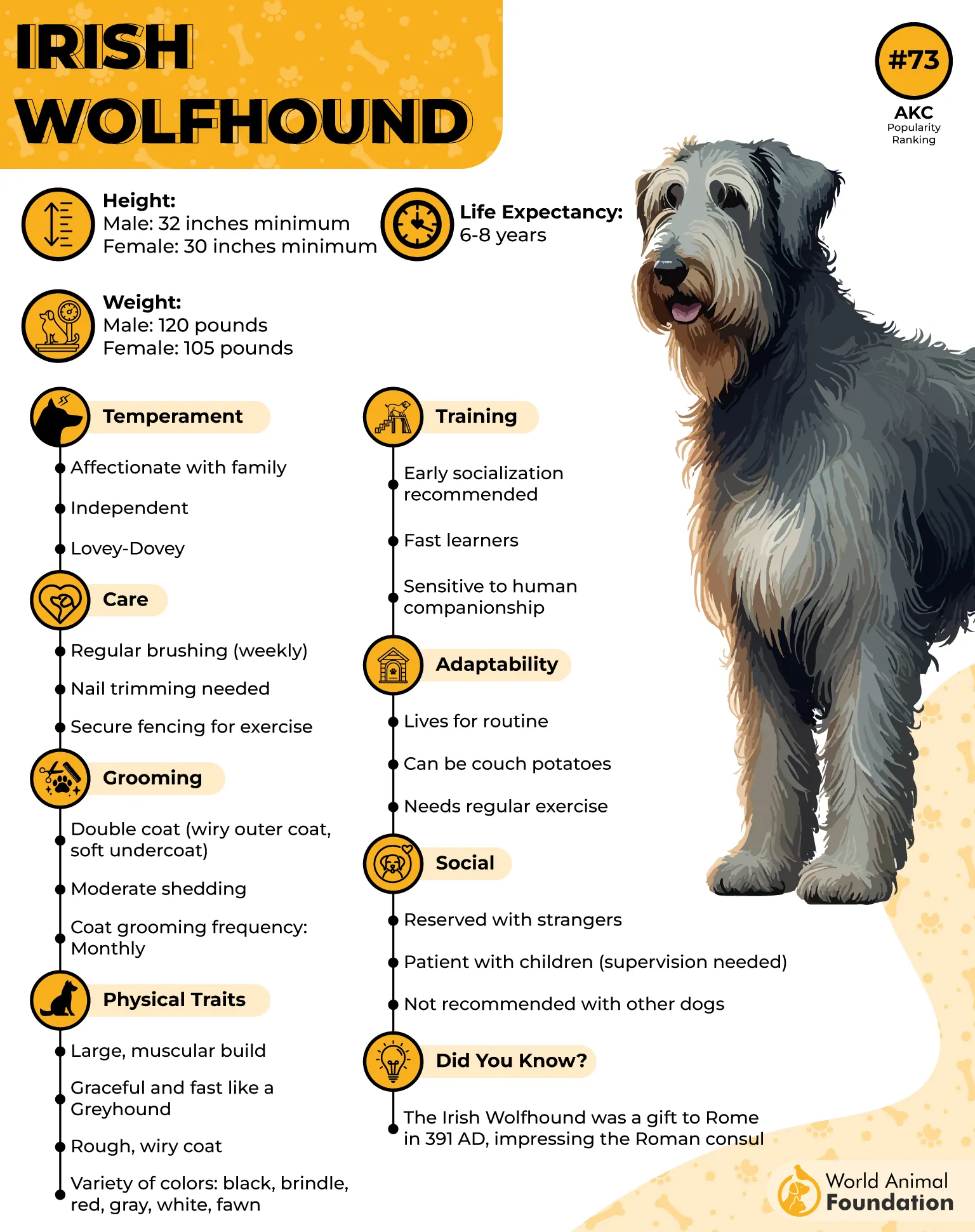
Their elegant appearance gives them a regal quality, but they are far more relaxed at home than their size suggests. Irish Wolfhounds are known for their affectionate nature and calm demeanor with familiar people.
Driven by deep-rooted hunting instincts rather than an edge-of-your-seat guarding vibe, this breed is a master of self-reliance. Historically bred to map out vast, open terrain and hunt entirely on their own terms, they possess an adventurous, free-thinking nature that means they don’t need a handler micromanaging every single move.
At home, many are content simply being near their people. They do not need to supervise every activity, although their enormous size means a casual stretch across the floor can become a furniture-management exercise.
Training & Exercise
Positive training works well because Irish Wolfhounds tend to be sensitive and responsive. Start socialization and obedience work early.
Regular walks and safe running opportunities support their athletic bodies. A secure fence is important because their hunting heritage can spark a chase. They also need companionship and should not be left alone for long periods.
6. Scottish Deerhound
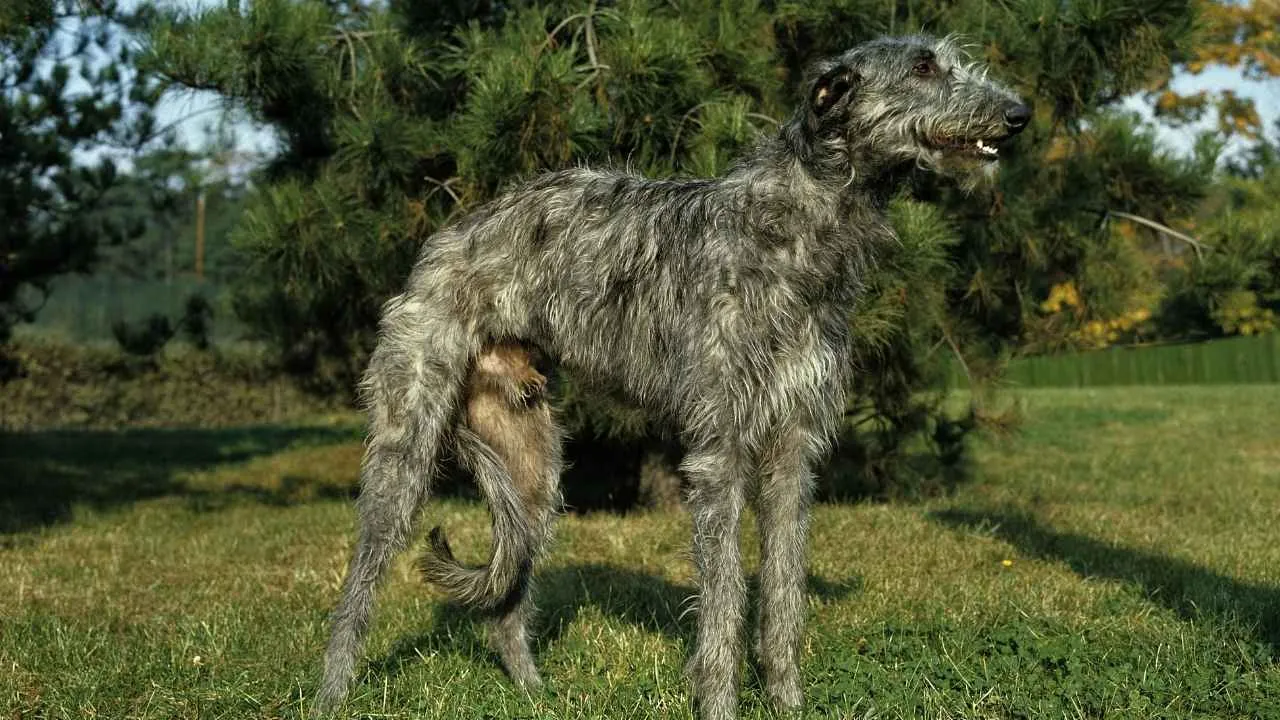
The Scottish Deerhound looks like they stepped out of a Highland legend, stretched their long legs, and claimed your living room as their new kingdom. Their dramatic appearance hints at an athletic past that is easy to underestimate.
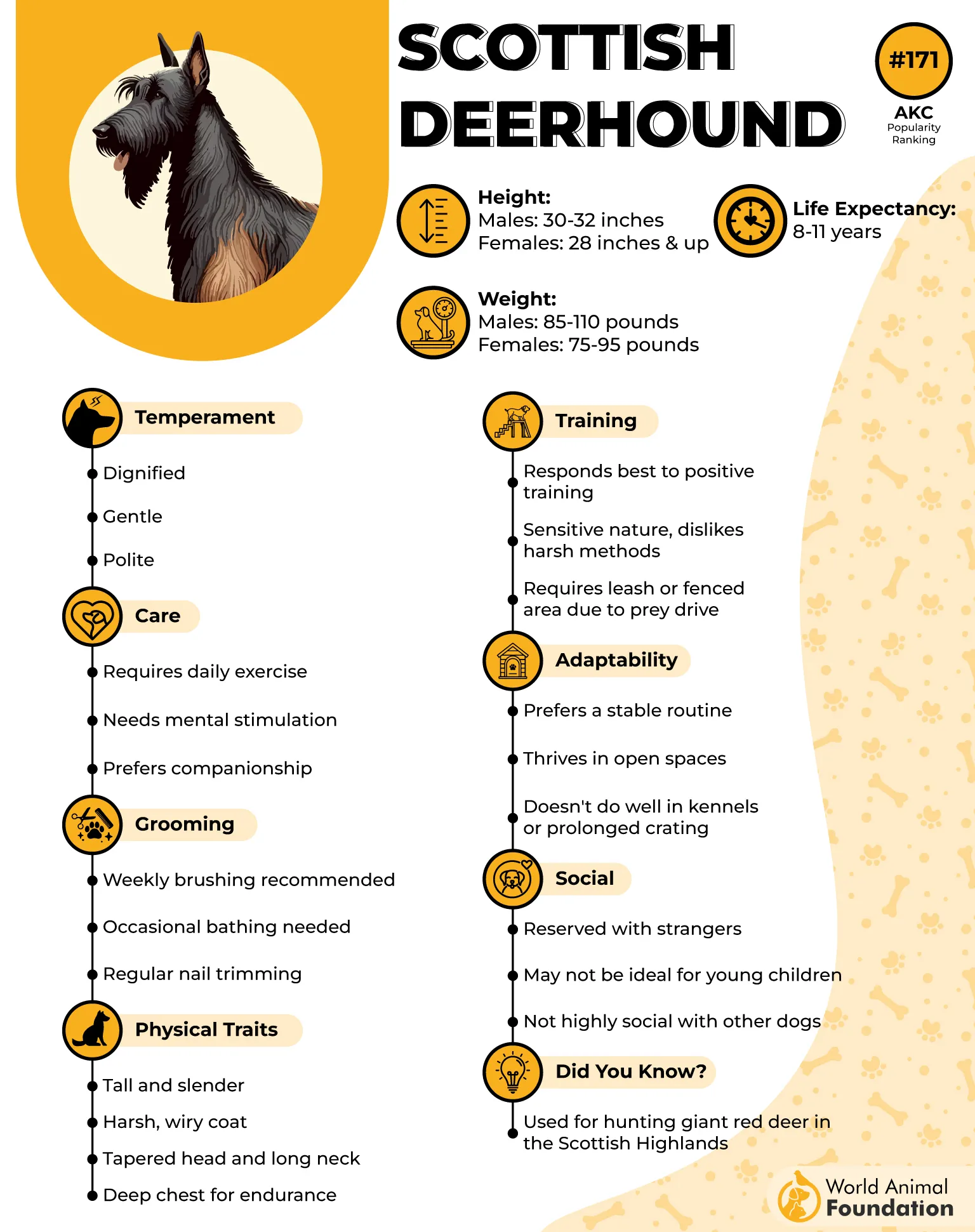
Their story reaches back to the Scottish Highlands, where they were originally bred to hunt deer. Their tall frame, wiry coat, long legs, and powerful stride were built for speed across difficult terrain.
At home, this large dog breed tends to be gentle, peaceful, and loving. They thrive in companionship and form close relationships without constantly demanding attention or direction.
According to Omlet, their independent streak comes from their hunting heritage. These dogs were expected to work across open landscapes and make quick decisions during a pursuit.
Then a rabbit, squirrel, or other fast-moving creature appears, and suddenly that calm companion remembers exactly what those long legs were made for.
Their relaxed personality is appealing, but their prey drive deserves serious consideration.
Training & Exercise
Scottish Deerhounds learn quickly, but motivation matters. Positive reinforcement, variety, and patience make training more productive.
They need daily exercise, including walks and safe opportunities to run. Secure fencing is important because their chasing instincts are powerful. Lure coursing, scent work, and similar activities give these athletic hounds a useful outlet.
7. English Mastiff
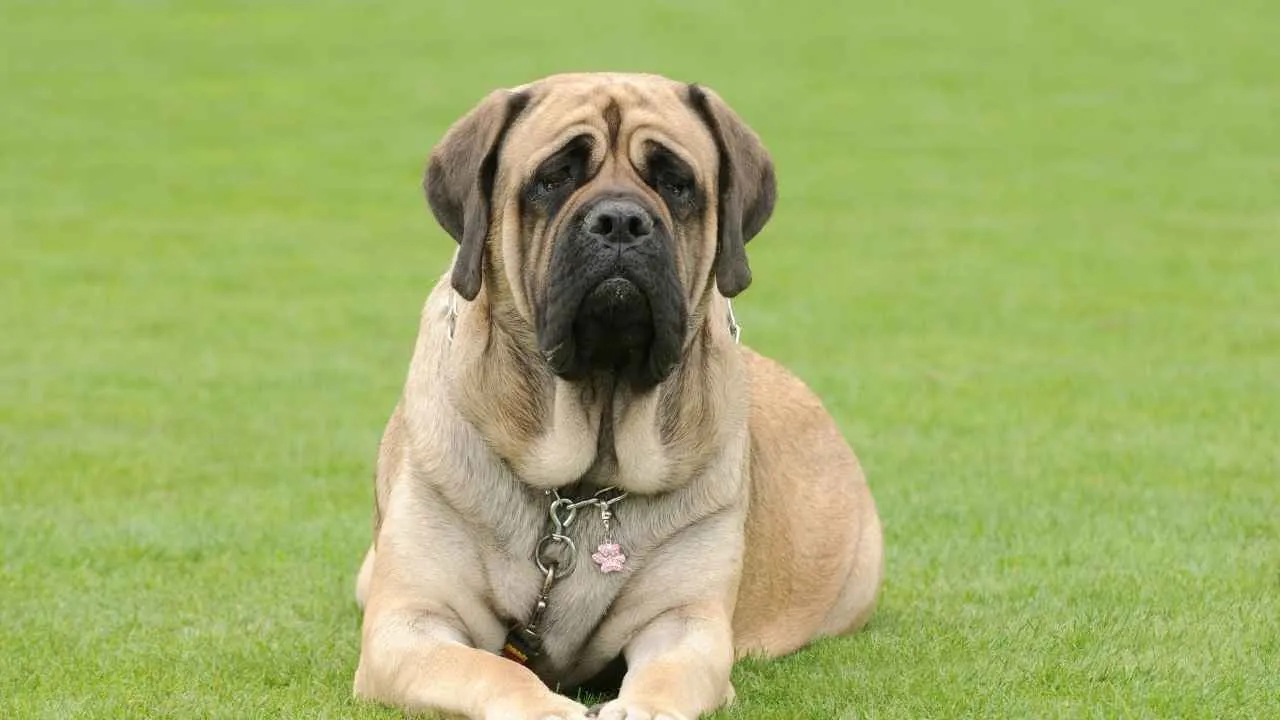
An English Mastiff can spend five minutes crossing a room and somehow make the entire room feel smaller. Then they might decide the best use of the next several hours is lying peacefully beside their favorite person.
Built like a majestic mountain range on four legs, this colossal breed has centuries of royal property-guarding authority running through its veins. With an iconic, polar-bear-like head, broad chest, and sheer muscular power, their awe-inspiring presence makes them instantly unavoidable in any room.
Orvis mentions that their guardian heritage gives them a watchful quality, but their household personality is usually calmer than their appearance suggests. Many Mastiffs are affectionate with their families and happy to observe household life from a comfortable spot.
Their independence is subtle. They do not need constant entertainment or direction. Instead, they assess what is happening and respond when something catches their attention.
These strong pups resonate with calm confidence that makes them excellent family companions in the right home.
Training & Exercise
Early socialization and obedience training are important because good manners matter with a dog this large. Positive reinforcement suits their willing personality.
Adult Mastiffs generally have modest exercise needs. Daily walks, gentle play, obedience, tracking, and nose work provide useful activity. Puppies need carefully managed exercise during growth, with close attention to weight and joint health.
Conclusion
Independent does not mean distant, difficult, or unwilling to connect. In these powerful breeds, independence usually reflects a working history that rewarded observation, confidence, and self-reliance.
That is exactly what makes the most independent dog breeds so fascinating. A guardian might quietly monitor a property, a hunter might scan the horizon, and another dog might simply settle nearby and decide that everything is under control.
For experienced dog owners with the right environment, training approach, and expectations, these remarkable dogs can become dependable companions. For first-time dog owners, however, their size and strong instincts deserve serious consideration before bringing one home.
