





A small condo does not automatically mean you need the smallest dog you can find. That assumption sounds logical, but dog size tells only part of the story.
A compact, energetic dog may need more daily activity than a larger, calmer companion. The American Kennel Club specifically notes that living space does not always determine whether a dog can adapt to apartment life. Exercise requirements, activity level, and behavior around neighbors matter too.
In a condo, barking can carry through shared walls, while busy lobbies, elevators, and hallways can add another layer of daily management. A dog that can settle indoors and still enjoy appropriate walks and play may fit the setting more comfortably. That changes the conversation from simply asking, “Which dogs are small?” to asking what kind of dog works with your home.
The answer becomes much more practical when space, routine, noise, and activity are considered together.
Key Takeaways
Your condo may be short on floor space, but that does not automatically rule out dogs with bigger personalities or playful habits.
Pugs can turn a living room into part of their daily exercise routine, while their love of staying close makes them comfortable in a family-centered home.
Chihuahuas and Maltese need little room to stay active, although both still benefit from walks, enrichment, and plenty of human company.
Yorkies, Bichons, Brussels Griffons, and Pomeranians each add something different to the list, making the final picks worth reading through.
Perfect Dog Breeds for Condo Living and Small Spaces
1. Pug

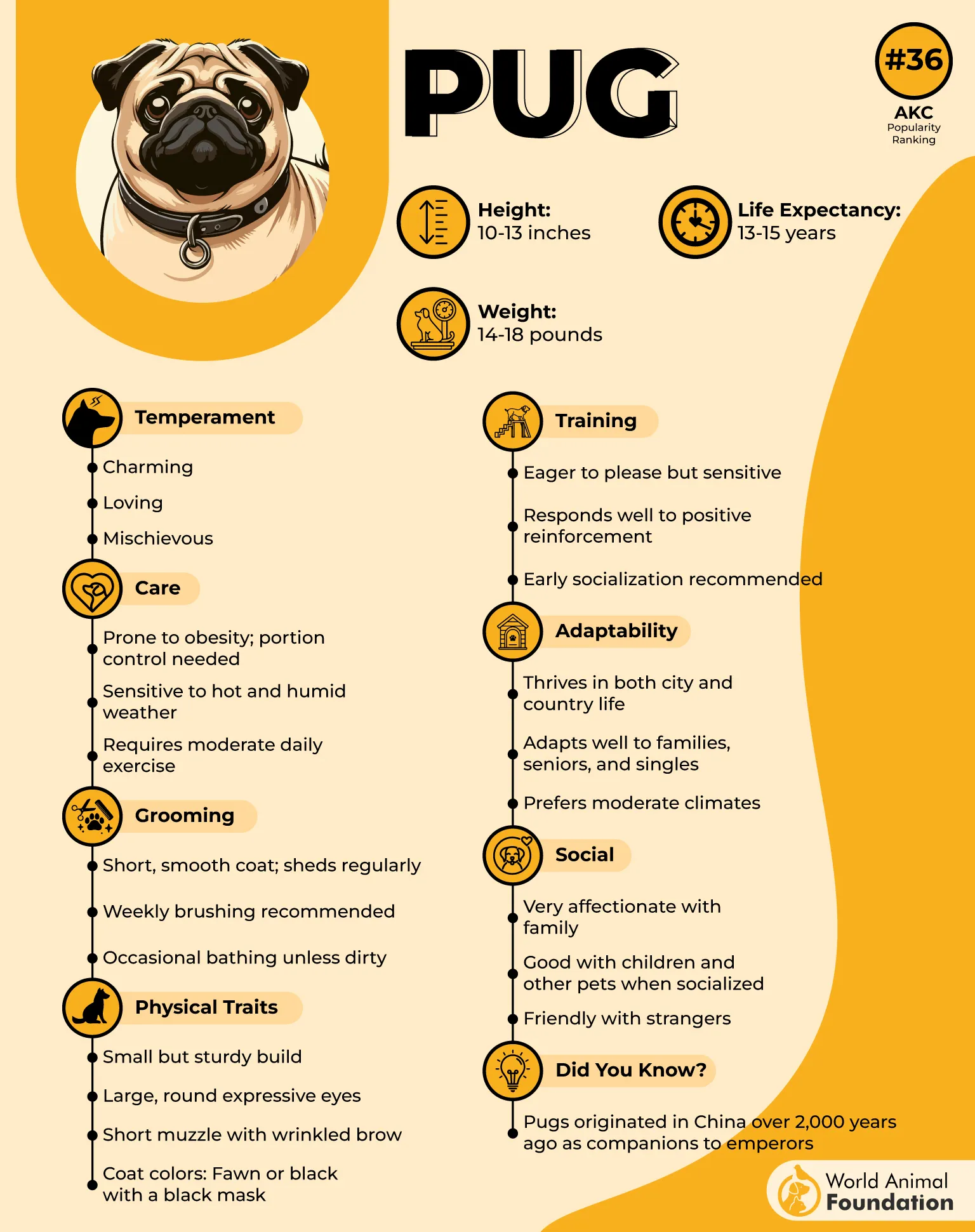
Pug traces its early roots to the Orient, with close ties to Tibetan monasteries before it reached Europe through the East India Trading Company in the 1700s. Its name may come from the Latin Pugnus, meaning fist, or from the marmoset “pug” monkeys kept as pets during that era.
Made for Together Time
Pug is happiest when included in whatever is happening around the home, making its people-focused nature particularly useful in a condo or smaller household. Its low energy level also means it generally needs less than an hour of exercise each day.
The following breed characteristics are easy to overlook:
Indoor fetch suits its pace
Typical speed is 5 to 10 mph
Agility can appeal to some individuals
A Sociable Little Shadow
This best apartment dog enjoys being close to its family and often follows people from one part of the home to another. It generally gets along with children, babies, and other pets, while calm play matters because its large eyes can be easily injured, as reported by Greencross Vets.
2. Chihuahua
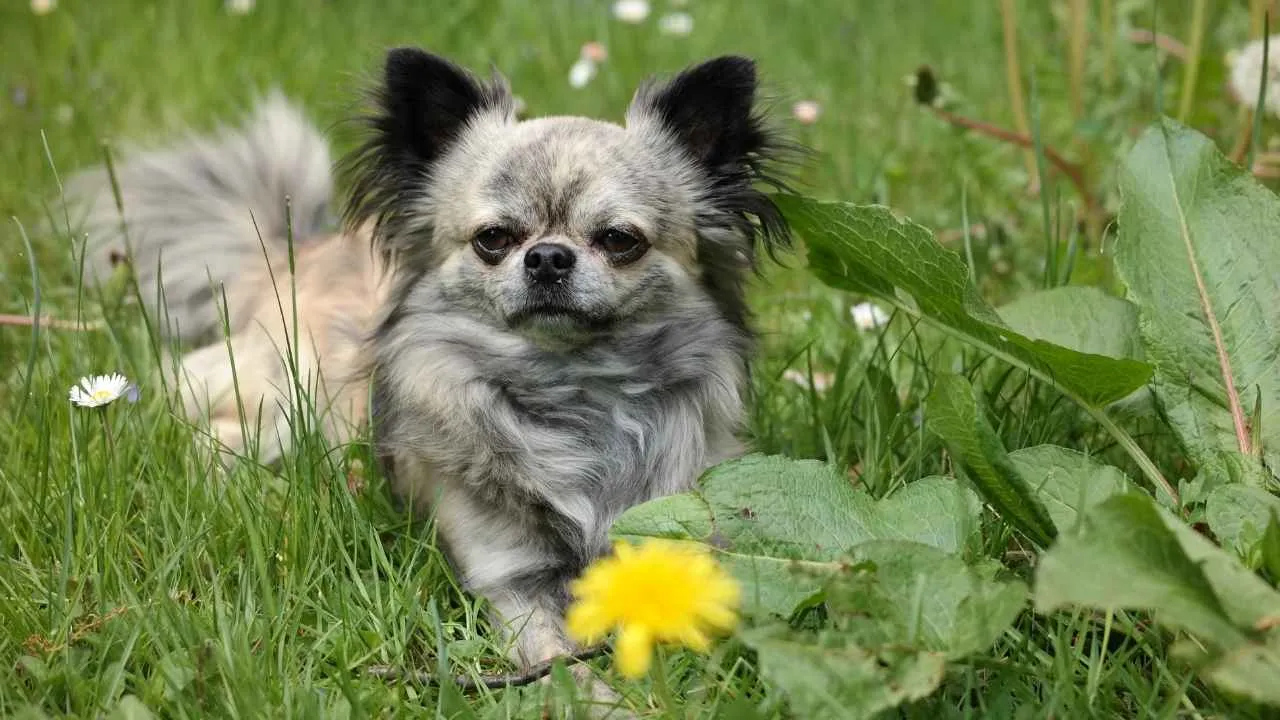
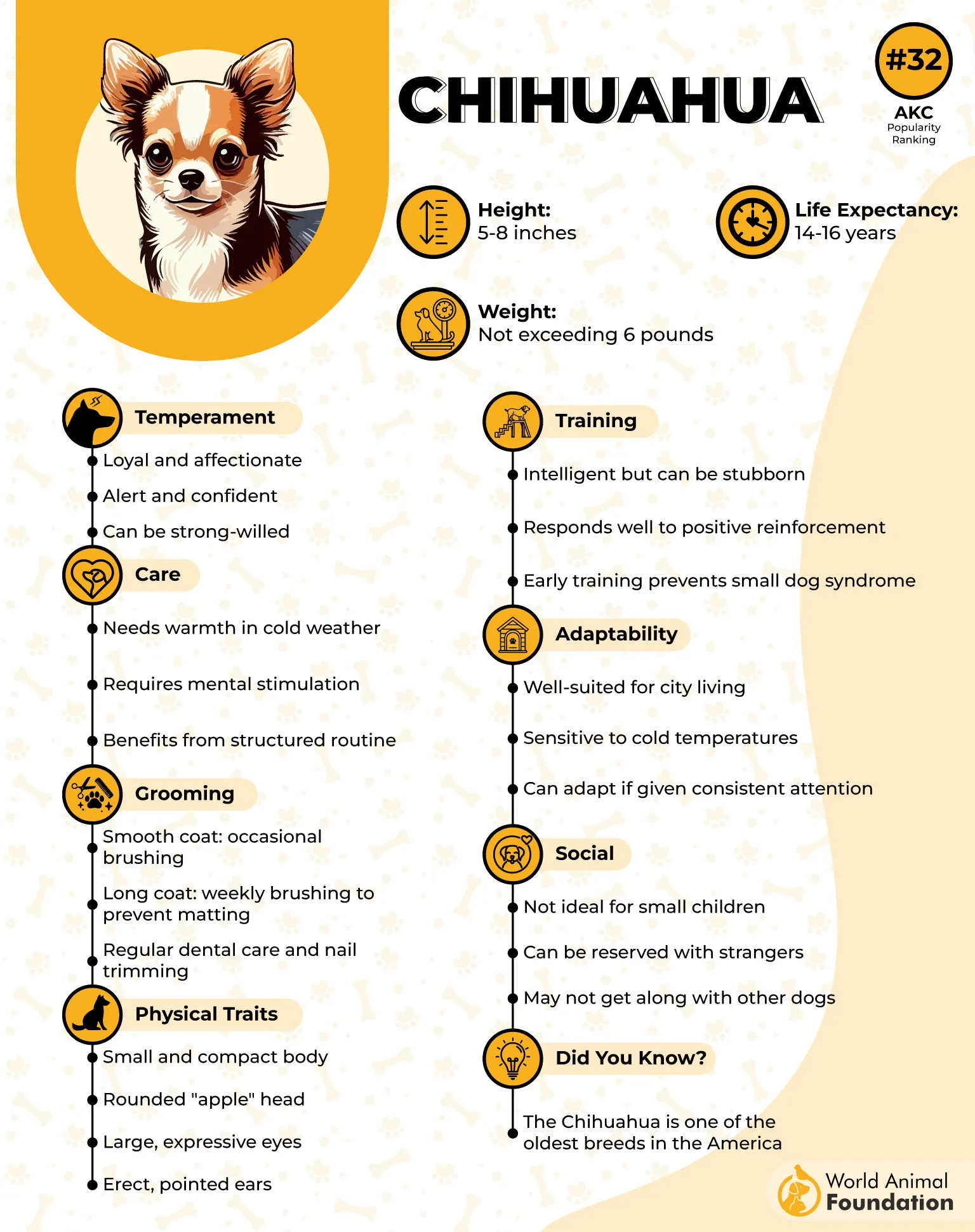
Chihuahua takes its name from the Mexican state where the breed originated, with a possible connection to the Techichi, a small dog kept by the Toltecs as early as the ninth century. The AKC formally recognized the Chihuahua in 1904, while its wider popularity grew almost a decade later.
City-Sized Routine
Chihuahuas can get plenty of indoor activity simply by following people around the home, with each human step covering several of its own.
Outdoor time still matters, giving this compact dog opportunities to sniff, explore, and play beyond the sofa.
Its petite size also shapes its daily life:
One weekly brushing for short-haired Chihuahuas
Monthly bathing usually works well
A supportive bed suits frequent nappers
Handle With Care
This perfect indoor companion suits adults and families with older children because its small body can be accidentally injured during rough play. In outdoor spaces, supervision is also important since hawks and eagles can pose a danger to such a small dog.
3. Maltese

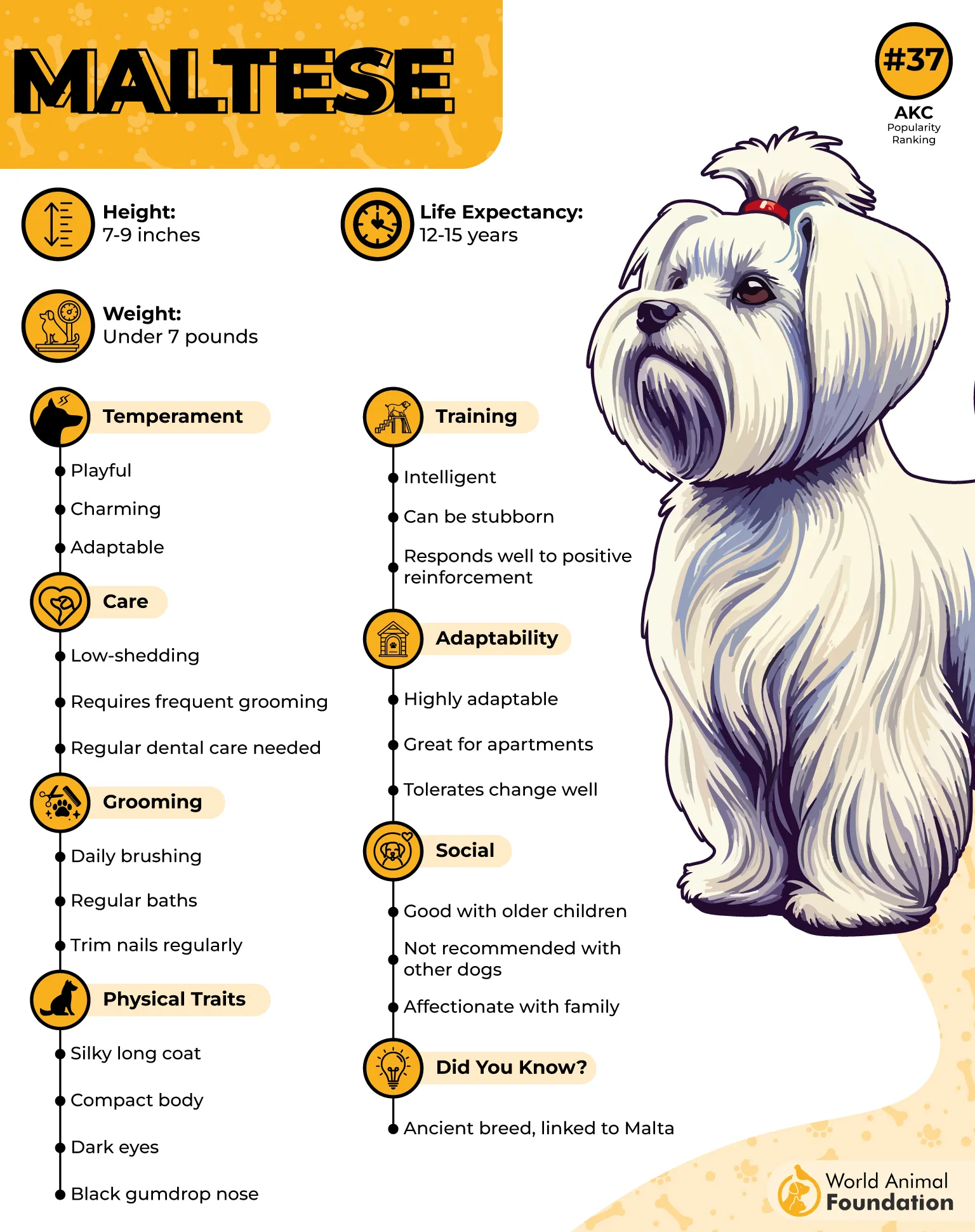
Maltese have an uncertain origin, with theories linking the breed to traders who brought these small dogs to Central Europe through Asia. Records reach back to 300 BC, while Malta is often suggested as an early home because of its role as a major trading port.
Made for Apartments
Maltese need little room to burn off energy and can enjoy apartment life with a short walk or active play at home. A brisk 20- to 30-minute neighborhood walk can provide daily activity without requiring a large yard or extensive outdoor space.

These considerations can make compact-home life easier:
White noise can mask outside sounds
Scent work provides indoor enrichment
Interactive toys add variety
Social at Heart
This best dog breed is highly people-oriented and often wants to remain close throughout the day, making prolonged periods alone difficult, as written by the AKC. The breed generally gets along well with children and other pets, while interactions with larger dogs and young children need supervision.
4. Yorkshire Terrier
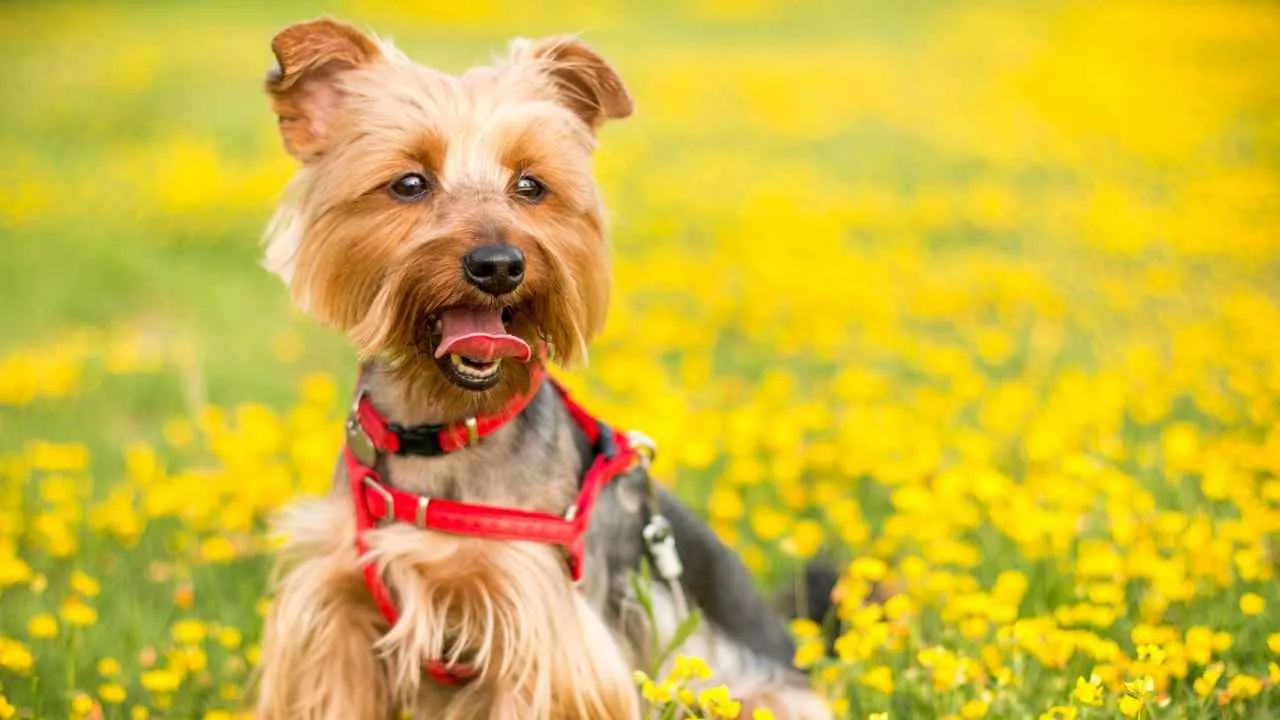
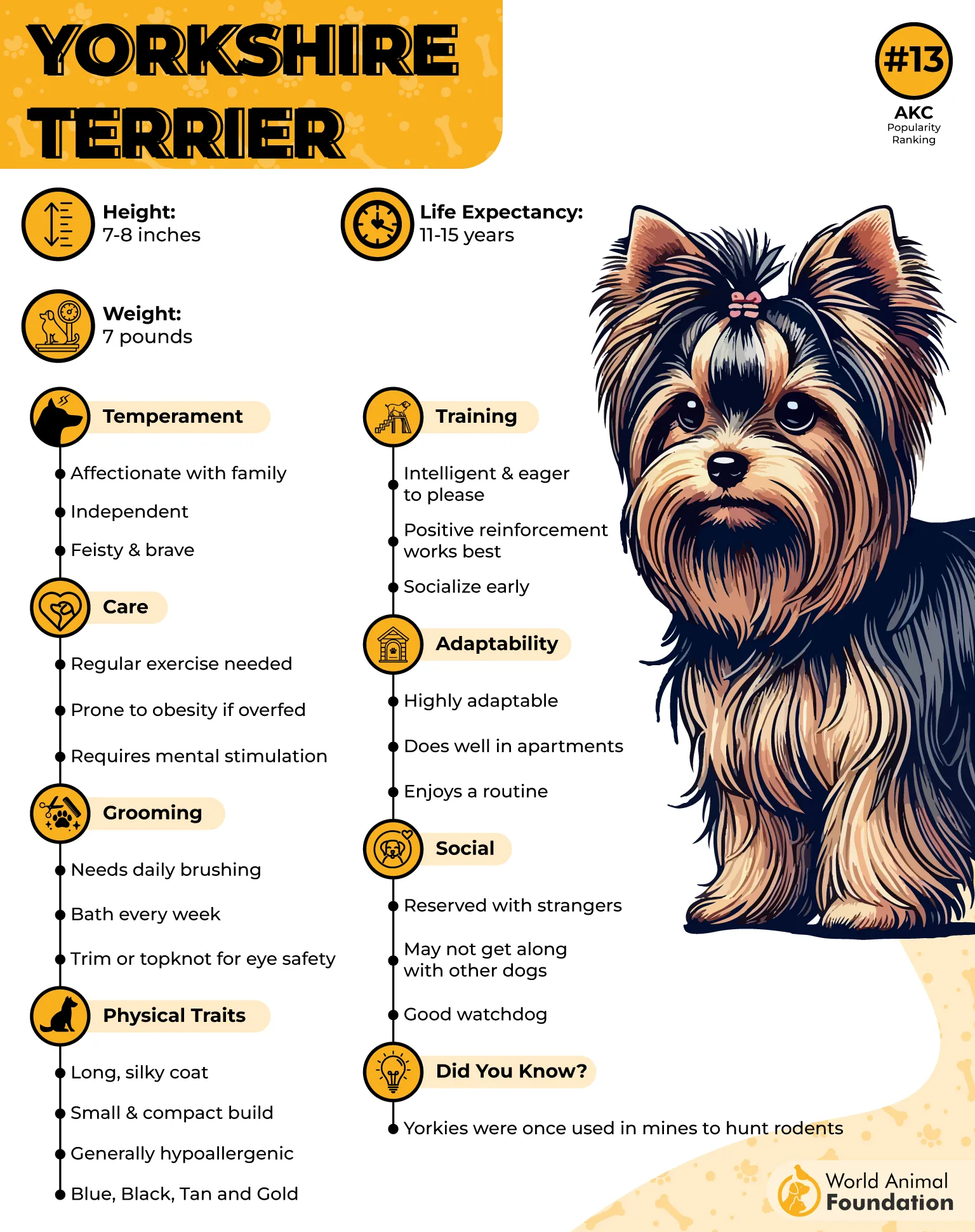
Yorkshire Terrier began in Yorkshire during the mid-19th century after Scottish workers brought small terriers into the region’s cotton mills. These little dogs were used to catch rats, with Waterside, Paisley, and Skye Terriers likely contributing to the breed’s early formation.
Room to Play
Yorkies need surprisingly little physical space to keep life interesting, and a yard is not essential for daily fun. Two 15-minute walks can cover the basic walking routine, while a living-room game of fetch can add another burst of activity.
These habits make them fit into smaller spaces well:
Puzzle toys provide indoor mental challenges
Fetch can be played inside the house
Covered beds offer a private resting spot
Watch the Playtime
Yorkshire Terriers can enjoy other dogs, cats, and older children when interactions are handled appropriately, while very young children need extra supervision around such a tiny dog. Moreover, this confident little dog can quickly learn household routines and make its preferences known.
5. Bichon Frise
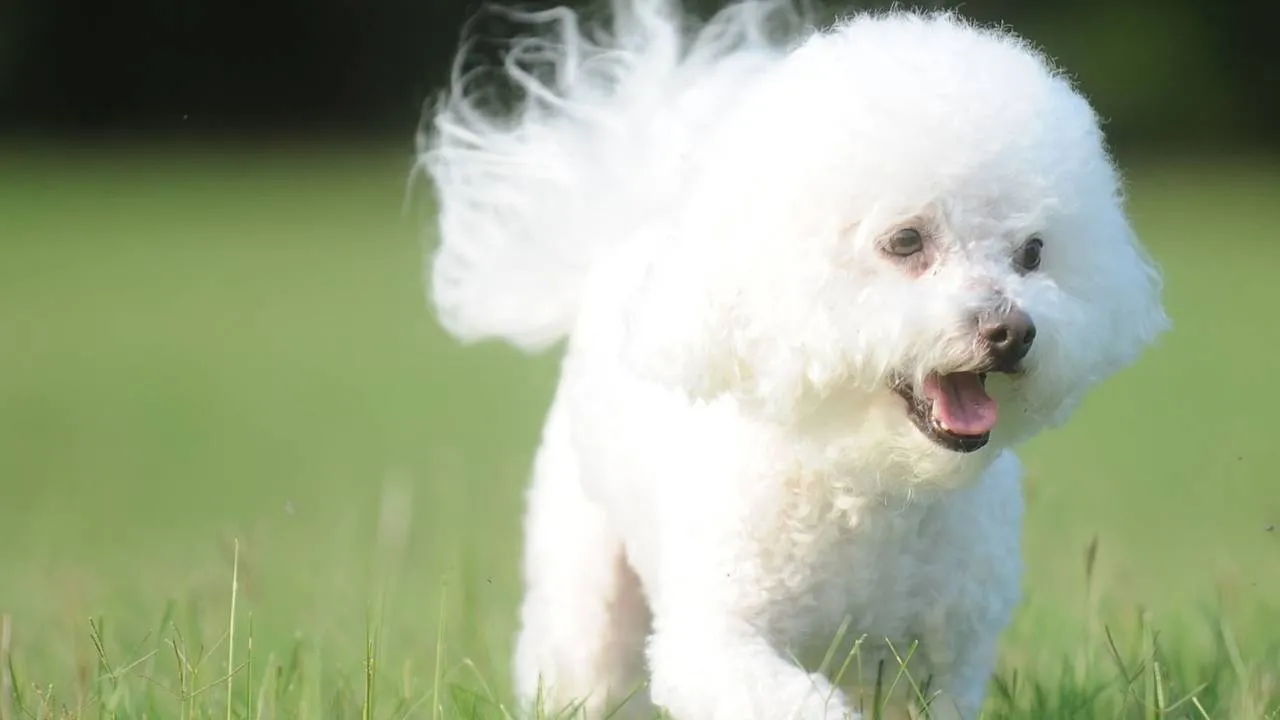
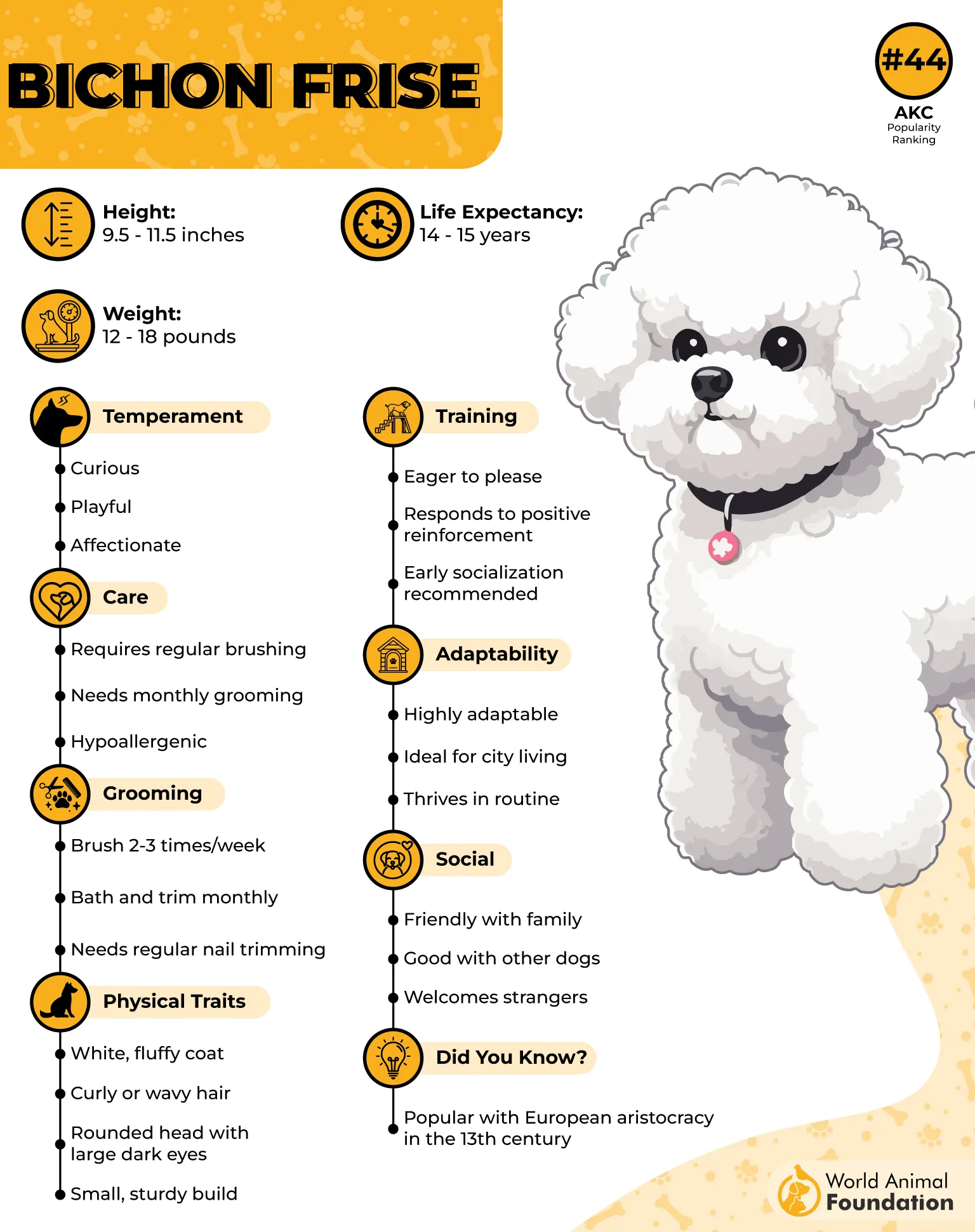
Bichon Frise was originally bred from Mediterranean crosses between large water dogs and small white dogs, creating the Barbichon group that later produced four familiar types. The Tenerife type is believed to have shaped the modern Bichon, with sailors taking these dogs to Italy.
Condo-Friendly Nature
Its small size, moderate barking, and flexible exercise needs make indoor living a workable option for Bichon Frise, even without a large home or lengthy daily workouts. Around 30 minutes of movement can include neighborhood walks, gentle fetch, or scent work.
Three practical details add more context:
Agility can be an enjoyable option
Yard games can include scent work
Prefers frequent human company
People Matter
This small dog breed has plenty of emotional intelligence and generally responds well to people when socialized and trained from an early age.
Its affectionate nature can make it a gentle and loving companion for children, including supervised play with younger kids who are still learning how to interact safely with dogs.
6. Brussels Griffon
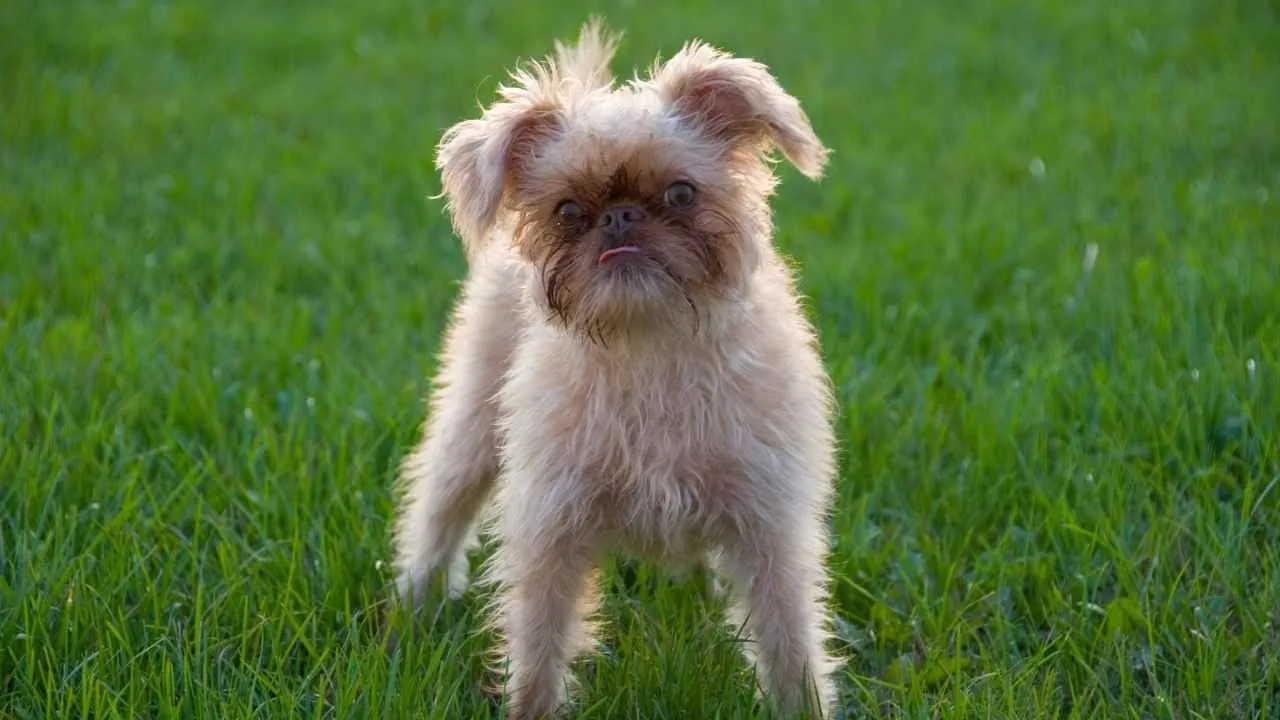
Brussels Griffon originated in Belgium from the Smousje, a terrier-like rat catcher, with Affenpinscher and Belgian Griffon d’Ecurie influence in its ancestry.
Later Pug crosses in the late 1800s gave the breed its distinctive facial appearance before it became popular among Belgium’s upper classes in the early 1900s.
Made for Smaller Homes
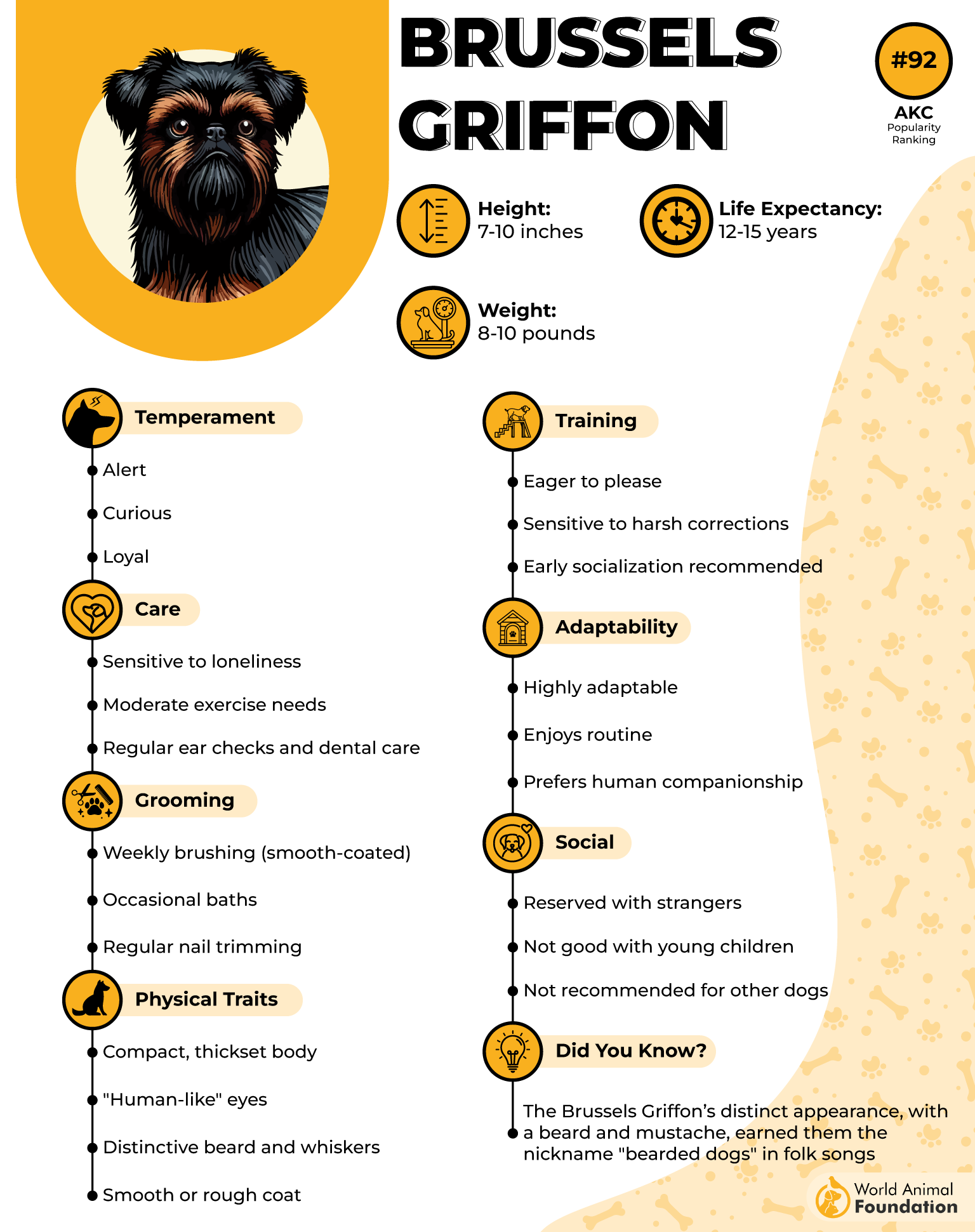
This breed needs about 30 minutes of daily exercise, and a compact home can provide plenty of room for indoor games between walks. Hide-and-seek, plush-toy fetch, snuffle mats, and treat puzzles can turn ordinary living-room space into a useful activity area.
Here are some activities that can add variety without requiring a large yard:
Nose work for scent-based challenges
Agility training for quick, active play
Tracking classes for focused outdoor work
A Lively Little Companion
This top dog breed enjoys spending time with its favorite person, while its playful side makes games with other dogs an appealing part of the day. It can also get along well with new people, dogs, and cats, provided interactions are introduced gradually and handled appropriately from the start.
7. Pomeranian
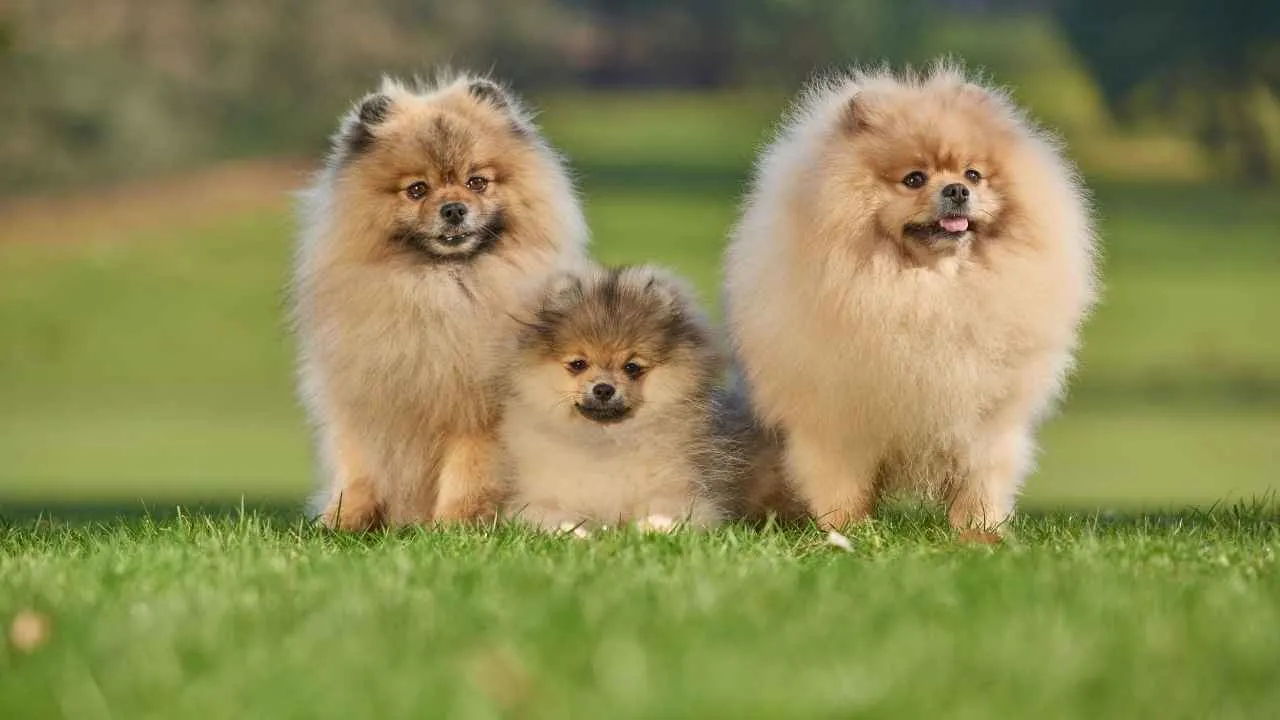
Pomeranian comes from Pomerania, a region spanning parts of modern Poland and Germany, and is believed to descend from the German Spitz. Smaller puppies were selectively chosen over time, giving rise to the compact dog also called Zwergspitz, Pom, or Pom Pom.
Apartment-Friendly Routine
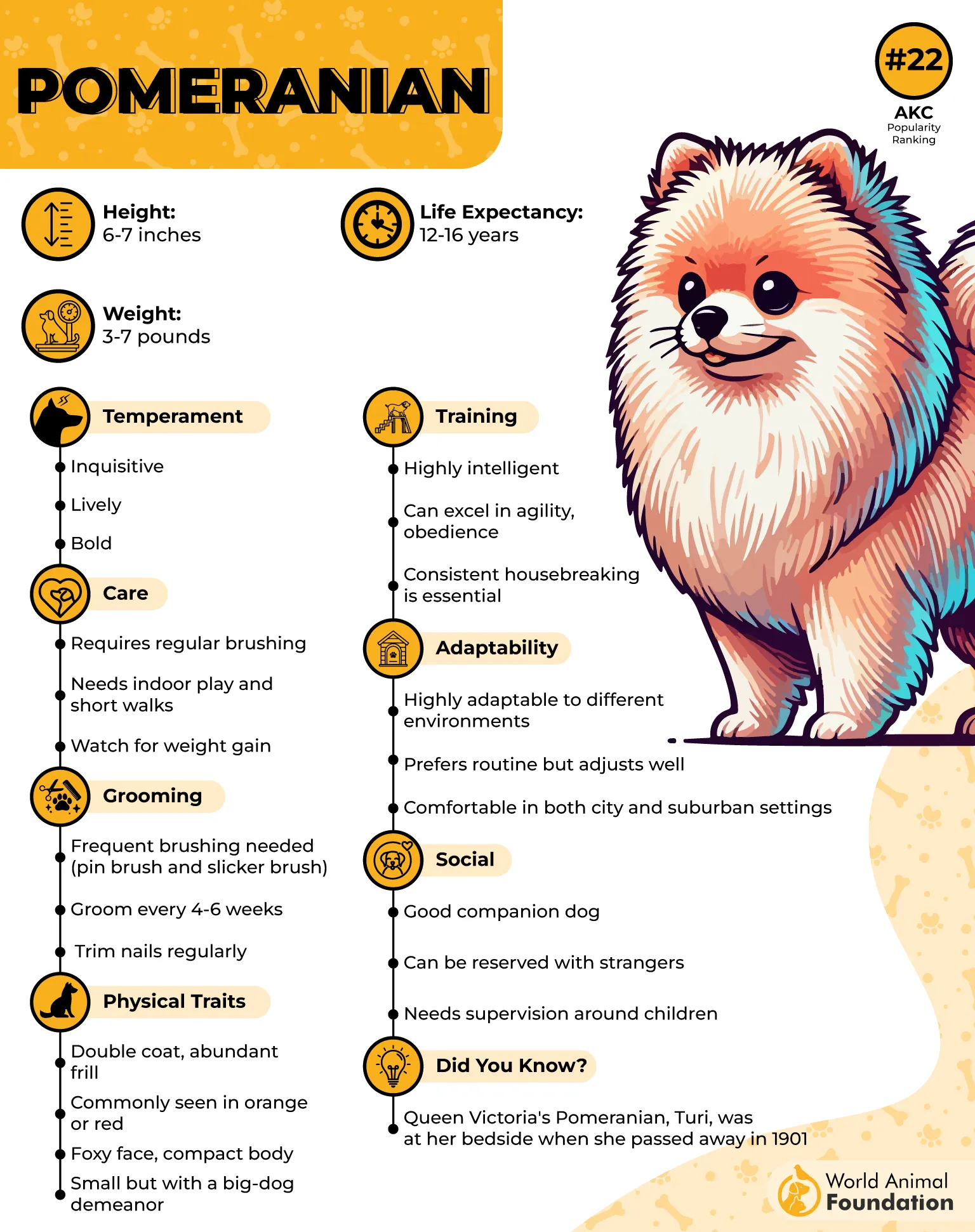
Poms can fit well into a small living space with about 20 minutes of walking twice a day, while plenty of indoor companionship keeps their lively personality engaged. Those short legs also make it important to choose outings where the pace and distance remain manageable.
Its love of outings still calls for careful supervision:
Enjoys joining people on outings
Needs protection from birds of prey due to their small stature
Requires close supervision outdoors
Quick to Learn
This tiny companion is a bright, playful little dog that can pick up new tricks quickly and often responds well during obedience training. Its eagerness for interaction also makes training a useful way to work on excessive barking and teach quieter household habits.
Conclusion
Condo living can work surprisingly well with a dog when its daily needs fit the space and household routine. A large yard is not essential for every companion, but regular walks, indoor games, training, and social time still matter.
Noise deserves attention too, especially when shared walls can turn frequent barking into a problem. With plenty of space arranged thoughtfully, even a condo can support a dog’s needs.
Owners should also consider time alone, safety around children and larger pets, grooming, and weather sensitivity. A good match can settle comfortably indoors while still enjoying enough activity outside.
When those details are considered together, a smaller home can provide a pleasant living experience for both dog and owner, making apartment living feel comfortable rather than restrictive.
