





Picture a family settling in for the evening, knowing a loyal companion is nearby, alert to unfamiliar sounds while remaining gentle with the people it loves. The right protective dog can offer both a reassuring presence and the warmth of a devoted family member.
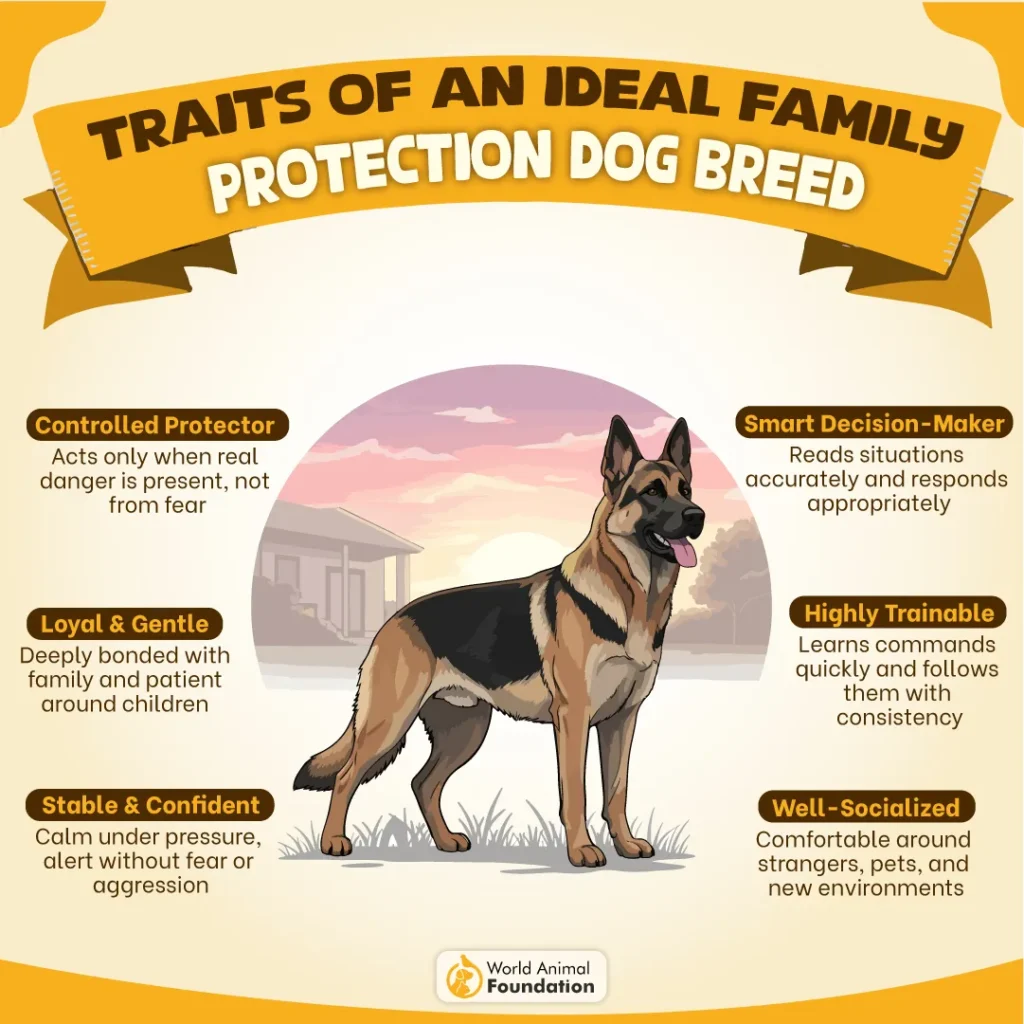
True family guardians need more than strength or a commanding appearance. They should be confident, intelligent, responsive to training, and capable of distinguishing genuine concerns from everyday situations. Early socialization and consistent training are essential for developing controlled protective behavior.
From powerful working breeds to devoted guardians, these seven dogs showcase the traits that can make protection and family companionship work together.
FACT: A protective dog should respond to its handler rather than automatically treating every unfamiliar person or animal as a threat.
Fierce Dog Breeds Ideal for Family Protection
1. German Shepherd
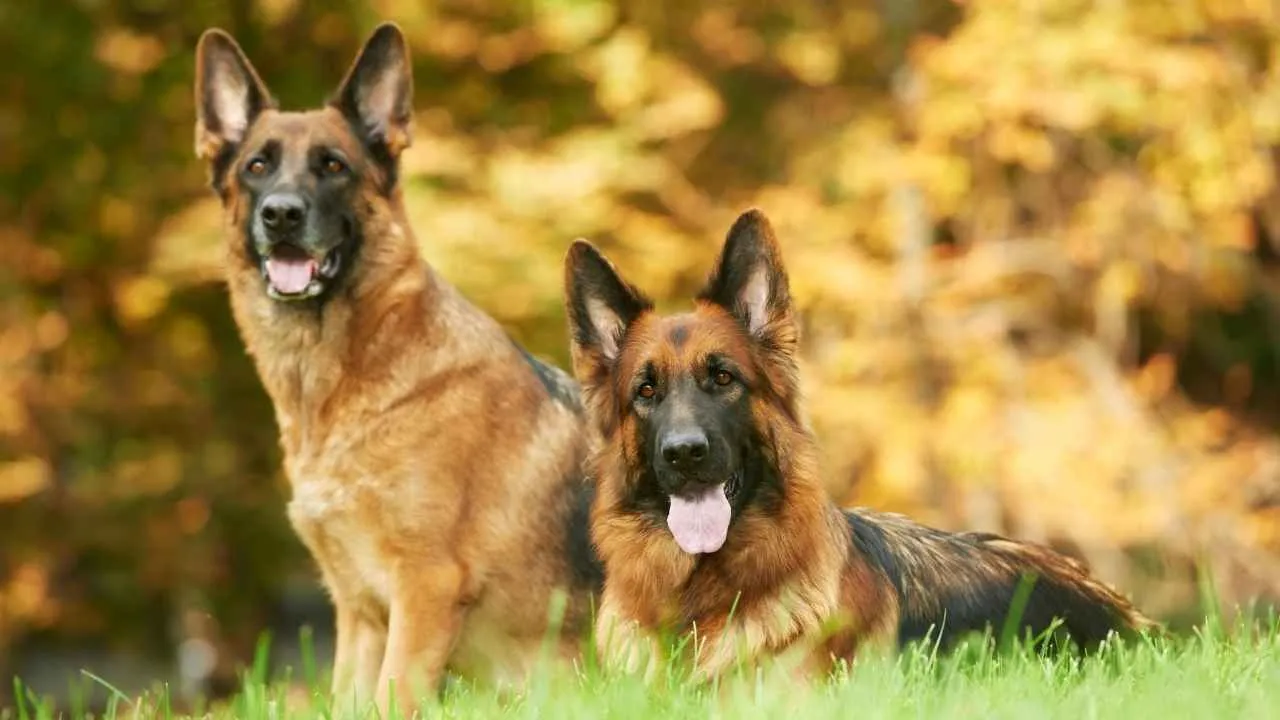
The German Shepherd stands out for its combination of intelligence, confidence, and adaptability. Originally developed as a herding and working dog, it has become widely valued in police, military, search-and-rescue, and personal protection roles.
For family protection, its natural alertness and strong loyalty can be valuable. German Shepherds typically form close bonds with their household and can be gentle with familiar people while remaining attentive to unfamiliar situations.
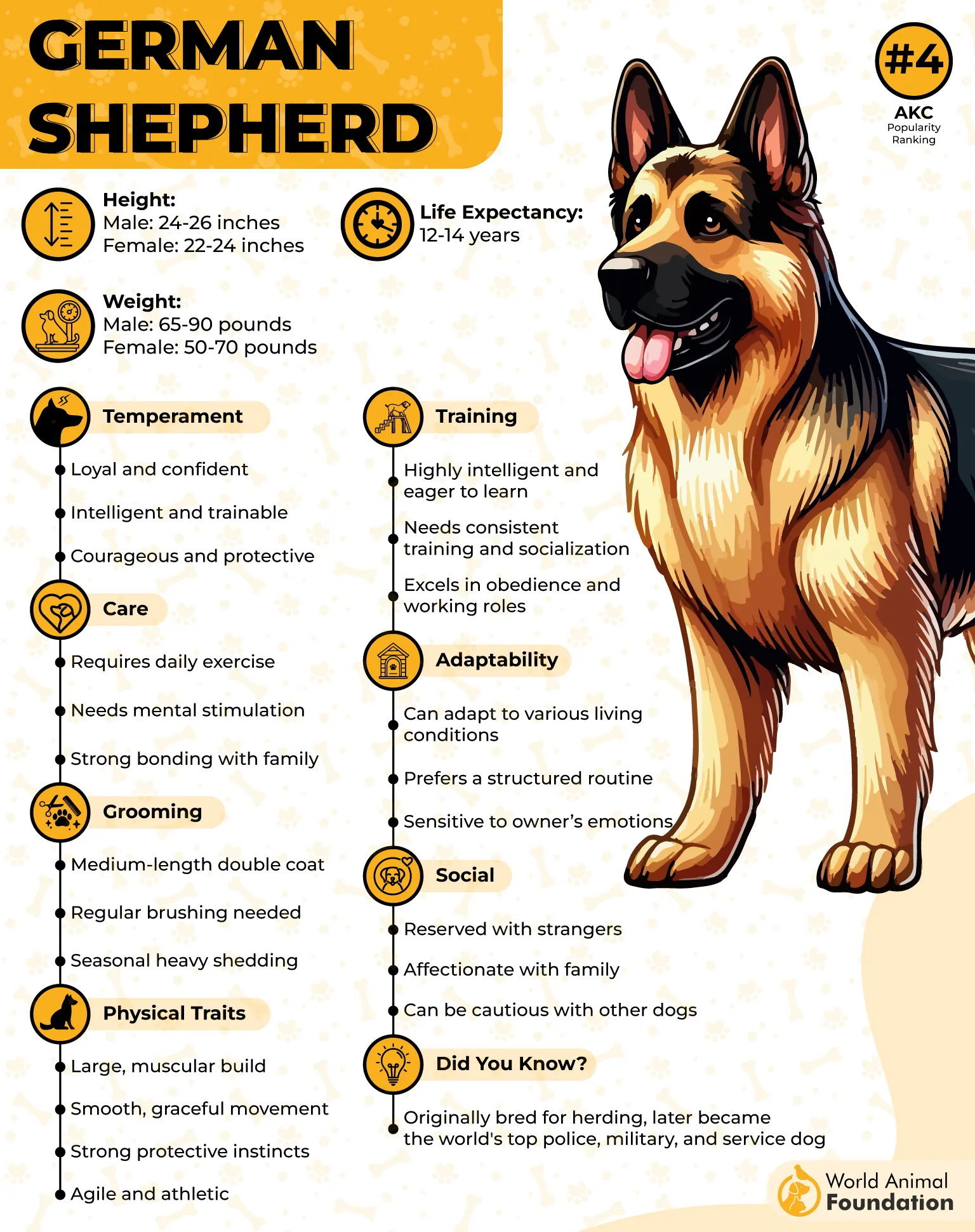
Their trainability is another important advantage. With consistent early training and socialization, owners can channel their protective instincts appropriately and teach reliable responses to different situations.
This athletic breed needs daily physical activity along with mental challenges to stay balanced. Prospective owners should also consider potential hip and elbow problems and seek health-tested dogs when possible.
2. Doberman Pinscher
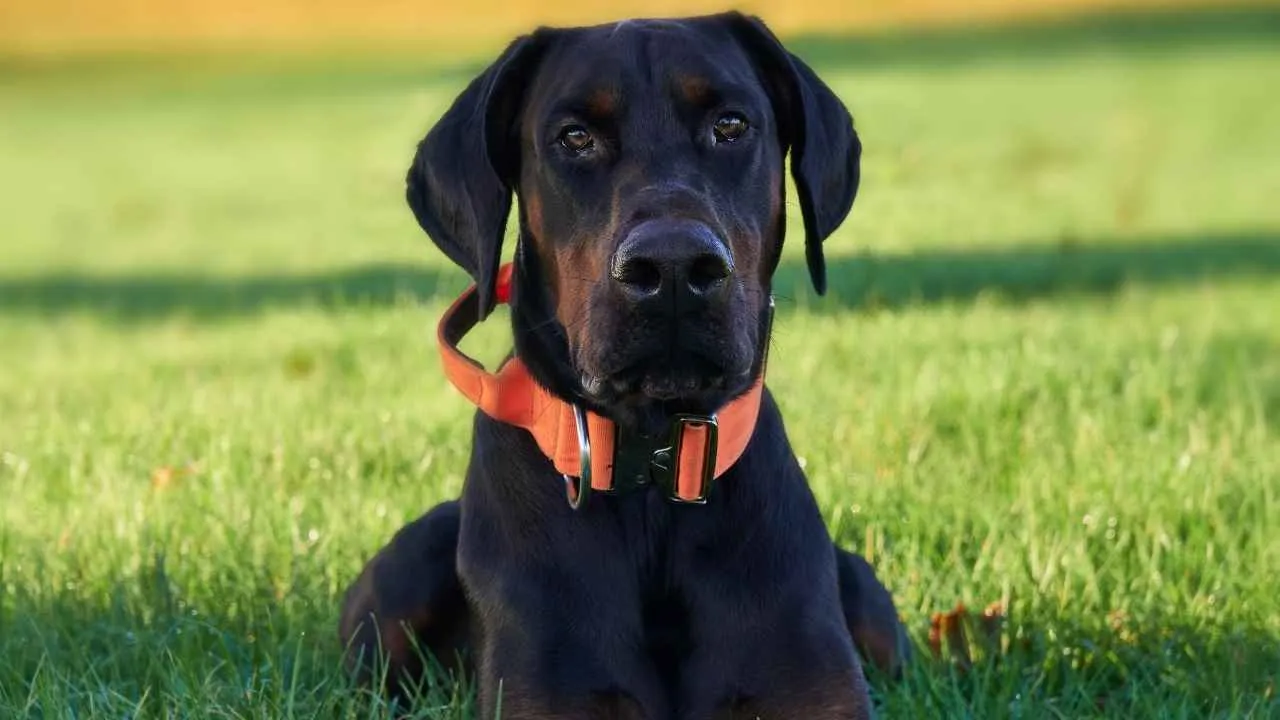
The Doberman Pinscher brings a polished, athletic presence to the role of family protector. Developed for personal protection, this sleek breed combines speed, alertness, and a naturally imposing appearance that can discourage unwanted attention.
Highly devoted to their families, Dobermans often remain close to the people they consider their own. Their sharp senses and strong guarding instincts help them notice unusual situations quickly.
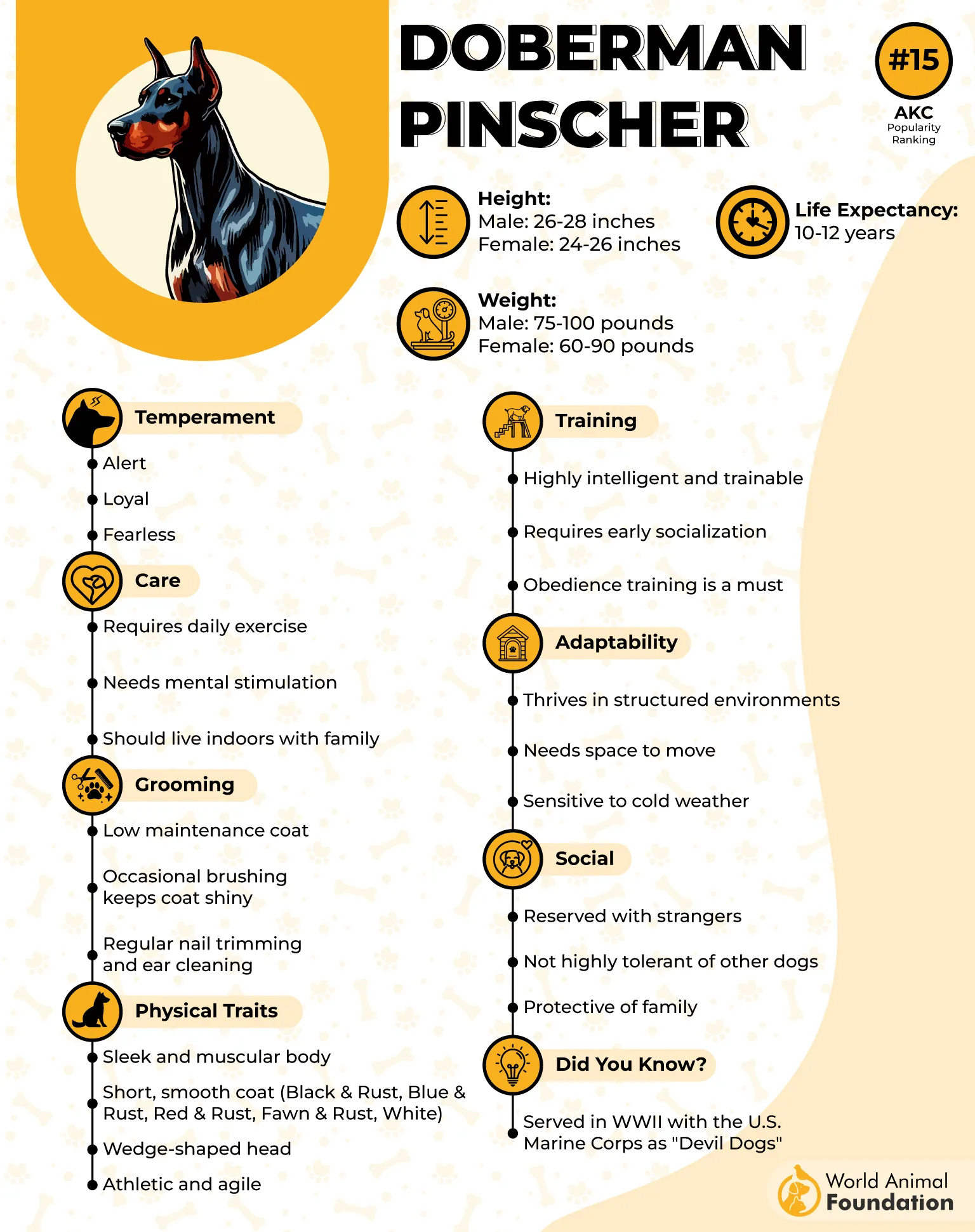
Despite their formidable image, they can settle into family life when raised with proper training and socialization. Introducing them early to children, visitors, other dogs, and pets can encourage a calm, well-mannered temperament.
This highly intelligent, energetic breed needs regular physical activity and mental challenges to stay balanced. Consistent, positive training is particularly important, while prospective owners should also discuss the breed’s elevated risk of dilated cardiomyopathy with a veterinarian
3. Rottweiler

Rottweilers combine impressive strength with a deeply devoted nature, making them natural protectors for the family. Despite their powerful appearance, they can be affectionate and loving with the people they trust.
Their history of driving cattle and guarding property contributes to their protective instincts today. A confident, composed temperament allows them to recognize unusual situations without reacting unnecessarily.
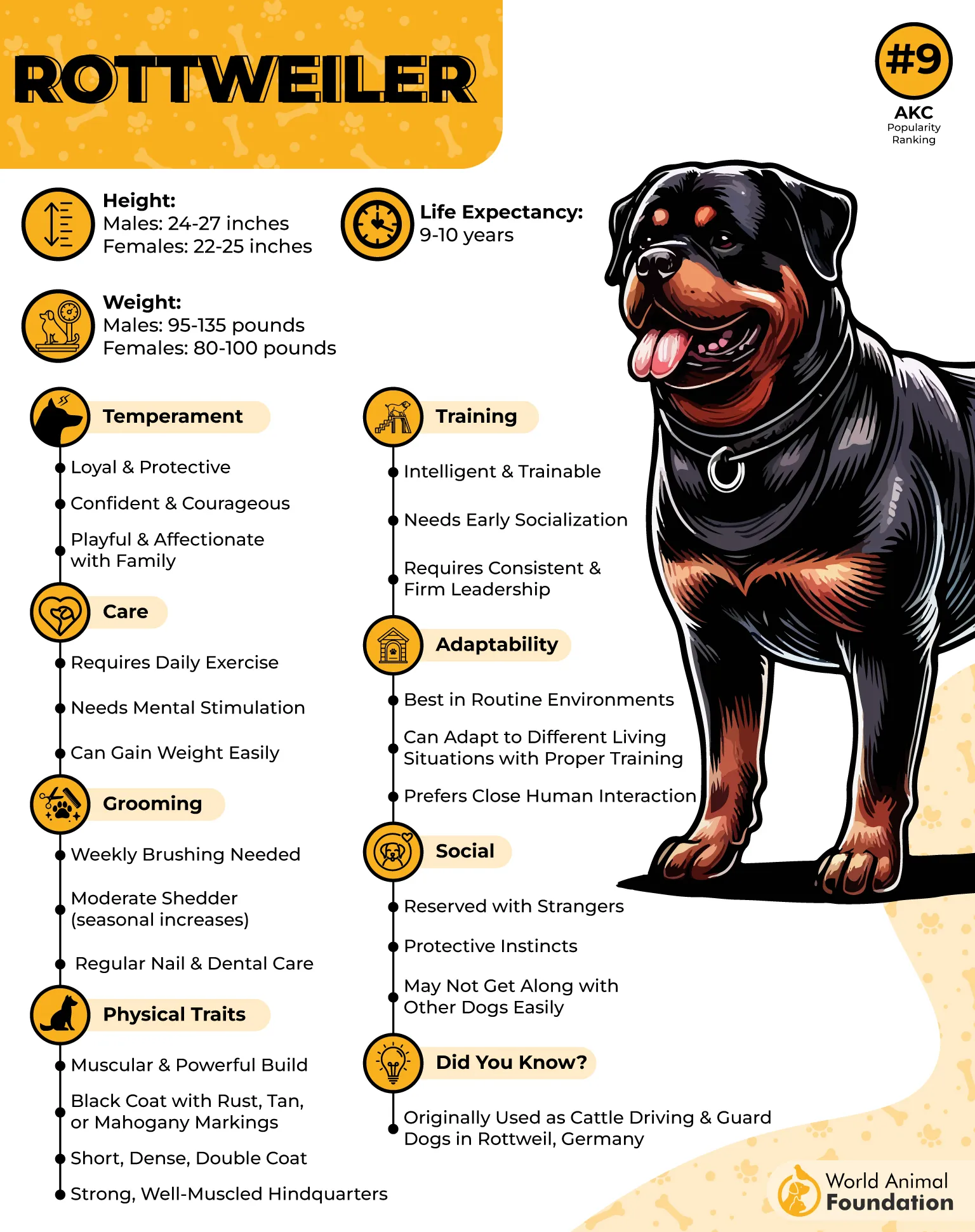
Training should begin early and remain consistent, using clear boundaries and rewards rather than harsh methods. According to PetMD, they pick up new commands quickly. Socialization is equally important, helping them stay calm around children, visitors, other pets, and unfamiliar surroundings.
Families should also be mindful of their physical health, as Rottweilers can be prone to orthopedic concerns such as hip or elbow dysplasia and osteoarthritis. Regular veterinary care and responsible exercise can help support their well-being.
4. Akita
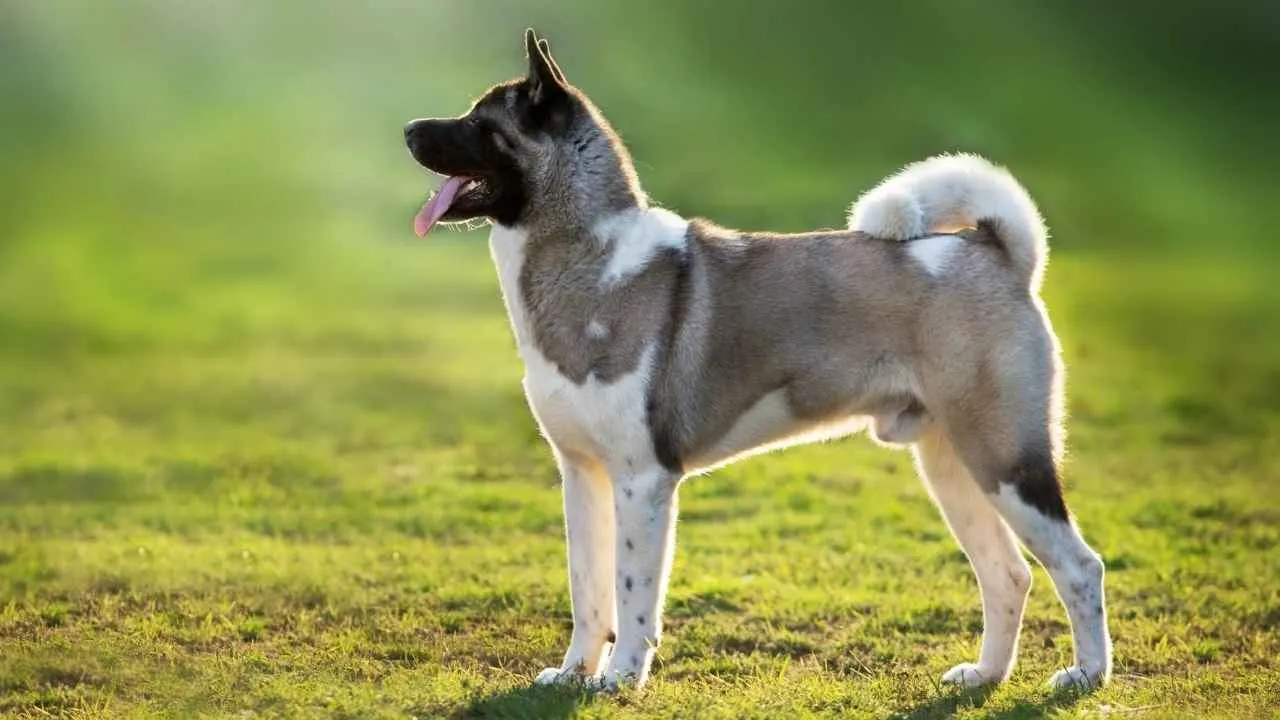
The Akita carries itself with a quiet dignity that reflects its Japanese heritage. Behind that composed presence is a strong protective instinct and deep devotion to the people it considers family.
Picture an Akita standing calmly beside its household, observing unfamiliar activity rather than rushing toward it. These ultimate protection dogs are naturally reserved around strangers, yet intensely loyal to their families.
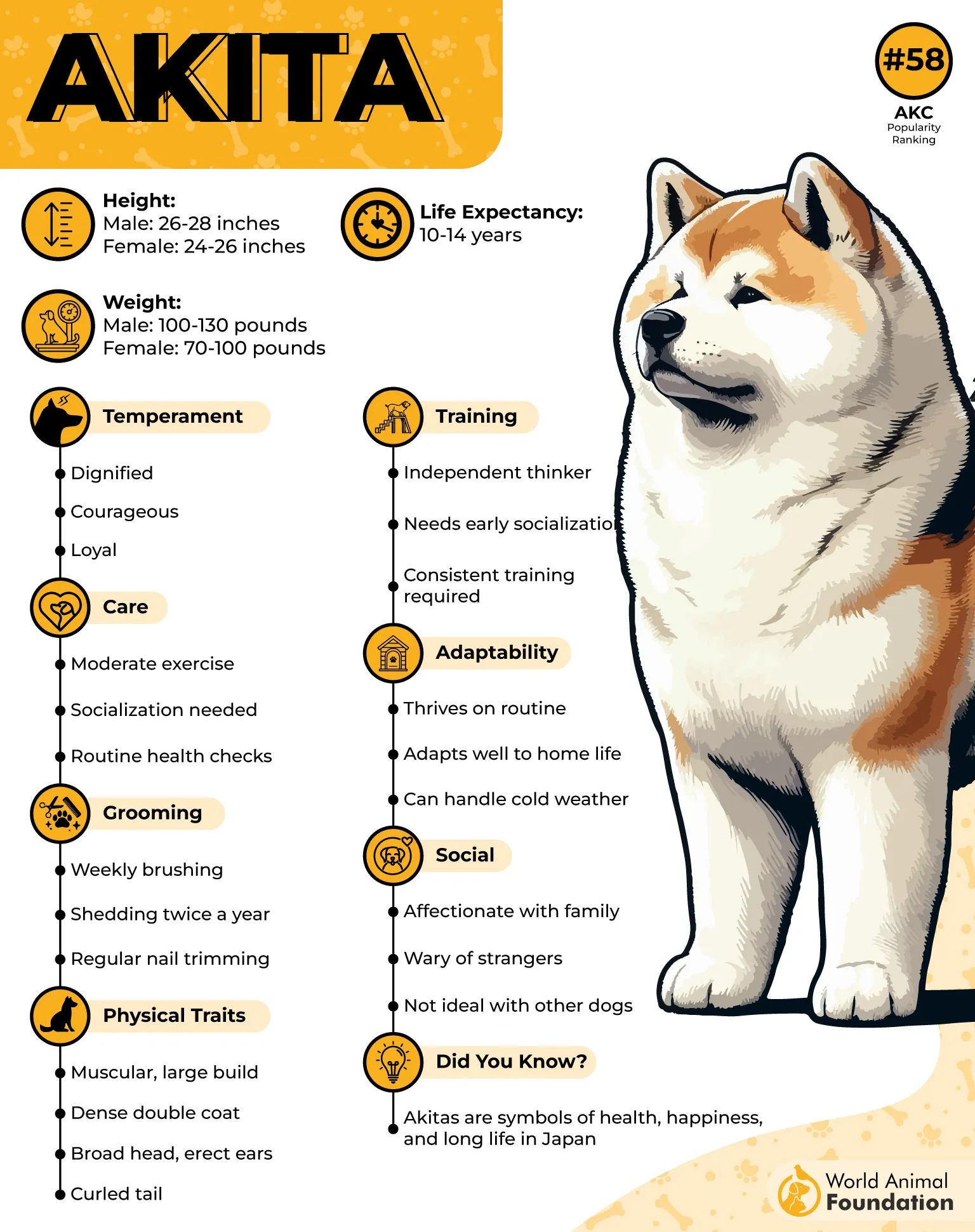
Their independent, strong-willed nature means they may not always respond eagerly to commands. Consistent training and clear boundaries help channel their instincts and keep their extremely protective behavior under control.
For families with children or other pets, early socialization is especially important. Positive exposure to people, animals, and everyday situations can help an Akita develop appropriate responses while remaining the dignified guardian its nature suggests.
5. Belgian Malinois
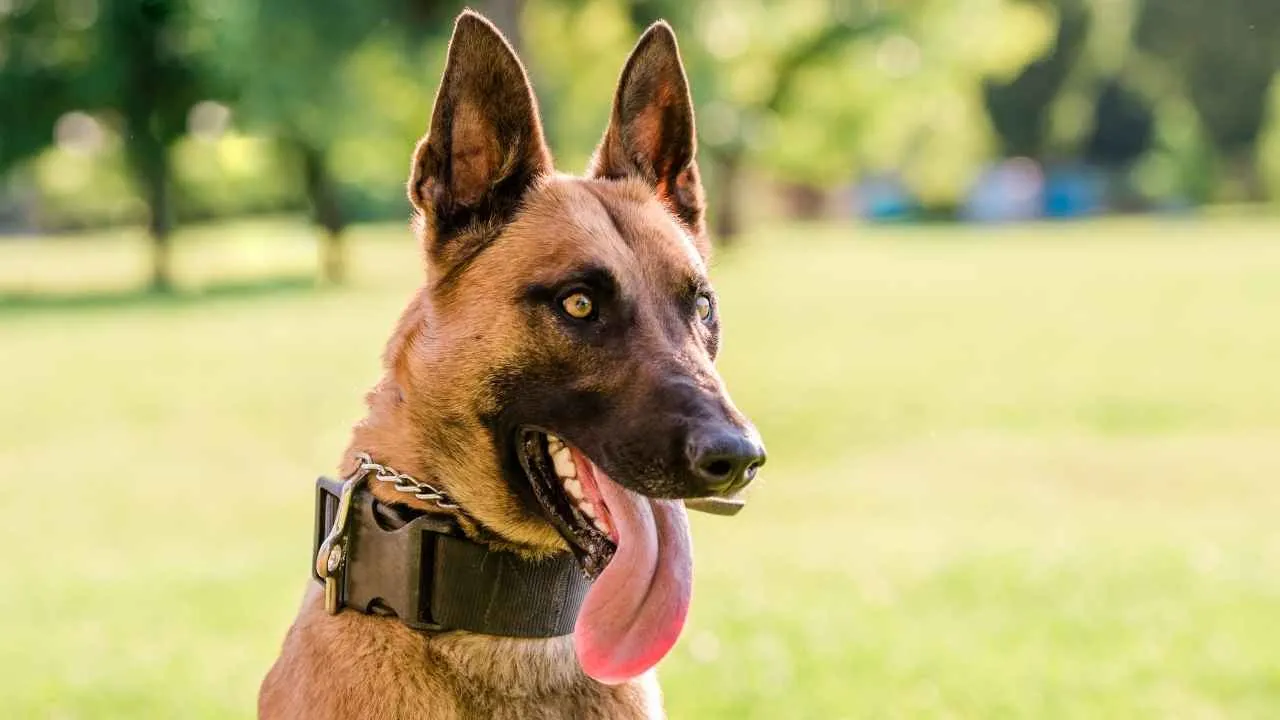
The Belgian Malinois is a high-drive working athlete built for owners who enjoy an active, challenging lifestyle. Its speed, agility, and sharp awareness make it well suited to demanding real-world protection work.
This guard dog breed is frequently involved in police and military roles, including detection, tracking, and other specialized tasks. Its focused nature and quick reactions can be valuable when protecting a family.
Forget the idea that a casual walk is enough. Malinois thrive on vigorous, purposeful activity combined with training that keeps both their bodies and minds engaged.
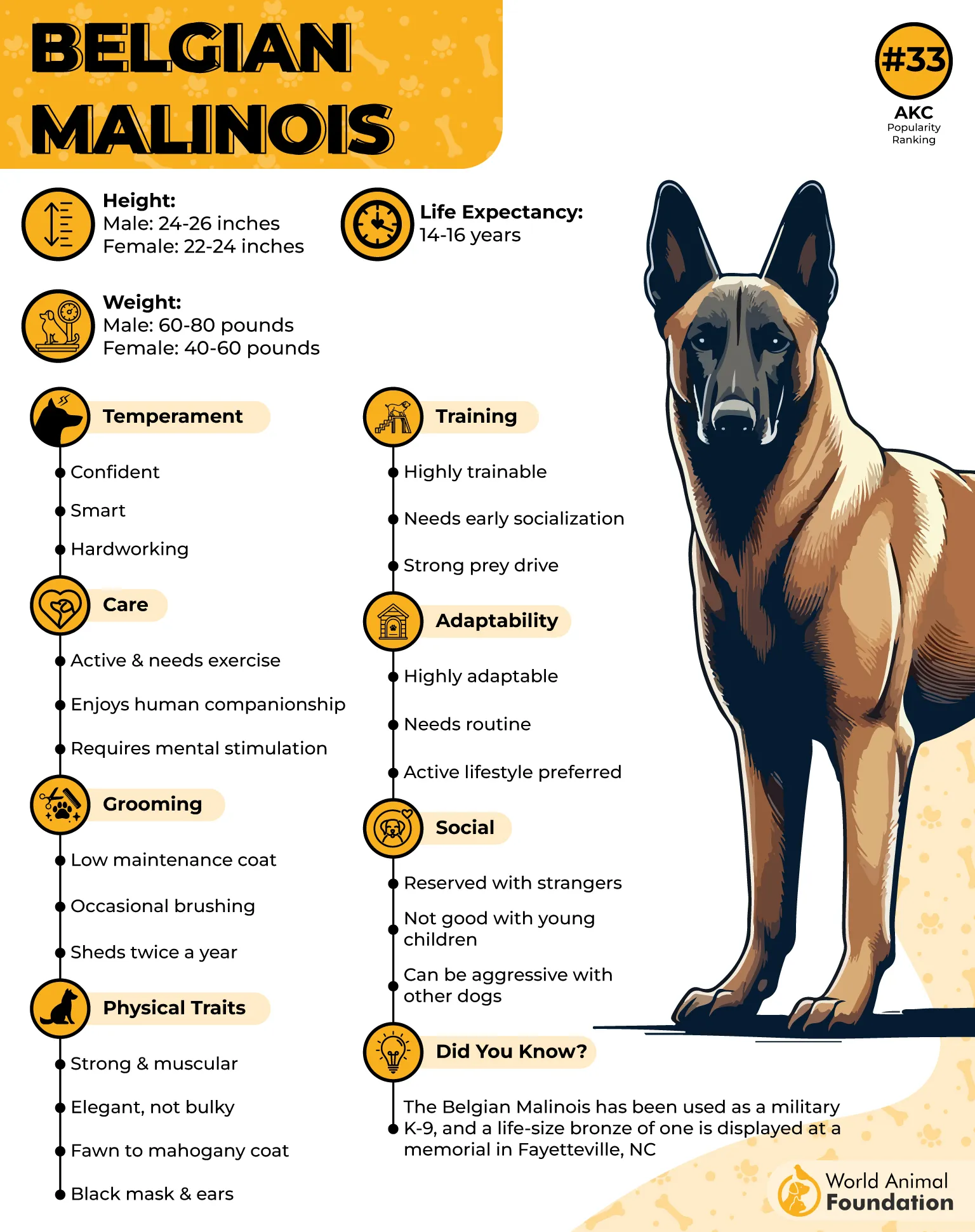
Their loyalty and confidence make them devoted partners, but their intensity calls for experienced handling. Without appropriate outlets for their energy and working instincts, managing this powerful breed can become challenging. According to Hill’s Pet, they may become destructive or anxious.
6. Tibetan Mastiff
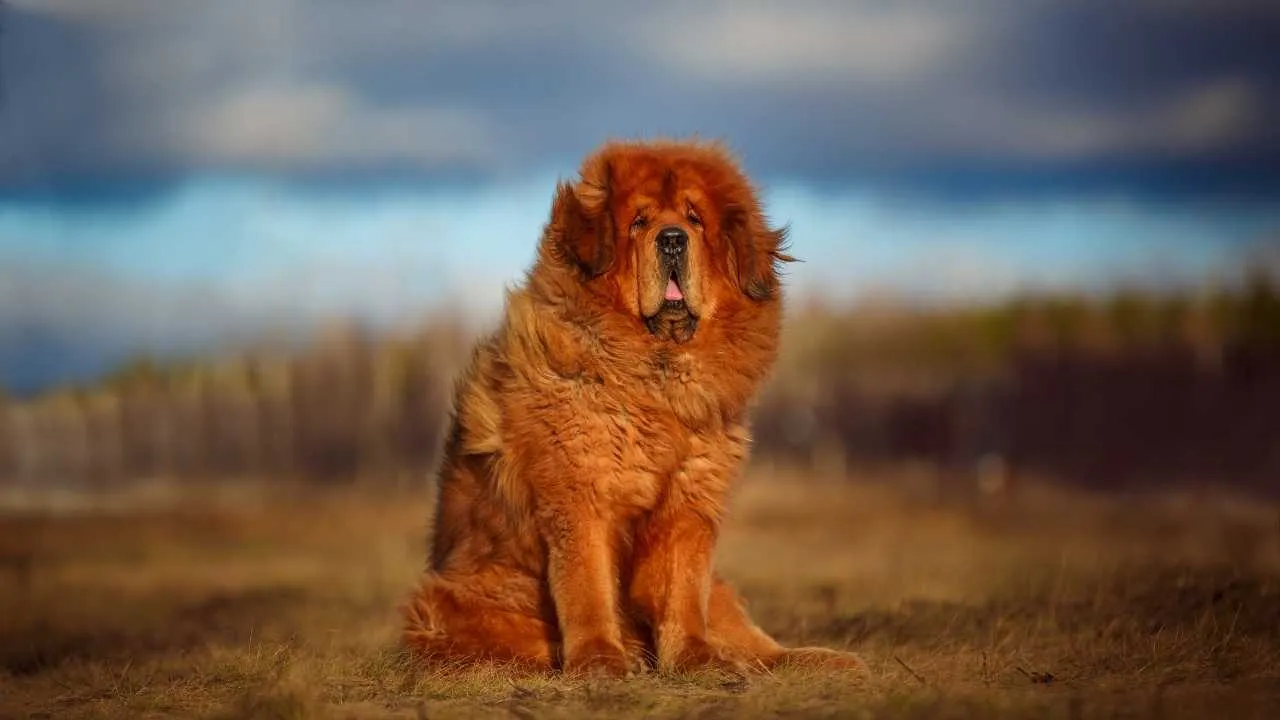
The Tibetan Mastiff carries the presence of an ancient mountain guardian, with a powerful build and thick coat shaped by its Himalayan heritage. Historically, these dogs protected homes, monasteries, and livestock.
Their natural guarding instincts remain strong today. A deep bark, territorial nature, and wariness toward unfamiliar people can make them highly attentive to activity around the home, especially after dark.
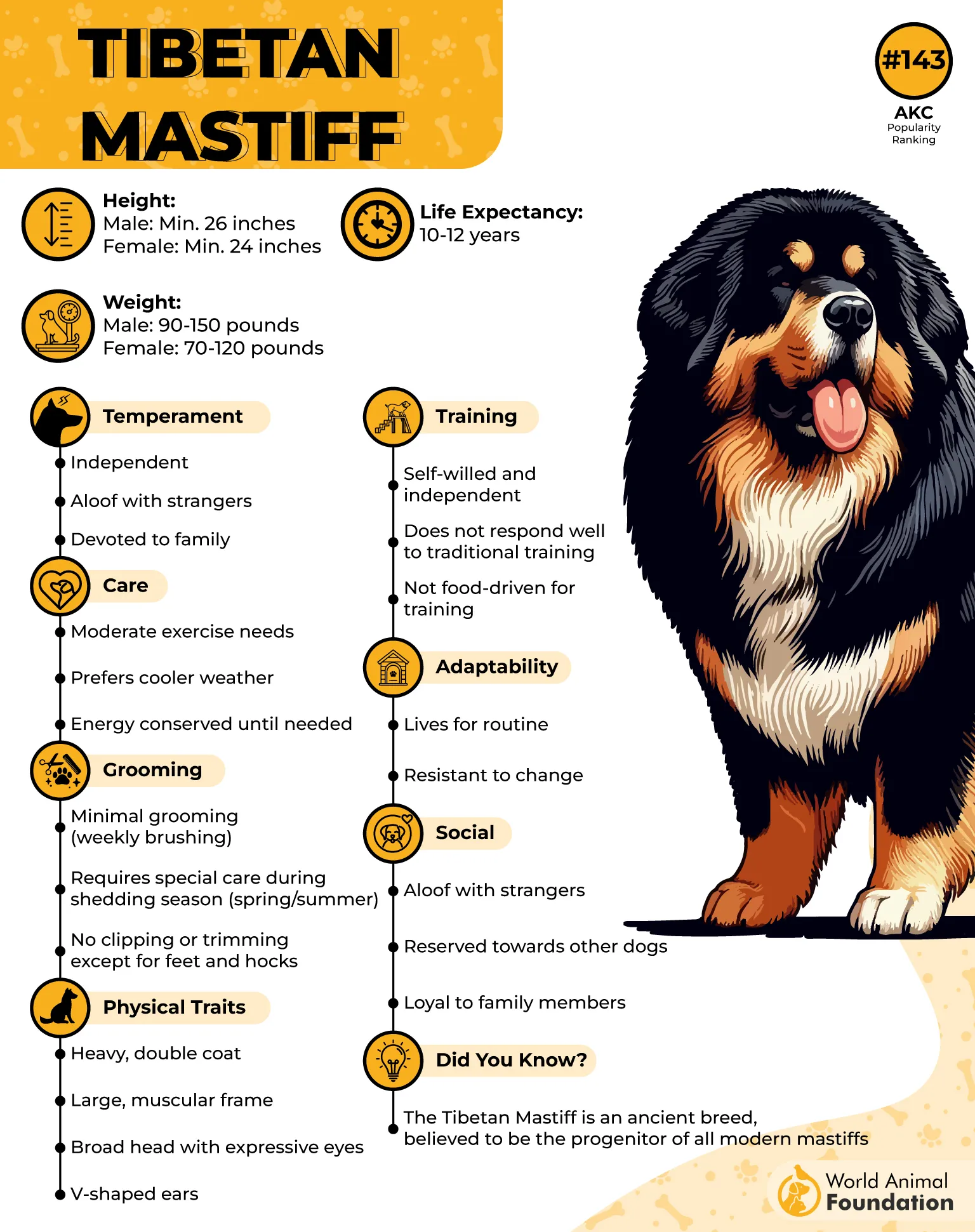
Despite their imposing appearance, Tibetan Mastiffs can be calm and affectionate with their families. They are independent thinkers, though, and may not readily accept tasks without consistent, experienced handling.
Their size and guardian instincts require responsible management, including secure fencing and proper training. Families in cooler climates may find their dense coat easier to manage, while warmer environments require extra consideration.
7. Boxer
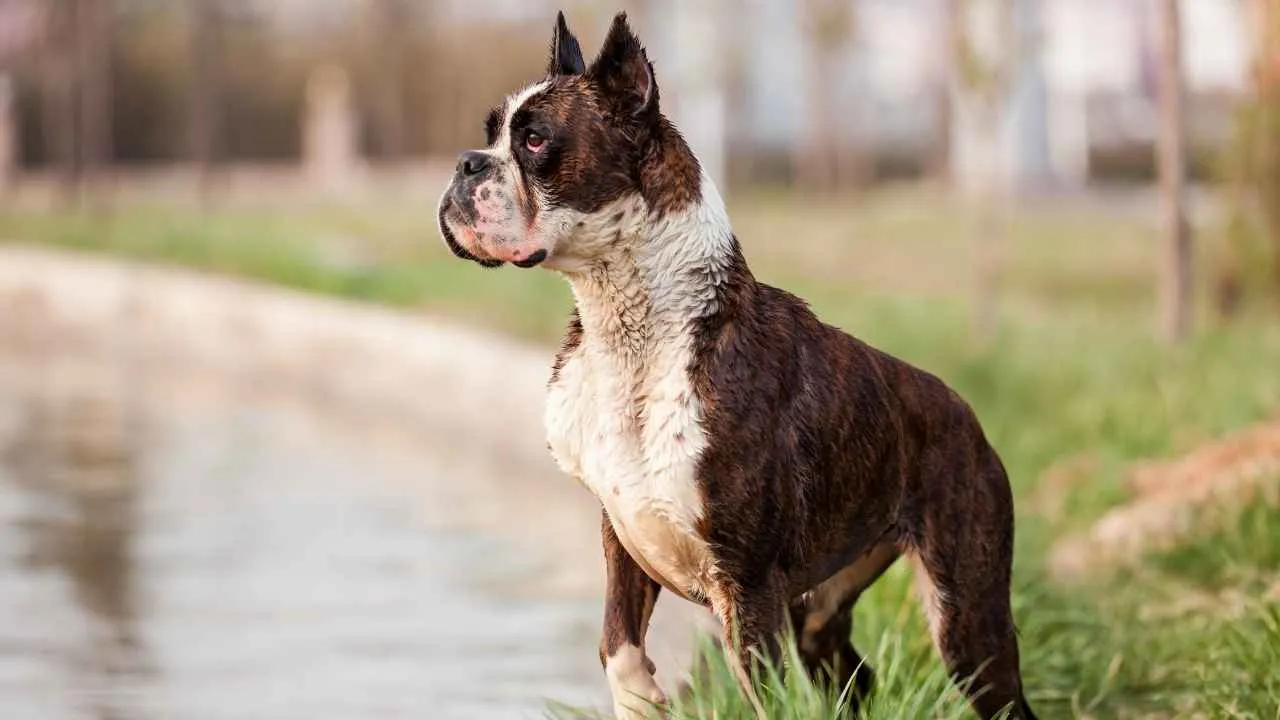
The Boxer brings a fun-loving spirit to family life while still taking its watchdog role seriously. Muscular and energetic, this naturally protective breed enjoys being involved in games and activities, making it an engaging companion for children. According to the Royal Kennel Club, Boxers are beloved family companions known for their intelligence.
When something seems unusual, Boxers tend to become highly attentive. Their natural protective instincts, strong presence, and powerful bark can help alert the household to unfamiliar people or activity around the home.
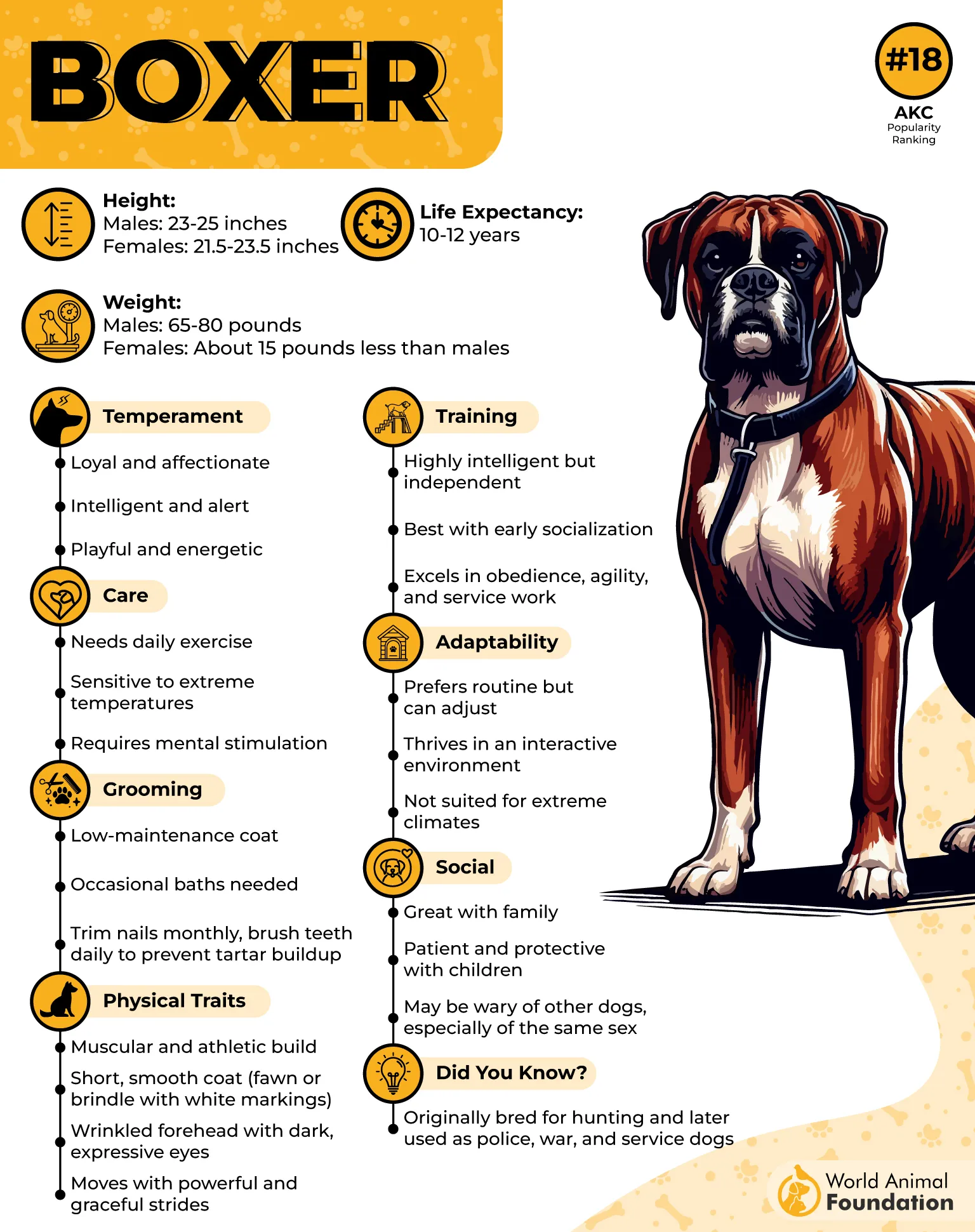
Their playful side is part of the charm. Often described as having a clownish personality, Boxers can keep family life lively while remaining devoted to the people they consider their own.
This breed does best with active families that can provide regular exercise, training, and socialization. With the right guidance, its energy and loyalty can complement its instinct to watch over the household.
Conclsuion
Choosing the best family protection dog requires looking beyond a breed’s fierce appearance. Protective instincts, loyalty, temperament, and behavior around trusted family members are all important considerations.
Family-oriented breeds with a strong guarding background may be naturally alert to unfamiliar people and changes around the home. However, their fiercely protective tendencies should be guided through responsible protection training and early socialization.
A well-behaved fierce guardian should also fit the household’s lifestyle, living space, and ability to provide exercise, mental stimulation, and consistent boundaries. Calm, positive handling can help channel protective behavior appropriately.
With thoughtful training and responsible care, a family guard dog can become an ideal companion while remaining attentive to its surroundings. Understanding each breed’s individual characteristics is key to creating a safe and harmonious family environment.
