




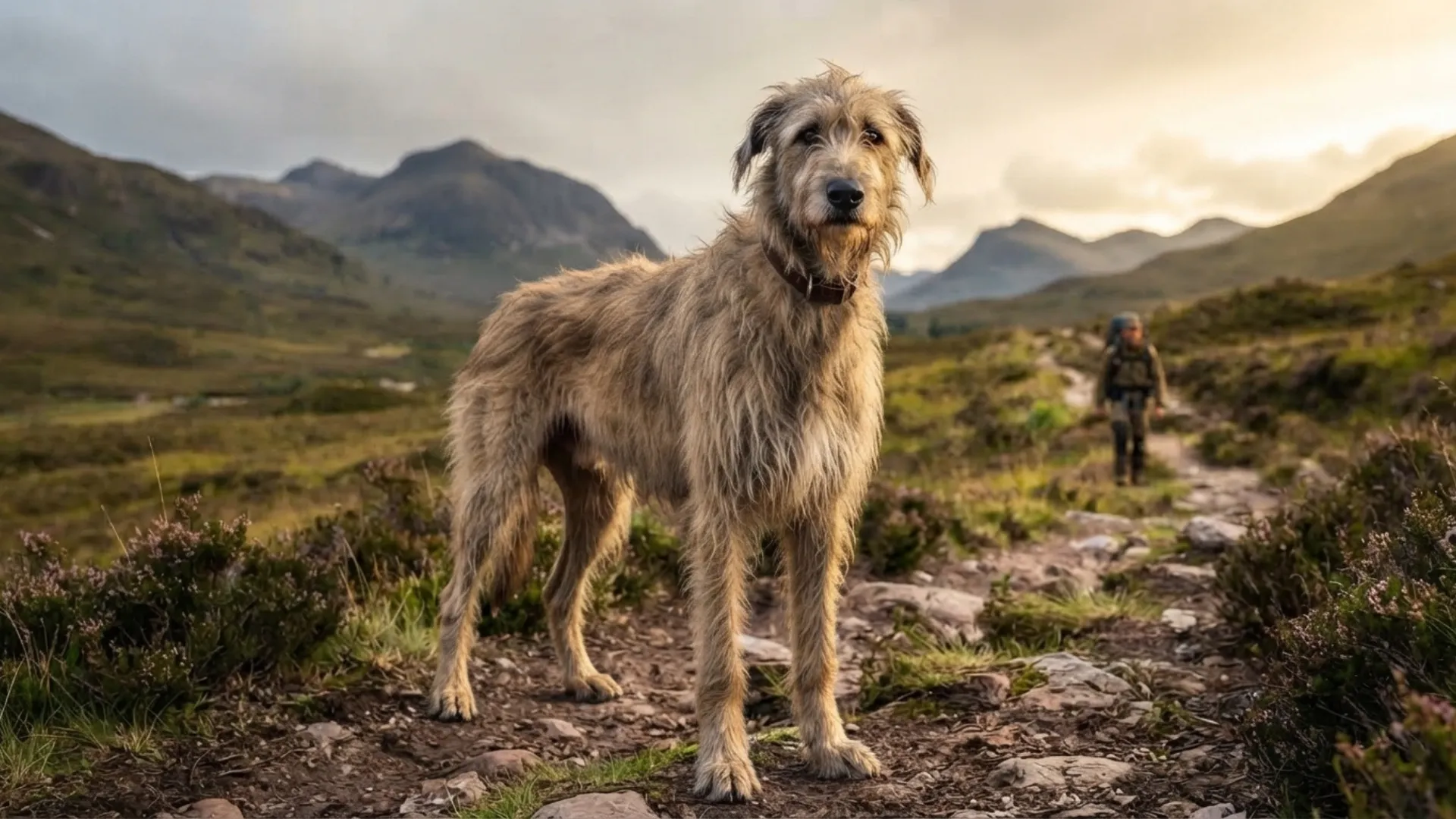
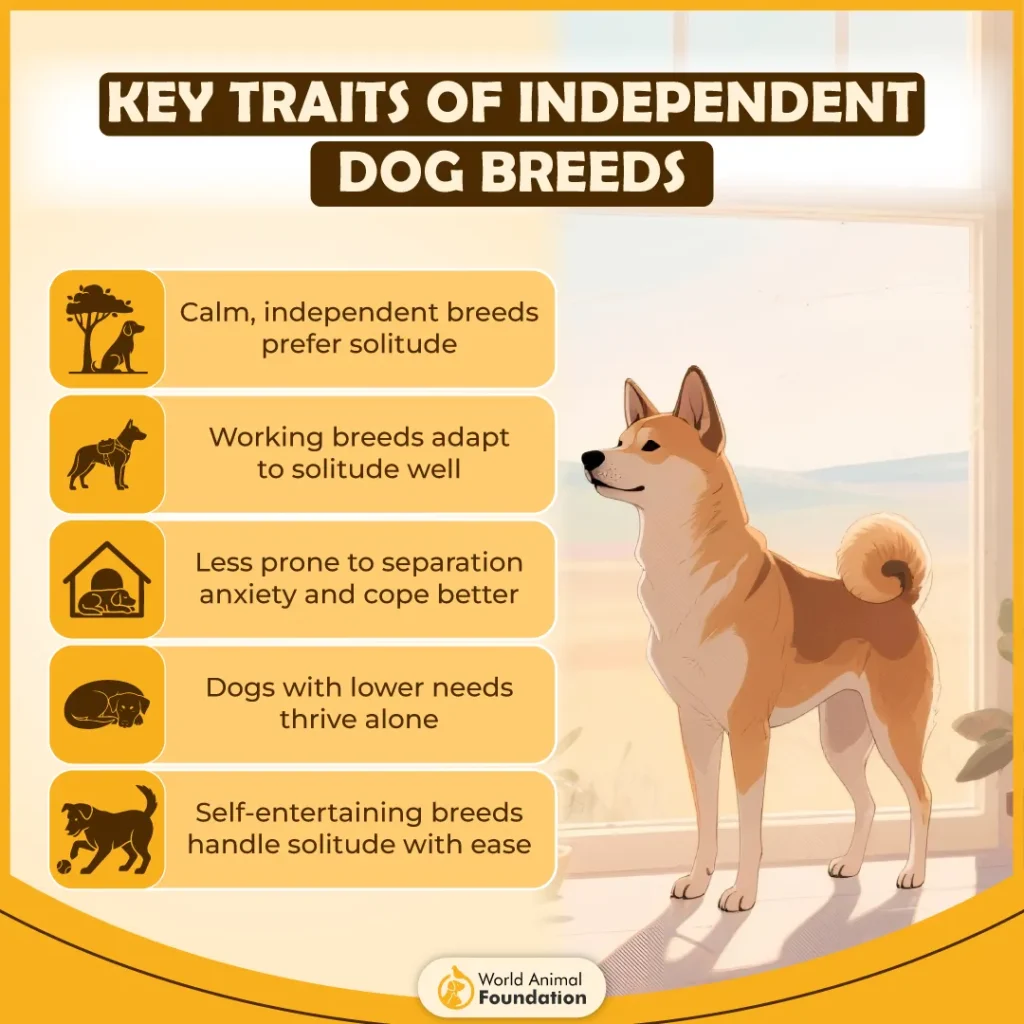
Some enormous dogs are perfectly comfortable spending time on their own and do not need to be involved in every moment of their owner’s day. Their independent nature often comes from generations of work that required dogs to make decisions without receiving constant direction from people.
Guarding remote properties, protecting livestock, tracking animals, and traveling across difficult landscapes all favored dogs capable of thinking for themselves.
For a person living alone, that quality can be appealing. An independent dog may enjoy companionship without demanding continuous interaction, although independence should never be confused with neglecting a dog’s social, exercise, or emotional needs. Even self-sufficient breeds require regular care, training, enrichment, and meaningful contact with their owners.
The breeds below range from enormous hounds to powerful livestock guardians. Their temperaments vary considerably, but each has a history that helps explain why it may be more comfortable making its own decisions than constantly waiting for human instruction.
Massive Dog Breeds With Independent Spirits for Solo Owners
1. Greyhound
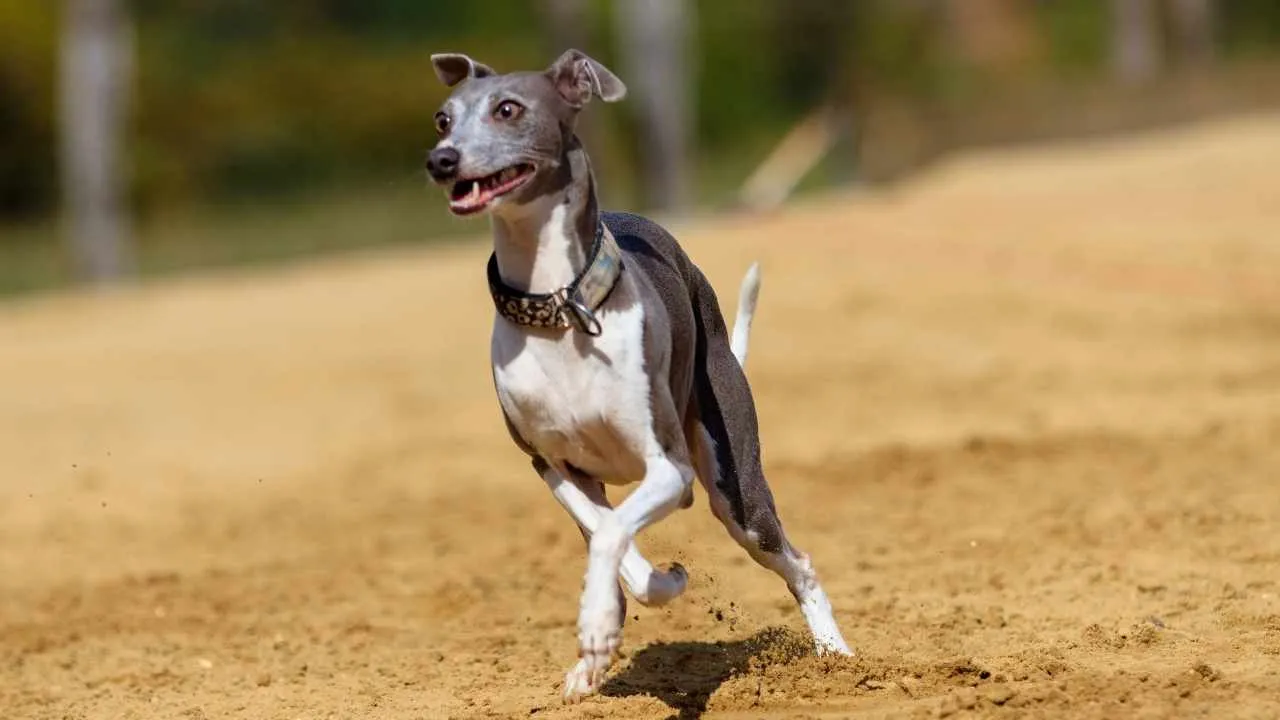
Greyhounds are among the oldest recognized sighthound types, with their history stretching back thousands of years, as per PDSA. Dogs resembling Greyhounds appear in ancient artwork from the Middle East and surrounding regions, while later development in Britain shaped the breed into an accomplished coursing and racing dog.
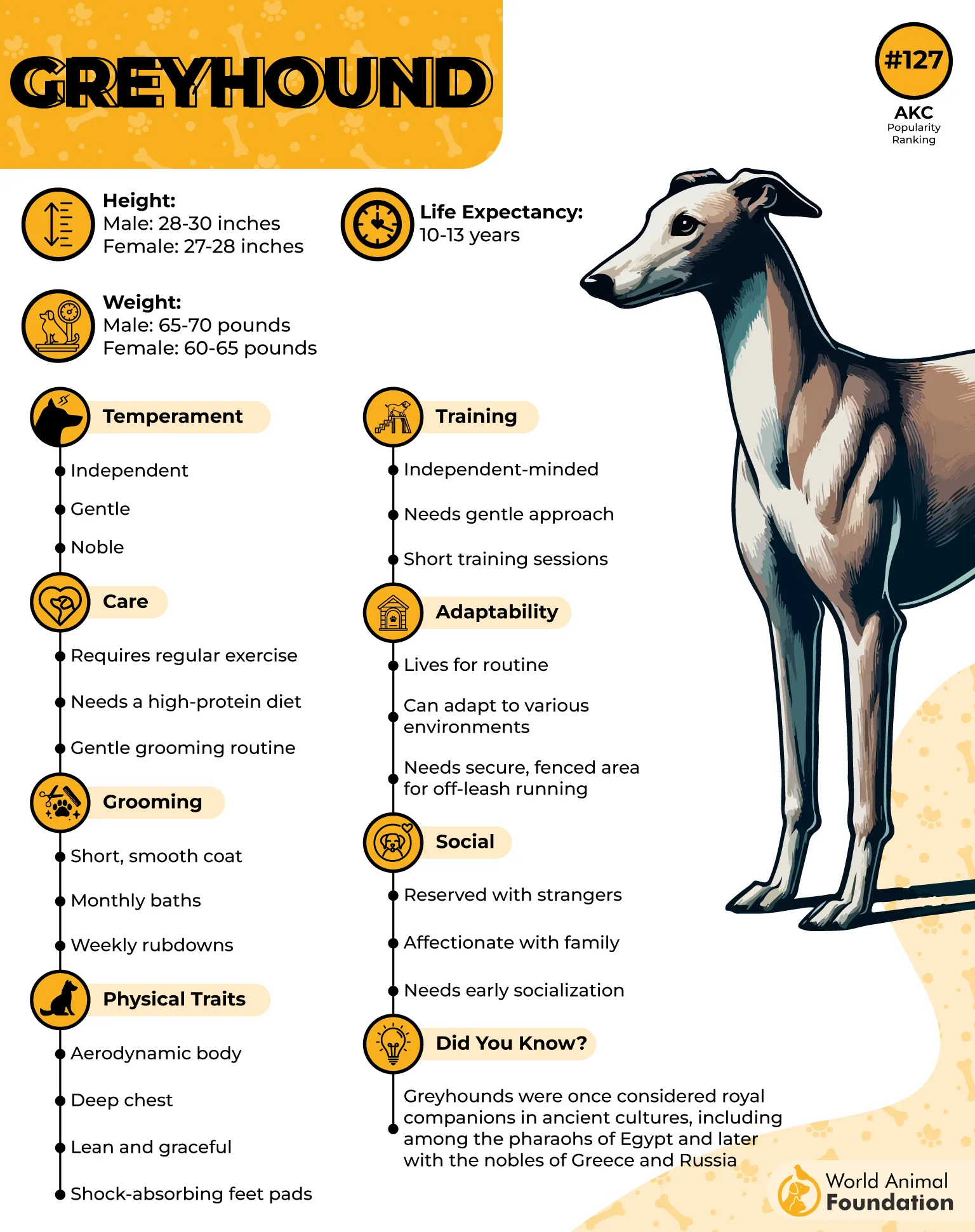
A Short Coat and an Unusual Exercise Pattern
The Greyhound’s fine, short coat is remarkably easy to maintain and generally needs little more than occasional brushing. Despite its reputation for extraordinary speed, the breed does not necessarily require endless exercise. Several moderate walks combined with opportunities for controlled bursts of running can often suit its routine, provided the dog has a secure environment.
A Quiet Personality With a Self-Contained Nature
Greyhounds can be surprisingly calm indoors and are often content to relax for long periods after their exercise needs have been met. Their independent streak is partly connected to their traditional hunting style, in which they were expected to notice and pursue movement rapidly. They may form strong bonds with their people without needing constant attention.
2. Rhodesian Ridgeback
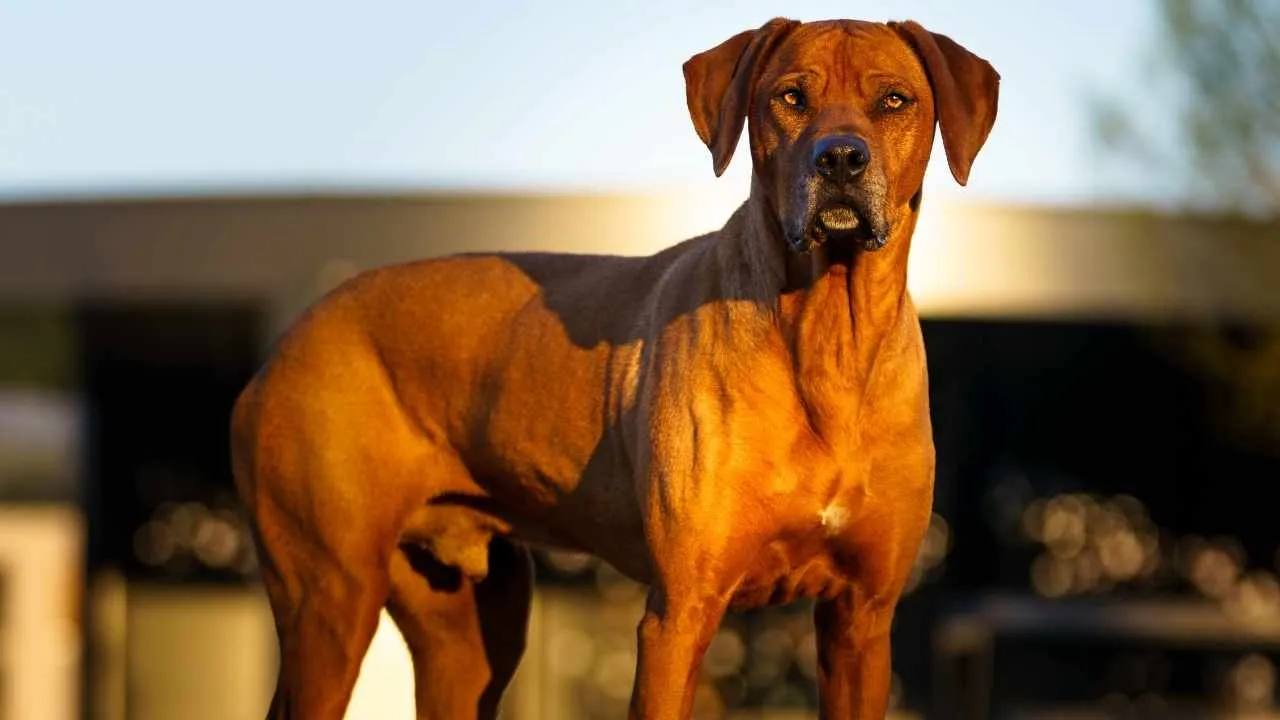
The Rhodesian Ridgeback developed in southern Africa from a combination of local dogs and European breeds, as per Purina. Early settlers valued dogs that could handle difficult conditions, protect homesteads, and participate in hunting expeditions. Over time, the breed became particularly associated with tracking and pursuing large game in demanding terrain.
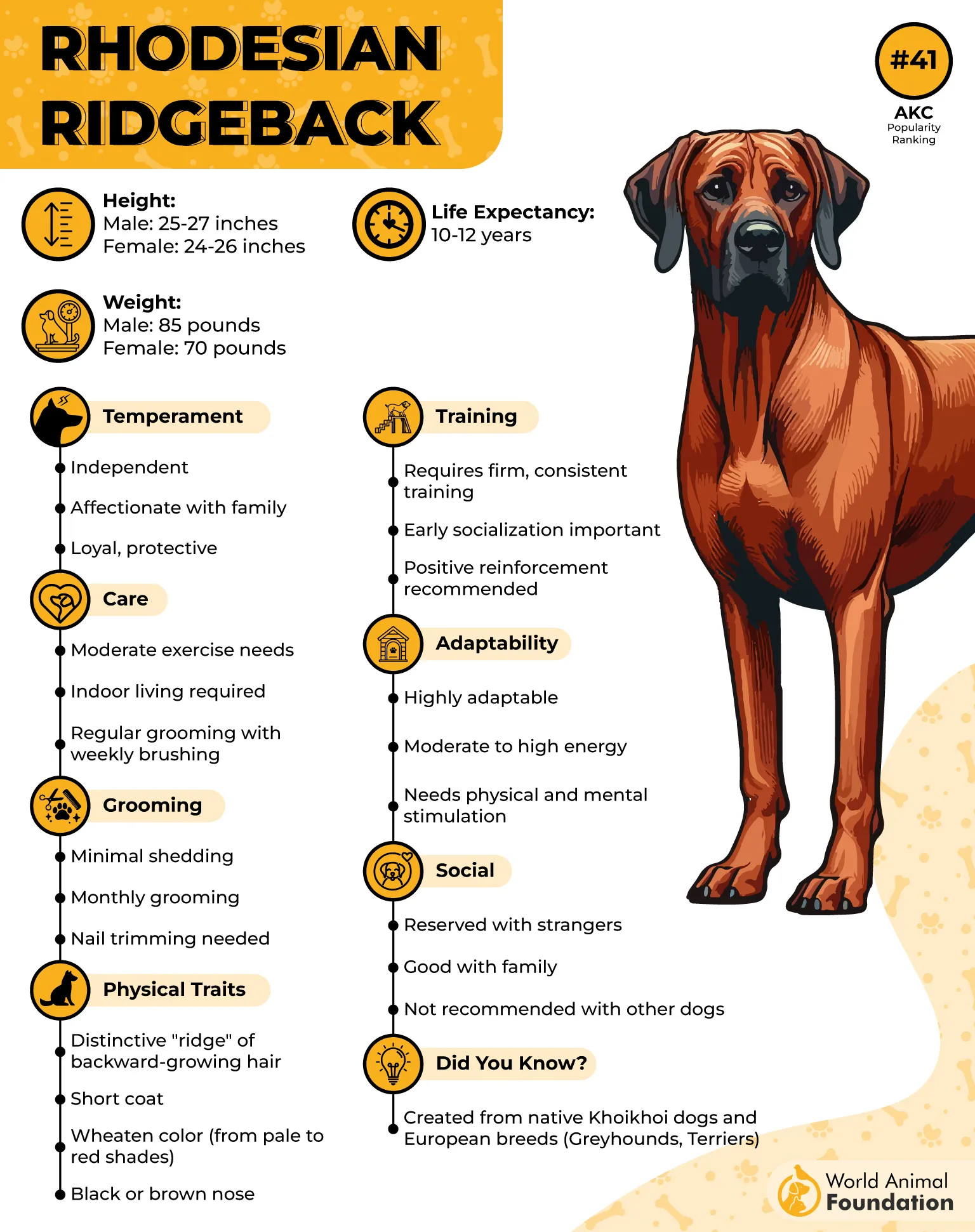
Simple Grooming for a Strong, Active Dog
The Ridgeback’s sleek coat is relatively low maintenance, requiring occasional brushing and routine bathing when necessary. Its athletic body needs considerably more attention than its coat. Long walks, hiking, running, outdoor exploration, and structured training can help provide enough activity for this powerful breed.
Confidence Without Constant Direction
Rhodesian Ridgebacks can possess a strong-willed and self-assured temperament. Their working background required them to remain alert and make decisions while operating away from their handlers. That independence can be useful for experienced owners, although consistent boundaries are important because a confident Ridgeback may not automatically agree with every instruction.
3. Irish Wolfhound
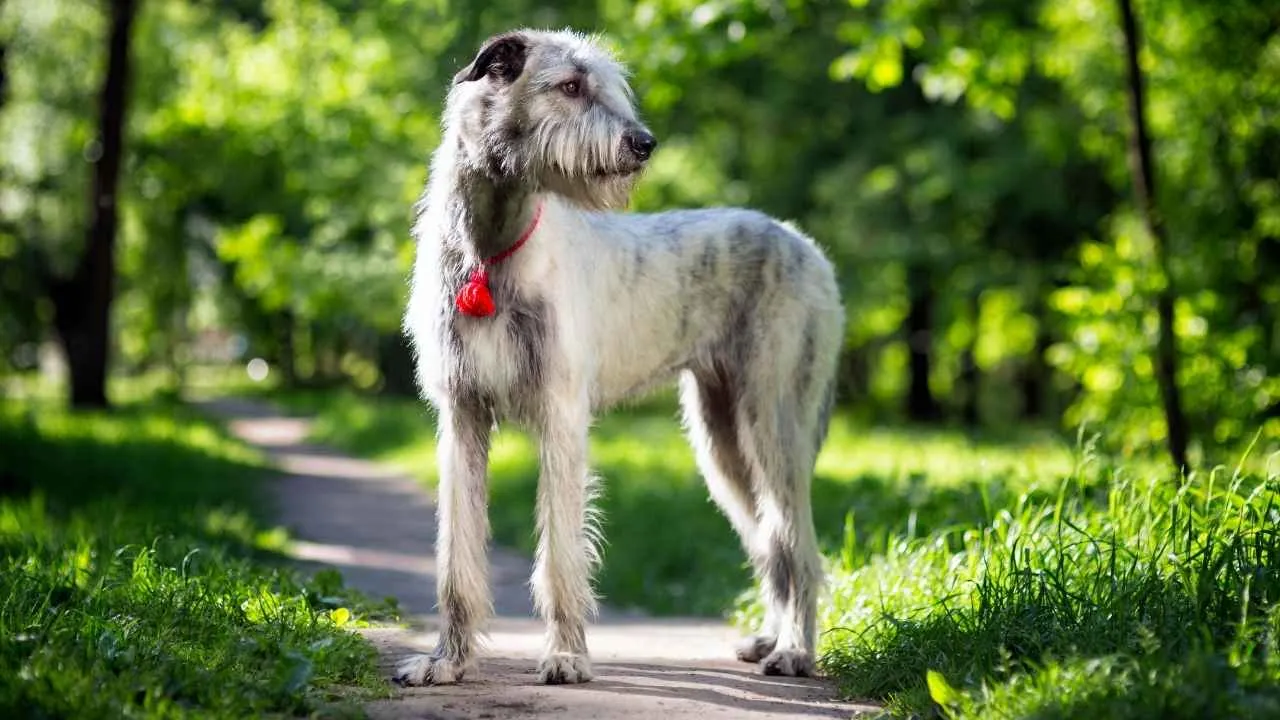
The Irish Wolfhound has ancient roots in Ireland, where large hounds were prized by Gaelic nobility for hunting wolves, deer, and other substantial quarry. Historical accounts describe enormous Irish hounds being given as valuable gifts to rulers and nobles. Their imposing stature and hunting abilities helped establish them as legendary large dogs of the region.
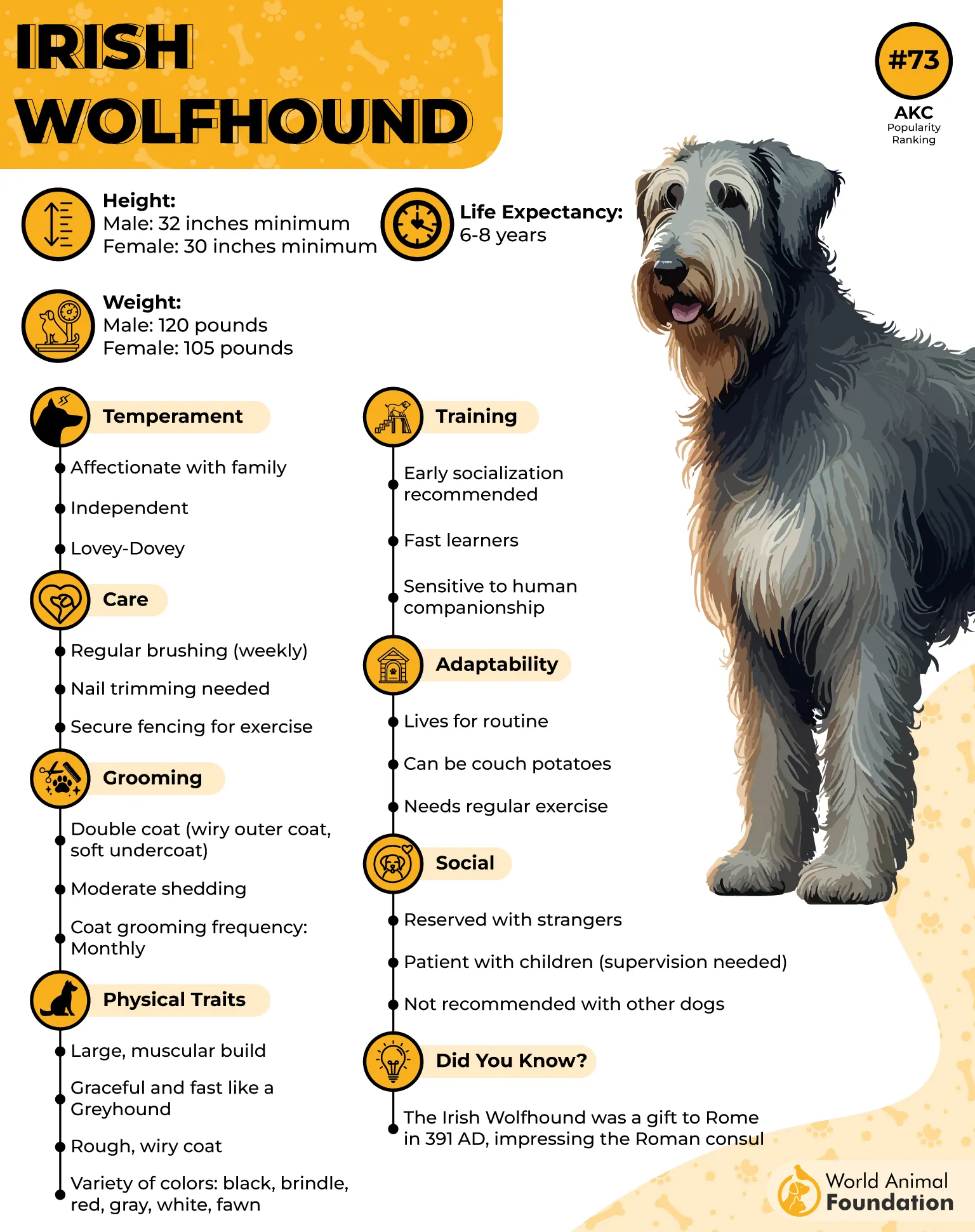
Gentle Grooming and Surprisingly Moderate Exercise
The Irish Wolfhound has a rough, wiry coat that benefits from regular brushing and occasional trimming to keep it tidy. Puppies require careful management because their rapidly developing bodies should not be pushed into excessive exercise. Mature dogs benefit from regular walks and room to move, but they are generally not nonstop athletes.
A Dignified Dog That Does Not Need Constant Company
Irish Wolfhounds are often known for their calm and composed presence. They can enjoy being near their owners without insisting on continuous entertainment. Their historical role as large-game hunters required initiative and confidence, qualities that can still appear as a thoughtful, somewhat self-directed temperament in modern individuals.
4. Central Asian Shepherd Dog
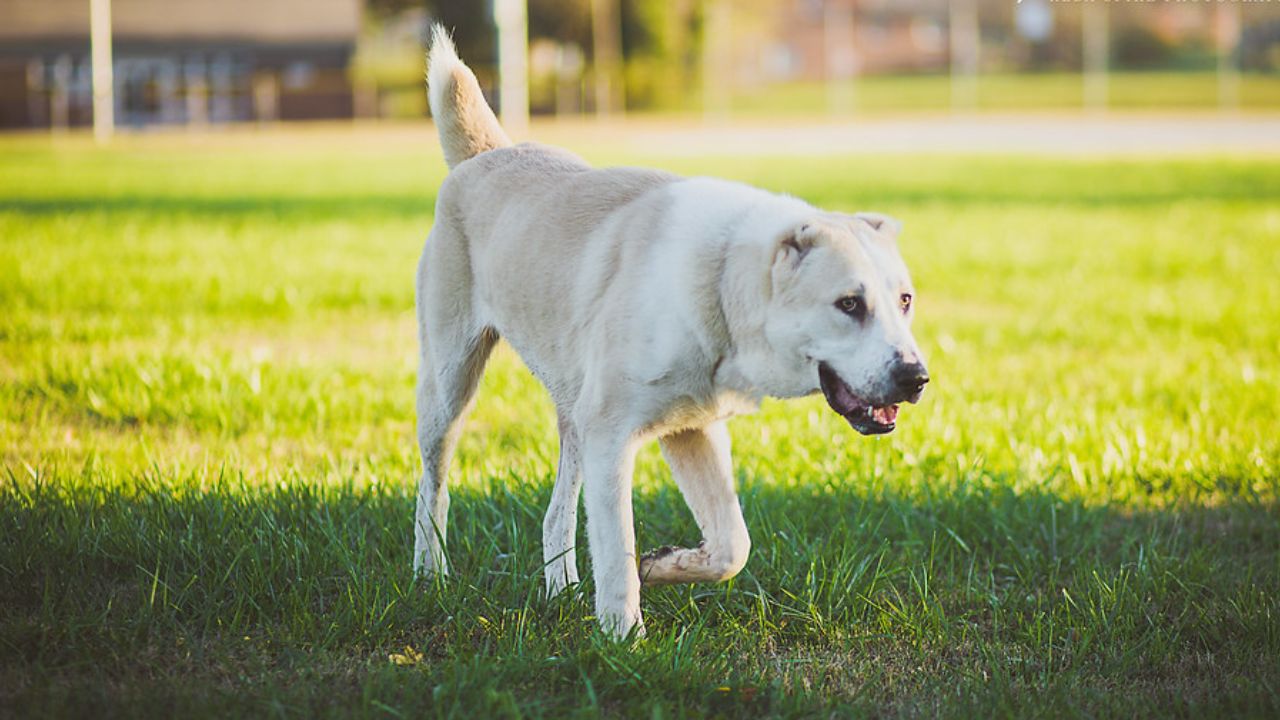
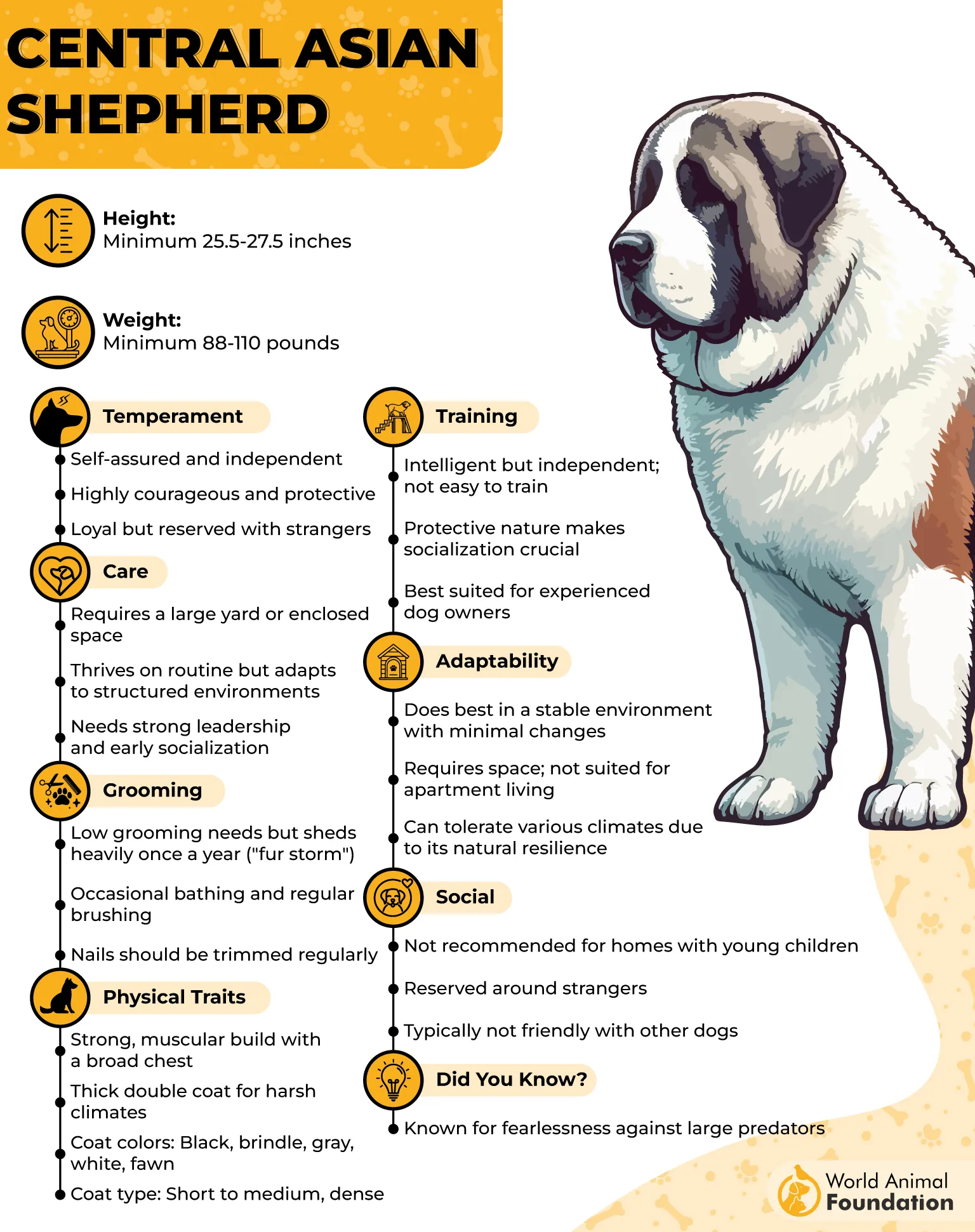
The Central Asian Shepherd Dog has a long history across Central Asia, where livestock-guarding dogs developed in harsh environments and were expected to protect flocks and property, as per PetMD. Rather than receiving constant commands, these dogs often worked independently, evaluating potential threats and deciding how to respond.
A Dense Coat With Serious Physical Requirements
Depending on the individual, the Central Asian Shepherd Dog may have a short, medium, or long coat, with grooming requirements increasing as coat length increases. Regular brushing helps remove loose hair and maintain skin health. Exercise should include daily movement and opportunities to patrol or explore safely, but the breed does not necessarily require repetitive high-intensity activity.
An Independent Guardian That Takes Its Job Seriously
Independence is central to the breed’s traditional purpose. A Central Asian Shepherd may assess unfamiliar people, animals, and situations before deciding how to respond rather than immediately looking to its owner for instructions. This makes early socialization, clear boundaries, and experienced handling particularly important.
5. Akita
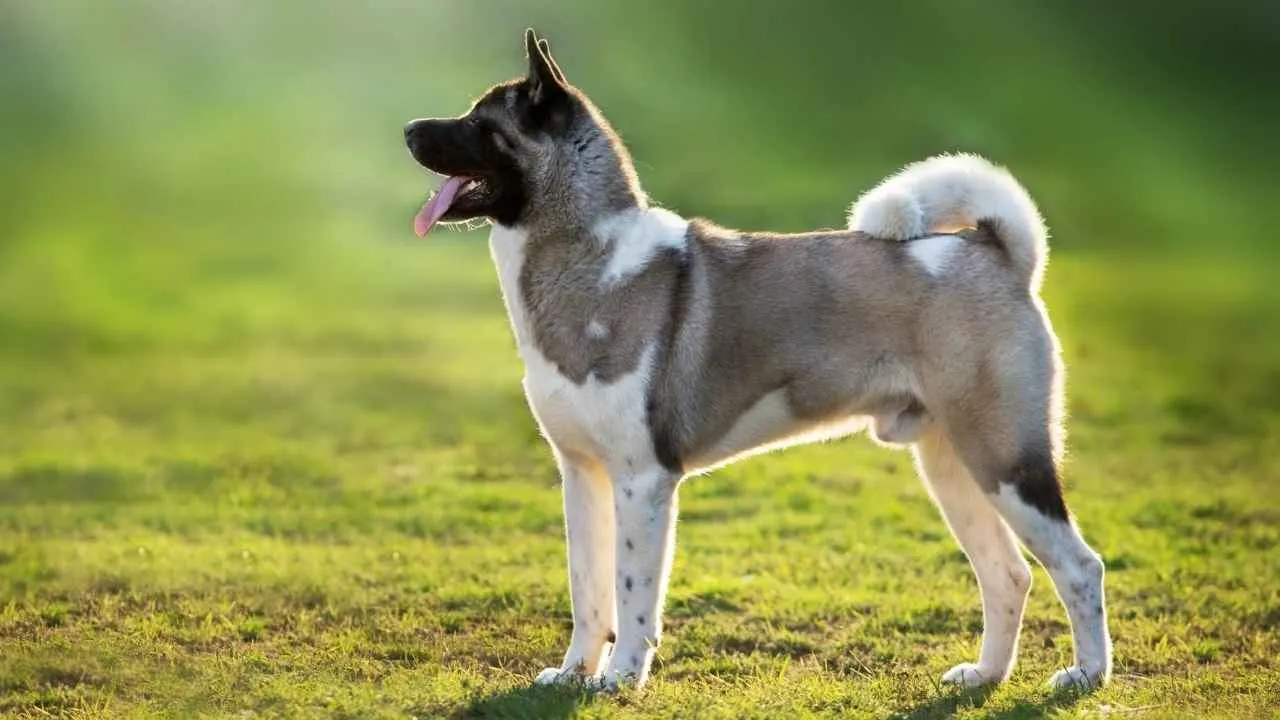
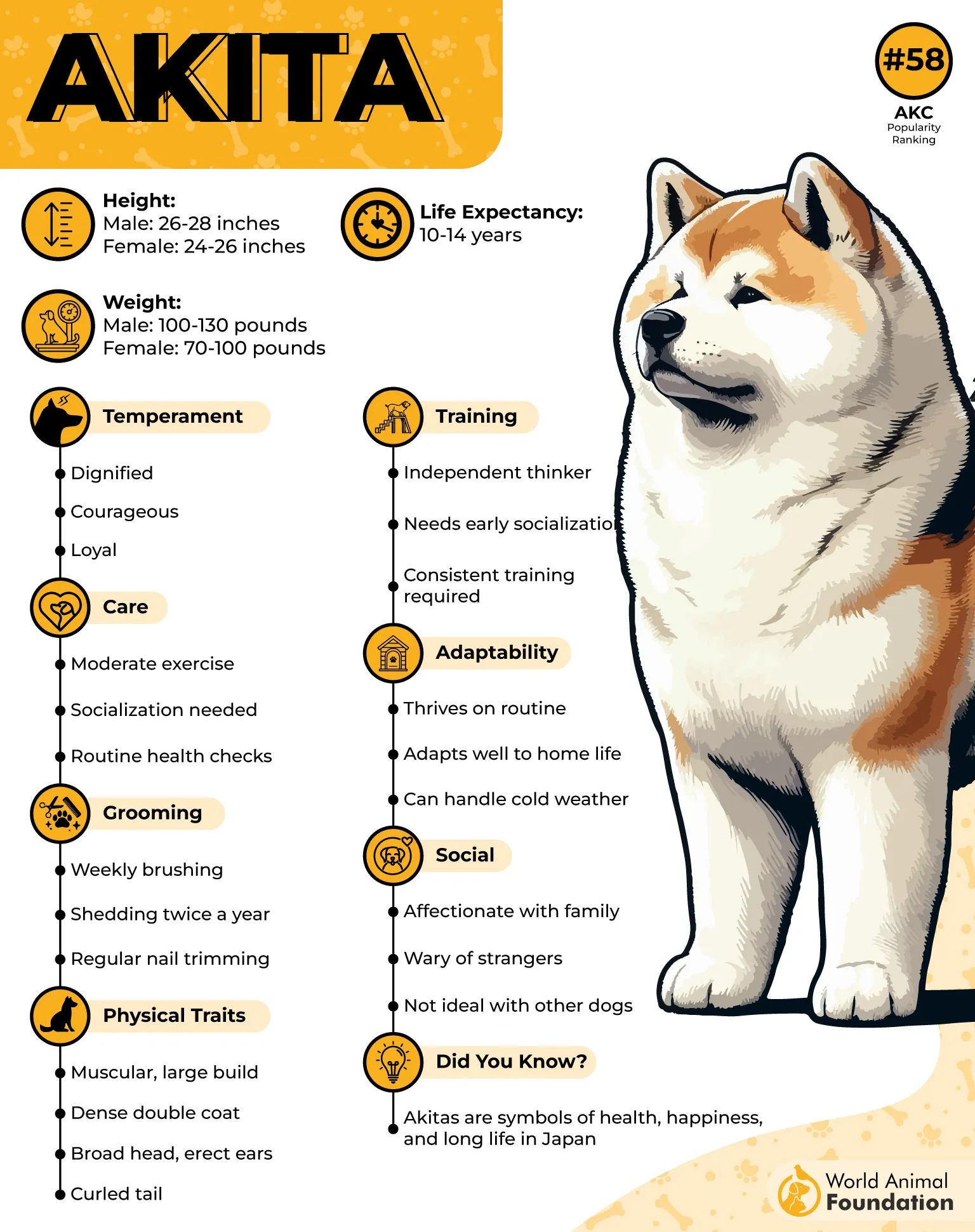
The Akita originated in Japan, where its ancestors were used for hunting and guarding. The breed developed in the mountainous northern regions of the country and was historically associated with pursuing substantial game such as wild boar and deer. Later changes in breeding and ownership helped establish the Akita as a powerful dog and guardian.
A Thick Double Coat and a Structured Routine
Akitas have dense double coats that shed heavily during seasonal coat changes. Regular brushing becomes particularly important during these periods. They generally benefit from daily walks and mentally engaging activities rather than endless repetitive exercise, with training providing an important way to keep their minds occupied.
A Reserved Temperament With Strong Personal Opinions
Akitas are often described as dignified, confident, and somewhat reserved. They can become deeply attached to their families while remaining selective about unfamiliar people and animals. Their historical hunting and guarding roles encouraged self-reliance, meaning an Akita may evaluate a situation independently rather than automatically seeking approval.
6. Great Pyrenees
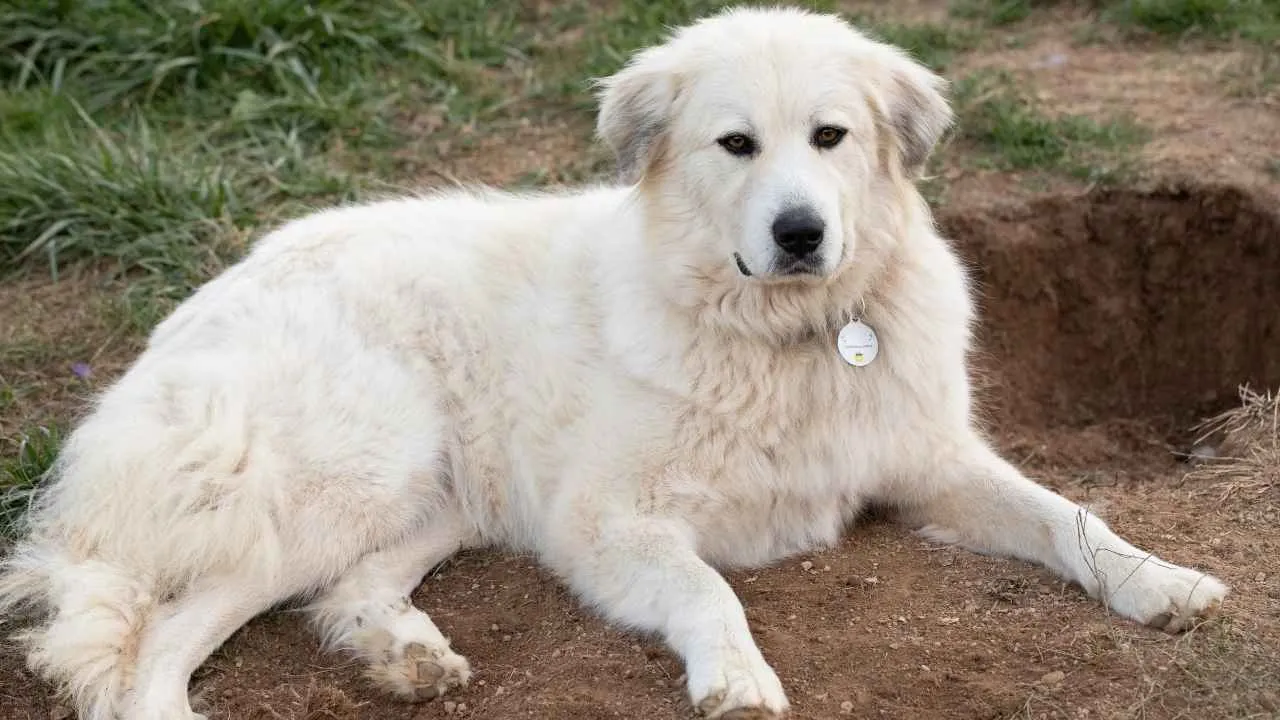
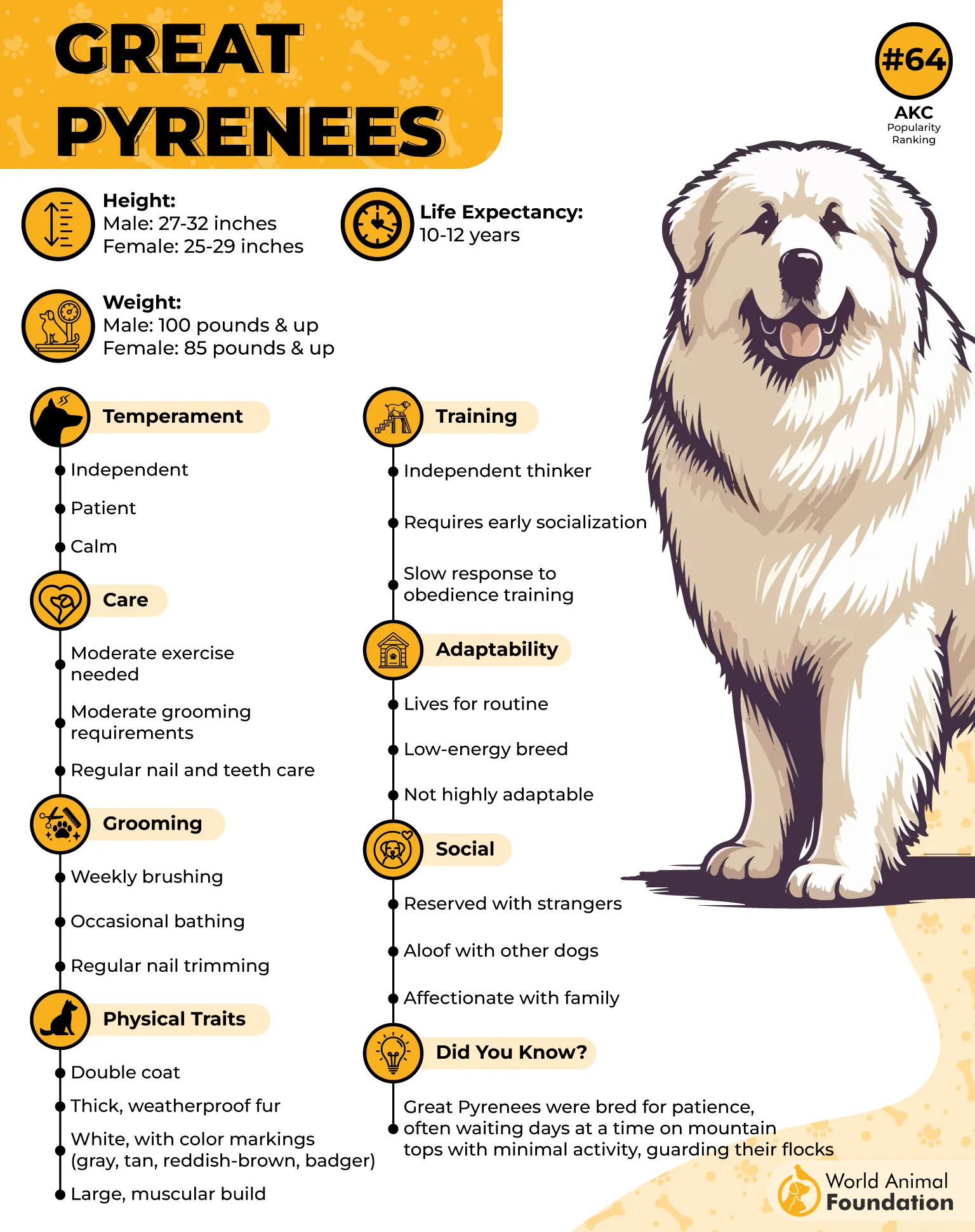
The Great Pyrenees developed in the mountainous regions between France and Spain, where large white livestock guardians protected sheep and other animals from predators. These dogs often worked far from their human handlers and needed to remain vigilant throughout the night, making independent judgment a fundamental part of their job.
A Luxurious Coat That Needs Regular Maintenance
The Great Pyrenees has a thick double coat designed to provide insulation in cold mountain conditions. Frequent brushing helps manage loose hair and reduce matting, particularly during seasonal shedding. Their exercise needs are moderate compared with their size, although regular walks and opportunities to explore safely remain important.
A Natural Watchdog Comfortable With Its Own Decisions
Great Pyrenees dogs were not bred to wait beside a shepherd for every command. Their job required them to identify potential threats and decide whether action was necessary. Modern individuals can retain that watchful independence, often choosing when to investigate sounds, patrol their surroundings, or settle down again.
7. Anatolian Shepherd Dog
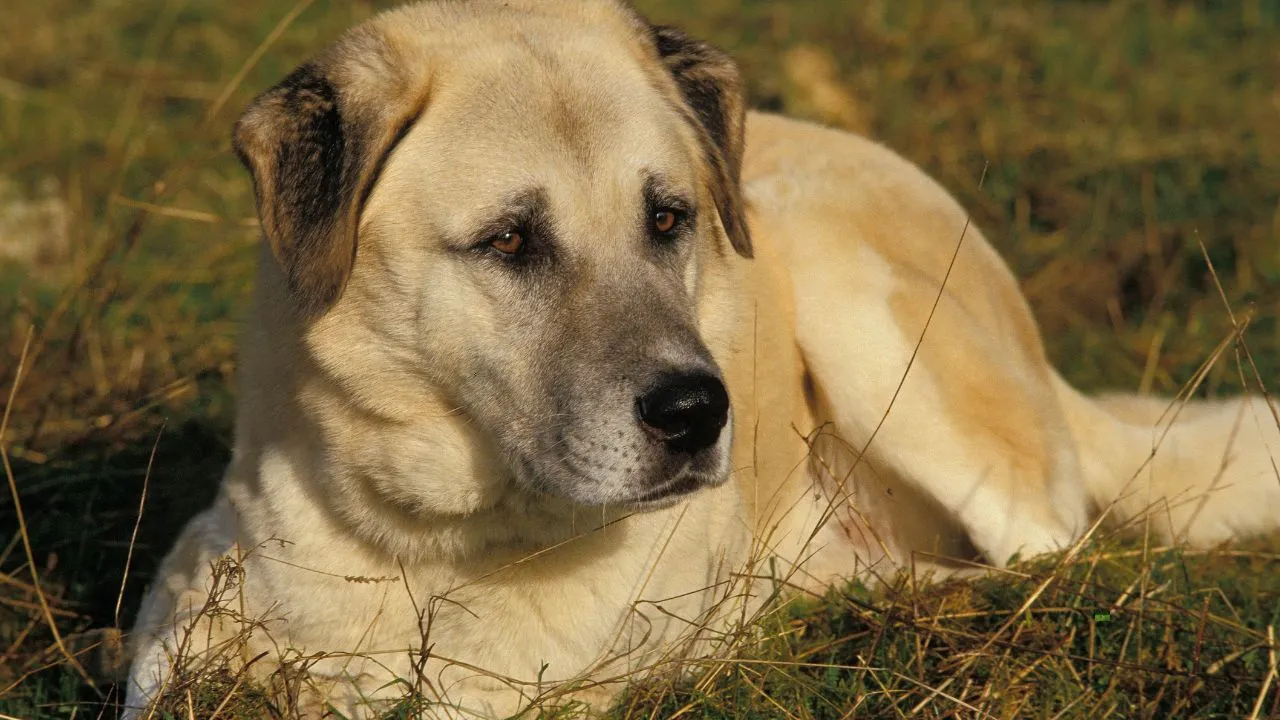
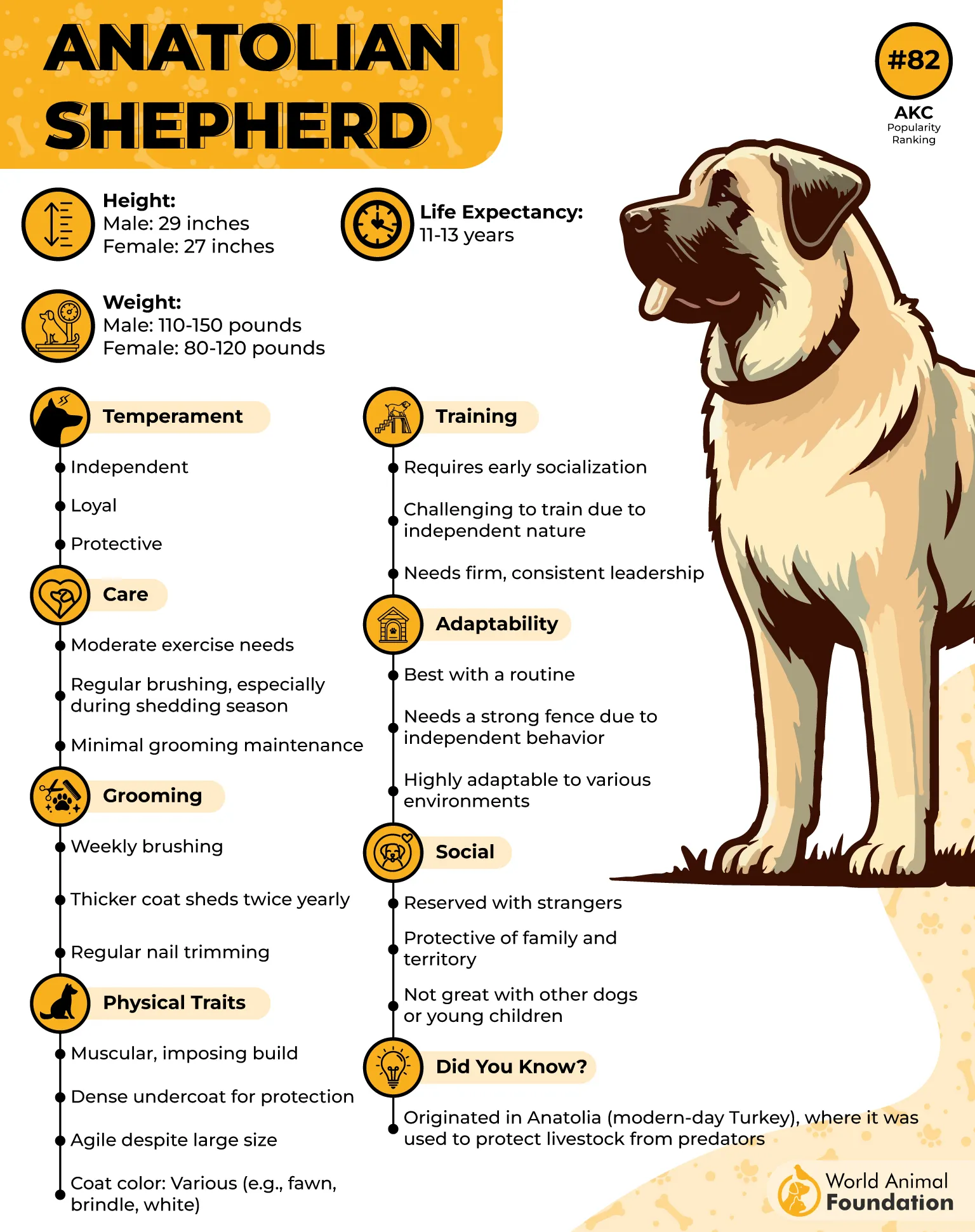
The Anatolian Shepherd Dog developed in Turkey from ancient livestock-guarding traditions. Dogs of this type were used to protect sheep and goats across expansive rural landscapes where predators presented a constant threat. Their work demanded endurance, vigilance, and the ability to operate without a person standing beside them.
A Weather-Resistant Coat and Steady Physical Needs
The breed’s short to medium-length coat is generally manageable with regular brushing, although shedding can increase seasonally. Anatolian Shepherds need consistent daily movement and benefit from having space to walk and investigate. Their exercise program should also include mental stimulation because simple physical activity may not satisfy a dog accustomed to purposeful work.
A Self-Reliant Protector With a Strong Sense of Territory
Anatolian Shepherds are naturally observant and can be highly independent when assessing their surroundings. Their traditional responsibility was to protect livestock without receiving instructions for every potential threat. That instinct can make them excellent guardians in suitable settings, but owners need confidence, consistency, and careful socialization to manage their protective tendencies.
Conclusion
Greyhounds, Rhodesian Ridgebacks, Irish Wolfhounds, Central Asian Shepherd Dogs, Akitas, Great Pyrenees, and Anatolian Shepherd Dogs demonstrate several different forms of canine independence. Some inherited their self-directed nature from hunting roles, while others developed it through centuries of livestock protection and property guarding.
For someone who lives alone, an independent temperament can be appealing because the dog may not require uninterrupted interaction throughout the day. However, these breeds are not automatically easy companions. Large bodies, strong instincts, territorial behavior, exercise requirements, and individual personalities can create challenges that demand thoughtful ownership.
The best match depends on the owner’s experience, living environment, schedule, and ability to provide appropriate training and enrichment. A self-reliant dog can be a rewarding companion when its independence is respected while clear expectations, reliable routines, and responsible supervision remain part of everyday life.
