




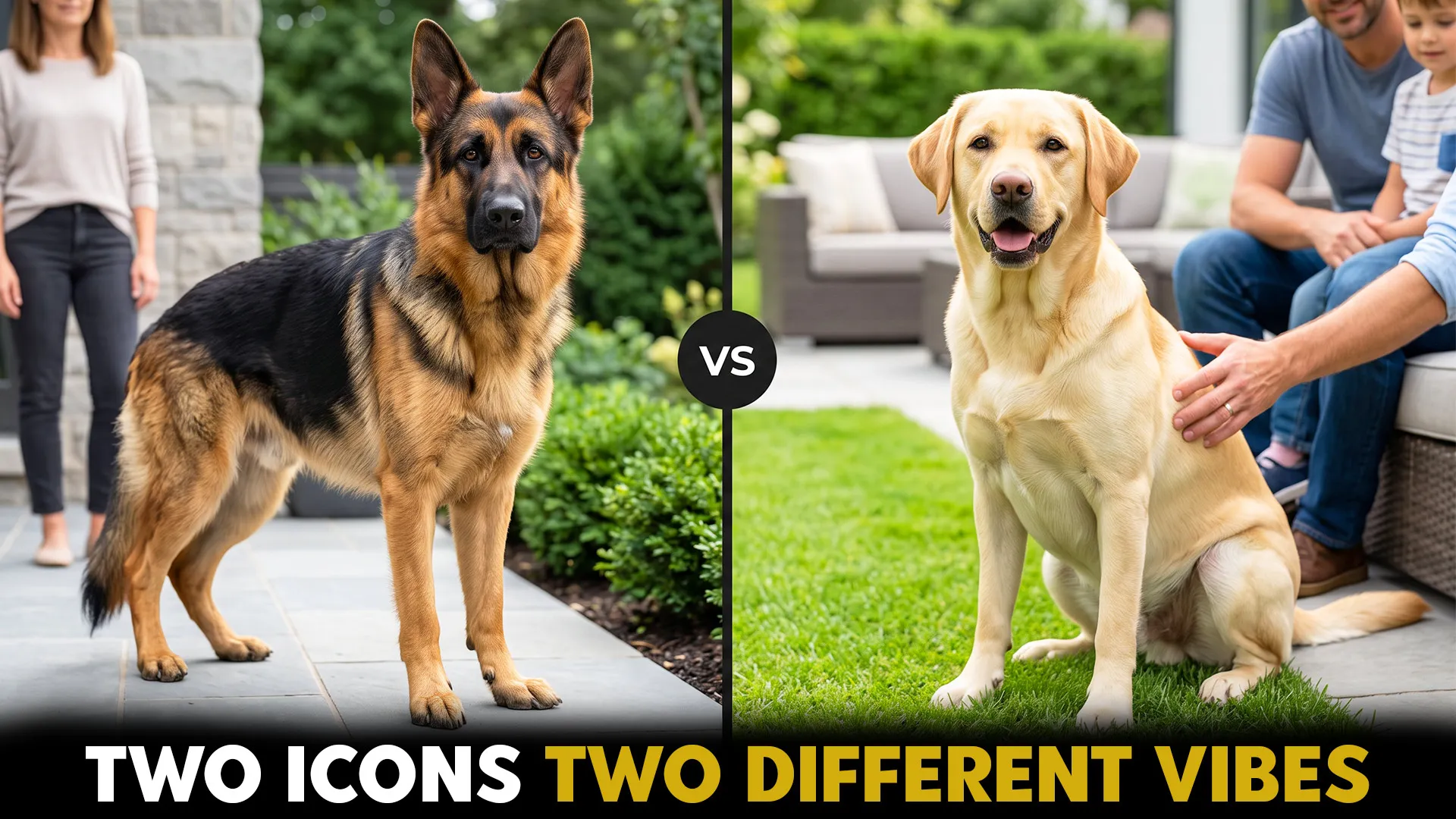
So, you are out and about, searching for your ideal family dog, one that fits a puzzle perfectly in your cozy bubble. You’ve done your research and shortlisted two magnificent and renowned puppies, a German Shepherd and a Labrador Retriever. But you’re unsure which breed will be the right fit for your family?
We can understand your dilemma, because it is impossible to pick one contender from these long-standing American favorites.
Both of them are incredibly smart and make not just good but great family dogs. They are popular choices for millions of growing families, but which one will serve you well in your day-to-day lifestyle and be a better playmate for your kids? Which pup can you blindly rely on when disaster strikes, and who is the best adventure buff to take with you on your hiking trails and hunting trips?
Let’s see, the main debate of comparison boils down to one thing, Hooman.
You gotta understand your needs. Yup, that is the most important thing when you are choosing a puppy. You need to evaluate: Why are you adopting this pup? In what areas of your life do you want its assistance, and what are your non-negotiables?
Once you have figured out what you need, you can truly judge these impeccable breeds and their key characteristics to select which one will be the ideal sidekick for your family.
German Shepherd vs. Labrador Retriever: Family Dog Differences
At a glance:
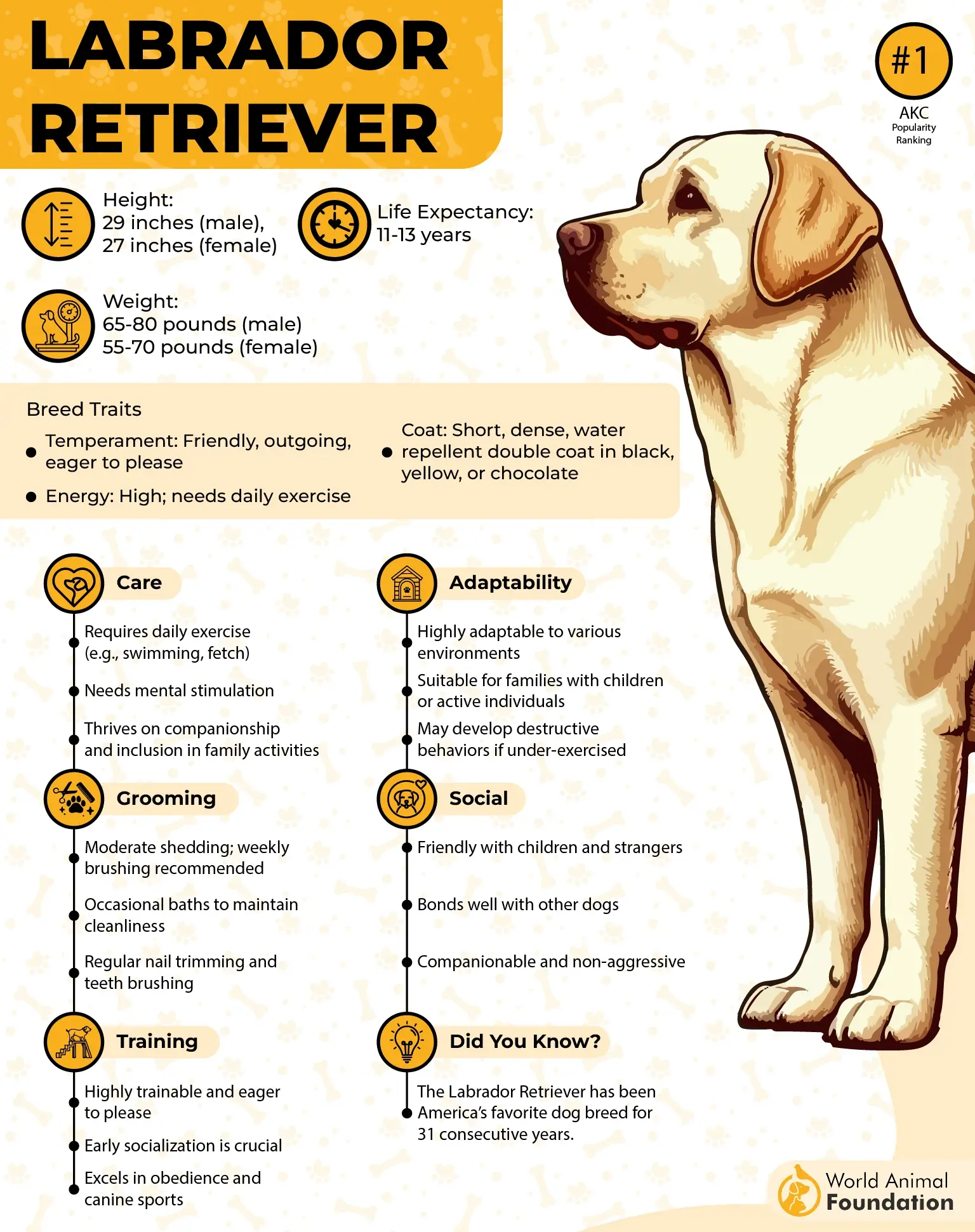
German Shepherds | Labrador Retriever |
|
Origin: Late 1800s, Germany |
Origin: Early 1800s, Canada. But they were developed in England |
|
Purpose: Bred for herding and guarding as an ideal utilitarian working breed |
Purpose: Bred for water rescue, retrieving, and fishermen assistance |
|
Unique Traits: A witty, protective, and guarding nature |
Unique Traits: Loyal to a fault, playful and outgoing in nature |
|
Lifespan: 10 to 12 years |
Lifespan: 11 to 13 years |
|
Exercise Needs: High – Vigorous play and a purposeful job are necessary |
Exercise Needs: High – Canine sports and service are recommended |
|
Grooming needs: Moderate to High, Heavy Shedders | Grooming needs: Moderate, short-coated Moderate shedders |
|
Family-friendly: Highly Compatible |
Family-friendly: Highly Compatible |
|
Other pet-friendly: With socialization (cats not included) |
Other pet-friendly: With socialization (cats included) |
|
Trainability: High, 3rd in the canine intelligence ranking |
Trainability: High, 7th in the canine intelligence ranking |
|
Personality: Whip-smart, courageous, confident |
Personality: Easy-going, amiable, versatile |
Origins & Purpose
The Love Affair of a Cavalry Officer and a Thuringian Charmer
Meet the most recognized and respected family companion that is not just dependable but also dynamic. A trailblazer in the field known for its strong heart, intelligence, and versatility. This German Shepherd’s story started in the outskirts of the German countryside.
The AKC narrates that it was the year 1899 when a German cavalry officer who once dreamed of becoming a gentleman farmer was beguiled by the intelligence and lightning-fast responses of the sheep herding dogs in his country. He decides to create a formal breed of German sheepdog that will become famous for its strength and diverse utility.
He buys a large estate in the Bavarian town of Grafath for raising GSDs, and in April of 1899 he attends the country’s largest dog shows in search of the perfect sire for his breeding stock, and that’s where he meets his dream puppy.
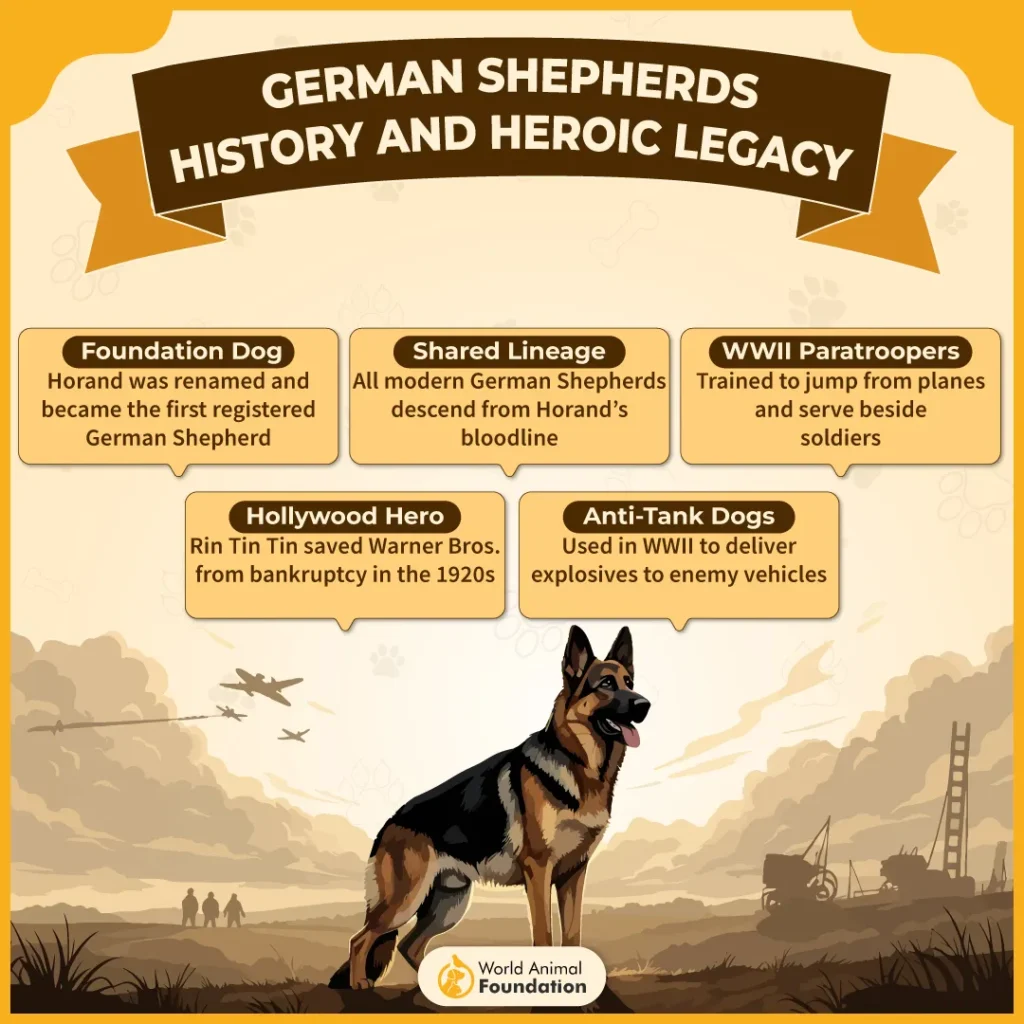
A striking 4-year-old dog, wolf-like in appearance, graceful in carriage, remarkable in intelligence, and boundless in its zest for living, named Hektor Linksrhein. Deeply impressed, he bought the pup on the spot by handing over a hefty sum of 200 German gold marks and gave it a new name, “Horand Von Grafath”
Horand, that originally came from Thuringia, northern Germany, was then crossed with the shepherds of Württemberg, southern Germany, to create the ultimate German herder. Keeping in mind that form never supersedes functionality, because for Max, ability was more important than appearance. It became the first registered German shepherd dog and the precursor for all modern German Shepherds.
From the Atlantic Coast and the Canadian Island of Newfoundland Came this Peter Pan of Puppies
Who could’ve imagined that the crashing waves on the shores of the Capital of Newfoundland would leave behind such a treasure that will be loved beyond compare globally? Meet America’s Sweetheart, Canada’s pride, and Britain’s ultimate sporting breed. Where the German Shepherd is a rescuer on land, this otter-tailed bugger was born to make heroic rescue efforts in the sea.
According to the AKC, the history of these gentle-hearted, exuberant, and friendly butterflies, aka Labrador Retrievers, started in the Labrador territory; these Labs are descendants of the now-extinct St. John’s Water dogs. Labs’ ancestors originated 500 years ago, when the European fishermen (including the Spanish, French, Portuguese, and English) found their way to the Canadian/Atlantic coastline.
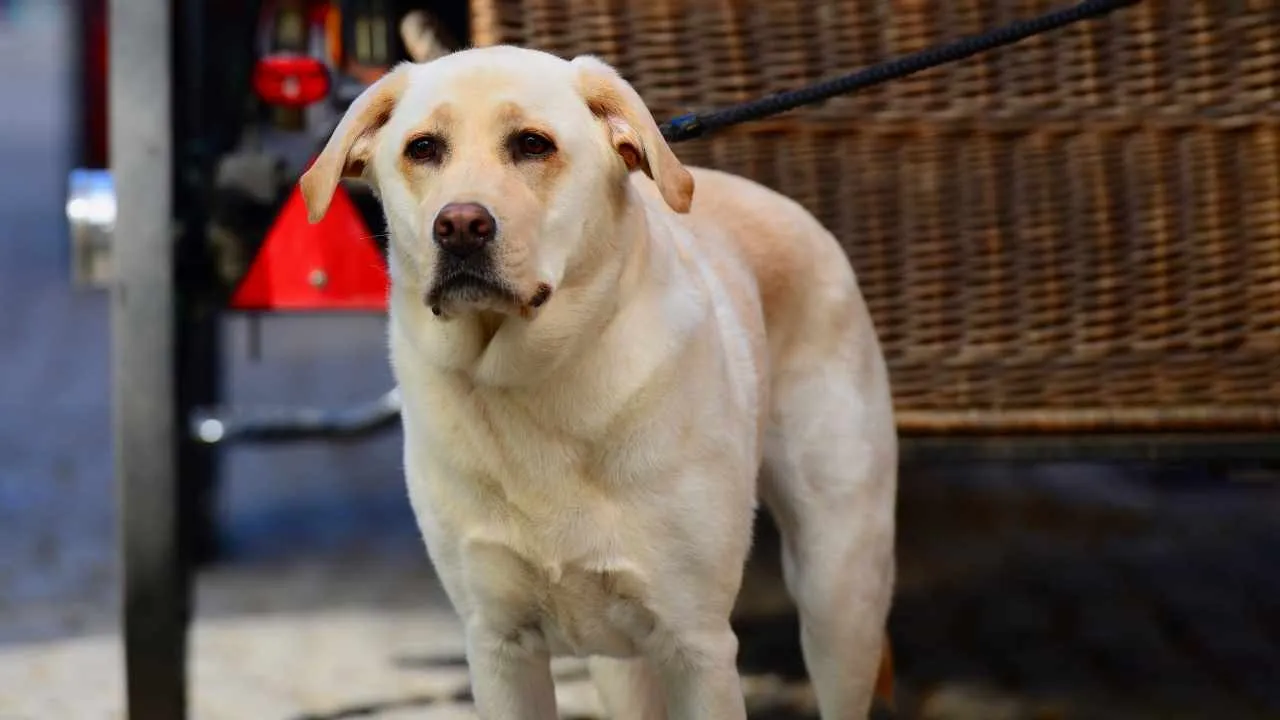
Their dogs comingled and formed the St. John’s water dogs. These pups had this unmistakable infatuation with water; they were originally bred for hauling fishing nets, long lines, and diving for cod that had slipped the fisherman’s hook and for retrieving fishermen’s hats. Born with natural diving powers and a clever brain would even perform for the crowds.
Born to swim like a mermaid, fetching objects tossed into the water. These dogs are the epitome of sweet playfulness and skillful athleticism. Labrador Retrievers excel at duck hunting and also make cool gun dogs.
Size & Build
The Beautiful Brainiac
Max didn’t want his dog to just be a showpiece. But these noble German Shepherds are dashing nonetheless: muscular in frame, athletic and well-proportioned. Smooth in gait, these German pups are covered in medium-length double coats with a straight outer coat and a dense undercoat.
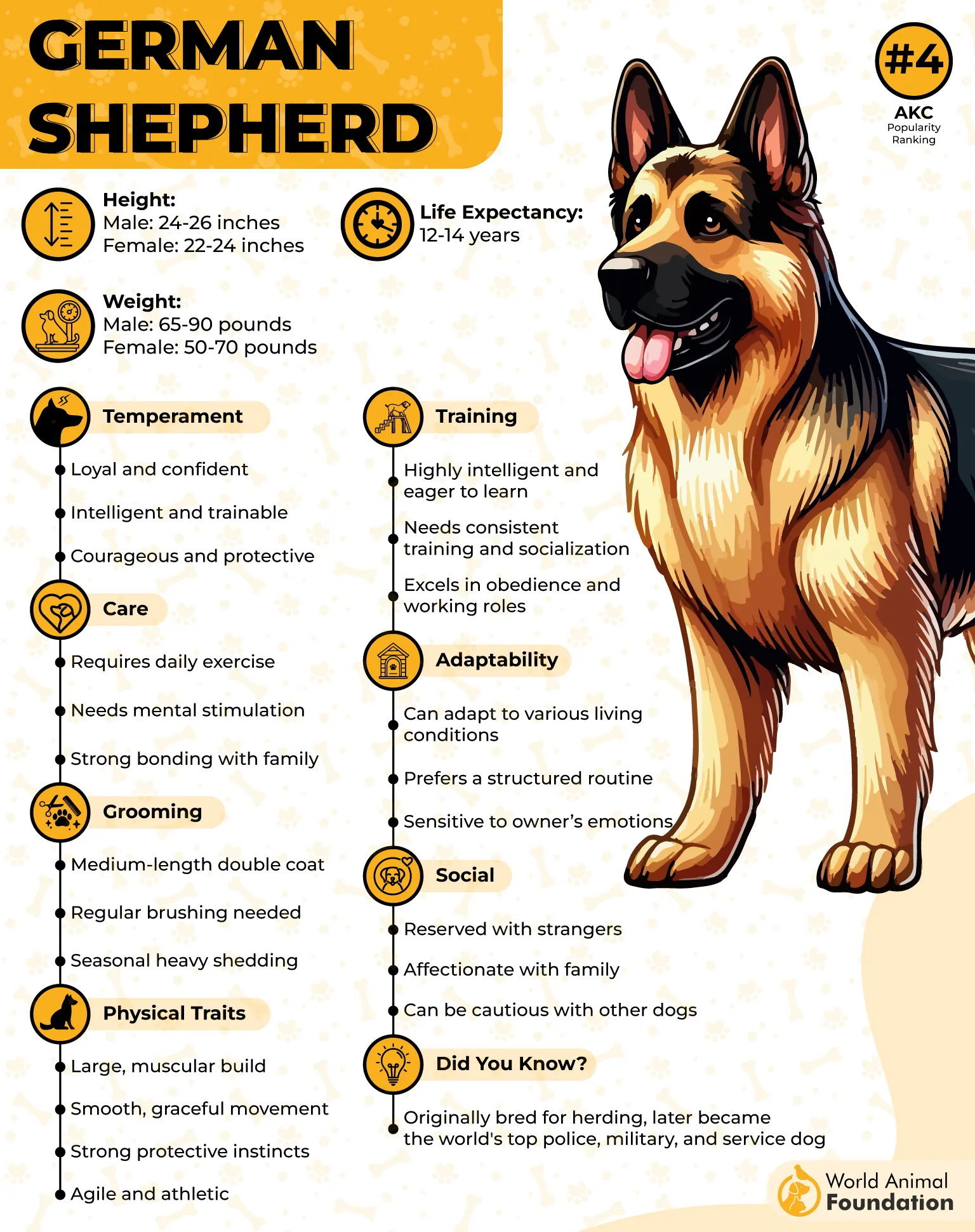
They have perky ears, square noses, long muzzles, and a bushy, saber-like tail, and the most beautifully sparkling almond-shaped eyes (so dreamy you can easily get lost in those dark orbs)
The Water-Repellent Quarterback
Born with naturally floppy ears, a wide nose, and the most expressive hazel-brown eyes that constantly exude warmth and friendliness. These sturdy and sporty Labs with webbed feet and glossy, weather-resistant raincoats are possibly the most attractive family pets you’ll ever own.
Price & Availability
Not too expensive, both the German Shepherd and Labrador Retriever puppies cost about $1000 to $3000 each. Add to that their annual veterinary care cost, which is $500 to $1000, pet insurance bill, which is $30 to $50, and the premium dog food cost, which amounts to only $100 monthly.
Temperament & Personality
The Courageous Warrior
This quintessential K9 cop assists in police work, search and rescue operations, and bomb disposal squads. They are nature’s best detectors and trackers, carrying arduous work on their shoulders with passion. Loyal to the bone and protective of their family members, these German Shepherds also make incredible guard dogs.
Not to mention, these pups also serve as irreplaceable guide dogs for the blind. Compassionate, faithful, and eager to please, these GSDs are chatterboxes that bond strongly with their people, love exploring, and are always up for a stroll even at midnight.
Purina US notes that expressive, peppy, and obedient, these Hollywood stars are the ultimate choice for people who seek a highly trainable pup that can follow commands at the first go. Take initiative when things turn awry and make excellent guard dogs for the family.
The Goofy Extrovert
Affable people pleasers, wild at heart, these animated hooligans believe strangers are just people they haven’t met. (Yup, these Labrador Retrievers have protective instincts in the negative) Not territorial but rather welcoming, these dogs make incredible hosts.
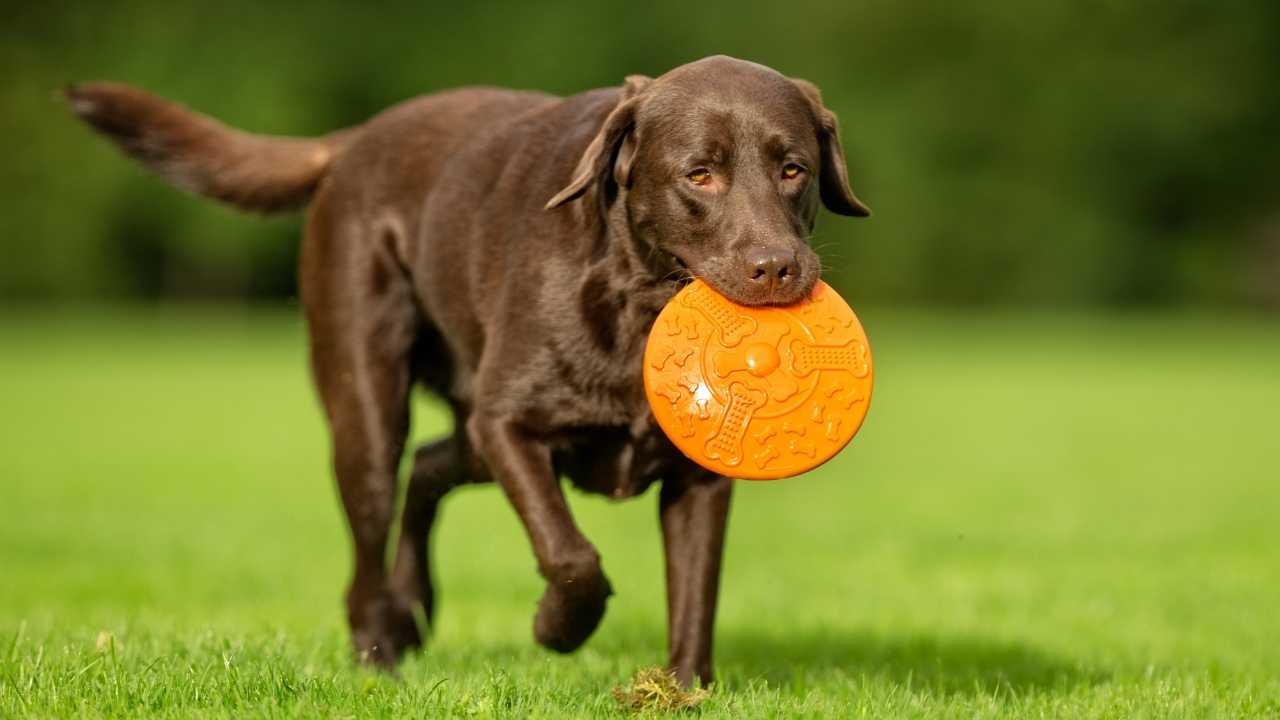
The life of every party, especially if the party is near an azure, blue pool outdoors. These dogs don’t dance to the beat of their own drums; they strive to keep their hoomans happy. Enthusiastic, outgoing, and always bursting with merriment and energy.
The Modern Dog Magazine states there is a reason these joyous spirits have ruled the AKC rankings for more than three freaking decades. They quickly adjust to their owner’s routine, and if you funnel all their spare energy into positive outlets, you’ll have the most rewarding family dog on your hands.
Exercise Needs & Energy Levels
The Unwavering Companion
A German Shepherd puppy can develop behavioral issues due to boredom and frustration. They are born to walk with a purpose and fall into a state of disarray if they don’t have a proper job to look forward to. Try to involve them in your daily activities by asking for their help when you are out in the woods to encourage some scent work and tracking in these natural investigators.
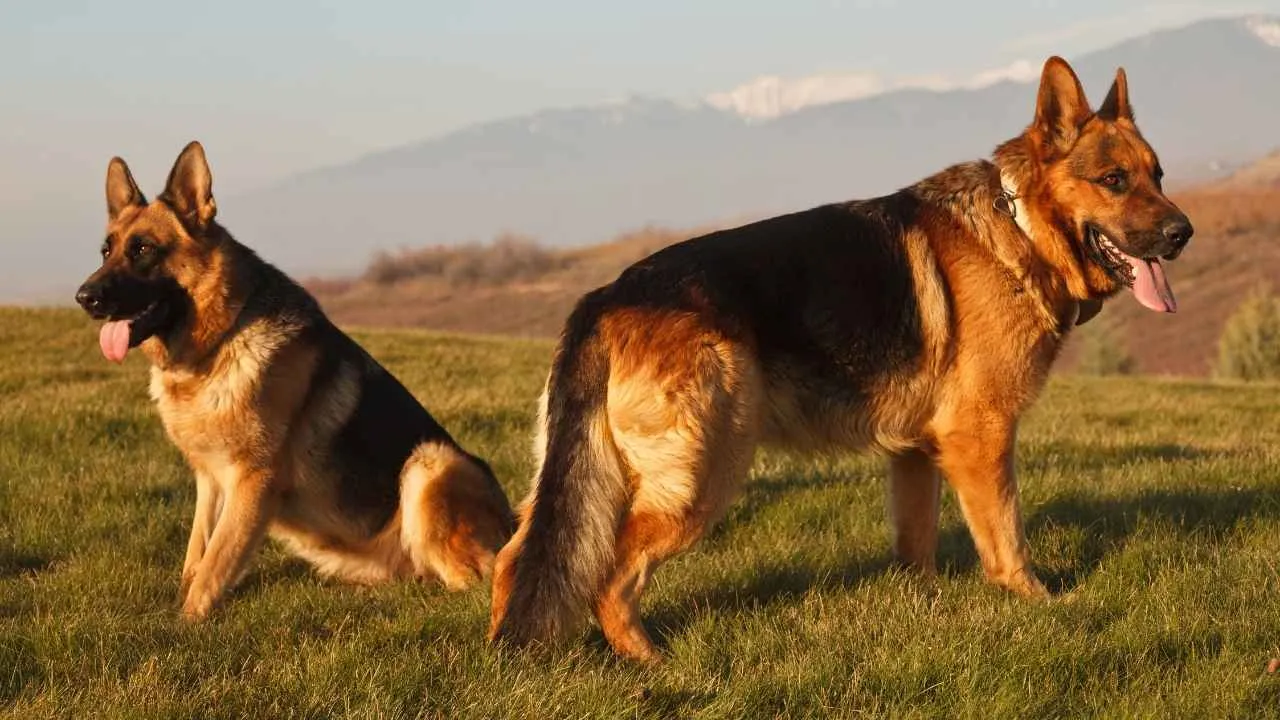
Introduce outdoor play sessions where both your fur babies and kids play alongside each other in nature. Take them along on your morning runs and evening walks. GSDs also enjoy puzzle toys and games like hide and seek.
Dog sports like agility, rally, and obedience would do these high-energy dogs some good. Furthermore, make sure your German Shepherd dogs get at least 1-2 hours, or more than 80 minutes, of vigorous daily exercise.
The Charming Retriever
This most popular dog breed is high in energy; they run in the dog park, swim in deep waters, and hiking every trail less travelled is their jam every day of the week. Canine sports like dock diving, search and rescue, flyball, rally, and agility can all bring out the best in the Labrador puppies.
Make sure you learn from the breeder about the history of your pup, whether it’s from a working or field line or a show line puppy, because the field lines possess more intense activity levels and energy.
Capable of churning through icy waters and ploughing through dense and tangled vegetation, these Labs were born to search around diligently. Hence, you better give em 1-2 hours or 120 minutes of exercise daily.
Training & Obedience
The Heroic Legend
Decorated for countless wars and remarkable rescue work, this outrageously beautiful pup will always stay in your corner. Because this pup is easy to train and has this undeniable eagerness for work, they love pleasing their people. Come on, it’s this effortless trainability, adaptability, and obedience due to which these notoriously handsome poofs gained a meteoric rise towards fame.
They aren’t easily frightened, make incredible vigilantes, and if properly trained and socialized from an early age, these active knights in shining Armor will easily distinguish between friends and foes. Fortify your fortress and protect you with their lives.
The Floppy Eared Therapist
This multi-talented and popular family dog’s willingness to please depends on whether or not there is a bowl of kibble lying around in their vicinity. Yup, these sporty dogs are heavily food motivated; they love to inhale as much food as possible but also have a high risk for obesity.
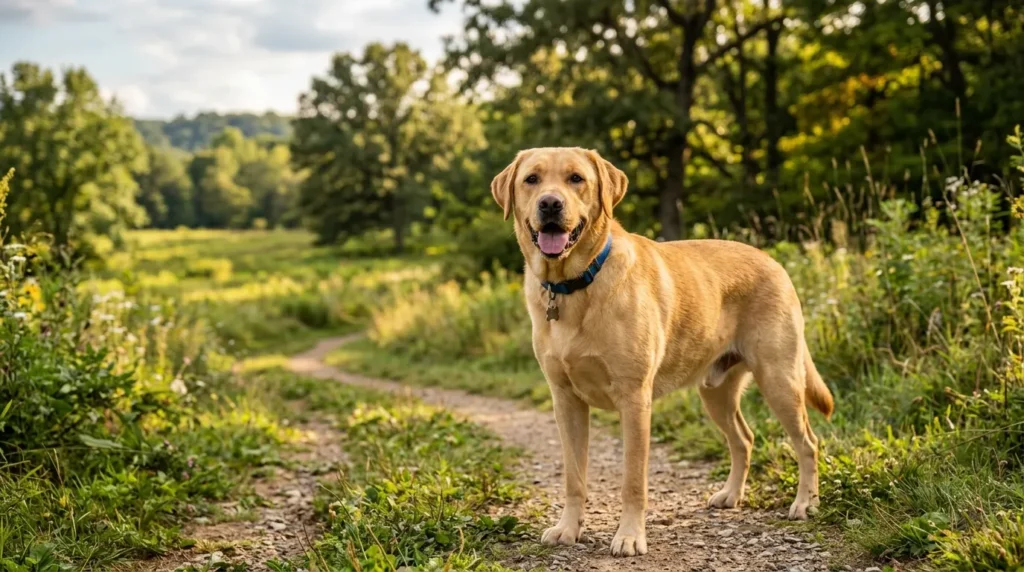
Hence, you’ll need an eye on the food intake. But yes, this also means these dogs can easily be trained through reward-based training methods and positive reinforcement. You can start at 7 weeks with basic obedience training and take advantage of their most absorbent young age. Potty training and leash training can also be given early, along with proper socialization.
They also make great guide dogs for the visually impaired, medical assistance, and service dogs.
Grooming Needs & Shedding
This Canine Superhero should always stay prim, proper & pristine
Due to their heavy double coat, German Shepherd dogs shed a lot, especially in the spring and fall. Hence, their grooming needs are quite rigorous. Keep in mind that too much bathing can strip their coat of the natural oils. Thus, only bathe them when they get really dirty or once every three or four months.
Brush their long coats with a pin brush every day to keep them shiny, clean, and healthy. Also trim their nails if they are not already ground down by all that exercise, and make sure you brush their teeth daily and get them pro cleaning yearly.
This Cheerful Hometown Hero needs more baths but is fairly Low-maintenance (Yay!!)
Don’t lose your mind if you find your Lab dancing in the rain or jumping in muddy puddles. You’ll need to bathe and brush them weekly. Their short hair doesn’t really need haircuts, and you can take them for a manicure when their nails start clacking on hard surfaces.
Use dog-safe toothpaste for cleaning their teeth and invest in a FURminator for removing excess fur and loose hair. These intelligent buggers shed a lot, especially during spring and fall, but less than the German Shepherd.
Outdoor Adventure & Exploration
The Rugged Wanderer
Climbing trails and leaping towards every impossible feat is what a German Shepherd wants to do in its coffee break. Leisure for them sounds like walking the Camino in a day or unearthing a centuries-old secret in a mere few hours. They love to travel; hence, if you are a backpacking through Europe kinda guy, or a scaling the rainbow mountain kinda gal, these German Shepherds will be your best pal.
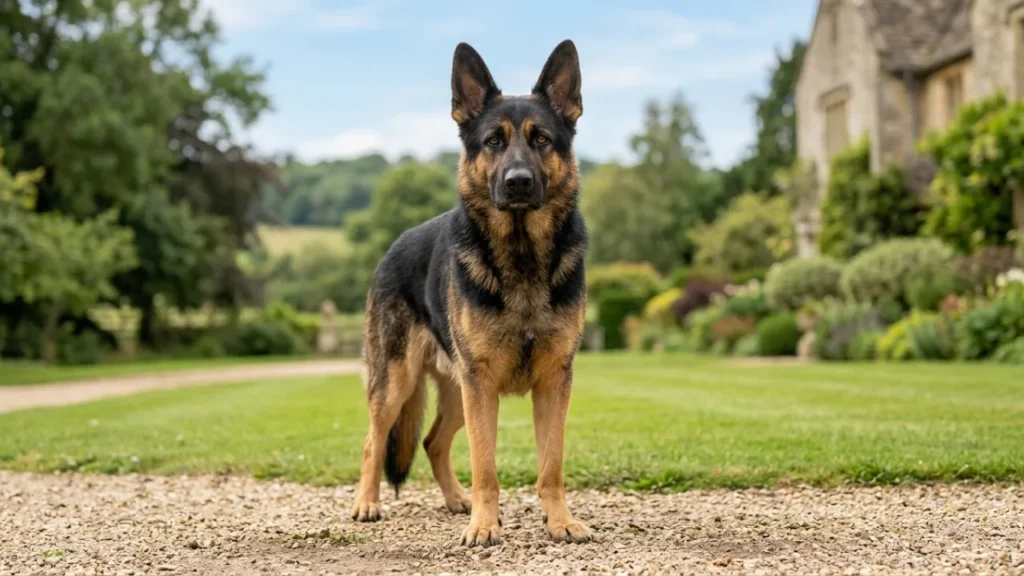
These pups hate to stay in a single place for a long time, and if you have one, then you must know that the moment they reach a peak, their heart is already soaring for the next big adventure. But it’s true that they also handle the challenges of exploration effortlessly.
The Whimsical Tour Guide
The excellent family dog loves to be a part of their family’s adventures. Hence, let them tag along on all your camping and road trips, hiking expeditions, and waterfall swimming sessions. They love to be part of an explorer’s gang; upland and waterfowl hunting is a dream when this popular dog breed is there to assist in the retrieving and tracking of the birdies.
Moreover, you can use these dogs as your compass to navigate through the thick brush of any forest easily. Basically, these Labrador Retrievers and German Shepherds are oceans apart, where you can expect GSDs to escape a fence and dig their way out of a boundary, whereas you rely on these Loch Ness monsters to be calm, giddy, and friendly.
These Labs will follow you around even when off-leash because they relish being a part of the human family.
Health & Lifespan
The German Shepherd has a shorter lifespan compared to other large dogs; they can only live up to 12-14 years on average.
Alas, it’s heartbreaking that such a great war hero is prone to such abundant health problems. Yup, this perfect German herding dog is not so perfect in the matter of health and lifespan. The GSD can have seasonal and food allergies, bloat or GDV, certain cancers, genetic conditions like degenerative myelopathy, heart issues like dilated cardiomyopathy, seizures and epilepsy, even elbow dysplasia and hip dysplasia.
The average lifespan of the Labrador Retriever is only 11-13 years on average, and they also face some concerning health conditions throughout their lifetime, including bloat and Gastric Dilatation Volvulus (GDV), exercise-induced collapse (EIC), Elbow and Hip dysplasia, and Progressive retinal atrophy.
German Shepherd vs. Labrador Retriever: Which Loyal Family Dog Is Right for You?
The Protective Knight
Devoted to their human pack, these born protectors won’t tolerate a single curse or threat hurled your way. They’ll take a bullet for you, fight, or even kill for you. Consistency and stable leadership are key for raising a well-behaved GSD. Distinct from other dogs, these pups have cemented a reputation in stone. They make both good family dogs and guardians.
Burglars run the other way at the first sight of these German Shepherds, and children love their enthusiasm for physical activity. They are a good fit for families seeking protection, loyalty, and companionship. Wherever these German Shepherd dogs go, they light up the atmosphere, bringing calmness, excitement, and peace of mind.
But keep in mind you’ll have to give them enough exercise and get them properly socialized before handing them the baton of responsibilities.
The Young at Heart Labrador
Labs carry their bubbly attitude into adulthood. They make cute and extremely friendly dogs for both young adults and kids. Labradors are an ideal choice for beginners who are active owners and can provide these Labs with love, care, and attention, fulfill their exercise needs, and provide them with plenty of positive outlets for their spare energy.
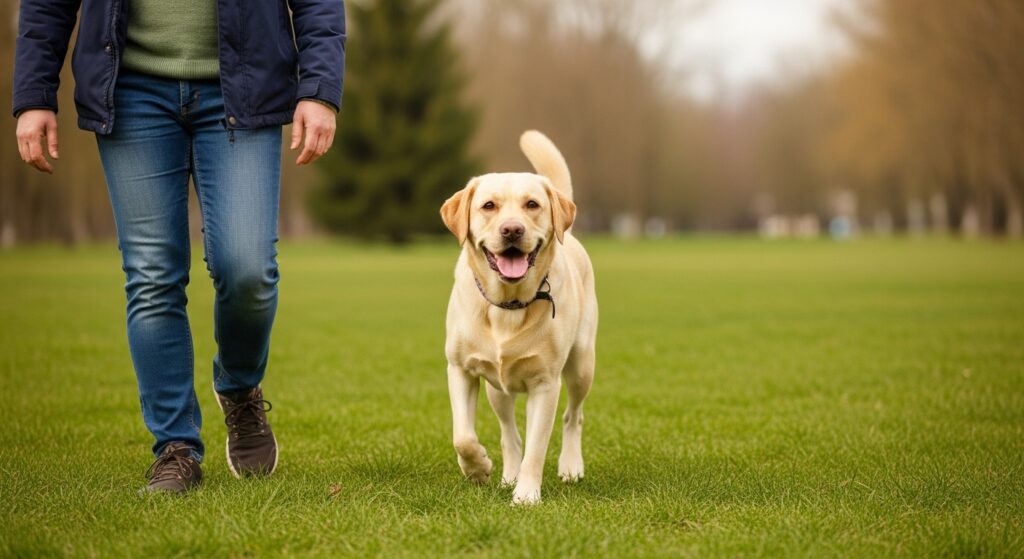
They’ll make great playmates for kids, cope well with cats, and even self-learn by mimicking their owners. If you can afford to take these buggers along, especially on your trips to the beach. Then these Labs are a good fit for your home and family. This most popular breed is a much more easy-going and forgiving option if you aren’t looking for a security guard but an excellent companion who would complete your family.
Conclusion
In the end born with very few drawbacks, but a whole lot of positive attributes. Both these popular breeds are top favorites for a family dog in America.
We have listed their detailed historical backgrounds, purpose, physical and mental stimulation requirements, and personality. Hence, don’t just make your decisions based on looks, but also consider their abilities, utilitarian niches, and activity levels to find the working dog that makes your family complete.
