




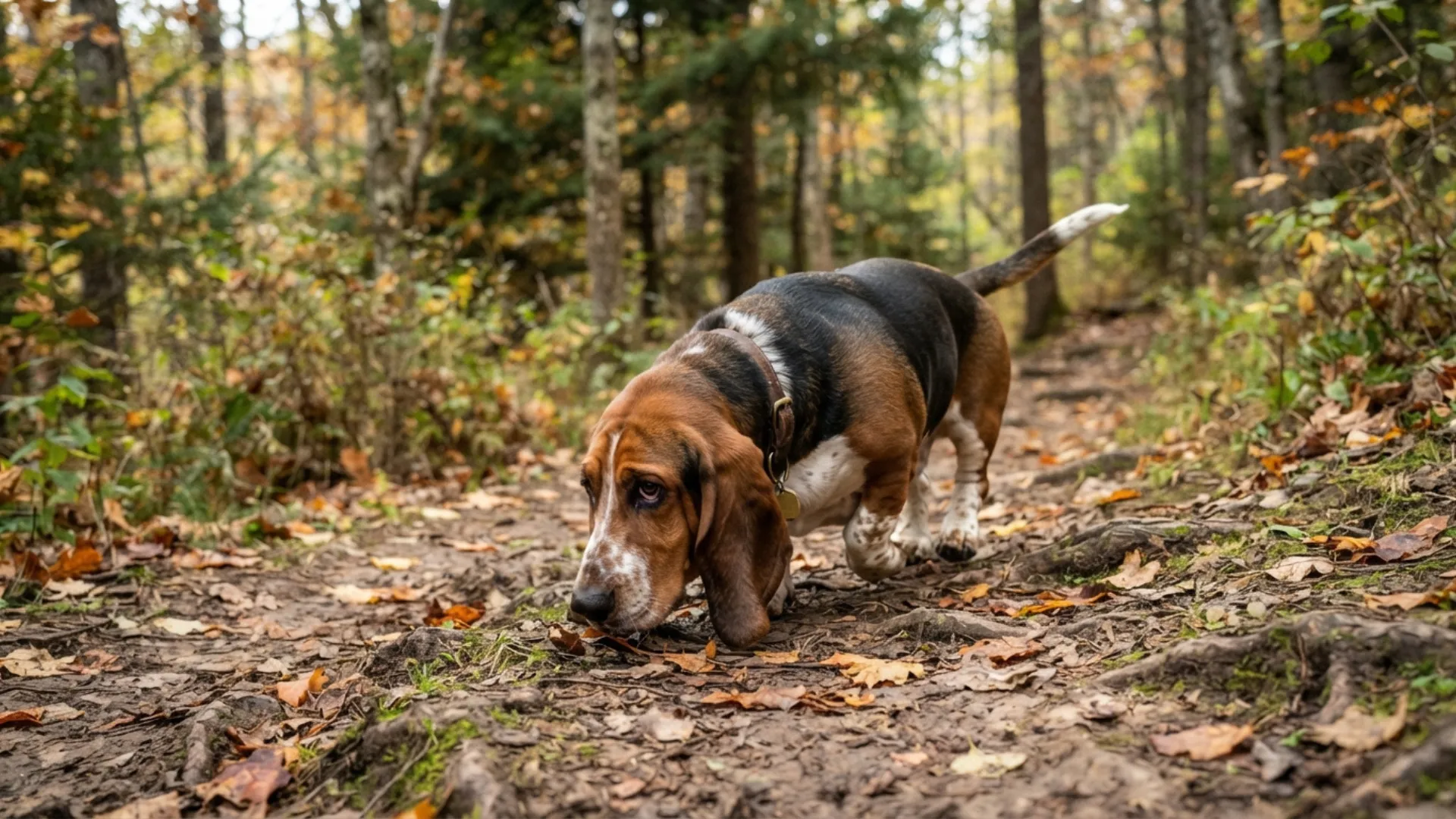
A dog’s nose picks up on far more than most of us ever realize. Scent is essentially how dogs read the world around them: who’s been by, what’s changed, what’s out there. Their sense of smell is thought to be thousands of times more powerful than ours, and a remarkably large portion of a dog’s brain is dedicated to processing all that olfactory information.
Some breeds have taken this natural gift even further. Over centuries of selective breeding, certain dogs were developed specifically for their stamina, focus, and exceptional sense of smell, bred to track a scent across long distances. Others were shaped for detection work instead, where precisely identifying a specific scent matters far more than speed.
The result is a fascinating lineup of breeds, each with its own remarkable approach to scent work. From legendary tracking hounds to today’s top detection dogs, here’s a look at just how powerful a working nose can really be, starting with the nine breeds that stand out above the rest when it comes to olfactory ability.
Top Dog Breeds That Outshine All Others in Olfactory Skills
1. Bloodhound
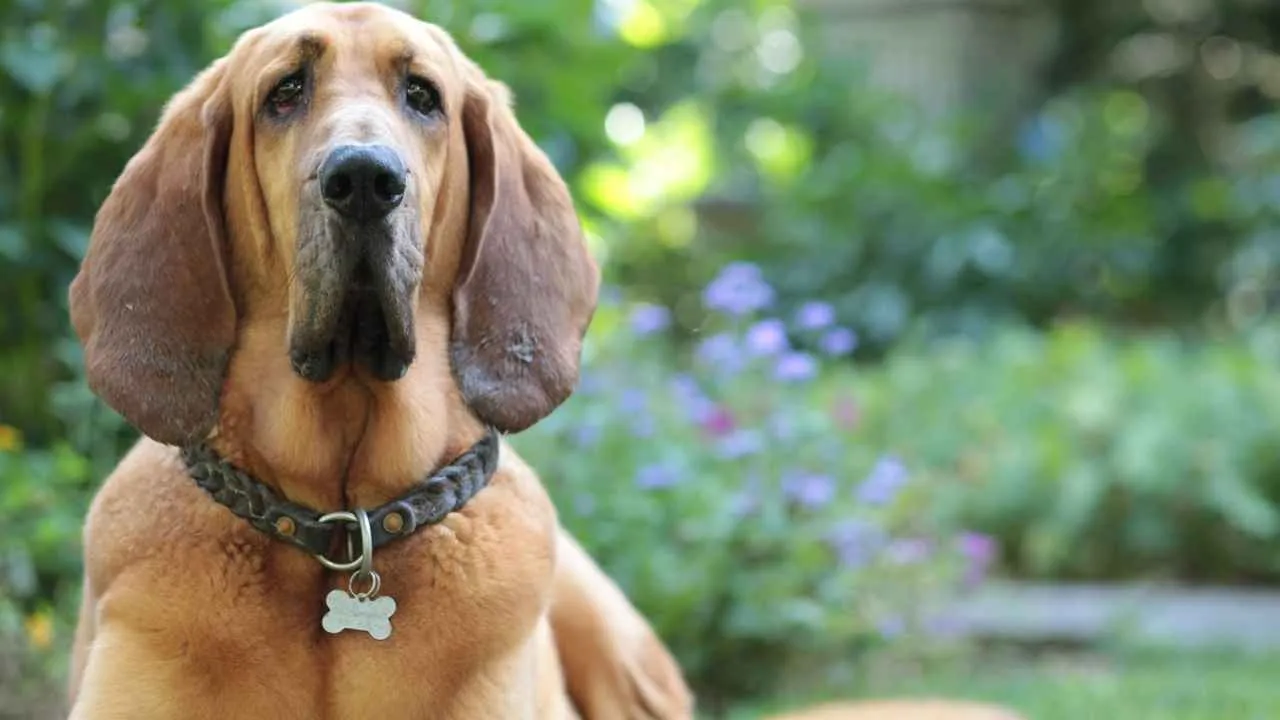
It’s impossible to talk about incredible scenting ability without starting with the Bloodhound. This breed was purpose-built for tracking, with practically its entire body designed around following a trail.
Even its most distinctive features serve a purpose here: those long, floppy ears and loose facial skin actually help trap and funnel scent particles right up toward the nose as the dog works a trail.
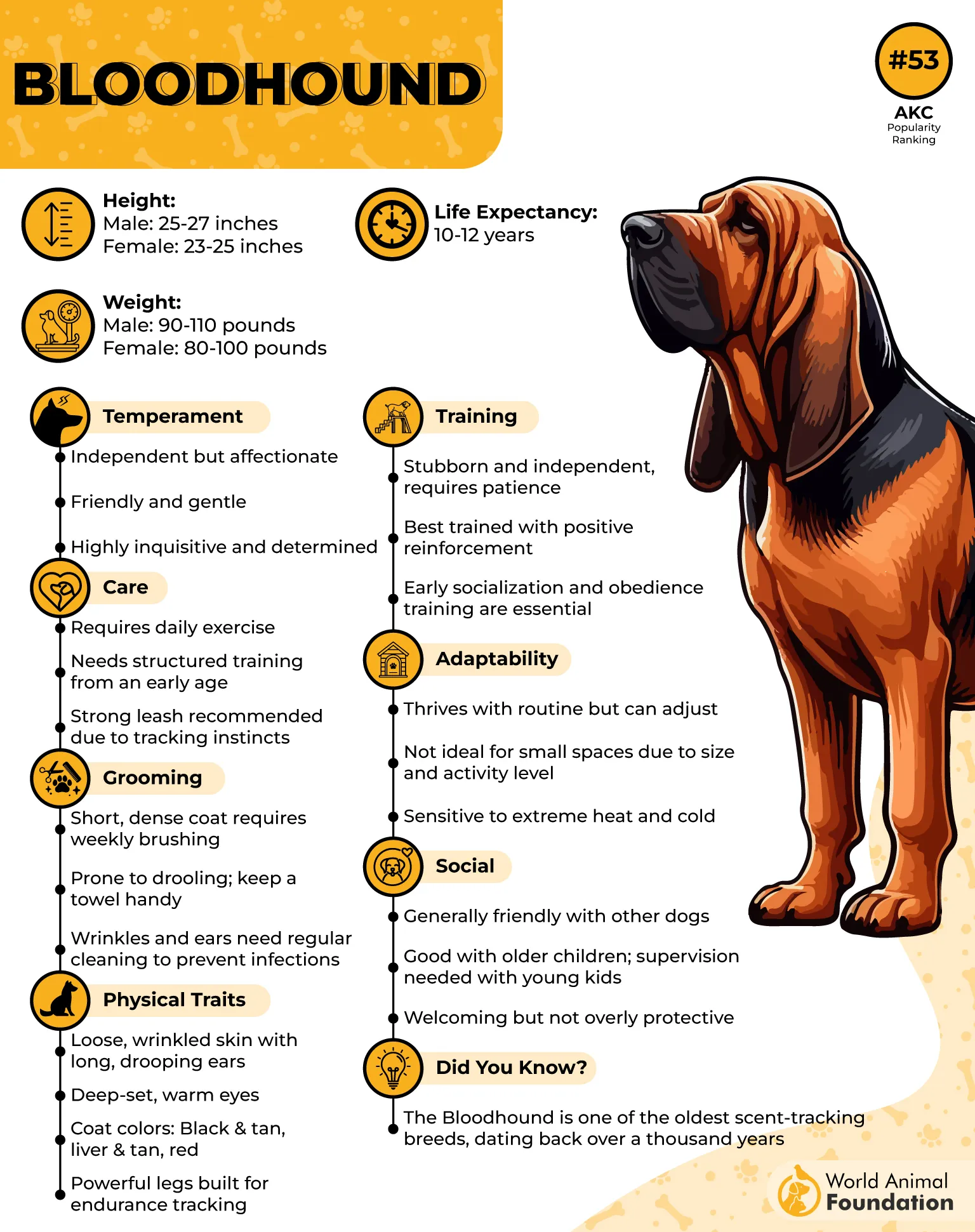
Bloodhounds are equally famous for their sheer tenacity. Once they lock onto a scent, they can stay focused on it for remarkably long stretches, which is exactly why they’ve proven so valuable in search and rescue operations and police work alike.
The AKC even ranks the Bloodhound among the strongest-scenting breeds out there, particularly known for its skill at following human scent trails.
At the end of the day, what truly sets the Bloodhound apart is its refusal to give up on a trail, even when the scent gets faint or difficult to follow.
2. Basset Hound
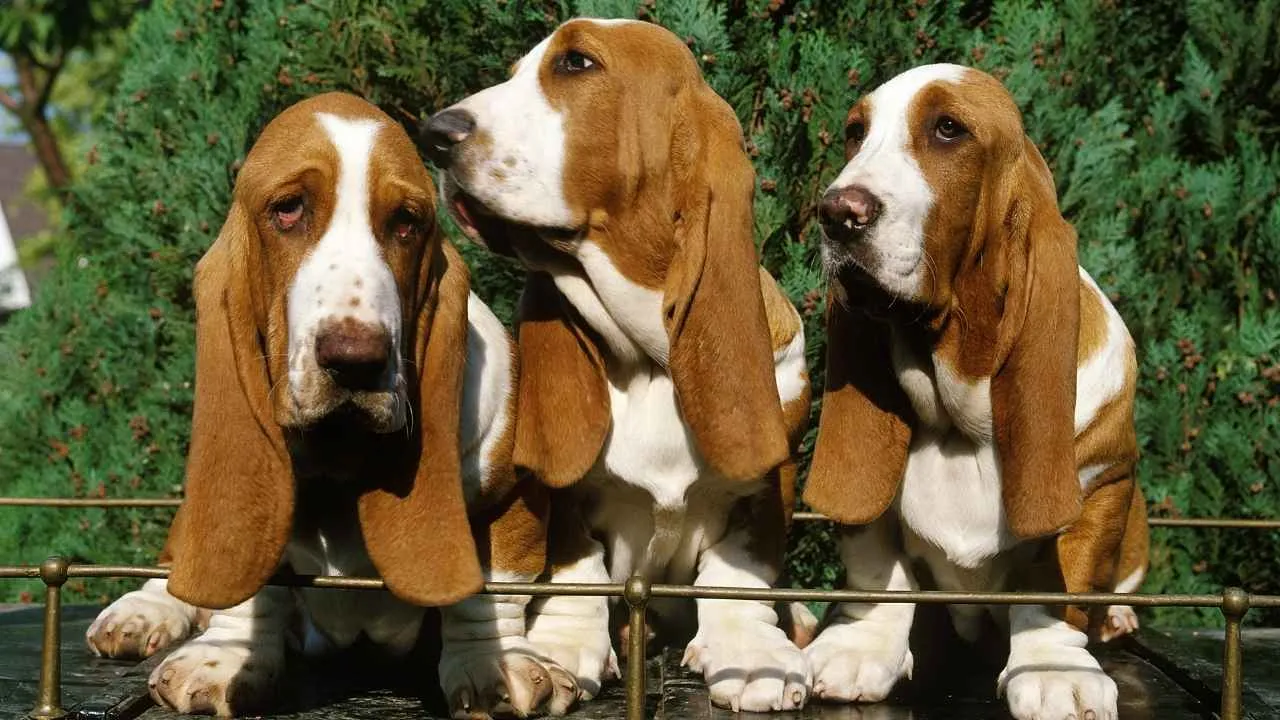
Don’t let that laid-back, couch-loving demeanor fool you; the Basset Hound has quite the nose on it.
This short-legged breed was actually built to move at a pace hunters could keep up with on foot. Those stubby legs were a feature, not a bug, letting the dog work a scent trail methodically with its nose glued to the ground the whole way.
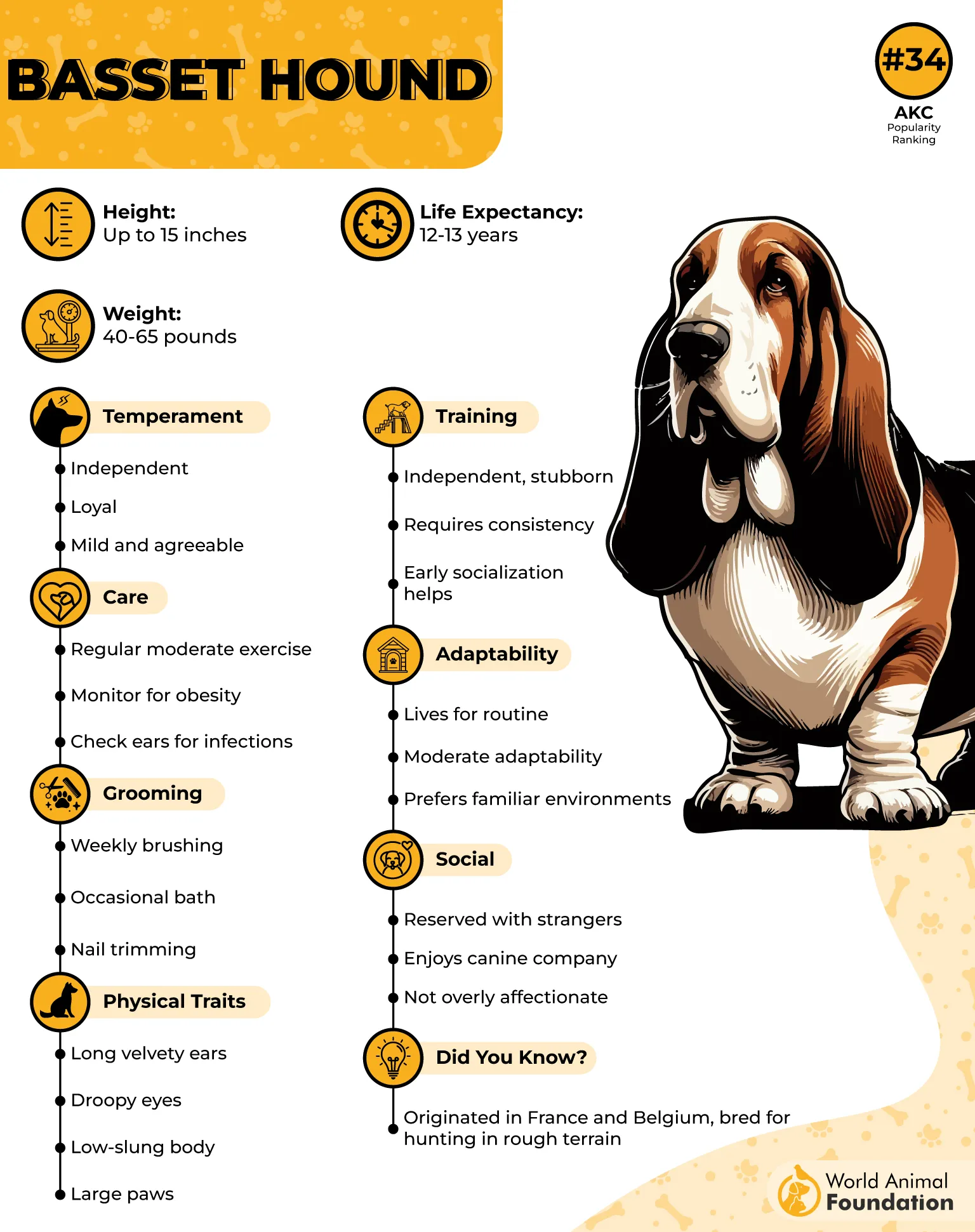
Like the Bloodhound, the Basset’s long ears and loose skin aren’t just for looks; they help funnel scent particles right toward its nose while it works. In fact, the Basset Hound is often considered second only to the Bloodhound in scenting ability, making it a standout tracker among smaller breeds.
Just one catch: once a Basset catches an interesting scent, don’t be surprised if it suddenly goes selectively deaf to its name. That single-minded focus is honestly part of what makes its nose so effective in the first place.
3. Beagle
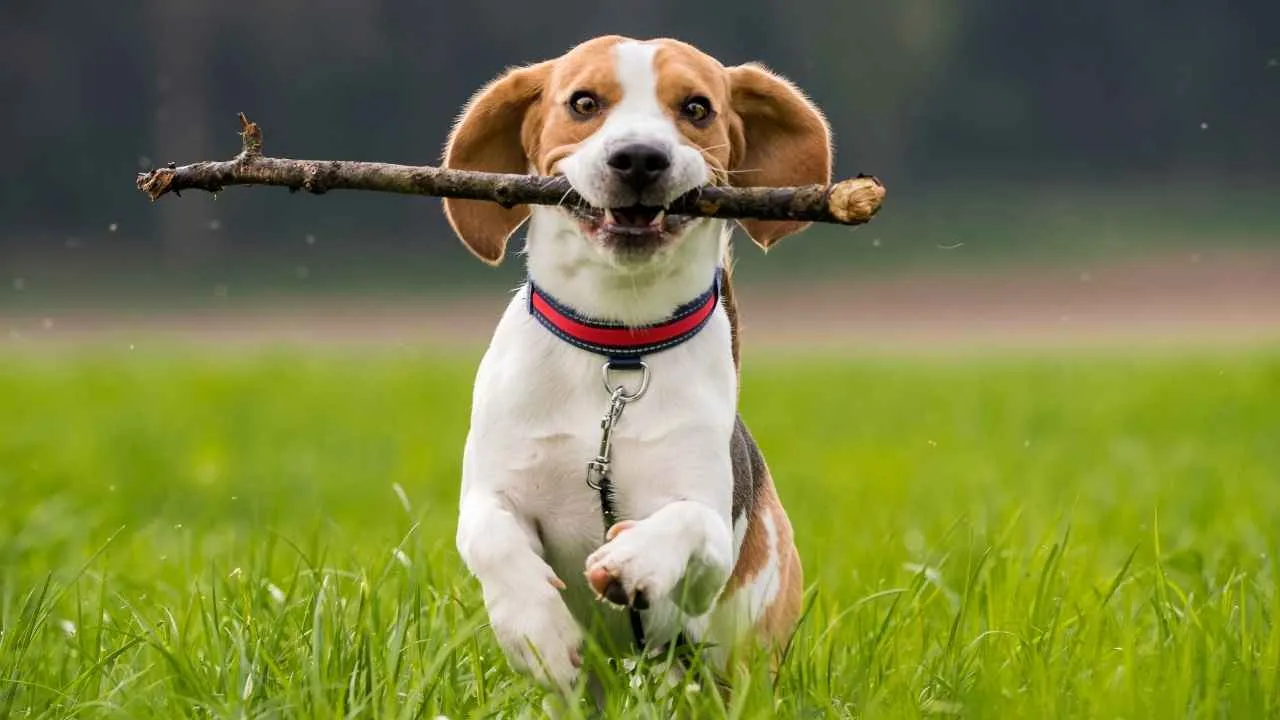
The Beagle proves that a powerful nose doesn’t need a big body to back it up. Originally developed to hunt in packs, tracking the scent of rabbits and other small game, this breed has an impressive olfactory pedigree.
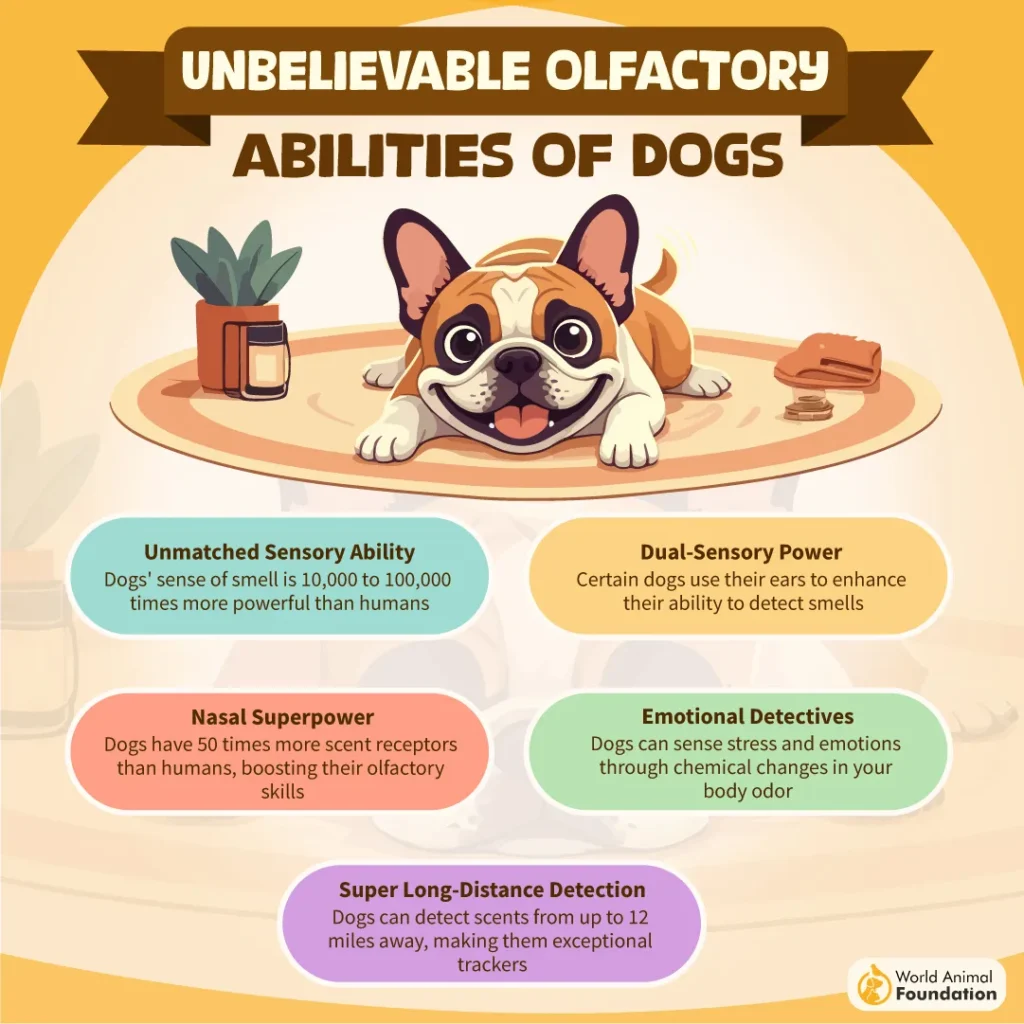
That nose has found some surprisingly modern applications too. Thanks to their compact size and strong work drive, Beagles are frequently used at airports and border checkpoints for detection work.
With over 225 million scent receptors and centuries of hunting and tracking history behind them, it’s no wonder Beagles are so skilled at this. They’re also known for baying or barking excitedly the moment they lock onto an interesting scent.
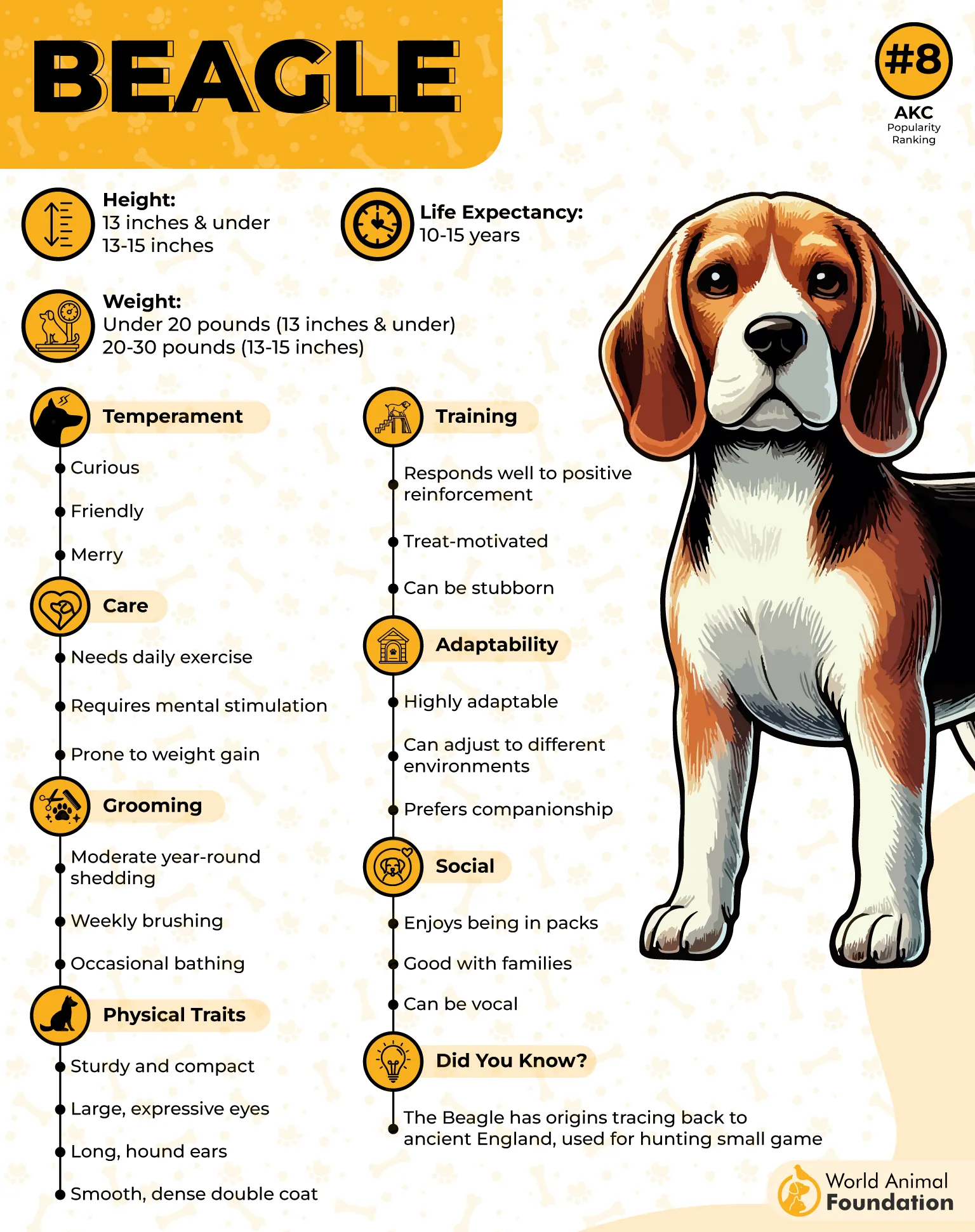
Their sociable nature is a bonus too; Beagles tend to be quite trainable, and since they were bred to work in packs, they naturally do well working alongside other dogs in scent-detection settings. Just keep in mind that a strong nose means a Beagle will happily take off after an interesting scent, so a secure leash or fenced yard is always a must.
4. German Shepherd
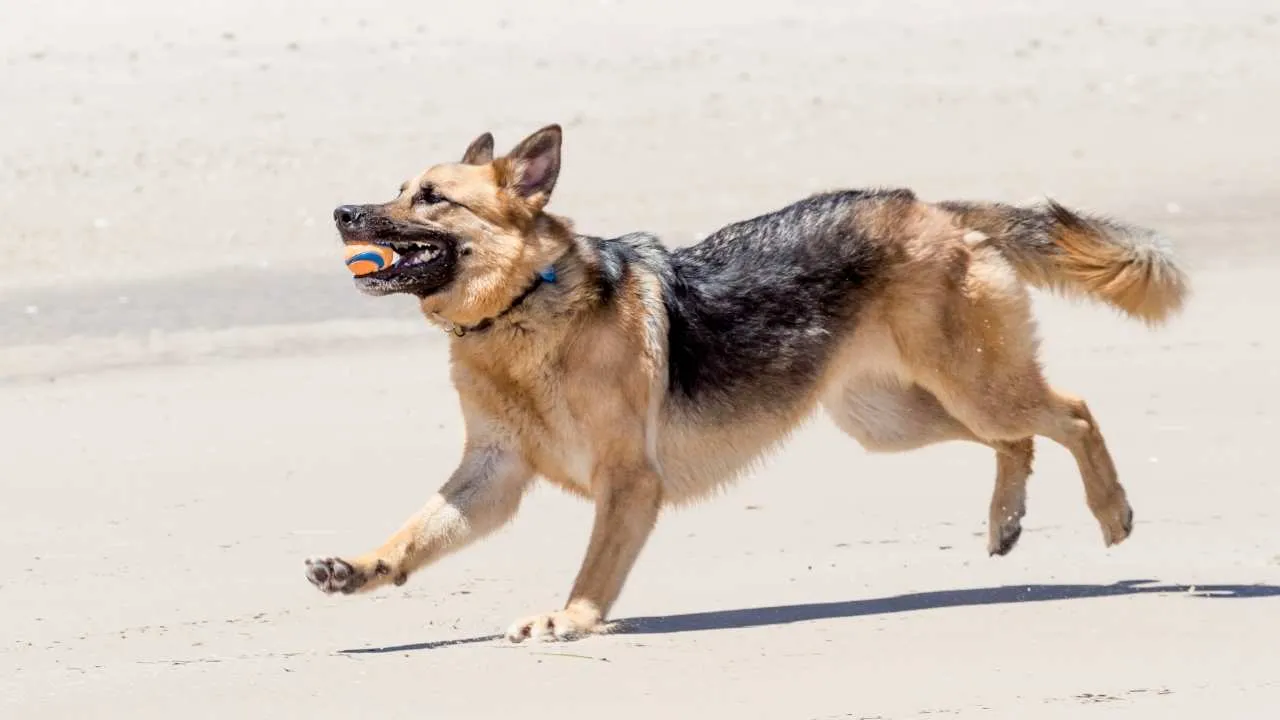
The German Shepherd proves that exceptional scenting talent isn’t reserved just for the classic scent hounds.
This hugely popular breed combines a strong nose with an equally strong working relationship with its handler. German Shepherds form deep bonds with their families and carry a naturally protective streak, which is a big part of why they’re so widely used in police work, military service, search and rescue, and as guide dogs.
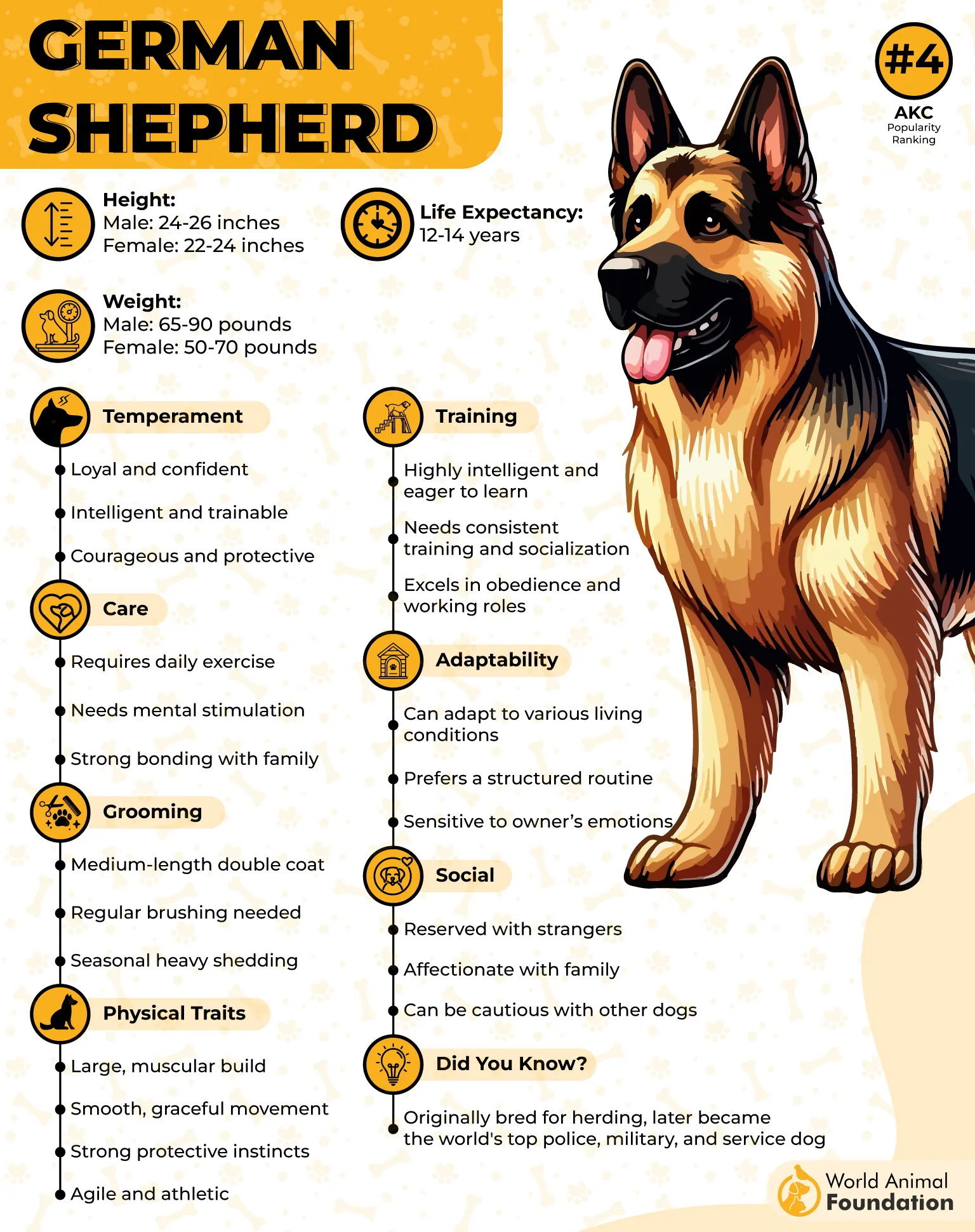
Being a great detection dog takes more than just a good nose, though; it requires focus, a systematic search approach, and the ability to clearly signal when the target scent has been found. German Shepherds check every one of those boxes, bringing both trainability and serious work drive to the table.
What really makes them stand out, though, is their versatility. A German Shepherd can excel at detection work while also handling demanding obedience and physical tasks right alongside it.
5. Labrador Retriever
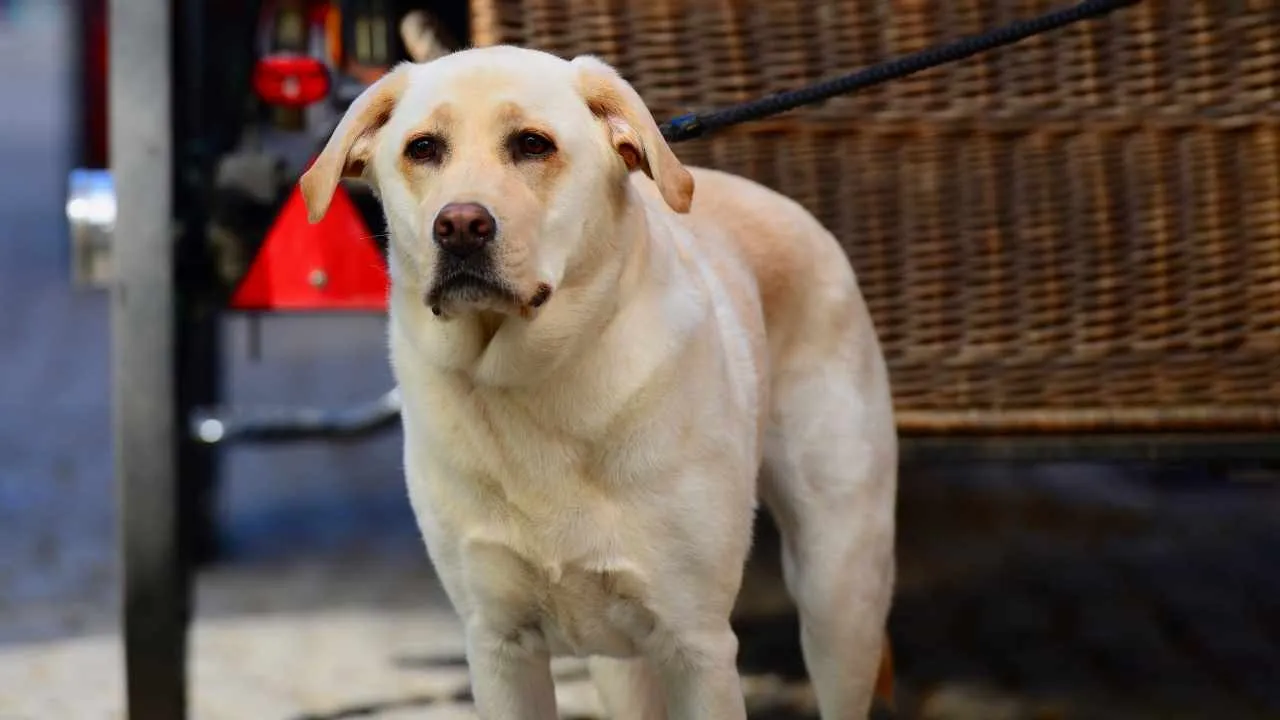
Labs might be best known for retrieving, but their noses have earned them plenty of serious jobs too.
Their combination of strong scenting ability, trainability, motivation, and reward drive makes them exceptionally well-suited for detection work. Labradors are trained to sniff out everything from illegal substances to missing persons, working across law enforcement, search and rescue, and a range of other specialized fields, and they consistently excel in professional scent-detection work.
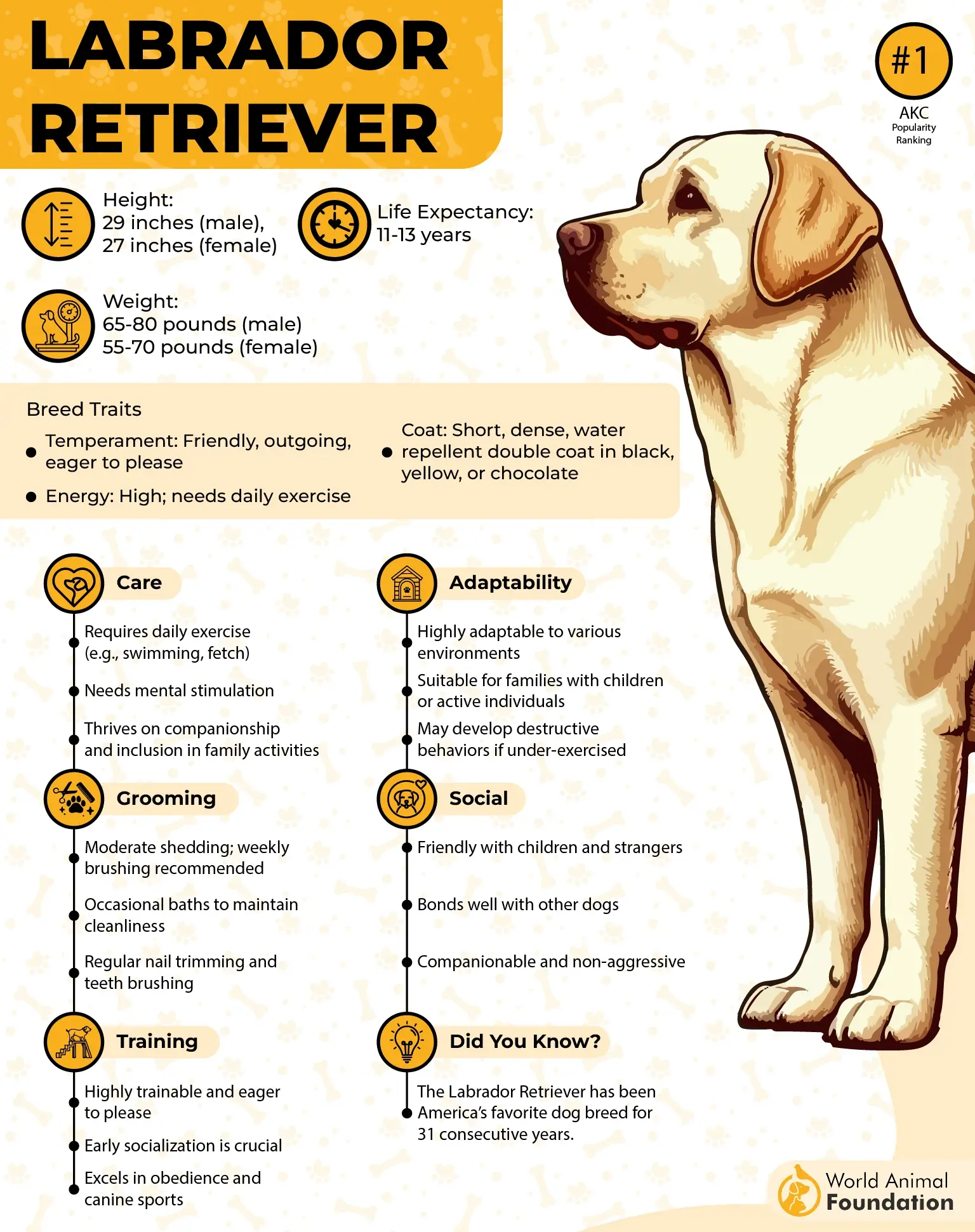
One of their biggest strengths really comes down to attitude. Most Labs are eager to repeat a task simply because it’s rewarding, whether that reward comes in the form of a toy, a treat, or just enthusiastic praise. That combination of a great nose and genuine cooperation is what makes Labs so effective at this work.
On the daily care side, Labs need regular exercise like walks or games of fetch, or that energy can turn into destructive behavior indoors. Puppies and younger Labs especially tend to stay pretty hyper, and it can take a couple of years before they really settle into a calmer adult routine.
6. Belgian Malinois
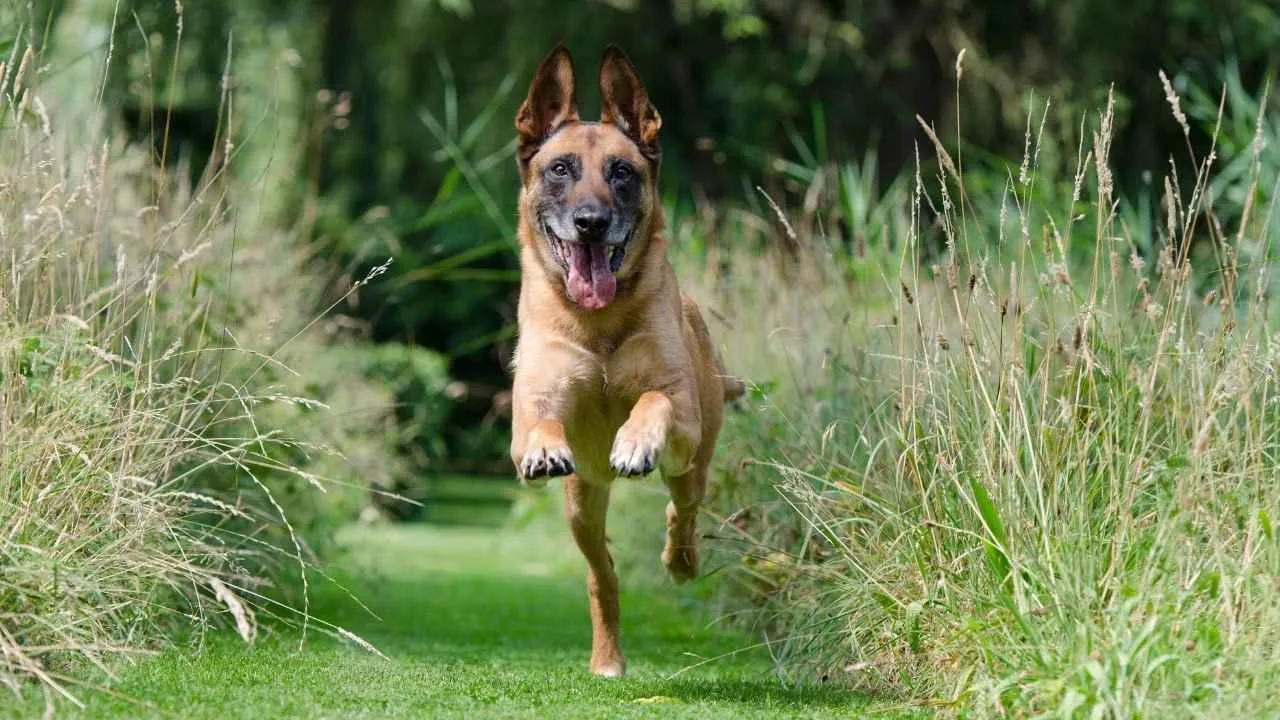
The Belgian Malinois is another breed that dominates professional detection work, and pairing its high energy and work ethic with its scenting ability makes for a genuinely impressive combination.
Malinois are a top choice for police and military units worldwide, and their exceptional physical stamina makes them well-suited to demanding, long-duration jobs like tracking, detection, patrol work, and search operations. Their intense drive to work is exactly why they’re so consistently associated with scent detection roles in professional settings.
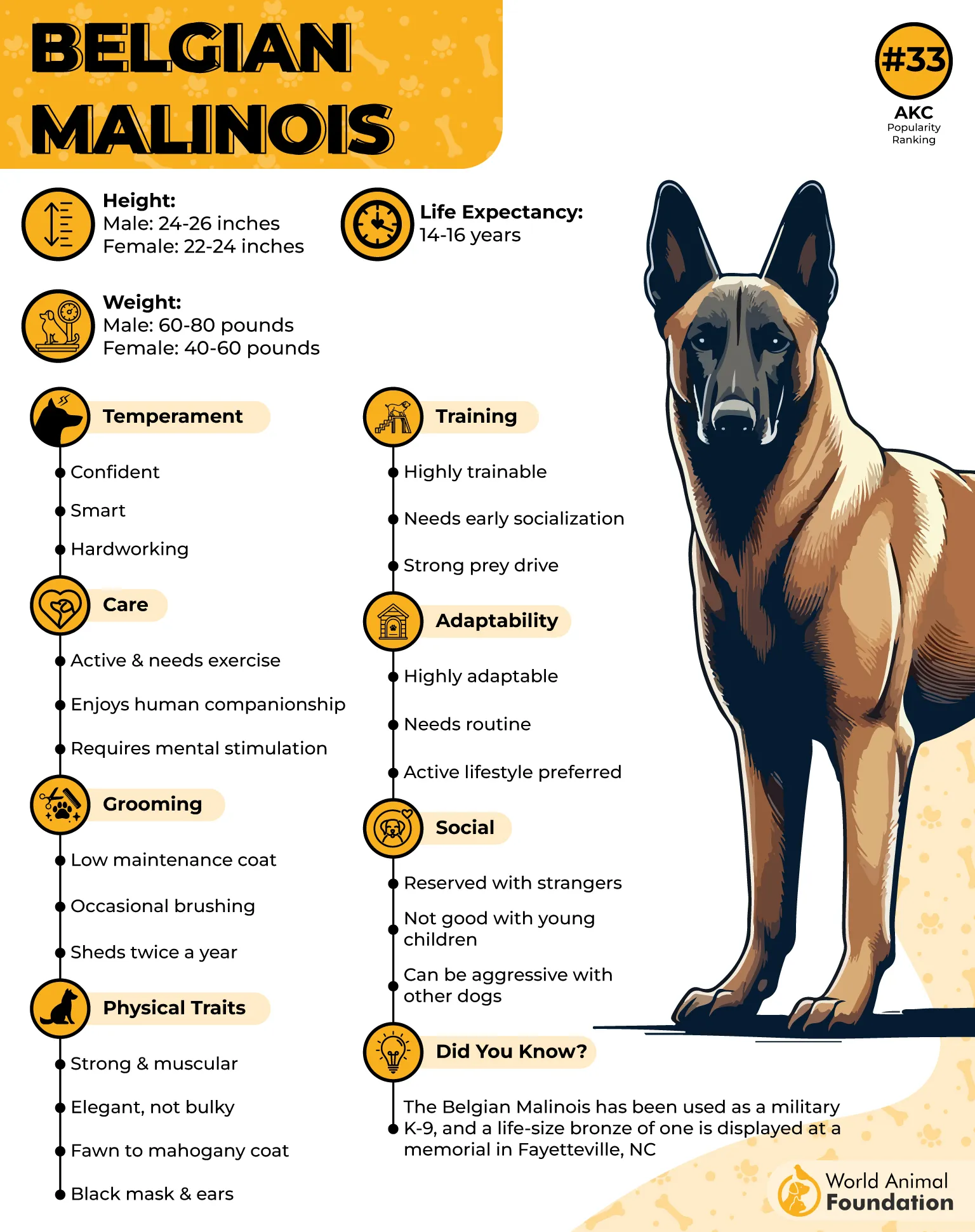
What really sets the Malinois apart, though, is that its nose is just one piece of a much bigger skill set. These dogs can search, alert, follow commands precisely, and switch between tasks almost instantly, which is a big part of what makes them so effective on the job.
That kind of versatility is exactly why the Belgian Malinois remains one of the most valuable scent-working breeds in the working dog world today.
7. English Springer Spaniel
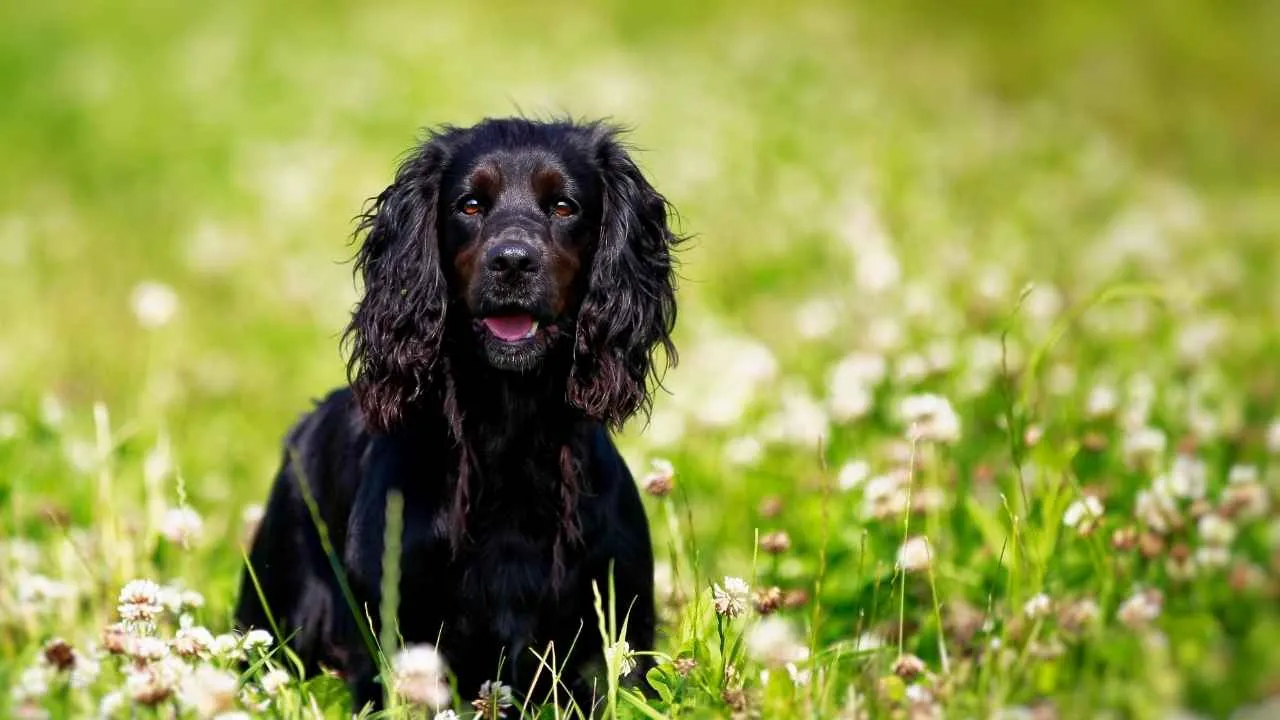
The English Springer Spaniel brings yet another style of scenting skill into the picture. Originally bred as a bird dog, its job was to locate and flush game birds out of thick underbrush.
That meant covering plenty of ground across fields and woodland while tracking birds purely by scent, and the stamina, agility, and close working partnership with a hunter that this required are still very much part of the breed today.
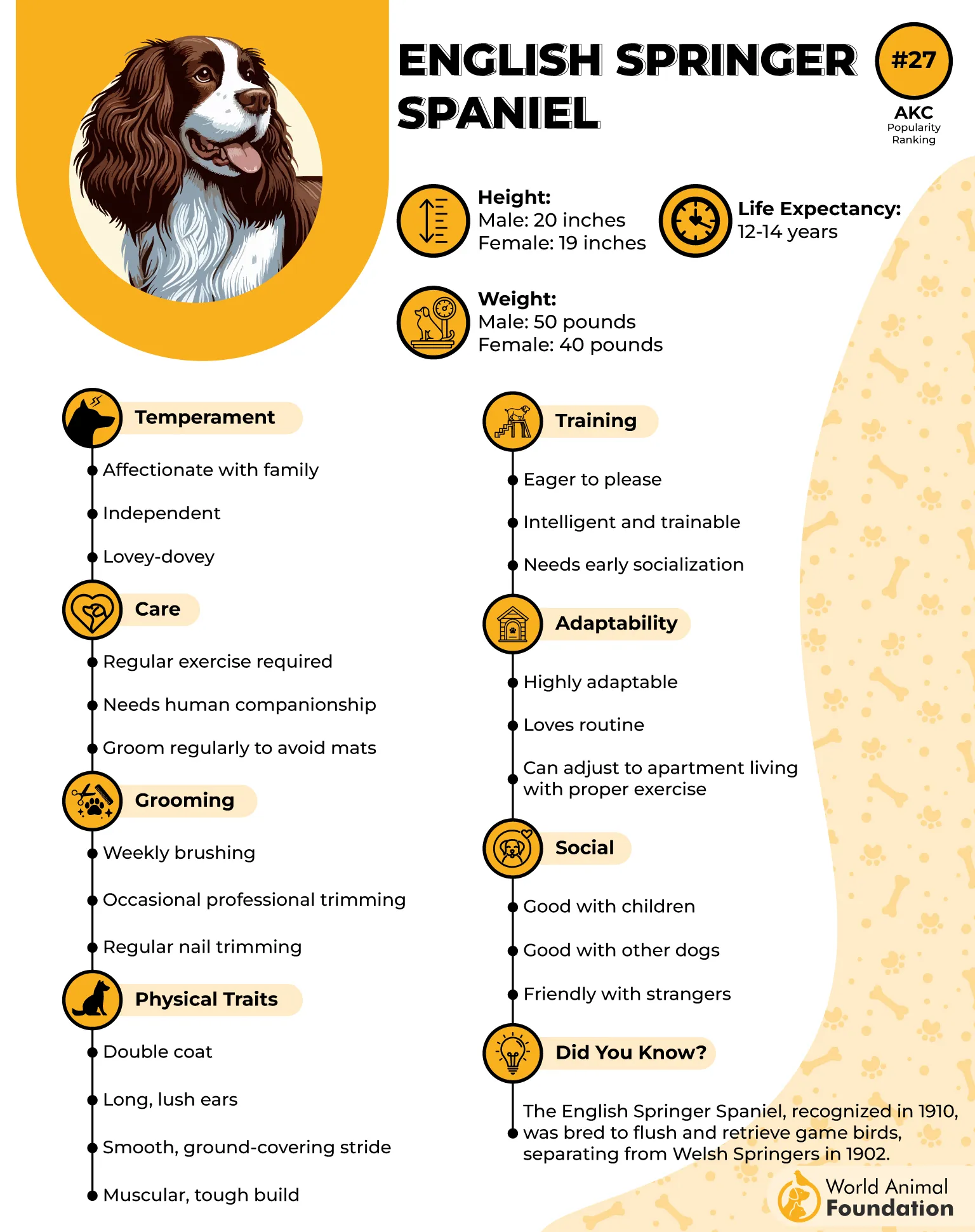
Springers have transitioned beautifully into modern scent work too, remaining genuinely skilled at detection-style tasks. What really makes them stand out is the combination of a great nose with real responsiveness: a Springer doesn’t just catch a scent and stop there; it’s naturally wired to keep working the search together with a person. They also crave constant human company and don’t do well left alone for long stretches.
Purina describes the breed as active, with an alert yet kind expression. Just keep in mind that their high energy levels can sometimes be a bit much for very young children.
8. Bluetick Coonhound
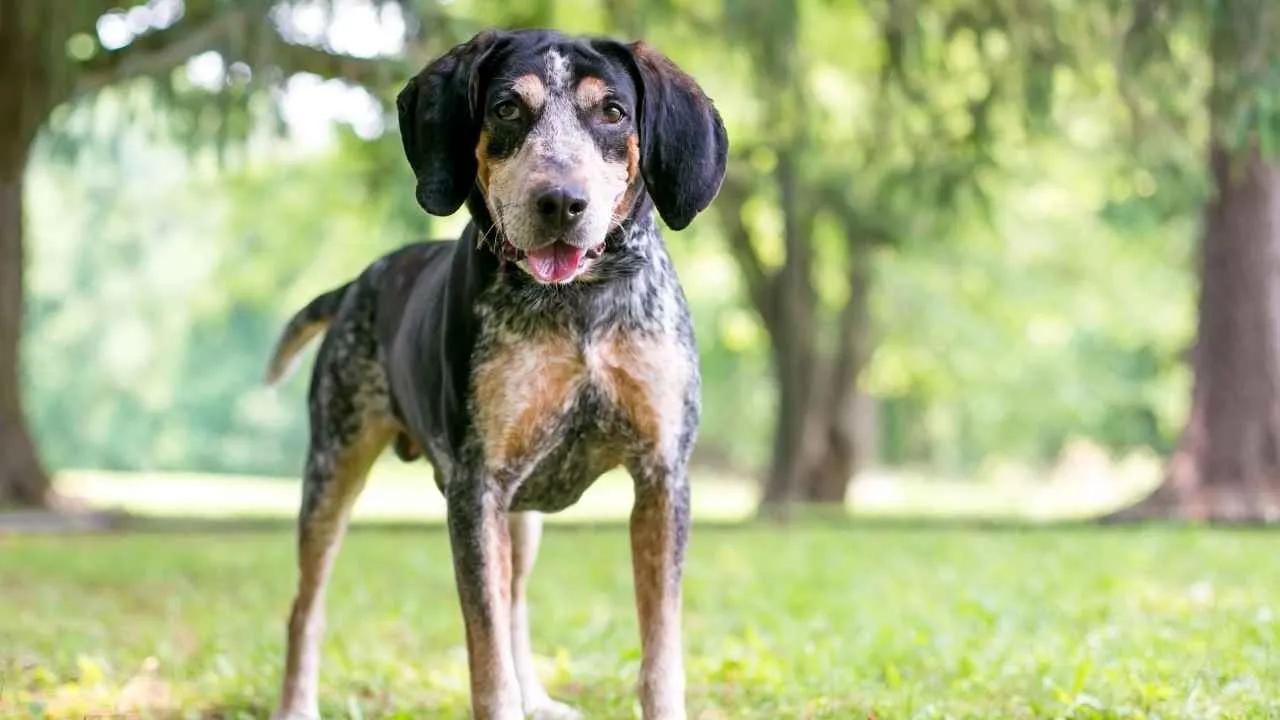
Described by Orvis as an energetic and lovable breed, the Bluetick Coonhound was built for tracking tough trails across rugged terrain. Traditionally used to hunt raccoons and other game, often under the cover of night, this breed brings a specialized skill set to the table.
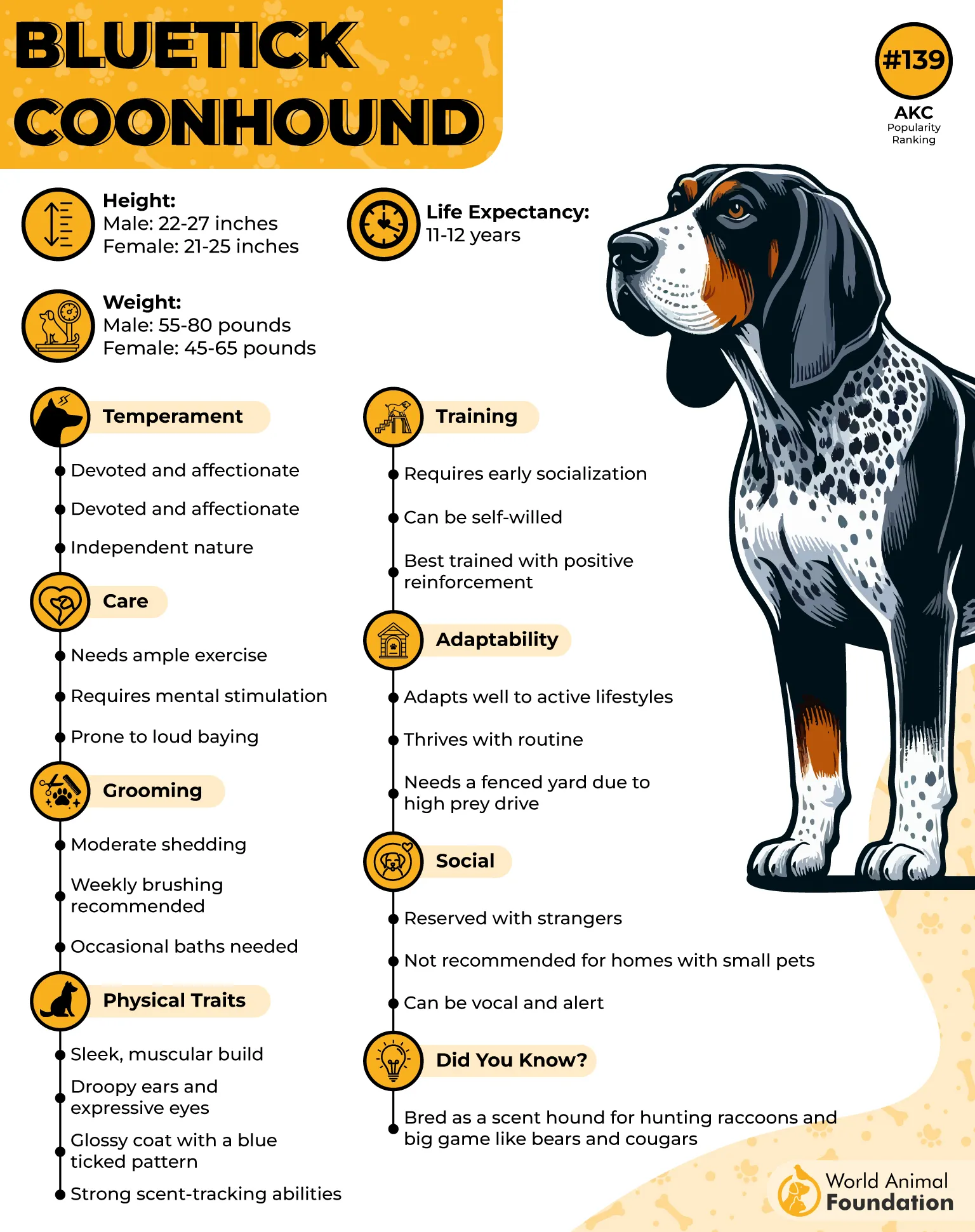
What really sets the Bluetick apart is its talent for working older, “cold” scent trails — ones that might be hours, or even days, old. That kind of tracking demanded patience and persistence rather than simply chasing after whatever crossed its path, and that single-minded, relentless focus on the trail remains a defining trait of the breed today.
Their distinctive baying serves a real purpose too, letting hunters track the dog’s location through dense woods just by following its voice. At home, Blueticks tend to be fairly calm, though they can be a bit shy or reserved around unfamiliar faces.
9. American English Coonhound
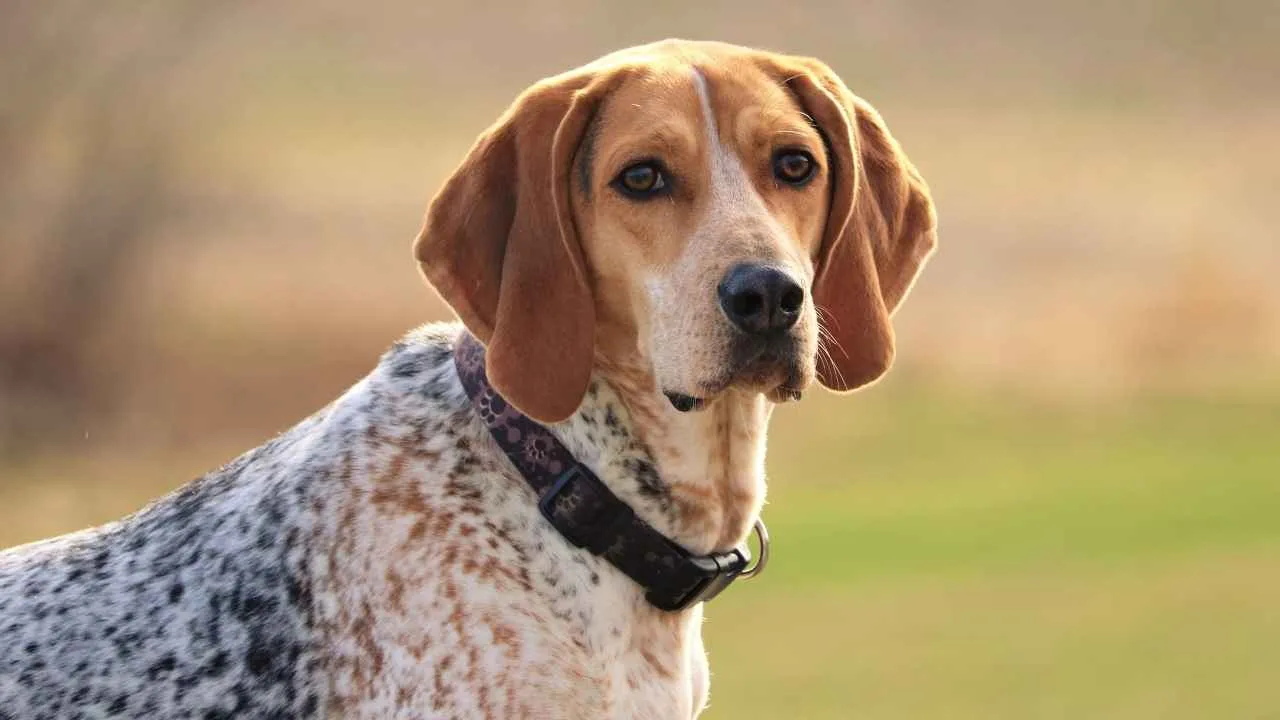
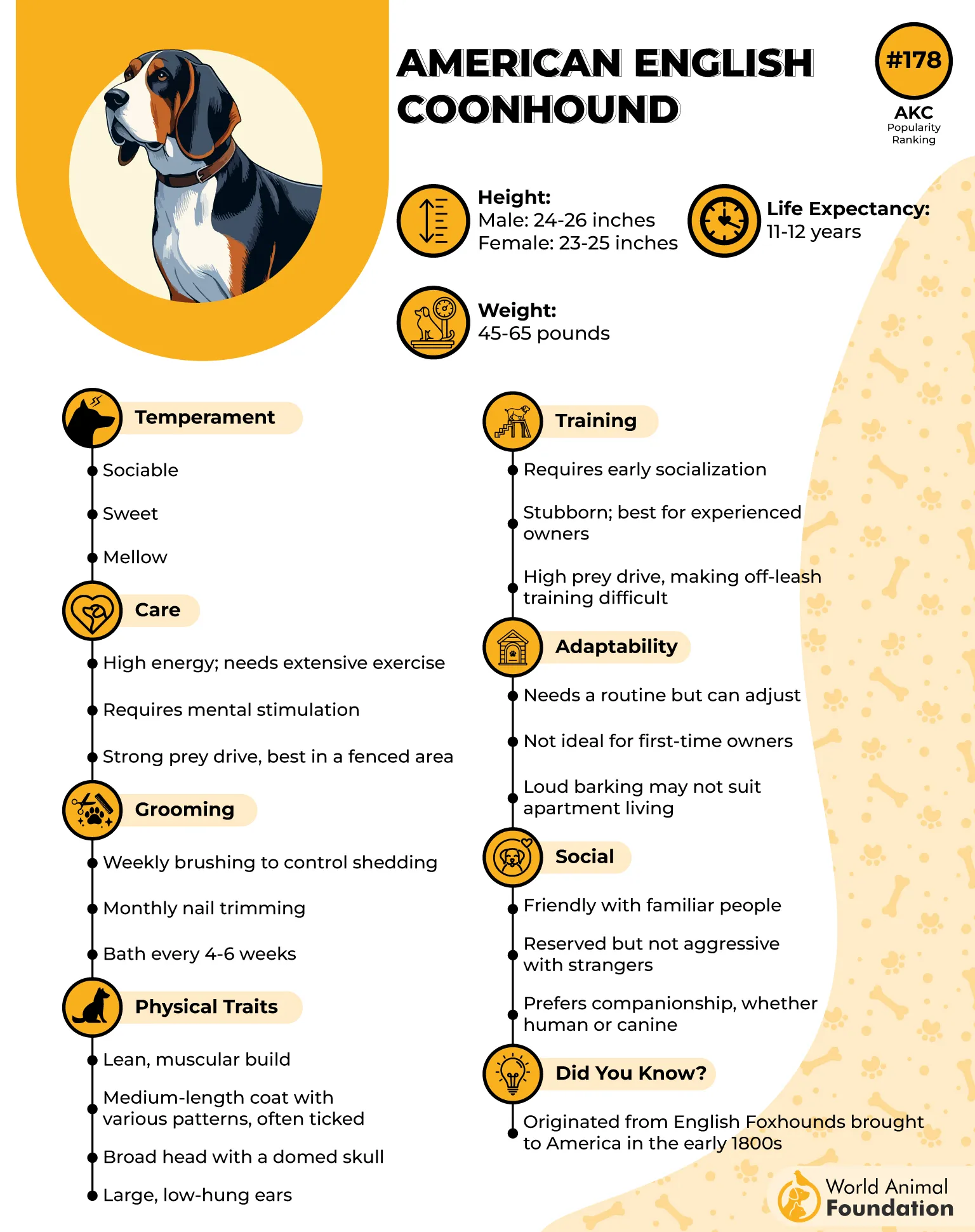
Rounding out this list is the American English Coonhound, another dedicated scent specialist built for the hunt.
Bred to track raccoons across tough terrain, often at night, this breed pairs long, athletic legs built for speed with a nose that keeps it locked onto the trail no matter how fast it’s moving.
That scenting power can go well beyond hunting, too. There’s even a documented case of an American English Coonhound named Billie helping search for a missing child during a hiking trip.
That kind of real-world story is a great reminder of just how far a nose bred for one purpose can stretch into something entirely different, whether that’s search and rescue, border patrol work, or detection tasks.
Just keep in mind this breed comes with an intense prey drive, and once one catches a scent worth chasing, recall can be genuinely difficult. Plenty of daily exercise and open space to run are essential, and it’s best to keep them leashed anytime you’re in an unfenced area.
Conclusion
Not all dogs with a powerful sense of smell are wired the same way. Some excel at tracing an individual person’s trail, while others are built for tracking game, detection work, or systematic searches. Different as their specialties may be, every one of these breeds is a striking reminder of just how far dogs’ noses outpace our own.
Pair that natural scenting ability with the right mental stimulation, and these breeds have what it takes to thrive in nearly any working environment.
If any of these breeds caught your interest, this is a solid place to start exploring further. What makes them so special isn’t just their incredible noses — it’s that these working abilities have been refined and passed down for generations, and they’re still hard at work in the real world today.
