




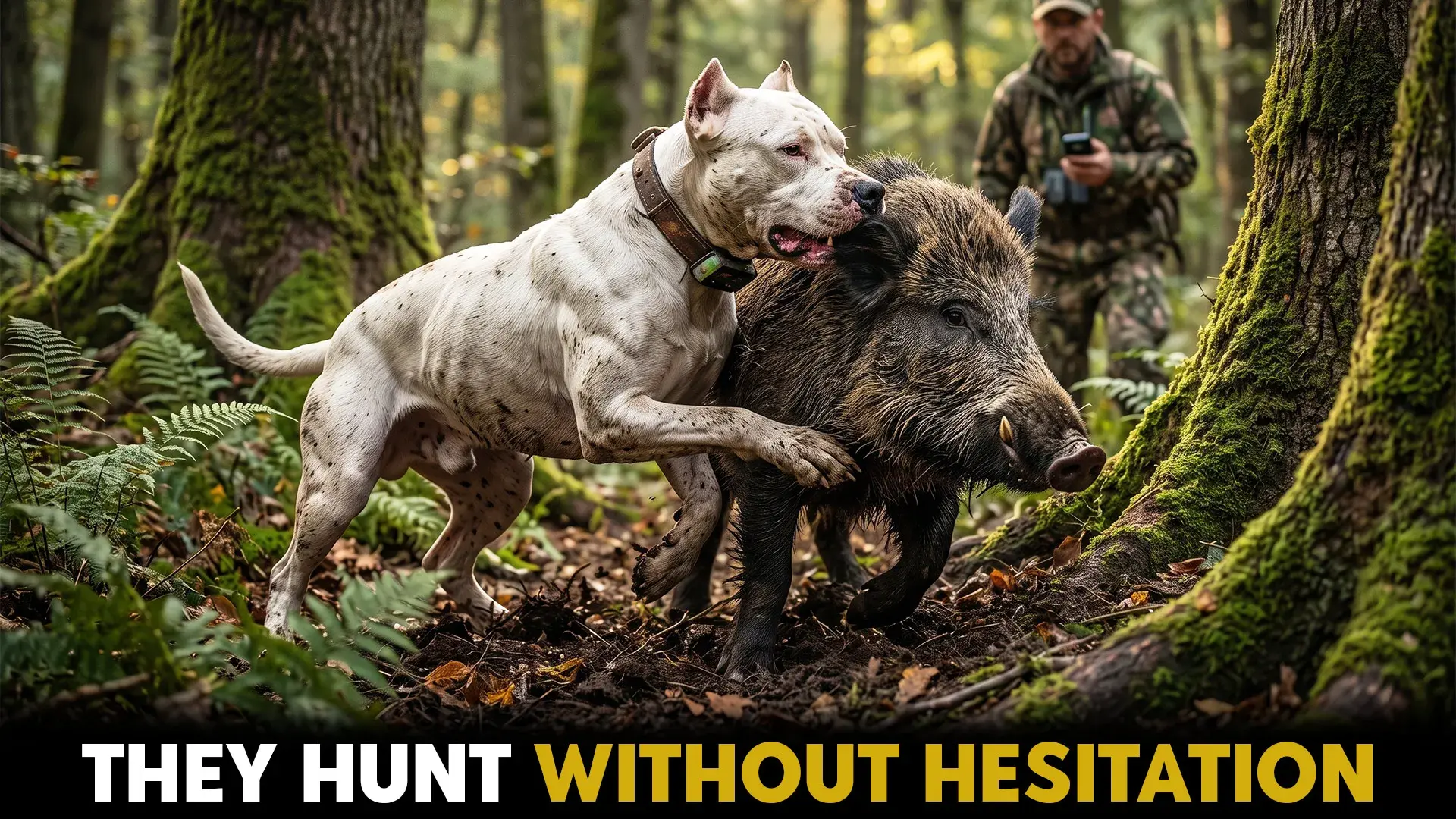
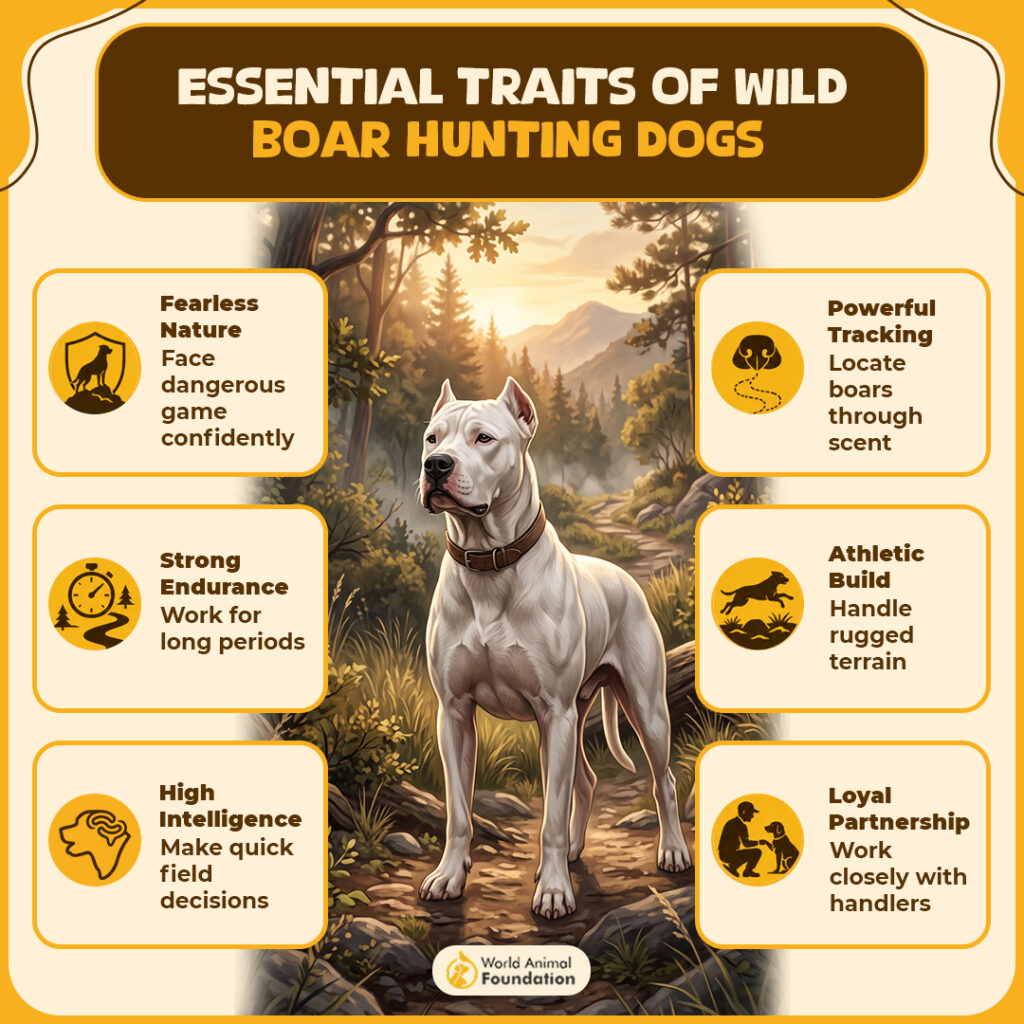
Wild boar hunting is not a walk in the park, and thankfully, these dogs were never told it should be. The right hunting dog needs courage, stamina, a strong nose, and enough sense to work around powerful, unpredictable game.
Some breeds were developed specifically for big-game work, while others earned their reputation on farms and in the rough forests of the American South.
The Dogo Argentino, for example, was deliberately developed to pursue dangerous game such as wild boar and puma. The Plott Hound also has genuine boar-hunting roots, tracing back to German dogs brought to North Carolina in the 1700s.
But which breeds truly stand out, and what makes each one different?
Let’s read ahead to find out about them.
Top Dog Breeds That Excel at Wild Boar Hunting
1. Dogo Argentino
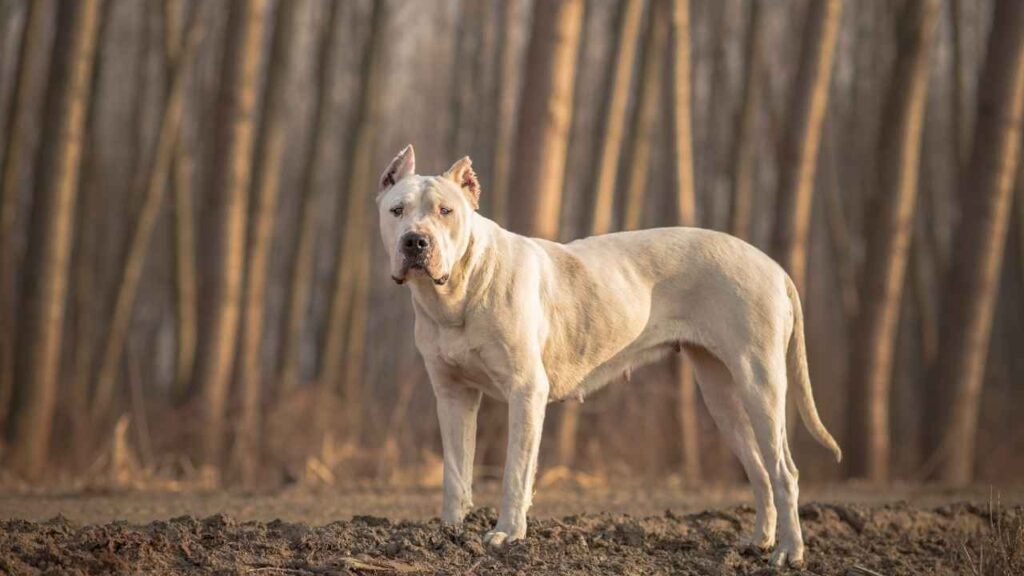
A relatively newer breed, the Dogo Argentino was originally bred in 1928 by Dr. Antonio Nores Martinez in Argentina, as noted by the AKC. It was developed by crossing the now-extinct Cordoba fighting dog and Bulldog, Boxer, Great Dane, Pyrenean Mastiff, Spanish Mastiff, Irish Wolfhound, Bull Terrier, and Pointer.
Being a mesomorphic breed, it has a substantial muzzle, allowing it to have a firm grip on large game without running short of breath. It has a crushing mechanical bite force of 500-550 PSI and exhibits a scissor bite that can crush the bones of the prey.
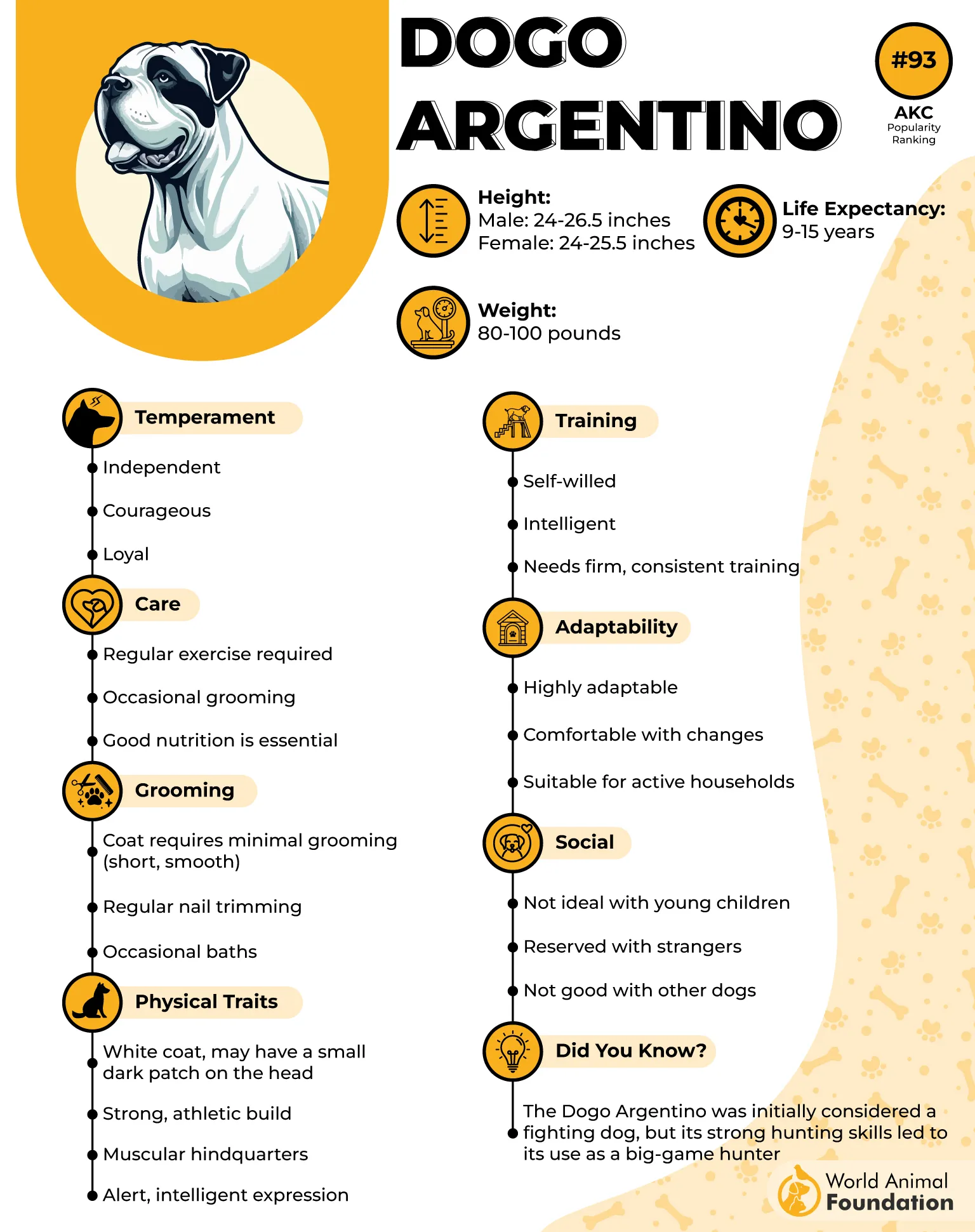
Well-angulated shoulder blades act as a lever arm. It anchors itself to the ground when the boar tries to shake off the dog. Classified as a ‘catch dog,’ the breed tends to pursue, seize, and physically hold down a wild boar.
Could You Handle a Dogo Argentino?
- requires a highly experienced handler
- needs intense structured daily exercise
- strong prey drive demands firm control
- tolerates warmth better than extreme cold
- suited to demanding catch-oriented work
2. Cane Corso
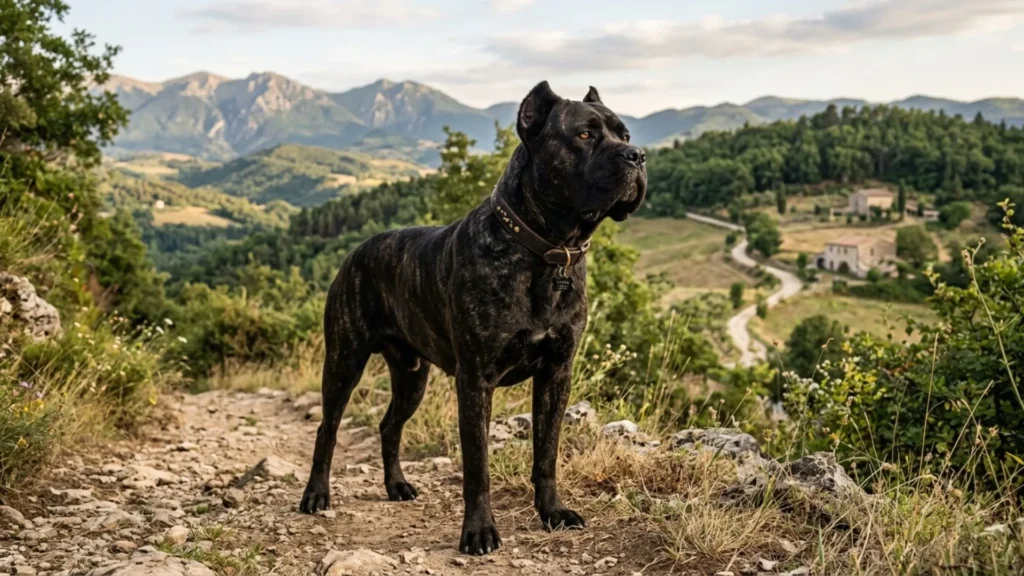
This large dog was developed in Italy from a Mastiff-type dog (Canis Pugnax) used in Roman wars. Since it was bred as a protection dog, the name literally means a guardian dog (Cane=dog, Cohors=protection). It was also used to hunt wild boars and cattle.
Since there is less distance between its front teeth and jaw hinge, it has devastating crushing power with a bite force of 700 PSI. It was designed to catch its prey by the ears or snout, anchoring it in place. Its heavy muscles and wide chest absorb head-on collisions with an aggressive target.
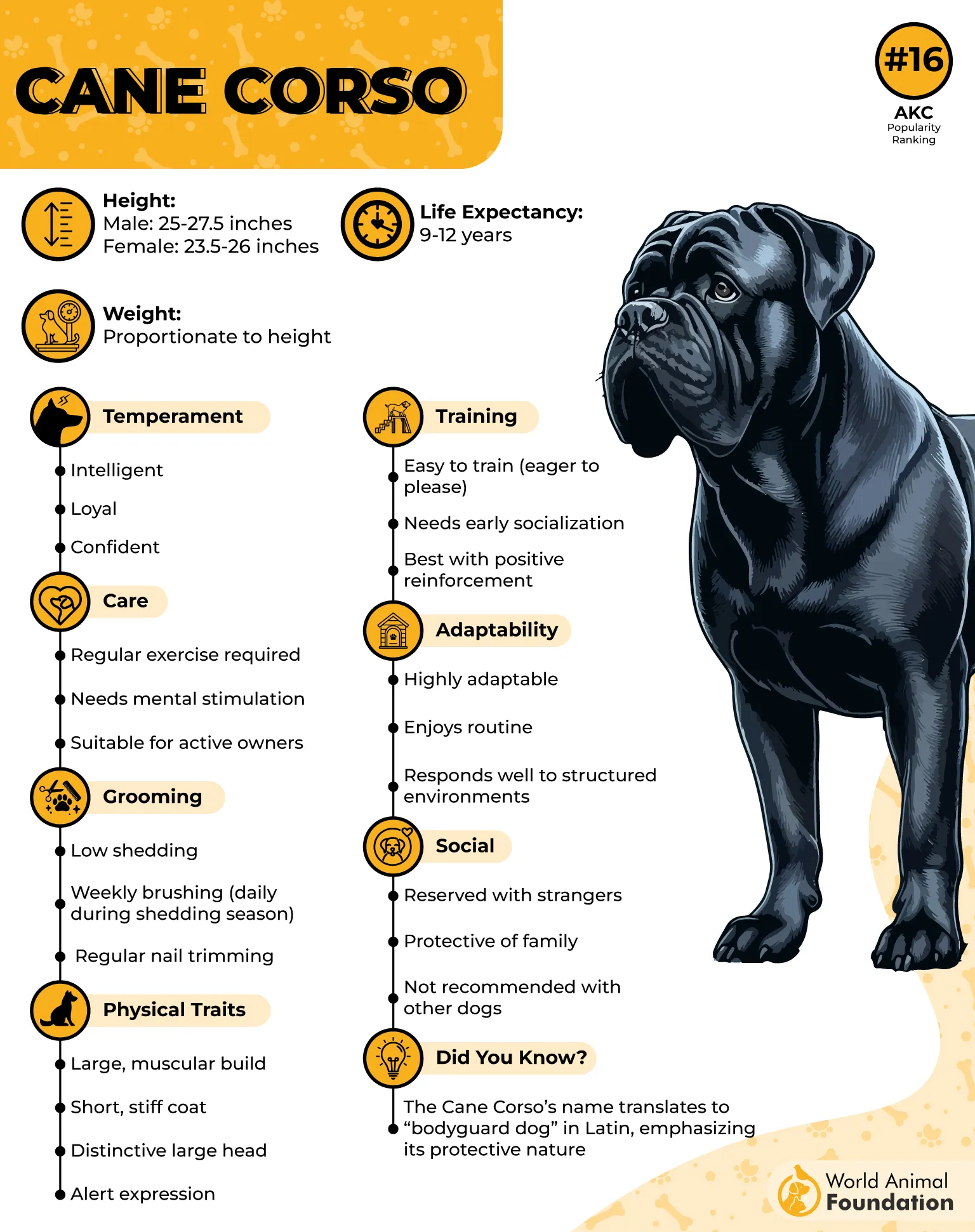
The hunting dog exhibits full-torque sprints and covers long distances over a short period of time. The harsh coat protects the skin while navigating through dense and rough bushes.
Could You Handle a Cane Corso?
- needs confident and consistent training
- requires daily physical and mental exercise
- powerful guarding instincts need socialization
- struggles in prolonged extreme temperatures
- best suited to controlled working roles
🎧 Dogcast
Episode 37 — Why Dogs Stay Close without Touching
If you don’t hear sound, tap the button above to enable audio.
3. Plott Hound
The history dates back to the mid-17th century, when a German citizen, Johannes “George” Plott, brought some wild boar hunting dogs to America. His son is responsible for the development of the modern-day Plott Hound, according to WebMD.
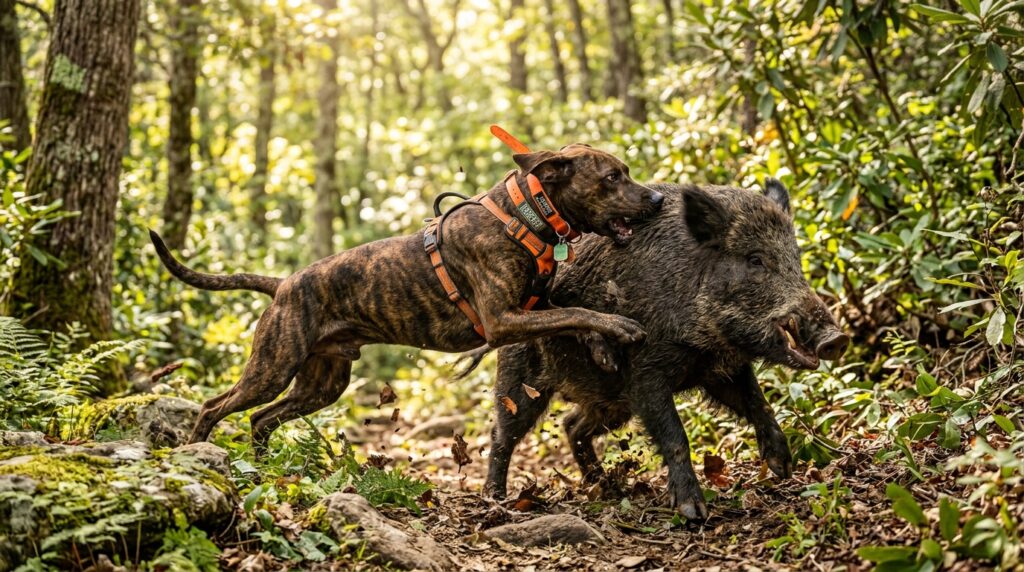
The deep chest provides a large lung capacity, maximizing oxygen intake while running. With a lean and heavily muscled body, this sighthound has a great power-to-weight ratio, avoiding injuries from the predator’s tusks. The straight legs enable high speed and a smooth gait on rough terrain.
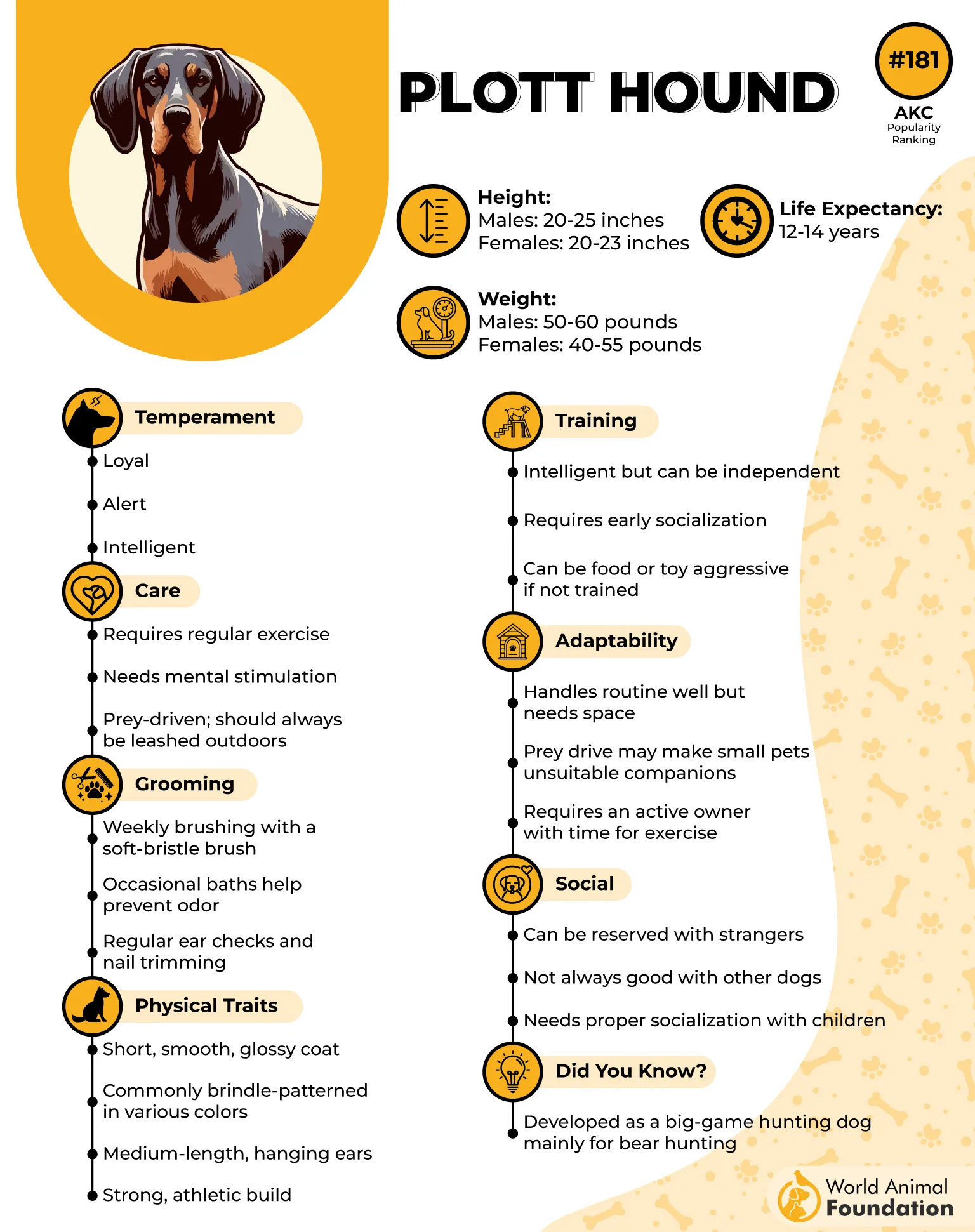
It has tight skin close to the body that reduces the risk of snagging on dense briars. Its cat-like, well-arched toes act as a shock absorber while navigating through rocky areas.
Could You Handle a Plott Hound?
- needs patient scent-focused training
- requires extensive daily outdoor activity
- independent tracking can challenge new owners
- handles varied terrain with proper conditioning
- excels at tracking and baying work
4. Catahoula Leopard Dog
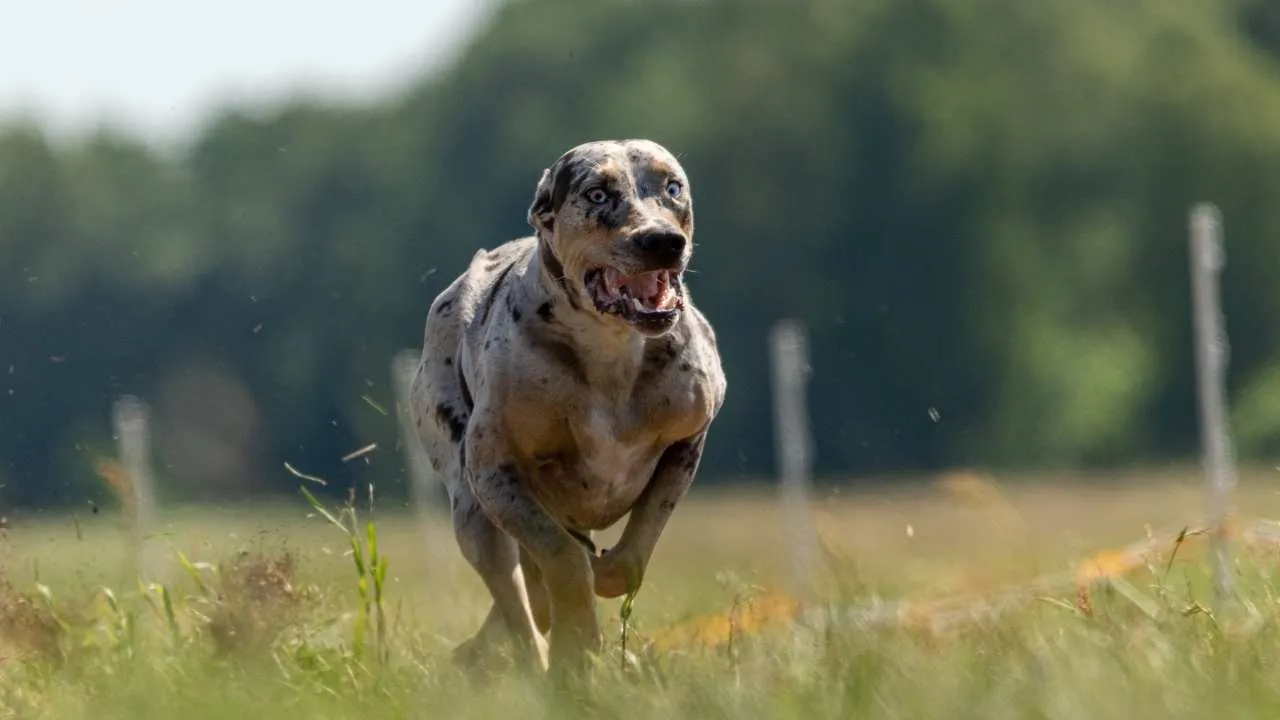
Originally developed in America and the state dog of Louisiana, the Catahoula was developed in the mid 18th century by crossing the Beauceron dog with the local dogs. This hog hunting dog was also used to herd wild cattle and was recognized by the United Kennel Club.
The low center of gravity allows it to pivot, duck, and avoid the goring movement of the boar’s tusks. It has webbed feet that act as a snowshoe and prevent sinking. The hunting companion has a ‘cold nose’ that can detect faint smells through humid air and water. It excels in baying that disorients the boar.
It has high pain tolerance and fast-twitch muscle fibre activation that helps it shift its weight mid-stride. It has a water-resistant double coat that makes it an excellent swimmer.
Could You Handle a Catahoula Leopard Dog?
- requires firm reward-based training
- needs vigorous exercise and regular challenges
- independent behavior suits experienced handlers
- adapts well to warm working environments
- excels at tracking herding and baying
5. Black Mouth Cur
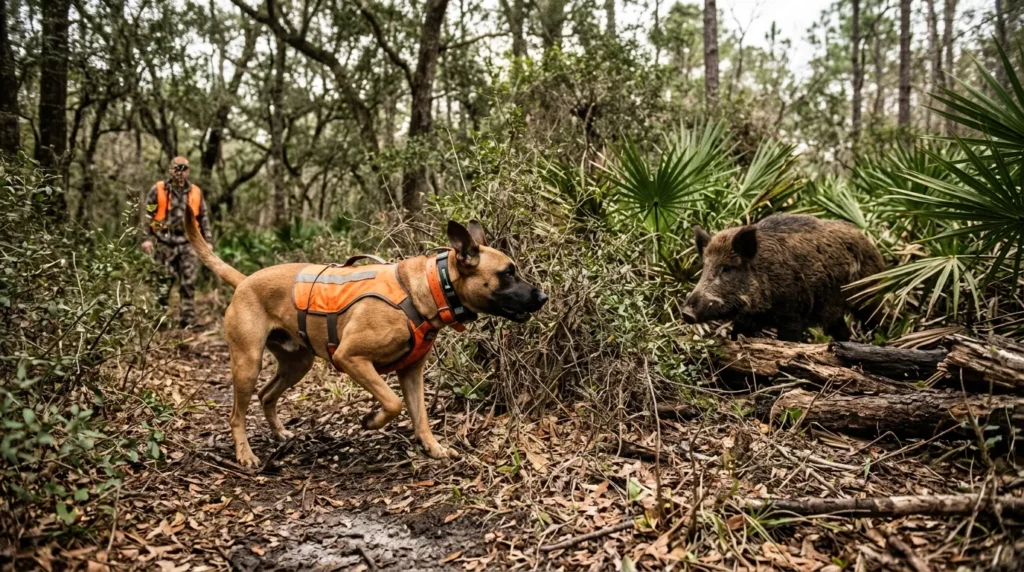
This medium-to-large breed was developed in the southern parts of America and was primarily used to hunt large game, such as wild pigs, boars, and deer. The breed is also used as a search and rescue dog because of its gentle temperament, as reported by Wikipedia.
It has muscular hindquarters that provide an explosive driving power. This also helps the breed to spring backward in a split second, dodging a charging predator. The rectangular stature makes it difficult for a hog to knock over or upend. With its pendulous jowls (flews), the lips fit tightly over the jaws.
The hog hunter has 42 sharp teeth that exhibit a scissor bite. It has a strong prey drive, and its fierce nature makes it fight with a much larger opponent. With its keen sense of smell, sight, and hearing, the breed can track its prey from a distance.
Could You Handle a Black Mouth Cur?
- learns best through consistent practical training
- needs plenty of space and exercise
- strong working drive requires experienced guidance
- generally handles warm climates effectively
- suited to tracking baying and farm work
6. Rhodesian Ridgeback
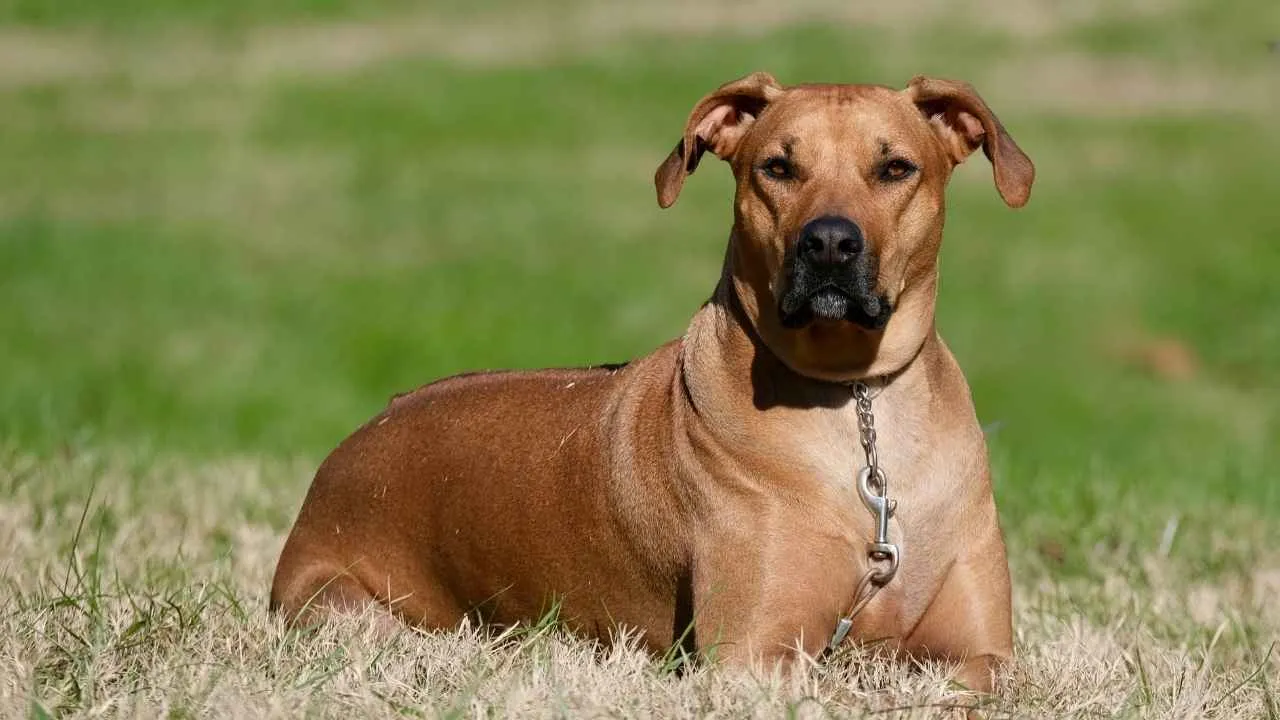
The history of this ancient breed dates back to the 16th-17th centuries, when the European settlers brought their hunting breeds, including Greyhound, Mastiff, and Pointer. They then interbred them with local hunting dogs of Rhodesia (now Zimbabwe) to develop a large dog that excels in lion hunting.
The deep chest and a flexible spine help it reach a high speed of 30 mph. The breed has a strong sense of smell and sight that assist in tracking. It can smoothly transition between ground scenting and wind scenting. Developed for the African weather conditions, the breed has an intense heat tolerance.
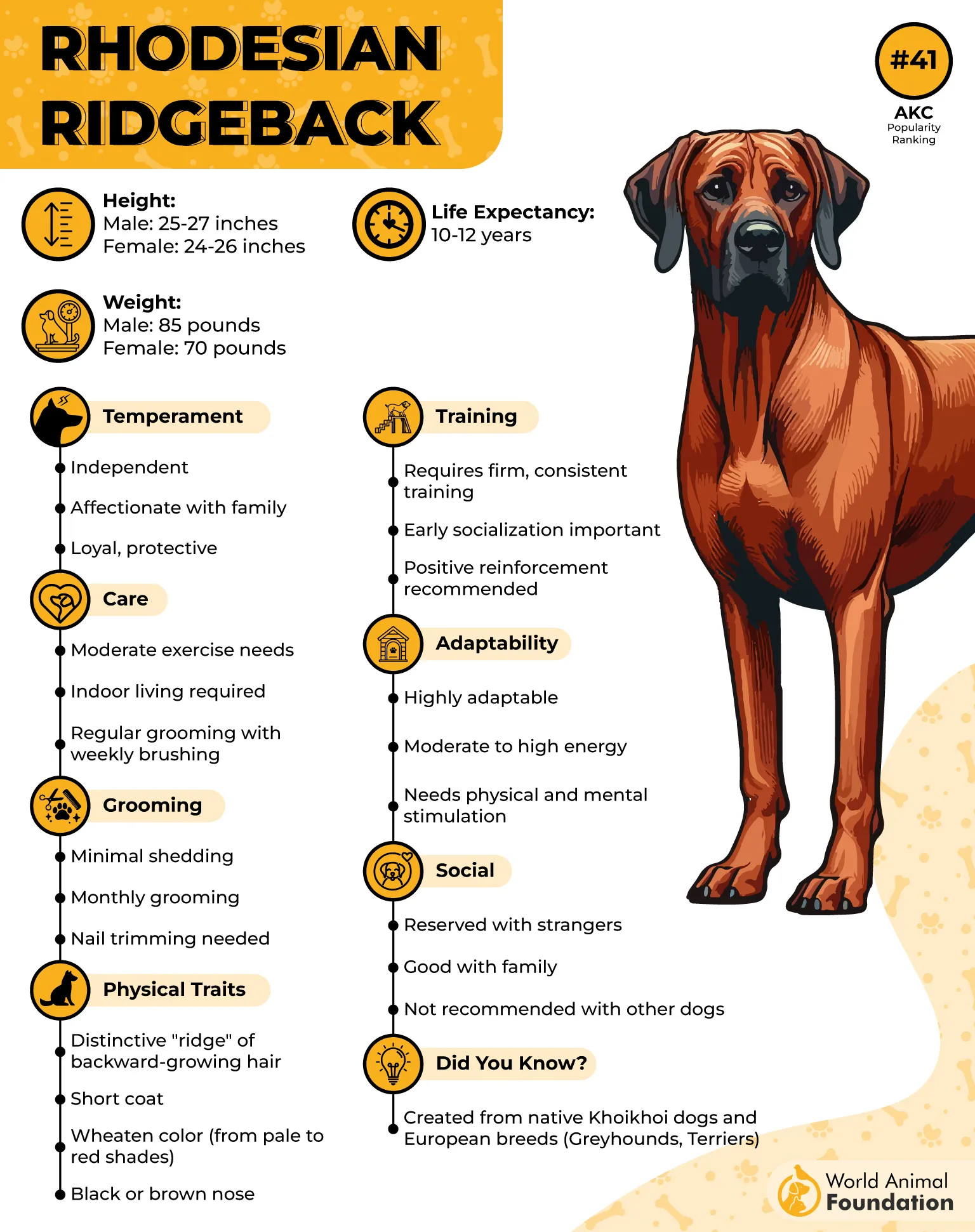
Being a historically bay dog, the Rhodesian Ridgeback masters calculated movements, agility, and high speed. It produces a loud bark to alert the owner of its current location.
Could You Handle a Rhodesian Ridgeback?
- requires patient and consistent training
- needs daily running and mental stimulation
- independent instincts can test inexperienced owners
- tolerates heat better than severe cold
- relies on speed scenting and calculated pursuit
7. Boerboel
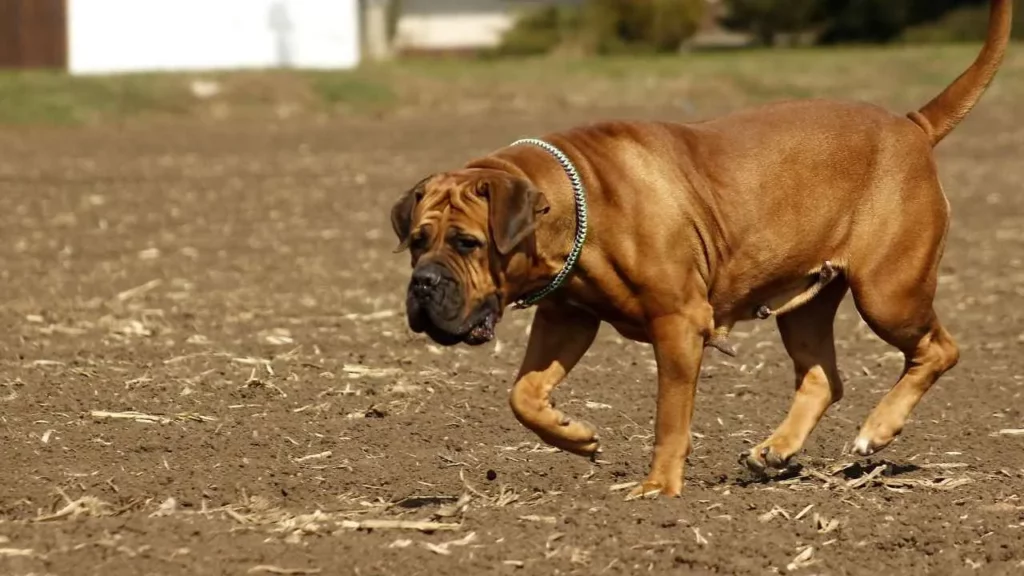
Bred in South Africa by Dutch colonists, the Boerboel was developed by crossing the indigenous dog with Mastiffs, Bulldogs, and Rhodesian Ridgebacks. Soon it became popular as a companion dog. However, the primary purpose was to protect remote farms in the scorching heat of Africa.
The strongly muscled hindquarters and moderate angulation provide immense backward pulling power (to cancel the predator’s movement) and explosive propulsive movement (for initial tackle). It has thick and loose skin around its neck that protects underlying vital blood vessels during physical combat.
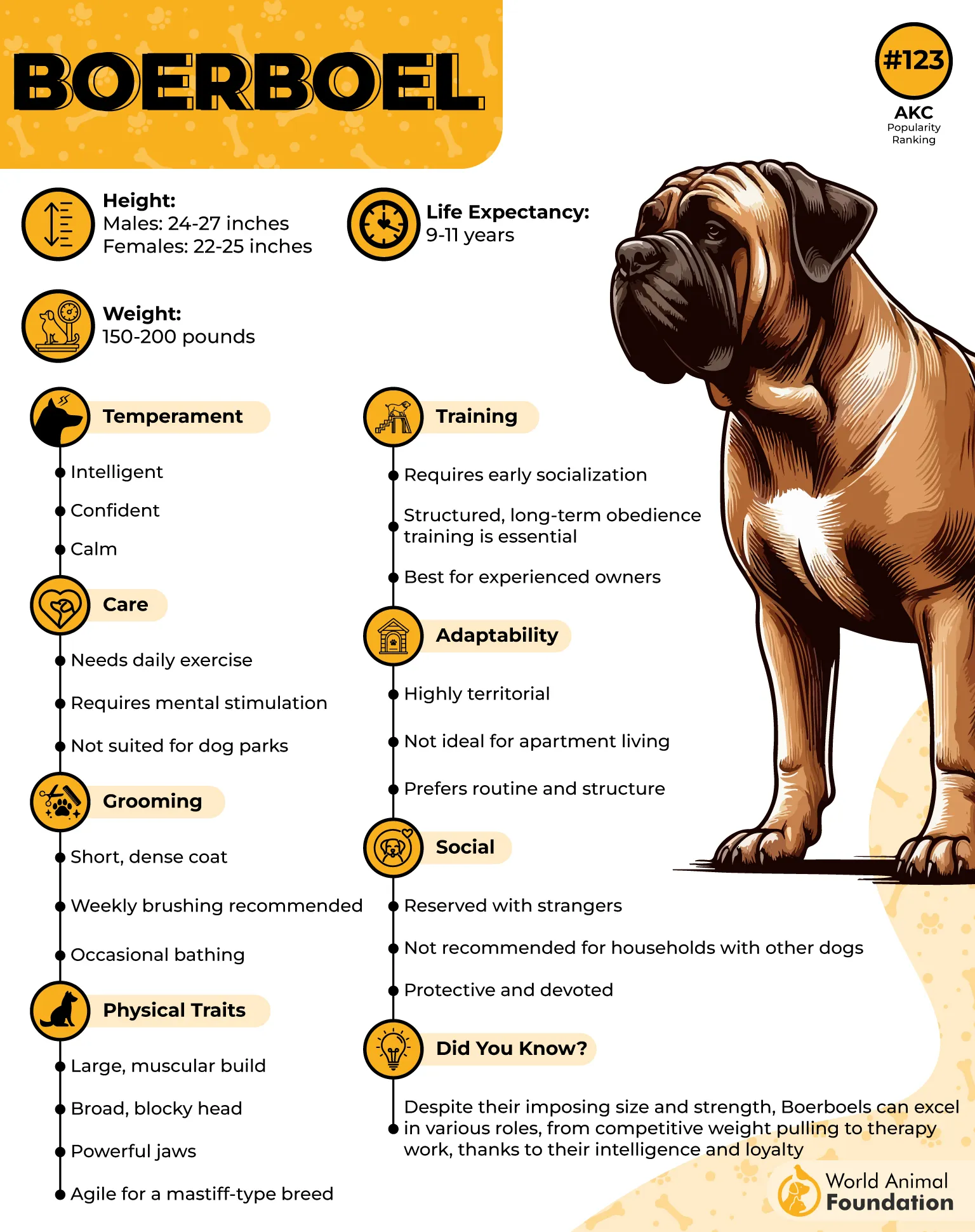
The adrenaline surges during the hunt provide a high pain threshold. It has a switch-off mode, where it instantly concludes its aggressive mode once the hunting task is accomplished.
Could You Handle a Boerboel?
- requires advanced handling and early training
- needs controlled exercise without excessive strain
- powerful guarding instincts demand careful management
- handles warmth but still needs heat protection
- primarily suited to structured farm protection
Conclusion
The best dog for wild boar hunting is not simply the biggest, toughest-looking dog in the field. Successful hunting depends on a mix of instinct, athletic ability, courage, control, and a willingness to work closely with its handler.
The seven breeds on this list bring those qualities in very different ways. Some are powerful catch-oriented dogs, while others rely more on scenting, tracking, speed, or baying. That difference matters.
A dog that looks impressive on paper may not suit every hunter, terrain, or hunting style. More importantly, wild boar can seriously injure dogs, so experience, training, appropriate protective equipment, and responsible handling should never be treated as optional.
