




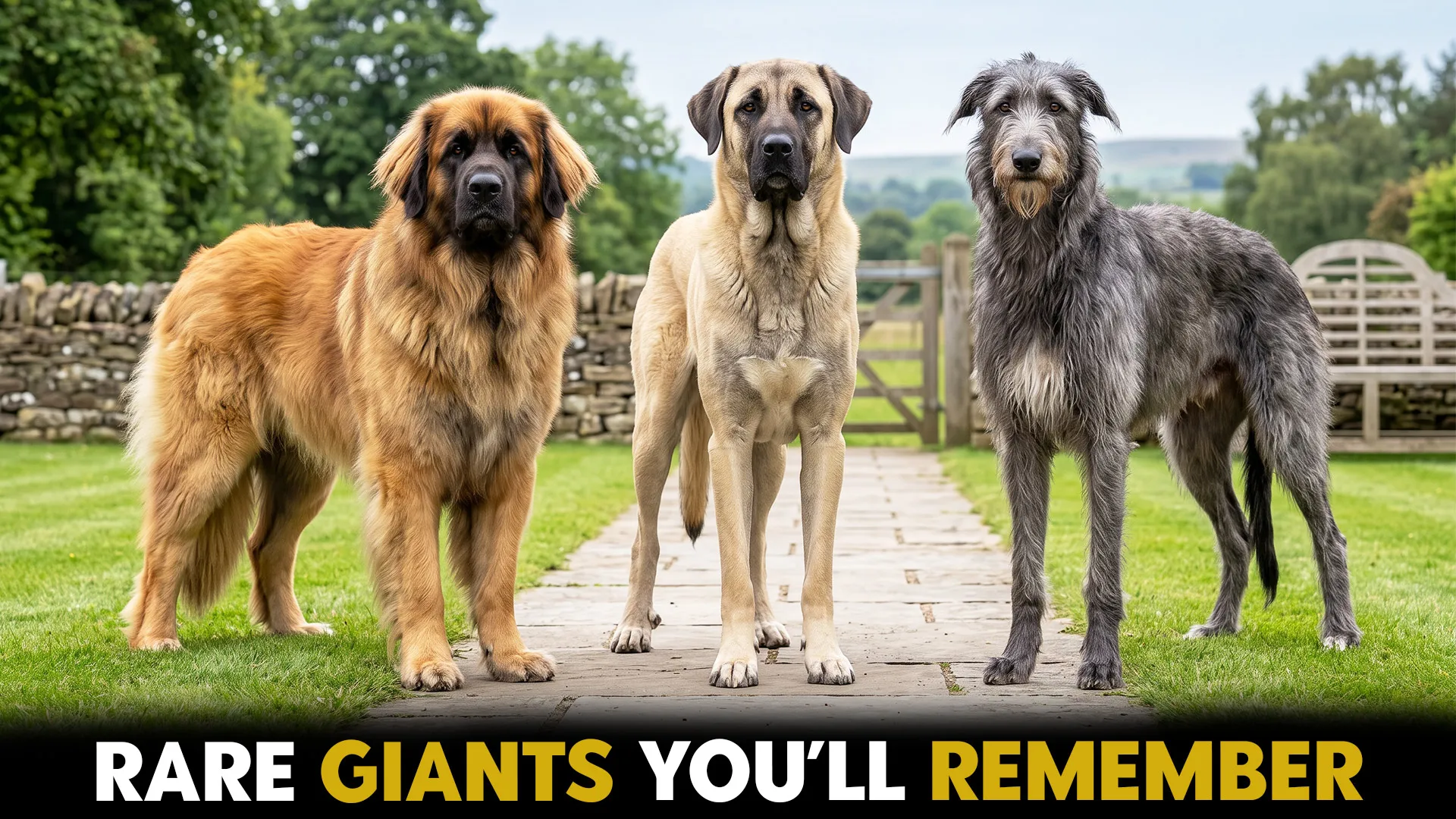
Giant dog breeds have a presence that is difficult to overlook. Their impressive height, substantial frames, and distinctive personalities can make them fascinating companions for people who appreciate dogs with an extraordinary physical presence.
However, living with a giant and rare breed involves much more than having a larger dog. Food requirements, grooming needs, daily exercise, early training, living space, and veterinary care can all become more demanding as a dog’s size increases. Joint health deserves particular attention, and owners should work with veterinarians to support healthy growth, weight, mobility, and overall condition.
The seven rare dog breeds below come from very different backgrounds. Some were developed as guardians, others as hunting companions, and several were shaped by challenging environments where strength and endurance were essential. Their appearances and personalities may differ considerably, but all share the remarkable qualities associated with giant dogs.
Exceptional Giant Dog Breeds: Rare and Wonderful
1. Dogue De Bordeaux
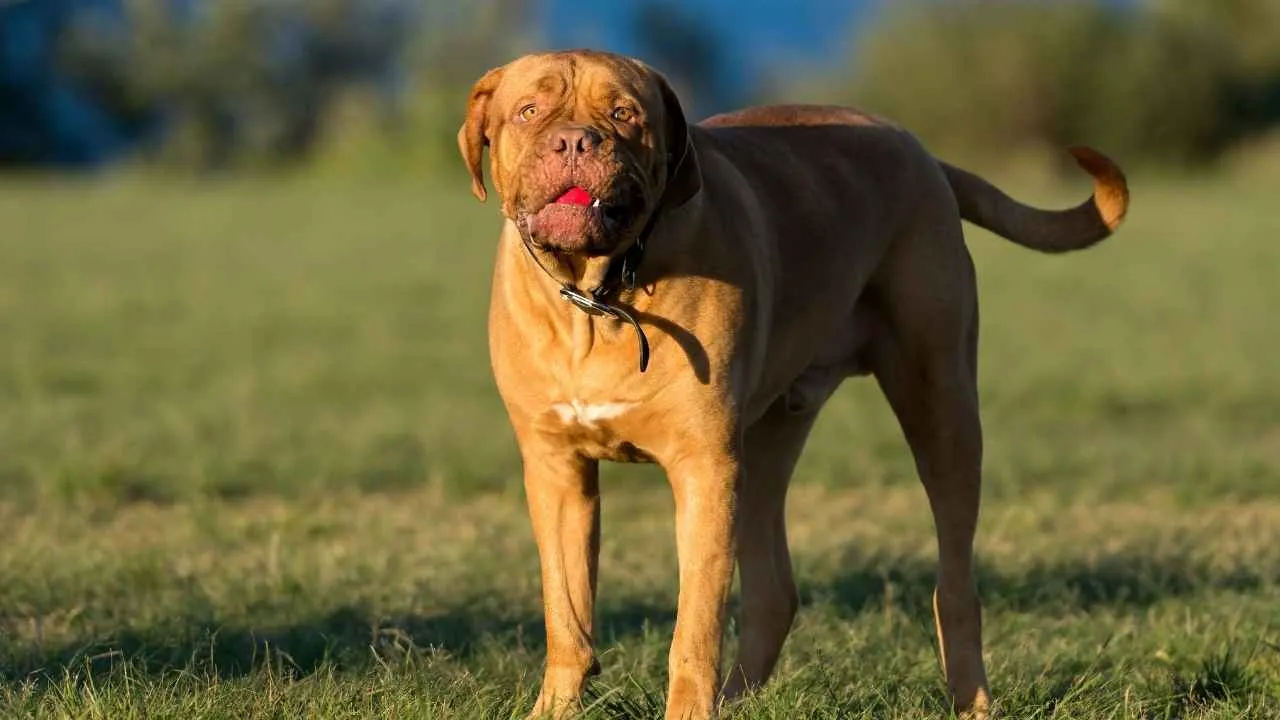
The Dogue de Bordeaux is an ancient French mastiff breed recognized for its massive head, muscular body, and powerful build. Dogs of this type were historically used for guarding, hunting, and other forms of demanding work.
Over time, the intelligent breed became increasingly associated with companionship while retaining the physical strength and protective character of its mastiff ancestry. Its serious expression contrasts with the affectionate bonds it can develop with its family.
Manage Their Skin, Size, and Overall Health
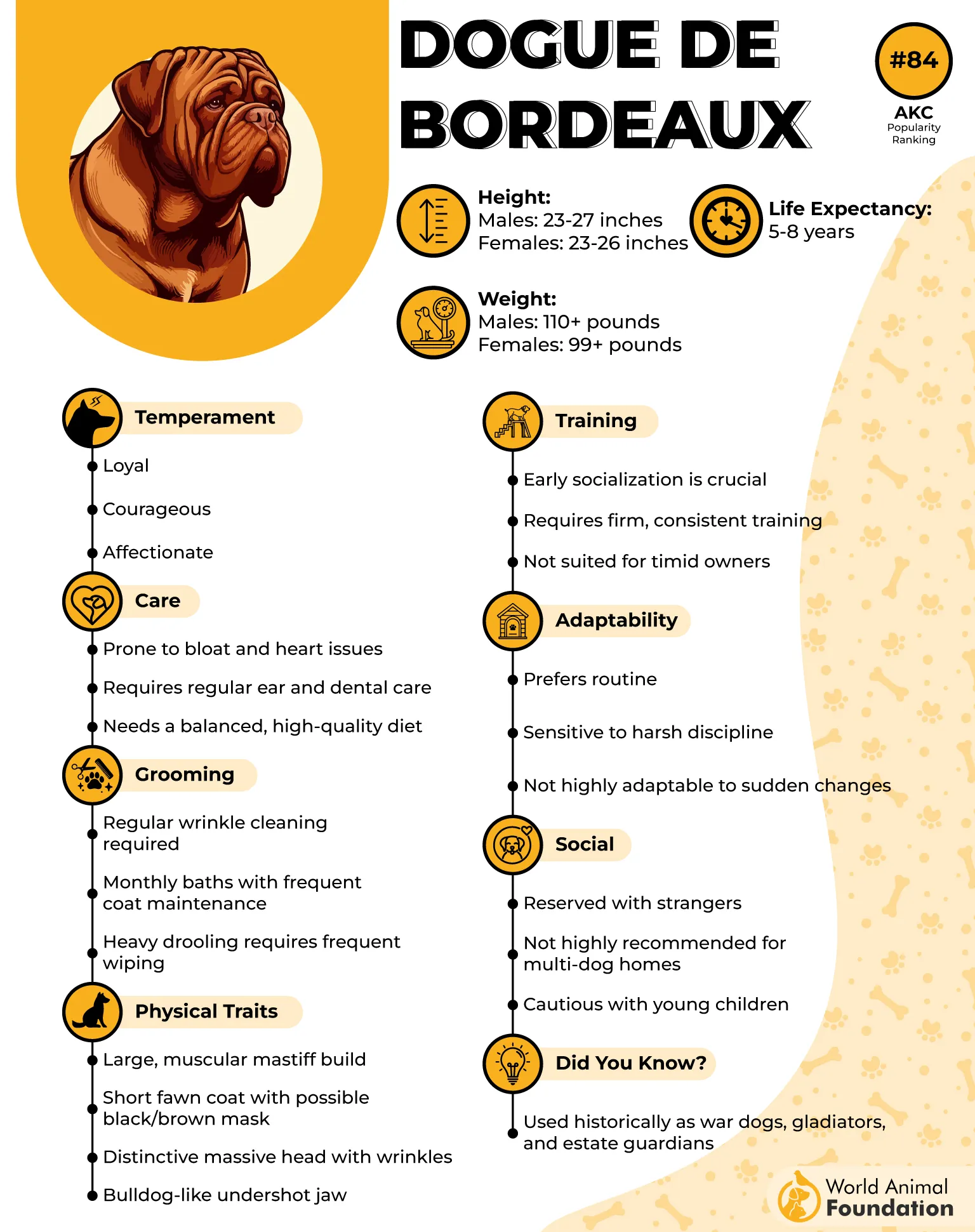
The Dogue de Bordeaux has a short coat that generally requires less brushing than long-haired giant breeds, although regular grooming can help remove loose hair and keep the skin clean. Owners should pay particular attention to facial folds and areas where moisture can accumulate.
As with many giant dogs, maintaining an appropriate body weight is important for reducing unnecessary strain on the joints. Regular veterinary examinations can help monitor mobility, heart health, skin concerns, and other conditions that may affect the breed.
A Powerful Dog With a Soft Family Side
Despite their formidable appearance, Dogue de Bordeaux dogs can be affectionate and deeply attached to their people. These loyal dogs often enjoy being near family members rather than spending all their time independently outdoors.
Their strength means manners should be taught early. Reward-based obedience can help a young dog learn appropriate greetings, leash behavior, and household boundaries before its considerable adult size makes these lessons harder to manage.
2. Tibetan Mastiff
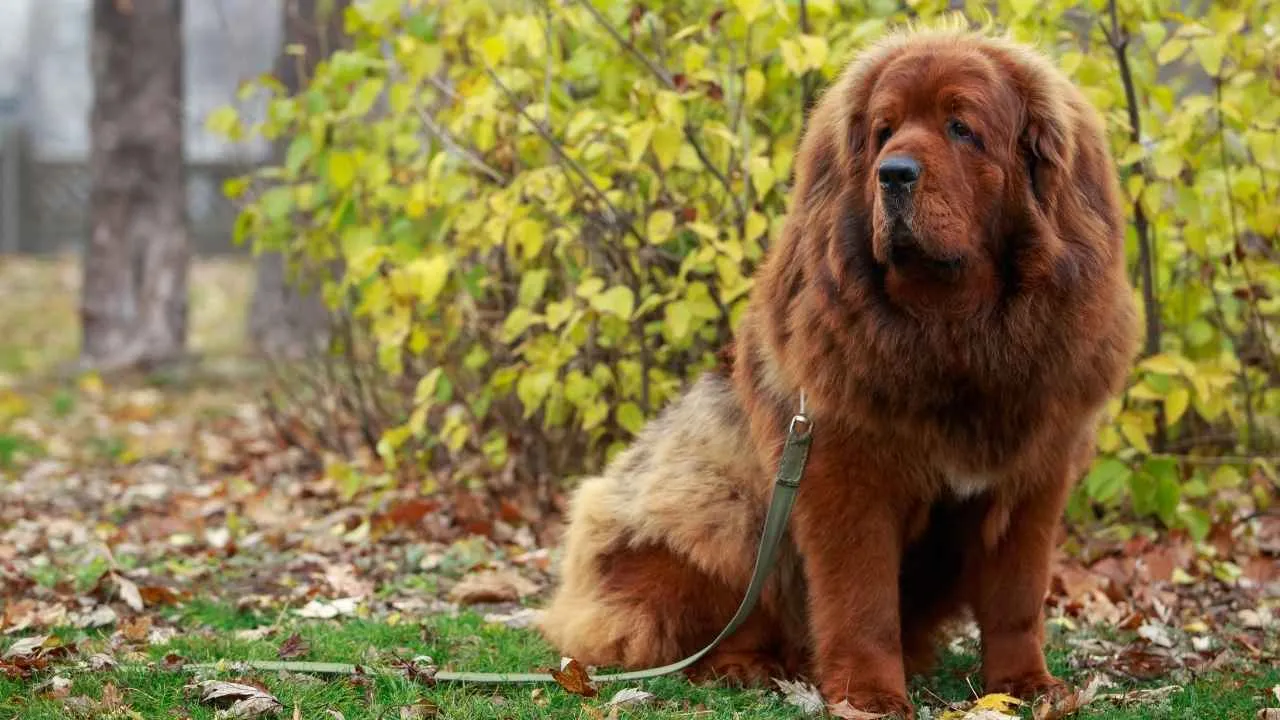
The Tibetan Mastiff has a long history in the Himalayan region, where powerful guard dogs protected livestock, homes, monasteries, and remote properties. Their heavy coats and robust bodies helped them withstand cold and demanding conditions.
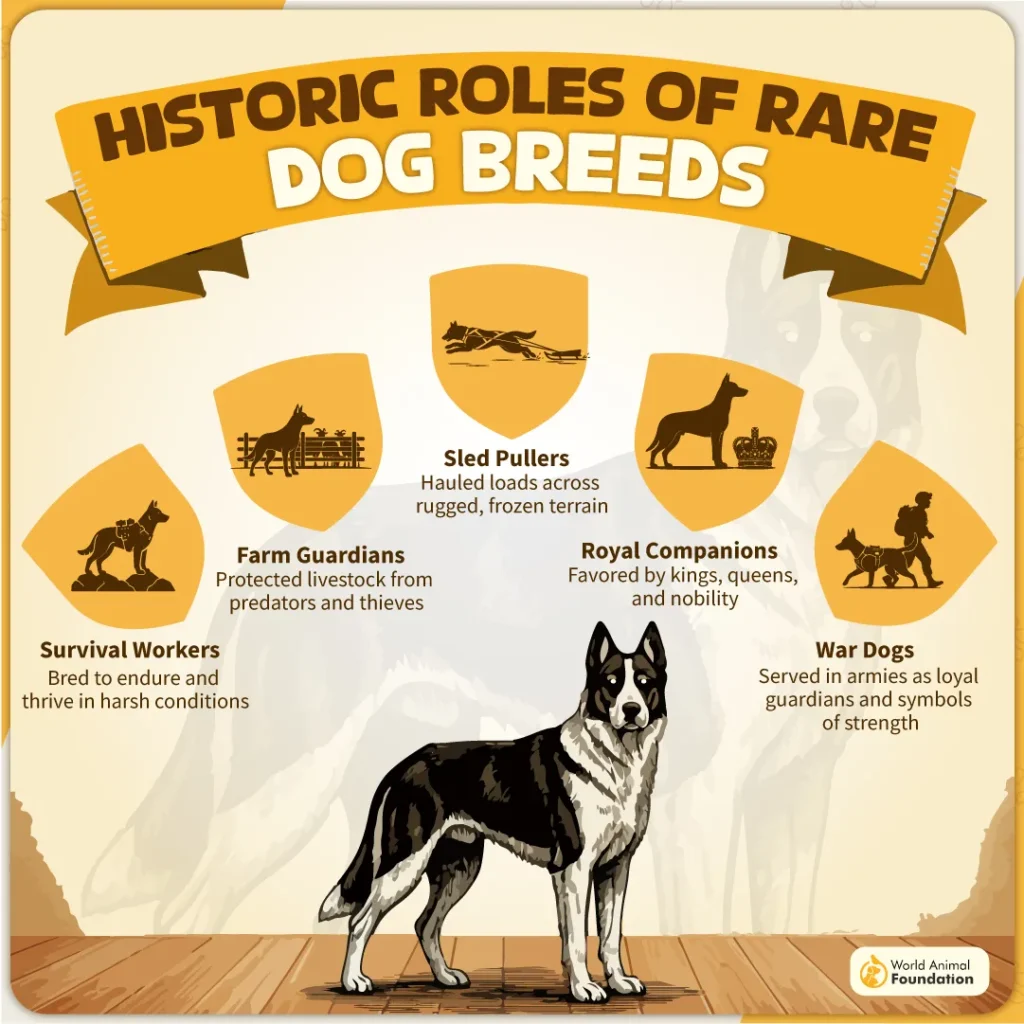
Their independent nature developed alongside their guardian responsibilities. Rather than relying entirely on human instructions, these dogs were expected to notice potential threats and respond according to their own judgment.
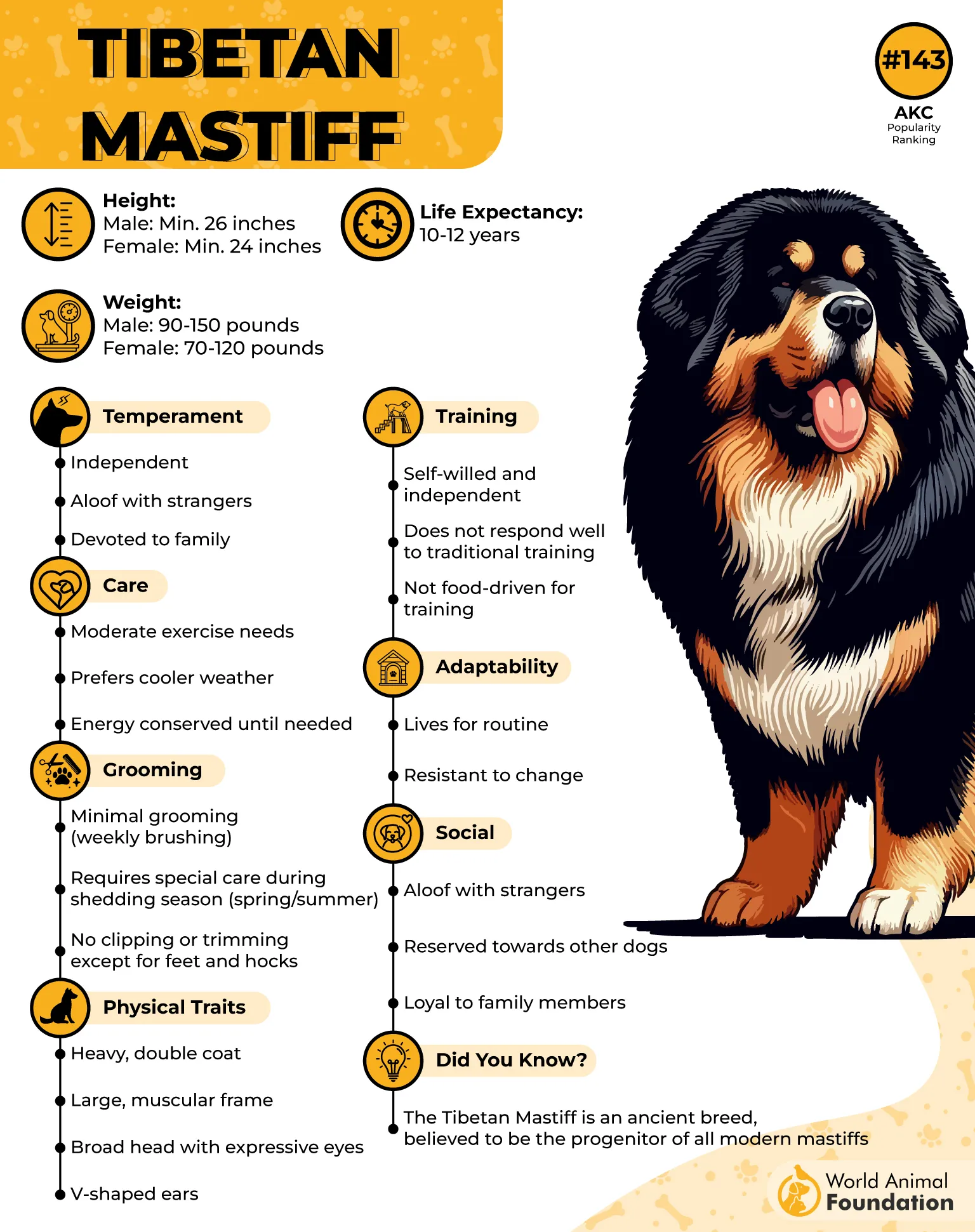
Care for a Heavy Coat and Support Long-Term Wellness
Tibetan Mastiffs have abundant double coats that require regular brushing, particularly during seasonal shedding periods. Grooming helps control loose hair and allows owners to inspect the skin beneath their dense coat.
Their large frames make responsible weight management and appropriate exercise especially important. Routine veterinary care can help monitor orthopedic health and identify other concerns early, while puppies should receive carefully managed activity during growth.
A Watchful Guardian With an Independent Mind
Tibetan Mastiffs tend to take their surroundings seriously and may be reserved with unfamiliar people. Their territorial instincts can make them effective guardians, but those same qualities require consistent socialization from an early age.
They often form strong bonds with their families without becoming dependent on constant interaction. An experienced owner who can provide secure boundaries and consistent training is generally better equipped to manage their independent temperament.
3. Neapolitan Mastiff
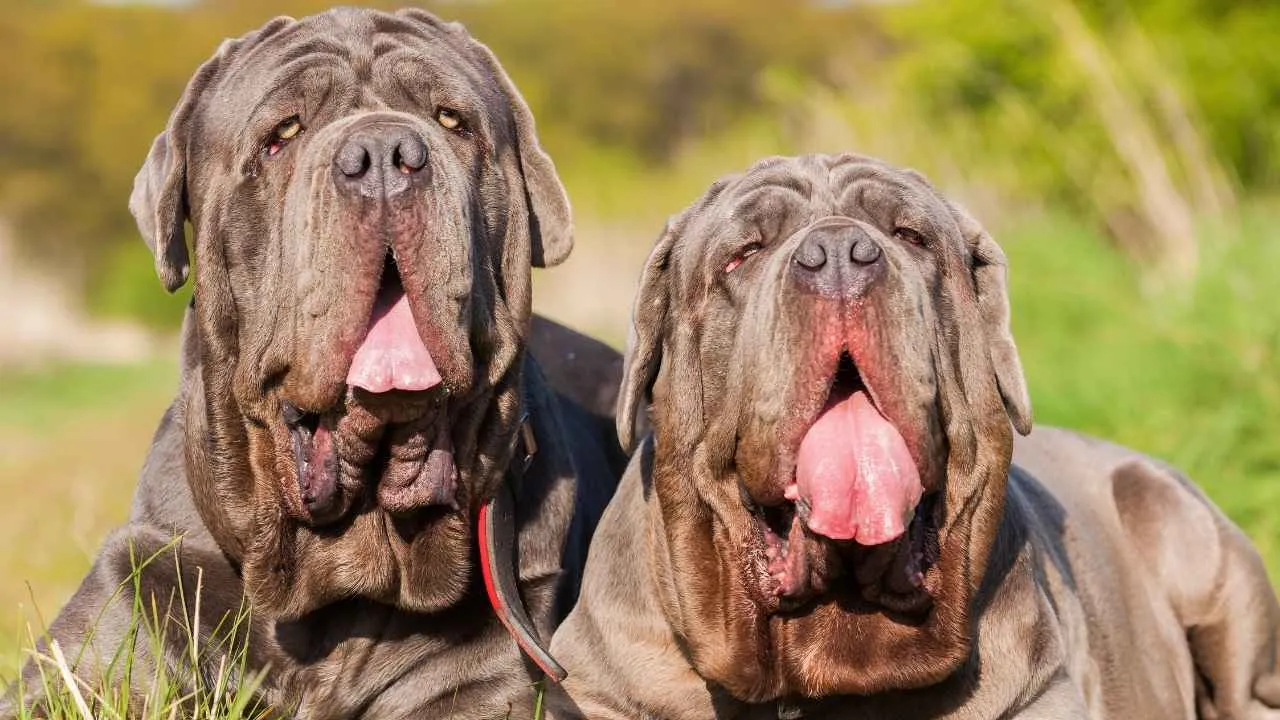
The Neapolitan Mastiff originated in Italy and belongs to the ancient mastiff tradition. It was developed as a substantial guardian, with its imposing frame and loose skin contributing to the distinctive appearance for which the breed is known.
The breed’s dramatic facial features, heavy body, and deliberate movement make it immediately recognizable. Despite its intimidating appearance, a well-socialized Neapolitan Mastiff can be strongly devoted to its household, as noted by Purina.
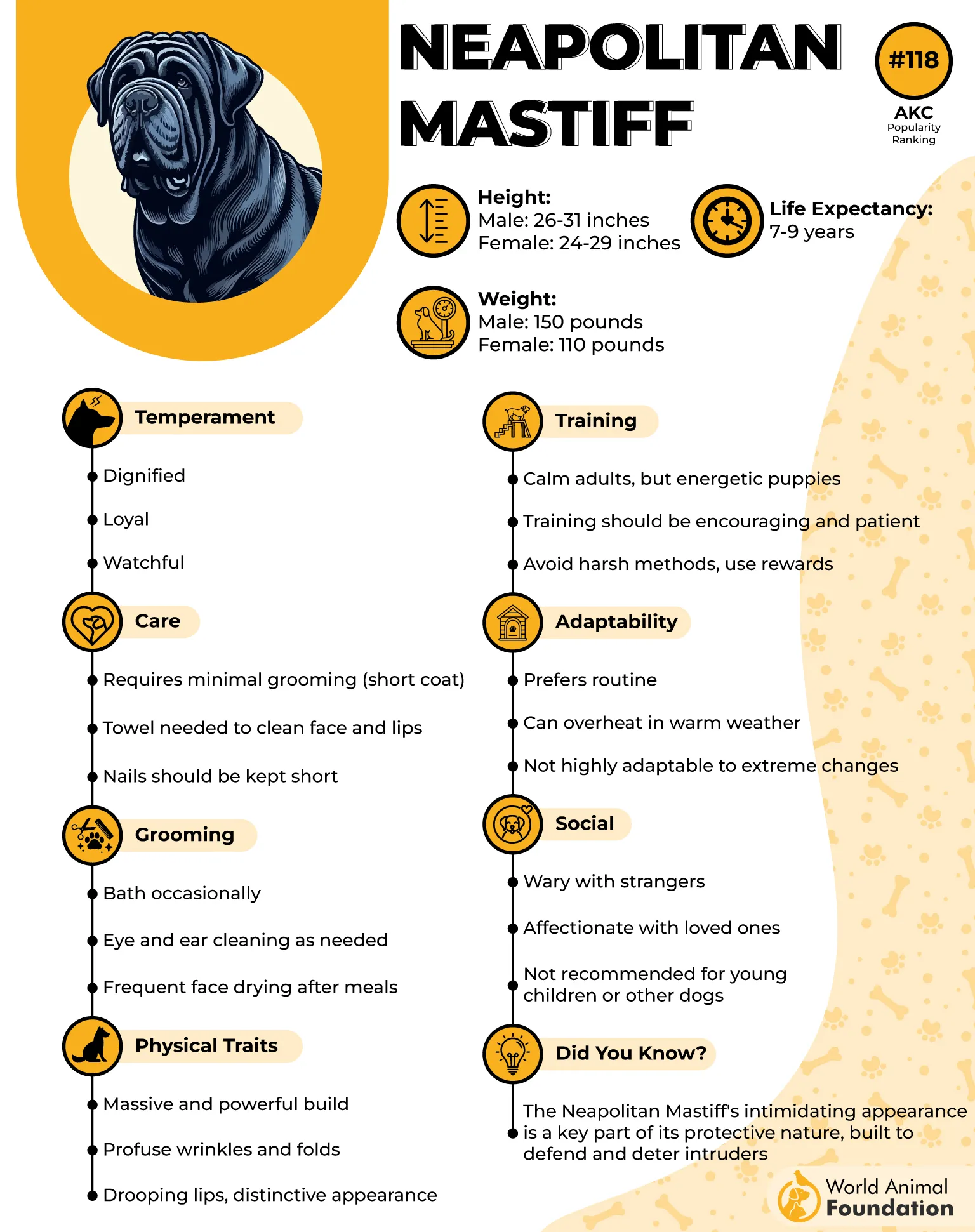
Keep Their Folds Clean and Their Bodies Carefully Monitored
The breed’s short coat is relatively straightforward to maintain, but its numerous facial and body folds need regular attention. Owners should keep skin folds clean and dry and watch for irritation or signs of infection.
Because Neapolitan Mastiffs carry considerable weight, maintaining healthy body condition is especially important. Veterinary monitoring can help address orthopedic issues, skin problems, and other health concerns, while puppies need sensible exercise rather than excessive impact.
A Devoted Homebody With a Serious Expression
Neapolitan Mastiffs are often deeply attached to their families and may prefer remaining close to the people they trust. They are not typically dogs that need endless physical activity to feel fulfilled.
Their protective instincts can make them cautious around strangers. Early socialization and obedience training are essential for helping such a powerful dog understand how to behave appropriately when visitors arrive or unfamiliar situations occur.
4. Leonberger
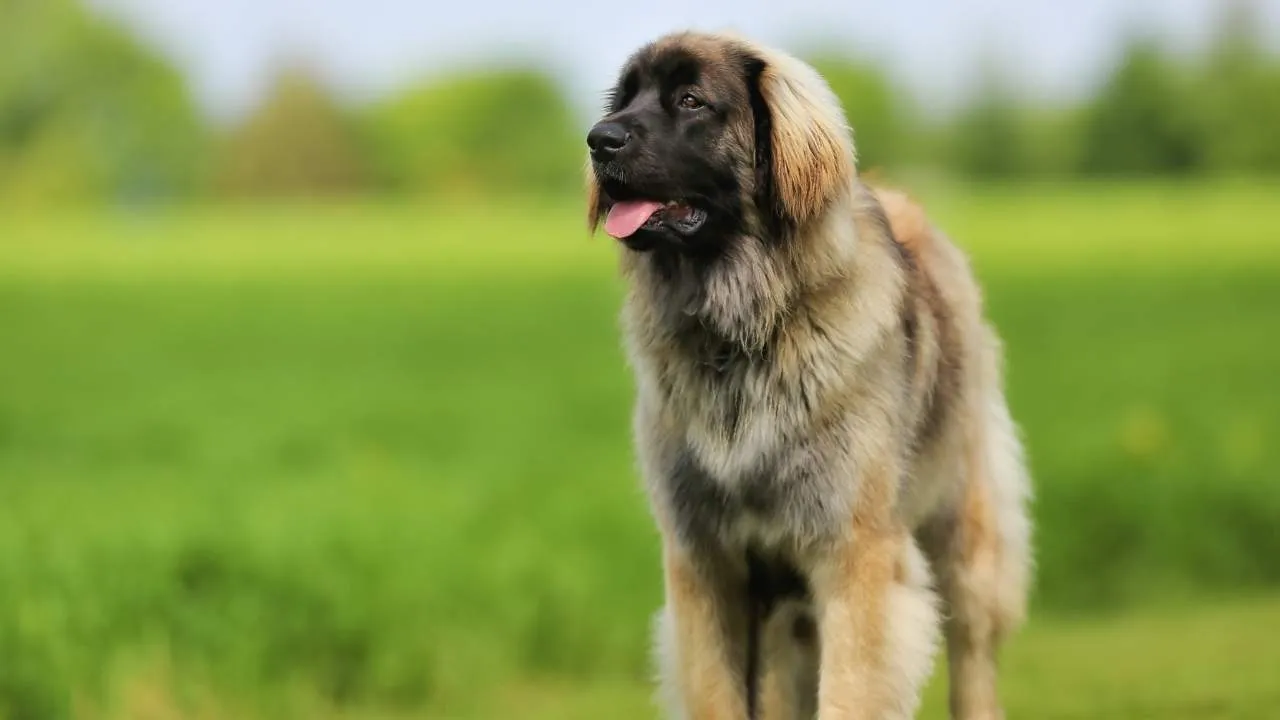
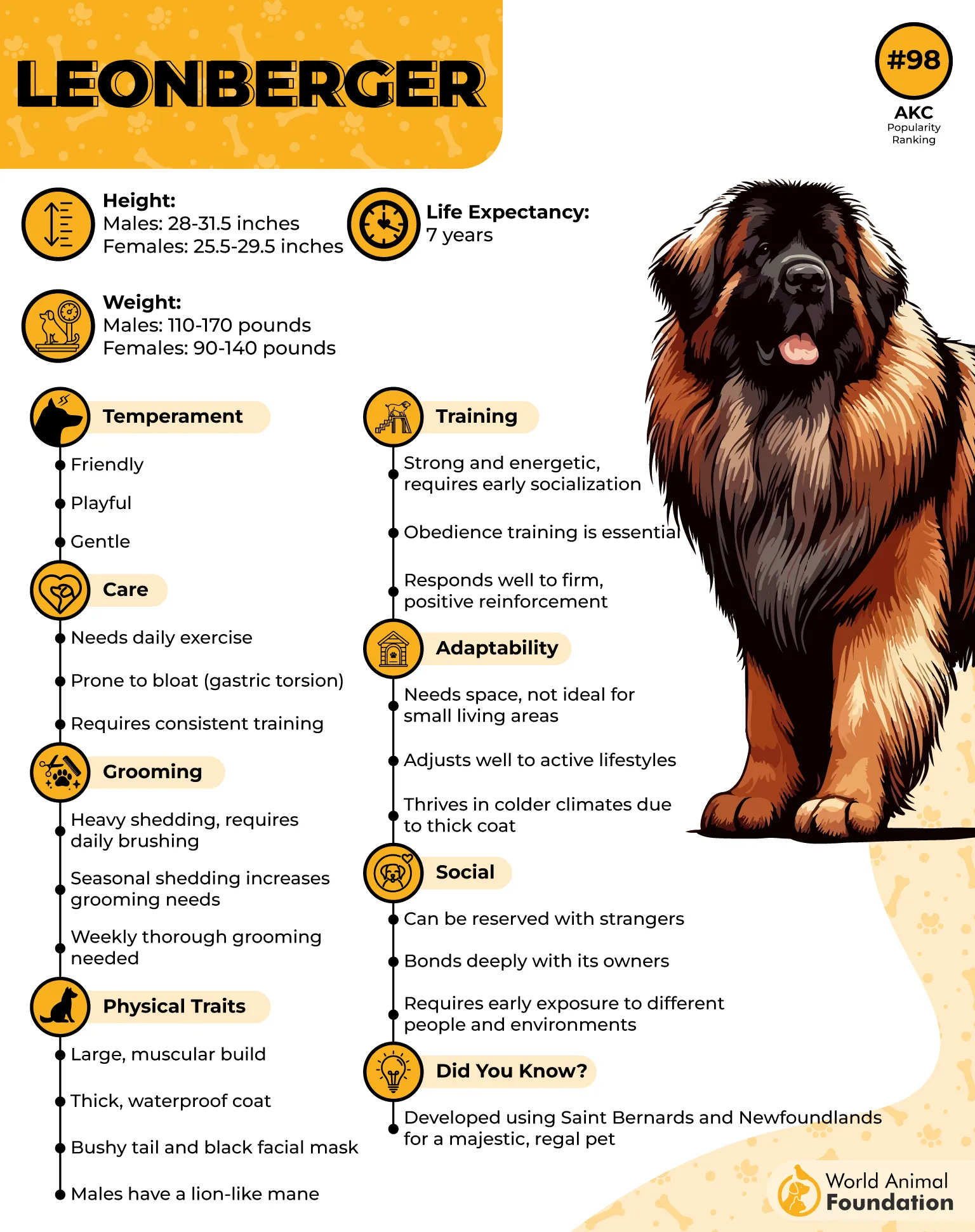
The Leonberger was developed in Germany during the nineteenth century and was named after the city of Leonberg. Breeders sought to create a large, impressive dog with a lion-like appearance, while incorporating qualities suitable for companionship and work.
The resulting breed combines substantial size with a long, flowing coat and a generally sociable personality. Leonbergers have historically participated in tasks involving pulling, water work, and property assistance, as per Hill’s Pet.
Maintain Their Long Coat and Protect Their Joints
Leonbergers have thick double coats that require regular brushing to prevent mats and remove dead hair. Extra grooming attention may be necessary around areas where the coat becomes particularly thick, and seasonal shedding can significantly increase the amount of loose fur.
Their size makes healthy growth and weight control important throughout life. Owners should discuss nutrition and exercise with a veterinarian, while regular checkups can help monitor joints, mobility, and other health concerns associated with giant breeds.
A Majestic Companion With a Cooperative Nature
Leonbergers are often known for being affectionate and family-oriented. They can enjoy participating in household activities and may form close relationships with children and adults when properly socialized.
Their intelligence and willingness to cooperate can make training rewarding. Because they grow into extremely large dogs, however, obedience should begin early, with attention given to leash manners, jumping, recall, and calm greetings.
5. Anatolian Shepherd
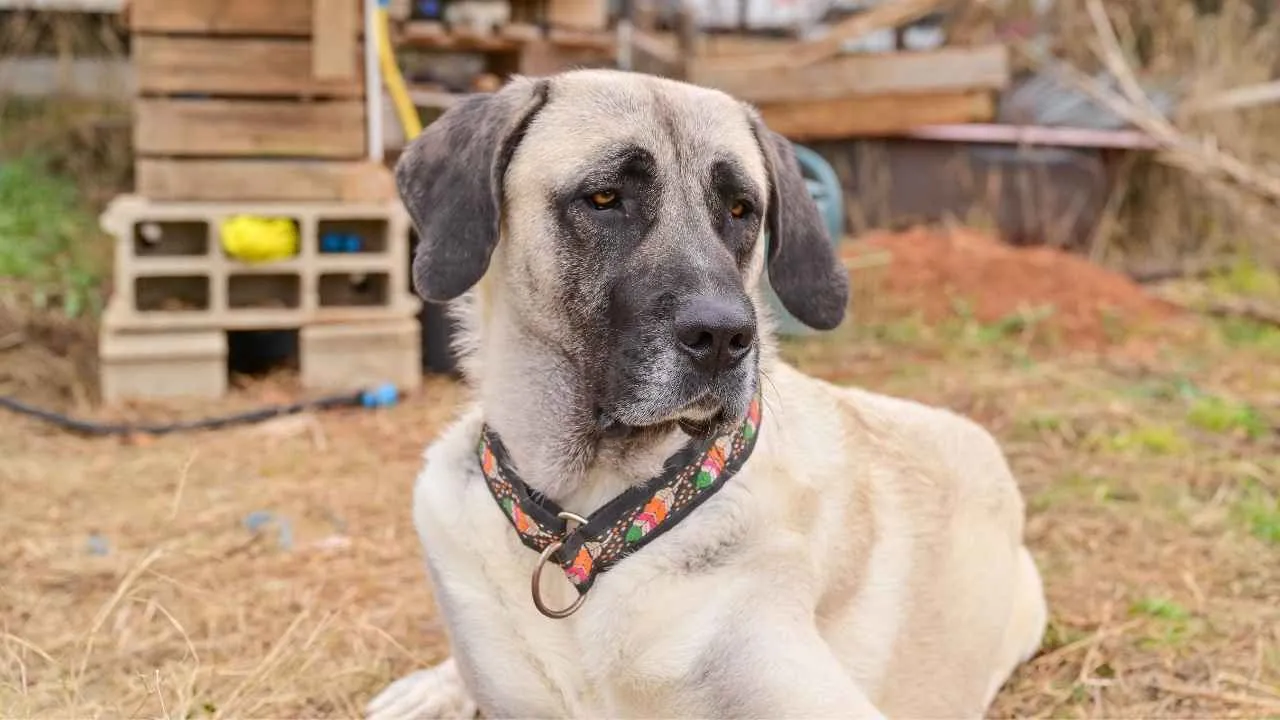
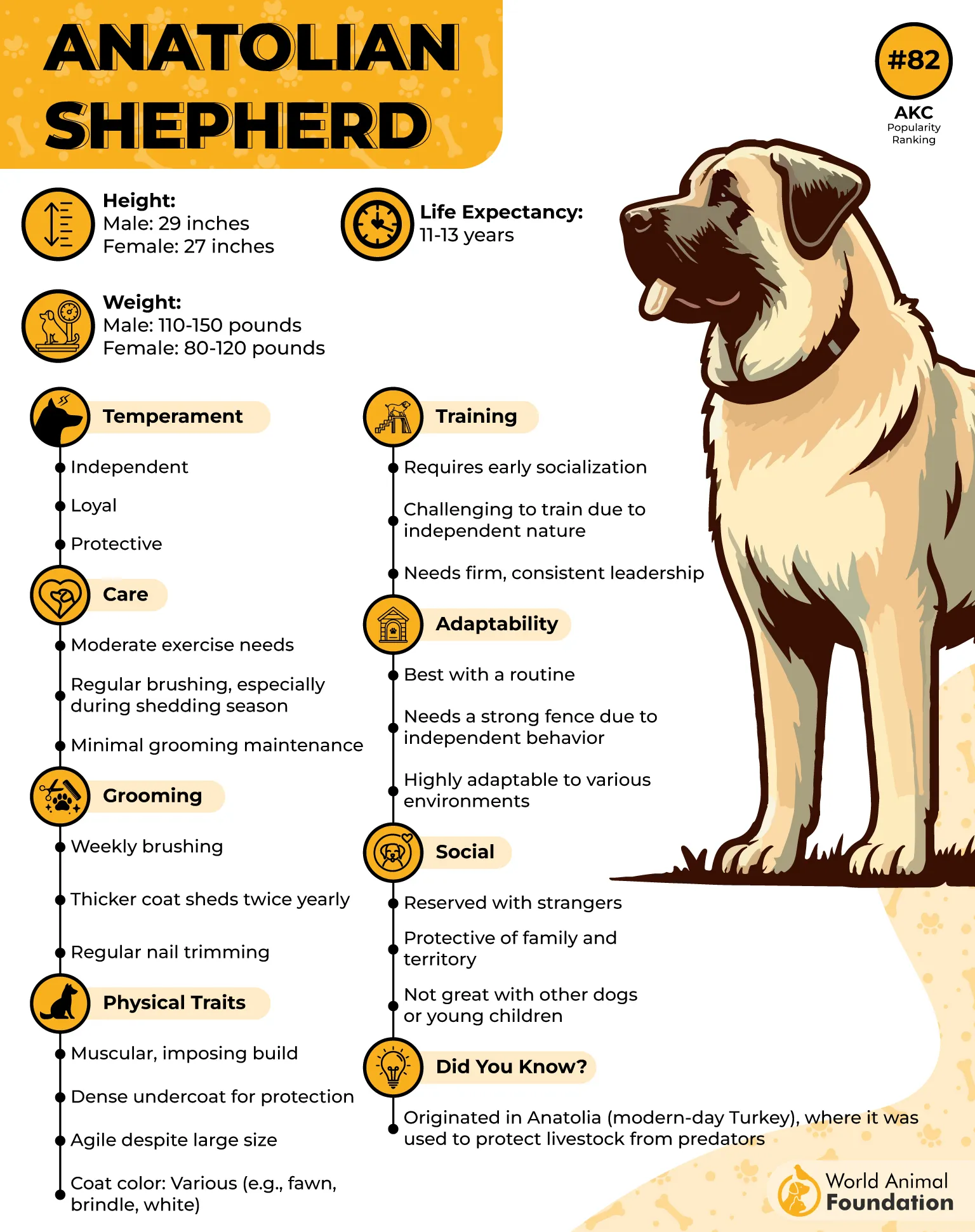
The Anatolian Shepherd is associated with Turkey and was developed to protect livestock across large, challenging landscapes, as noted by the AKC. Its working role required endurance, courage, independence, and the ability to remain vigilant without constant direction from people.
These qualities continue to influence the modern breed. Anatolian Shepherds can be loyal to their families while maintaining a serious and cautious attitude toward unfamiliar people and animals.
Use Practical Grooming and Preventive Health Care
The Anatolian Shepherd generally has a coat that is manageable with routine brushing, although shedding can become considerably heavier during seasonal coat changes. Regular grooming provides an opportunity to check the skin, paws, ears, and overall condition.
Their athletic build requires appropriate exercise and a nutritionally balanced diet rather than excessive calorie intake. Veterinary examinations, healthy weight management, and sensible activity can help support their mobility and long-term physical condition.
Give Their Independent Nature a Meaningful Outlet
Anatolian Shepherds are not typically content to behave like highly dependent companion dogs. Their instincts encourage them to monitor their surroundings and make decisions, reflecting their history as livestock guardians.
A secure property, structured routine, and early socialization can help channel those instincts appropriately. Training should focus on reliable responses while respecting the breed’s naturally independent temperament.
6. Scottish Deerhound
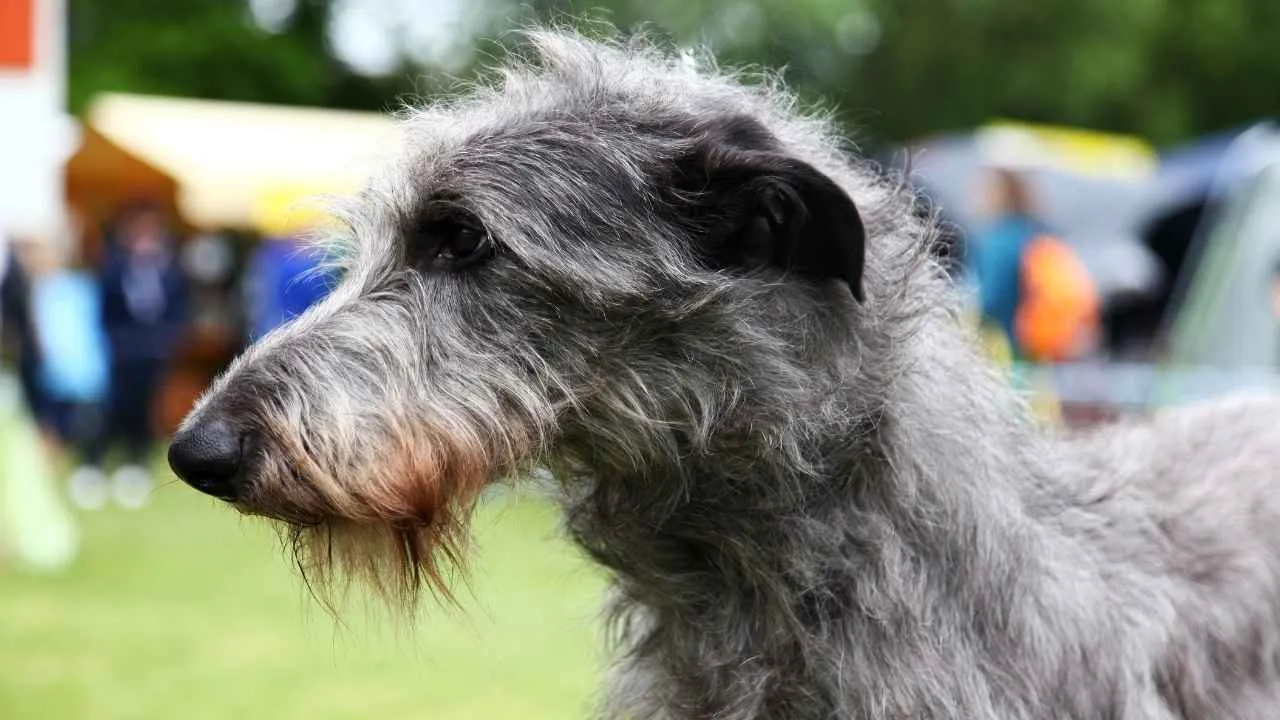
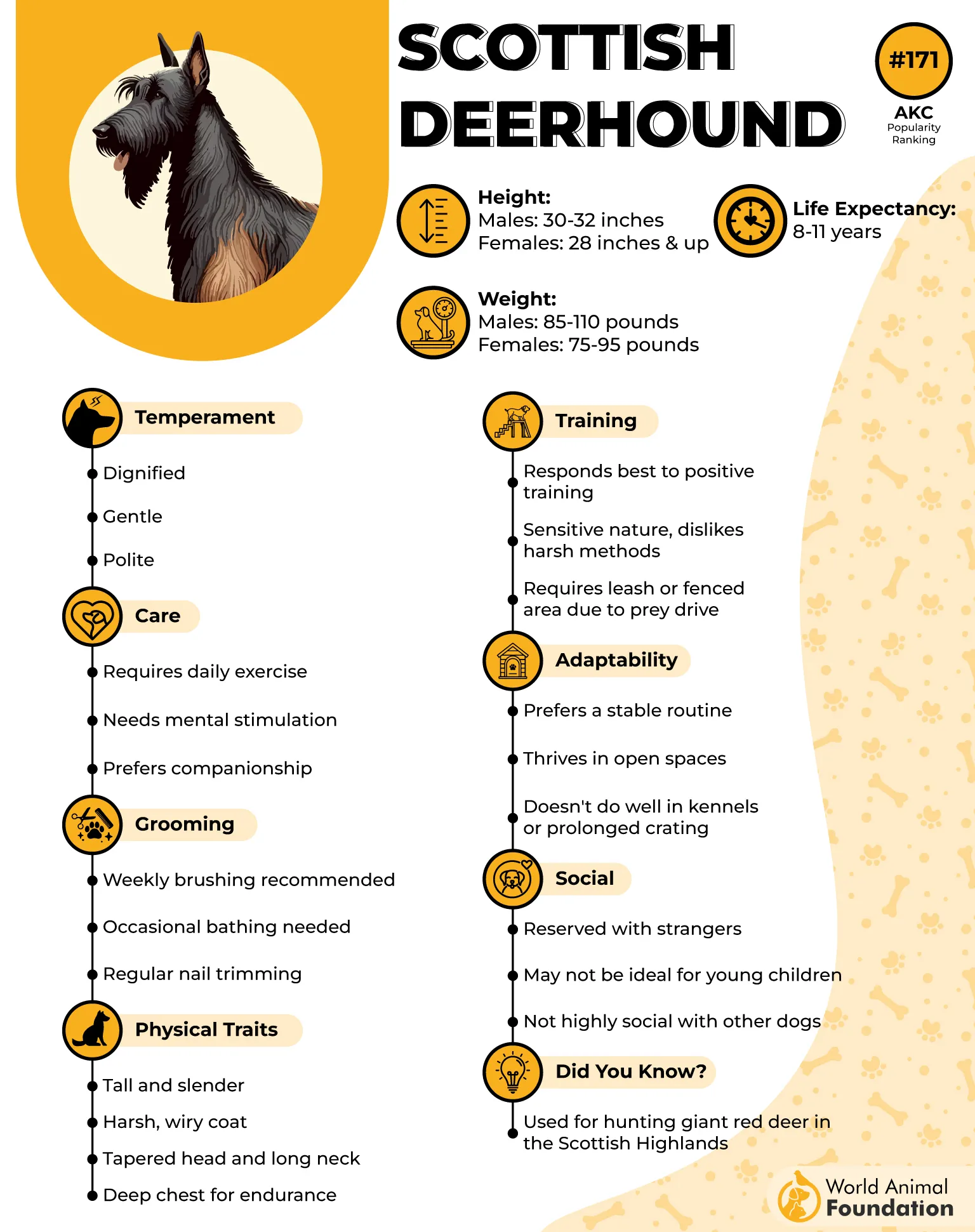
The Scottish Deerhound is a graceful, tall breed with a long history in Scotland, where dogs of this type were used to pursue and bring down red deer. Its extraordinary height, wiry coat, and athletic construction reflect its origins as a coursing hound.
Despite its impressive stature, the Scottish Deerhound can have a gentle and dignified personality. Its working heritage remains visible in its athletic abilities, but many individuals are content to relax with their families after receiving suitable exercise.
Brush Their Wiry Coat and Protect Their Athletic Build
Scottish Deerhounds have a rough, wiry coat that generally benefits from regular brushing and occasional grooming to keep it tidy. Their long legs and lean bodies should also be checked routinely for cuts, injuries, or other problems after active outings.
Because they are large sighthounds, appropriate nutrition and controlled exercise are important during development. Veterinary care should include attention to heart health, mobility, and other concerns that can affect giant breeds.
Graceful Speed Meets a Gentle Personality
Scottish Deerhounds can be surprisingly calm indoors despite their ability to run at impressive speeds. This tall dog breed often enjoys relaxing close to their families once their exercise needs have been met.
Their strong chase instinct means owners should take care around roads and unsecured areas. Safe running opportunities and reliable management are important because an intriguing moving target can quickly activate their natural pursuit behavior.
7. Caucasian Shepherd Dog
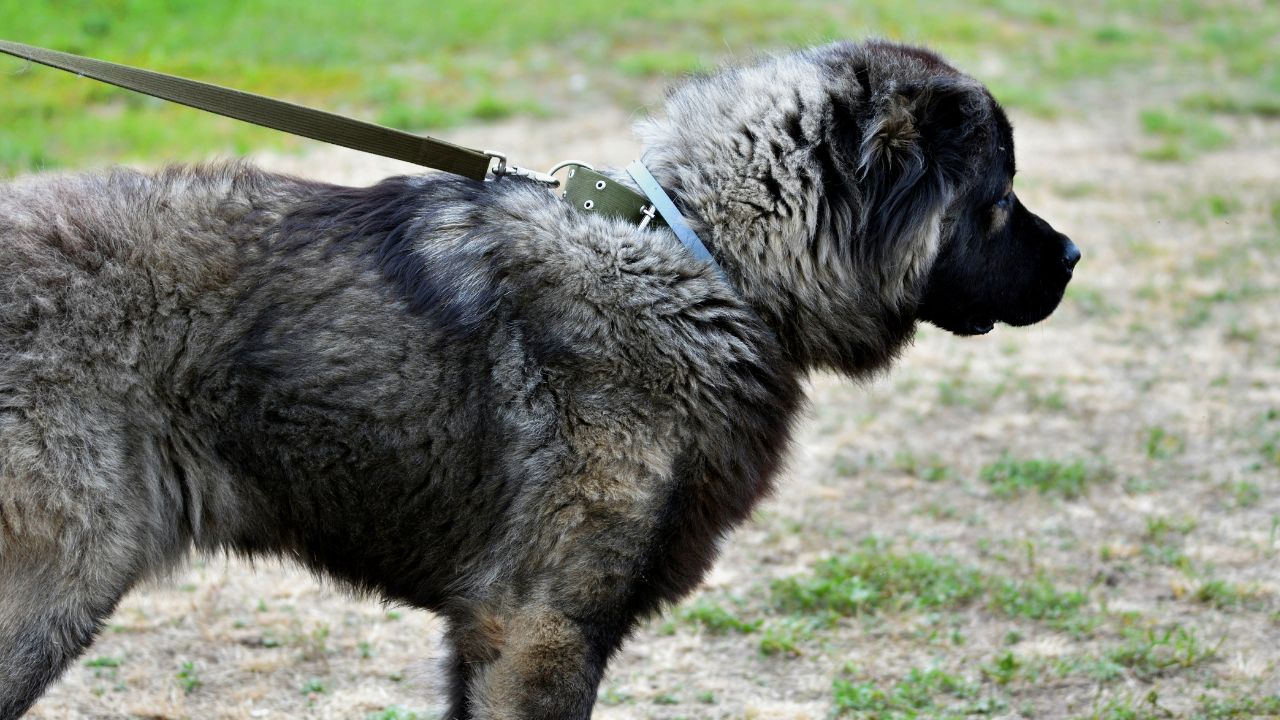
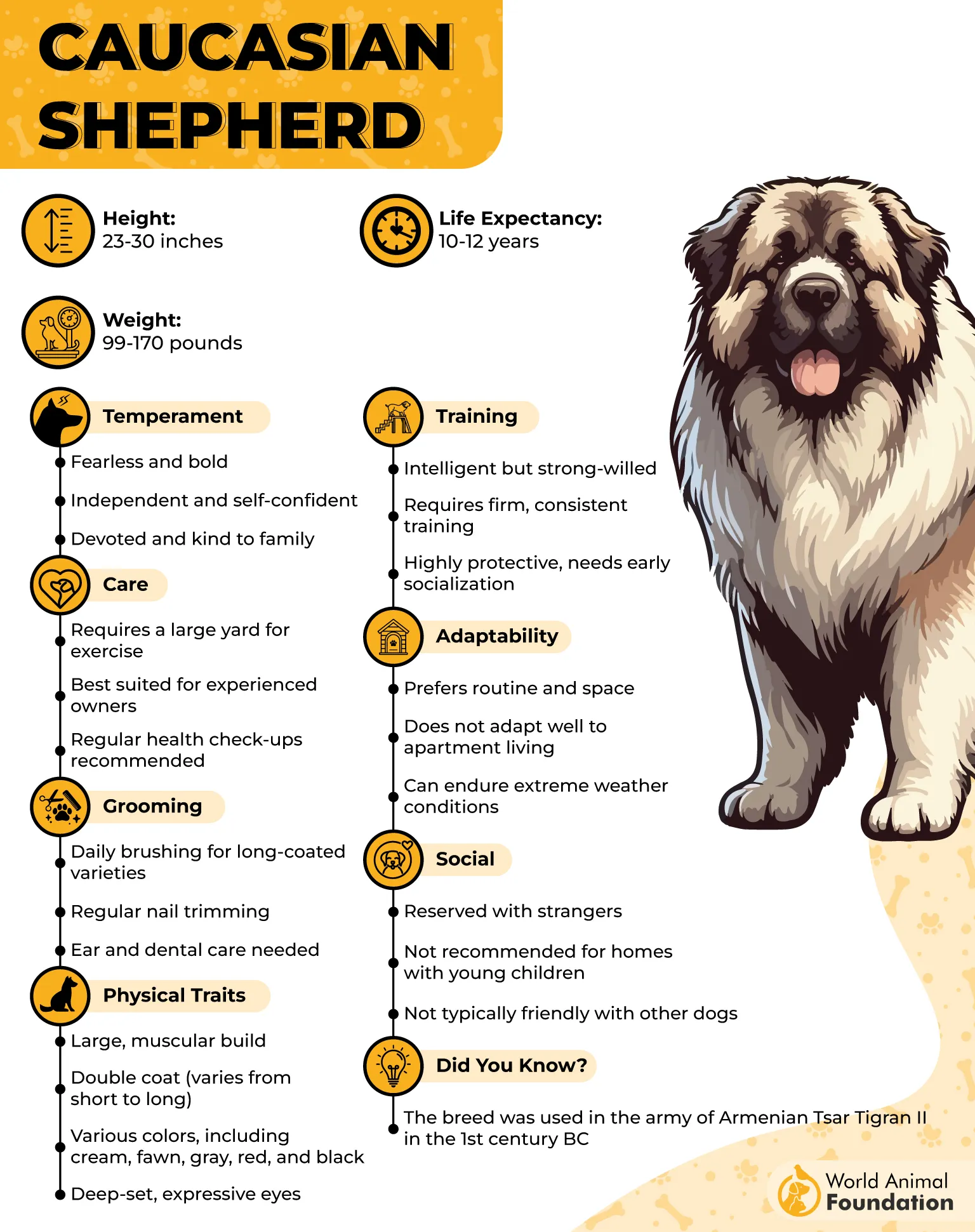
The Caucasian Shepherd Dog developed across the Caucasus region, where large guardian dogs were used to protect livestock and property. Their work demanded physical power, courage, resilience, and strong territorial instincts.
This large dog breed is known for its substantial build and serious demeanor. Generations spent guarding against predators and unfamiliar intruders helped produce a dog that is naturally confident and protective.
Keep Their Dense Coat in Good Condition and Watch Their Weight
Caucasian Shepherd Dogs can have dense coats that benefit from consistent brushing, particularly during periods of heavy shedding. Regular grooming also allows owners to identify skin abnormalities, parasites, or areas of irritation beneath the thick fur.
Their substantial size places considerable importance on maintaining an appropriate body condition. Balanced nutrition, sensible exercise, routine veterinary examinations, and careful monitoring during growth can all contribute to healthier development and mobility.
A Formidable Guardian With Strong Family Loyalty
Caucasian Shepherd Dogs can become intensely devoted to the people and property they regard as their own. Their natural suspicion toward unfamiliar individuals can make them formidable guardians, but it also means that careless introductions can create unnecessary difficulties.
Early socialization and experienced handling are particularly important. Owners need to establish clear boundaries while helping this large dog learn how to distinguish normal household activity from situations that genuinely require a protective response.
Conclusion
Dogue de Bordeaux, Tibetan Mastiff, Neapolitan Mastiff, Leonberger, Anatolian Shepherd, Scottish Deerhound, and Caucasian Shepherd Dog each demonstrates a different side of giant-breed ownership. Some are heavily built mastiffs, some are independent livestock guardians, and others combine enormous stature with athletic or companion-oriented qualities.
Their impressive size also comes with significant responsibilities. Grooming, nutrition, exercise, training, preventive veterinary care, and healthy weight management should all be considered before bringing a giant dog home. Their living environment matters too, since a dog weighing well over 100 pounds needs suitable space, equipment, and handling.
For the right owner, these extraordinary loyal breeds can become devoted and memorable companions. Their size may be what first captures attention, but their individual temperament, working heritage, and relationship with their families are what ultimately make them remarkable.
