




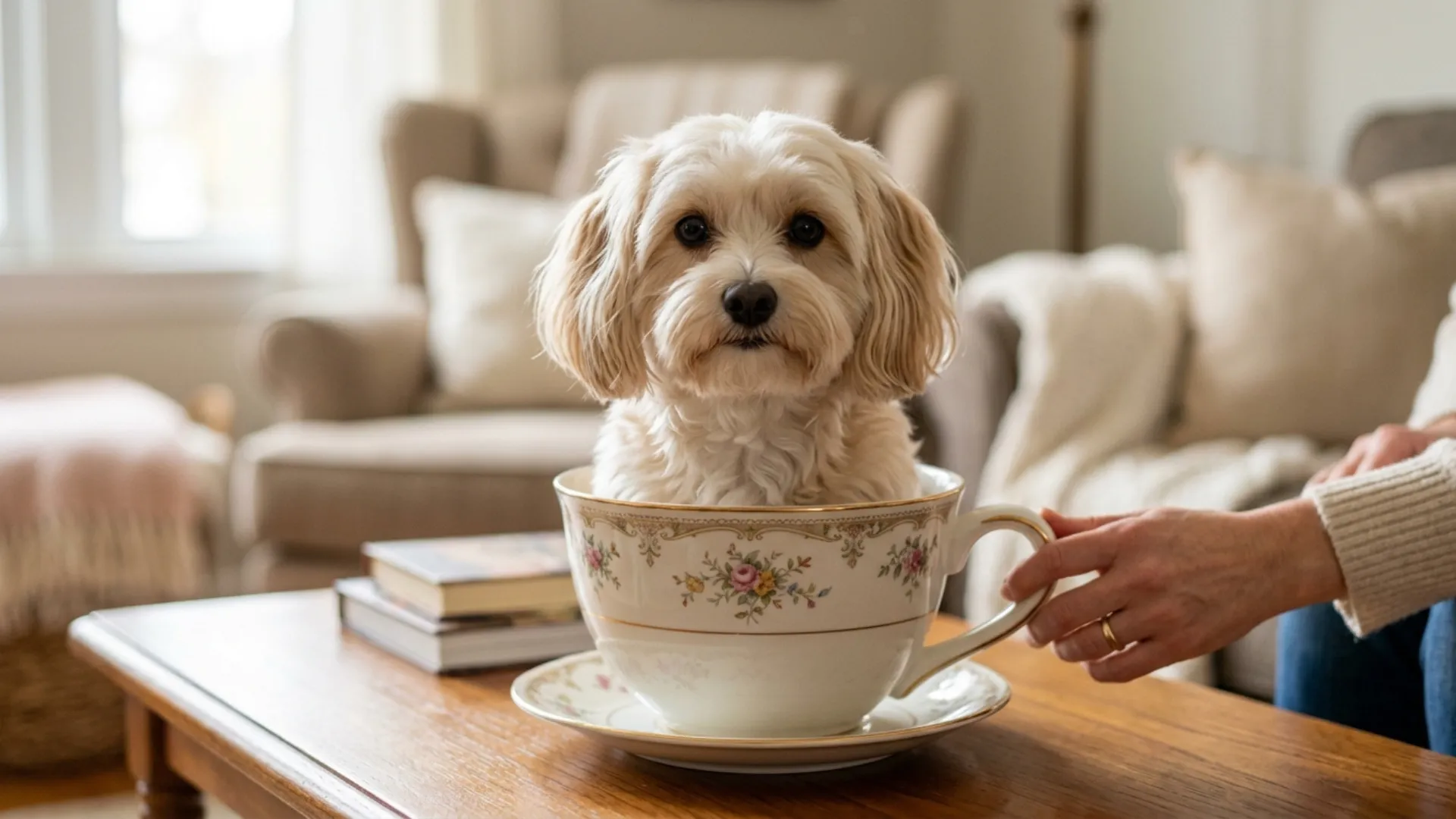
Tiny dogs have mastered one of life’s greatest cheats: occupying approximately six inches of sofa while somehow taking up 90% of your emotional world. They can curl into a lap, follow you from room to room, travel more easily than giant breeds, and still deliver enough personality to make the household feel like a full reality-TV cast.
Before getting into the cuteness, though, there is one important reality check about the word “teacup.” Major kennel organizations do not recognize “teacup” as a separate breed or official size category, and the Royal Kennel Club specifically warns that breeding dogs purely to be exceptionally small can increase health and welfare concerns.
In this guide, therefore, “teacup” is being used in the popular sense of naturally tiny companion breeds. Let’s talk about the small dog breeds that really turn out to be the ideal companion animals for pet lovers.
Gentle Teacup Dog Breeds for Loving Homes
1. Biewer Terrier
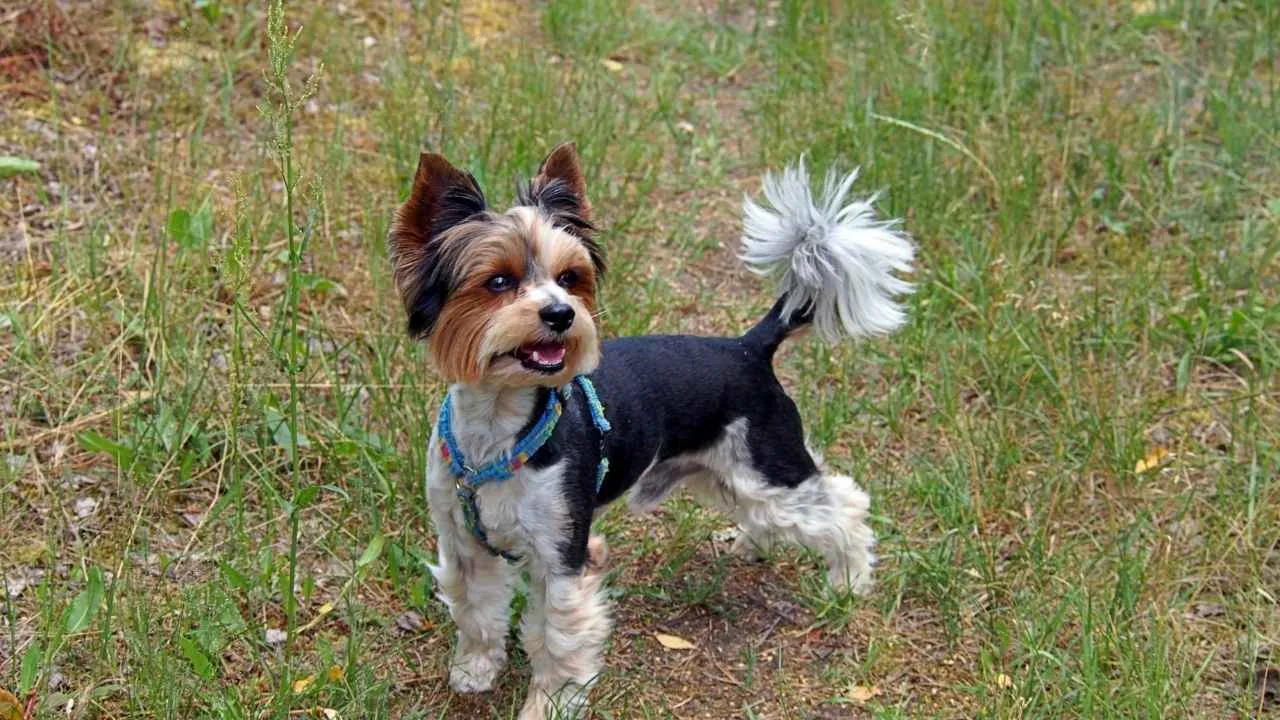
The Biewer Terrier looks like a luxury lapdog, but its personality is basically sunshine with a tiny terrier engine running underneath. That makes the Biewer an easy breed to fall for if you want a little dog whose default setting is “what are we doing together?”
The AKC says this dog has a dual personality. This dog can enjoy an energetic fetch for minutes, then curl up against its favorite human once the excitement is over. It is a mellow, playful, adaptable dog that carries toys around, races through the house in joyful zoomies, and remains surprisingly athletic despite its size.
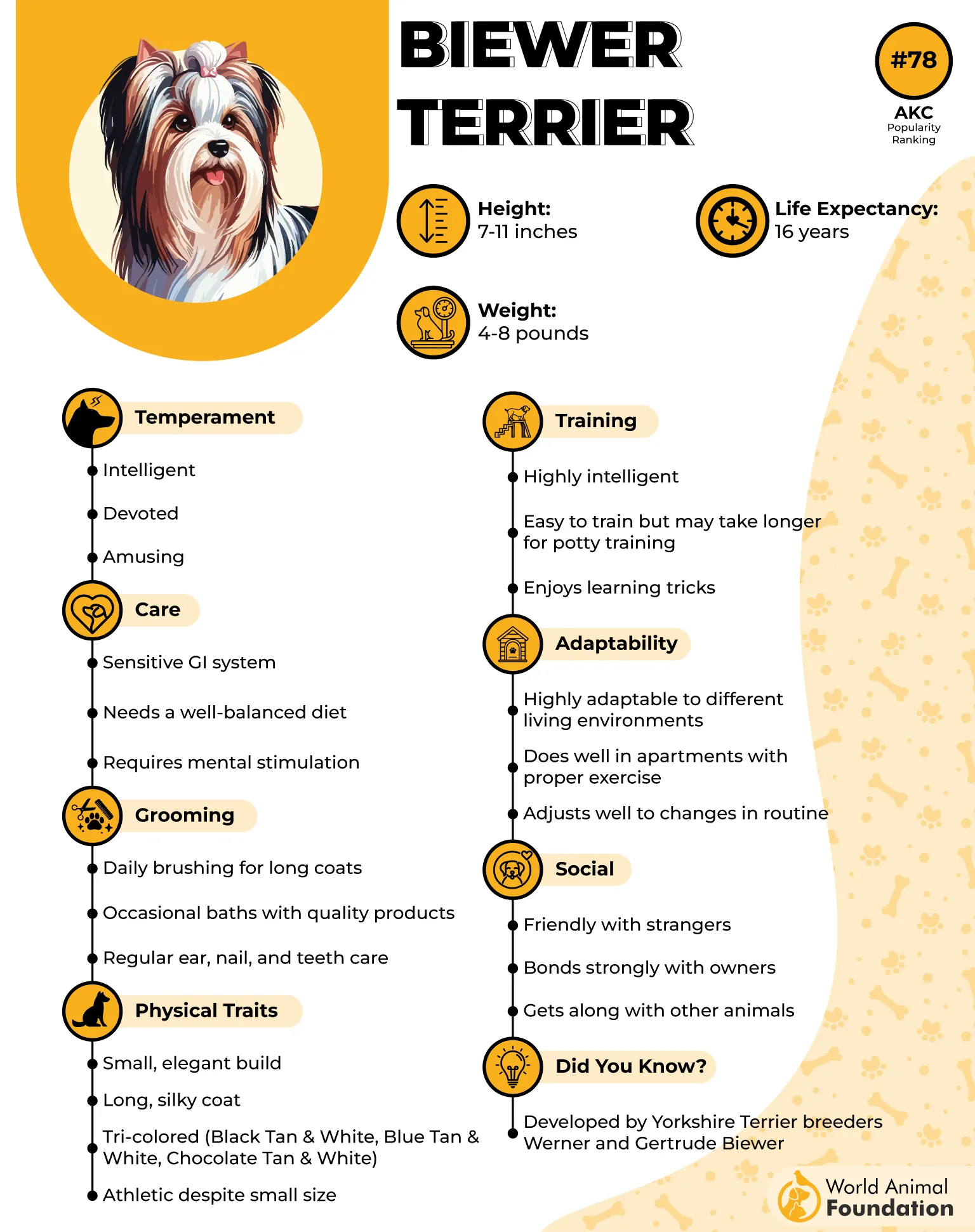
Their portability makes them excellent companions for apartments, condos, couples, singles, seniors, and families willing to handle them gently. They can adapt to everything from apartments to farms and enjoy walks, hikes, agility, hide-and-seek, and interactive games, proving that small absolutely does not mean boring.
That curiosity comes with genuine terrier heritage, so gentleness should not be mistaken for having zero instinct. They may chase cats or smaller animals, bark at unfamiliar stimuli, and become stubborn when owners excuse every behavior because the dog happens to look like an animated stuffed toy.
2. Pekingese
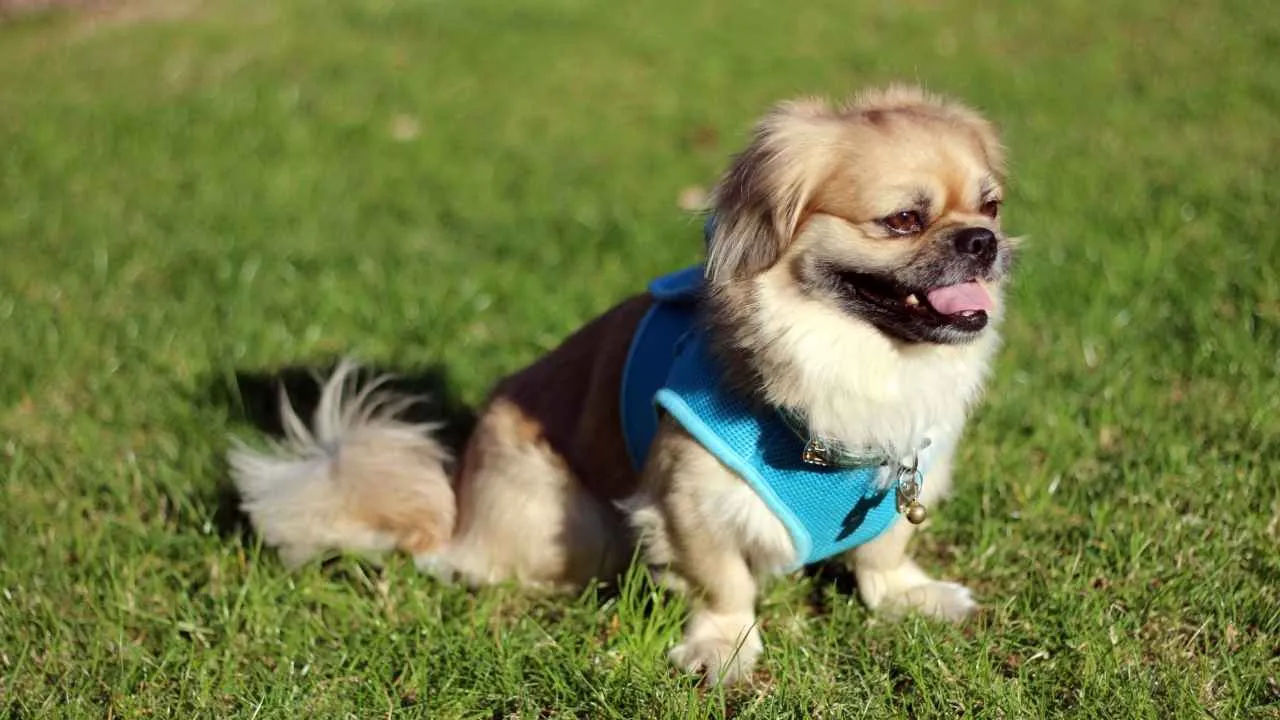
Developed for China’s imperial families, the Pekingese is a compact dog yet carries itself with a rolling gait, a lion-like mane, and dignity. Under all that royalty cosplay, however, lives an intensely devoted little companion that often forms a particularly deep bond with one chosen person.
Pekes express affection differently from ultra-social breeds because their love can be selective rather than handed out to every stranger with functioning hands. They are loving and loyal with family but somewhat aloof toward unfamiliar people, and they tend to be confident, affectionate, independent, and strongly attached to their humans.
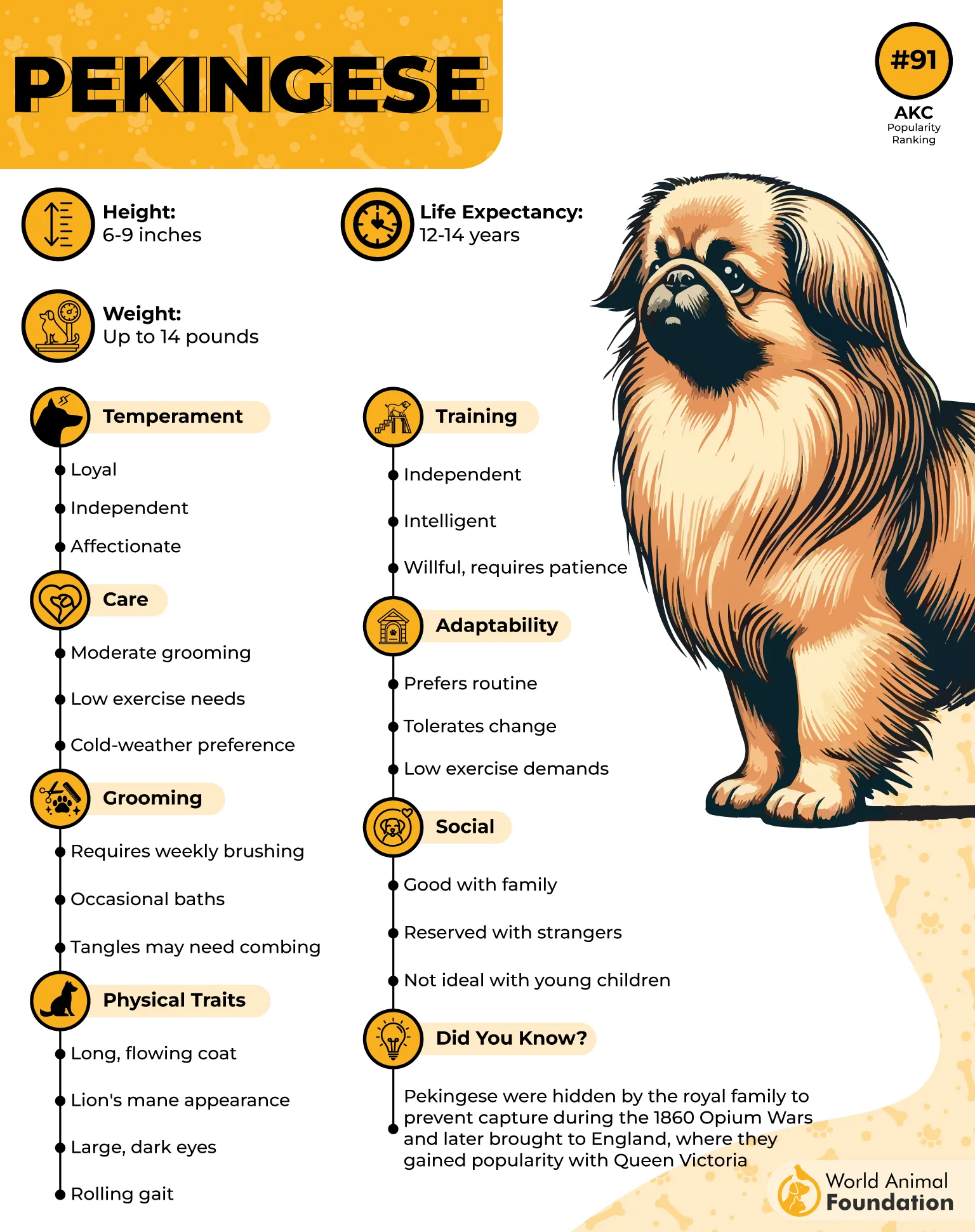
A calmer household often brings out their sweetest qualities because Pekingese generally prefer leisurely companionship to nonstop noise and rough play. They need exercise, but their activity requirements are moderate, making relaxed walks and indoor play far more appropriate than turning them into reluctant jogging partners.
Training one is less “command issued, command executed” and more diplomatic negotiation with a very small head of state. They are intelligent and strong-willed, so positive reinforcement, patience, repetition, and consistent boundaries work better than harsh corrections.
3. Papillon
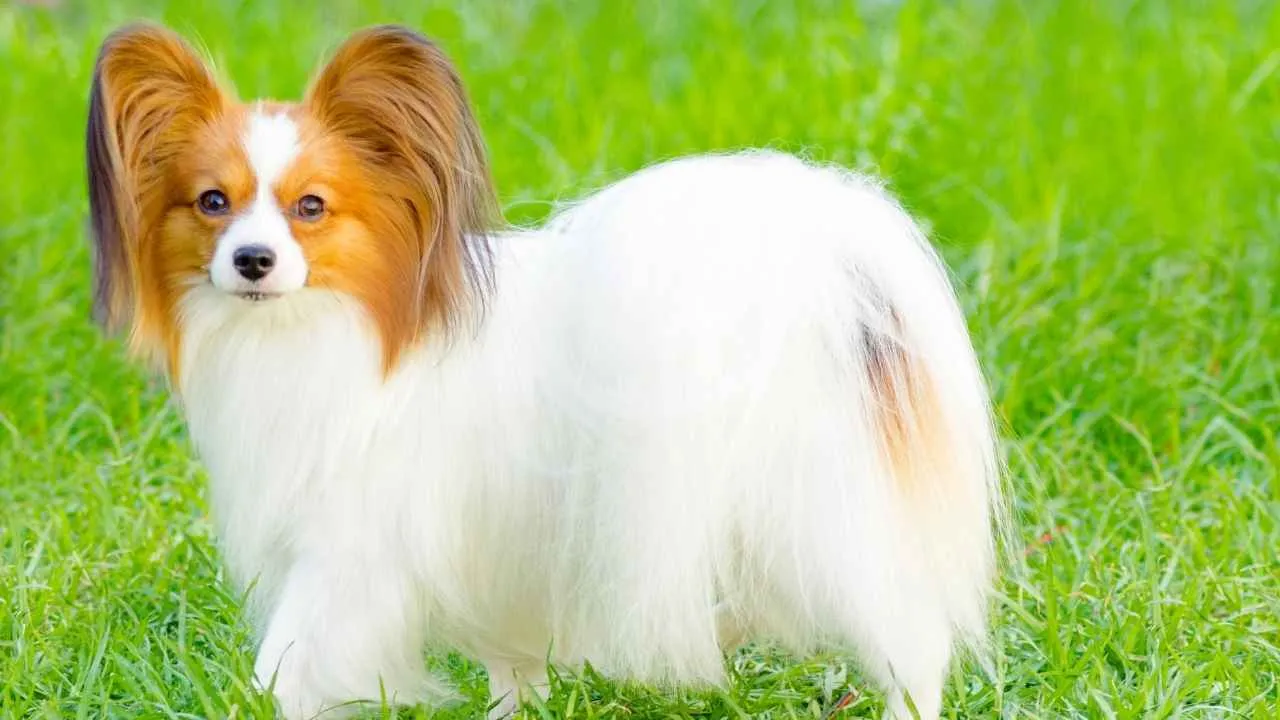
The Papillon looks delicate enough to belong inside a Renaissance portrait, and historically that is pretty much where you find them. These butterfly-eared Toy Spaniels appear in European artwork going back centuries and became fashionable companions among aristocrats, with figures such as Louis XIV and Marie Antoinette associated with the breed.
Companionship is deeply wired into this small dog’s personality. They are happy, alert, friendly dogs that have spent centuries beside people, and they enjoy everything from curling in a lap to running errands, training, riding in the car, and supervising chores.
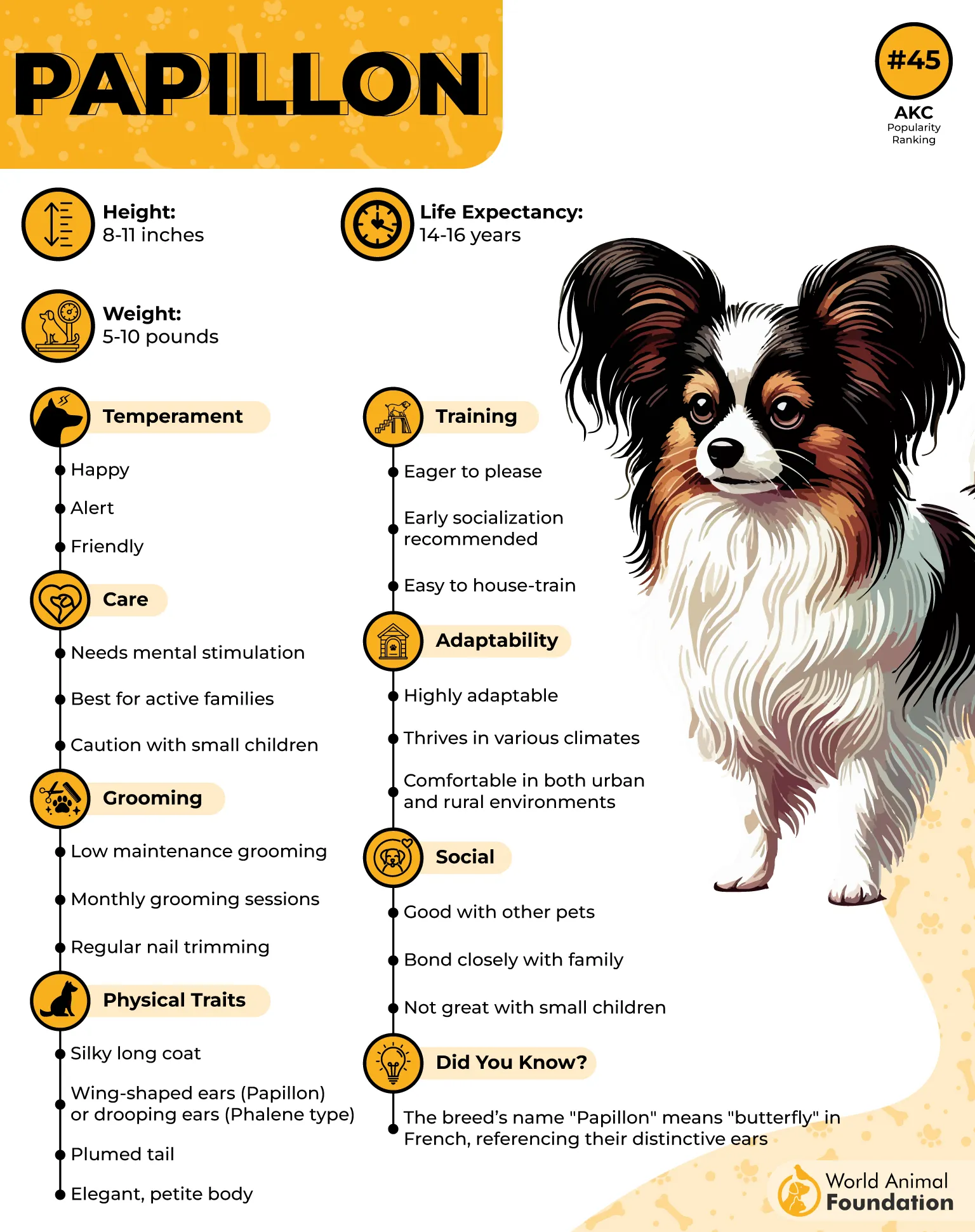
Their gentleness is especially appealing because it is not packaged with laziness. Papillons are quick learners that excel in tricks, obedience, agility, tracking, and even therapy work, so they are perfect for someone who wants cuddles without giving up interactive fun.
They can also fit beautifully into homes with other dogs, cats, adults, seniors, and sensible children when introductions and socialization are handled appropriately. The biggest concern is physical safety because those tiny bones are vulnerable to rough handling, accidental falls, and larger animals that play too forcefully.
4. Havanese
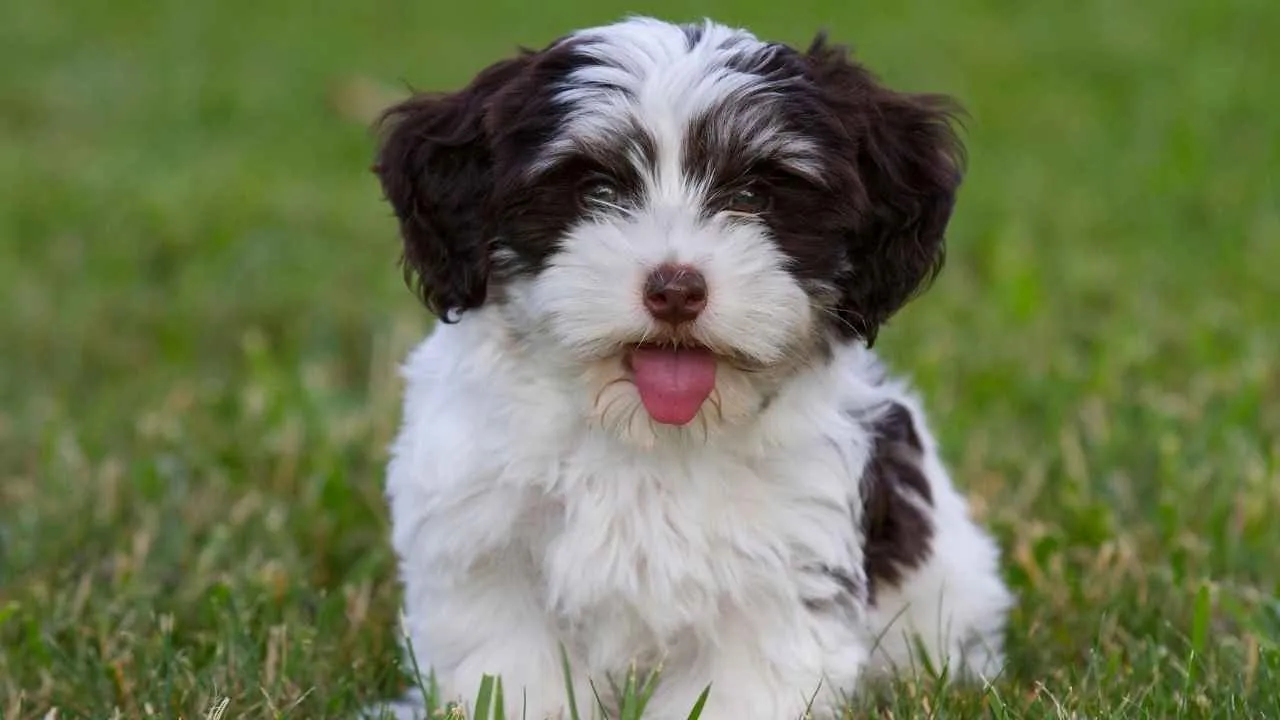
The Havanese is Cuba’s national dog and has descended from the Bichon family. That slightly sturdier frame, combined with an affectionate temperament, can make a Havanese feel reassuringly substantial without losing any of the convenience of a little companion dog.
Orvis mentions that gentleness is one of the breed’s biggest strengths. Havanese are playful without being aggressive, highly sociable with children and other animals, emotionally attentive, and deeply attached to their families.
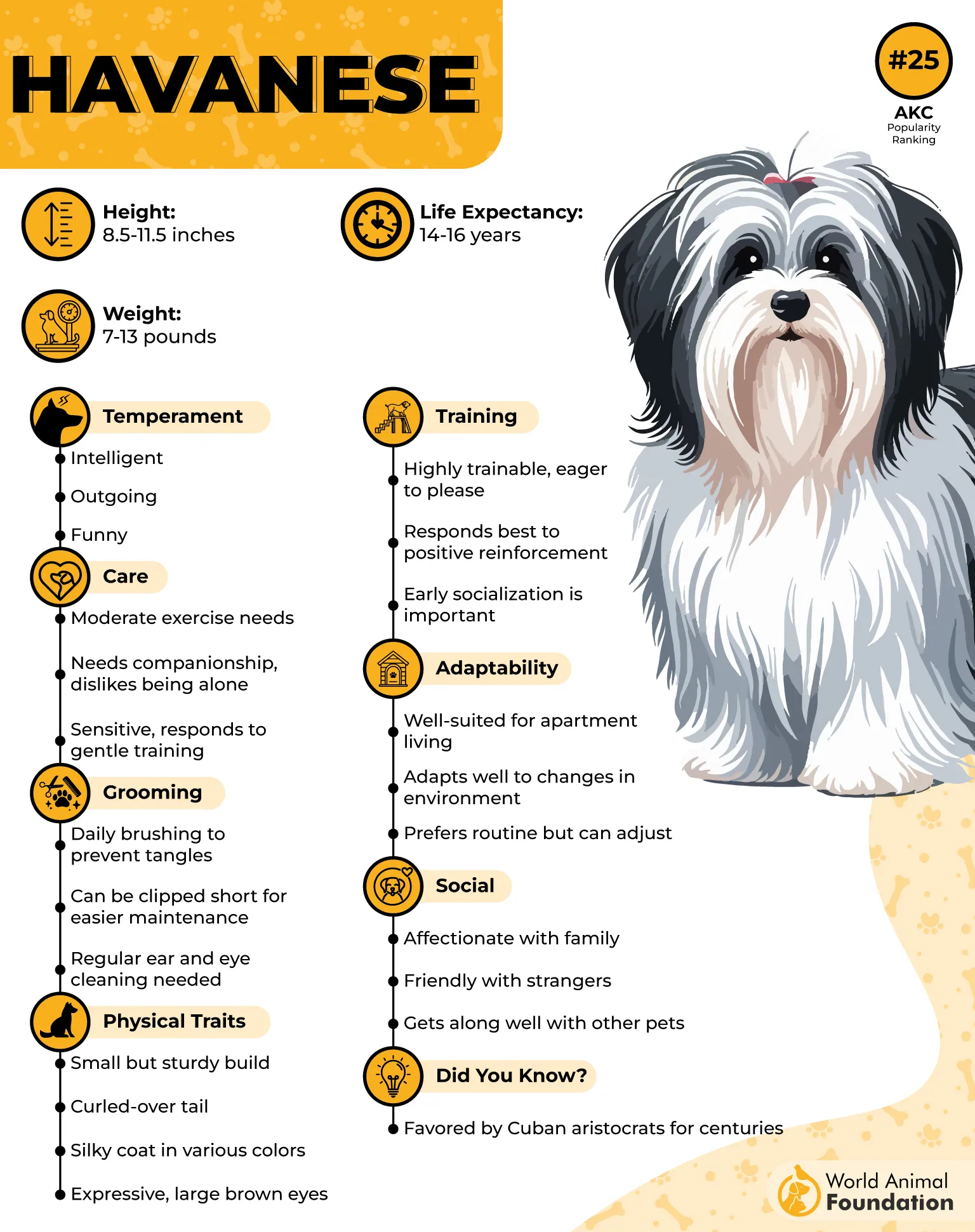
The companion instinct can be surprisingly powerful because these dogs genuinely want to be part of daily life. Working from home may mean this popular companion dog sleeping near your desk; household chores can develop an enthusiastic little supervisor; and movie night usually creates an immediate opening for a professional snuggle specialist.
These beloved lap dogs are also much more capable than their soft appearance suggests. They succeed in agility, rally, obedience, scent work, tracking, Trick Dog, and other performance activities, noting that their desire to please can make training genuinely enjoyable.
5. Shih Tzu
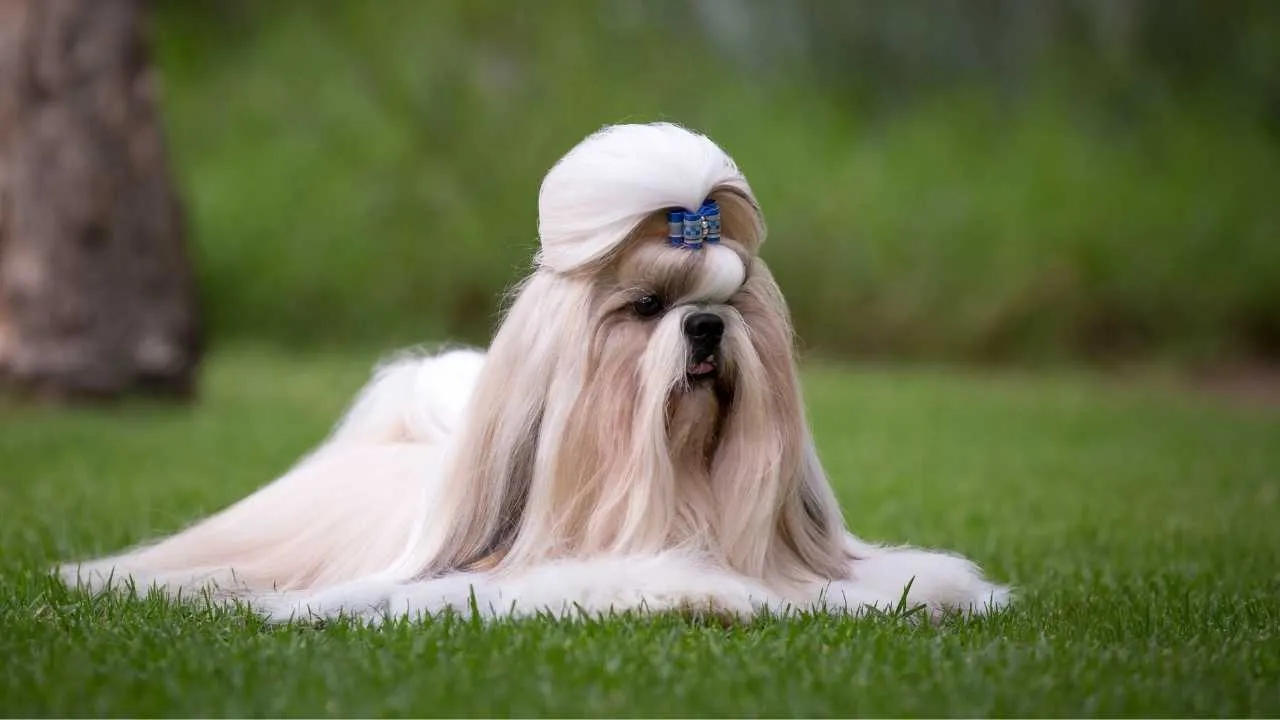
The Shih Tzu has had one extremely consistent career path: professional companion. Its historical role was to live in proximity to Chinese royalty. That ancient job description explains why the modern Shih Tzu can be so perfectly content, curled up beside a human.
Temperament is what makes these little lion dogs ridiculously easy to love, as PetMD suggests. They are playful, affectionate, outgoing, adaptable, and perfectly happy spending hours in an owner’s lap, while showing great sociability with families, children, and other pets.
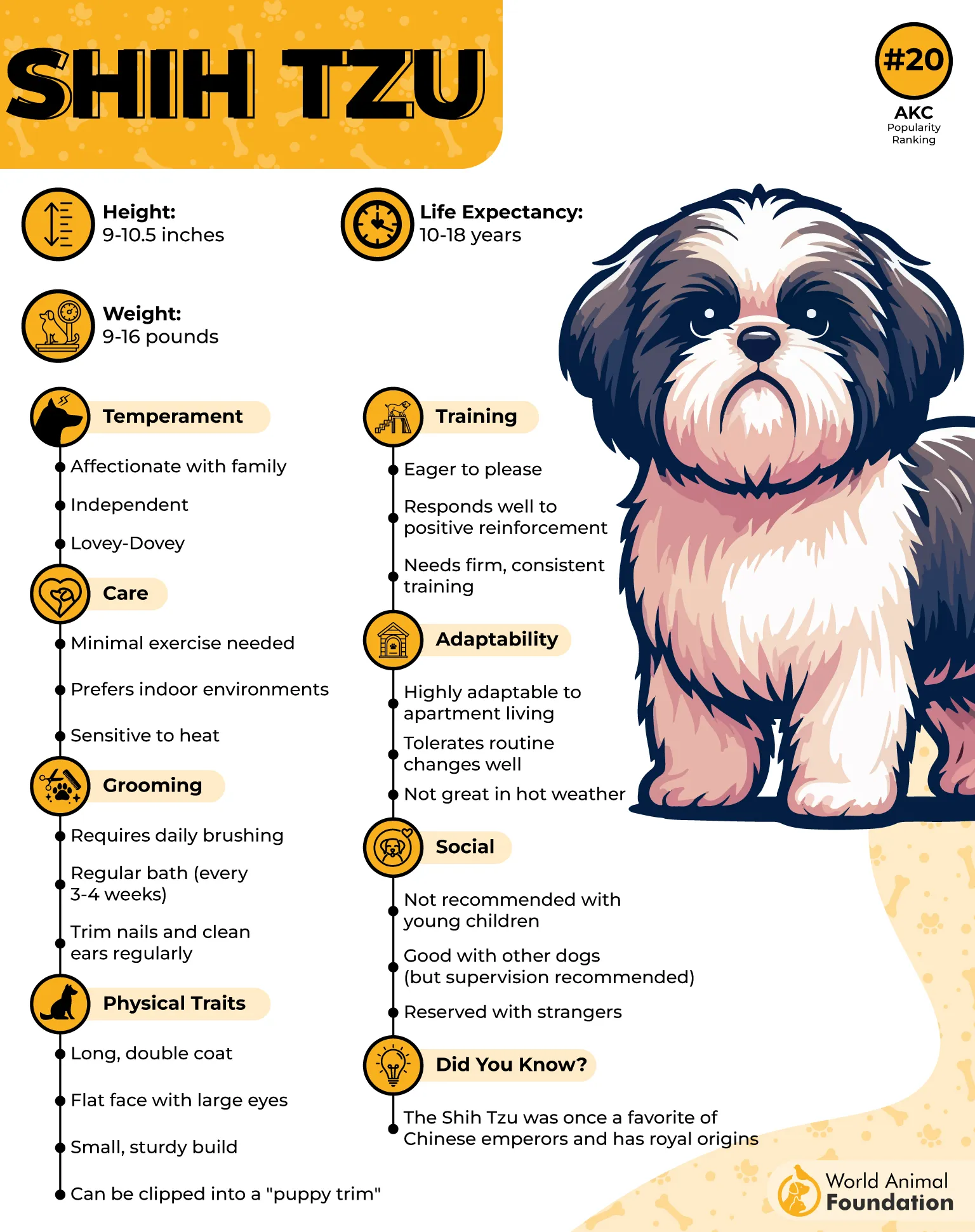
Their activity needs also fit in beautifully with companion life. They enjoy short walks, indoor games, and little bursts of silliness, but they do not require an endurance athlete’s lifestyle and can adapt successfully to apartments and city homes.
Training works best when it feels rewarding rather than confrontational. Shih Tzus are intelligent and people-oriented but can have an independent streak, so praise, treats, short lessons, and patient repetition are better than turning a training session into a battle of wills.
6. Yorkshire Terrier
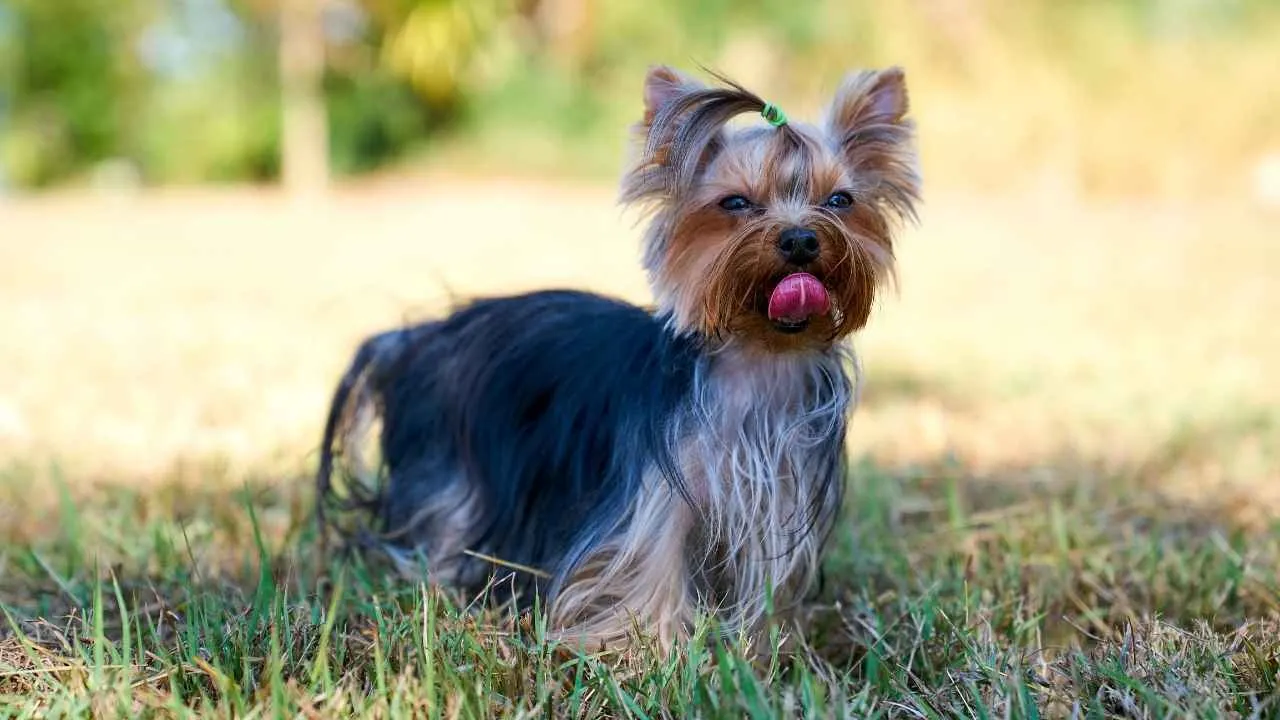
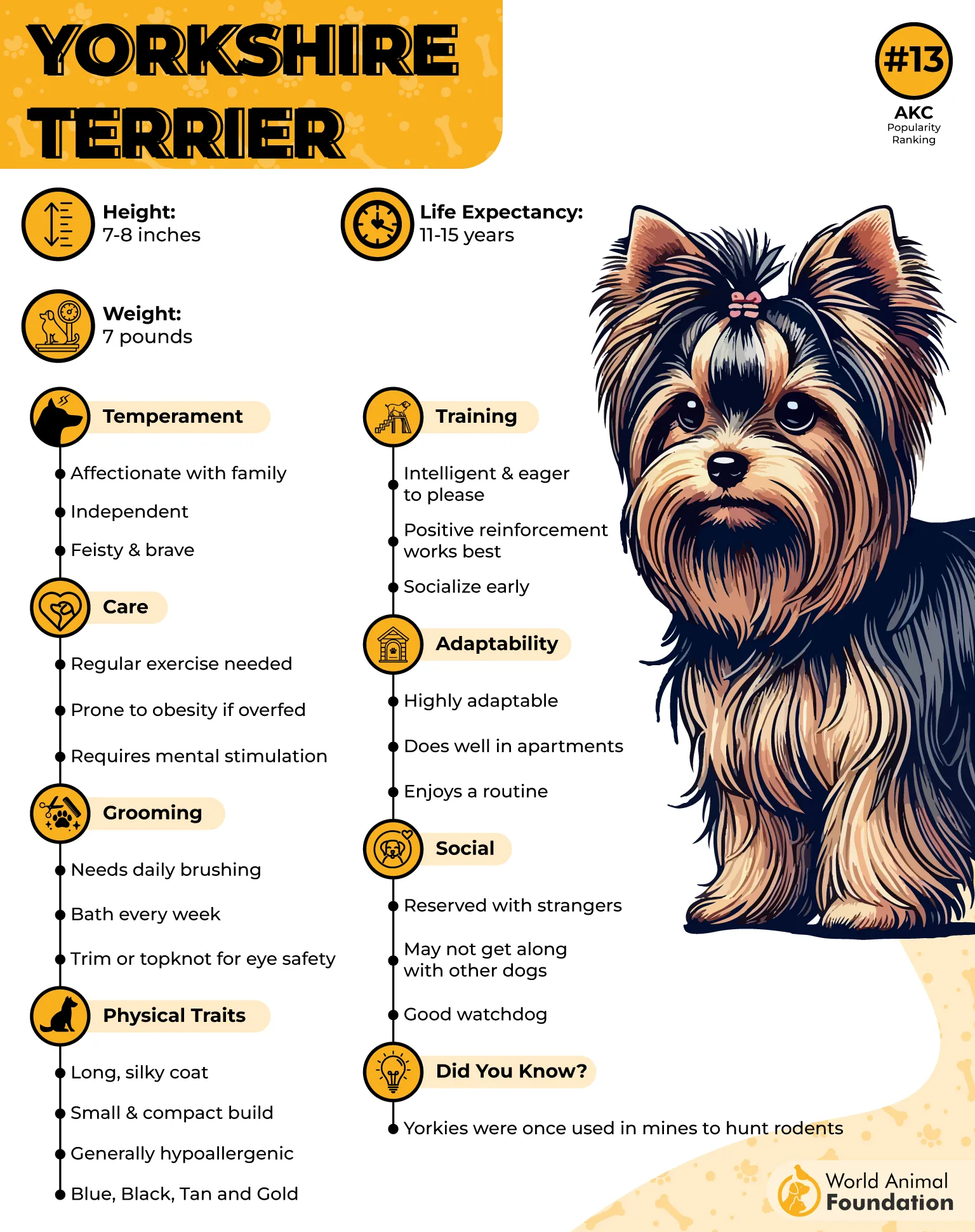
The Yorkshire Terrier is a hilarious contradiction: physically tiny, emotionally huge, glamorous enough for a bow, and still carrying the confidence of ancestors that once chased vermin. They can fit beautifully on your lap.
Their affectionate side is the reason so many people fall hard for the breed. Teacup Yorkies form strong attachments, following humans from room to room, seeking cuddles, and wanting to be involved in almost every household activity.
The most beautiful proof that Yorkies can provide serious emotional companionship comes from Smoky, a four-pound Yorkie found during World War II, as per National Geographic.
Smoky accompanied Corporal William Wynne through combat, survived approximately 150 air raids, helped pull communication wire through a narrow pipe, entertained wounded soldiers, and is widely credited as an early therapy dog: tiny dog, absolutely gigantic résumé.
City and apartment living suits them exceptionally well, provided their brains and bodies receive enough stimulation. They adapt readily to urban environments and can enjoy walks, play, agility work, therapy work, and terrier activities despite their miniature size.
7. Maltese
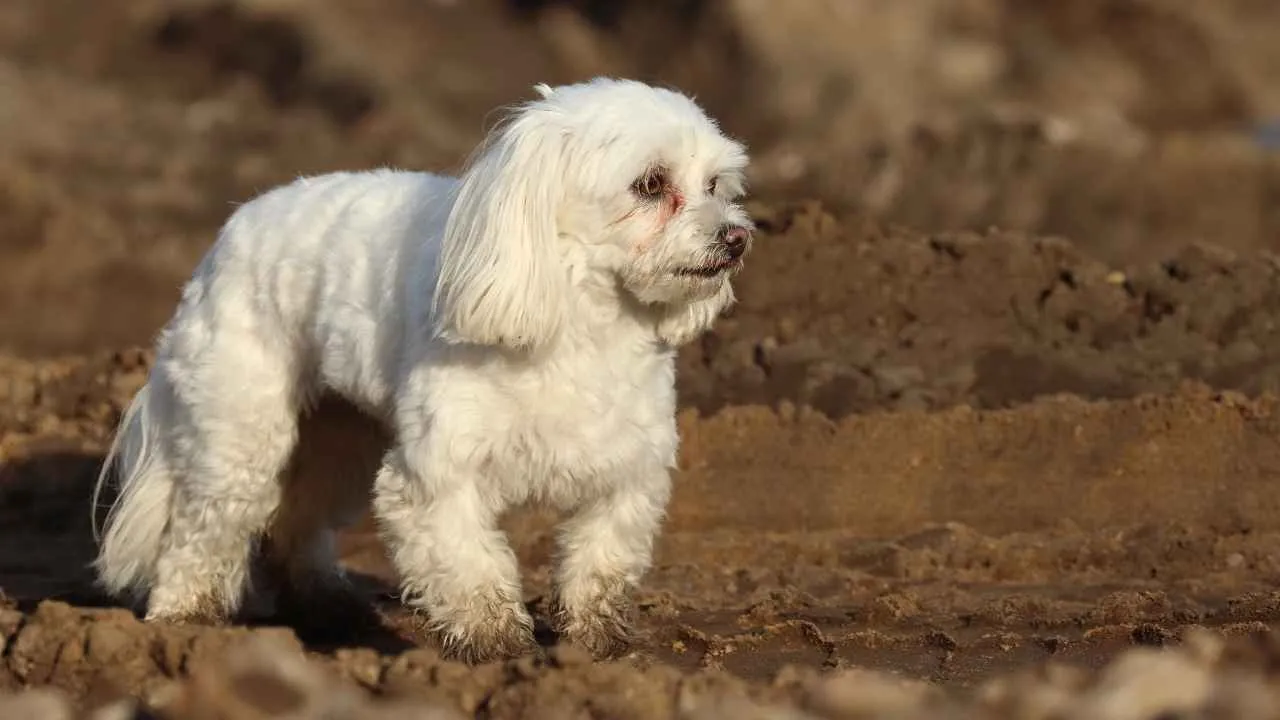
Few teacup breeds can compete with the Maltese when the conversation turns to ancient lapdog credentials. One of the best small dog breeds for pet owners, it has been associated with Mediterranean society and wealthy Greek and Roman households.

They are appealing companions that are affectionate, trusting, playful, vigorous, and among the gentlest-mannered of little dogs. That combination matters because they are not supposed to be fragile little ornaments psychologically; underneath the silk is an affectionate dog eager to participate in life.
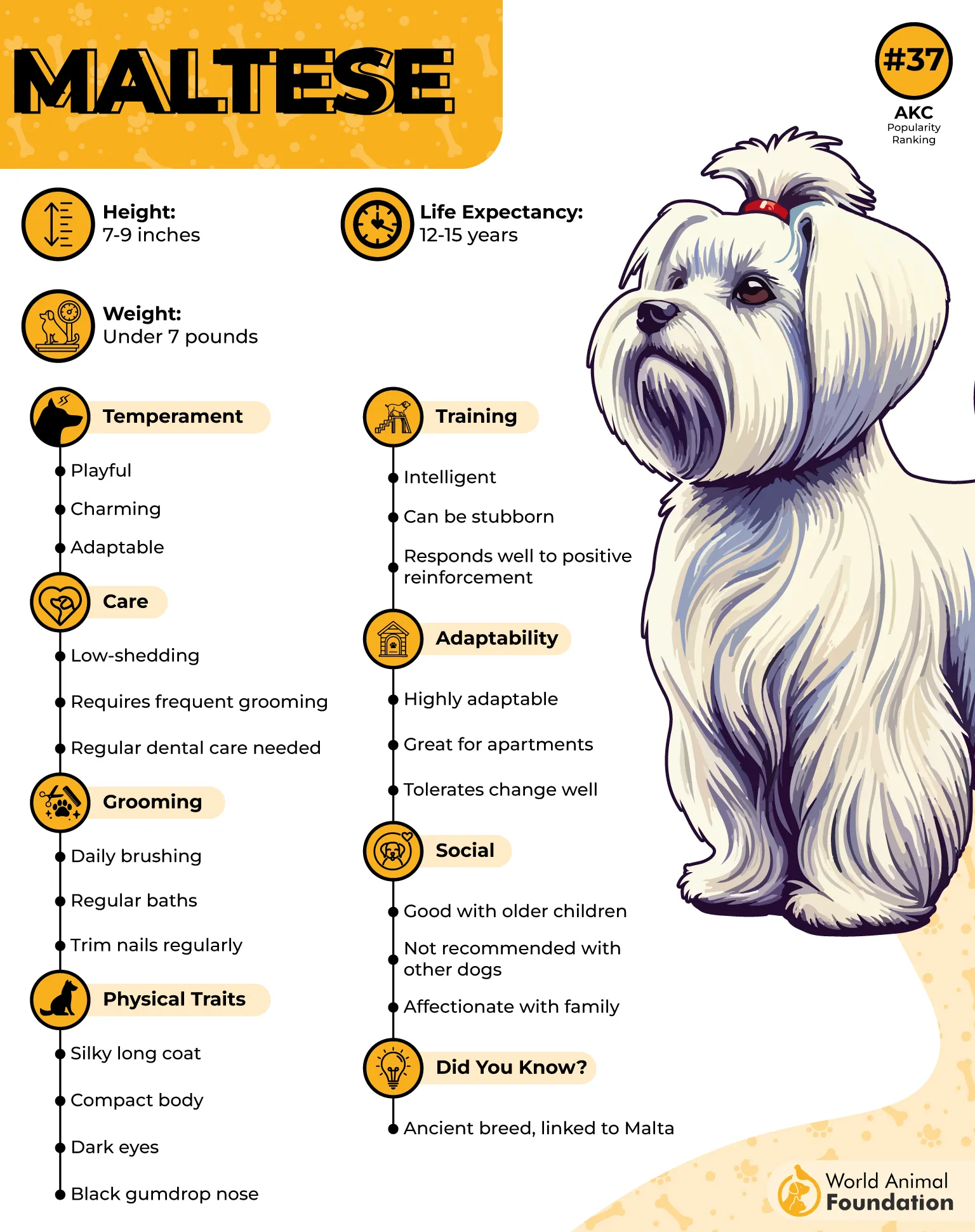
They are equally comfortable with singles, seniors, or families and particularly happy when close to their favorite person. They usually enjoy daily walks and play but do not need the kind of intense exercise schedule associated with larger breeds, so that companionship can be the main focus.
Their small size also makes safety important, particularly around furniture, stairs, larger dogs, and young children who have not learned gentle handling. Toy breeds can be injured more easily than bigger dogs, and small mouths are also particularly susceptible to dental crowding and periodontal disease.
Conclusion
Teacup puppies have a strange talent for making their physical size completely irrelevant within about 24 hours of entering a home.
Gentleness depends on more than genetics. Socialization, respectful handling, proper training, appropriate exercise, and giving a dog space when it requests it are what allow naturally affectionate traits to develop into a confident adult companion.
