




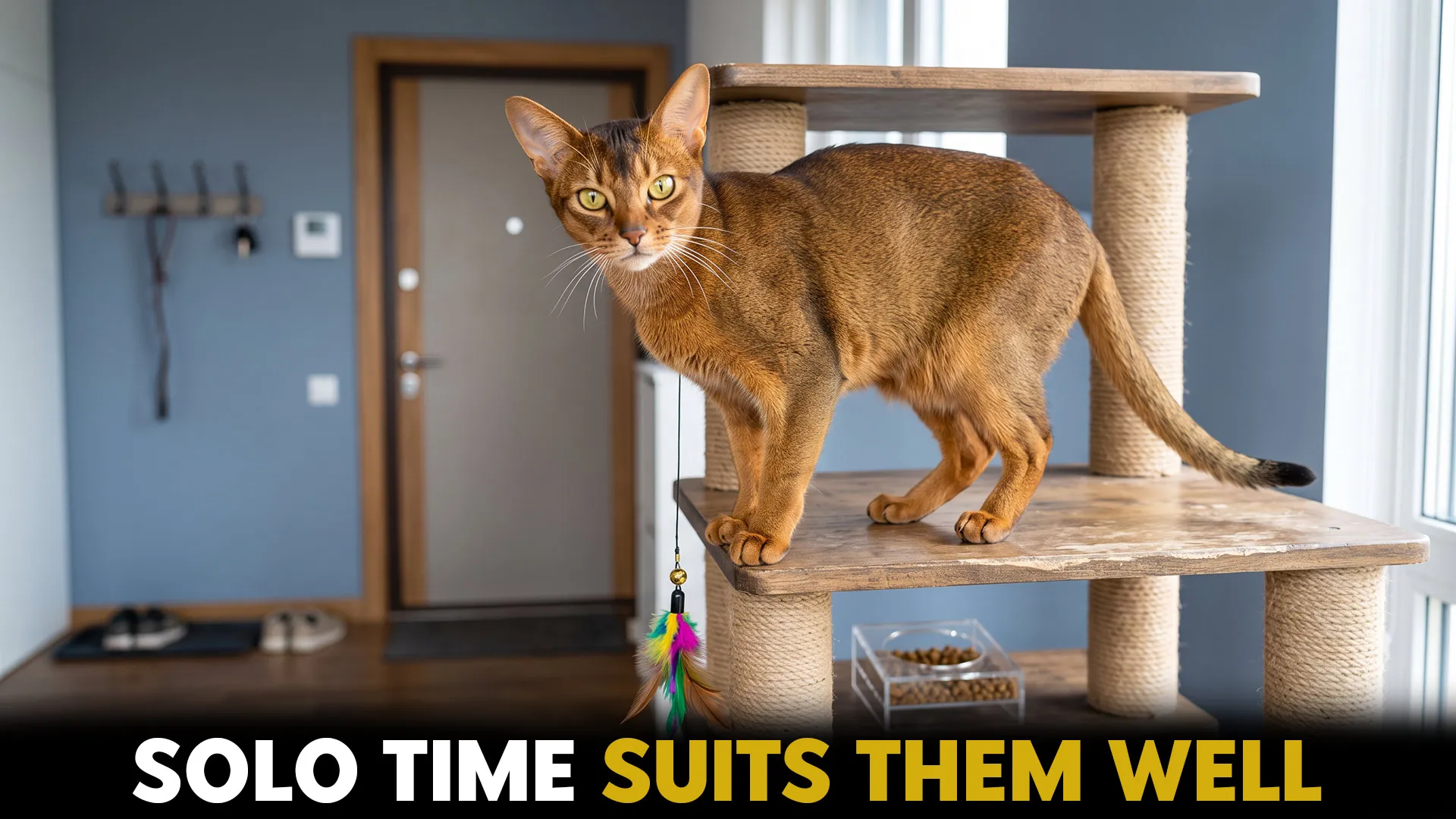
Some cats act like you have committed a personal betrayal when you leave for ten minutes. Others barely look up from their favorite sunny spot. If your work, errands, or busy schedule keeps you away from home for part of the day, choosing the right feline personality can make life much easier.
The best cats that can be left alone are usually independent, adaptable, and comfortable entertaining themselves. They still need affection, fresh food, clean water, toys, and daily interaction, but they are less likely to become stressed when you are not constantly nearby.
That does not mean every independent cat breed is the same. Some enjoy quiet solitude, while others simply prefer attention on their own terms, so knowing which breeds handle alone time well can help you find a much better match.
Best Cat Breeds That Can Be Left Alone
1. Persian
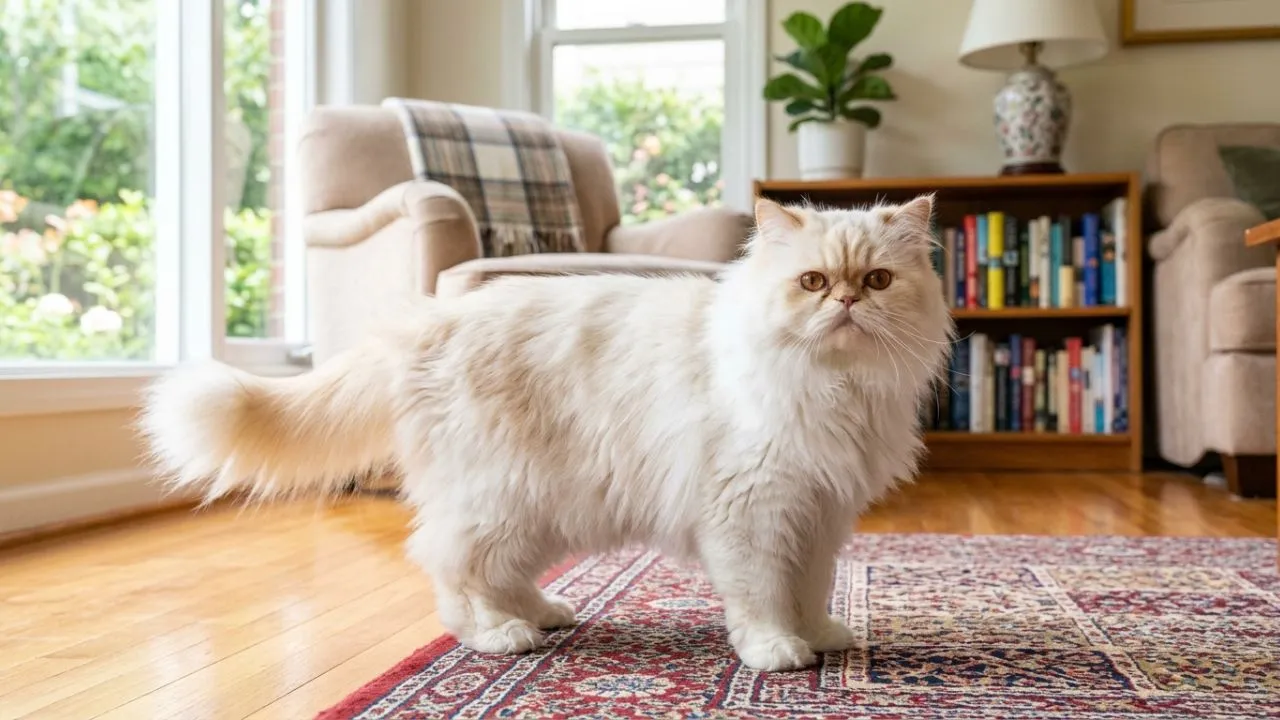
The Persian is a mellow, low-energy cat that generally appreciates having plenty of time to relax. Although affectionate with its owners, this domestic breed is comfortable spending parts of the day resting independently rather than demanding constant interaction.
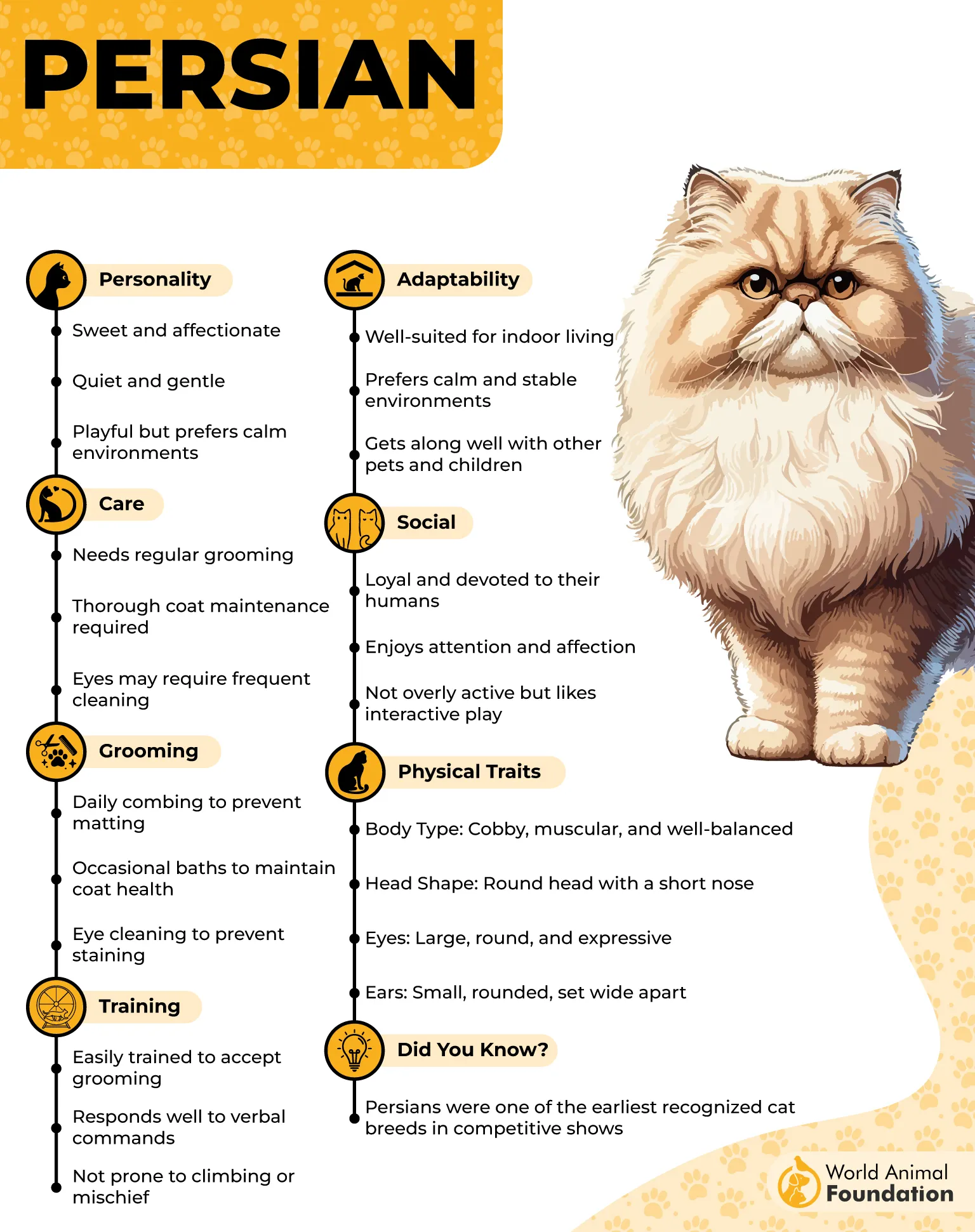
Quiet by nature, Persians usually communicate with gentle meows and are not known for being highly vocal. They enjoy playtime, but their preference is for calm, unhurried games rather than fast-paced activity.
Their long, beautiful coat does require daily brushing to prevent mats and tangles. This grooming routine can also provide enjoyable one-on-one attention while helping maintain their soft, luxurious appearance.
How This Breed Stands Out
Independent lounging habits: The Persian is happy to nap and relax on its own, making it a practical choice for owners who are away during the day.
Enjoys quiet surroundings: Its peaceful temperament and low activity level suit calm homes where it can rest without constant noise or disruption.
2. Abyssinian
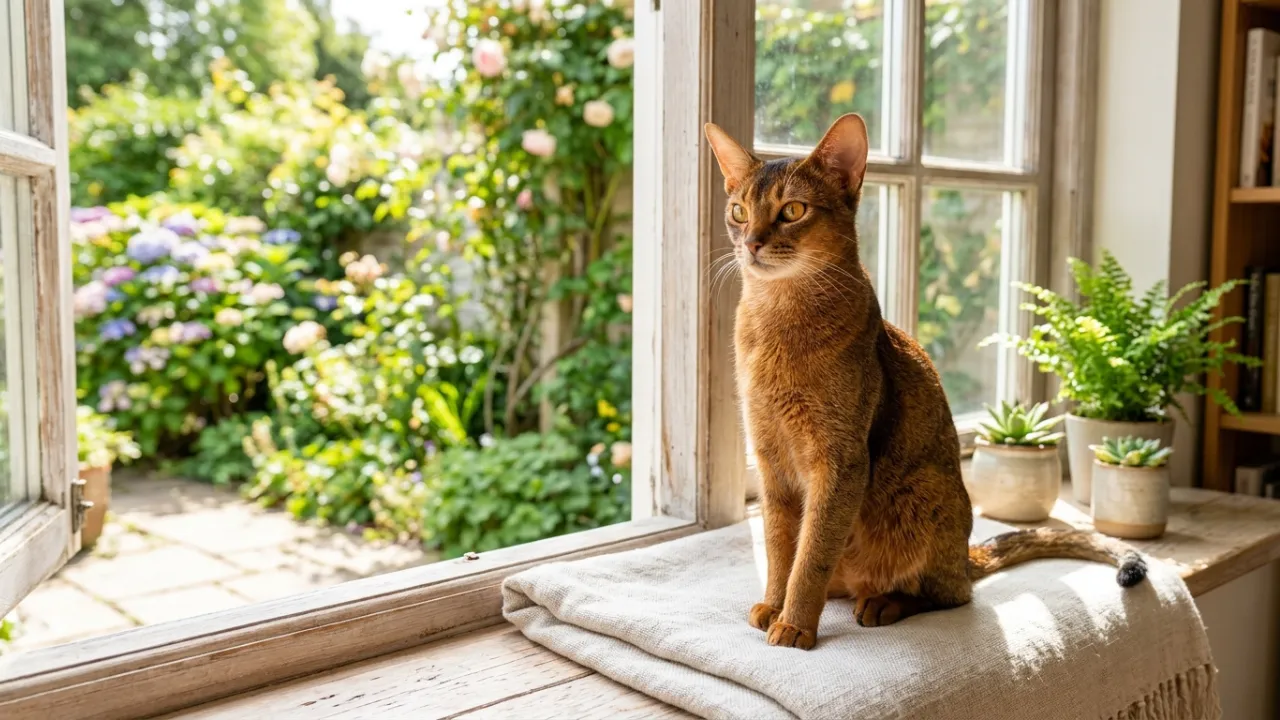
The Abyssinian is an energetic, agile cat with a curious mind and a strong independent streak. It enjoys staying mentally and physically engaged, so interactive toys or puzzle feeders can give it something productive to focus on during quiet periods.
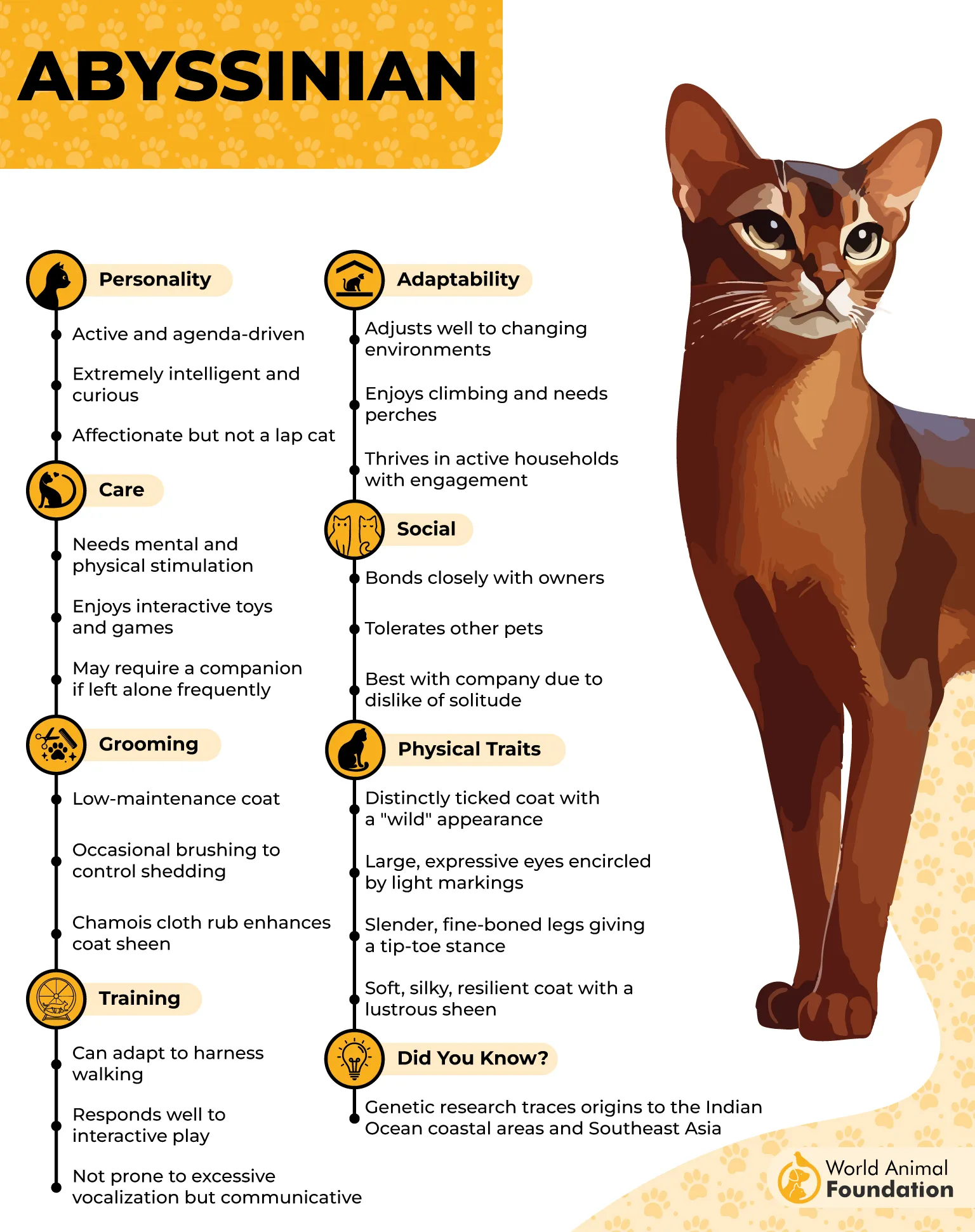
Although affectionate and loyal, this breed is not especially fond of being handled or constantly cuddled. It prefers having the freedom to move around on its own terms, yet it can still show affection by occasionally seeking out its favorite person’s lap.
According to Purina, weekly grooming is usually enough to keep an Abyssinian’s coat in good condition, though more frequent brushing and bathing may be needed during shedding periods.
Abyssinians are naturally inquisitive and can spend considerable time investigating their surroundings. Providing safe climbing areas, toys, and activities can help channel their intelligence when they are left to entertain themselves.
How This Breed Stands Out
Self-directed curiosity: Its intelligence and independent personality encourage the Abyssinian to find ways to engage its mind without relying entirely on human attention.
Keeps busy exploring: This agile breed enjoys investigating its environment, climbing, and interacting with stimulating objects throughout the home.
3. British Shorthair
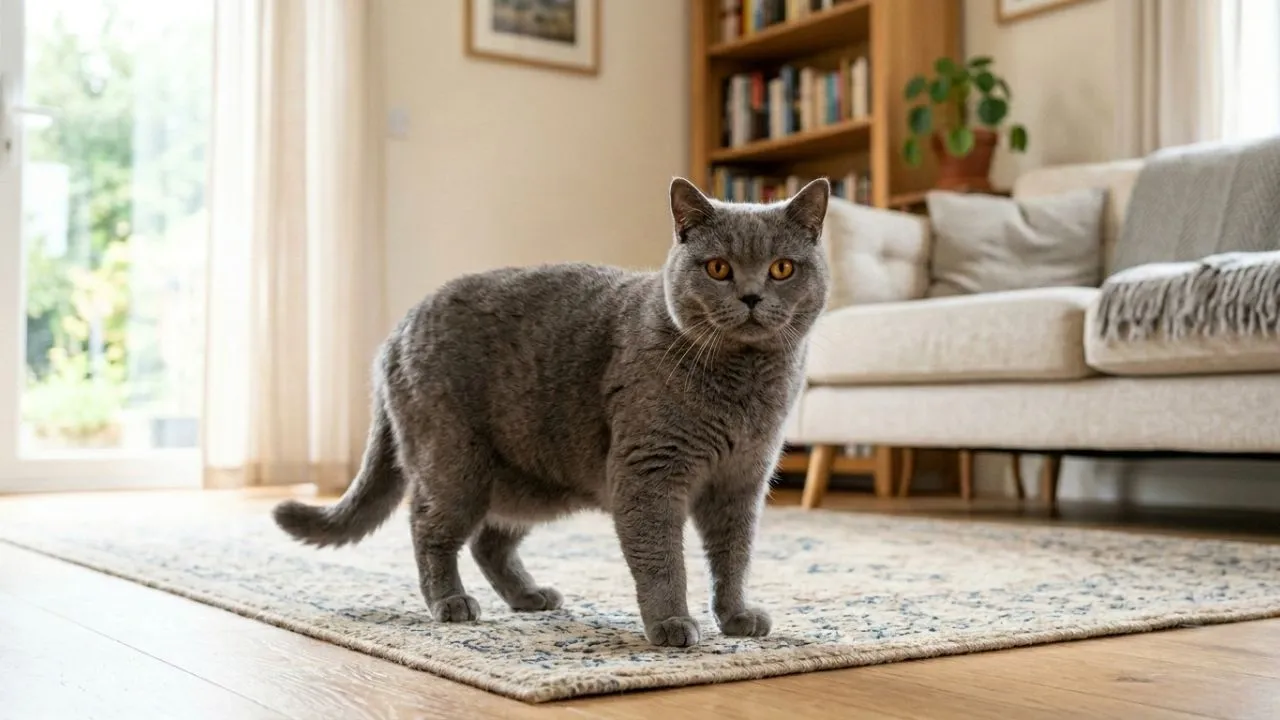
The British Shorthair is a calm, affectionate cat that does not require constant attention to feel content. It enjoys being around its family but has enough independence to relax peacefully when its owners are busy or away from home.
Recognizable for its rounded face and plush appearance, this breed also has a notably quiet nature. It tends to vocalize sparingly, making it a pleasant companion for households that appreciate a peaceful atmosphere.
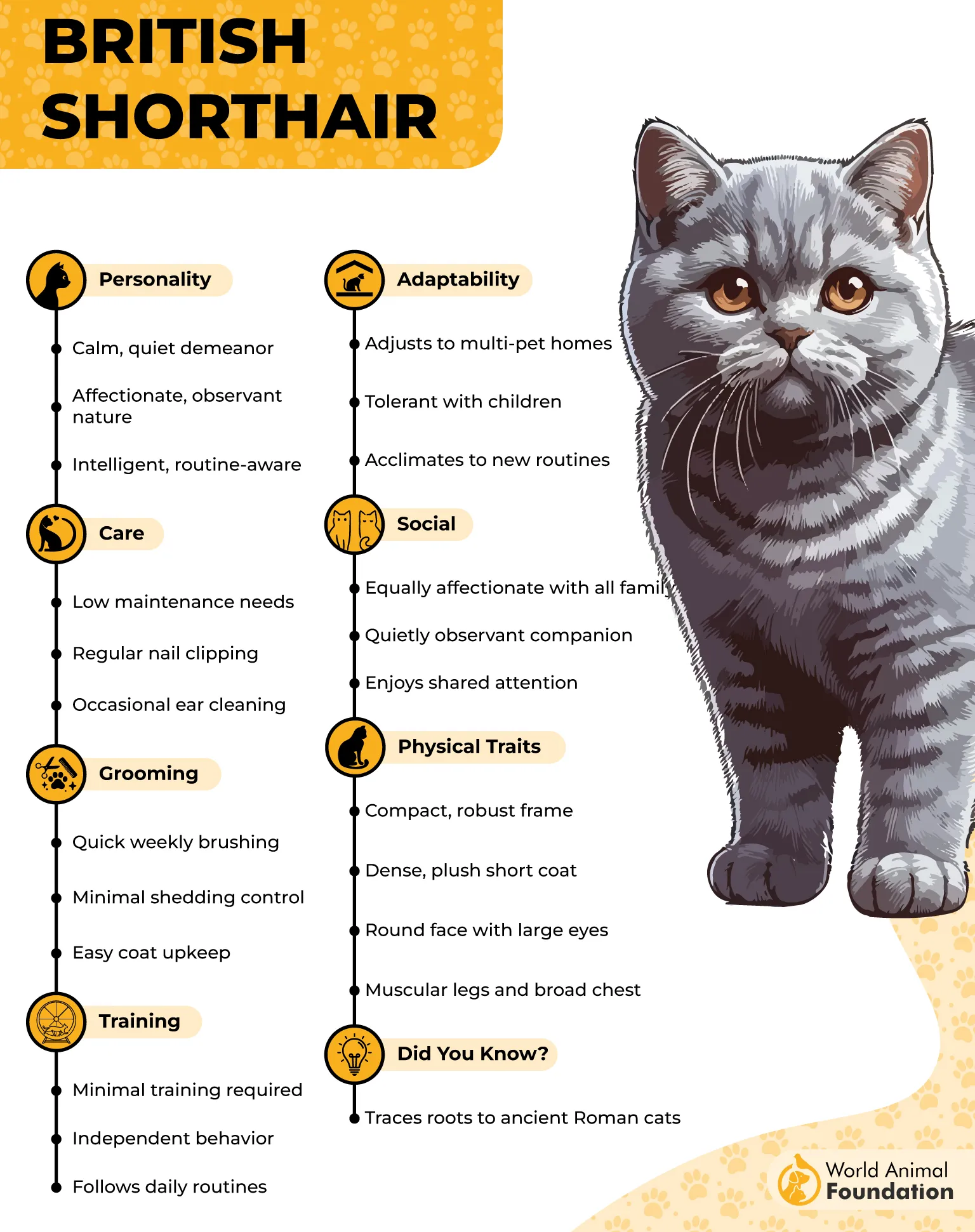
According to Petplan, British Shorthairs have a short, dense coat that is easy to manage, though extra brushing helps during heavier shedding periods.
When their people are home, British Shorthairs can enjoy cuddling and spending time nearby. At other times, they are perfectly capable of settling into their own space without becoming overly demanding or restless.
How This Breed Stands Out
Comfortable with solitude: Its independent temperament allows the British Shorthair to remain content when left alone for reasonable periods.
Low-demand companionship: It offers affection and enjoys family time without constantly seeking interaction or entertainment.
4. Russian Blue
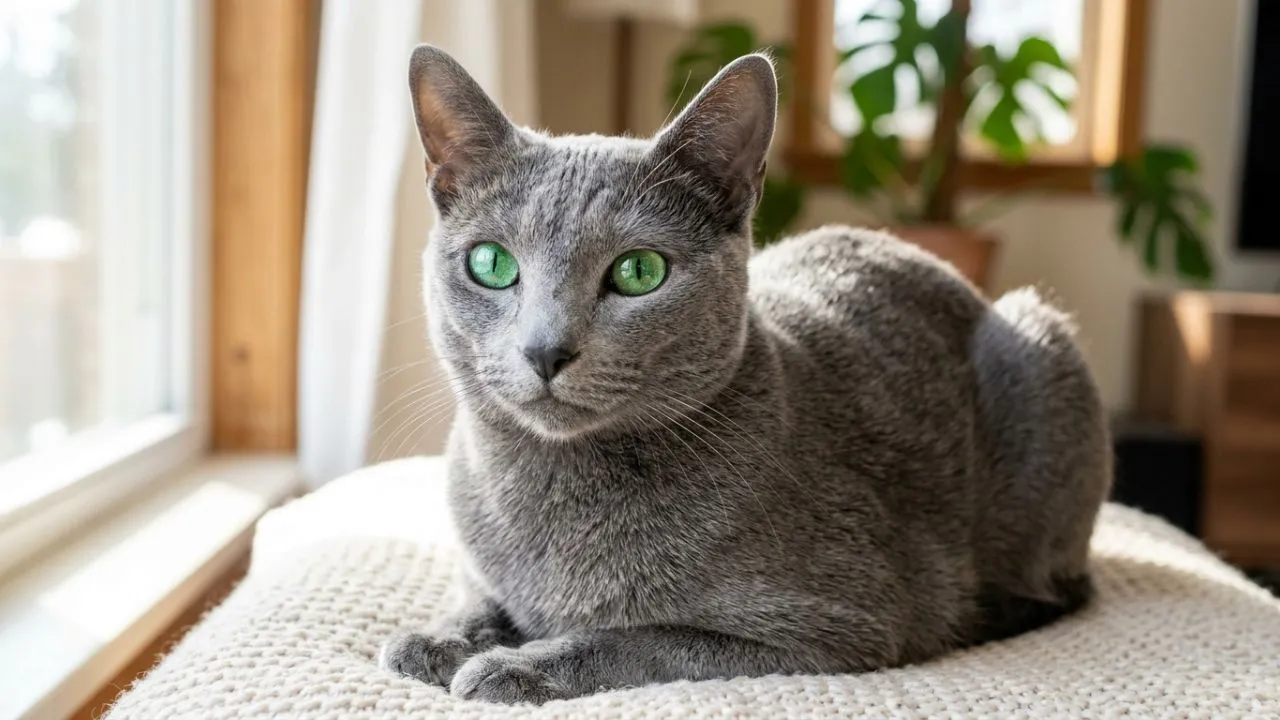
The Russian Blue is a gentle, affectionate cat with a naturally independent personality. It enjoys spending time with its favorite people but is equally comfortable retreating to its own space, making periods of solitude easier to manage.
According to PetMD, Russian Blues benefit from having a quiet, private space where they can retreat from a busy household.
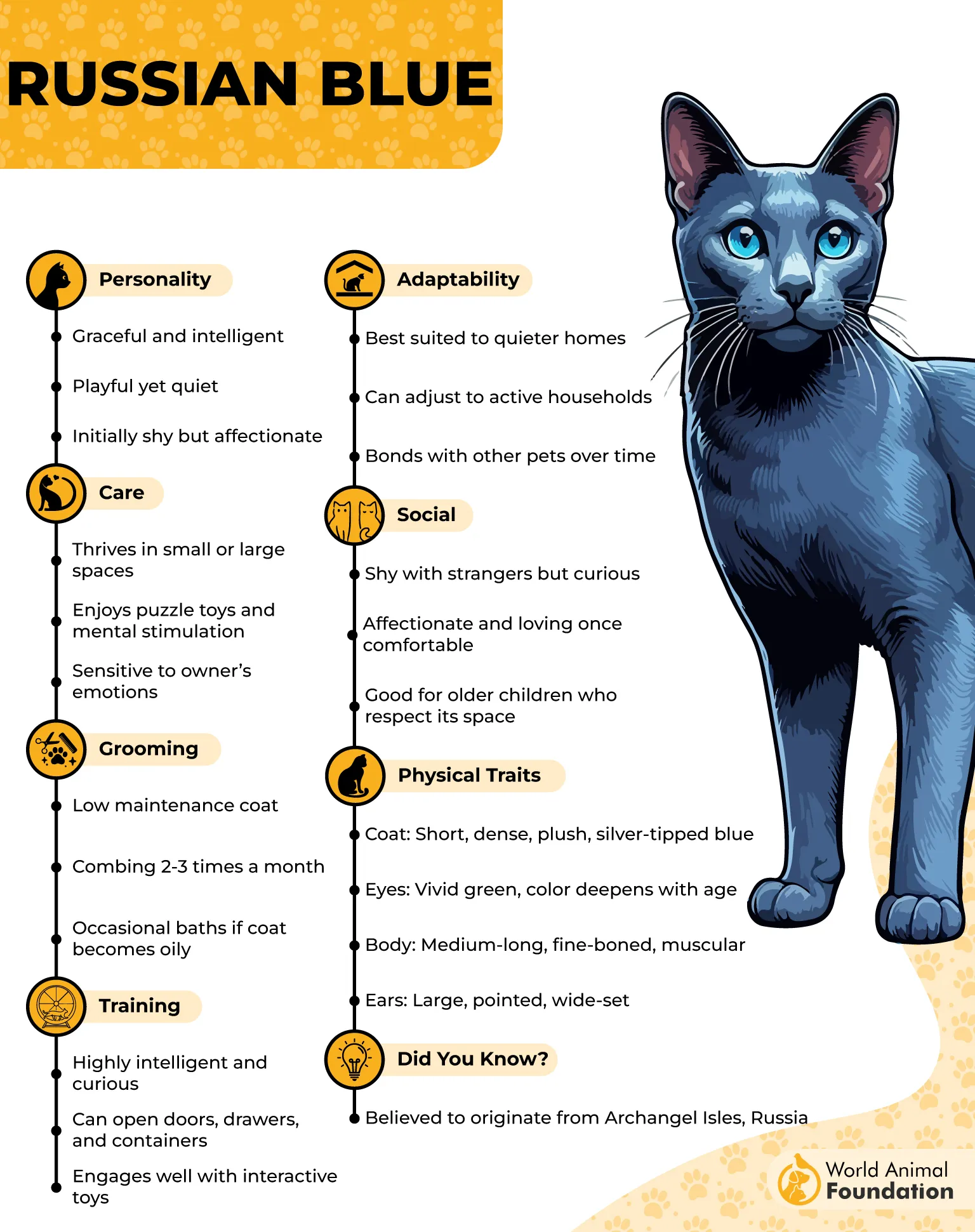
Rather than immediately welcoming unfamiliar visitors, this breed often observes them from a distance before deciding whether to interact. Once trust is established, however, Russian Blues can become deeply affectionate and enjoy regular attention from their chosen humans.
Playful without being overly demanding, the Russian Blue can occupy itself when the household is quiet. Its balanced need for companionship and personal time makes it a practical option for owners who are frequently away.
How This Breed Stands Out
Values personal space: The Russian Blue appreciates having time alone and prefers approaching people on its own terms.
Forms selective attachments: It tends to build especially strong relationships with trusted family members while remaining reserved around unfamiliar people.
5. Scottish Fold
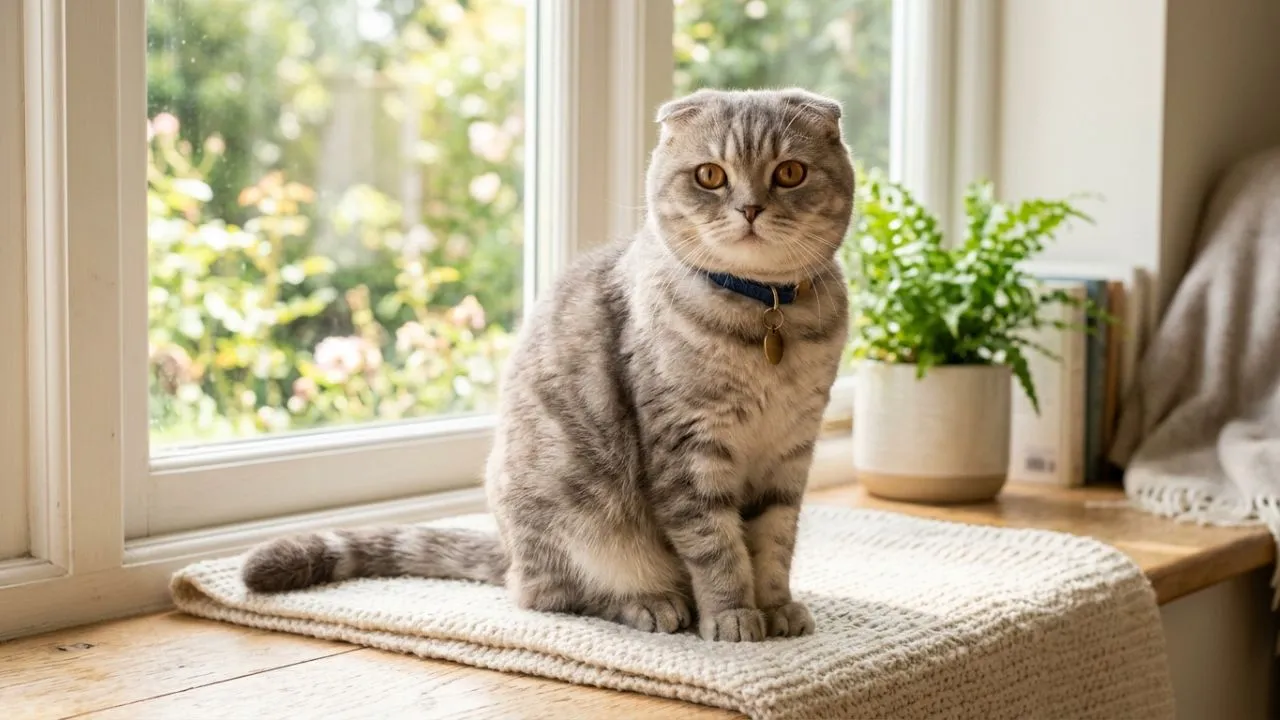
The Scottish Fold is a gentle, adaptable cat that can fit comfortably into different household environments. Although affectionate and happy to cuddle with its owners, it is not overly clingy and can adjust well when daily routines change.

This moderately active breed enjoys following family members around the home and interacting with children or other pets. Its calm, inquisitive personality allows it to remain engaged without constantly demanding attention.
Scottish Folds also have a self-contained side that helps them handle periods without company. They can enjoy peaceful time alone while still appreciating play, companionship, and a cozy place to settle.
How This Breed Stands Out
Adaptable to household routines: Its flexible temperament helps it adjust to different environments, including busy homes with children or other pets.
Enjoys calm independent time: While affectionate, the Scottish Fold can comfortably entertain itself and relax when its owners are away.
6. Maine Coon
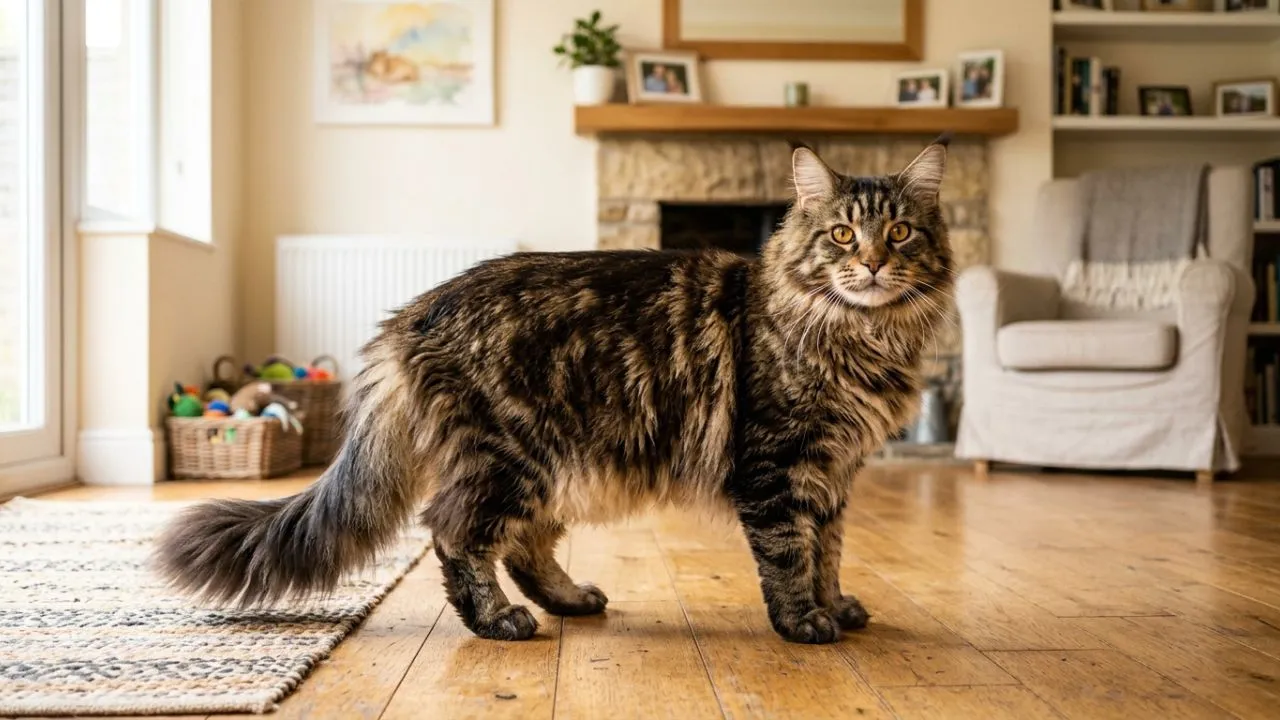
The Maine Coon is a large, gentle cat with a patient and affectionate temperament. Despite its size, it has a mellow nature and can spend considerable time resting between bursts of playful energy, so it does not need constant attention.
These intelligent cats are generally comfortable entertaining themselves while their owners are away and are happy to reconnect when they return. They can also get along well with children and other pets, while their soft chirping provides a quieter way of communicating.
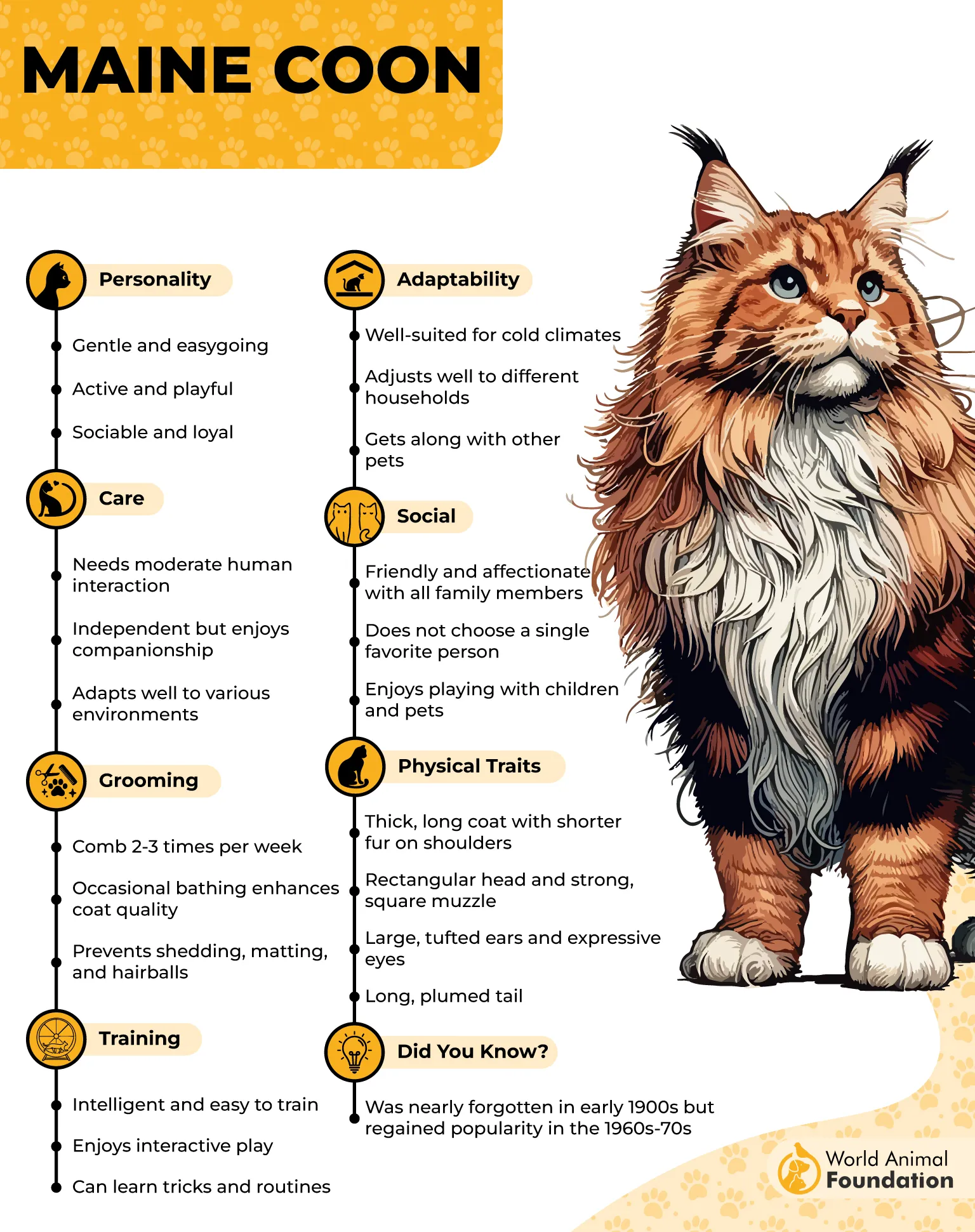
Its long coat does require regular grooming, but the Maine Coon can otherwise be relatively undemanding. Providing toys and opportunities for activity can help satisfy its playful side while it enjoys plenty of downtime.
How This Breed Stands Out
Confident self-entertaining: The Maine Coon can stay occupied independently and does not rely on continuous human interaction throughout the day.
Relaxed, independent personality: Its mellow temperament allows it to balance social affection with comfortable periods of rest and solitude.
7. American Shorthair
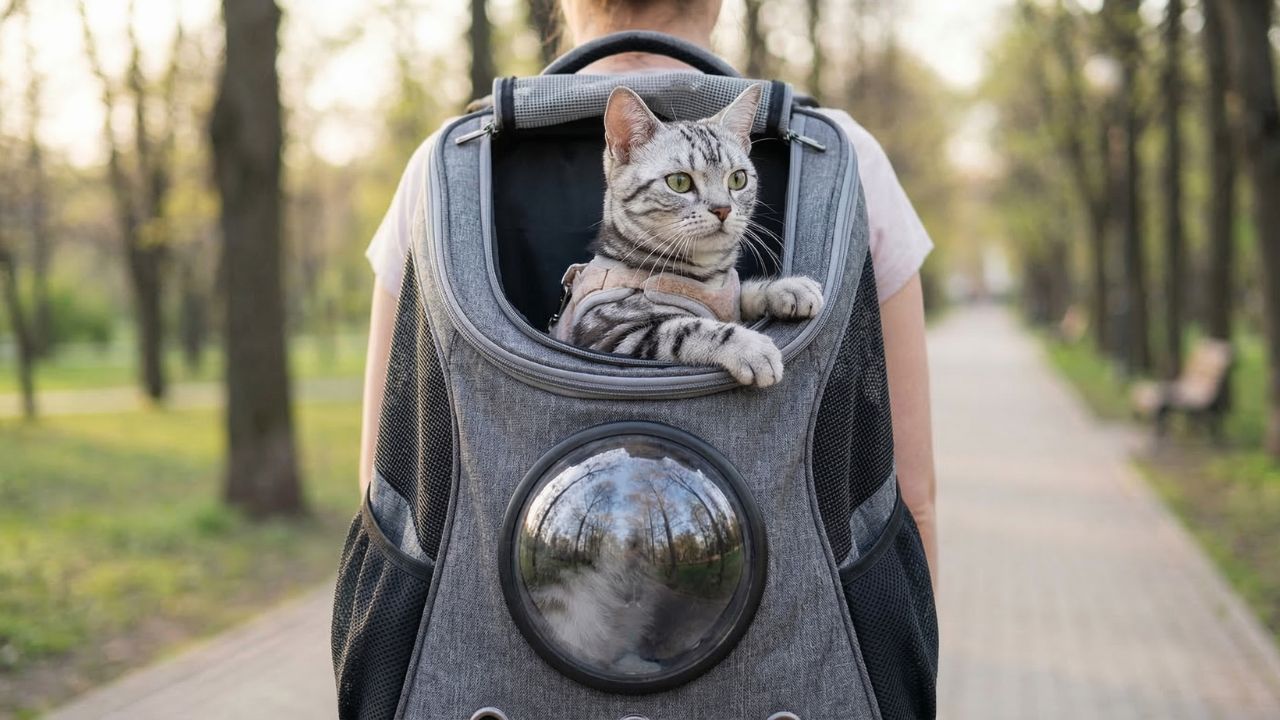
The American Shorthair is an even-tempered, loving cat with a naturally independent side. Its easygoing personality makes it comfortable spending time on its own, while its gentle nature allows it to fit well into households with children and other pets.
When left alone, this self-sufficient breed can stay occupied with favorite toys and activities. Its natural interest in climbing also makes a cat tree a useful addition, giving it a way to stretch, explore, and stay active indoors.
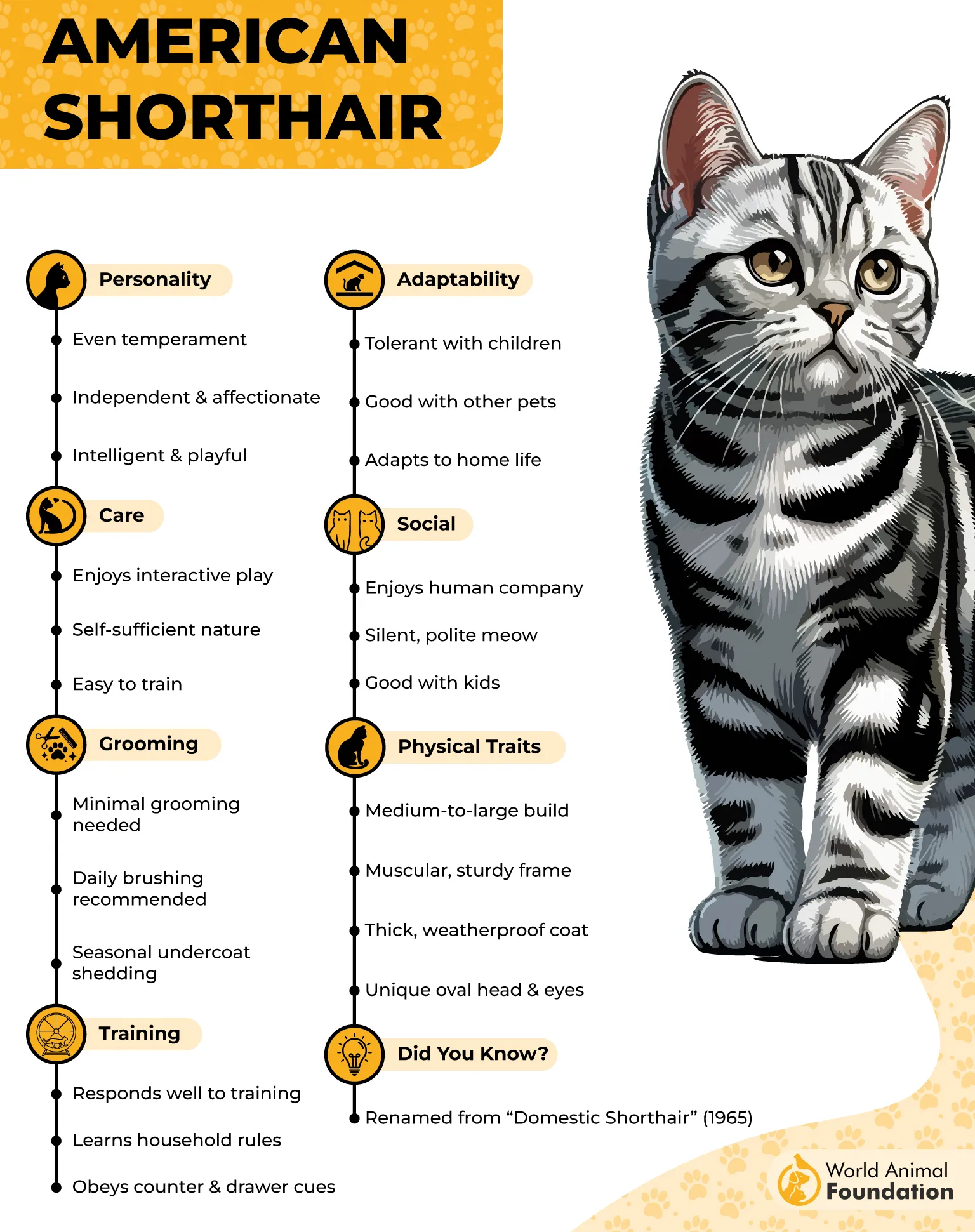
American Shorthairs are generally low-maintenance and do not require constant supervision or entertainment. Their ability to enjoy their own company can make them especially suitable for families with busy daily routines.
How This Breed Stands Out
Naturally self-sufficient: The American Shorthair is comfortable in its own company and can manage periods without constant human attention.
Occupies itself through play: Favorite toys, climbing opportunities, and indoor activities can keep this independent cat engaged while its owners are away.
Conclusion
Choosing a cat that can handle time alone involves looking for a balance of independence, temperament, and companionship. Breeds with relaxed personalities can often enjoy their own space without becoming overly demanding.
Persians and British Shorthairs are comfortable spending much of the day resting, while Russian Blues and Scottish Folds appreciate a healthy mix of affection and personal space. These qualities can suit owners with busy schedules.
More active breeds, such as Abyssinians and American Shorthairs, can stay engaged through toys, climbing areas, and independent exploration. Maine Coons also combine a social nature with an ability to enjoy periods of solitude.
Even independent cats still need proper care, attention, enrichment, and interaction when their owners are home. Choosing a breed that matches your routine can help create a comfortable environment where both you and your cat can thrive.
