




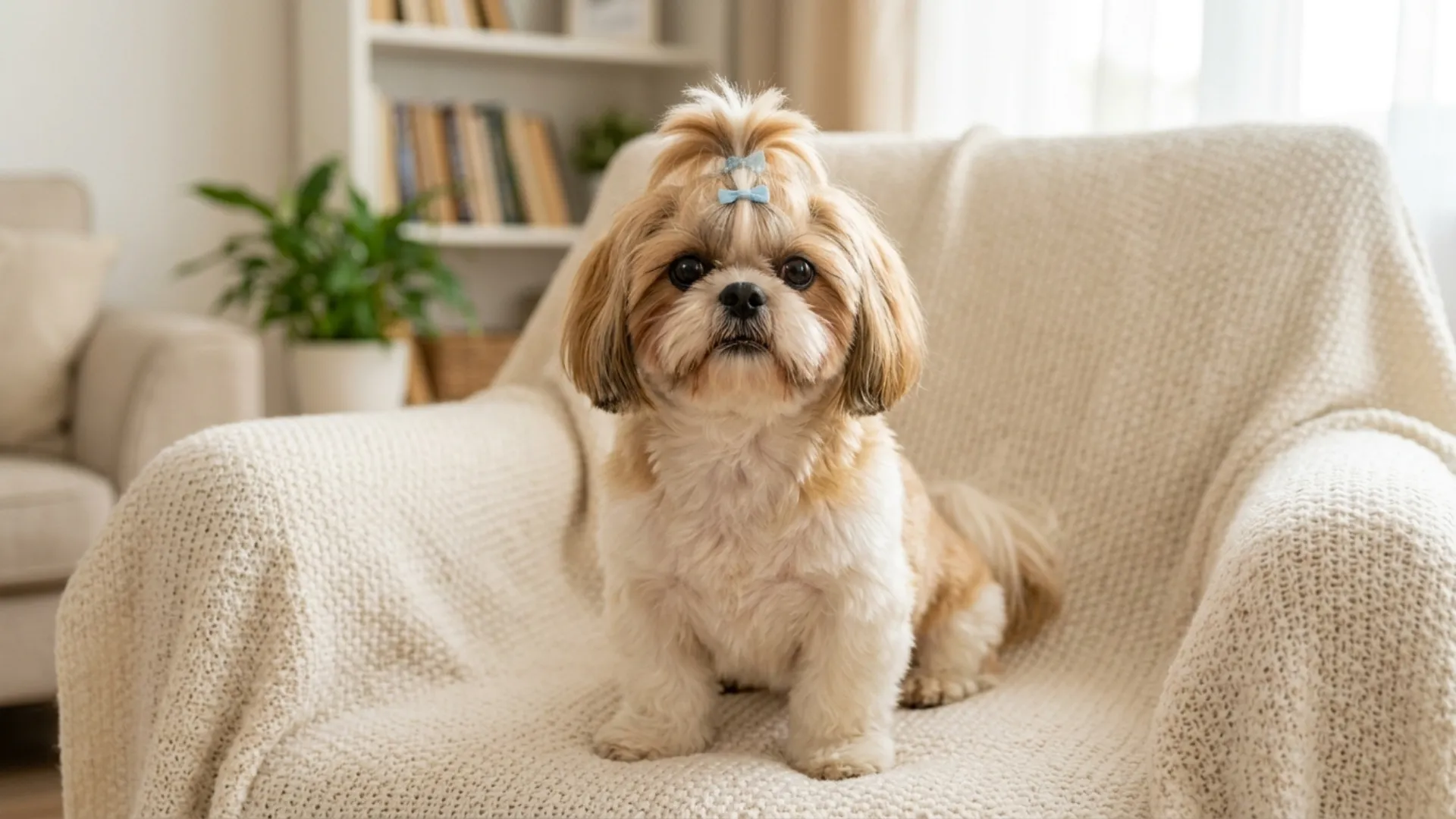
Getting your first dog is a wholesome life upgrade, but there is definitely a learning curve hiding behind those puppy eyes. Suddenly, you are thinking about training schedules, grooming appointments, vet visits, exercise needs, and why somebody just stole one sock but ignored the matching one. Choosing a beginner-friendly breed can make that transition much smoother.
The best dog breeds for beginners tend to combine trainability, sociability, manageable care needs, and adaptability to normal household routines. That does not mean they arrive preloaded with perfect manners, because every dog still needs training, socialization, exercise, veterinary care, and patience.
And yes, this list of the best dog breeds for beginners, simple and sweet, contains some ridiculously photogenic dogs, but we are not choosing roommates exclusively by face card. Here are seven breeds that can make the first chapter of dog ownership considerably sweeter.
Best Dog Breeds for Beginners – Simple and Sweet
1. Golden Retriever
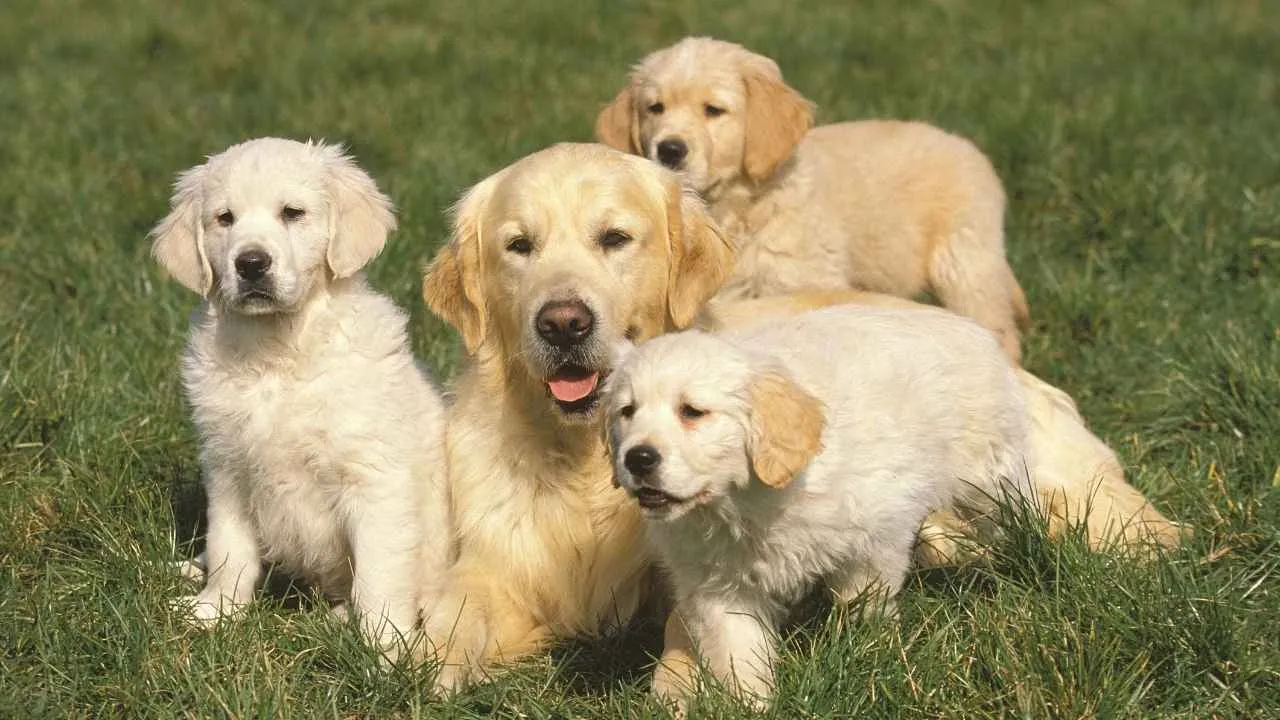
Golden Retrievers were developed as sporting dogs capable of retrieving game, a task that required intelligence, responsiveness, athletic ability, and a willingness to work alongside people. Those qualities now translate beautifully into family life, obedience training, therapy work, and hiking trips.
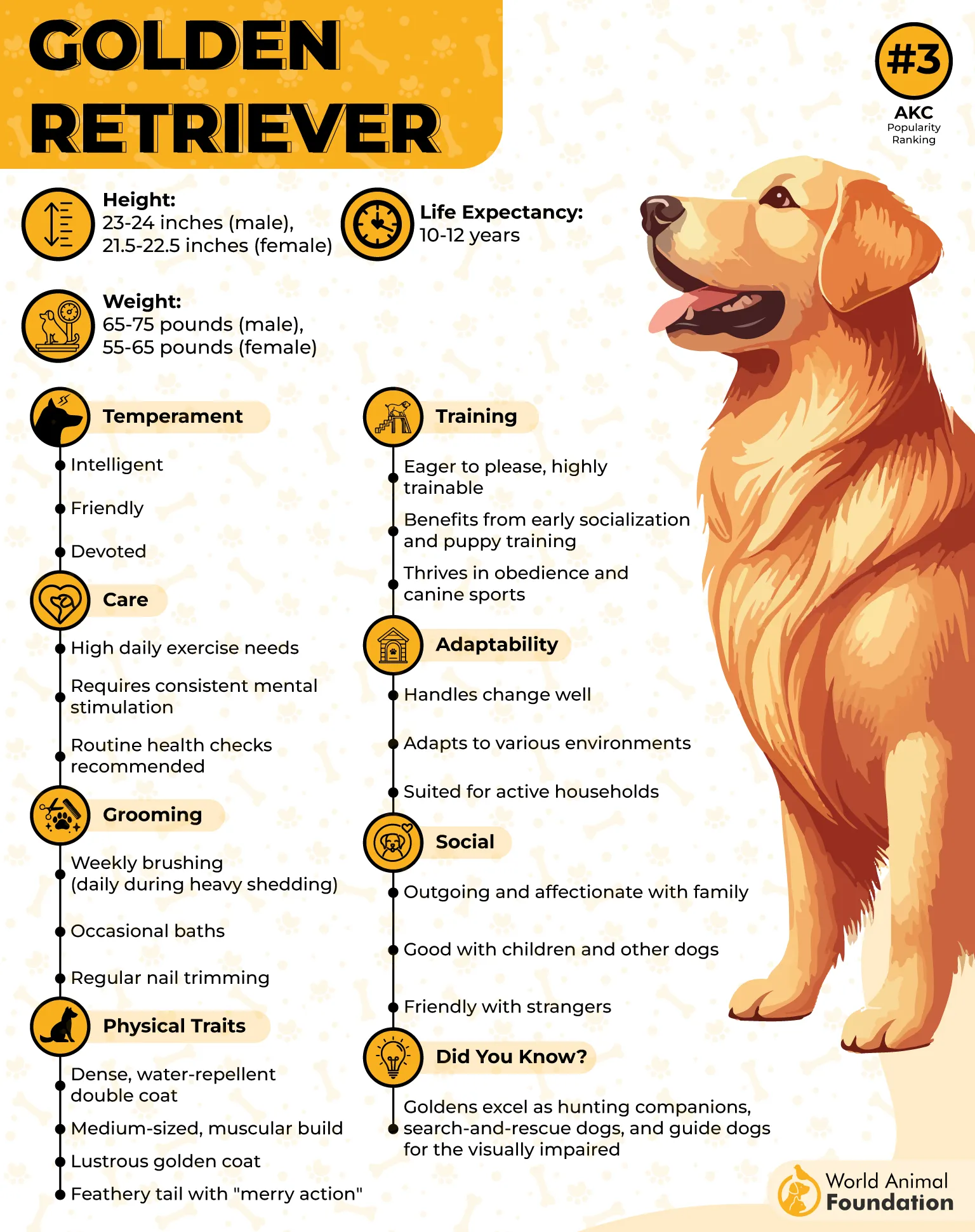
Daily walks, retrieving games, swimming, hiking, training exercises, and opportunities to sniff and explore help prevent boredom, with younger dogs often requiring plenty of structured activity. The upside is that their enthusiasm makes exercise genuinely fun if you want a dog who joins the family adventure instead of watching it from the sofa.
Their approachable personality and trainability make them excellent candidates for beginners, says PetMD, but they suit pet parents prepared for a large, active dog rather than someone specifically seeking effortless ownership.
Remember: Start loose-leash training while your Golden is still small, because the puppy that barely moves your arm today may weigh 70 pounds surprisingly soon.
2. Cavalier King Charles Spaniel
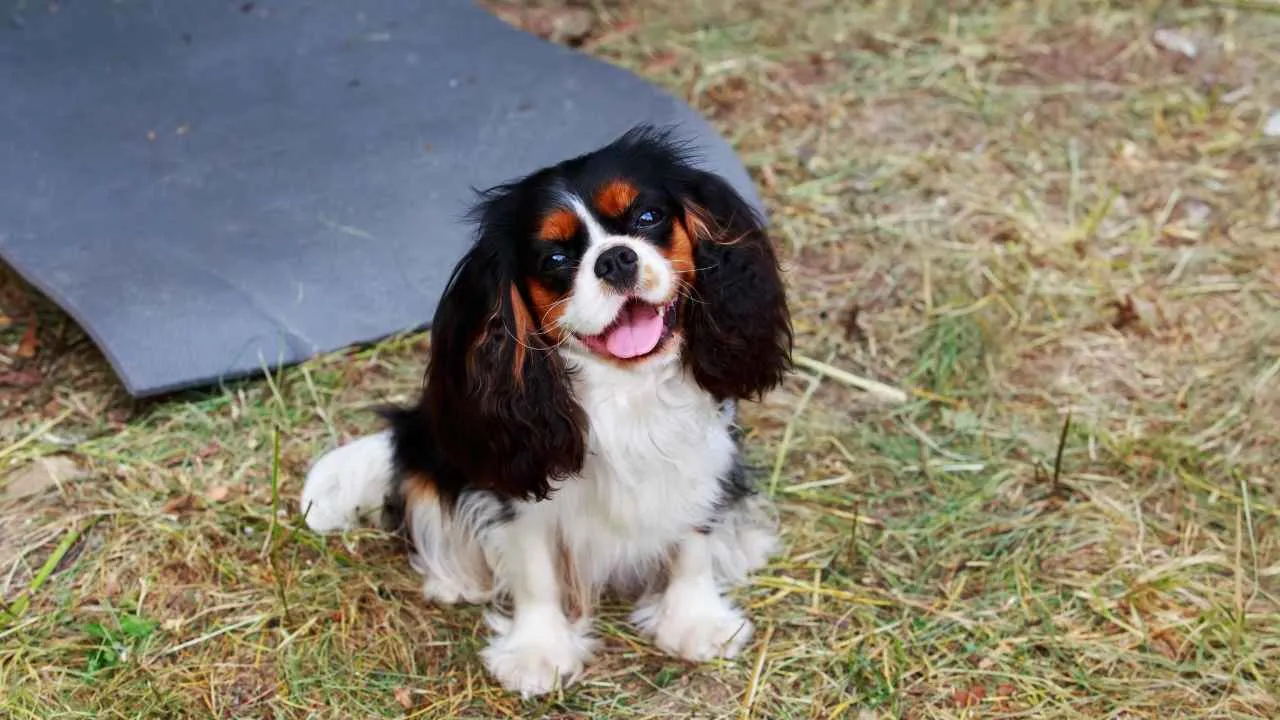
The Cavalier King Charles Spaniel is a strong contender for beginners who want affection without Golden Retriever dimensions. They are generally gentle, sociable, adaptable, and open to interaction with a wide range of people.
They are convenient for apartments, smaller homes, and owners who want a highly portable companion. Their silky coat gives them an effortless, royal aesthetic, although achieving “effortless” naturally requires actual brushing. The AKC claims that their ears, feathering, chest, belly, and legs can get tangled, so coat care should be part of the normal routine.
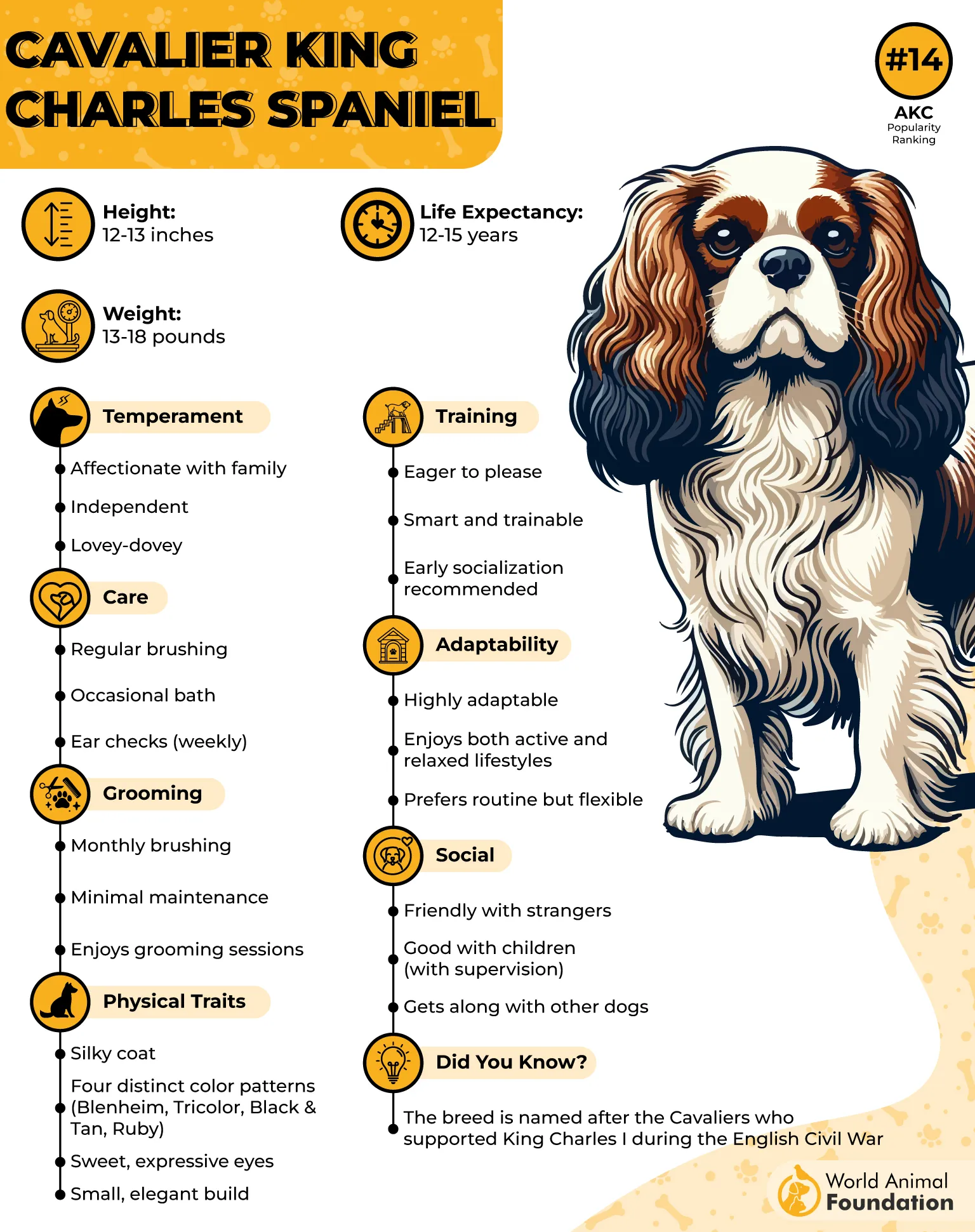
These dogs usually need a moderate amount of exercise rather than an extreme fitness program. Walks, indoor games, basic training, scent activities, and safe opportunities to explore can provide a satisfying routine without requiring you to become the “person who hikes at sunrise.”
Remember: Ask breeders to show actual health-testing documentation for the puppy’s parents, rather than treating a routine vet check as equivalent to genetic screening.
3. Shih Tzu
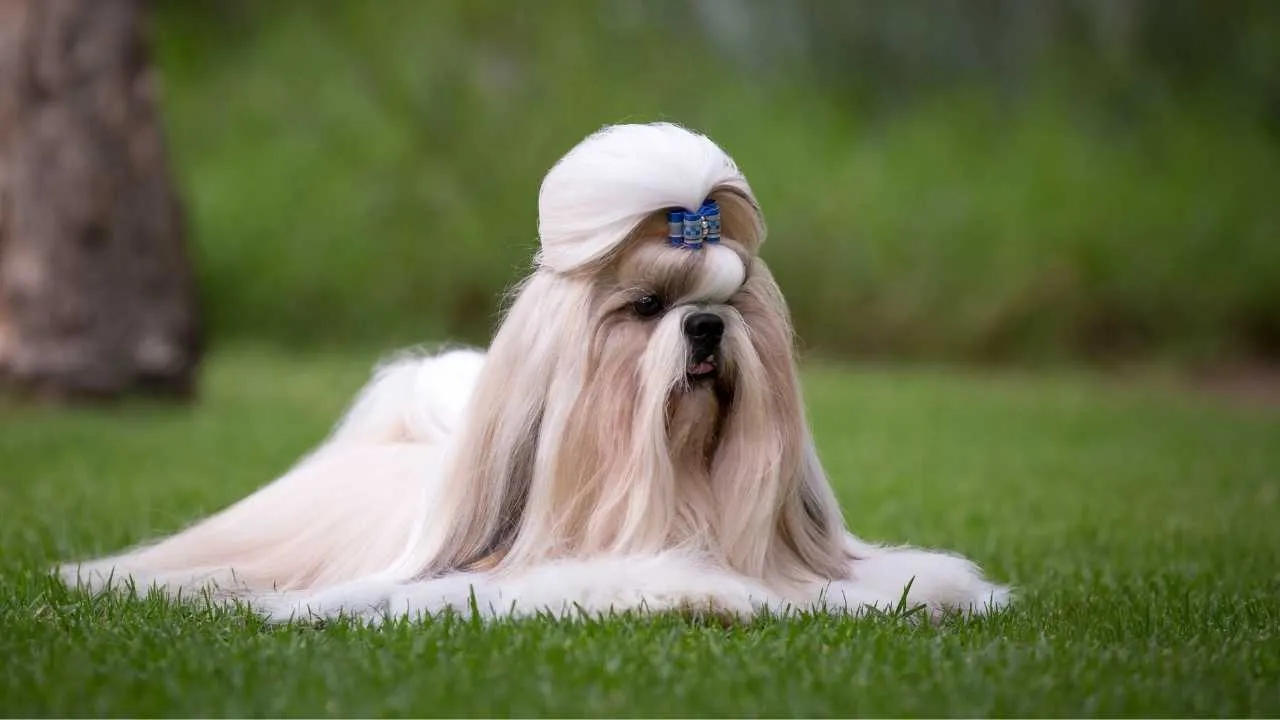
The Shih Tzu was developed primarily as a companion, and the breed has clearly never forgotten the assignment. These dogs often love attention, household involvement, cozy laps, and the general business of existing near their favorite humans.
Its famous long coat is gorgeous, but it is not self-maintaining, as daily brushing may be required when kept at full length. Many companion owners choose a shorter puppy trim, which preserves the cute factor while considerably reducing the daily hair-management saga.
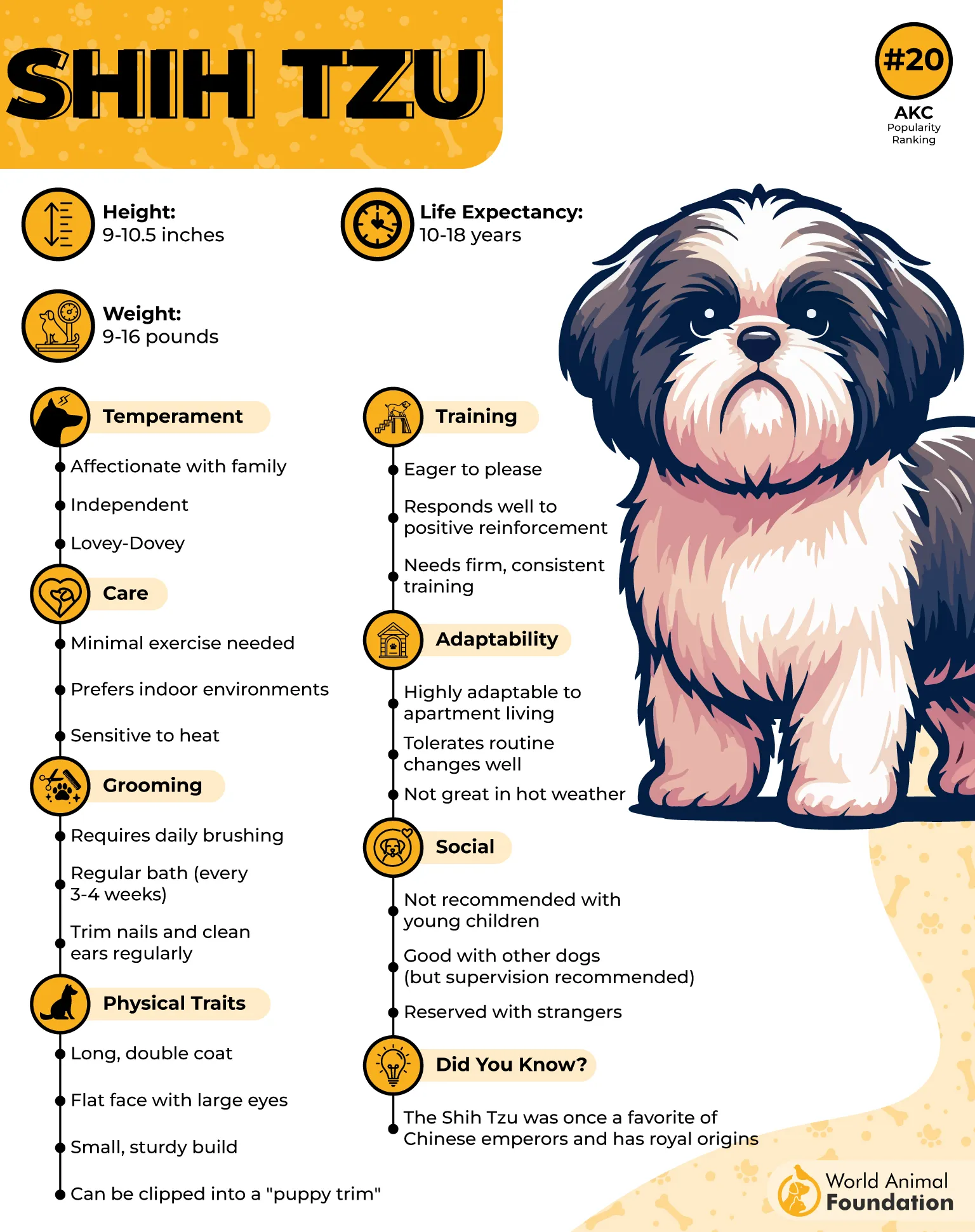
Purina says that training this dog is less about dominating a stubborn dog and more about becoming interesting enough that cooperation seems worthwhile. House-training can require patience with small breeds, so take the puppy outside frequently, especially if you live in an apartment.
Their exercise requirements are usually manageable for beginners who are not training for a half marathon. Short walks, indoor play, gentle training, food puzzles, and plenty of social interaction can keep many Shih Tzus satisfied and enhance their life expectancy.
Remember: Establish a very consistent toilet schedule instead of getting frustrated when progress takes longer than expected.
4. Pug
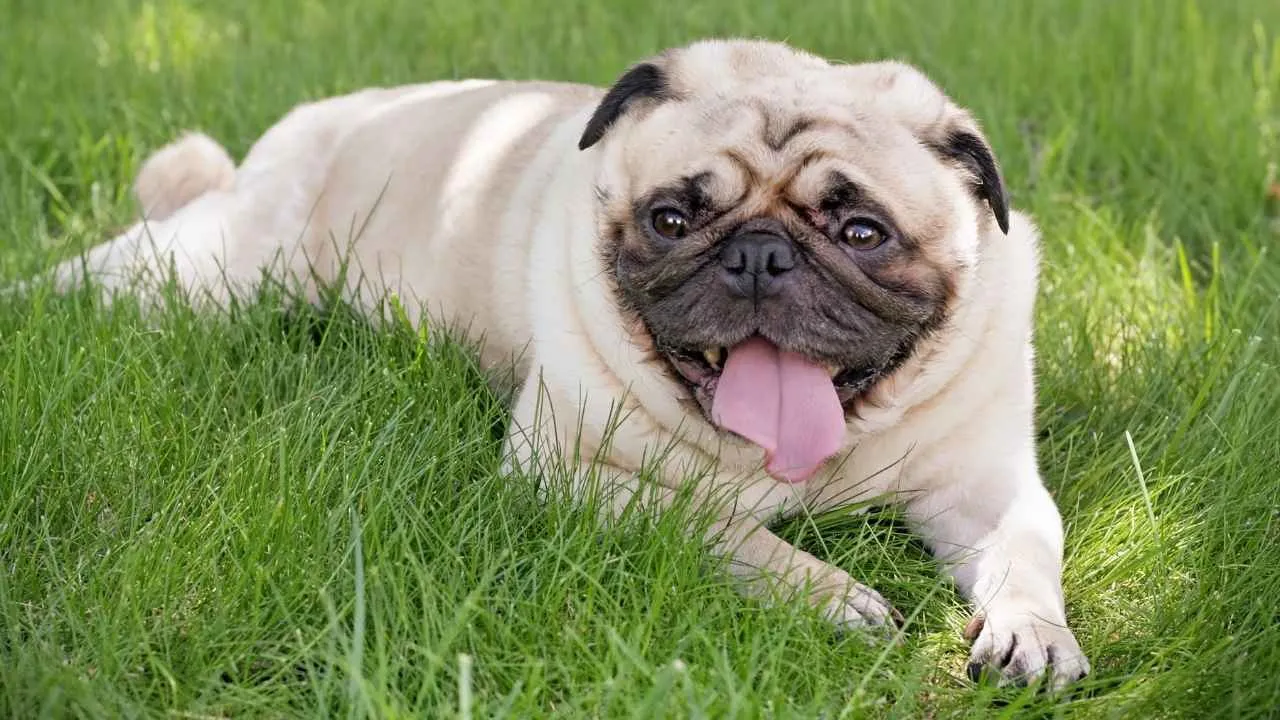
Pugs were once associated with Chinese royalty before becoming beloved companion dogs elsewhere. Modern Pugs still behave as though the entire household has been assembled specifically to provide them with affection, snacks, and an audience.
Grooming looks easy because of the short coat, but there is a plot twist: Pugs can shed quite a lot. Still, they require minimal grooming. Weekly brushing helps capture loose hair, occasional bathing keeps the coat fresh, and facial wrinkles deserve routine attention because moisture and debris should not be allowed to set up permanent residence.
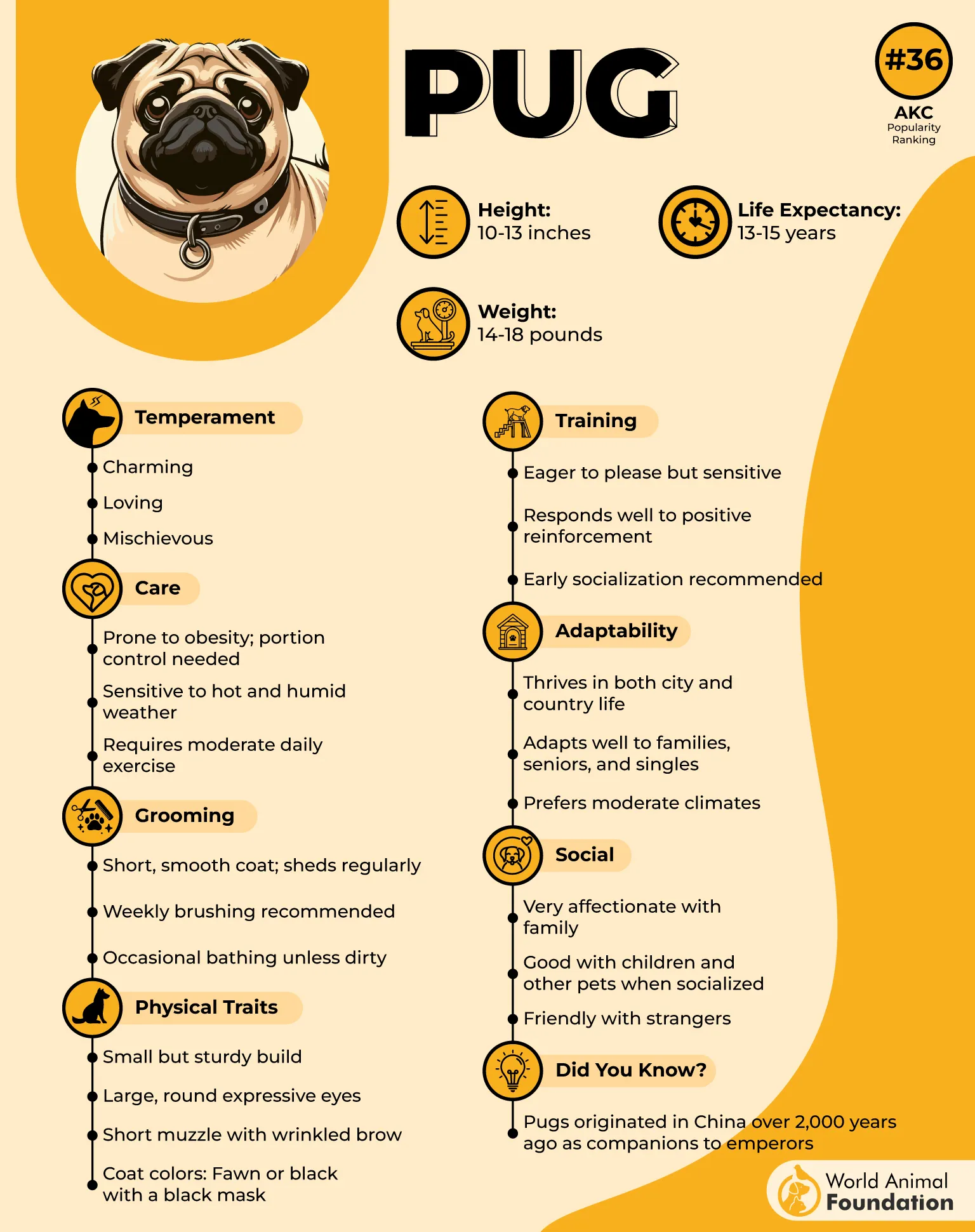
The biggest consideration for beginners is the breed’s brachycephalic, or short-faced, anatomy. They can struggle more in hot, humid conditions, and strenuous exercise in warm weather can be risky, as their large, exposed eyes are vulnerable to issues such as corneal injury and dry eye.
Remember: Keep your Pug lean, measure meals, and remember that training treats still count toward the day’s calories.
5. Poodle (Toy)
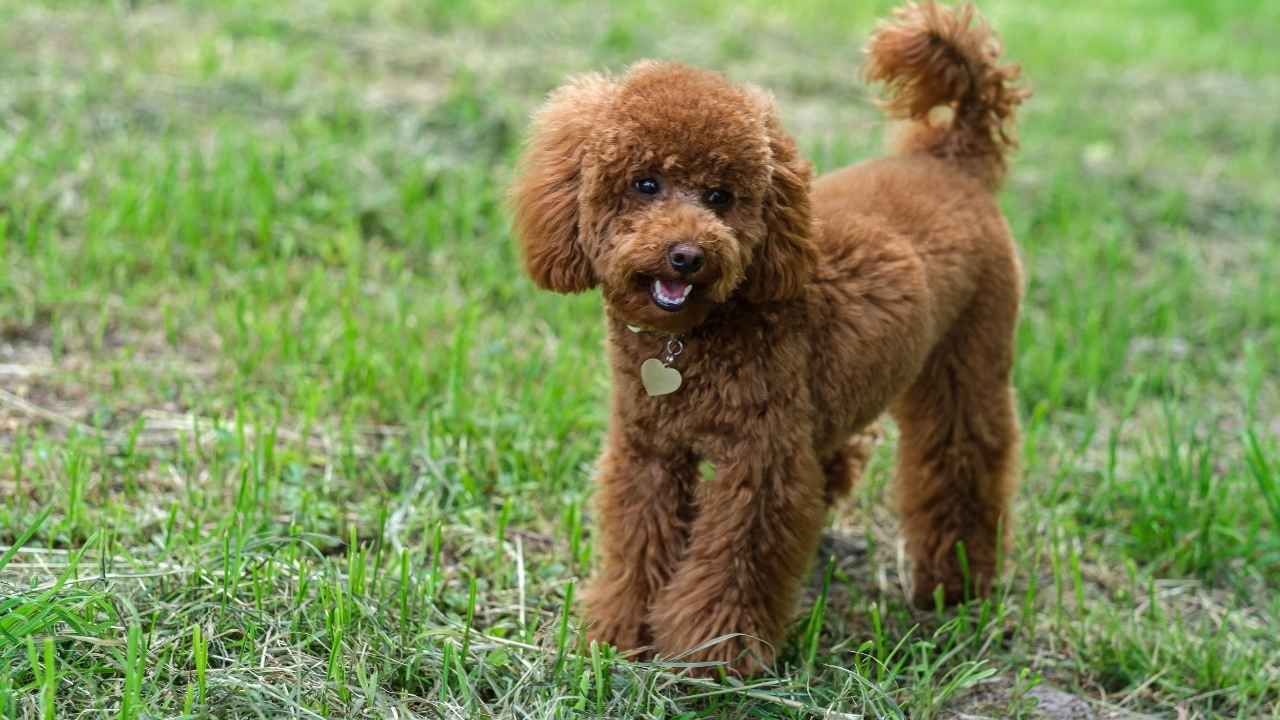
The Toy Poodle is a tiny dog running extremely sophisticated software. Intelligent, responsive, athletic, and people-oriented, this breed suits beginners who want to participate actively in training rather than treating obedience as something the dog should somehow figure out on its own.
Compared to other pets, they have enough learning ability that the bigger challenge can occasionally be keeping them from training you. Small size makes transportation simple, although careful handling around large dogs, young children, stairs, and tall furniture is sensible.
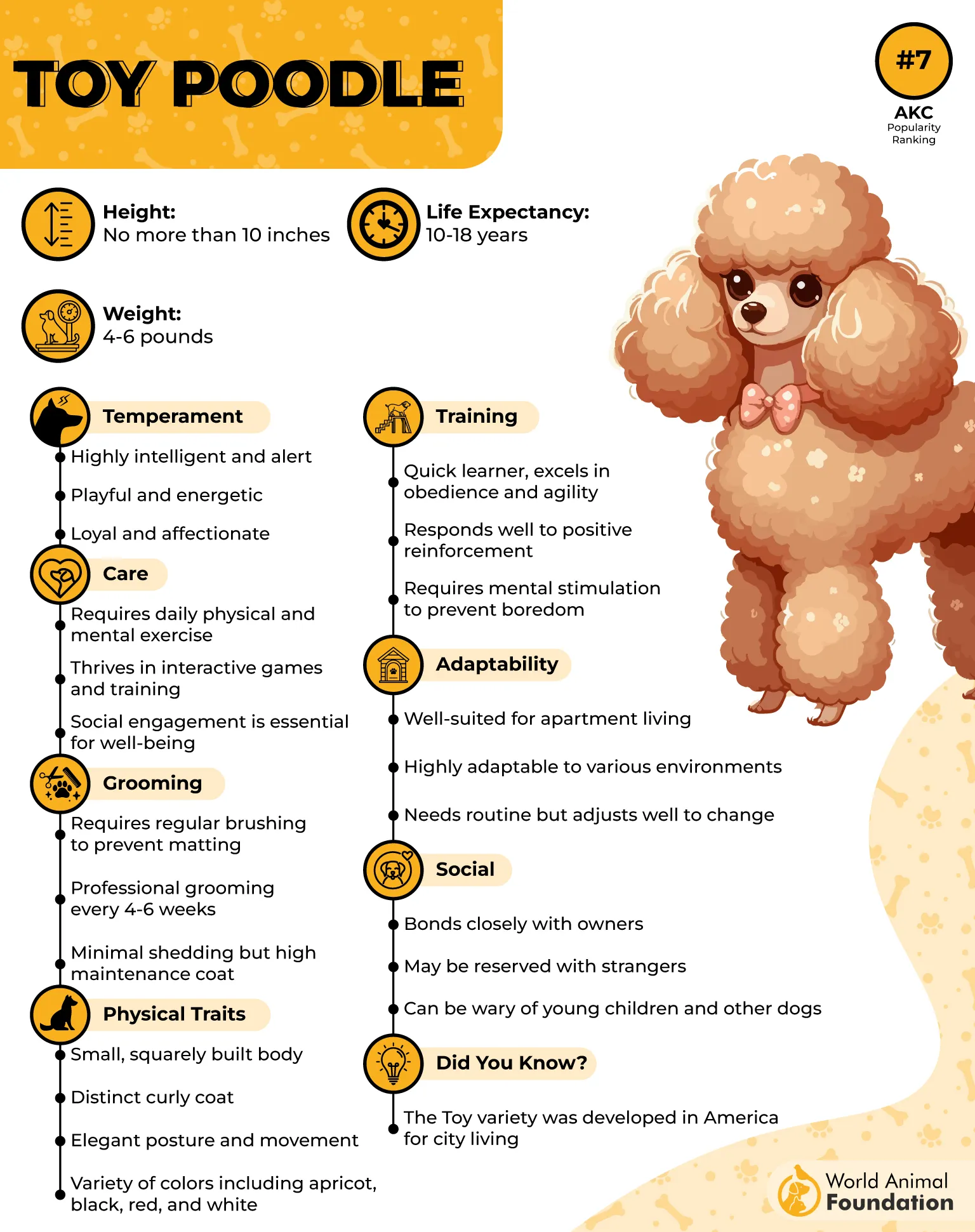
Their smartness shines when training becomes interactive. Toy Poodles can enjoy obedience, tricks, scent games, puzzle toys, rally, and appropriately scaled agility activities because learning itself can be rewarding for them. Repeating the same boring drill endlessly is not the move; short, varied sessions make far better use of that busy brain.
For a beginner excited about actually learning how to train a dog, the Toy Poodle can be one of the most rewarding choices on this list.
Remember: Teach practical behaviors such as recall, settling, handling, and loose-leash walking alongside the entertaining tricks this breed learns so quickly.
6. Miniature Schnauzer
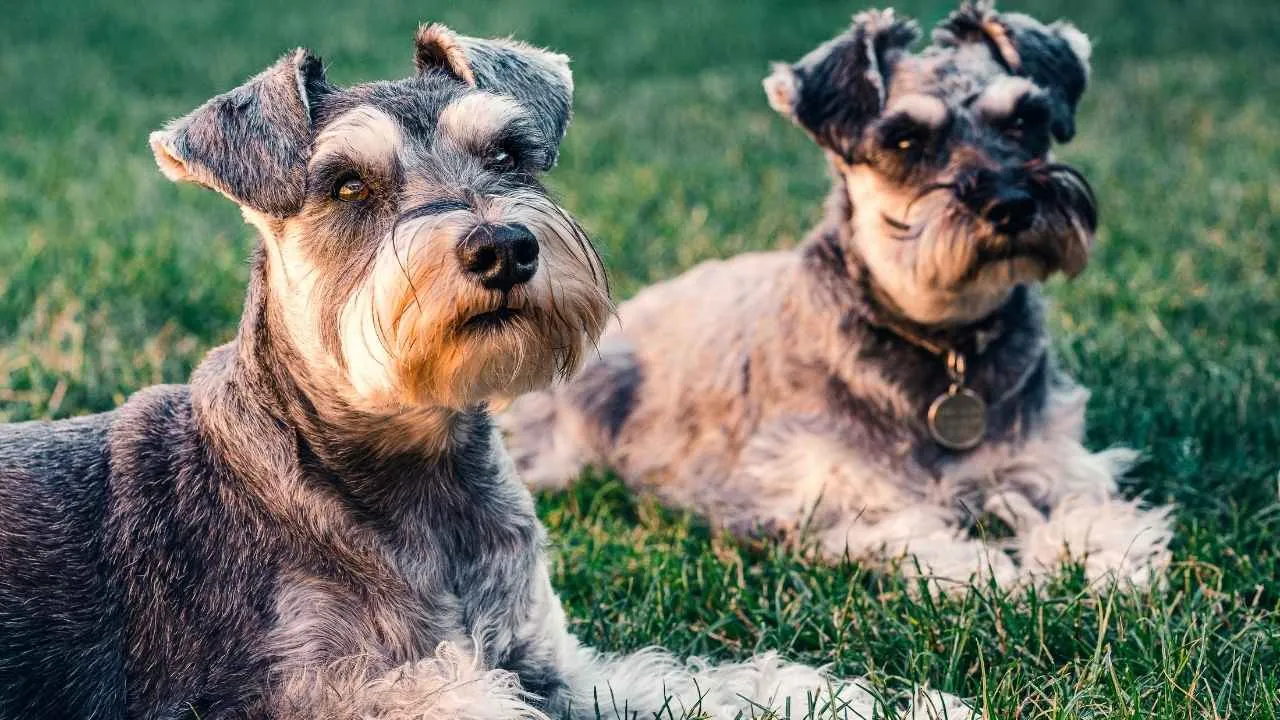
The Miniature Schnauzer looks like a distinguished professor that has extremely strong opinions about what is happening outside the window.
They are sturdy for their size and can adapt to apartments, suburban homes, or rural life when their exercise and interaction needs are met. They often enjoy around an hour of daily physical activity through walks, games, or training.
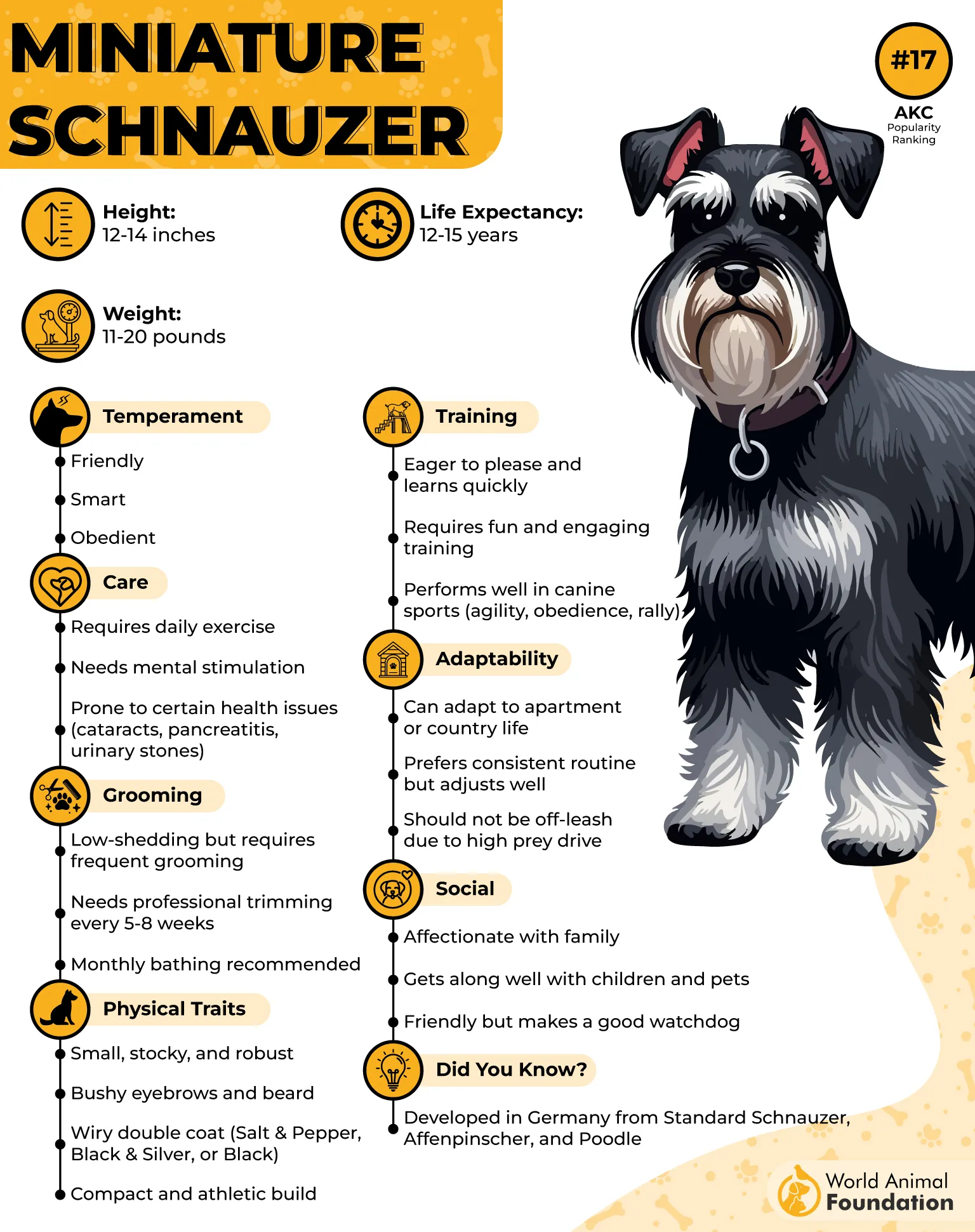
This great dog breed for first-time owners has a wiry and dense double coat that sheds very little. It is convenient when your personal fashion philosophy does not include wearing dog hair. However, low shedding does not mean no regular grooming, as these little dogs still need brushing, beard maintenance, and regular clipping, with many pet owners relying on professional groomers.
The main challenge for first-time dog owners may actually have nothing to do with grooming. Schnauzers are naturally vigilant, and without thoughtful socialization and reinforcement of quiet behavior, their watchdog instincts can turn ordinary hallway activity into a 24-hour neighborhood commentary podcast.
Remember: Reward your Mini Schnauzer for not reacting to routine sounds so silence becomes a trained behavior rather than a rare cosmic event.
7. Pomeranian
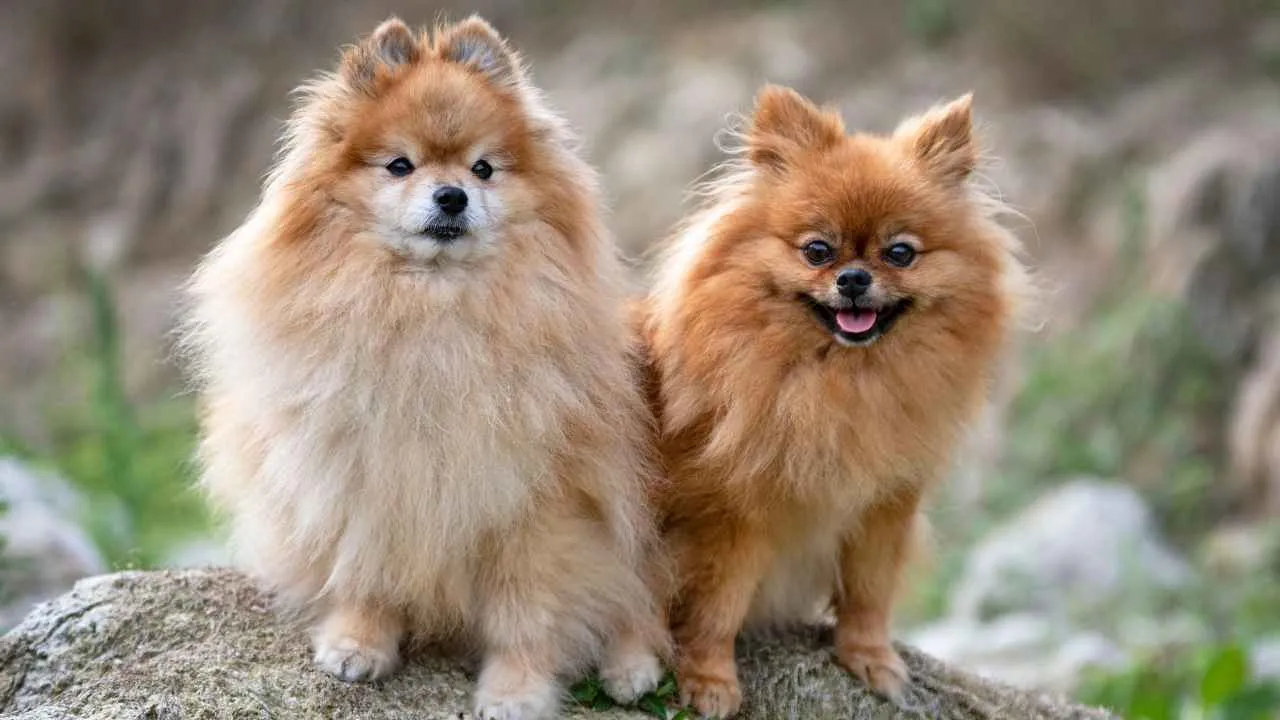
A Pomeranian may weigh less than some people’s grocery bags while carrying itself like the elected ruler of the entire neighborhood. These small dogs, with a dense double coat, are lively, curious, intelligent, and affectionate companions for first-time owners.
Their miniature size works wonderfully in apartments and makes them easy to transport. It is also transportable and create a responsibility to protect the dog from careless handling, dangerous falls, encounters with larger, uncontrolled dogs, and rough play.
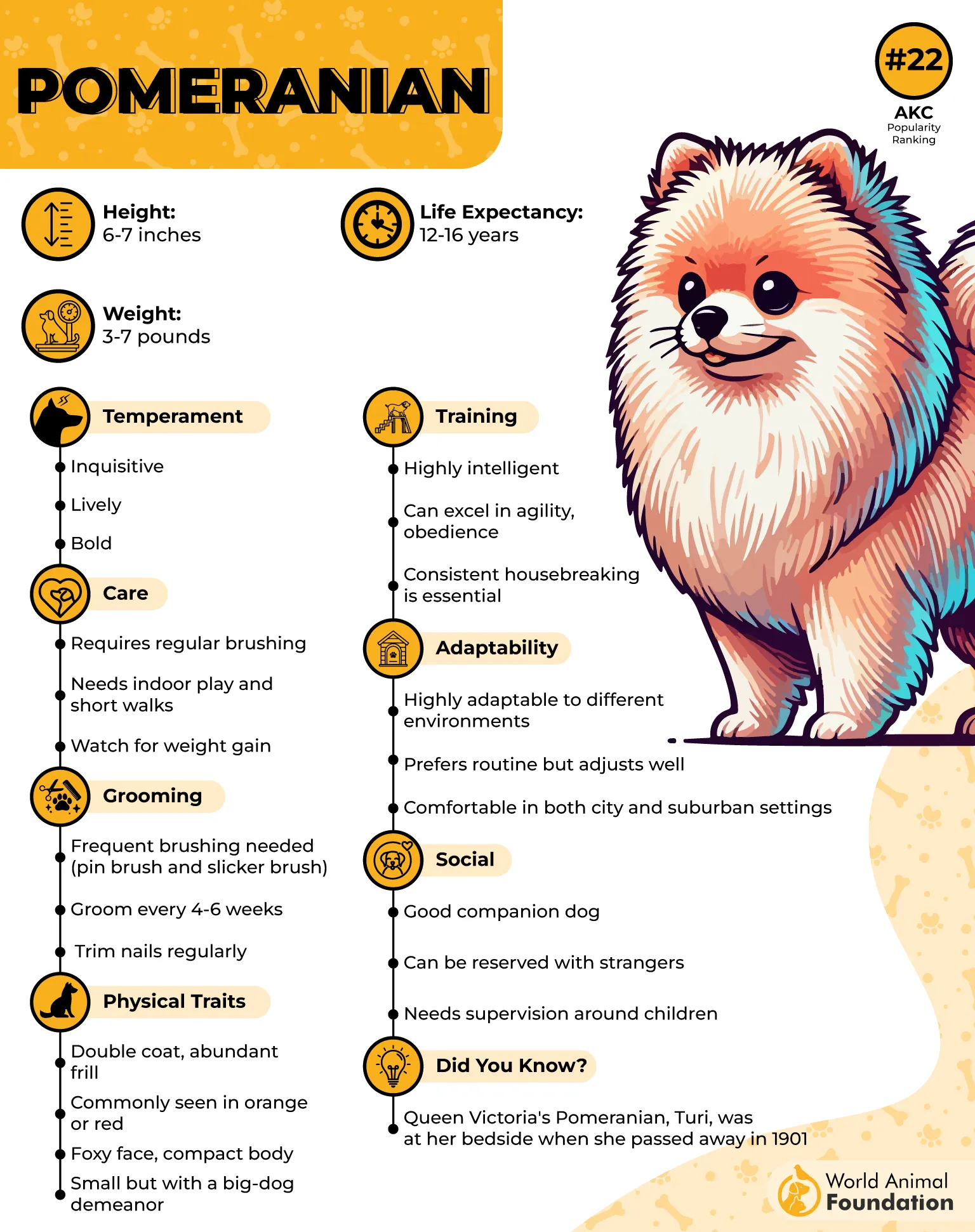
Training these small dogs requires consistency because intelligence does not necessarily equal automatic obedience. Poms can enjoy agility, rally, obedience work, and therapy roles, but house training by the dog owners may take patience, and recall should be taught carefully from the beginning.
Remember: Install pet steps or supervise access to high furniture rather than encouraging your tiny dog to perform repeated superhero landings.
Conclusion
Choosing your first dog is less about finding the universally “easiest” breed and more about finding the dog whose needs match the life you genuinely live.
Labrador Retrievers, Bernese Mountain Dogs, Bichon Frises, Boston Terriers, French Bulldogs, Chow Chows, German Shepherds, Yorkshire Terriers, Italian Greyhounds, and Basset Hounds are also great choices for first-time pet parents.
Before bringing home a puppy or adult dog, calculate the real costs of veterinary care, food, grooming, training, insurance, boarding, and emergency expenses. Meet adult dogs of the breed if possible, speak with responsible breeders or reputable rescue organizations, and ask about health screening rather than choosing solely based on appearance.
