




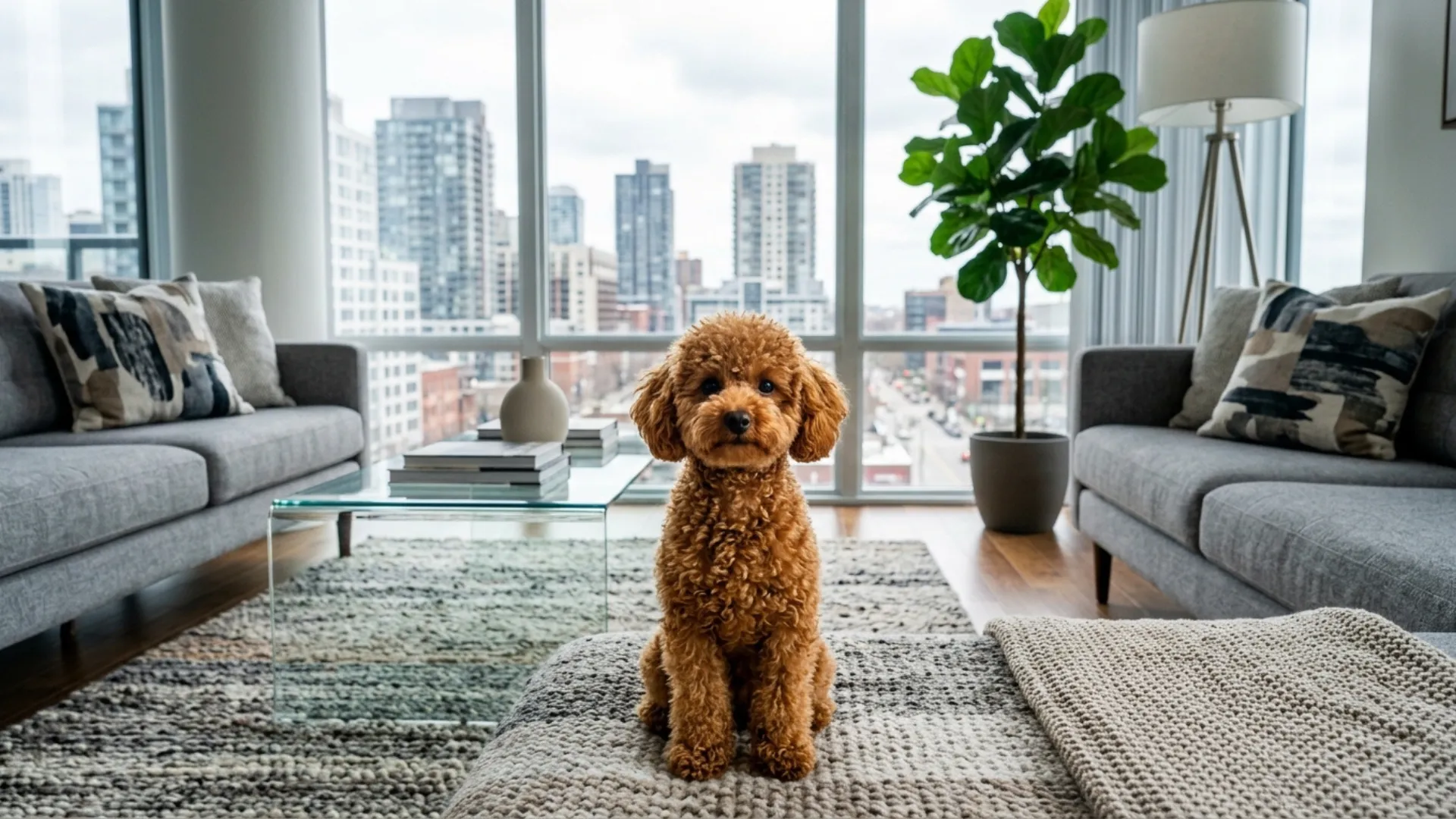
City living with a dog sounds adorable until your hallway becomes a training arena and your neighbors learn every bark by name.
The good news?
Small dogs can fit beautifully into compact homes, but size alone does not make apartment life easy.
The real magic comes from dogs that pay attention, respond to guidance, enjoy learning, and settle into a routine without turning every lesson into a negotiation. With consistent training, positive reinforcement, and enough mental stimulation, a small-space pup can become a surprisingly polished roommate.
So, which dogs make city training feel a whole lot easier? Let’s meet them.
Did you know?
Dogs can sometimes learn simply by watching people. They may copy actions even when those actions are not especially useful, and with practice, some can imitate behaviors such as spinning, touching objects, or following familiar routines.
Quick-Trainable Dog Breeds for Small City Homes
1. Coton De Tulear
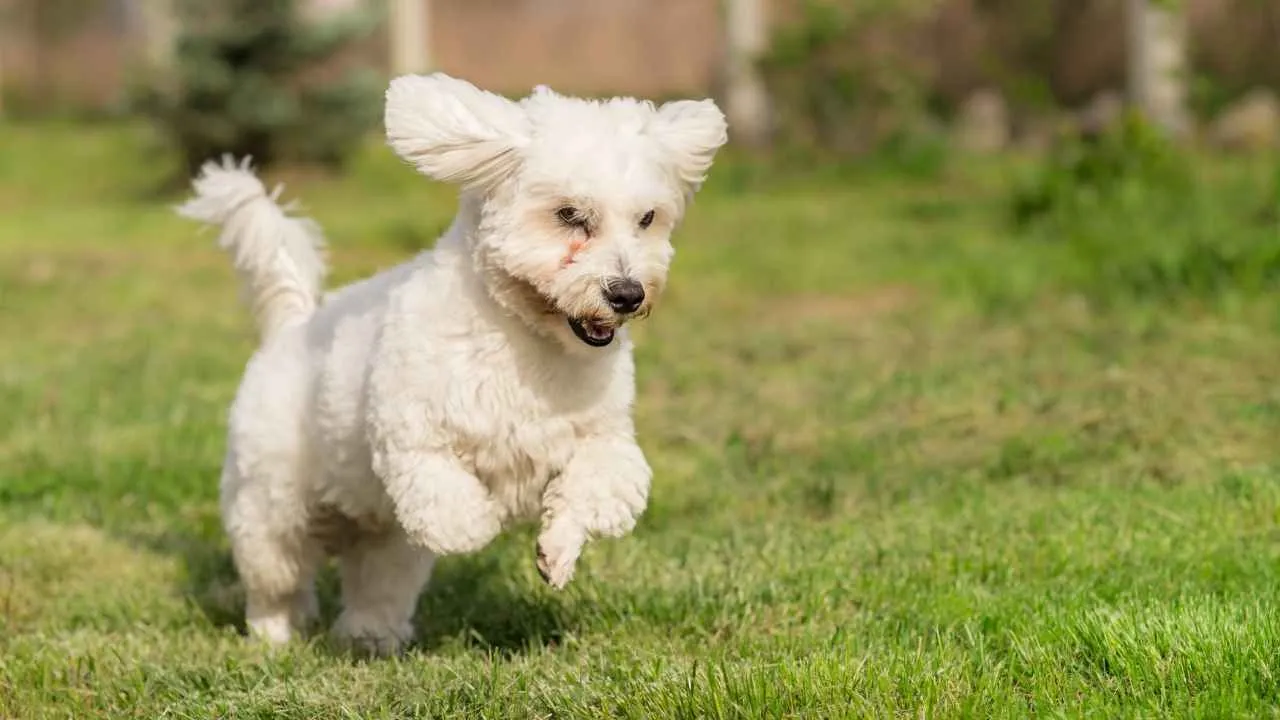
Apartment life can feel cramped fast, yet Cotons de Tulears bring plenty of personality without needing a giant footprint. Bright, happy-go-lucky, and naturally clownish, they enjoy following their favorite human around the house. Small space, big comedy department.
Cotons have charming behavior and plenty of personality. They are witty, lighthearted, sometimes boisterous, yet not demanding, with a notably gentle awareness of their people. Basically, they can bring the party without turning every moment into one.
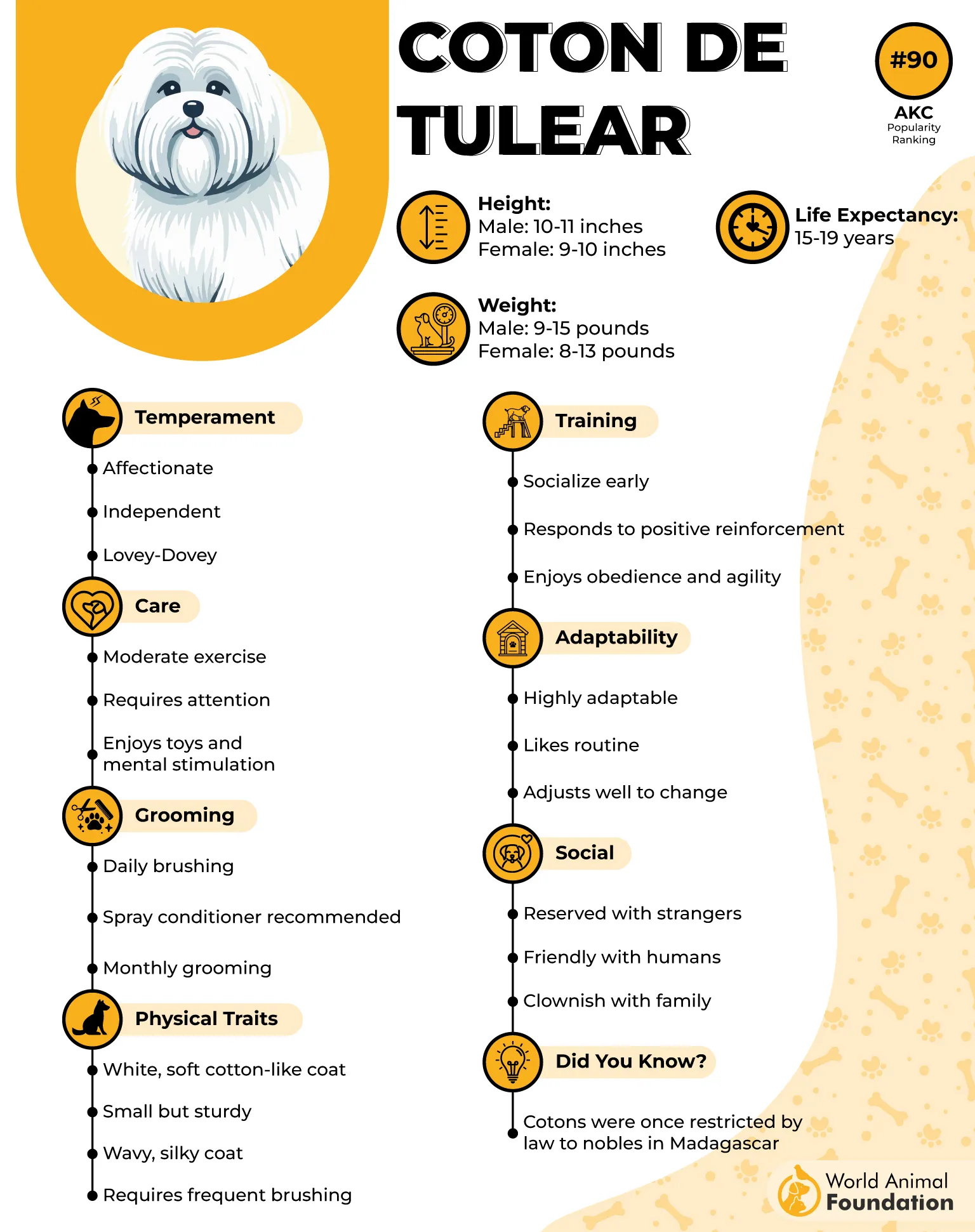
For small city homes, Cotons have a practical rhythm. Moderate exercise, short daily walks, indoor play, attention, and interesting toys can keep them occupied without requiring a large yard. That makes compact living spaces feel far less like a compromise.
Training Tips For This Breed
Keep sessions lively and entertaining so boredom does not steal the lesson.
Build manners through regular obedience practice.
2. Toy Poodle
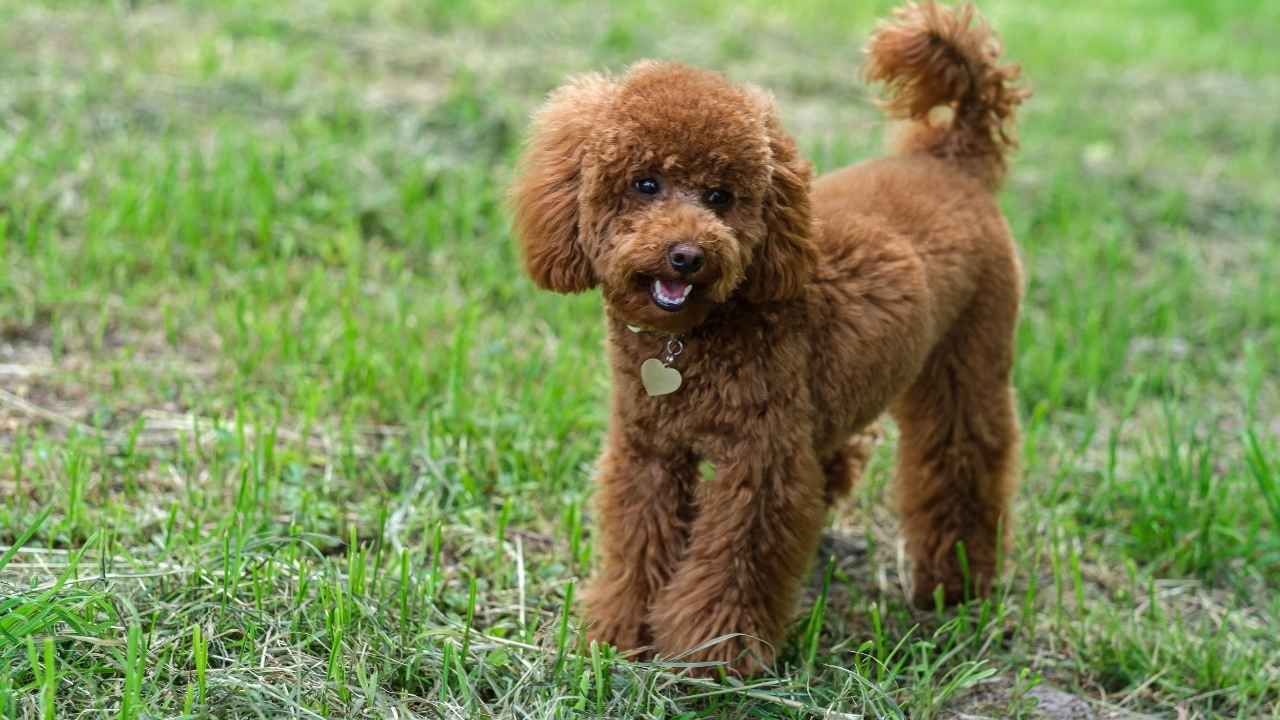
City apartments reward dogs that can learn the household script quickly, and Toy Poodles come prepared. They are exceptionally intelligent, playful, self-confident, and eager to please their families. That combination gives owners a learner rather than a tiny chaos coordinator.
What makes these dogs easy to train is their remarkable intelligence and eagerness to please. They pick up directions quickly and are highly trainable across different activities, so learning can feel more like a game than a negotiation. Their sharp minds stay engaged with varied lessons.
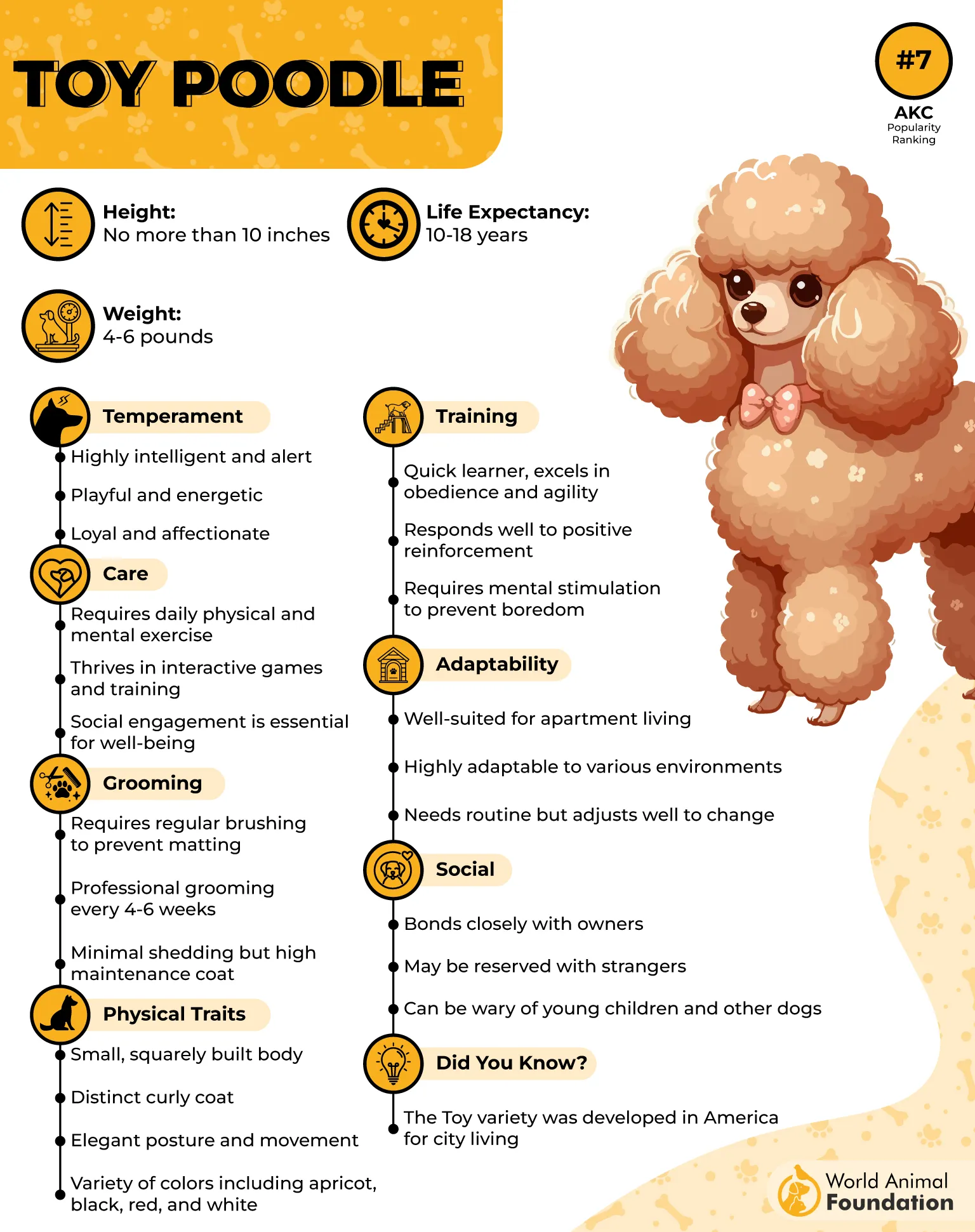
As noted by PetMD, Toy Poodles bond closely with their families and can struggle when left alone too long. Their minds also need stimulation, so interactive play, toys, and training help keep boredom, barking, jumping, and destructive behavior in check.
Training Tips For This Breed
Rotate obedience sessions with nose work and tracking.
Add enrichment puzzles between formal lessons.
3. Papillon
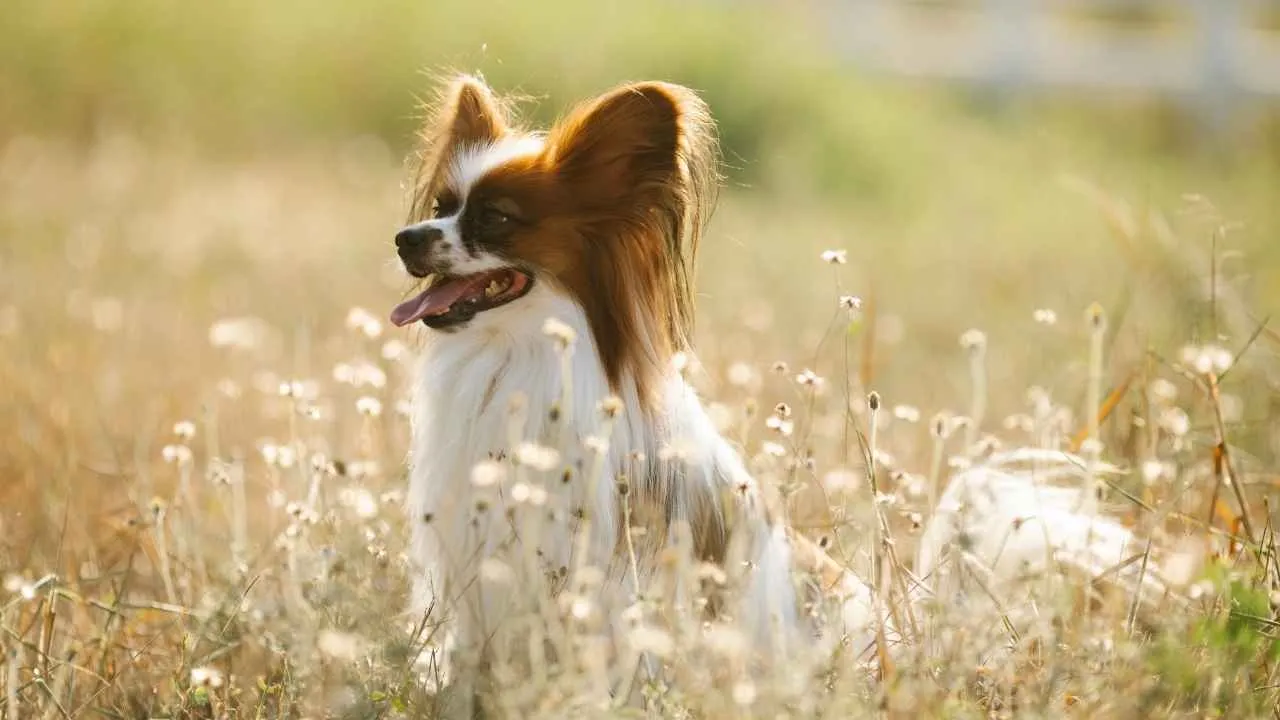
Those butterfly ears may steal the first glance, but Papillons bring quick, curious minds that keep the attention. These happy, high-energy, and alert dogs are eager to join the action and learn. For city owners, that brain is part of the package.
Papillons can fit family life beautifully because they are affectionate, social, and happy around children, adults, other dogs, and pets. Their tiny size calls for supervision with very young or rambunctious kids, but they generally enjoy being part of the household action.
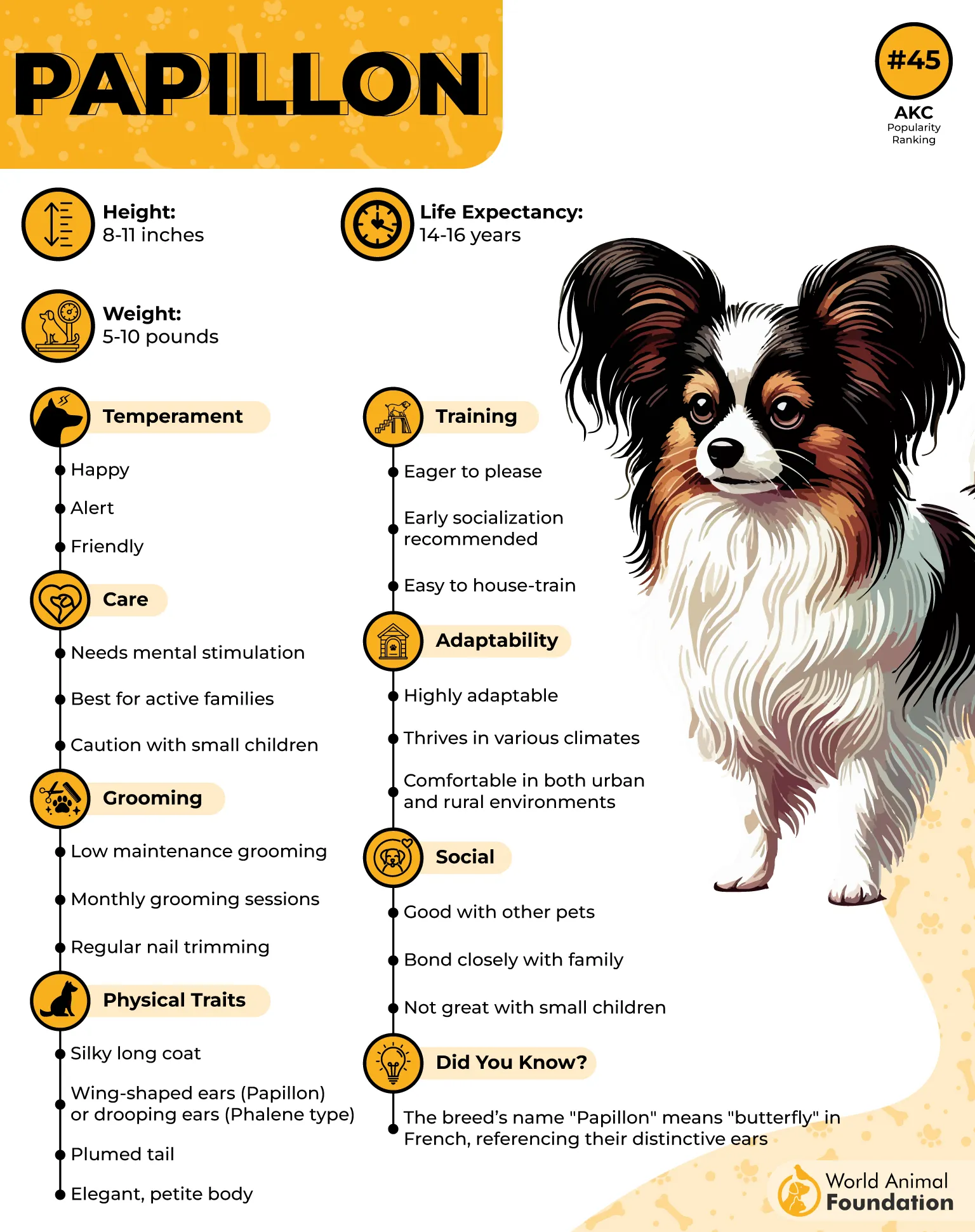
These dogs thrive with regular exercise and mental stimulation because they are active, smart dogs, not couch potatoes. Daily brisk walks, interactive toys, puzzle games, playtime, and supervised visits to securely fenced dog parks with separate small-dog areas can keep both body and brain occupied.
Training Tips For This Breed
Keep lessons consistent, fun, and positive.
Begin socialization early so they grow into confident, well-mannered adults.
4. Bichon Frise
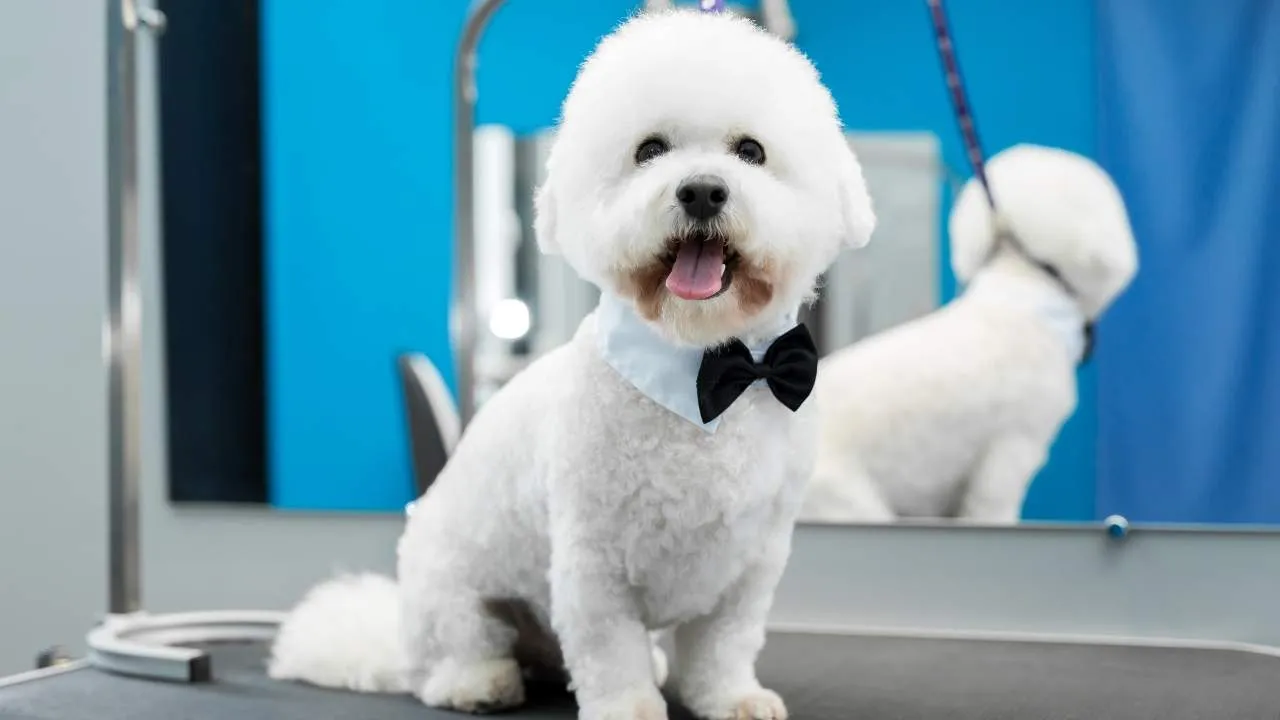
The Bichon Frise has been charming people for centuries, and city life suits that confidence nicely. Recognized by the AKC in 1972, this curious, playful, small breed is known for adapting well and training nicely. Tiny comedian energy, meet urban address.
The Bichon’s cloud-like coat comes with some grooming needs. Bichons should be brushed several times each week, while bathing and clipping help keep the continuously growing coat from matting. Cute and fluffy, yes, but the brush definitely earns its keep.
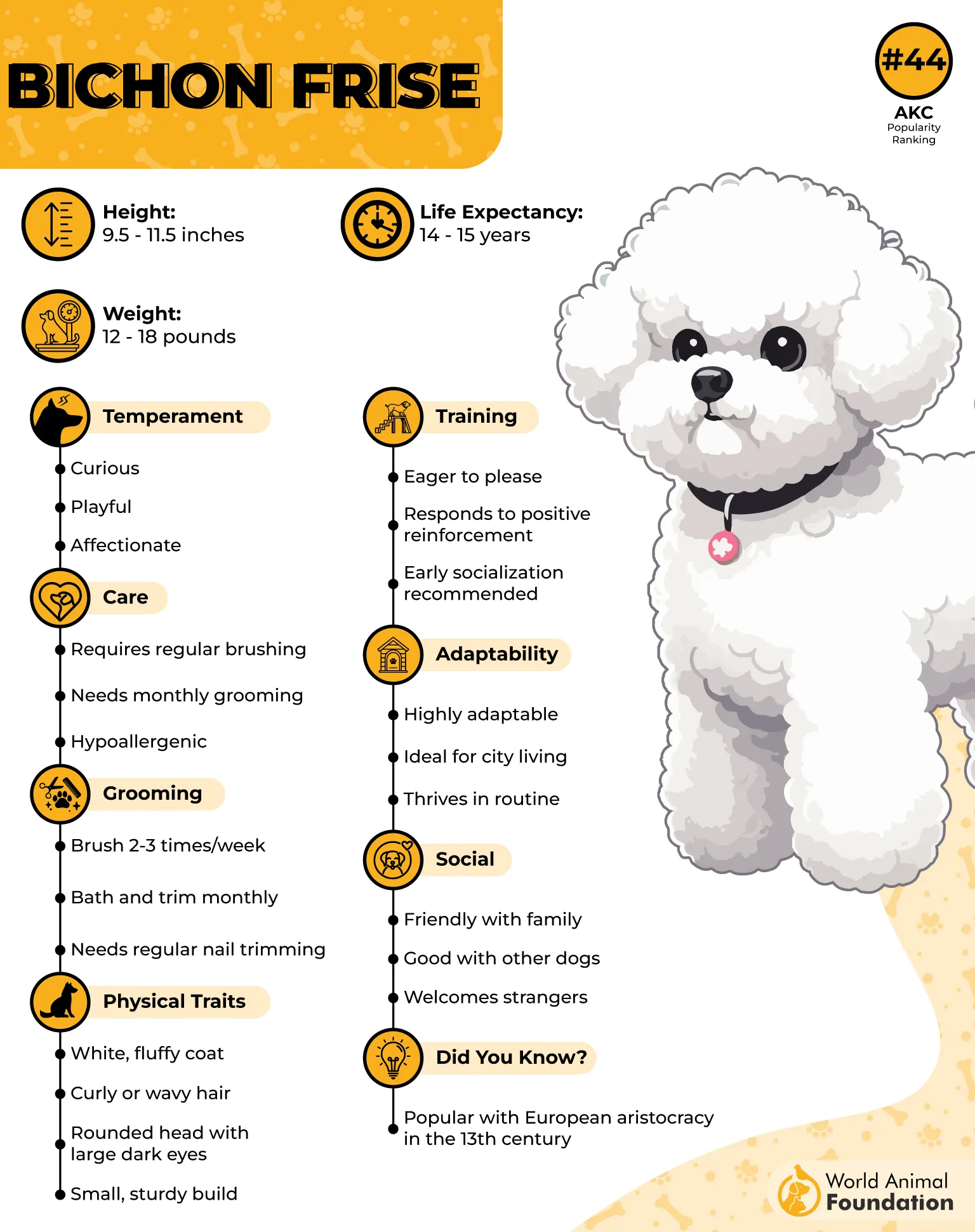
The Bichon Frise is among the best dog breeds for apartment dwellers because its adaptable nature, moderate energy level, and small size are well-suited to compact spaces. It trains nicely, does not typically bark much, and brings a friendly attitude. City neighbors may appreciate that combination.
Training Tips For This Breed
Do not let training slide, since bad habits can develop.
Consider crate training to help curb destructive behavior when left alone.
5. Miniature Schnauzer
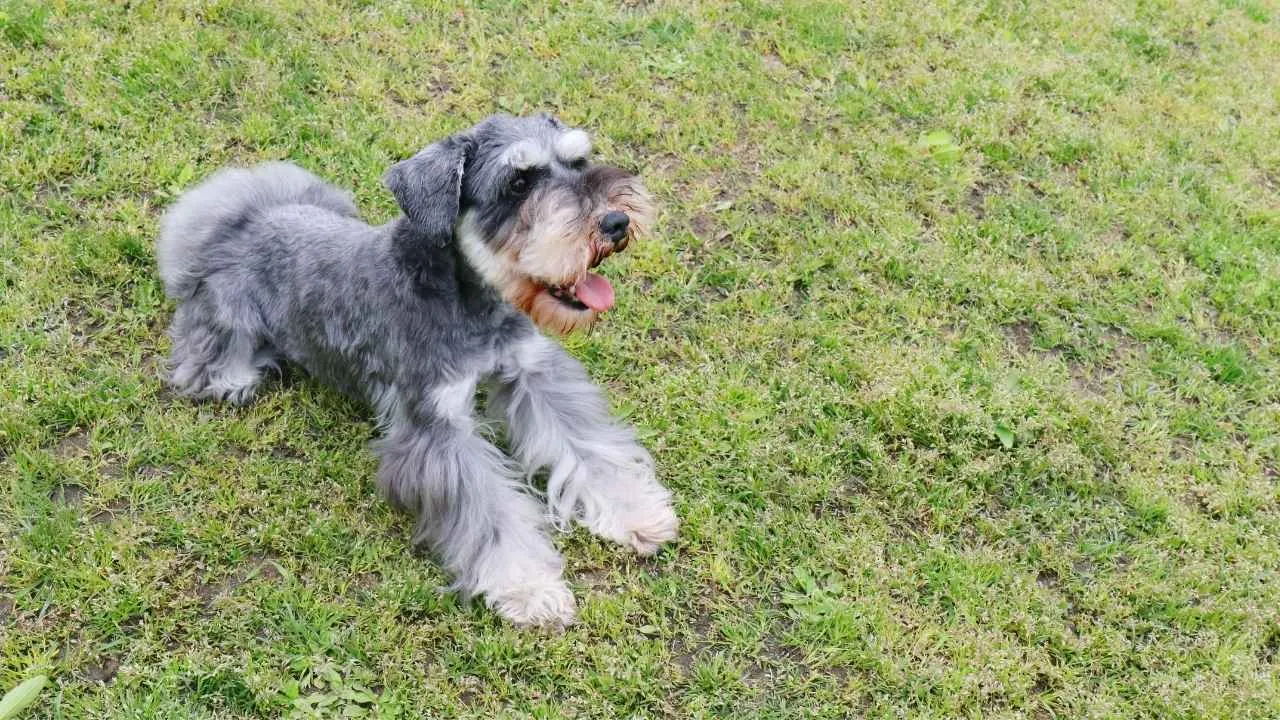
Miniature Schnauzers bring a lively spark to compact homes without treating limited square footage like a personal insult. Bright and charismatic, they adapt well to city apartments. A playful burst can happily be followed by a good snooze.
That famous bearded look does ask for maintenance, so grooming requirements are not exactly a brush-and-forget situation. Miniature Schnauzers need regular trims and weekly brushing. Professional grooming at least every eight weeks helps keep their coat tidy.
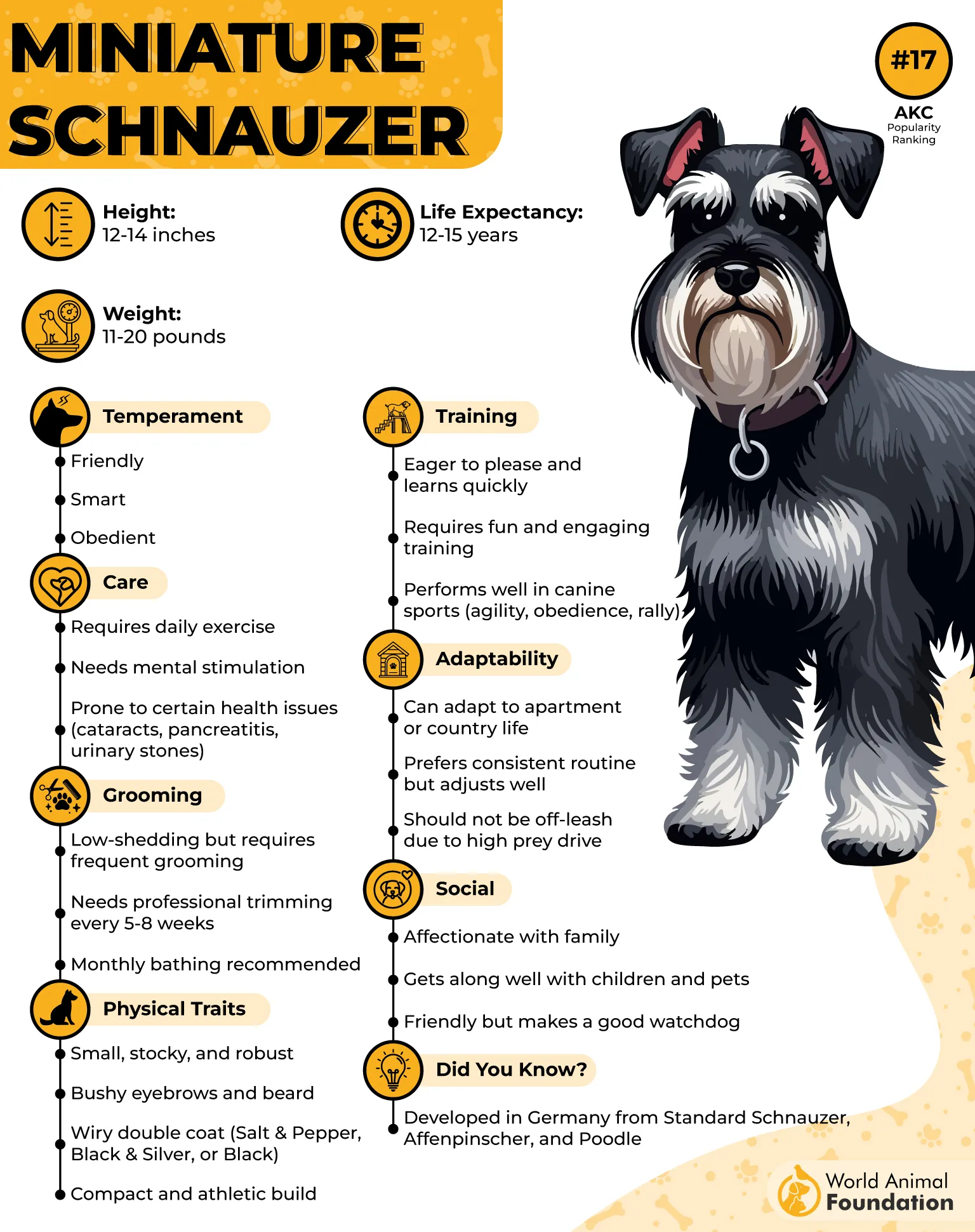
When learning basic commands, Miniature Schnauzers can begin with simple cues such as sit and stay. More involved tricks can come afterward. Positive reinforcement keeps the process upbeat, while varied challenges help prevent these intelligent learners from getting bored.
Training Tips For This Breed
Begin socialization early so puppies become comfortable with new experiences.
Puppy training classes can give both dog and owner useful structured practice.
6. Bolognese
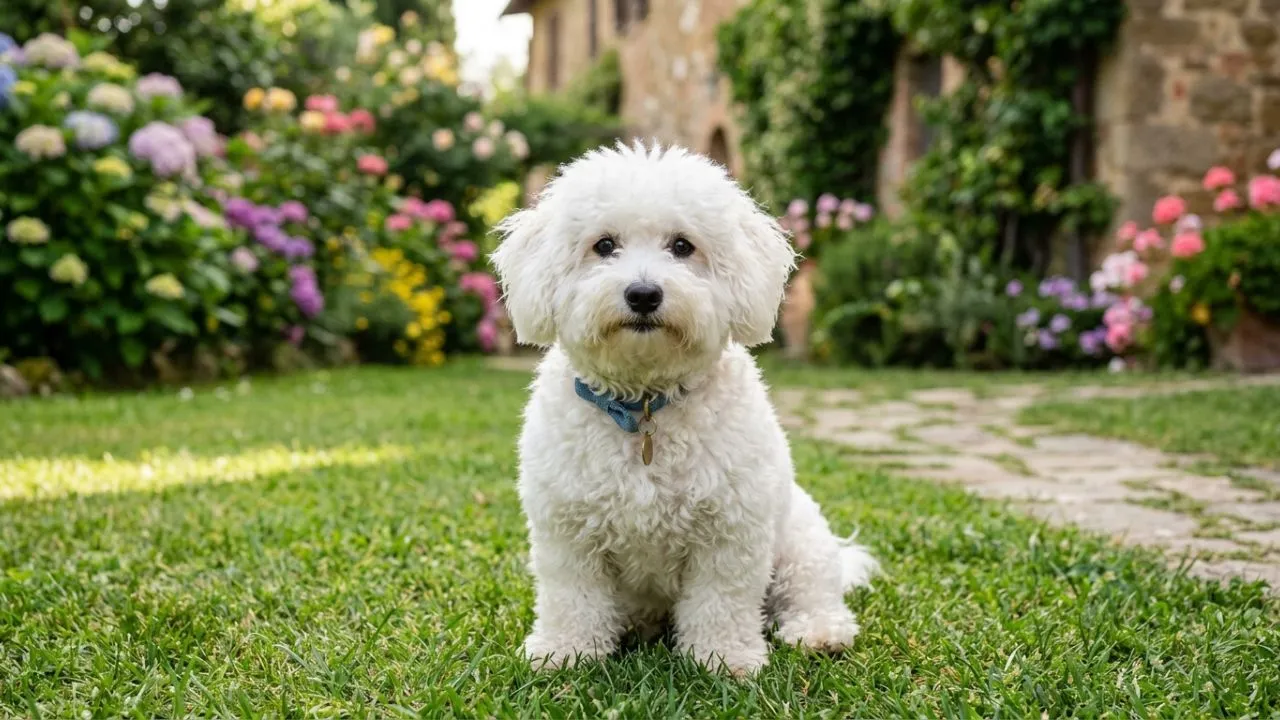
Bolognese dogs arrive with an old Italian résumé, having been treasured by nobility and featured in Renaissance-era art. Today, they remain relatively rare. Their calm, loyal presence brings a pleasantly civilized character without turning the household into a museum.
Their strong devotion to people can make separation anxiety a concern when Bolognese dogs spend long stretches alone. They are happiest around their people. A household that disappears for a full workday may not suit their social nature.
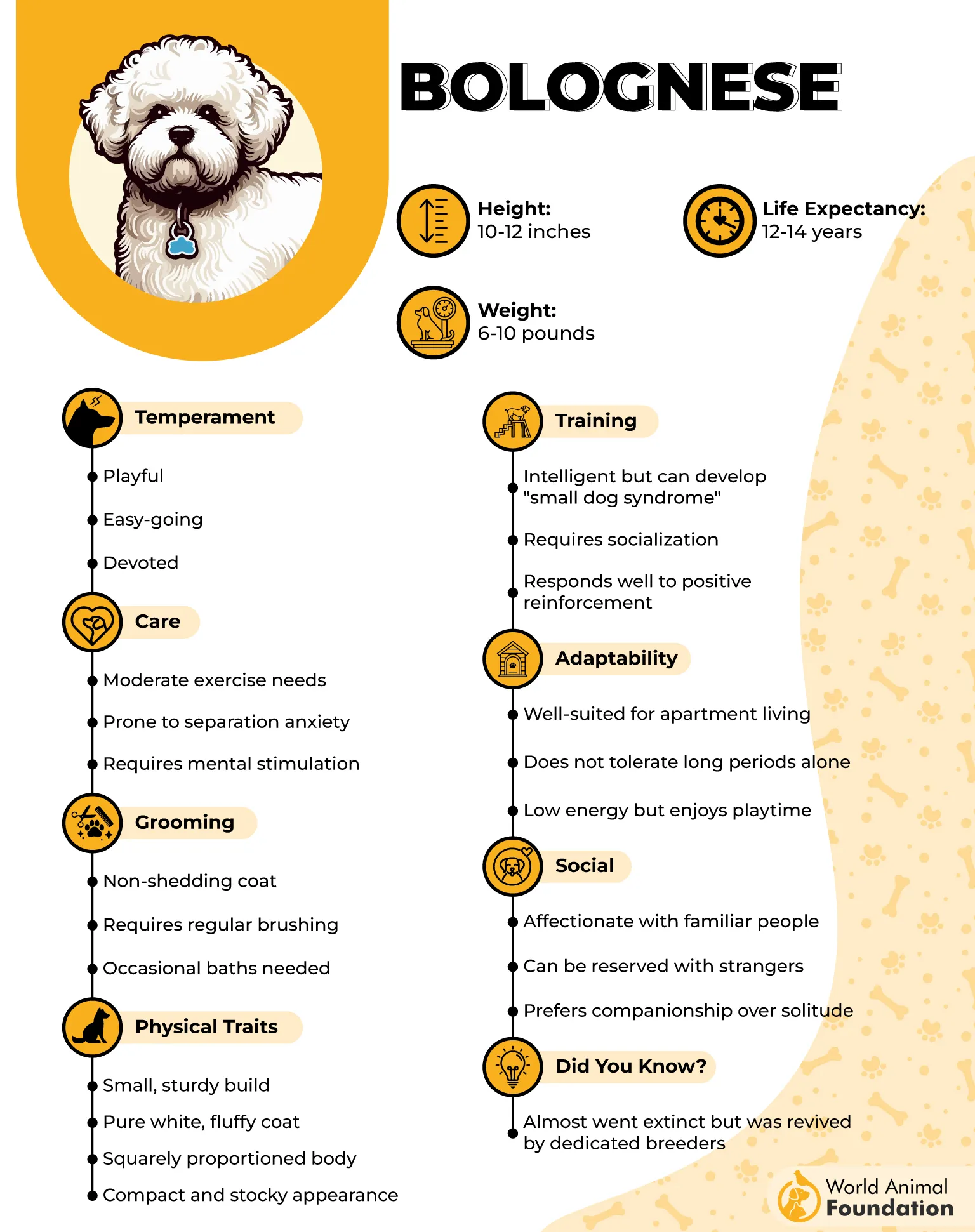
As mentioned by Purina, the Bolognese can handle over an hour of exercise, yet their small size makes garden play practical too. They value time with their owner and are easy to carry if a walk becomes too long.
Training Tips For This Breed
Discover what motivates them before deciding how to encourage new behavior.
Learn how to prevent or correct small dog syndrome before it becomes an established behavior.
7. Border Terrier
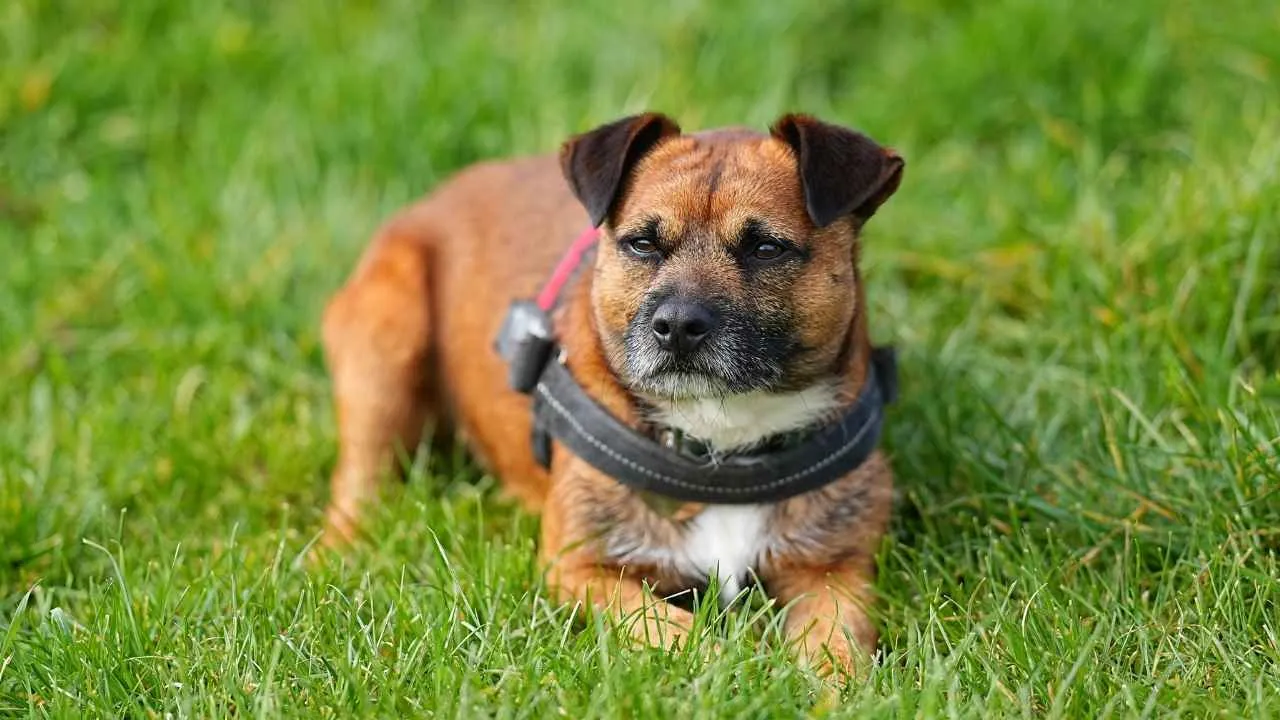
Border Terriers bring a no-fuss, cheerful attitude to everyday routines. Their upbeat, affectionate nature comes with a trainable streak, while their working-dog confidence keeps things lively. These compact characters can make ordinary lessons feel anything but dull.
Fun comes easily with Border Terriers through fetch, agility, hiking, or neighborhood walks. Off-leash play needs a secure fenced area. Their chase instinct can kick in quickly, turning an innocent burst of freedom into an unscheduled pursuit.
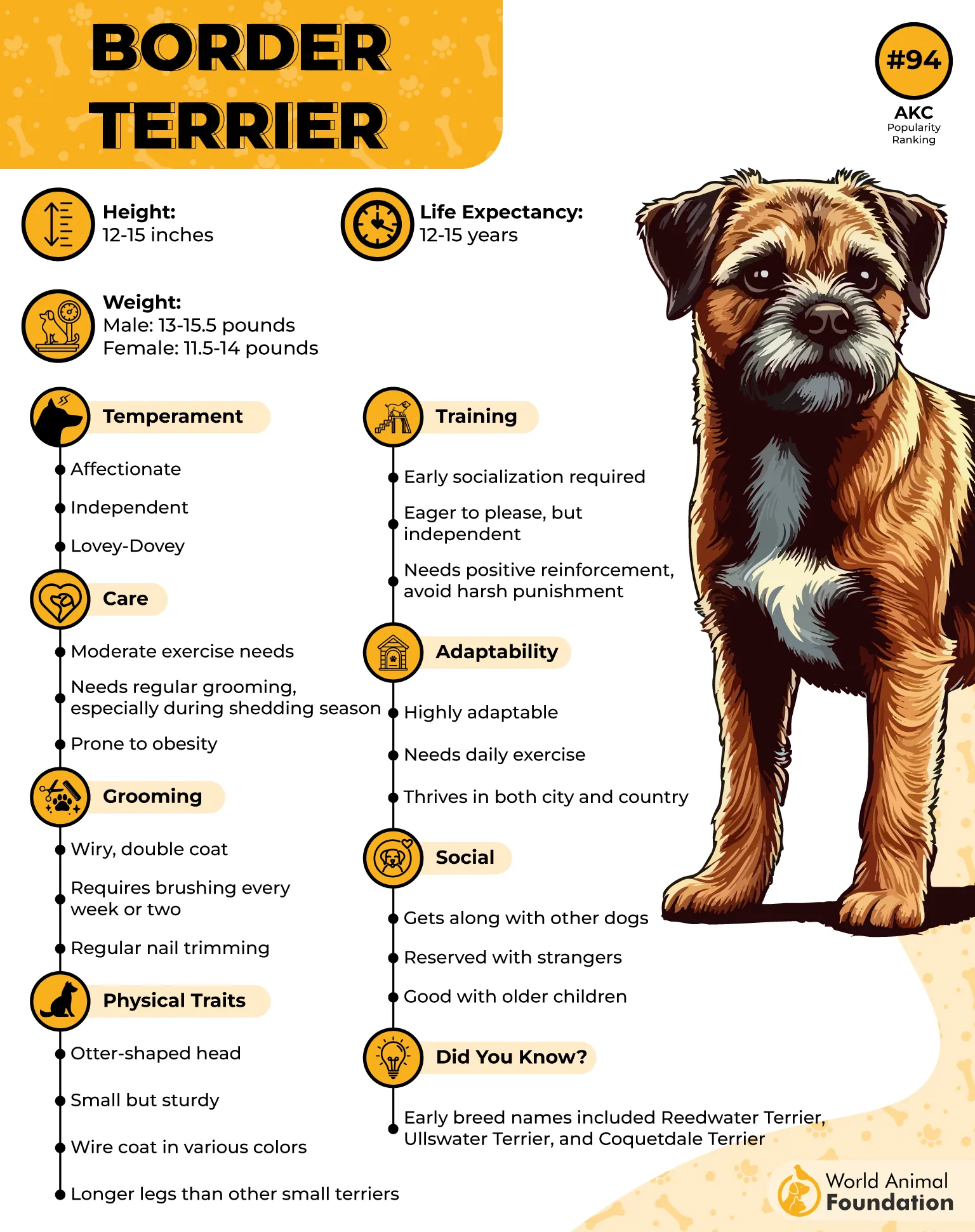
Small city homes can work nicely for Border Terriers because they adapt well to urban life. A garden is not essential. Plenty of exercise, regular play, and enough mental work help keep that energetic terrier brain from inventing trouble.
Training Tips For This Breed
Keep lessons short enough to hold their interest from start to finish.
Practice off-leash activities only inside securely fenced areas because their chase instinct can take over quickly.
Conclusion
Small city living gets much easier when your dog can learn routines without turning every lesson into a tiny negotiation. These small dog breeds bring intelligence, adaptability, personality, and trainability into compact homes, proving that apartment life can still be playful, manageable, and wonderfully full of character.
The best match comes down to the rhythm you can happily maintain. Think about training, how much exercise your dog needs, grooming needs, attention, and how your home actually works each day. Pick the right dog whose needs feel realistic, then commit to teaching with patience, consistency, and plenty of genuine enthusiasm.
