




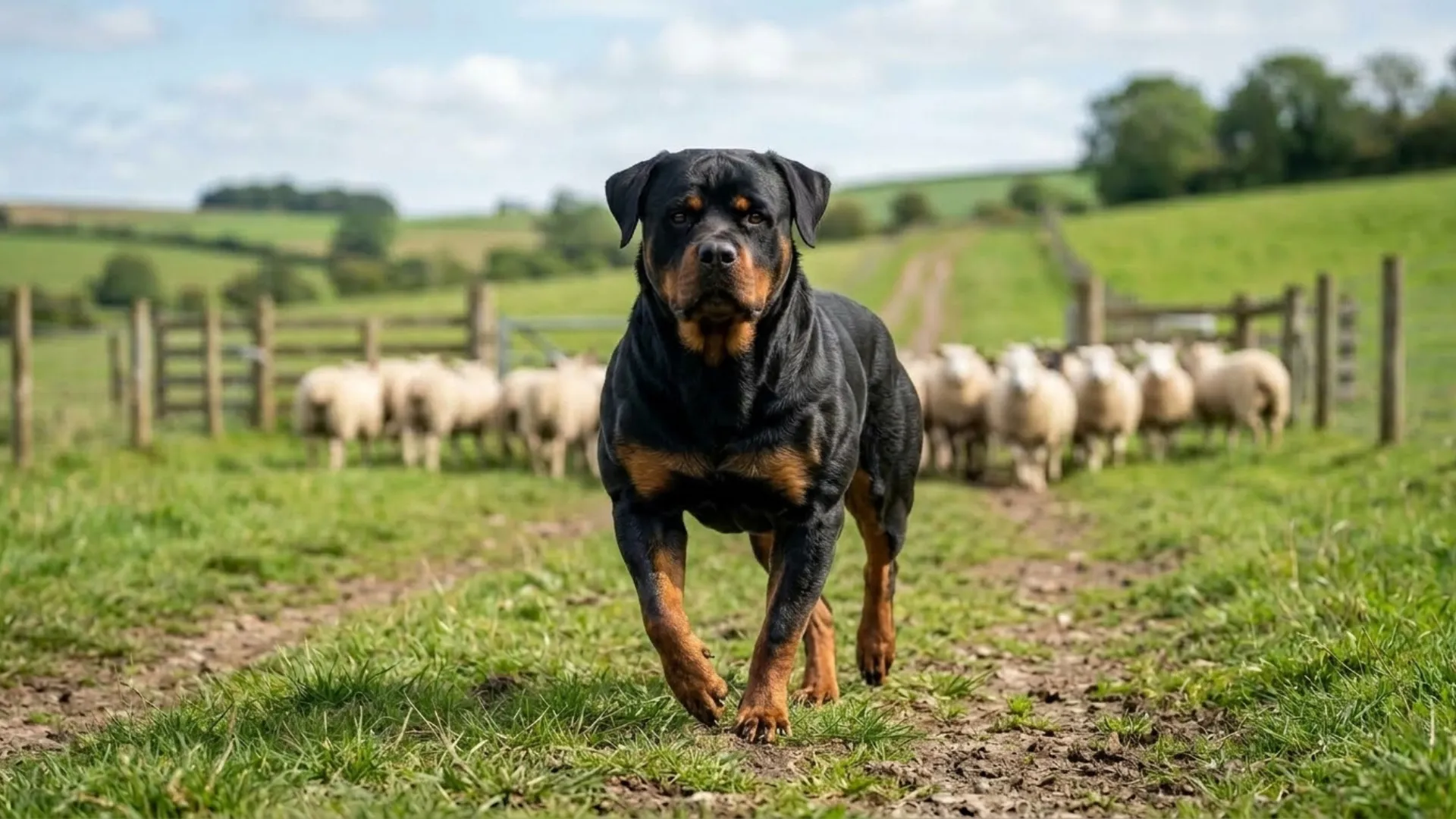
When it comes to herding, not every strong dog works the same way. Most muscular dog breeds may excel at controlling large, stubborn cattle, while a quicker and more agile dog can be better suited to guiding sheep across open ground. The right choice depends on the livestock, terrain, and working style.
These powerhouse breeds bring more than impressive physiques to the farm. Their intelligence, stamina, responsiveness, and natural herding instincts allow them to move with purpose while staying attentive to their handler’s direction. Generations of selective breeding have shaped them into capable partners for demanding work.
Picture a dog confidently circling livestock, changing direction in an instant and holding its ground when an animal strays. That combination of strength and control is what makes these breeds remarkable working companions.
FACT: Muscular herding dogs need agility as much as strength to safely maneuver around powerful livestock.
Powerhouse Dog Breeds with Muscular Builds Perfect for Herding
1. Briard
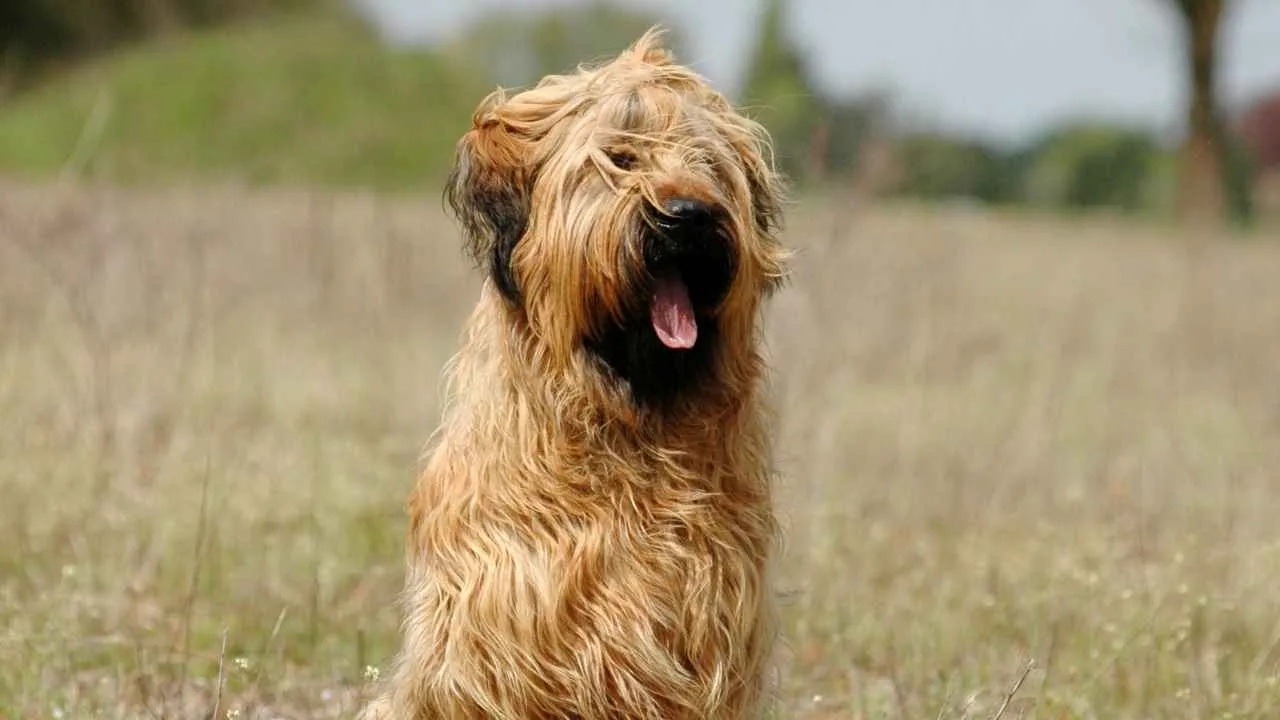
The Briard is an ancient French herding breed developed to guard and manage sheep and other livestock. Dating back to at least the eighth century, its working history reflects a dog built for demanding farm duties.
Beneath its shaggy coat lies a strong, athletic frame suited to sustained outdoor activity. According to Omlet, Briards require plenty of work each day, making them particularly well matched with herding work, hiking, and other active pursuits.
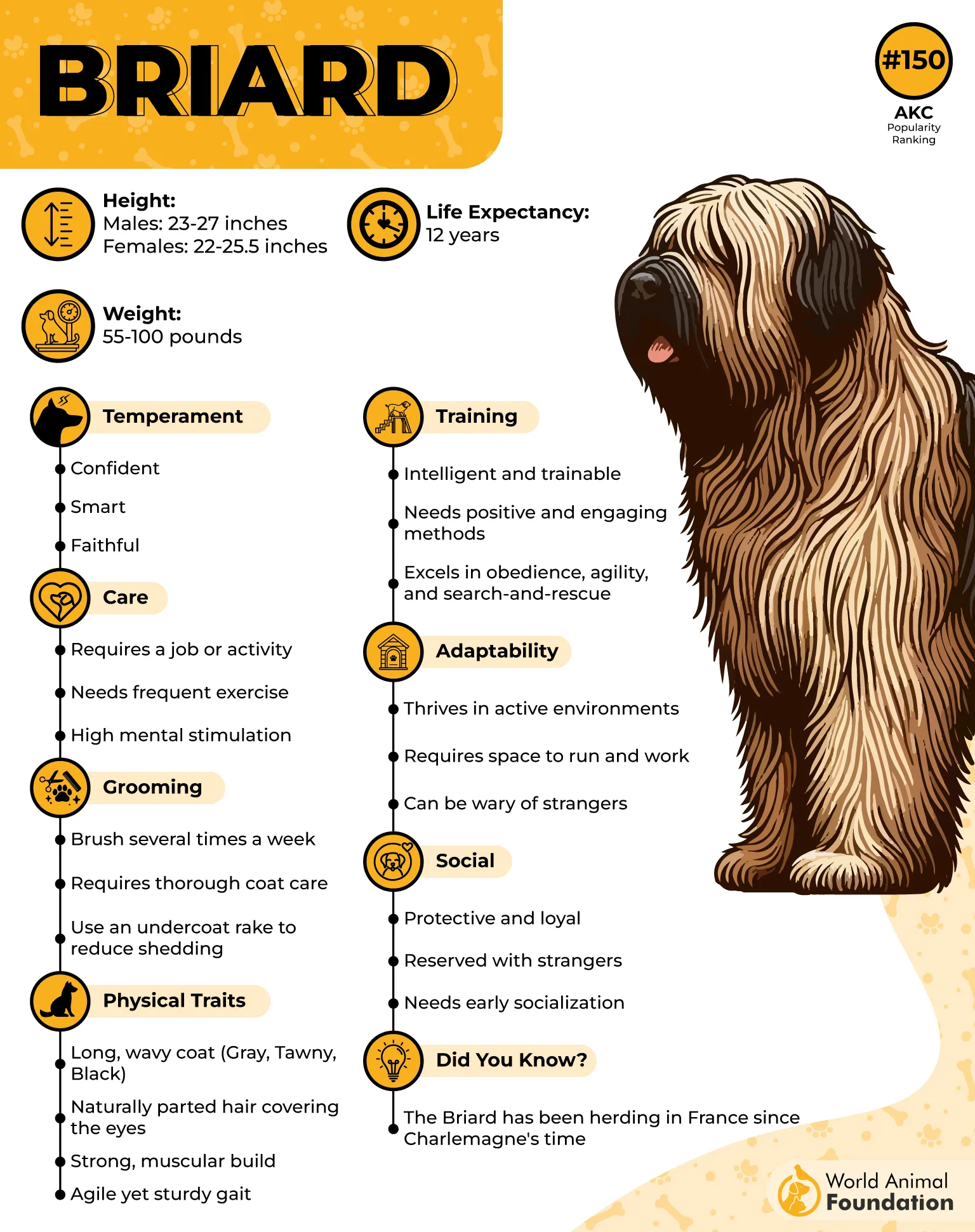
Their intelligence comes with an independent streak. A Briard may question commands rather than obey automatically, so consistent obedience training and earned respect work better than harsh punishment.
These dogs also have natural protective instincts and can be wary of strangers, making them capable watchdogs and guardians. They generally prefer staying close to their owners rather than being confined to a kennel, while early socialization can help them live peacefully with other dogs and cats. According to Orvis, Briards require plenty of exercise each day.
2. Rottweiler
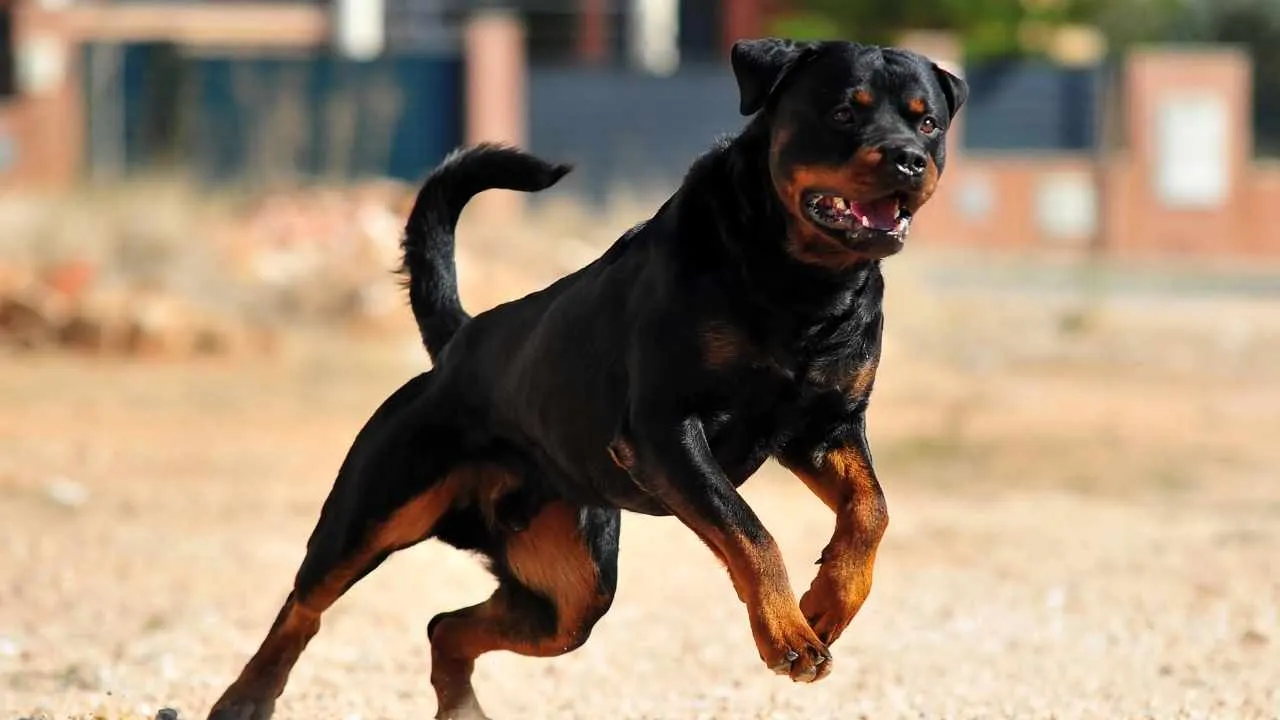
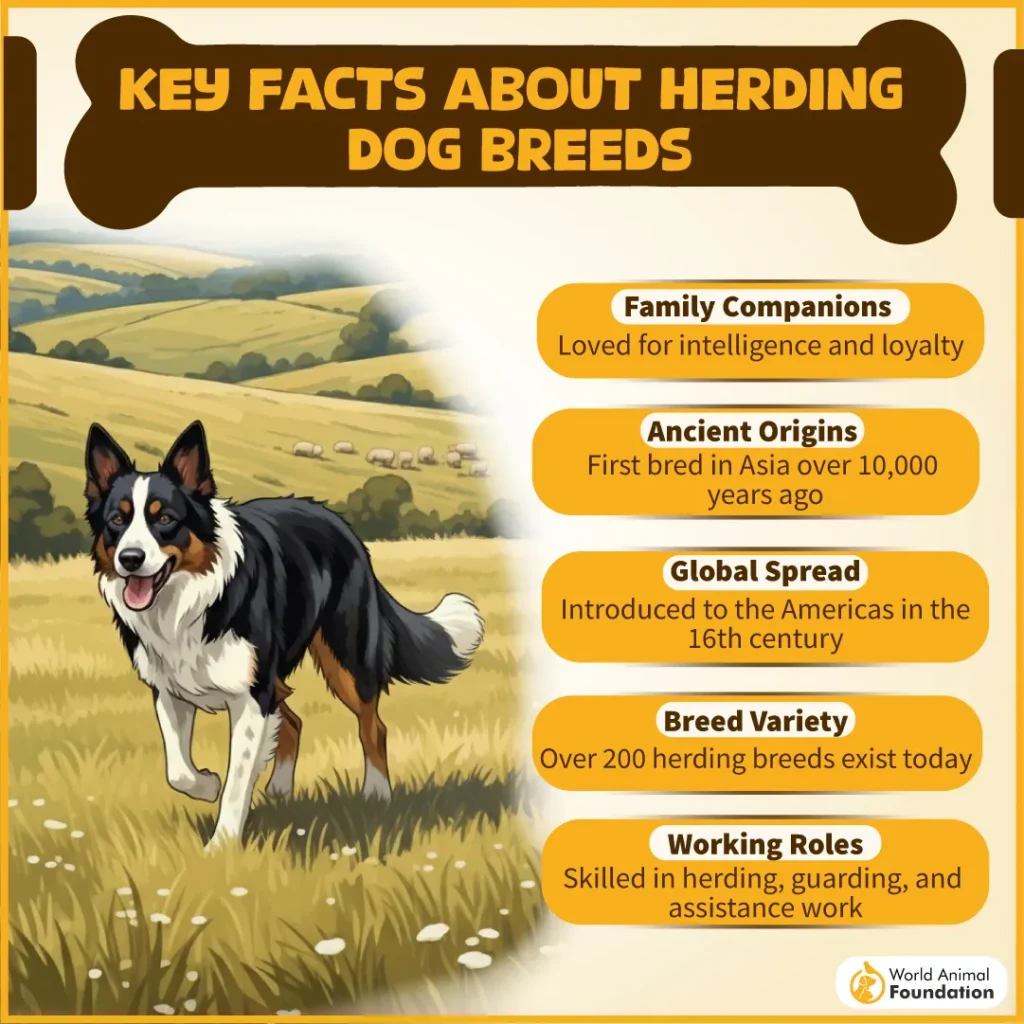
The Rottweiler is a powerful, muscular breed whose working roots trace back to livestock herding. Roman legions used these dogs in Rottweil, Germany, where their strength made them valuable farm and cattle workers.
Their sturdy build later allowed them to take on demanding jobs beyond herding. Rottweilers were used to pull carts and accompany butchers to markets, carrying money in pouches, before becoming widely valued as guard dogs.
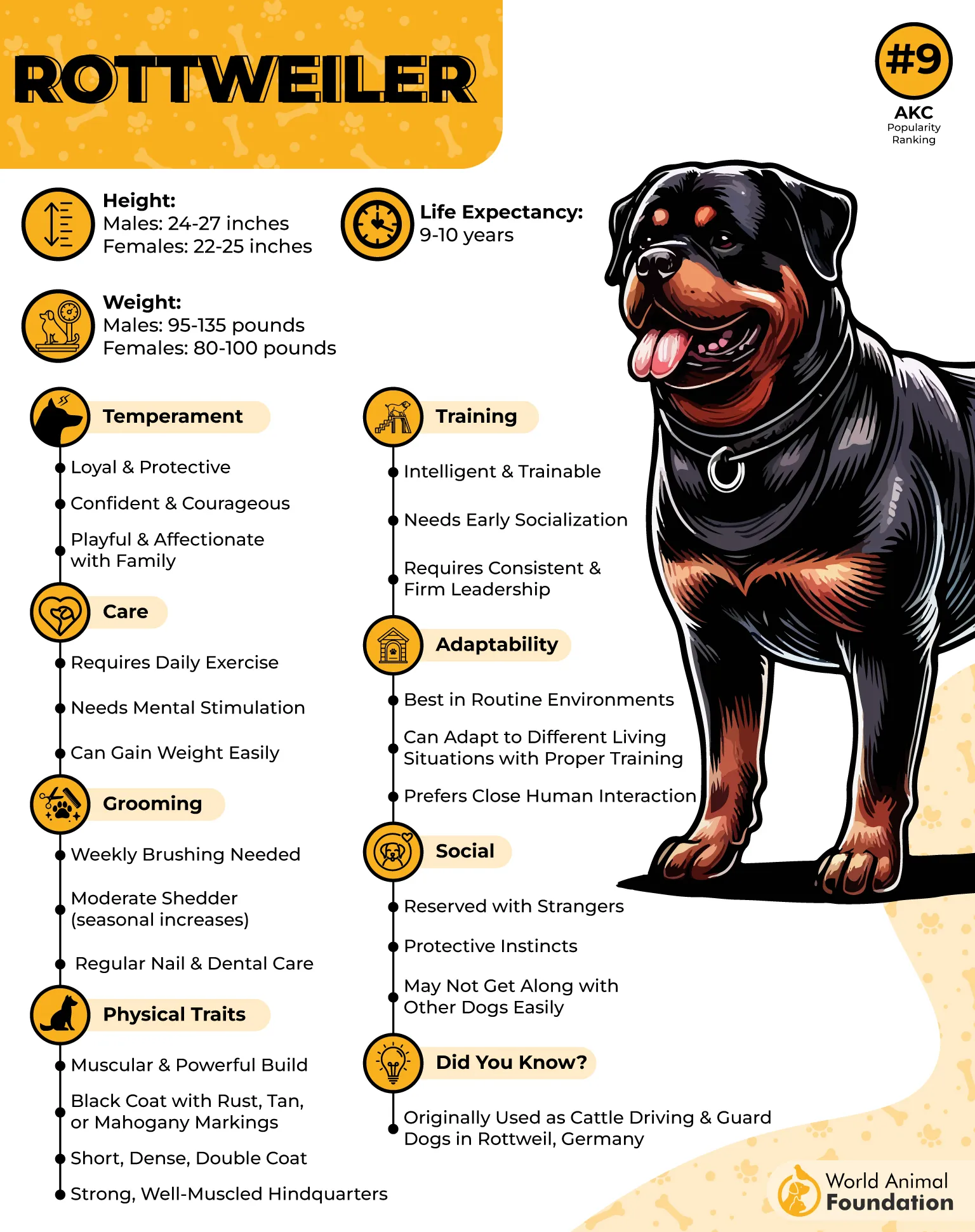
Despite their physical power, Rottweilers are highly intelligent and confident, making them capable working partners. Their ability to learn commands and work closely with people has also supported their roles in guarding and other demanding tasks.
They can be affectionate with their families but may be reserved around unfamiliar people. Early training and socialization help channel their intelligence and strength appropriately, while regular exercise keeps this muscular worker engaged.
3. Polish Lowland Sheepdog
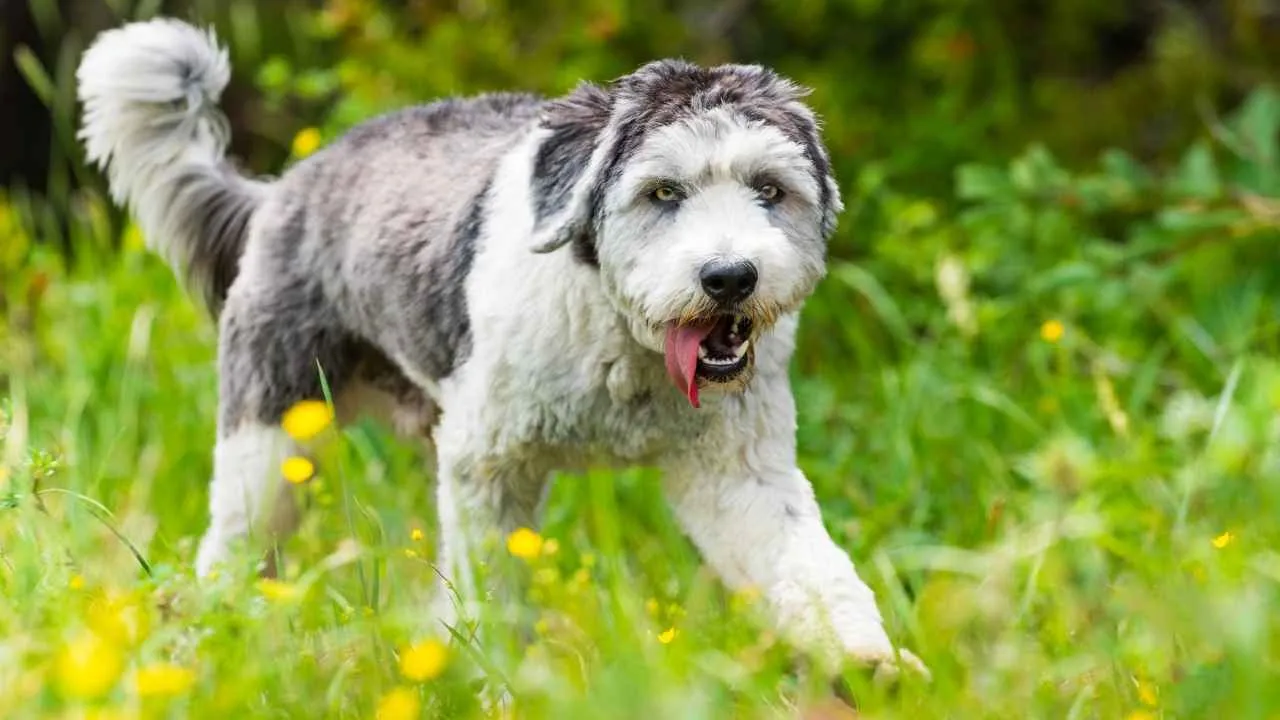
At first glance, the Polish Lowland Sheepdog looks like a shaggy, carefree companion, but beneath its tousled coat lies a sturdy, muscular body made for demanding work. This medium-sized herder has substantial bone and an athletic build suited to long days of activity.
For centuries, worked independently with sheep, developing impressive stamina alongside a confident, self-reliant nature. It remains energetic and eager for action, thriving when its days include plenty of movement rather than prolonged confinement.
Training this clever breed can feel like negotiating with a dog that has ideas of its own. Starting young with rewards and varied challenges helps keep its independent mind engaged, while herding and agility provide excellent outlets for both physical and mental energy.
That shaggy coat also demands commitment, requiring frequent brushing to prevent mats and tangles. Daily exercise is equally important; without enough activity and enrichment, this vocal, alert herder may become bored, frustrated, and destructive.
4. Bergamasco Sheepdog
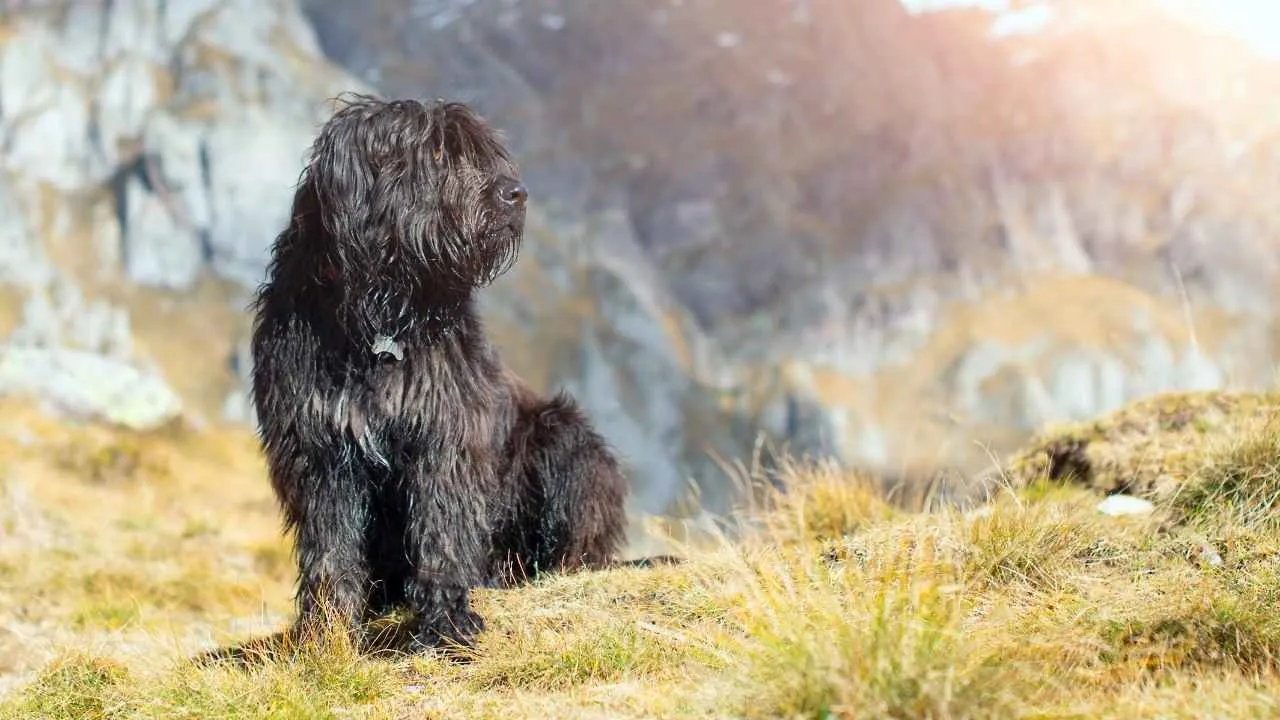
The Bergamasco Sheepdog is an Italian herding breed historically developed for working livestock in mountainous terrain. Its sturdy, athletic build gives it the strength and endurance needed to manage flocks across challenging landscapes. According to Purina, the Bergamasco retains the temperament and natural drives of a task-oriented dog.
Its defining feature is a remarkable three-textured coat that develops into protective mats called flocks. These dense layers help shield the dog from harsh mountain conditions while working outdoors.
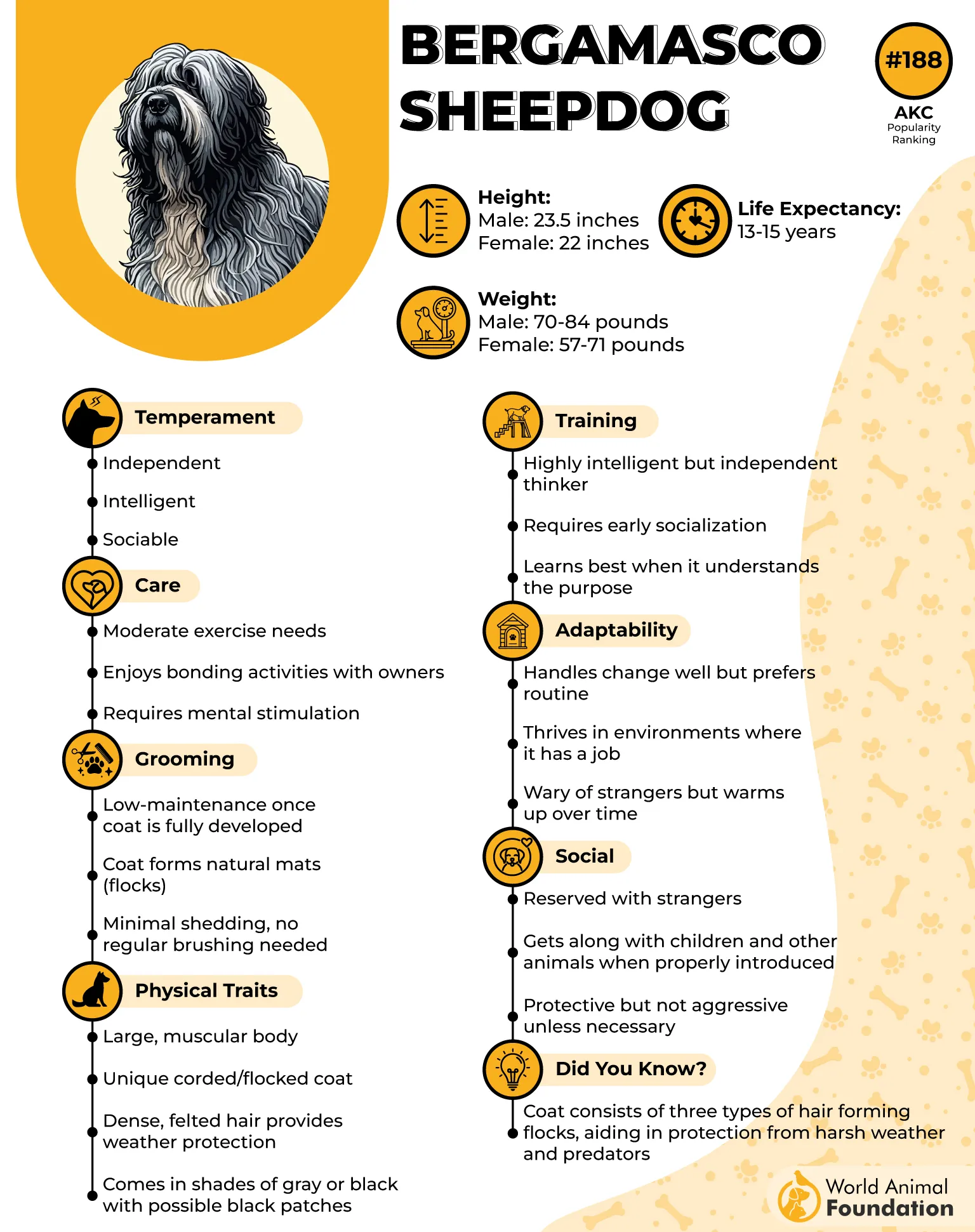
Despite its muscular frame, the breed does not demand excessive exercise. Around an hour of daily activity, including hiking, jogging, play, or herding, can keep it satisfied, while its intelligence also makes dog sports appealing.
Patient, devoted, and naturally protective, the Bergamasco often forms a close partnership with its handler rather than simply following commands. Early socialization and consistent, positive training help channel its independent nature and wariness of unfamiliar people.
5. Puli
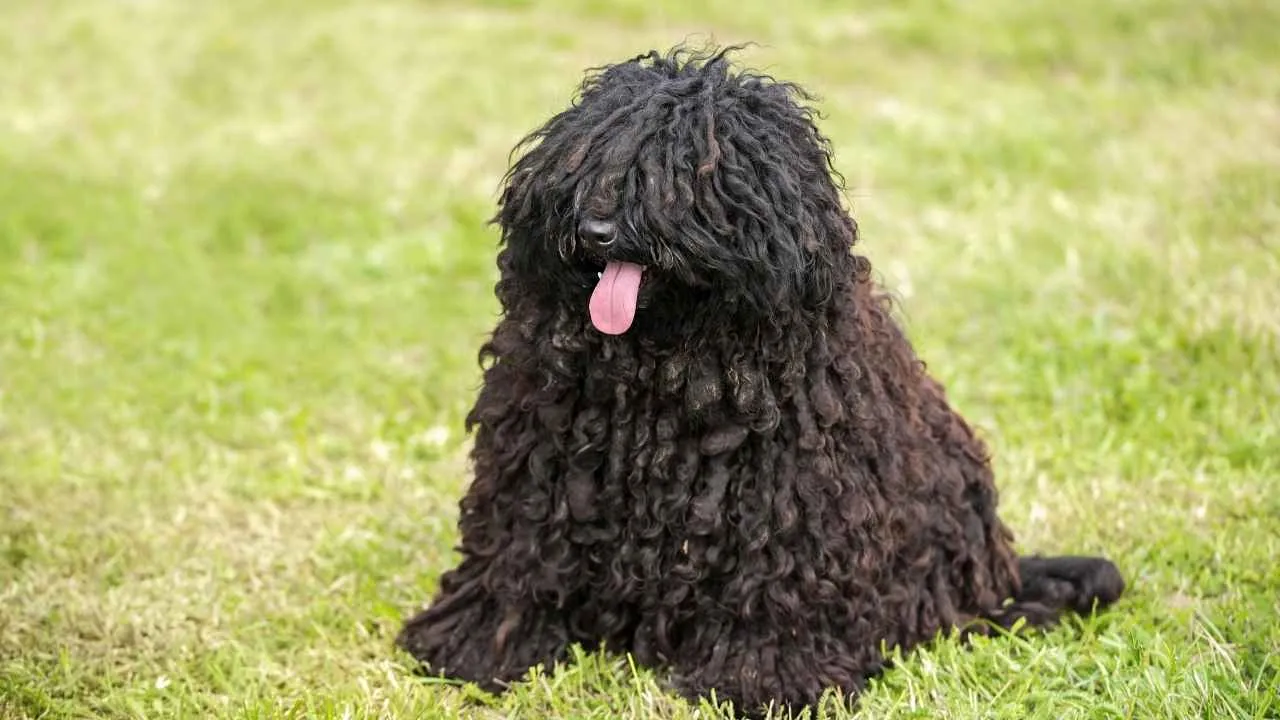
The Puli turns its compact frame into a herding advantage, using agility, confidence, and quick movements to manage livestock. Originally bred as a Hungarian sheepdog, this active breed was valued for its ability to work closely with shepherds.
Its remarkable corded coat gives the Puli an unmistakable appearance, with dense, woolly cords that develop naturally from its curly outer coat and soft undercoat. The non-shedding coat can become very long with age, though it requires careful maintenance.
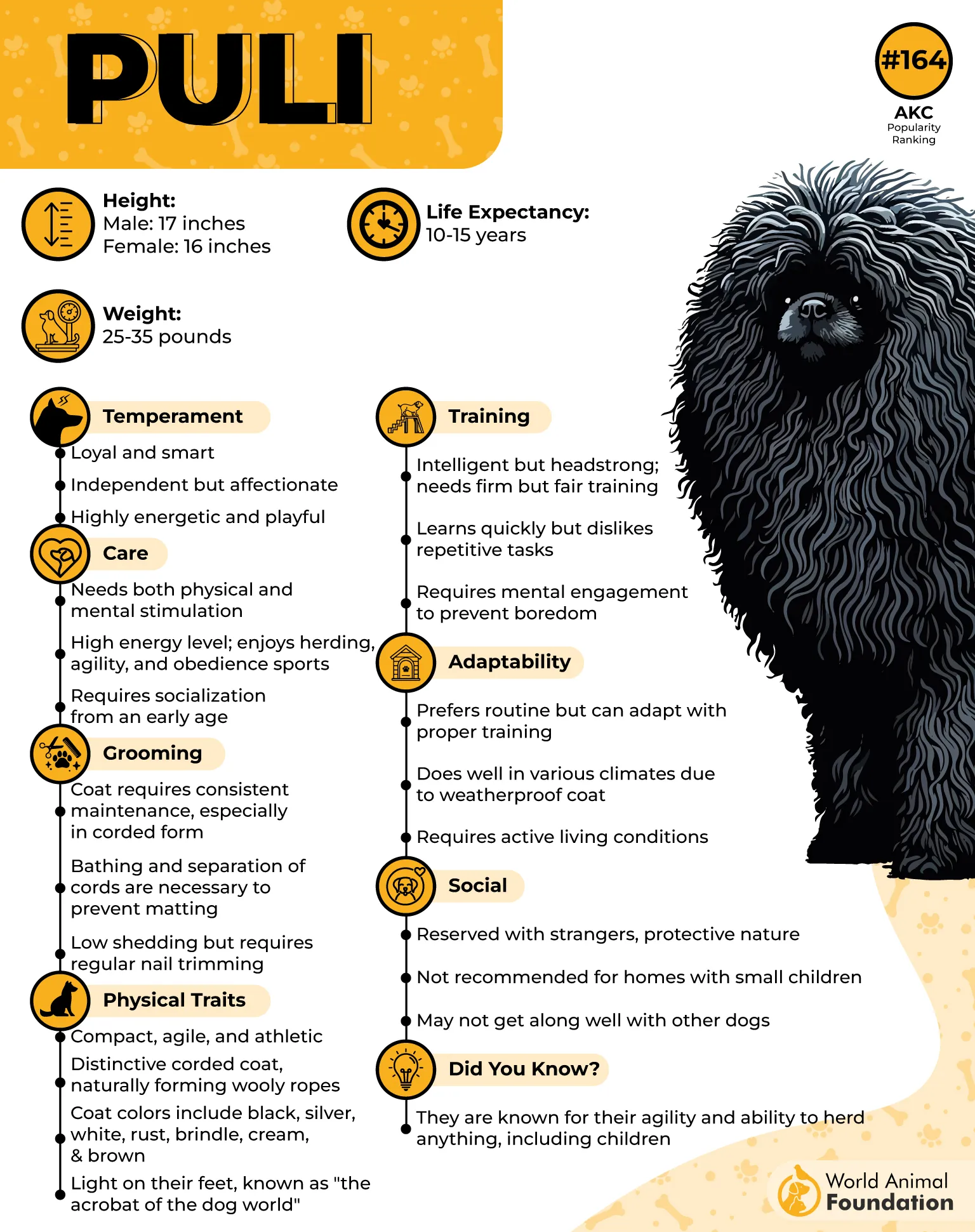
Highly intelligent and self-assured, the Puli learns quickly and often brings a playful sense of humor to training. Its independent streak can make consistent guidance especially important, particularly when it tries to herd people by nipping at their heels.
Despite its smaller stature, the Puli remains an alert guardian of both family and flock. It tends to circle while herding and can investigate its surroundings before returning to check on its people, reflecting its strong working instincts.
6. Belgian Malinois
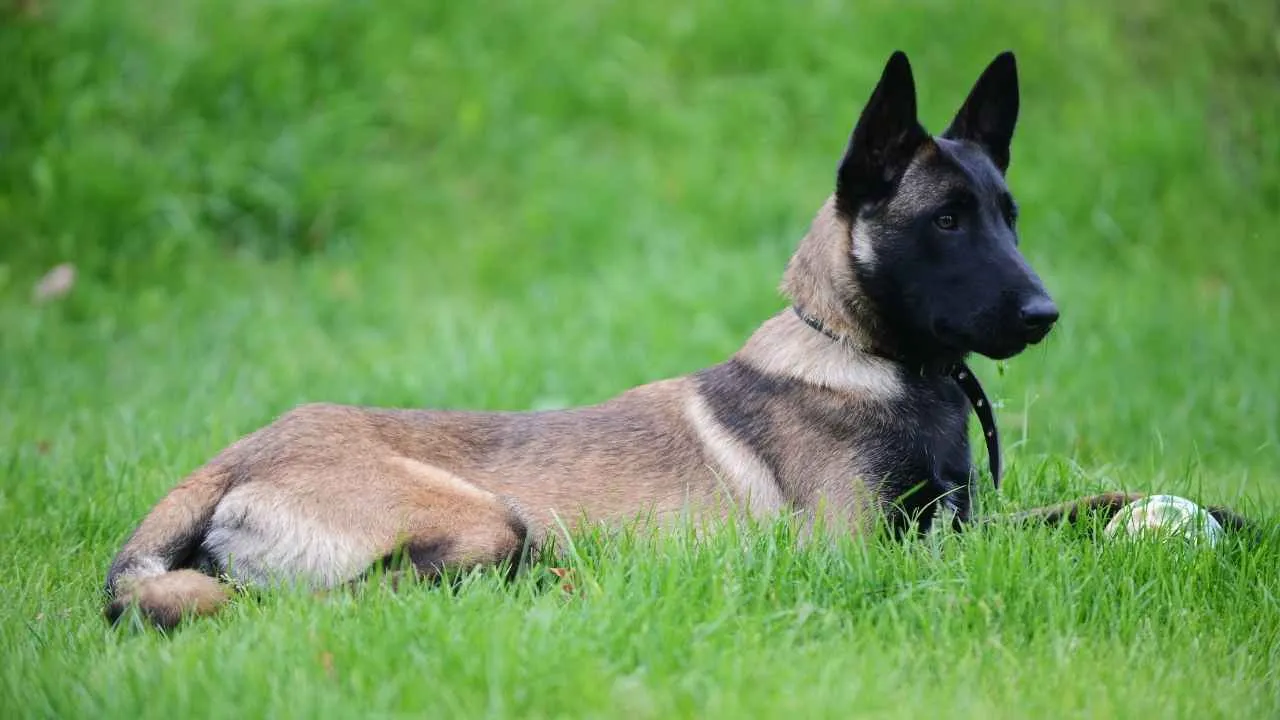
The Belgian Malinois is a lean, muscular shepherd bred for demanding work rather than a sedentary lifestyle. Its powerful frame and sharp intelligence make it particularly well suited to herding and other physically intense tasks.
Originating near Malines, this Belgian Sheepdog variety developed a strong working instinct and became an active herding dog by the late 19th century. That foundation later helped shape its reputation in demanding working roles.
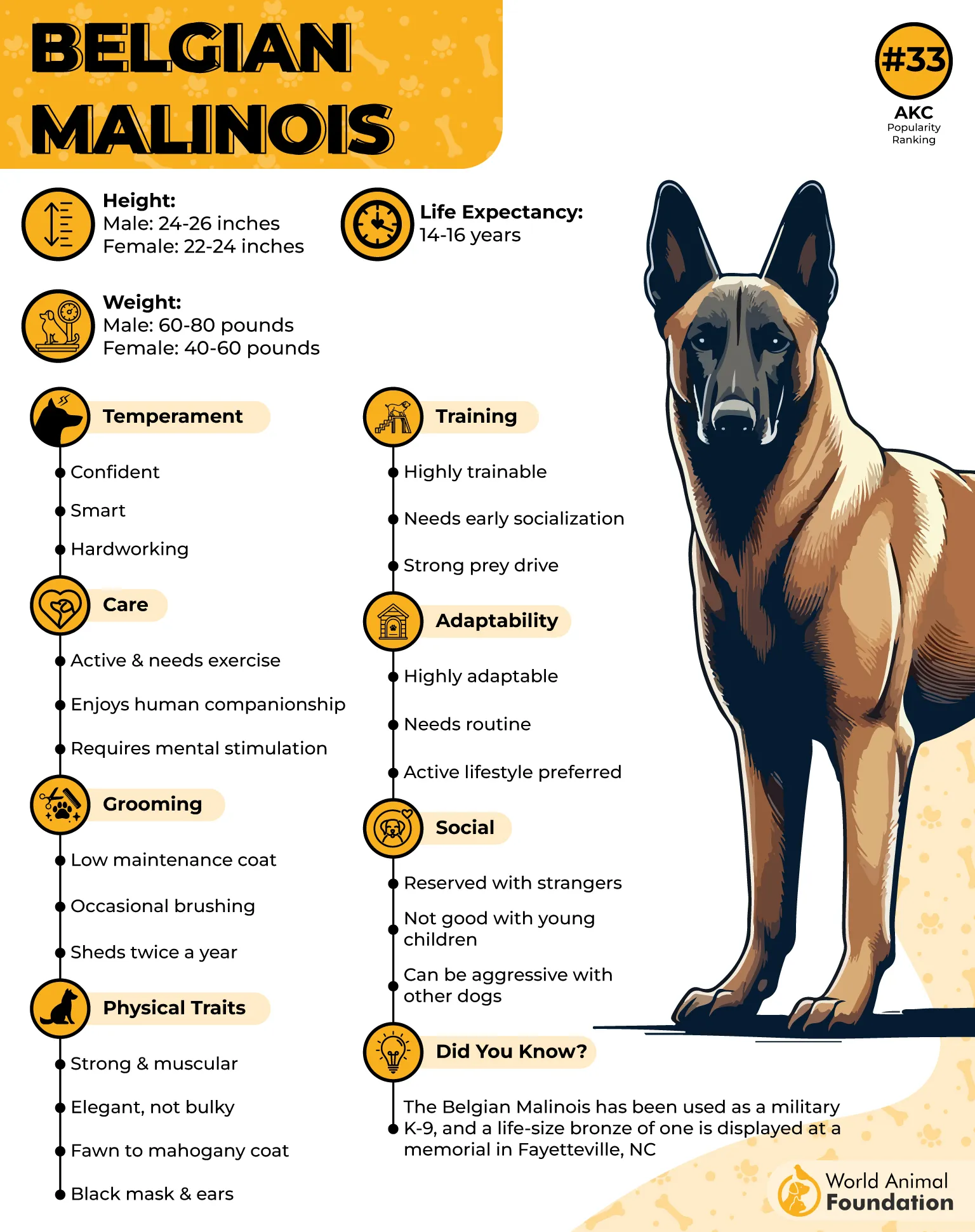
Today, Belgian Malinois are valued by police, military, and search-and-rescue teams for their stamina, protective instincts, and exceptional trainability. These dogs thrive on activities such as tracking, agility, obedience, and Schutzhund training. According to PetMD, Belgian Malinois are exceptionally loyal dogs.
Their relentless energy means they need an experienced owner who can provide structured exercise and purposeful training. As a household companion, the Malinois can be affectionate, but generally does best as the only pet.
7. German Shepherd
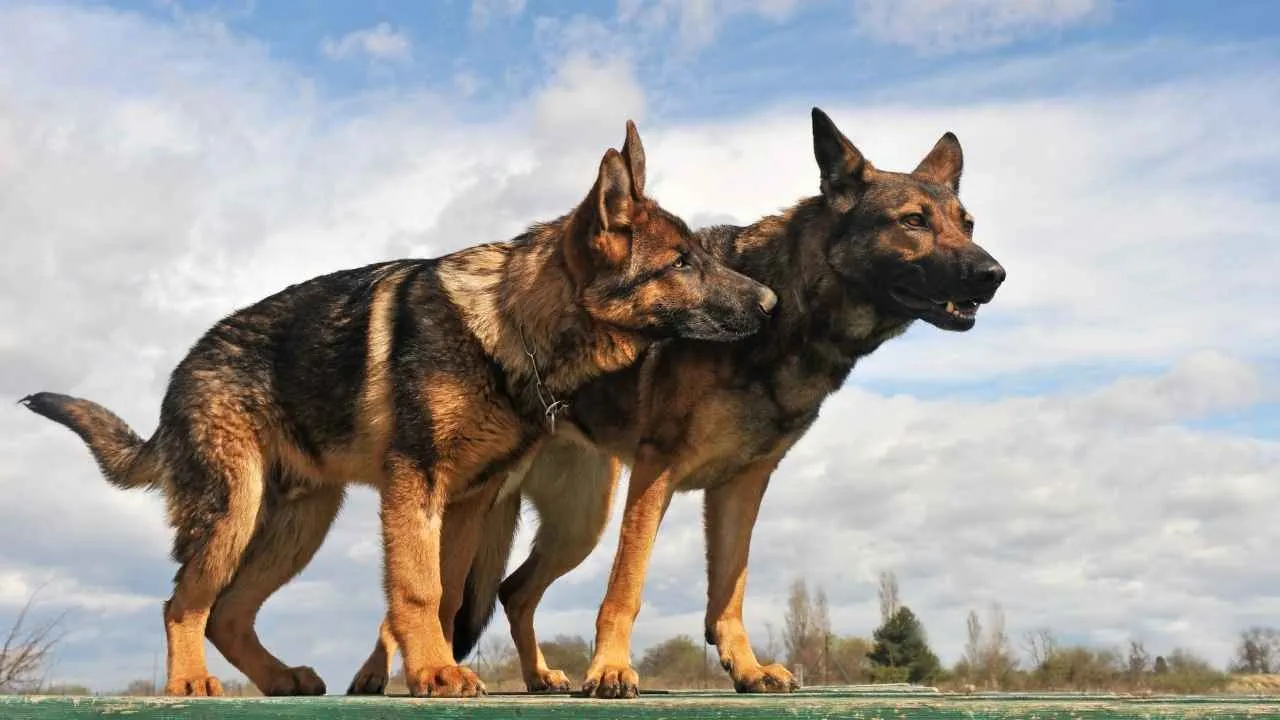
The German Shepherd is a powerful, athletic herder whose muscular build supports demanding farm work without sacrificing agility. Originally developed in Germany for herding and protecting sheep, the breed combines physical strength with remarkable endurance.
Unlike dogs bred only to chase livestock, German Shepherds were expected to manage flocks, maintain boundaries, and keep sheep moving safely through roads and villages. Their alert nature also made them useful for watching over property and livestock.
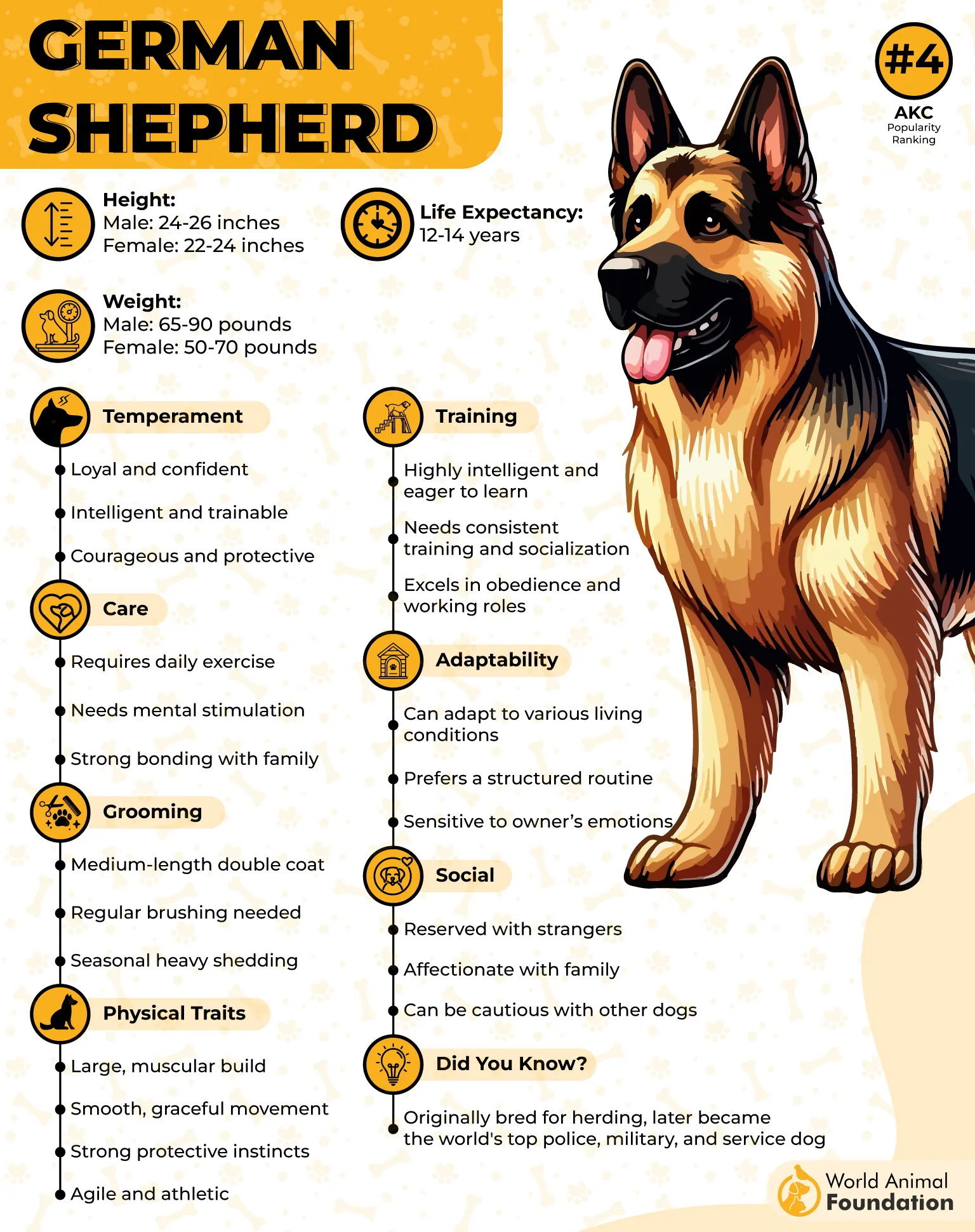
Highly intelligent and eager to work with their handlers, these dogs can adapt to herding sheep or cattle while also taking on guarding duties. Their versatility has helped them excel in police, military, and search-and-rescue roles.
Despite their imposing presence, German Shepherds can form deeply loyal bonds with their families. With proper socialization and training, their protective instincts can be directed into confident, purposeful work.
Conclusion
Choosing a powerful herding dog is about more than impressive muscles. The right breed combines strength with endurance, intelligence, agility, and the instincts needed to manage livestock effectively.
These powerhouse breeds bring different talents to the farm. Some excel at guiding and controlling animals, while others add valuable guarding abilities and remain attentive to their handlers throughout demanding work.
Their physical capabilities are especially useful when working with sheep or cattle across open land. However, proper training and socialization are essential for helping these strong, protective dogs respond calmly and work with purpose.
Ultimately, the best herding companion is one that balances power with precision. Whether managing livestock, protecting property, or bonding with the family, these versatile breeds can become dependable partners when their abilities are given the right direction.
