




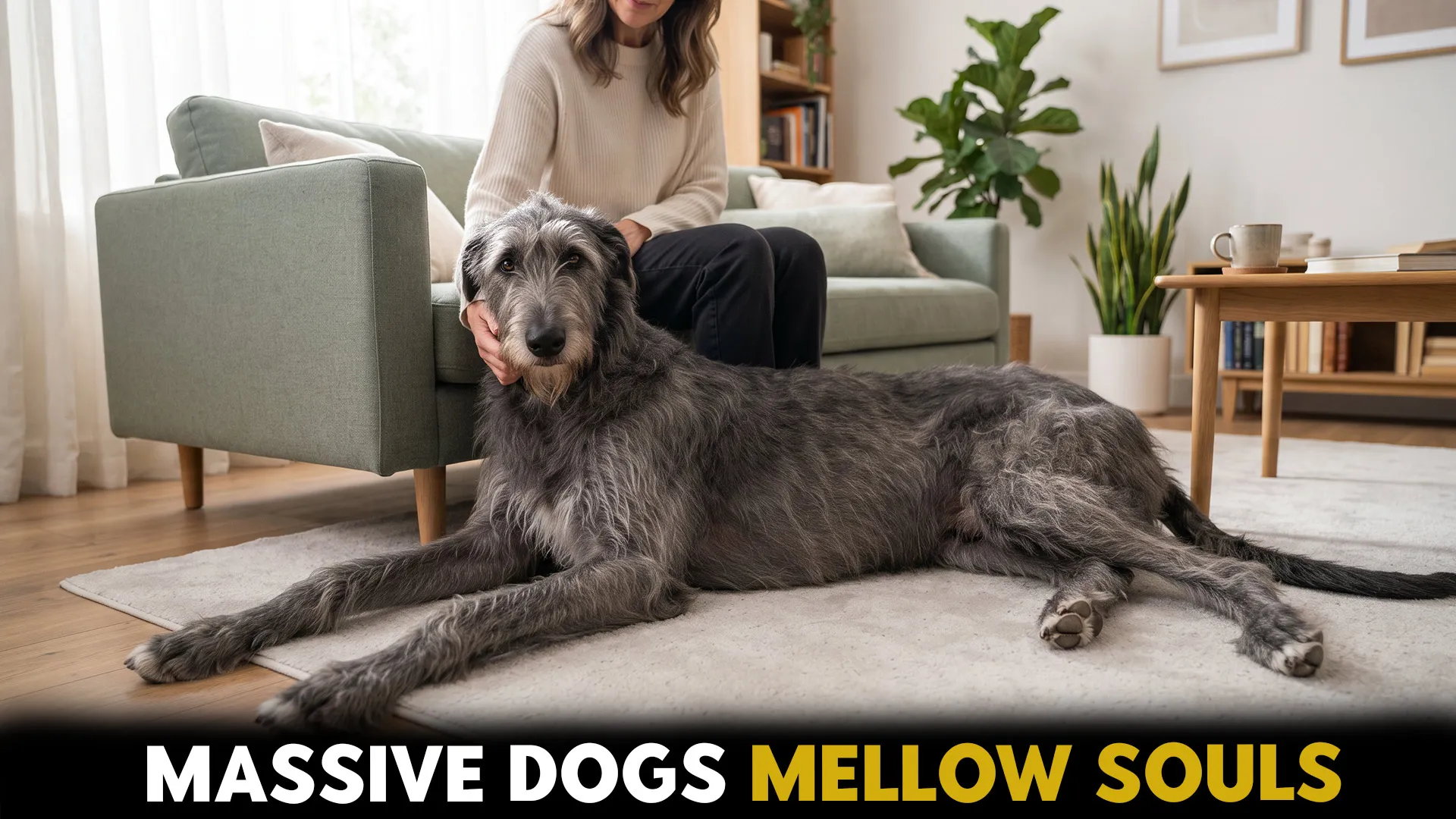
Quiet giant dog breeds are easier to overlook than you might expect. Their size suggests a bold, imposing personality, yet some of the largest dogs are known for calm behavior, low-key indoor habits, and a preference for relaxing close to their people.
Many giant breeds were valued for work such as guarding, hauling, or protecting livestock, but that working heritage does not automatically mean they spend every waking hour looking for something to do. Their exercise needs, temperament, and energy levels can vary widely.
That makes the usual idea of “big dog equals difficult dog” too simple. A calm giant can bring a peaceful presence to the home while still offering the impressive stature people love about large breeds. The interesting part is how different these dogs can be from the image their size creates.
Keep reading to discover which quiet giants deserve far more attention than they usually receive.
Key Takeaways
Big paws and a powerful build do not always come with a noisy personality.
The Scottish Deerhound is a great example, yet its peaceful indoor nature disappears fast when it spots something worth chasing.
Rafeiro do Alentejo and Caucasian Shepherd bring their own kind of quiet, staying calm while keeping a serious eye on what happens around them.
The deeper you get into the list, the more surprising these gentle giants become.
Quiet Giant Dog Breeds That Are Perfectly Under the Radar
1. Scottish Deerhound
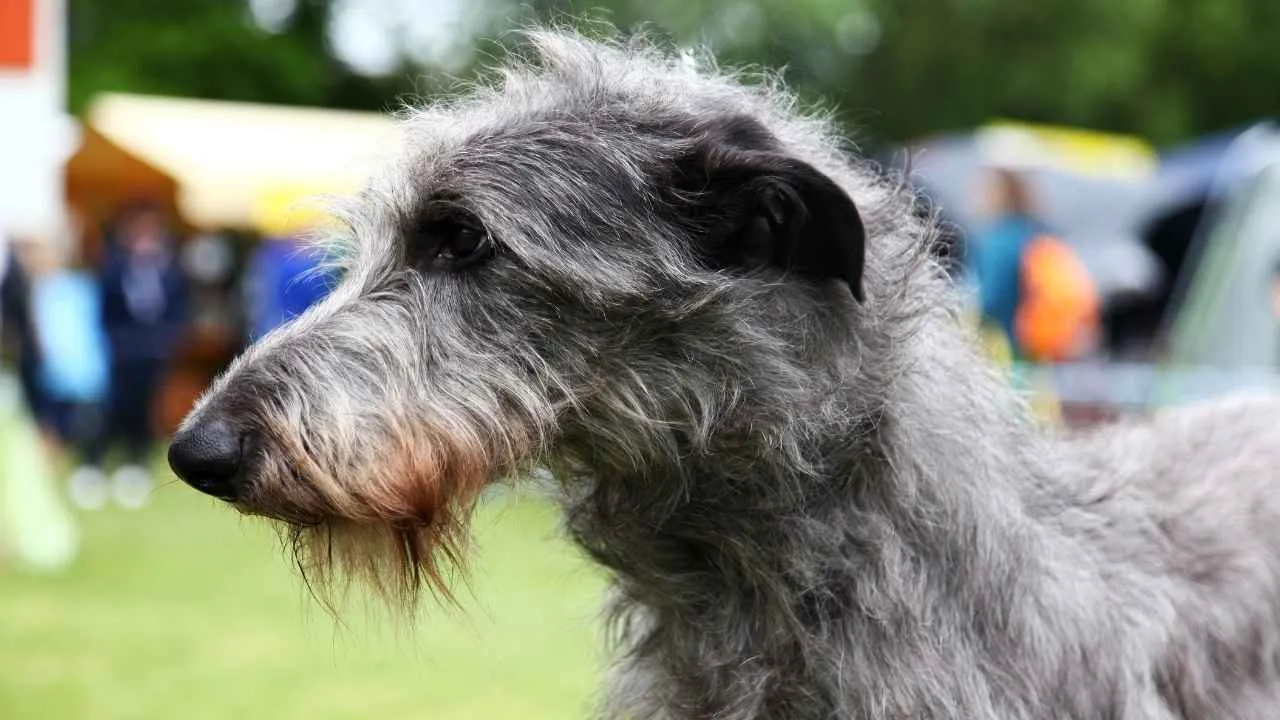
Scottish Deerhound dates back to the Middle Ages in Scotland, where it was used to hunt deer across the rugged countryside and became closely associated with the nobility. For centuries, ownership was restricted to the upper ranks, with anyone below an Earl unable to keep one.
A Peaceful Personality
Scottish Deerhound has an unusually calm presence for such a large sighthound, often relaxing quietly indoors while people read or watch television, according to WebMD. Its naturally low-key nature and infrequent barking can make its size feel far less imposing in a household.
These characteristics make that peaceful nature easier to picture:
Too gentle for guard duties
Often content beside the family
Polite and particularly peaceful with children
Built to Run
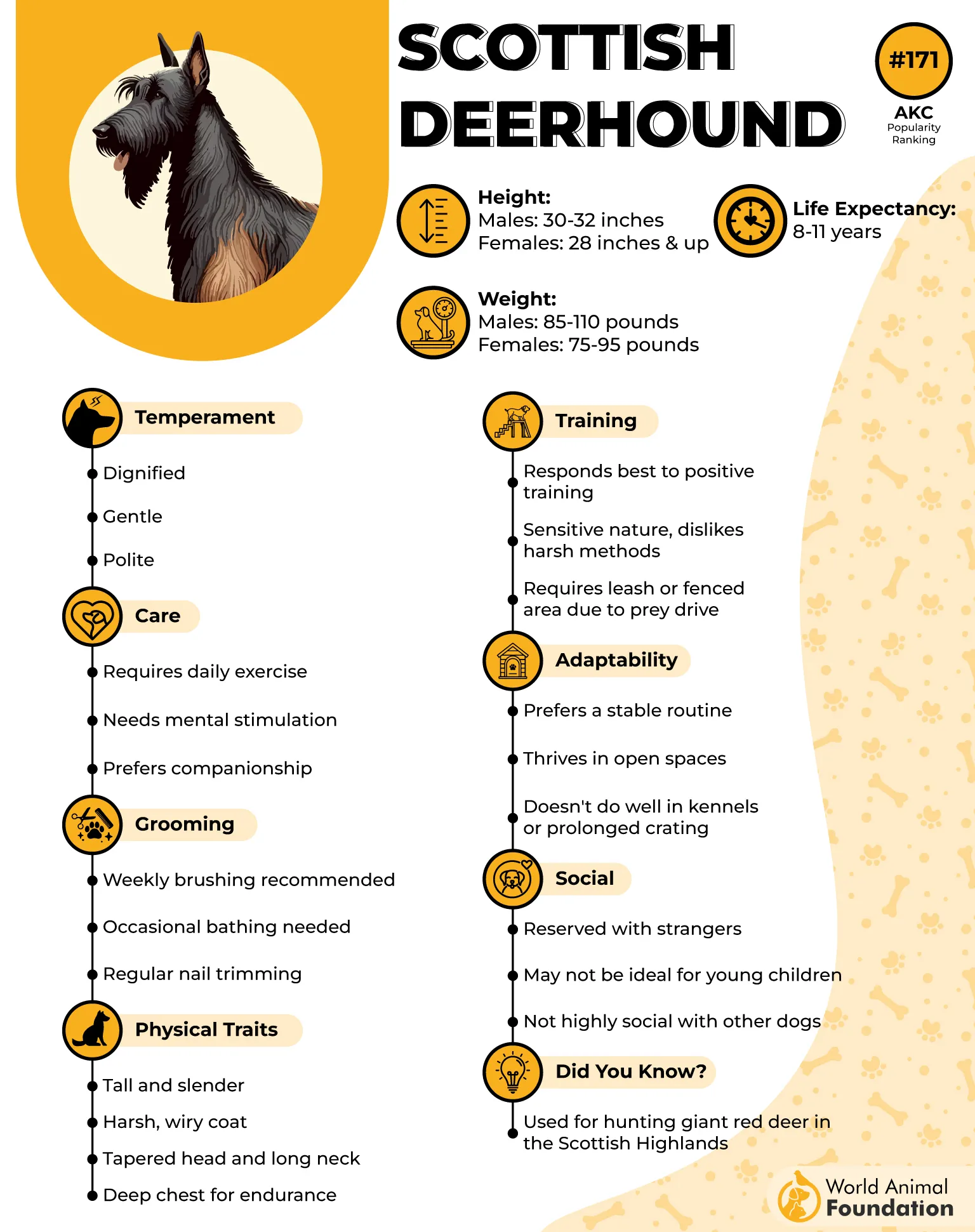
This large breed changes gears quickly outdoors, with excellent stamina and a strong instinct to chase distant movement. Secure fencing is important because something spotted far away can trigger an instant sprint, while jogging and running offer suitable outlets for that speed.
2. Rafeiro do Alentejo
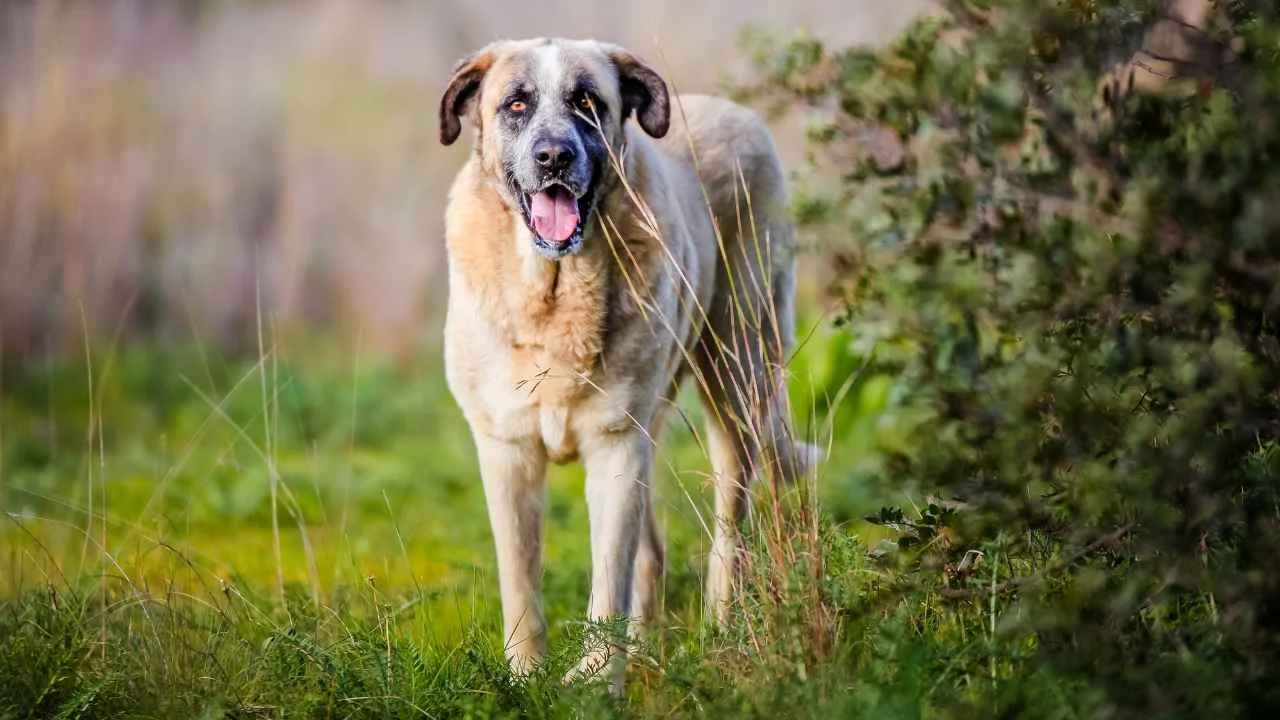
Rafeiro do Alentejo has long been part of rural Portuguese life as an estate and herd guardian, also known as the Portuguese Mastiff or Alentejo Mastiff. Its broad, bear-like head, muscular frame, and breed-standard “heavy, slow roll” reflect generations of steady work across large estates.
Calm and Unassuming
For a giant breed, Rafeiro do Alentejo can be calm and quiet indoors when properly trained, making its temperament quite different from the constant activity associated with some large dogs.
According to PetMD, daily outdoor exercise suits it best, with hiking, yard play, or several walks providing useful outlets.
These practical details matter for everyday life:
Secure fencing is strongly recommended
Large indoor and outdoor space suits its size
Hallway walks can help during bad weather
Training With Boundaries
Rafeiro do Alentejo is intelligent and self-confident, with an independent working style that can make obedience less straightforward than its intelligence suggests. Early socialization, positive training, and clear boundaries are important, while children should be old enough to interact safely with a giant dog.
3. Caucasian Shepherd
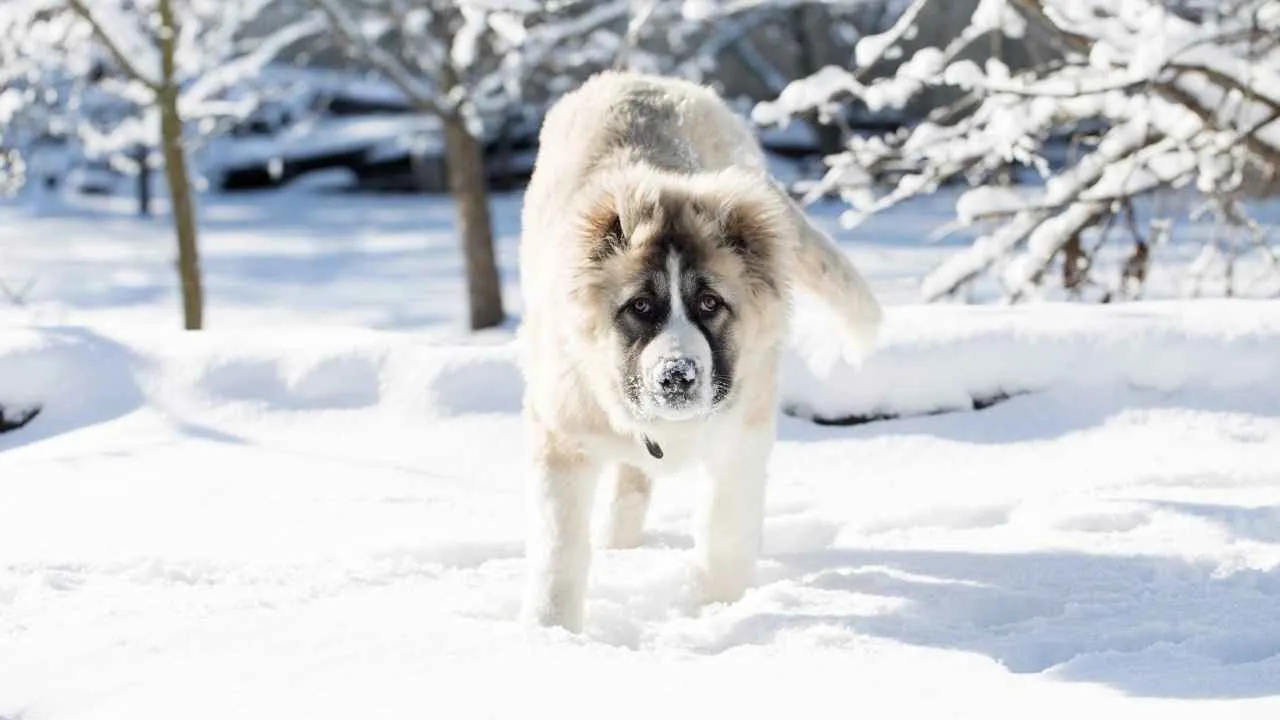
Caucasian Shepherd Dog comes from the Caucasus Mountains, spanning Russia, Armenia, Georgia, and Azerbaijan, where it guarded flocks, property, and people for centuries. Wolves, bears, and human intruders were among the threats these powerful livestock guardians were expected to confront.
Built for Harsh Country
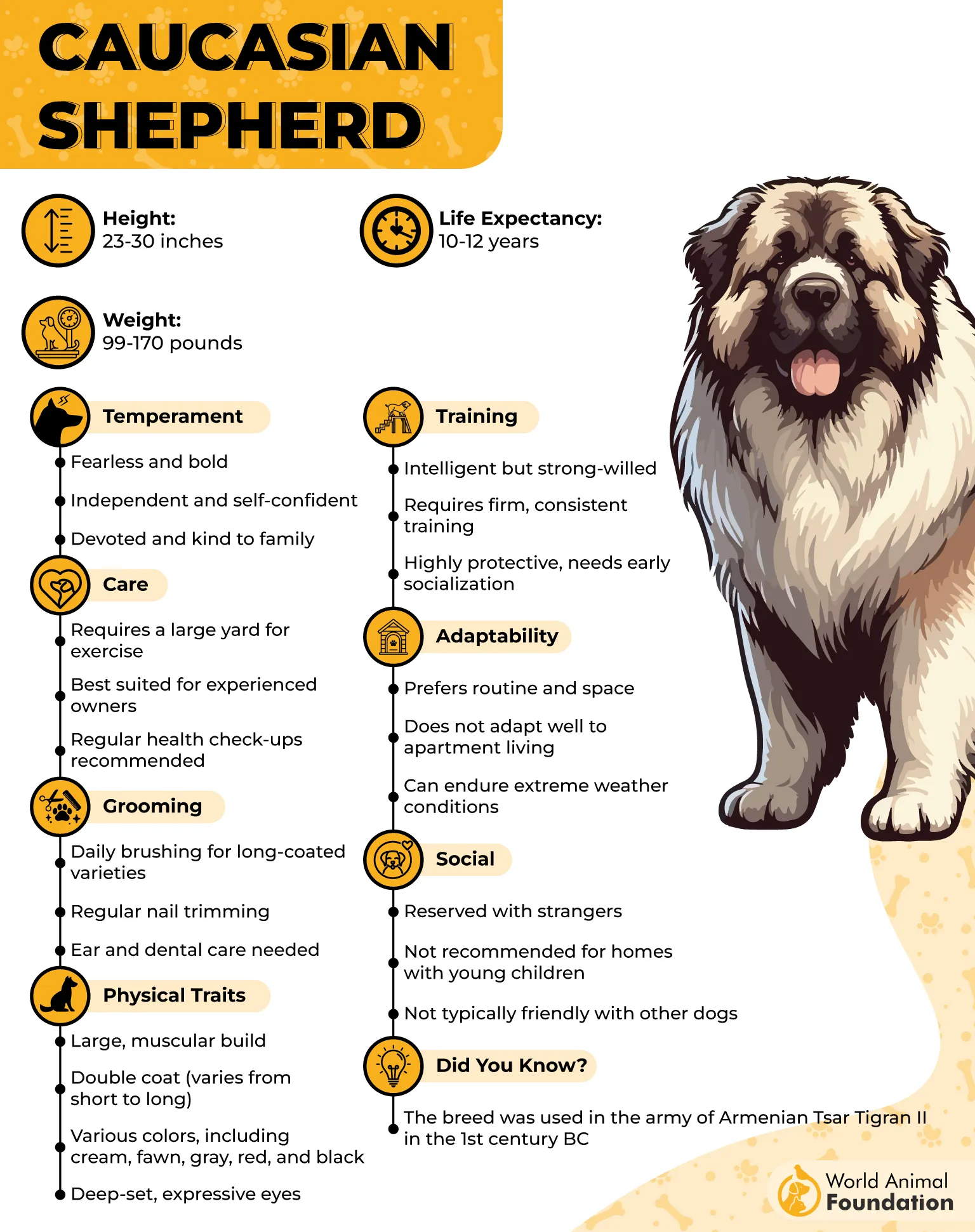
Its rugged mountain environment shaped remarkable weather resistance, fearlessness, and the independence needed to work without constant human direction. This working dog later entered Soviet military and border patrol work, including duties along the East German border.
These working details add useful context to the breed:
Needs experienced and consistent guidance
A securely fenced garden is essential
Benefits from scent work and structured activities
Quiet but Watchful
Caucasian Shepherd Dog can be calm and balanced within its family circle while remaining cautious around unfamiliar people. When it perceives a threat, its defensive response can appear quickly, making early socialization and careful handling especially important.
4. Broholmer
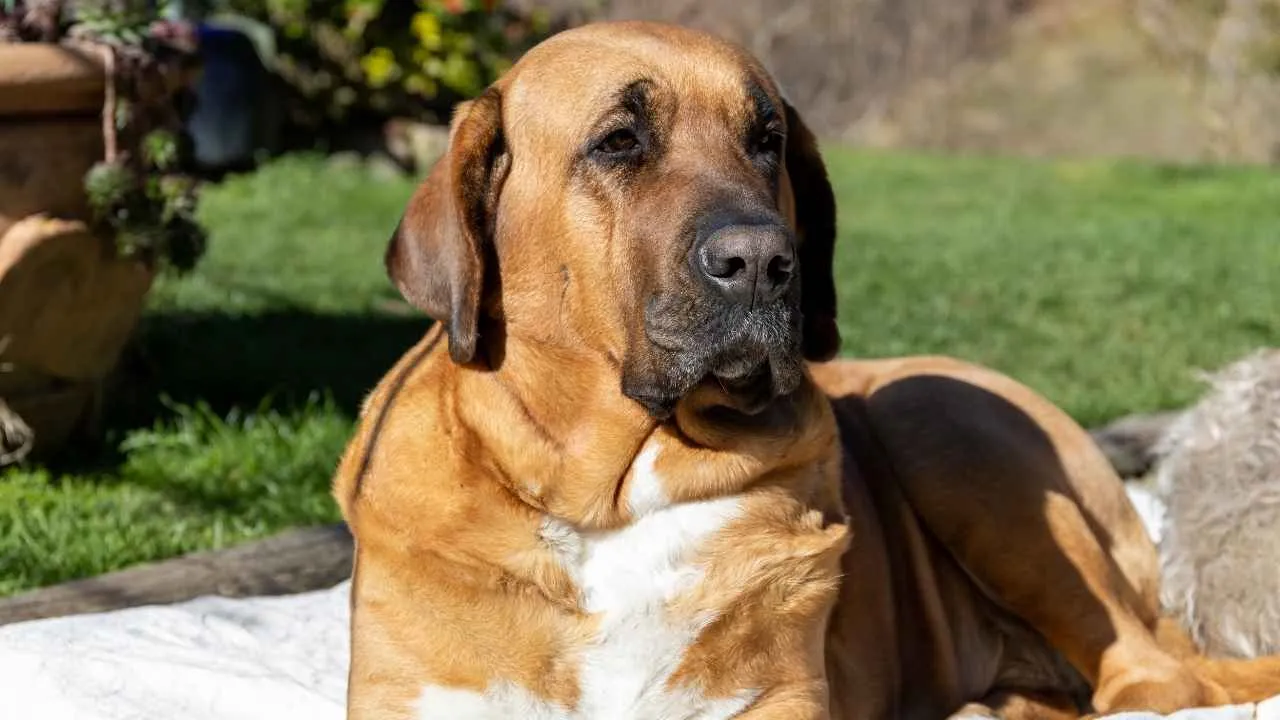
Broholmer has a long history reaching back to the Viking Age, when mastiff-like dogs from England and other regions were crossed with local Danish dogs. By the Middle Ages, these sturdy dogs were used to guard property and assist with hunting large game such as deer and wild boar.
A Calm Presence
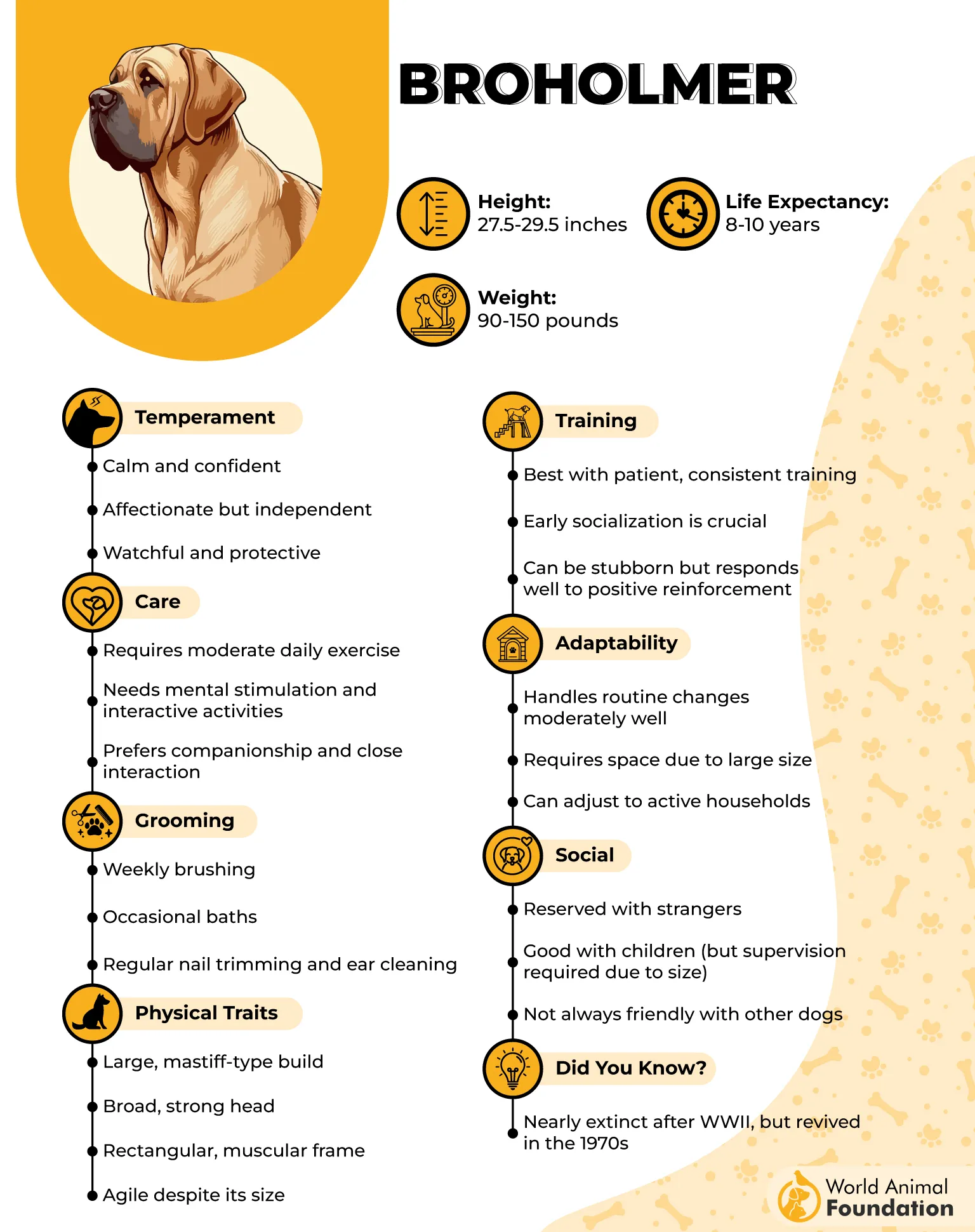
Broholmer brings a remarkably composed temperament to family life, with confidence that does not easily turn into agitation, as mentioned by the AKC.
Its guarding instinct makes it attentive to unfamiliar people and unwanted visitors, while proper socialization supports peaceful interactions with other dogs and pets.
There is more to its calm personality:
Patient around children
Courageous when family faces danger
Gentle during everyday interactions
Training With Trust
Broholmer responds well to early puppy training and obedience work, especially when lessons are patient, consistent, and built around trust. Some individuals can be stubborn, so calm correction and clear expectations help keep training productive without creating unnecessary tension.
5. Black Russian Terrier
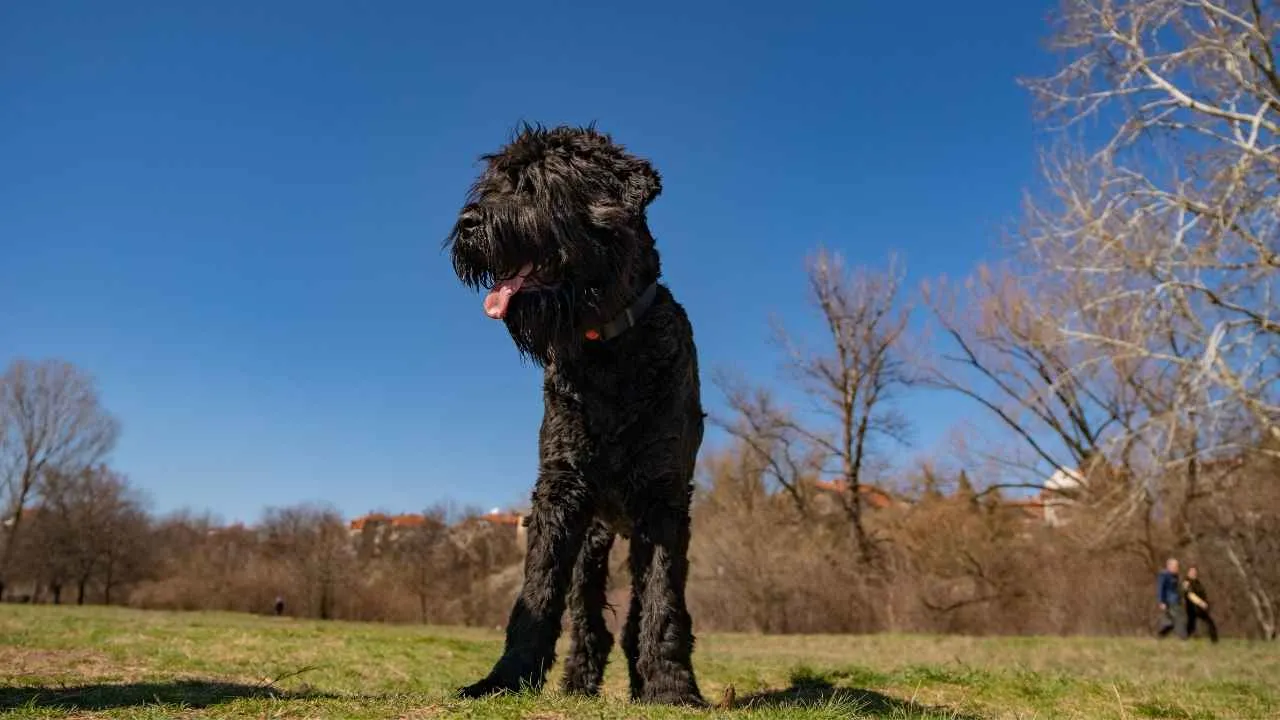
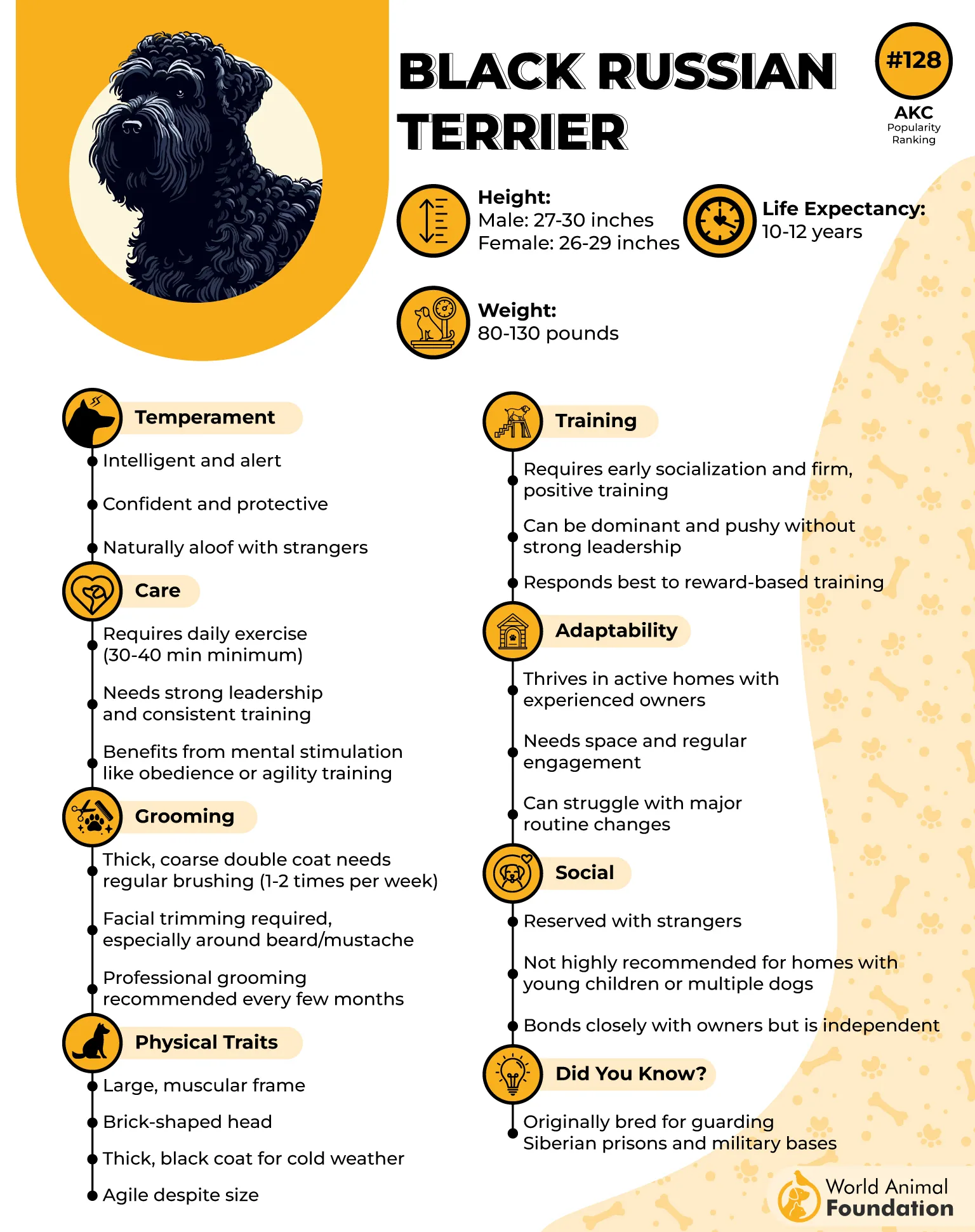
Black Russian Terrier emerged in Russia during the late 1940s and early 1950s as a large, capable working dog intended for military use. Its lineage includes breeds such as the Airedale, Rottweiler, Giant Schnauzer, and Newfoundland, giving the BRT a distinctly mixed foundation.
Quiet Watchfulness
This dog is naturally attentive to unfamiliar people and generally barks when something gives it a reason to react. Its size, courage, and guarded approach to strangers make early socialization especially important around visitors and unfamiliar situations.
That alert mind needs the right direction:
Learns best when training has a purpose
Long walks and hiking provide useful outlets
Sniffing games and structured play keep it engaged
Affection With Its People
Black Russian Terrier can be affectionate and playful with familiar family members, often following them from room to room and seeking a place beside them on the sofa or bed. Too much solitude can be difficult, while food around a child’s face may quickly attract an enthusiastic, beard-first cleanup.
6. Leonberger
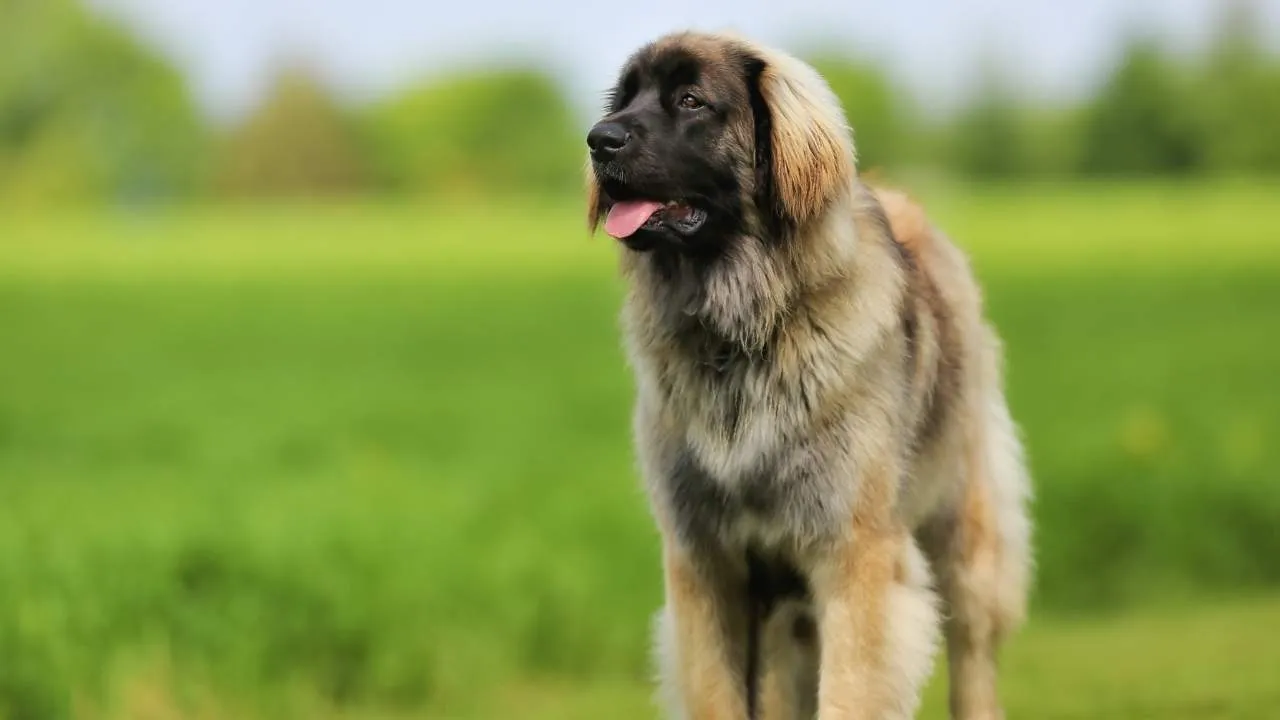
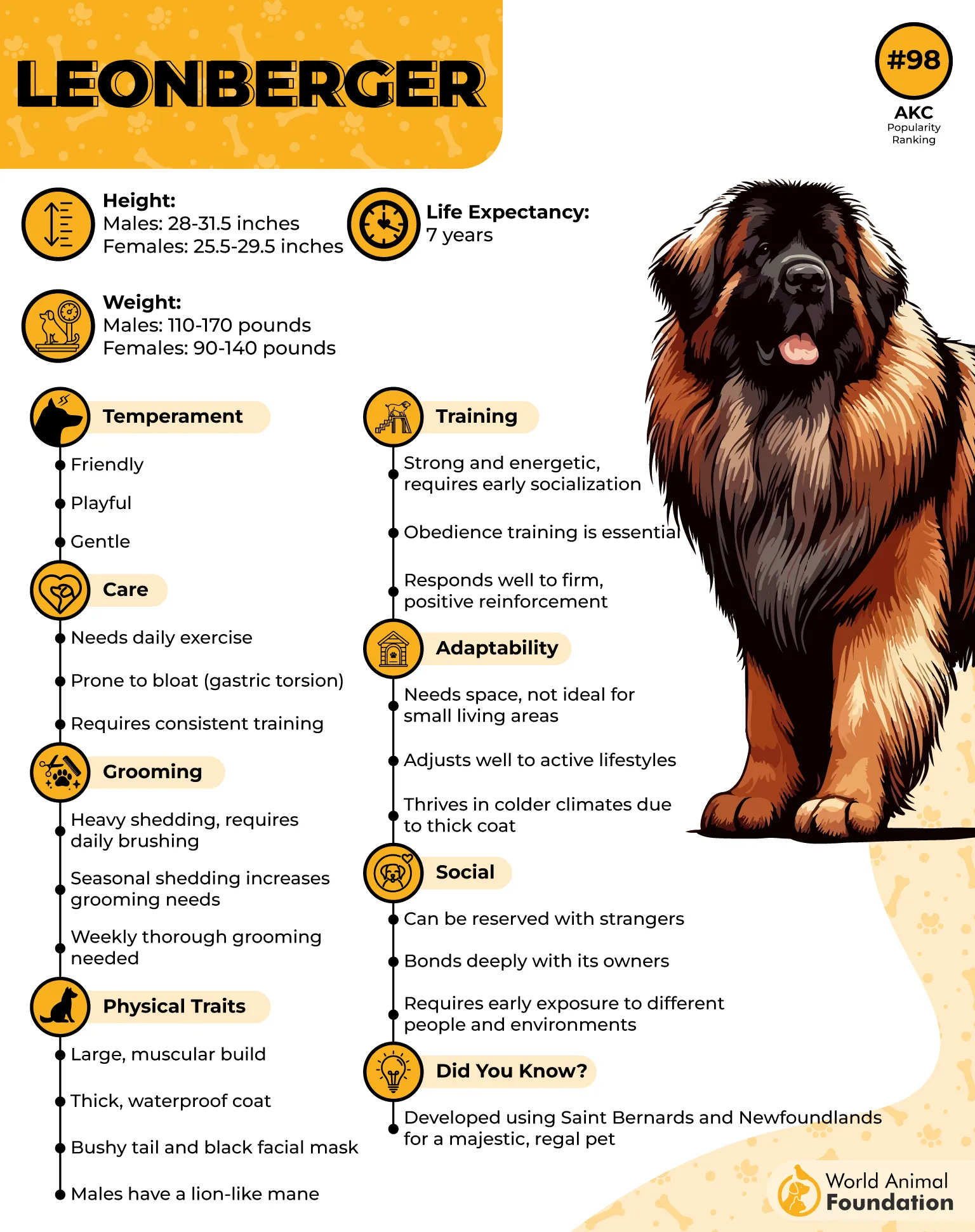
Leonberger was officially registered as a breed in 1846 by Heinrich Essig of Leonberg, Germany, with its origins still uncertain. Some accounts connect it to the Newfoundland, St. Bernard, and Pyrenean Mountain Dog, while records from 1585 describe similar dogs.
Made for Water
Leonberger brings unusual versatility to outdoor pursuits, with powerful swimming ability and a natural attraction to water. Hiking, backpacking, sledding, carting, and swimming all give this giant dog demanding ways to use its strength and energy.
Here are some practical details that are easy to appreciate:
- Needs more activity than simple walks
- Requires brushing and combing twice weekly
- Does not need coat trimming
Quiet Around People
Leonberger has a calm, gentle temperament and generally behaves kindly around children, dogs, and other pets when properly socialized. As they mature, unfamiliar people may receive a more reserved response, while their intelligence makes training rewarding even when stubbornness appears.
7. Kuvasz
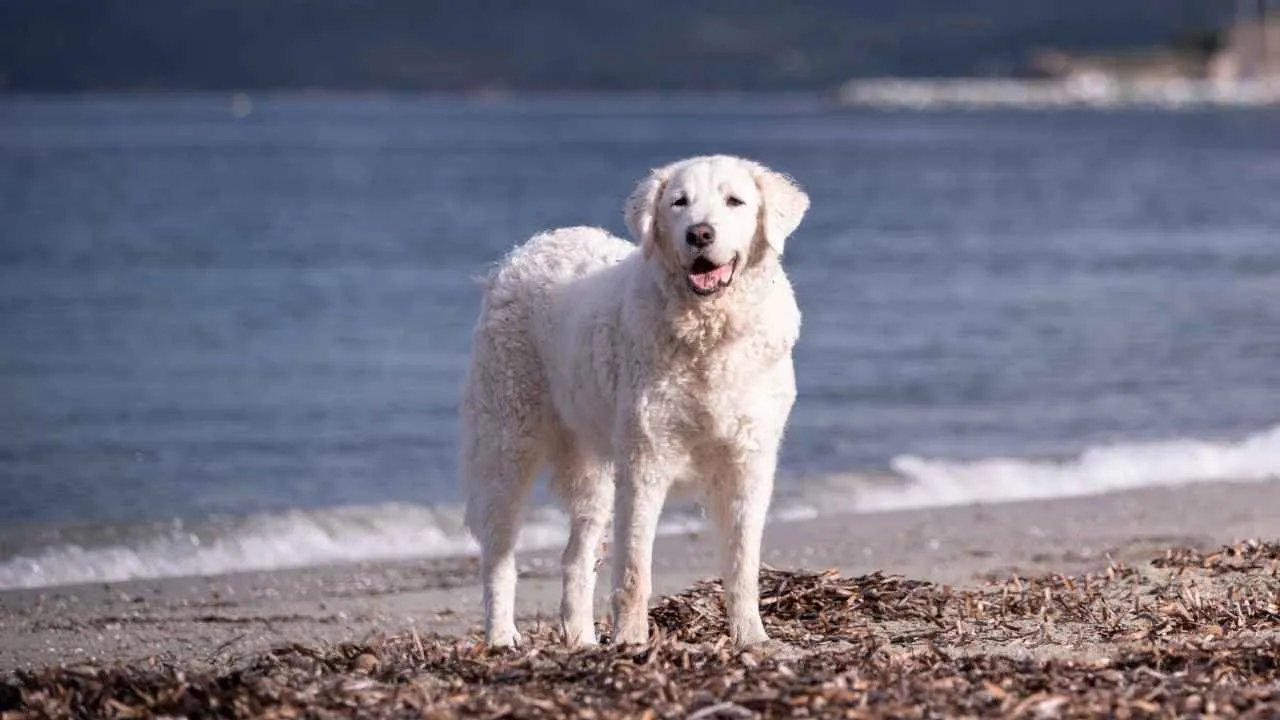
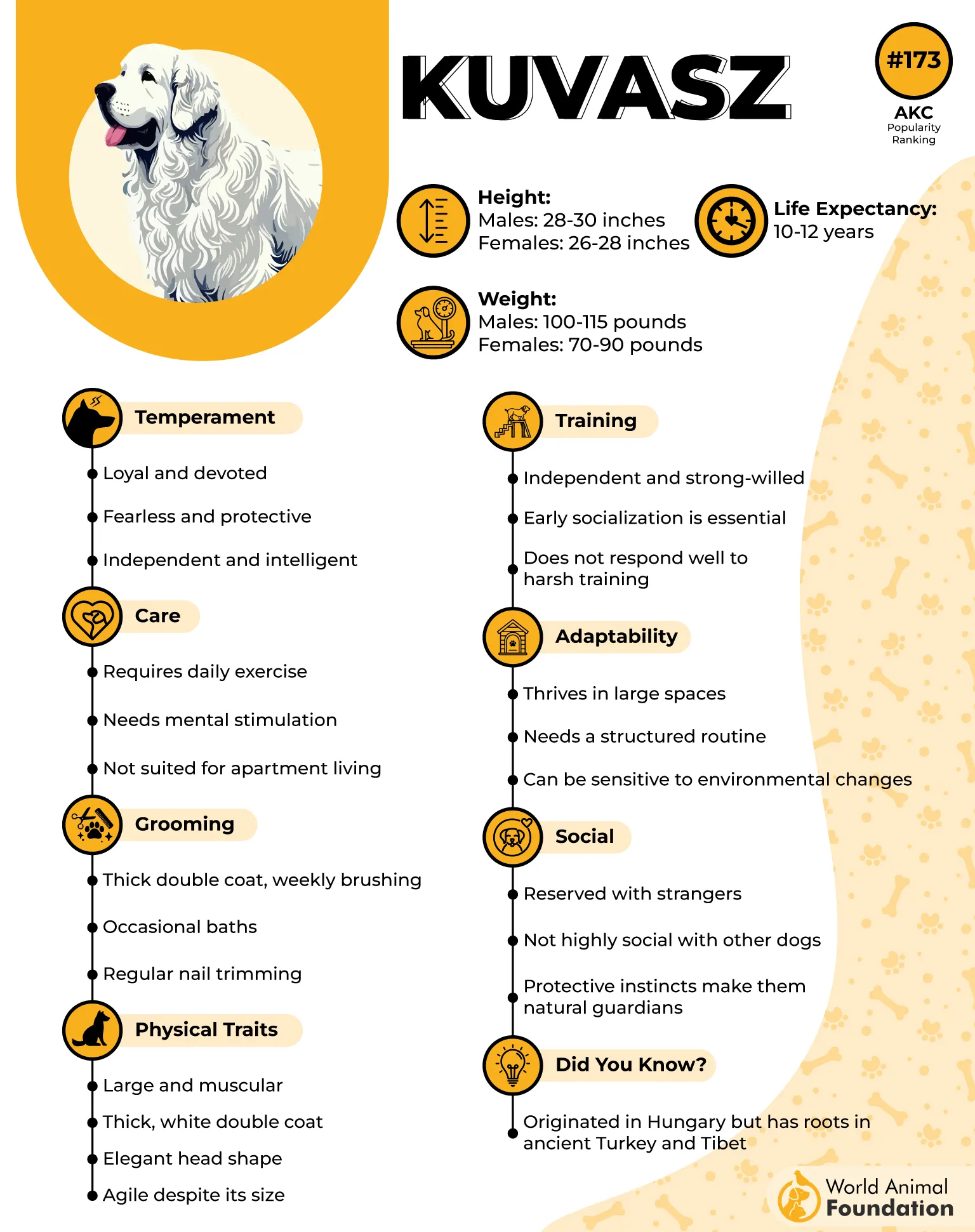
Kuvasz is an ancient Hungarian breed with possible roots in the large dogs of Tibet, and it was once reserved for royalty. Its role later shifted toward livestock protection, while its white coat helped farmers distinguish the dog from wolves threatening their animals.
Quiet at Home
Kuvasz can be remarkably calm indoors, often choosing a quiet corner after enough family interaction. Its watchfulness remains active, though, with sudden changes around doors, pathways, or the property capable of bringing an immediate burst of barking.
That alert nature has some very specific expressions:
Patient with children when boundaries are respected
Young dogs may accidentally knock children over
Cautious around unfamiliar people
Independent Company
Kuvasz enjoys family life while also deciding when it wants personal space, sometimes wandering off for a peaceful break of its own. It may form a particularly close attachment to one person and seek affection through a quiet cuddle or by resting its large head in a lap.
8. Romanian Carpathian Shepherd
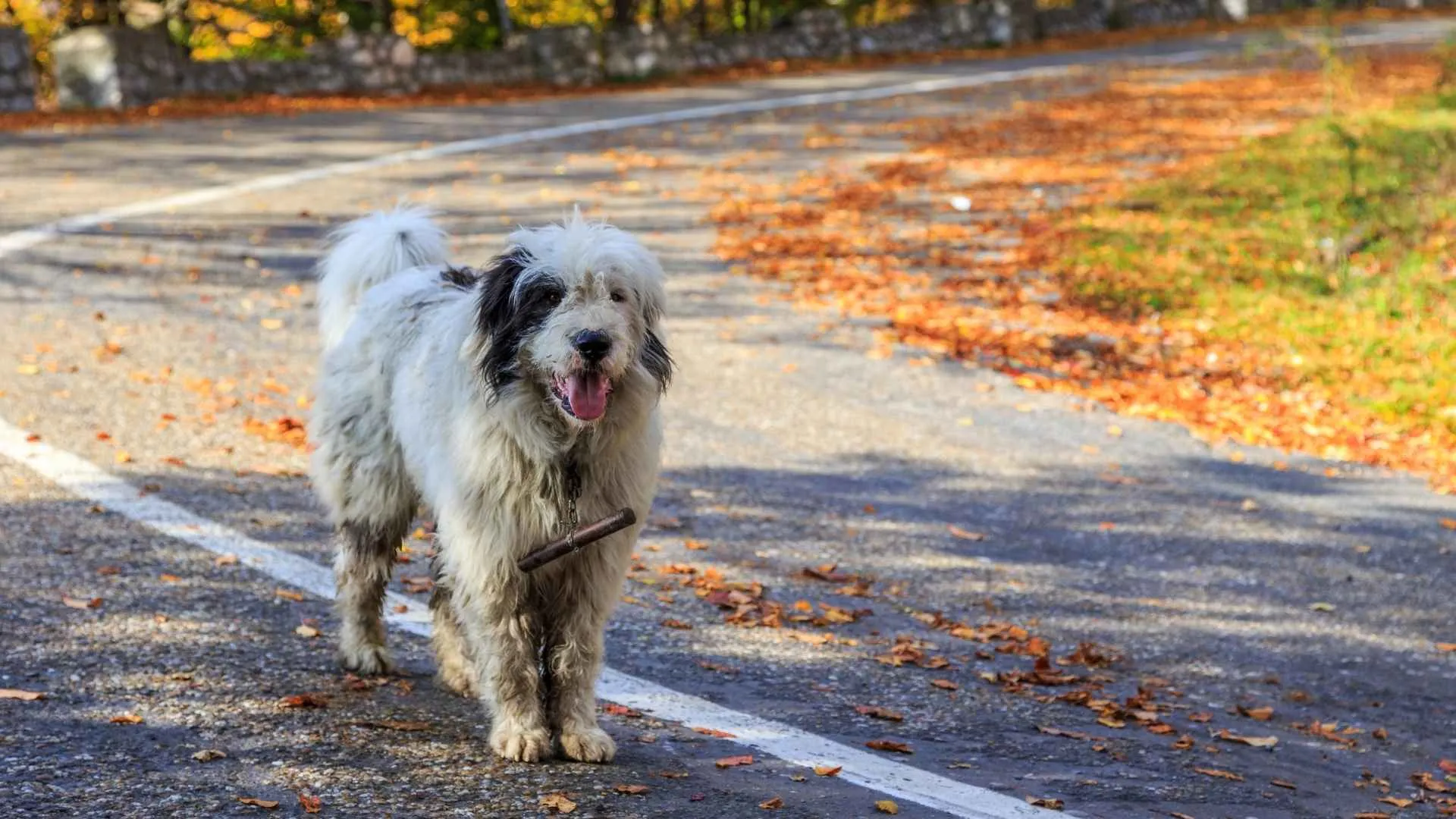
Romanian Carpathian Shepherd spent centuries guarding flocks in Romania’s Carpathian Mountains, where wolves, bears, boars, and bobcats could threaten livestock. Formal breeding began during the 20th century, followed by breed standardization through the Romanian Kennel Club.
Calm Under Pressure
This guard dog can appear remarkably composed while keeping its energy reserved for a genuine threat, making its quiet nature especially striking for such a powerful guardian. When danger arrives, it can react with surprising agility, speed, and determination.
Its quiet nature hides plenty of drive:
Pack motivation outweighs food rewards
Strong instinct to patrol its territory
Needs a securely fenced yard
Serious Training
Romanian Carpathian Shepherd requires an experienced handler who can provide calm, firm, and consistent guidance from an early age.
Early socialization is essential because insufficient direction can contribute to difficult or aggressive behavior, while adult obedience still requires clear boundaries.
9. Alano Español
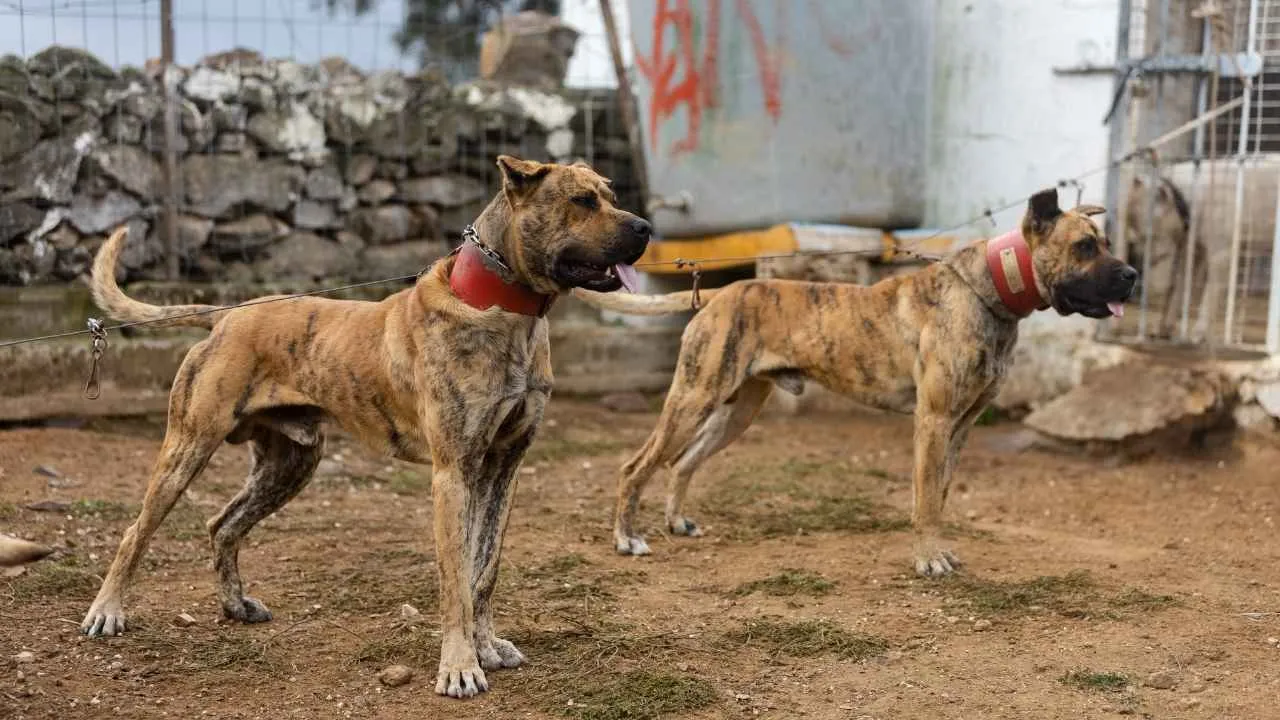
Alano Español has roots with the Alani, an ancient nomadic people who traveled across Europe and Africa with large herds of sheep and goats.
Their powerful dogs guarded livestock and assisted with hunts, later becoming known in France as Alaunt dogs and in Spain as Alanos, used with cattle and bullfighting.
Keeps Things Quiet
Alano Español fits the quiet-giant description especially well, with a habit of watching its surroundings rather than filling the space with barking. It can be highly wary of unfamiliar people, and its response to a perceived threat may come without an audible warning.
A few details make that silence especially notable:
Rarely barks at unfamiliar activity
Can tolerate heat, cold, dryness, and humidity
Suited to outdoor sleeping arrangements
Around Family and Dogs
Alano Español can be gentle, patient, playful, and affectionate with children, while its pack-oriented nature helps it interact well with other dogs. Smaller animals can be a different matter because this breed may not readily accept cats or other small pets, particularly when challenged.
Conclusion
A huge frame does not always come with a huge amount of noise. Some quiet dog breeds are content to observe, relax, and spend quiet time with their families, only becoming vocal when something genuinely catches their attention. That peaceful routine can make them surprisingly different from what their size suggests.
However, calm behavior does not remove the need for proper exercise, socialization, training, and mental stimulation. Even apartment dwellers need to consider daily exercise, enough room to move comfortably, and careful handling of their strength. Looking beyond appearance helps owners find a dog whose temperament fits their household, making life with a giant companion feel far more manageable.
