




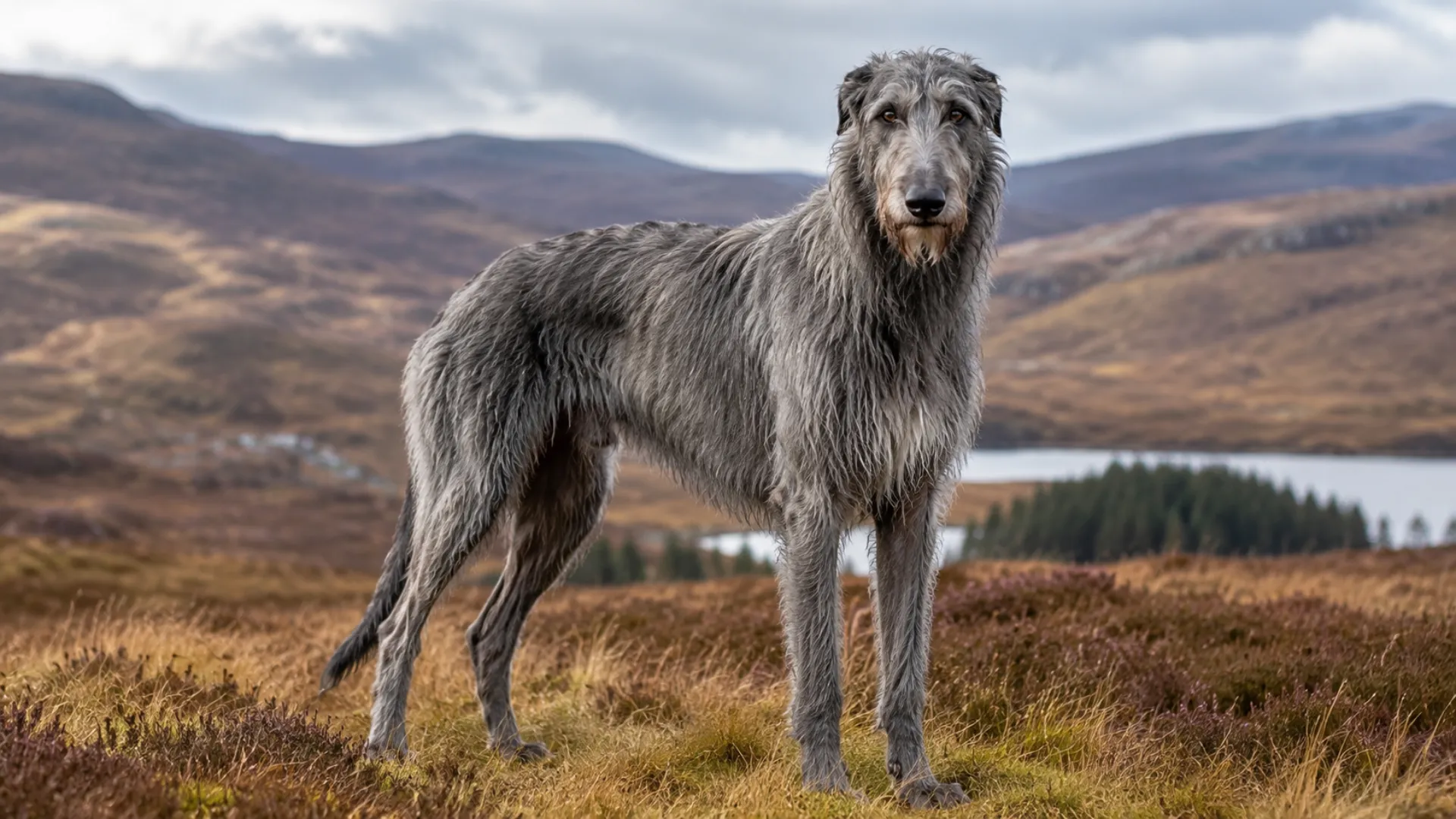
When it comes to massive dog breeds, the usual giants like the Great Dane and the Saint Bernard come to mind. But some of the most fascinating giant breeds rarely make the popular lists. They have the size, the stories, the striking looks, and personalities that can completely change your idea of what a giant dog is like.
The remarkable, overlooked giant dog breeds on this list bring their own stories to the table. Some are guardians, some are workers, and some are graceful athletes with surprisingly soft sides
Keep reading, and find out the lesser-known giants that might be exactly the dog you did not know you were looking for.
Remarkable Overlooked Giant Dog Breeds to Meet
1. Spanish Mastiff
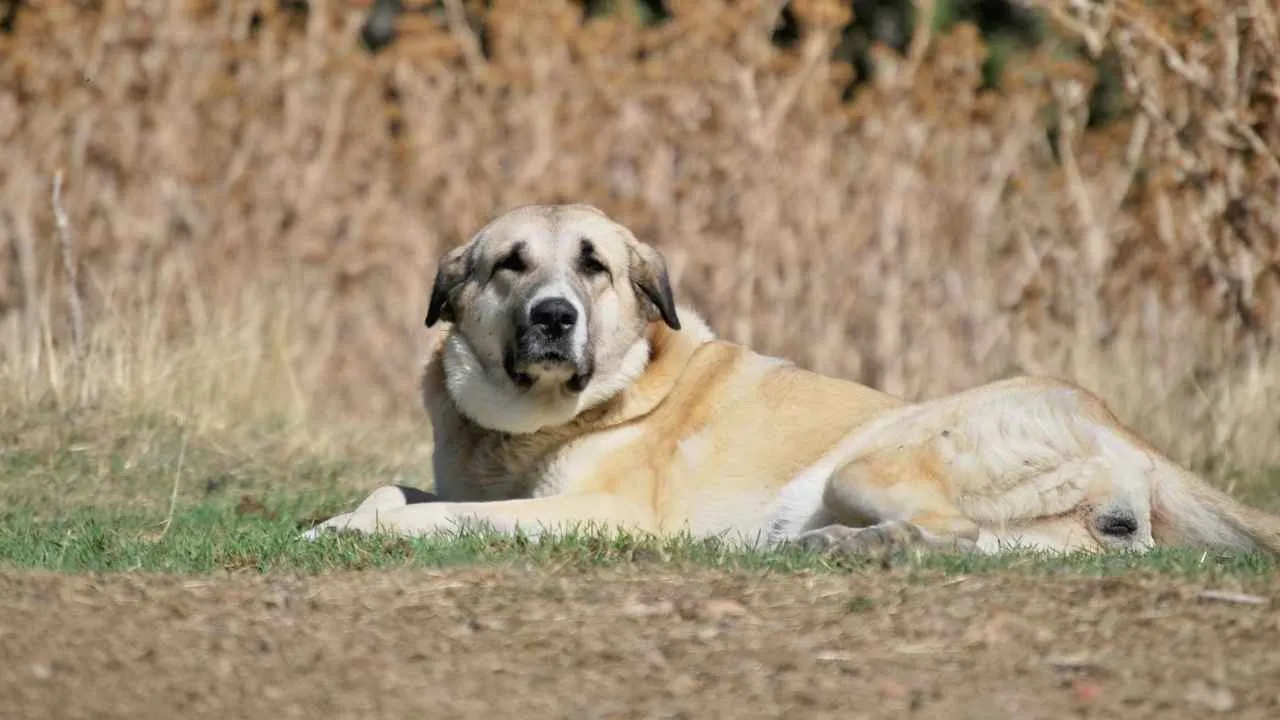
Top of the list, we have one of the most powerful and heavy dog breeds, the Spanish Mastiff. This enormous guardian was developed to protect sheep while they traveled across the country.
For centuries, these dogs faced wolves and other predators alongside shepherds, so PetMD notes that being watchful comes naturally to them.
Yet life at home can look very different. Spanish Mastiffs are often affectionate with their families and make devoted family members. They are gentle around children when properly socialized.
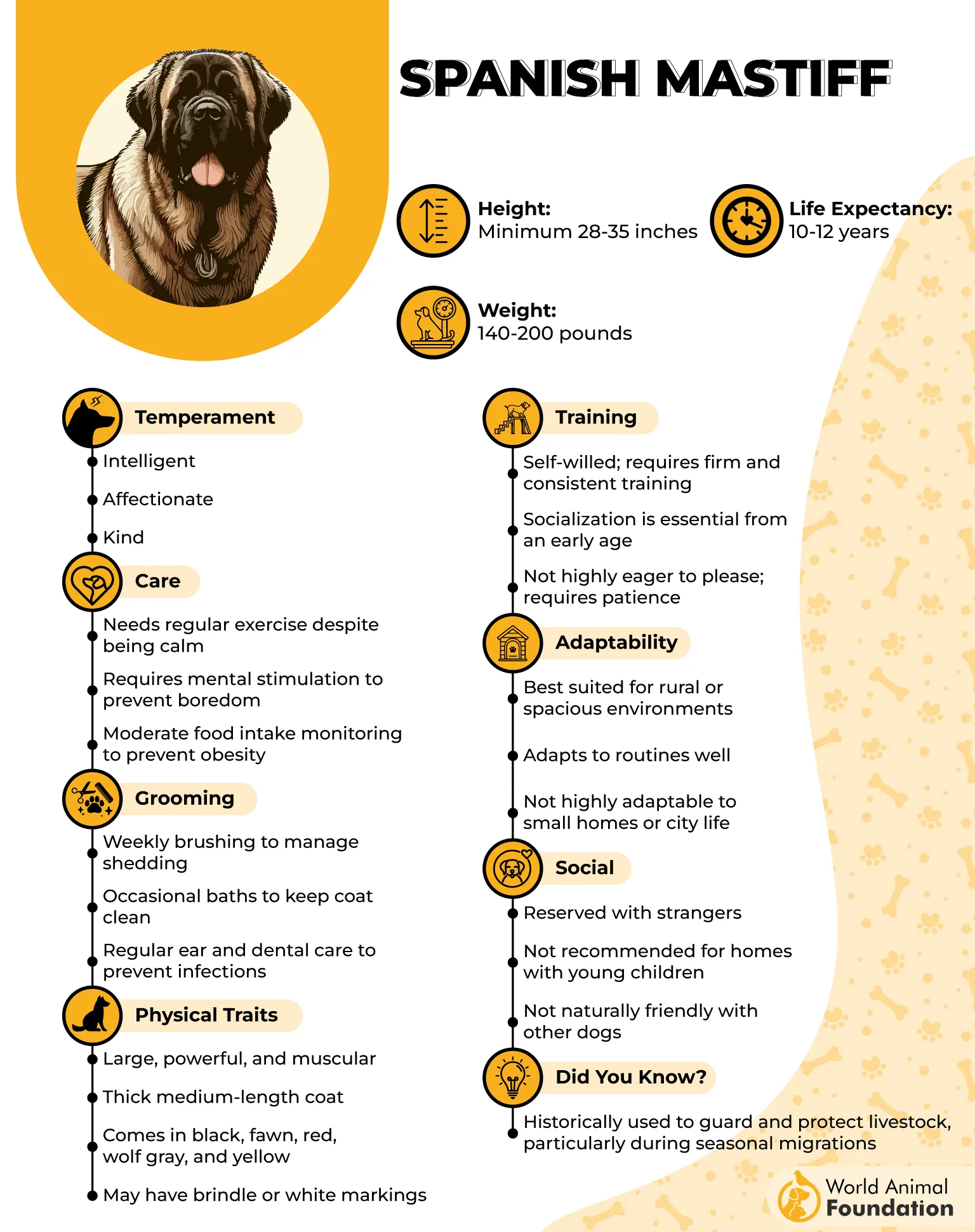
They tend to be more reserved with strangers, especially when something or someone looks suspicious.
Their loose skin around the neck, huge frame, and thick coat give them that unmistakable old-world guardian appearance.
Training & Exercise
Training should start early because teaching a puppy good manners is much easier. Keep lessons consistent, calm, and rewarding.
Their daily activity can include leisurely walks, swimming, play, or time in a secure yard. They generally do not need intense running sessions.
Young dogs especially should avoid excessive exercise while their bodies are developing.
2. Scottish Deerhound
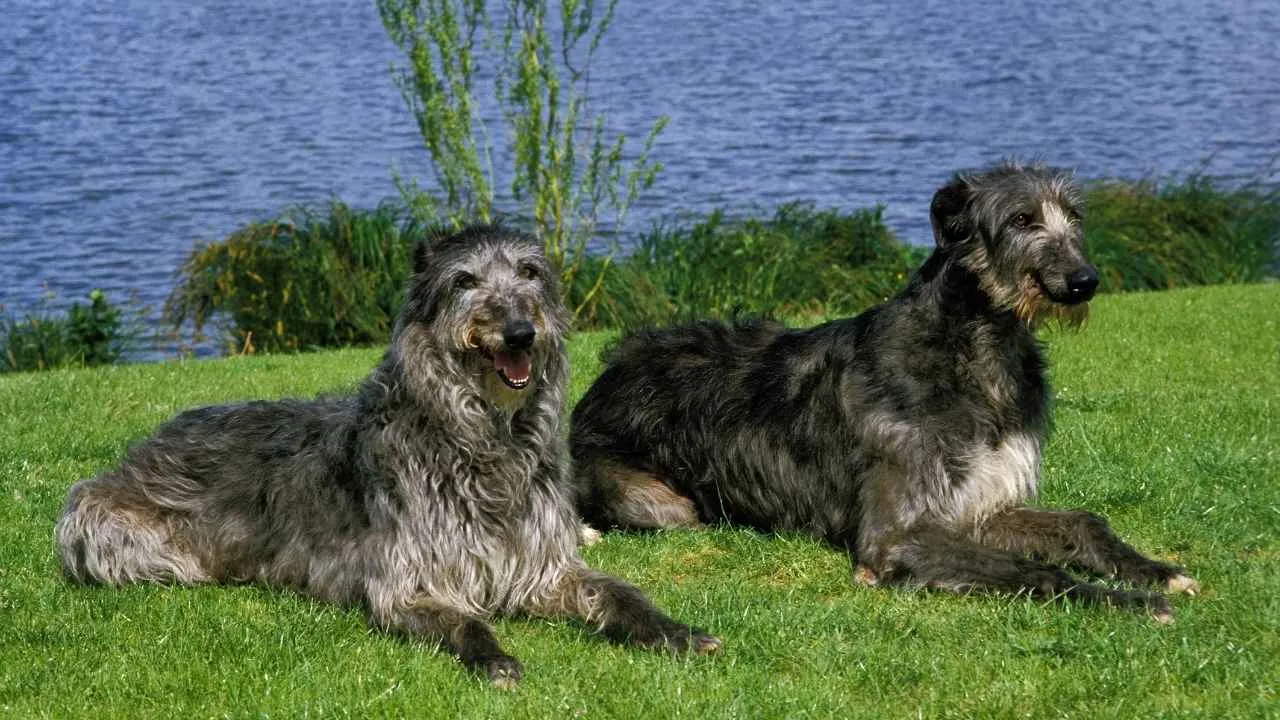
Tall, lean, and wonderfully shaggy, these Scottish hounds were originally bred to chase red deer. Their long legs gave them the speed needed for the job, while their size helped them tackle demanding terrain.
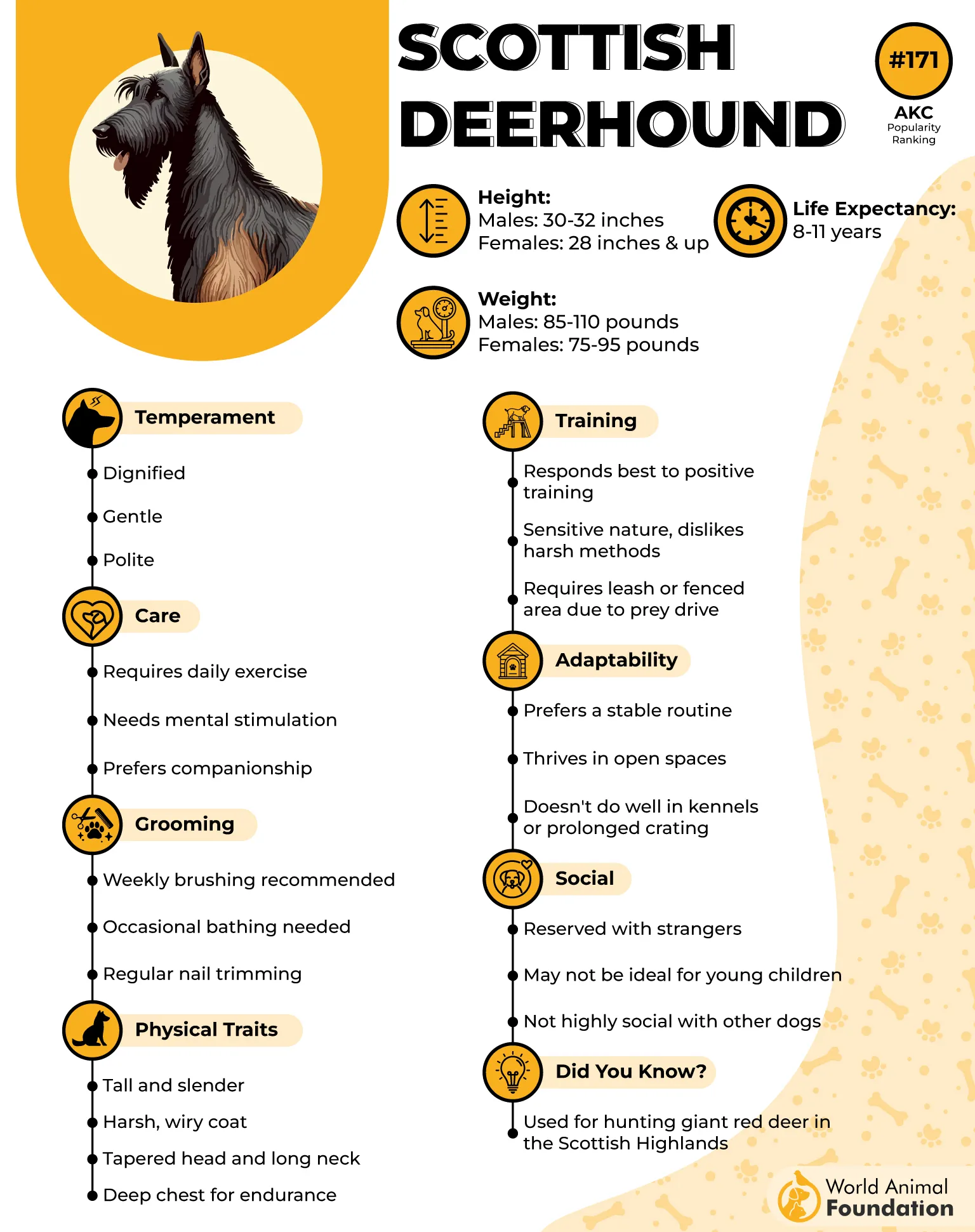
Their history sounds intense, but their home personality can be surprisingly soft. Scottish Deerhounds are often gentle, affectionate, and polite with the people they trust.
Once they have had a chance to stretch their legs, they can be perfectly content lounging around the house. That makes them a fascinating combination.
Despite their impressive size, Scottish Deerhounds can enjoy a relatively long life for a giant breed, with a typical life expectancy of around 10 to 12 years.
Their rough coat adds another layer of character, giving them a wonderfully untidy look.
Training & Exercise
This is not the giant breed to choose if your dream dog is satisfied with a five-minute stroll. Deerhounds need room to move and opportunities to run safely.
A securely fenced yard area is particularly useful because their instinct to chase can kick in quickly. Training should stay positive and patient.
Their independent hound nature means cooperation usually comes more easily when lessons feel worthwhile rather than forced.
3. Pyrenean Mastiff
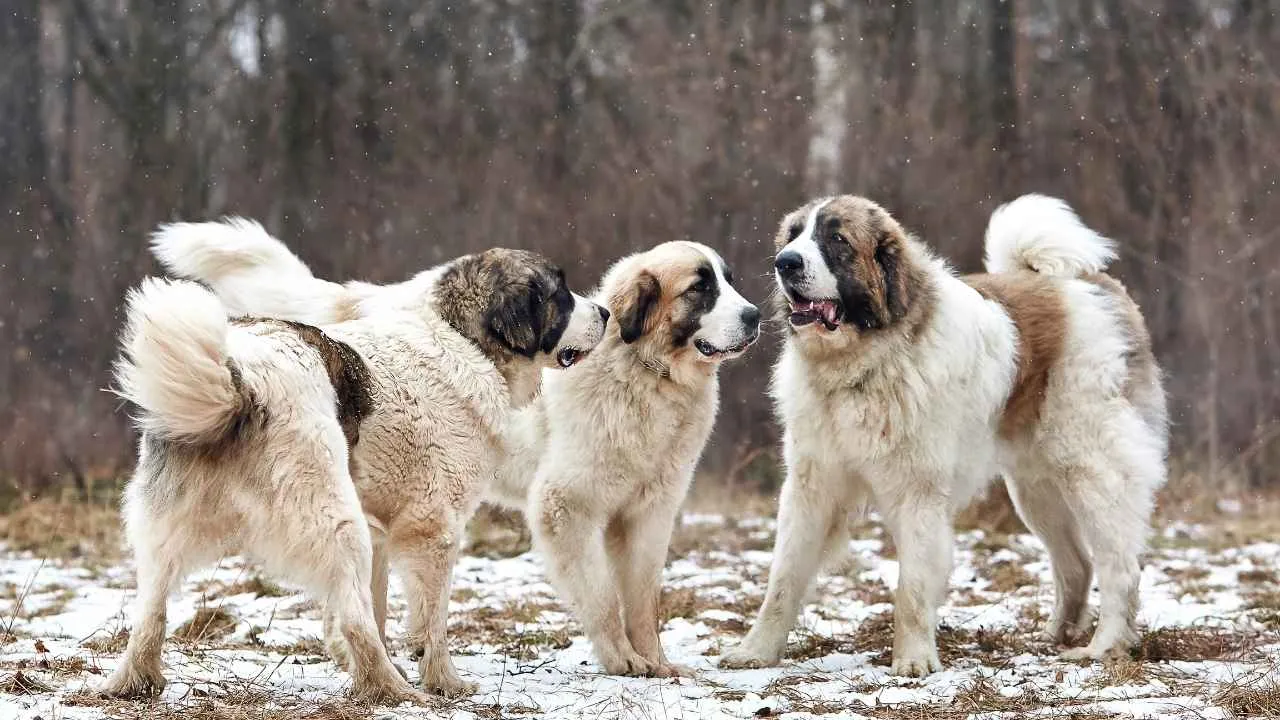
The Pyrenean Mastiff has the kind of presence that makes you wonder whether someone accidentally brought a small bear into the living room. Then you see that calm expression and realize this giant has a much softer side.
Originating in the Spanish Pyrenees, these dogs spent generations accompanying shepherds and protecting livestock from predators. Their job demanded courage, independence, and the ability to make decisions without waiting for a human command every few seconds.
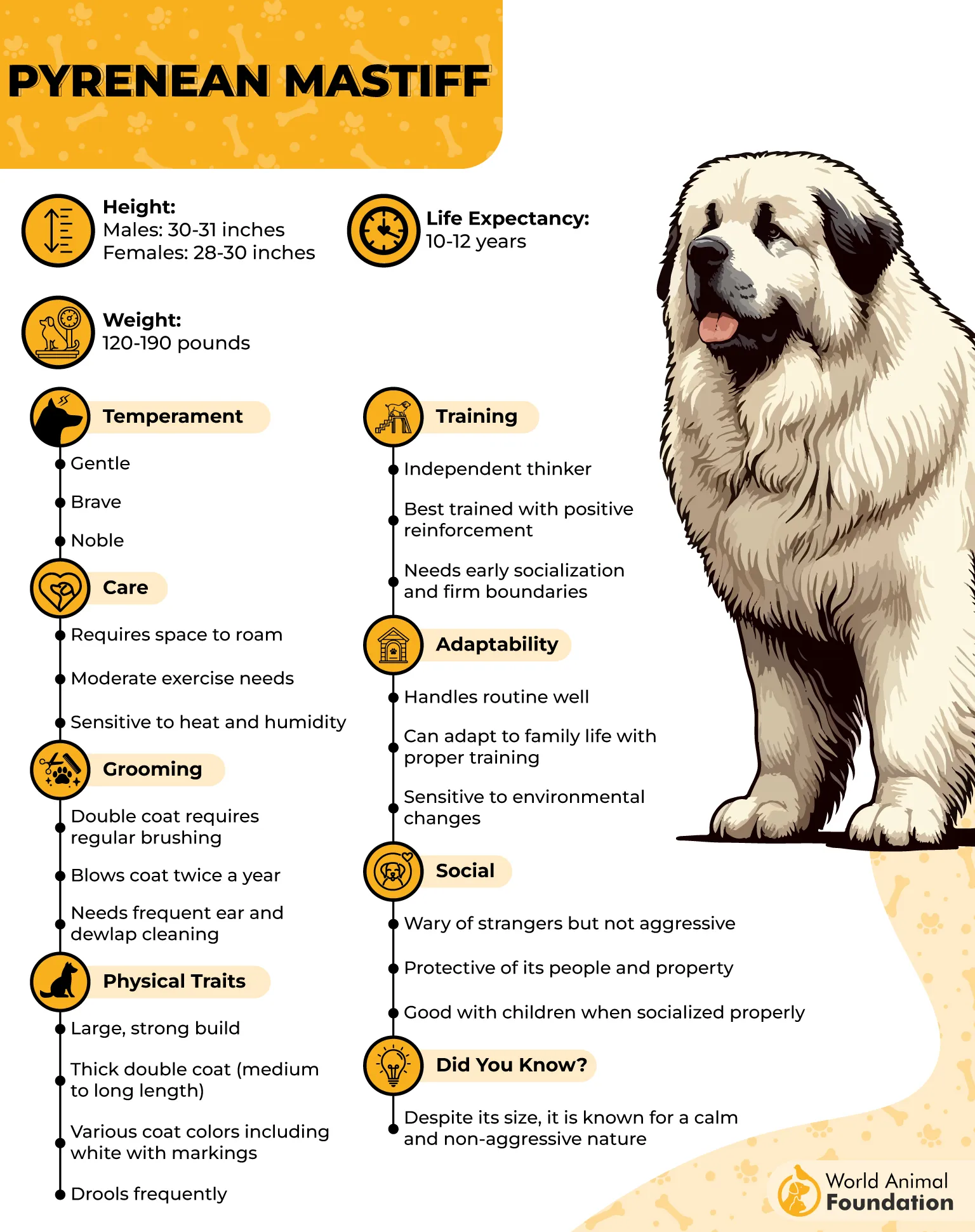
Today, they can be loyal and gentle family companions. They tend to form strong bonds with their people while remaining naturally cautious around unfamiliar visitors.
Their thick, weather-resistant double coat needs weekly brushing to clear away loose fur and keep that beautiful, fluffy coat in good condition. Beneath all that fluff is a powerful dog that can weigh roughly 120 to 190 pounds.
They are a much better match for owners who can give them room to stretch out and a stable home life.
Training & Exercise
You will want to introduce training and socialization early, particularly because this breed has an independent streak. Reward-based lessons can make cooperation much easier.
Their exercise needs are moderate for such a large dog. Regular walks, hikes, and other relaxed outdoor activities can give them enough physical movement without turning every day into an athletic event.
4. Dogue de Bordeaux
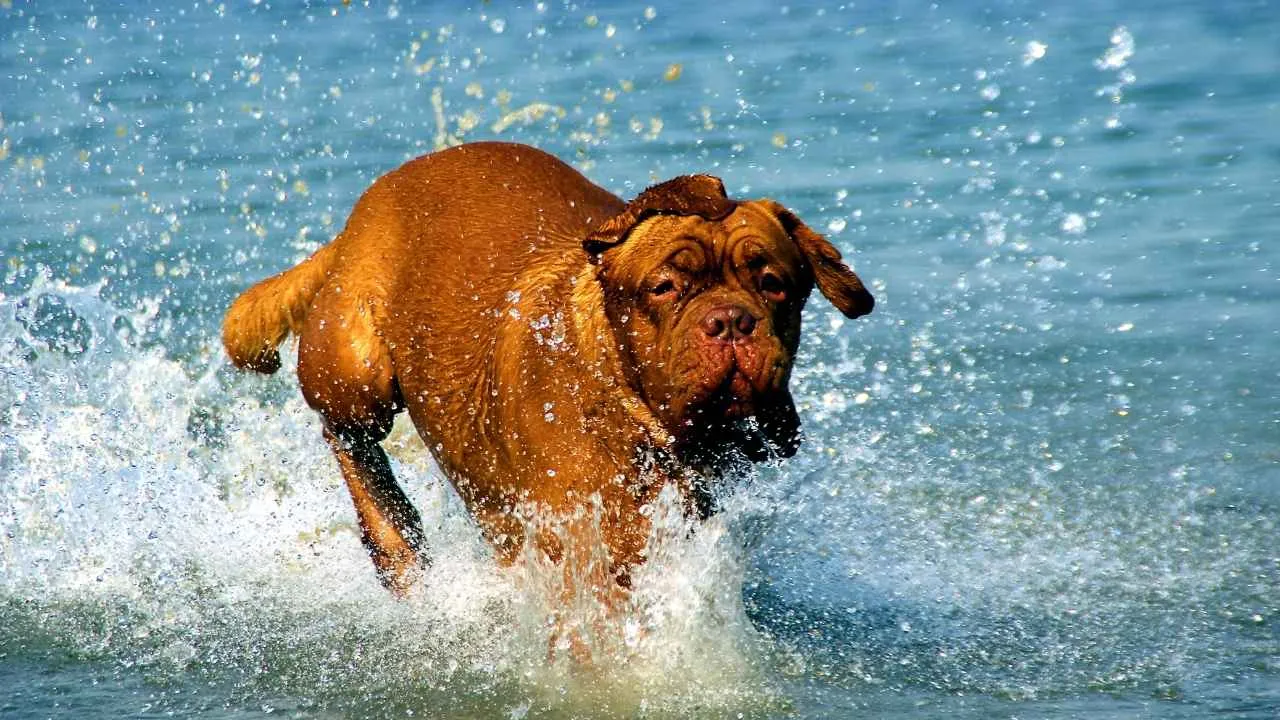
Then there is the Dogue de Bordeaux, a dog whose enormous head alone can make you stop mid-sentence. They look seriously tough, but spend enough time with one, and you may discover that the intimidating face belongs to a deeply devoted family dog.
This French mastiff has a long history as a working and guarding breed. Their powerful build and confident nature made them useful around estates, livestock, and other demanding jobs.
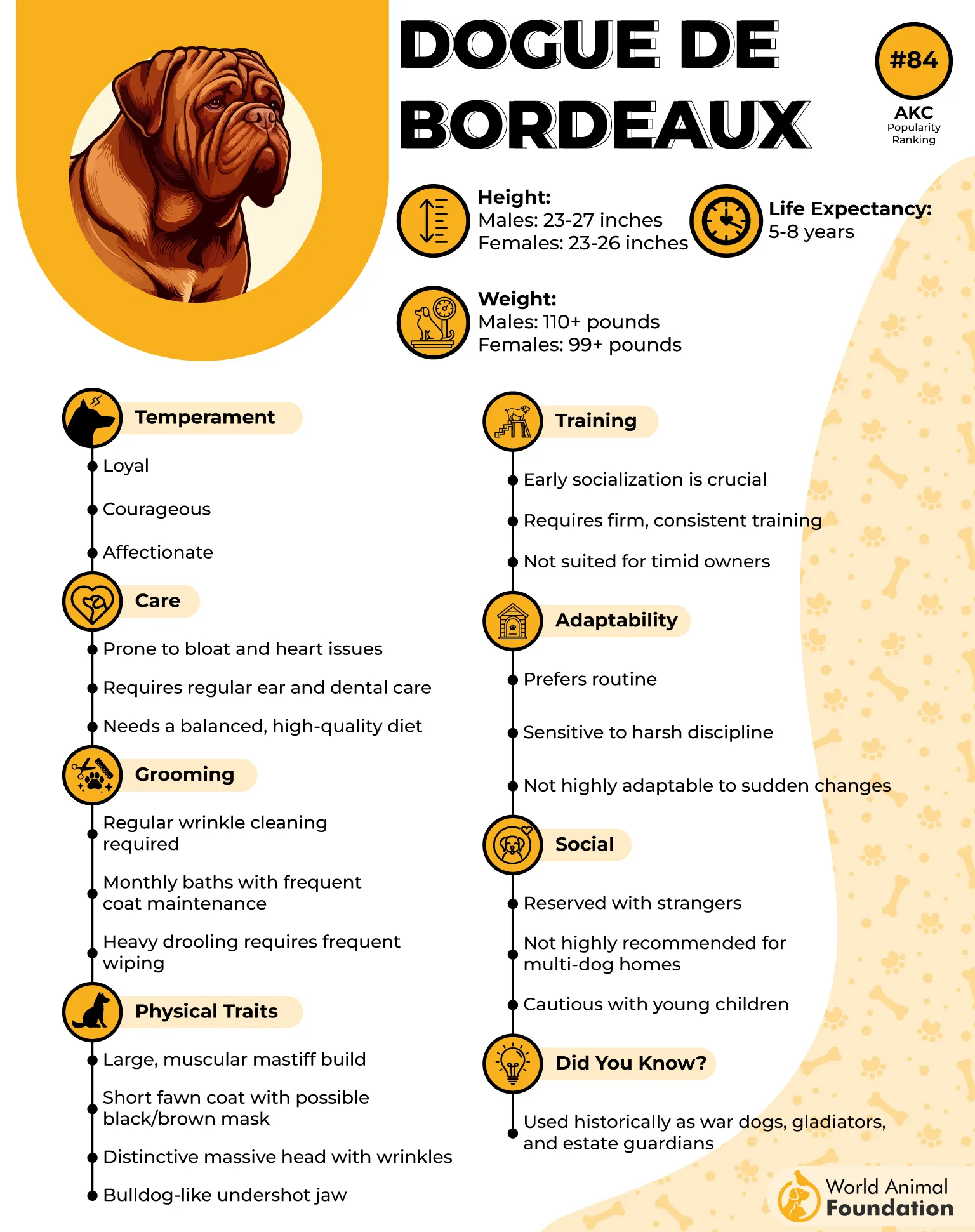
At home, they can be calm and surprisingly attached to their people. They are not usually interested in being everyone’s best friend, though. Their natural suspicion of strangers is part of what made them effective and alert guardians.
And yes, they can be stubborn. That makes early manners and patient handling especially important. This way, they can even adapt to apartment life.
Training & Exercise
Start obedience work while they are young and physically manageable. Keep sessions short, positive, and consistent rather than turning training into a battle of wills.
Their activity should stay sensible and suited to their age and build. Daily movement and controlled play can keep them moving without putting unnecessary strain on a growing giant.
5. Broholmer
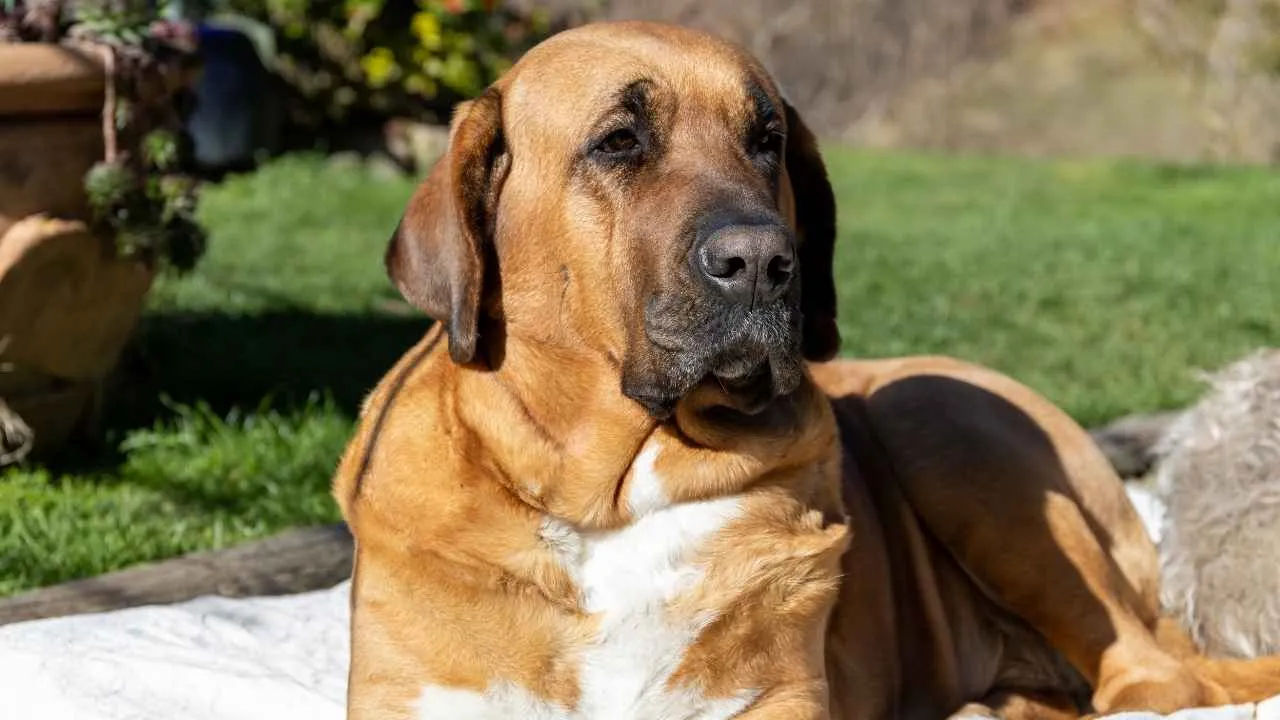
If you have never heard of the Broholmer, you are definitely not alone. This rare Danish mastiff has somehow managed to stay under the radar while carrying around the exact sort of grand, substantial presence people usually associate with famous giant breeds.
Also called the Danish Mastiff, the Broholmer historically worked as a watchdog and estate dog, Royal Canin mentioned. They were valued for their ability to keep an eye on large properties without needing to turn every passing noise into a neighborhood announcement.
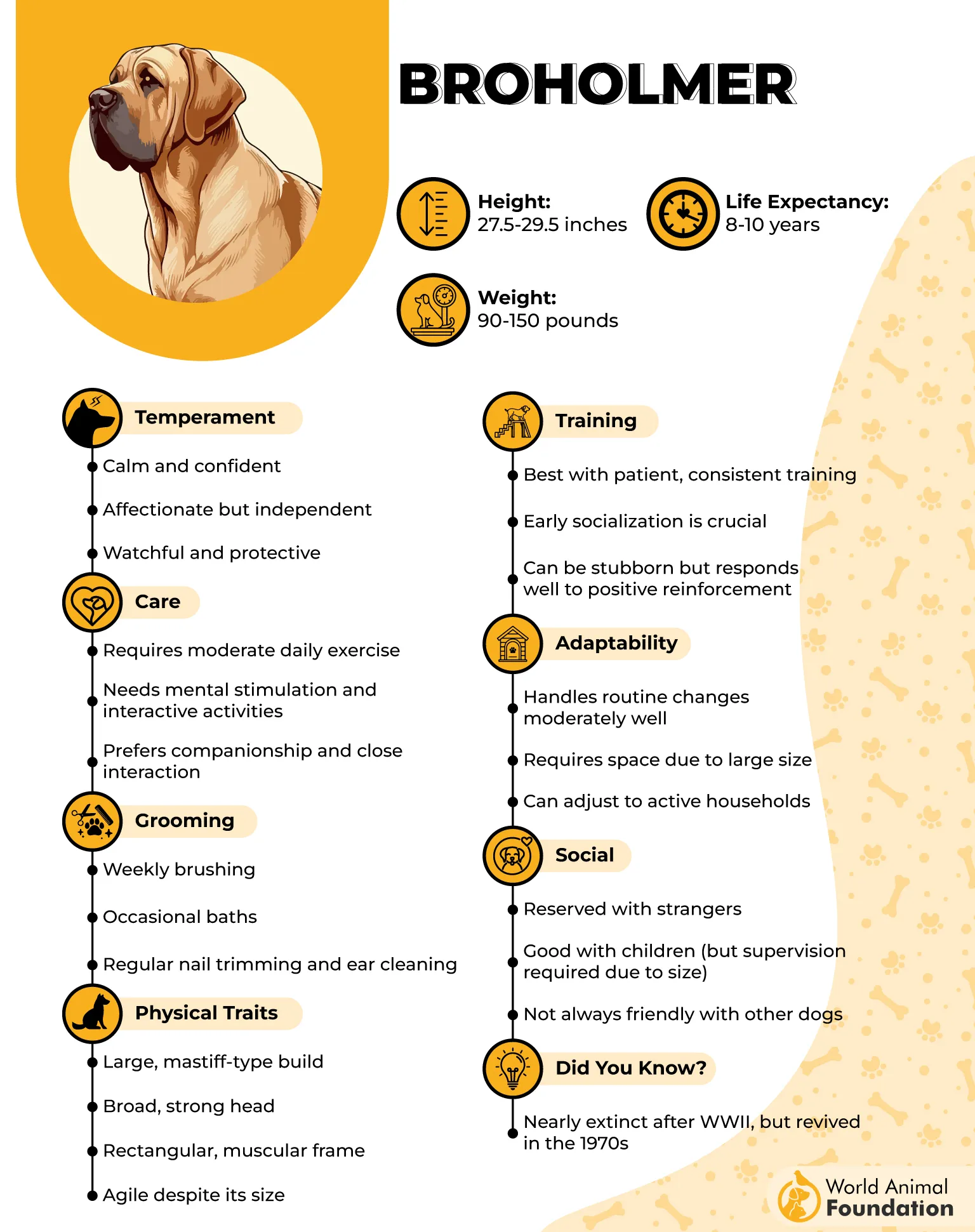
Their personality can be wonderfully steady. Broholmers are generally described as calm, friendly, and companionable. This makes them quite different from the frantic image some people have of large working dogs.
They are still big, powerful animals, though, and that strength matters. For families who want a substantial companion with a relaxed temperament, this Danish giant deserves far more attention.
Training & Exercise
Broholmers benefit from regular walks and everyday outdoor activity rather than exhausting workouts. Give them opportunities to explore, sniff, and stay active without pushing their growing joints too hard.
Training is best handled with patience and consistency. Reward-based sessions can help keep their attention while building the household manners you will be very glad to have once that puppy becomes a full-sized adult.
6. Greater Swiss Mountain Dog
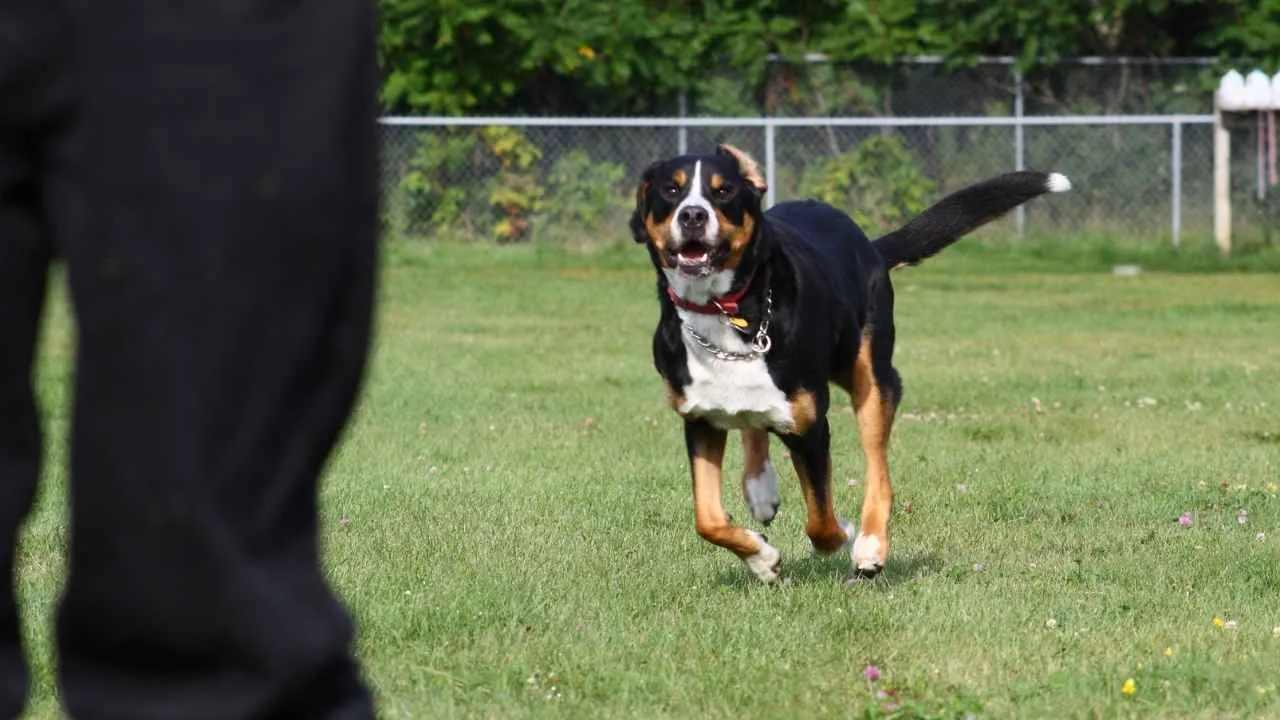
The Greater Swiss Mountain Dog is an impressive breed with a big frame that came from Switzerland. Known affectionately as the Swissy, it has served as a versatile shepherd dog. These gentle giants helped move cattle, pull carts, guard property, and perform other practical tasks around working farms.
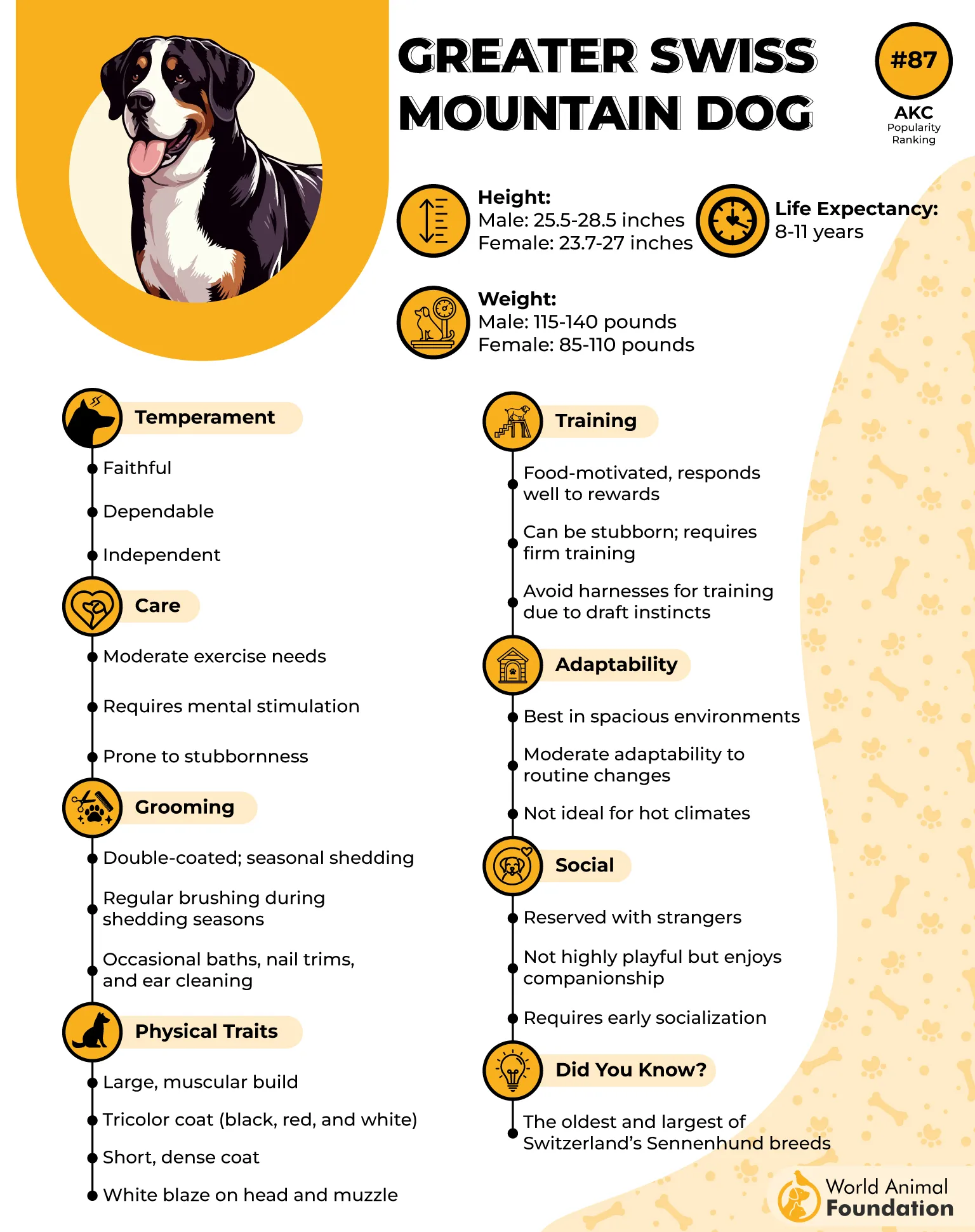
That background explains their confident, hardworking personality. According to Omlet, this giant breed tends to enjoy being involved with their families and often has plenty of enthusiasm for outdoor activities.
Their black coat with rich markings gives them a distinctive appearance, while their sturdy frame can make them look even larger than they already are. Also, these dogs may suffer from ailments like hip dysplasia.
Males can reach around 28.5 inches at the shoulder and weigh roughly 115 to 140 pounds.
Often counted among the smartest breeds, the Greater Swiss Mountain Dog learns quickly and enjoys tasks that give its sharp mind a purpose.
Training & Exercise
Give a Swissy something useful to do, and you may have a very happy dog. Hiking, obedience, drafting, backpacking, and other structured activities can suit their working background.
They need daily exercise, but it should match their age and condition. Early training is particularly valuable because their strength can quickly outgrow their manners if nobody teaches them otherwise.
7. Neapolitan Mastiff
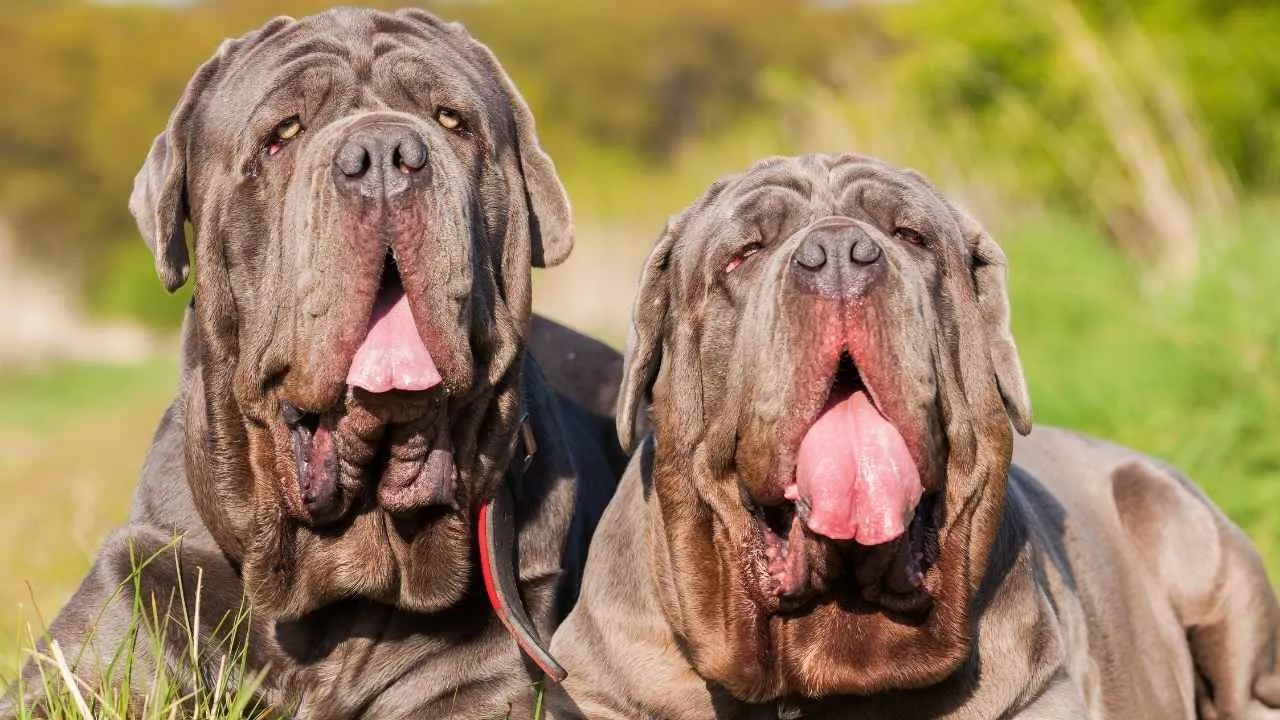
You might recognize the Neapolitan Mastiff before anyone tells you its name. Those wrinkles, heavy bones, loose skin, and enormous head make them exceptional massive dog breeds.
This Italian Mastiff breed has roots stretching back to ancient Molosser-type dogs. In southern Italy, breeders developed the modern Mastino as a formidable guardian for homes and estates.
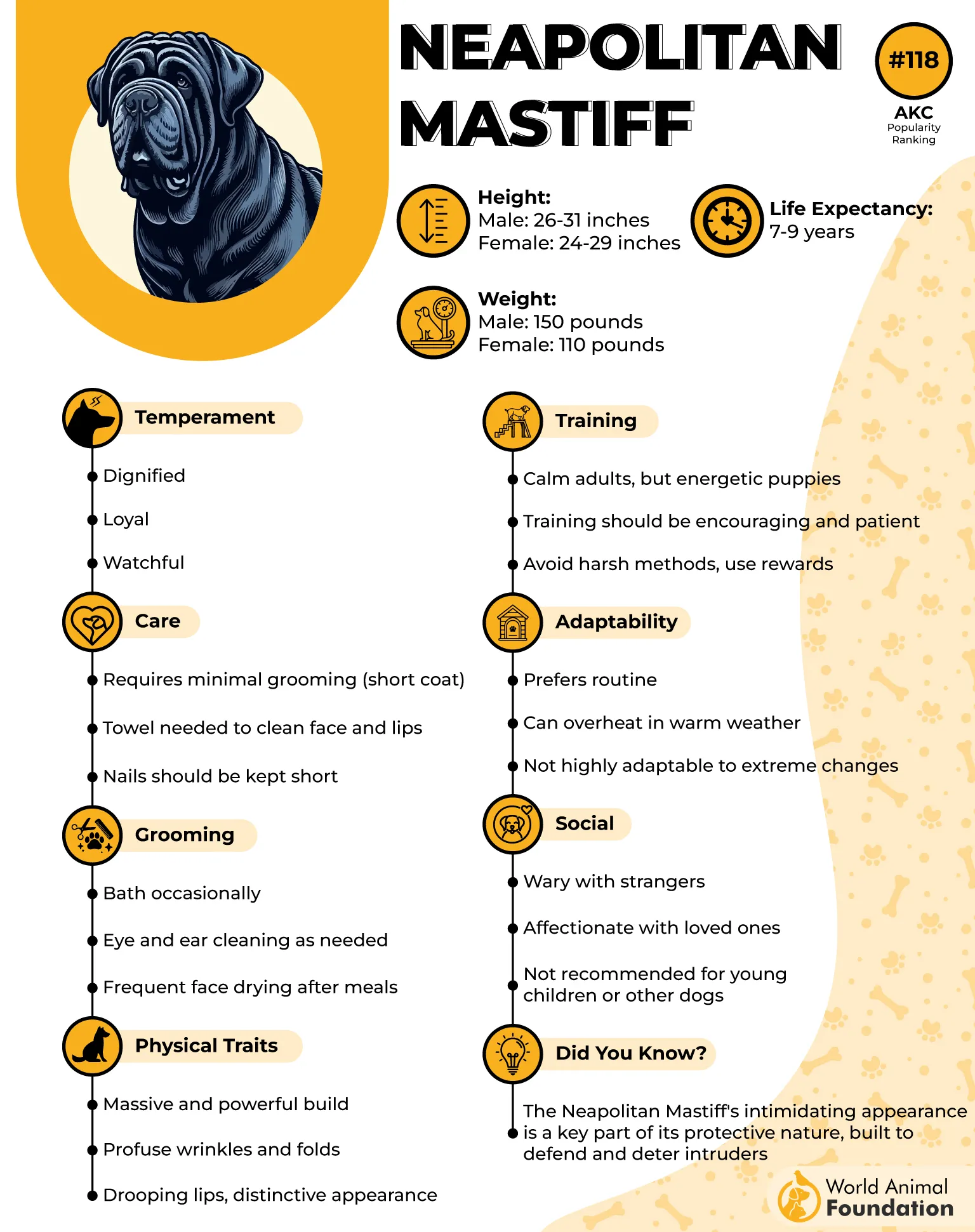
Behind that fearsome appearance is often a surprisingly placid family companion. Neapolitan Mastiffs are deeply tied to home life. With their affectionate nature, they stay devoted to their people while remaining naturally suspicious of strangers, as Purina highlighted.
Their protective nature deserves respect, though. A dog this powerful needs thoughtful socialization and owners who understand how to manage guard dog breeds.
Training & Exercise
Begin socialization and obedience work early. Positive reinforcement can help build reliable responses while teaching this ancient breed how to behave around visitors, animals, and unfamiliar situations.
Keep physical activity moderate. Walks and gentle regular exercise are generally more appropriate than strenuous running.
Conclusion
These remarkable overlooked giant dog breeds take up more space, eat more food, require thoughtful training, and somehow make an ordinary hallway feel considerably smaller.
You may come for the impressive size, but you will probably stay for the personality. Some are gentle homebodies; some still carry a serious working spirit. Other breeds simply want to be close to their favorite person.
