





Not every dog leaves a trail of fur behind wherever it goes. Some breeds naturally release very little hair, making them appealing to people who prefer a cleaner home or simply want to spend less time removing fur from furniture and clothing.
However, minimal shedding does not always mean minimal grooming. Some dogs retain loose hair within their coats and therefore require regular brushing, trimming, or professional grooming to prevent tangles and mats.
Temperament matters just as much as coat type when choosing an easy dog to live with. The breeds below include affectionate companions, independent characters, energetic family dogs, and ancient varieties with very distinctive personalities.
Easy Dog Breeds That Shed the Least
1. Coton De Tulear
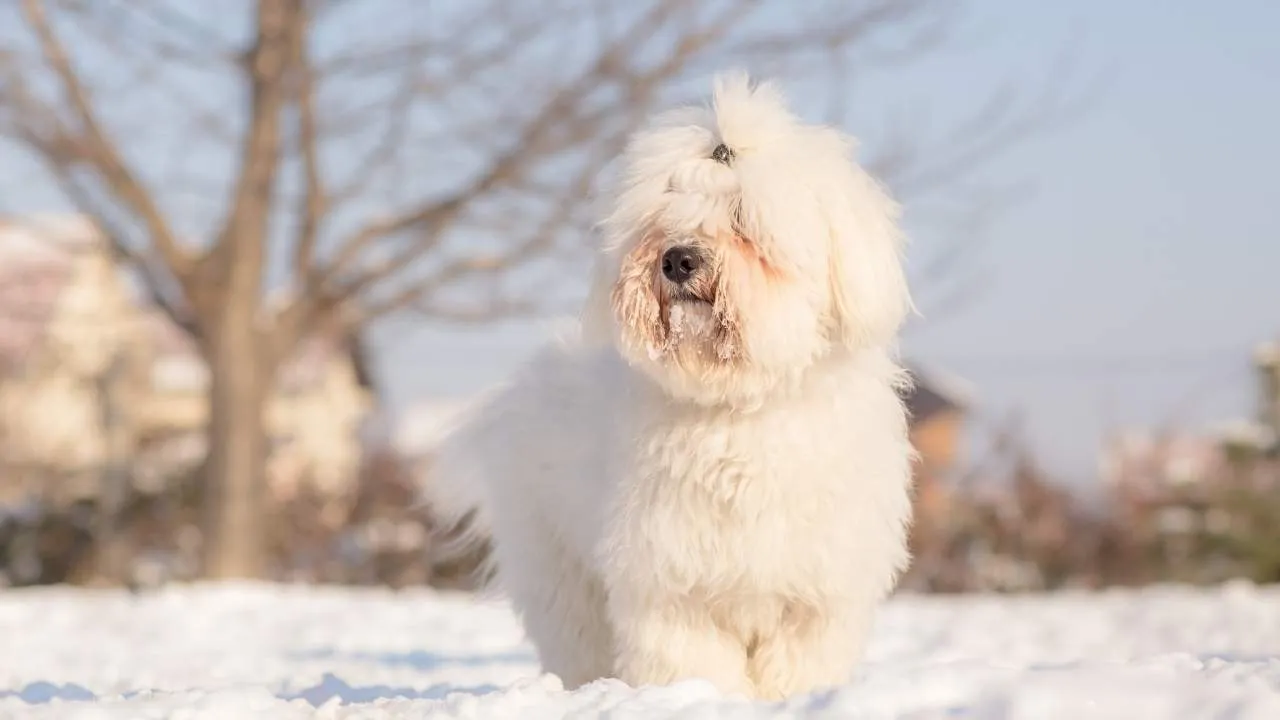
Coton de Tulears are cheerful little companions with an unusually lively personality. They tend to be affectionate dogs without being overwhelmingly demanding, and many enjoy staying close to their people throughout the day.
Their gentle disposition and expressive behavior have helped them become popular as companion dogs rather than working animals.
A Companion From the Island of Madagascar
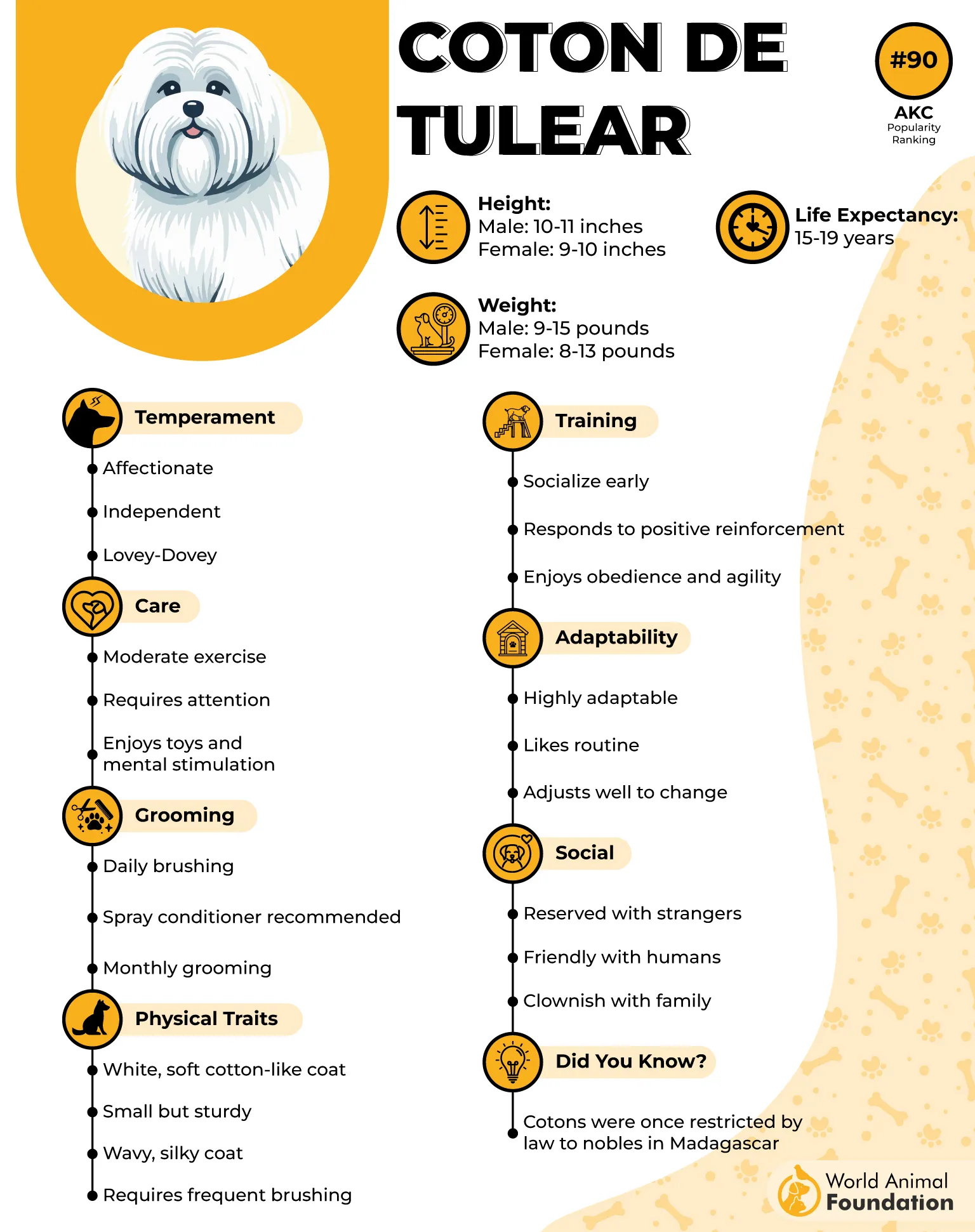
The Coton de Tulear takes its name from Tulear, a city in Madagascar, and the breed developed there as a cherished household companion. Its ancestors are believed to have included small dogs that arrived on the island by sea, eventually developing into the distinctive white-coated breed known today.
Over generations, the Coton became associated with Madagascar’s nobility and was valued primarily for companionship.
A Low-Shedding Coat With High Grooming Needs
Coton de Tulears may produce considerably less loose hair than many heavily shedding breeds, but their coat should not be mistaken for maintenance-free. Consistent brushing helps control knots and keeps the long hair in good condition.
For owners willing to maintain the coat, the trade-off can be worthwhile: the home may experience less floating fur while the dog retains its characteristic soft, cloud-like appearance.
2. Dachshund
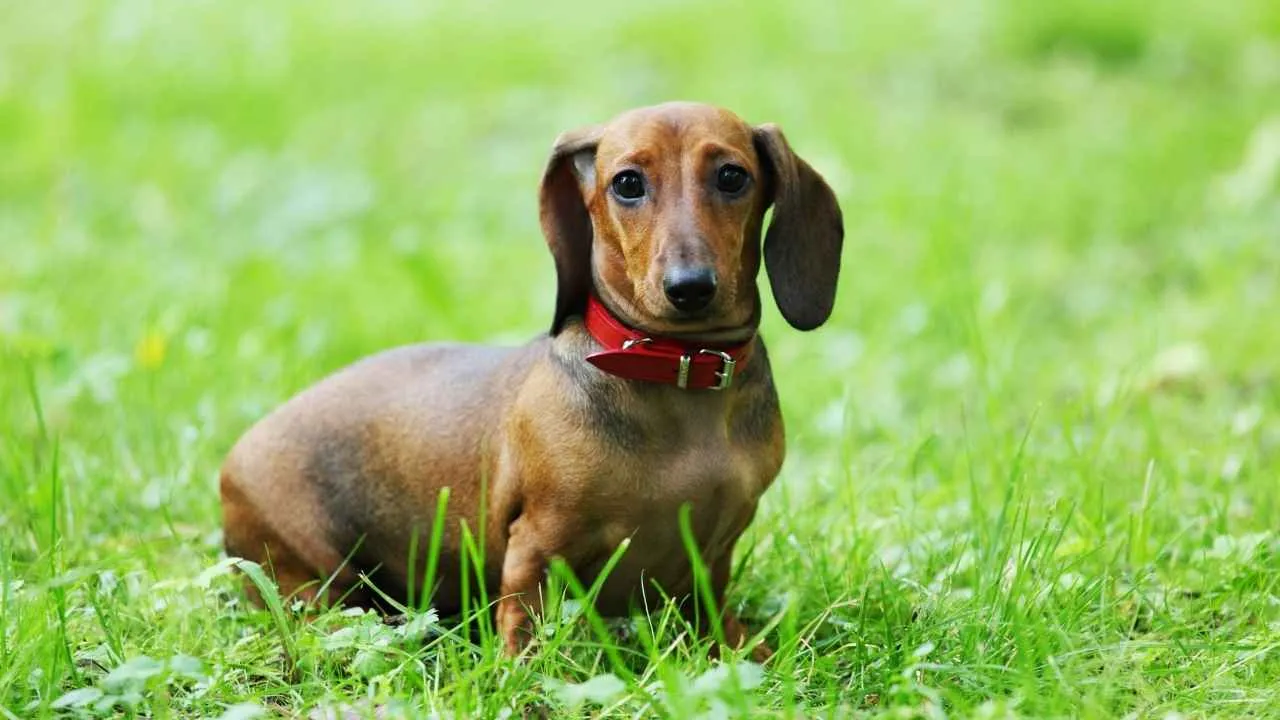
Dachshunds are spirited, curious, and remarkably confident for their small size. Their personalities often include a healthy dose of independence, which can make them entertaining but occasionally stubborn companions.
Despite their compact build, these dogs are not typically timid. Their determination can sometimes make them appear much larger in personality than they actually are.
A Small German Hunter Built for Underground Work
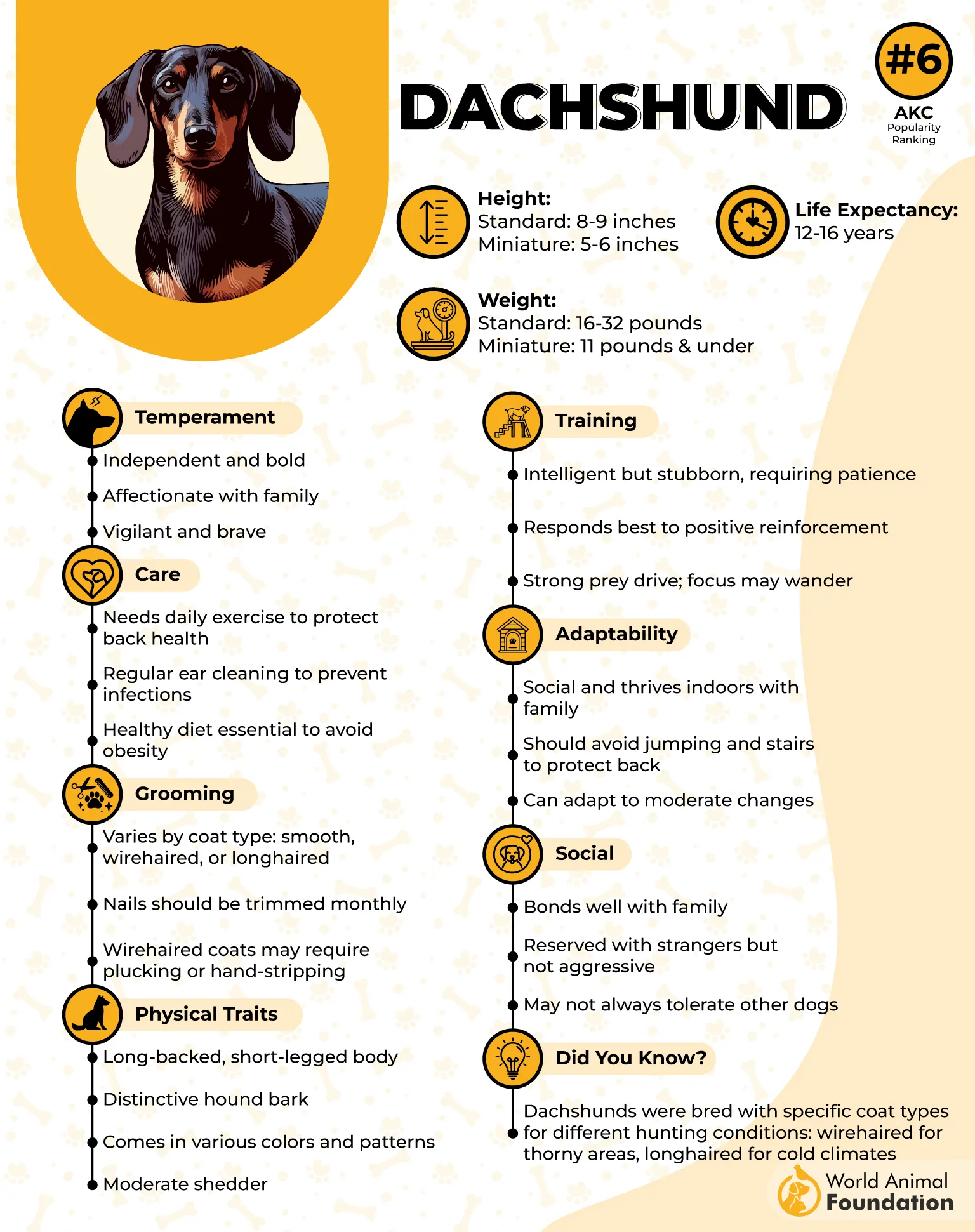
Dachshunds originated in Germany, where their unusual body shape served a very practical purpose. Their elongated bodies and short legs allowed them to enter underground tunnels while hunting badgers and other burrowing animals.
Their original working purpose explains much of the breed’s confidence, persistence, and eagerness to investigate interesting scents.
A Manageable Coat Rather Than a Truly Hair-Free Home
For someone seeking an easy-to-maintain small dog, a smooth-coated Dachshund can be practical because its short hair is uncomplicated to brush and clean. The breed does not require the elaborate coat maintenance associated with some long-haired companions.
However, people specifically searching for the least-shedding dog should consider breeds with stronger low-shedding characteristics. Dachshunds are better described as relatively manageable than genuinely minimal-shedding.
3. Cavalier King Charles Spaniel
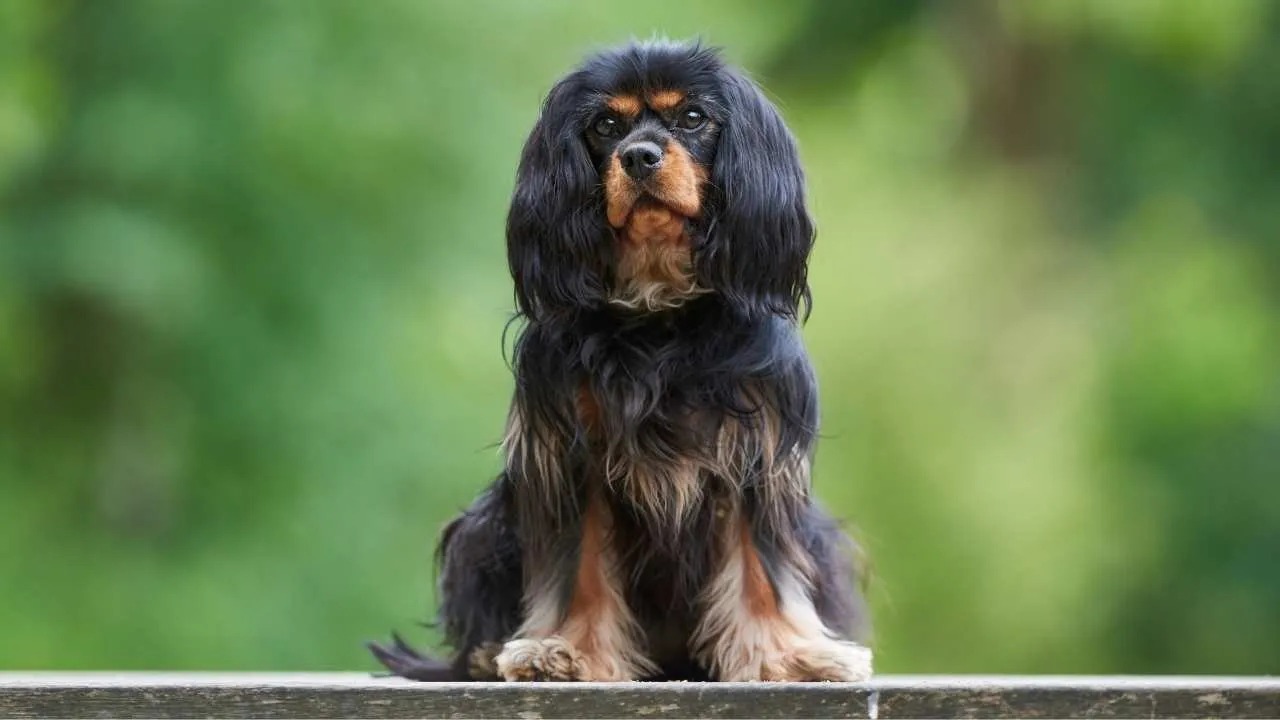
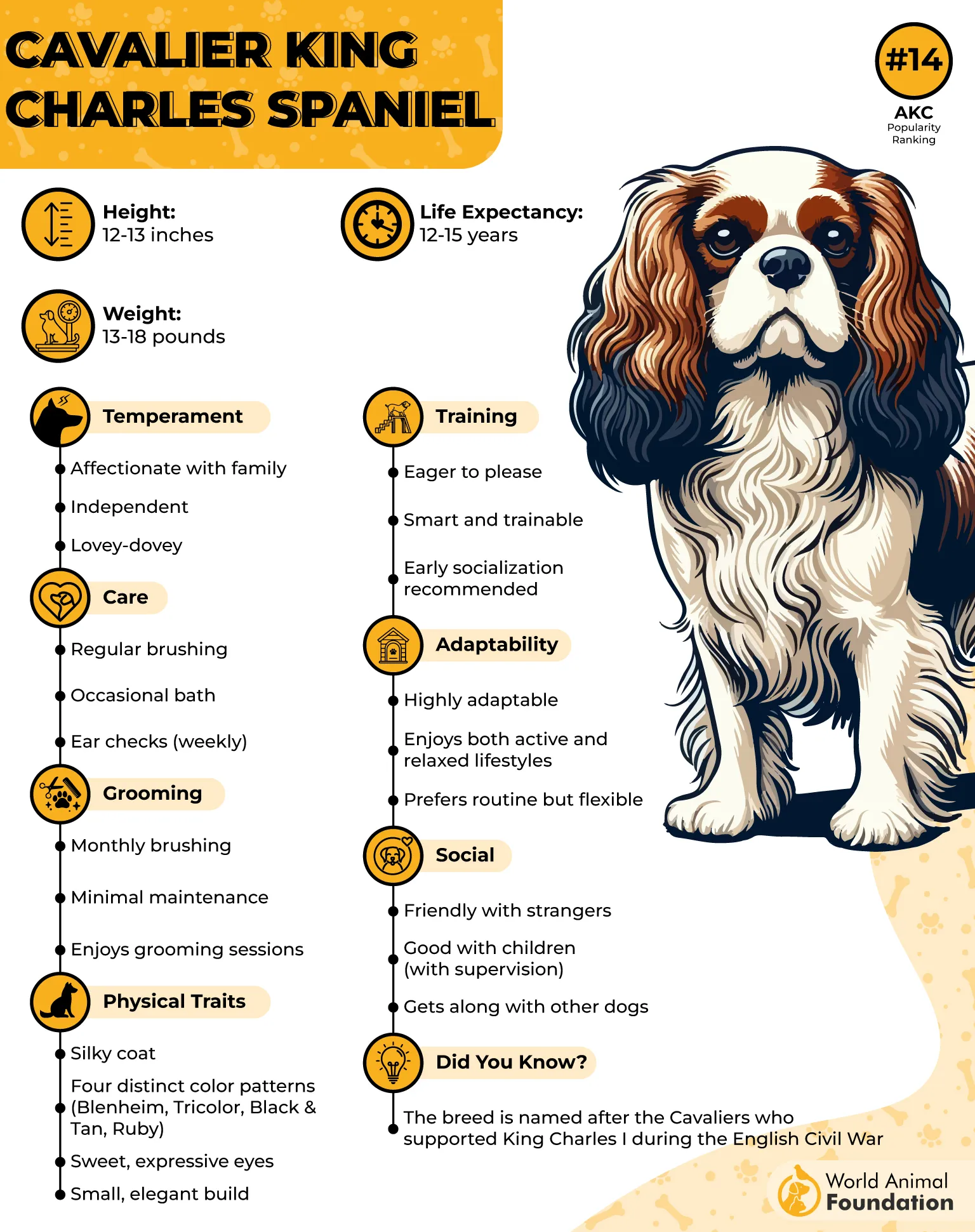
Cavalier King Charles Spaniels are gentle, affectionate dogs that often seem happiest when they are close to their favorite people. They generally have a soft social nature and tend to enjoy cuddling, companionship, and relaxed family activities.
Their friendly temperament can make them appealing to households looking for a companion that is affectionate rather than aloof.
From British Court Companions to Modern Family Dogs
The Cavalier King Charles Spaniel traces its history to toy spaniels associated with British royalty and aristocratic households. Small Spaniels appeared in paintings and court life for centuries, where they were primarily valued as companions.
The modern Cavalier was developed from this broader spaniel tradition and became established as a distinct breed during the 20th century, as per Britannica.
A Feathered Coat That Still Releases Hair
Cavaliers have a medium-length coat with feathering around areas such as the ears, legs, chest, and tail. They do shed, meaning they should not be considered a truly minimal-shedding breed.
Regular brushing can collect loose hair before it ends up around the home and can also prevent knots from developing in the feathered sections.
4. Miniature Poodle
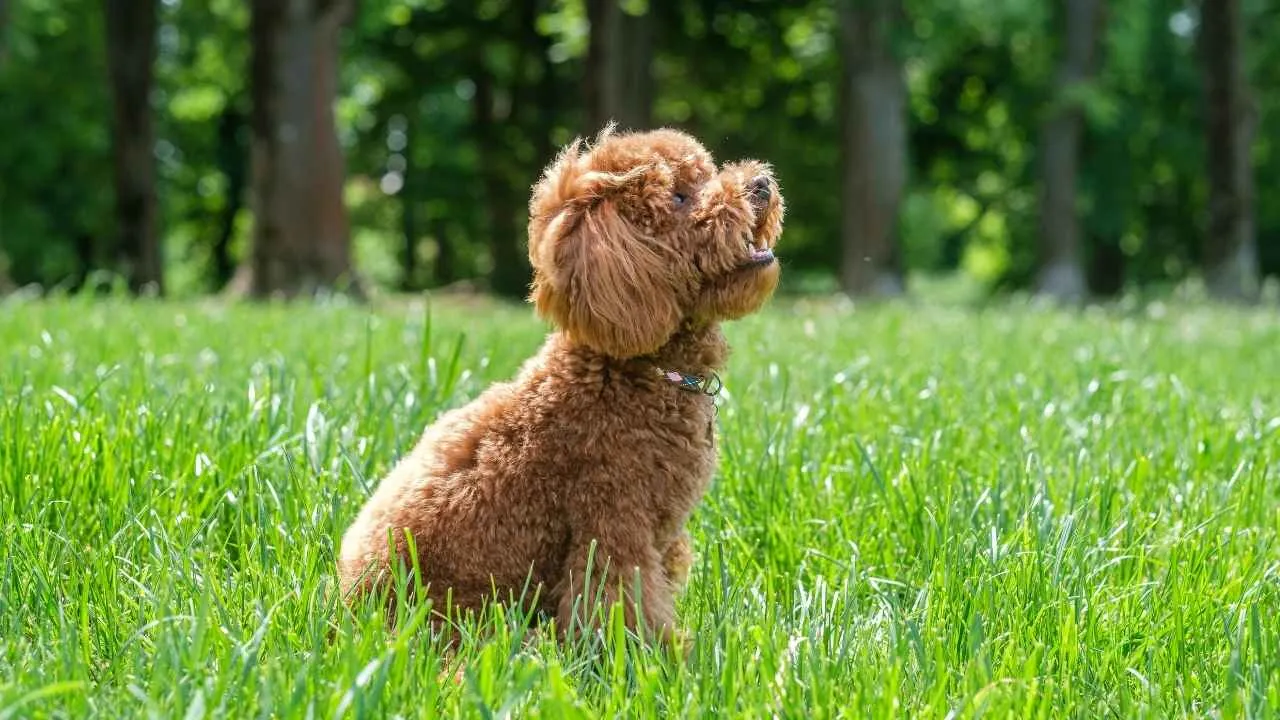
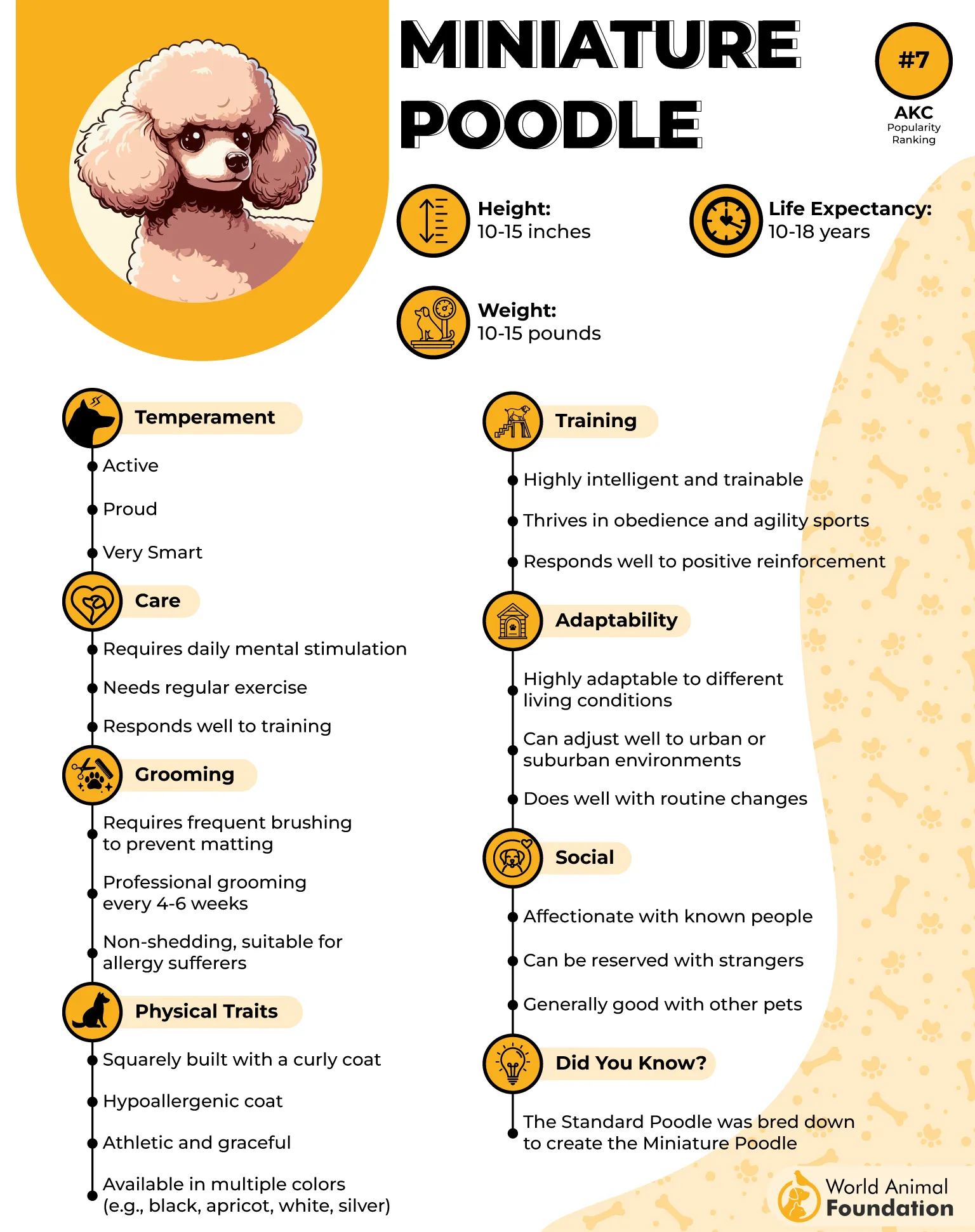
Miniature Poodles are clever, lively, and highly attentive dogs. They often pick up new routines quickly and enjoy situations that give them something to figure out.
A Miniature Poodle is rarely content with being treated purely as decoration; it usually wants mental involvement as well.
Developed in Europe as Skilled Water Retrievers
Although the exact early development of the Poodle is debated, the breed became strongly associated with Germany and later France.
The Miniature variety eventually became especially popular as a companion and performance dog. Its smaller size brought the Poodle’s intelligence and trainability into a more compact household package.
Curly Hair With Very Little Loose Fur
The Poodle’s dense, curly coat is one of the clearest examples of a low-shedding canine coat. Instead of releasing large amounts of hair around the house, loose strands often remain caught within the curls.
This characteristic is one reason Poodles are frequently considered by people searching for dogs that produce less visible fur. It does not mean their coat requires little work, however.
5. Havanese
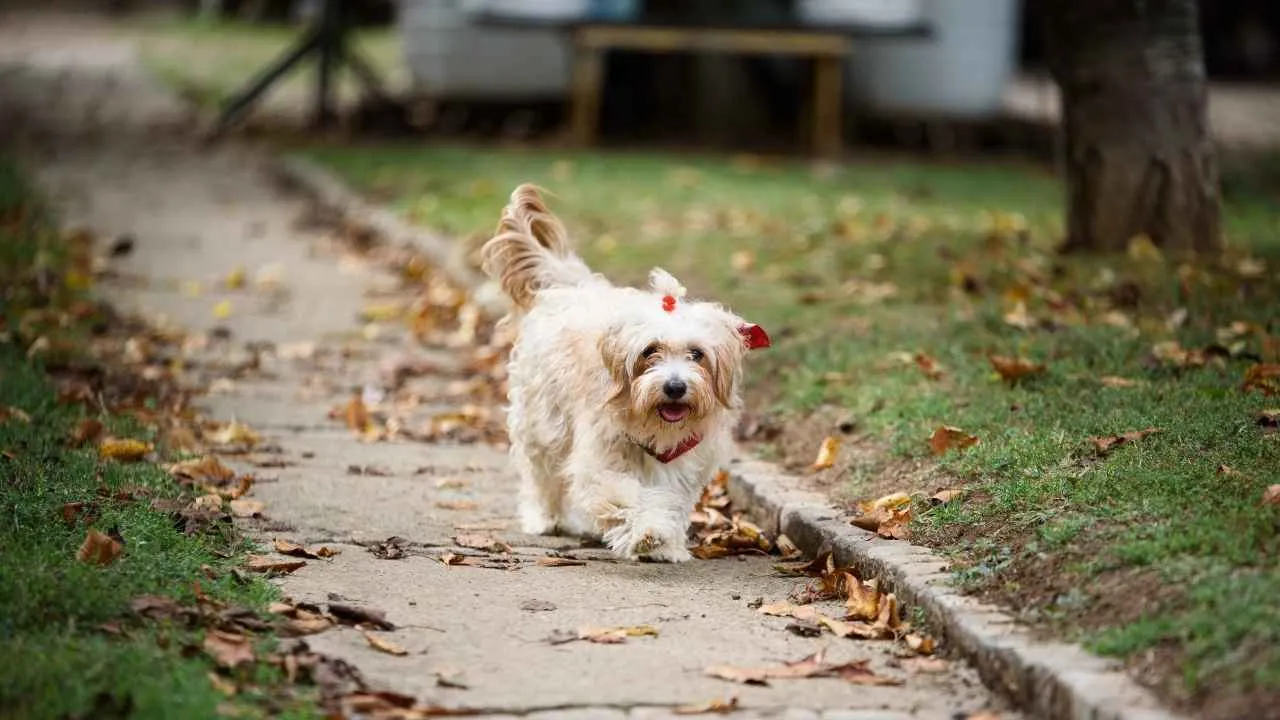
Havanese dogs tend to be affectionate, sociable, and wonderfully expressive. They often form strong connections with their families and enjoy participating in whatever is happening around them.
These low-maintenance dogs are also generally adaptable and can fit comfortably into different household routines when their social and exercise needs are met.
Cuba’s Beloved Little Companion
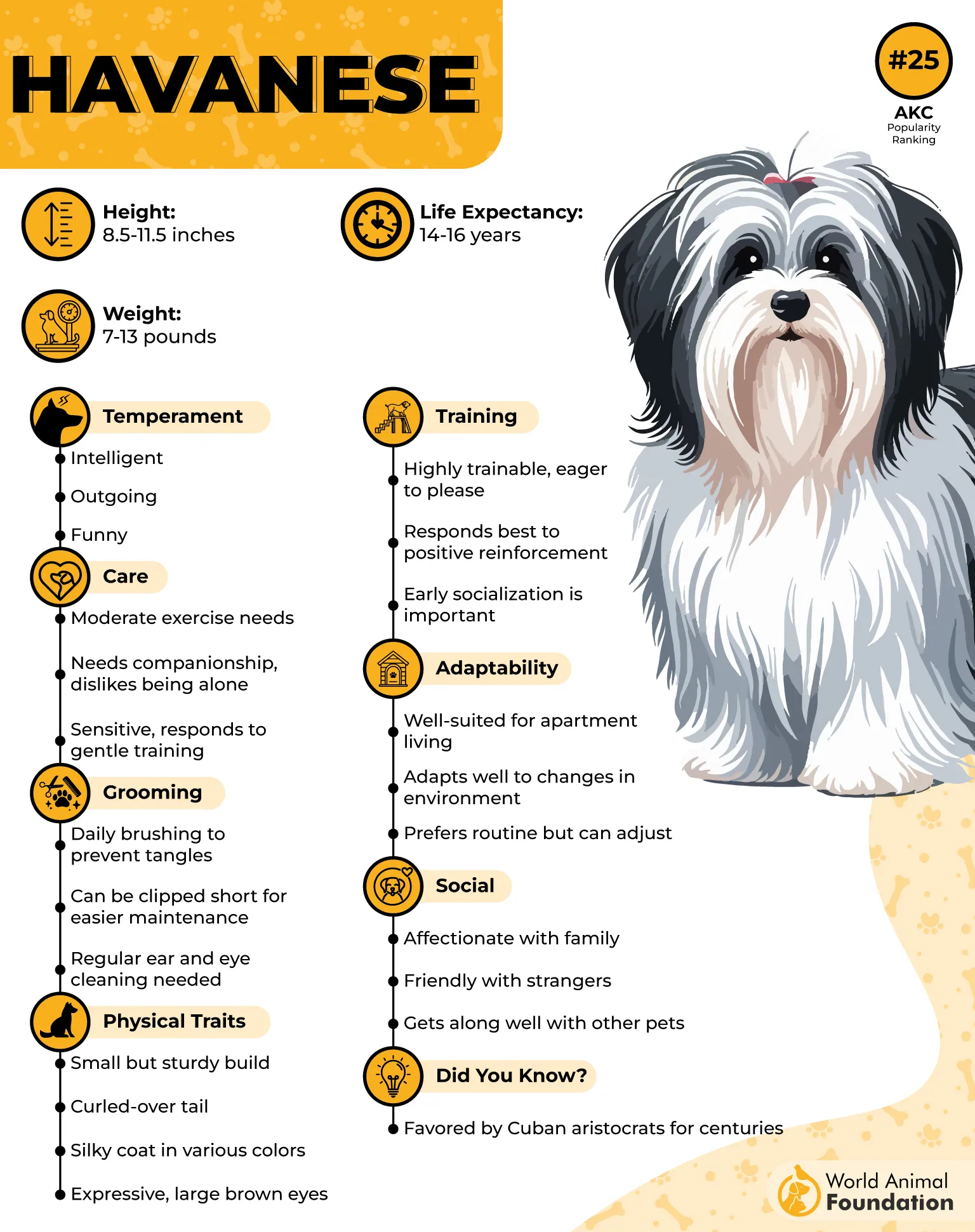
The Havanese developed in Cuba from small companion dogs brought to the region by European settlers. Over time, these dogs became associated with wealthy Cuban families and developed into the breed recognized today.
Its purpose was companionship, which helps explain the breed’s people-focused nature and its long history of living closely alongside humans.
Low Shedding With a Need for Regular Coat Care
Havanese are a useful example of why shedding and grooming should be considered separately. Their coat may leave less hair around the house, but maintaining that coat takes commitment.
Routine brushing, appropriate bathing, and occasional trimming can make daily management considerably easier. For owners prepared to put in that effort, the Havanese offers a combination of a companionable personality and relatively modest household shedding.
6. Maltese
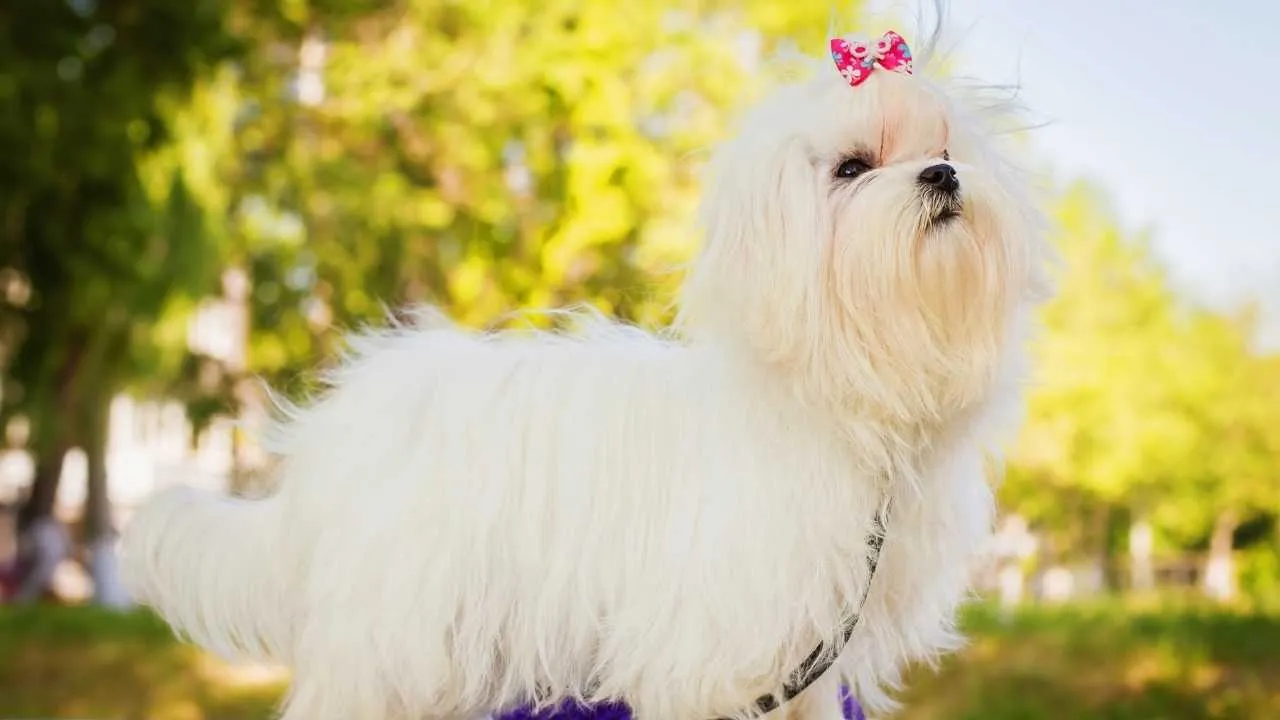
Maltese dogs are tiny but tend to carry themselves with considerable confidence. They are affectionate, alert, and often enjoy receiving attention from the people around them, as per PDSA.
With appropriate socialization, they can become charming household companions that enjoy both quiet cuddling and short bursts of activity.
An Ancient Mediterranean Companion Breed
The Maltese has a remarkably old history, with small white companion dogs associated with Mediterranean societies for centuries.
Unlike breeds created for demanding physical tasks, the Maltese was prized largely for its companionship and attractive appearance. Its distinctive white coat eventually became one of the defining features of the breed.
Silky Hair With Minimal Natural Shedding
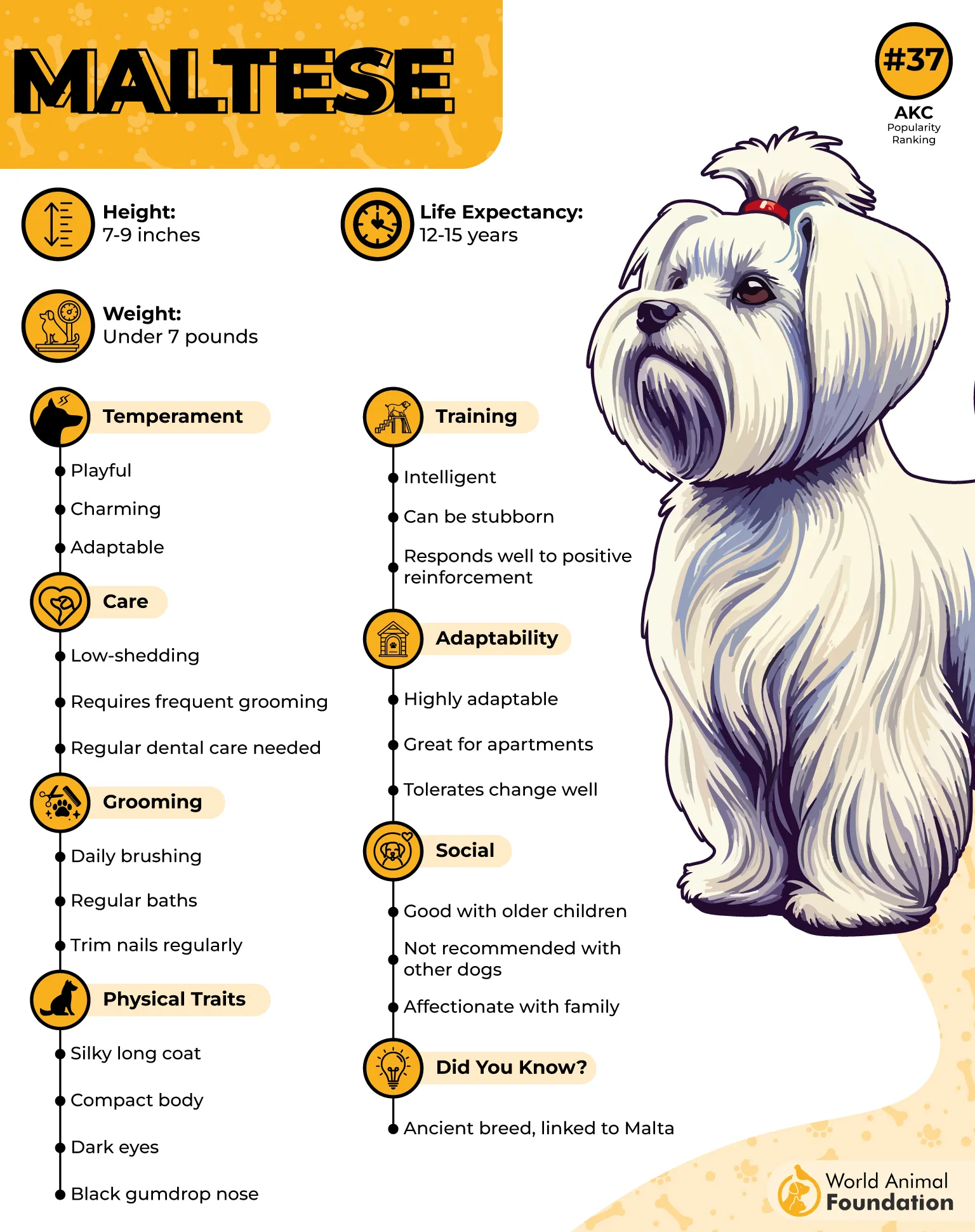
The Maltese has a single-layered coat rather than the dense double coat found on many dogs. Its hair grows continuously and tends to shed relatively little, making the breed appealing to people who dislike loose fur.
Loose strands can become caught in the surrounding coat, so owners may not see much hair scattered around the home even though some natural shedding still occurs.
7. Basenji
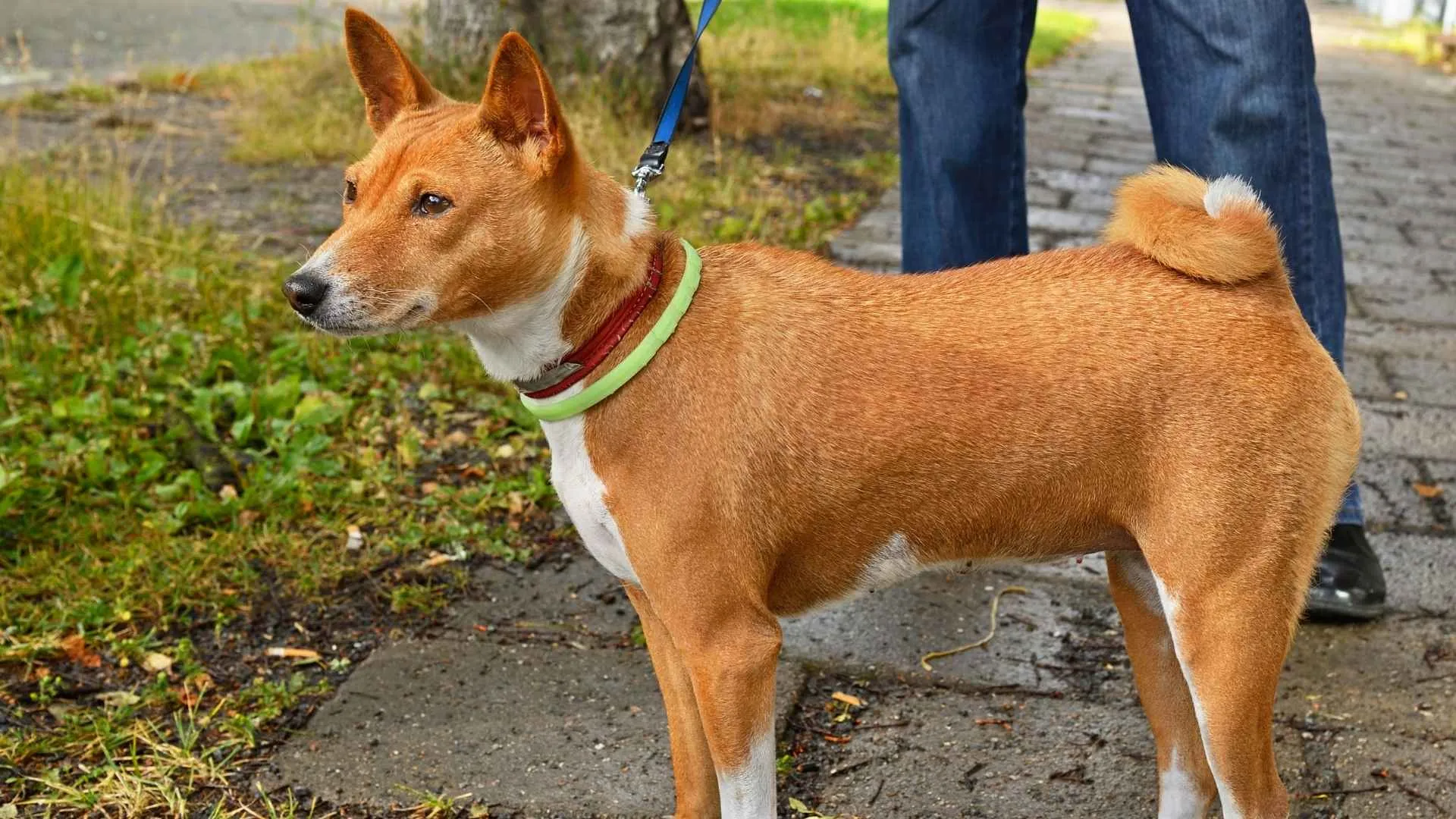
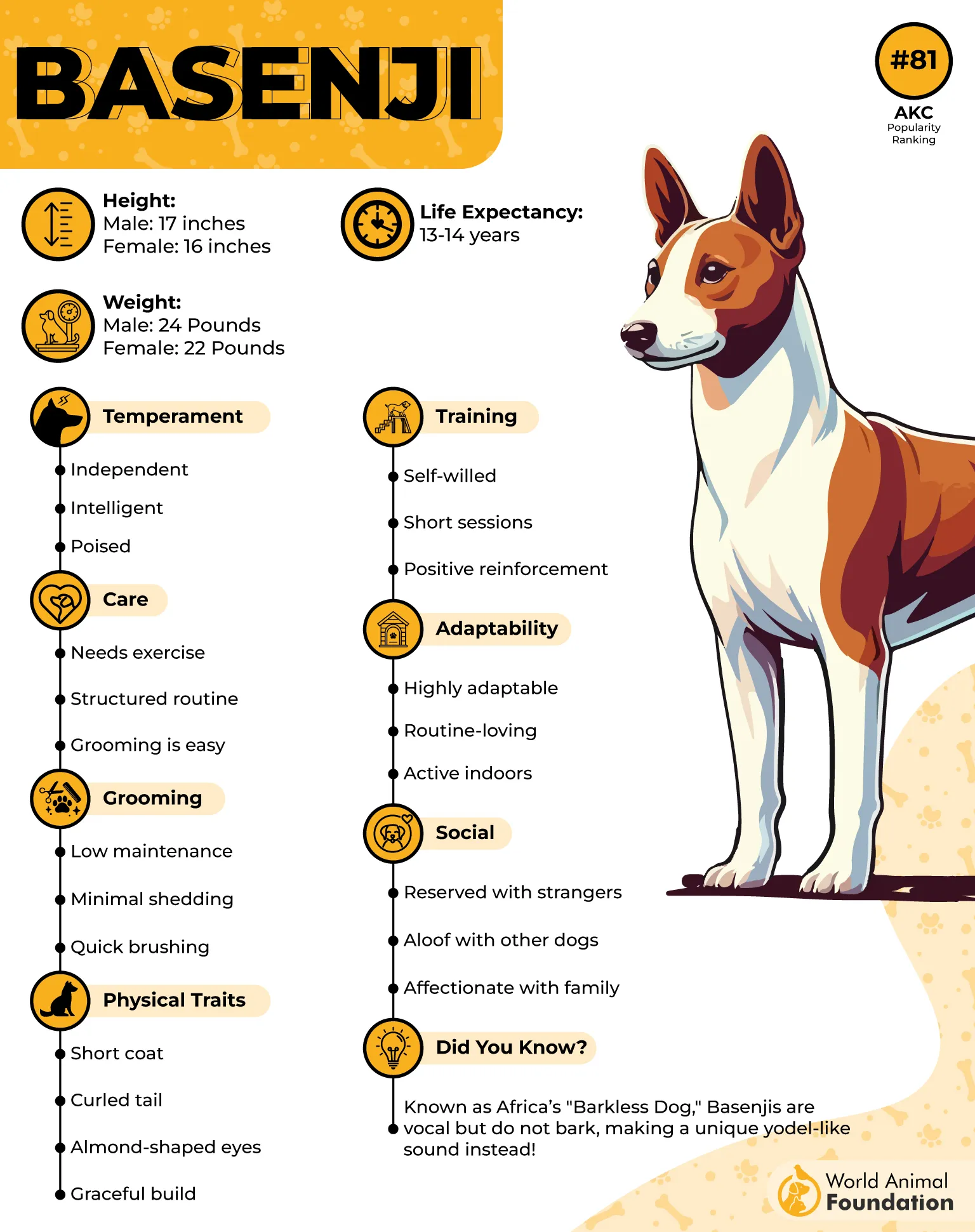
Basenjis have a personality that can feel very different from that of an eager-to-please companion dog. They are intelligent, independent, observant, and often selective about when they want to cooperate.
They are also notably clean in their habits and tend to groom themselves. A Basenji may spend considerable time keeping its coat tidy, adding to its reputation as an unusually fastidious dog, as per Purina.
An African Hunting Dog With a Long Heritage
The Basenji originated in Central Africa, where local communities used these agile dogs for hunting. Their speed, alertness, and ability to work through dense vegetation made them useful in challenging environments.
Its distinctive traits, including its unusual vocalization and independent nature, helped it stand apart from more conventional companion breeds.
Minimal Coat Maintenance and Relatively Little Visible Fur
The Basenji can be an excellent choice for someone seeking a tidy, short-coated dog without elaborate grooming routines.
Its low-maintenance coat is only one part of the equation, though. The breed’s independent personality means prospective owners should be prepared for a dog that may require more patience and creativity than its grooming routine suggests.
8. Shih Tzu
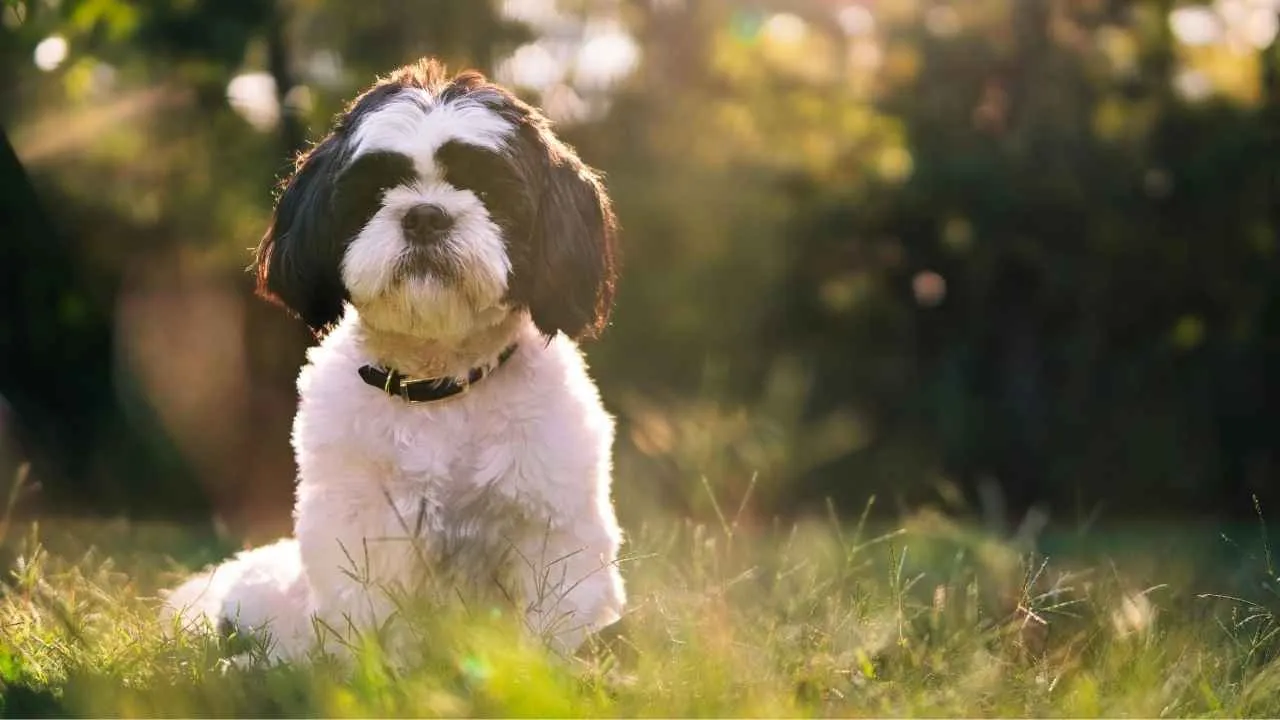
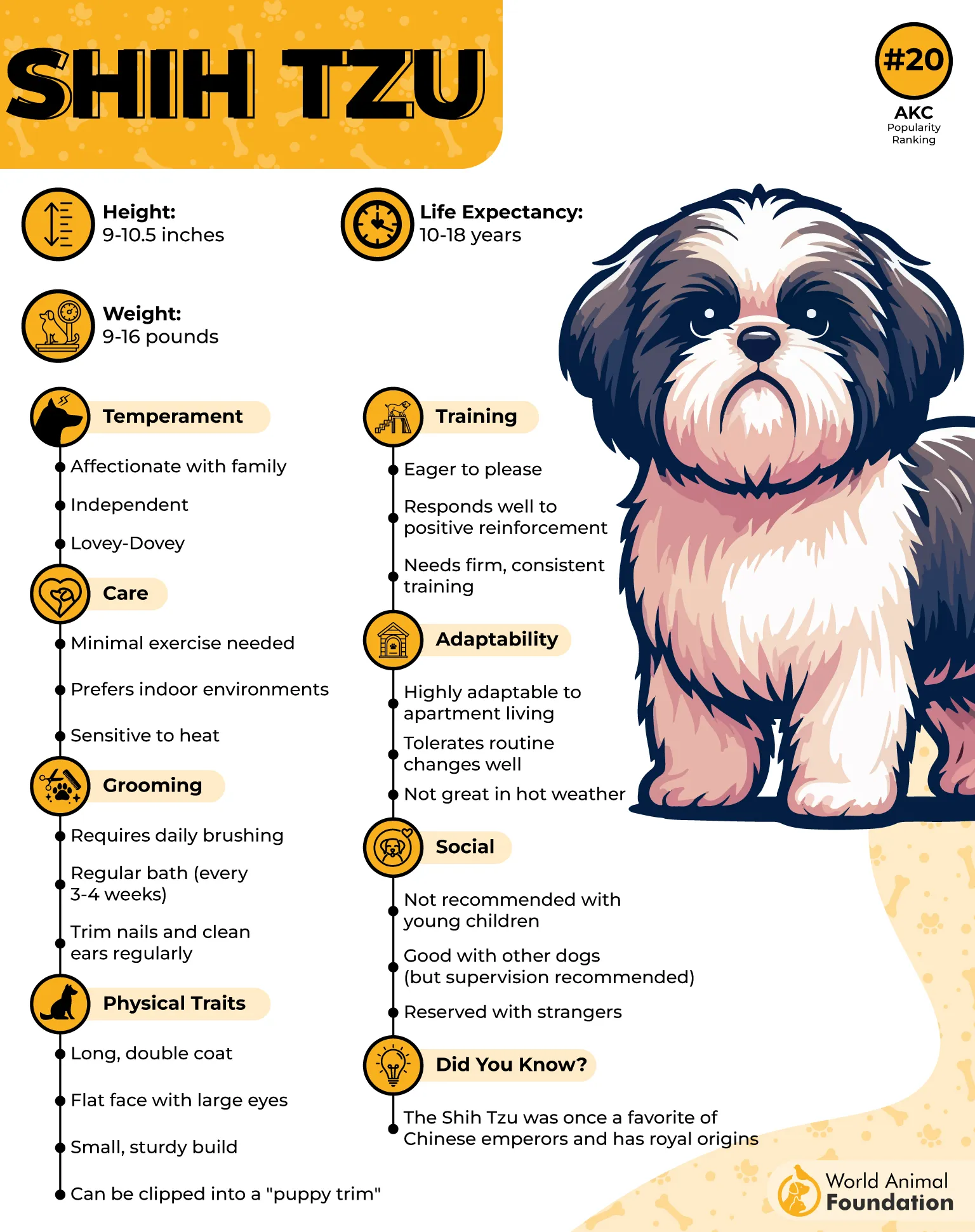
Shih Tzus are typically affectionate, cheerful, and strongly oriented toward companionship. They enjoy being near their people and can be perfectly content relaxing at home, although many still appreciate short play sessions and daily walks.
A Shih Tzu may be cuddly one moment and mischievously demanding attention the next, giving the breed plenty of character despite its compact frame.
A Palace Companion With Chinese and Tibetan Connections
The Shih Tzu has a long association with Chinese imperial courts, although its earlier development involved small dogs connected with Tibet.
Their name is commonly translated as “lion dog,” reflecting the traditional appearance associated with the breed. Their primary historical role was companionship rather than labor, which remains central to their identity today.
Low Shedding, Provided the Coat Is Properly Managed
The breed’s coat does not mean zero shedding, but the amount of hair freely scattered around the household is typically limited.
Regular brushing is essential for dogs kept in longer styles, while a shorter haircut can substantially simplify day-to-day upkeep. In this breed, low shedding comes with a clear grooming responsibility.
9. Xoloitzcuintli
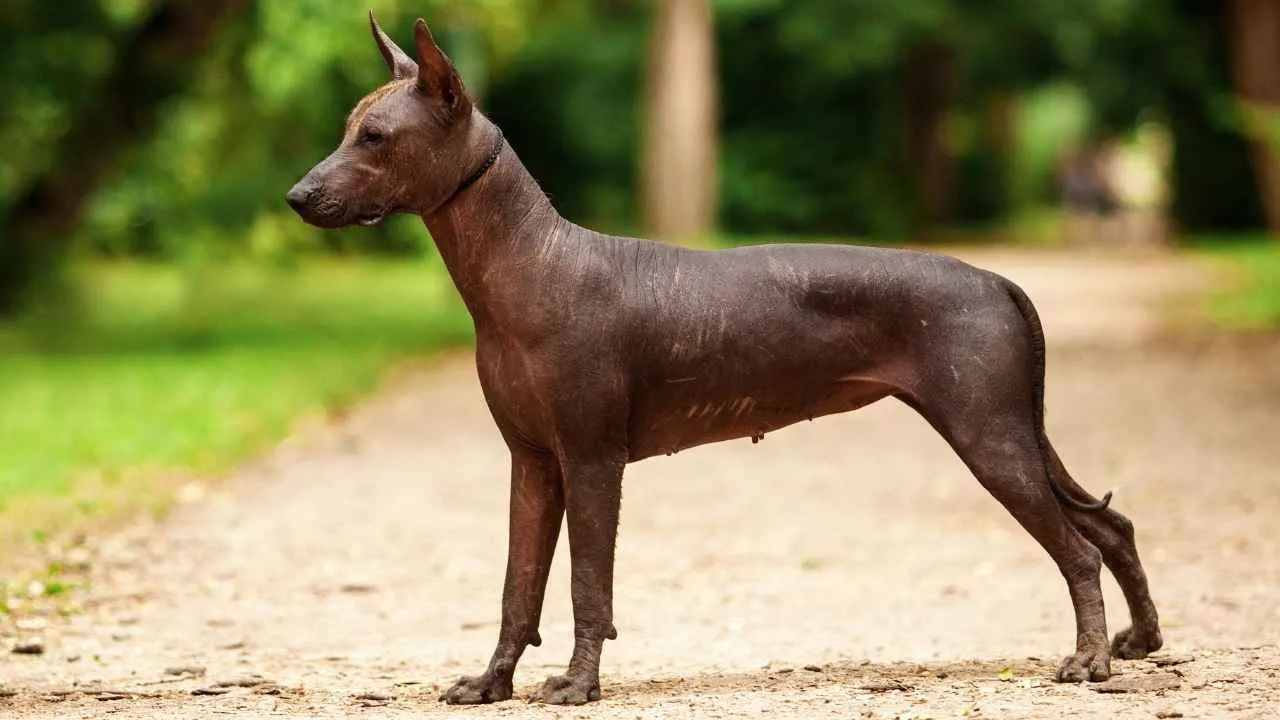
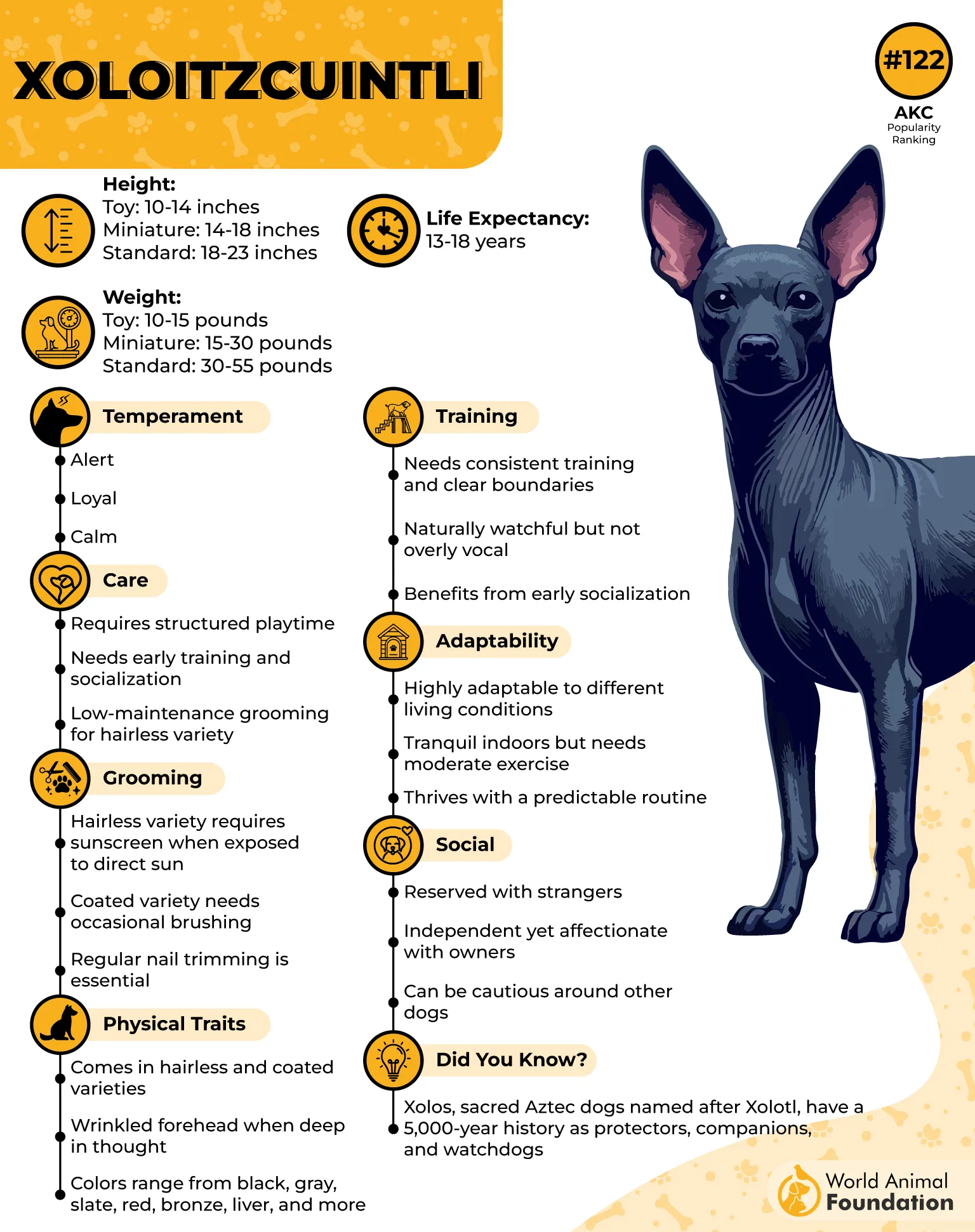
The Xoloitzcuintli, often shortened to Xolo, is known for being calm, attentive, and deeply bonded with its household. It can be reserved around unfamiliar people while remaining affectionate toward those it trusts.
Their intelligence and sensitivity make respectful training especially valuable, as they tend to respond better to thoughtful guidance than harsh handling.
A Pre-Columbian Dog of Mexico
The Xoloitzcuintli has one of the oldest canine histories in the Americas. Indigenous peoples of Mexico kept these hairless dogs long before European arrival, and archaeological evidence shows their presence in ancient cultures.
The breed existed in both hairless and coated forms, with the hairless variety becoming particularly recognizable.
The Standout Choice for Extremely Low Shedding
For households where minimizing loose dog hair is the primary objective, the hairless Xoloitzcuintli is difficult to overlook.
However, hairless does not mean care-free. The skin needs protection from environmental exposure, and owners must pay attention to its condition.
Conclusion
Low-shedding dogs can look completely different from one another, ranging from the cottony Coton de Tulear and flowing Maltese to the tightly curled Miniature Poodle and nearly hairless Xoloitzcuintli.
It is also important to separate shedding from grooming. A dog that leaves little hair around the house may still require frequent brushing, trimming, or coat maintenance. Long-haired low-shedding breeds often need more hands-on care than short-haired dogs that shed modestly.
The right choice therefore depends on what “easy” means for your household. If the priority is minimizing loose fur, breeds such as the Miniature Poodle, Maltese, Havanese, Shih Tzu, Coton de Tulear, and hairless Xoloitzcuintli can be worth considering.
If simpler brushing is more important than achieving the absolute lowest shedding, a short-coated breed such as the Basenji may be a better match.
