




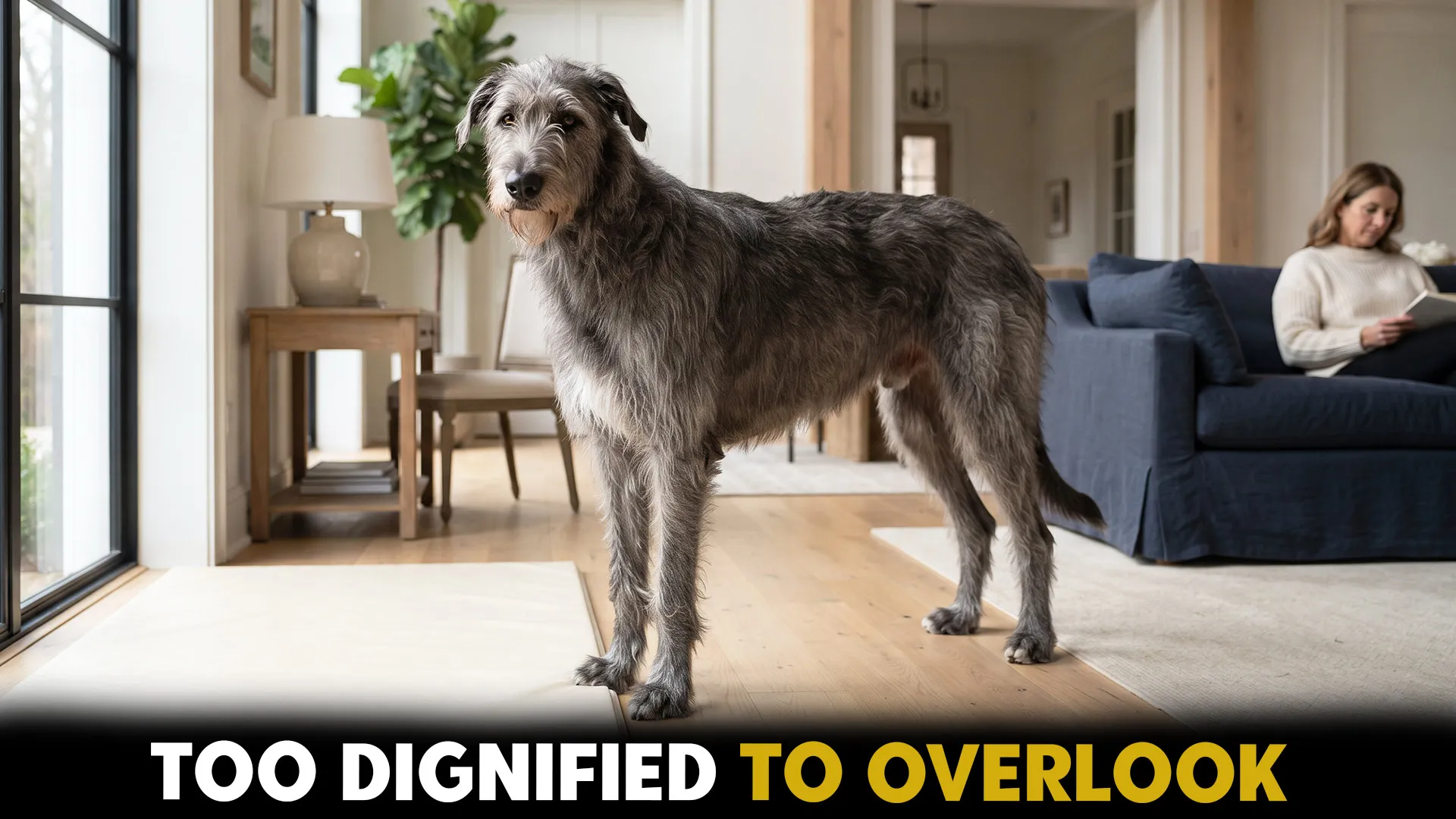
Have you ever noticed that some big dogs enjoy companionship without constant attention?
They may love their families deeply, yet still enjoy having their own space. Being independent does not mean being unfriendly or distant. In fact, many noble large breeds prefer to watch, patrol, lounge, or relax nearby rather than demand attention.
This self-contained nature can be a great match for owners who enjoy a calm home. Still, these gentle giants need socialization, guidance, exercise, and daily interaction.
Large dogs can also have shorter lifespans than smaller breeds and may face health concerns such as bloat, joint problems, and heart issues. Veterinary care can become costly, too.
So, which big dogs balance loyalty with independence? Let’s explore seven noble breeds that can offer devoted companionship while happily keeping their own space.
Noble Big Dog Breeds That Keep Their Own Space
1. Great Pyrenees
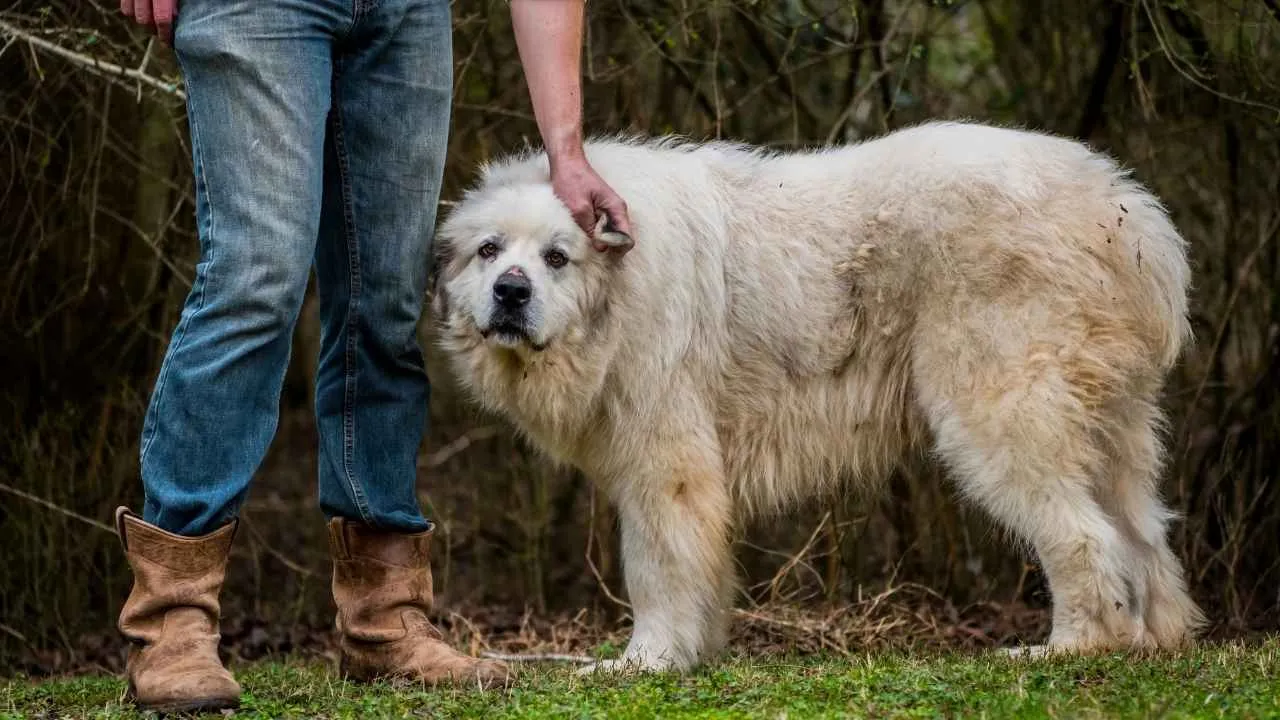
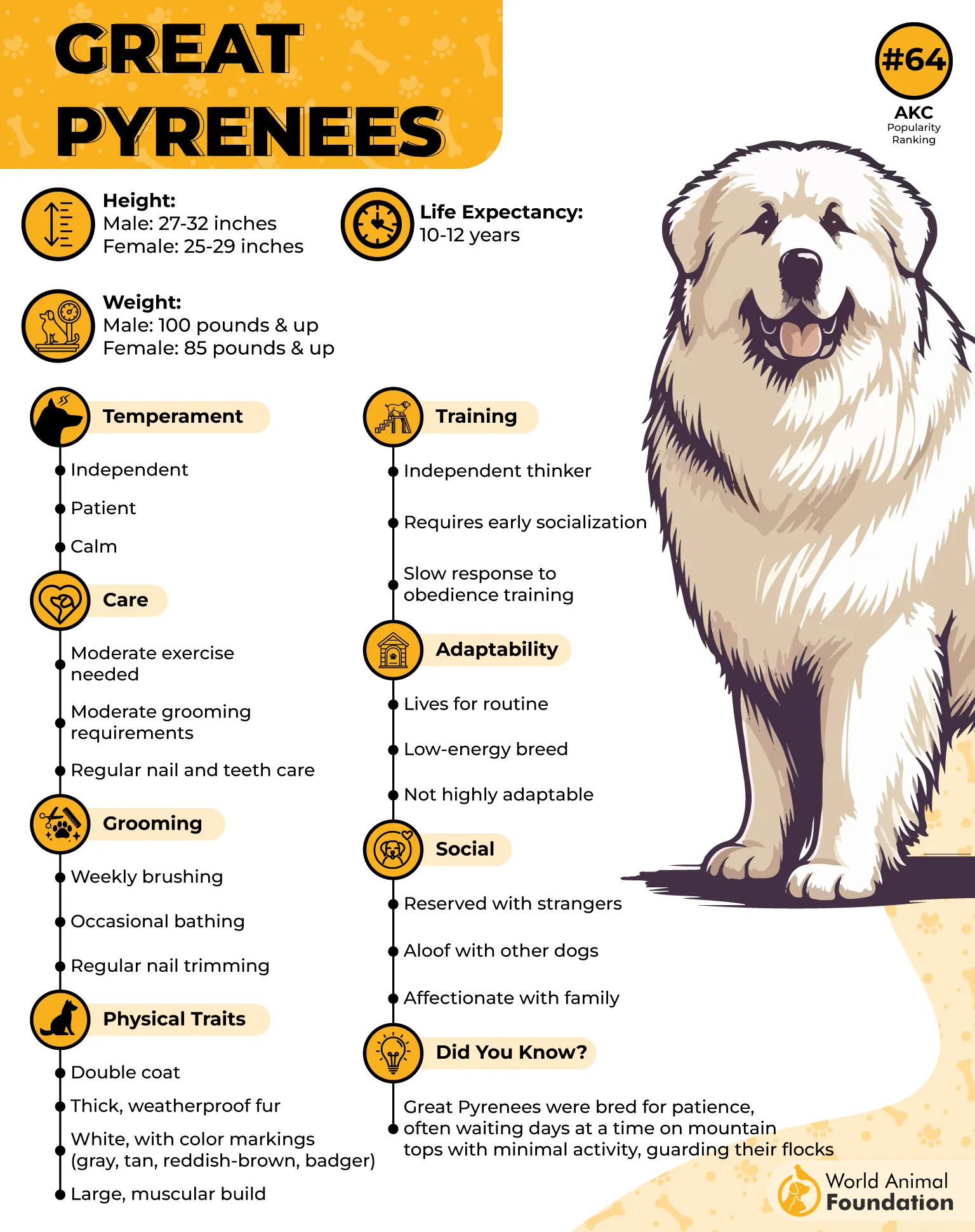
The Great Pyrenees is a giant breed with a calm, watchful mind. Bred to guard sheep in harsh mountains, this big dog breed learned to make decisions without constant direction.
Its protective nature remains strong around home and family. Yet its calm temperament can make it a peaceful housemate. This dog often prefers watching its surroundings rather than seeking nonstop attention.
PetMD describes Great Pyrenees as gentle and calm with people they love. That balance gives this breed a fitting slogan: “Watchful outside, peaceful inside.”
A Guardian With Quiet Confidence
Its independent streak can make training challenging, so patience matters.
Early socialization helps it respond calmly to guests and other pets.
Apartments and small spaces can be difficult for this huge dog.
Consider its energy levels and need for room before choosing.
With suitable care, it can become a devoted family pet.
2. Irish Wolfhound
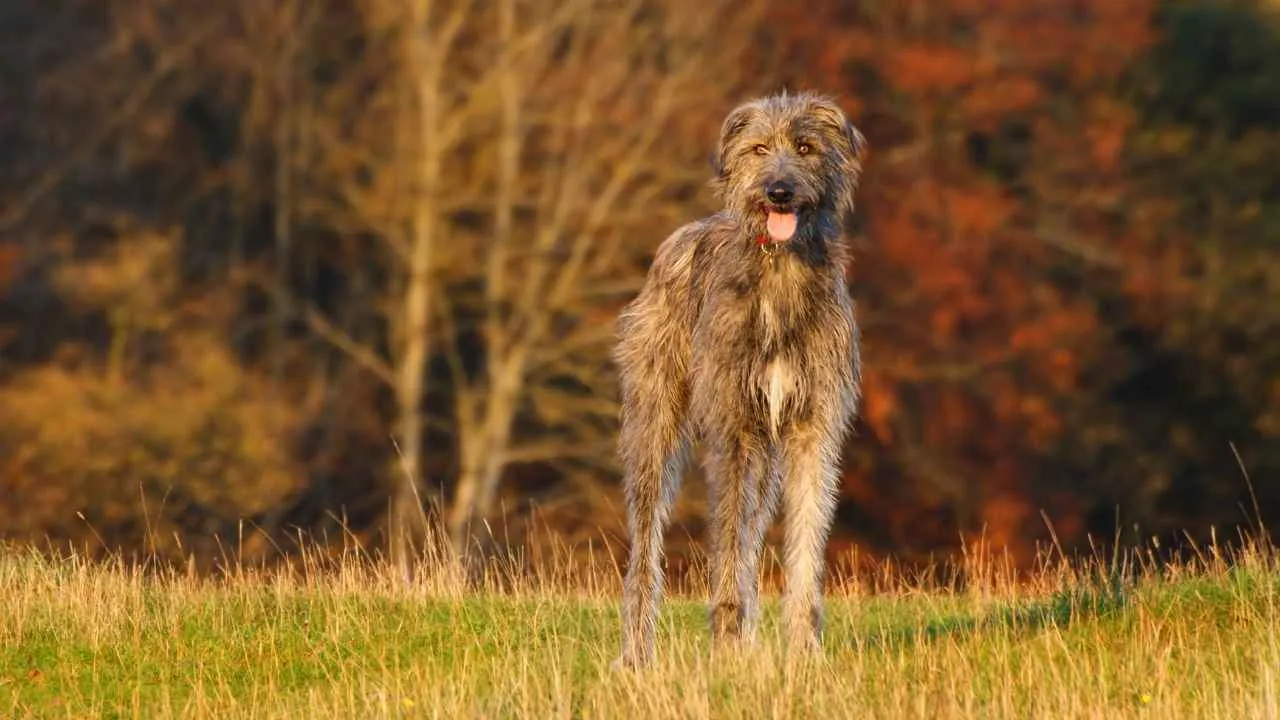
According to the American Kennel Club, the Irish Wolfhound is calm, dignified, and kind. This giant dog breed has a peaceful nature that suits relaxed homes. It is also the tallest dog breed recognized by the AKC.
Despite its large size, this graceful hound has a gentle disposition and a remarkably calm presence. Once bred to hunt large game, it now enjoys quiet family life. An incredibly loyal companion, it often stays near its people without demanding constant attention.
Its patient nature can make it a pleasant choice for homes with children. However, its enormous frame needs thoughtful handling and enough room to move comfortably.
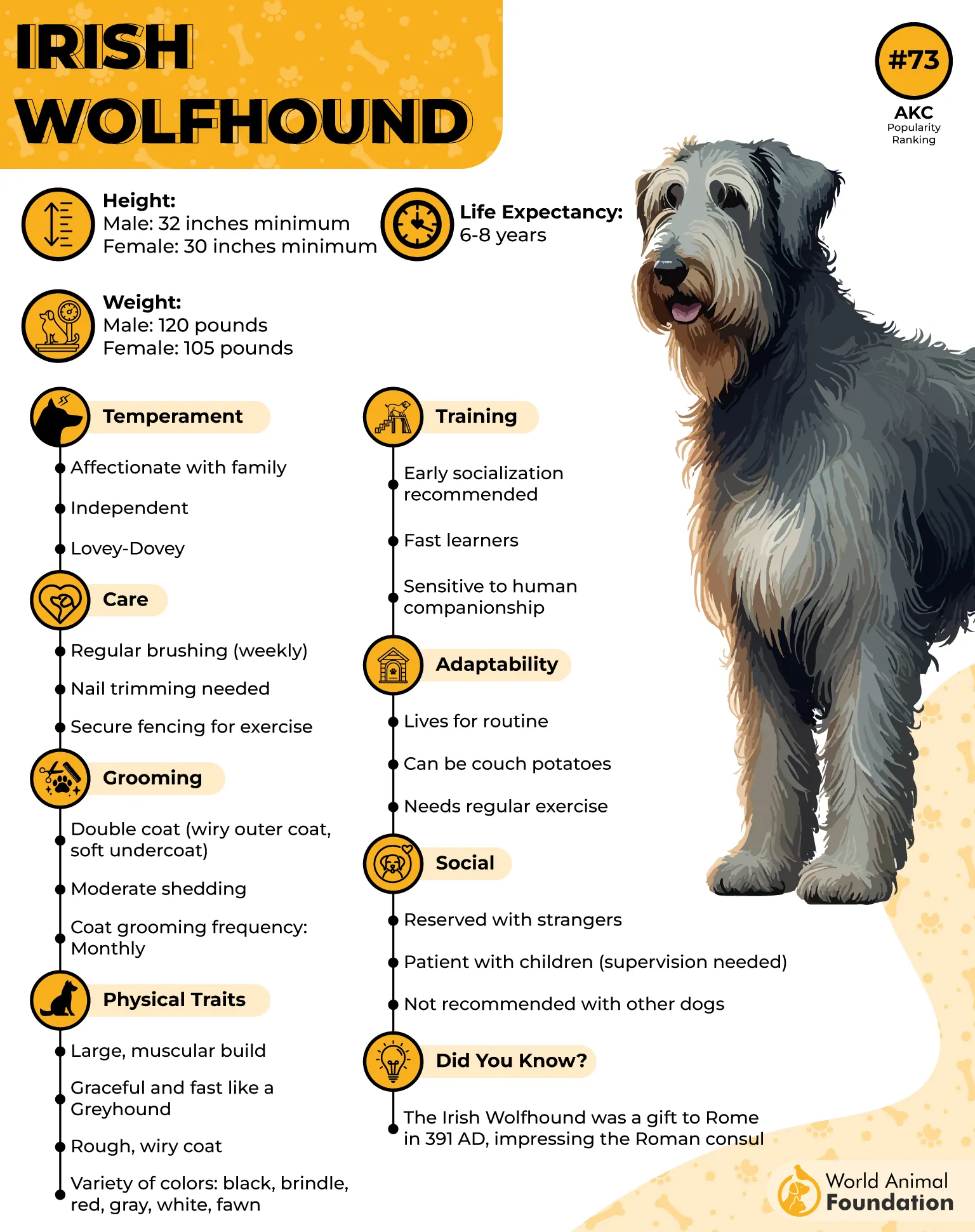
A Giant That Enjoys Peaceful Living
Regular walks help support healthy movement and fitness.
Its low energy indoors can suit relaxed households.
Tight spaces can become difficult for this enormous hound.
An apartment may work with careful planning.
Its imposing appearance can seem protective to strangers.
3. Central Asian Shepherd
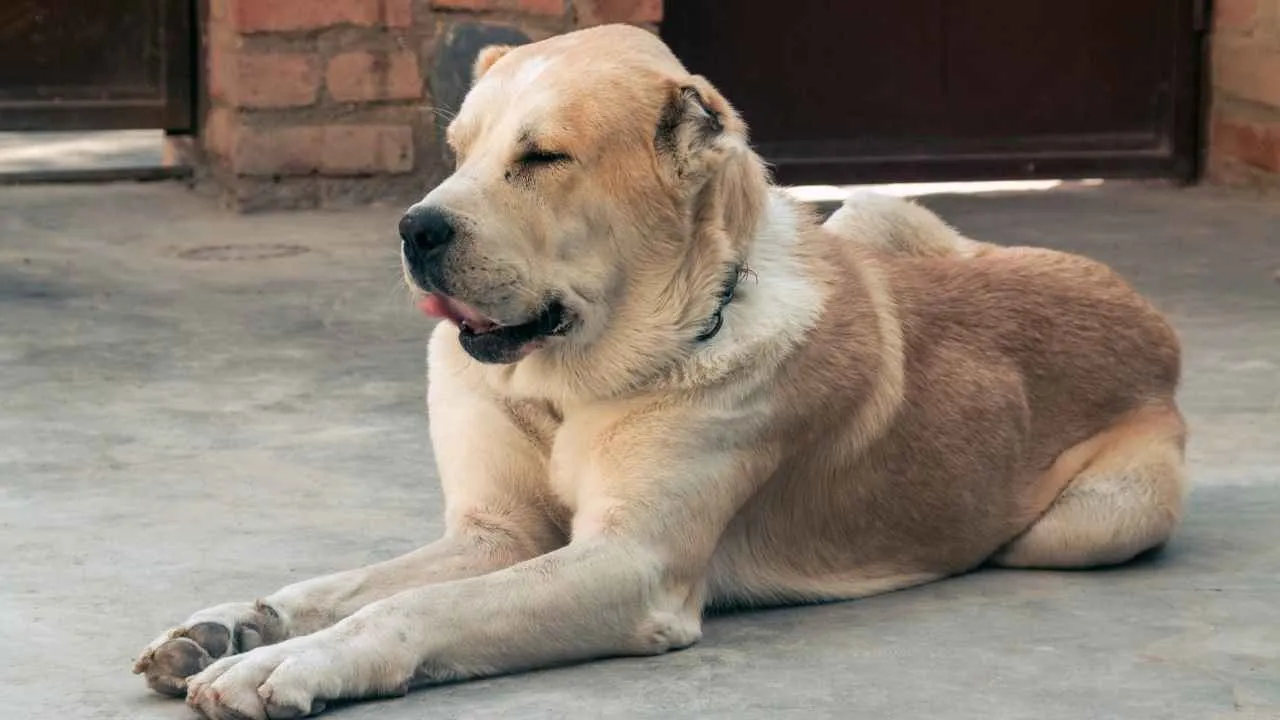
The Central Asian Shepherd is a large dog breed with deep roots in Central Asia. Wikipedia notes that this breed is also known as the Alabay or Alabai. It developed through natural selection across a vast region for thousands of years.
This giant breed became a trusted guardian of sheep and goats. Its protective instinct remains strong, especially around its territory. The breed is self-assured, quiet, proud, and independent. That confident temperament makes experienced ownership especially important.
Although it can become affectionate with its family, it does not constantly seek attention. A steady lifestyle can help this powerful guardian feel secure and settled.
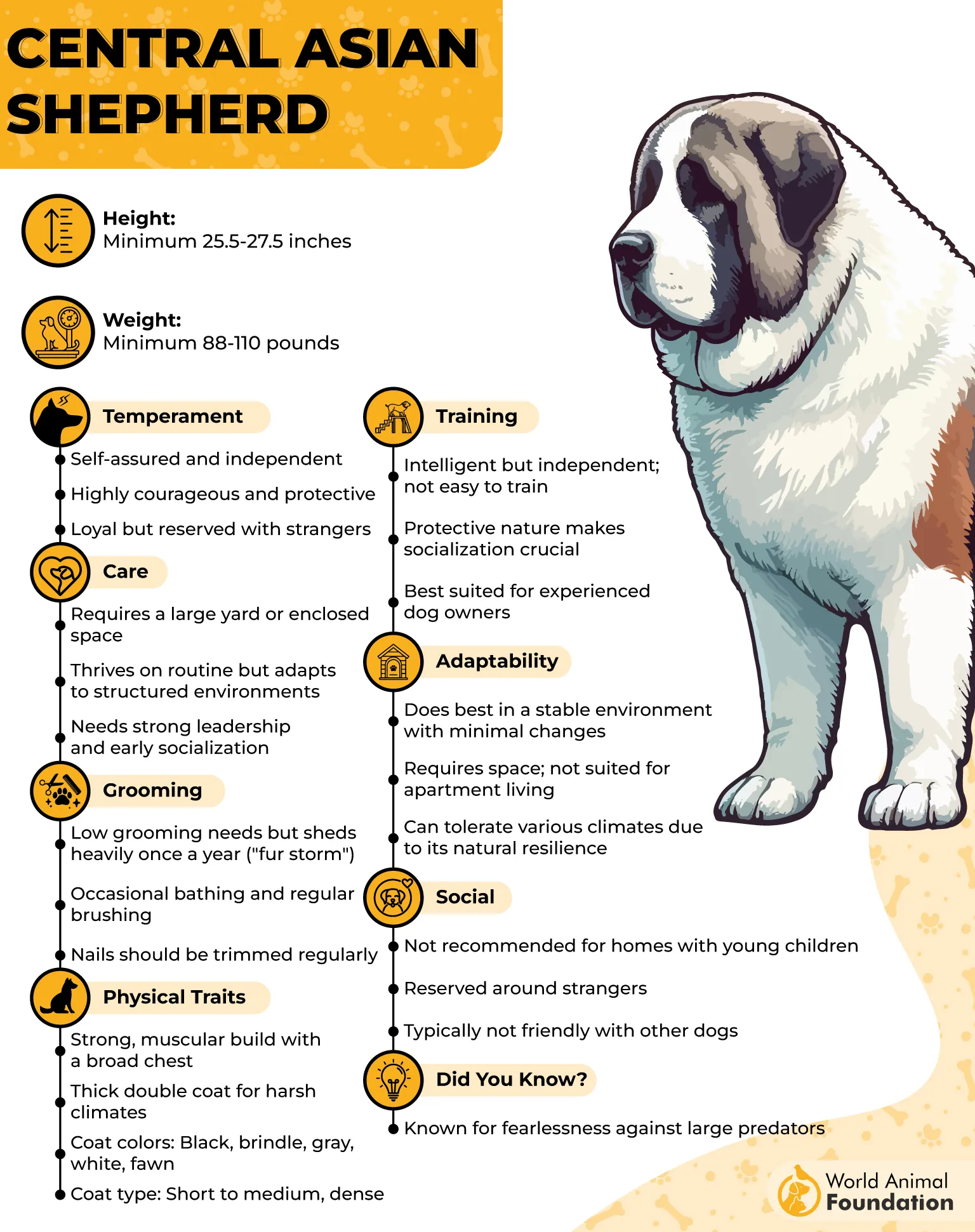
A Guardian With Strong Boundaries
A small apartment may not offer enough room.
Consider its energy levels before choosing this breed.
Early socialization helps it handle unfamiliar situations.
Consistent training can create clear household expectations.
This breed suits owners familiar with strong guardian dogs.
4. Black Russian Terrier
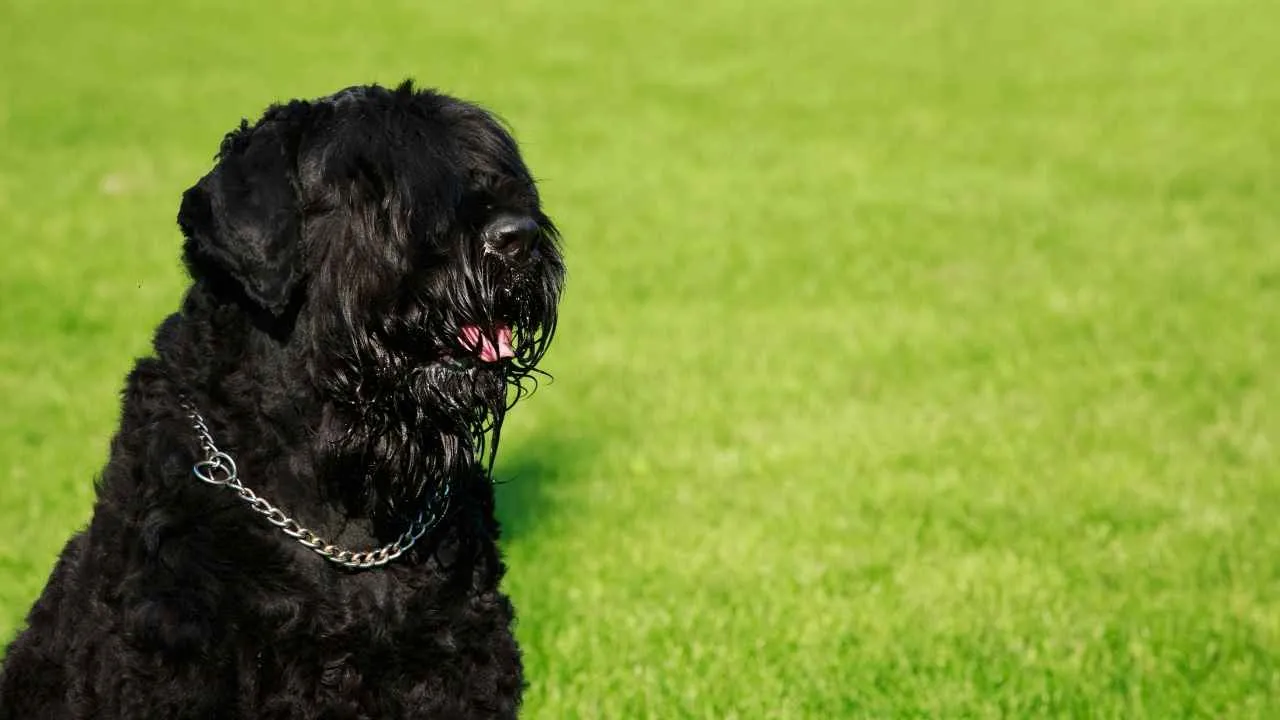
The Black Russian Terrier is a large breed built for serious work. According to Purina, this highly intelligent dog has served with the Russian military. Its confident nature and strong working drive helped shape its role as a guard dog.
Yet this giant dog breed can also settle quietly with its household after purposeful activity. Its temperament tends to be reserved around unfamiliar people, while its familiar family gets a steadier side. Because of its excessive size and strength, owners need thoughtful control from puppyhood.
Giving pups clear boundaries can also help prevent destructive behavior. This powerful worker is not a casual choice for every home. Still, its ability to focus, work, and then relax can suit experienced owners seeking a devoted companion.
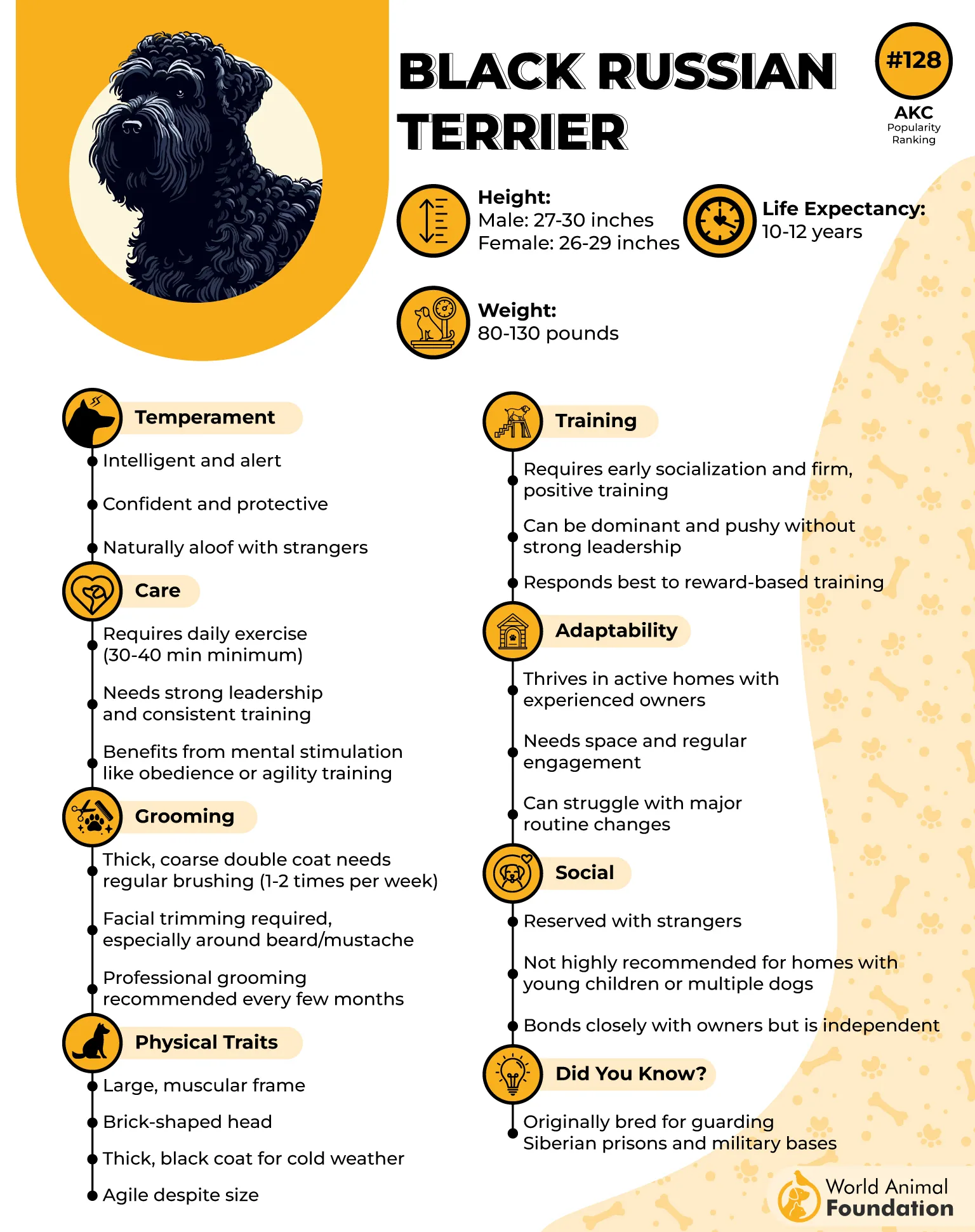
A Working Giant With a Settled Side
Small spaces can feel restrictive for such a powerful dog.
Apartments require careful planning and enough daily engagement.
Keep this active breed mentally occupied throughout the week.
Rescue organizations may occasionally have mature dogs needing homes.
Its substantial frame calls for sturdy equipment and secure handling.
5. Scottish Deerhound
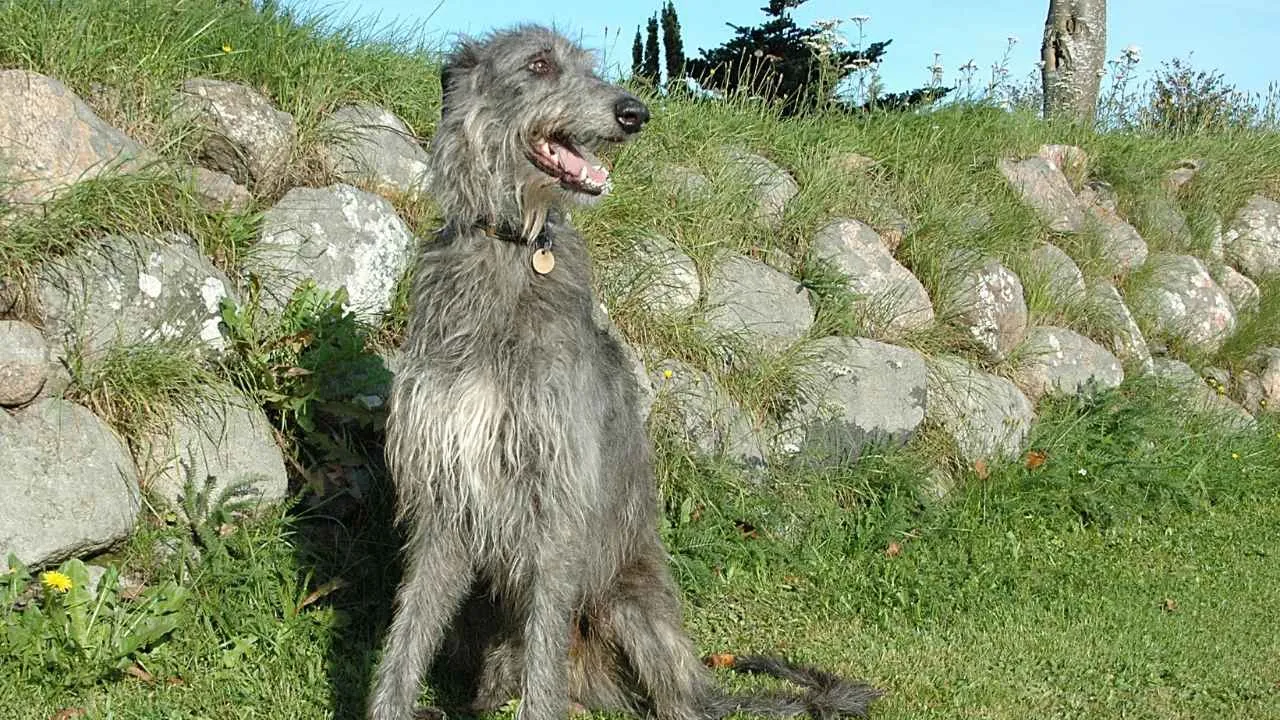
The Scottish Deerhound is a large dog breed with a noble history. Once prized across the Scottish Highlands, these hounds tracked giant red deer through rugged terrain. Today, this giant breed shows a softer side at home.
According to WebMD, Deerhounds are sensitive, affectionate dogs that form strong family bonds. Their intimidating appearance can fool people who expect a fierce dog. In reality, their gentle temperament often suits peaceful households.
Even after outdoor activity, many become relaxed indoor companions. Their energy level may seem surprising for such a tall hound. This contrast has earned them a reputation as a giant couch potato. Their calm presence can also help keep neighbors happy.
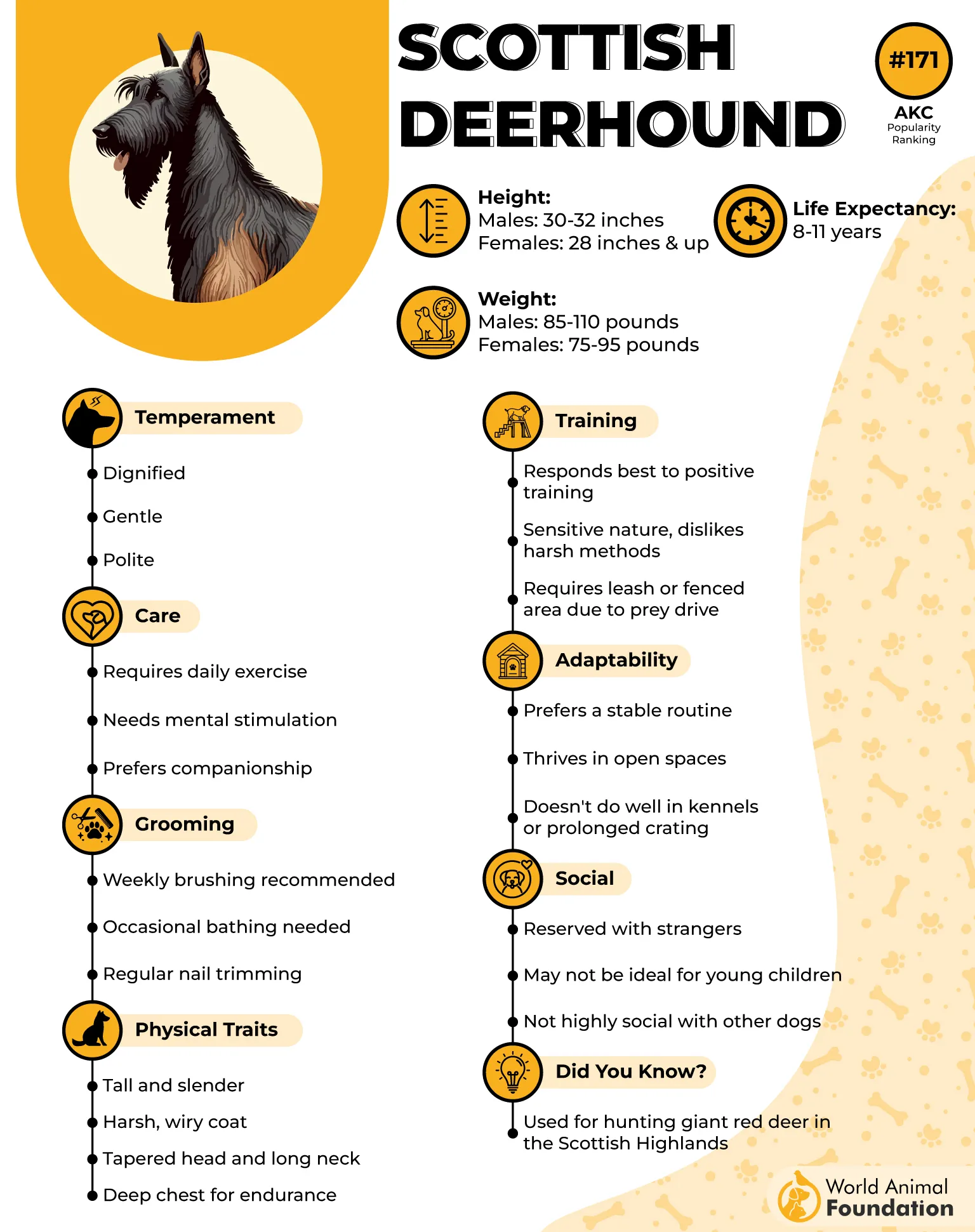
A Gentle Giant at Home
Regular exercise remains important for healthy movement.
An apartment can work with enough daily activity.
Give this dog a comfortable box or bed indoors.
They may shed, so owners should expect loose hair.
Farmers around the world often appreciate their calm nature.
6. Anatolian Shepherd Dog
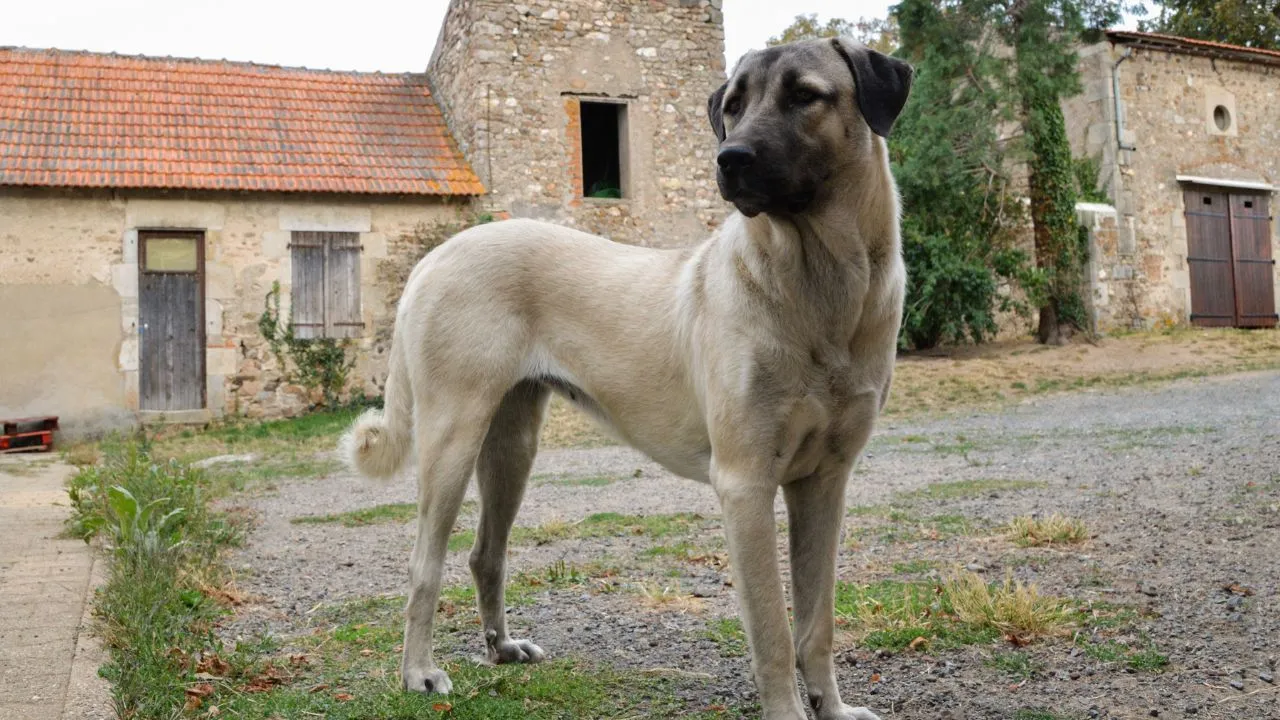
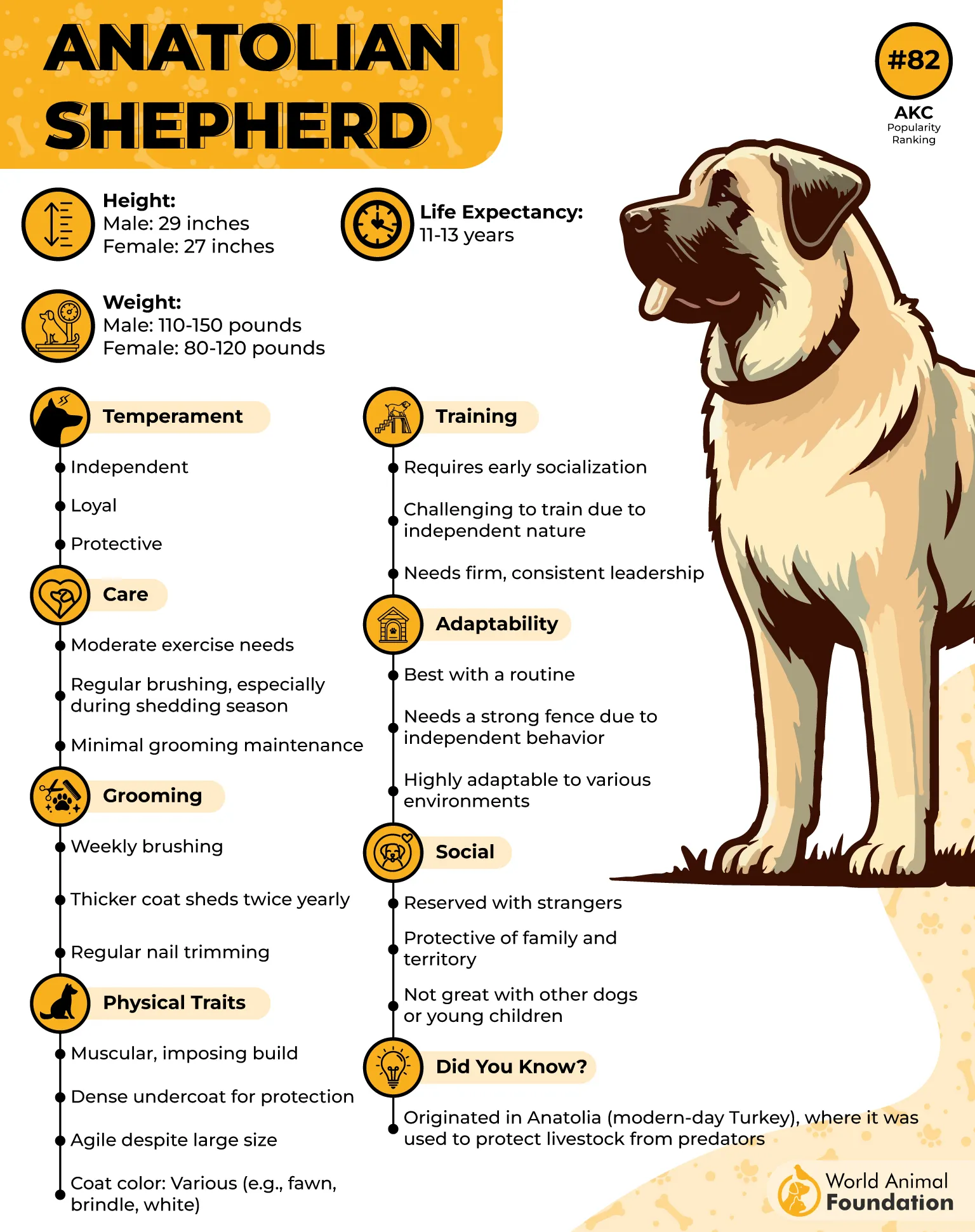
The Anatolian Shepherd Dog is a rugged livestock guardian dog breed with ancient roots. Its ancestors protected flocks from wolves and bears across harsh lands. According to Omlet, these dogs could seek predators before attacks began.
This giant dog breed is smart, patient, loyal, and deeply watchful. Rather than waiting for constant direction, it can assess threats independently. That trait shaped its steady temperament and strong sense of responsibility.
Anatolians may also protect children, smaller dogs, and other pets. Their working background makes them better suited to an active lifestyle with room to roam. Owners should provide exercise and mental stimulation to keep this powerful dog balanced.
A Watchful Guardian With Purpose
Apartment living can be difficult for such an independent breed.
An outdoor setting gives it more suitable space.
Early socialization helps it respond appropriately to unfamiliar people.
Consistent guidance can help manage its natural barking.
Consider adopting only if you can handle a demanding guardian.
7. Spanish Mastiff
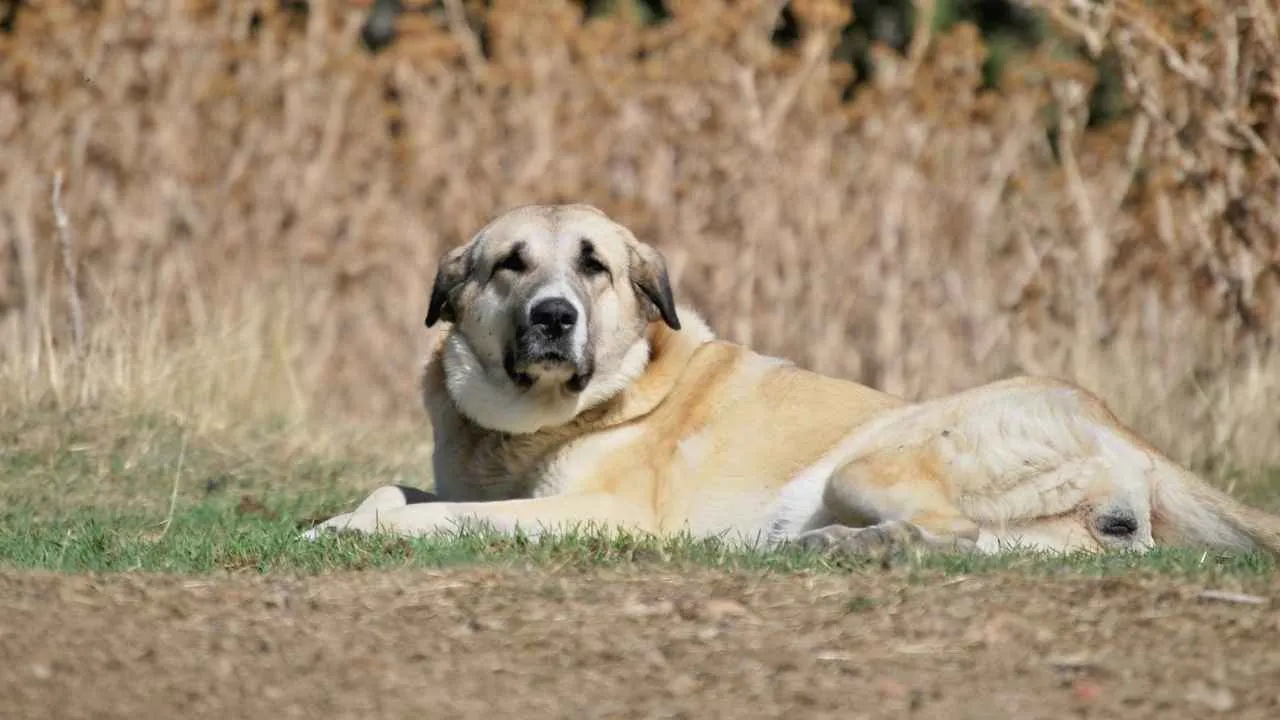
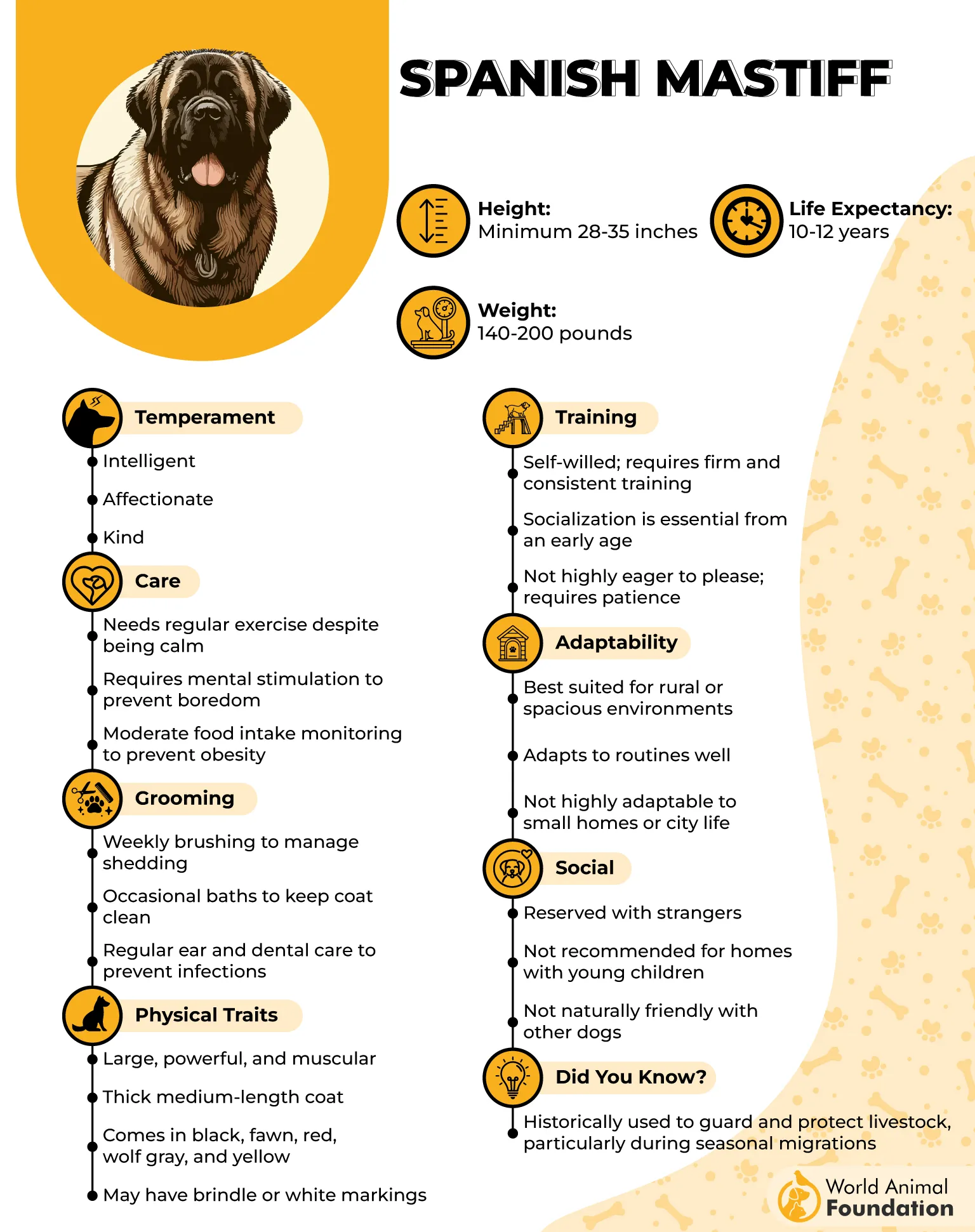
The Spanish Mastiff is a giant dog breed with a calm, noble presence. According to Royal Canin, these dogs protected sheep from wolves during seasonal livestock journeys. Their history also shaped a confident and steady temperament.
Despite their massive build, they can be affectionate with their families. Spanish Mastiffs generally prefer a peaceful home rather than constant excitement. Their deep bark can also make their presence known from far away.
This Mastiff breed is not a bit timid when facing danger. However, its relaxed nature can make it a pleasant household companion. It may enjoy being near its people while keeping its own space. Families should remember that such a powerful dog needs thoughtful handling, especially around kids.
A Calm Giant With Ancient Purpose
A walk can provide useful daily movement.
An apartment may feel restrictive for this enormous breed.
Early training helps establish clear household boundaries.
An outdoor area can give it more freedom.
It does not need hours of playful activity.
Conclusion
Choosing a large companion is about more than size. Some dogs enjoy their own space while still forming deep family bonds. Their independent nature does not mean they dislike people or avoid family life. Instead, they may simply prefer relaxing nearby or spending time outdoors.
Before bringing one home, consider its energy, space needs, and daily routine. Food costs can also rise with a larger appetite, while regular vet visits help protect long-term health. These dogs typically need patient socialization, proper care, and steady guidance.
For example, a calm household may suit a self-contained companion better than a busy one. With the right match, sharing your home with an independent giant can be both rewarding and fun. The best choice always fits your lifestyle and expectations.
