




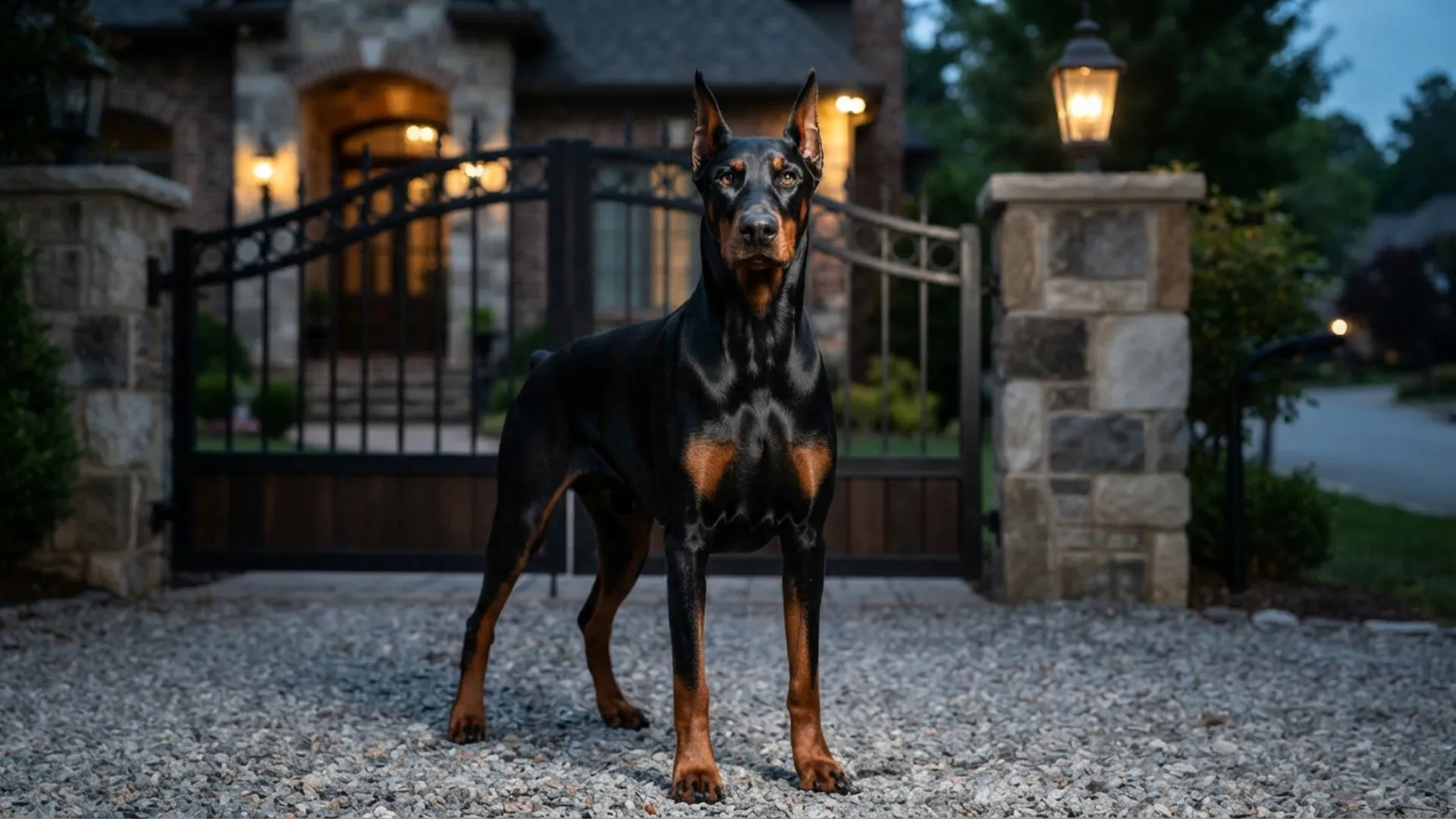
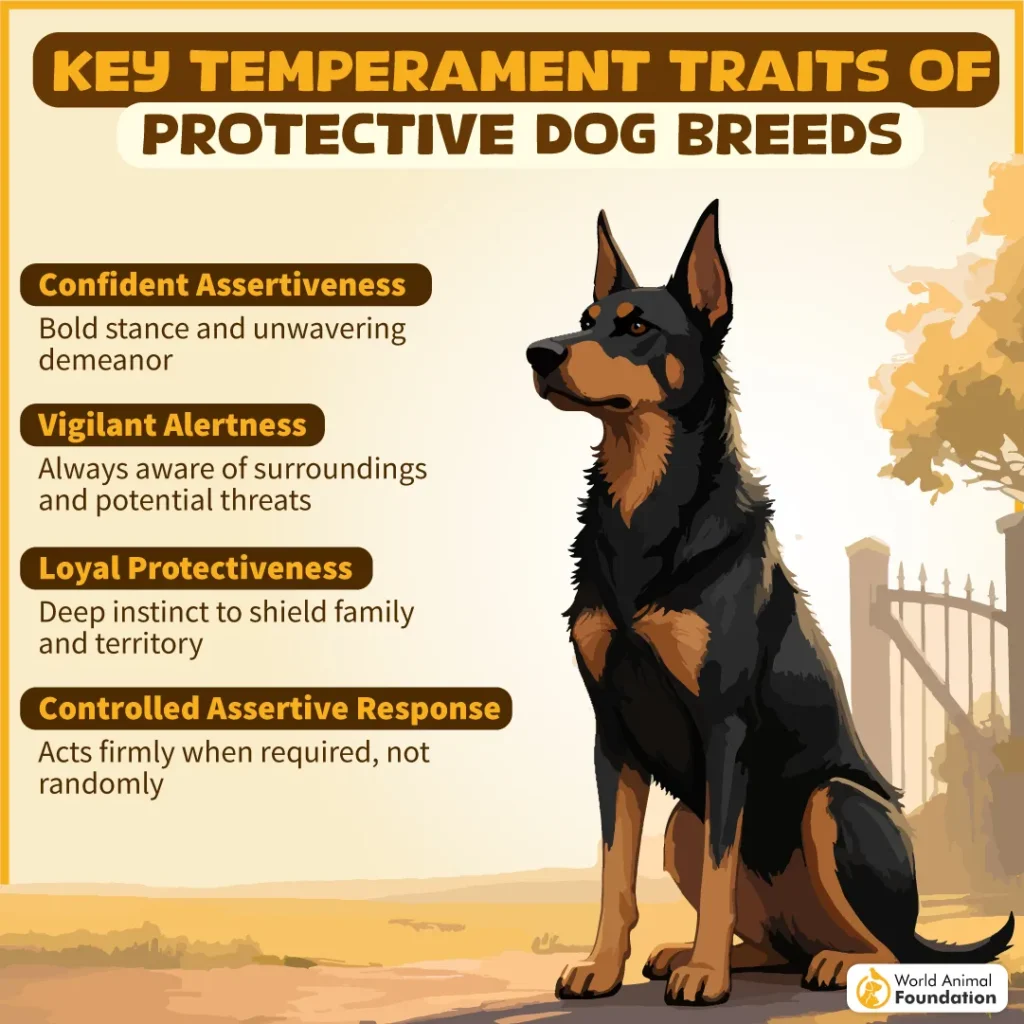
Some dogs are naturally watchful, loyal, and ready to protect the people they love. Their strong instincts make them excellent guardians, but their devotion also makes them affectionate and dependable family companions.
A great guard dog is not simply big or intimidating. Intelligence, confidence, courage, trainability, and self-control are just as important. With proper training and socialization, these dogs can protect their homes while knowing when there is no real threat.
Ready to meet the dogs with some of the strongest guarding instincts? Let’s explore the best guard dog breeds, their unique temperaments, and what it takes to keep these devoted protectors happy and well-adjusted.
Key Takeaways
Meet the German Shepherd and Doberman Pinscher, two sharp, loyal protectors built for demanding work.
See why the Boerboel, Rhodesian Ridgeback, and Broholmer bring strength, confidence, and devotion home.
Discover what makes the Cane Corso, Rottweiler, Great Dane, Akita, and Tibetan Mastiff stand out as guardians.
Find out what these powerful breeds need to thrive, from training and socialization to exercise, space, and care.
Top Dog Breeds with Unwavering Guarding Instincts
1. German Shepherd
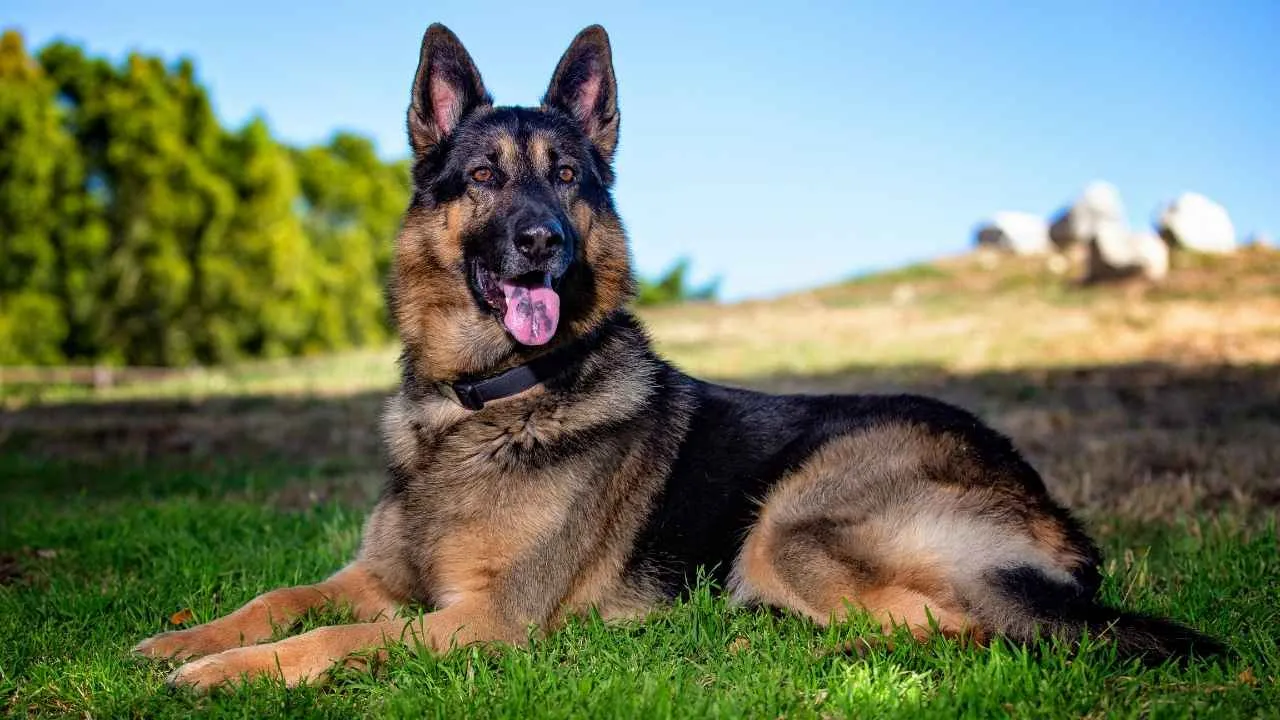
German Shepherds are among the most dependable working dogs. Developed in Germany from herding and farm dogs, they were bred for intelligence, courage, alertness, and loyalty. Their strong protective instincts make them excellent guardians.
They are also trusted for police and military work, search and rescue, and guide-dog duties, showing just how well they handle demanding tasks.
Active and Highly Trainable
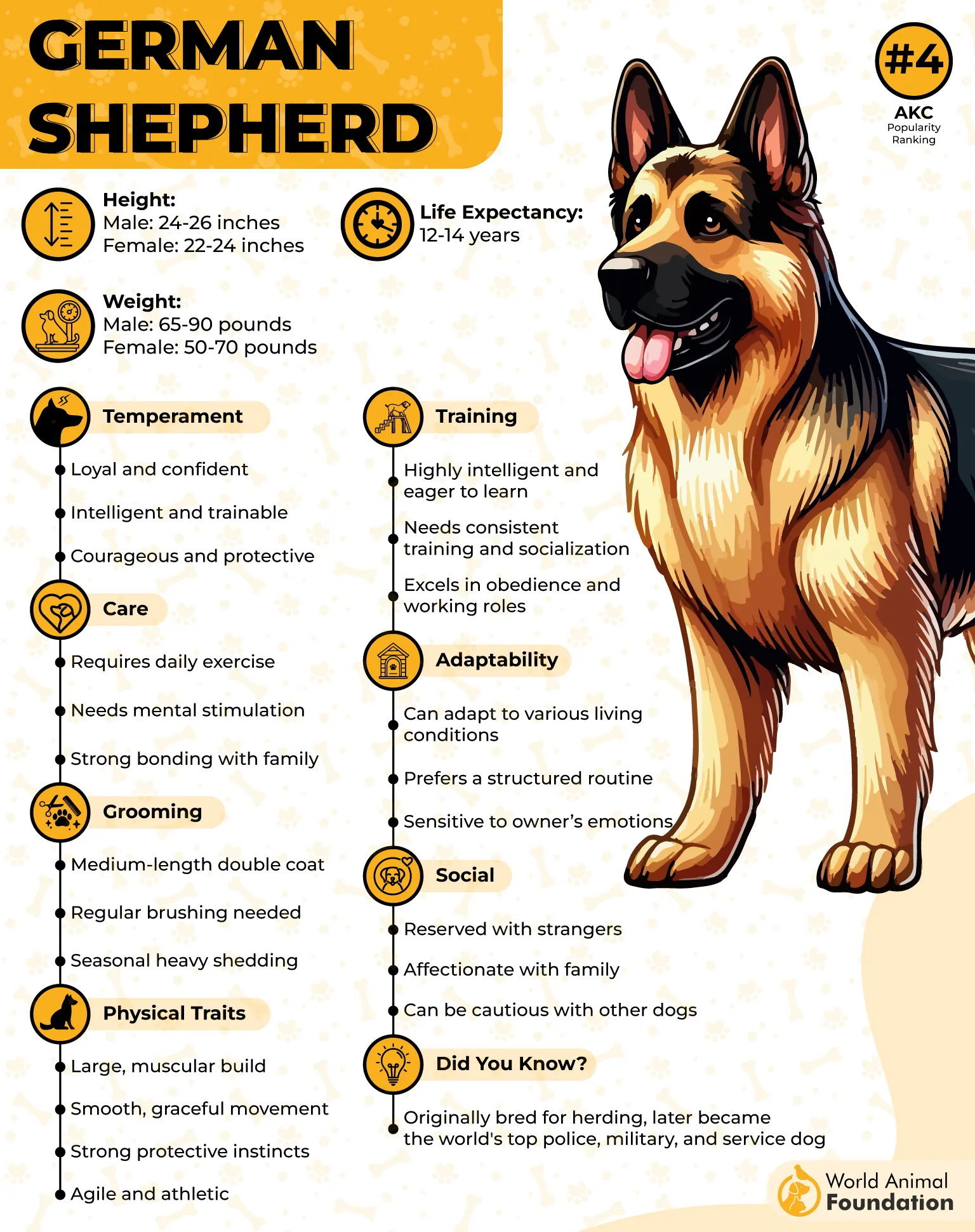
German Shepherds are energetic dogs that need around one to two hours of exercise each day, along with regular mental stimulation. They enjoy agility, tracking, swimming, scent work, and puzzle games.
Their intelligence makes them highly trainable, especially with consistent training and positive reinforcement. Early socialization helps them stay confident around children, guests, and other animals. Their strong chase instinct also means they need a leash or secure fenced area when outdoors.
Coat, Care, and Temperament
German Shepherds have dense double coats that shed throughout the year, with heavier shedding during spring and fall. Regular brushing helps keep shedding under control.
They also need a balanced diet suited to their size and stage of growth. Most importantly, these dogs thrive when they have a purpose, plenty of activity, and close family interaction.
2. Doberman Pinscher
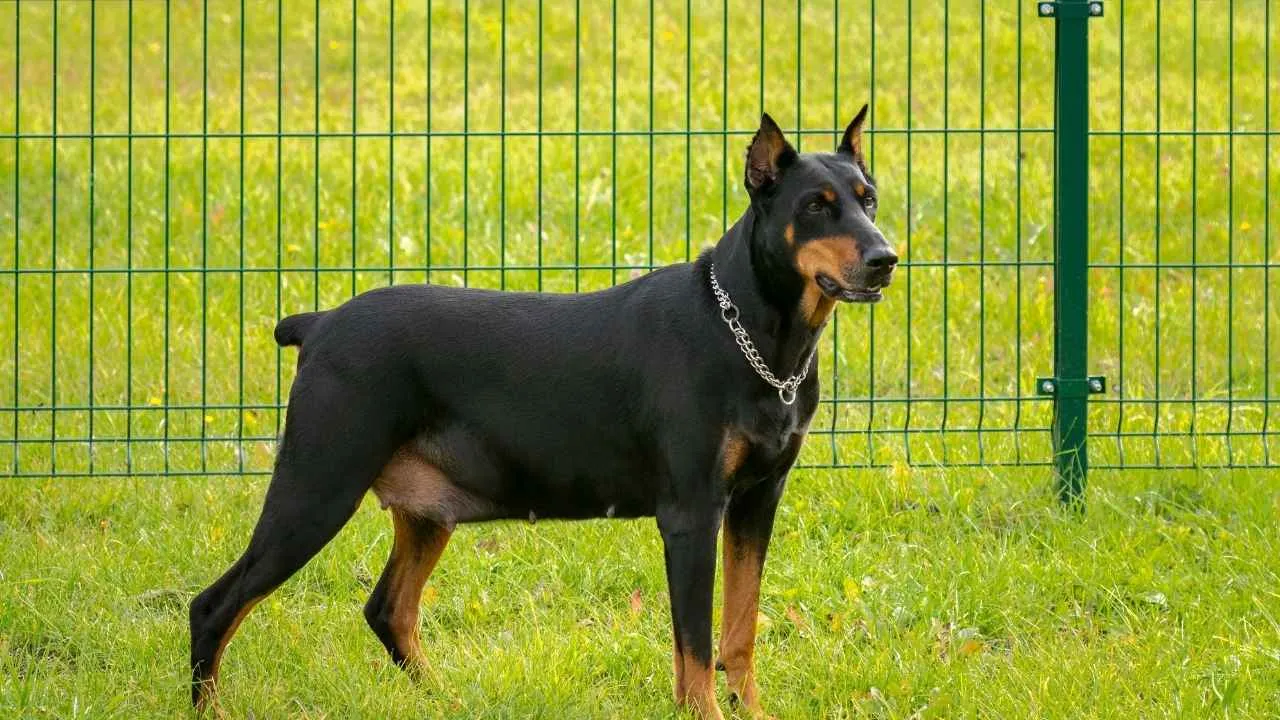
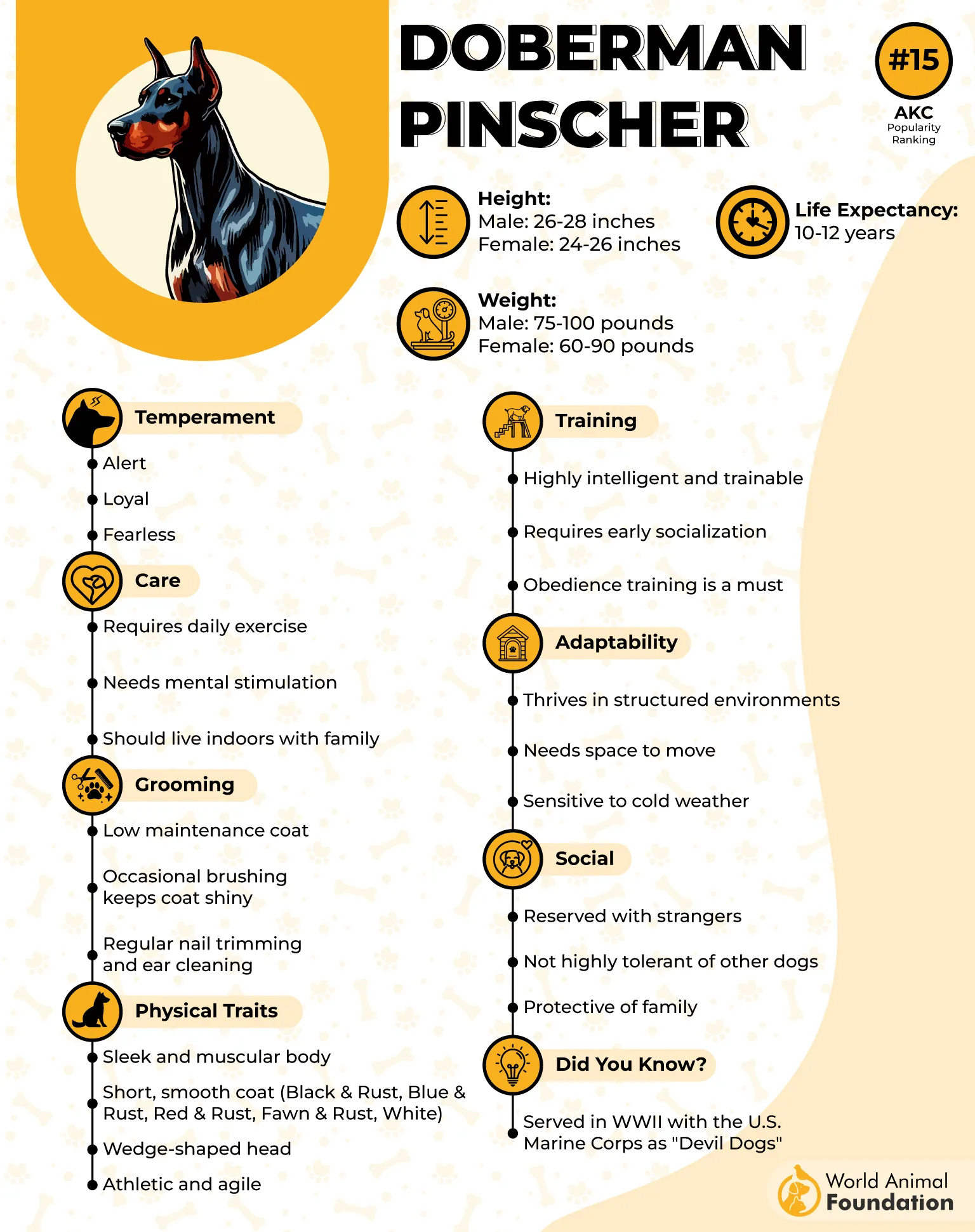
Doberman Pinschers are sleek, intelligent, and naturally protective dogs. Developed in Germany in the late 1800s, they were bred as guardians. Their courage, alertness, and loyalty still make them excellent protectors. At home, they can be playful, affectionate, and deeply devoted to their families.
Energetic and Easy to Train
Doberman Pinschers are active dogs that need at least an hour of daily exercise. Running, swimming, agility, tracking, and obedience training are great ways to keep them busy.
They are highly intelligent and respond well to consistent, positive training. Early socialization helps them stay confident around strangers and other animals.
Low-Maintenance Coats and Loving Nature
Doberman Pinschers have short, smooth coats that need weekly or twice-weekly brushing and occasional baths.
They thrive with active families who can provide regular exercise, training, and companionship. Their strong prey drive can make homes with small animals more challenging.
3. Boerboel
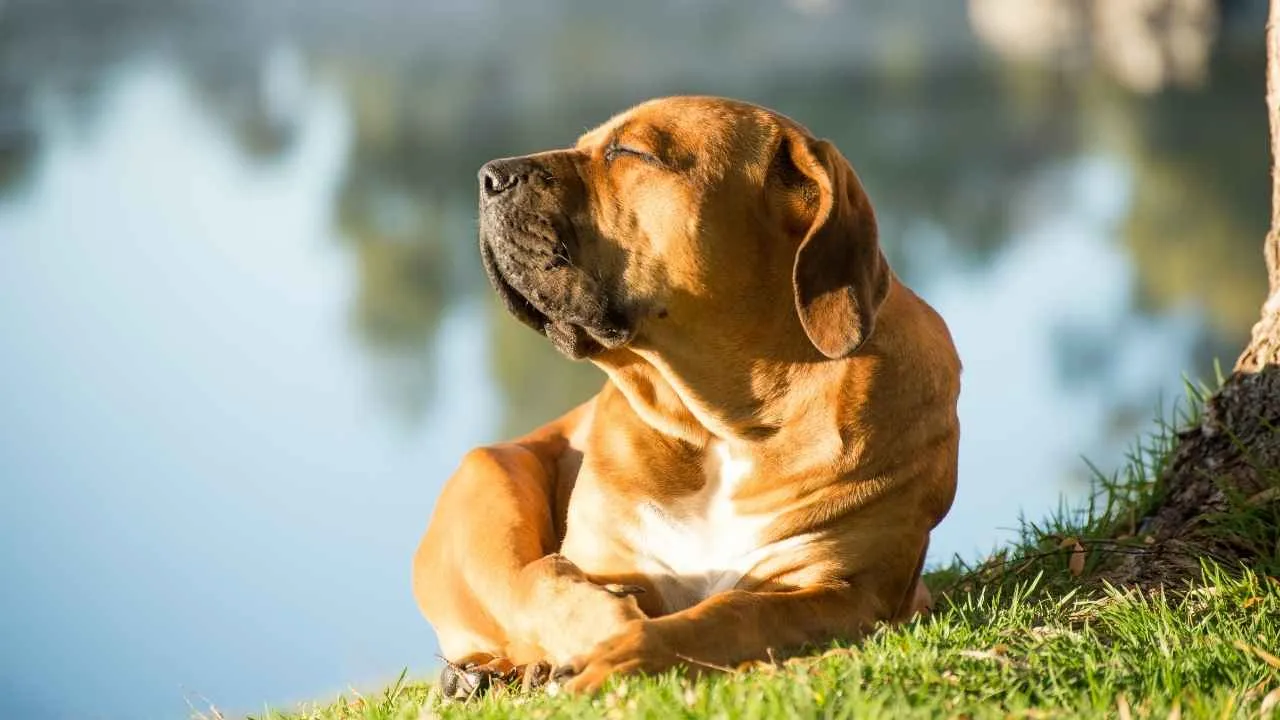
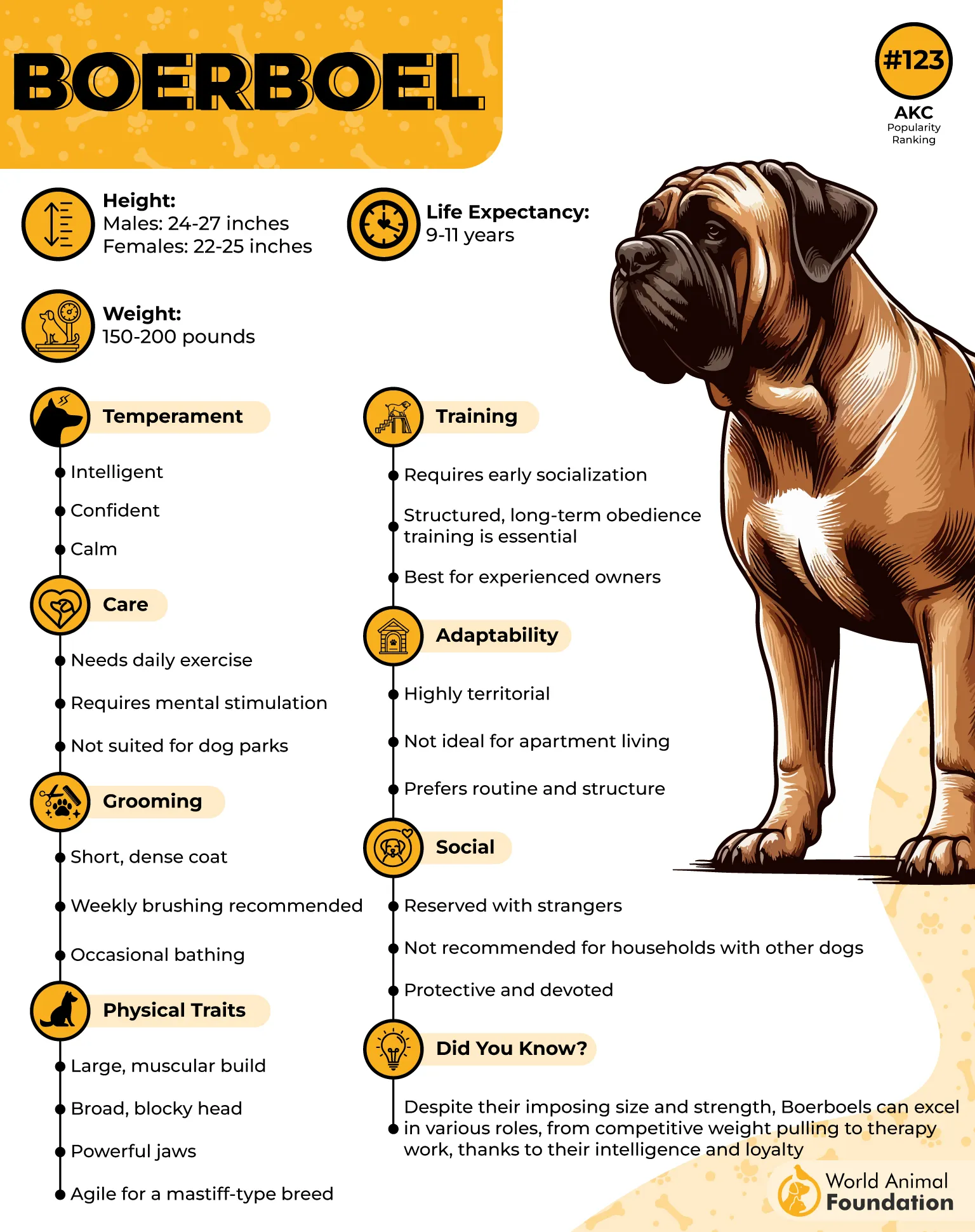
Boerboels are large, muscular dogs known for their confidence, courage, and loyalty. Originally developed in South Africa, they were bred to protect farms, families, and property from predators and intruders.
Despite their imposing appearance, they can be affectionate, playful, and gentle with the people they trust. They are often reserved around strangers but remain deeply devoted to their families.
Energetic and Intelligent
Boerboels need regular physical and mental exercise to stay happy and well-behaved. Vigorous play, long walks, training sessions, puzzle games, and problem-solving activities can help keep their active minds busy.
They are intelligent but can also be strong-willed and territorial, making early socialization and consistent training essential. Because they can weigh 150–200 pounds, proper training is especially important for keeping their strength and protective instincts under control.
Easy Grooming and Devoted Nature
Boerboels have short, smooth, dense coats that are easy to maintain with weekly brushing and occasional baths. They do best in homes with plenty of space and a securely fenced yard where they can exercise safely.
4. Rhodesian Ridgeback
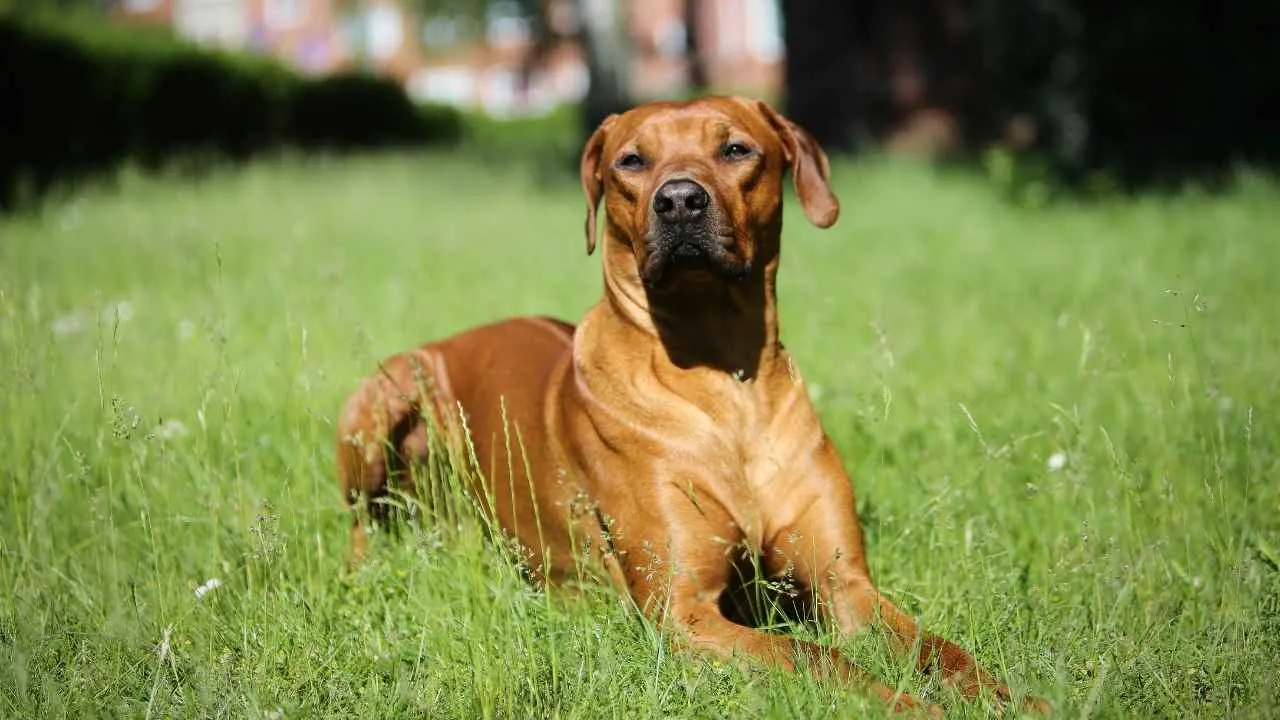
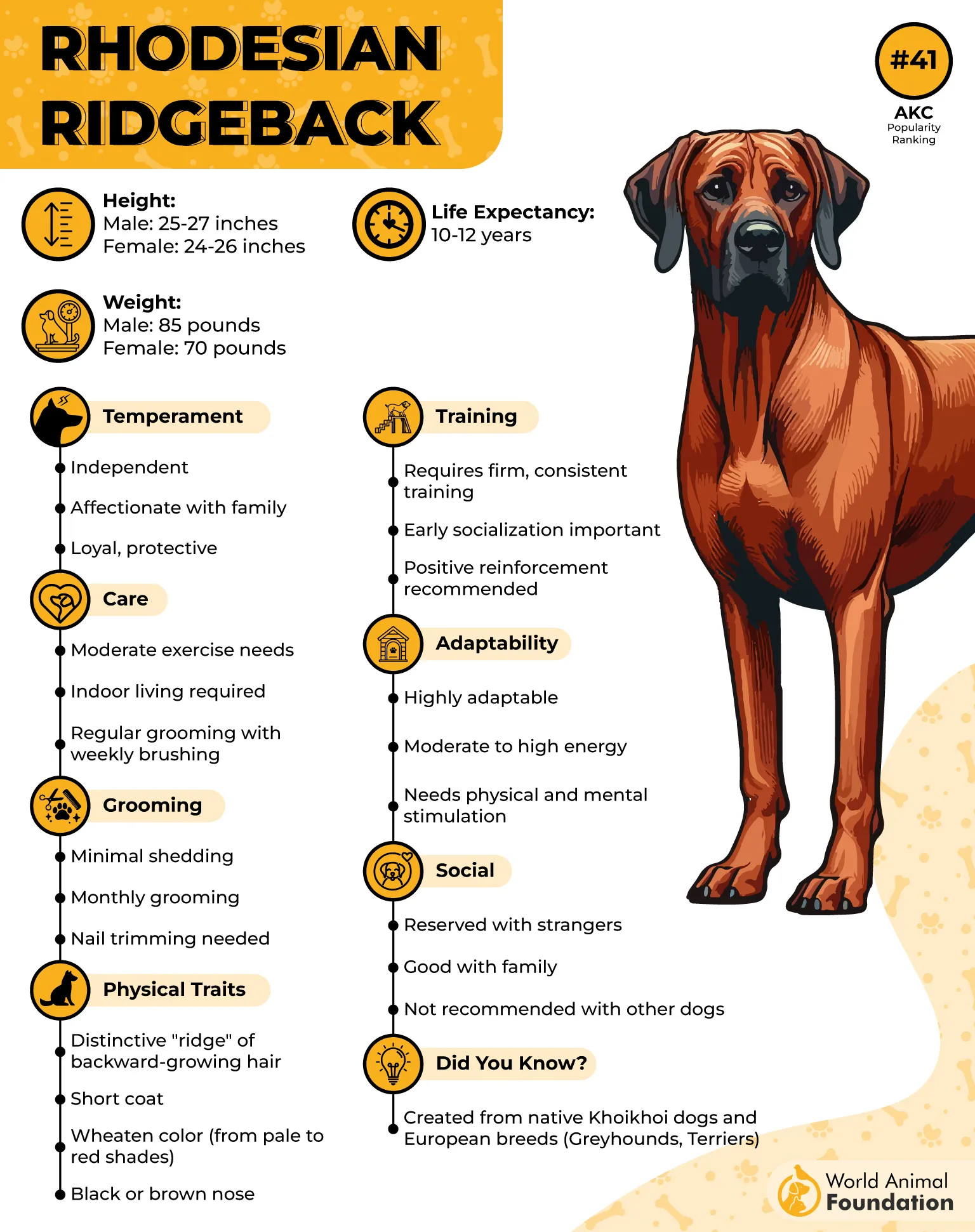
Rhodesian Ridgebacks are large, athletic dogs originally developed in southern Africa for hunting big game, including lions. Their most recognizable feature is the ridge of hair along their back that grows in the opposite direction of the rest of their coat.
They are courageous, intelligent, and deeply loyal to their families. While they can be affectionate and gentle at home, their protective nature often makes them reserved around strangers.
Energetic and Independent
Rhodesian Ridgebacks need regular physical activity and mental stimulation to stay happy and well-behaved. At least 45 minutes to an hour of daily exercise, such as jogging, hiking, swimming, fetch, or agility, can help meet their needs.
They are intelligent but have an independent, strong-willed side, so consistent training and positive reinforcement are important. Early socialization also helps them become more confident around people and other dogs, while their strong prey drive means they should be kept on a leash or in a secure yard.
Easy Grooming and Devoted Family Companions
Rhodesian Ridgebacks have short, smooth coats that are relatively easy to maintain. Weekly brushing can help remove loose hair, while occasional or monthly baths can keep their coat clean and healthy.
However, their size, athleticism, protective instincts, and prey drive mean they are best suited to owners who can provide plenty of exercise, structure, space, and companionship.
5. Broholmer
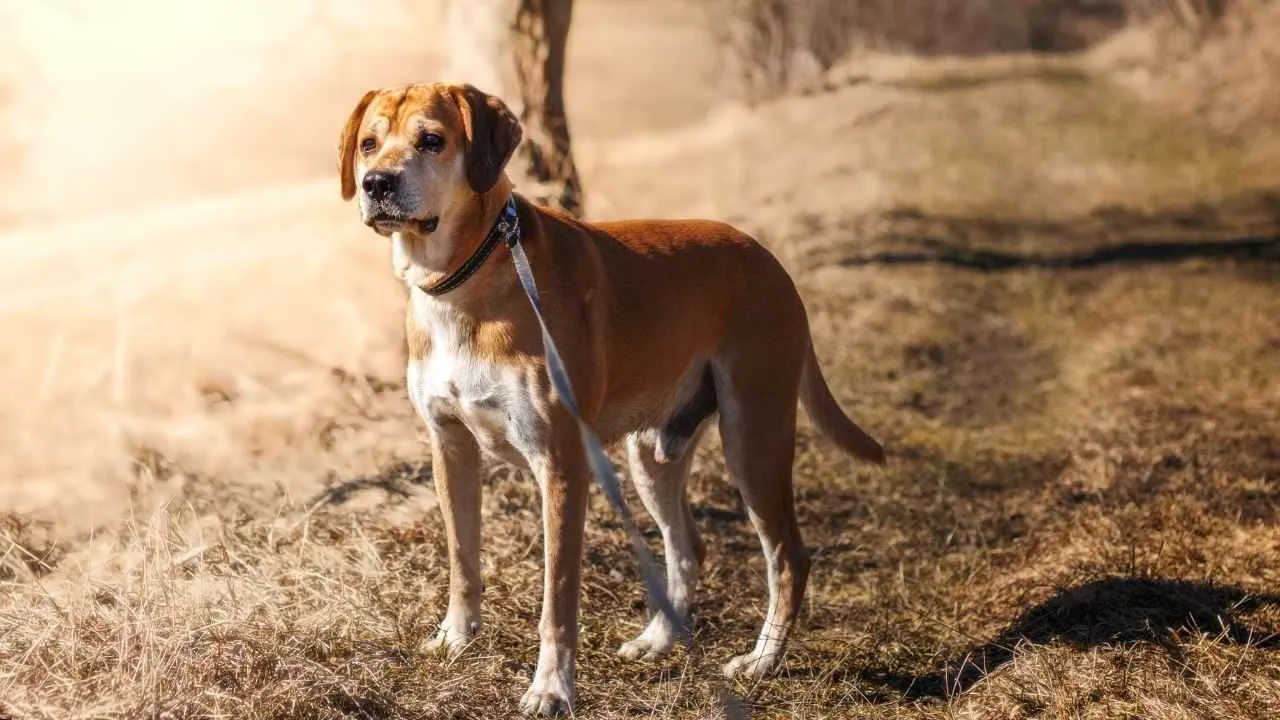
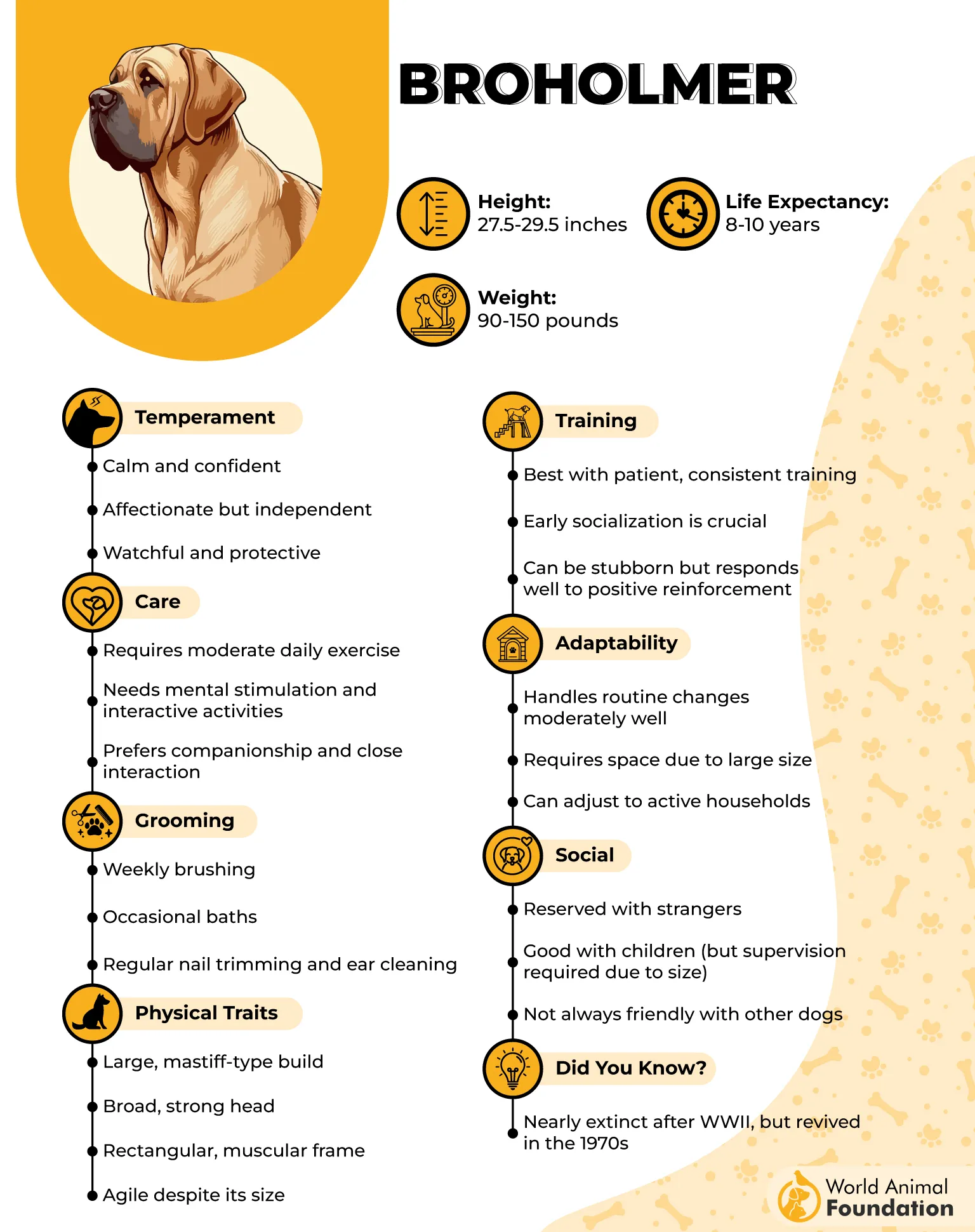
Broholmers are large Danish Mastiff-type dogs known for their powerful build, confident presence, and gentle nature. Originally bred to guard homes and livestock, they still have strong protective instincts and may be cautious around strangers.
At home, however, they are affectionate, calm, and devoted to their families. The AKC mentions that they are also known to be good with children and other dogs when properly socialized.
Intelligent but Strong-Willed
Broholmers need regular exercise and consistent training to stay well-behaved. Daily walks, backyard play, hiking, swimming, fetch, and activities such as agility or obedience can help keep them active.
They are intelligent but can be stubborn, so patient training, clear boundaries, and positive reinforcement work best. Early socialization with people, dogs, and different environments is especially important for this naturally watchful breed.
Easy Grooming and Loving Family Dogs
Broholmers have short, dense coats that are relatively easy to maintain. Weekly brushing helps remove loose hair and dirt, while baths are only needed occasionally.
Their large size means they do best in a spacious home with a secure yard, although they can adapt to different living situations with enough exercise.
6. Cane Corso
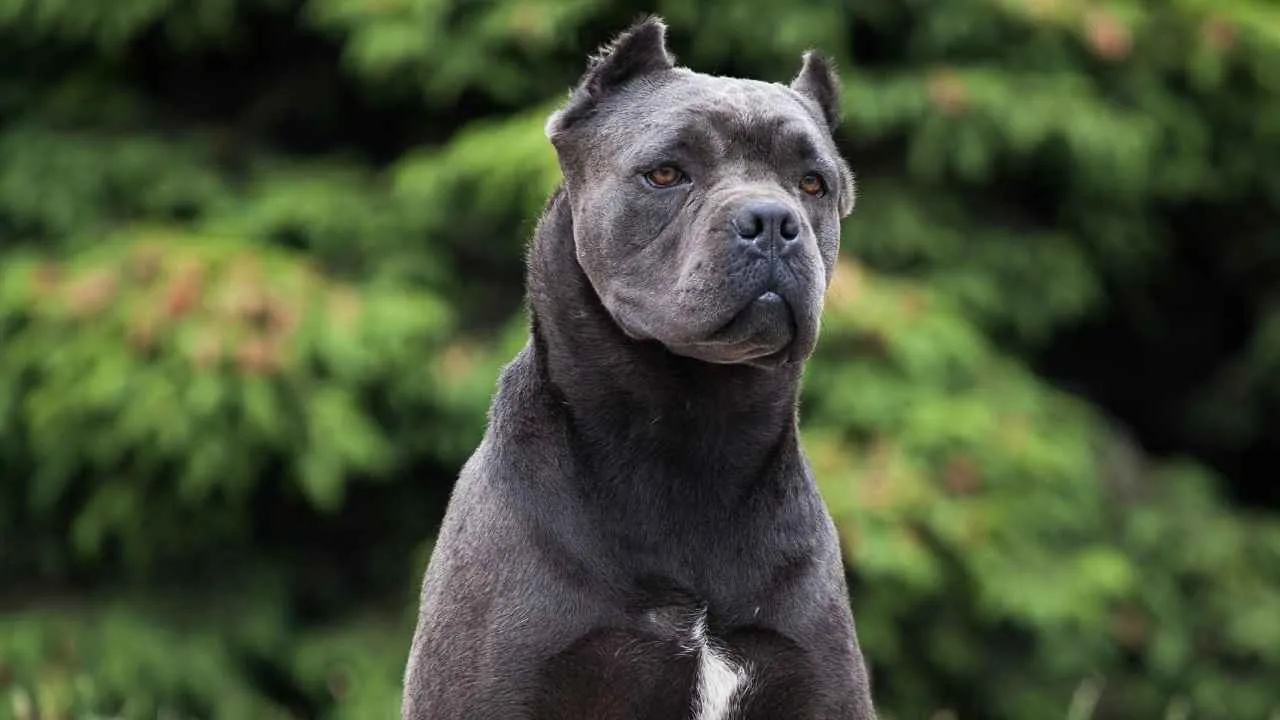
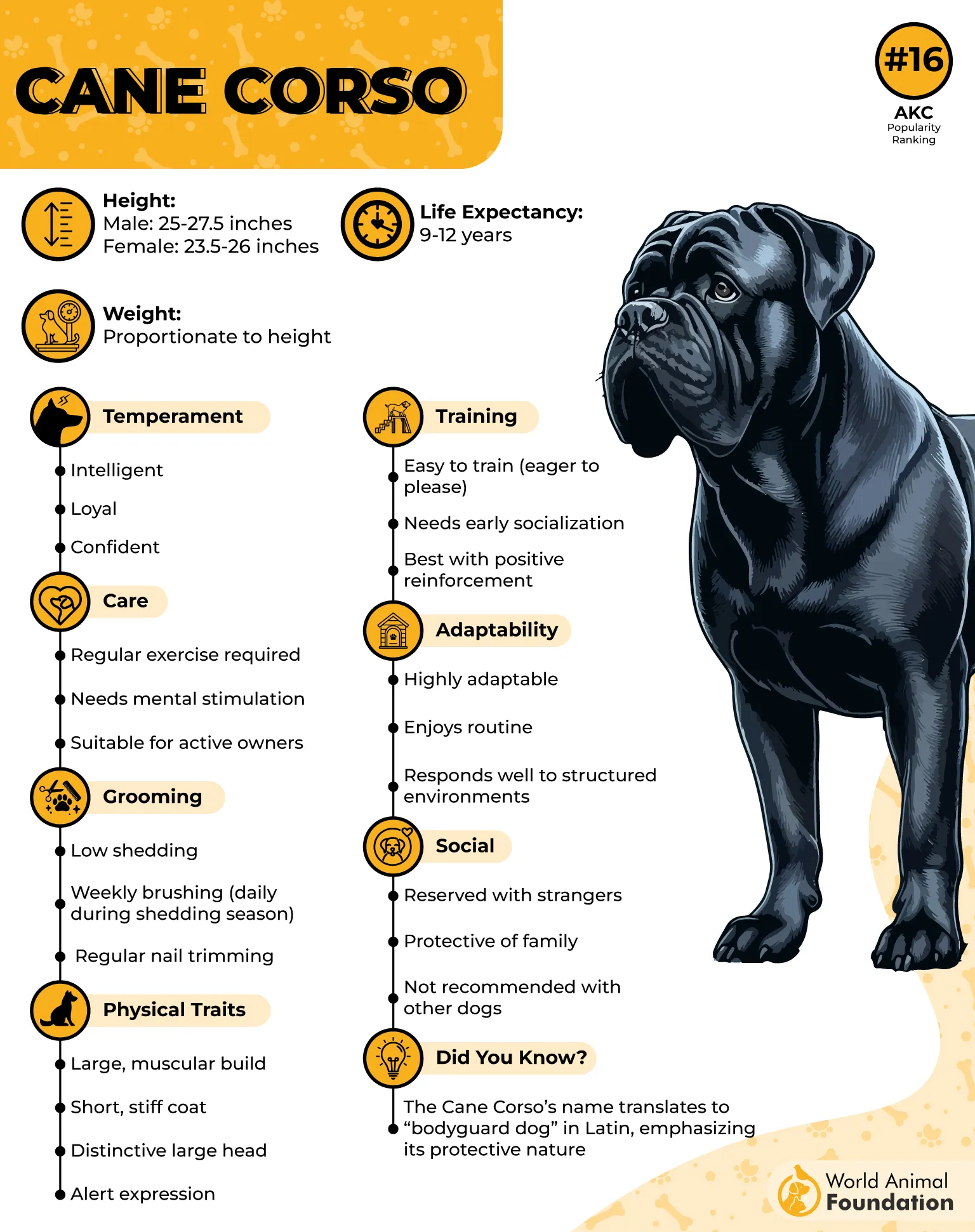
Cane Corsos are large Italian Mastiff-type dogs known for their muscular build, confident presence, and deeply loyal nature. Originally bred to guard property, work on farms, and hunt large game, they still have strong protective instincts and are naturally watchful around strangers.
At home, however, they can be affectionate, devoted, and gentle with their families. They can also do well with children and other pets when properly socialized and supervised.
Intelligent but Independent
Cane Corsos need regular exercise and consistent training to stay well-behaved and mentally stimulated. Daily walks, fenced-yard activities, scent work, obedience, agility, obstacle courses, and dock diving can help keep them active.
They are intelligent and eager to learn but can be independent and strong-willed, so patient training, clear boundaries, and positive reinforcement work best. Early socialization with people, dogs, animals, and different environments is especially important for this powerful guardian breed.
Easy Grooming and Devoted Family Dogs
Cane Corsos have smooth, short coats that are relatively easy to maintain. Regular brushing helps manage year-round shedding, with more frequent brushing useful during heavier shedding periods.
Baths are only needed occasionally, while their ears, nails, teeth, eyes, and facial skin should also be checked regularly. Their large size and exercise needs make a spacious home with a secure, sturdy yard ideal.
7. Rottweiler
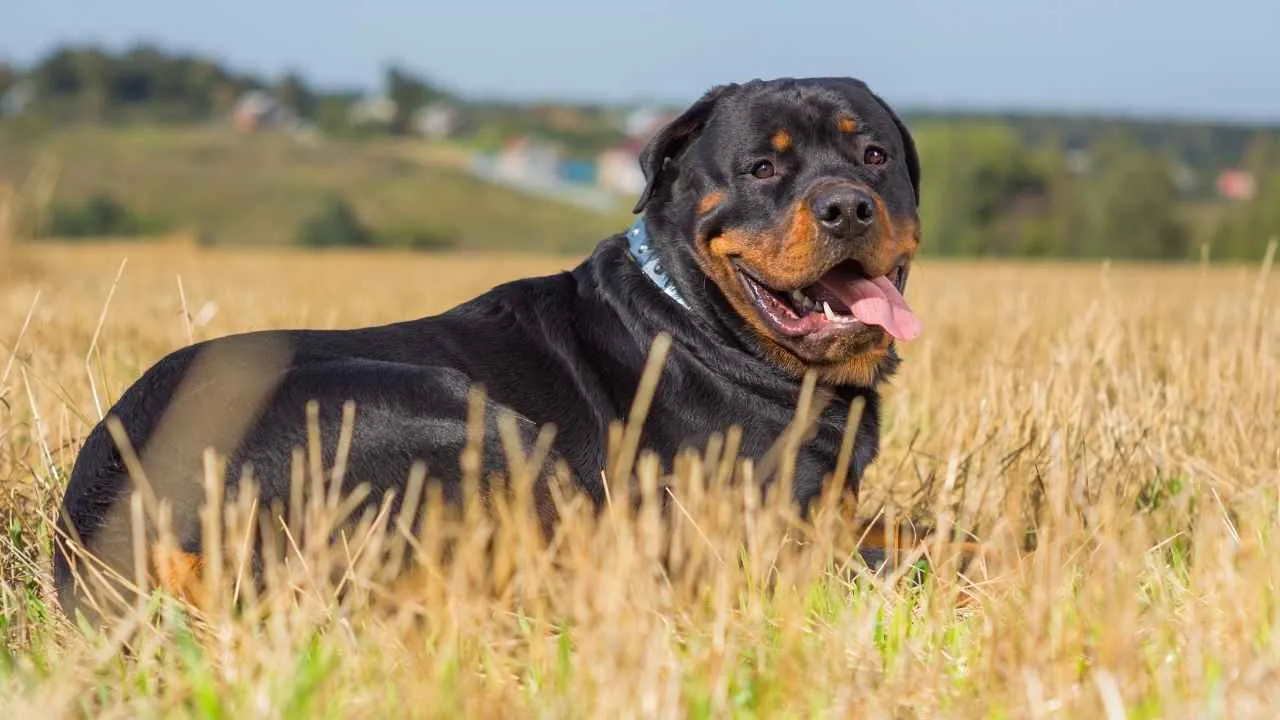
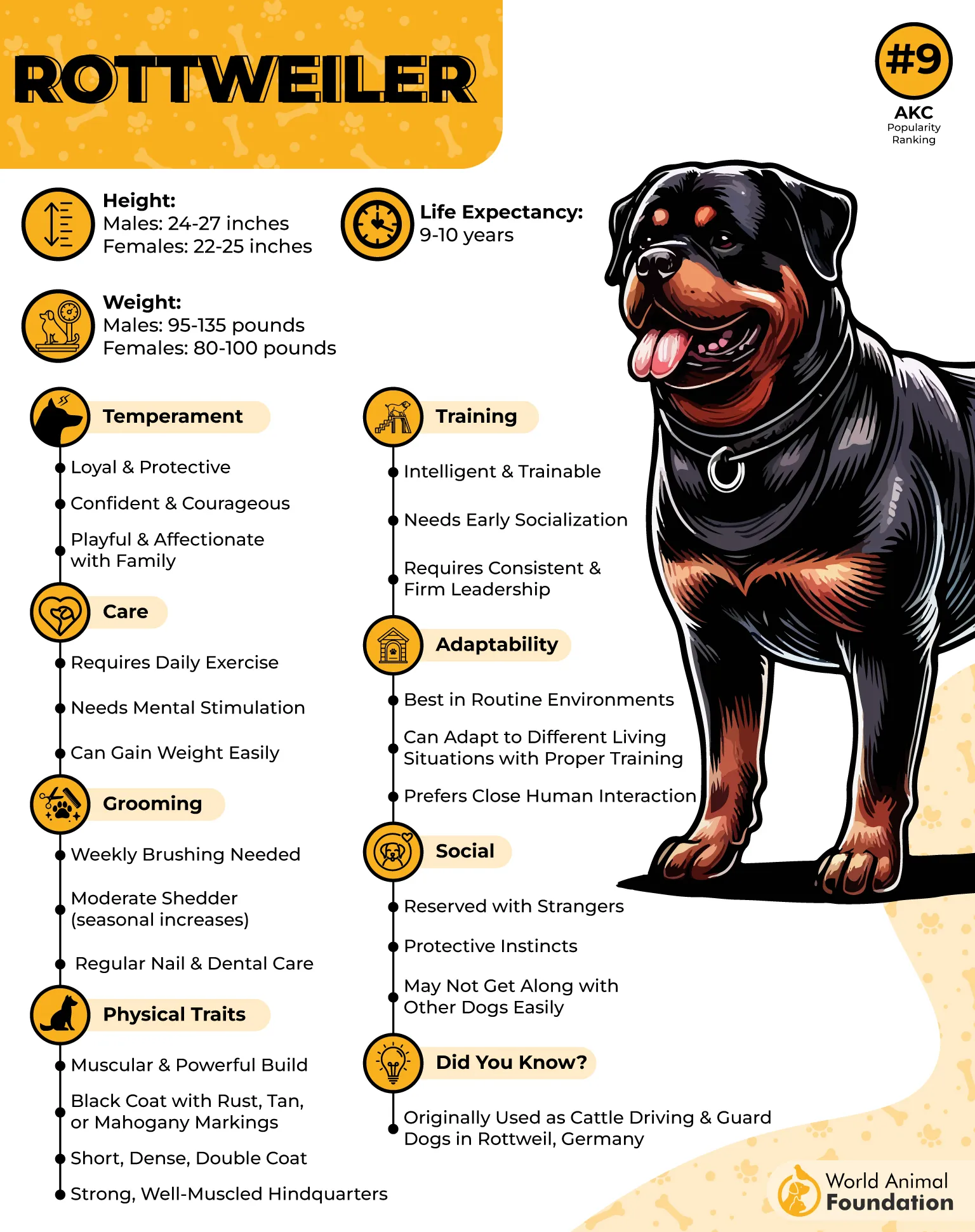
Rottweilers are large German working dogs known for their powerful build, confident nature, and unwavering loyalty. Originally bred to drive cattle, pull carts, and protect their owners, they still have strong guarding instincts and can be reserved around strangers.
At home, however, well-socialized Rottweilers can be affectionate, calm, and devoted to their families. They can also be gentle with children when properly trained and supervised.
Intelligent but Strong-Willed
Britannica says Rottweilers are smart, eager to please, and quick to learn, but they can also be stubborn when they do not want to follow a command. They need daily exercise and mental stimulation to stay happy and well-behaved.
Long walks, running, hiking, agility, tracking, obedience training, camping, and backyard activities can help keep them engaged. Early and consistent socialization with people, animals, and new environments is especially important for this naturally protective breed.
Easy Grooming and Devoted Family Dogs
Rottweilers have short, coarse black coats with distinctive tan markings and require relatively simple grooming. Regular brushing helps manage their year-round shedding, while occasional baths can keep their coat clean.
Because of their size, strength, and need for exercise, they do best with enough space to move around and a securely fenced yard.
8. Great Dane
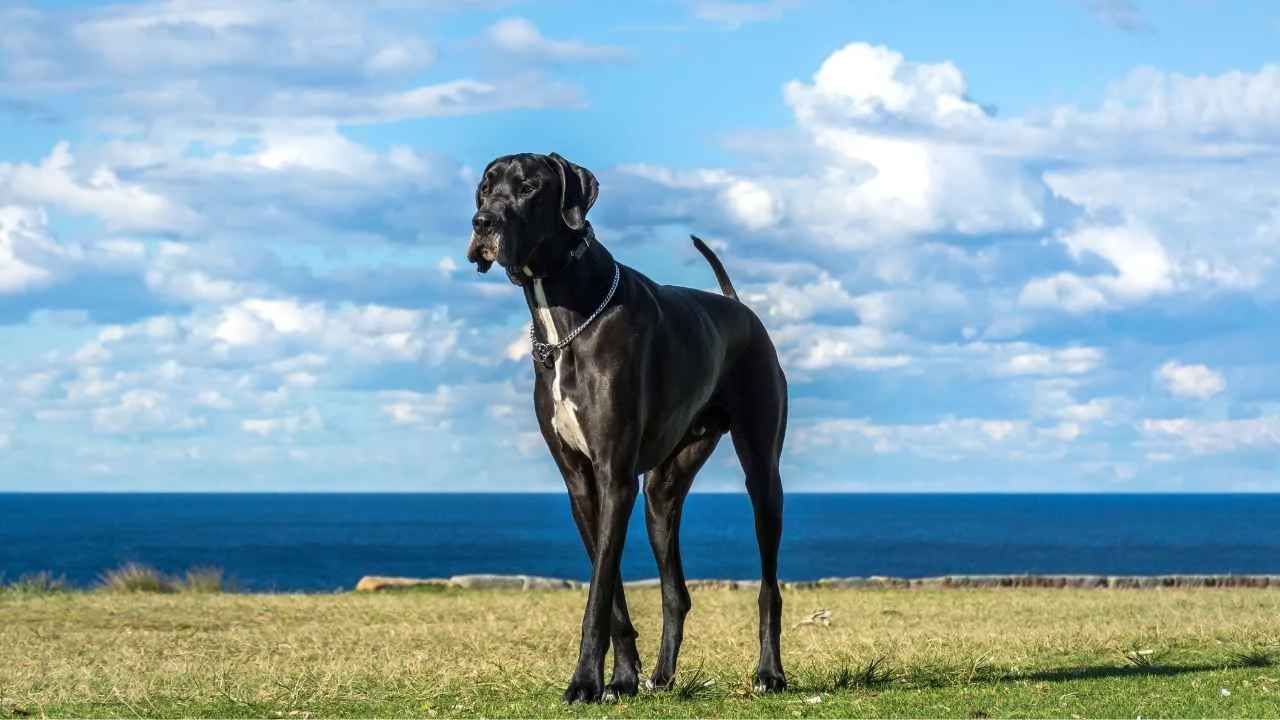
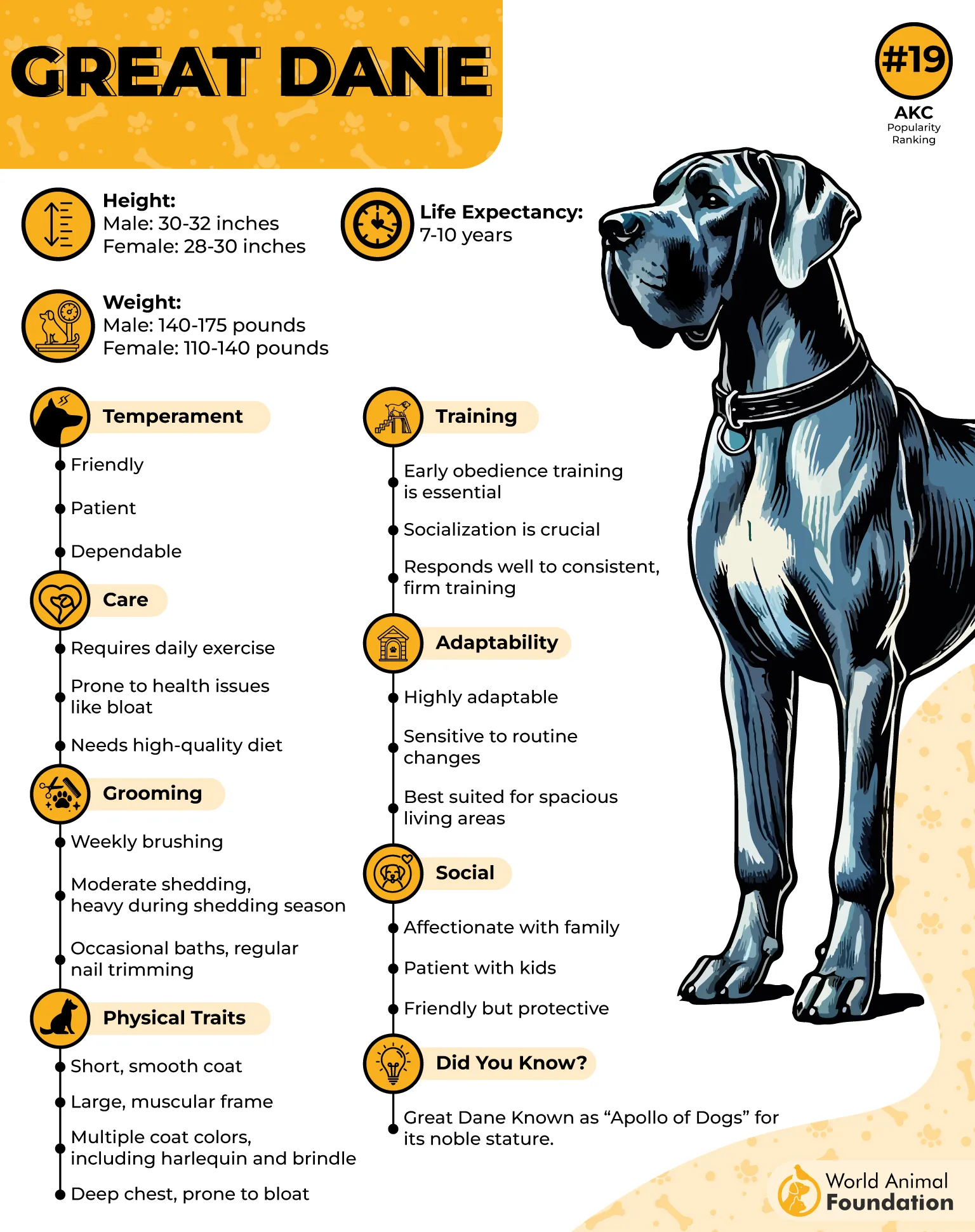
Great Danes are giant, powerful, and elegant dogs known for their impressive height and gentle nature. Originally developed in Germany to hunt wild boar and guard estates, they still have protective instincts today.
Despite their enormous size and imposing appearance, Great Danes are affectionate, calm, and often patient with their families. With proper socialization, they can also get along well with children and other animals.
Intelligent but Strong-Willed
Great Danes are intelligent dogs that can learn commands quickly, although some may be stubborn during training. They need daily exercise, with long walks, backyard play, and obedience training helping them stay healthy and well-behaved.
Early socialization is especially important to help them become confident around new people, animals, and environments. Positive reinforcement and consistent training are key, particularly because their size makes an obedient, manageable adult dog essential.
Easy Grooming and Gentle Family Dogs
Great Danes have short, sleek coats that are relatively easy to maintain. Weekly brushing helps manage loose hair, while occasional baths are usually enough to keep their coat clean. Their giant size means they need plenty of room to stretch out and move around, along with a secure yard if possible.
They can adapt to city living with enough daily exercise, but their food, medication, and general care can cost more because of their size,
9. Akita
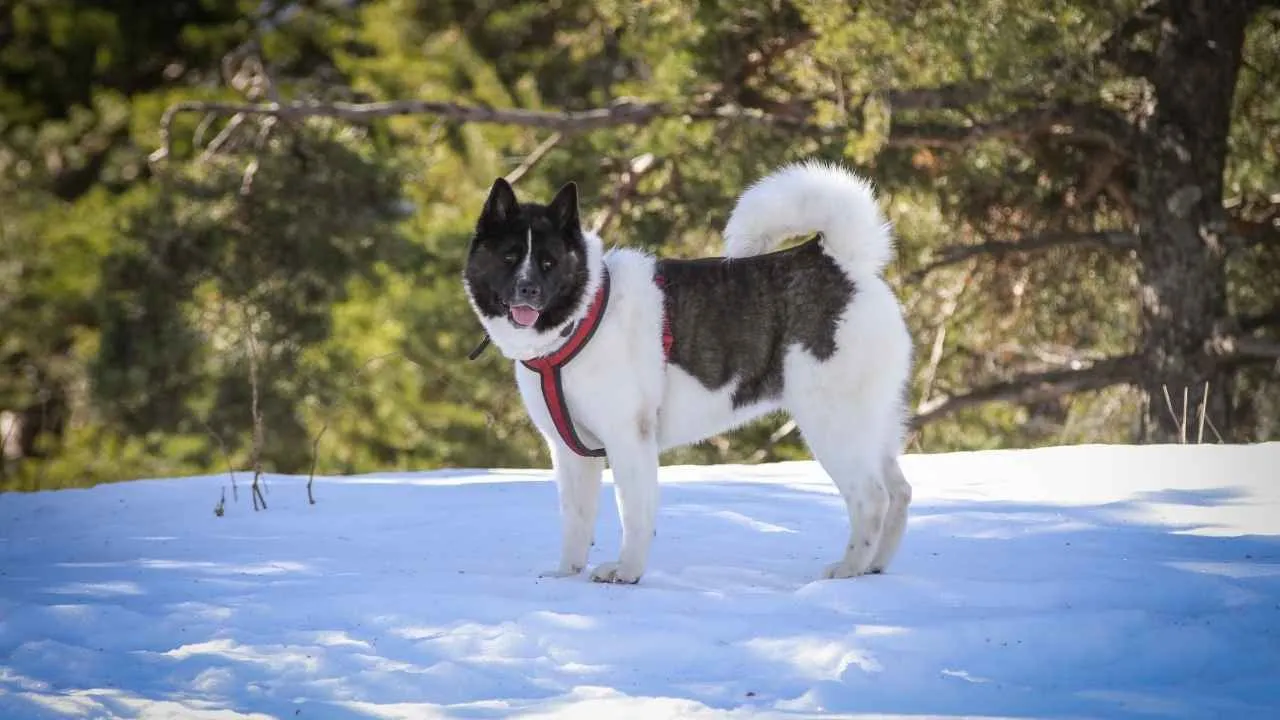
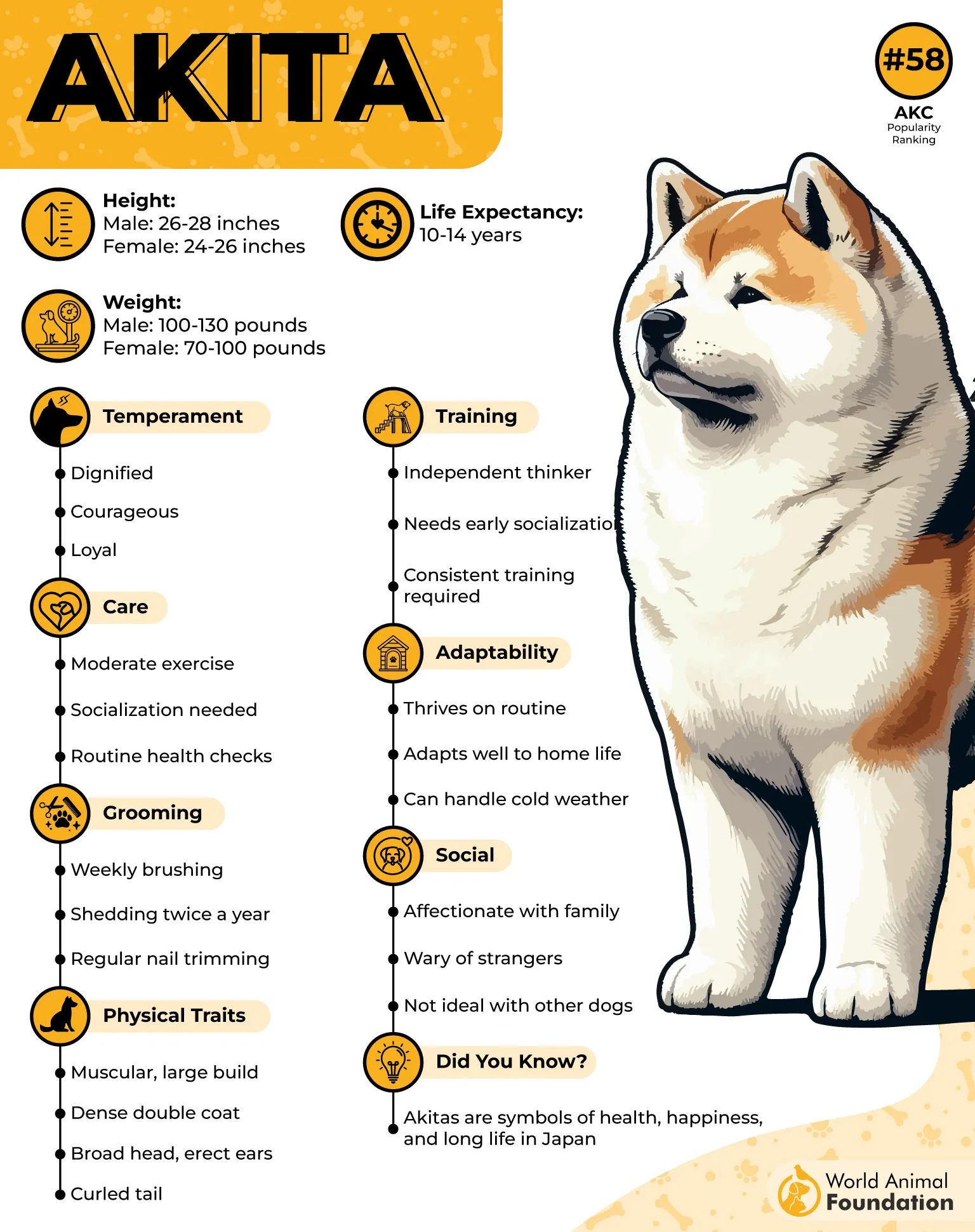
Akitas are large Japanese dogs known for their loyalty, courage, intelligence, and calm confidence. Originally bred to hunt large game and guard, they have strong protective instincts and can be reserved around strangers.
At home, however, they form deep bonds with their families and are devoted, dignified companions. They are best suited to experienced owners who understand their independent nature and can provide proper training and socialization.
Intelligent but Strong-Willed
Akitas need consistent training, early socialization, and regular exercise to stay well-mannered and engaged. Hiking, scent walks, rally, agility, dock diving, and other activities that challenge both their body and mind can keep them active.
They are intelligent and can learn obedience cues quickly, but their independent and strong-willed nature means they may not always be eager to follow commands. Positive reinforcement, clear boundaries, and patient training work best.
Low-Maintenance Coat and Devoted Family Dogs
Akitas have thick double coats that shed heavily, particularly during seasonal shedding periods. Regular brushing helps manage loose hair and keep the coat in good condition, while occasional ear cleaning and routine eye care are also important.
Their size, independent personality, prey drive, and reserved nature mean they need an experienced owner and careful supervision around children and other pets.
10. Tibetan Mastiff
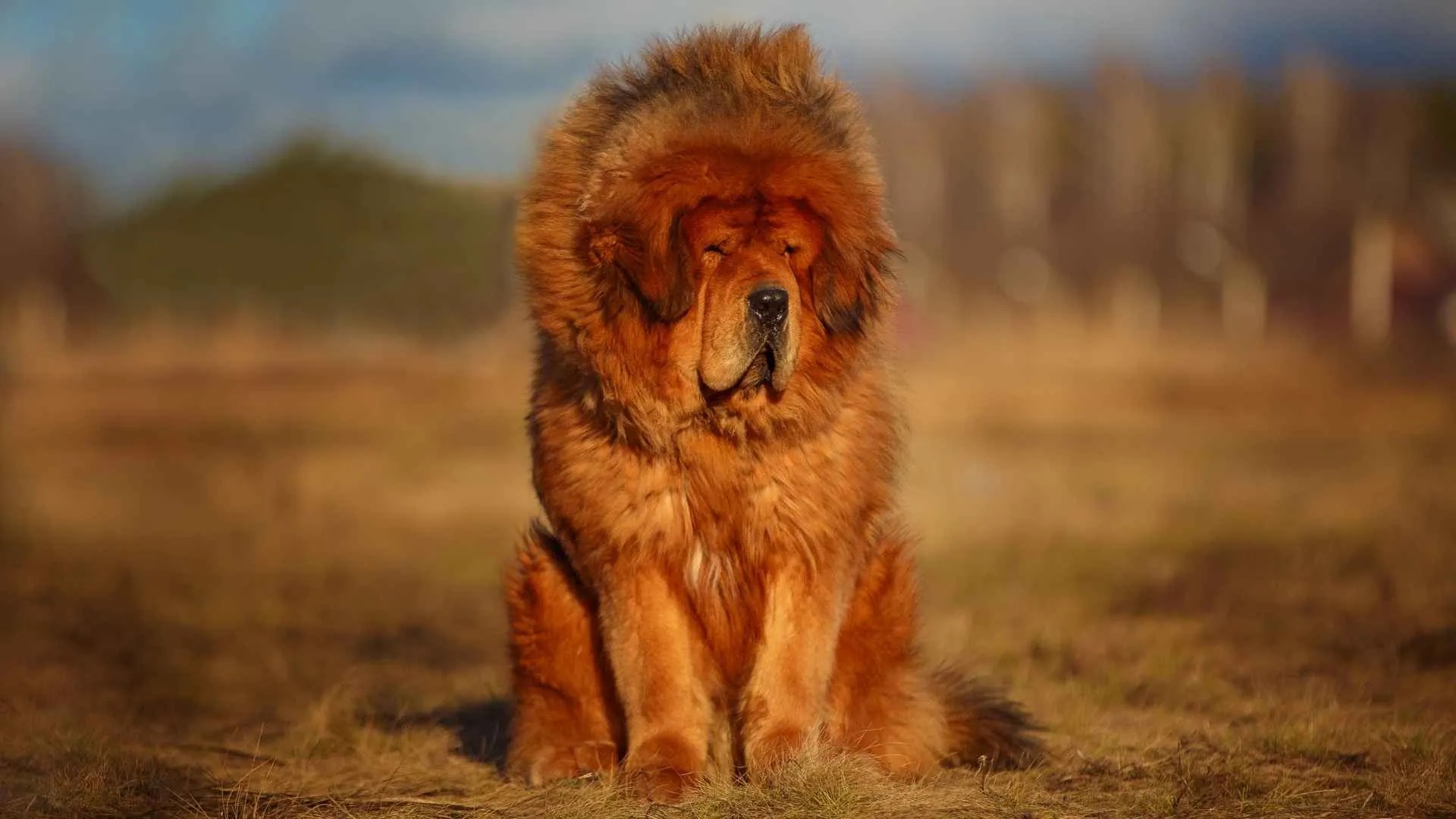
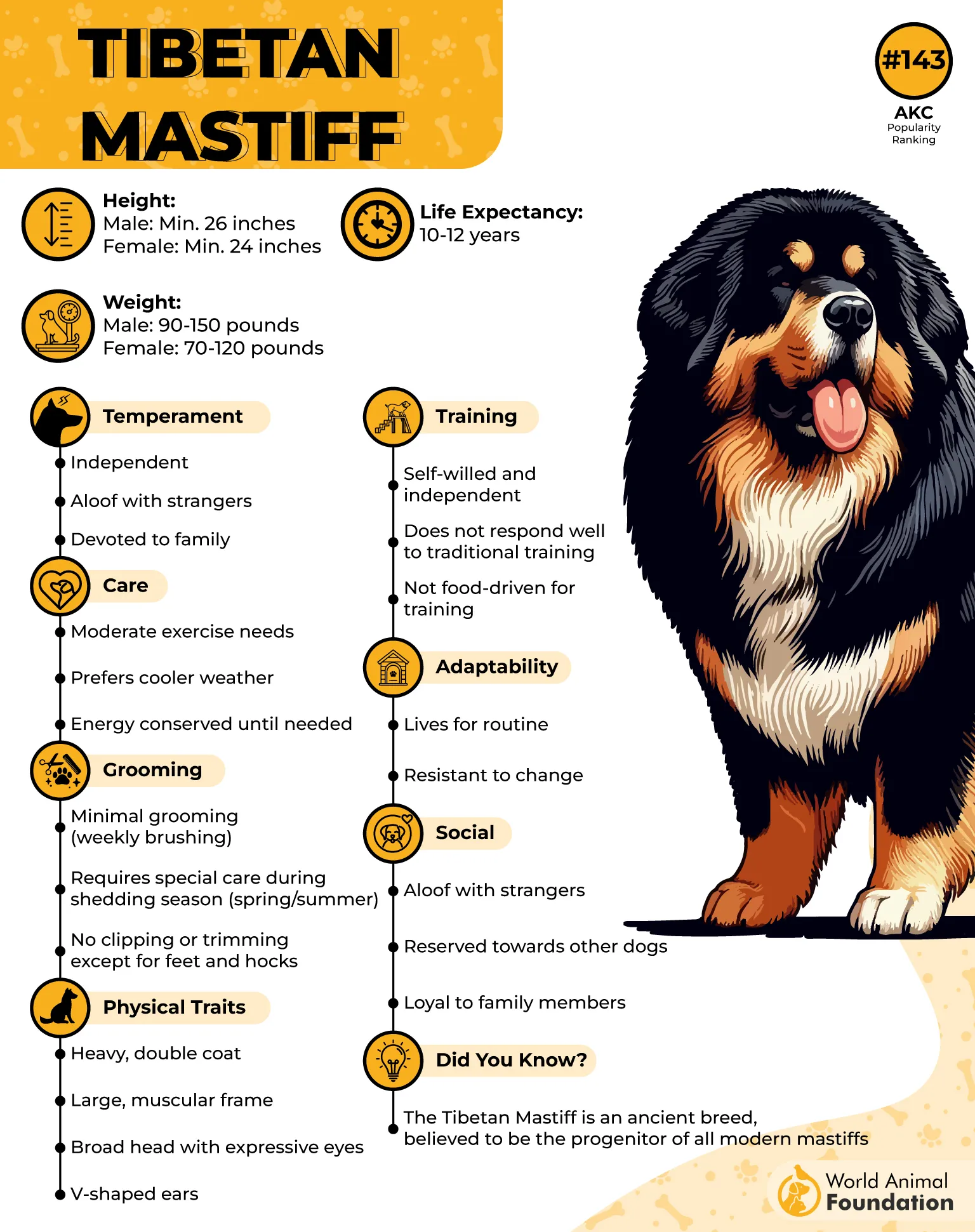
Tibetan Mastiffs are giant, ancient dogs known for their massive size, lion-like appearance, loyalty, and protective nature. Originating from Tibet, they were historically used as guardians of homes, livestock, monasteries, and families.
They are watchful, independent, and often aloof with strangers, but they form strong bonds with the people they trust.
Intelligent but Independent
Tibetan Mastiffs are highly intelligent but fiercely independent, which can make training challenging. They need consistent, patient training with plenty of positive reinforcement, especially from an early age. Socialization is essential to help them become more accepting of unfamiliar people and animals.
They need moderate exercise and plenty of room to roam, play, and patrol, but they lack the endurance needed for long runs. Walks, agility, guarding livestock, and outdoor activities can help keep them engaged.
Thick Coat and Loyal Family Guardians
Tibetan Mastiffs have dense double coats with a coarse outer layer and soft, woolly undercoat. Their thick coat also makes them poorly suited to hot weather, so owners should watch carefully for signs of heatstroke, as mentioned by PetMD.
Their large size, territorial instincts, independence, and reserved nature mean they need experienced handling and careful supervision around children and other pets.
Conclusion
Choosing the right protection dog is about more than size or strength. Breeds like the Akita and Tibetan Mastiff can be incredibly loyal, intelligent, protective companions, but their independent personalities, exercise needs, socialization requirements, and strong guarding instincts make them best suited to experienced owners.
Before bringing one home, consider your living space, lifestyle, training experience, and ability to meet the breed’s needs. With patient training, early socialization, and responsible care, the right guardian can become more than a protector. They can become a deeply devoted member of your family.
