




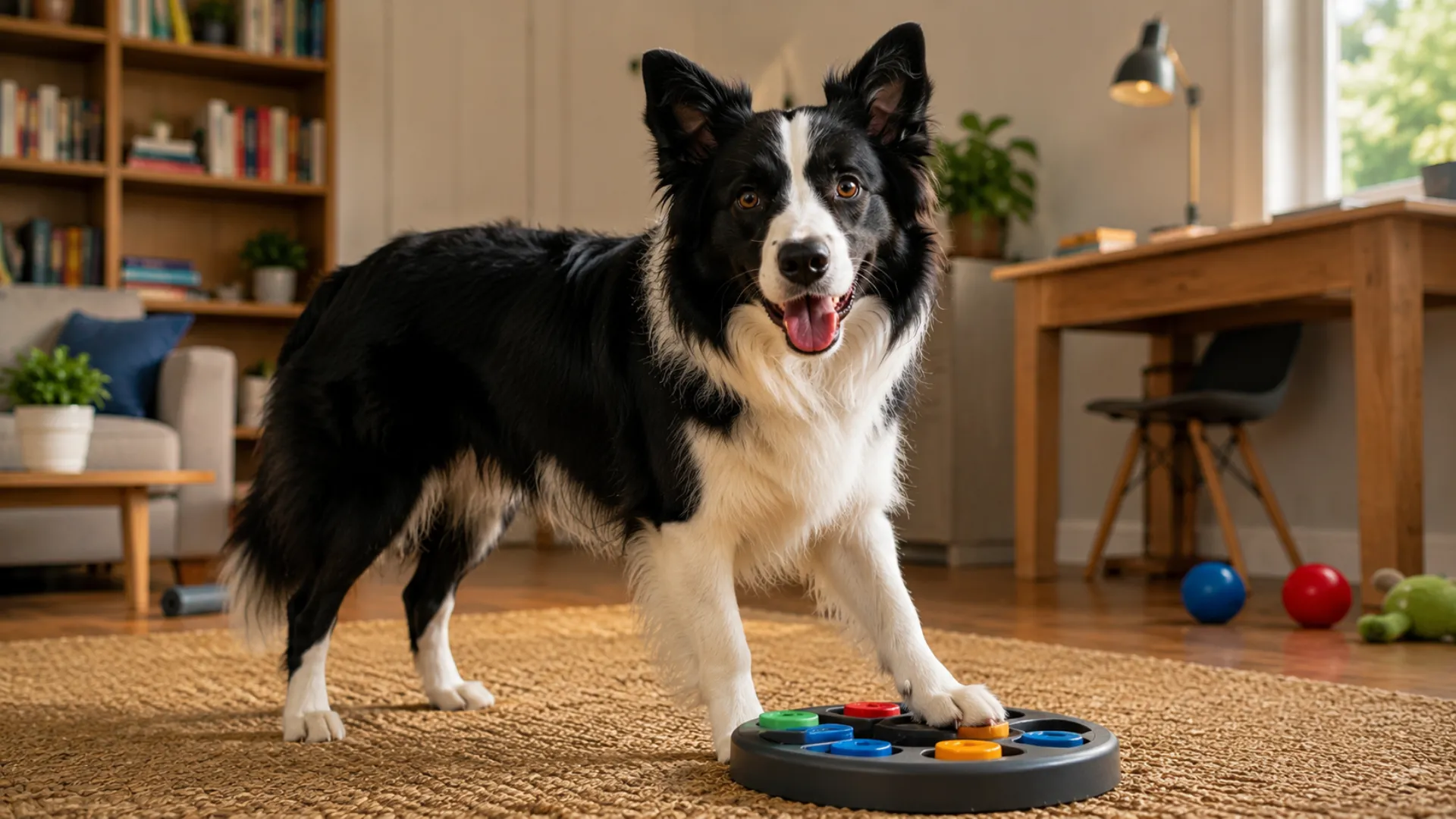
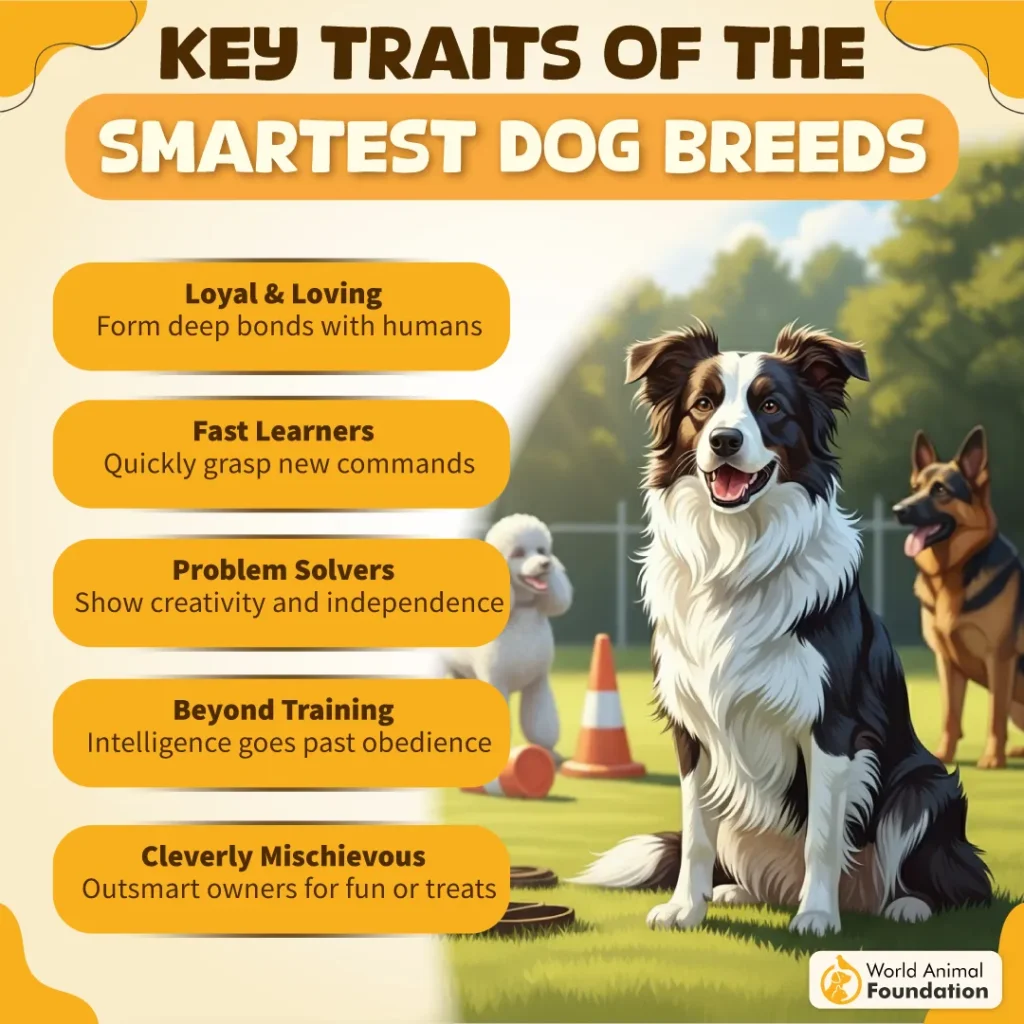
The puzzle was simple: reach the treat without knocking over the container. Some dogs paw at it repeatedly. Others pause, inspect the setup, test an option, and change tactics when it fails. That moment reveals canine intelligence.
Dogs use memory, observation, learning, and problem-solving to handle challenges, while social intelligence helps them read human gestures, attention, and tone. Research has even documented dogs learning labels for individual objects and remembering familiar information over time.
In a home setting, those skills can appear in ways people notice every day. A dog may remember which cabinet holds its food, recognize the sound of a leash being picked up, or learn exactly how to get a family member’s attention. Some breeds are especially well known for these abilities.
Here, you will discover dogs whose sharp minds make ordinary routines more interesting, engaging, and interactive from one day to the next.
Key Takeaways
A simple treat puzzle can reveal just how much a dog is thinking, especially when it pauses, studies the problem, and changes its approach.
Border Collies have taken this kind of learning to an extraordinary level, with one famous dogremembering the names of 1,022 toys.
Poodles, German Shepherds, and Golden Retrievers bring their own impressive skills into everyday life, from reading gestures to remembering routines and solving new tasks.
Keep reading to see how these seven smart dogs turn ordinary moments into little displays of canine intelligence.
Dog Breeds That Show Genius Intelligence in Everyday Life
1. Border Collie
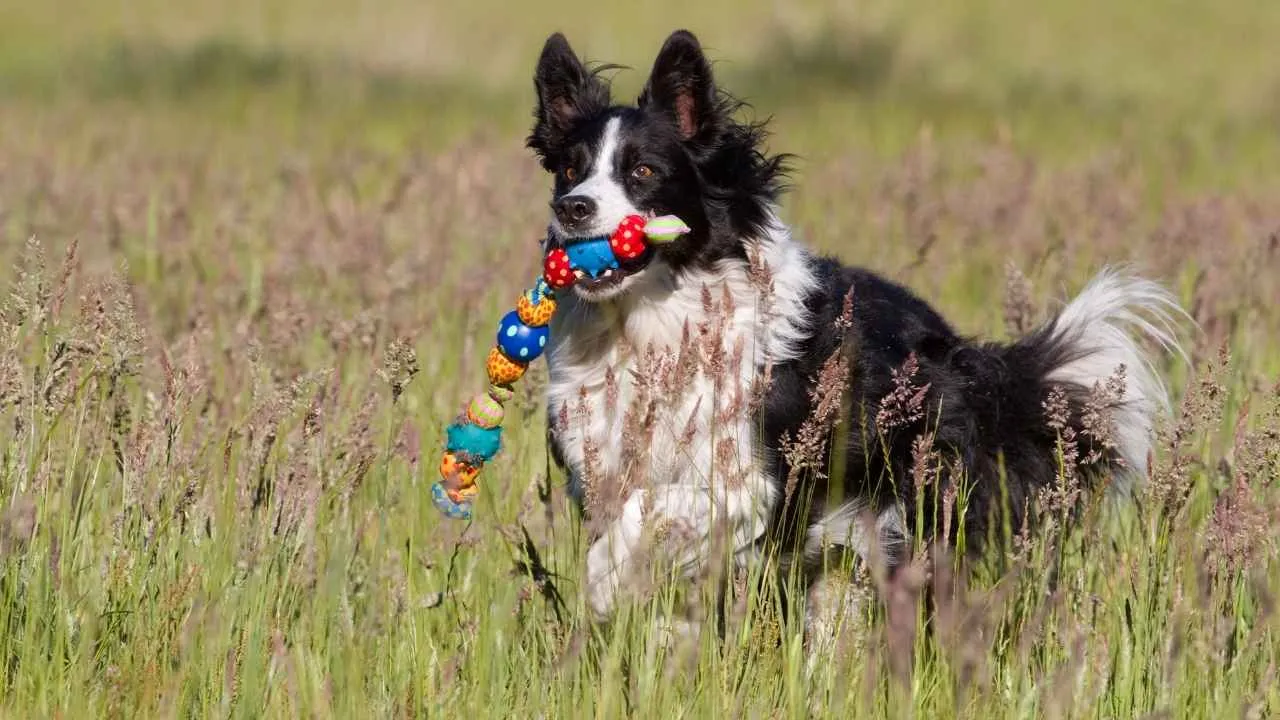
For roughly two centuries, breeders refined the Border Collie for one demanding job, directing livestock from a distance under continuous human guidance.
The Royal Kennel Club states that selection favored dogs able to read subtle signals, adjust quickly when sheep changed direction, and work for hours without losing concentration.
A Remarkable Memory
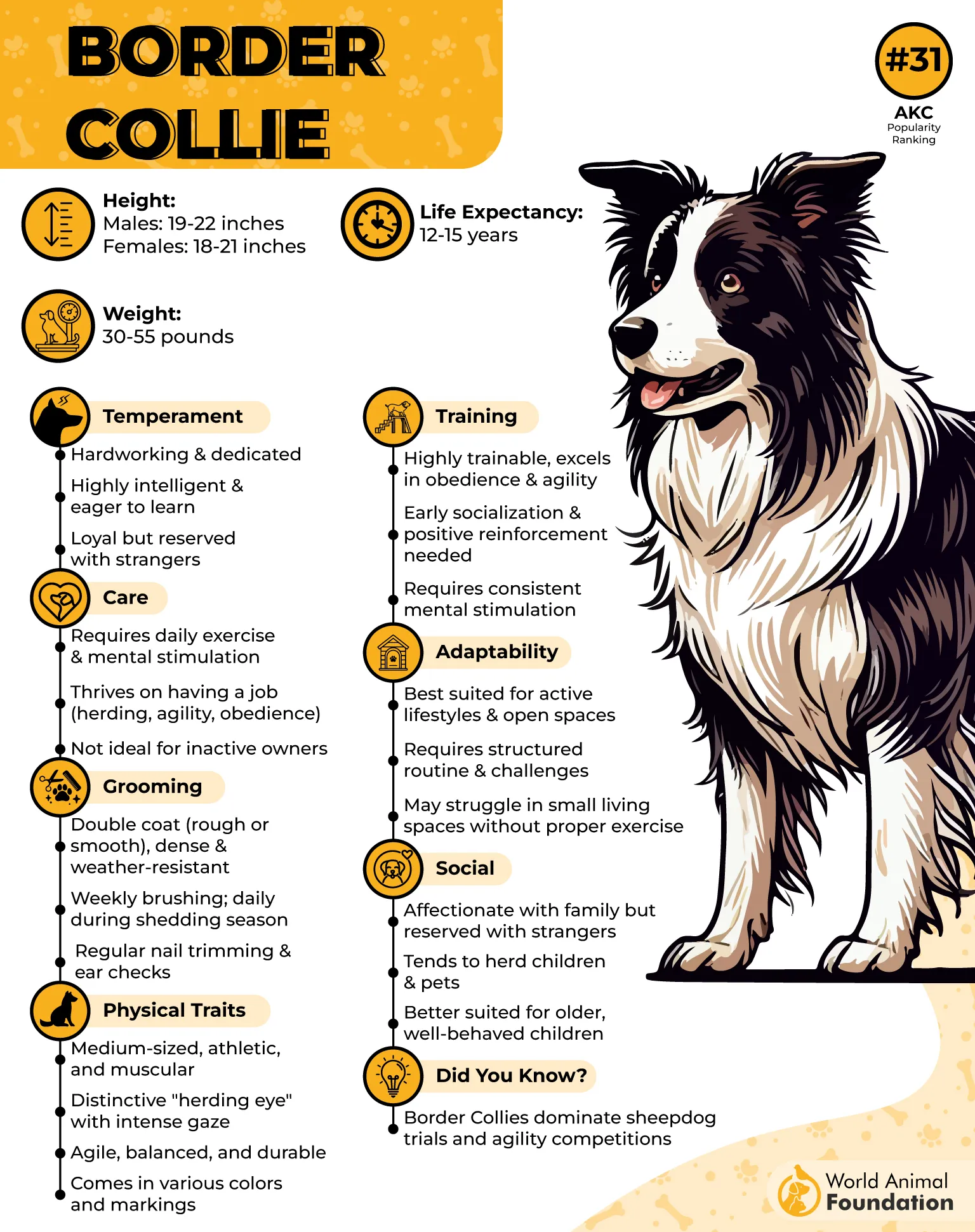
Their cognitive abilities have produced some striking examples, including Chaser, who recognized 1,022 toy names, and Rico, who could learn unfamiliar object names through fast-mapping at a pace comparable to that of a three-year-old child.
These abilities help explain their remarkable learning capacity:
Learns multi-step sequences rapidly
Reads gestures without spoken commands
Transfers learned rules to unfamiliar settings
Brainwork Matters
These intelligent dogs need problems that require actual reasoning, since repetitive physical activity can leave their strongest abilities underused.
Puzzle feeders, scent work, sequential retrieves, and changing routes give this breed fresh problems to solve instead of another round of familiar tasks.
2. Poodle
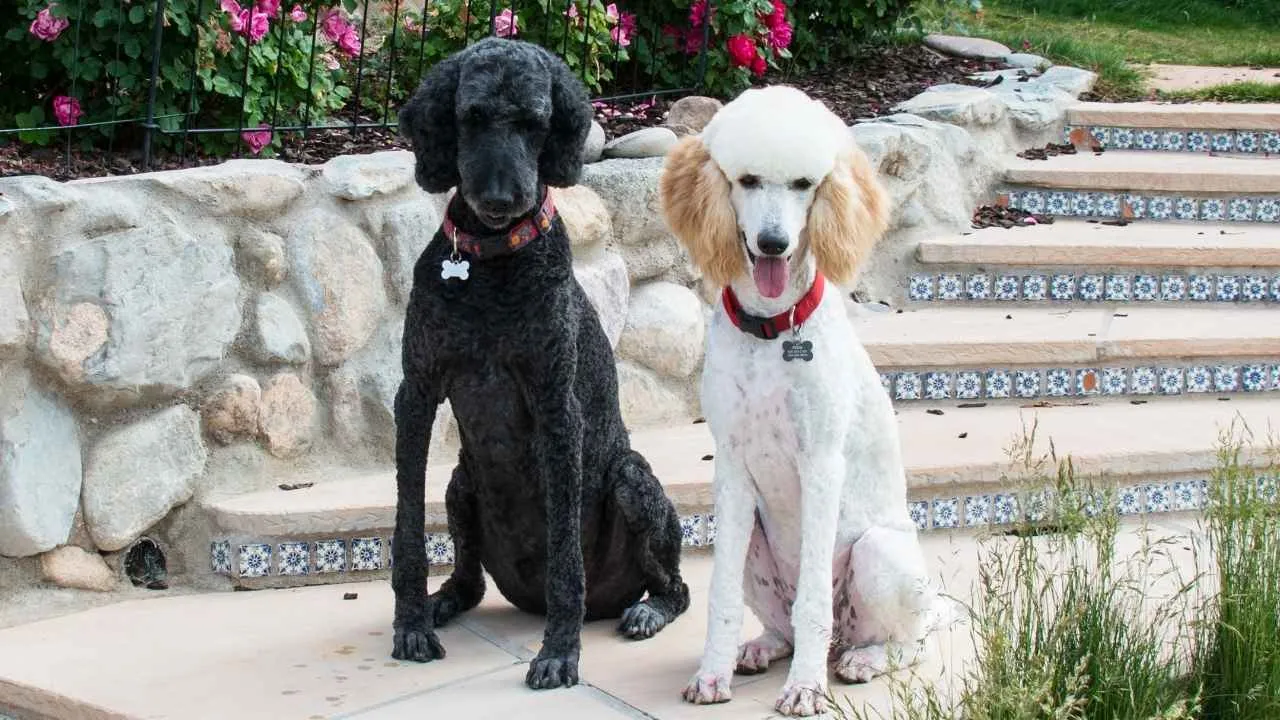
Poodle began as a German duck-retrieving water dog, with its name linked to pudel, a German word associated with splashing in water. Cold-water retrieving demanded more than obedience, requiring scent tracking, swimming, hand signals, and careful responses to a handler.
Intelligence in Action
Poodle ranked second among 138 breeds in Stanley Coren’s 1994 assessment of working and obedience intelligence, behind only the Border Collie. That ranking applies across Standard, Miniature, and Toy Poodles, which share the same breed and cognitive abilities.
These details make that intelligence easier to understand:
Remembers people and commands for years
Can solve problems from indirect clues
Responds strongly to positive reinforcement
Keep the Brain Busy
These intelligent dogs respond well to short training sessions, scent games, puzzle feeders, and command sequences that require several steps in succession.
Dognition data also places the breed above the all-breed average for reasoning, while communication and memory fall closer to moderate levels.
3. German Shepherd
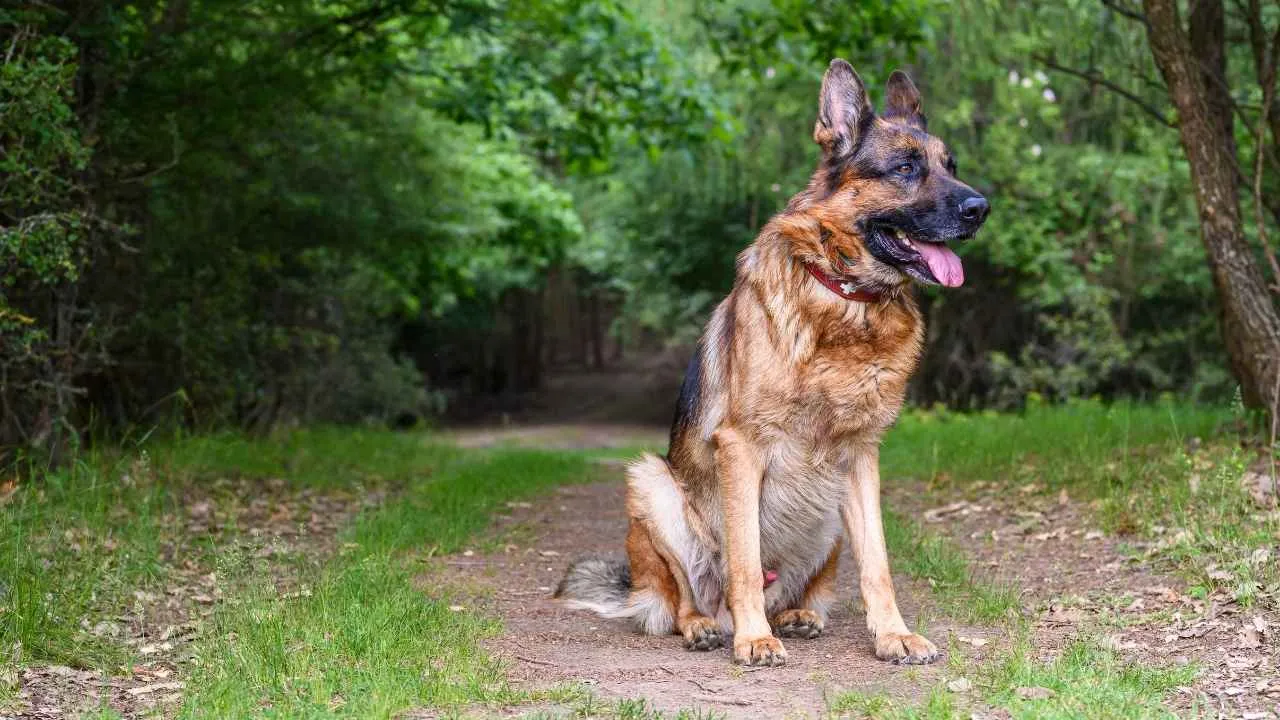
German Shepherd was shaped in Germany by Captain Max von Stephanitz, who registered Horand von Grafrath in 1889 while working to standardize the breed.
Intelligence ranked above appearance in his selection process, with strength, confidence, endurance, loyalty, and a need for little direction also valued.
Quick to Learn
This guard dog can learn a new command in fewer than five repetitions, and trainer surveys have ranked the breed third for canine intelligence.
One reported measure puts its cognitive ability around that of a 2.5-year-old child, giving this breed an unusually strong capacity for learning and problem-solving.
These numbers and facts make that ability easier to grasp:
Responds correctly about 95% of the time on the first command
Highly obedient and highly instinctual
Even used as a seeing-eye dog and therapy dog

Intelligence Under Pressure
German Shepherds were used during World War I to deliver messages, transport bandages, guard positions, and accompany wounded soldiers.
The AKC adds that their quick learning and obedience later helped open doors to roles in police work, service work, tracking, search and rescue, and therapy.
4. Golden Retriever
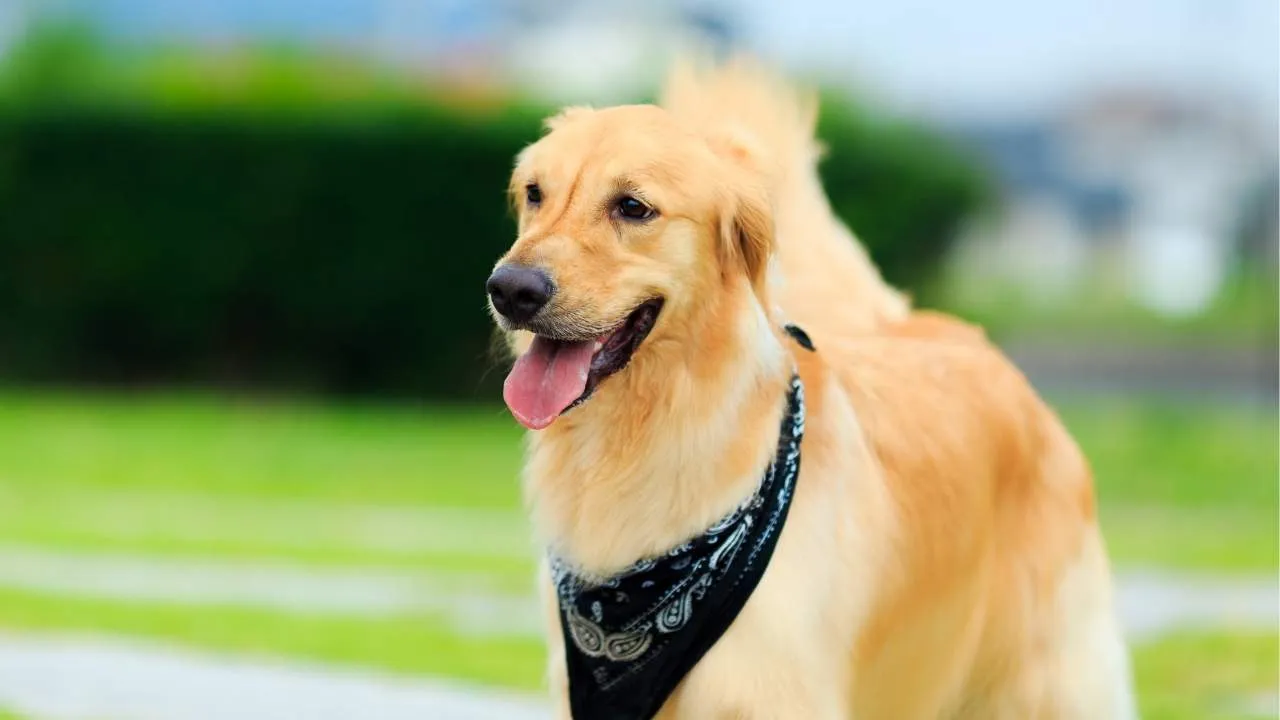
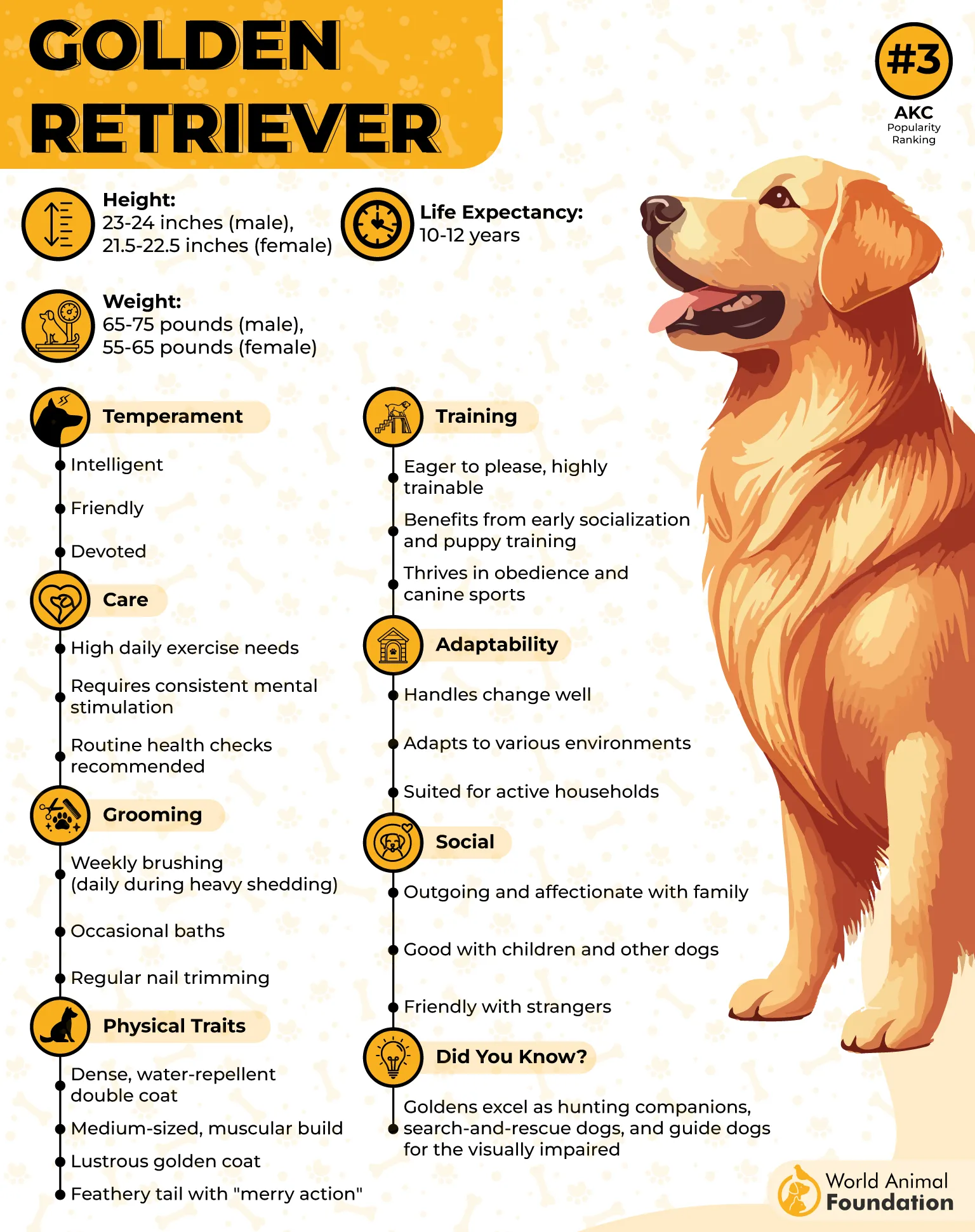
Golden Retriever originated in 19th-century Scotland for retrieving waterfowl across rough ground, a job that demanded more than a good nose. The work required remembering a mark, following a handler’s direction, and bringing the bird back without losing focus along the way.
Intelligence in Action
This breed ranks fourth in Stanley Coren’s assessment of canine intelligence, with its abilities appearing across guide work, search and rescue, detection, and performance tasks.
Its unusually strong attention to human cues also helps it respond to pointing, eye direction, and subtle gestures with impressive consistency.
These specific abilities put that intelligence into practice:
Guides around traffic and intersections
Tracks missing people through scent trails
Learns complex tricks and routines
A Human-Focused Mind
This smartest dog breed often looks to people when working through a challenge, combining moderate problem-solving ability with strong responsiveness to direction.
Its memory for trained routines and marked locations also fits naturally with retrieving work, where accuracy matters from the first search to the final delivery.
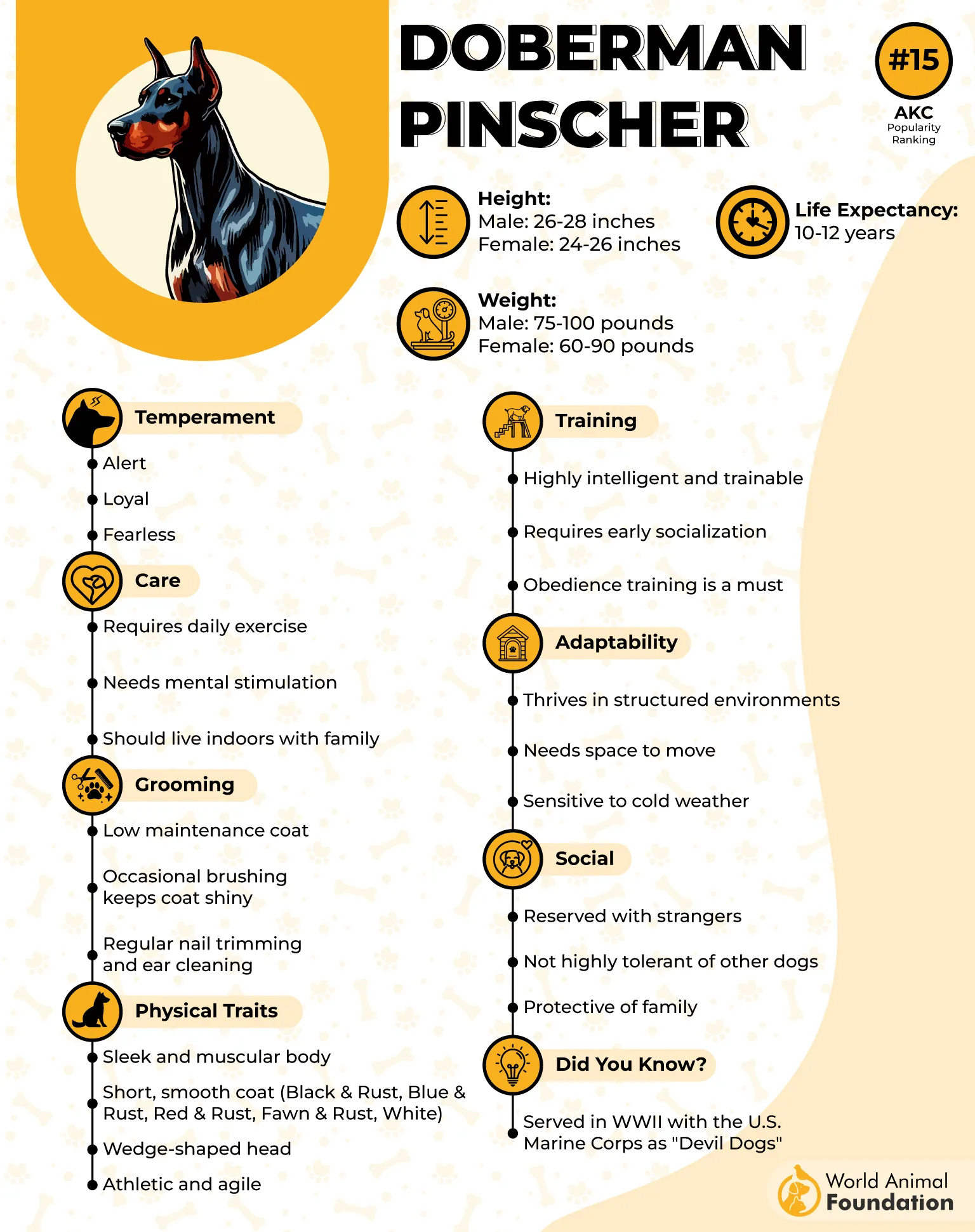
5. Doberman Pinscher
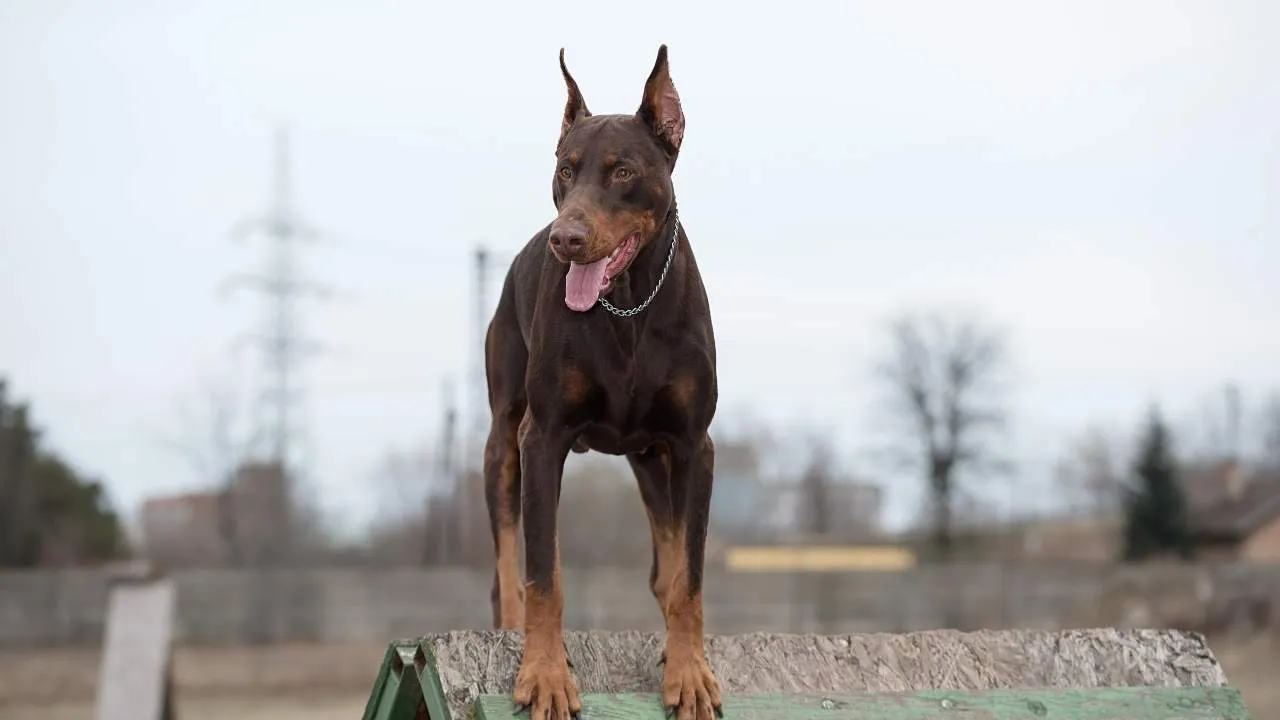
Louis Dobermann, a German tax collector, developed the Doberman Pinscher in the late 1800s to offer protection during his rounds and companionship at home.
The exact mix behind the breed remains uncertain, with old shorthaired shepherds, Rottweilers, German Pinschers, and Black and Tan Terriers among the proposed influences.
Intelligence in Action
Dobbies ranks fifth worldwide for working and obedience intelligence, with the ability to learn commands in fewer than five repetitions. Its intelligence also includes independent problem-solving and a strong ability to read human emotions and social cues.
That mental range can appear in surprisingly practical ways:
Learns household routines and schedules
Figures out how gates and doors work
Adjusts behavior around different people
Training With Purpose
These intelligent dogs respond best when training remains consistent across everyday situations rather than being limited to formal commands.
Scent games, advanced obedience, trick training, puzzle toys, agility, tracking, dock diving, and bikejoring can give its problem-solving ability useful work.
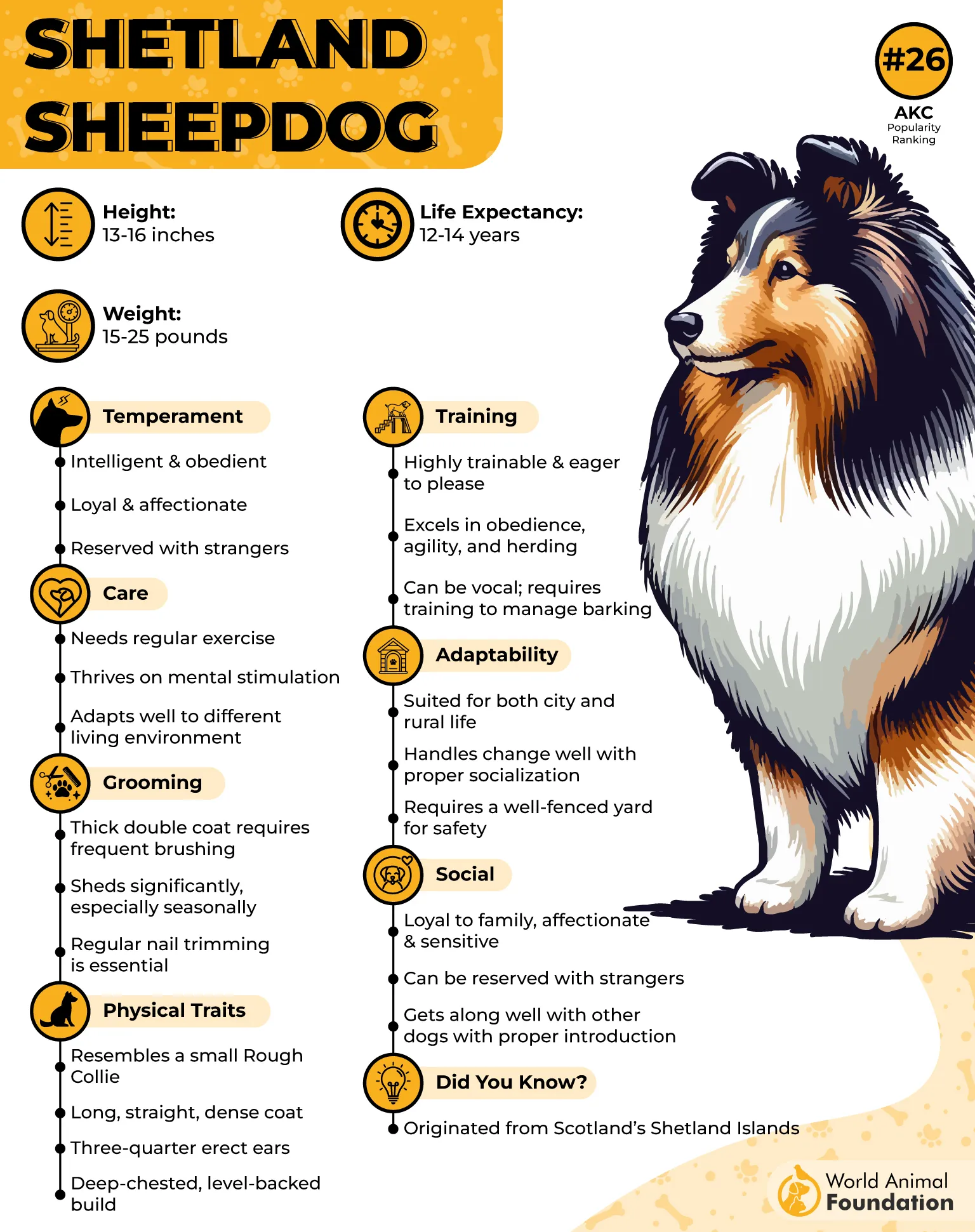
6. Shetland Sheepdog
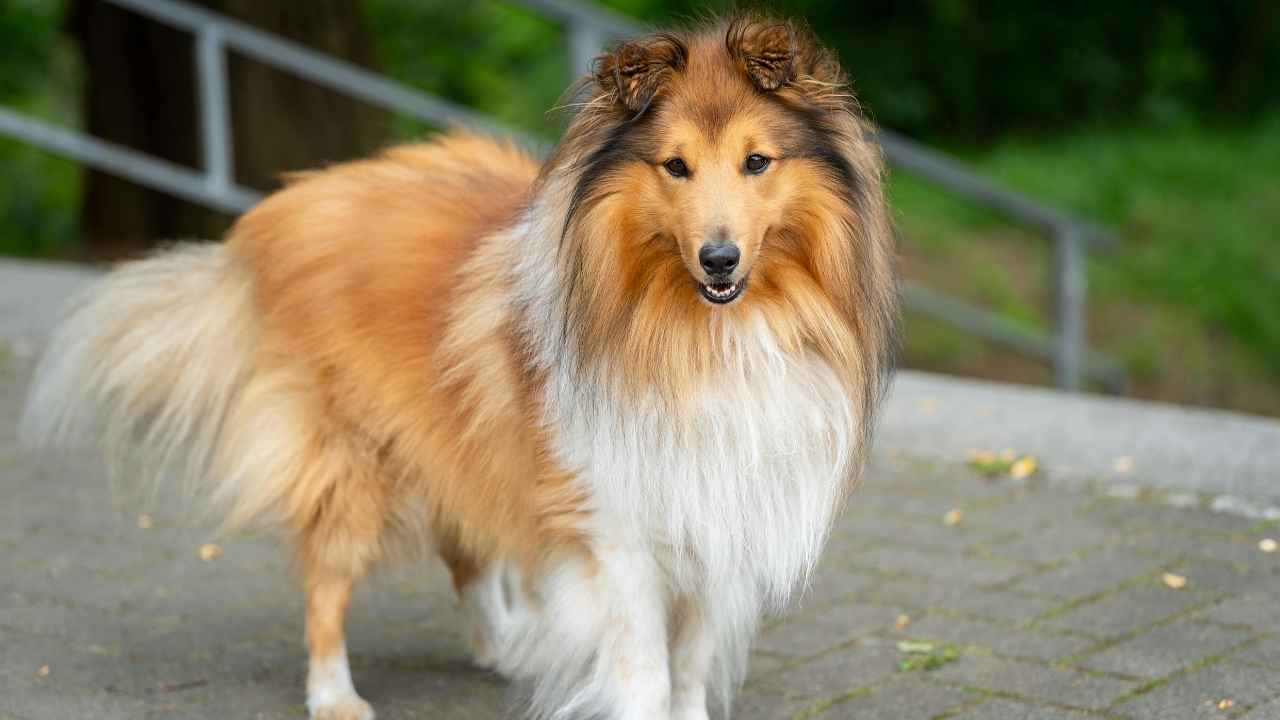
Shetland Sheepdog was originally bred in Scotland during the 1800s, with its roots linked to Scottish herding dogs crossed with Collies. The sparse vegetation supported smaller livestock, so a compact herding dog became better suited to the local conditions and isolated setting.
A Quick Learner
Shelties rank among the three most intelligent dog breeds and can pick up new cues rapidly, often anticipating what a person wants before being asked. That sharp responsiveness makes obedience, agility, rally, and trick training especially engaging for this breed.
These details reveal how that intelligence appears in daily life:
Reads human body language closely
Sensitive to voice tone and household energy
Can form a particularly strong attachment to one person
Athletic Little Herder
Shetland Sheepdog needs more than a casual stroll to use its abilities well, with structured play and training providing useful challenges. Agility work, fetch, light hikes, and problem-solving puzzles give this active herder different ways to put its quick mind to work.
7. Labrador Retriever
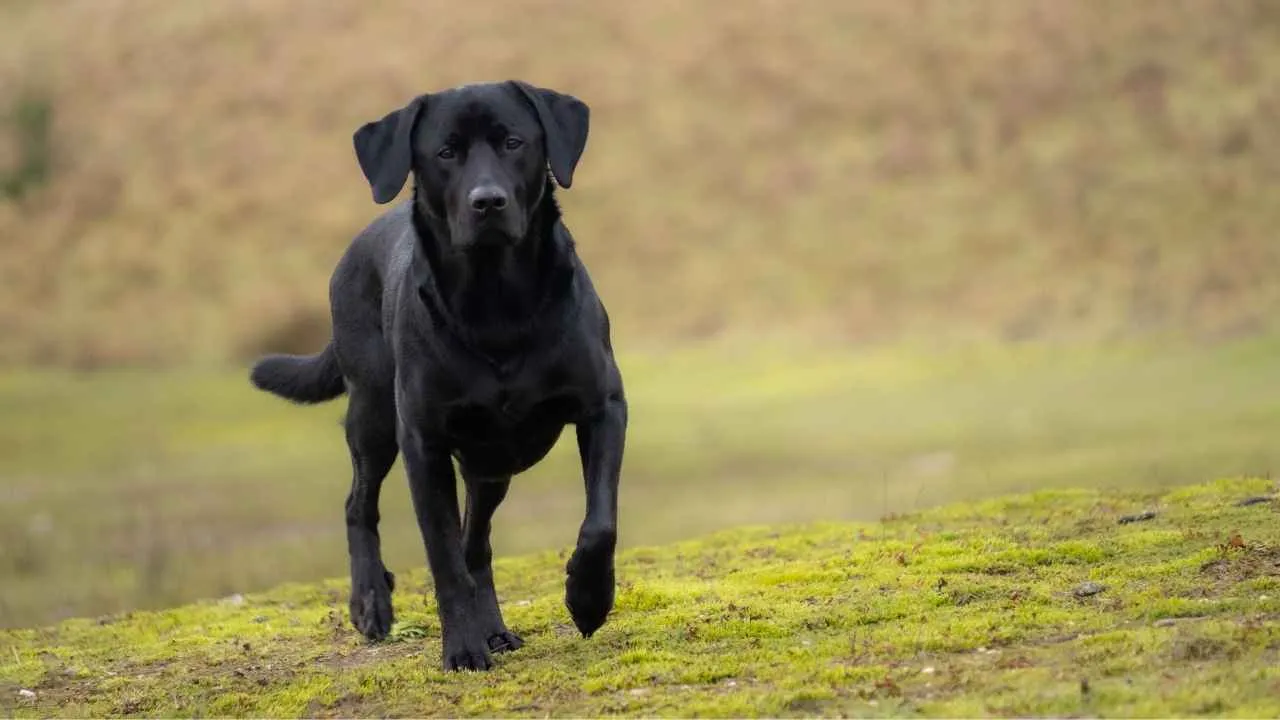
Labrador Retriever descends from the St. John’s water dog, whose work alongside Atlantic fishermen involved retrieving nets and fish from cold water.
Later, gundog work kept that partnership intact, with reliable retrieving and quick recovery after setbacks becoming central to the breed’s working style.
Reading People
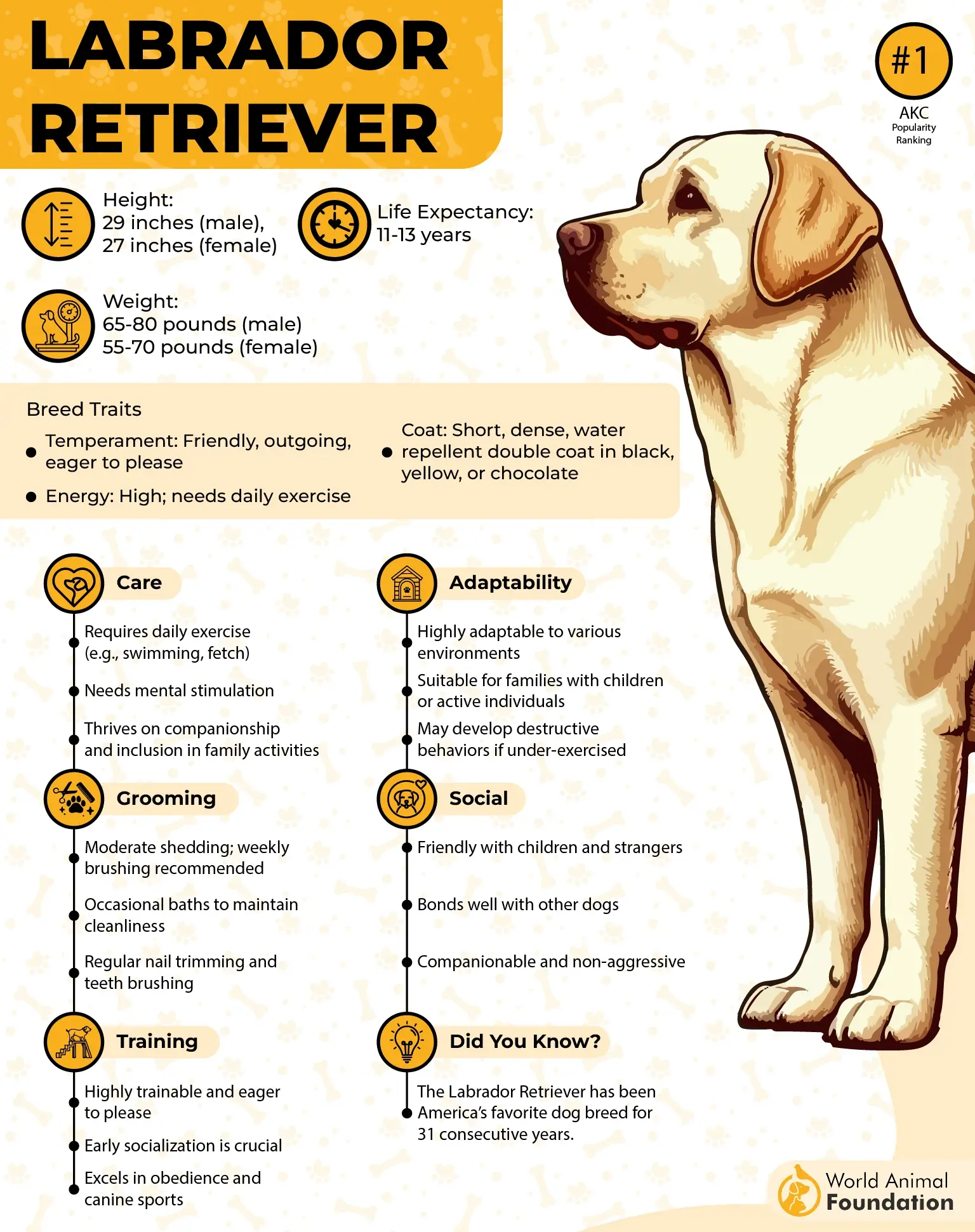
Labs tend to communicate closely with people, following gestures well and checking in during tasks. Their social resilience also helps them work comfortably with familiar people and strangers, while individual dogs can differ considerably in memory and reasoning ability.
Three traits make that intelligence especially practical:
Strong marking ability in field-bred lines
Motivated by food, praise, or retrieving
Comfortable in vehicles and unfamiliar buildings
Flexible Learners
This furry friend can adapt quickly after training mistakes or unfamiliar situations, which makes new tasks easier to introduce.
Some dogs approach problems methodically, while others rely more on enthusiasm, so an individual assessment can shape training more effectively than breed averages.
Conclusion
Genius intelligence in dogs does not always look like solving a difficult puzzle. It can appear when a dog remembers a routine, understands a gesture, learns a new command quickly, or finds another way to reach a goal. Some dogs are easily trained, while others have big brains that rely more heavily on observation and independent thinking.
That difference matters when choosing activities and training methods at home. Mental stimulation should be part of everyday life, especially for dogs that are incredibly smart and become bored with repetition. The right challenges can turn their natural abilities into useful skills, while a gentle temperament makes daily life more engaging for everyone involved.
