




A peaceful household does not necessarily call for a dog that spends every waking hour looking for something to do. Some breeds are naturally better suited to owners who enjoy quiet mornings, leisurely walks, relaxed evenings, and companionship without a demanding exercise schedule.
Their temperaments may lean toward calmness, affection, patience, or simple enjoyment of being near their people.
That does not mean a low-key dog requires no activity. Every breed needs appropriate movement, social interaction, training, grooming, and veterinary care. Puppies and younger dogs may also be considerably livelier than mature representatives of the same breed.
The seven breeds below have long histories as companions, working dogs, or specialized sporting animals, yet each can offer qualities that complement an unhurried lifestyle. Their ideal routines differ, making it important to consider size, grooming, independence, and daily exercise requirements before choosing a companion.
Classic Dog Breeds for the Relaxed, Unhurried Homeowner
1. Basset Hound
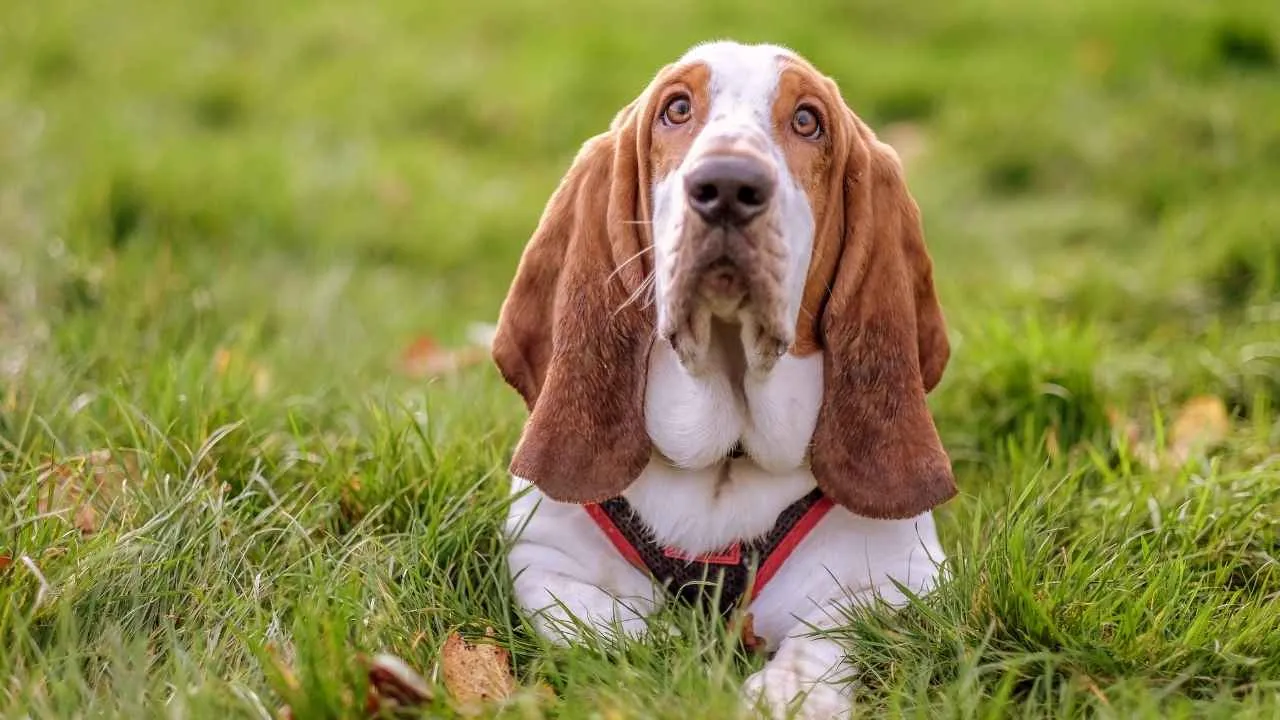
Basset Hounds trace their ancestry to France, where short-legged scent hounds were developed to follow game at a deliberate pace. Their low-slung bodies, powerful noses, and distinctive long ears made them useful for tracking through dense vegetation, as per Britannica. Over time, their appealing appearance and amiable nature helped establish them as beloved household dogs.
Gentle Exercise Routine
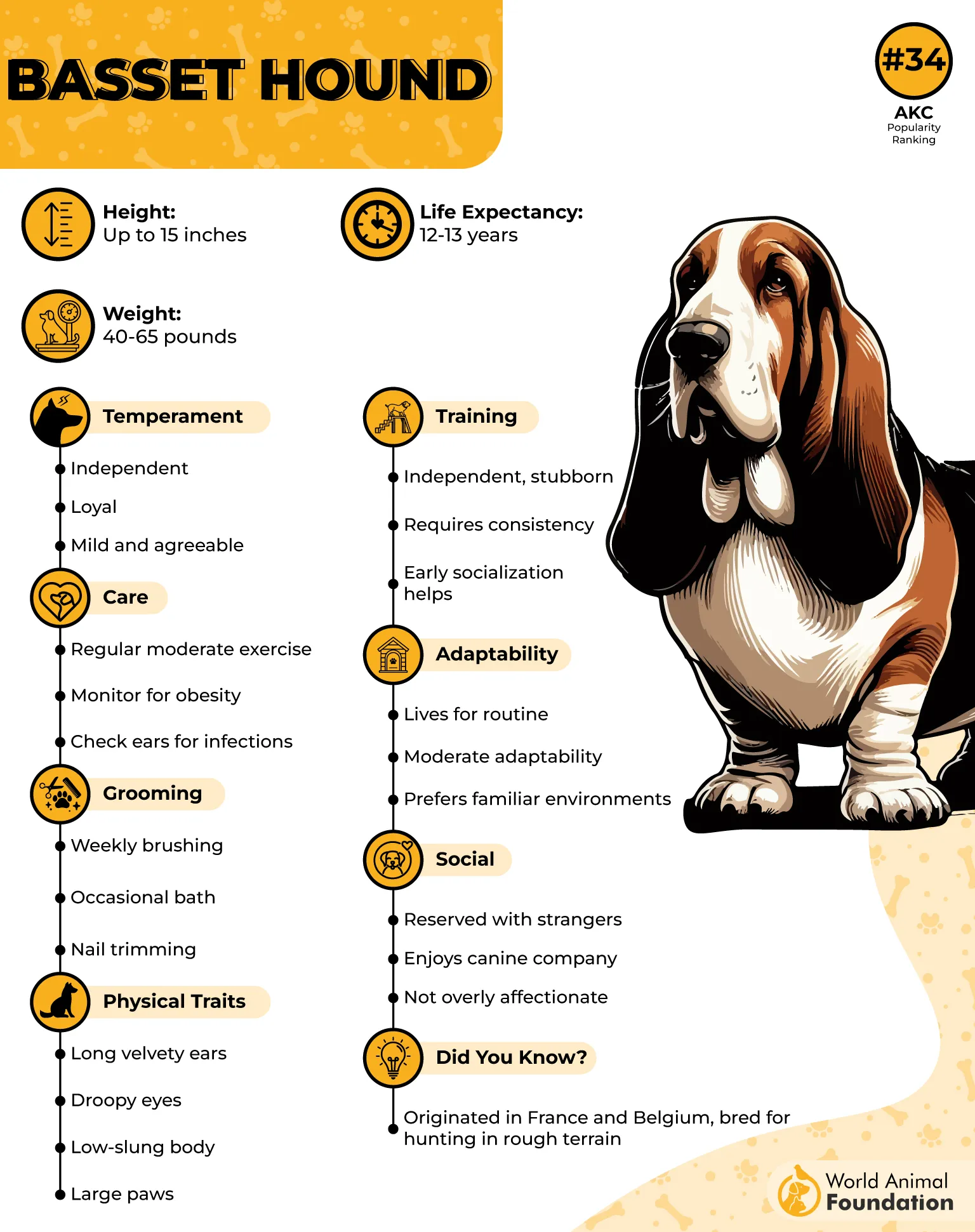
Basset Hounds generally do not need the relentless physical activity associated with high-drive sporting or herding breeds. Regular walks and opportunities to investigate interesting scents can provide valuable exercise without turning every outing into an athletic event. Their owners should still encourage sensible movement because maintaining a healthy weight is particularly important for a long-backed breed.
Easygoing Household Companion
Their relaxed demeanor can work well in a home where leisurely routines are the norm. Basset Hounds often enjoy lounging near their families after exploring their surroundings, although their strong noses can occasionally make them surprisingly determined when an interesting scent appears. Consistent basic training helps keep that independence manageable.
2. English Bulldog

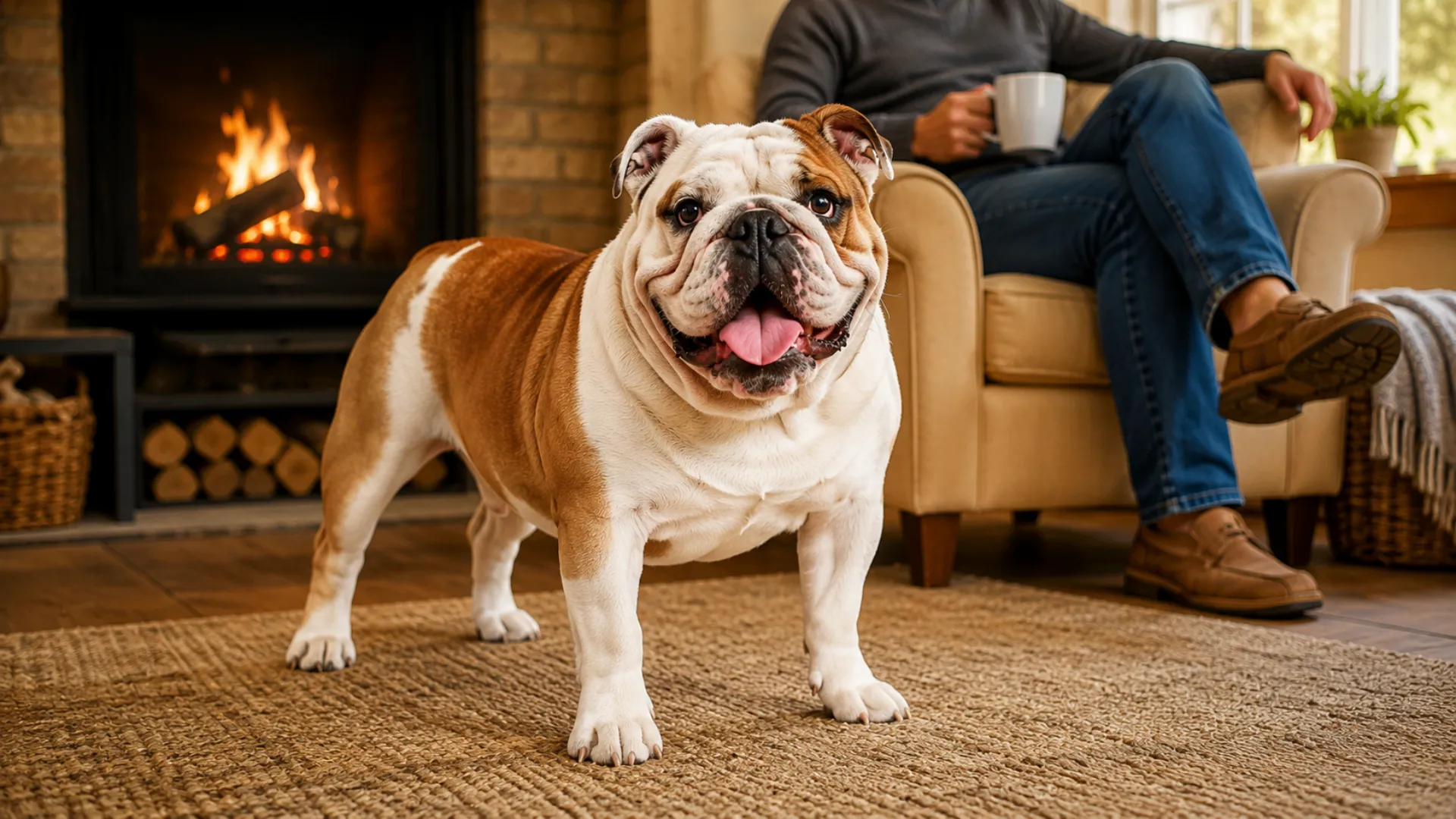
The English Bulldog developed in Britain from early Bulldog-type dogs associated with bull-baiting before that cruel sport was outlawed. Breeders later emphasized companionship and a more manageable temperament, gradually transforming the breed into the familiar household dog recognized today. Its broad head, compact frame, and characteristic expression remain defining features.
Moderate Daily Activity
English Bulldogs generally benefit from short walks and gentle play rather than prolonged strenuous exercise. Their physical structure can make intense activity and hot conditions particularly challenging, so owners should favor cooler periods of the day and provide plenty of opportunities to rest. Exercise should support fitness without pushing the dog beyond its comfortable limits.
Content With Quiet Company
A Bulldog can suit an owner who appreciates a dog that is happy to spend substantial time relaxing at home. These dogs can be affectionate and entertaining without requiring constant physical engagement. Their calm periods should be balanced with companionship, basic training, and appropriate enrichment to keep daily life satisfying.
3. Clumber Spaniel
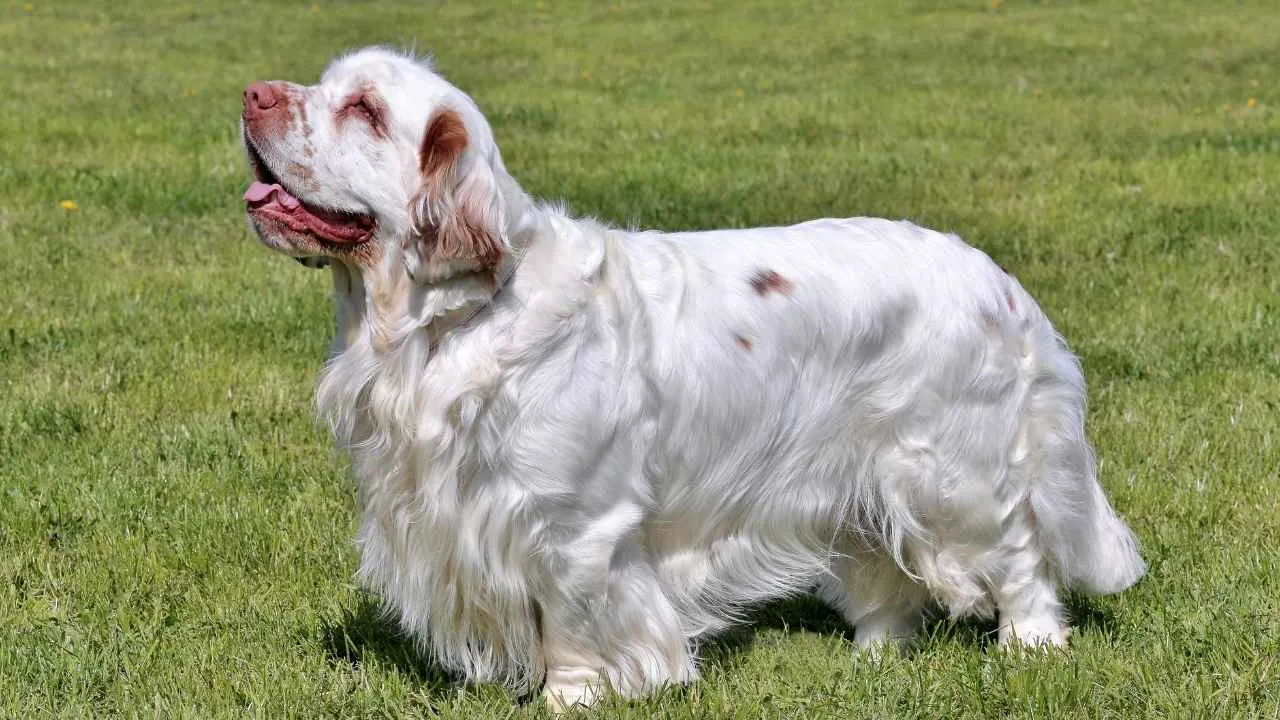
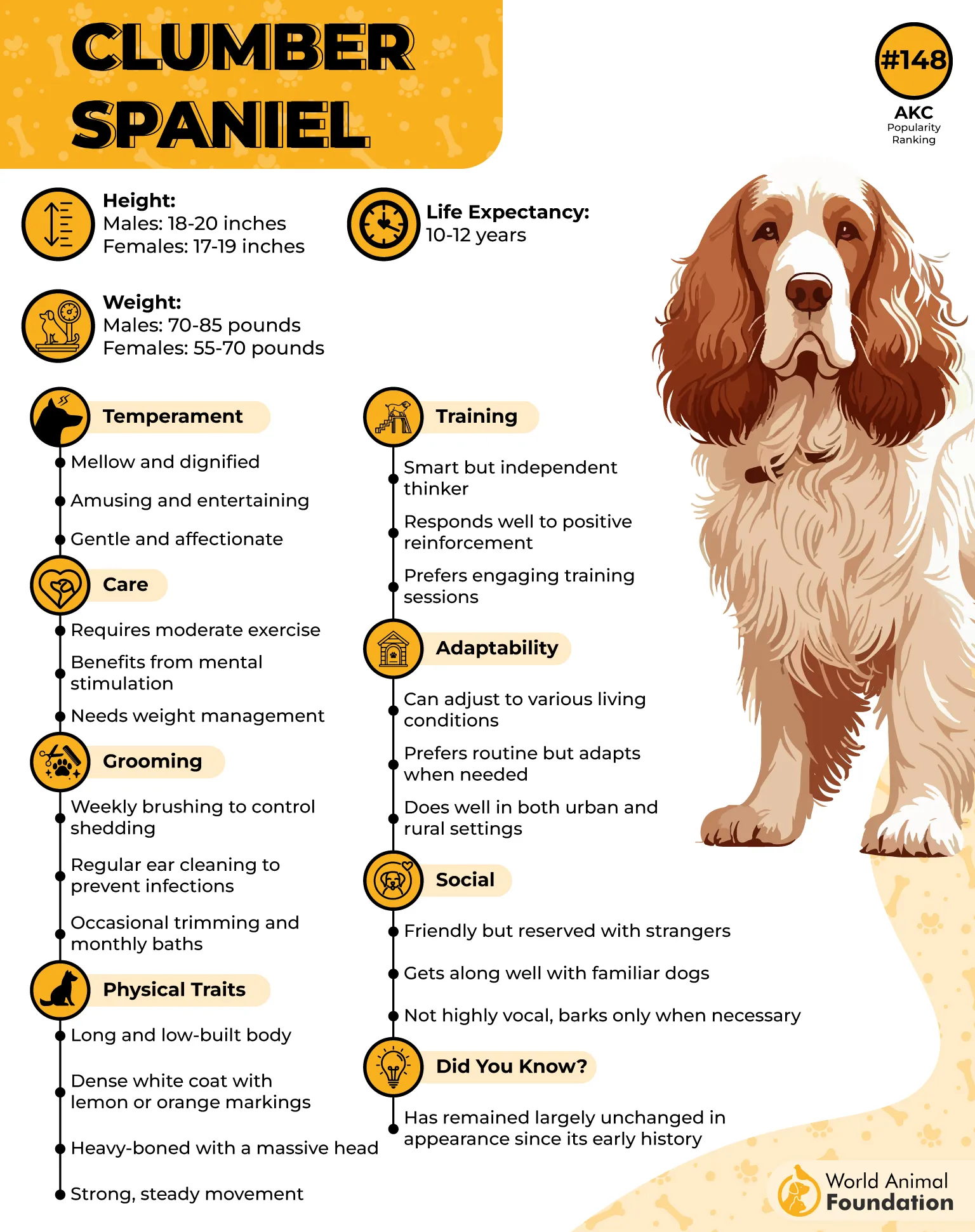
The Clumber Spaniel is one of Britain’s older spaniel breeds, with its development closely associated with aristocratic estates and the Clumber Park estate in Nottinghamshire. Bred as a flushing and retrieving dog, it was valued for its ability to work methodically through cover rather than relying solely on speed. Its substantial build distinguishes it from many lighter spaniels.
Steady Exercise Needs
Clumber Spaniels generally appreciate daily walks and time outdoors but are not typically known for the frantic energy of some working breeds, as per Hill’s Pet. Their heavier construction favors a measured pace, with activities adjusted to age, fitness, and weather. Sniffing opportunities and relaxed exploration can make ordinary walks more rewarding.
Calm and Affectionate Presence
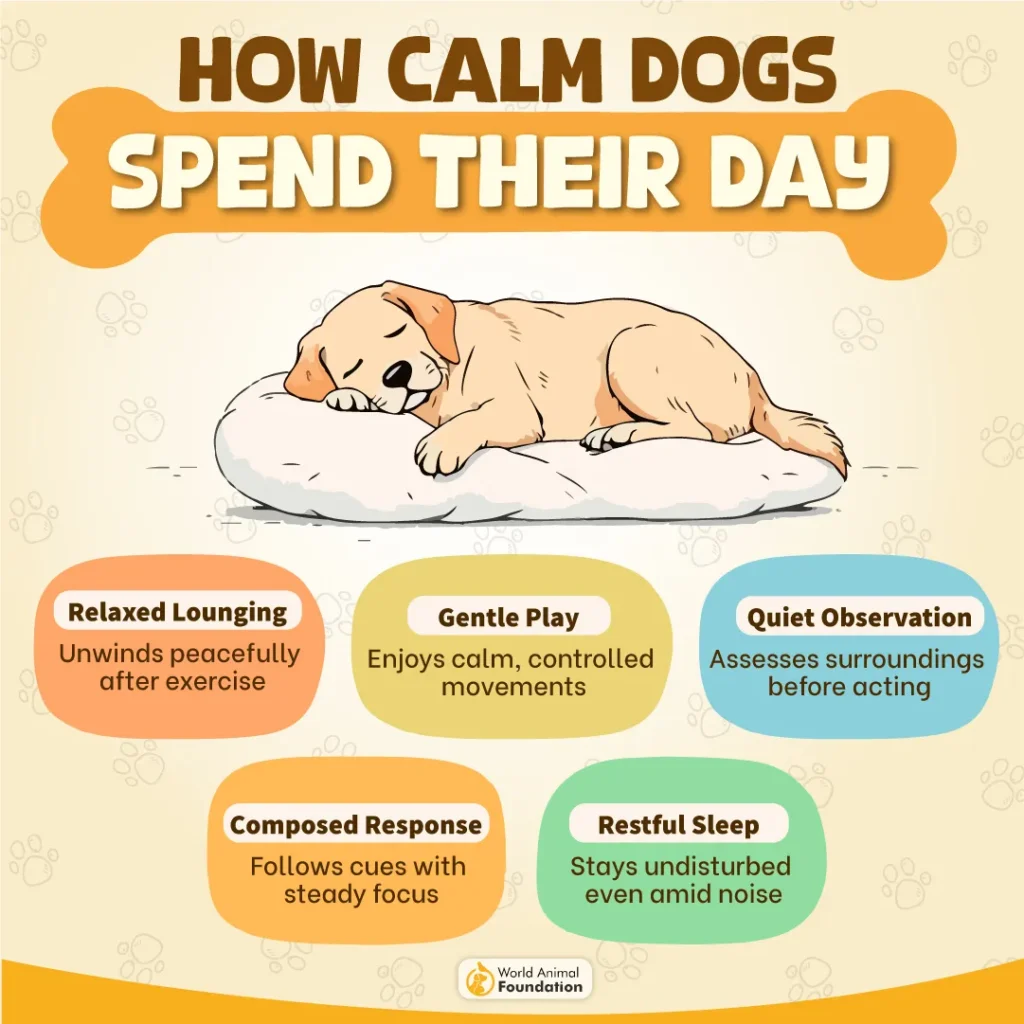
The breed’s unhurried nature can be especially appealing in a settled household. Clumbers often enjoy staying close to their families and can become devoted companions without demanding constant action. Their dense coat does shed, however, so owners should be prepared for regular brushing and routine grooming.
4. Pekingese
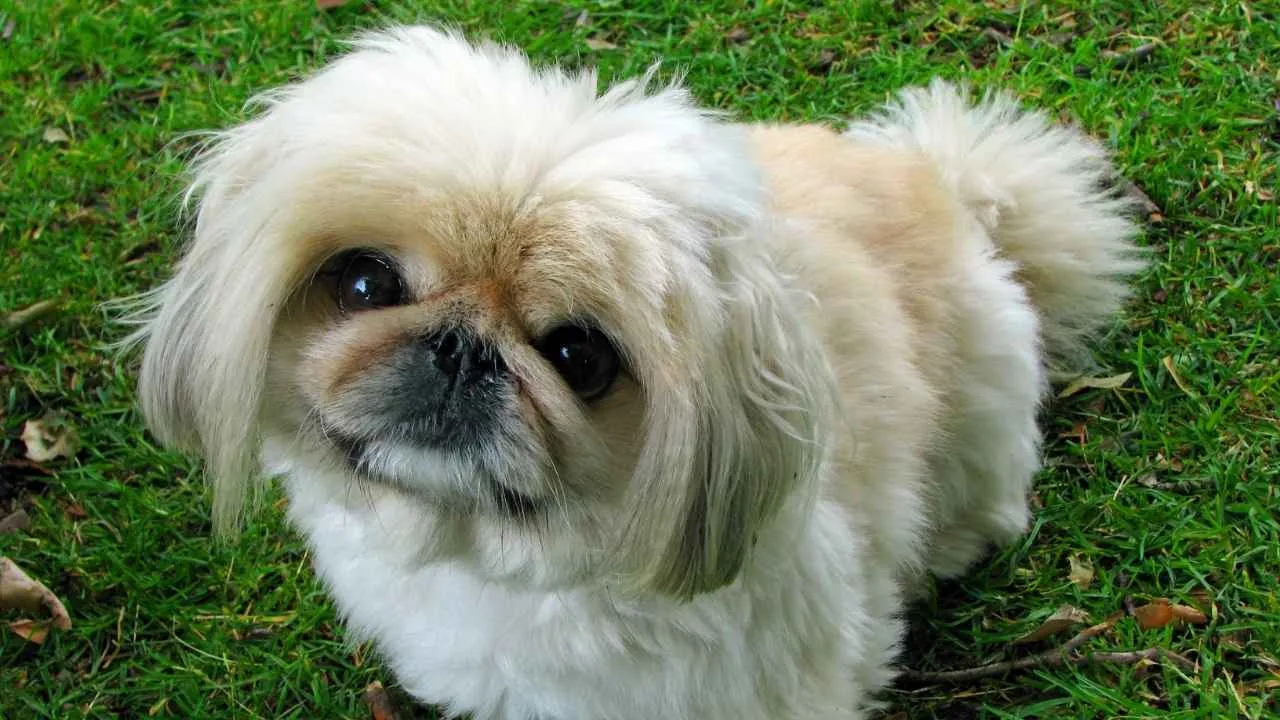
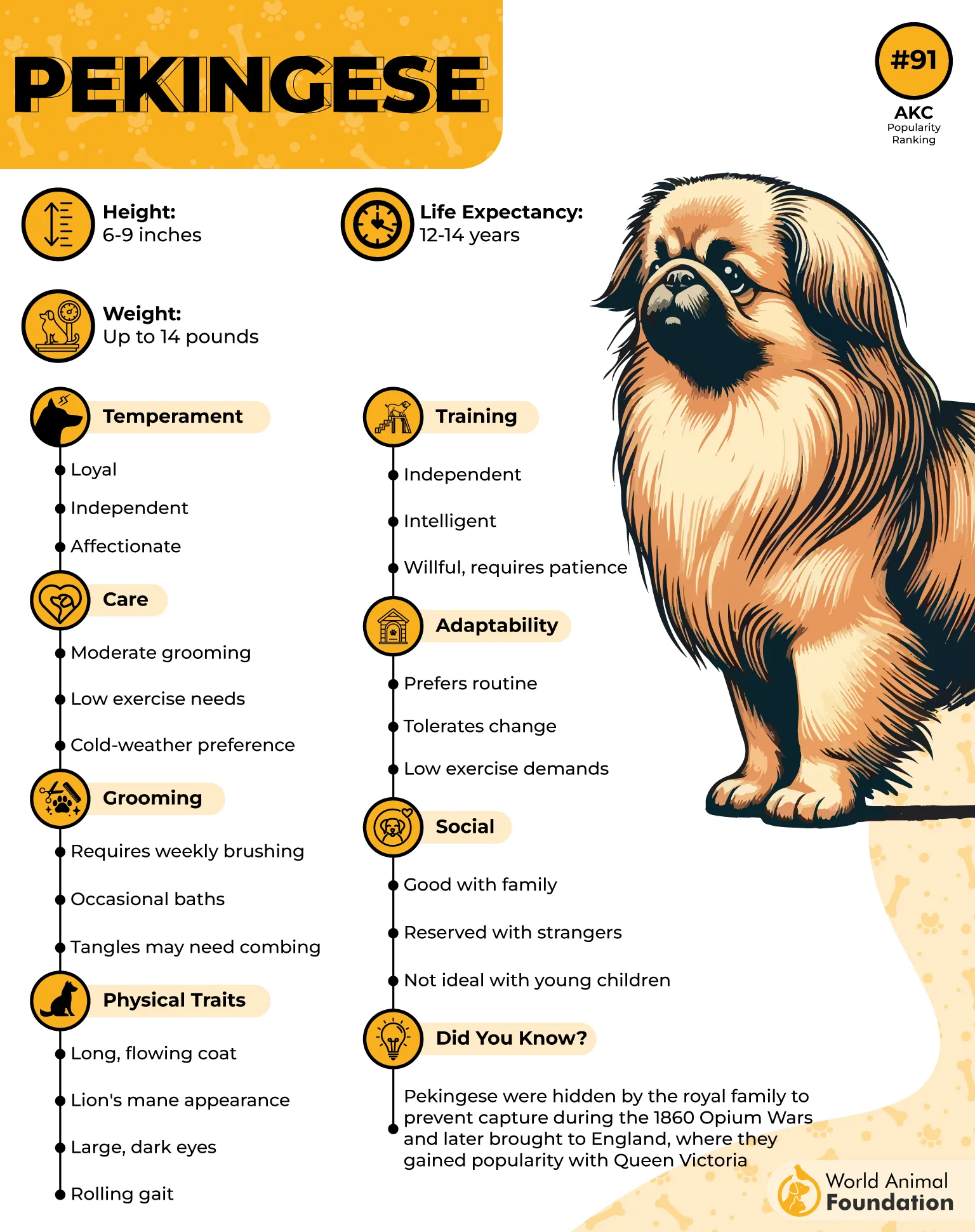
The Pekingese has ancient roots in China, where small lion-like companion dogs were treasured within the imperial court. For centuries, these dogs were associated with Chinese nobility and were bred primarily for companionship rather than strenuous work, as per PDSA. Their distinctive mane, compact body, and confident expression reflect their long history as pampered household companions.
Short, Manageable Outings
Pekingese typically do well with modest daily walks and indoor activity. Their small size makes them practical for owners who prefer gentle outings rather than long-distance excursions. Care should be taken during warm weather because their shortened facial structure can make heat management more difficult.
Independent but Devoted
Despite their tiny stature, Pekingese often carry themselves with considerable self-assurance. They can be affectionate with familiar people while retaining an independent streak that makes them less demanding of constant interaction. Early socialization and patient training can help channel their confident personality into pleasant household manners.
5. Saint Bernard
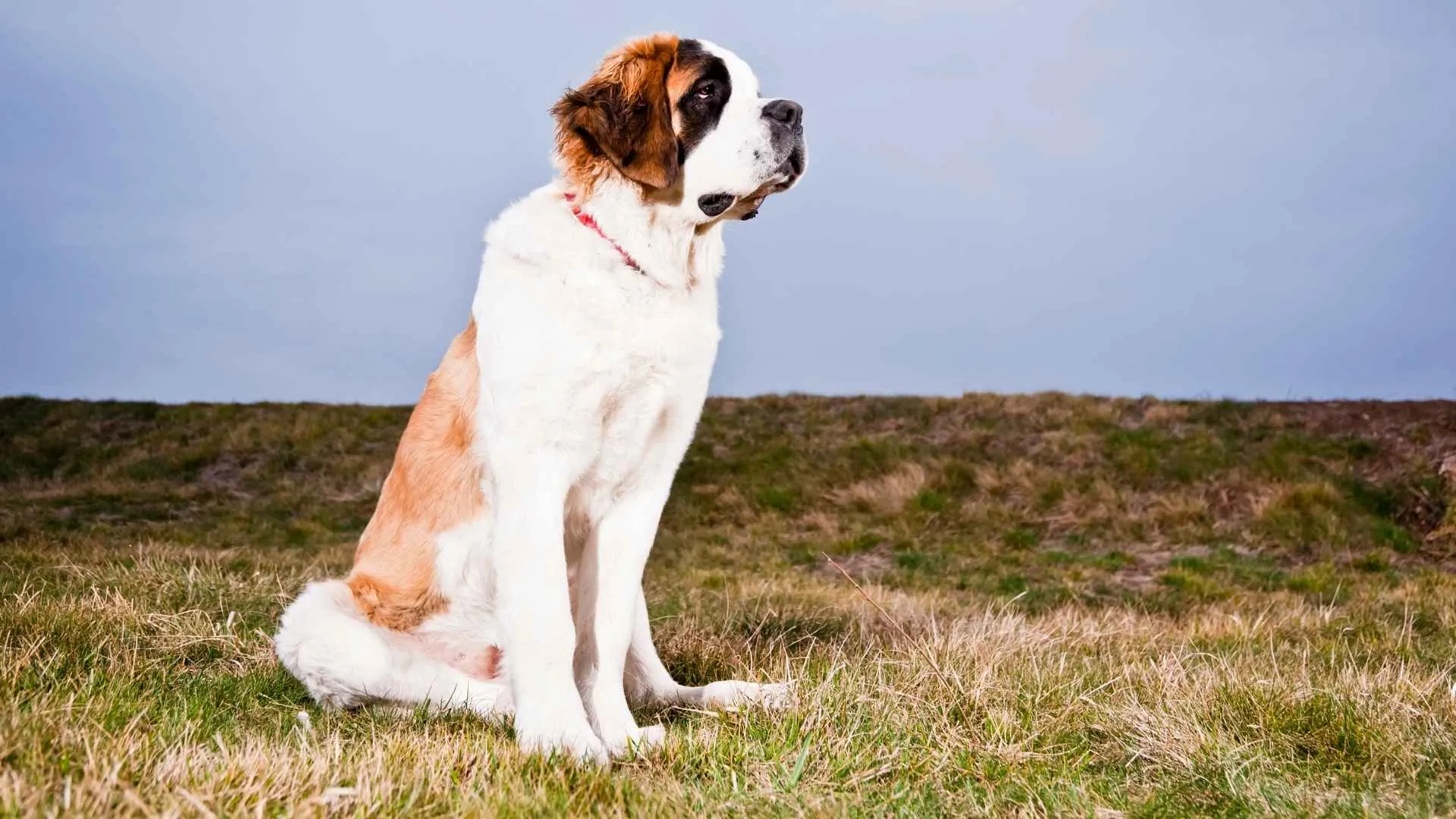
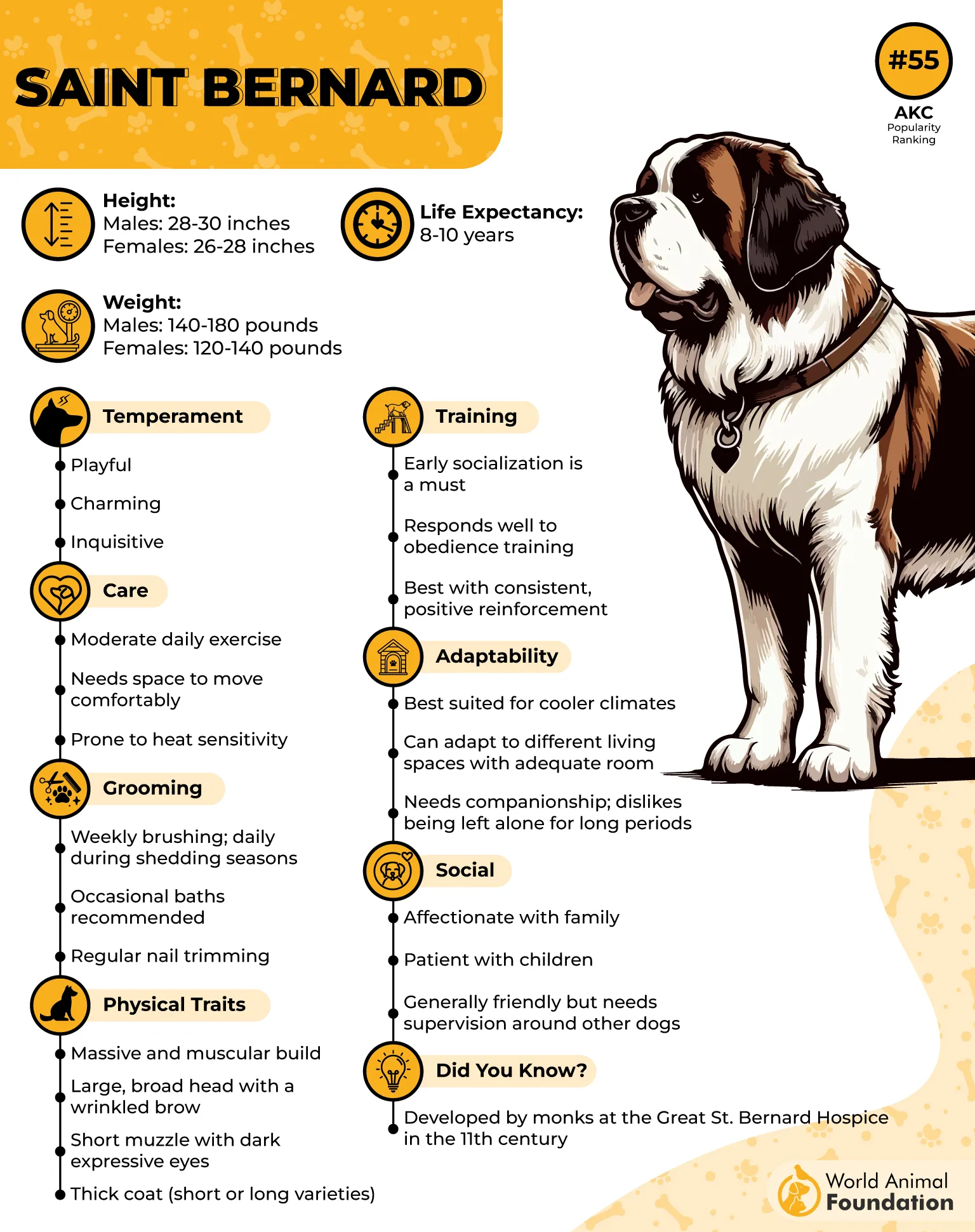
Saint Bernards originated in the Swiss Alps, where monks at the Great St Bernard Pass kept large working dogs associated with the hospice there. These loyal dogs became famous for assisting travelers and helping locate people caught in difficult mountain conditions. Their history as rescue and farm dogs contributed to the strength and endurance of the modern breed.
Leisurely Movement
Despite their imposing size, Saint Bernards do not generally require marathon-level exercise. Regular walks, gentle play, and controlled outdoor activity can provide suitable movement while protecting growing joints and reducing unnecessary strain on mature dogs. Their exercise needs should always be adjusted for age, body condition, and weather.
Patient Giant
Saint Bernards are widely appreciated for their imposing yet often gentle presence. Many are affectionate family dogs that enjoy being around their owners without needing to remain constantly active. Their size does mean that even a relaxed household must accommodate substantial food, equipment, grooming needs, and living space.
6. Cavalier King Charles Spaniel

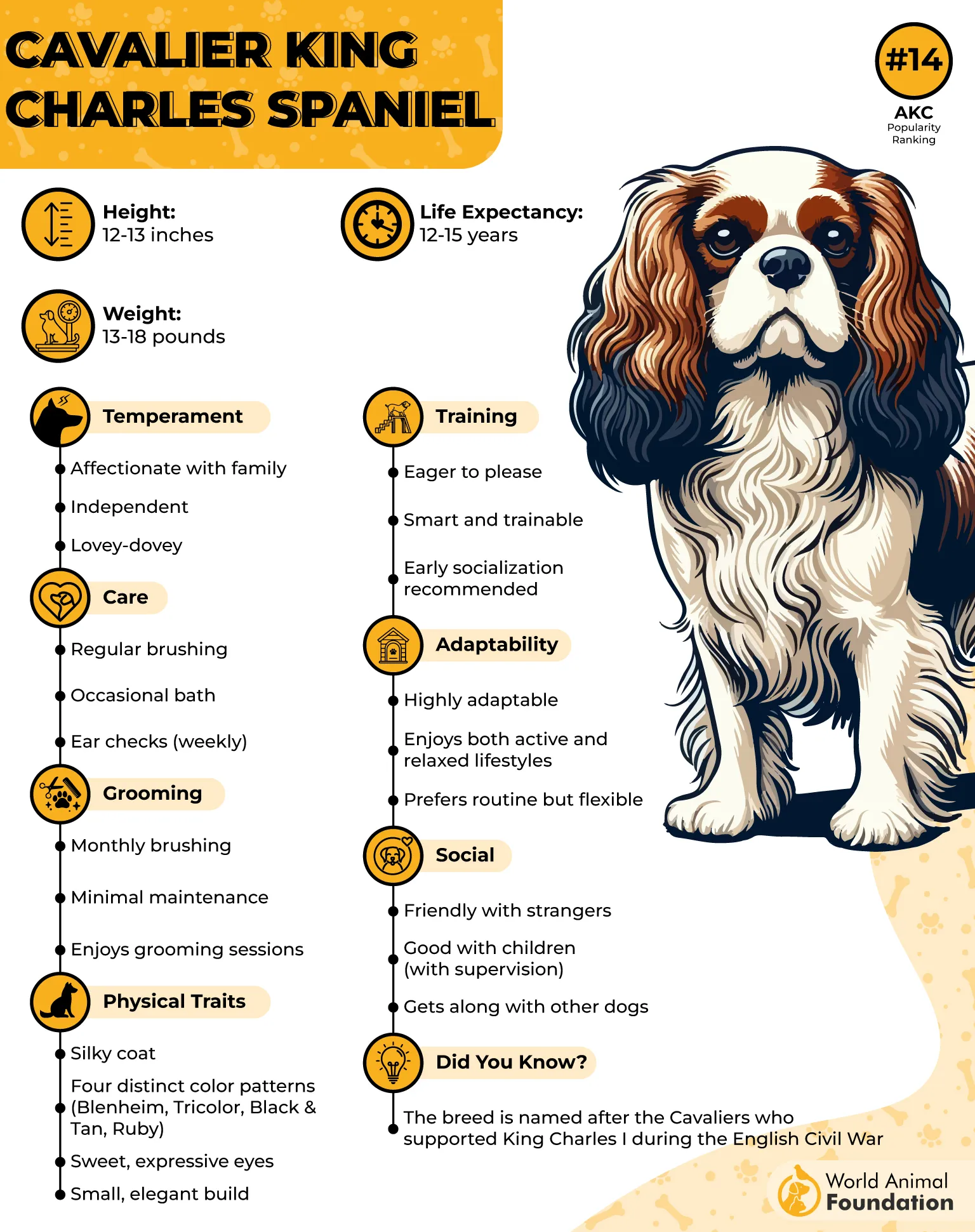
The Cavalier King Charles Spaniel was developed in Britain from toy spaniels that appeared in historical portraits of the aristocracy. Although related to the broader King Charles Spaniel tradition, breeders in the twentieth century worked to recreate the longer-nosed spaniel type depicted in earlier artwork. The result became a popular breed with a strong sporting ancestry beneath its refined appearance.
Flexible Activity Level
Cavaliers can enjoy walks, play sessions, and occasional longer outings, but their compact size makes it easy to provide meaningful exercise without an especially demanding routine. They often adapt well when activity is divided into manageable portions throughout the day. Mental engagement through simple training and games can complement their physical exercise.
Warm and People-Oriented
Their greatest appeal for many relaxed homeowners is their desire for companionship. Cavaliers commonly enjoy staying close to their families and participating in ordinary household routines. Their affectionate nature can make them excellent sofa companions, although owners should remember that social breeds still need interaction rather than being left alone for extended periods.
7. Greyhound
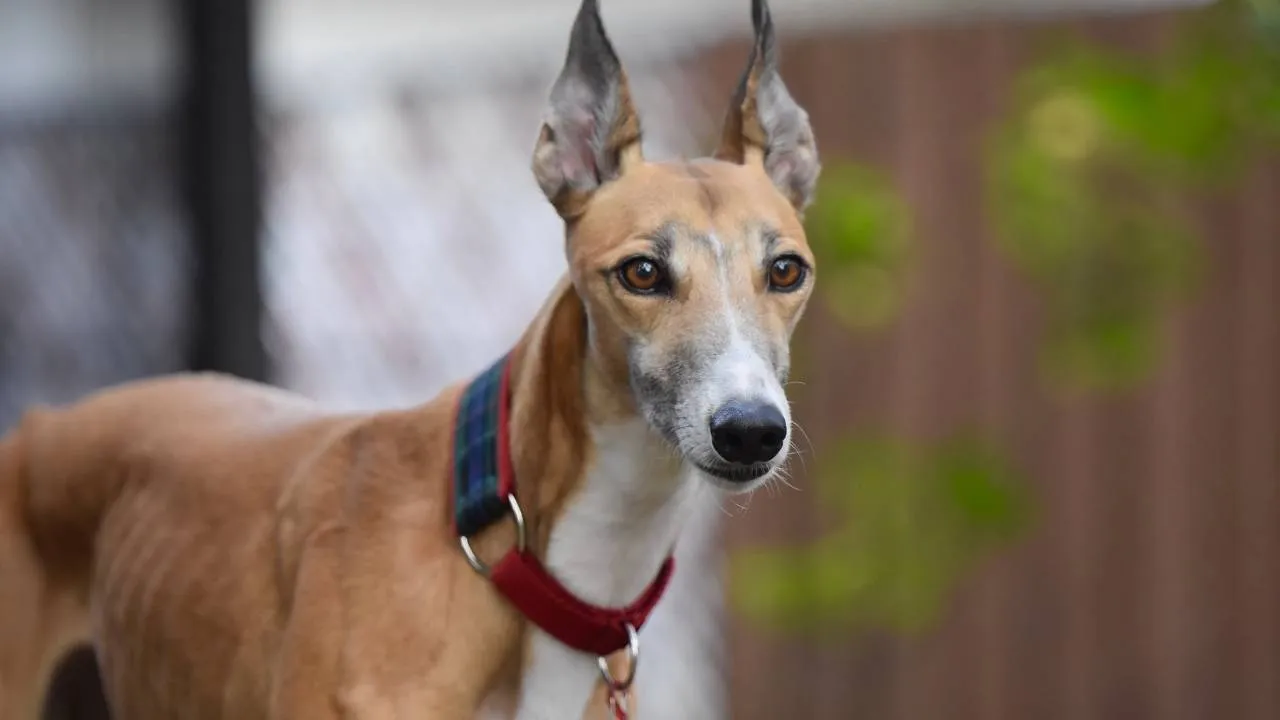
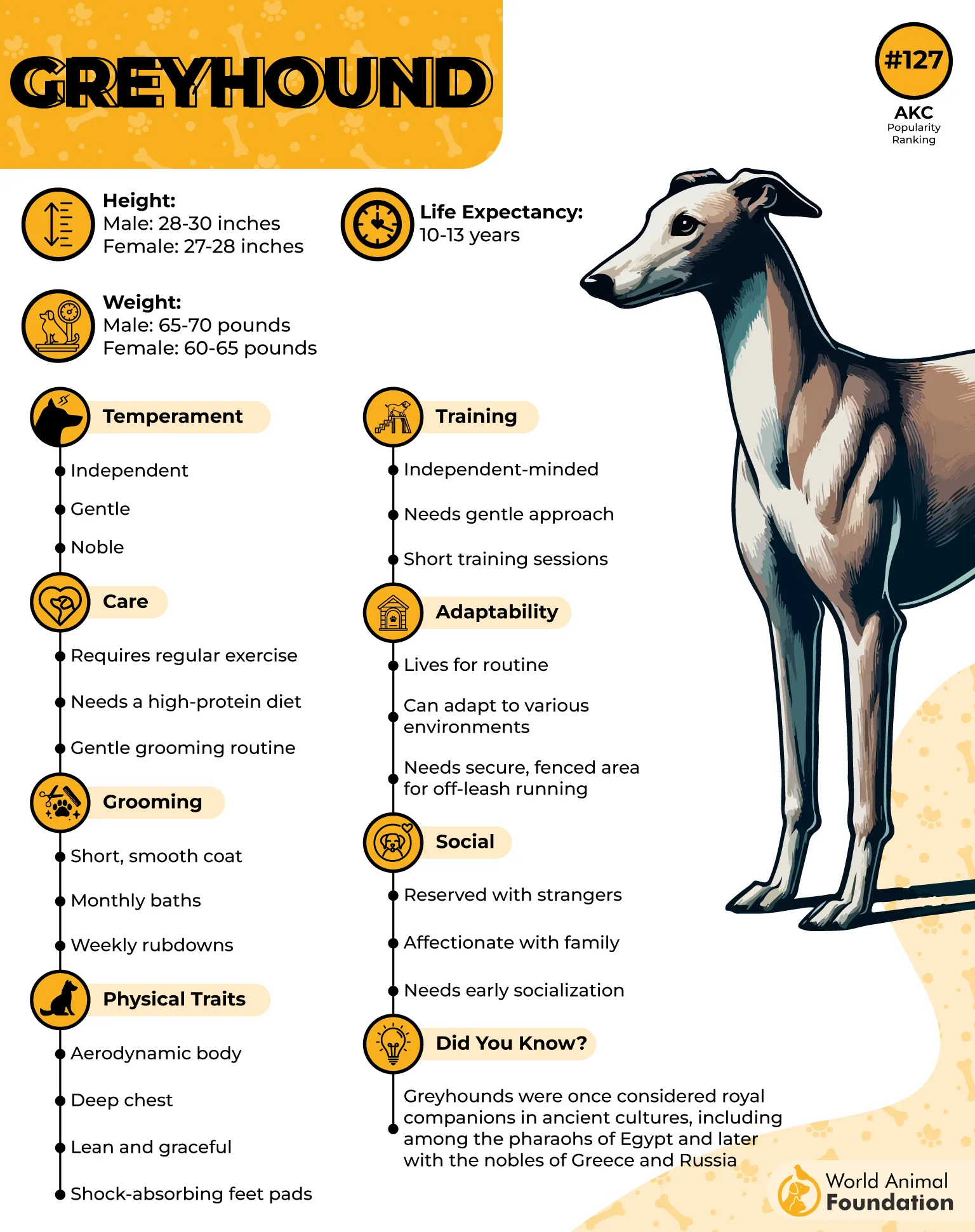
Greyhounds are an ancient sighthound breed whose history stretches back thousands of years. They were developed for hunting by sight, using remarkable speed to pursue fast-moving prey across open ground. Despite their reputation as elite runners, their lives away from the racetrack or hunting field have revealed another side of the breed: many Greyhounds are remarkably content with quiet domestic routines.
Brief Bursts, Relaxed Recovery
Greyhounds can reach impressive speeds, but they do not necessarily need hours of strenuous exercise each day. A few opportunities for brisk movement combined with regular walks can often satisfy their physical requirements. Safe areas are essential when allowing them to run because their chase instinct and speed can make unreliable recall a serious concern.
Quiet Indoor Temperament
The Greyhound’s ability to transition from energetic bursts to extended periods of rest makes it an intriguing match for a peaceful home. Many enjoy curling up in comfortable spots and spending much of their time indoors. Their thin coat and lean bodies also mean that soft bedding and protection from cold weather can be especially useful.
Conclusion
A relaxed lifestyle can be compatible with many different types of dogs, provided the owner’s routine matches the individual breed’s needs. The Basset Hound and Clumber Spaniel offer measured companionship, while the English Bulldog and Pekingese generally favor shorter periods of activity.
Saint Bernards bring a calm presence despite their considerable size, and Cavaliers thrive on close human companionship.
The Greyhound demonstrates that athletic ability does not automatically translate into an endlessly demanding household companion. Its distinctive combination of short energetic bursts and substantial rest can appeal to owners who prefer a quieter rhythm.
Ultimately, choosing a dog for a leisurely home should involve more than appearance or reputation. Consider exercise requirements, temperament, grooming, climate tolerance, training needs, and the amount of companionship the dog expects.
With those factors in mind, a classic breed can become a wonderful fit for a home where life moves at a comfortable pace.
