




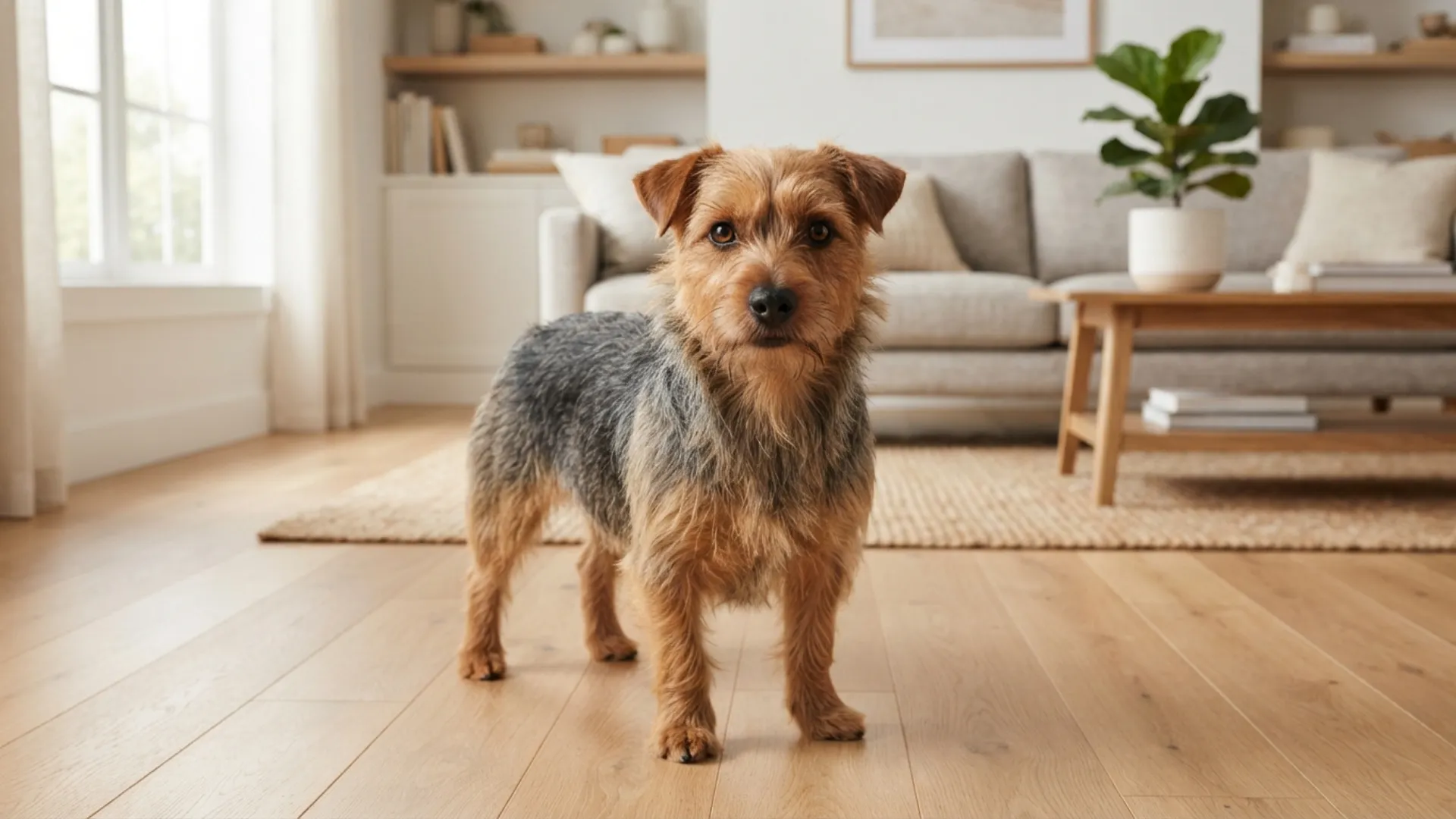
There’s something irresistible about a tiny dog. Those little paws, round faces, and playful personalities can make you wish your puppy could stay that small forever.
The good news? Some dogs naturally remain petite even after they reach adulthood, giving you all the adorable puppy-like charm without the surprise of a much bigger dog later on.
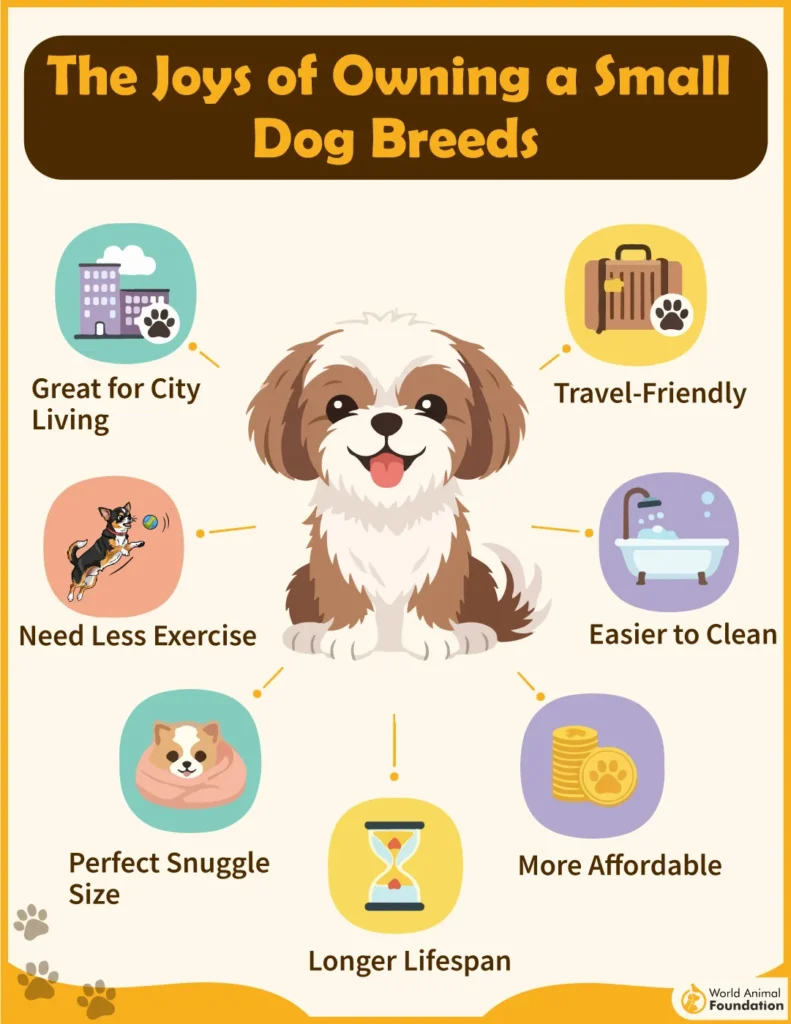
Small dogs can also be a great fit for modern lifestyles. They’re often easier to manage in apartments and smaller homes, and many can happily join you on errands, trips, or cozy days at home.
But being tiny doesn’t mean they’re all the same. Some are energetic and playful, while others are more relaxed and happy to curl up beside you.
In this article, we’ll explore small dog breeds that remain tiny as they grow, along with the personalities, care needs, and lifestyle traits that can help you find the right little companion for your home.
Small Dog Breeds Guaranteed to Stay Tiny Forever
1. Chihuahua
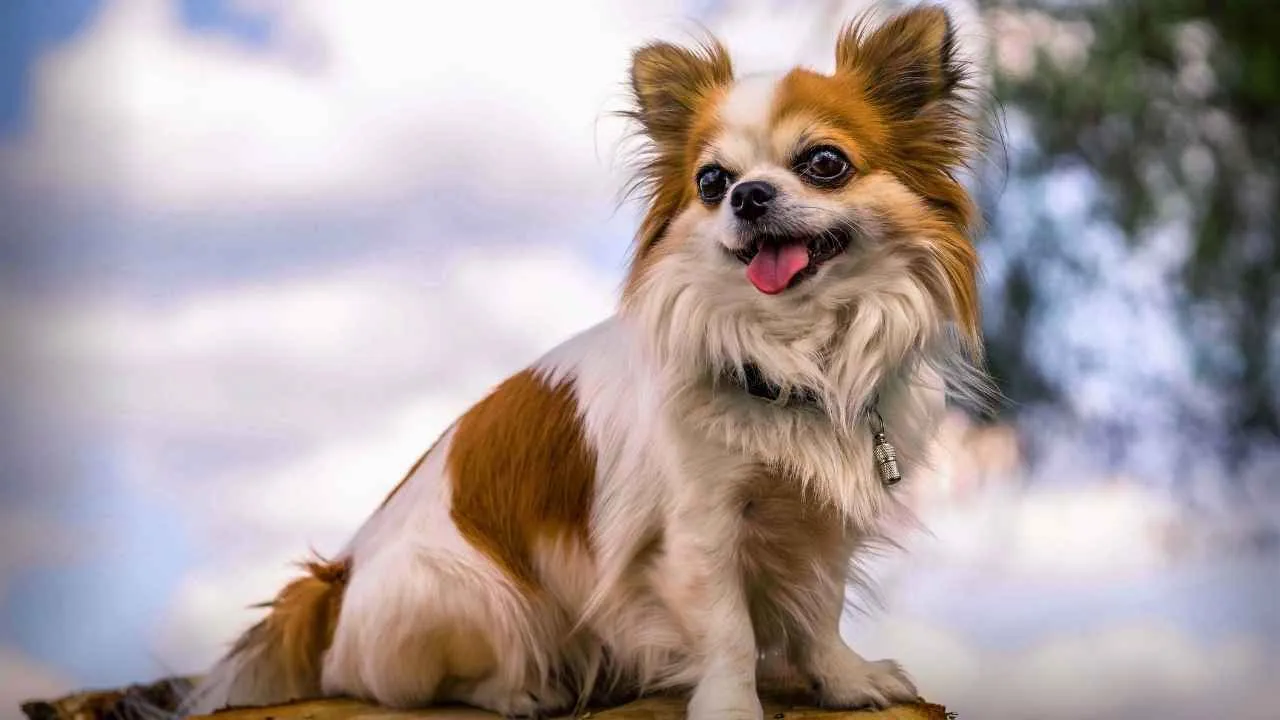
Chihuahuas may be the smallest dog breed, but they have a bold and lively personality. Often called “Chis,” they are loving, loyal, and strongly attached to their families. Many enjoy being lap dogs and staying close to their favorite person.
They can also be confident, alert, and surprisingly brave around much larger dogs. Some are feisty and vocal, while others can be shy or nervous around strangers. With patient training, Chihuahuas can learn household rules and even do well in obedience and agility activities.
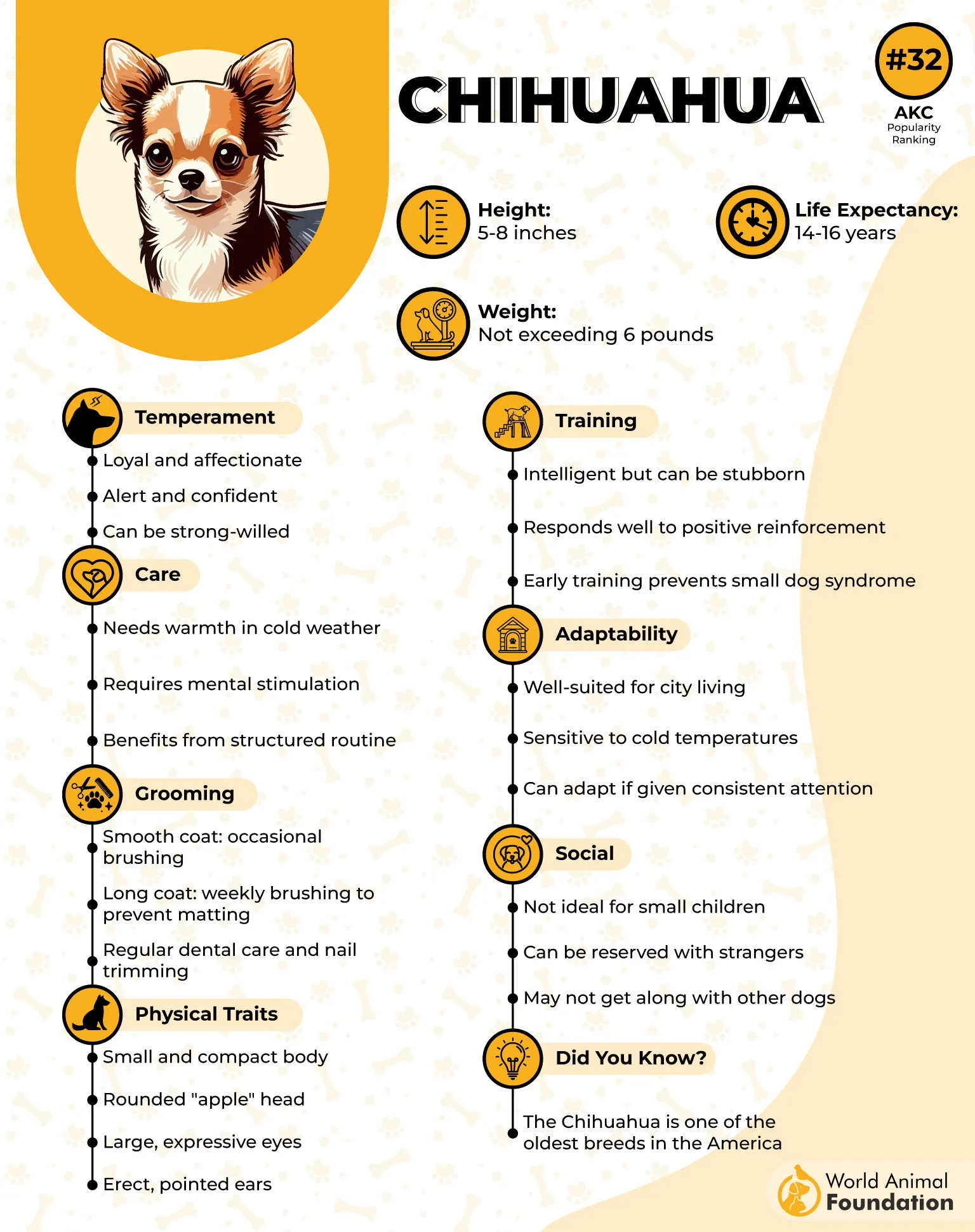
Chihuahua Traits & Background
The Chihuahua originated in Mexico and became more popular as a companion dog in the early 20th century. The American Kennel Club officially recognized the breed in 1904.
According to PetMD, Chihuahuas come in both short-haired and long-haired varieties, with two common head shapes known as “apple head” and “deer head.”
Despite their reputation as lap dogs, these pint-sized pups are energetic and enjoy walks, indoor games, running, and playtime. Their small size also makes them easy to take along on trips and errands.
Caring for Chihuahuas
Chihuahuas can be excellent pets for city living, seniors, and people who want a small companion that does not require a lot of space. They still need daily exercise and mental stimulation to stay happy.
Training and socialization are important because they may bark at unfamiliar people or dogs and can become protective of their owners. They should also be supervised around larger animals and very young children, as their tiny bodies can be easily injured.
2. Yorkshire Terrier
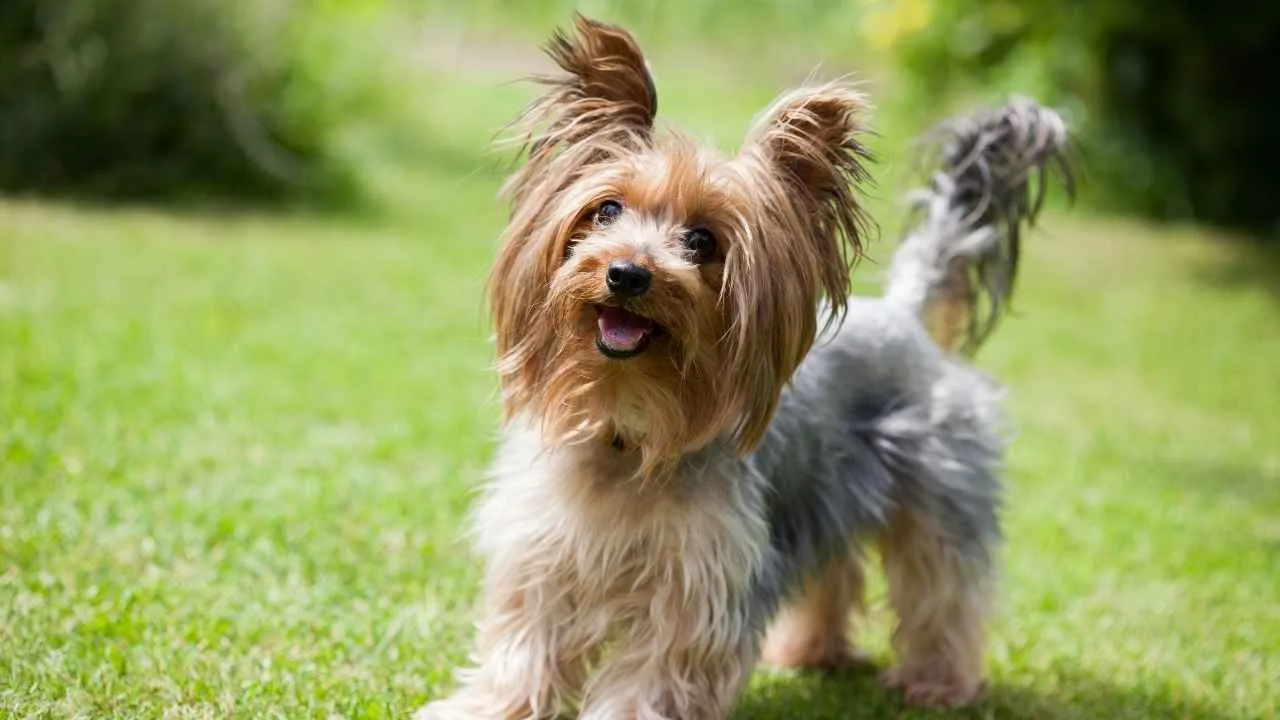
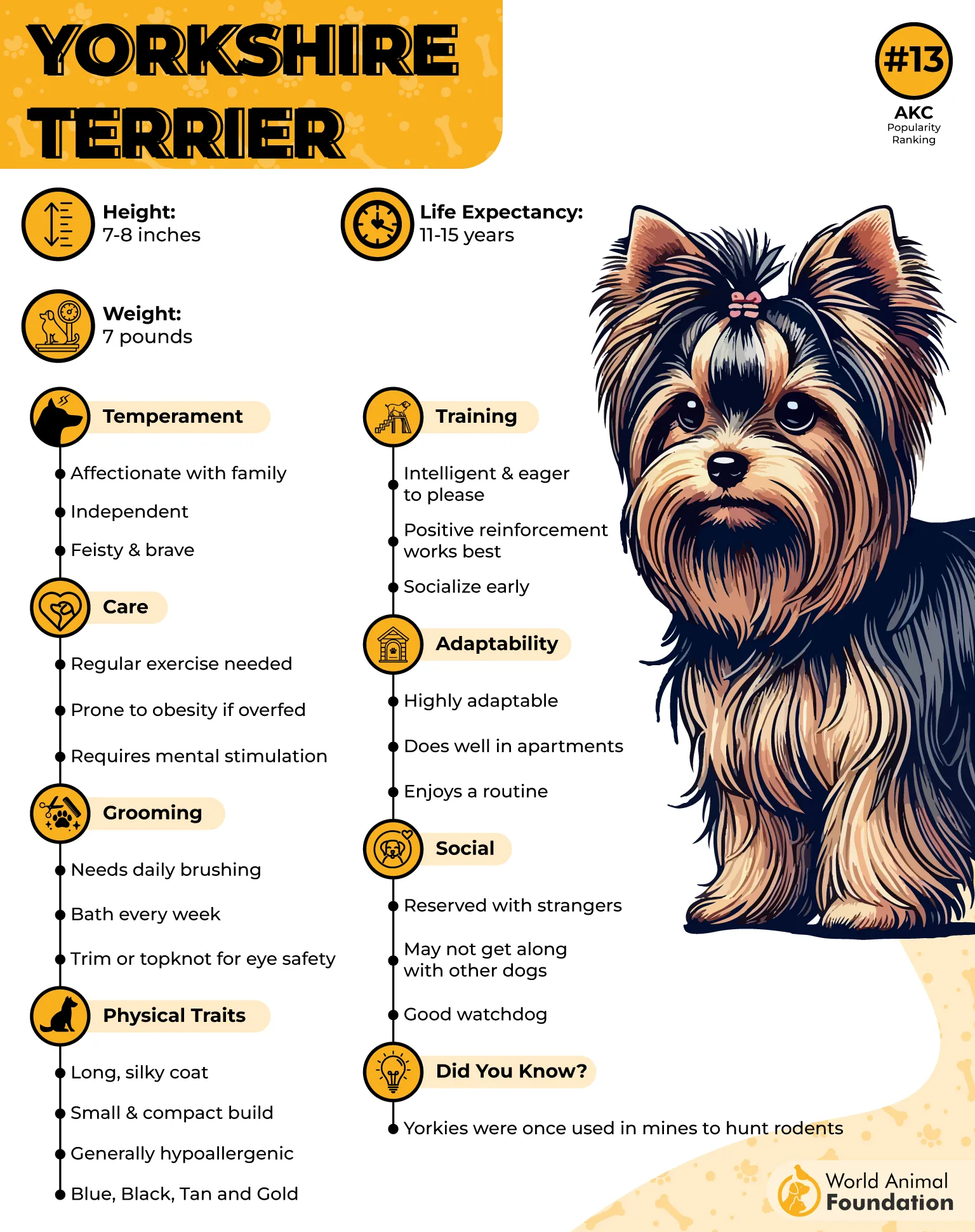
Yorkshire Terriers, or Yorkies, may stay compact and tiny, but their personalities are anything but small. These lively little dogs are affectionate, playful, curious, and often a little bossy. Their history helps explain their bold nature.
Yorkies were originally bred to chase rats and mice in textile mills after Scottish weavers moved to England in the mid-1800s. Today, they are much-loved companions and excellent watchdogs.
Yorkie Personalities & Exercise Needs
Yorkies are energetic dogs that need both physical activity and mental stimulation. A couple of short walks each day, along with indoor games such as fetch, can keep them happy.
They are quick learners and usually respond well to training, especially when they get plenty of attention and company. They also dislike being left alone for long periods. Their small size makes them excellent apartment dogs, but they still enjoy outdoor walks and plenty of play.
Caring for Yorkshire Terriers
Yorkies have high grooming needs because their hair-like coats require regular care. They also do not handle cold weather well, so extra protection may be needed in chilly conditions. These tiny dogs can be good family dogs when children are taught to handle them gently.
Supervision is important because rough play can easily cause injuries. They can also live with other dogs and some cats when properly socialized, but their strong hunting instinct means small furry pets may not be safe around them.
3. Pomeranian
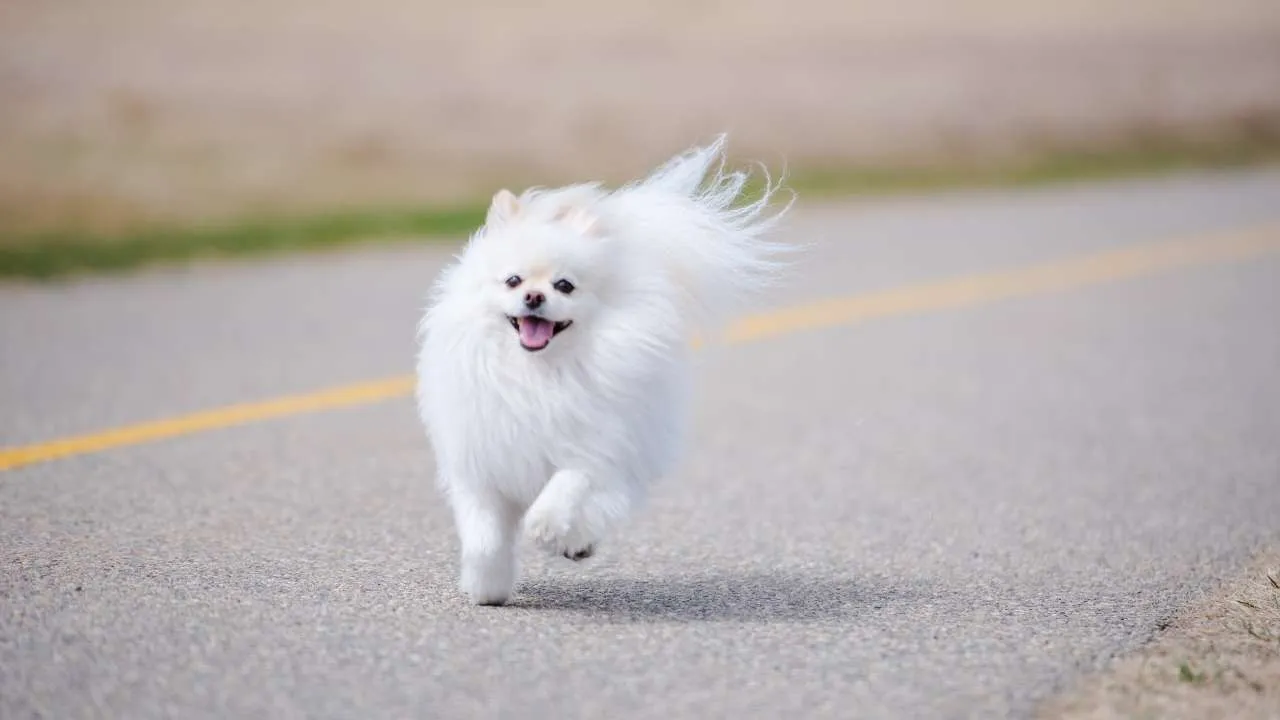
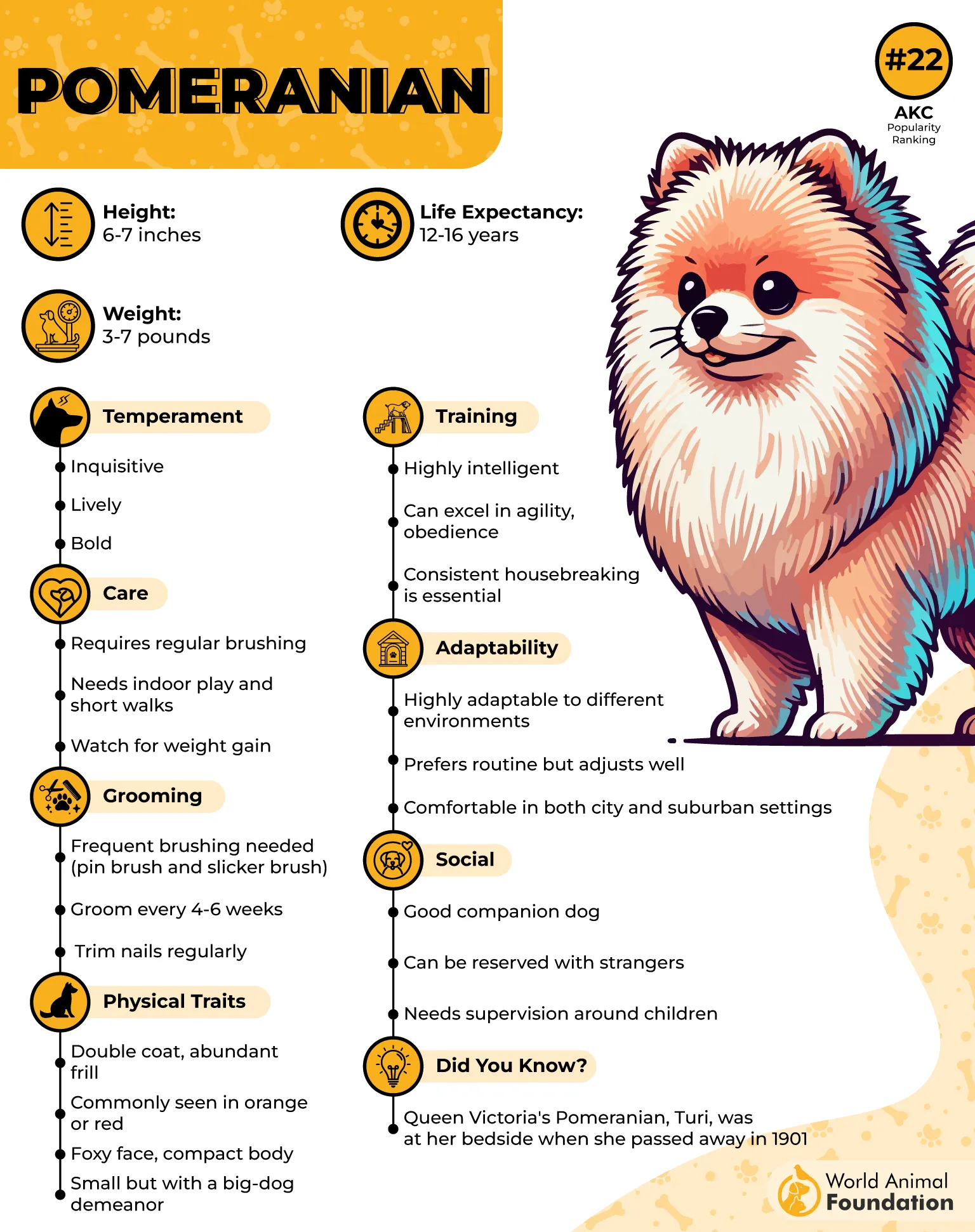
Pomeranians may be tiny, but they carry themselves like much bigger dogs. Cheerful, intelligent, playful, and confident, they love games, attention, and new adventures.
Their ancestors were much larger Spitz-type dogs used for herding before selective breeding made them the tiny companions we know today. They are also alert and naturally vocal, making enthusiastic watchdogs, even if they are far too small to be effective protection dogs.
Pomeranian Personalities & Activities
Poms are energetic but do not need extensive outdoor exercise. Short walks and indoor play are usually enough to keep them happy. Their intelligence makes them quick learners, although they can sometimes be stubborn or willful.
With early socialization and consistent training, they can learn tricks and enjoy activities such as agility, rally, and obedience. They are often playful rather than calm lap dogs and may not be very outgoing with strangers.
Caring for Pomeranians
Pomeranians can adapt well to city or suburban homes and suit families, singles, and older adults. They often get along well with other pets, including cats, but their tiny size makes them fragile around very young children.
Their thick, fluffy coats need daily brushing and regular grooming to stay healthy and manageable. PetPlan says Pomeranians also enjoy plenty of companionship and may develop separation anxiety if left alone for long periods.
4. Toy Poodle
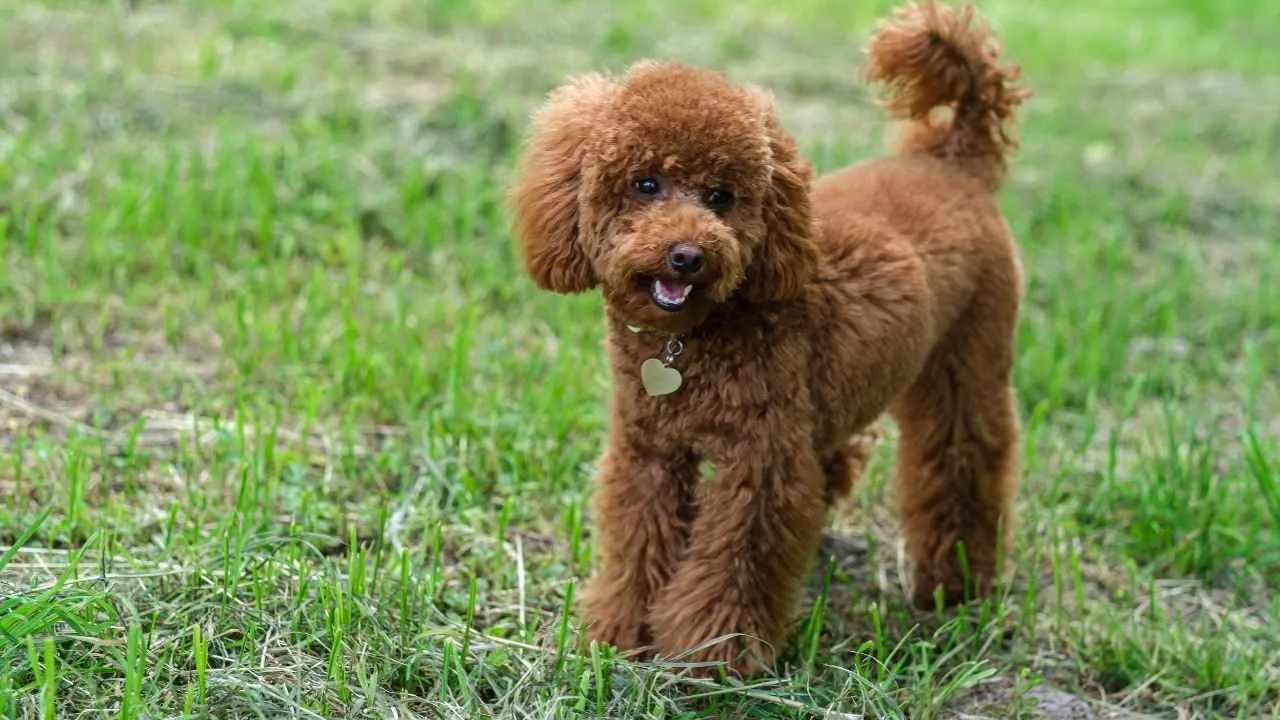
Toy Poodles are proof that a tiny dog can have a huge personality. They are exceptionally intelligent, playful, athletic, and eager to please. Poodles originated in Germany, where larger Poodles were developed for duck hunting.
The Toy variety was later bred down from the larger Standard Poodle. Today, Toy Poodles are popular companions and are also known for their success in dog shows.
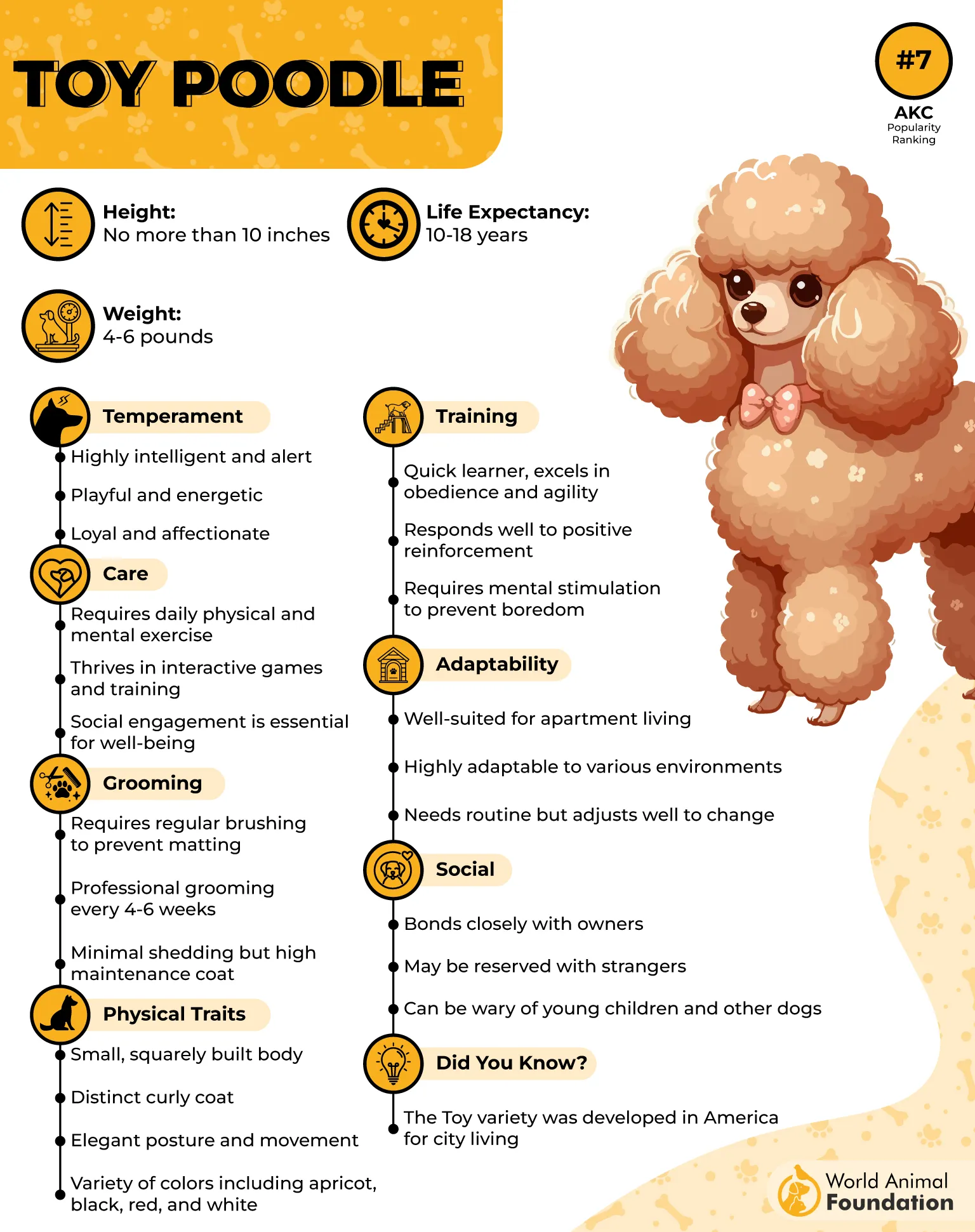
Toy Poodle Personalities & Exercise
Toy Poodles are affectionate dogs that love attention and spending time with their families. Their intelligence makes them quick learners and generally easy to train. They still need regular mental stimulation, daily walks, and indoor play to stay happy.
Despite their small size, they can be surprisingly energetic. They can make good pets for families and single owners alike, but interactions with young children and larger dogs should always be supervised. Their tiny bodies can be injured easily during rough play.
Caring for Toy Poodles
Toy Poodles have curly coats that grow continuously, so regular grooming is essential. Their coats usually need trimming every four to six weeks.
They also shed very little, which may make them a better choice for some people with allergies. Anyone with allergies should spend time around the breed before bringing one home.
5. Maltese
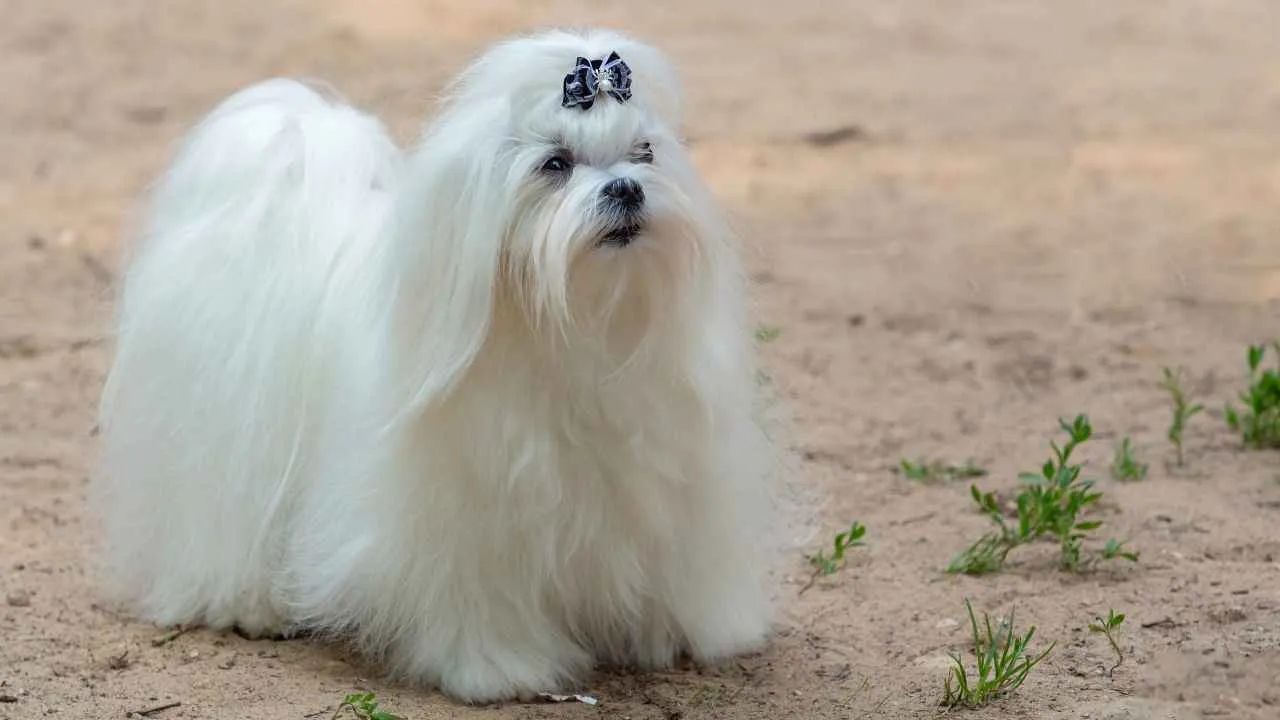
The Maltese may be tiny, but this ancient companion dog has plenty of personality. Known for its luxurious white coat, the Maltese is gentle, affectionate, intelligent, and playful.
The breed originated on the Mediterranean island of Malta and has been a cherished companion for centuries, with references appearing in ancient Greek and Roman literature.
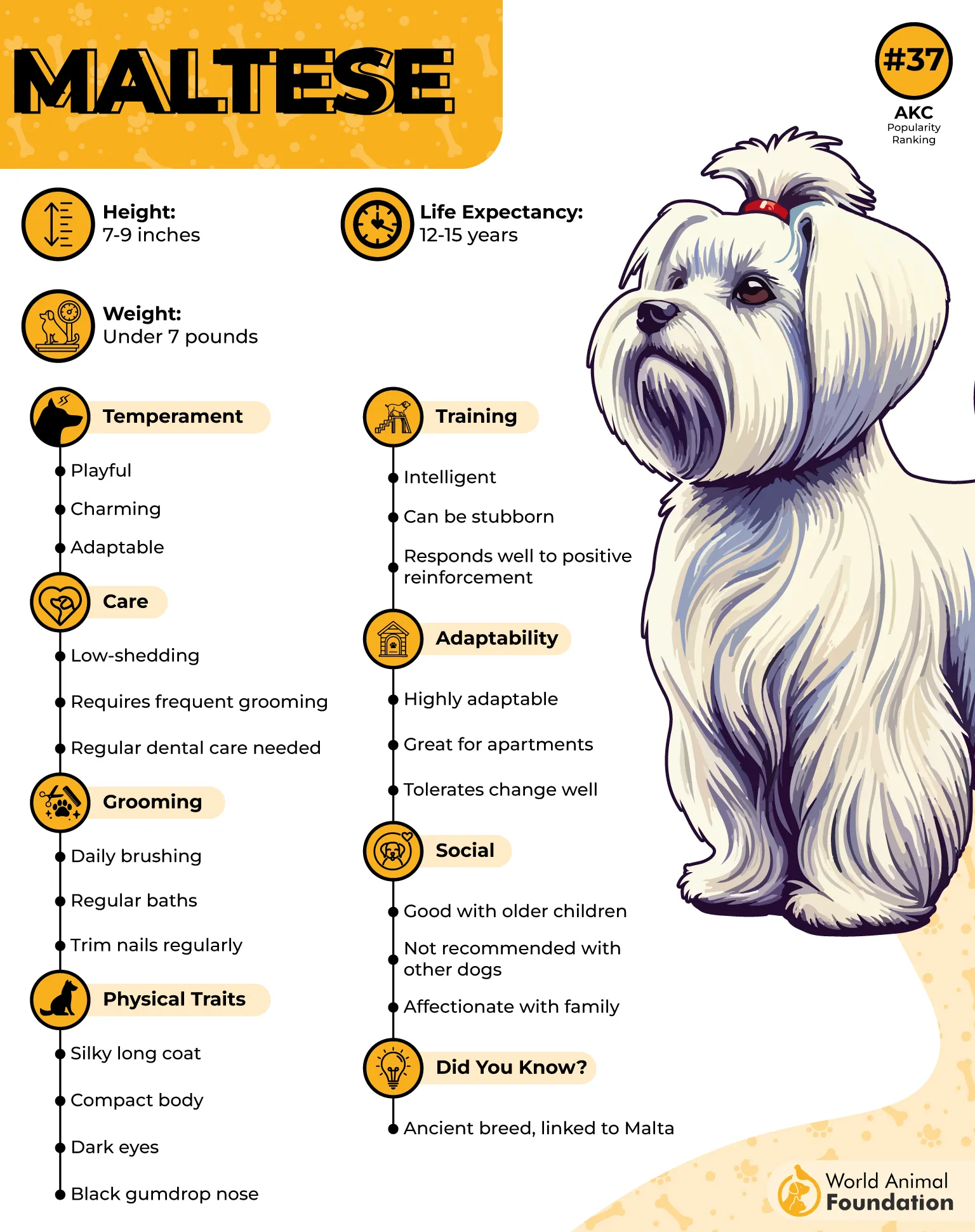
Maltese Personalities & Activities
Maltese are lively, responsive, and eager to learn. They enjoy tricks, games, and plenty of attention from their families. They do not need long walks and can get much of their exercise by playing around the house or garden, although short daily walks are still beneficial.
They are also highly alert and may bark at unfamiliar sounds or when someone approaches the door. Early socialization and positive training can help control excessive barking and prevent them from becoming snappy with young children.
Caring for Maltese
The Maltese coat is beautiful but requires regular care. Their long, silky hair should be brushed daily and bathed regularly to prevent tangles and matting. They are sometimes described as “hypoallergenic,” but no dog is completely allergen-free.
Along with grooming, Maltese need daily exercise, mental stimulation, and positive reinforcement. They are happiest when close to their people and may not enjoy being left alone for long periods.
6. Papillon
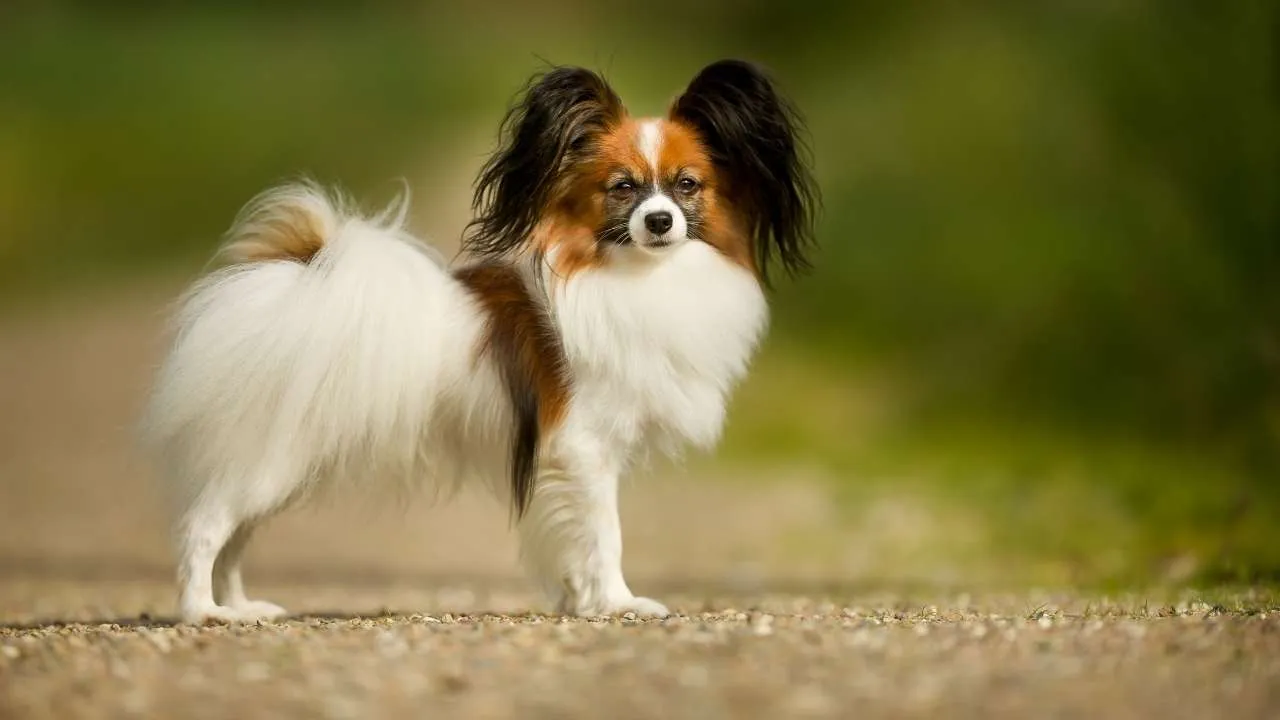
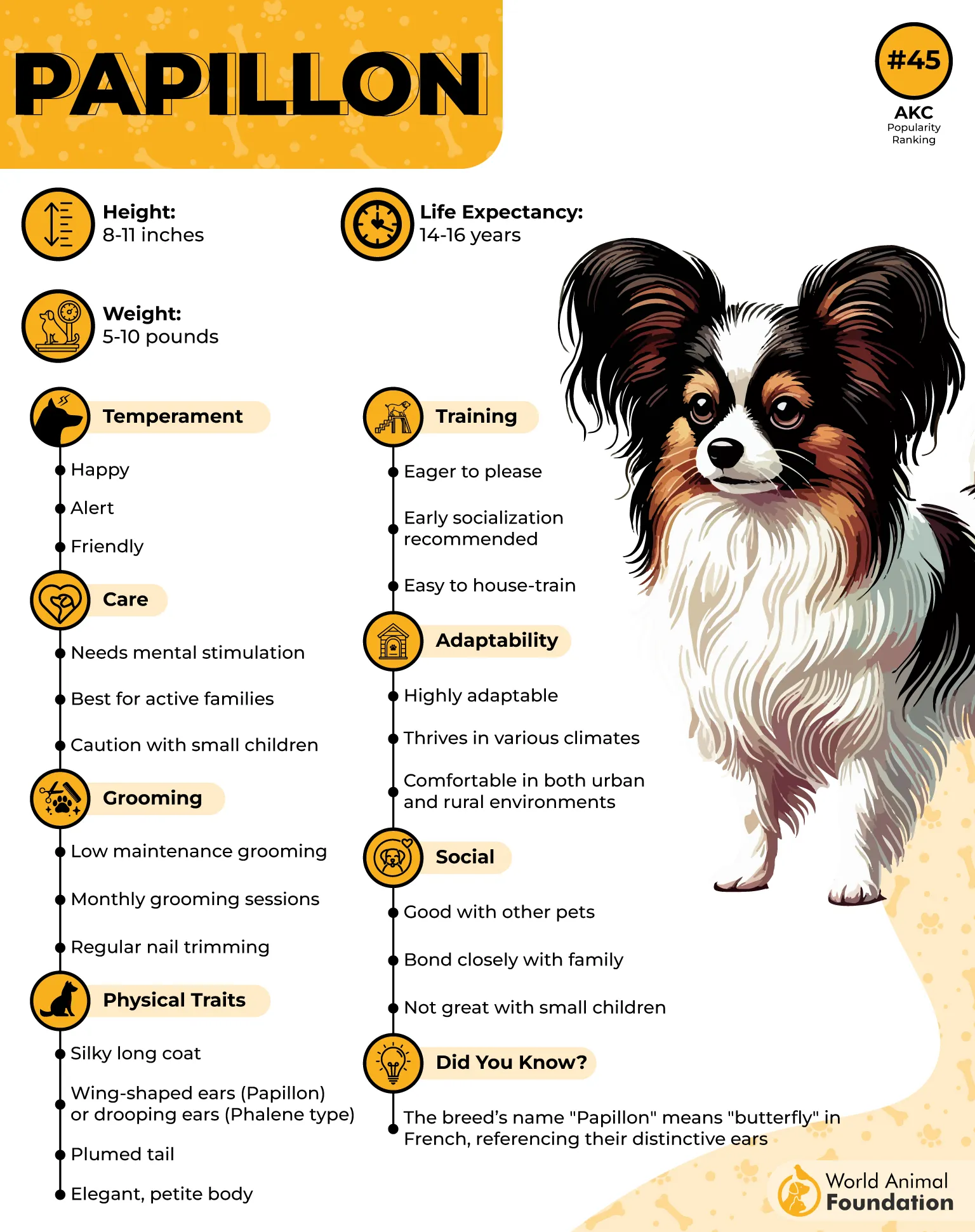
Papillons are easy to recognize thanks to their large, feathered ears that resemble butterfly wings. In fact, Papillon is the French word for butterfly.
These elegant little dogs have appeared in Western European artwork since the 16th century and were long cherished as companion dogs.
Papillon Personalities & Activities
Papillons are among the smartest and most trainable toy breeds. They are eager to please and can excel in obedience, agility, and other dog sports. They also enjoy games such as fetch and can be surprisingly athletic for such small dogs.
Their energy means they need more exercise than many other toy breeds. Daily walks, indoor games, and safe areas to run can help keep them satisfied.
Caring for Papillons
These little companions can adapt well to small apartments and different home environments, but their active minds need plenty of attention and mental stimulation. Their long, feathered coats should be brushed or combed several times a week to prevent tangles and mats.
Consistent training with positive reinforcement works especially well for this intelligent breed. They can be affectionate lap companions after they have had enough activity.
7. Shih Tzu
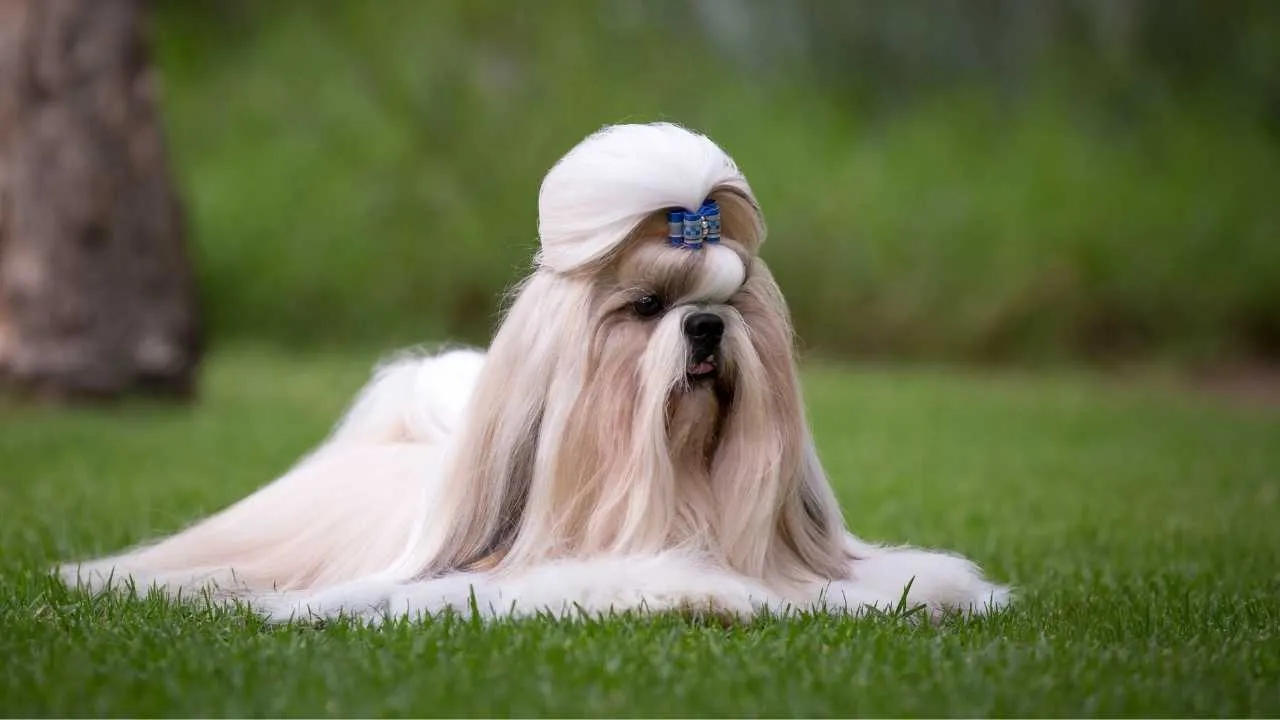
Shih Tzus were bred to be affectionate companion dogs, and they still take that role seriously. These little “lion dogs” are outgoing, playful, friendly, and happiest when they are around their people.
They usually welcome new people, dogs, and other pets with ease. The breed has ancient roots and was associated with Buddhism and Chinese imperial households.
Shih Tzu Personalities & Exercise
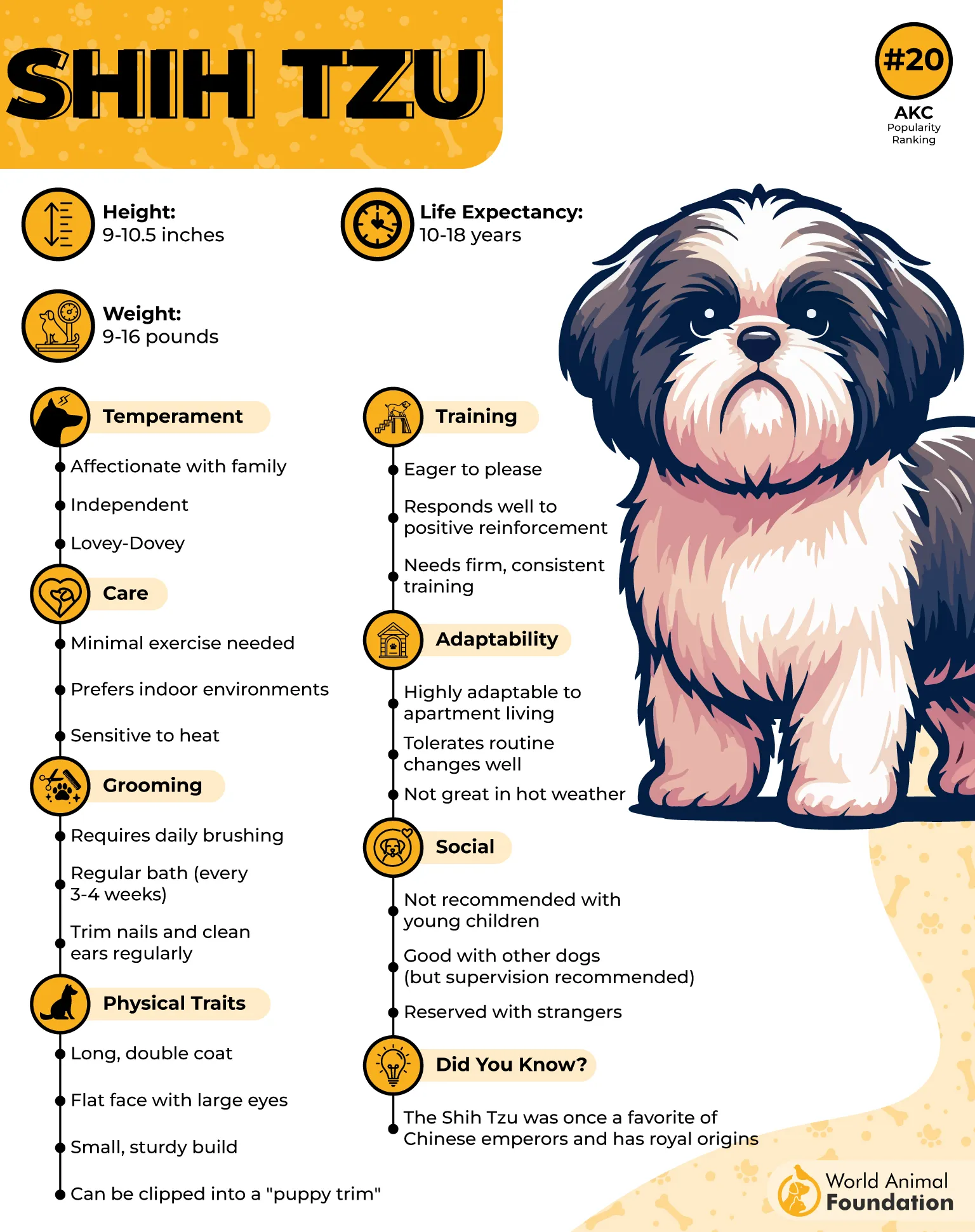
Shih Tzus can easily switch from an energetic playmate to a cozy sofa companion. They enjoy walks, games, cuddles, and simply being part of the family. A daily walk of around 30 minutes, along with some indoor play, is usually enough to keep them happy.
They are intelligent and eager to please, but they can be slow to obey when they are not interested. Positive reinforcement and rewards can make training easier. They are alert watchdogs, although their small size makes them poor protection dogs.
Caring for Shih Tzus
The Shih Tzu’s long double coat grows continuously and needs regular care. If kept long, it should be brushed and bathed regularly to prevent tangles and mats, with professional grooming needed every few weeks.
They can be wonderful family pets, including homes with children and other animals, as long as interactions are supervised and gentle.
Conclusion
Small dog breeds can bring plenty of personality, energy, and affection without taking up much space. Their size can make them easier to manage, but they still need proper training, exercise, grooming, socialization, and gentle care.
If you’re looking for a dog that will remain tiny well beyond puppyhood, consider more than just size. Think about the breed’s personality, energy level, grooming needs, and how well it fits your home and daily routine.
The right tiny dog can become much more than a convenient four-legged friend. It can be a big part of your family with a personality that makes every day a little more fun.
