




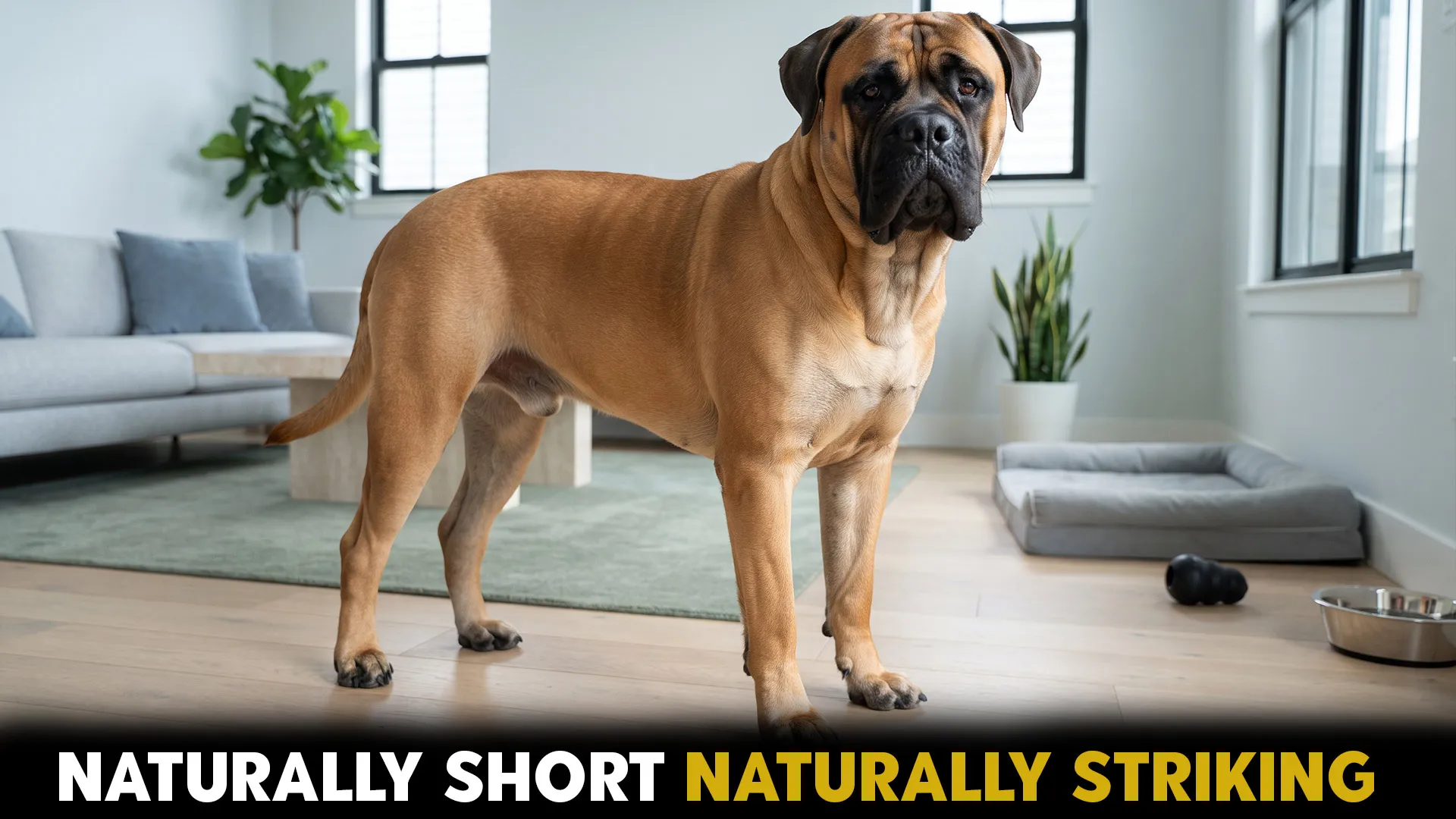
A short coat can give a dog a polished appearance while making everyday grooming relatively straightforward. Breeds with close-fitting fur often require less brushing than heavily coated dogs, although their grooming needs still vary according to shedding, skin condition, and lifestyle.
Short-haired dogs come in remarkably different shapes and personalities. Some originated as hunting partners, others as working guardians, while several were developed for companionship or athletic pursuits. Their coats may look similar at first glance, but their histories and temperaments can be dramatically different.
For owners who appreciate a tidy-looking canine without an elaborate grooming routine, naturally smooth-coated breeds can be appealing. Nevertheless, a short coat does not automatically mean minimal care, since regular bathing, nail maintenance, dental care, and attention to the skin remain important.
The following breeds showcase the variety found among dogs with naturally close, sleek fur.
Top Dog Breeds Featuring Naturally Short and Sleek Fur
1. Black and Tan Coonhound
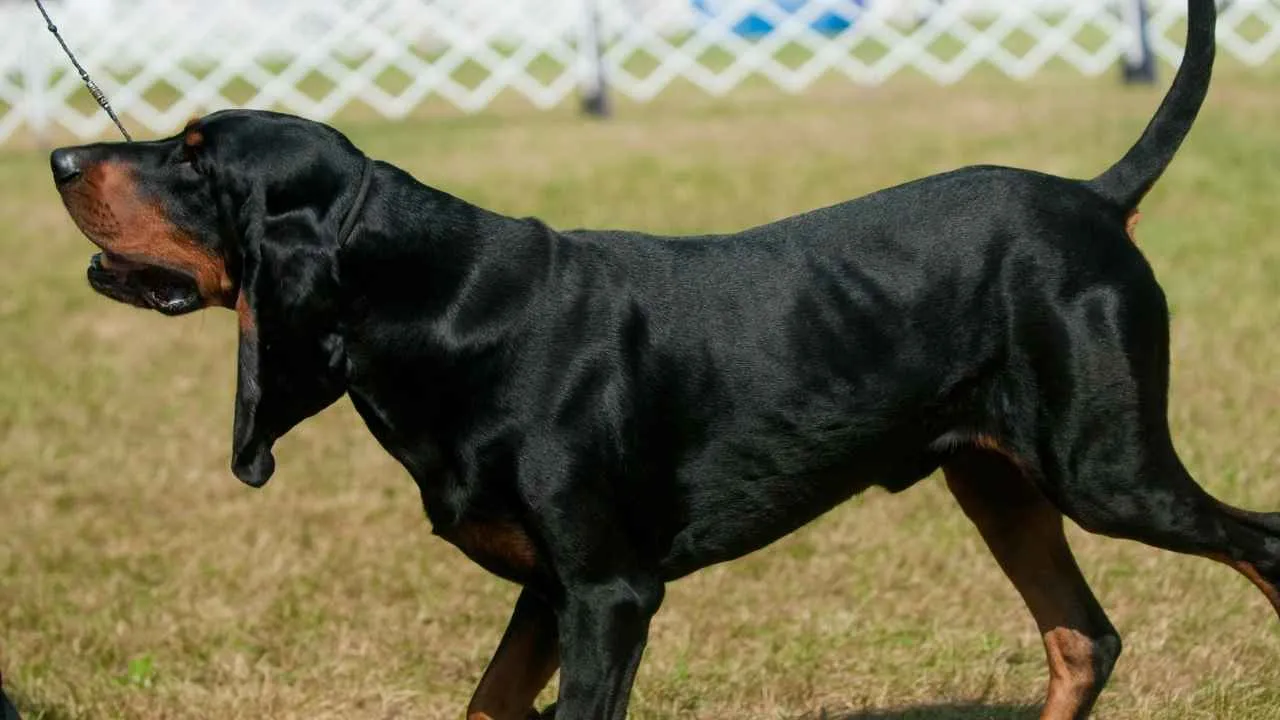
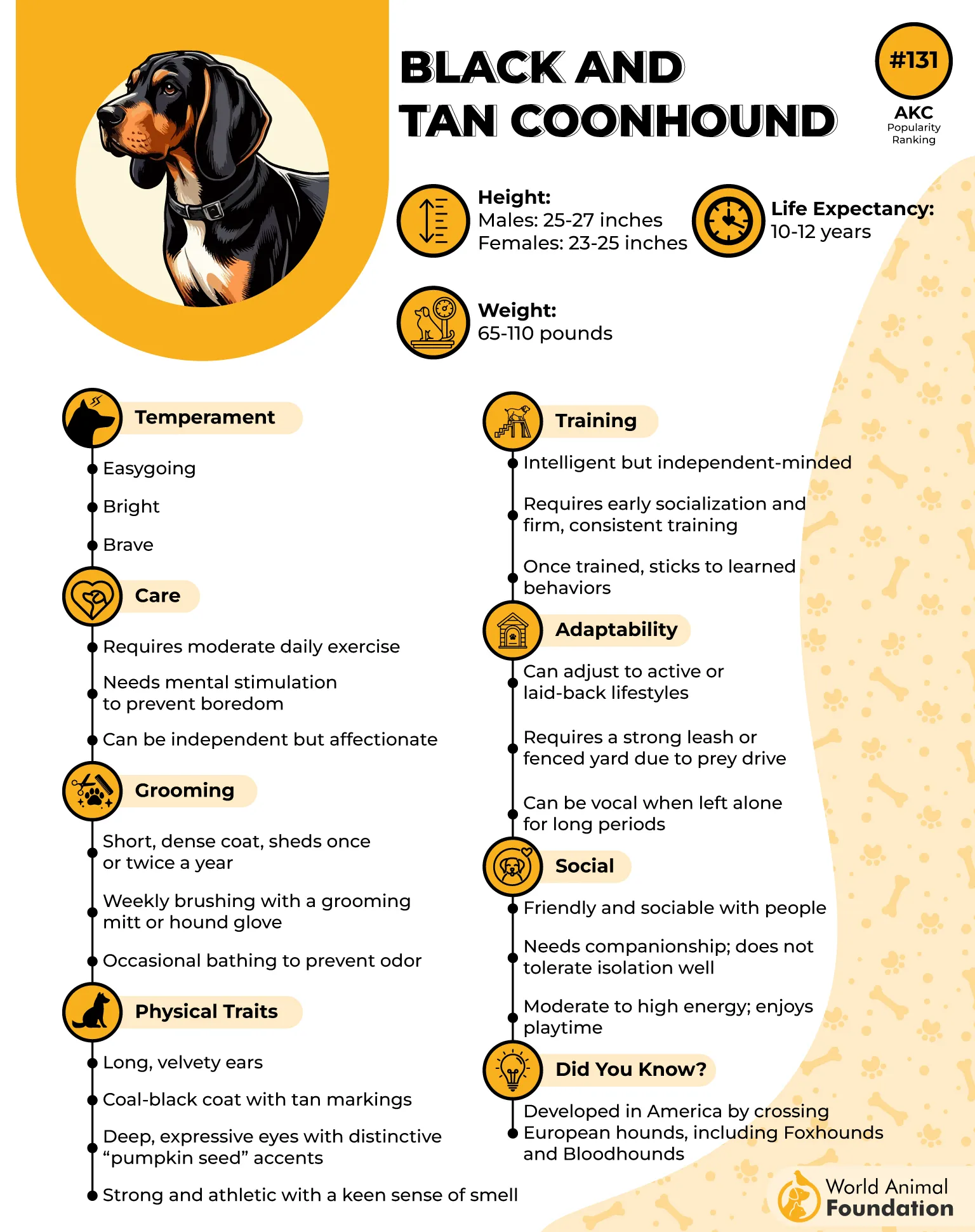
The Black and Tan Coonhound developed in the United States from hound stock brought to North America by European settlers. Breeders refined these dogs for their exceptional scenting ability and determination while tracking raccoons and other quarry through wooded landscapes.
Their development produced a substantial trailing hound capable of following challenging scent paths for extended periods.
Affectionate with a Strong Hunting Instinct
Black and Tan Coonhounds are often friendly, relaxed, and devoted to their families. Their powerful noses remain central to their behavior, however, and an interesting scent can quickly capture their attention, as per PetMD.
They may be independent when following a trail, so consistent training and secure outdoor spaces are particularly valuable.
A Naturally Smooth Coat
The breed has a short, dense coat that rests closely against the body and gives the dog its polished appearance.
Its predominantly black coloring with rich tan markings creates a recognizable pattern, while the uncomplicated texture requires no extensive trimming or styling. Routine brushing can help remove loose hair and keep the coat looking healthy.
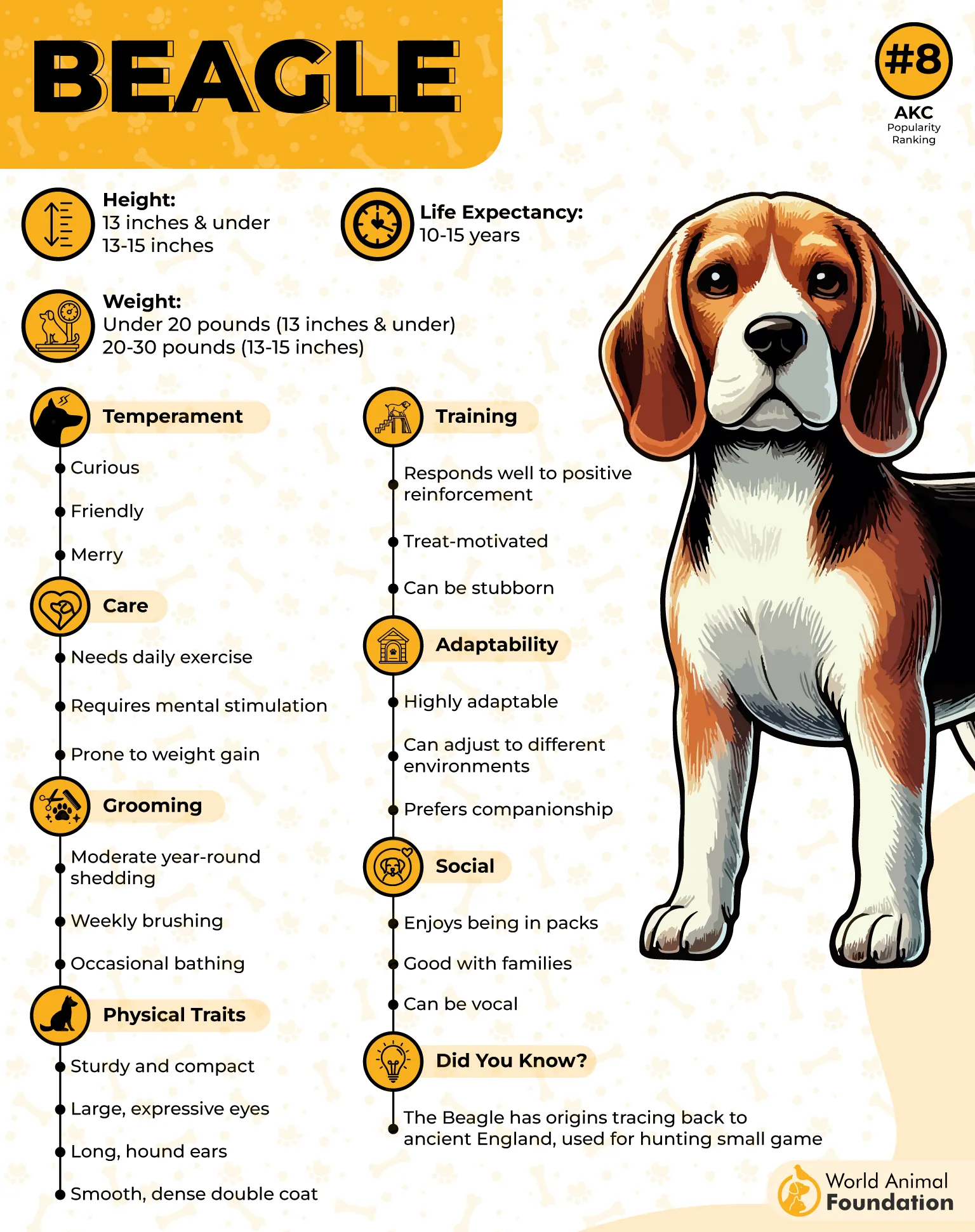
2. Beagle
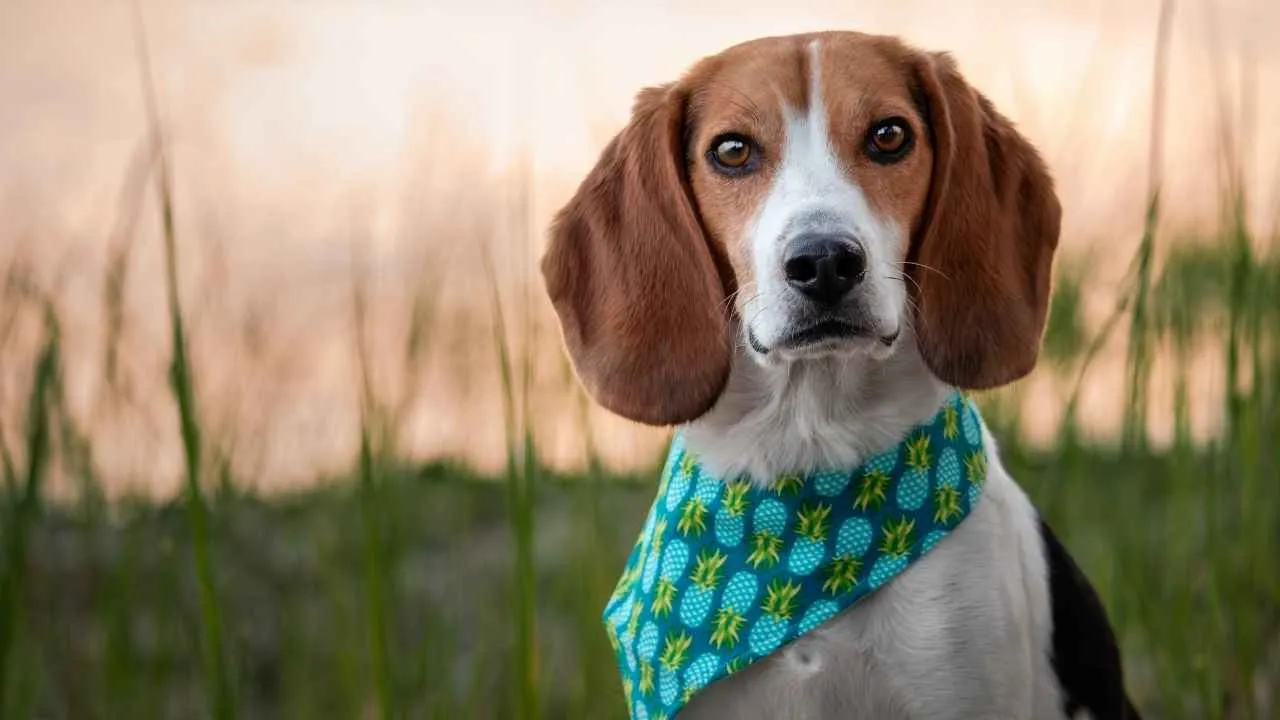
The Beagle has roots in Britain, where small scent hounds were developed for hunting hare and other small game.
Breeders gradually established a compact, efficient hunting companion that could follow trails across varied terrain while hunters traveled on foot, as per PDSA. Its strong nose and manageable size helped make it a valued sporting dog.
Curious, Cheerful, and Social
These medium-sized dogs are generally lively, friendly, and inquisitive. They tend to enjoy company and often get along well with other dogs, but their curiosity can lead them toward anything carrying an interesting scent.
Their enthusiasm for food can assist with training, although owners must take care not to encourage excessive weight gain.
Close-Fitting Fur for Easy Upkeep
The Beagle’s coat is short, dense, and smooth, producing a tidy surface that does not require complicated grooming.
Regular brushing can collect loose hairs and help keep dirt from accumulating in the fur. Although the coat is simple to manage, seasonal shedding means owners may still notice hair around the home.
3. Boxer
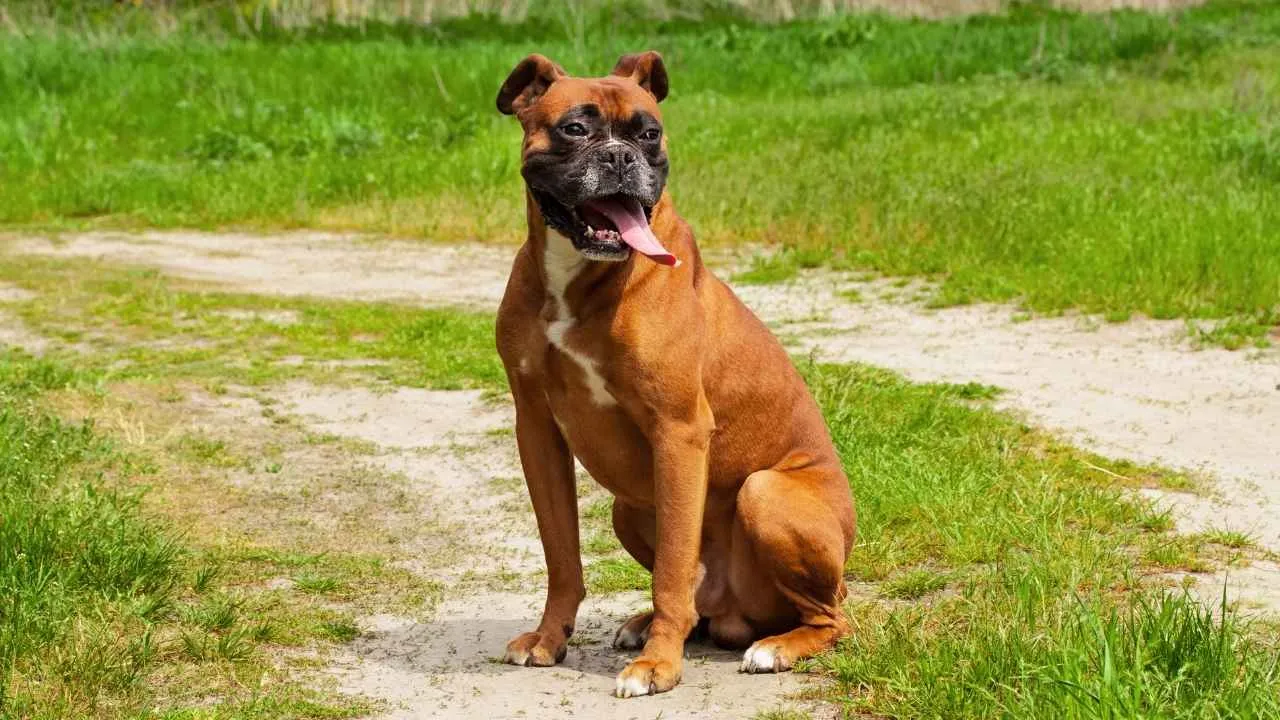
The Boxer’s history begins in Germany, where it descended from earlier mastiff-type dogs used for hunting and working purposes.
Breeders eventually developed a more versatile dog that could serve as a guardian, utility animal, and dependable working companion. Its strong body, distinctive head, and physical confidence became defining features of the modern breed.
Playful Energy and Devotion
Boxers are typically affectionate, spirited, and highly interactive with their families. They often retain a playful attitude for much of their lives and enjoy participating in household activities.
Their enthusiasm and physical strength make early manners training important, particularly when teaching young dogs how to greet people and control their exuberance.

Sleek Fur that Highlights the Physique
A Boxer’s coat is short, glossy, and naturally close to the skin, emphasizing its muscular build. Grooming is generally uncomplicated, with occasional brushing helping remove dead hairs and maintain the coat’s natural shine.
Because the fur offers limited protection from severe temperatures, weather conditions should be considered during outdoor activities.
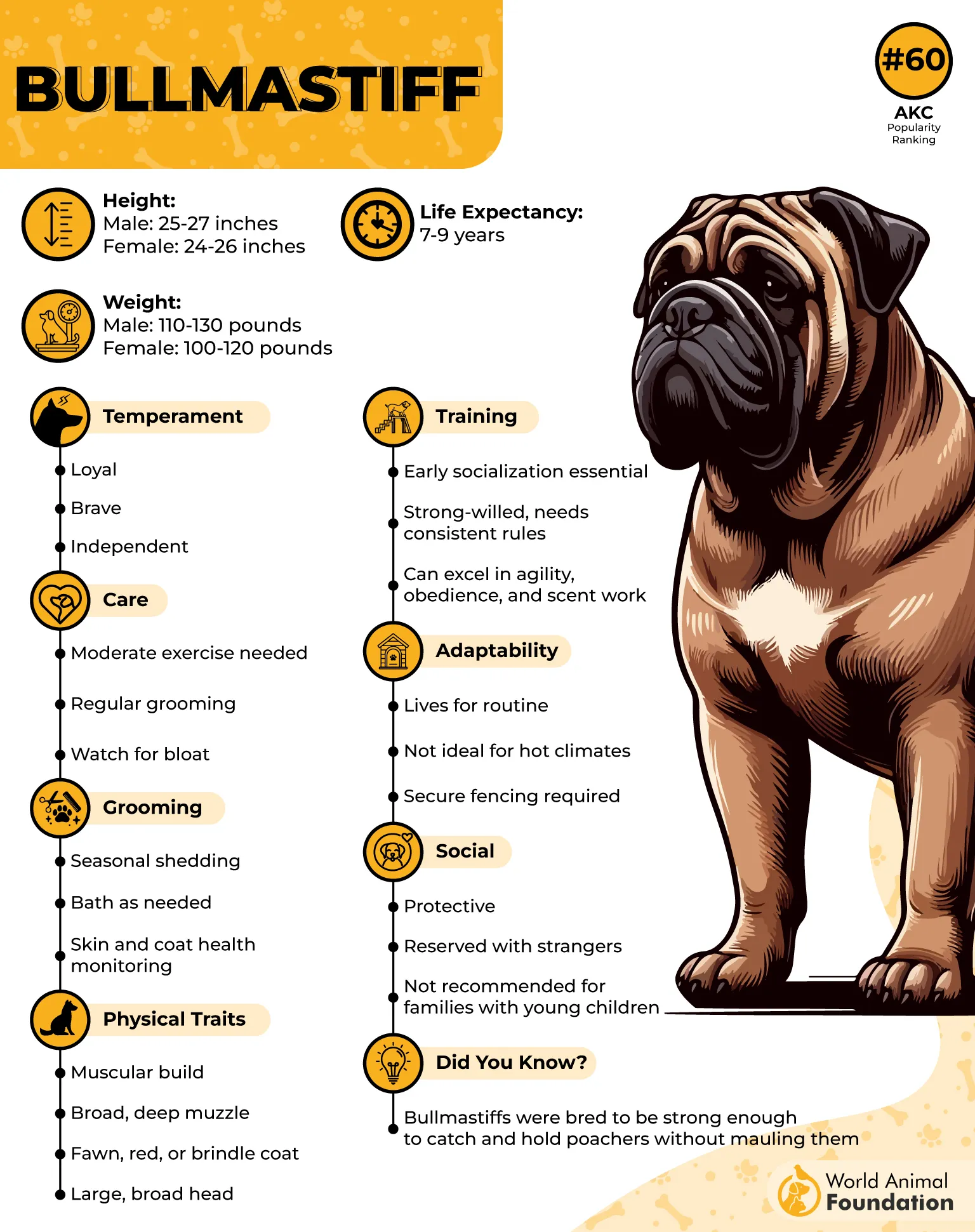
4. Bullmastiff
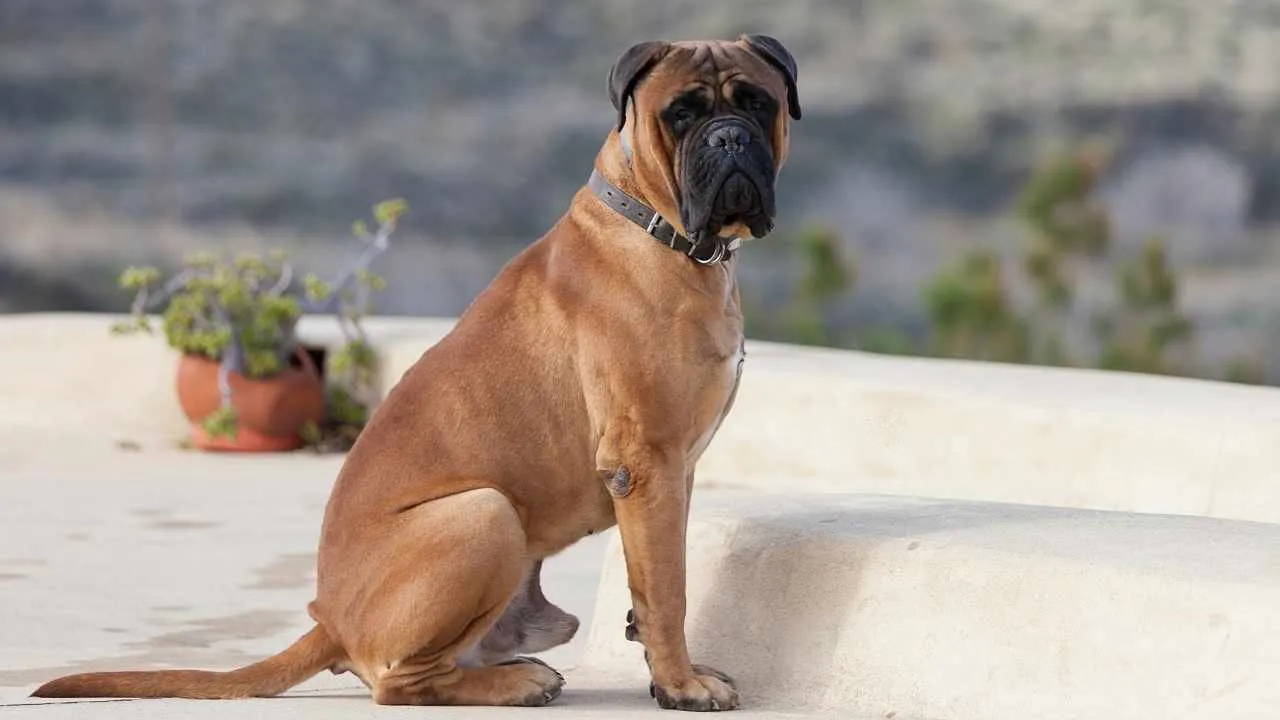
The Bullmastiff was created in Britain during the nineteenth century for use by gamekeepers who needed a powerful dog capable of helping protect large estates from poachers.
Mastiff-type dogs were combined with other working lines to create an animal with substantial strength and an effective guarding presence. Over time, the breed became established as a devoted household and property guardian.
Calm, Loyal, and Naturally Watchful
Bullmastiffs are often composed and affectionate with members of their household while remaining reserved around unfamiliar people.
They can possess a strong protective instinct without constantly displaying frantic activity. Early socialization and dependable obedience are especially valuable because their considerable size gives even ordinary behavior significant physical impact.
Short Fur with Minimal Styling Needs
The Bullmastiff’s coat is short, dense, and smooth, lying neatly across its broad frame. It contributes to the breed’s clean, powerful appearance without requiring lengthy brushing sessions or specialized trimming. Regular grooming can remove loose hairs and provide a useful opportunity to check the skin for irritation or other changes.
5. Boerboel
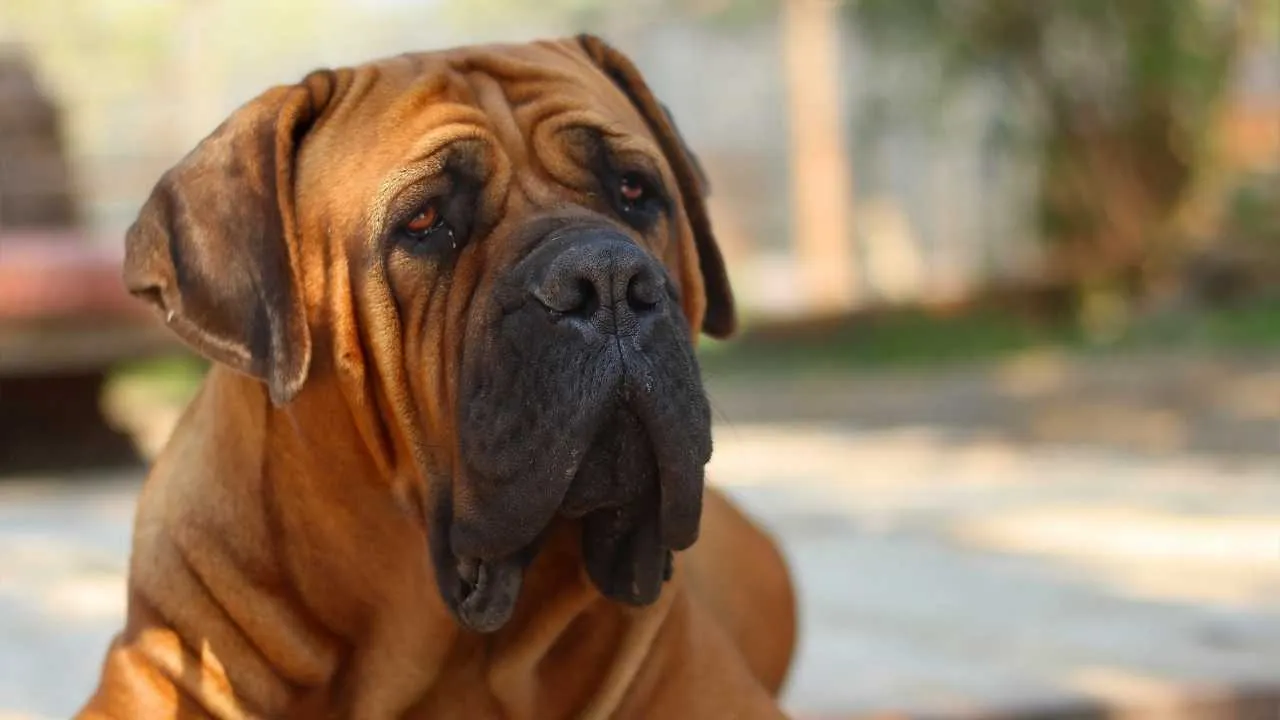
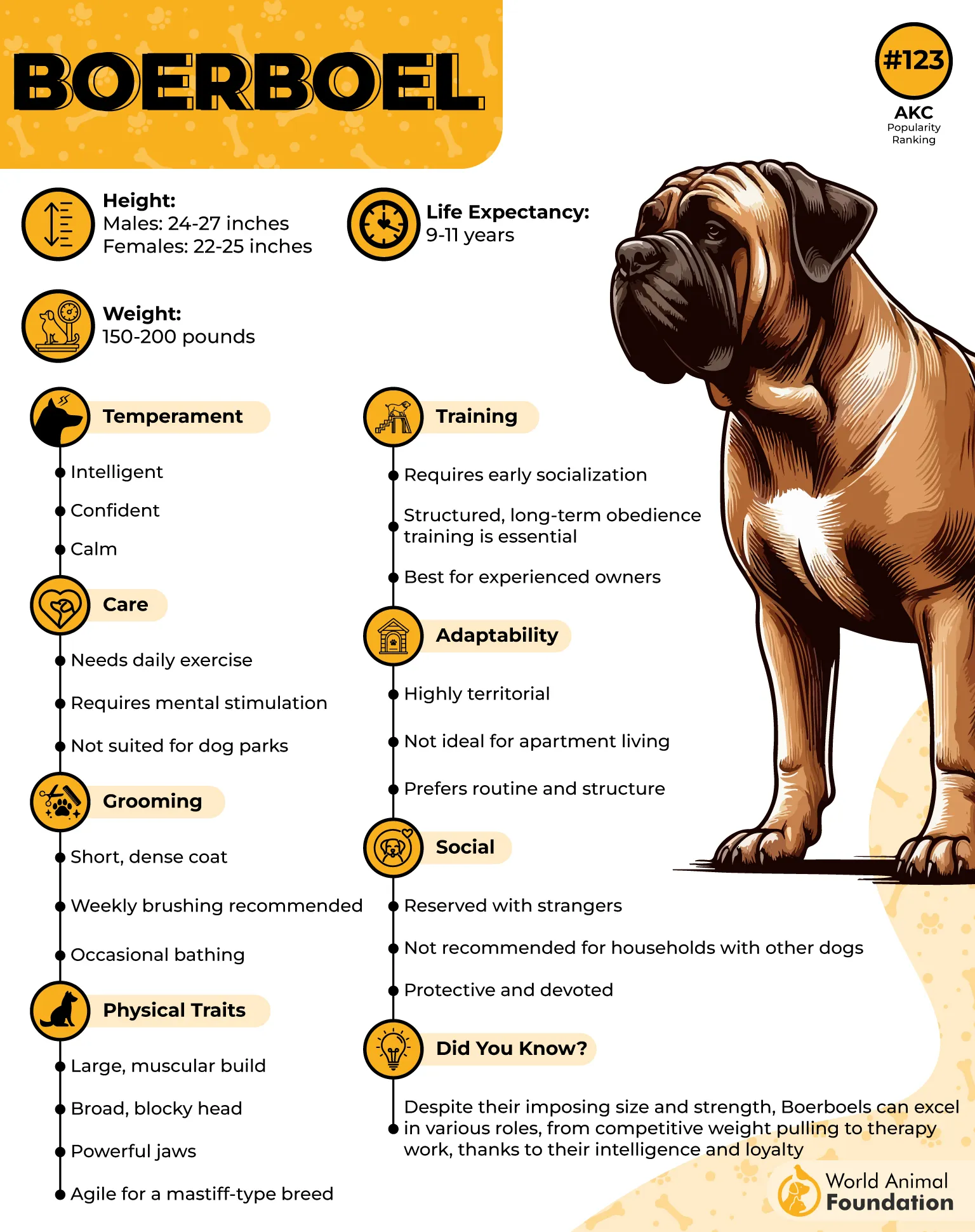
The Boerboel originated in South Africa, where early farm dogs descended from European settlers’ working animals and other local and imported dogs, as per the AKC.
These dogs were selected for their ability to protect homesteads and agricultural properties in challenging conditions. Continued development produced a formidable guardian with substantial strength and a confident working character.
Confident and Protective at Home
Boerboels are typically self-assured, intelligent, and strongly bonded to their families. They can be affectionate with familiar people while remaining cautious when encountering strangers or unfamiliar circumstances. Their size and guarding instincts call for thoughtful socialization, consistent boundaries, and training that begins early.
Dense, Short Fur for Practical Care
The Boerboel’s coat is short, smooth, and close to the body, giving its massive frame a clean outline. There is no need for elaborate coat styling, and basic brushing is generally enough to remove loose hair and surface debris. Routine skin checks remain worthwhile because the close coat makes changes in the skin relatively easy to observe.
6. Bluetick Coonhound
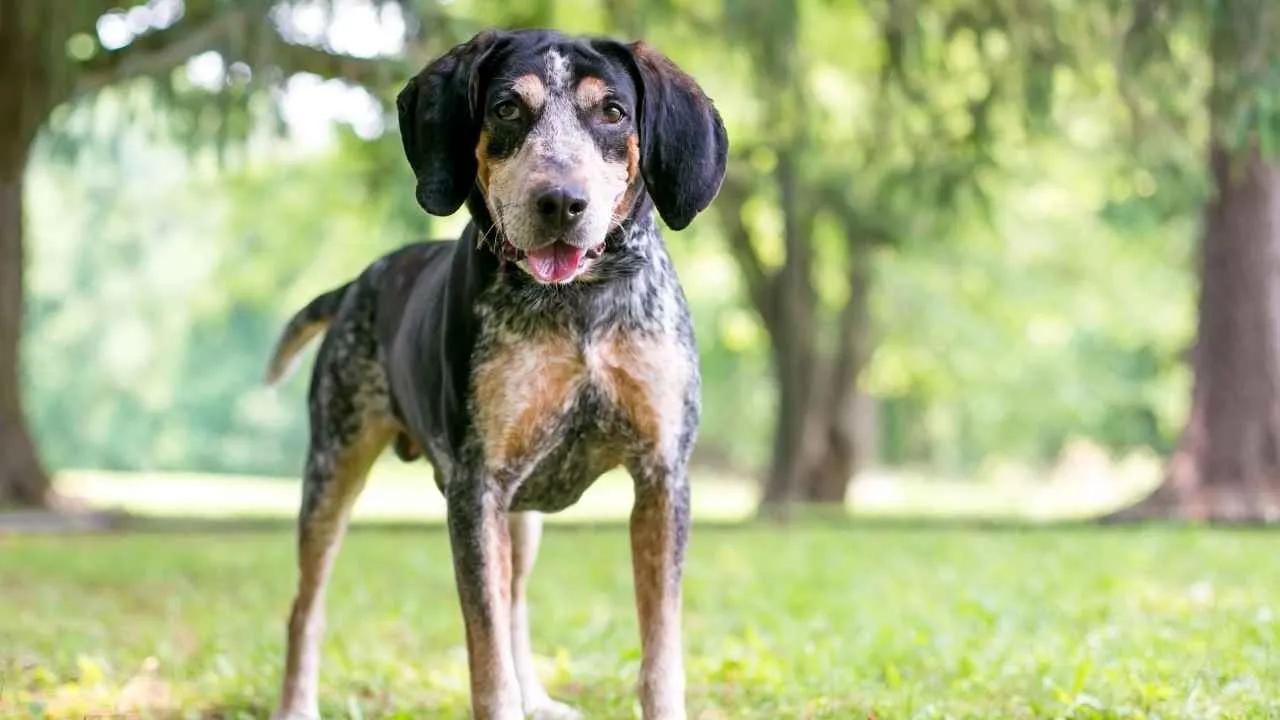
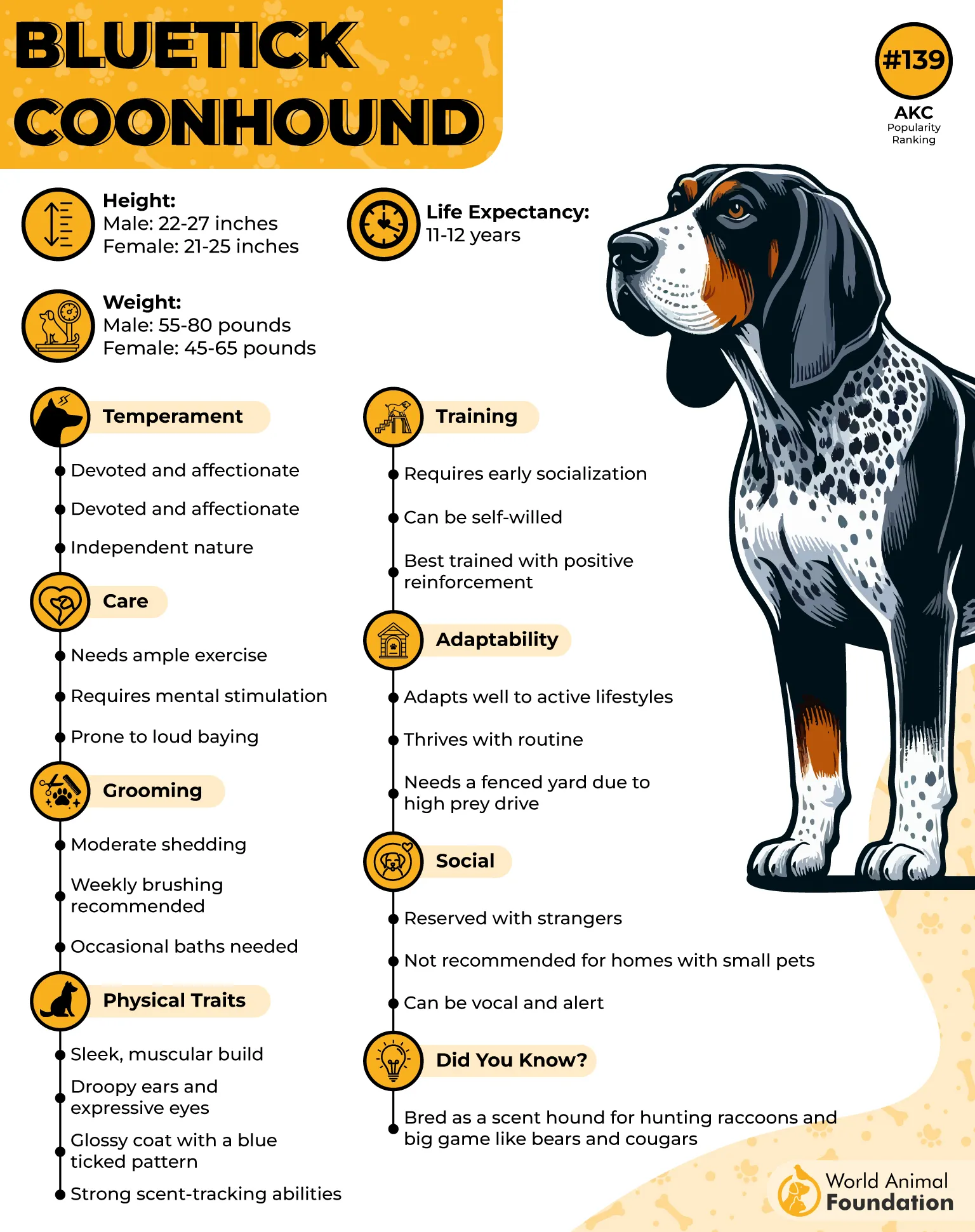
The Bluetick Coonhound was developed in the United States from European hound lines selected for powerful scenting ability and persistence.
American breeders shaped these muscular dogs for tracking quarry across difficult terrain, with the breed becoming particularly associated with raccoon hunting. Its history is closely tied to long-distance trailing and independent work in the field.
Determined but Affectionate Companion
Bluetick Coonhounds commonly show a friendly and affectionate side with their families while retaining the focused instincts of a dedicated scent hound.
Once an appealing trail catches their attention, they can become remarkably persistent. Their characteristic vocalizations and independent streak make patient training and appropriate boundaries useful.
Short Fur with Eye-Catching Markings
The breed’s coat is short, glossy, and smooth, requiring relatively little specialized grooming. Its distinctive mottled blue-black appearance gives the Bluetick Coonhound a particularly recognizable look. Occasional brushing can help manage loose hairs and keep the coat clean while supporting healthy skin.
7. Whippet
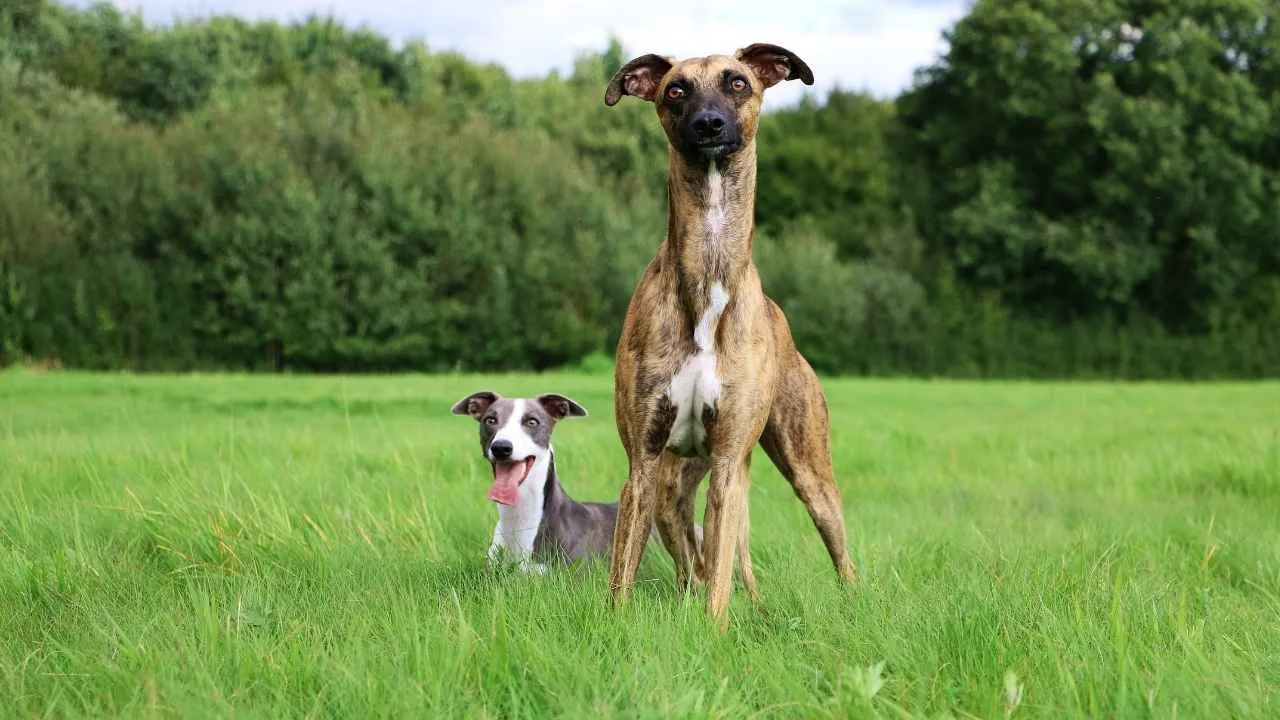
The Whippet was developed in Britain from smaller sighthound types and became particularly popular among working-class communities that valued fast dogs for hunting and racing, as per Purina.
Selective breeding produced a smaller, agile relative of larger sighthounds that could accelerate rapidly while remaining practical as a household companion. The breed later became established in organized racing and dog shows.
Gentle, Quiet, and Closely Bonded
Whippets are commonly known for their gentle nature and affectionate relationships with their families. They can display remarkable athletic ability outdoors but often become calm and comfortable indoors once their activity needs have been satisfied. Their sensitivity makes patient handling and reward-based training especially appropriate.

Exceptionally Fine and Sleek Fur
The Whippet has one of the most visibly streamlined coats among dog breeds, with extremely short, fine hair following the contours of its body.
Grooming is uncomplicated because there is little coat to brush, although occasional grooming can still remove loose hairs and distribute natural skin oils. The thin covering also means Whippets may need extra protection in cold weather.
Conclusion
Short, sleek fur can be found on short-haired breeds with vastly different origins and purposes. Their coats may be comparatively uncomplicated, but owners should not confuse low grooming demands with an absence of care. Regular brushing, bathing when necessary, skin observation, nail maintenance, and appropriate protection from environmental conditions all contribute to canine well-being.
Ultimately, coat type should be only one factor when choosing a dog. Temperament, adult size, exercise requirements, training needs, and the animal’s original purpose can have a much greater influence on whether a particular short-haired dog breed suits a household. A naturally sleek coat may simplify grooming, but a successful match depends on understanding the entire dog.
