




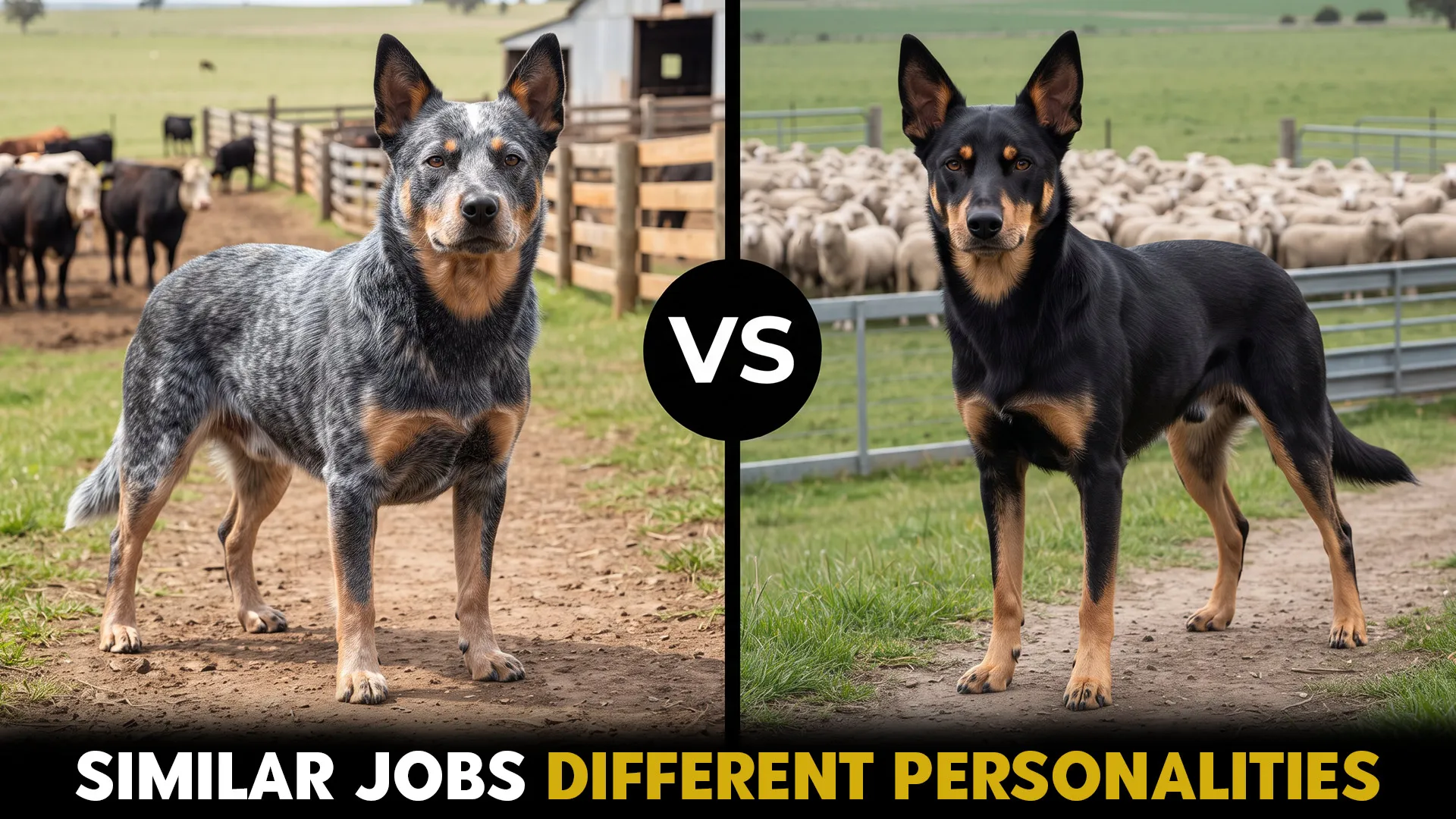
Both the Australian Cattle Dog and the Australian Kelpie were influenced by the harsh environment in Australia. Both are smart, athletic, and can work long hours.
Nevertheless, they cannot be used interchangeably.
The Australian Cattle Dog was developed to herd and drive cattle across the challenging Australian terrain. It is a compact, energetic, and assertive breed with strong herding instincts.
The Australian Kelpie was created to work the sheep on large farms. It is less heavy, more agile, and was constructed to move long distances.
The difference influences practically everything. They differ in their working styles. Their training requirements vary. Their concept of a fulfilling day can vary as well.
This is how they rank as family dogs in the aspects that are important to pet owners.
Australian Cattle Dog vs. Australian Kelpie: Which Herding Dog Fits You Better?
Origins and Purpose
Known as a hard-working herding dog by Orvis, the Australian Cattle Dog, also known as the Blue Heeler, was originally bred in Australia to drive cattle over extensive lands. The work required hardiness and restraint. The breed is also associated with the population of dingoes in Australia.
The Australian Kelpie was bred to work with sheep. It has ancestors that are working Collie-type dogs. The breed proved useful throughout New South Wales and Victoria, where the massive sheep enterprises needed dogs that were able to navigate rough distances.
This formed two specialists in extreme heat and other harsh conditions.
The Cattle Dog was constructed to be used to handle strong animals in a better way as compared to other breeds.
The Kelpie was constructed to traverse areas and drive sheep.
The difference between both Australian breeds is still evident in their working and movement instincts.
Size and Build
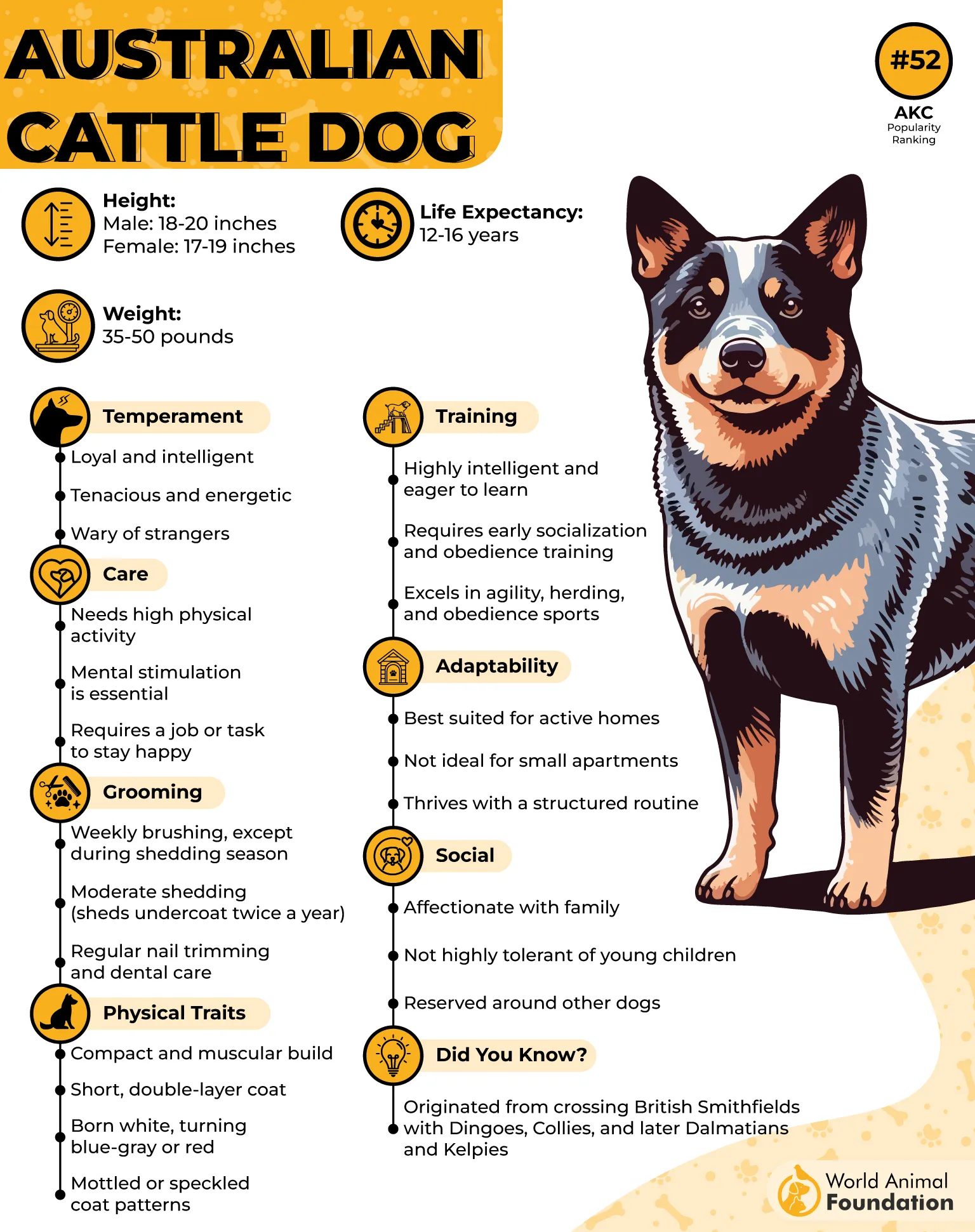
The Australian Cattle Dog is muscular in structure with a small size. The height is 17-20 inches, and they usually weigh 35-50 pounds. Its physical appearance appears strong and not fragile; the breed was adapted to physical labor and is able to withstand harsh outdoor conditions.
The Australian Kelpie looks a little lighter. Males are usually 18-20 inches tall, and females are 17-19 inches in height. These dogs usually weigh 25-45 pounds, depending on their sex and type of work. The Kelpie is slender, energetic, muscular, and highly workable.
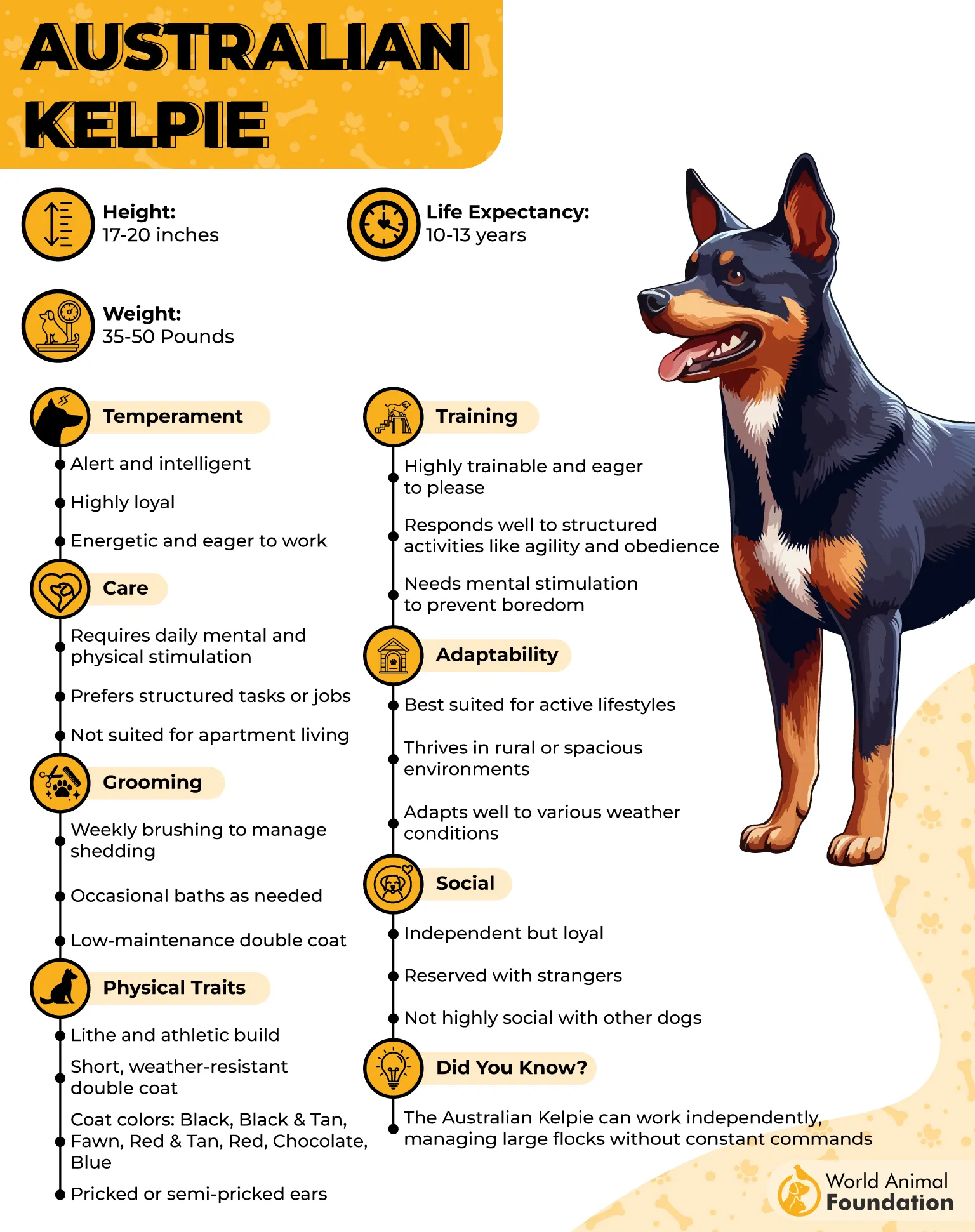
The difference is easy to see.
The Cattle Dog resembles a small athlete. The Kelpie resembles a distance runner.
If you prefer a sturdier, more substantial dog, the Australian Cattle Dog may be the better choice. The Kelpie, on the other hand, is lighter and more agile, making it a great option if you value speed and quick movement.
Pricing and Availability
The price depends on the breeder, the location, the pedigree, the health testing, and the purpose of the dog breeding: work, sport, or companionship.
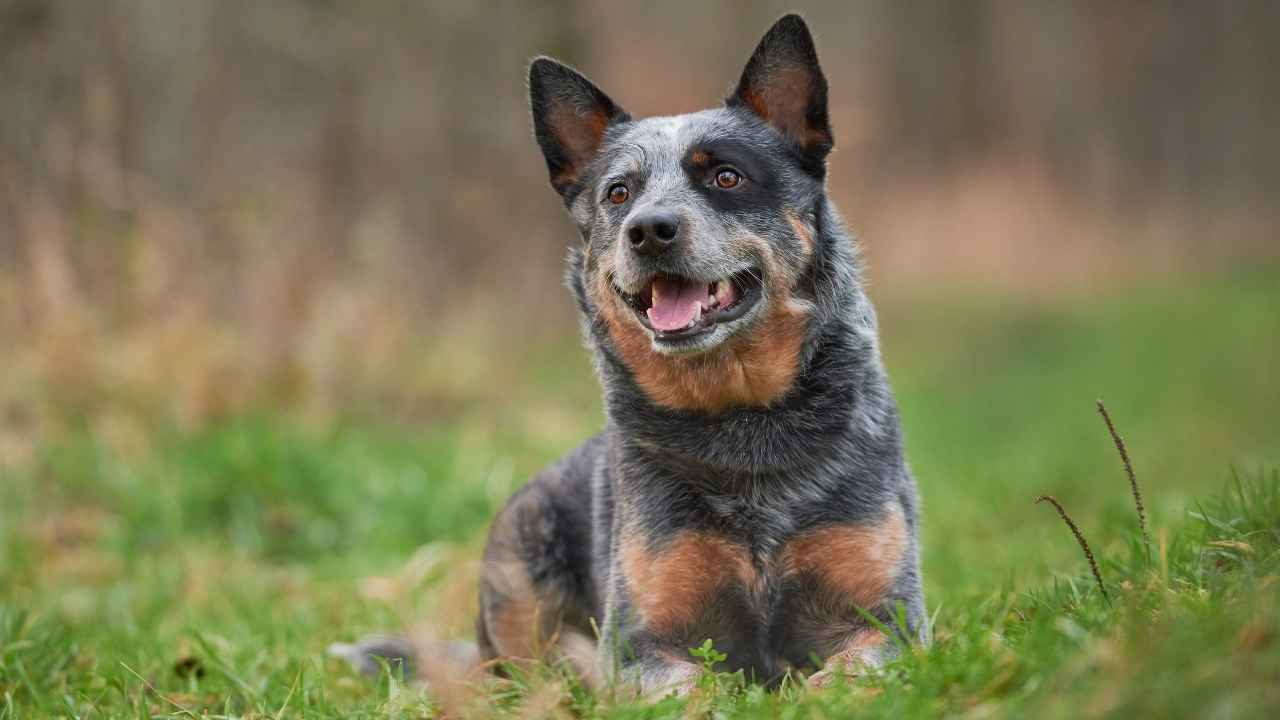
Australian Cattle Dogs are quite well known in most countries. They are registered by large kennel clubs and can be more readily located with companion-oriented breeders.
Australian Kelpies need to be studied further. Kelpies used in work and dogs bred to be mainly a show dog or companion differ significantly. Their working ability can vary considerably.
Should you require a Kelpie to do serious livestock work, the breeder can tell you of the actual working capability of the parents. A pedigree does not in itself give you how a dog will do in the field.
In either breed, it is not advisable to select the lowest price of a puppy. Seek health history, proper socialization, open breeding habits, and details of the parents.
Temperament and Personality Style
Called compact and muscular by Purina, the Australian Cattle Dog is very loyal. It tends to establish a strong attachment with its household.
It is also wary of strangers. The breed is smart, vigilant, and loyal while being suspicious of strangers. Early socialization is important in both situations.
The Kelpie is another great dog in terms of personality.
It is generally vigilant, keen, smart, and very committed to work, as noted by the AKC. The breed standard of this Australian working dog talks of an almost unending energy and great devotion towards duty.
A Kelpie can look like it is always at attention.
The Cattle Dog might inquire about the situation at hand.
Fitness Requirement and Energy Level
This is where the inexperienced owners might be caught off guard.
The two breeds require a lot of daily exercise.
Australian Cattle Dogs need physical activity and intellectual stimulation. Walking is good, though seldom sufficient in itself. The breed can be better exercised with obedience, agility, herding, running, and structured games.
The Kelpie goes the extra mile. It was selected to toil on large estates. It is designed to move efficiently over a distance. This breed is able to work tirelessly.
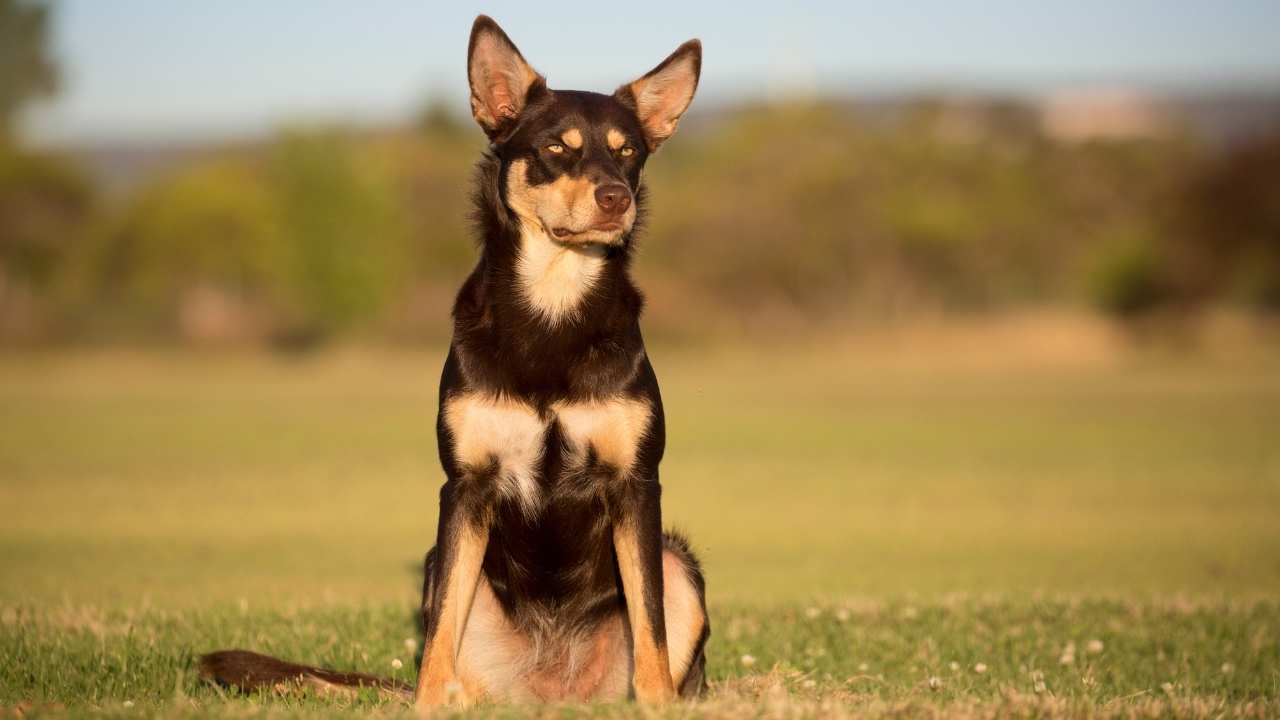
A Kelpie can benefit an owner who spends a lot of time outside the home.
A Cattle Dog might be more convenient for an active owner who seeks a sports and adventure partner.
Trainability and Obedience
The two breeds are very intelligent and versatile.
This may sound easy, but intelligent working breeds pick up discrepancies easily.
Australian Cattle Dogs can learn commands quickly, and they might also wonder at vague instructions. They are independent, and so accurate training is important. Early obedience work and training throughout the life of the dog is suggested.
The Kelpie is usually very responsive in case there is a definite purpose in training. It has a high motivation to learn and accomplish things as a result of its working heritage.
To be brief, focused training sessions are effective, while monotonous exercises may be tedious.
Both of them can be trained through reward-based training. This must be done by making the cooperation worthwhile instead of attempting to overpower a strong-willed dog.
Grooming Needs and Shedding
The two breeds do require regular grooming.
The Australian Cattle Dog is double-coated. Ordinary times are usually sufficient to brush once a week. During seasonal changes in coats, shedding is more noticeable, and in this case, a few brushing sessions per week can be beneficial.
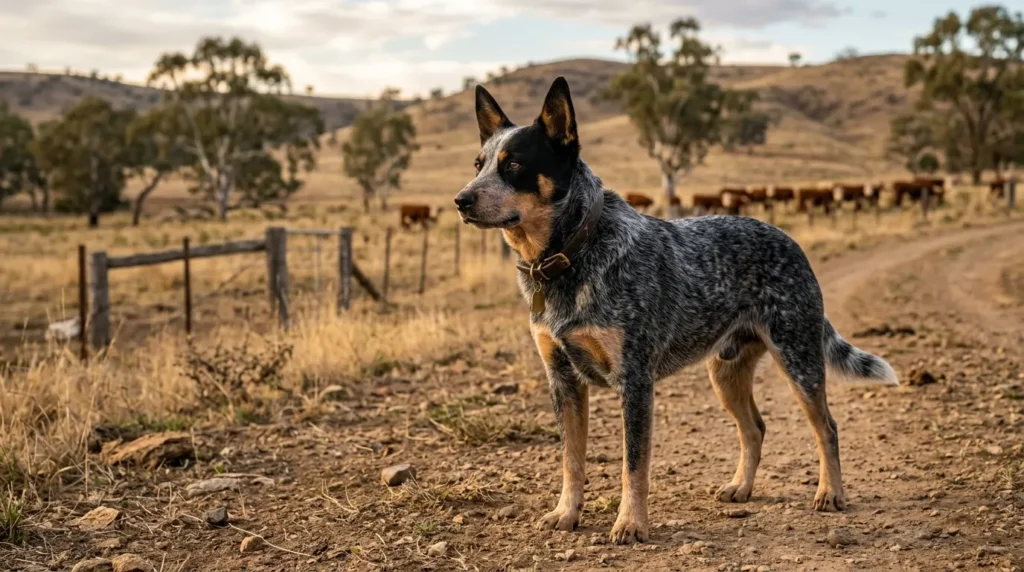
The Kelpie too has a working coat. This is a functional coat, and not a decorative one. Frequent brushing of the body gets rid of loose hair and maintains the skin and coat in excellent condition.
The larger grooming disparity is not maintenance. It is losing the expectations. Neither dog is suitable if you would like to have a hairless house.
Herding and Work Drive
This category is the most significant for serious herding owners.
The Australian Cattle Dog was created to work cattle. Its style is to control large animals and apply pressure where necessary. That instinct may manifest itself in a home as well.
The hereditary work of the Kelpie is based upon sheep. It was invented to navigate the land, round up animals, and react to a shepherd over large work environments.
Select the Cattle Dog because: it works with cattle, provides protection and companionship, is agile, obedient, and likes outdoor pursuits.
Select the Kelpie to: work with sheep, endurance work, highly obedient work, herding tests, and farm work.
Health and Lifespan
Australian Cattle Dogs tend to live long as opposed to most larger breeds. They have a short life expectancy of about 12-16 years.
These dogs need to undergo screening for inherited health issues. Hearing, eye, and orthopedic tests might be significant in choosing great beef cattle dogs.
Australian Kelpies are known for their hardiness. When reared in a responsible manner and kept in good condition, many have long working lives.
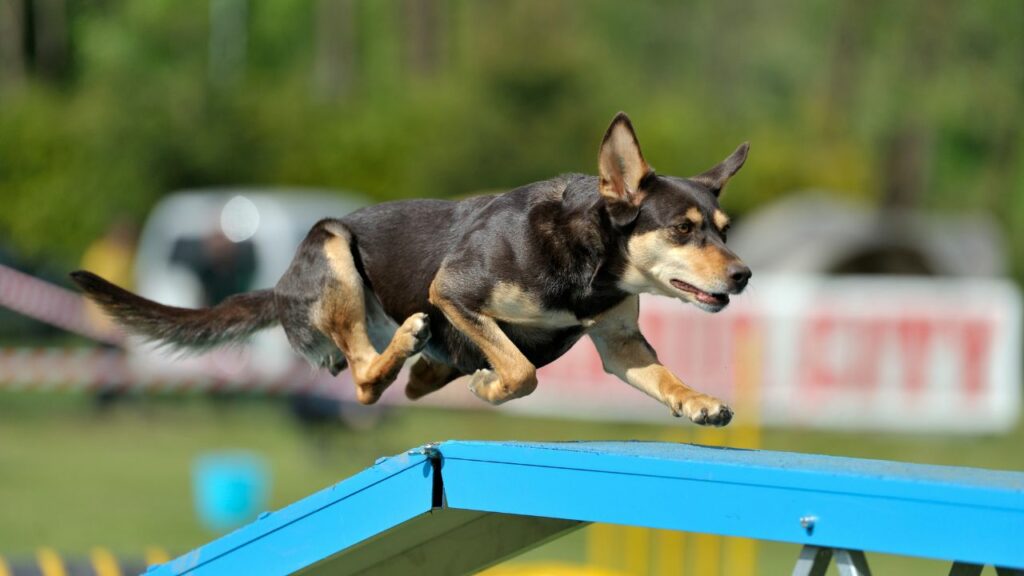
Nevertheless, a working breed does not imply resistance to health issues. The health history of the parents should be inquired about by a prospective owner. Proper veterinary screening should not be substituted for working ability in young dogs.
Which Active Herding Dog Do You Want?
Select the Australian Cattle Dog when you desire a compact, muscular dog that is highly loyal and has a herding instinct. It can be a good companion for hiking, running, agility, obedience, and active family life when trained.
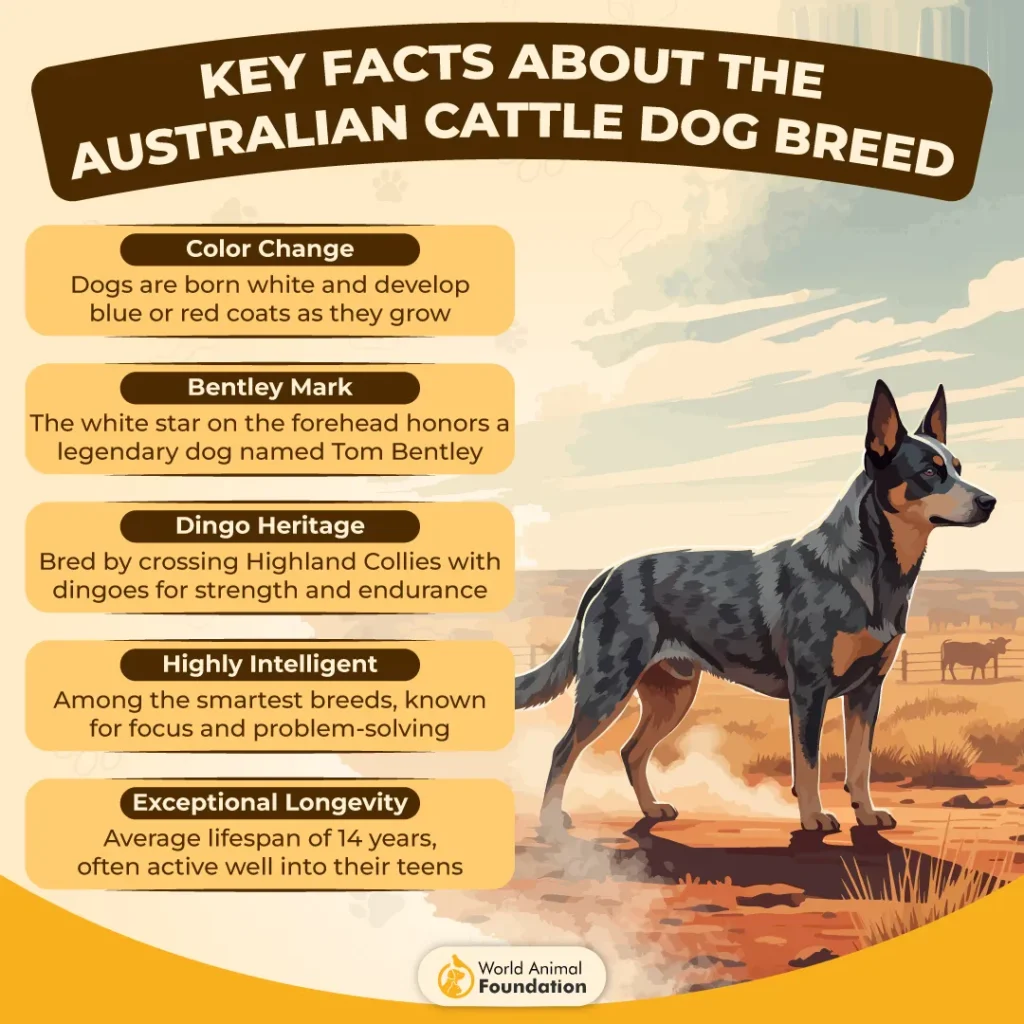
Select the Australian Kelpie when you desire outstanding endurance and a canine that enjoys a serious occupation. It is especially persuasive to those who do livestock labor or challenging dog sports.
The decision can be made easier by your favorite activity.
Love structured training? Both can excel. Need a cattle working expert? The Kelpie is better qualified.
Conclusion
It is more of a decision between two working partnerships when it comes to choosing between the two breeds.
One has the power, persistence, and urge to control movement. The other is fast and seemingly insatiable in its eagerness to continue working.
Someone who desires a serious farmmate might view the same qualities that a non-serious pet owner can hardly handle. A loving owner who loves to train, run, hike, or do dog sports might find that passion to be so rewarding.
Provided you can find that purpose a place in your daily life, any dog can be much more than an active pet. You may end up with a true working partner that challenges and keeps you on the move and makes ordinary days seem much more fun!
