





Modern schedules can leave little room for elaborate pet-care routines, making some dog breeds particularly appealing to people who want canine companionship without excessively demanding maintenance. However, an easy-care dog is not the same as a dog that needs little attention.
Breed characteristics such as grooming requirements, exercise levels, trainability, independence, and adaptability can influence how easily a dog fits into a busy household. Even dogs considered relatively manageable still require appropriate nutrition, veterinary care, companionship, exercise, and training.
The breeds below represent different approaches to convenient companionship. Some have uncomplicated coats, some are naturally adaptable, while others can satisfy their activity needs without requiring hours of intense exercise every day. Individual dogs can still vary considerably, so prospective owners should consider the whole temperament and lifestyle of each breed.
Top Easy-Care Dog Breeds: Perfect for Hectic Schedules
1. Whippet
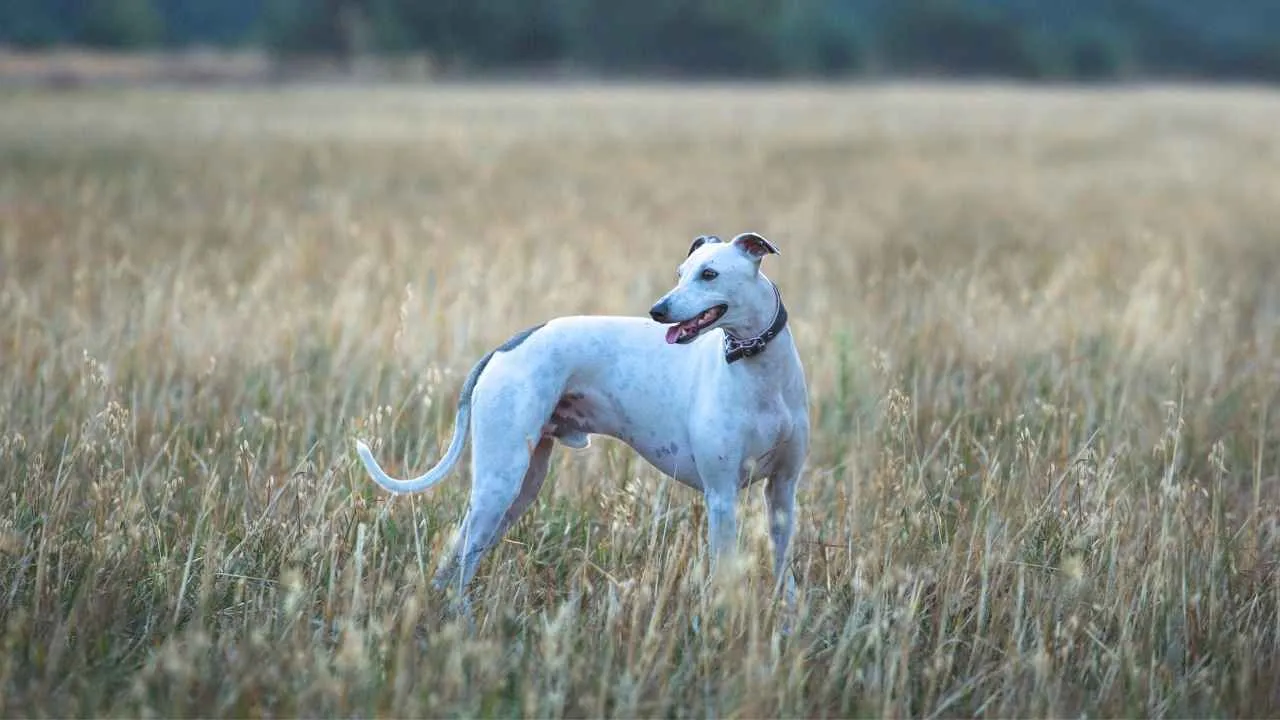
The Whippet emerged in nineteenth-century Britain as a smaller, speedy sighthound, as per the AKC. Working communities valued these dogs for their ability to chase small game and participate in racing, while their relatively compact size made them practical household companions. Their development emphasized acceleration, agility, and an efficient build rather than the endurance associated with larger working dogs.
Calm Companions with an Athletic Side
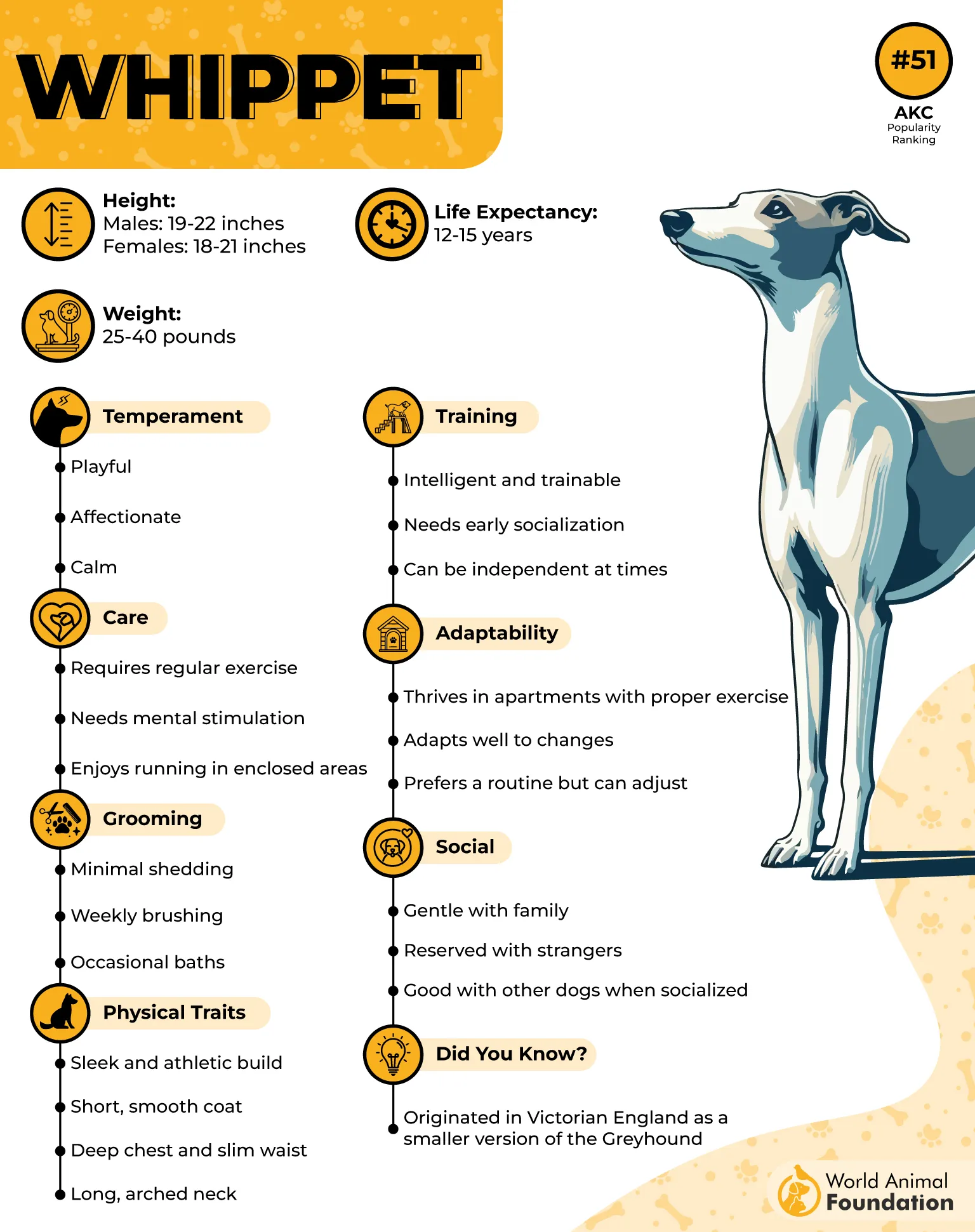
Whippets often surprise people with the contrast between their energetic bursts and their relaxed home behavior. They can race enthusiastically outdoors and then settle comfortably indoors for long periods. Their affectionate nature and generally quiet demeanor can make them appealing to households that want an active dog without a constantly demanding presence.
A Low-Maintenance Coat and Flexible Routine
The Whippet’s exceptionally short coat takes little time to maintain, with occasional grooming usually sufficient to remove loose hair and keep the skin clean. Their exercise pattern can also be practical when provided with opportunities for brisk activity rather than continuous stimulation throughout the day. Cold weather deserves extra consideration because their fine coat and lean physique provide limited insulation.
2. Shih Tzu
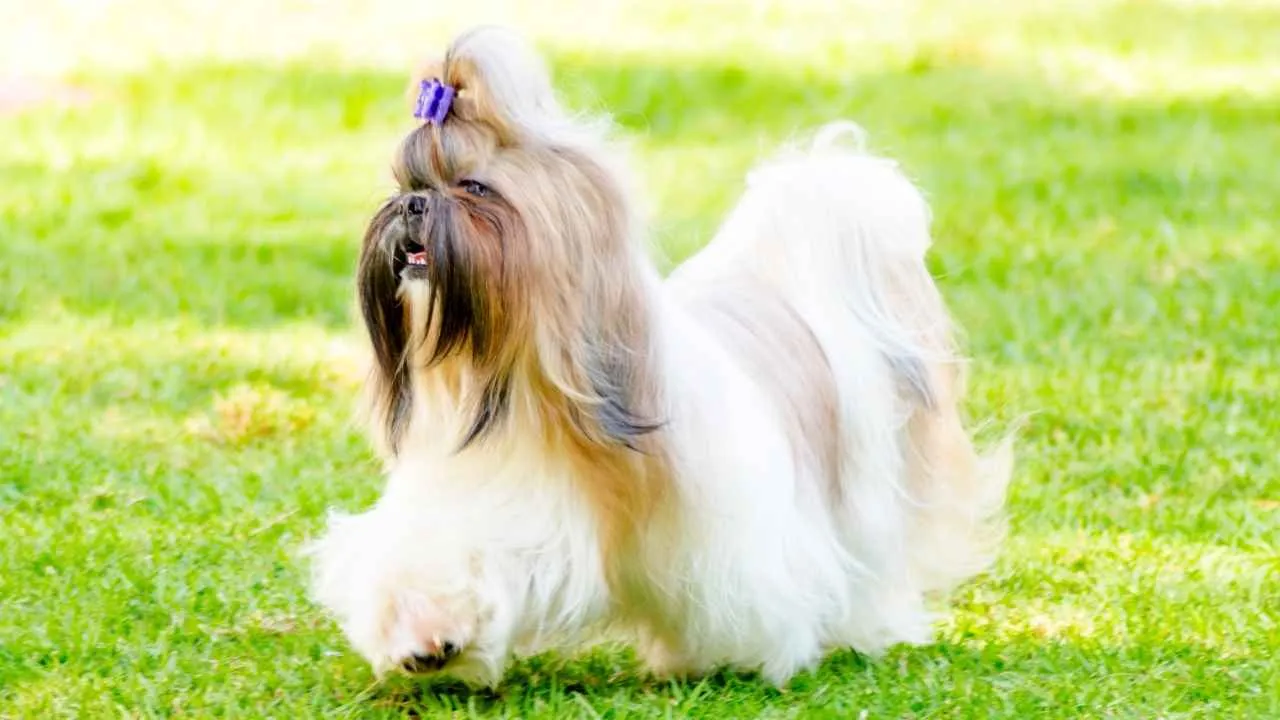
The Shih Tzu has a long association with Chinese imperial courts, although its ancestry traces back to small companion dogs developed from Tibetan and Chinese lines. The small breed was treasured primarily as a household companion rather than a working animal. Its history therefore centers on close human companionship, a role that remains evident in its affectionate character today.
Sociable, Affectionate, and Adaptable
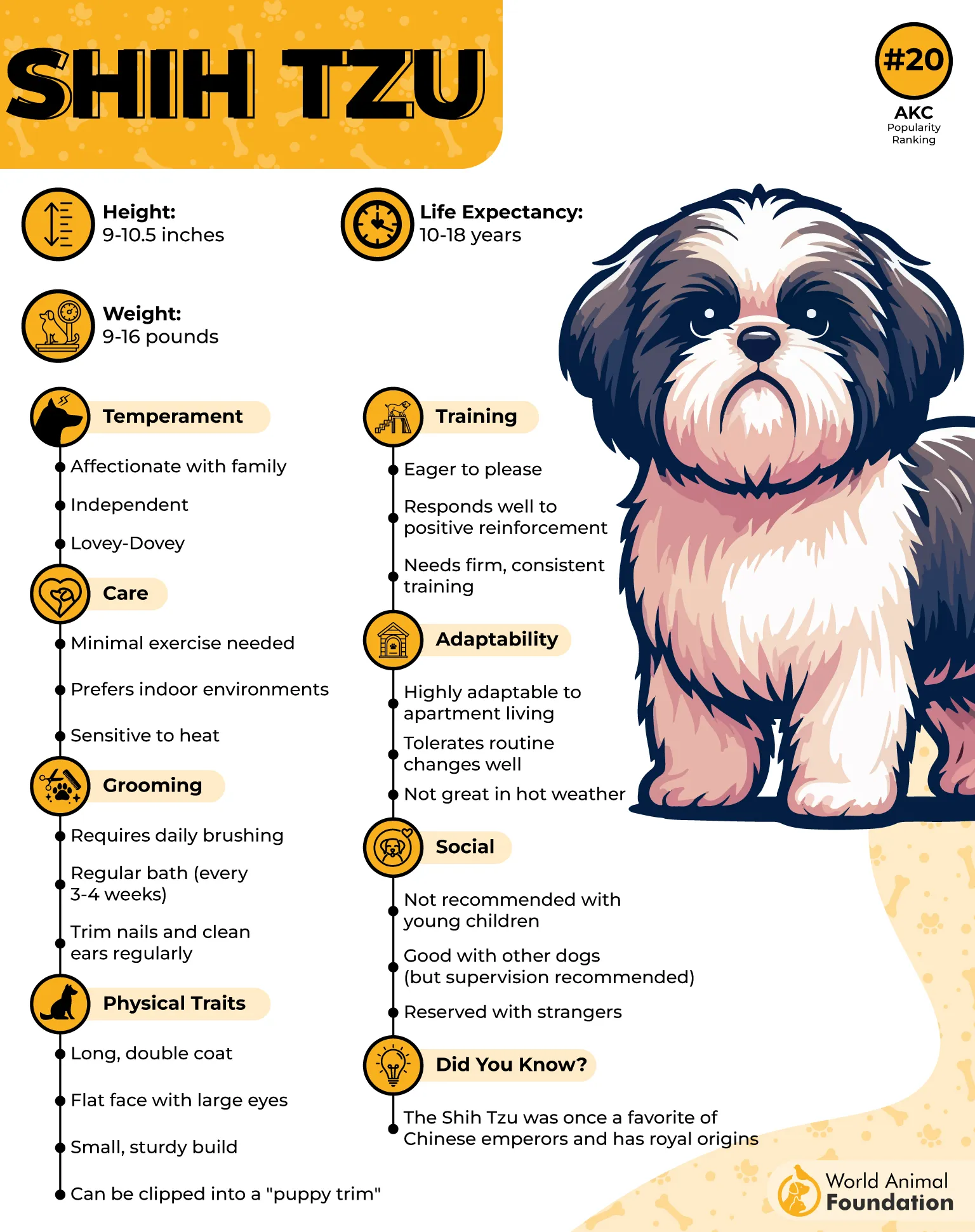
Shih Tzus generally enjoy being around their people and can adjust well to different household environments. Their modest size allows them to live comfortably in smaller spaces, provided their basic exercise and companionship needs are met. They are often lively without being relentlessly energetic, which can suit owners whose schedules favor shorter periods of activity.
Compact Size Helps Simplify Daily Management
Their small stature can make everyday tasks such as transportation, handling, and indoor exercise more convenient. However, their long coat is not inherently low-maintenance and requires regular brushing or professional grooming. For busy owners, maintaining a practical clipped hairstyle may reduce the amount of time spent managing the coat.
3. Basenji
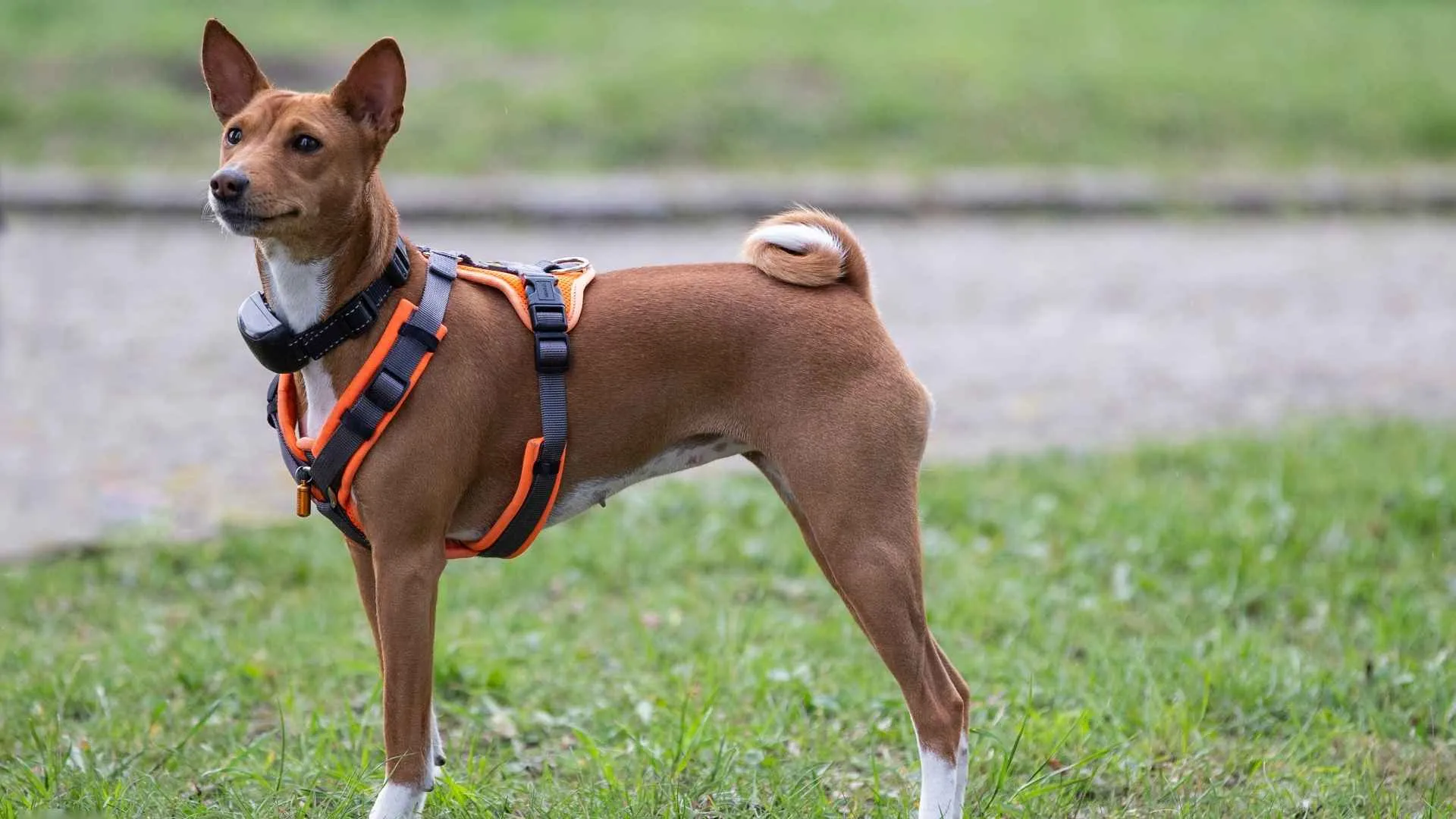
The Basenji is one of Africa’s oldest recognized dog types, with roots in Central Africa where local communities valued these strongest dogs for hunting and tracking.
European interest in the breed grew during the twentieth century, eventually leading to its establishment in Western kennel organizations. Its distinctive physical features and unusual vocal habits reflect its long development as a practical hunting companion.
Independent and Intriguingly Self-Possessed
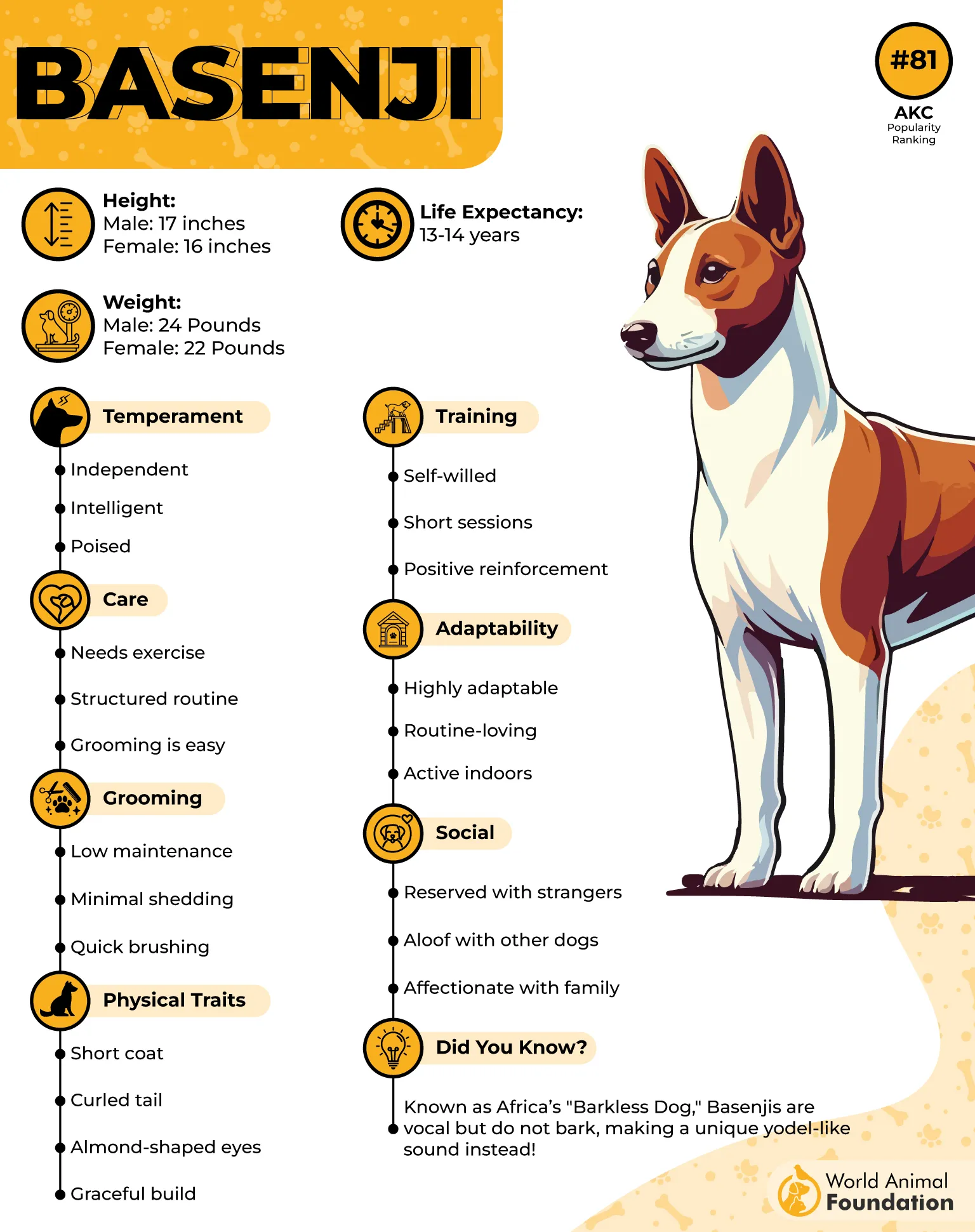
Basenjis tend to have a confident, independent personality and are not always as eager to follow instructions as highly biddable breeds. They are intelligent and curious, with a tendency to investigate their surroundings on their own terms. This independence can appeal to experienced owners but also means training should be consistent and thoughtfully structured.
Remarkably Neat Grooming Habits
The Basenji’s short coat is naturally tidy and requires relatively little grooming compared with long-coated breeds. Many owners also appreciate the breed’s famously clean habits. While minimal coat care can save time, its strong curiosity and need for appropriate daily activity mean convenience comes more from grooming simplicity than from complete independence.
4. Boston Terrier
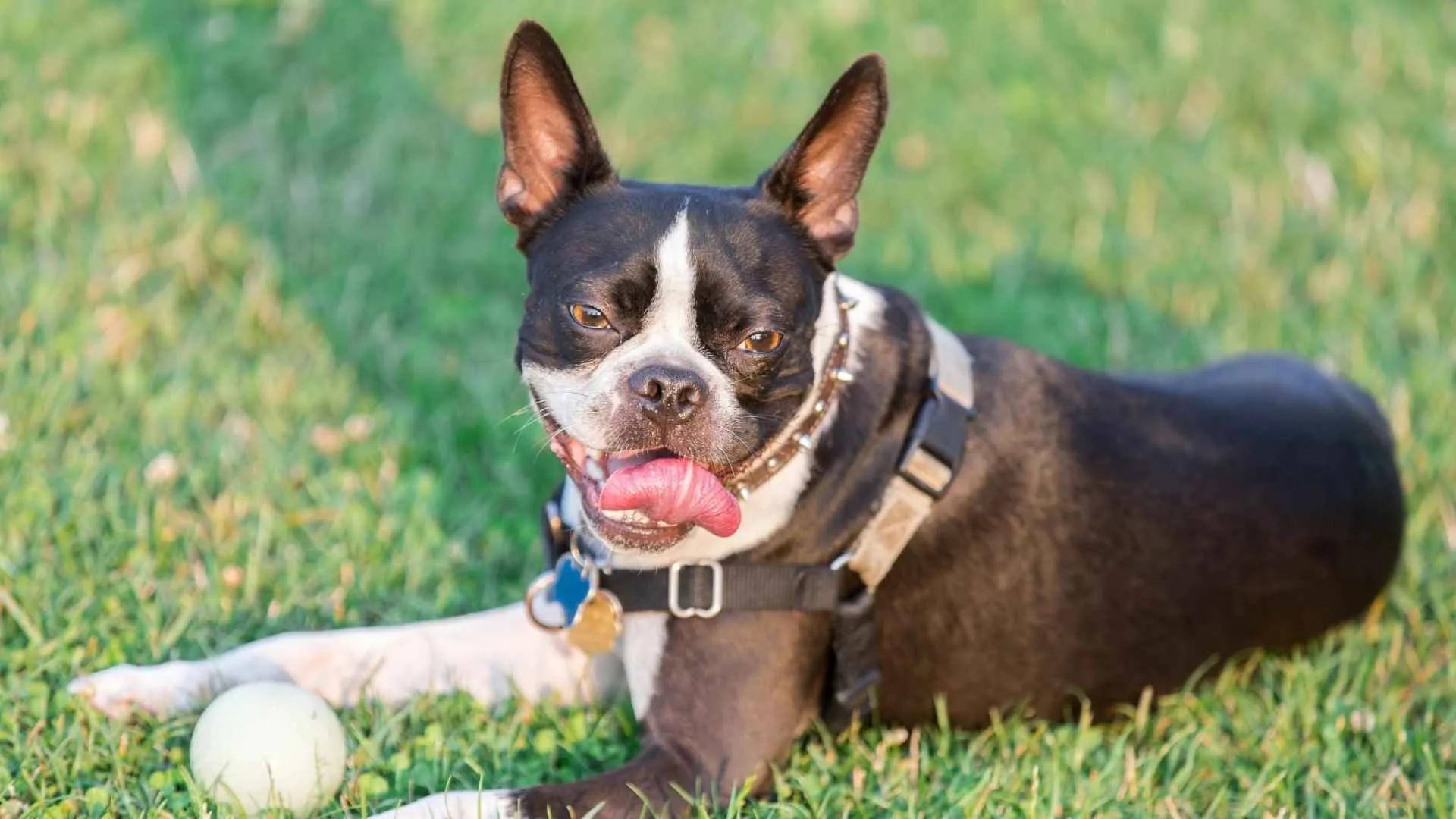
The Boston Terrier was developed in Massachusetts during the late nineteenth century from crosses involving small bulldog- and terrier-type dogs, as per Britannica.
Breeders gradually established a compact companion with a distinctive square muzzle, upright ears, and characteristic markings. The breed became closely associated with American urban life and eventually earned recognition as a dedicated companion dog.
Bright, Playful, and People-Oriented
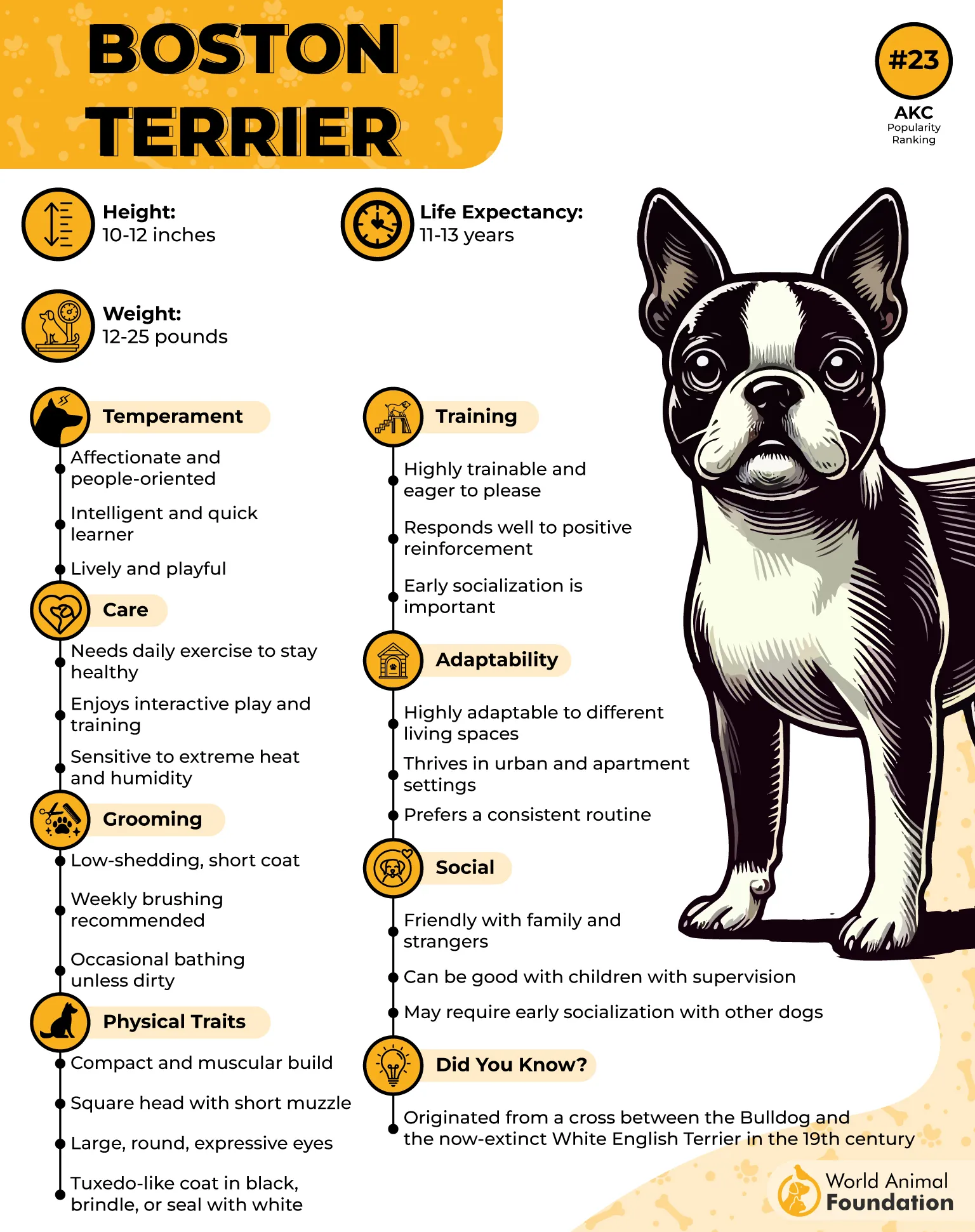
Boston Terriers are usually cheerful and interactive, often enjoying games and family activities without demanding the endurance of a high-performance sporting breed. Their compact bodies can make them practical for many living arrangements. They generally respond well to positive training and tend to form strong connections with their owners.
Straightforward Grooming for Busy Households
Their short, smooth coat can be maintained with minimal effort, and there is no need for elaborate trimming or daily coat styling. A quick brushing session can help collect loose hair and keep the coat looking neat. Their physical structure also means owners should be sensible about strenuous activity, particularly in hot or humid conditions.
5. Poodle
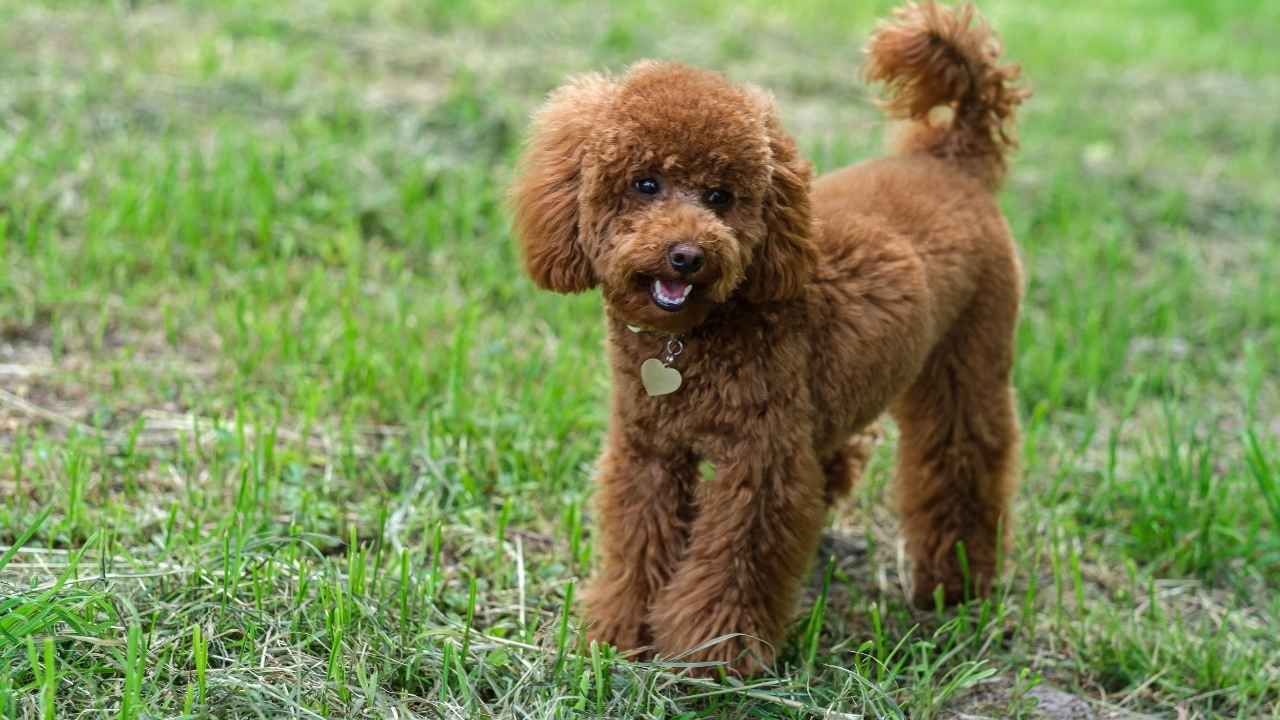
The Poodle is commonly associated with France, although its early development is connected to German water-dog traditions. Originally bred as a retrieving and water-working dog, it later became popular throughout Europe as both a performer and companion. Its reputation for intelligence helped it excel in a wide range of roles beyond its original sporting purpose.
Exceptionally Intelligent and Responsive
Poodles are renowned for their mental sharpness and ability to learn complex behaviors. They often enjoy having a purpose, whether that involves training exercises, interactive games, or participating in household routines. This intelligence can make teaching efficient, although owners should provide enough mental engagement to prevent boredom
Predictable Coat Management with the Right Trim
The Poodle’s coat does not shed in the same manner as many conventional dog coats, but it is not naturally effortless. Hair continues growing and can mat without regular brushing and clipping. Busy owners may find that scheduling professional grooming and choosing a shorter, practical trim creates a predictable maintenance routine.
6. Bichon Frise
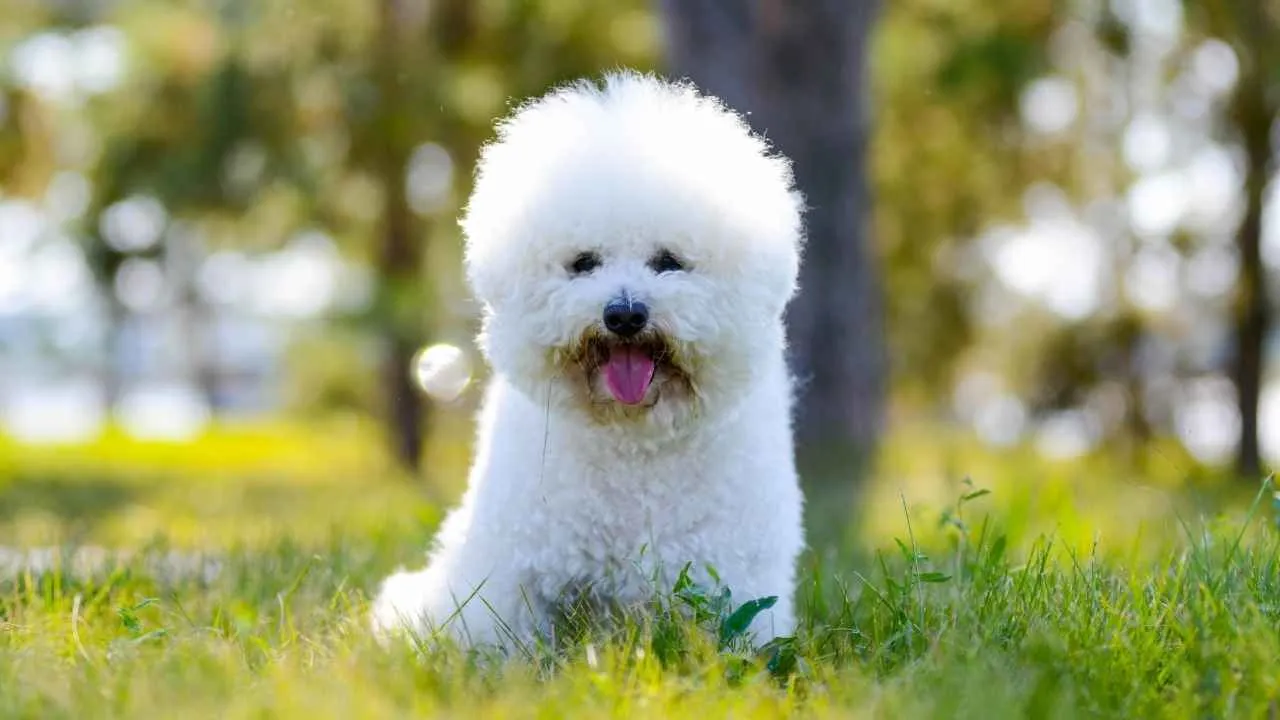
The Bichon Frise developed from Mediterranean companion-dog lines and became especially popular among European nobility and entertainers. Its ancestors traveled widely through maritime trade before the breed became firmly established as a European companion. Small size, a cheerful expression, and a sociable disposition eventually helped secure its place as a household favorite.
Cheerful Personalities in a Small Package
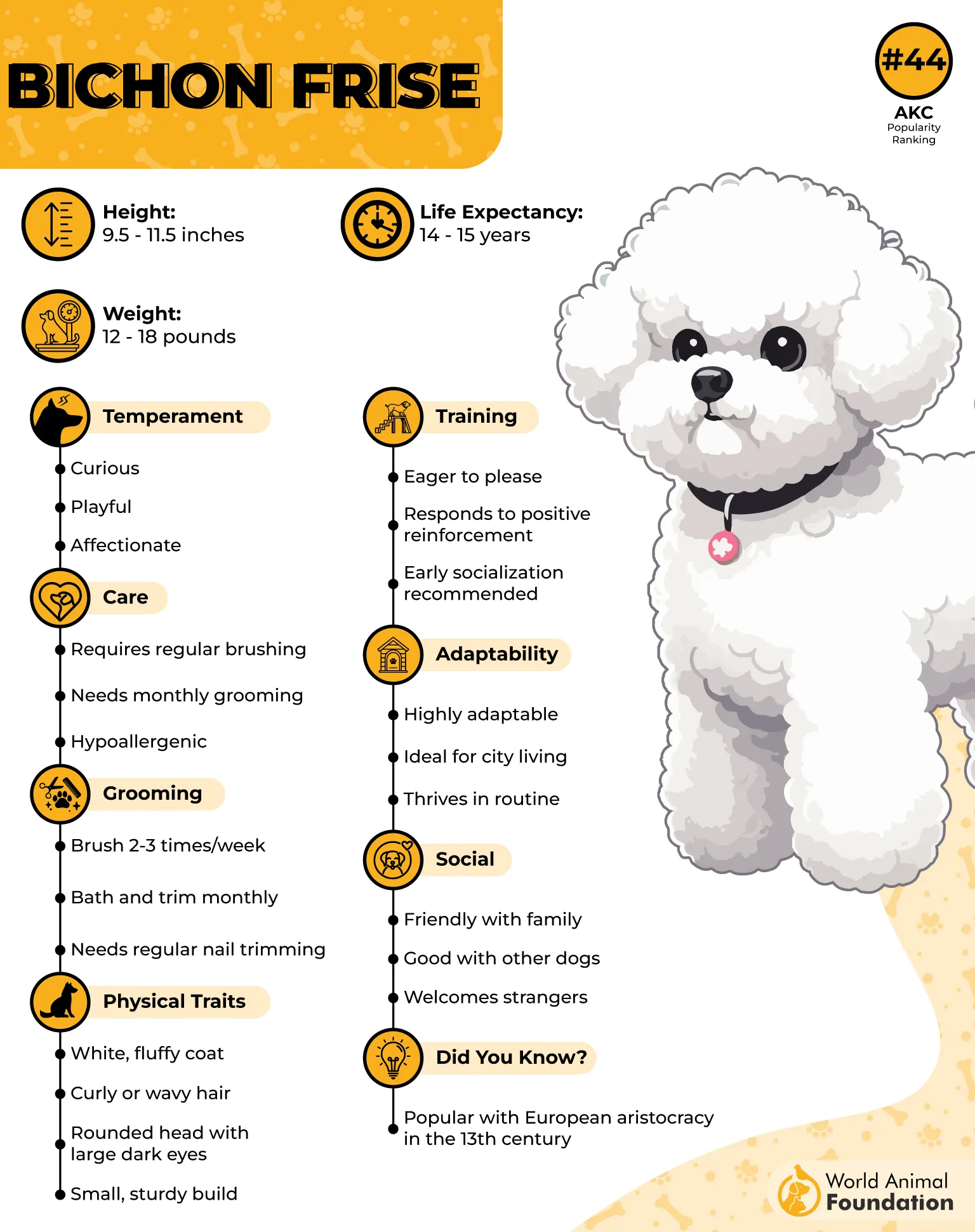
Bichons are typically outgoing, affectionate, and enthusiastic about human interaction. They often enjoy play without requiring the level of physical exertion expected from working or sporting breeds, as per PetMD. Their social nature can be particularly appealing to owners who want a dog that participates readily in family life.
A Manageable Routine When Grooming Is Scheduled
Although the Bichon’s fluffy appearance suggests extensive maintenance, owners can make coat care more predictable through regular professional grooming. A suitable haircut can reduce the amount of daily brushing required, while occasional home maintenance helps prevent tangles. The key for busy households is consistency rather than trying to eliminate grooming.
7. Miniature Schnauzer
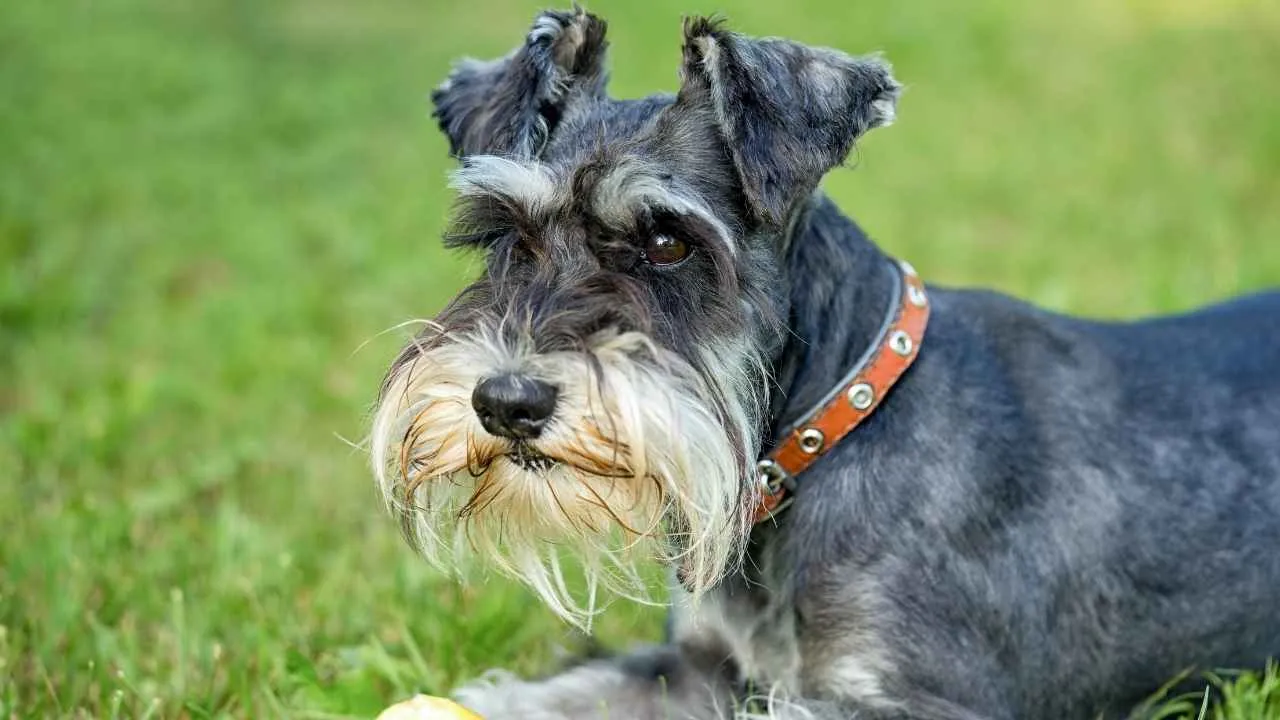
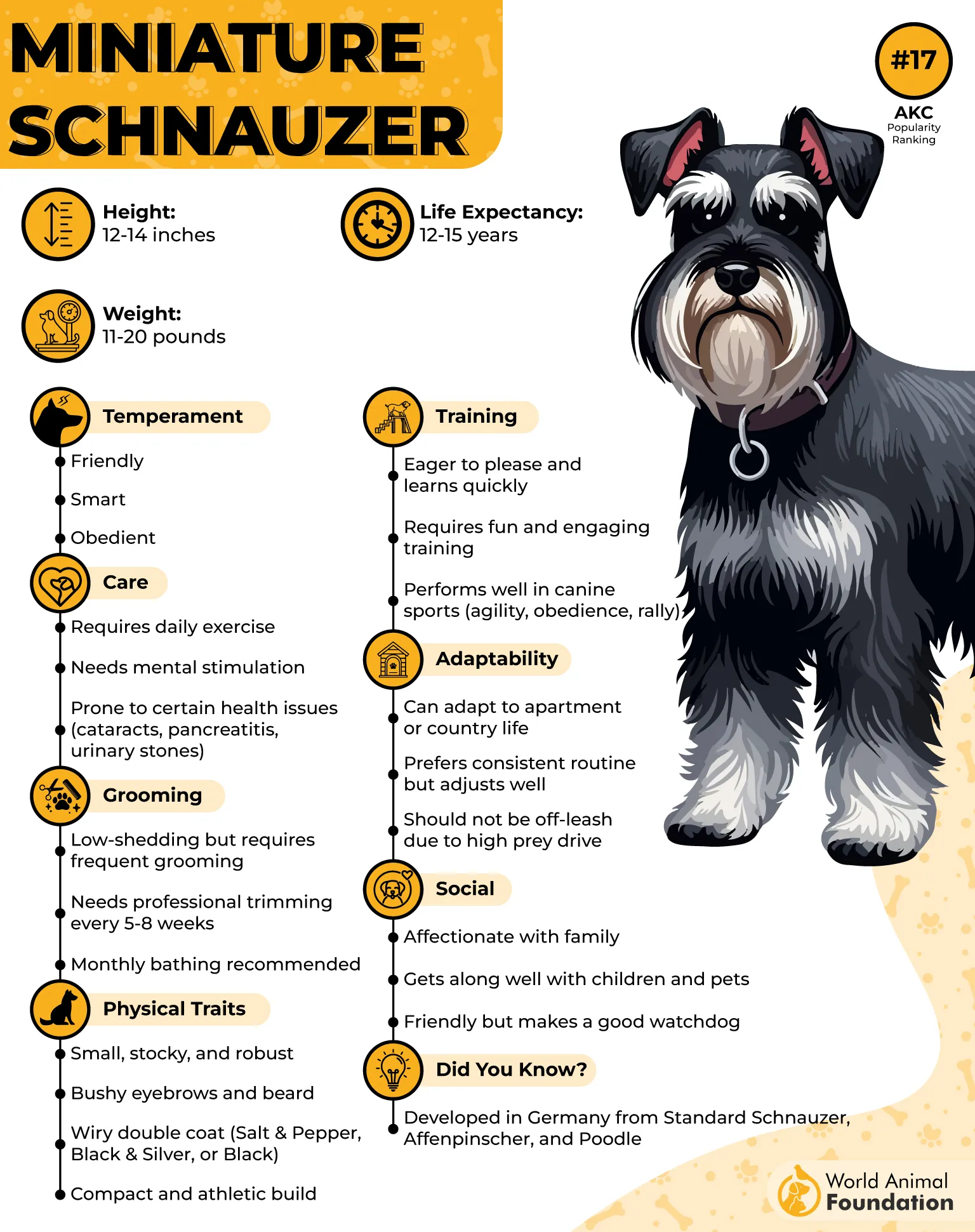
The Miniature Schnauzer originated in Germany, where breeders developed a smaller version of the Standard Schnauzer for farm and household duties. Smaller terrier-type dogs were incorporated into its development, creating a compact animal capable of controlling vermin while also serving as an alert companion. The breed eventually became valued well beyond its original working environment.
Alert, Spirited, and Highly Trainable
Miniature Schnauzers tend to be lively and attentive, often noticing unfamiliar sounds or activity around the home. Their intelligence can make them responsive to structured training, while their spirited nature keeps them engaged with family members. They are not passive pets, but their size makes many daily activities relatively manageable.
A Practical Coat with Regular Trimming
Their wiry coat can be maintained in several styles, allowing owners to choose a shorter cut that reduces day-to-day brushing. Professional trimming or clipping remains necessary, but scheduled appointments can make the workload predictable. Their facial furnishings may require additional attention if kept longer.
8. Italian Greyhound
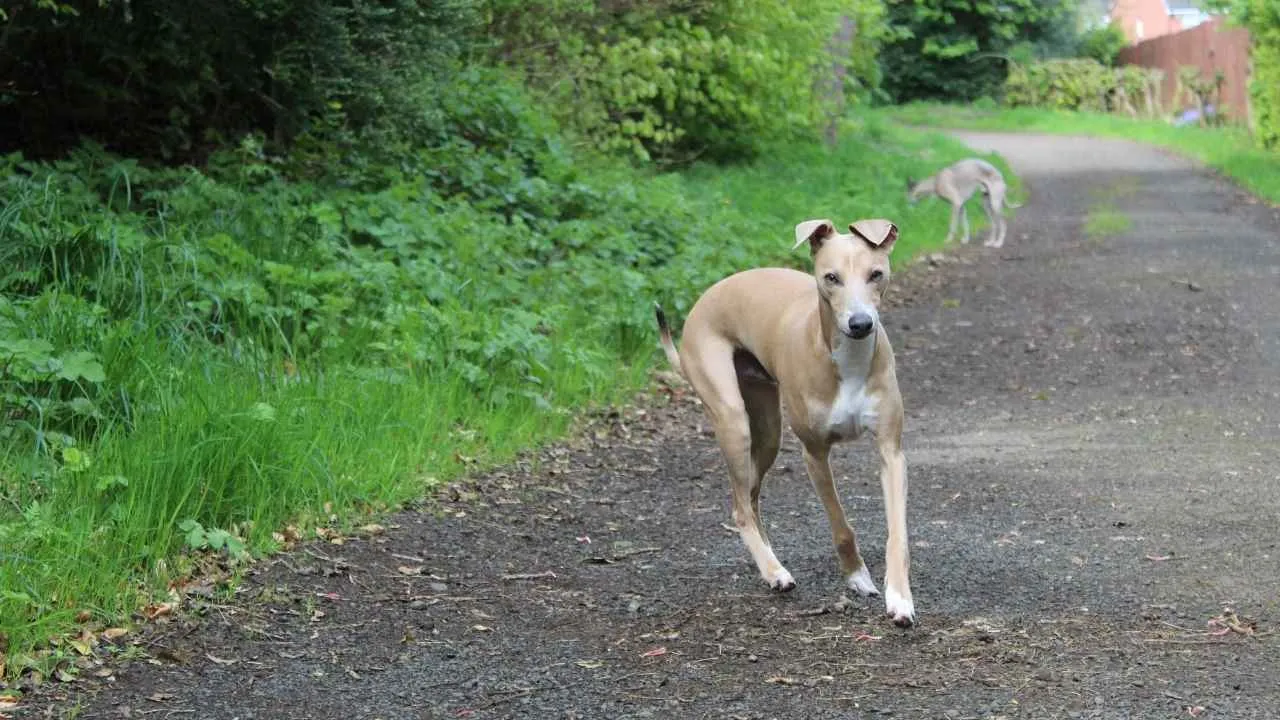
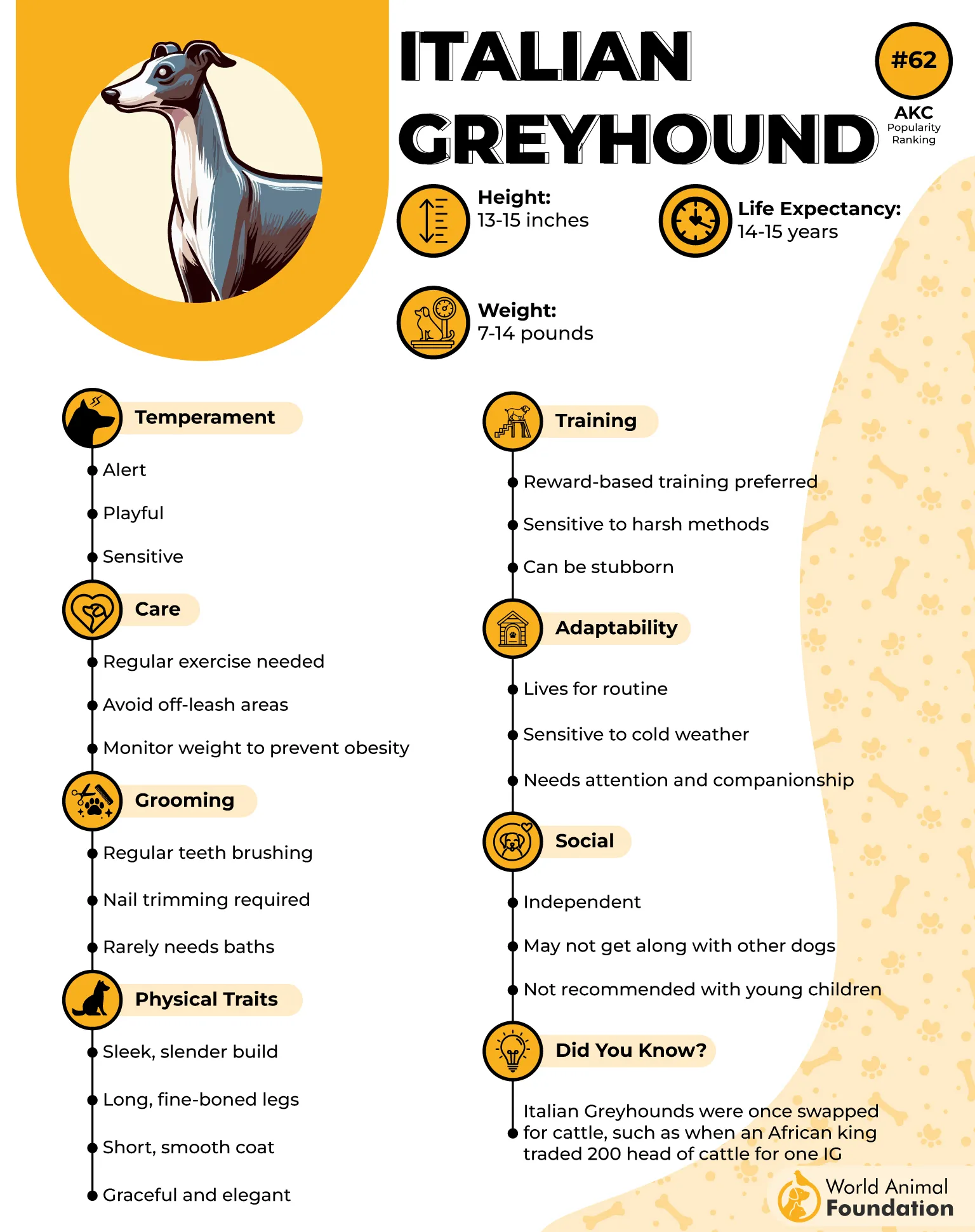
The Italian Greyhound belongs to the ancient family of sighthounds and has been associated with Mediterranean and European households for centuries. Its small stature made it especially attractive as a companion while retaining the elegant proportions and speed characteristic of its larger relatives. Over generations, the breed became strongly associated with companionship rather than demanding field work.
Sensitive, Affectionate, and Surprisingly Playful
Italian Greyhounds often form close bonds with their owners and can be gentle, affectionate household companions. They enjoy short periods of energetic play but are equally happy spending substantial time relaxing with their people, as per Purina. Their sensitive nature means harsh training methods can be counterproductive, making calm, consistent handling preferable.
Almost Effortless Coat Care
The breed’s extremely short coat requires little brushing, and its small body makes bathing and routine handling relatively simple. This can be a significant advantage for owners with limited time for grooming appointments. Their delicate build does require sensible supervision during rough play and extra protection in cold weather.
9. Portuguese Water Dog
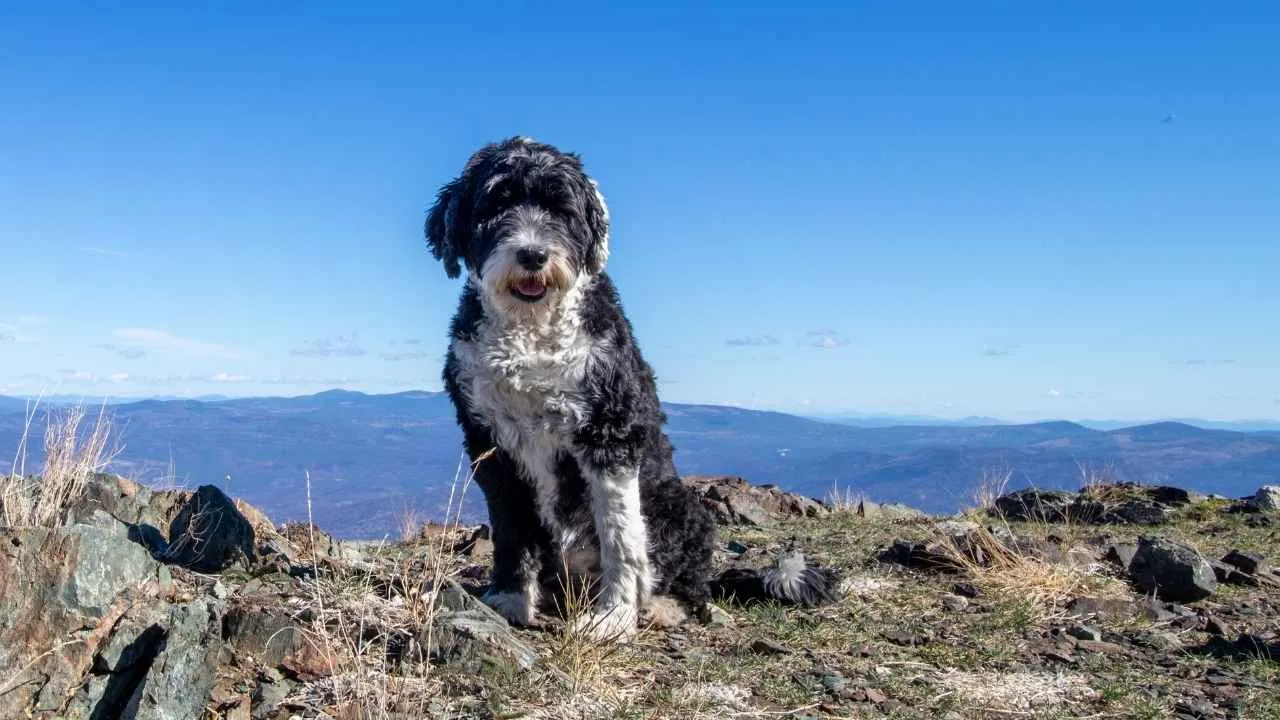
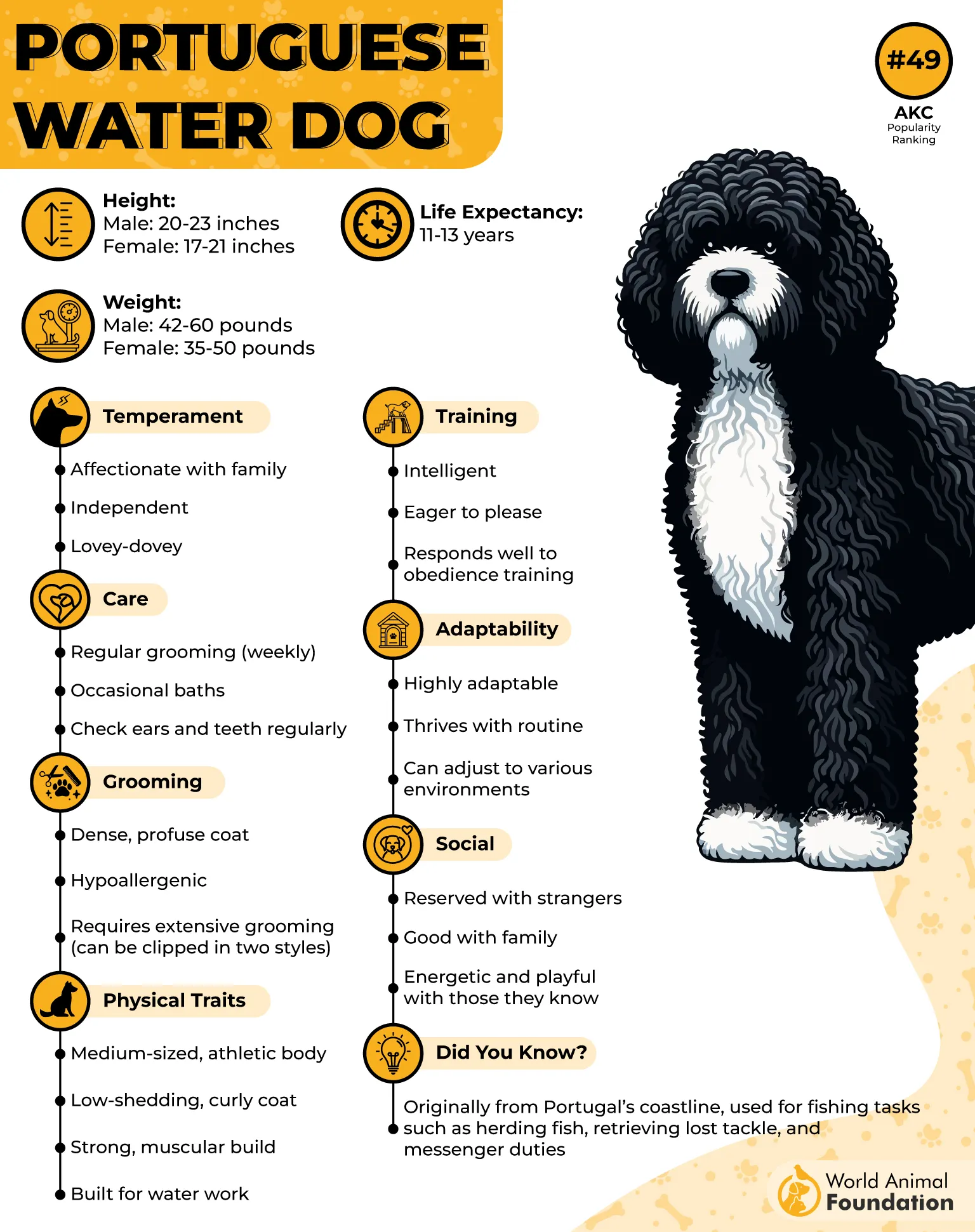
The Portuguese Water Dog originated along Portugal’s coast, where fishermen relied on versatile dogs to assist with maritime work. These dogs were used for tasks including retrieving objects from the water, helping with fishing operations, and carrying messages between boats and shore. Their working background produced an intelligent and physically capable breed.
Energetic Workers with an Eager Mind
Portuguese Water Dogs are generally enthusiastic, clever, and highly responsive to their owners. They enjoy learning and often thrive when given activities that combine movement with problem-solving. Their willingness to participate can make training rewarding, although they are better suited to busy owners who can provide purposeful daily exercise.
A Coat That Can Be Kept Manageable
Their curly or wavy coat needs more attention than the short-coated breeds on this list, but a practical clipped style can simplify maintenance. Regular brushing and scheduled grooming remain important to prevent matting. For owners prepared to maintain a routine, the coat can be managed without elaborate daily styling.
10. Maltese
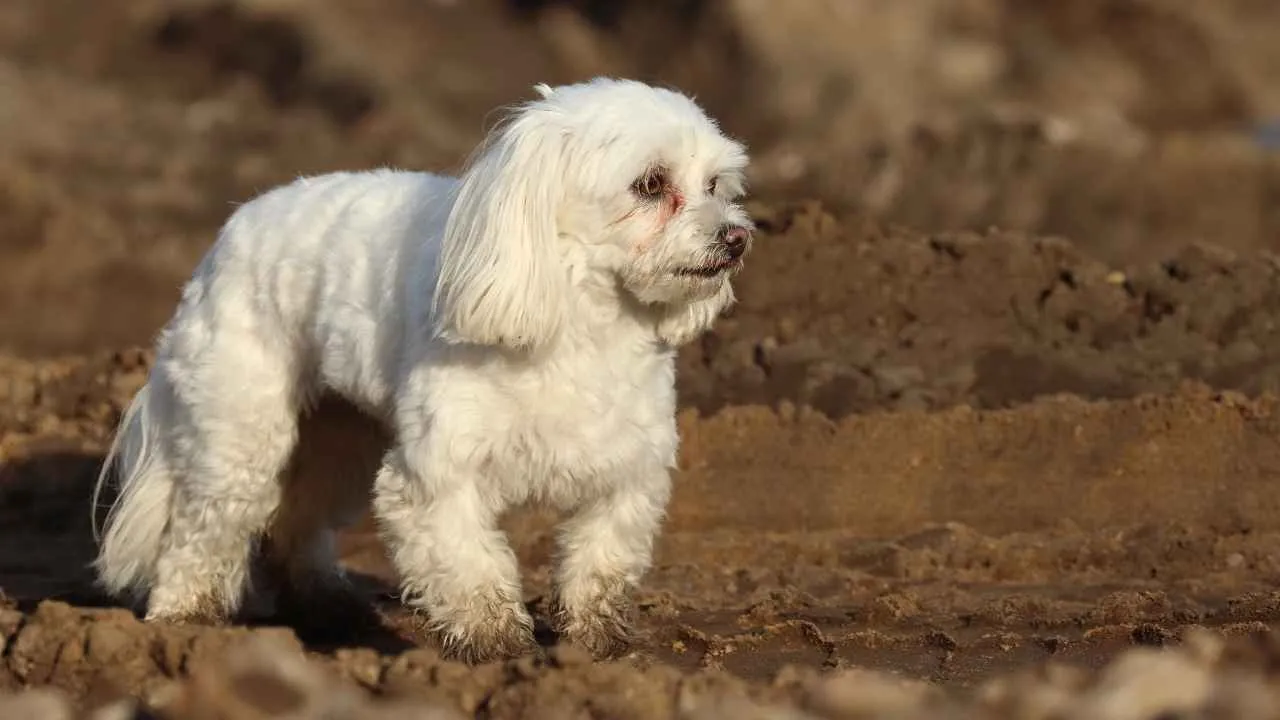
The Maltese has ancient roots in the Mediterranean, with the breed becoming associated with the island of Malta and surrounding trading cultures. Small white companion dogs of this type were prized by wealthy households and aristocratic circles for generations. Unlike breeds developed primarily for hunting or guarding, the Maltese was shaped principally around companionship.
Affectionate, Alert, and Comfortable Indoors
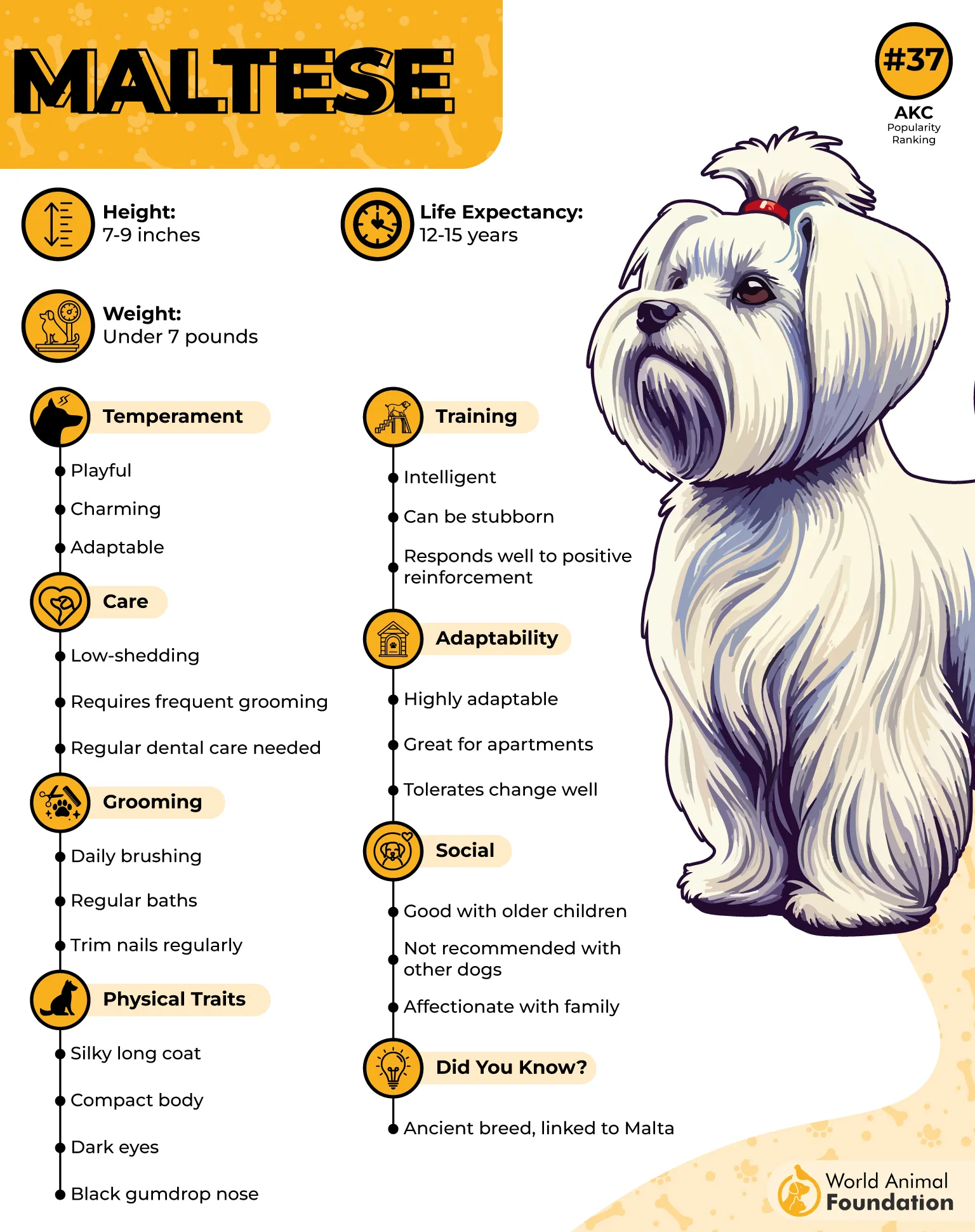
Maltese dogs are usually devoted to their owners and can bring plenty of personality despite their tiny size. They often enjoy indoor play and brief walks rather than requiring lengthy outdoor adventures every day. Their alertness can make them surprisingly vocal, so early training can help establish appropriate household habits.
Small Size and a Short Trim Can Save Time
The Maltese has a long, silky coat that requires considerable upkeep when left at full length. Busy owners can instead maintain a shorter companion trim, reducing brushing time while preserving the breed’s distinctive appearance. Its small size also makes routine bathing, transportation, and general handling easier than with a large dog.
Conclusion
An easy-care dog is best understood as a breed whose overall needs can be accommodated realistically rather than one that requires almost no work. The Whippet and Italian Greyhound offer exceptionally simple coat maintenance, while the Boston Terrier provides a compact companion with straightforward grooming.
Breeds such as the Basenji may reduce coat-related chores through their naturally neat habits, whereas Poodles, Bichons, Schnauzers, Portuguese Water Dogs, Shih Tzus, and Maltese benefit from predictable grooming schedules.
Lifestyle compatibility ultimately depends on more than the number of minutes spent brushing a dog. Exercise demands, separation tolerance, training requirements, barking tendencies, social needs, and health considerations can all affect how practical a breed becomes in a busy household.
For someone with a demanding schedule, the best choice is therefore not necessarily the breed requiring the least effort. It is the dog whose everyday needs can be met consistently and responsibly. A realistic match can make companionship rewarding for both owner and dog, even when life is already full.
