




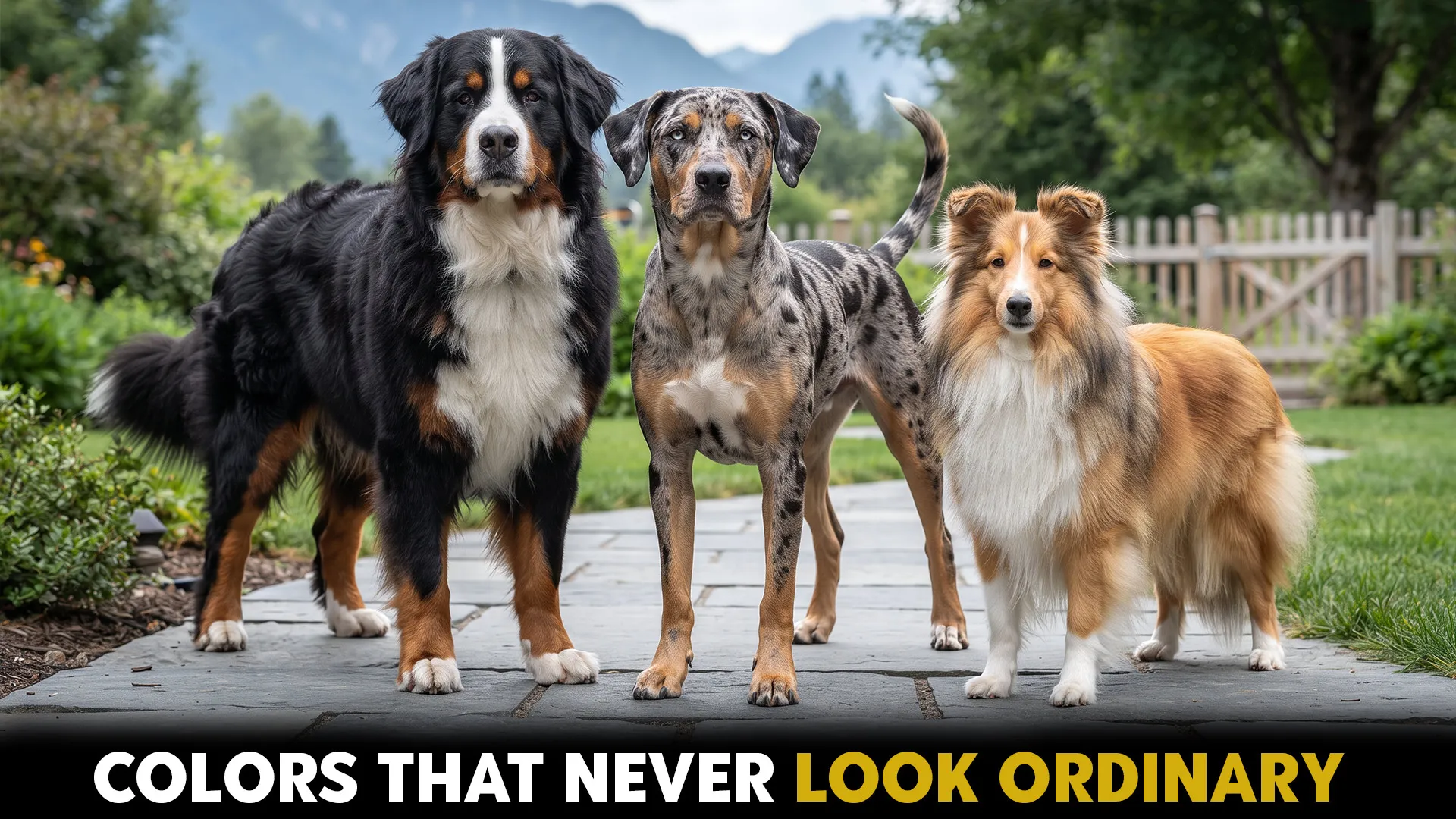
A dog’s appearance can be shaped by much more than its size or facial features. Coat pigmentation, markings, patches, and contrasting shades can create striking differences between individuals of the same breed.
Some tricolor dogs display elegant tricolor combinations, while others may carry intricate merle patterns or unusual combinations of dark, pale, red, and white coloring. These visual characteristics have made certain breeds especially fascinating to dog enthusiasts.
Coat color, however, should never be considered separately from temperament and care requirements. A beautiful pattern does not determine whether a particular dog will suit a household.
Exercise needs, grooming commitments, inherited instincts, nutrition, training, and general health all deserve attention. Understanding the complete picture allows prospective owners to appreciate appearance while making responsible choices.
Their histories stretch from Welsh farms and Scottish borderlands to Australian ranches, Swiss valleys, Alaskan settlements, and Louisiana countryside. Each has its own personality and physical requirements, while offering distinctive coat characteristics that make it visually memorable.
Dog Breeds Featuring Exceptional Coat Color Variation
1. Cardigan Welsh Corgi
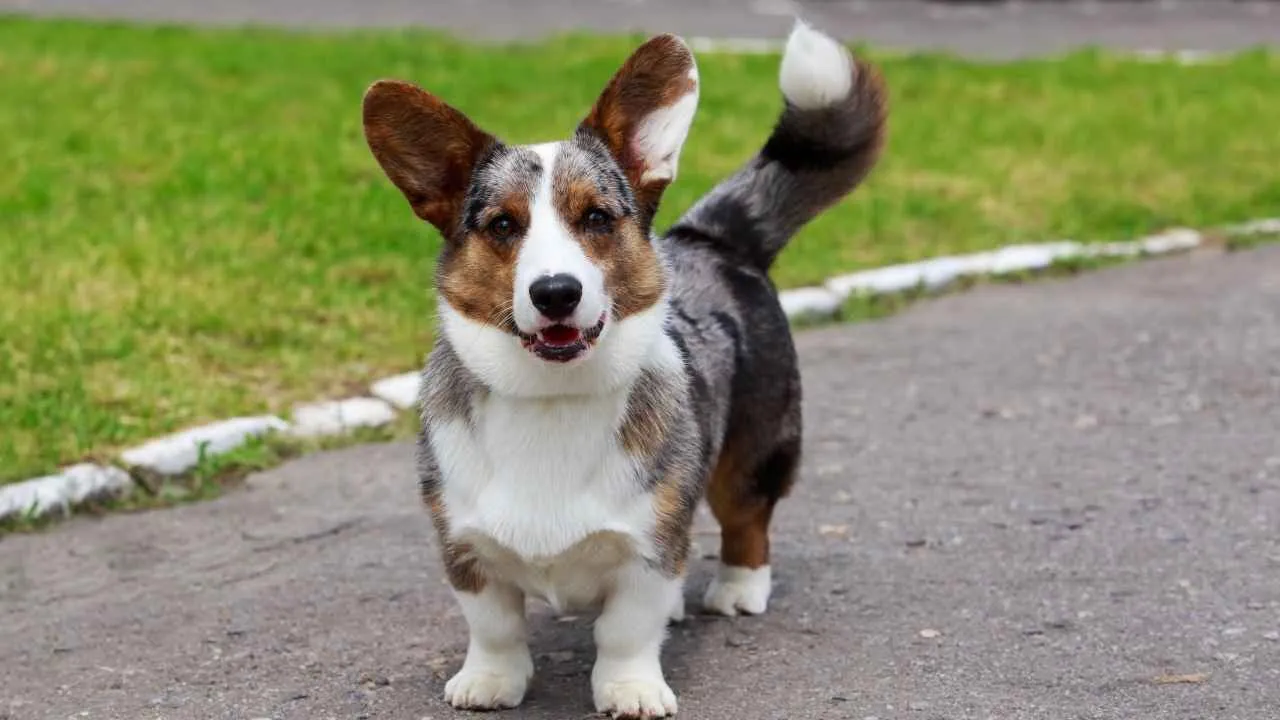
The Cardigan Welsh Corgi is an ancient breed associated with Cardiganshire in Wales, where farmers used these low-set dogs to help manage cattle.
Celtic origins are often associated with the breed’s early history, although its development occurred over many generations. Eventually, the Cardigan became valued as both a practical farm worker and affectionate household companion.
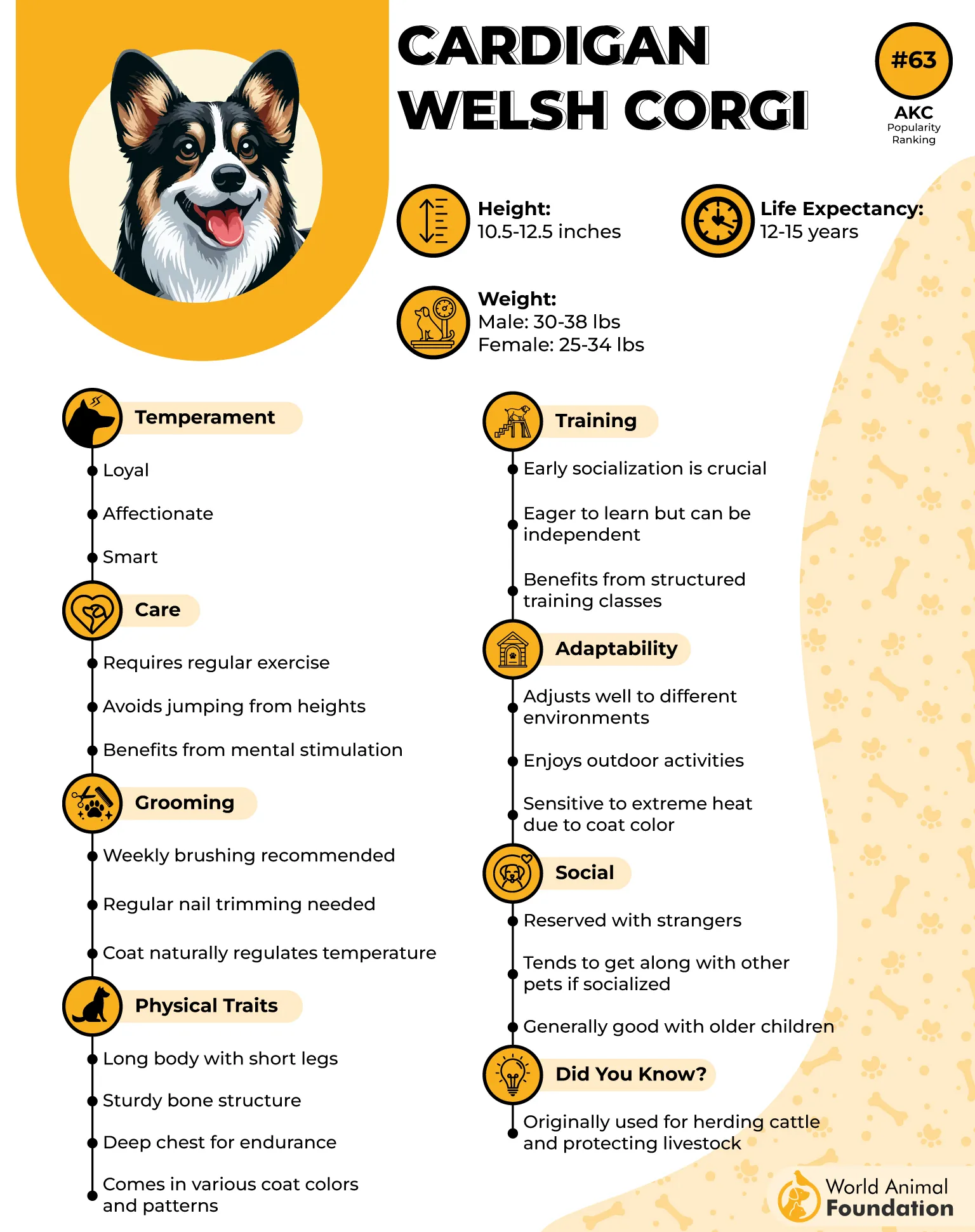
Bright and Devoted
Cardigans are intelligent, alert, and generally affectionate toward their families. Their working background gave them confidence and independence, yet many enjoy interactive training and games with their owners.
Regular activity helps prevent boredom, while puzzle toys and obedience exercises can challenge their active minds.
A Broad Spectrum of Shades
Few small breeds offer such an appealing selection of recognized colors, including red, sable, black, brindle, and blue merle, often accompanied by white markings.
Blue merle individuals can display intricate patches that make every coat appear distinctive. Their medium-length coat benefits from routine brushing, particularly during shedding periods.
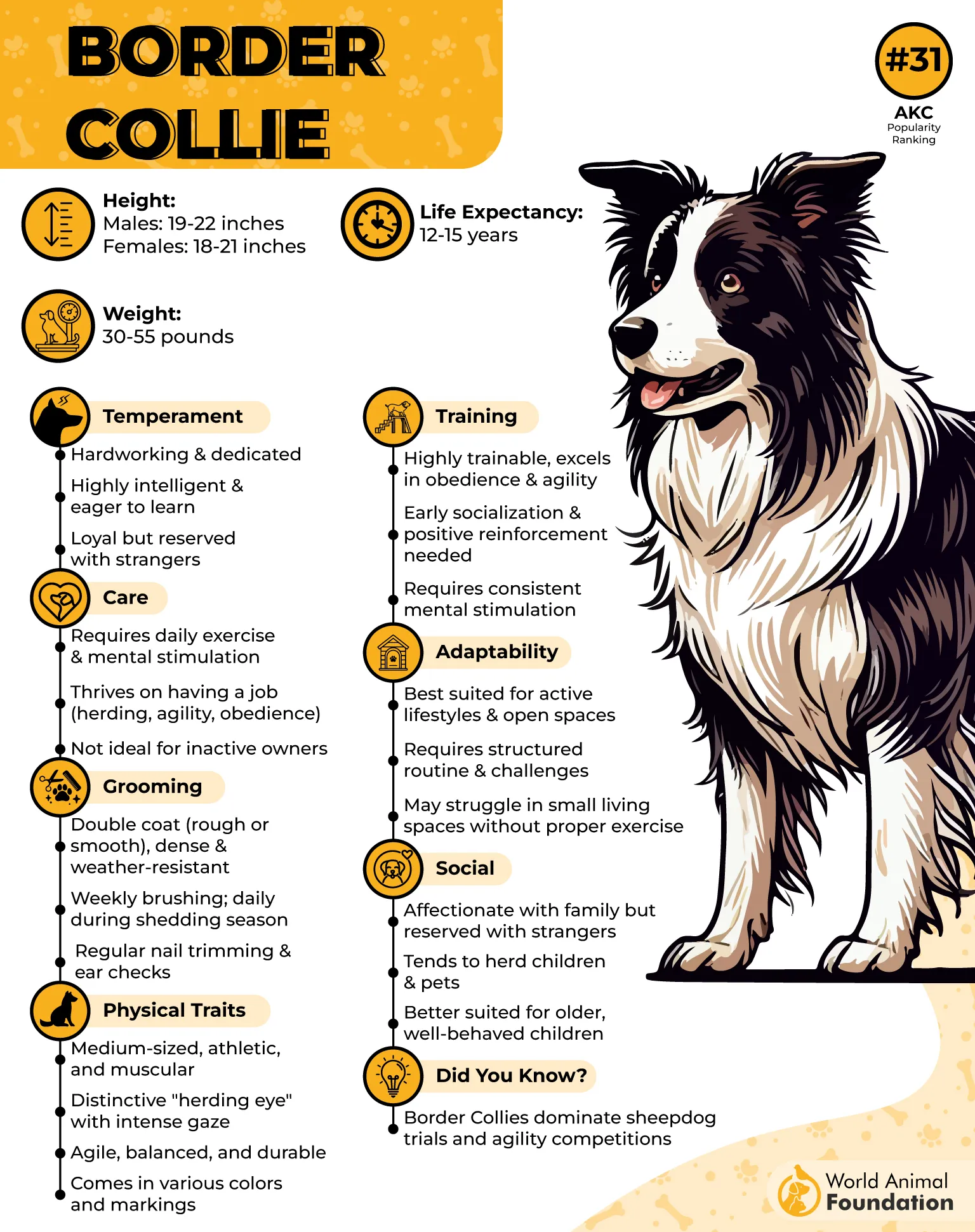
2. Border Collie
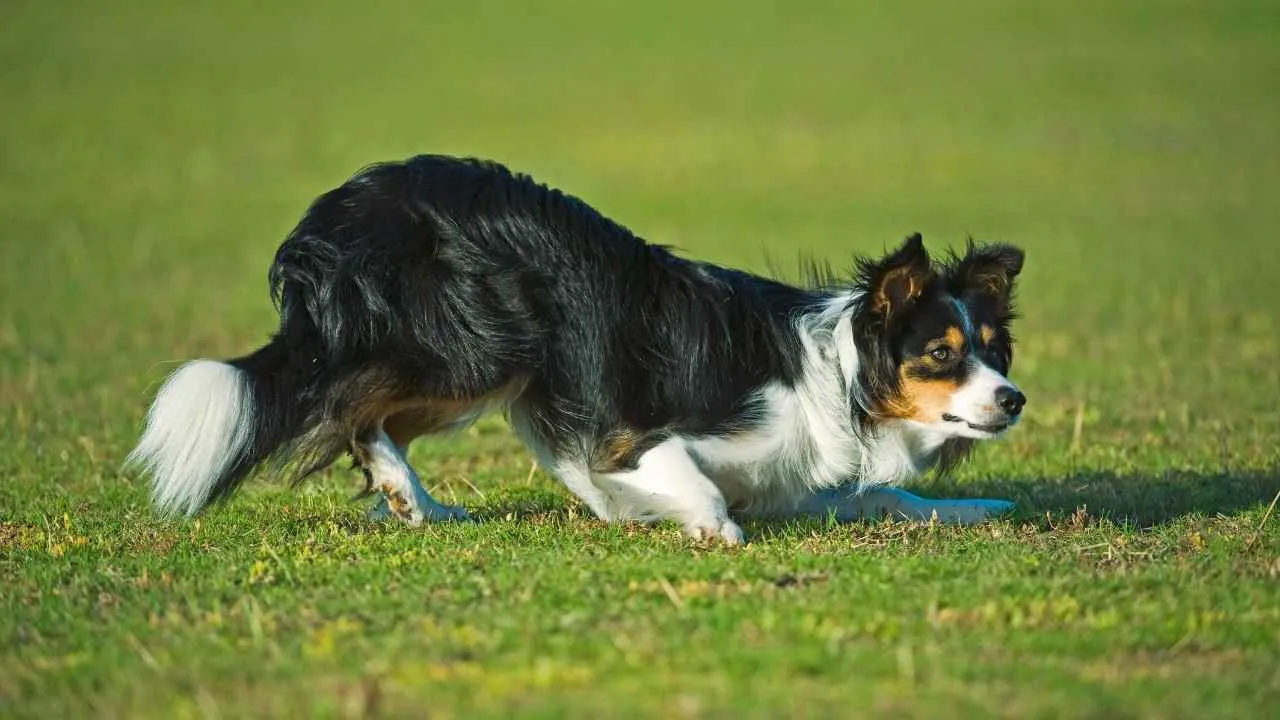
The Border Collie originated in the border country between Scotland and England, where shepherds needed highly capable dogs for managing sheep across expansive terrain, as per Purina.
Breeding focused heavily on intelligence, stamina, responsiveness, and a natural ability to control livestock through movement and intense concentration. Over time, these qualities established the breed as one of the world’s premier herding specialists.
Energetic and Exceptionally Clever
Border Collies are famous for learning quickly and remaining intensely engaged with their surroundings. They often thrive when physical exercise is combined with problem-solving, advanced obedience, scent activities, or agility.
Without enough stimulation, their intelligence can lead them toward undesirable self-invented activities. Many develop close partnerships with their owners and respond particularly well to patient, reward-based instruction.
Merle, Tricolor, and Beyond
This breed appears in numerous color combinations, including black and white, red and white, blue merle, red merle, and tricolor variations.
Merle coats can feature beautifully irregular patches that differ substantially from one individual to another. Smooth and rough coat types are both seen, with regular brushing helping remove loose fur and outdoor debris.
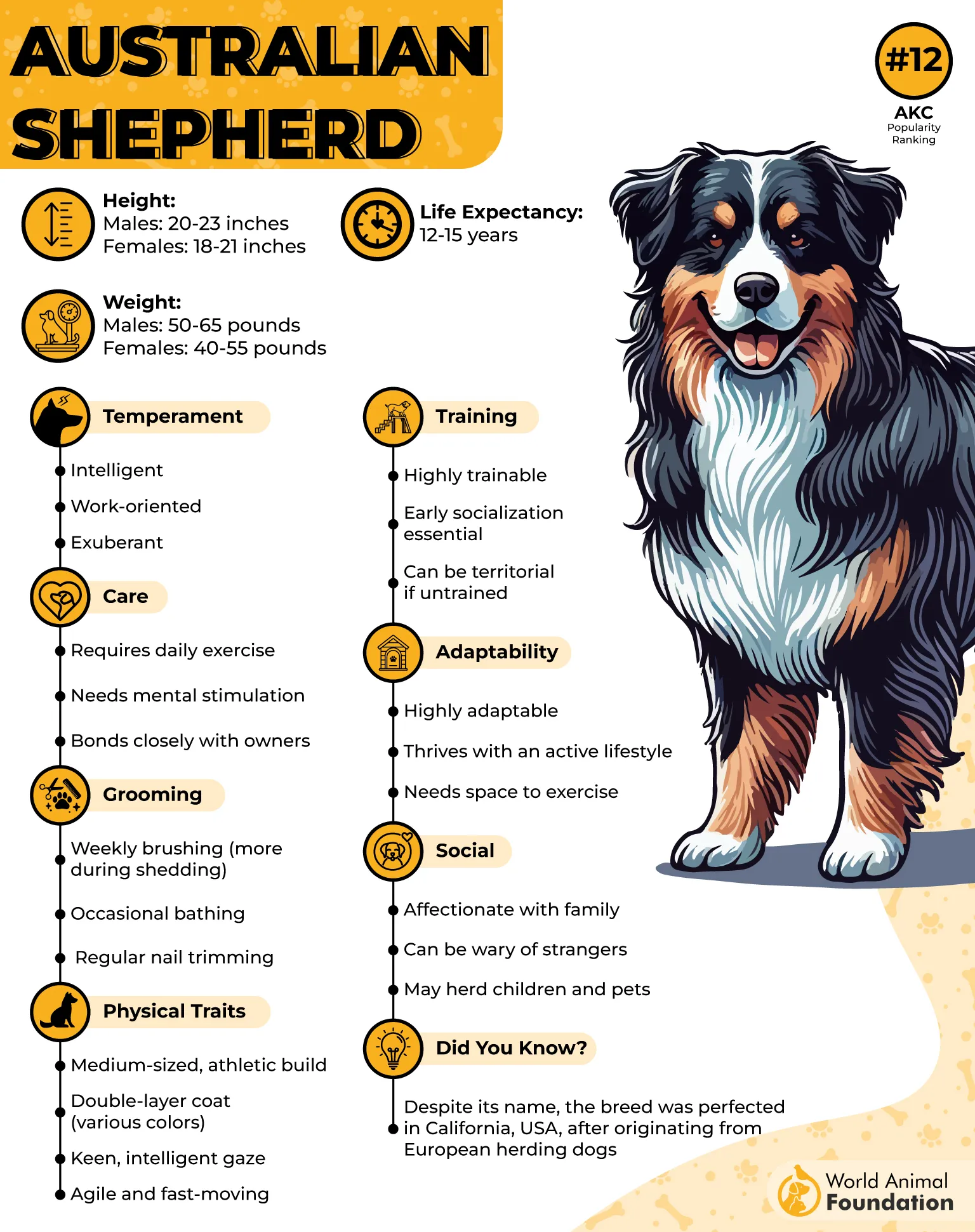
3. Australian Shepherd
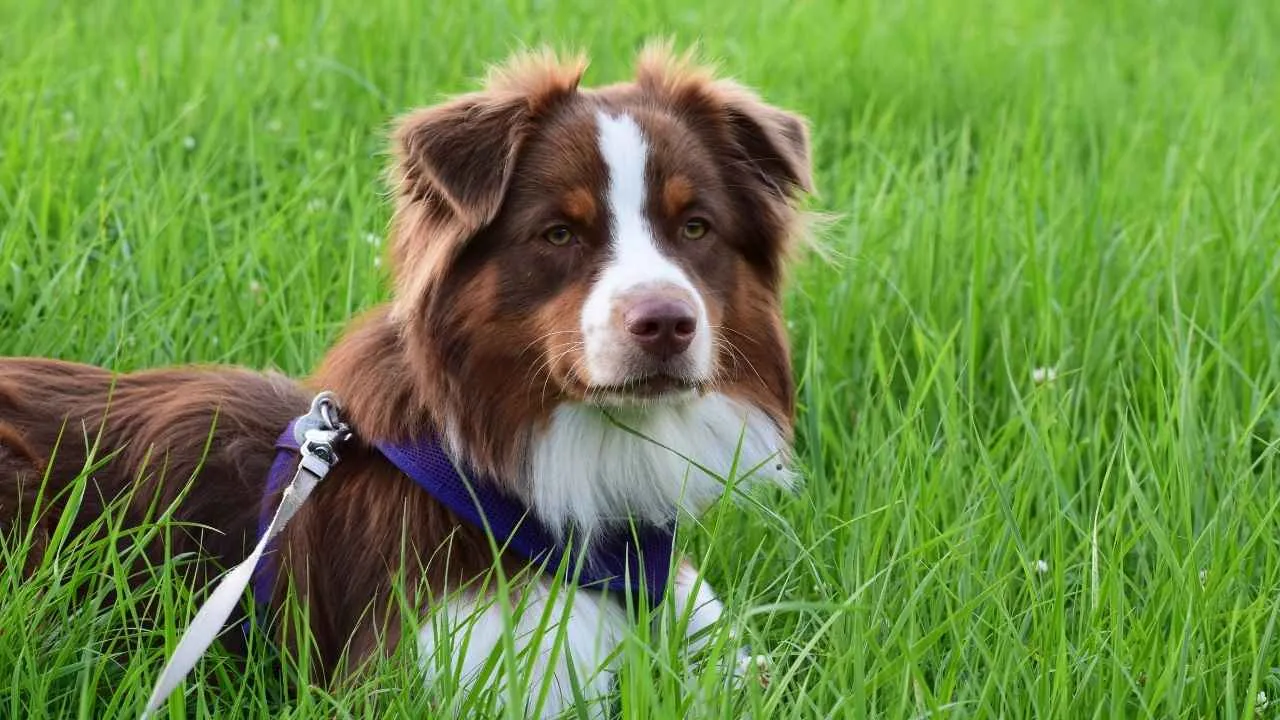
Despite its name, the Australian Shepherd was developed primarily in the United States and became strongly associated with American ranching. Its ancestry included European and Australian dogs brought to the country with livestock workers before American breeders refined the type.
Ranchers valued these smartest dogs for their versatility, intelligence, and ability to control stock. Their striking appearance and practical abilities eventually helped the breed become popular far beyond working farms.
Spirited and People-Focused
Australian Shepherds generally possess considerable energy and enjoy remaining involved in family activities. They can excel in herding, agility, obedience, trick training, and other pursuits that combine movement with concentration.
Early socialization helps them develop confidence around people and animals. Consistent guidance gives their natural working instincts an appropriate direction.
Rich Merle Patterns
Black, red, blue merle, and red merle are among the breed’s recognized base colors, with white and copper markings adding further visual contrast.
Merle examples can display intricate mottling across the body, while facial markings may create especially expressive appearances. The double coat needs regular brushing and more attention during seasonal shedding.
4. Alaskan Malamute
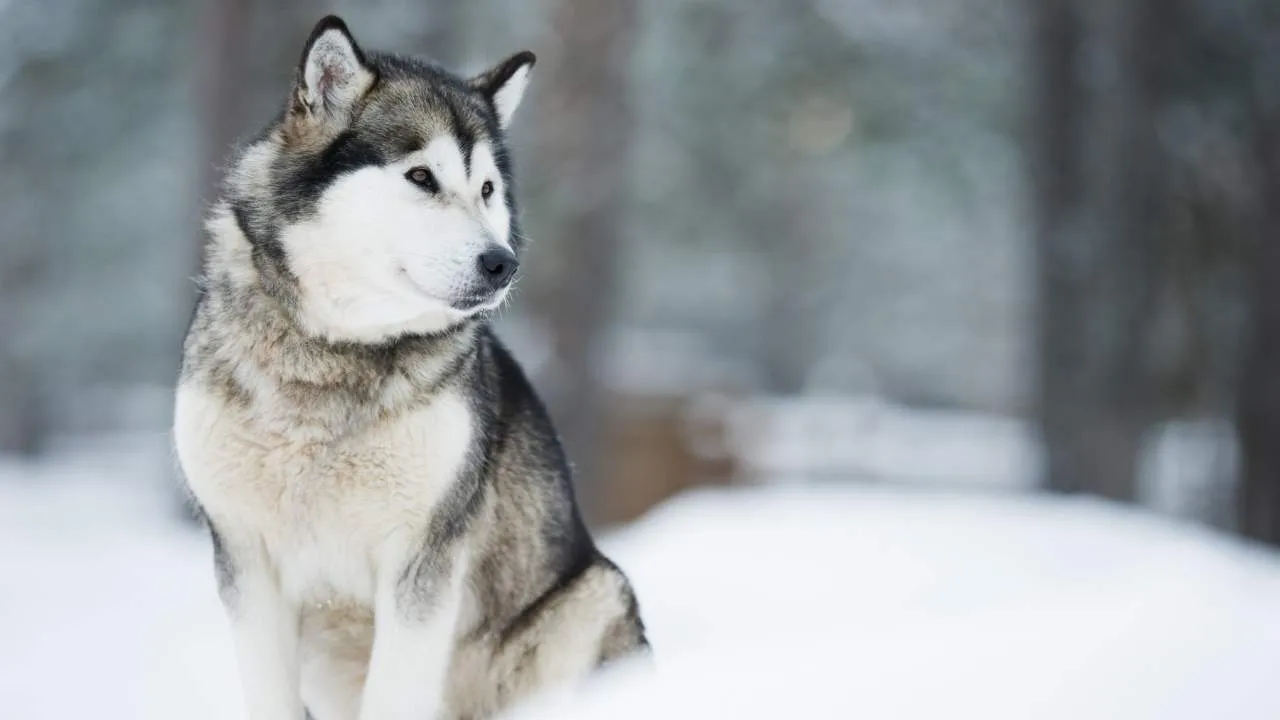
The Alaskan Malamute was developed in northwestern Alaska by the Mahlemut people, who relied on these powerful dogs to transport heavy loads through severe Arctic conditions.
Unlike lighter sled dogs bred primarily for speed, Malamutes were selected for strength, endurance, and steady pulling ability. Their dense insulation protected them against extreme cold, while their sturdy bodies allowed them to perform demanding work.
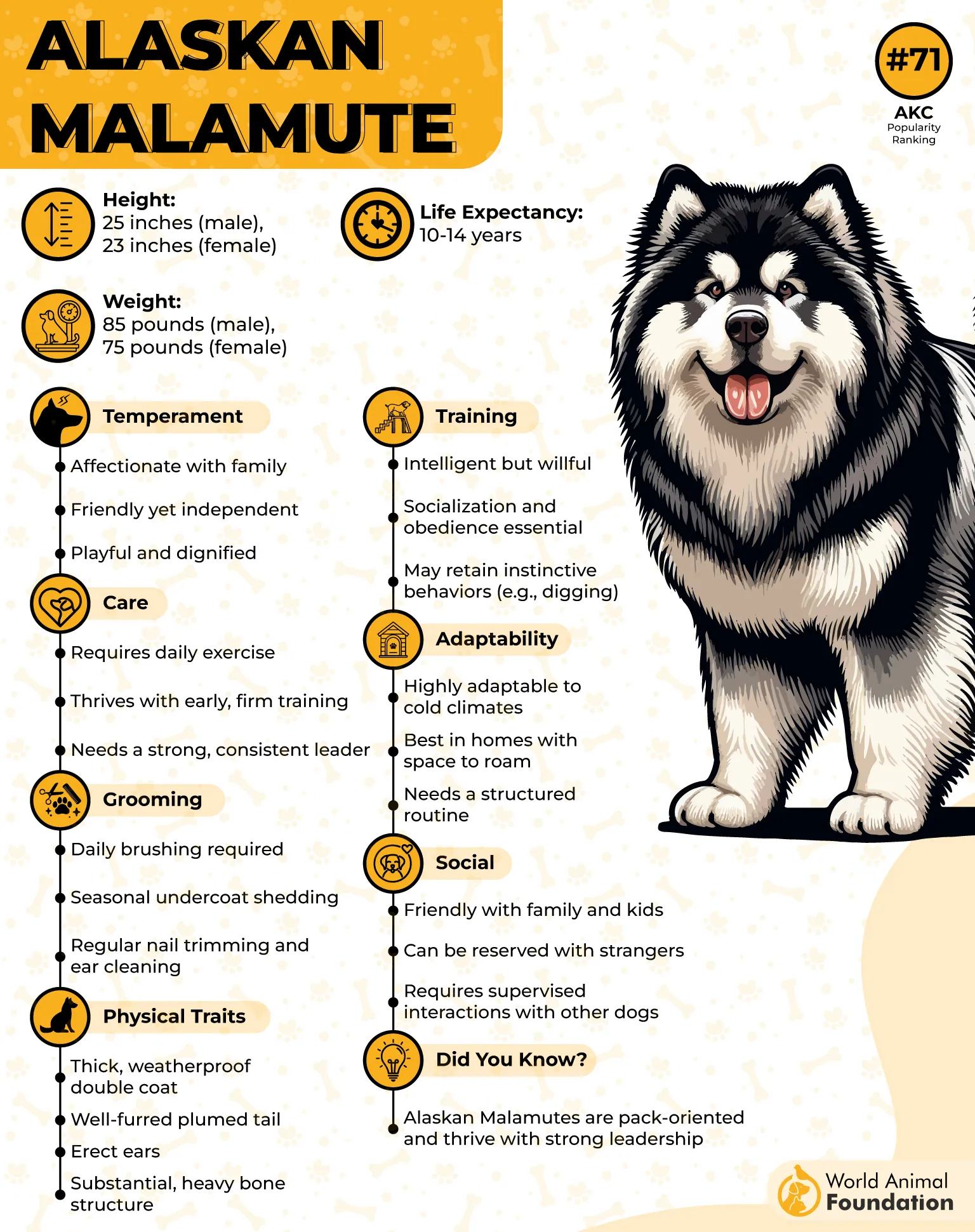
Affectionate Yet Independent
Malamutes can be warm and playful with their families while retaining the self-confidence associated with their working heritage. Their considerable physical power makes early manners training important, particularly for leash behavior and household boundaries.
They often enjoy hiking and other outdoor pursuits, especially in cooler conditions. Owners should provide consistent guidance without expecting the eager-to-please nature seen in some highly biddable breeds.
Arctic Color Combinations
The Alaskan Malamute commonly displays black, gray, red, or sable shades alongside white areas. Facial masks and contrasting body markings can vary considerably, giving individual dogs subtle differences in appearance.
Shaving is generally inappropriate because the coat provides natural insulation. Nutrition should support muscular condition while avoiding unnecessary weight gain, and warm-weather activity requires careful management.
5. Greater Swiss Mountain Dog
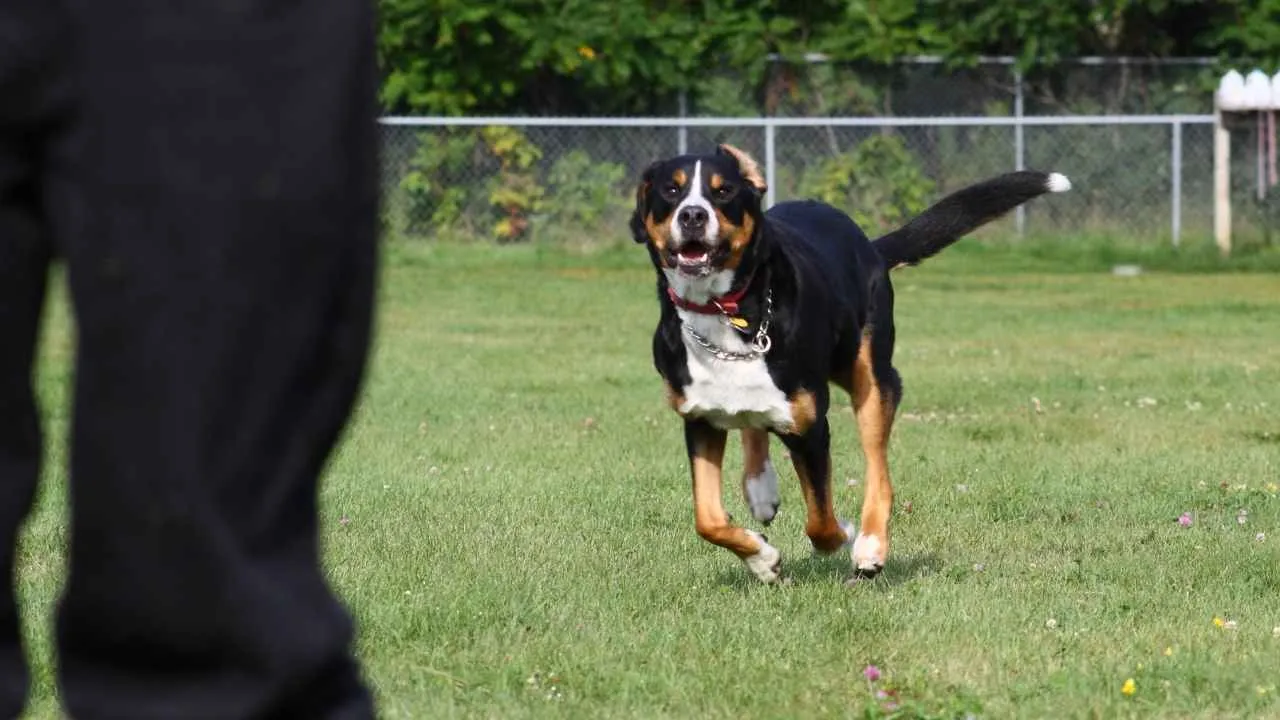
The Greater Swiss Mountain Dog originated in Switzerland and belongs to the country’s family of mountain and cattle dogs. Farmers historically relied on these substantial animals for herding, guarding, pulling carts, and assisting with various agricultural tasks, as per WebMD.
As machinery reduced the need for draft animals, the breed increasingly transitioned toward companionship while retaining its powerful physical structure.
Steady and Family-Oriented
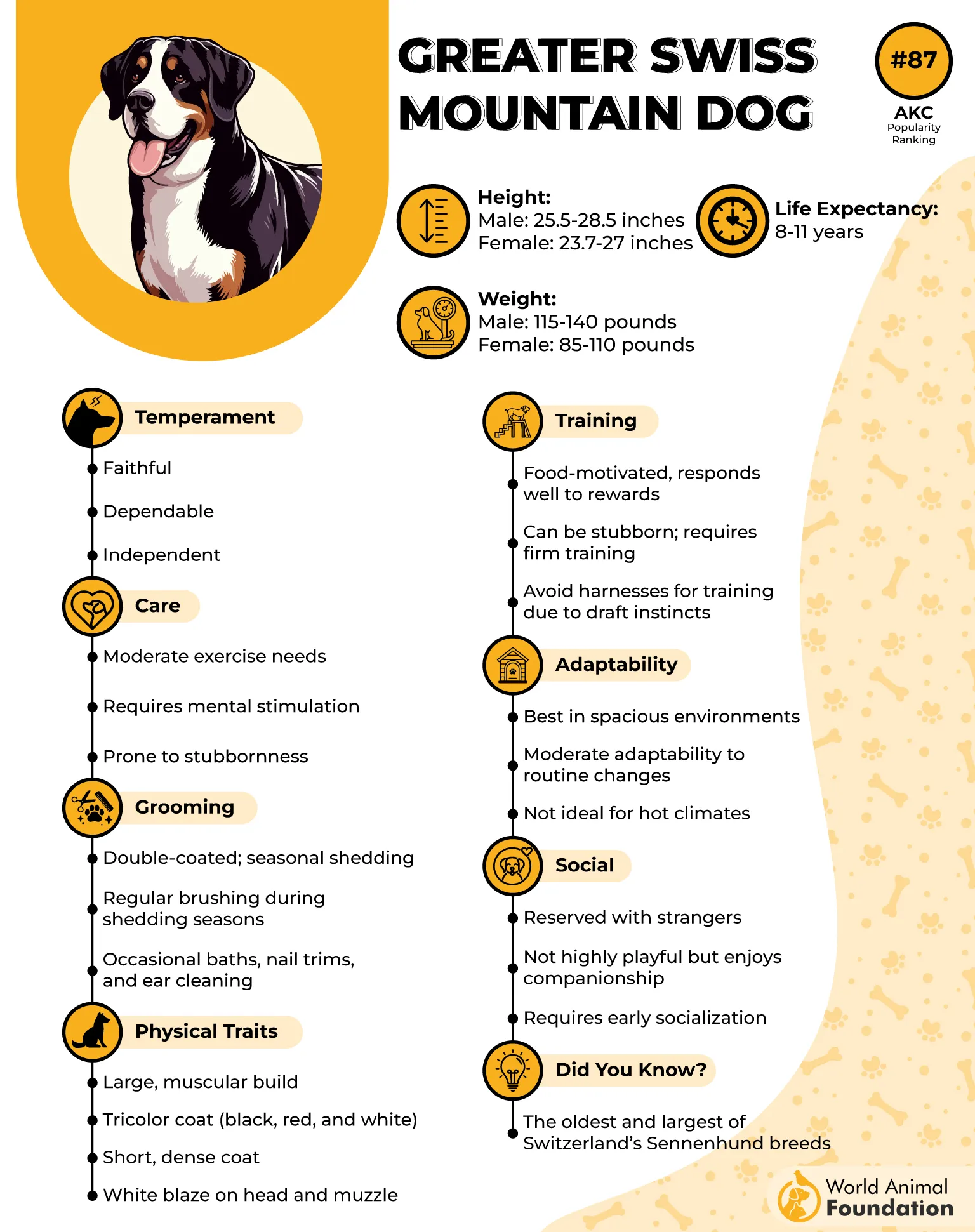
Greater Swiss Mountain Dogs are often confident, affectionate, and devoted to household members. They tend to possess a calmer character than highly intense herding breeds, although they still benefit from regular activity and training.
Socialization can encourage appropriate behavior around visitors, children, and other animals. A predictable routine combined with moderate exercise often suits their temperament well.
Bold Tricolor Appearance
The Greater Swiss Mountain Dog is recognized for a dramatic tricolor pattern consisting primarily of black with rich red or rust markings and crisp white accents. The strong contrast gives it an unmistakable appearance.
Its short double coat is comparatively easy to maintain, although brushing increases during shedding periods. Large-breed puppies require carefully controlled nutrition to support healthy development.
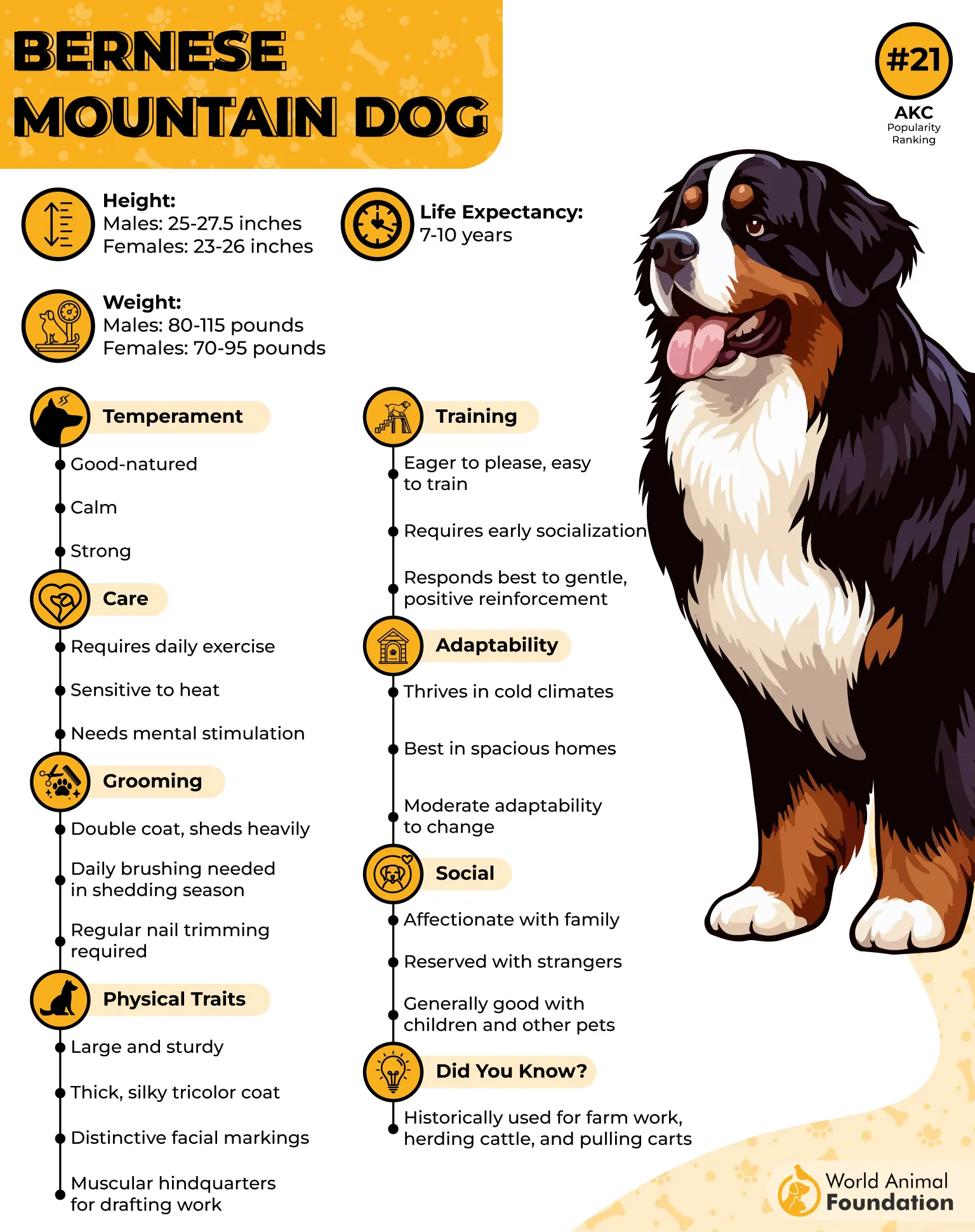
6. Bernese Mountain Dog
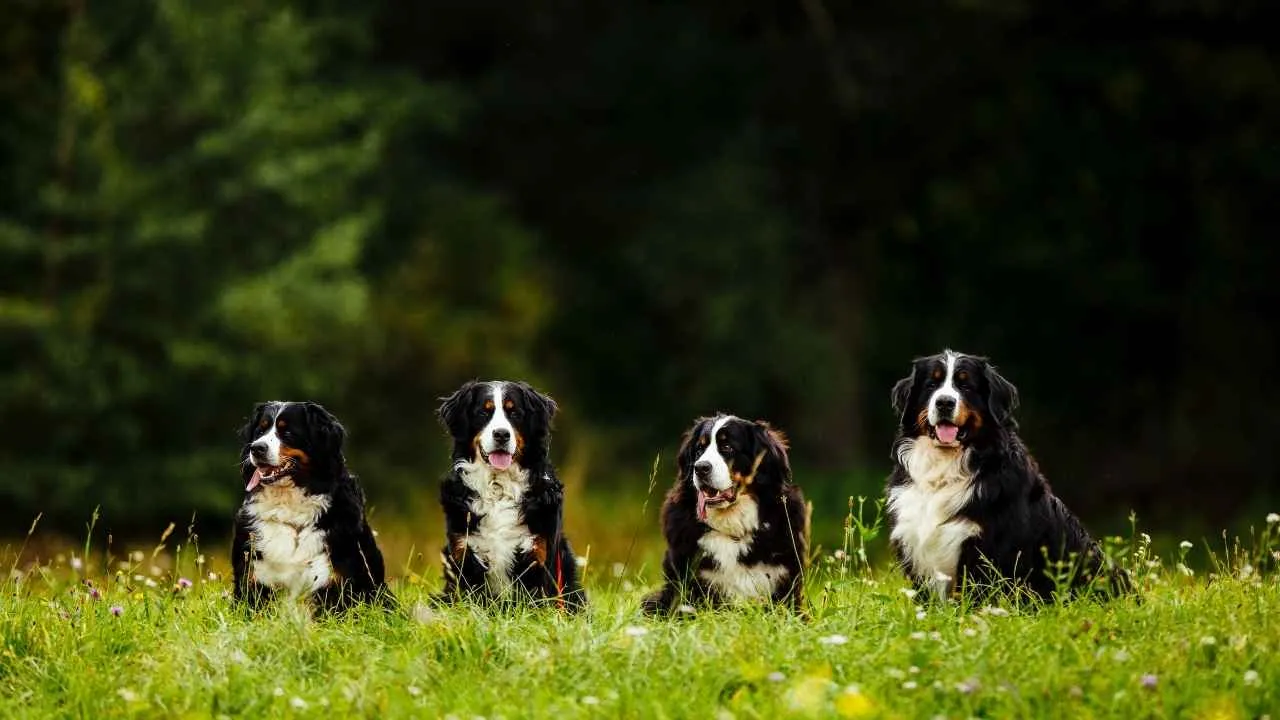
The Bernese Mountain Dog comes from Switzerland’s Bernese Oberland, where farmers used these muscular dogs for pulling carts, guarding properties, and assisting with cattle, according to the AKC.
Their ancestors developed as versatile farm companions capable of working in cool mountainous environments. The breed’s strength, reliability, and pleasant disposition made it useful in rural communities.
Gentle and Affectionate
Bernese Mountain Dogs are widely admired for their sweet, devoted nature and strong attachment to their families. They often enjoy participating in household activities without requiring the relentless stimulation of some working breeds.
Moderate walks and play sessions can provide suitable activity while leaving plenty of time for companionship and rest.
Classic Swiss Coloring
The breed’s luxurious coat features the classic Swiss tricolor combination of black, rust, and white. White markings commonly appear on the face, chest, feet, and tail tip, creating a beautifully balanced appearance.
Its long coat needs regular brushing to control shedding and prevent tangles. Routine veterinary care is important for monitoring the health concerns associated with large-bodied dogs.
7. Catahoula Leopard Dog
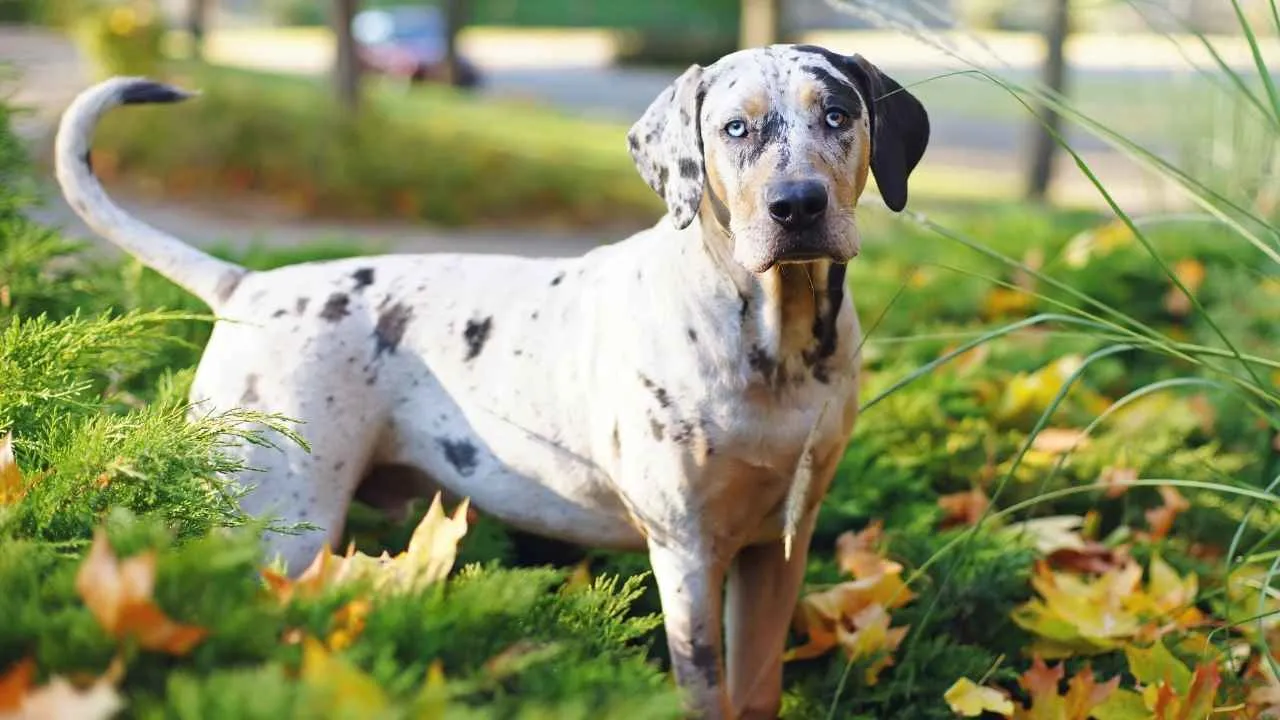
The Catahoula Leopard Dog developed in Louisiana as a versatile American working dog used for hunting and managing livestock.
Its complex ancestry included regional dogs and European breeds introduced by settlers, eventually producing a rugged animal capable of handling demanding southern terrain. The breed became particularly associated with feral cattle work and game tracking.
Confident and Observant
Catahoulas are often intelligent, independent, alert, and strongly attached to their families. Their working background encouraged initiative, so they may not always wait for human direction before assessing a situation.
Consistent training and early socialization can help channel that confidence appropriately. Secure boundaries are also valuable because exploration and vigilance are natural parts of their character.
Leopard-Like Coat Diversity
The breed is especially famous for blue merle, red merle, gray, black, and other patterned appearances that may include white or tan markings.
Eye color can also vary, adding another unusual visual feature. Its short coat is relatively simple to maintain, requiring occasional brushing and routine skin checks. Balanced nutrition, dental care, parasite prevention, and veterinary examinations complete its everyday needs.
Conclusion
These seven breeds illustrate the remarkable diversity found within canine coat coloration.
The Cardigan Welsh Corgi offers an impressive palette in a compact body, while Border Collies and Australian Shepherds provide an array of merle, tricolor, and contrasting combinations.
Alaskan Malamutes carry distinctive northern markings, whereas Greater Swiss Mountain Dogs and Bernese Mountain Dogs are instantly recognizable for their bold Swiss tricolor patterns. The Catahoula Leopard Dog stands apart with particularly dramatic mottling and variation.
Appearance can certainly influence a person’s first attraction to a breed, but responsible ownership requires looking beyond pigmentation. Temperament, exercise, grooming, nutrition, training, socialization, and veterinary care all affect whether a particular dog will thrive in a household.
By considering visual characteristics alongside inherited behavior and practical requirements, prospective owners can make informed choices. The result is a relationship based not simply on an unusual appearance, but on genuine compatibility and lifelong care.
