




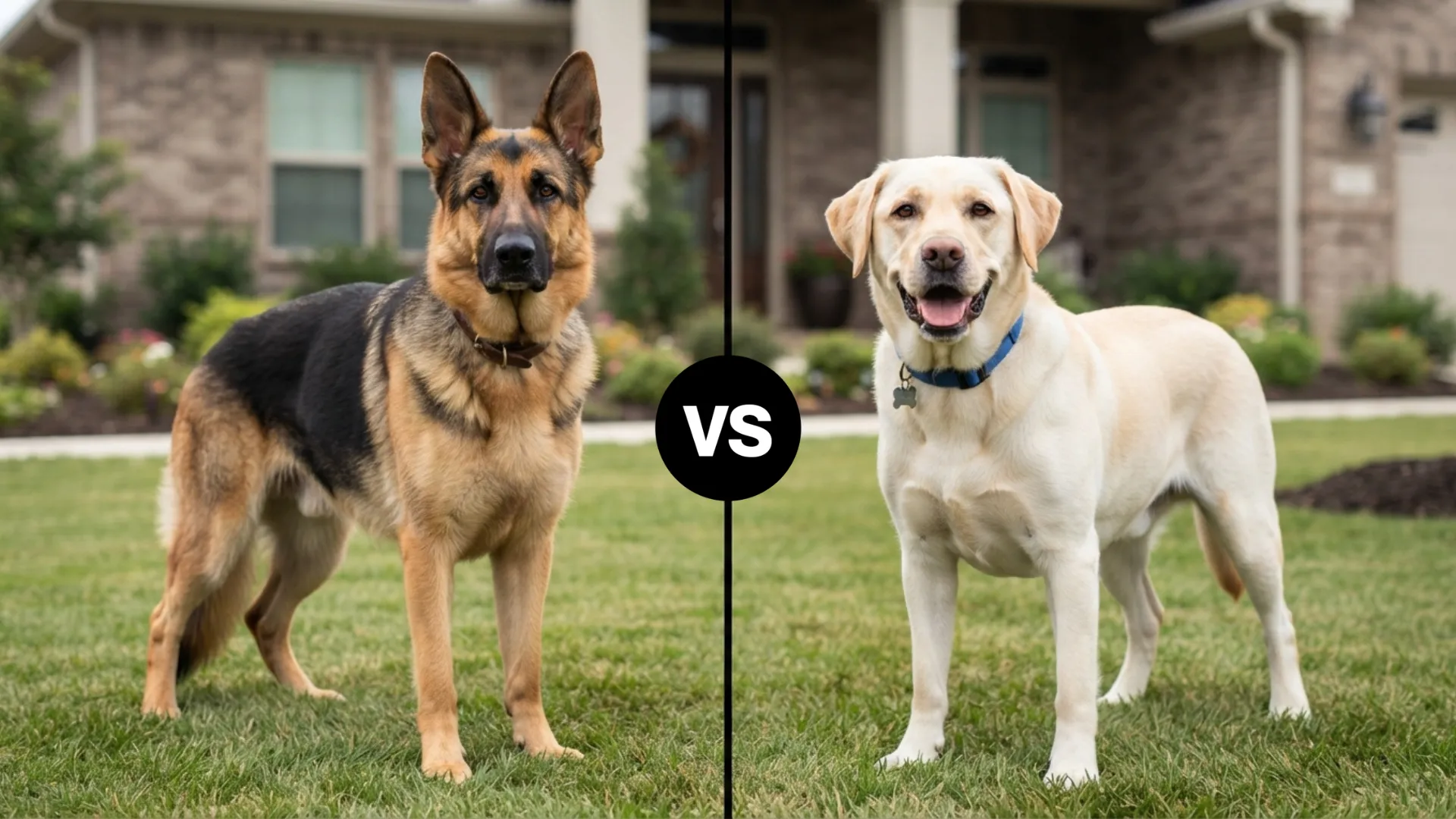
Choosing between a German Shepherd and a Labrador Retriever can be surprisingly difficult. Both are popular breeds with loyal personalities, impressive abilities, and plenty of qualities that make them wonderful family dogs.
Labrador Retriever holds the legendary title of being the American Kennel Club’s most popular dog for 30 consecutive years and stands among the first two most popular dog breeds, while German Shepherds are ranked between #3 and #5.
Both of these breeds are just true sweethearts, but they differ in their temperament toward strangers, energy levels, trainability, and best fit.
Labs are gentle, soft-mouthed, friendly, and eager-to-please dogs. In comparison, German Shepherds are fearless, courageous, sharp, and work-oriented dogs.
Both are intelligent, loyal, and capable of being your family dogs, but not for every FAMILY.
We will share things that you must consider before selecting between GSDs and Labs. We will talk about everything from their origin to personality, training, exercise, and grooming, so read more to make your decision easy.
German Shepherd vs. Labrador Retriever Dog Breeds: Things to Consider When Selecting
Origins, Background & Purpose
German Shepherds originated in Germany during the 19th century, when Captain Max von Stephanitz selectively crossbred traditional herding dogs to produce these working dogs. They were originally bred as herding and protection dogs.
However, now they are serving as premier police, military, and search and rescue dogs today. In contrast, Labrador Retrievers were developed after crossing St. John’s water dog (now extinct) and early Newfoundland dogs in Newfoundland, Canada.
Their main purpose was to leap into freezing water and retrieve escaped fish, haul fishing nets, and retrieve downed waterfowl for hunters. They became popular in Newfoundland and were brought to England, where people kept them as pets, and they became service/ guide dogs.
Size, Weight & Physical Build
GSDs are 22 to 26 inches at the shoulder with 50-90 pounds. These medium- to large-sized dogs have a muscular and athletic frame with a strong build. They are longer than tall with a sloping backline, deep chest, pointed ears, and long bushy tail.
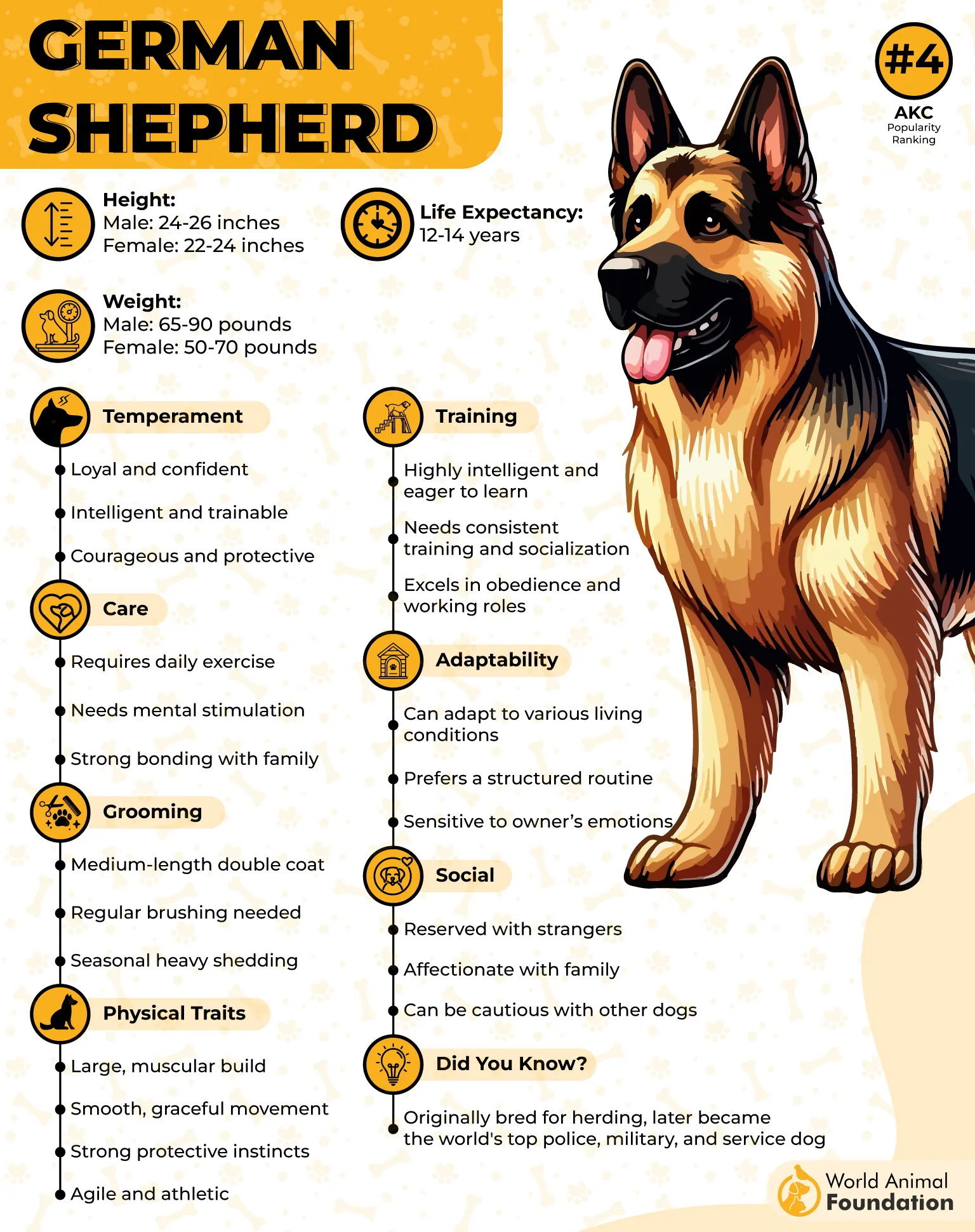
German Shepherds have a commanding, wolf-like presence.
On the other hand, Labs are 21.5 to 24.5 inches (male) at the shoulder and weigh around 55 to 80 pounds. They are built with a sturdy, broad, and square athletic frame. PetMD mentions that Labs have a wide skull and nose, a deep chest, a strong tail, and a muscular build.
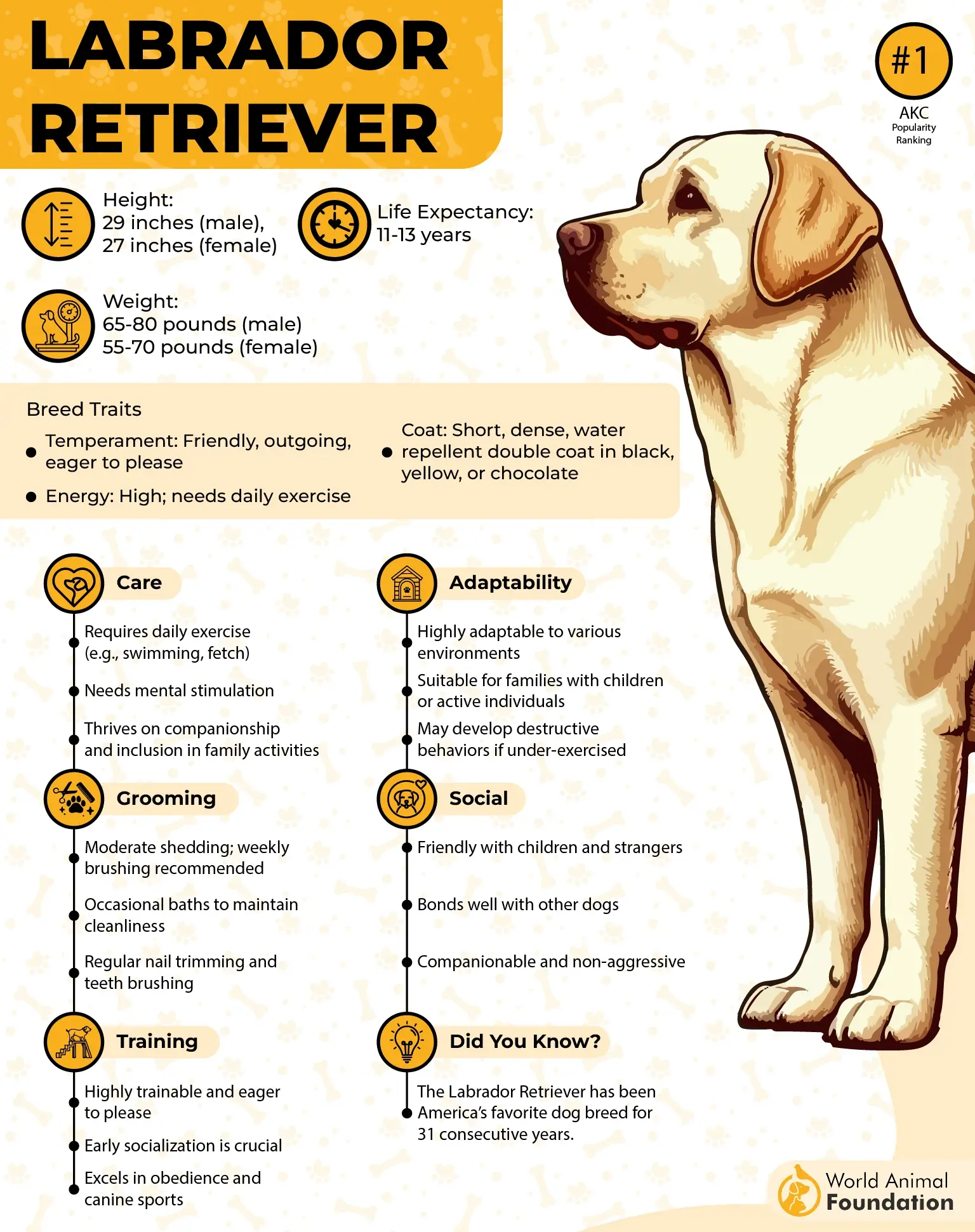
Their otter tail acts as a rudder in water, and a dense, weather-resistant coat with webbed toes allows them to swim easily. So both of these dogs differ in their size, weight, and stature, which is easily recognizable by just looking at them.
Coat Types, Grooming & Maintenance
Both breeds have a dense double coat that resists water and protects them from cold and freezing temperatures. However, they differ in terms of grooming and brushing levels. German Shepherds are heavy year-round shedders and are also known as ‘German Shedder’.
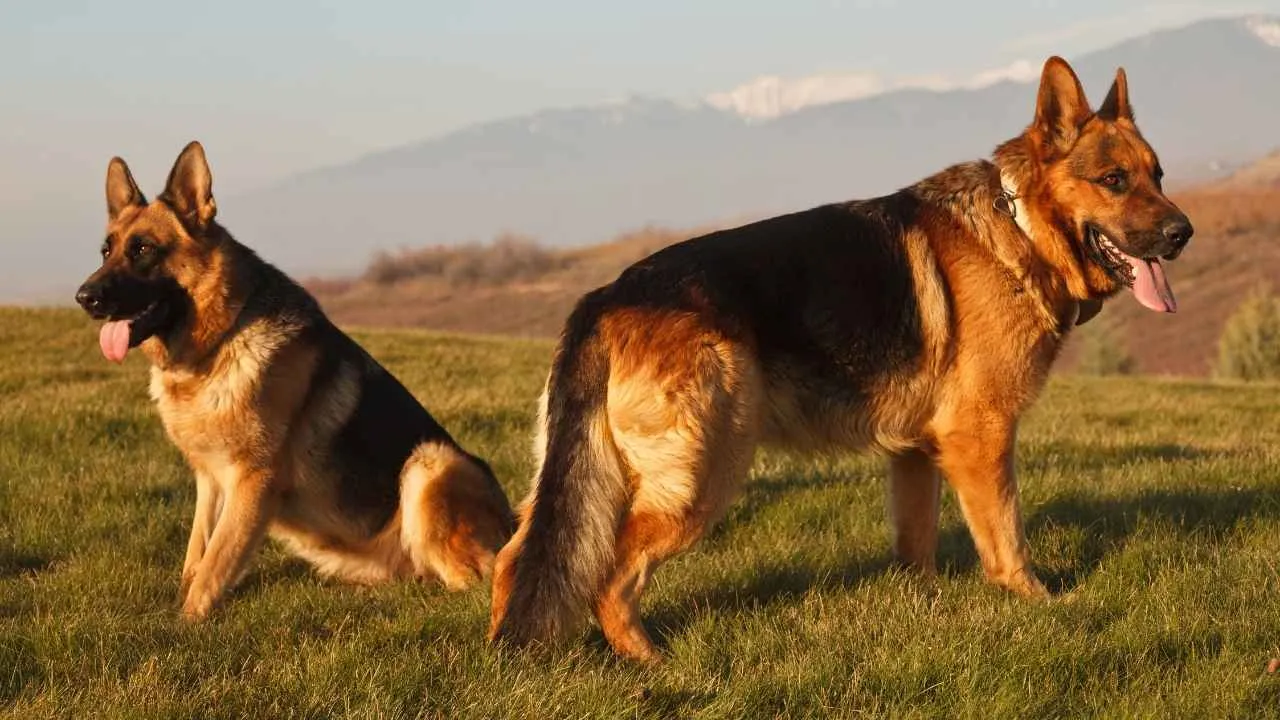
These dogs also experience blowouts thrice a year and require brushing 3-4 times a week. GSDs are relatively clean and need baths every 6-8 weeks with regular nail trims. In comparison, Labrador Retrievers have a short, moderate-to-heavy shedding coat.
They require brushing 2-3 times a week to brush out loose hairs, especially during peak shedding seasons. Labs are highly prone to getting dirty because of their love for water and mud, so give them occasional baths.
Temperament, Personality & Behavior
Labrador Retrievers are among the most famous outgoing, warm, and cheerful personalities. These social and water dogs view everyone as their friend, from family members to strangers, children, and even other pets. Labs love carrying items around their mouth.

So you will see them carry shoes or tennis balls around. Their sweet nature and high tolerance for chaos make them highly adaptable. On the other hand, German Shepherds differ from Labs in their temperament toward strangers due to being natural guardians.
GSDs are confident, courageous, smart, and stubborn dogs. They are highly focused, serious, and loyal pups that love having a job to do and exhibit a calm and controlled demeanor. Both of these dogs require supervision around children.
Intelligence, Trainability & Responsiveness
Both German Shepherds and Labrador Retrievers are among the smartest and most intelligent dogs. GSDs are often ranked #3 while Labs rank as #7 on the intelligence scale. However, both of these dogs differ in their trainability and responsiveness.
GSDs are fast learners due to their eager-to-work nature and learn in fewer than 5 repetitions. They respond with total focus and sharp obedience. These large dogs need firm and consistent handlers that can manage their work drive.

In contrast, Labs are relatively easier to train due to being easygoing and food motivated. They respond best to positive reinforcement and may get distracted by playful sounds. The AKC suggests starting to expose puppies to new situations between the ages of 7 weeks and 4 months.
Energy Levels, Activity Needs & Work Style
German Shepherds are energetic dogs with very high energy levels. They possess both physical stamina and powerful mental working drive, as noted by Pedigree. Owners need to spend two to three hours a day focused on their physical and mental needs.
These high-energy breeds enjoy daily walks, running, agility, training, fetch, and complex puzzle toys to tire out their sharp minds. On the other hand, Labrador Retrievers are also high-energy breeds and require one hour of daily exercise.
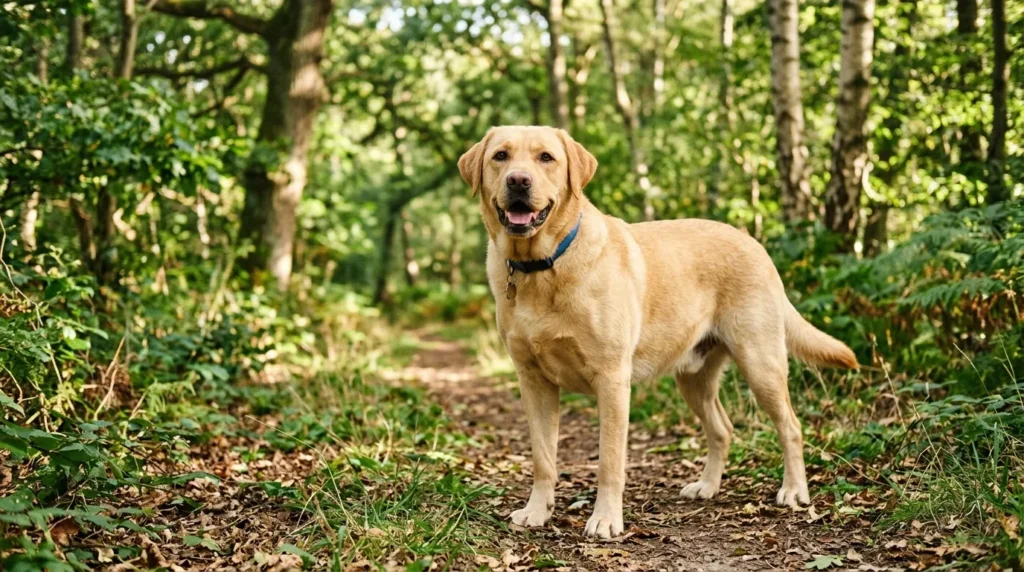
Labs also enjoy long walks, energetic games of fetch in the yard, swimming in lakes or pools, and interactive playtime with family members. They need plenty of physical activity to prevent weight gain and burn off their energy.
Health Concerns, Average Lifespans & Durability
German Shepherds live around 7-10 years generally and maybe up to 12 sometimes with stronger care and genetics. In contrast, Labrador Retriever life expectancy is around 11 to 13 years. Both of these breeds suffer some breed-specific health concerns.
GSDs may experience elbow and hip dysplasia, bloat (life-threatening stomach twisting), degenerative myelopathy, chronic allergies, and EPI. Keep them lean to protect their joints and choose reputable breeders to keep them healthy.
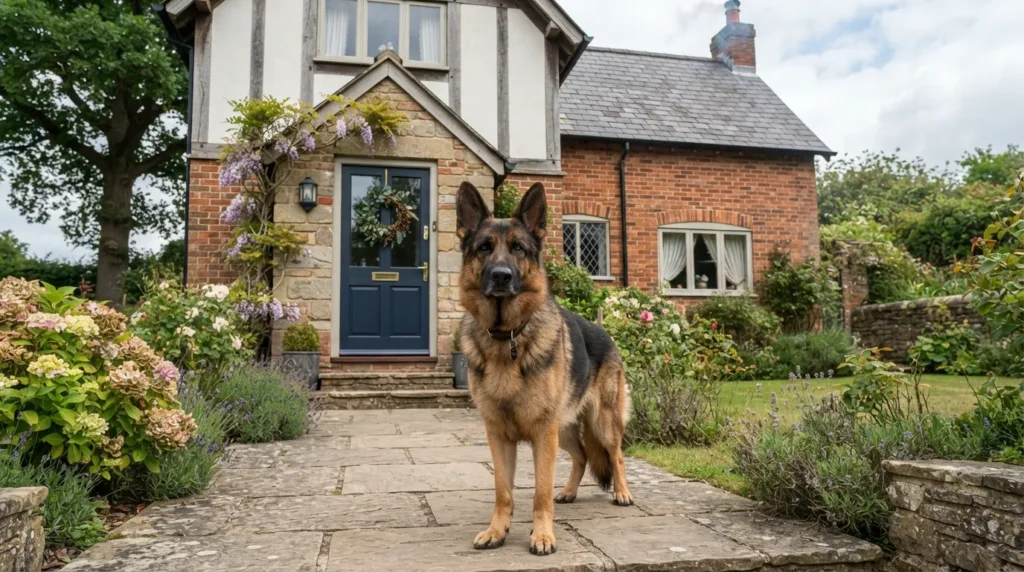
On the other hand, Labs may suffer from obesity, elbow dysplasia, progressive retinal atrophy, painful ear infections, EIC, and certain cancers. So make sure to strictly manage their daily food intake, as they are prone to overeating and rapid weight gain.
Working Roles, Primal Instincts & Traits
German Shepherds have a strong natural urge to protect their home and herd, which makes them perfect guard dogs. They are naturally watchful and cautious around people they don’t know. These large dogs are famous for working as police and military K-9 units due to their focus and courage.
In comparison, Labrador Retrievers have strong instincts to fetch, swim, and bring items back to you. They are social, eager to please, and excel as hunting retrievers. Labs also make good therapy, service, and detection dogs.
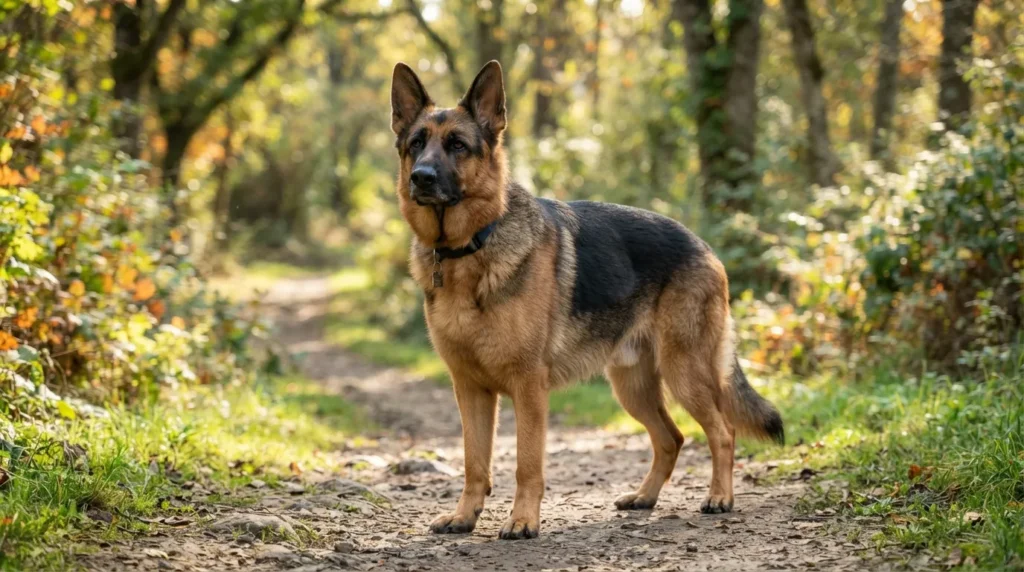
However, both German Shepherds and Labrador Retrievers are strong, with 238 PSI and 230 PSI. They are built for heavy endurance, muscular strength, and fast explosive speed. These are working dogs but differ in what they are good at.
Lifestyle Suitability & Family Compatibility
German Shepherds are best suited for a spacious home with a large fenced yard where they can burn off their energy. Likewise, Labrador Retrievers also adapt well to spacious homes due to their medium to large size and high energy levels.
GSDs are excellent family dogs for active households, older children, and experienced owners. These guard dogs require proper socialization and training before being introduced to families. Whereas Labrador Retrievers are perfect for busy and multi-pet homes.
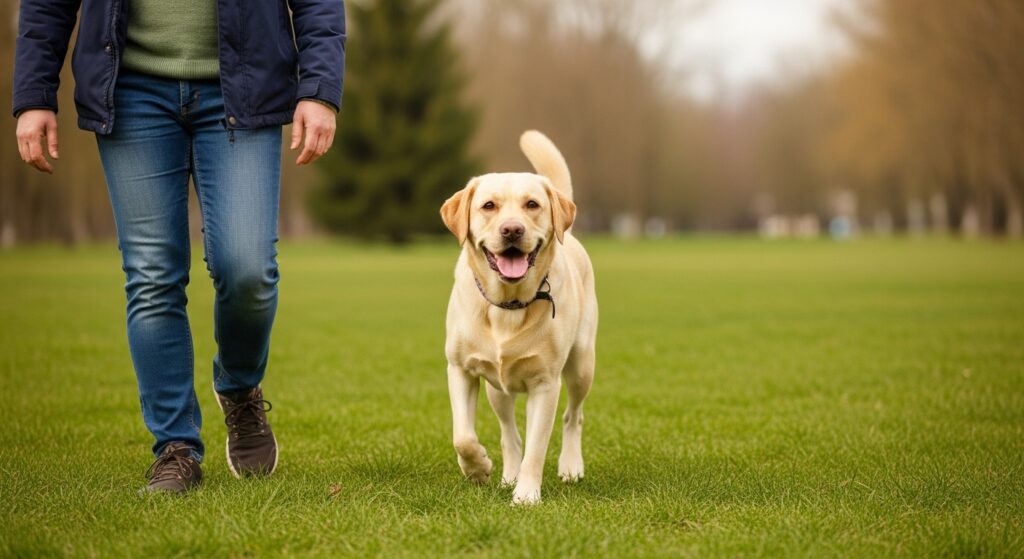
They also do well with first-time owners if they provide them with proper exercise and training. That said, Labs are low to moderate barkers and only bark to express excitement, whereas GSDs are moderate to high barkers, which may affect your neighbors if you live in a calm environment.
Conclusion
Both of these dog breeds are PERFECT in their own ways. German Shepherds have no match when it comes to guarding or protecting their space. While Labs are perfect for retrieving due to their soft mouth.
These dogs are developed for different work purposes, so if your main focus is hunting, then go for a Labrador Retriever.
But if you want a guard dog, then GSDs are best. However, both of these dogs differ in their temperament, energy level, exercise needs, barking habits, and friendliness with strangers. So make sure to read the details above before going with any one of them.
