




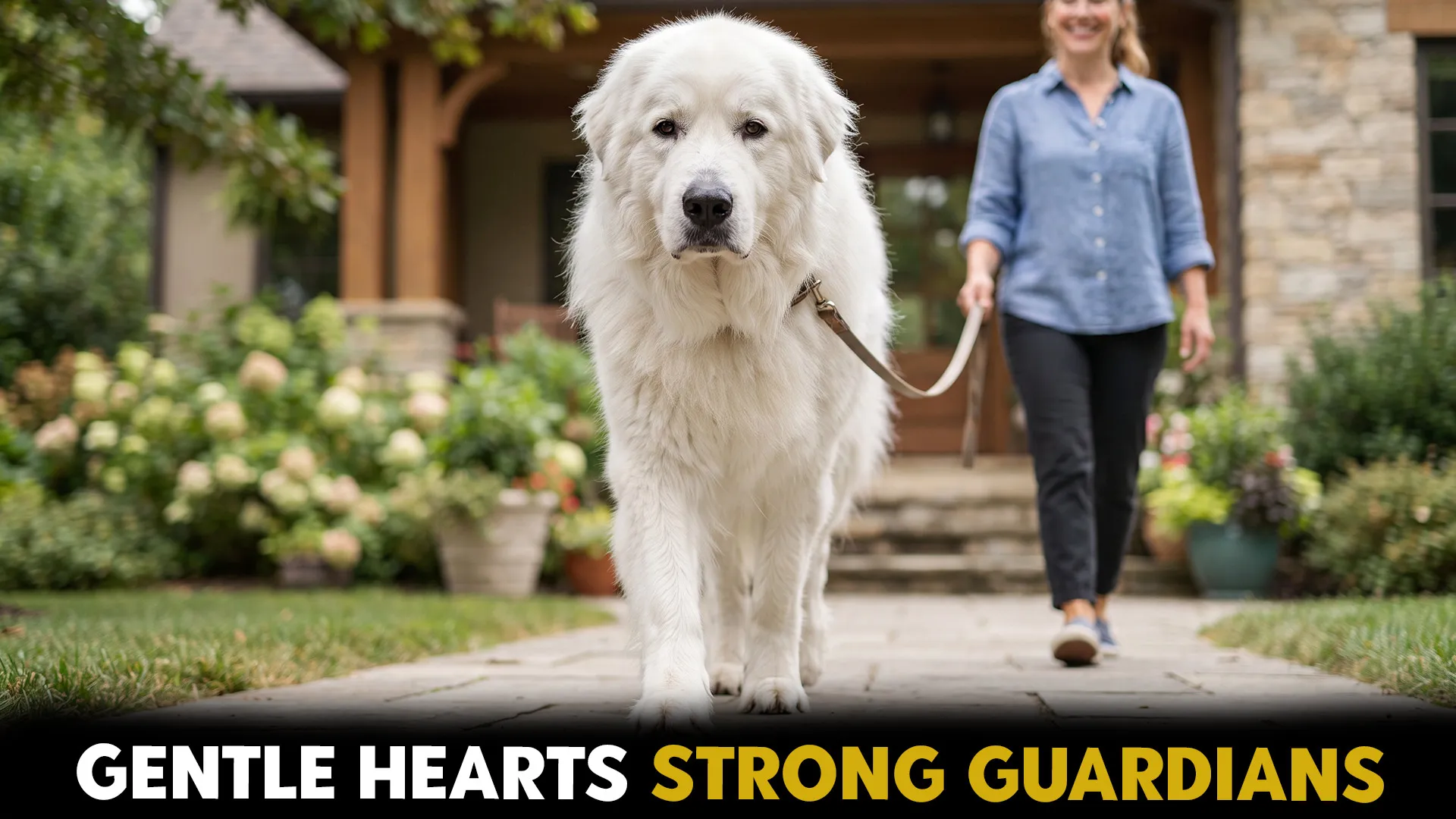
The doorbell rang after dark, and the dog was already watching the hallway before anyone reached the door. Moments like that explain why people choose guard dogs.
You want a companion that notices what feels unusual and gives you a warning, but you also want a dog that can relax beside the family once the situation is ordinary again. That balance becomes valuable in homes where time for demanding exercise, extensive grooming, or constant training is limited.
Low-maintenance dogs can offer alerting instincts while fitting more comfortably into a normal household schedule. Their daily needs still matter, including exercise, socialization, veterinary care, and obedience work, but the routine can remain manageable when the breed suits your lifestyle.
The protective dog breeds featured in this article offer a closer look at dogs that combine useful protective awareness with a softer, calmer, more manageable side.
Key Takeaways
A dog can watch over your home without turning every visitor into a threat. That balance is exactly what makes gentle guard dogs so appealing.
Great Danes have ancient roots reaching back thousands of years, while Bullmastiffs were once known as the “Gamekeeper’s Night Dog.”
Then there are Great Pyrenees, whose quiet watchfulness comes from guarding sheep in the mountains for generations.
The other great guard dogs bring their own surprising mix of protection, easy care, and family-friendly personalities.
Low-Maintenance Guard Dog Breeds With Gentle Attitude
1. Great Dane
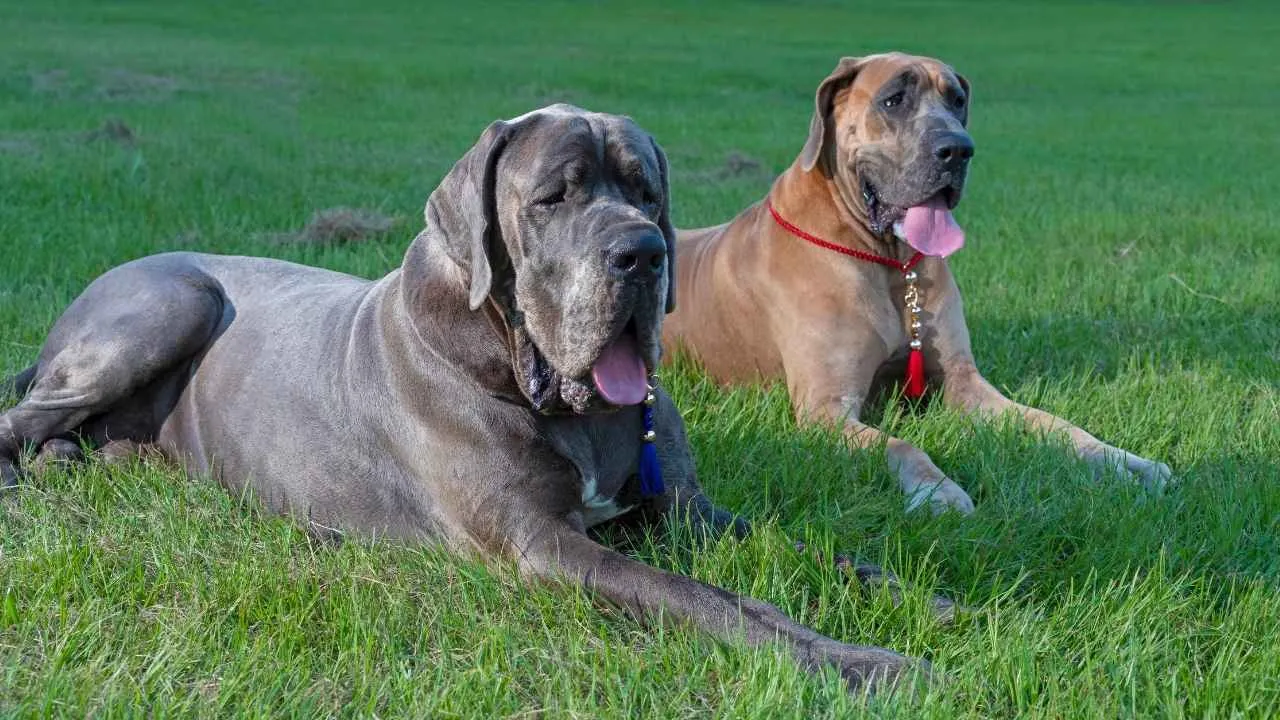
Great Dane has been linked to Tibet through Egyptian artifacts from around 3000 BC, Babylonian temples dating to 2000 BC, and Chinese literature from 121 BC. Its later association with Germany contrasts with these much older references to the breed’s possible beginnings.
Easy Grooming
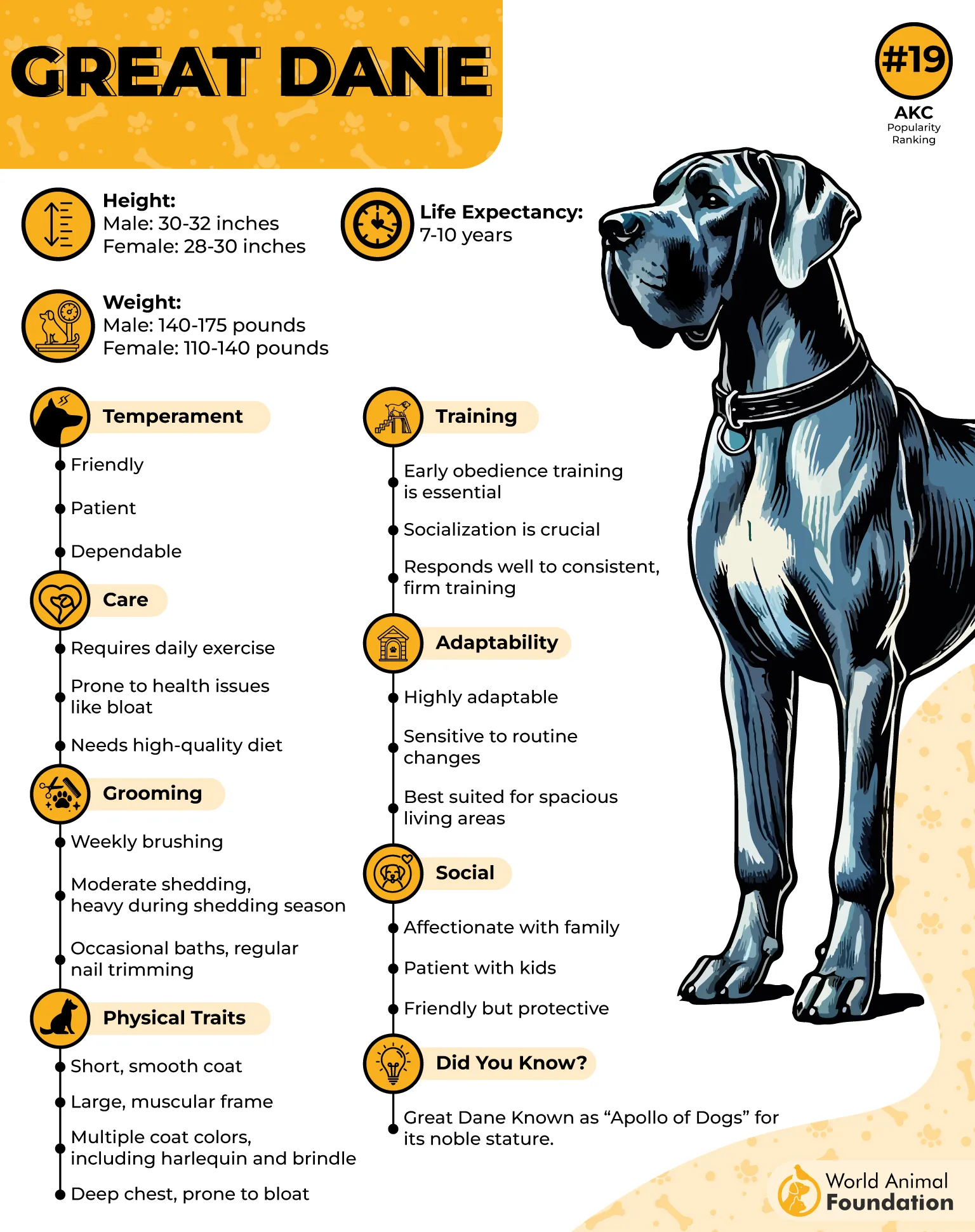
This protection dog has a short, smooth coat that needs little routine care, making grooming less demanding than its enormous frame might suggest. Weekly brushing with a rubber grooming mitt can remove loose hair, while daily brushing may be useful during shedding seasons.
Good handling makes a real difference here:
Bathing is needed only occasionally
Heavier shedding can occur in spring or fall
Grooming may be needed every 7 to 10 days
Gentle at Home
Great Danes are affectionate, people-oriented, and fond of physical attention, often nudging their large head toward a person’s hands or lap, as Greencross Vets mentioned.
Its patient nature can make it pleasant around children, although young dogs may accidentally knock small children or household items over because of their size.
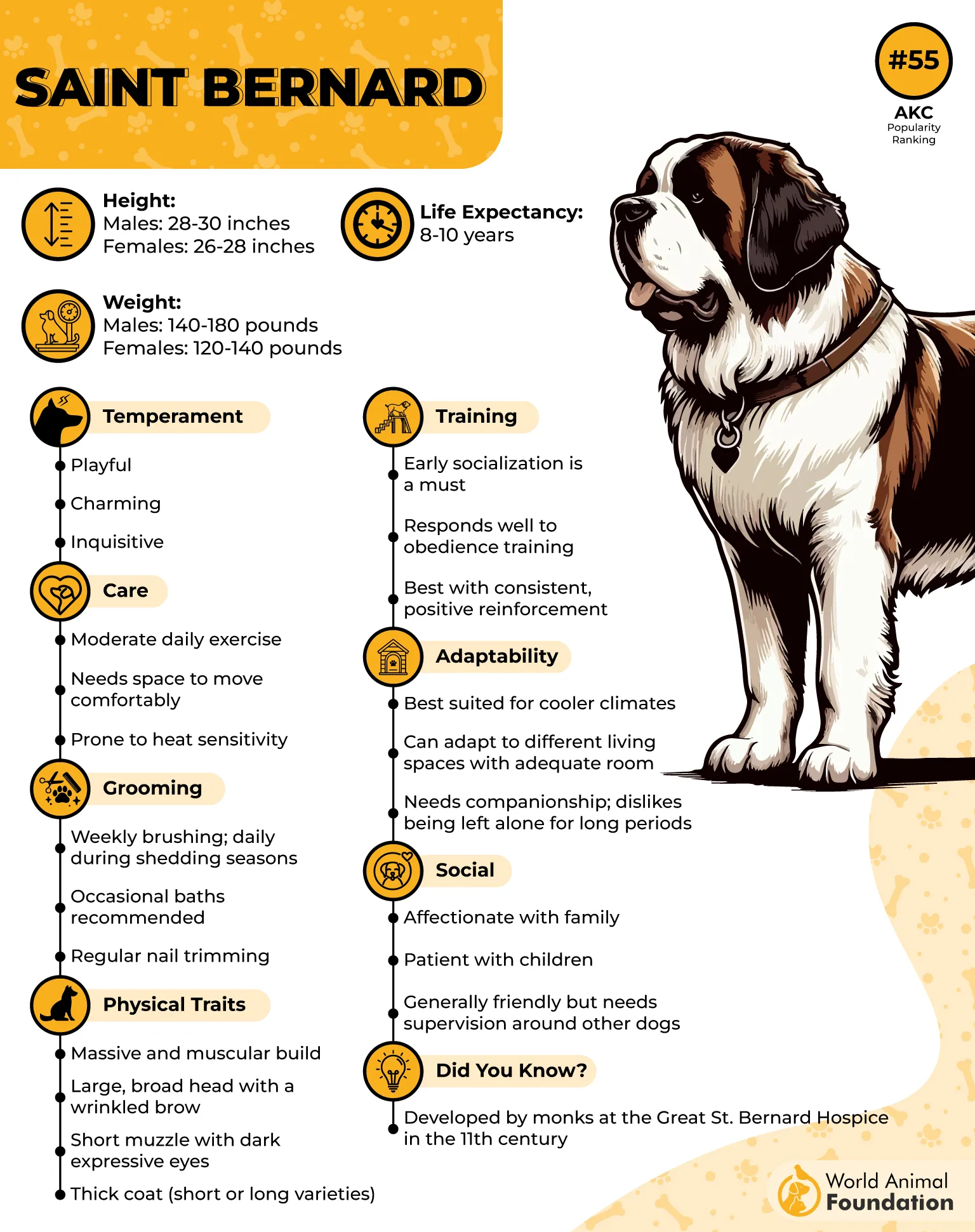
2. Saint Bernard
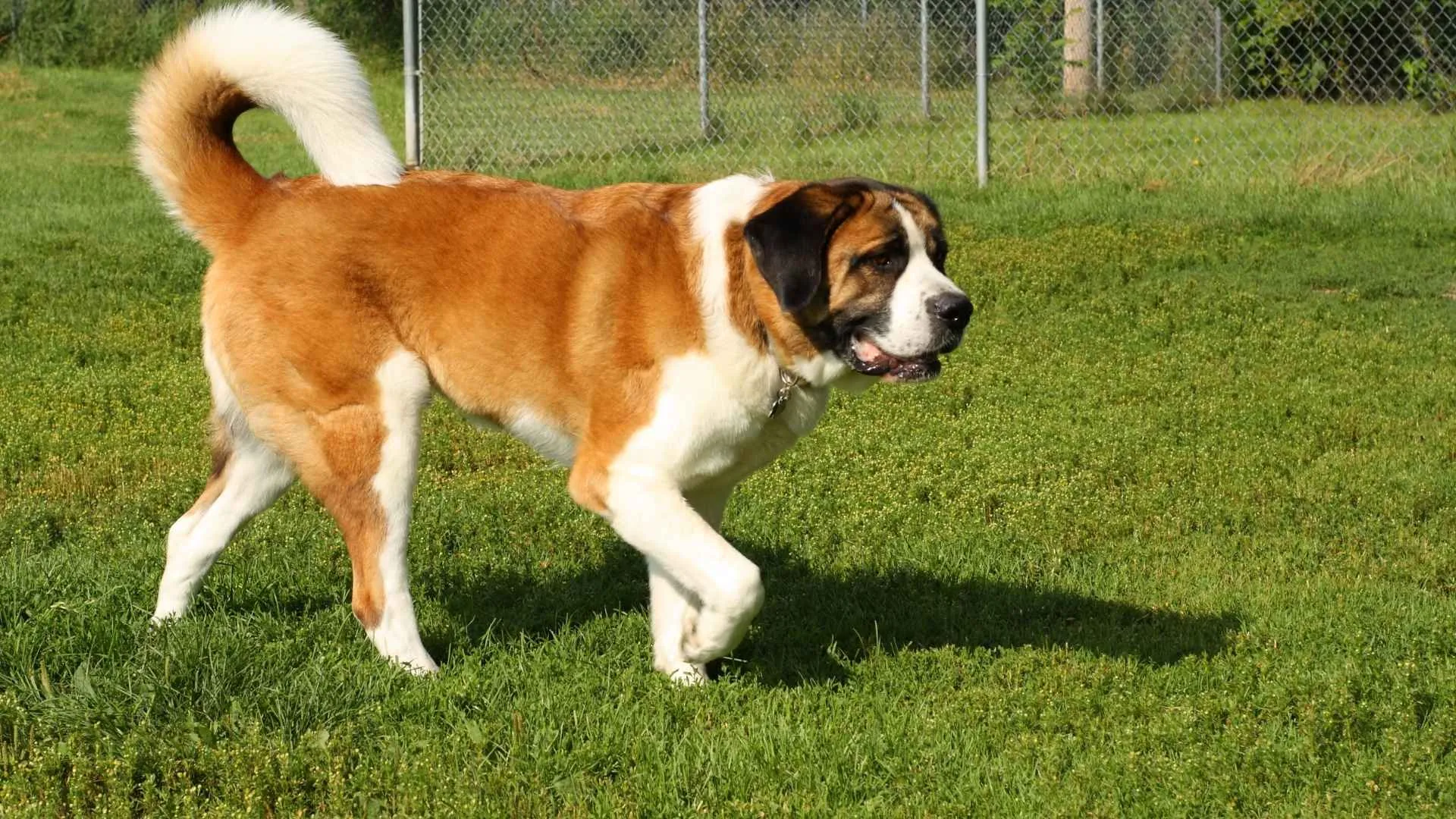
Saint Bernard takes its name from the 10th-century monk who founded a hospice along dangerous routes through the Swiss Alps. The earliest dogs were Alpine Mastiffs used to guard the property before their remarkable rescue abilities shifted their role toward helping travelers in peril.
A Gentle Watch
This protective dog brings an imposing physical presence to the home while remaining calm and friendly in its approach to people. Its protective instincts can add a reassuring layer to family life, with a temperament that is generally far removed from aggressive behavior.
These characteristics make that balance easier to understand:
Patient with people of different ages
Protective without excessive aggression
Sensitive to tense household environments
Simple Coat Care
Saint Bernards have fairly manageable grooming needs for such a large breed, with brushing at least three times a week helping remove dead hair, as Royal Canin suggested.
Professional grooming every few months is another option, while drooling can mean regular cleanup around the face, floor, and nearby surfaces.
3. Newfoundland
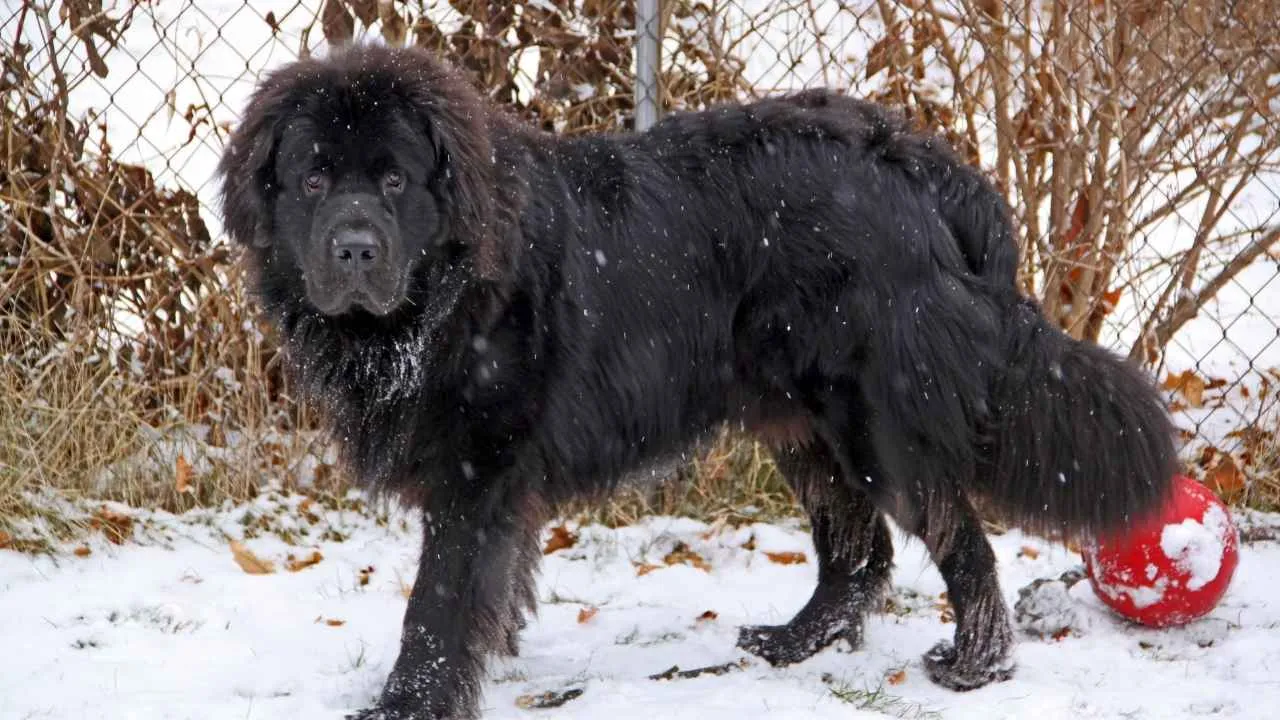
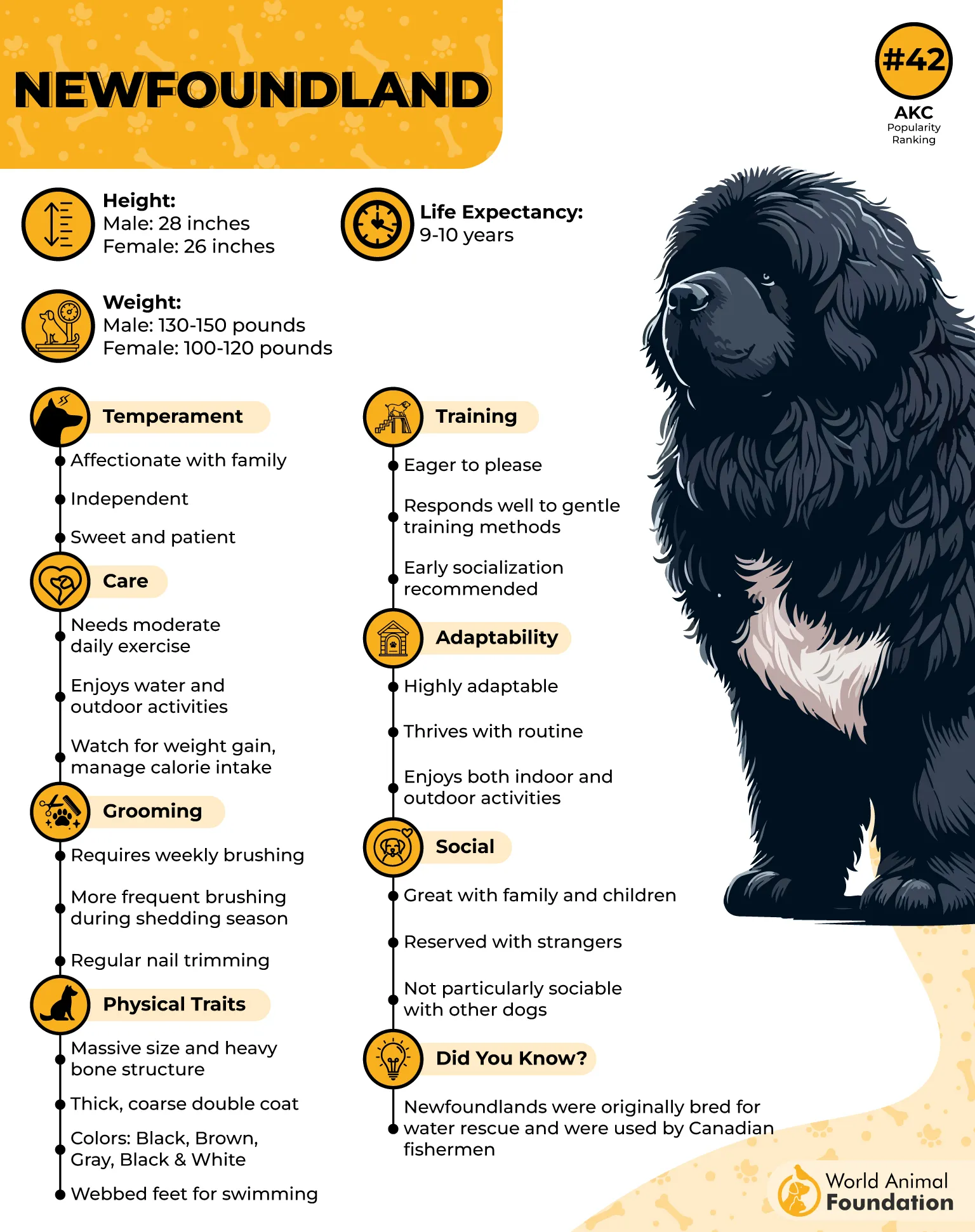
Newfoundland came from the Canadian island of the same name, where fishermen relied on these dogs for demanding maritime work. Their duties included swimming, hauling fishing nets, and pulling carts, with early accounts linking the breed to Portuguese fishermen’s Mastiffs.
Surprisingly Manageable Care
Newfies have a dense coat that needs brushing only a few times each week, while a yearly trim can handle much of the extra grooming work. However, its coat does take some time to work through because of its size and thickness, but the routine itself is straightforward.
A few practical details add context:
Use only dog-specific shampoo
Slicker brushes help loosen fur
Bathing can be done only when necessary
Gentle at Home
These gentle giants have a sweet and balanced temperament that suits family life, while their impressive size can make their presence feel naturally reassuring around the household. They may be quiet around the home, but their watchful side is always there when protection is needed for their family members.
4. Bullmastiff
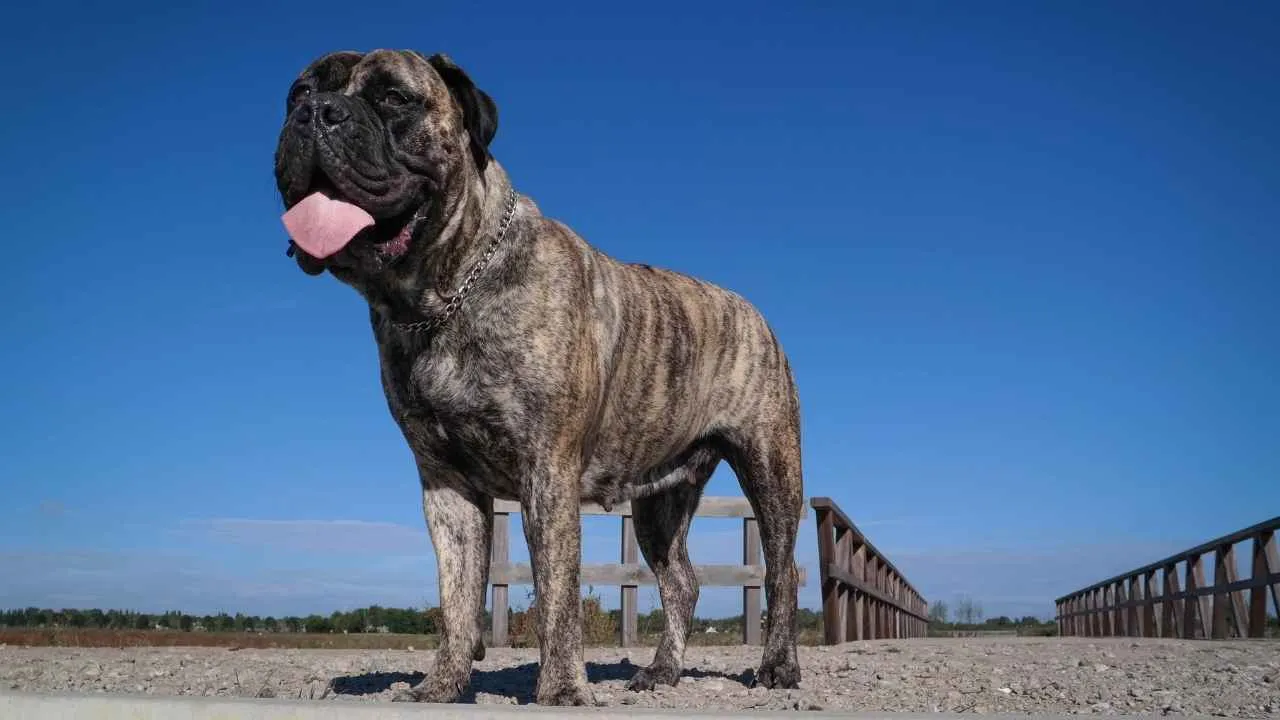
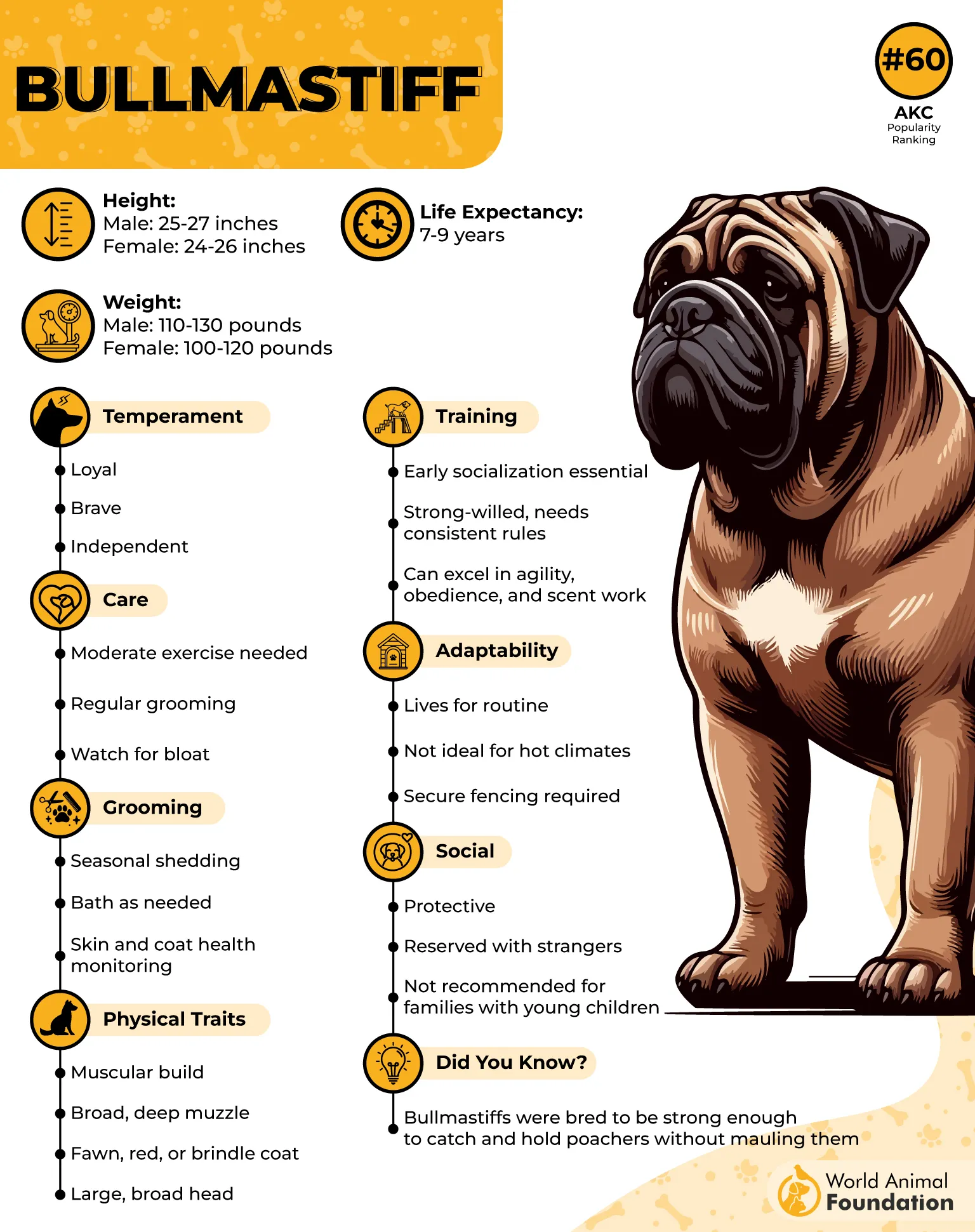
Bullmastiff emerged in early 19th-century England when gamekeepers crossed Mastiffs with Bulldogs to create a powerful dog capable of catching poachers. The original blend was about 60 percent Mastiff and 40 percent Bulldog, combining size, courage, speed, and determination.
Serious Guarding Instincts
Once called the “Gamekeeper’s Night Dog,” the Bullmastiff paired formidable strength with an affectionate nature toward its household. Its independent streak can make training feel more like a partnership, while clear rules and early socialization help channel its protective instincts.
These characteristics make its temperament easier to understand:
Suspicious of unfamiliar visitors
May accept strangers through trusted introductions
Can be overprotective without guidance
A Sofa-Loving Giant
Bullmastiffs can have surprisingly sedentary habits and may need encouragement to exercise, even though daily walks and running in a secure yard are useful. Their short coat also only needs weekly brushing, making coat care fairly straightforward, as per the AKC.
5. Great Pyrenees
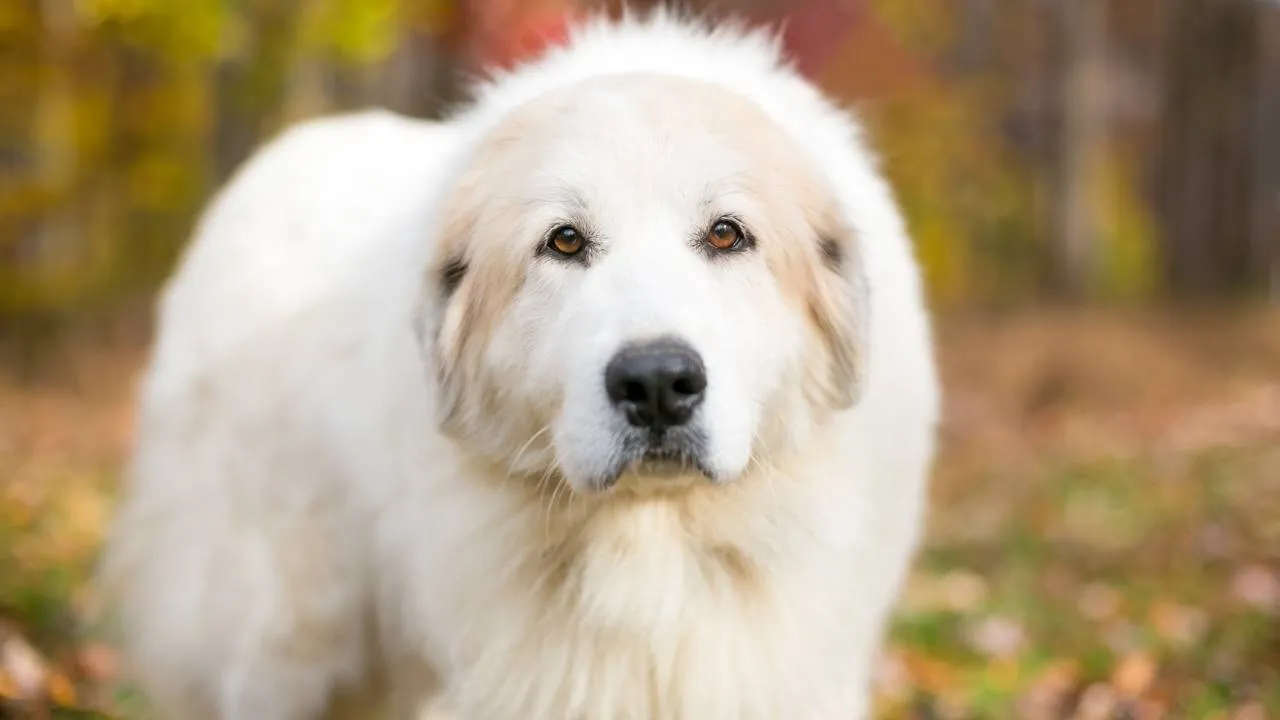
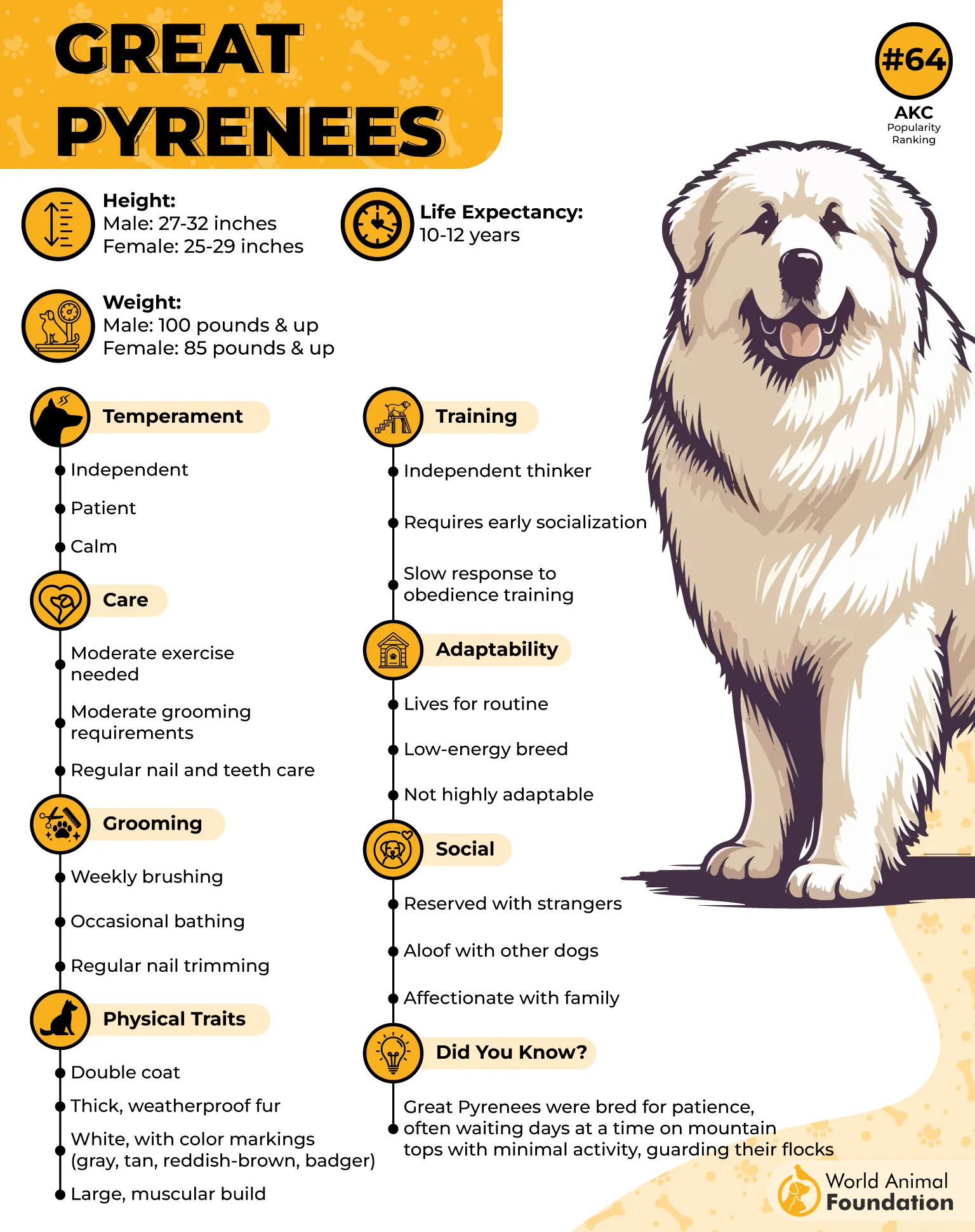
Great Pyrenees began its working life among the Pyrenees Mountains, the rugged range separating France and Spain. These large white dogs guarded sheep from predators, while their strength, agility, and gentle nature made them dependable flock guardians.
Quiet Watchfulness
For a household seeking a protective dog without a demanding exercise schedule, Great Pyrenees can be an interesting fit. Their traditional guarding work required conserving energy while watching over flocks, and that low-key rhythm still influences their daily activity needs.
Some worth-knowing qualities of this guardian breed are:
Barking alerts can be triggered by passing visitors
Roaming requires a sturdy, secure fence
Weekly brushing helps control shedding
Room to Unwind
Great Pyrenees generally get along well with other pets but appreciate having a quiet area away from more playful companions. Its long outer coat also resists dirt and tangles, while weekly brushing helps keep the softer undercoat manageable around the home.
6. Kuvasz
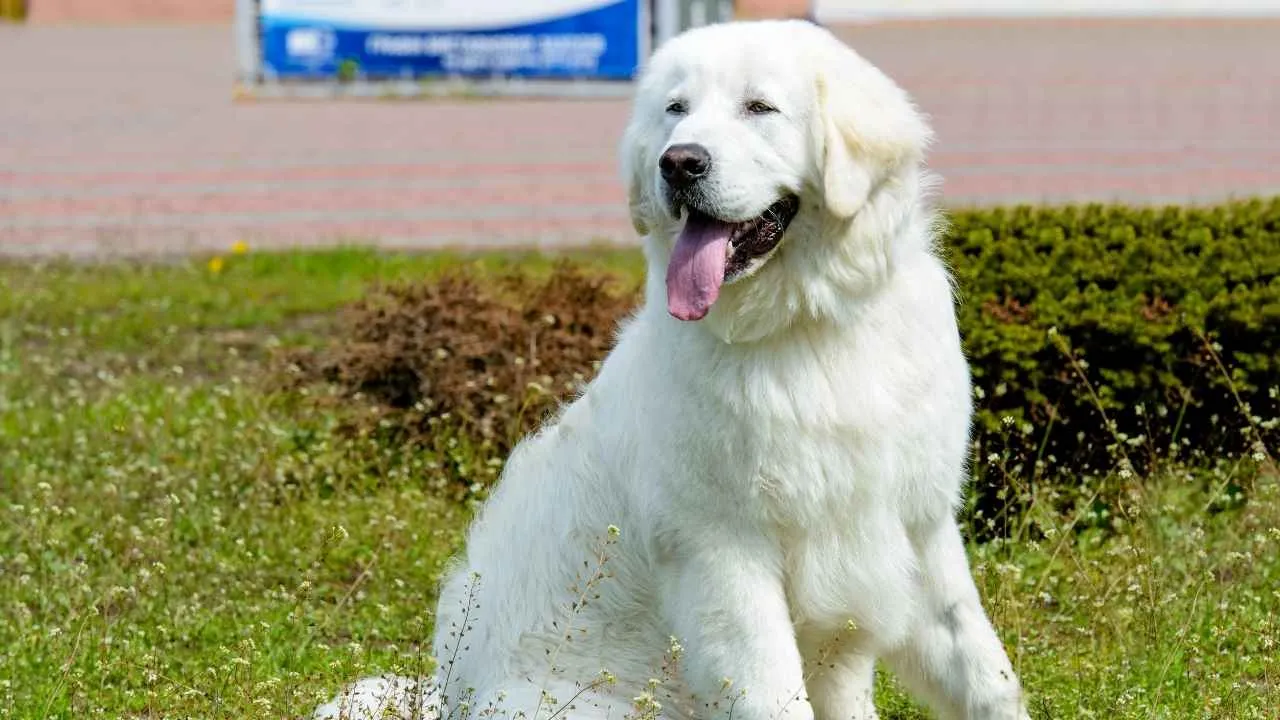
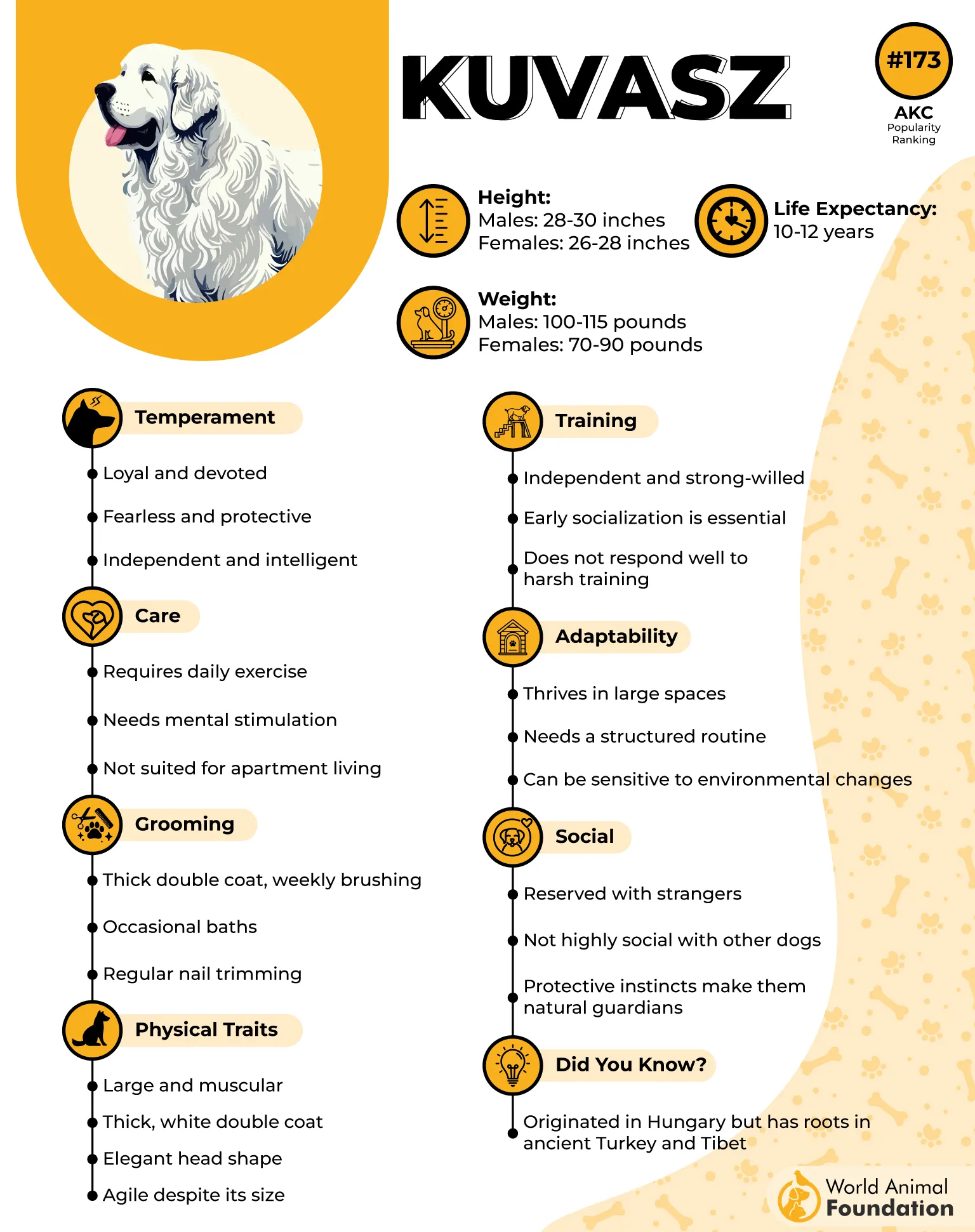
Kuvasz is an ancient Hungarian breed whose ancestors are believed to have reached the country as early as the 13th century. The breed later found its way to the United States in the 1920s, while its traditional work included hunting and guarding flocks.
Serious Guarding Instinct
For a home that needs a dog with genuine protective instincts, the Kuvasz brings a naturally territorial temperament and a strong sense of awareness. Its thick double coat also needs to be brushed a few times a week, and bathing should only be done when needed.
Here are some essential points about their coat:
Coarse outer coat can be wavy or straight
Fine, woolly undercoat beneath the guard hairs
Smooth hair covers the head, muzzle, ears, and paws
Careful With Strangers
Kuvasz can be vocal when an unfamiliar person or animal enters its territory, while proper socialization helps it distinguish familiar people from potential threats. With children, the breed can be affectionate, though its large frame calls for supervised play, especially with younger kids.
7. Mastiff
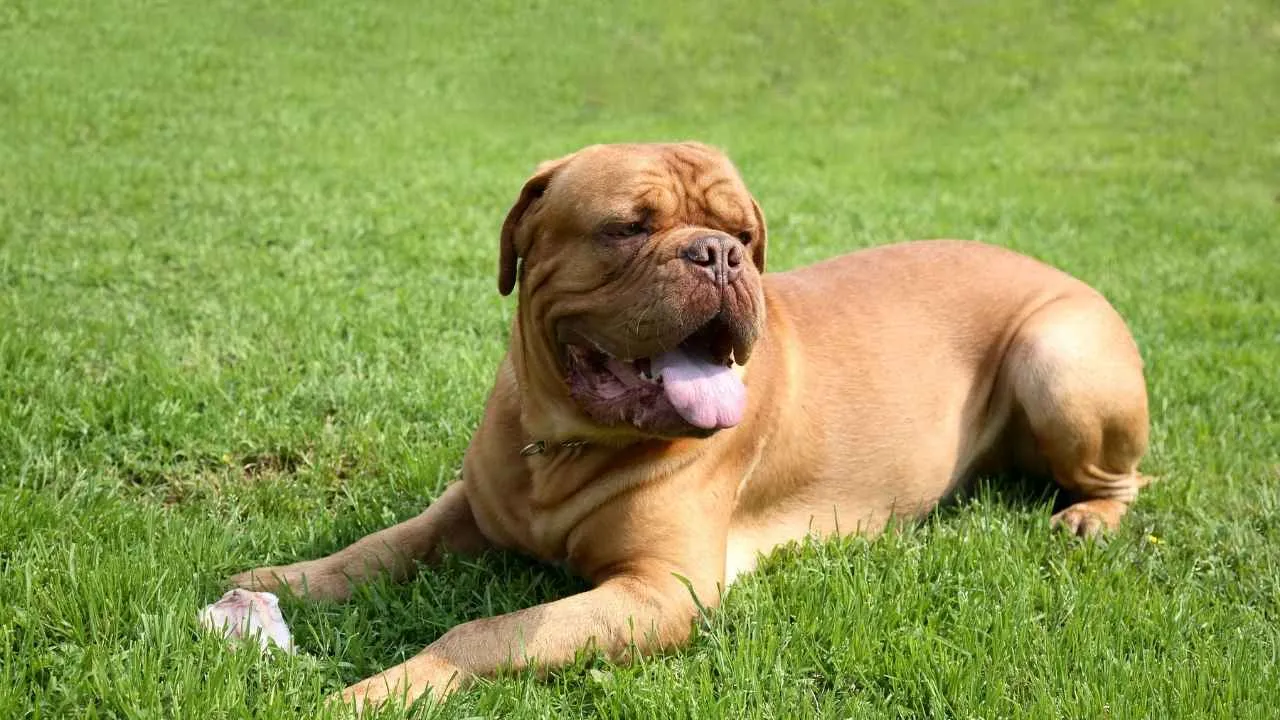
Mastiffs have an unusually old connection with Britain, where dogs of this type were there when Roman forces invaded the island. Some accounts suggest Phoenician traders may have brought them as early as the 6th century BC, giving the breed a remarkably early place in European canine records.
A Quiet Watcher
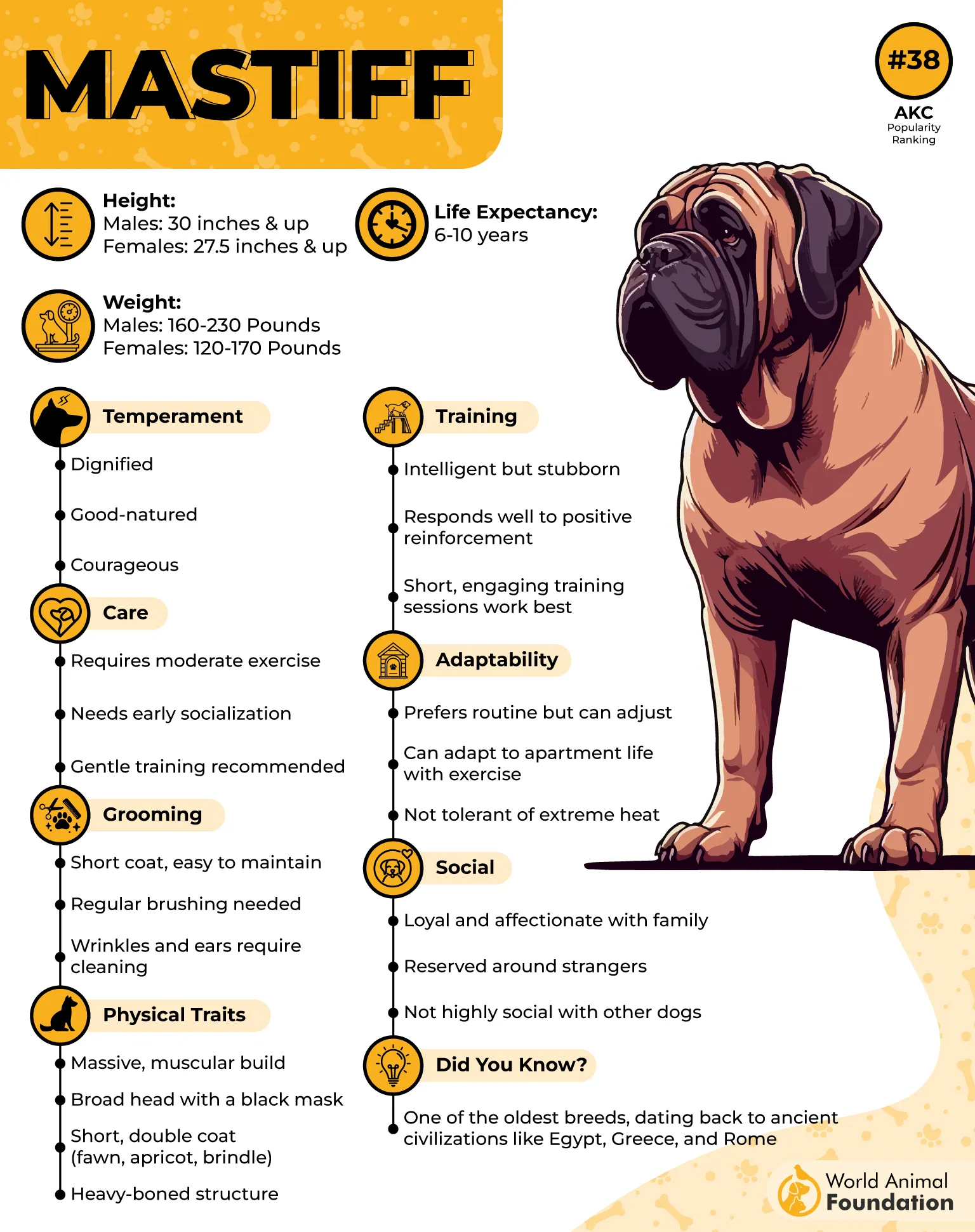
A mastiff brings a calm presence to the home, yet its guardian instincts become noticeable when unfamiliar people approach. Suspicion toward strangers can combine with protection of family and territory, while frequent barking is not typical for this breed.
These practical details make its upkeep surprisingly simple:
Weekly brushing for the short coat
Daily face and eye wiping may be needed
The neck and shoulder coat is coarser
Low-Key Companion
This gentle giant has modest exercise needs and a laid-back temperament that suits a quieter household. Affectionate family behavior can include treating itself like a lap dog, while proper socialization helps it interact appropriately with children and other animals.
8. Boerboel
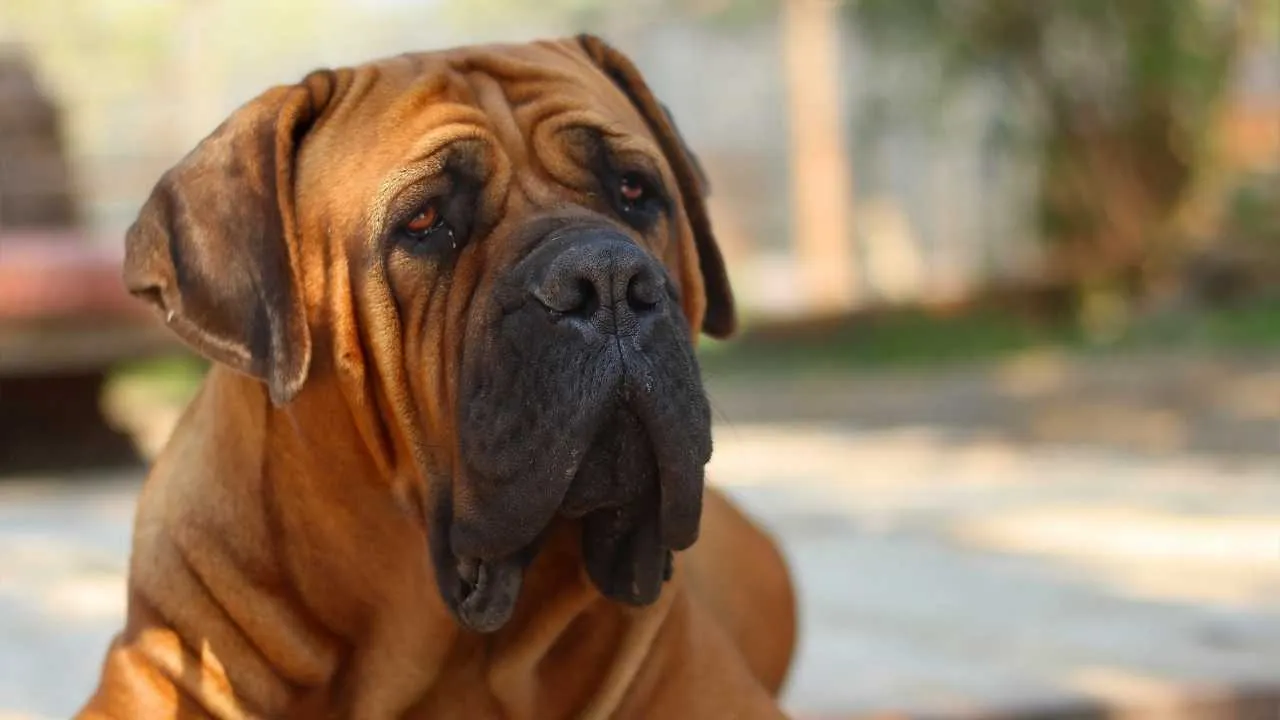
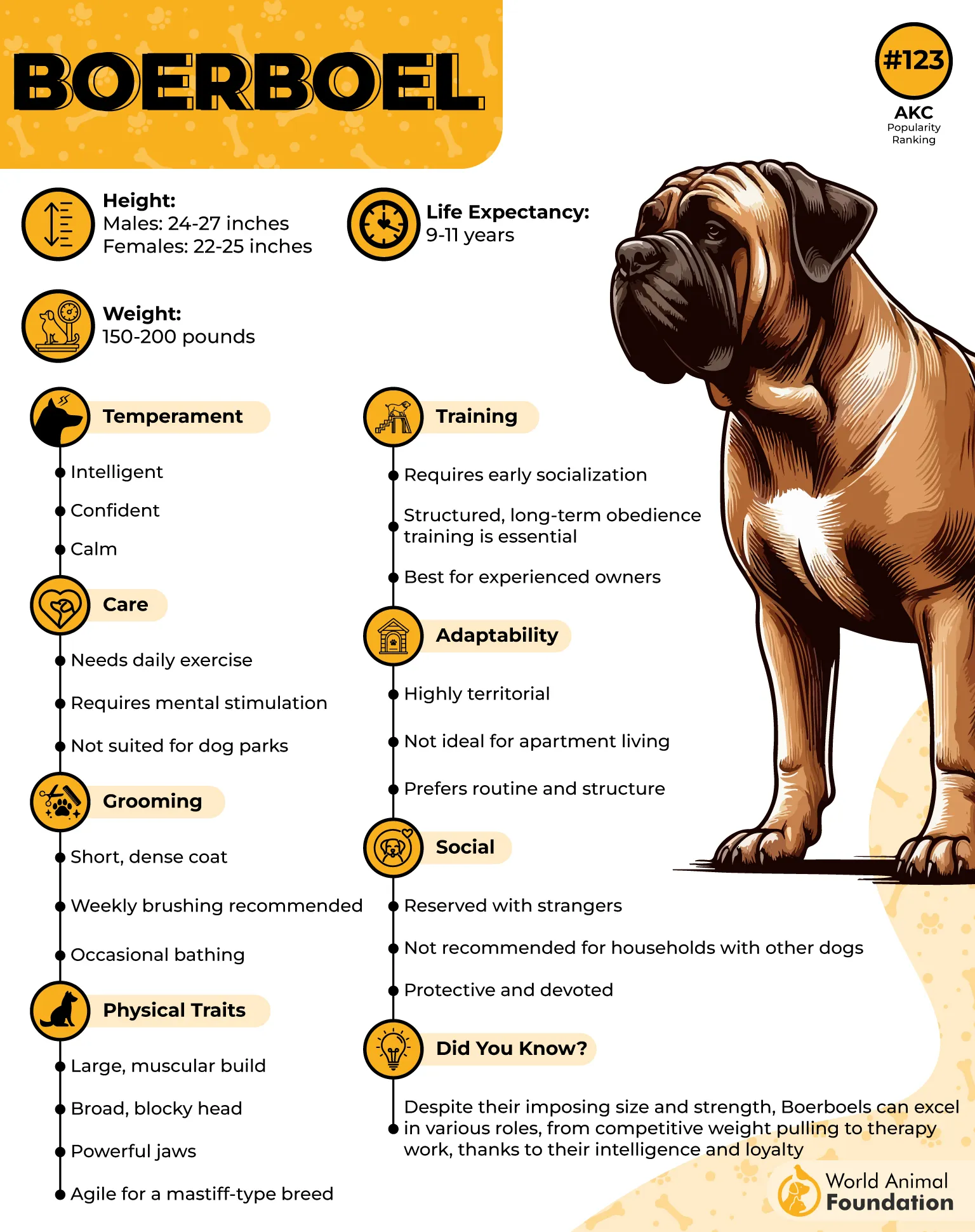
Boerboel originated in South Africa in the 1650s, when Jan van Riebeeck’s family dog bred with indigenous domestic dogs in the region. The breed’s name means “farm dog,” and paintings from the mid-1800s already depict dogs recognizable as Boerboels.
A Serious Guardian
Their early role was to protect families from large African predators, giving it the strength, confidence, and courage expected of a property guardian. That instinct calls for thoughtful handling because a provoked or threatened dog can respond aggressively.
Three practical details are worth knowing:
AKC recognition came in 2015
Short coat needs weekly brushing
Monthly baths are often sufficient
Gentle at Home
Boerboels can be remarkably affectionate with their family and gentle around children, while proper introductions can help them interact well with cats and other dogs. Its intelligence and obedience also make training easier when the dog receives fair, consistent treatment.
9. Rhodesian Ridgeback
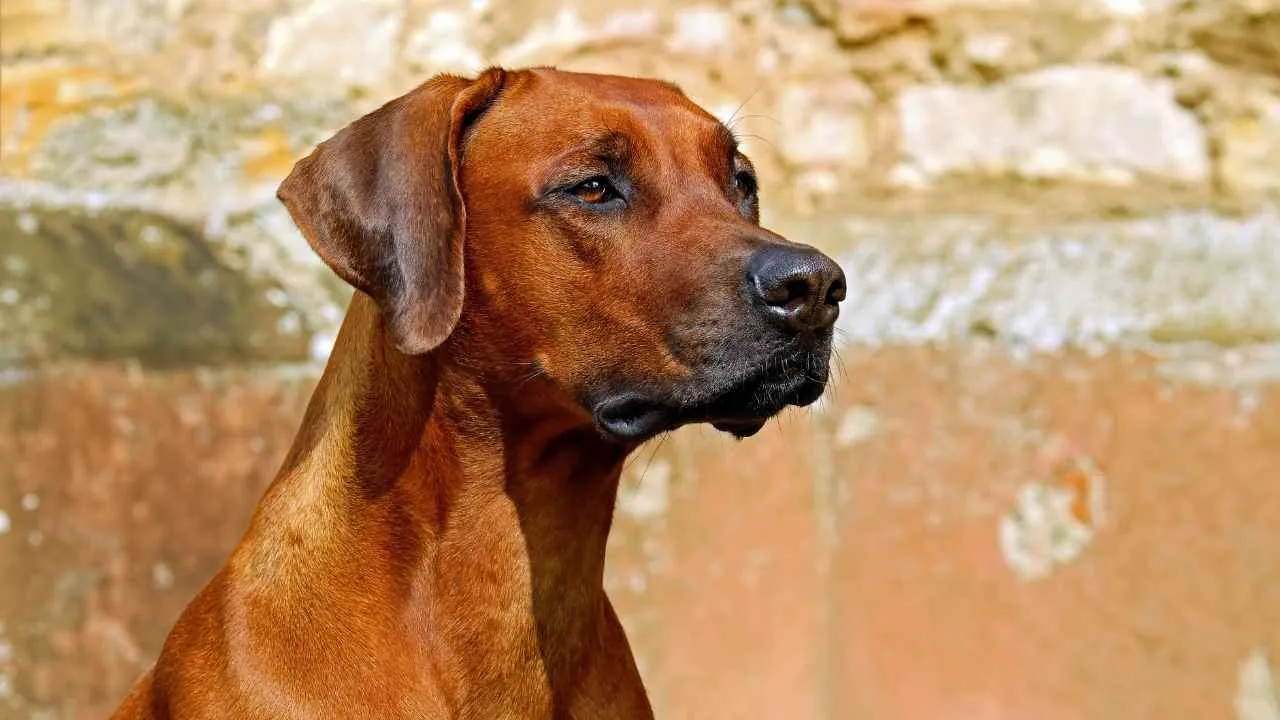
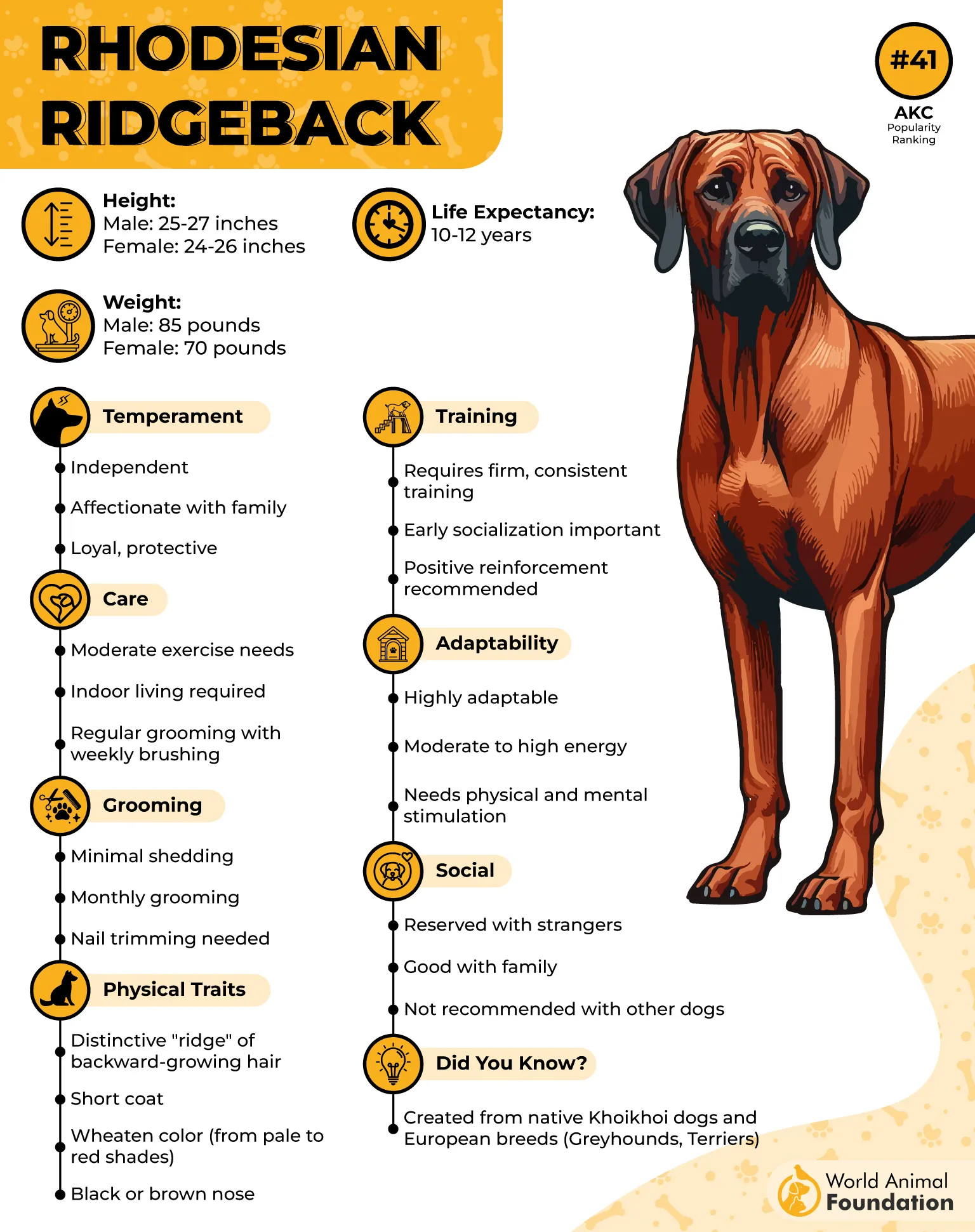
Rhodesian Ridgeback emerged from crosses between European breeds such as Mastiffs, Bloodhounds, Great Danes, Pointers, and Greyhounds with native hunting dogs. The defining ridge of hair along its back grows in the opposite direction from the surrounding coat.
Easy Coat Care
Rhodesian Ridgeback has modest grooming needs, with weekly brushing helping remove loose hair and keep the short coat glossy. An occasional bath is generally enough for routine cleanliness, making coat care relatively simple for a large breed.
Its everyday nature adds another layer:
Composed, dignified expression
Enjoys hiking and running
Thrives on mentally engaging obstacle games
Selective With People
This furry friend tends to be playful and affectionate with familiar people, while strangers may encounter a more reserved personality.
Early socialization can help young dogs become more comfortable in unfamiliar social settings, while older children who play calmly can be a good match.
10. Broholmer
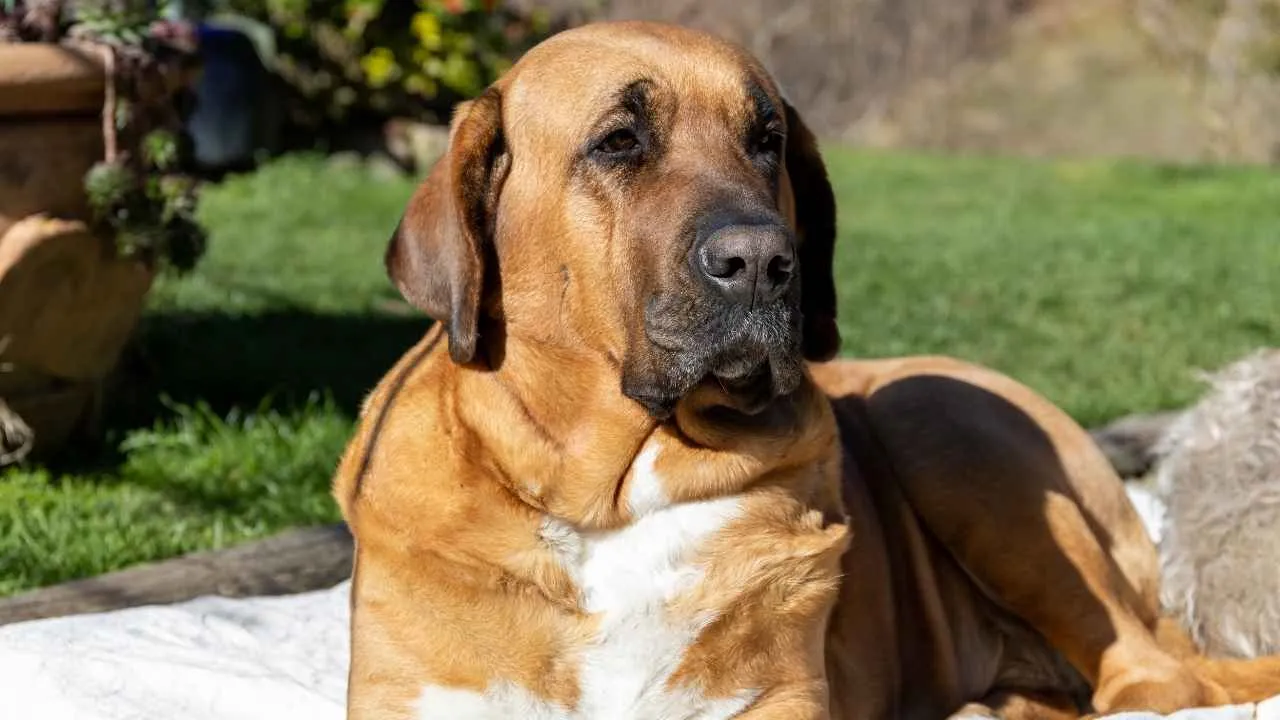
Broholmer is a large Molosser breed from Denmark, developed through crosses between English Mastiffs and local German dogs. Its numbers fell sharply during World War II, but the breed gradually regained ground with a steady population rise from the 1970s onward.
Calm Watchfulness
This loyal companion brings a composed, confident presence to the home and can be cautious when unfamiliar people arrive. Its guarding instinct adds awareness around unwanted visitors, while proper socialization helps it interact well with other dogs and pets.
Everyday living brings a different side:
Affectionate toward family members
Patient with children
Seeking physical closeness with its favorite people
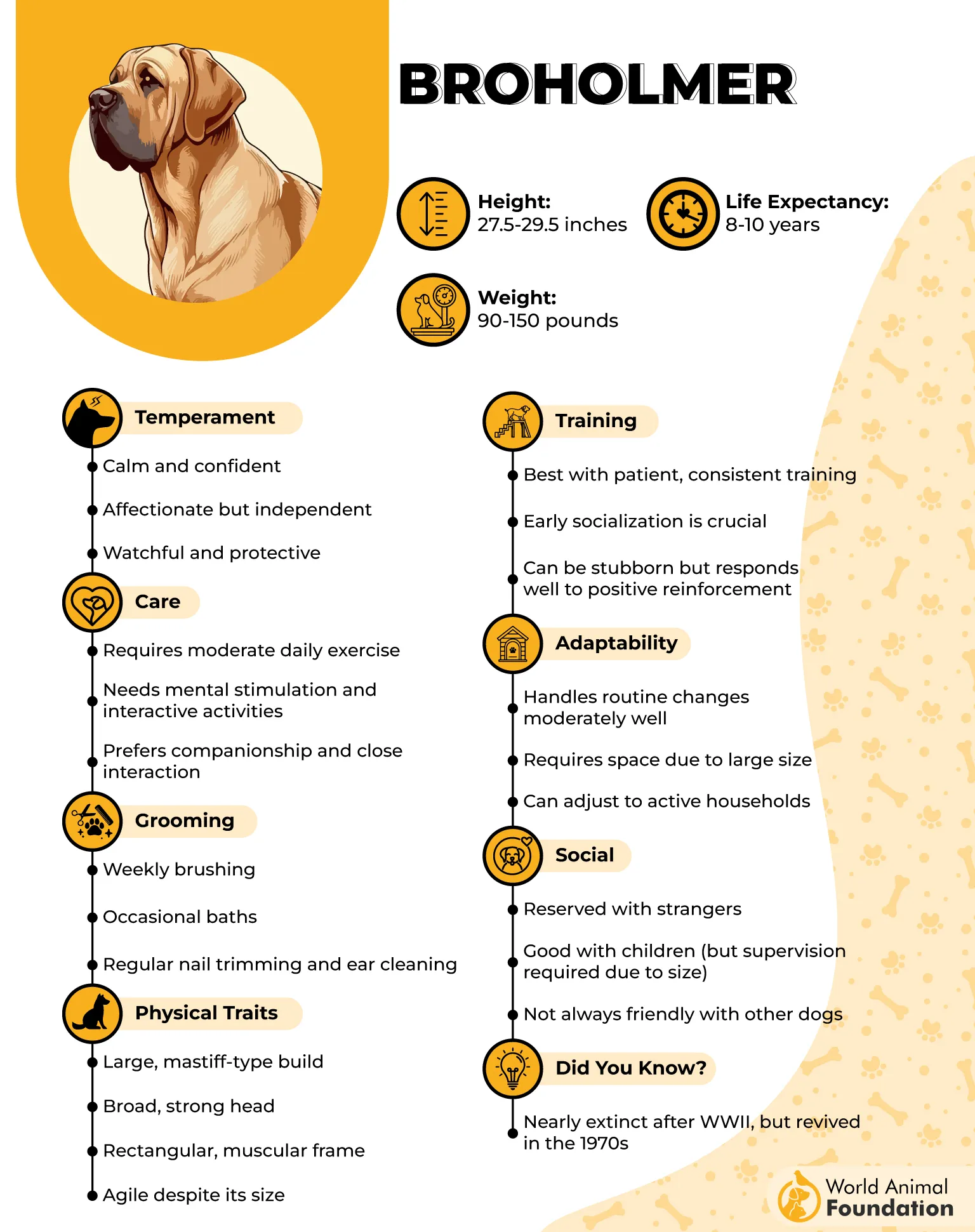
Simple Coat Care
Broholmer’s grooming routine is fairly straightforward, with weekly brushing and occasional baths helping keep its coat neat. Its nails grow quickly and need regular trimming because excessive length can interfere with comfortable walking.
Conclusion
A gentle attitude does not mean a dog cannot be watchful. The right companion can notice unfamiliar sounds, people, or activity while remaining calm and affectionate with the family it knows. Many dog breeds can offer this balance, though coat care, exercise needs, training, and socialization still matter with larger protection dogs.
Some need more space and firmer boundaries than others, while many guardian breeds can settle comfortably into a quieter household once their daily needs are met. The best choice depends on your routine, experience, and expectations. When those factors line up, the right dog can protect while becoming one of the great family pets with enough mental stimulation.
