




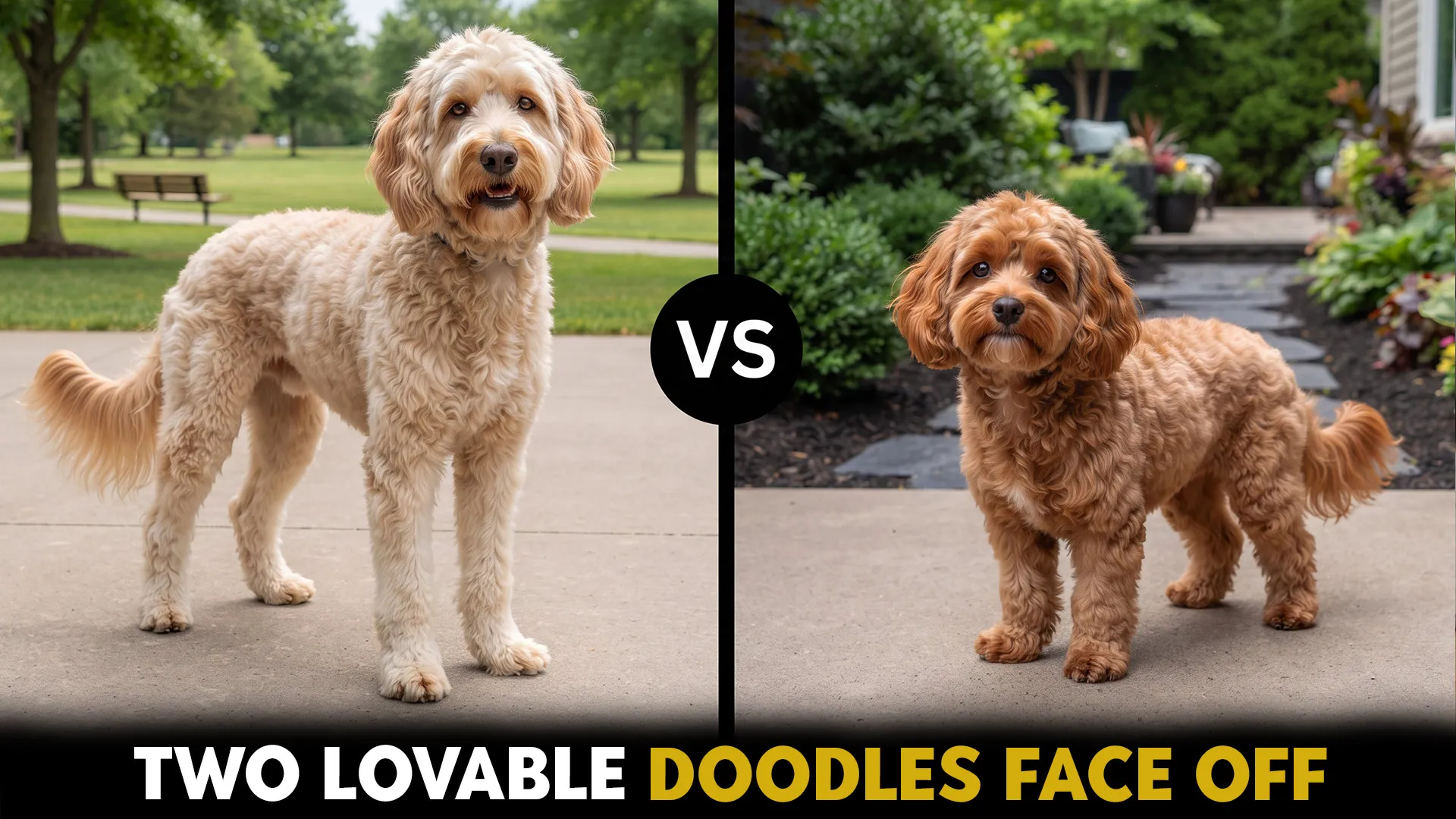
Labradoodle or Cavapoo? Now that is one fluffy little dilemma. Both bring plenty of charm, affection, and personality, but living with them can feel surprisingly different once exercise, grooming, training, size, and everyday companionship enter the conversation.
One may suit an active household that loves staying busy, while the other can feel more at home with a slightly cozier routine. And yes, both are fully capable of taking over the couch like they personally signed the lease.
So, which adorable pup actually fits your lifestyle better? Let’s compare the details that matter before those puppy-dog eyes make the decision for you.
Did you know?
Labradoodles often become therapy dogs, using their gentle, calming nature to comfort people in hospitals, schools, and care homes regularly. Meanwhile, Cavapoos can inherit a strong prey drive, making birds and small animals tempting targets, so reliable recall training becomes especially helpful.
Labradoodle vs. Cavapoo: A Complete Comparison Guide
Choosing between a Labradoodle and a Cavapoo comes down to your lifestyle, preferred dog size, and energy level. Let’s get to know them in detail:
Parent Breeds & Development History
Some dogs arrive with a family tree; these two mixed-breed dogs arrive with a whole backstory. Their beginnings help explain why their companionship styles feel different today, especially when choosing a dog whose everyday routine needs to fit comfortably into your household.
The Labradoodle combines Labrador Retriever and Poodle heritage, and this pairing was anything but accidental. The cross was developed in Australia in 1989 with the goal of creating an intelligent, trainable guide dog paired with a lower-shedding coat.
The Cavapoo followed its own path into family homes. This Cavalier King Charles Spaniel and Poodle cross became associated with intentional breeding in Australia during the 1990s, bringing together an affectionate companion nature with the clever qualities of the Poodle.
Size, Weight & Physical Appearance
Here comes the fun part: one can resemble a sturdy teddy bear, while the other often looks permanently puppy-faced. Their builds and coats vary because crossbreeds can inherit different combinations of features from either side of the family tree.
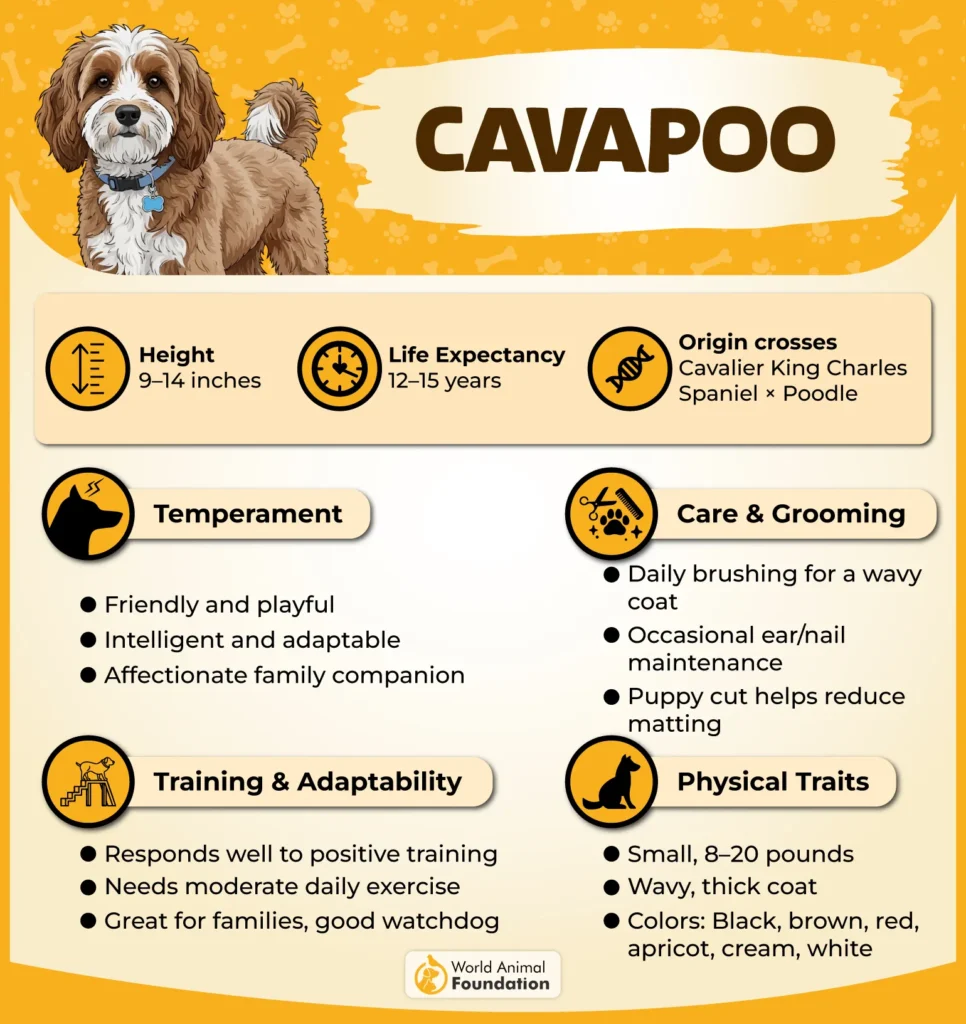
Cavapoo
Height: 9-14 inches
Weight: 8-25 pounds
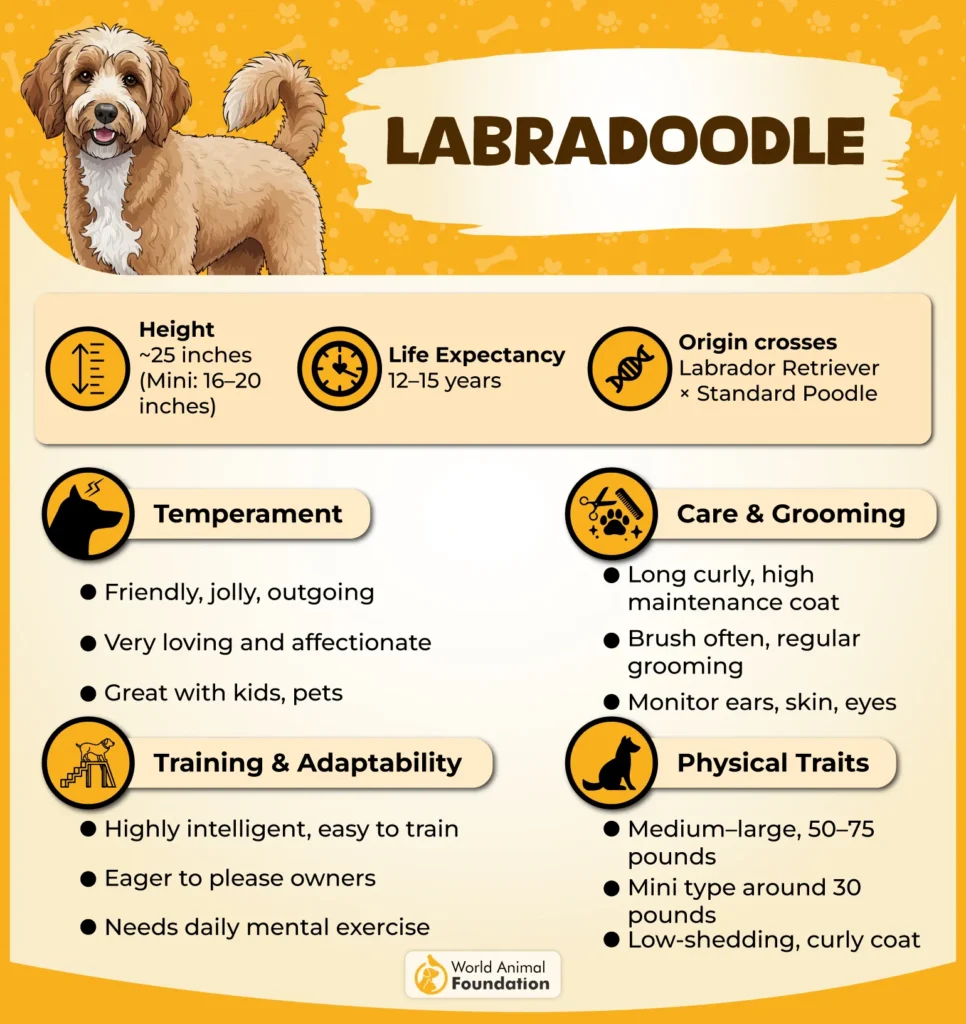
Labradoodle
Height: 20-25 inches
Weight: 50-70 pounds
Cavapoos generally have compact, well-proportioned bodies, expressive dark eyes, floppy ears, and soft coats that may appear silky, wavy, fluffy, or tightly curled. Basically, genetics gets creative here, and individual dogs can lean noticeably toward either parent.
Labradoodles bring even more visual variety to the mix. Depending on their purebred Poodle parentage and genetics, they may have athletic builds, long floppy ears, friendly eyes, and coats ranging from shaggy and wavy to thick and curly.
Coat Type, Grooming & Maintenance
Cute fluff has paperwork, apparently. Both dogs can bring lower-shedding coats into the home, but neither automatically comes with a magical self-brushing setting, so anyone seeking low maintenance should pay close attention to what that adorable fur actually requires.
According to Petplan, Labradoodle coats can be hair, wool, or fleece, with shedding levels varying by coat type. Regular maintenance matters, including brushing about twice weekly and professional grooming a few times each year.

Cavapoo coats can be equally demanding behind all that teddy-bear charm. Their soft fur may mat easily, particularly when longer or curlier, so regular brushing matters, and professional grooming can become a familiar appointment on the household calendar.
Personality, Temperament & Behavior
If your ideal dog considers personal space merely a suggestion, this comparison gets interesting. Both crosses are people-oriented, but their social energy can show up differently, from cheerful shadowing around the house to enthusiastic invitations for yet another round of play.
Cavapoos are typically affectionate, playful, sociable, and strongly attached to their people. They enjoy plenty of attention and companionship, but that devotion can have a clingy side, since some may struggle when left alone for extended periods.
Labradoodles tend to bring a livelier dose of enthusiasm into the household. Friendly, loving, playful, and sometimes excitable, they enjoy being involved in family activities, while boredom can encourage barking or some impressively creative mischief around the home.
Intelligence, Trainability Differences
Brains are definitely not in short supply here, which is wonderful until your dog starts negotiating the household rules. Both crosses can learn quickly, but keeping lessons upbeat, interesting, and consistent matters when clever pups decide they have alternative ideas.
Labradoodles inherit strong learning ability from Labrador Retrievers and Poodles, so they generally respond well to positive reinforcement and enjoy learning new tasks. A little structure helps too, because a bored clever dog can suddenly become an interior-design critic.
As mentioned by Purina, Cavapoos are highly intelligent, so early training matters. Keep sessions short, playful, and engaging, since young dogs can lose focus quickly. Tasty, high-value treats can also help keep them motivated while learning.

Energy Levels & Exercise Requirements
Some dogs hear “walk” and politely stretch. These two hear it and start planning the afternoon. Their activity needs differ, so choosing between them means deciding whether you want manageable daily movement or an active four-legged friend.
Cavapoos enjoy regular activity without demanding an Olympic training schedule. Daily walks, games of fetch, and mental stimulation make all the difference, while their adaptable nature helps them feel comfortable in apartments or houses when their exercise needs are consistently met.
As noted by PetMD, Labradoodles are energetic, affectionate dogs that need frequent exercise, play, and interaction. With enough physical and mental stimulation each day, they can adapt to homes of different sizes, though having a yard is often preferred.
Health, Lifespan & Genetic Concerns
Those adorable curls unfortunately do not come with an invisible health shield. Both crosses can inherit conditions associated with their parent breeds, which makes responsible breeding, routine veterinary care, and knowing what warning signs to watch for especially worthwhile.
Labradoodles generally have a lifespan around 12 to 15 years, but inherited concerns can include hip and elbow dysplasia, eye problems, allergies, ear infections, and Addison’s disease. Regular checkups and veterinary advice help owners catch possible trouble before it starts causing bigger headaches.

Cavapoos commonly live around 12 to 15 years and may face mitral valve disease, patellar luxation, hip dysplasia, allergies, eye conditions, and ear problems. Their cute floppy ears and expressive eyes deserve more than compliments, so routine care really matters.
Pricing, Availability & Buying Guide
Falling in love with a fluffy face takes roughly three seconds. Buying responsibly should take considerably longer. Price can vary widely, so the smartest move is looking beyond the puppy photo and paying close attention to breeding practices and health history.
Cavapoo puppies are available through reputable breeders, but costs can vary depending on breeding background and location. Before committing, ask about the parents, health screening, and breeding practices. Rescue organizations are also worth checking if adoption feels like the better fit.

Labradoodle puppies are also widely available from breeders and may be found through rescue organizations. Look for responsible breeders who prioritize health and temperament, share clear information about the parents, and avoid promising completely non-shedding or allergy-friendly coats.
Family Fit & Ownership Experience
Here is where the comparison becomes wonderfully personal because the “better” dog depends heavily on your household rhythm. One family may adore constant action, while another wants a cuddly companion who joins the fun without turning Tuesday evening into boot camp.
Labradoodles can be affectionate family dogs for households with time for outdoor play, training, grooming, and interaction. Their sociable, energetic personalities make them enthusiastic companions, although their excitable play may need supervision around smaller children, particularly during those boisterous young years.
Cavapoos tend to settle comfortably into many household setups and enjoy staying close to their people. They are affectionate, sociable, playful companions who can suit families, first-time owners, and homes with other pets, provided they receive regular grooming, attention, and consistent interaction.
Conclusion
Cavapoos and Labradoodles both bring plenty of personality, affection, and cleverness to the table, but they suit different kinds of homes and routines. Cavapoos may appeal more to people wanting a smaller, adaptable companion pet, while Labradoodles fit active households ready for extra exercise, play, training, and grooming.
The better match comes down to your lifestyle, available time, and the kind of companionship you want every day. Pick the dog whose needs genuinely fit your routine, because the happiest match is the one where both human and pup feel completely at home.
