




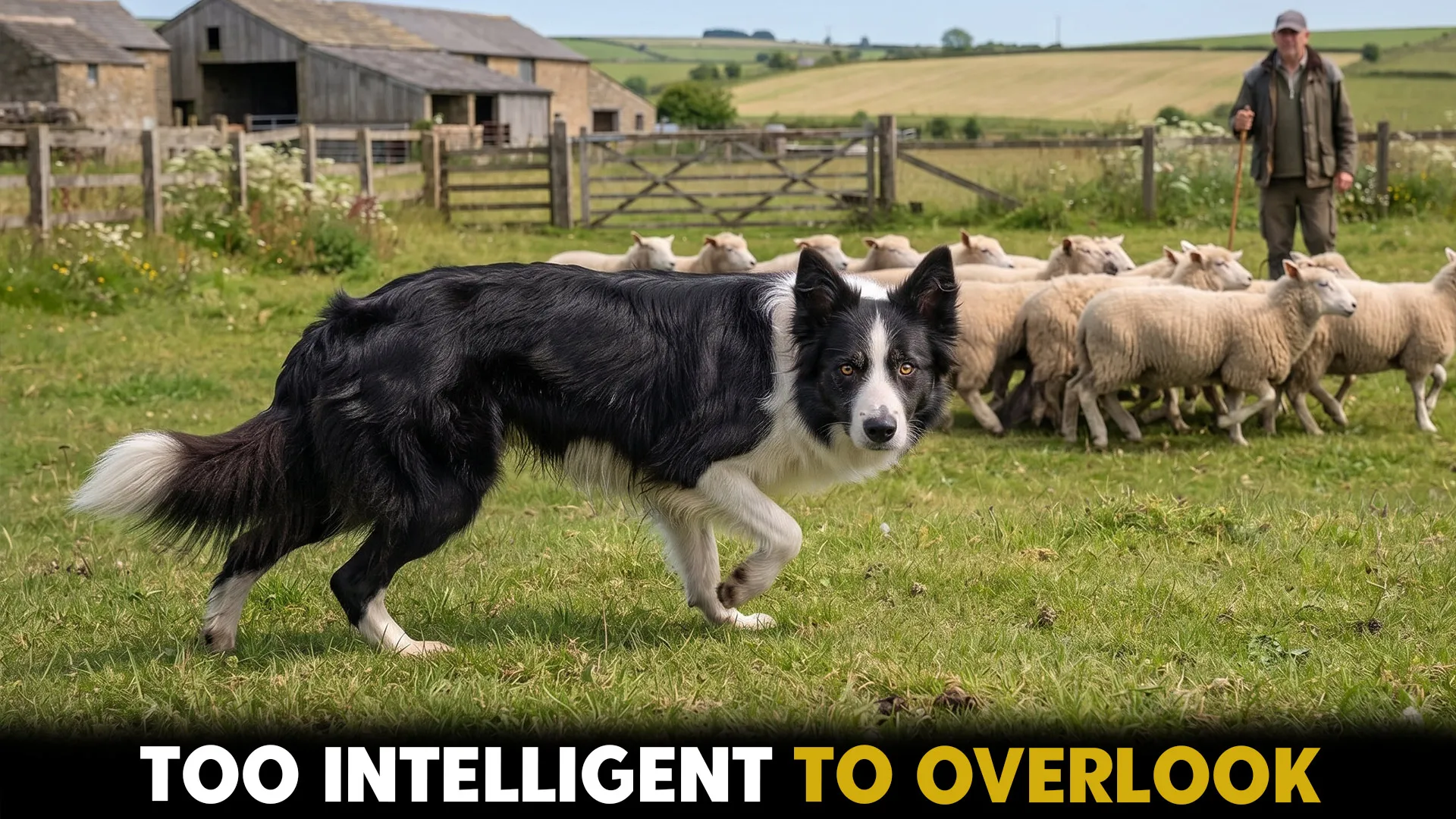
Have you ever watched a dog solve a puzzle, respond to a command almost instantly, or seem to understand what you want before you say it? Some dogs have an incredible ability to learn, solve problems, and work closely with people.
Their intelligence goes far beyond learning tricks. It helps them stay focused, make decisions, and complete demanding tasks.
Working dogs have been bred for generations to help with herding, guarding, hunting, search and rescue, and other challenging jobs.
Their intelligence often comes with high energy, strong instincts, and a need to stay busy. They thrive when given regular exercise, mental stimulation, training, and plenty of interaction.
In this article, we’ll explore seven super smart dog breeds, what makes them stand out, and what future dog parents should know before bringing one home.
Key Takeaways:
Meet seven highly intelligent breeds, from the focused Border Collie to the loyal German Shepherd.
Discover why Golden Retrievers and Doberman Pinschers stand out for big brains, trainability, and high cognitive abilities.
See how Shetland Sheepdogs, Labrador Retrievers, and Rottweilers bring their own unique and imposing strengths.
Find out what each breed needs to truly thrive, from daily exercise and mental stimulation to grooming and health care.
Highly Intelligent Working Dog Breeds
1. Border Collie
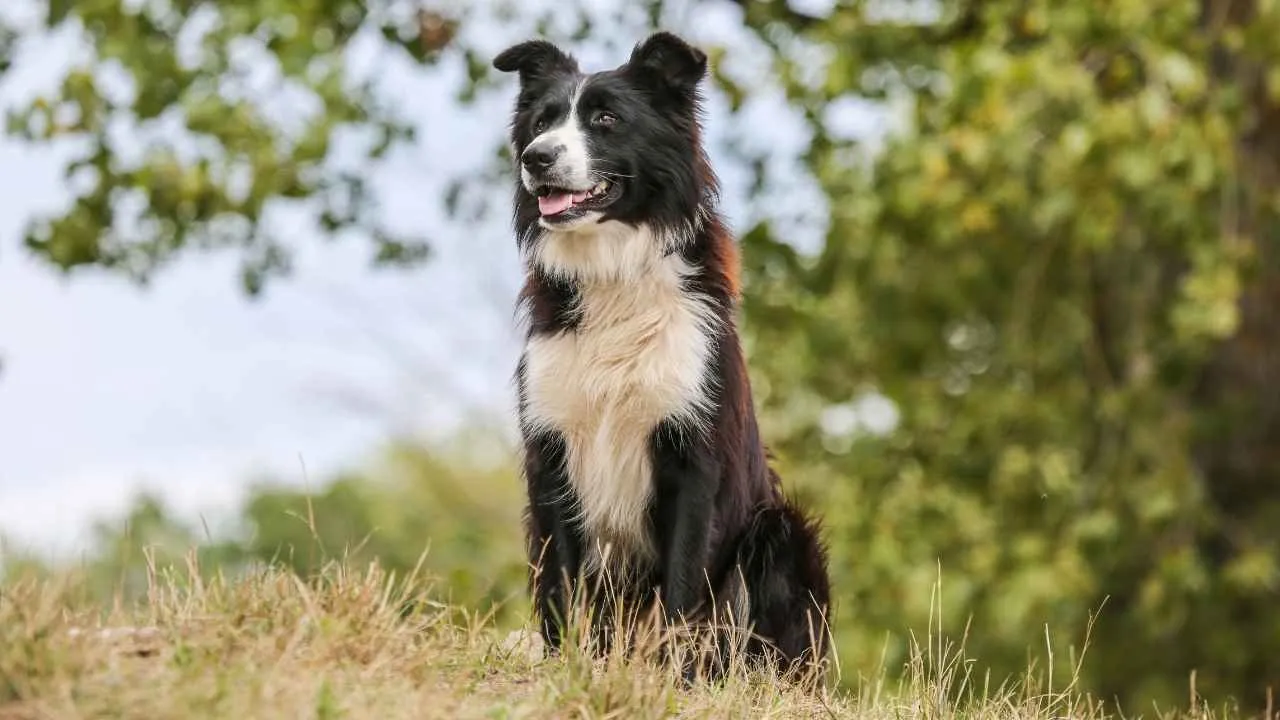
Border Collies are widely known for their intelligence, speed, and strong work ethic. They were originally developed as herding breeds on farms in Great Britain, especially around the border between England and Scotland.
Their sharp instincts helped them control livestock with speed and precision. Today, they still work on farms and ranches, while many also enjoy active family life and competitive dog sports.
What Makes Border Collies Stand Out?
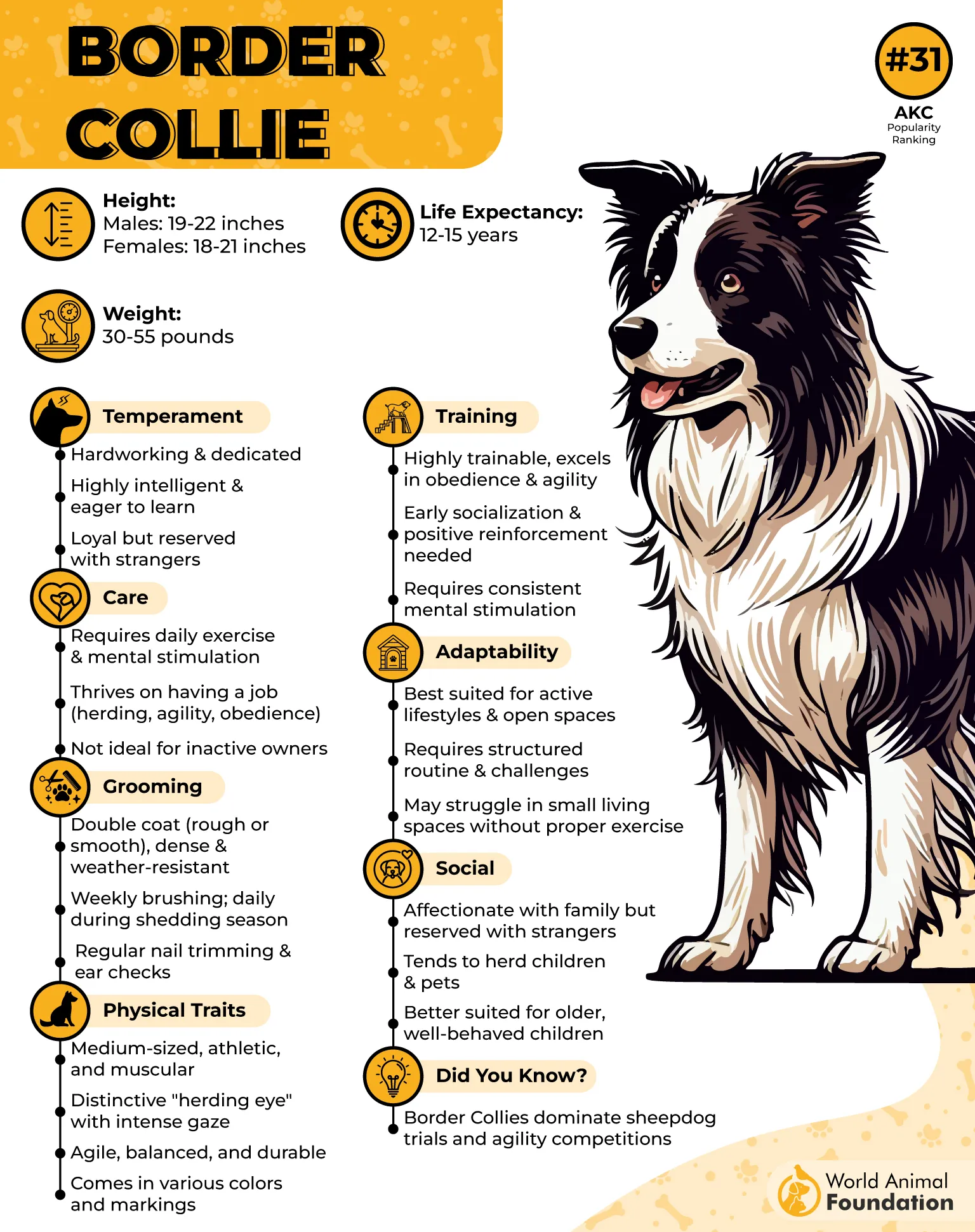
These dogs are alert, athletic, loyal, and eager learners. They can pick up commands quickly and often enjoy advanced training. Their strong herding instincts may cause them to herd other pets and even children, as mentioned by PetMD.
They can also be reserved around strangers, making early socialization important. Their sensitivity means they may react to loud noises such as fireworks and thunderstorms.
Care and Health
Border Collies need active homes with plenty of exercise and mental stimulation. Long walks, running, hiking, fetch, Frisbee, agility, flyball, and herding activities can keep them engaged.
Without enough to do, they may dig, chew furniture, bark excessively, or chase cars and bicycles. Their medium-length double coats may be rough or smooth and need regular brushing to control shedding and prevent mats.
2. German Shepherd
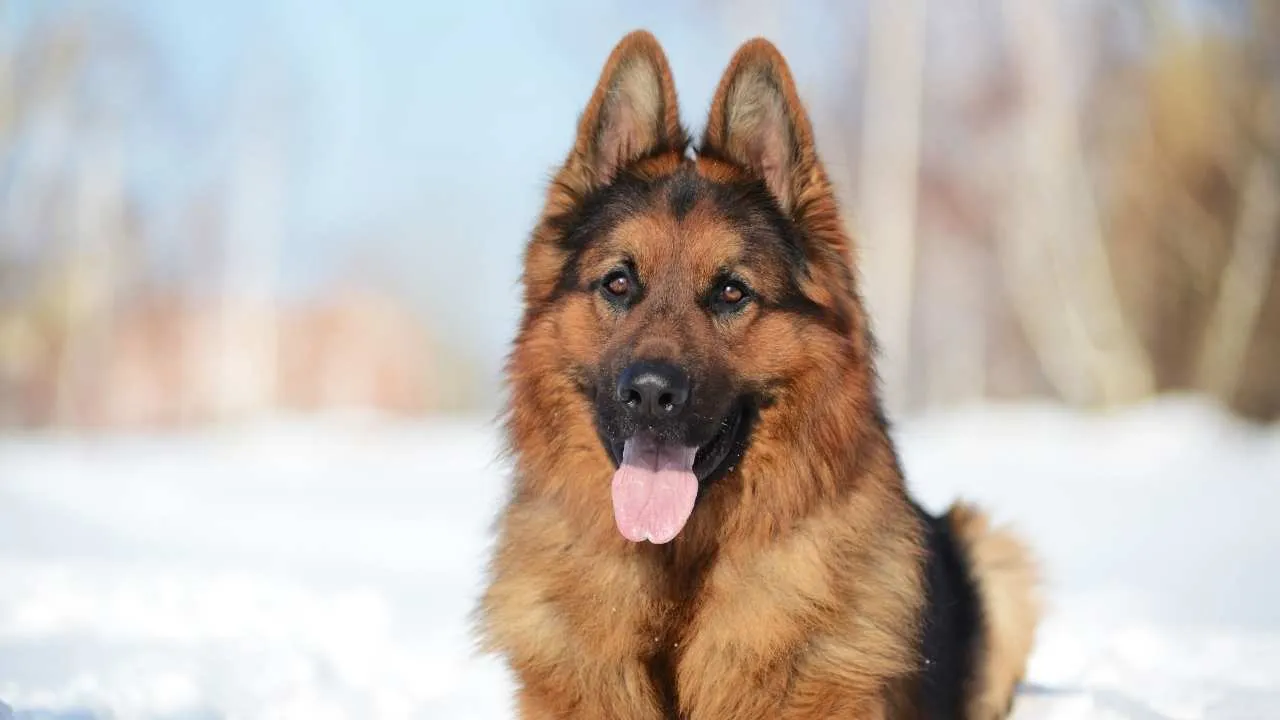
German Shepherds are exceptionally intelligent, loyal, alert, and hard-working dogs. They were developed in Germany from traditional herding and farm dogs. Their intelligence and strong work ethic have made them valuable in many roles.
Today, they commonly work with police and military teams, assist in search and rescue, detect drugs and explosives, and serve as guide and service dogs. Their history as both herders and guardians also gives them a strong protective instinct.

Why German Shepherds Stand Out
German Shepherd dogs are confident, brave, athletic, and eager to learn. They enjoy having a job to do and respond well to proper training and positive reinforcement.
Their natural intelligence allows them to learn quickly, but they still need clear guidance and early socialization.
Without it, their protective instincts can become difficult to manage. They may also be reserved around strangers and have a strong drive to chase, so secure fencing and leash training are important.
Care and Health
PDSA mentions that these highly active dogs need a minimum of two hours of exercise each day, along with mental challenges. Agility, tracking, hiking, herding, nose work, parkour, and other outdoor exercises can keep them engaged.
Their double coats shed heavily, with heavier shedding in spring and fall, so regular brushing is needed. They can be prone to skin problems, hip dysplasia, and gastric dilatation-volvulus (GDV).
3. Golden Retriever
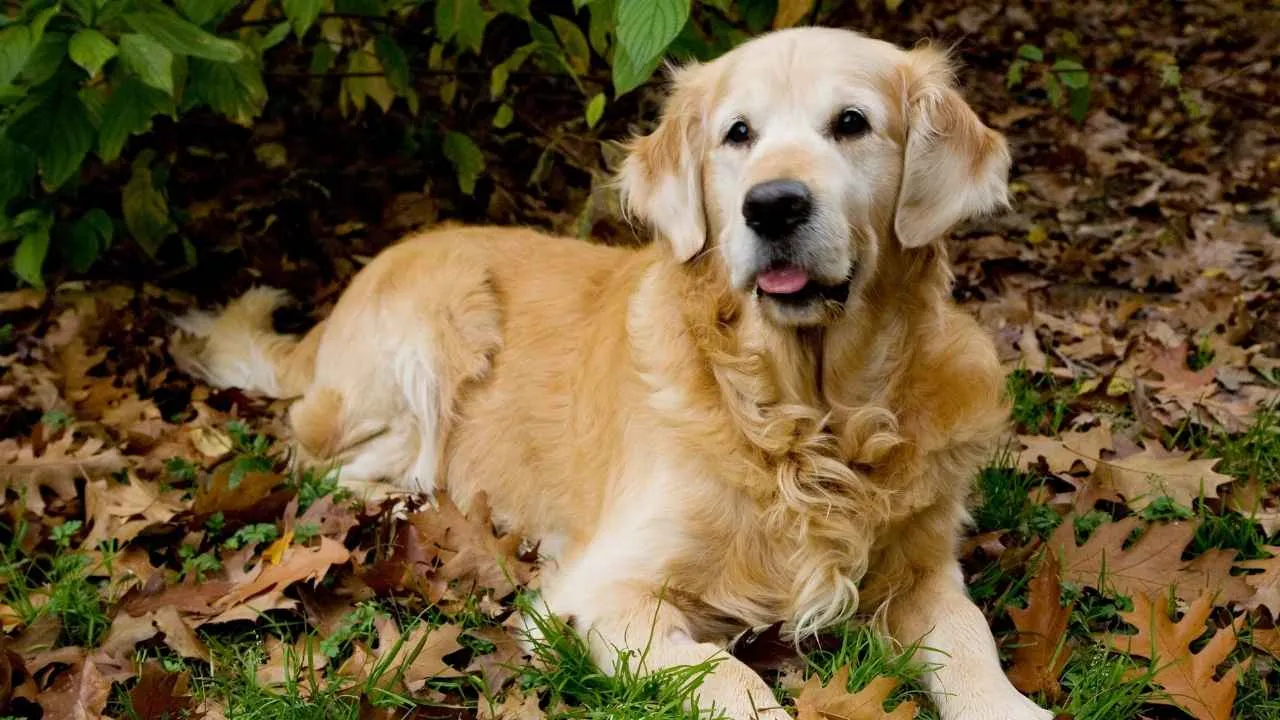
Golden Retrievers are known for their cheerful nature, intelligence, and eagerness to please. They were originally bred to retrieve birds for hunters, using a gentle mouth to carry game without damaging it.
Their natural retrieving skills, quick learning, and adaptable nature later made them valuable in many working roles.
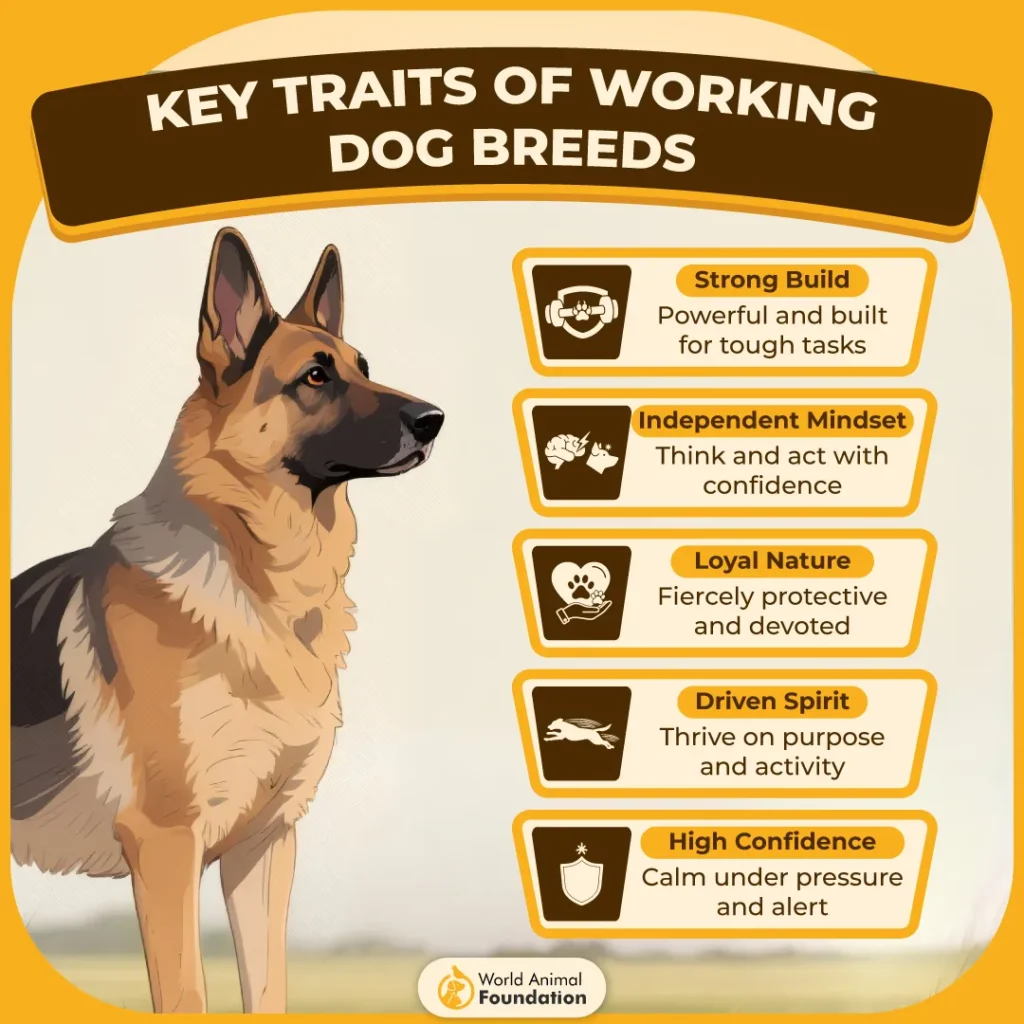
Today, they can work as guide dogs, therapy dogs, and search-and-rescue dogs, while also being eager and reliable family companions.
Why Golden Retrievers Stand Out
These versatile dogs are bright, social, loyal, and easy to train. They enjoy learning new tasks and respond especially well to positive reinforcement. Their friendly nature makes them comfortable around children, other pets, and strangers when properly socialized.
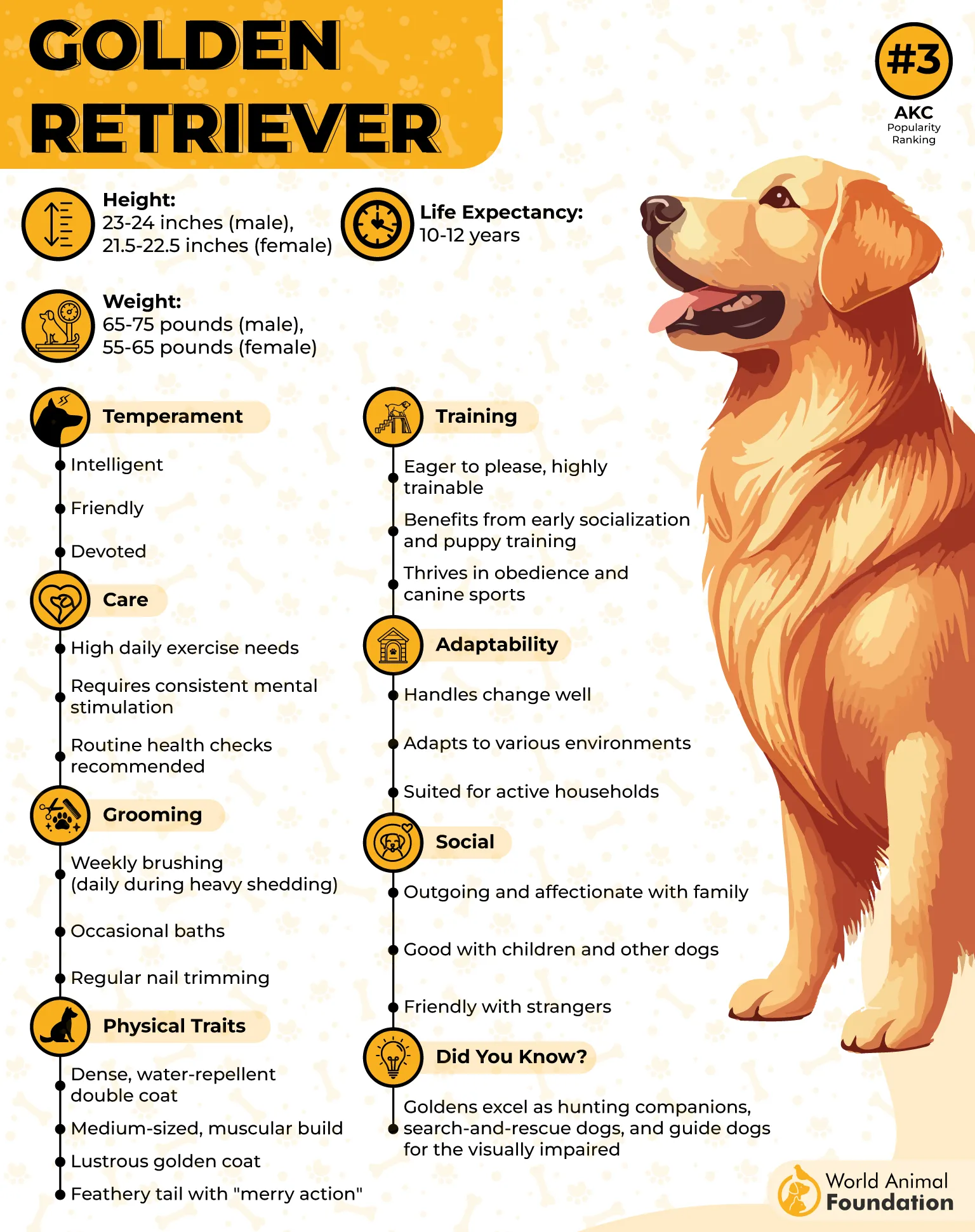
They also enjoy having their people involved in their activities. Fetch, obedience training, tracking, agility, dock diving, swimming, and long walks can provide both physical exercise and mental stimulation.
Care and Health
Golden Retrievers have moderate energy levels and need regular daily exercise to stay happy and healthy. Without enough activity and mental enrichment, they may become bored and start chewing or eating things they should not.
Their thick, water-resistant double coats shed throughout the year and need brushing at least once or twice a week to reduce shedding and prevent mats. Their ears also need regular attention, especially after swimming.
4. Doberman Pinscher
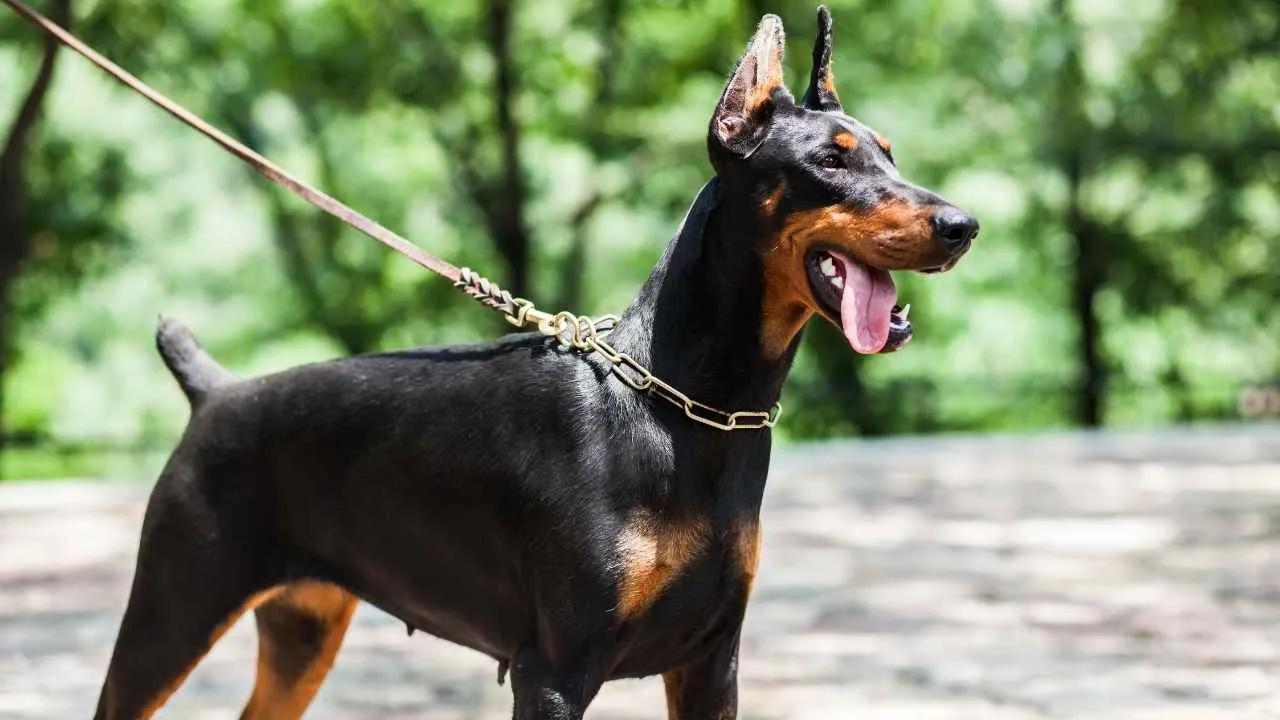
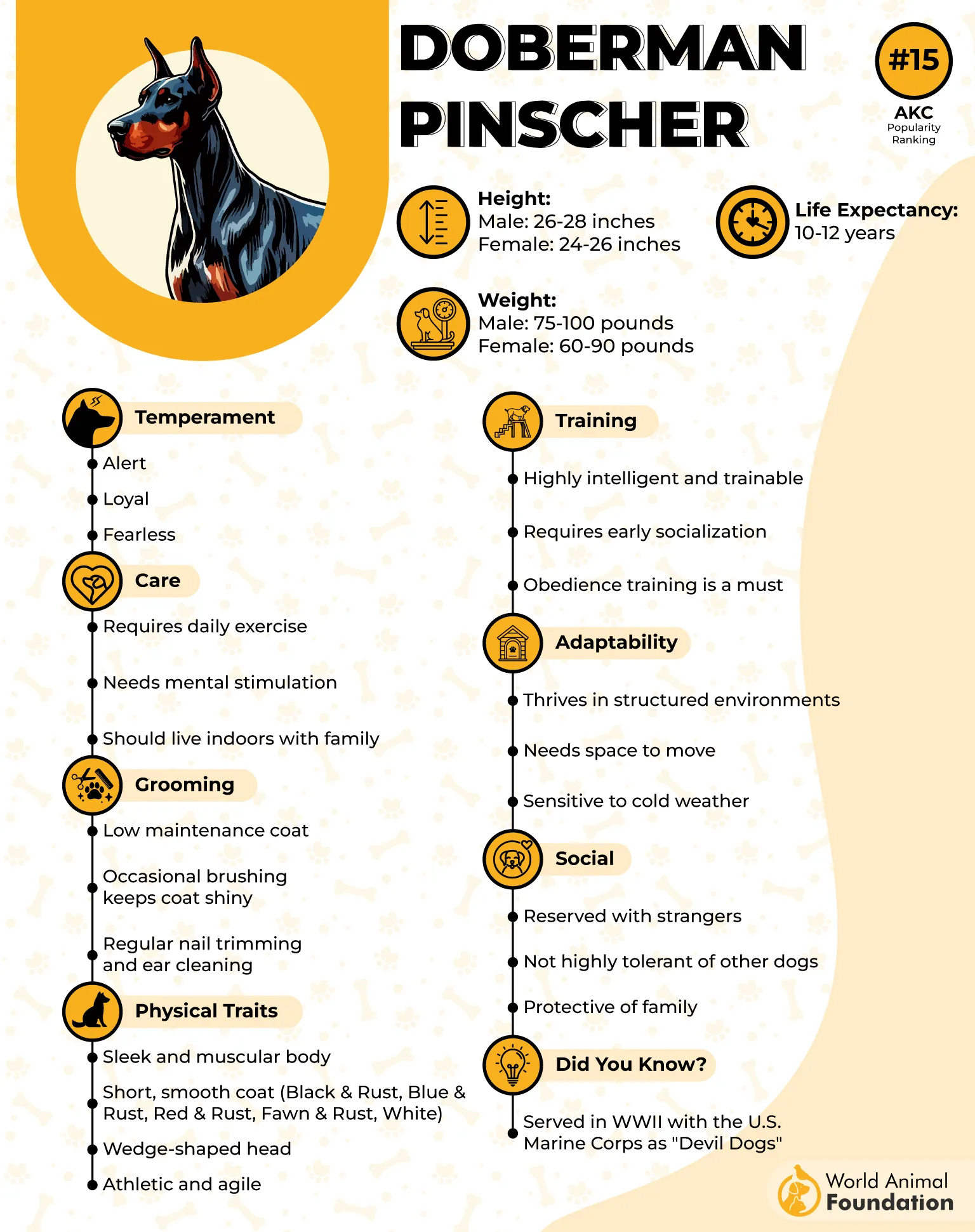
Doberman Pinschers are known for their above-average intelligence, athleticism, loyalty, and alert nature. They were originally developed in Germany as working and guardian dogs, with the goal of creating a capable companion that could protect its owner.
Their confidence, quick learning, and strong bond with people later made them valuable in police, military, security, and search-and-rescue work.
Why Doberman Pinschers Stand Out
These dogs are highly intelligent, energetic, loyal, and eager to work. They form strong bonds with their families and often prefer to stay close to their people. Dobermans can be reserved around strangers but are affectionate and playful with those they trust.
They respond well to consistent positive reinforcement and enjoy activities that challenge both their bodies and minds. Obedience training, agility, tracking, nose work, running, swimming, and vigorous play can help keep them physically active and mentally engaged.
Care and Health
Doberman Pinschers have high energy levels and need daily physical and mental exercise to stay happy and well-behaved. Without enough activity or stimulation, they may become bored and develop destructive behaviors.
Their short, smooth coats are relatively easy to maintain and generally require brushing once or twice a week, along with occasional bathing. Regular ear, eye, dental, and nail care should also be part of their routine.
5. Shetland Sheepdog
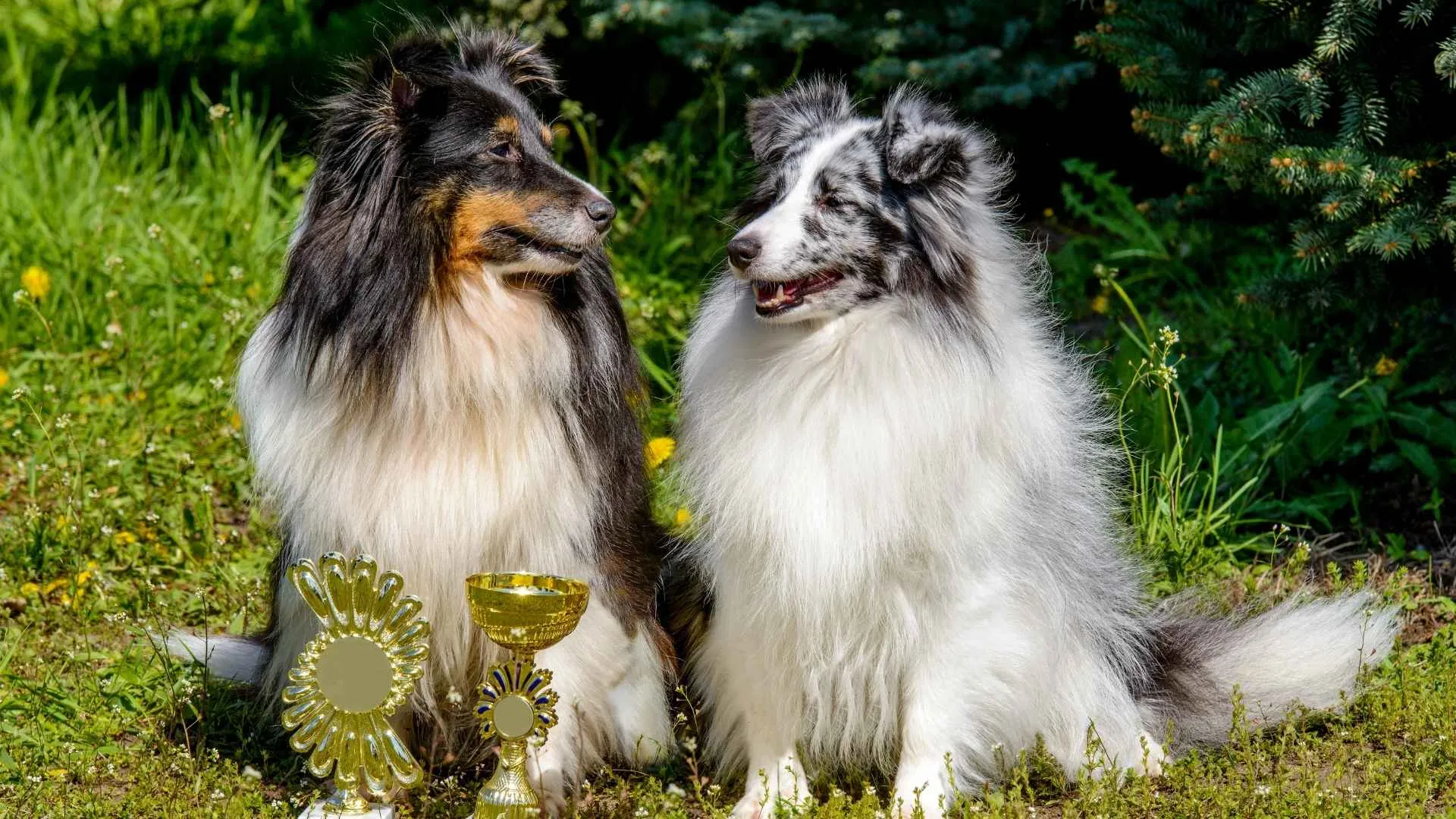
Shetland Sheepdogs are known for their practical intelligence, affectionate nature, and eagerness to please. Originally developed in Scotland’s Shetland Islands, they were bred to herd and control small livestock and ponies in the region’s harsh environment.
Their agility, alertness, and ability to learn quickly helped them become capable working dogs. Today, Shelties are popular family companions and excel in obedience, agility, herding, and therapy work.
Why Shetland Sheepdogs Stand Out
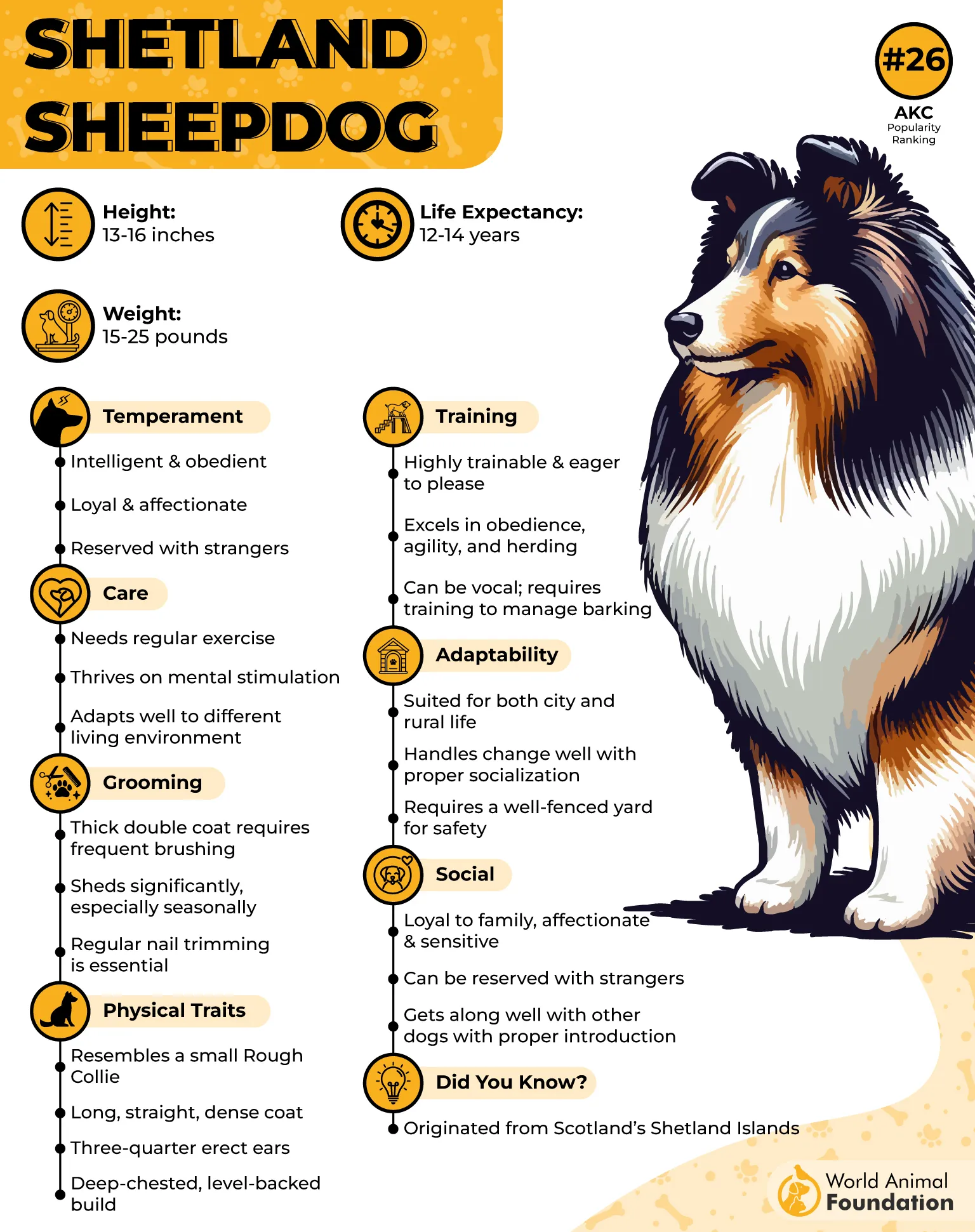
These dogs are bright, playful, gentle, and highly trainable. They form strong bonds with their families and respond especially well to kind, consistent training.
Shelties can be cautious around strangers and are known for their loud, frequent barking, which makes them effective watchdogs.
They enjoy activities that keep both their bodies and minds busy, including fetch, agility, obedience training, tracking, herding, and other interactive games.
Care and Health
Shetland Sheepdogs are energetic and need daily physical and mental stimulation to stay happy and prevent boredom-related behaviors such as excessive barking or destructive chewing.
Their long, straight double coat has a dense undercoat and sheds heavily, so regular brushing at least twice a week is important to prevent mats, particularly around the ears and legs.
Shelties are generally healthy but can be prone to conditions such as hip dysplasia and certain inherited disorders.
6. Labrador Retriever
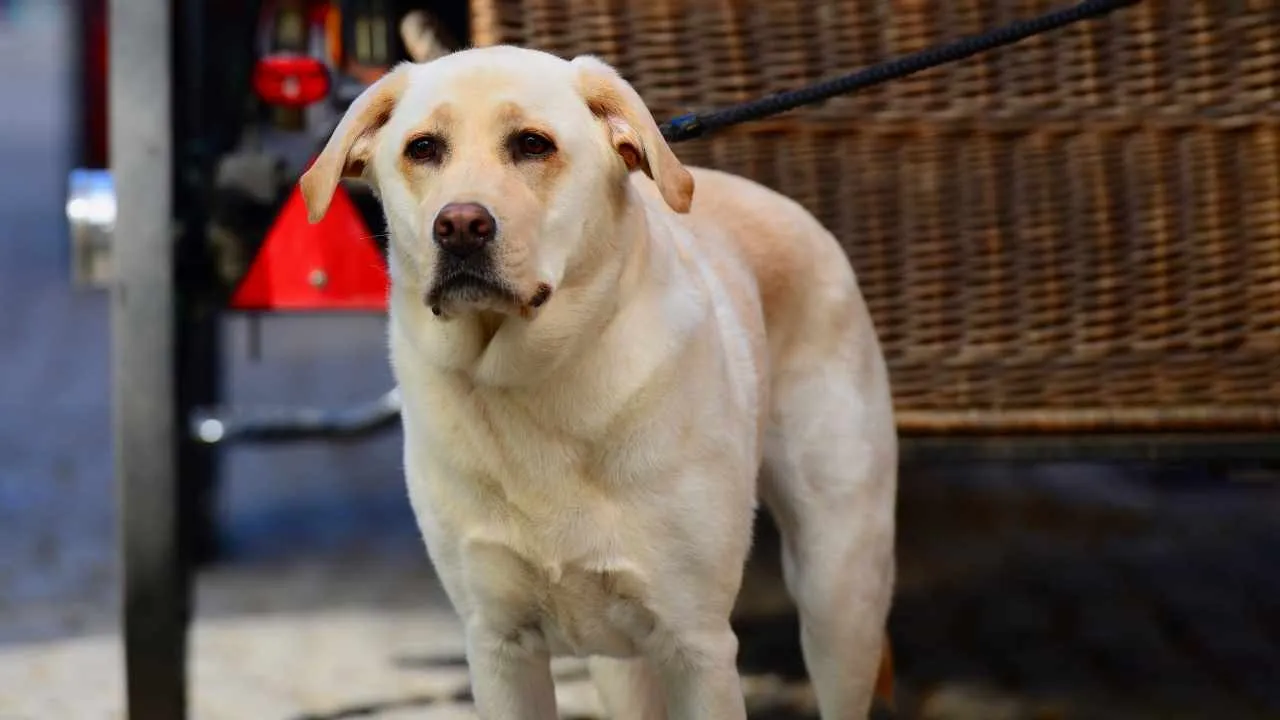
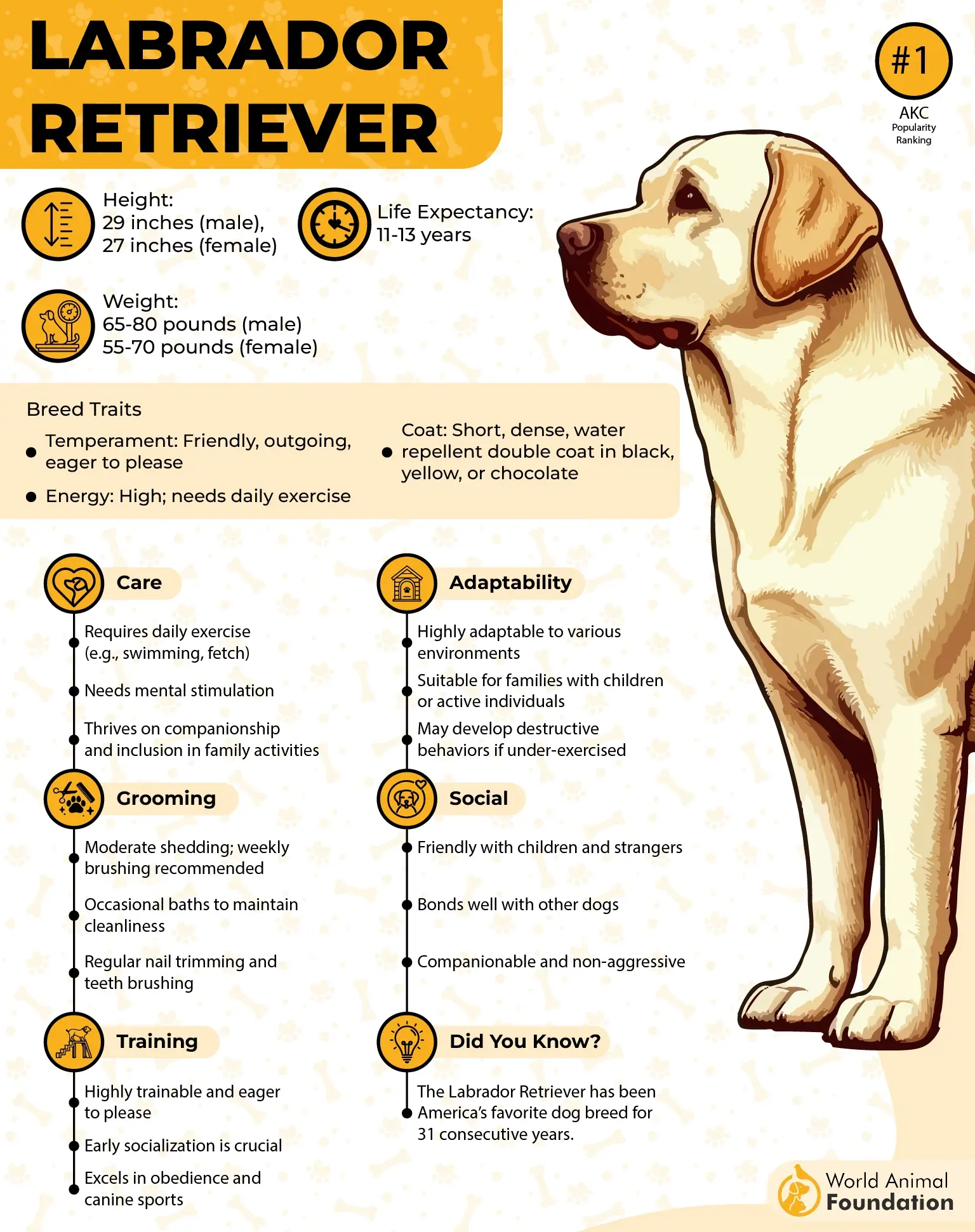
Originally bred as working and retrieving dogs, Labrador Retrievers were developed to retrieve game from both land and water, thanks to their water-resistant coats, webbed feet, and strong retrieving instinct.
Today, Labs are popular family companions and also work as service, assistance, guide, and therapy dogs.
Why Labrador Retrievers Stand Out
These dogs are outgoing, affectionate, intelligent, and highly trainable. They usually get along well with children, other dogs, and even other pets when properly trained and socialized. Labs enjoy having a job to do and respond well to positive training.
Fetch, swimming, hiking, agility, dock diving, retrieving games, and long walks are great ways to keep them physically active and mentally engaged.
Care and Health
Labrador Retrievers have moderate to high energy levels and need regular daily exercise to stay happy and healthy. Without enough activity, they can become bored and may develop unwanted habits such as chewing, digging, or excessive barking.
Their short, dense double coat is water-resistant but sheds heavily, so weekly brushing is usually helpful, with more frequent grooming during shedding seasons.
7. Rottweiler
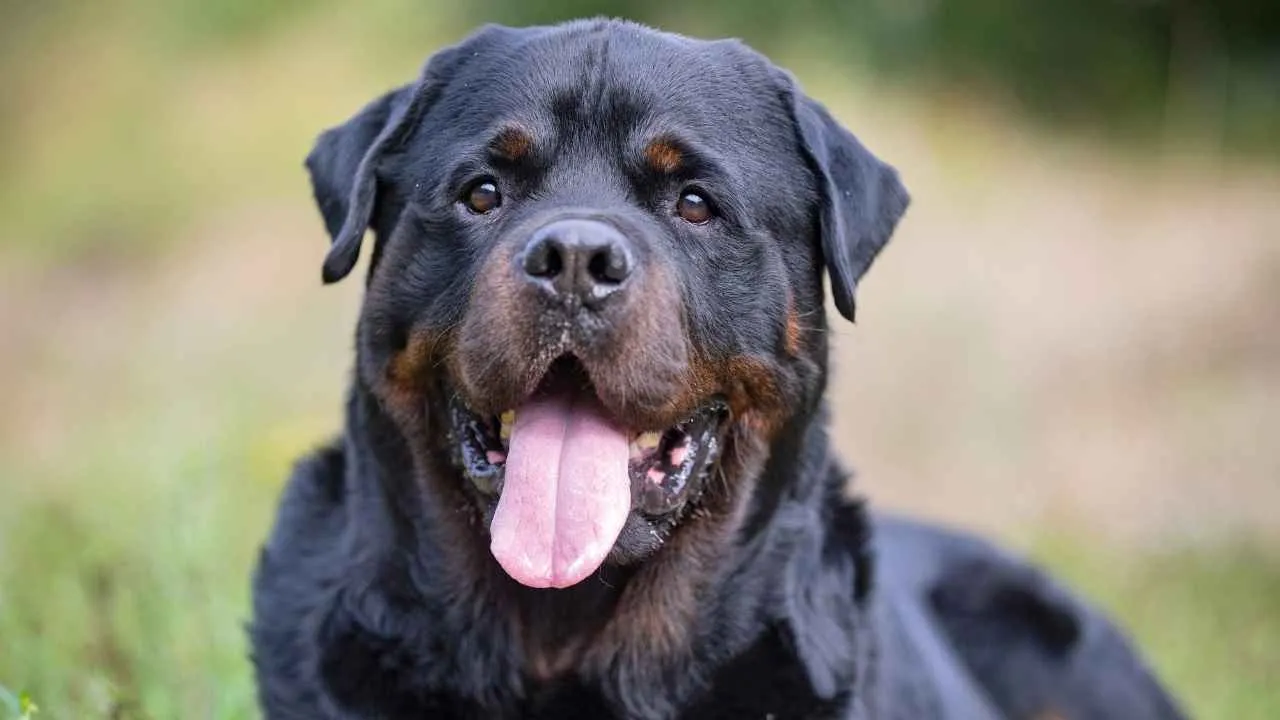
Originally developed in Germany as cattle-driving and working dogs, Rottweilers were also used to protect livestock, pull carts, and guard their owners.
Today, Rottweilers can be devoted family companions and excel in roles that require obedience, tracking, protection, and other forms of focused work.
Why Rottweilers Stand Out
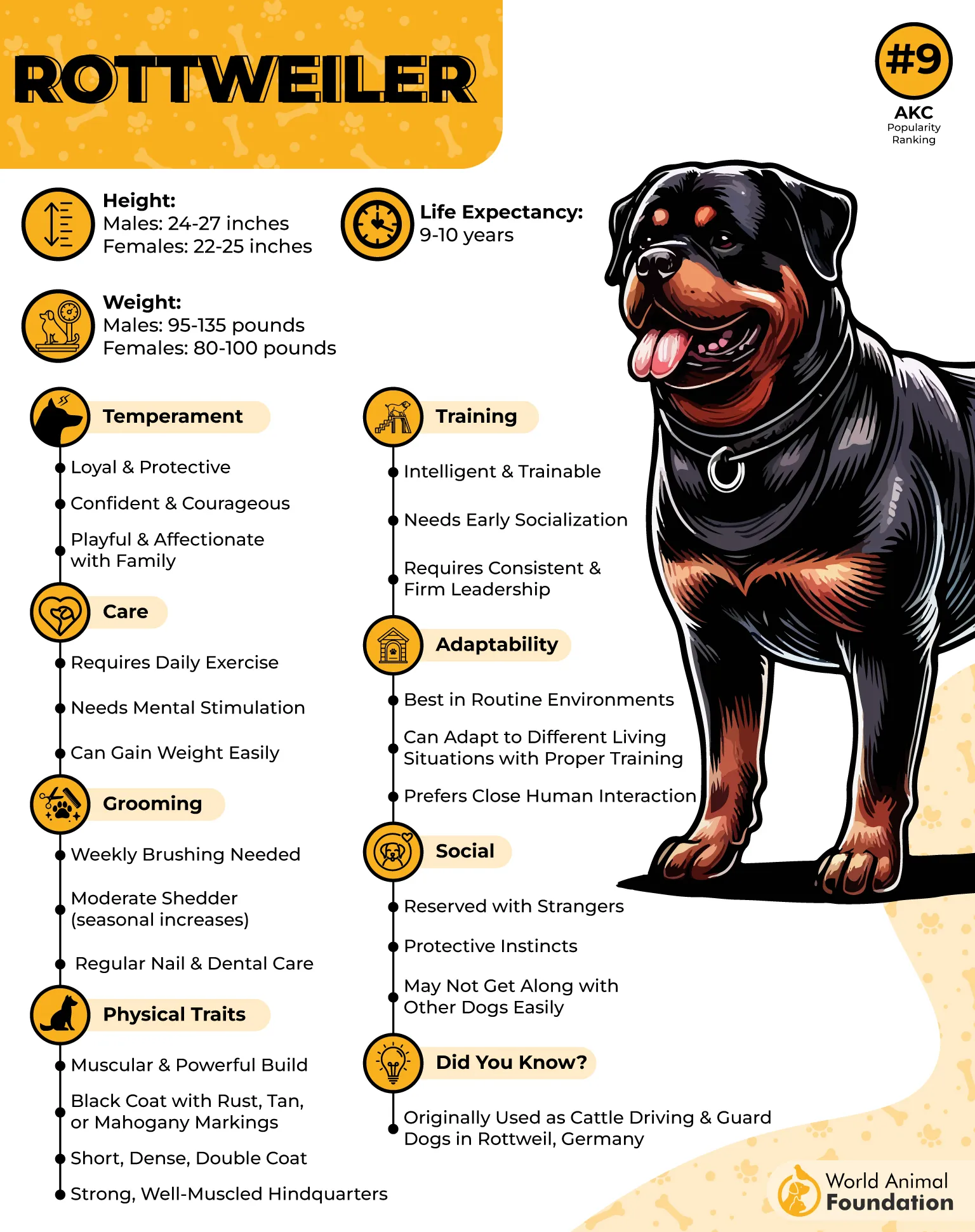
These dogs are intelligent, powerful, and eager to work, but they can also be affectionate and calm with the people they trust.
They tend to be reserved around strangers and may be protective of their families, making early socialization and consistent positive-reinforcement training especially important.
Rottweilers enjoy activities that challenge both their bodies and minds, including hiking, running, tracking, agility, obedience training, and other dog sports.
Care and Health
According to Orvis, Rottweilers are energetic dogs that generally need at least an hour of daily exercise along with plenty of mental stimulation. Without enough activity, they may become bored and develop unwanted behaviors such as chewing or destructive habits.
Their short black-and-tan coat is relatively easy to maintain, although they shed throughout the year and benefit from regular brushing. Rottweilers can be prone to health problems such as hip dysplasia and osteosarcoma, so regular veterinary care is important.
Conclusion
From highly energetic working dogs to affectionate family companions, each breed has its own personality, care needs, exercise level, and strengths.
Understanding these differences can help you look beyond appearance and choose a dog that truly fits your lifestyle.
Before bringing a dog home, consider its training, grooming, exercise, socialization, and health needs.
The right match is not always the most popular or impressive-looking breed. It is the one whose needs you can confidently meet and whose personality fits naturally into your everyday life.
