




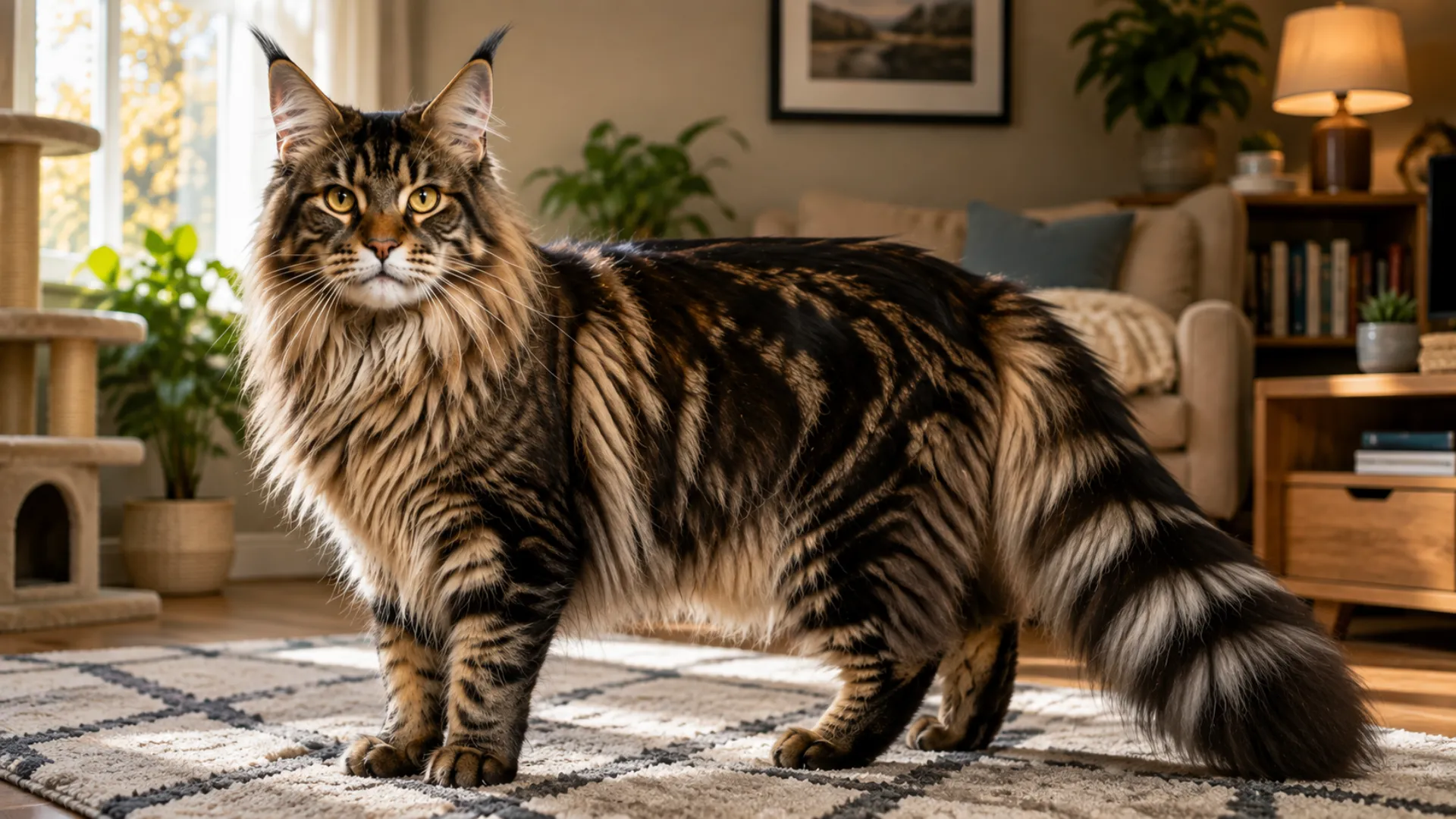
A striped tail can make a cat look like a tiny wildcat, with dark bands wrapping around its tail like painted rings. But here’s the myth: seeing those stripes doesn’t mean you’re looking at a particular cat breed.
In fact, “tabby” describes a coat pattern rather than a breed. Stripes can appear across numerous breeds, alongside patterns such as spots, swirls, and ticking. Genetics determines these distinctive markings, giving each feline its own visual signature.
Whether that striped tail curls elegantly around a sleeping cat or flicks excitedly during play, it adds character to an already charming companion. These seven breeds show just how varied and beautiful striped tail patterns can be.
FACT: Tabby is a coat pattern, not a cat breed, and striped markings can occur across many different feline breeds.
Cat Breeds with Striped Tail Patterns
1. Maine Coon
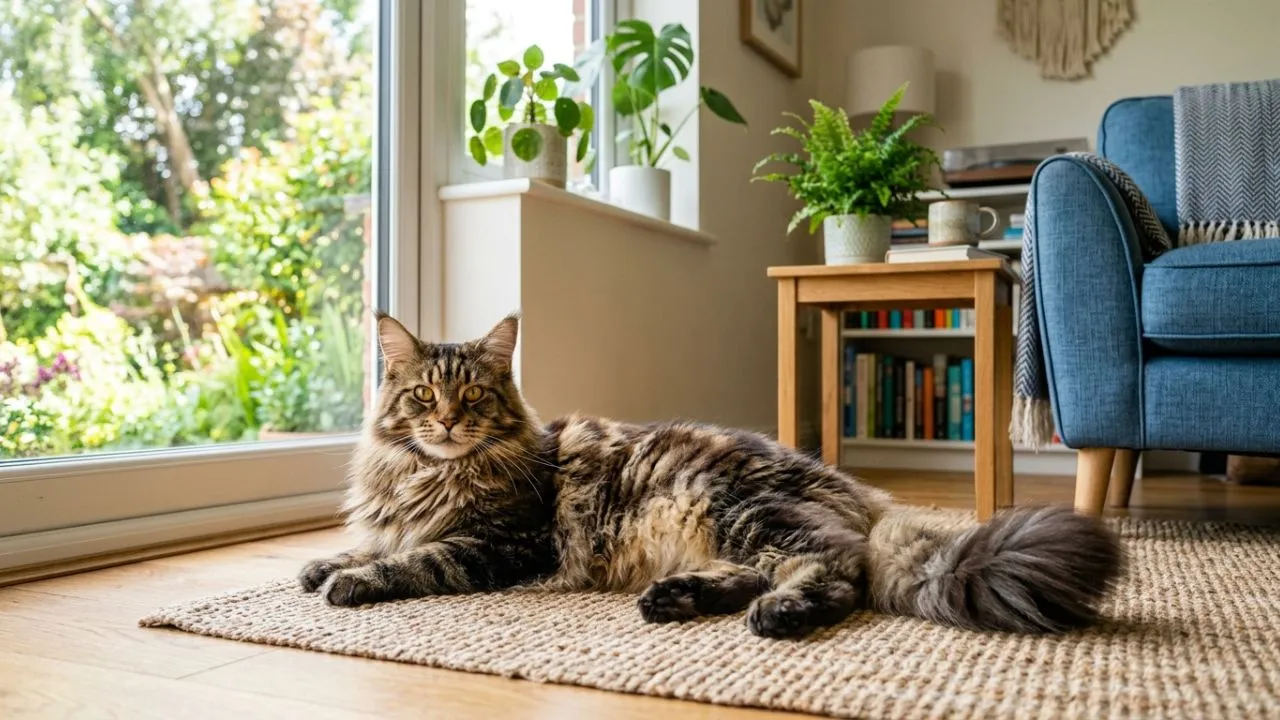
The Maine Coon brings a wild-looking touch to the world of striped cats. Often considered one of the largest domestic breeds, these gentle giants can look almost untamed when their richly patterned coats and dramatic tails come into view.
Their tabby markings include classic swirls and mackerel stripes, the latter creating a distinctive tiger-like effect. Despite their abundant fur, these patterns remain strikingly visible, giving the Maine Coon’s coat plenty of visual character.
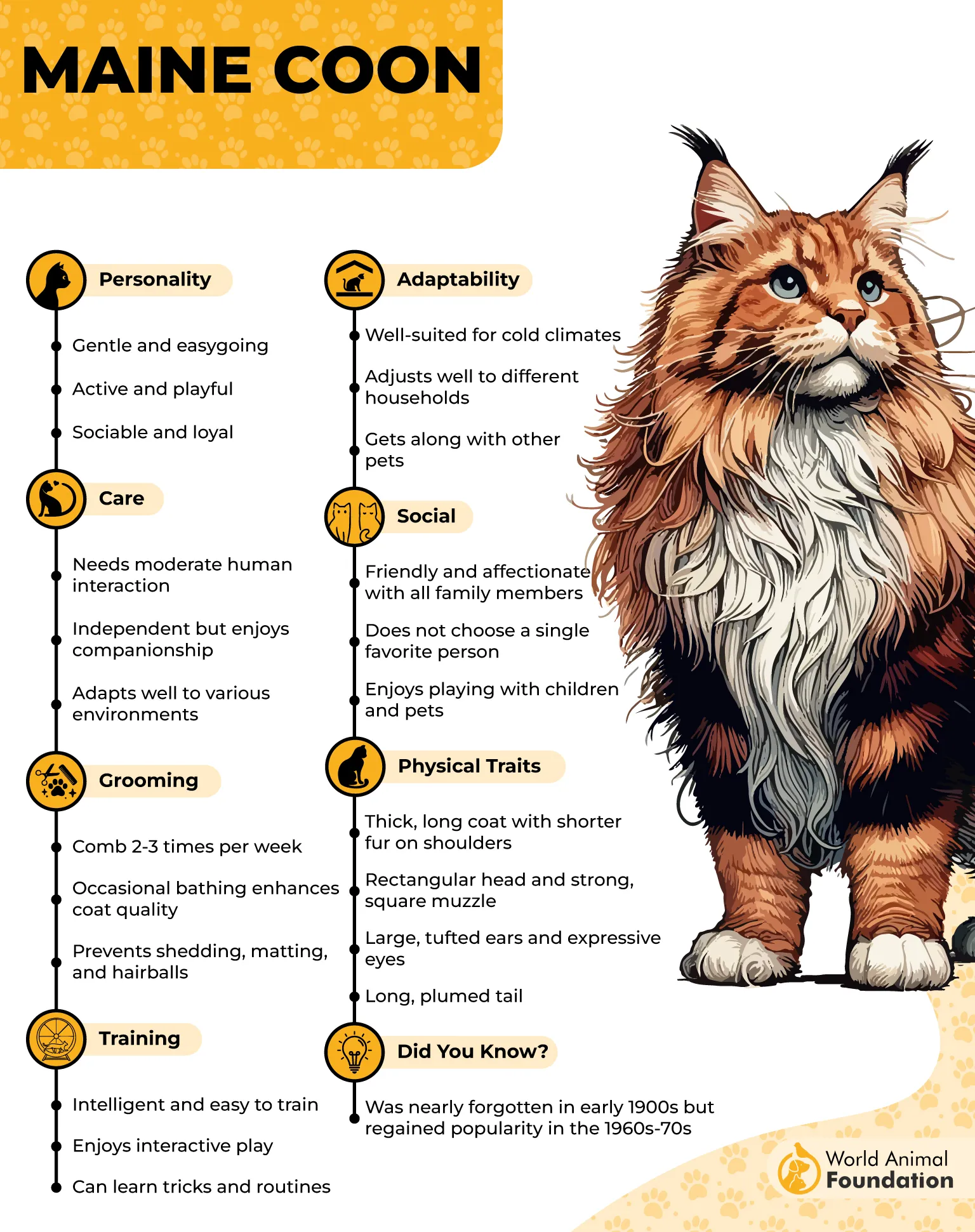
Once valued primarily as barn cats, Maine Coons gradually became cherished household companions. Their friendly, affectionate nature reveals a softer side beneath their imposing appearance, while their intelligence and playful personality have earned them a reputation for having almost dog-like energy.
With enough indoor space and opportunities for climbing and play, Maine Coon cats generally get along well with children and other pets, as noted by PetMD. Its luxurious coat comes in an impressive range of colors and patterns, with striped varieties especially complementing the breed’s majestic, full tail.
2. Norwegian Forest Cat
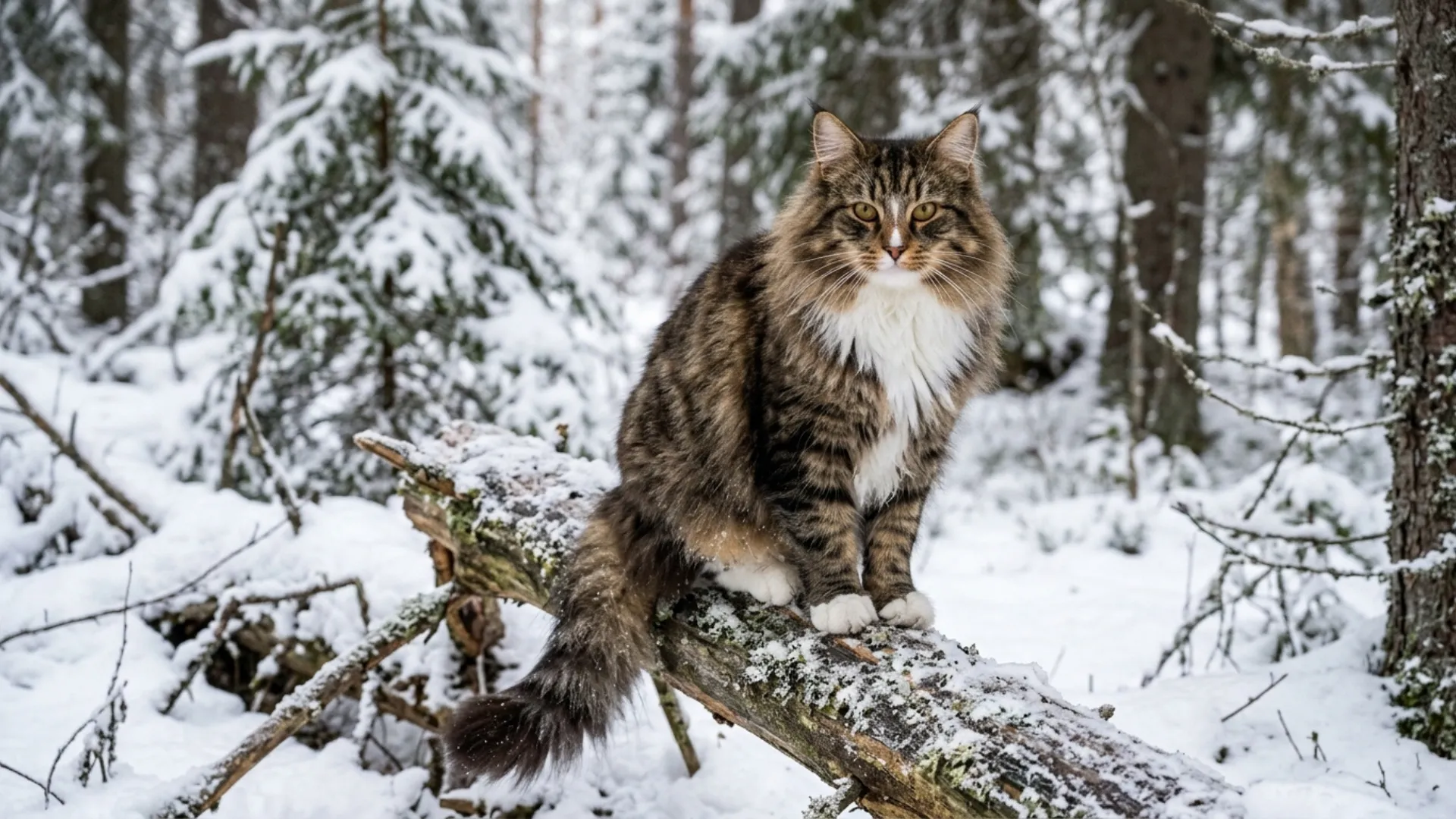
With a history rooted in Norway’s forests, the Norwegian Forest Cat carries an unmistakably wild elegance. Its luxurious coat and notable expression are eye-catching. Still, its long, bushy tail is another defining feature, with the desirable length roughly equal to the body length from the base of the tail to the base of the neck.
Independent and intelligent, this breed enjoys companionship without constantly demanding attention. Norwegian Forest Cats are moderately active, with playful bursts that may involve climbing, chasing toys, or exploring high places. Their sturdy build and large, tufted paws reflect their adaptable nature.
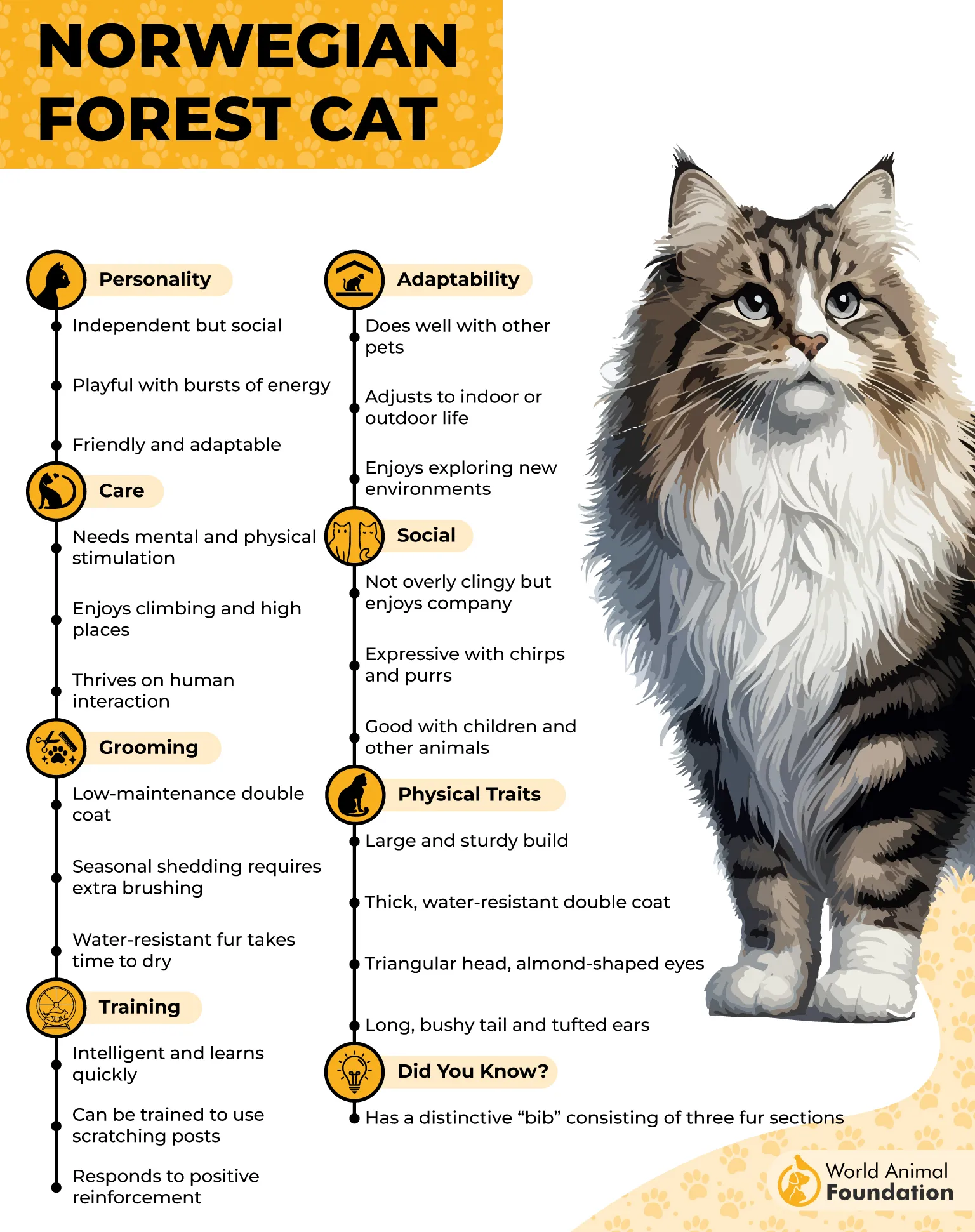
That impressive tail is especially striking when paired with the breed’s wide range of coat colors and patterns. Their dense, profuse fur gives them a majestic appearance while complementing their naturally rugged character.
Friendly and adaptable, Norwegian Forest Cats can generally fit well into households with children, dogs, or other cats. Providing a tall cat tree or scratching post gives this adventurous climber a suitable place to satisfy its love of heights.
3. Bengal
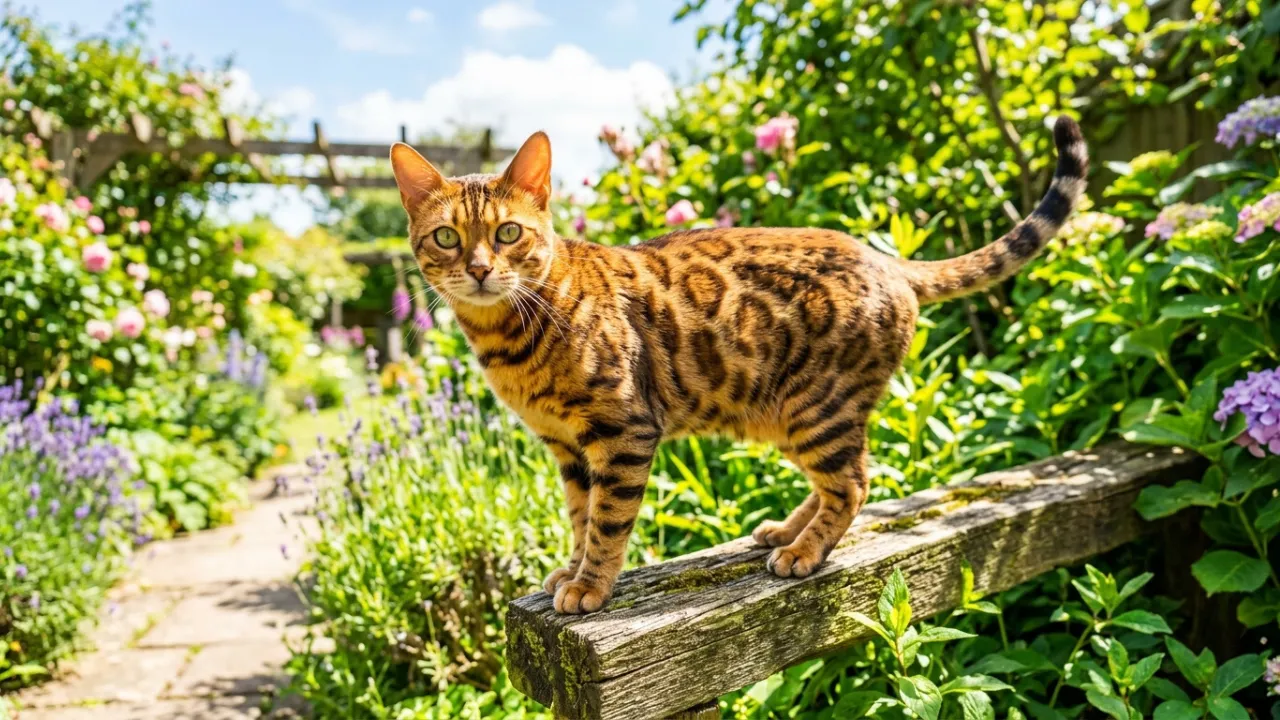
The Bengal brings an unmistakably exotic look to the home, combining domestic-cat traits with ancestry from the Asian Leopard Cat. Its luxurious coat can feature bold striped or marbled markings, giving the tail a particularly wild appearance that catches the eye.
While spotted coats are especially popular, Bengals can also display classic marble patterns formed by elongated swirls that create a stripe-like effect. Their muscular, agile build adds to their athletic traits and distinctive character.
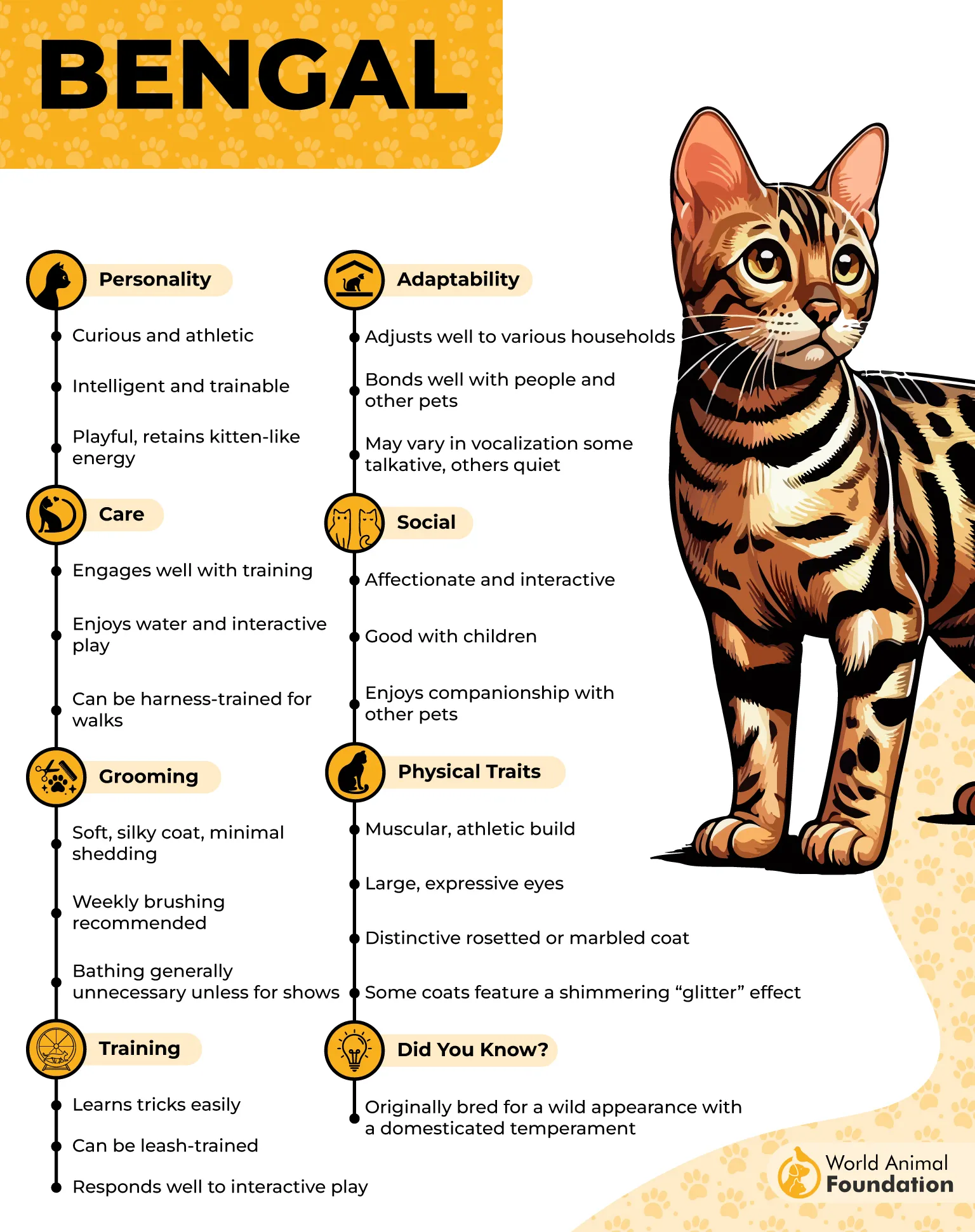
Despite their wild-inspired looks, Bengals from responsible breeders are affectionate, social companions.
However, this intelligent breed requires ample physical activity and mental stimulation. Without enough engagement, their energetic nature may lead to unwanted mischief around the home.
4. Egyptian Mau
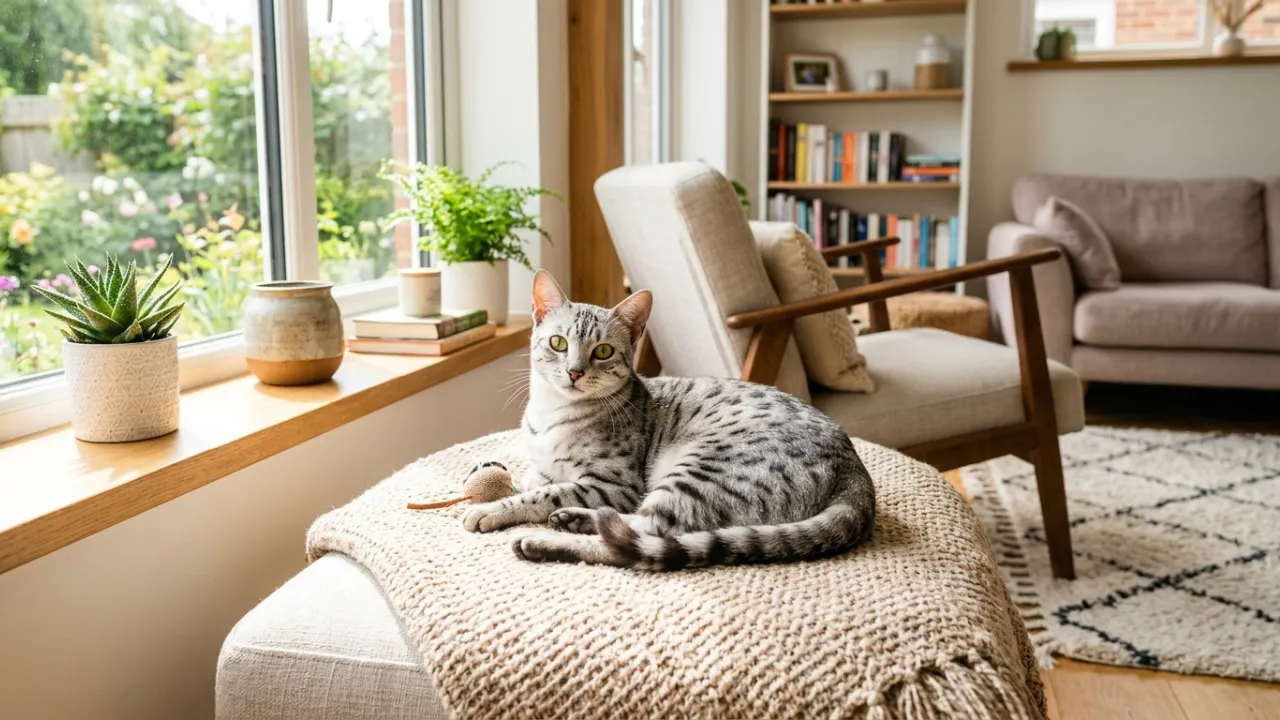
The Egyptian Mau is an ancient-looking breed with a naturally spotted coat, but its tail reveals an important tabby connection. Along with its memorable body markings, this cat can display classic facial stripes, a forehead “M,” and a dark line running down the spine.
Its tail typically carries darker bands that create a striped or ringed look, adding another layer to the Mau’s already noticeable pattern. These markings complement its sleek, muscular body and vivid green eyes, giving it a wonderfully wild appearance.
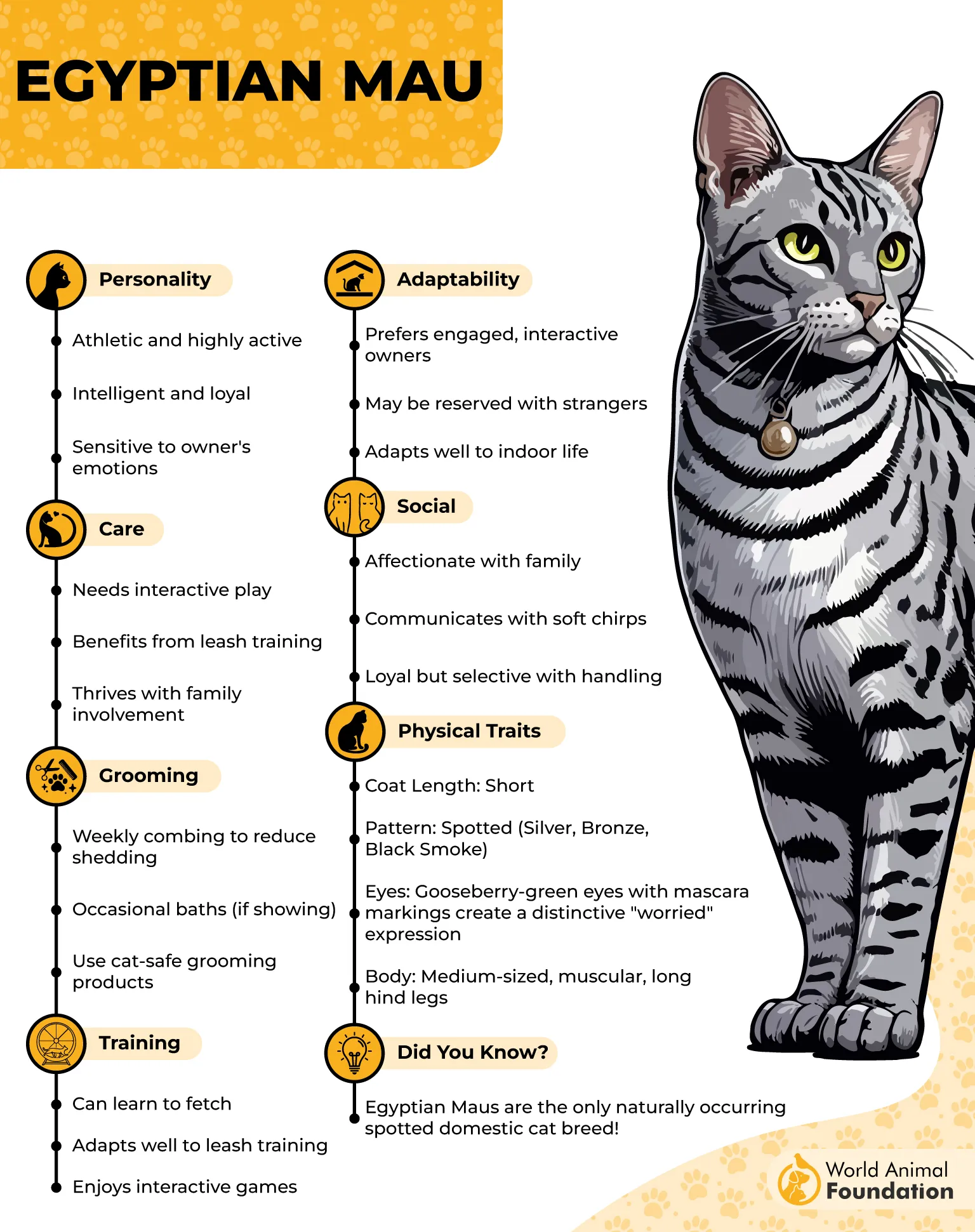
Despite its exotic look, the Egyptian Mau offers much more than striking markings. It is known for being affectionate, playful, and loyal, making it a rewarding companion for households that appreciate an engaging feline personality.
The name itself has an intriguing history: ‘Mau’ was an Ancient Egyptian word meaning ‘cat’ or ‘sun’. With its naturally patterned coat and unmistakably banded tail, this breed offers a fascinating blend of ancient heritage and distinctive feline beauty.
5. Toyger
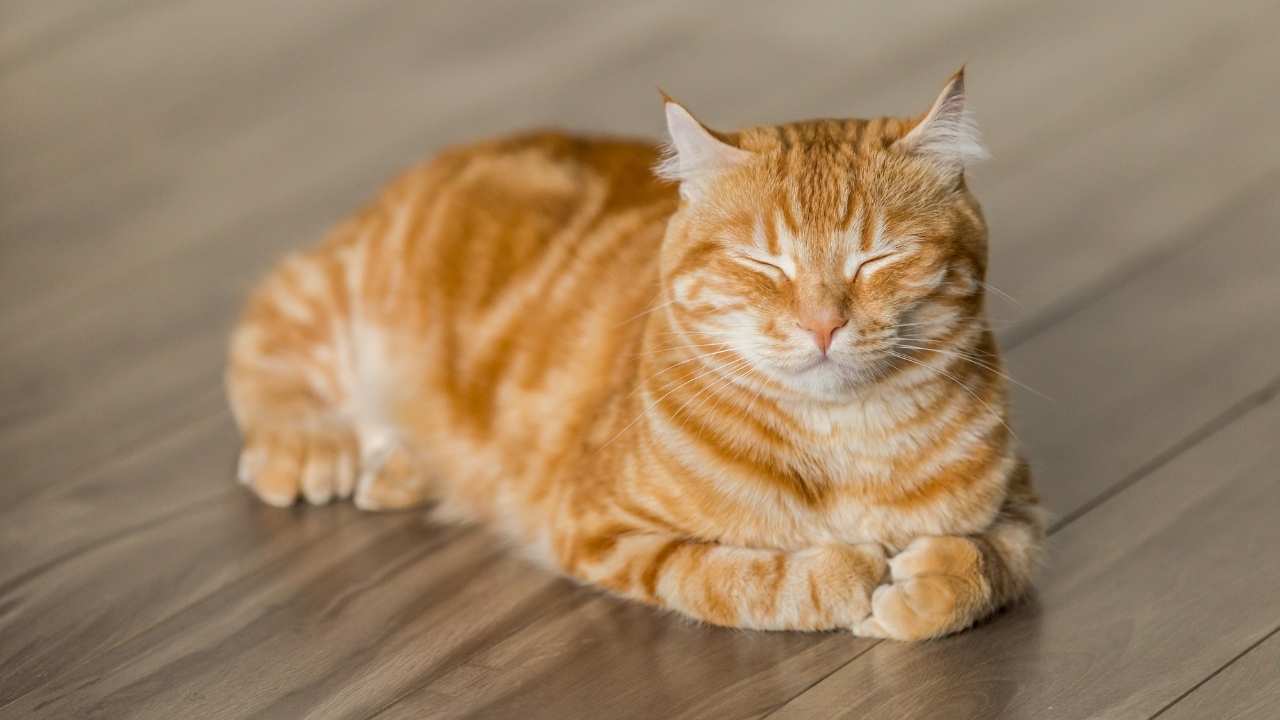
The Toyger is a captivating designer breed created to resemble a miniature tiger, with its name combining “toy” and “tiger.” Its appearance comes from selective breeding rather than natural development, giving this domestic cat an unmistakably exotic look.
Developed by Judy Sugden, the Toyger’s early breeding program included a striped domestic shorthair and a Bengal among the cats that helped establish the breed. Today, the breed is recognized for its brown mackerel tabby coat and dramatic vertical stripes that extend across the body and toward the tail.
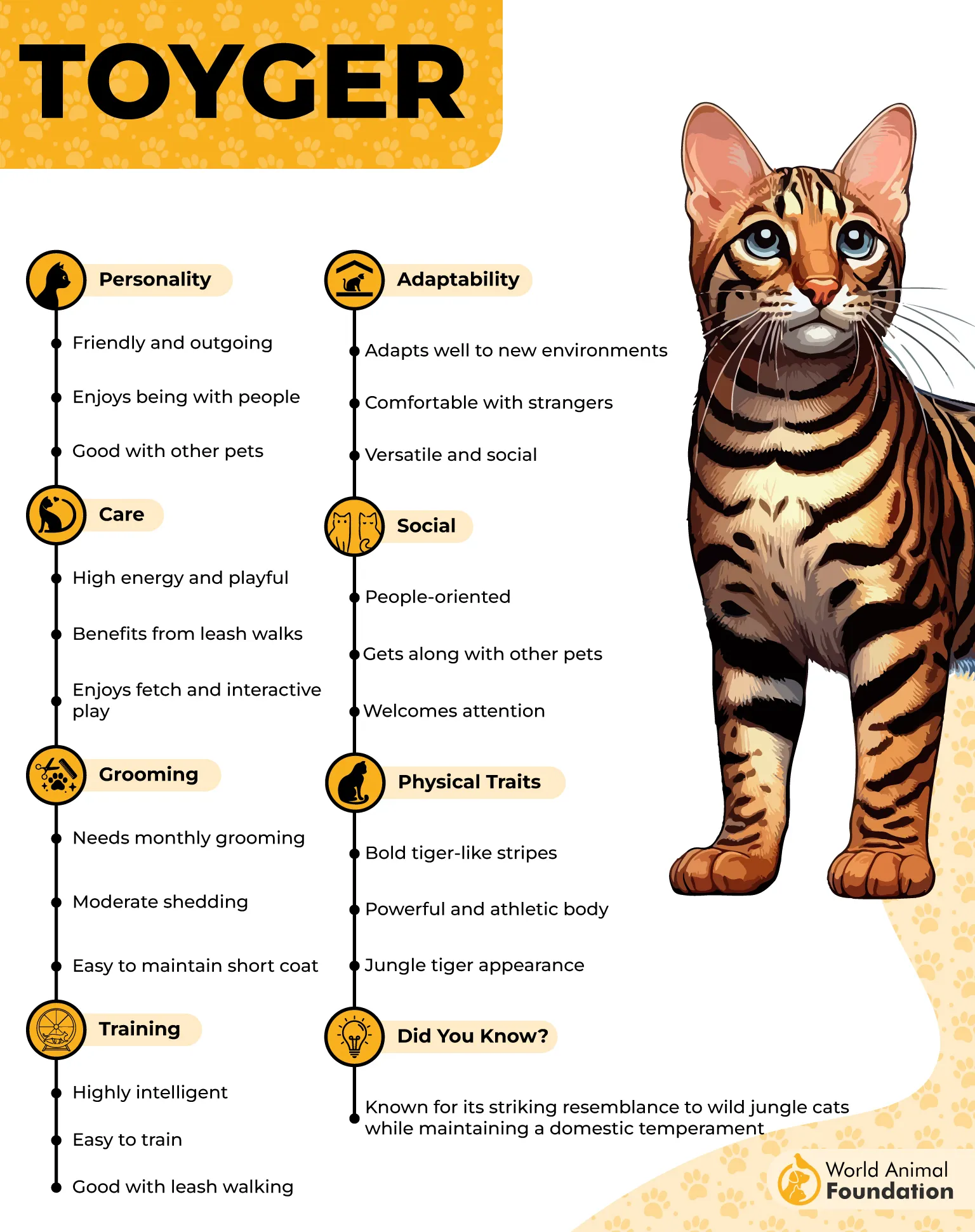
Those bold markings give the Toyger an especially eye-catching silhouette, while its striped tail adds to the overall tiger-inspired visual appeal. The carefully developed pattern is one of the breed’s defining visual features.
Although the Toyger looks wonderfully wild, it remains a domesticated cat. Its Bengal connection contributes to an energetic overall look and distinctive presence, making those beautiful stripes particularly captivating. According to Purina, Toygers are bred to be friendly, sociable cats that fit well into family households.
6. American Shorthair
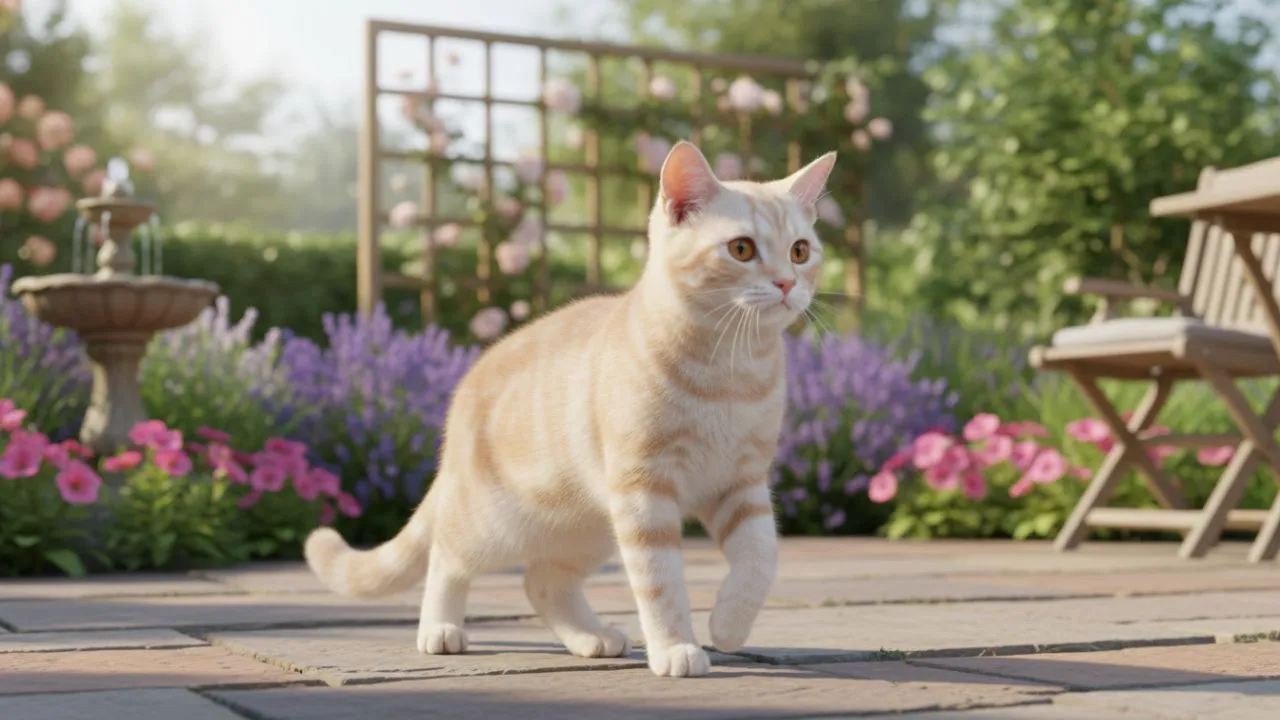
The American Shorthair has a distinctly American story, tracing its roots to cats brought by European settlers. Valued for their hunting abilities, these cats earned their place on farms and ships by keeping unwanted pests under control.
Over generations, natural selection favored hardy cats capable of finding food and working independently. This practical heritage helped shape the American Shorthair into a sturdy, capable companion with a strong connection to its working-cat origins.
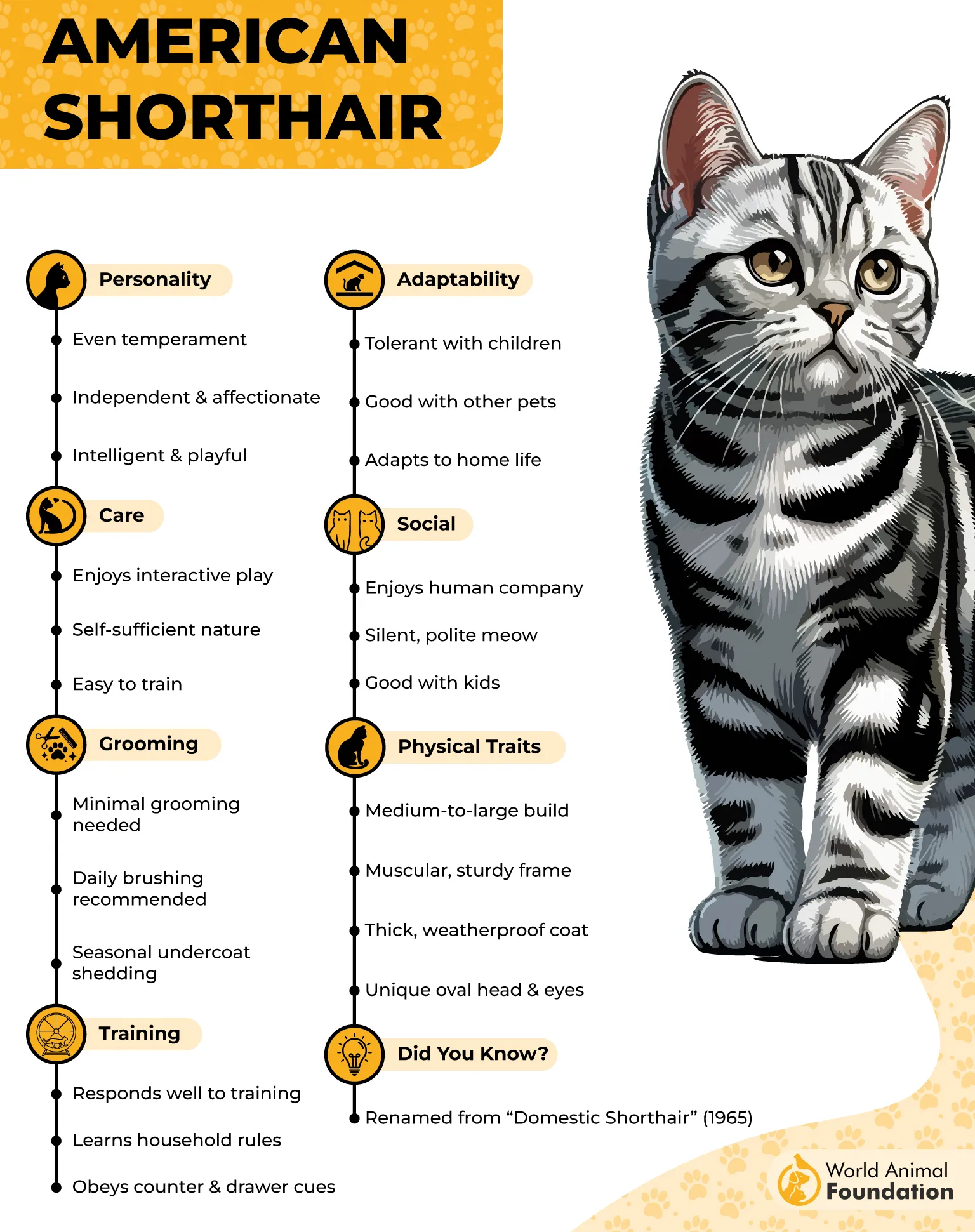
Among its many coat possibilities, stripes are especially notable. The breed can also display patched tabby patterns, in which tabby markings occur alongside red or cream patches.
For an article focused on striped tails, the American Shorthair’s classic tabby pattern makes it a natural fit. Its enduring working-cat background also gives this familiar breed plenty of character beyond its attractive markings.
7. American Curl
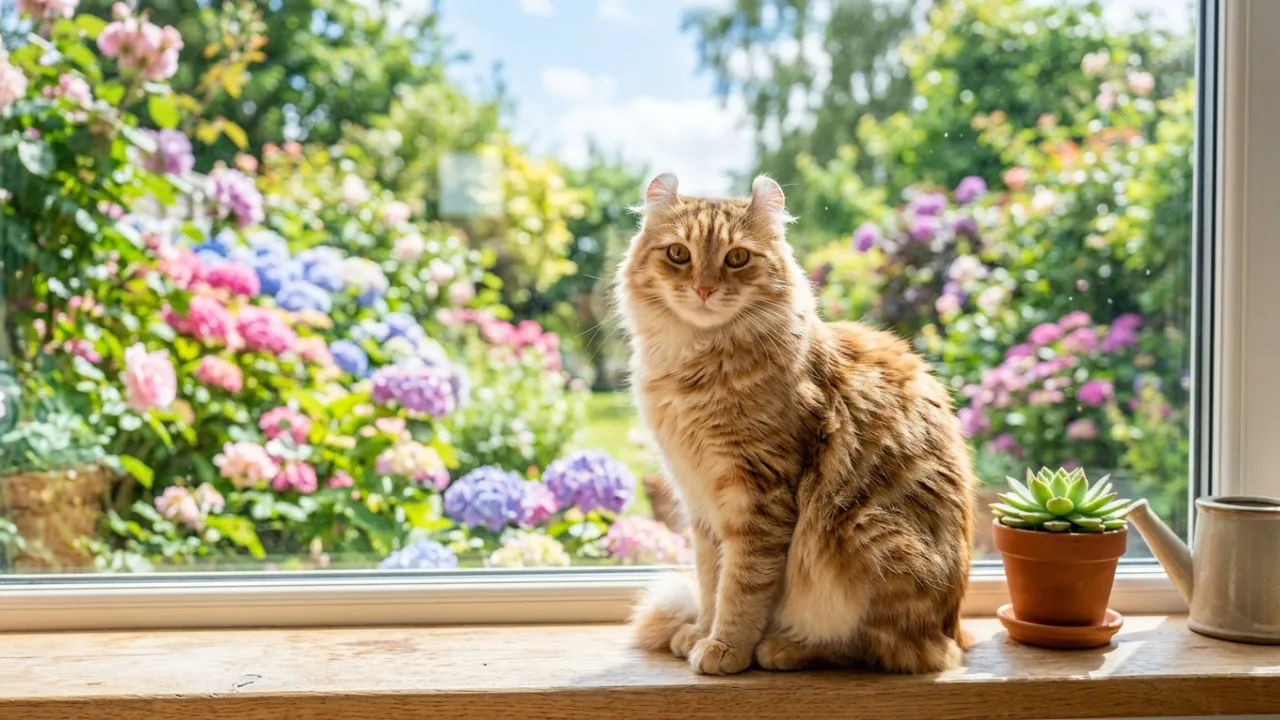
The American Curl is instantly recognizable for its unusual ears, which sweep backward in a graceful curve. Add a striped coat and tail, and this cat has a look that is truly its own. According to Hill’s Pet, the American Curl is a lively cat.
Tabby patterns are among the many coat patterns accepted in the breed, with classic tabbies showing evenly ringed tails and mackerel tabbies showing barred tails, giving the tail those eye-catching stripes that complement its distinctive look. American Curls can also have many other coat colors, patterns, and even different fur lengths.
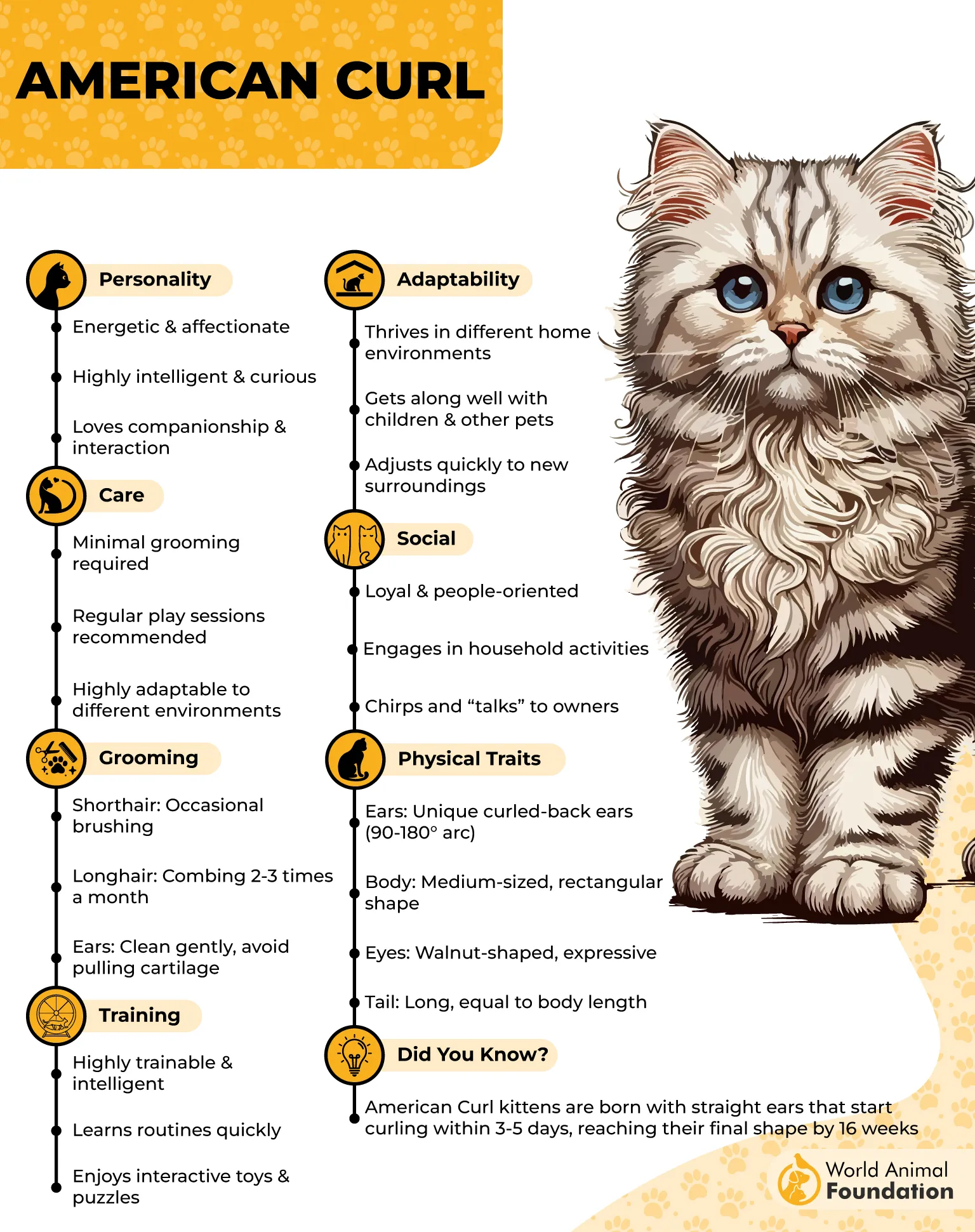
Beyond their charming looks, American Curls are known for being people-oriented and easygoing. Their outgoing nature makes them comfortable around children and well-suited to family life.
Although relatively uncommon, this playful breed has plenty of personality to match its unique features. Its curled ears may steal the spotlight, but those striped tail markings add another delightful detail to its already memorable look.
Conclusion
When it comes to striped tail patterns, these cat breeds prove that every feline can have its own individual charm. From familiar tabby markings to varied combinations of coat colors and patterns, their tails add extra character to their physical traits.
Some breeds stand out for more than their beautiful markings. The American Curl, for instance, combines a playful personality with its signature curled ears and remains affectionate and well-suited to family life.
Whether you prefer an active companion or a relaxed family cat, these breeds offer plenty of variety in both appearance and temperament. Their striped tails can make an already beautiful coat even more eye-catching.
Ultimately, choosing the right cat comes down to finding a personality and distinctive look that fit your home. A striped tail may catch your attention, but a cat’s affectionate nature, adaptability, and companionship can make the bond truly special.
