




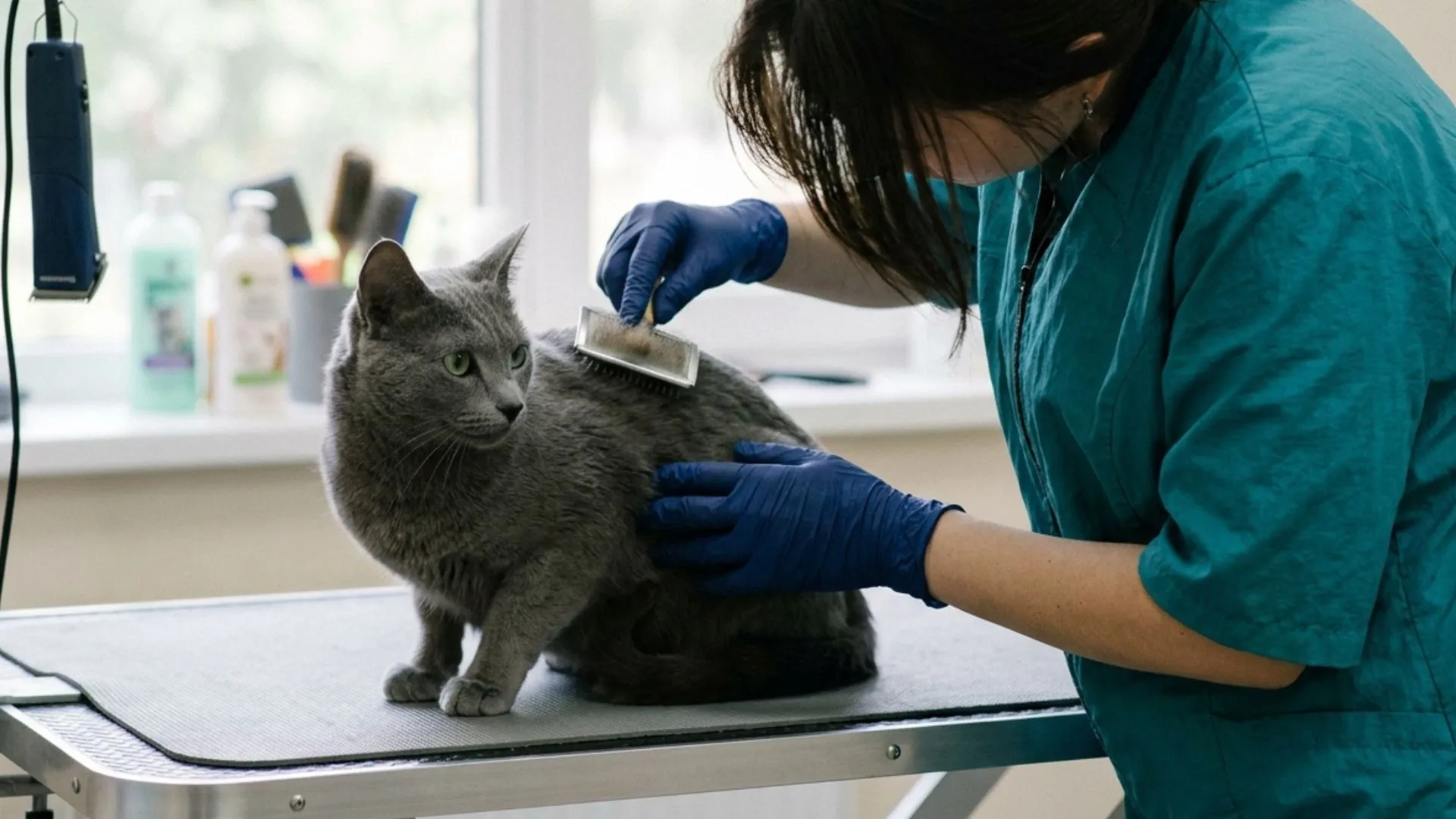
A cat can bring warmth and companionship to your home without turning grooming into a daily chore. Whether you prefer a plush-coated companion, a sleek short-haired feline, or something in between, some breeds fit comfortably into a weekly grooming routine.
Coat length, texture, and natural grooming habits all influence how much care a cat needs. While every feline benefits from regular brushing and basic maintenance, certain breeds are easier to manage, making them appealing to busy owners and first-time cat parents.
From affectionate lap cats to playful, easygoing companions, these breeds show that manageable grooming can come in many forms. With consistent weekly care, you can help keep their coats healthy, comfortable, and looking their best.
FACT: Weekly brushing can help remove loose hair, distribute natural skin oils, and reduce the risk of tangles and mats in cats with manageable coats.
Cat Breeds That Need Weekly Grooming Only
1. British Shorthair
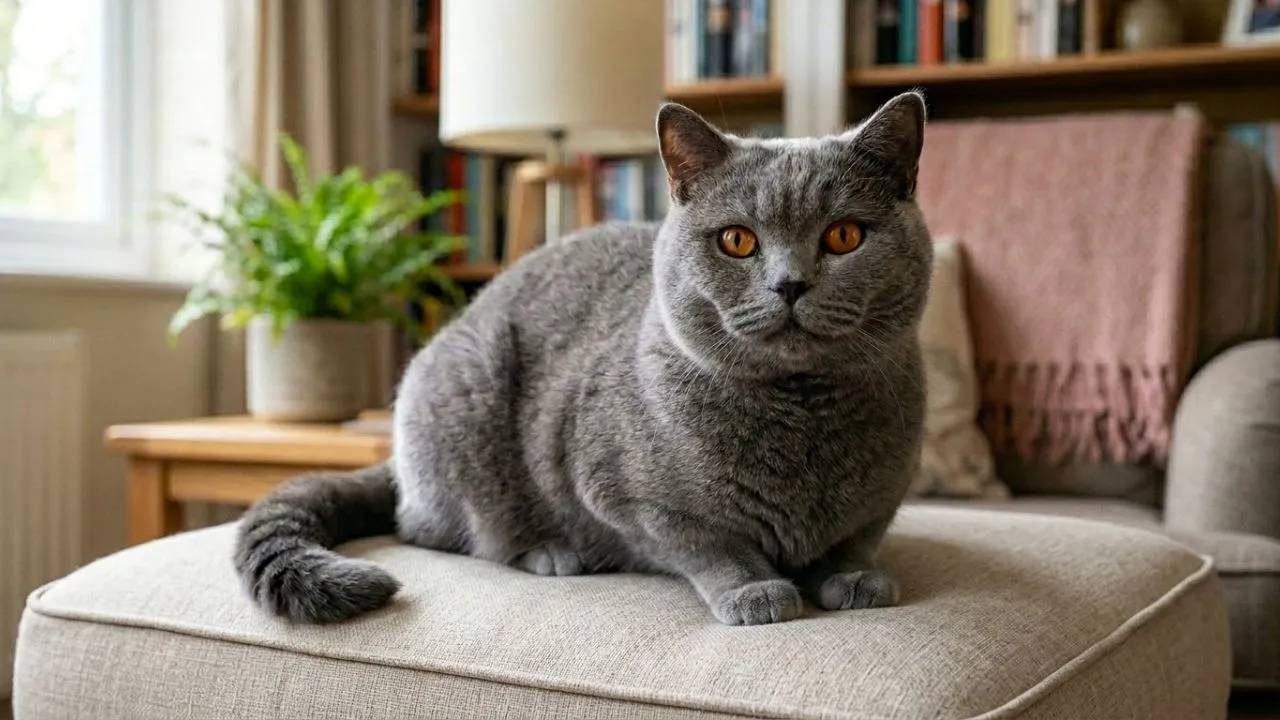
The British Shorthair suits a lifestyle where grooming should fit neatly into the week rather than take over it. Its plush, dense coat has a soft, velvety feel, yet maintaining that polished appearance is surprisingly simple.
A weekly brushing session is generally enough to remove loose hairs and keep the coat looking tidy. During spring and fall, when seasonal shedding increases, brushing a little more often can help manage the extra fur around the home.
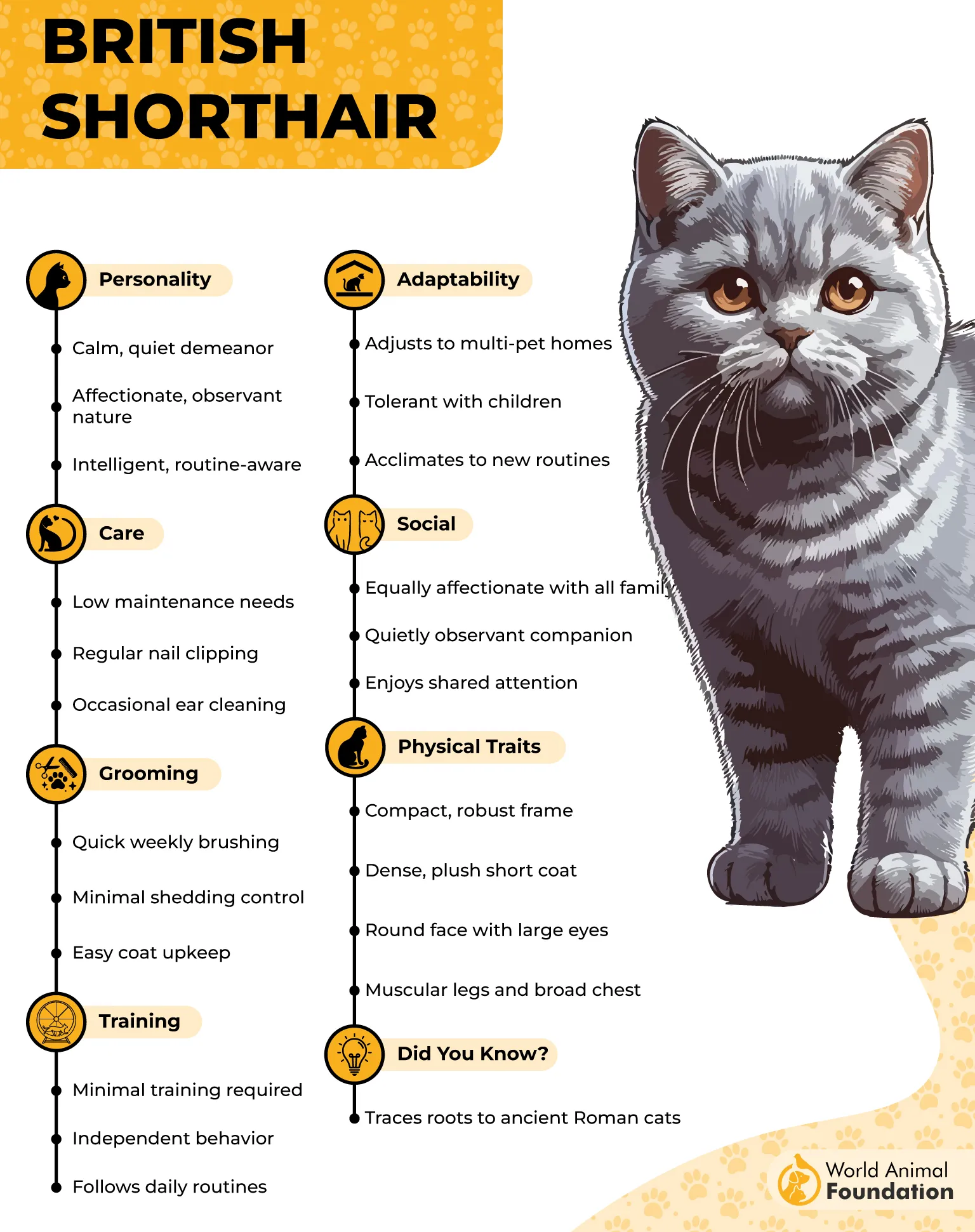
Beyond grooming, this breed is known for its calm, self-contained nature. British Shorthairs often enjoy companionship without demanding constant attention, making them comfortable for owners who appreciate a quieter household.
Their understated vocalizations and powerful purrs add to their relaxed appeal. With a coat that looks luxurious without requiring constant attention, the British Shorthair fits comfortably into an easygoing routine.
2. American Shorthair

The American Shorthair has a classic, dense short coat that gives this sturdy breed its familiar, polished appearance. Despite its thickness, the fur is surprisingly manageable and does not demand an elaborate grooming routine.
According to VCA, American Shorthairs have a textured coat type. A weekly brushing session is generally enough to remove loose hairs, reduce shedding, and keep the coat looking neat. During heavier shedding periods, an extra session can be helpful, but daily brushing is usually unnecessary.
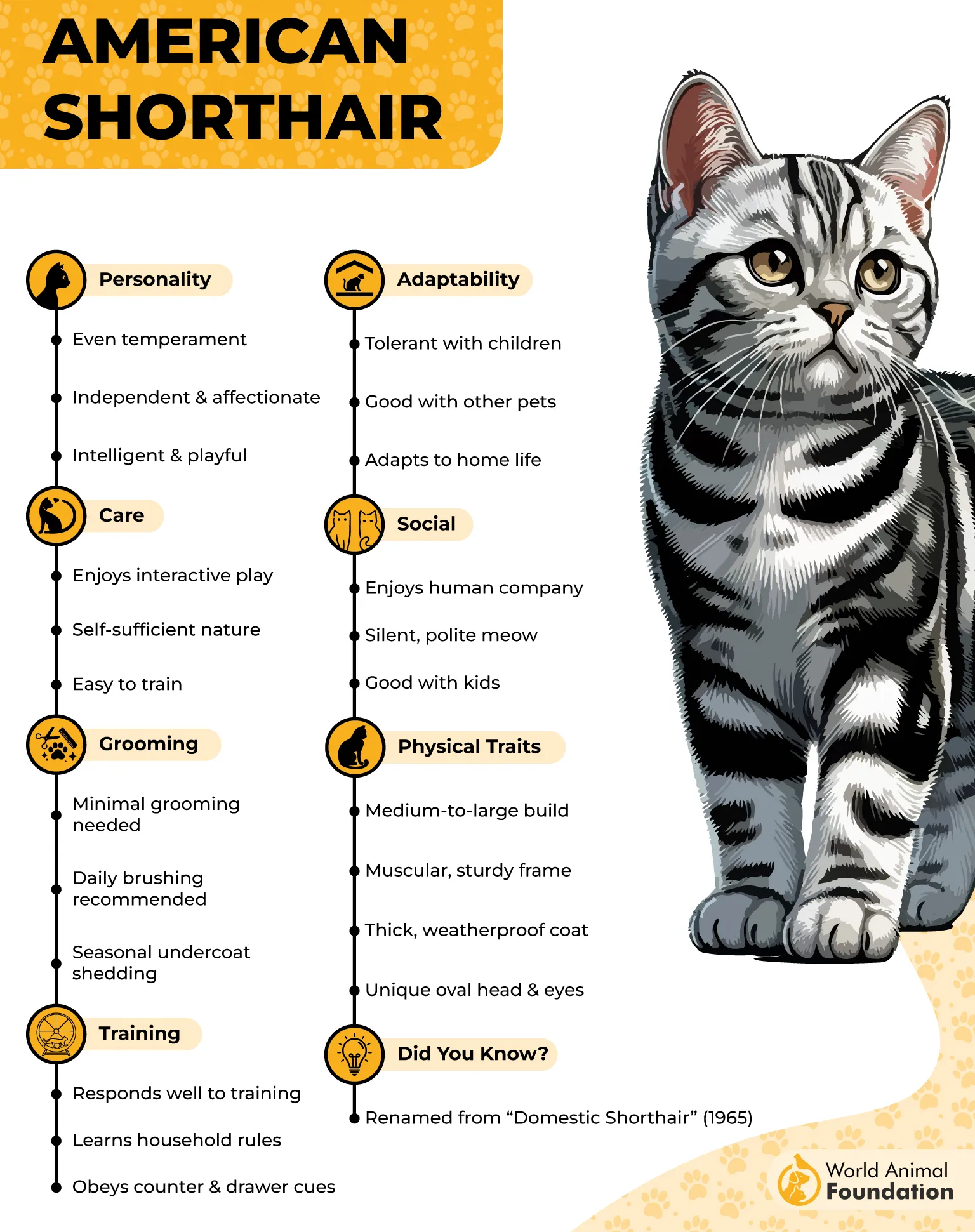
Because their grooming needs are so simple, brushing can easily become part of a relaxed weekly routine. It also gives owners a chance to check the skin for anything unusual while spending some quiet bonding time with their cat.
Their grooming care extends beyond the coat, too. Regular nail trims, dental care, and access to suitable scratching surfaces help keep an American Shorthair comfortable and well-maintained.
3. Russian Blue
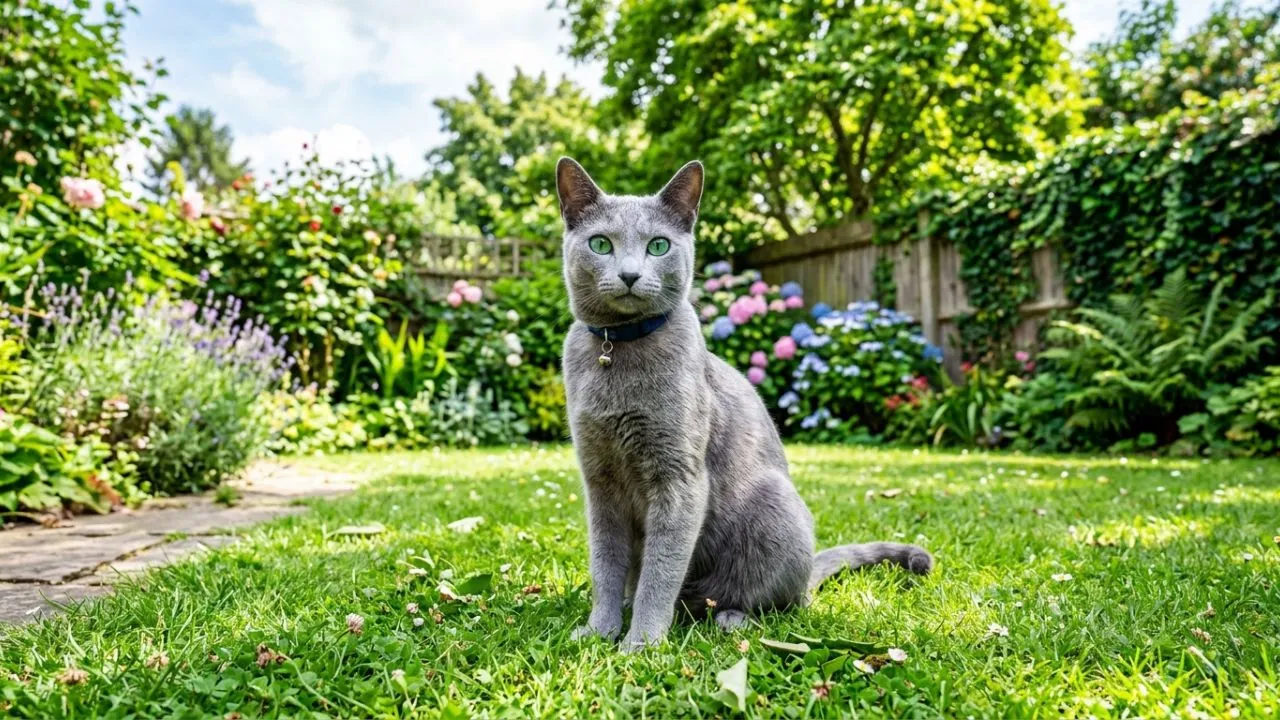
The Russian Blue brings an unmistakably refined look to a low-effort grooming routine. Its short, plush double coat has a soft underlayer and silvery-tipped guard hairs that create the breed’s signature blue-gray sheen.
A weekly brushing session is usually enough to lift loose fur and keep this dense coat looking sleek. According to Purina, Russian Blues do not lose fur continuously.
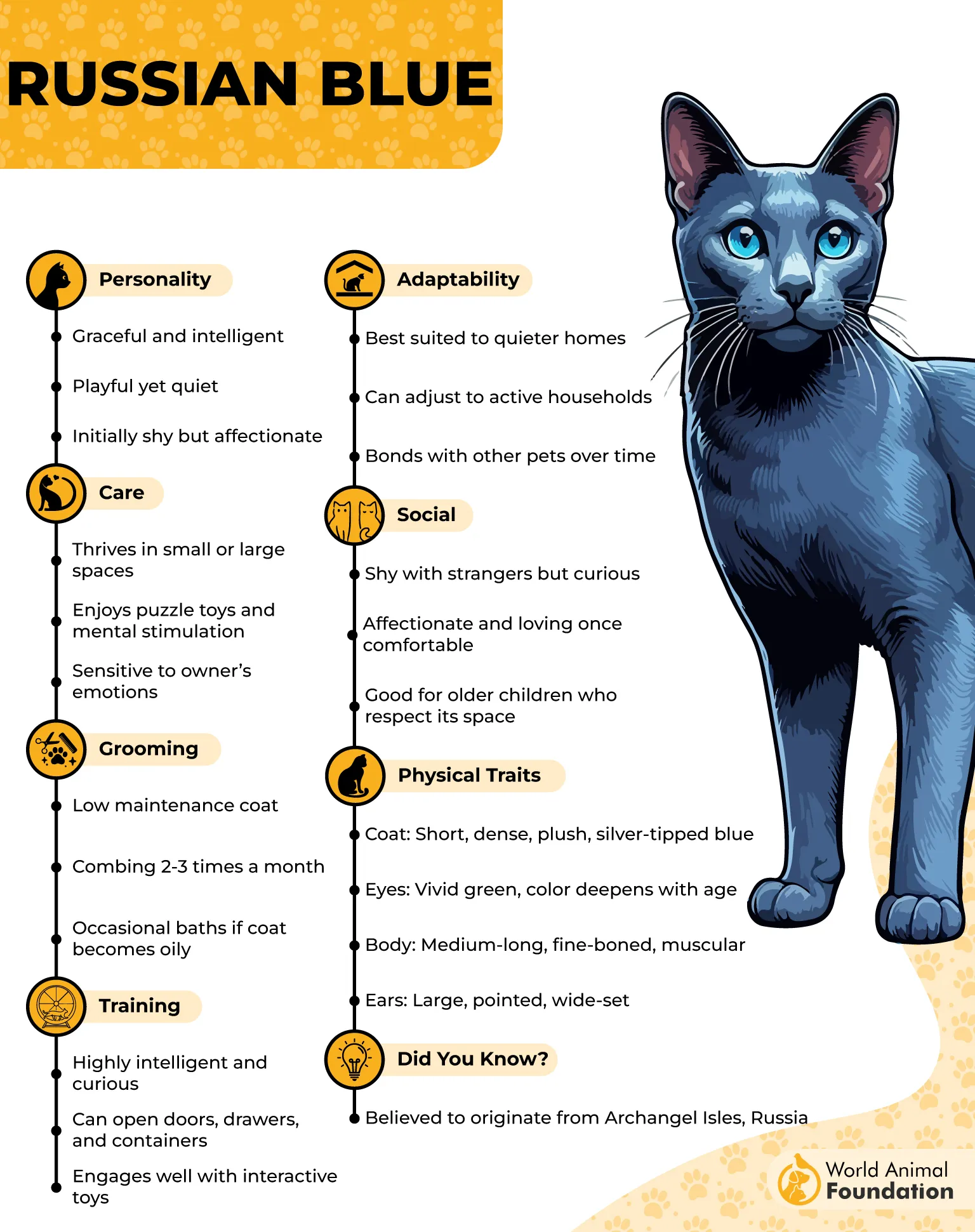
Naturally tidy, this breed tends to appreciate a clean environment as much as a well-kept coat. Regular nail trims should also be part of its basic care, while keeping the litter area fresh can suit its notably particular habits.
Beyond grooming, the Russian Blue is affectionate with trusted family members but retains an independent streak. It can enjoy interactive play and mental stimulation, making toys and engaging activities useful additions to its routine.
4. Birman
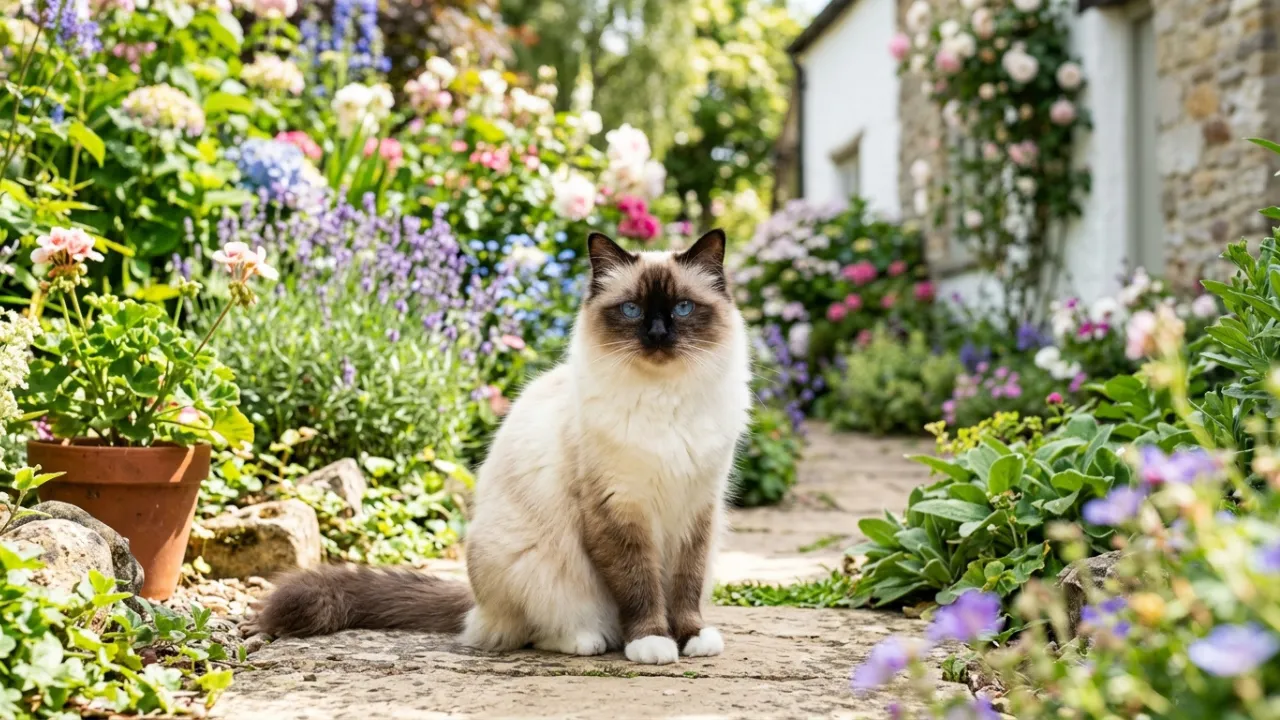
The Birman’s silky, long coat looks more demanding than it actually is. Unlike some longhaired cats, its fur typically needs a thorough brushing and combing just once a week. A rotating-tooth comb can lift away loose fur gently, while a slicker brush helps keep the coat smooth and tidy.
Their manageable grooming routine also suits this affectionate, loyal breed, which often enjoys staying close to its people. During seasonal shedding, particularly in spring, an occasional bath with a gentle cat shampoo may help remove excess dead fur and keep the coat fresh.

Beyond coat care, monthly claw trimming helps prevent overgrown nails from becoming uncomfortable, especially for indoor Birmans. According to PetMD, Birmans have relatively simple grooming needs, though these can vary depending on their coat’s fullness.
Regular mouth checks are also worthwhile because dental problems can develop with age. Following the breeder’s feeding guidance when bringing home a kitten can further support a smooth transition and consistent care.
5. Chartreux
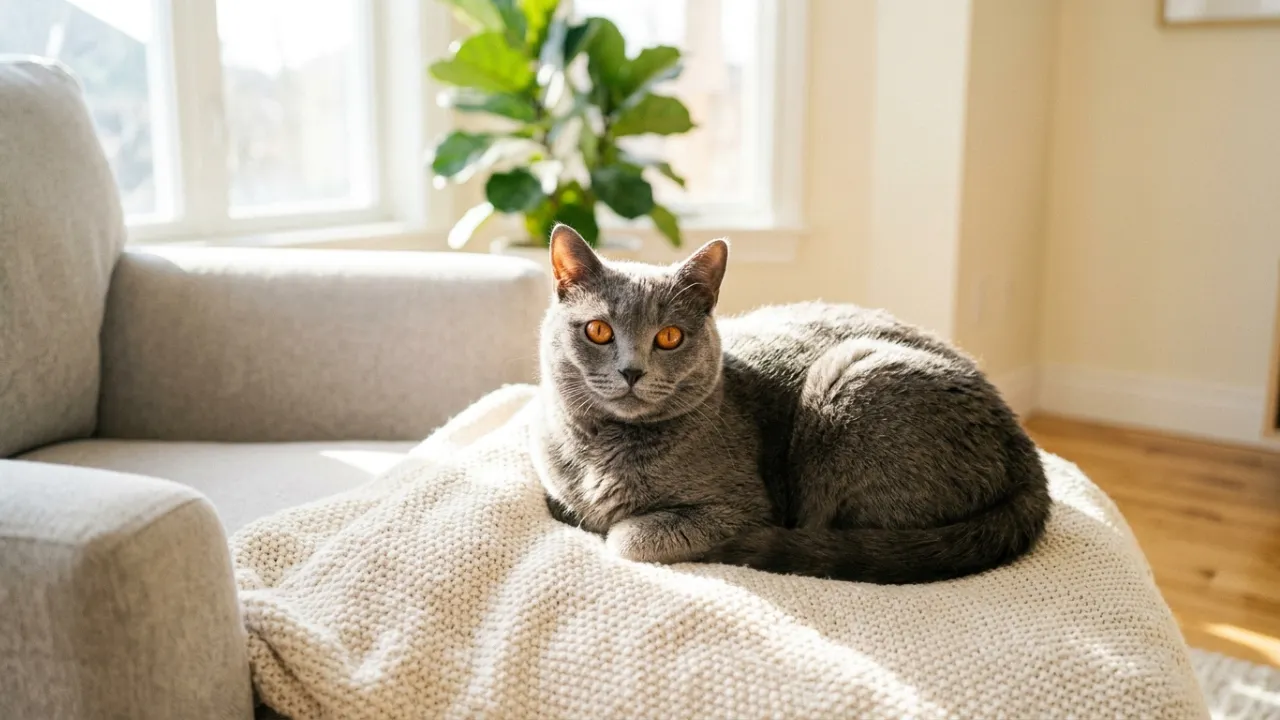
Picture a calm French blue cat padding through the house, its striking eyes and gentle expression adding to its charm. The Chartreux has a sturdy build, broad shoulders, and a deep chest, but its most distinctive feature is its dense, woolly coat.
That blue-gray fur has a soft undercoat beneath a resilient outer layer, with silvery tips that create its characteristic sheen. Despite its plush appearance, the coat is surprisingly manageable for owners who prefer a simpler grooming routine.
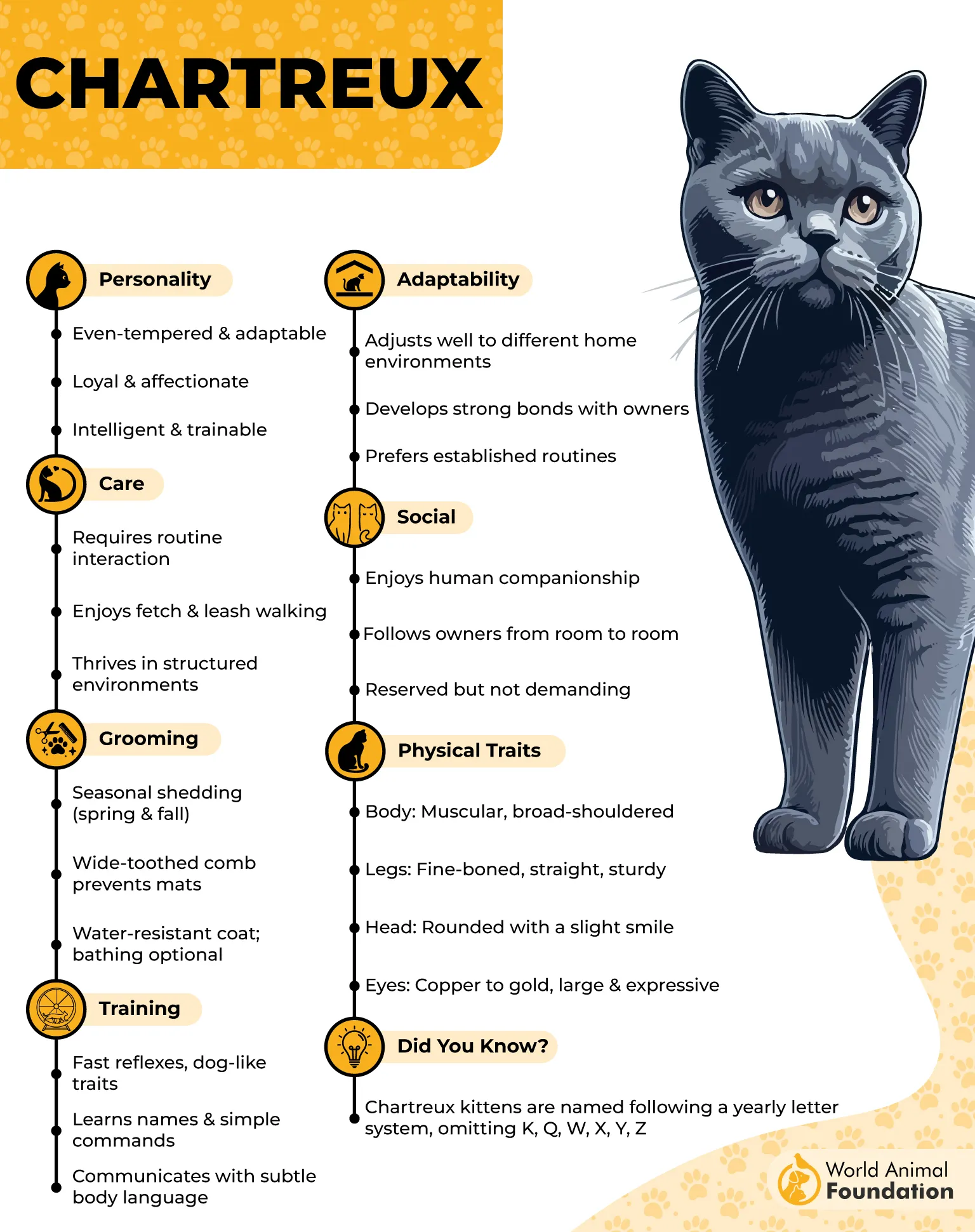
A gentle weekly combing is generally enough to lift away dead hair and keep the coat from becoming matted. Unlike many cats, the Chartreux rarely needs bathing because its water-resistant fur naturally helps keep it clean. During heavier seasonal shedding, particularly in spring, an extra grooming session can help remove loose undercoat.
Regular grooming also offers a chance to check the skin for scratches, irritation, or unusual changes. Keeping the nails trimmed and providing a scratching post supports healthy paw care, while routine dental care helps maintain overall hygiene.
6. Exotic Shorthair
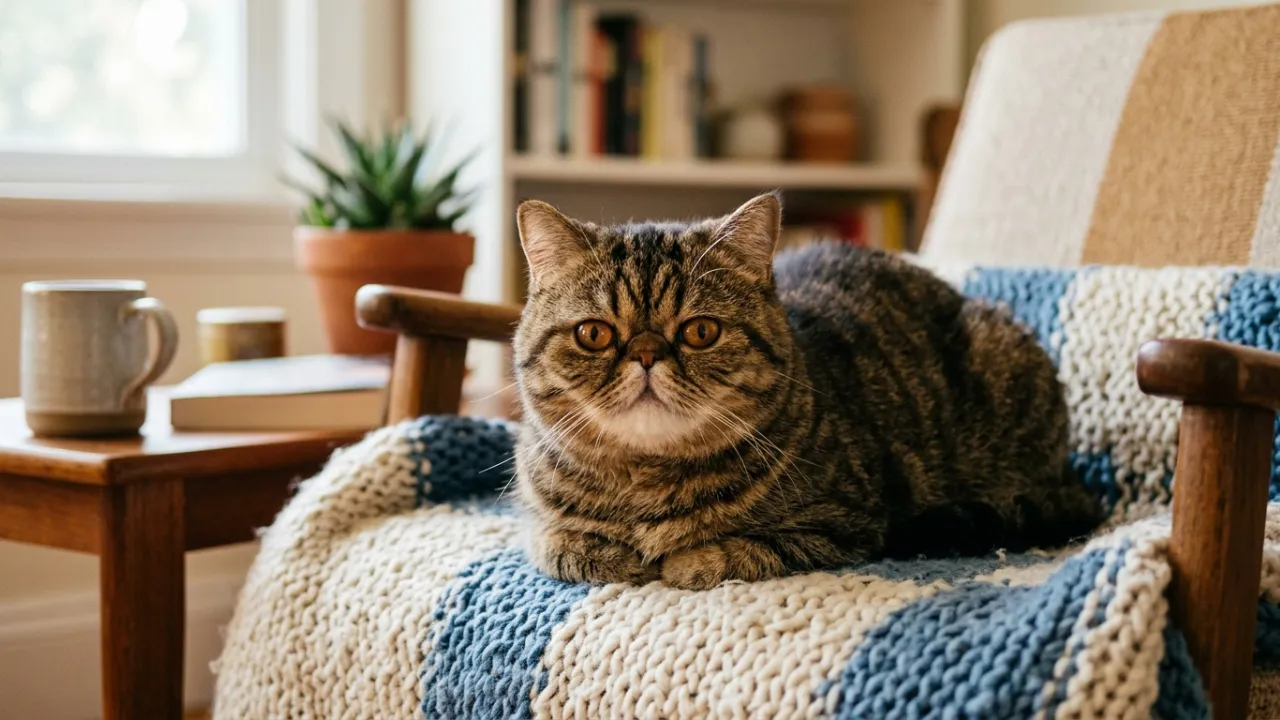
The Exotic Shorthair has a plush, dense coat that gives this domestic breed its irresistibly cuddly appearance. Despite its thick texture, the fur is short and generally does not mat or tangle easily, making upkeep pleasantly manageable.
A weekly combing session is usually enough to lift away loose hairs and keep the coat looking neat. This moderate-shedding breed benefits from this simple routine without requiring the frequent brushing associated with longer-haired cats.
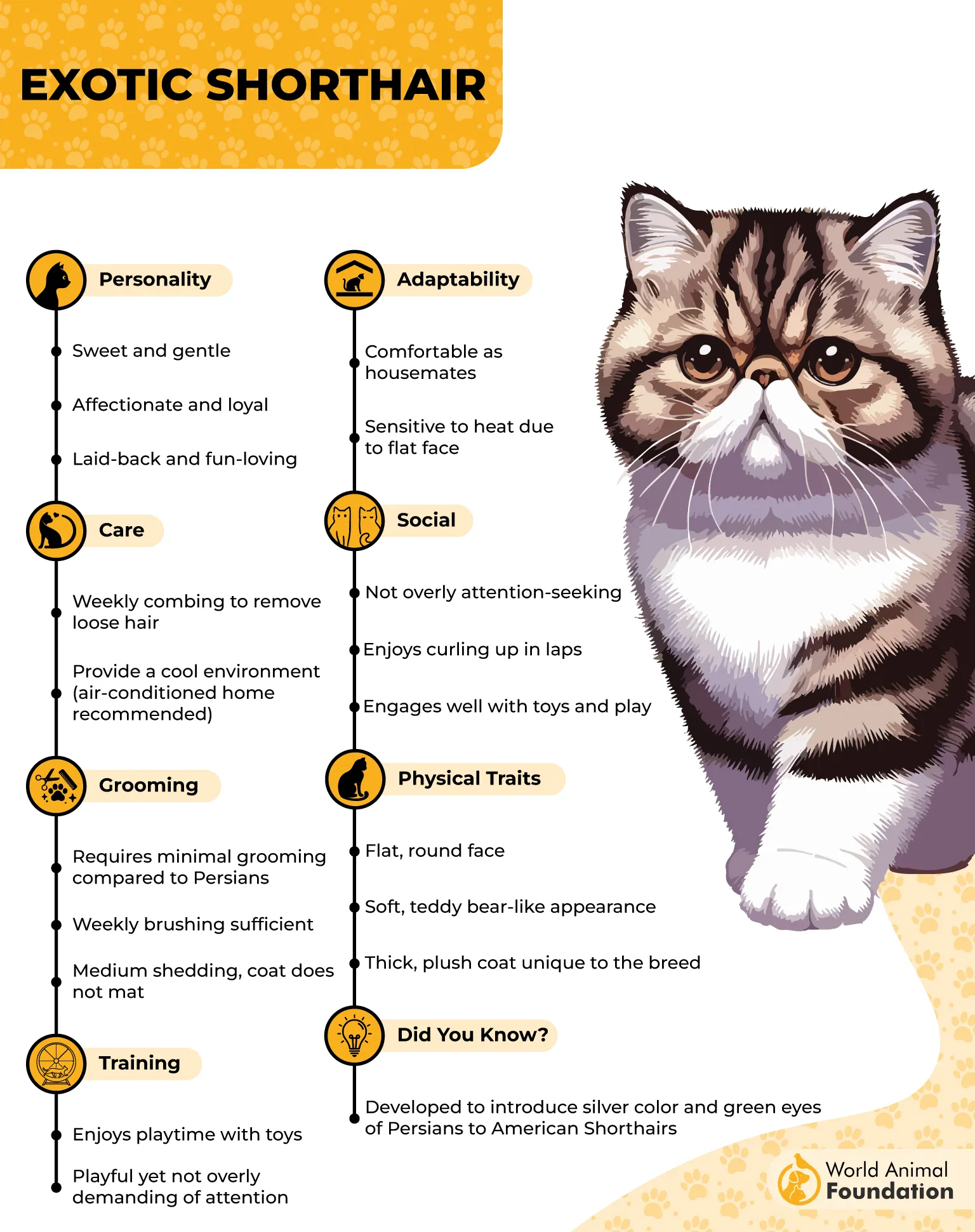
Grooming can also become a sweet bonding ritual. The Exotic Shorthair often enjoys gentle attention, allowing owners to turn a practical chore into a calm one-on-one time with their plush-faced companion.
Its coat comes in an appealing range of shades, including white, black, blue, red, cream, chocolate, lilac, and silver, along with various patterns and shadings.
7. American Curl
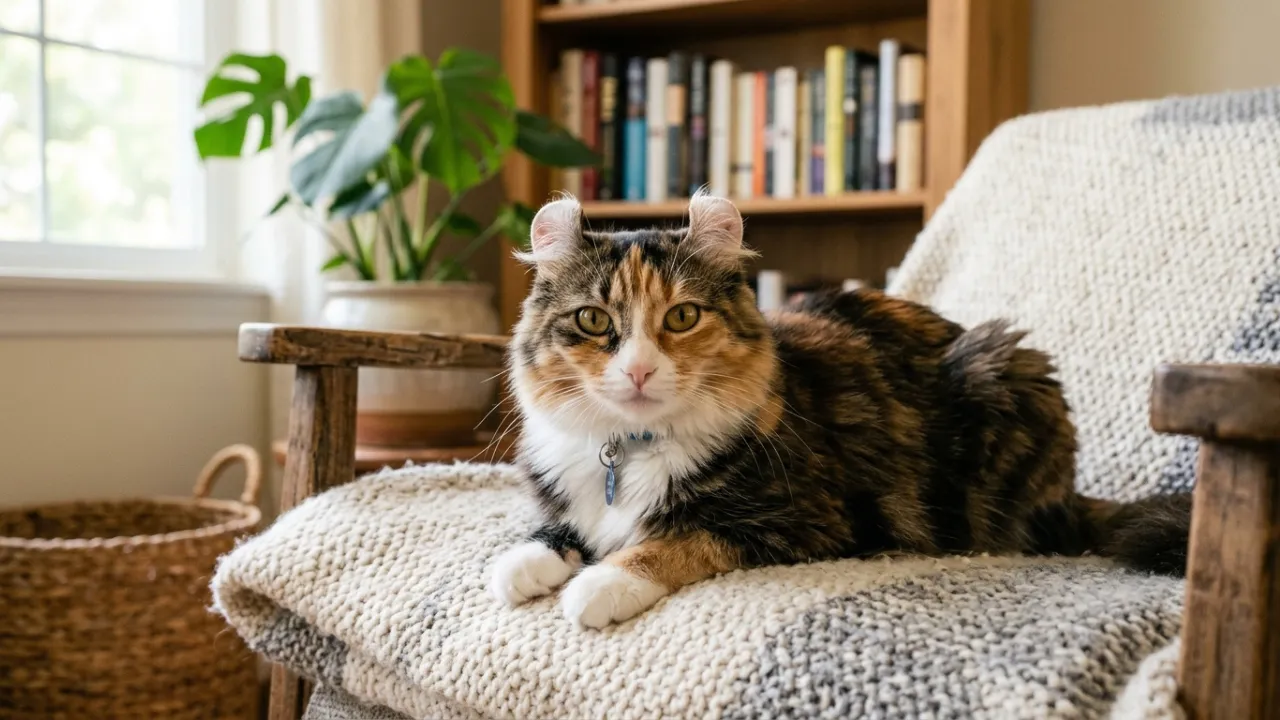
The American Curl brings a playful twist to the cat world, thanks to ears that sweep backward from the face. Interestingly, kittens are born with straight ears, which gradually begin curling within their first few weeks. Its silky coat, large walnut-shaped eyes, and feathery tail add even more charm.
Available in both shorthaired and longhaired varieties, this breed offers fairly flexible grooming needs. The shorthaired Curl typically does well with a weekly brushing session, making coat care simple for owners who prefer a manageable routine.
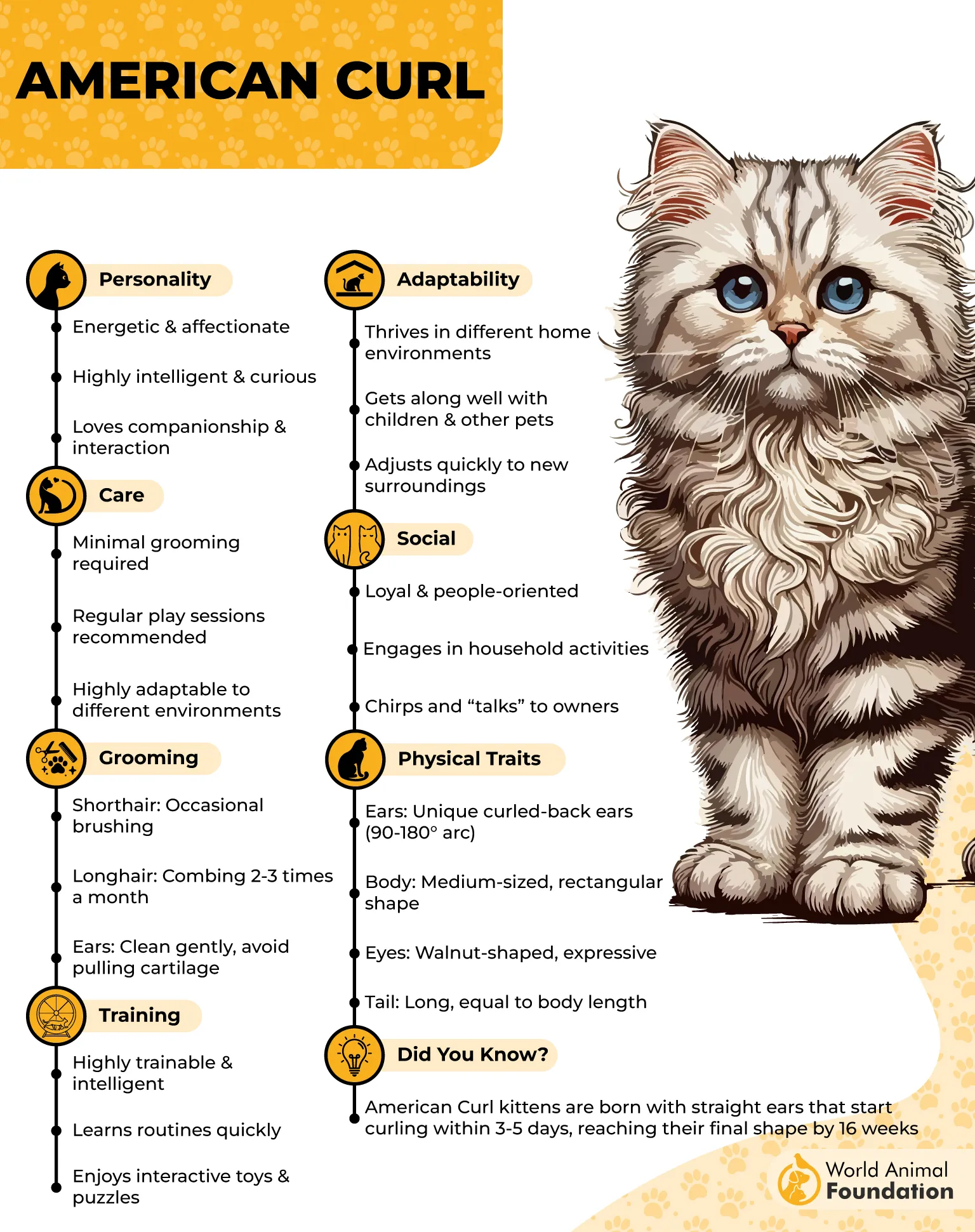
A weekly steel-comb session can help remove loose hair and keep the coat free from troublesome tangles. For long-haired Curls, brushing twice weekly is recommended to better control matting and knots.
Beyond its attractive appearance, the American Curl is generally healthy, although those distinctive ears deserve regular attention. Checking and gently cleaning them can help keep them clear and reduce the risk of infection.
Conclusion
Keeping a cat’s coat looking neat does not always require a demanding grooming routine. Some breeds are naturally well suited to simple weekly care, making them easier to maintain without frequent brushing sessions.
From silky coats to low-shedding fur, these cats offer different features that can make grooming more manageable. Regular brushing can help remove loose hair, reduce tangles, and keep their coats looking healthy.
Even cats with longer fur can fit comfortably into a weekly grooming routine when their coats are properly maintained. However, individual needs can vary depending on coat type, shedding, and the tendency to develop mats.
Choosing a breed with flexible grooming needs can make everyday care feel less like a chore and more like enjoyable bonding time. A consistent routine, gentle handling, and occasional coat checks can help keep these cats comfortable and looking their best.
