




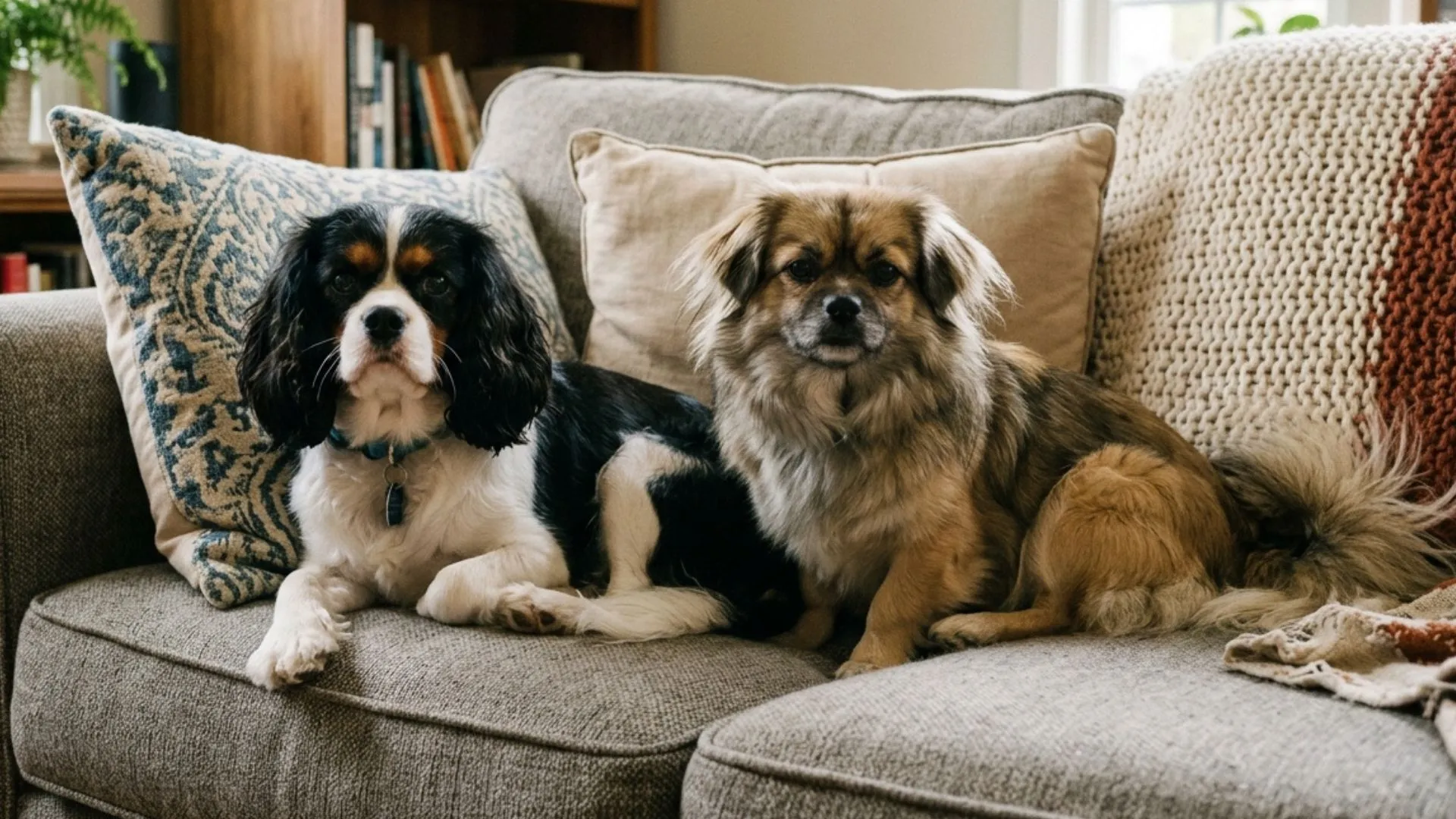
Low-maintenance dog breeds with calm demeanors can be surprisingly different from what people expect. A dog does not have to be inactive to be easy to live with, and a calm temperament does not mean spending the entire day asleep.
The real difference often comes from how a dog handles ordinary life. Some dogs settle comfortably after their daily exercise, cope well with quiet periods, and do not constantly demand attention from the household. Others need far more activity, stimulation, grooming, or supervision to remain content.
For people who want companionship without building their entire schedule around a pet, those differences matter. Even calm dogs need regular walks, basic training, social contact, grooming, and healthcare, so low maintenance should never be confused with no maintenance.
Keep reading to discover which breeds offer that easier balance and what makes each one worth considering.
Key Takeaways
What makes a dog genuinely easy to live with? A calm nature helps, especially when a dog can enjoy its exercise and then happily settle into the household routine.
The Pug once lived in Chinese royal palaces under the protection of palace soldiers, while today its biggest talent may be finding the best spot for a nap.
Tibetan Spaniels bring another surprising detail to the list. Monks once kept them in Tibetan monasteries, where they climbed walls to watch for approaching visitors.
From the playful “Chin spin” to the Bolognese’s low-shedding coat, the rest of the list has a few details worth knowing before choosing your next calm companion.
Low‑Maintenance Dog Breeds With a Calm Demeanor
1. Pug
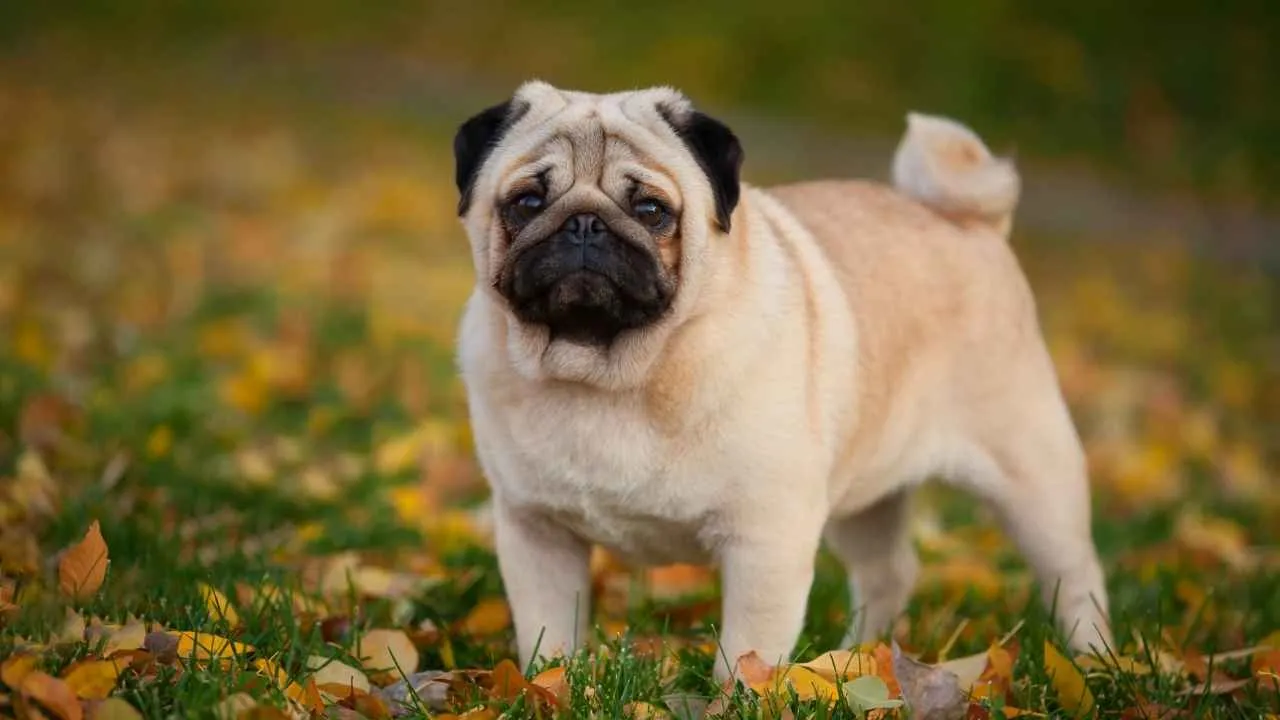
Pug belongs to one of the oldest dog lineages still around today, with roots in China during the Han Dynasty from 206 BC to 200 AD. Pug-like dogs have also been linked to ancient Tibet and Japan, while some accounts connect the breed with the Tibetan Mastiff.
Small Body, Big Personality
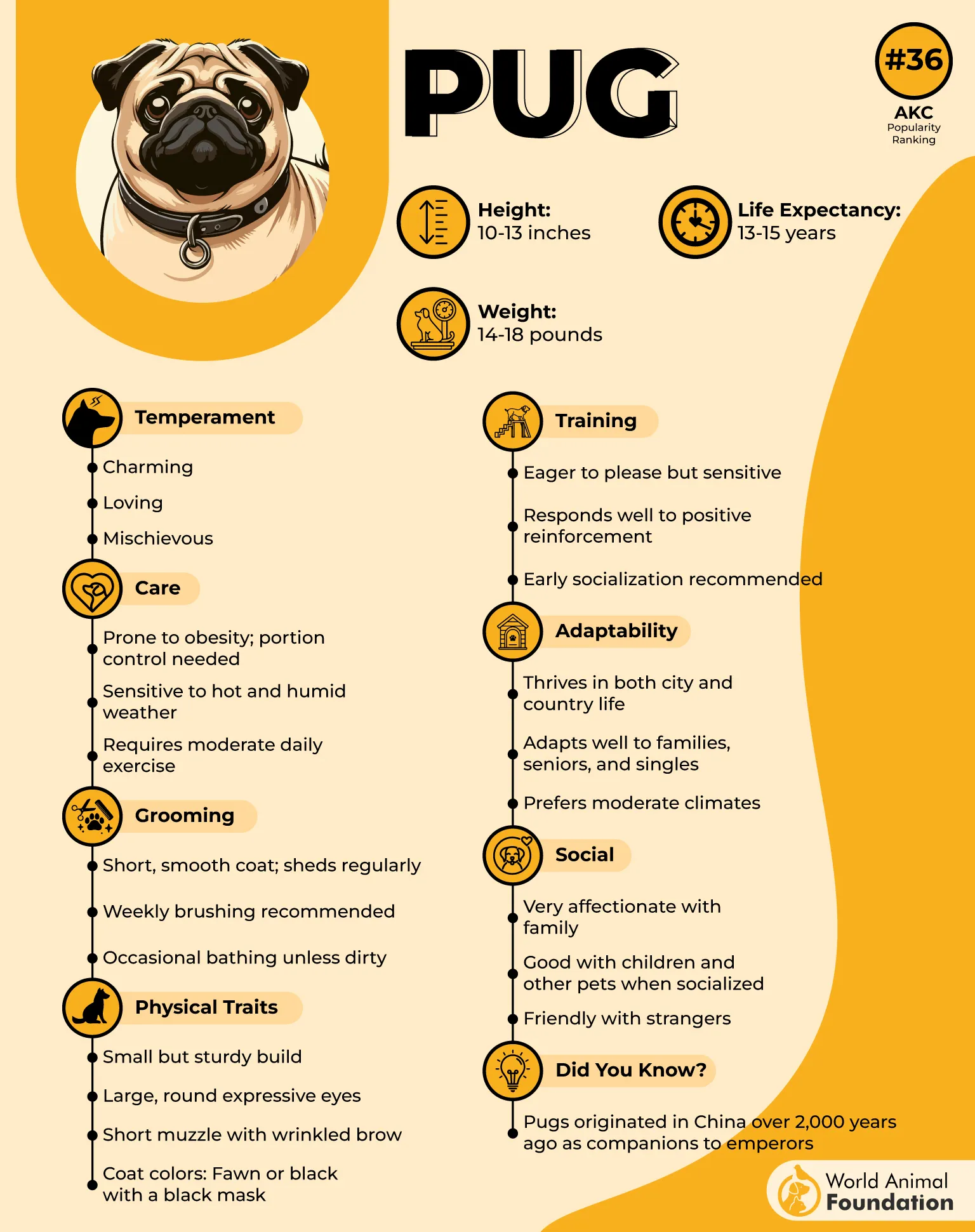
This low-energy dog was bred as a lapdog for Chinese royal families and lived in considerable luxury, even receiving protection from palace soldiers. Its famous motto, multum in parvo, means “a lot in a little,” a fitting description of its compact build and lively personality.
These care traits need attention:
Quiet indoors and often naps
Calm and even-tempered
Heat above 29°C can be dangerous
Easy Daily Care
The Pug’s short, smooth coat does not take much fuss to maintain, while its exercise needs are manageable for most households, as PetMD noted. A 30-minute walk or some garden play for half an hour can add enough activity without making exercise feel like a big task.
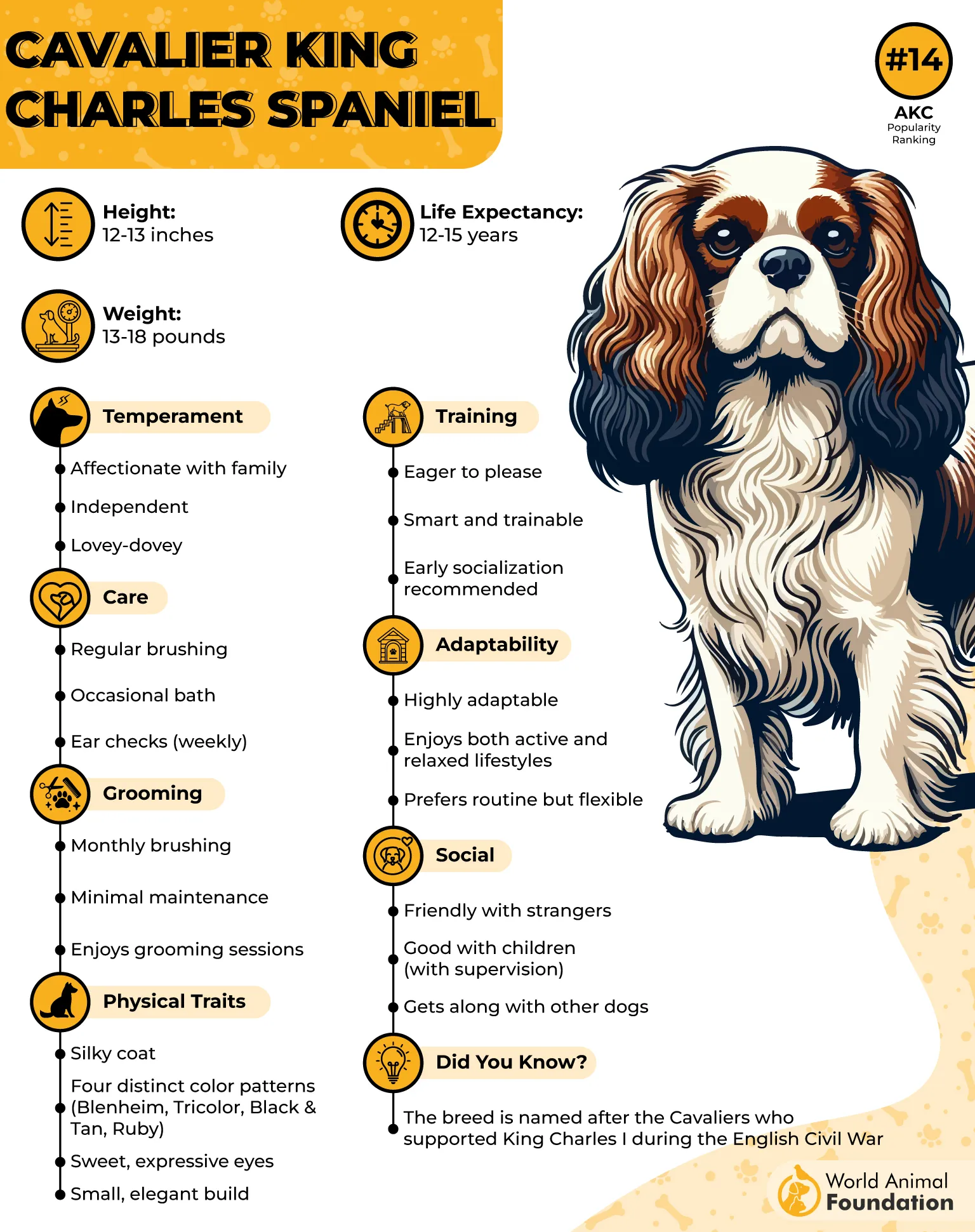
2. Cavalier King Charles Spaniel
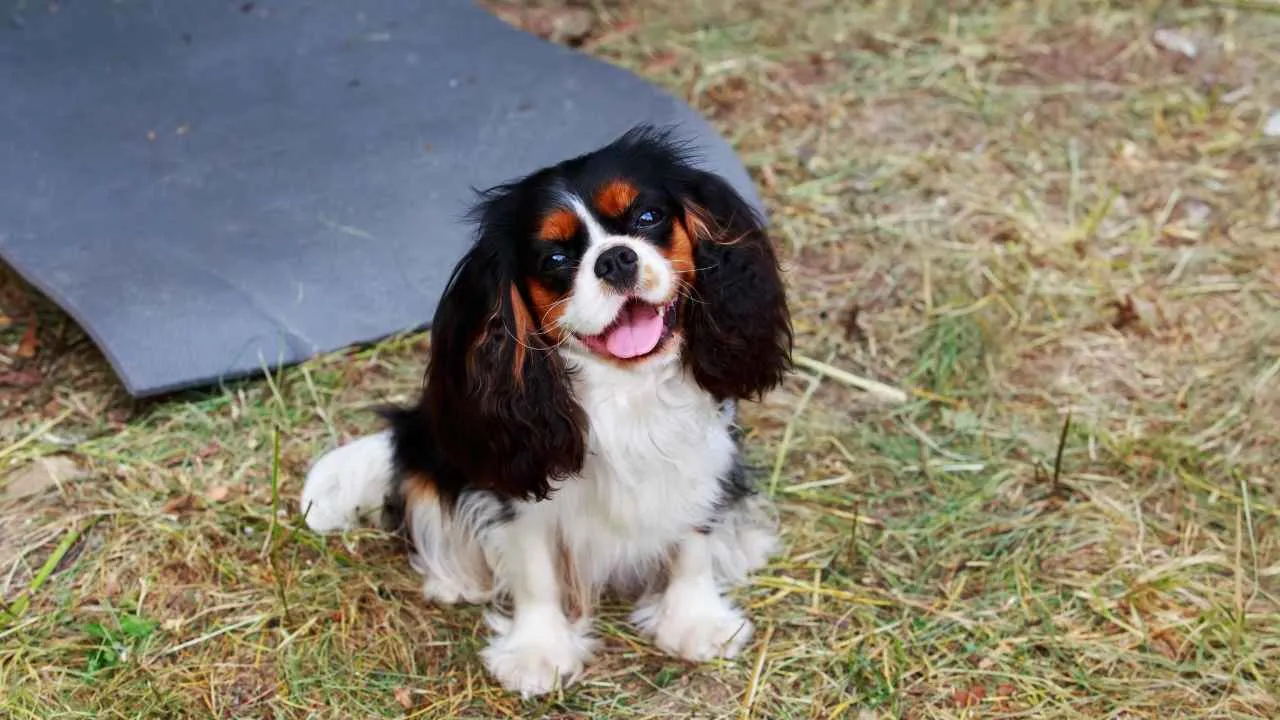
Cavalier King Charles Spaniel is known for a royal connection reaching back to 17th-century England, where toy spaniels were closely associated with European nobility.
King Charles I and King Charles II were especially fond of these dogs, and Charles II reportedly allowed them inside public buildings, including Parliament.
Simple Coat Care
These toy breeds have a silky, medium-length double coat with feathering that needs brushing or combing only about three or four times a week. Bathing is generally needed once a month or when the coat becomes visibly dirty or develops an odor, as Petplan claims.
The following practical grooming details are easy to overlook:
Check the skin during brushing
Look for parasites or unusual lumps
Watch for rashes or irritation
An Easy Daily Pace
Cavalier King Charles Spaniels have moderate exercise needs, with two 20- to 30-minute walks each day generally fitting the breed’s routine. Afterward, this cheerful companion is content to spend quiet time with family rather than requiring intense physical activity.
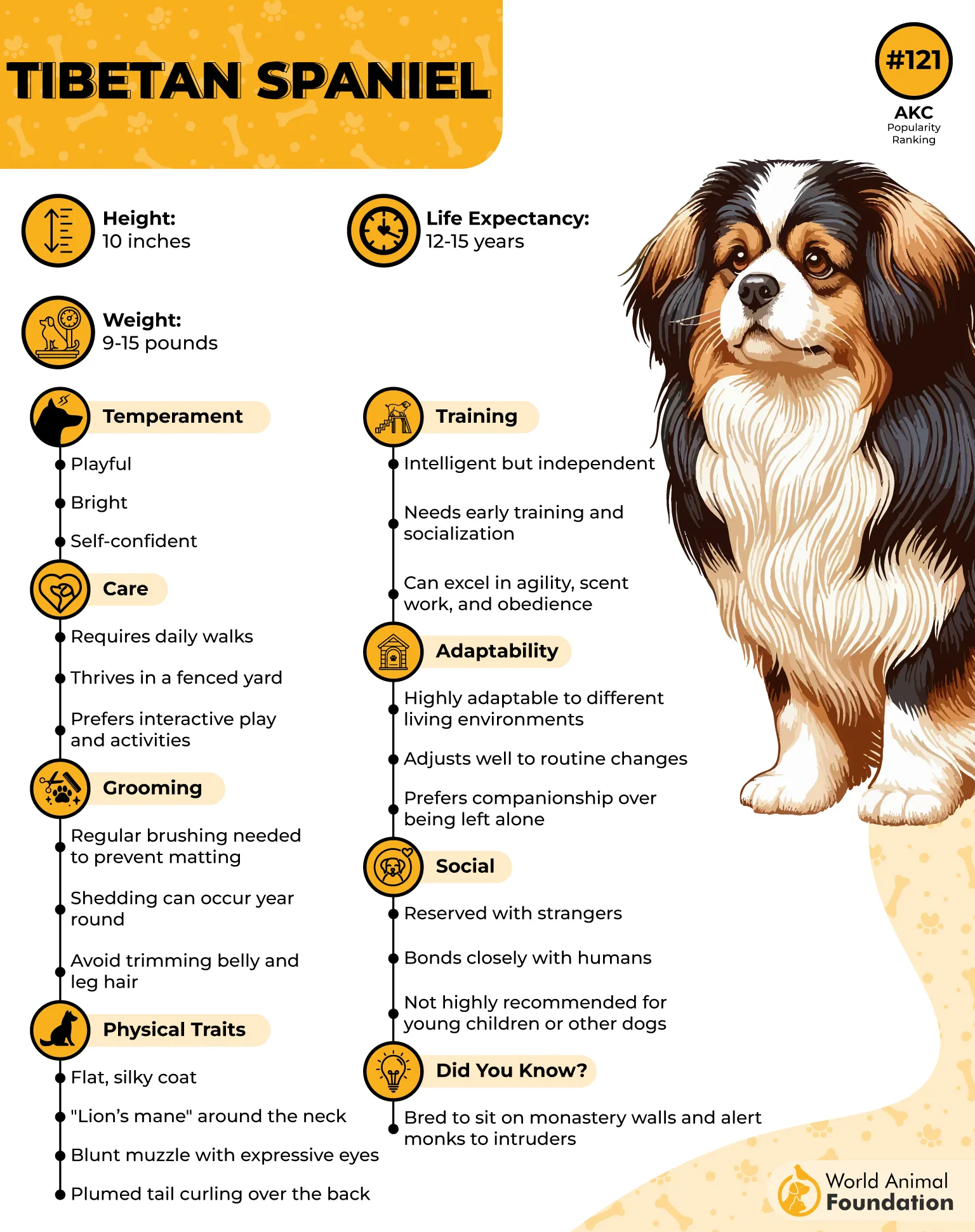
3. Tibetan Spaniel
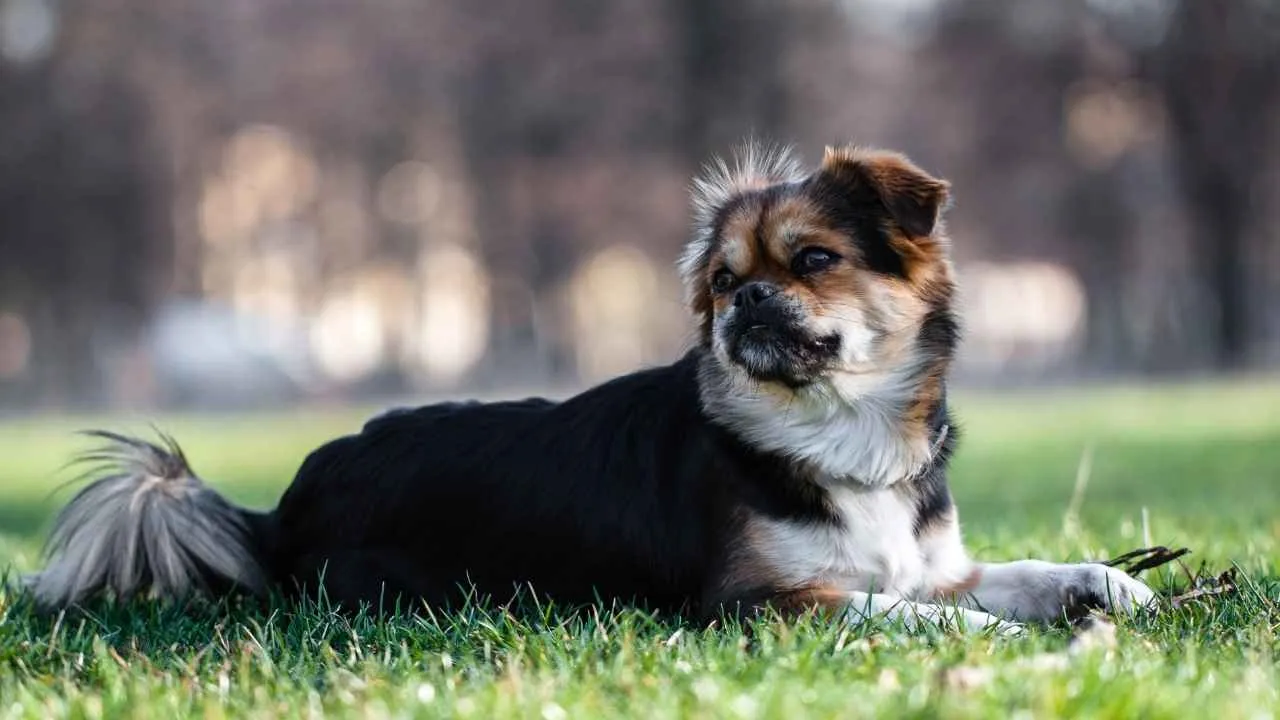
Tibetan Spaniels spent their early years in Tibetan monasteries, where monks used them as a watchdog rather than a hunting companion. These small dogs climbed monastery walls to reach high lookout points, then barked an alarm when someone approached.
Easygoing Energy
These spaniels have modest exercise needs, with short walks, playtime, or a quick jog often providing enough activity for the day. Its compact build, short legs, and flat face make marathon-style exercise unsuitable, while regular activity also matters because this breed can gain weight easily.
These practical characteristics are worth knowing:
Food and treats can be especially tempting
Yard play can provide useful daily activity
Short jogs can suit some Tibbies
Gentle at Home
Tibetan Spaniel has a calm, gentle temperament that suits therapy work and household life with children, dogs, and cats. Its affectionate personality comes with plenty of confidence too, reflected in the old Tibetan nickname “little lion” and its reputation for acting larger than its size, as per Hill’s Pet.
Note: This breed can be remarkably meticulous about grooming itself. However, for professional grooming, the belly and inner-leg hair should not receive a sanitary cut because the breed may become intensely itchy after the hair is trimmed there.
4. Japanese Chin
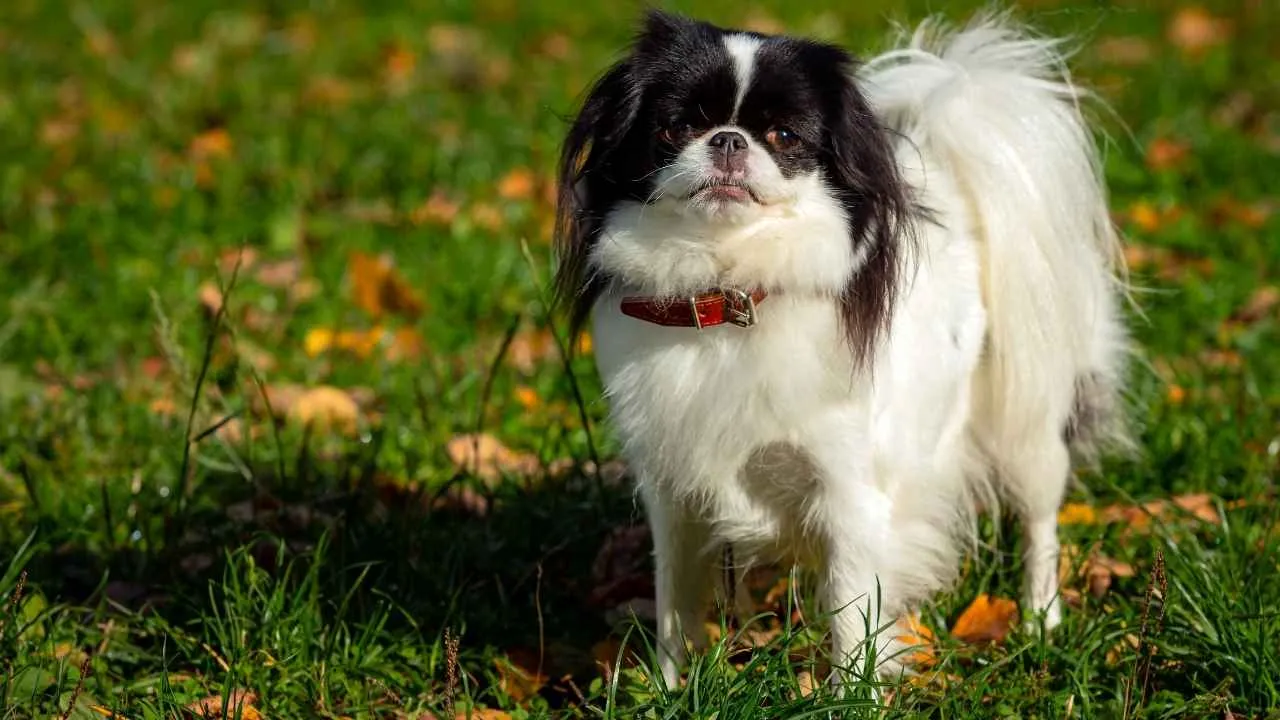
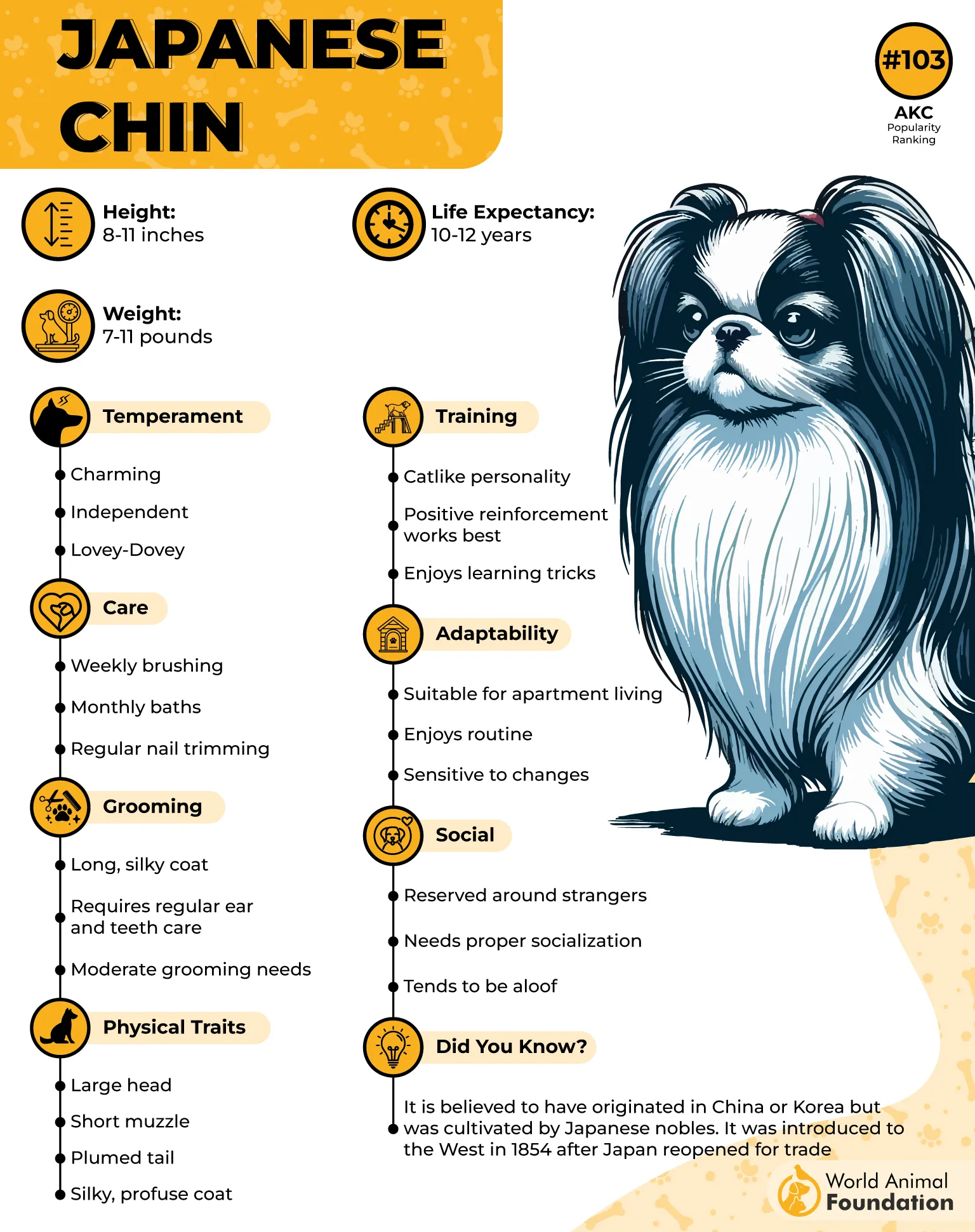
Japanese Chin has ancient roots that remain somewhat uncertain, with accounts linking the breed to China while its name points toward Japan. Buddhist monks kept these small dogs, and they later became companions of Japanese nobility within Imperial palaces.
Easy to Manage
This lap dog needs only about 30 minutes of daily exercise, usually through a short walk and some play in a secure area. Its grooming routine is equally manageable, with brushing once or twice weekly and bathing about once a month when needed.
These daily life routines make it easier to manage:
Comfortable with other dogs and new experiences
May bond closely with one person
Socialization from 12 to 16 weeks
Small but Spirited
Japanese Chin has a playful streak that comes with plenty of personality, including its famous “Chin spin” when excitement takes over. It can also be independent and strong-willed, while its catlike habits include self-grooming, climbing, and perching on furniture.
5. Clumber Spaniel
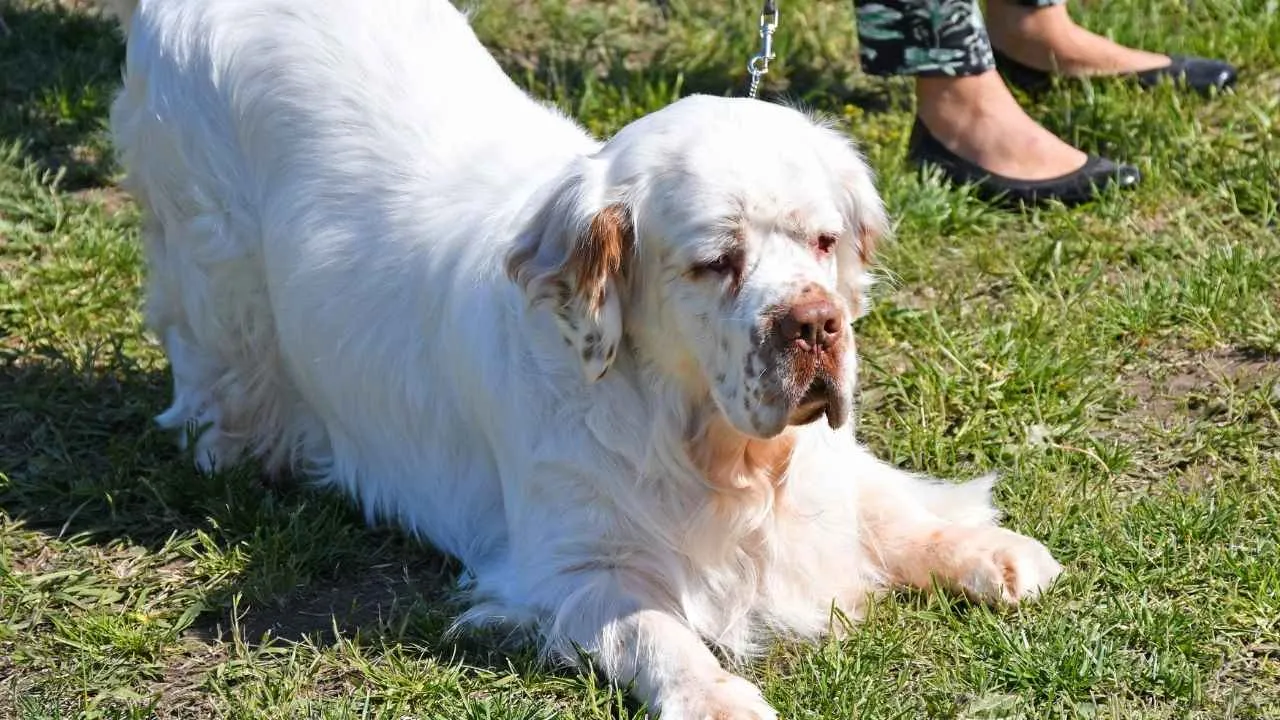
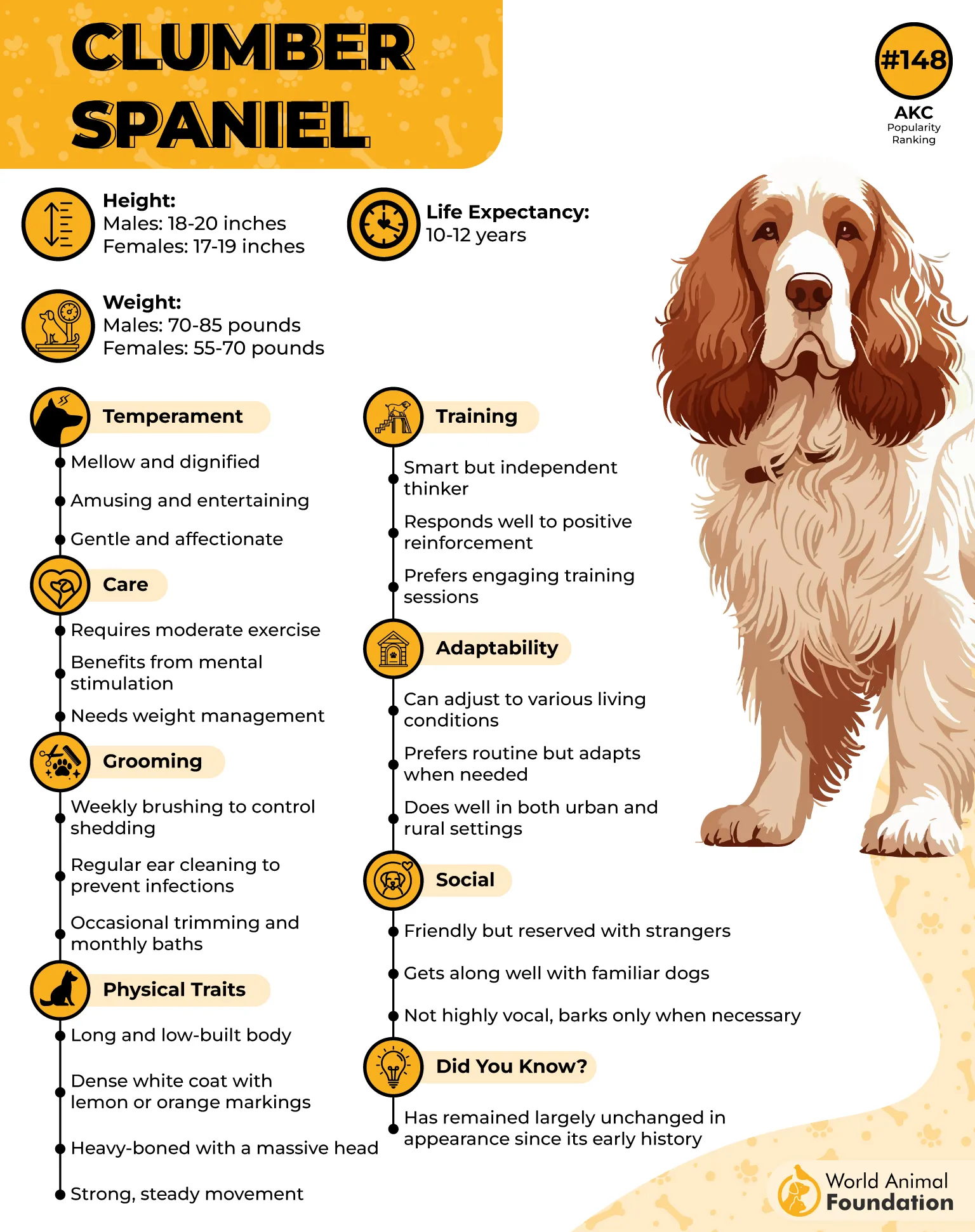
Clumber Spaniel emerged in England in the late 1700s and ranks among the oldest Spaniel breeds. It is also the heaviest and stockiest of the Spaniels, with an early reputation among English nobility for keen-nosed hunting and retrieving through dense undergrowth.
Easy Coat Care
This calm breed has a manageable grooming routine, with thorough brushing and combing once or twice a week usually enough for its coat. Monthly bathing can be sufficient for dogs that are not regularly working in the field, while ear cleaning and wrinkle care need regular attention.
A few practical details are easy to miss:
Generally friendly with children and pets
Proper introductions support peaceful interactions
Supervision helps with young children
A Calm Housemate
Clumber Spaniel tends to take the day at an unhurried pace, with moderate exercise usually keeping it content. Regular walks and interactive games give this breed something enjoyable to do while leaving plenty of room for a quieter household routine.
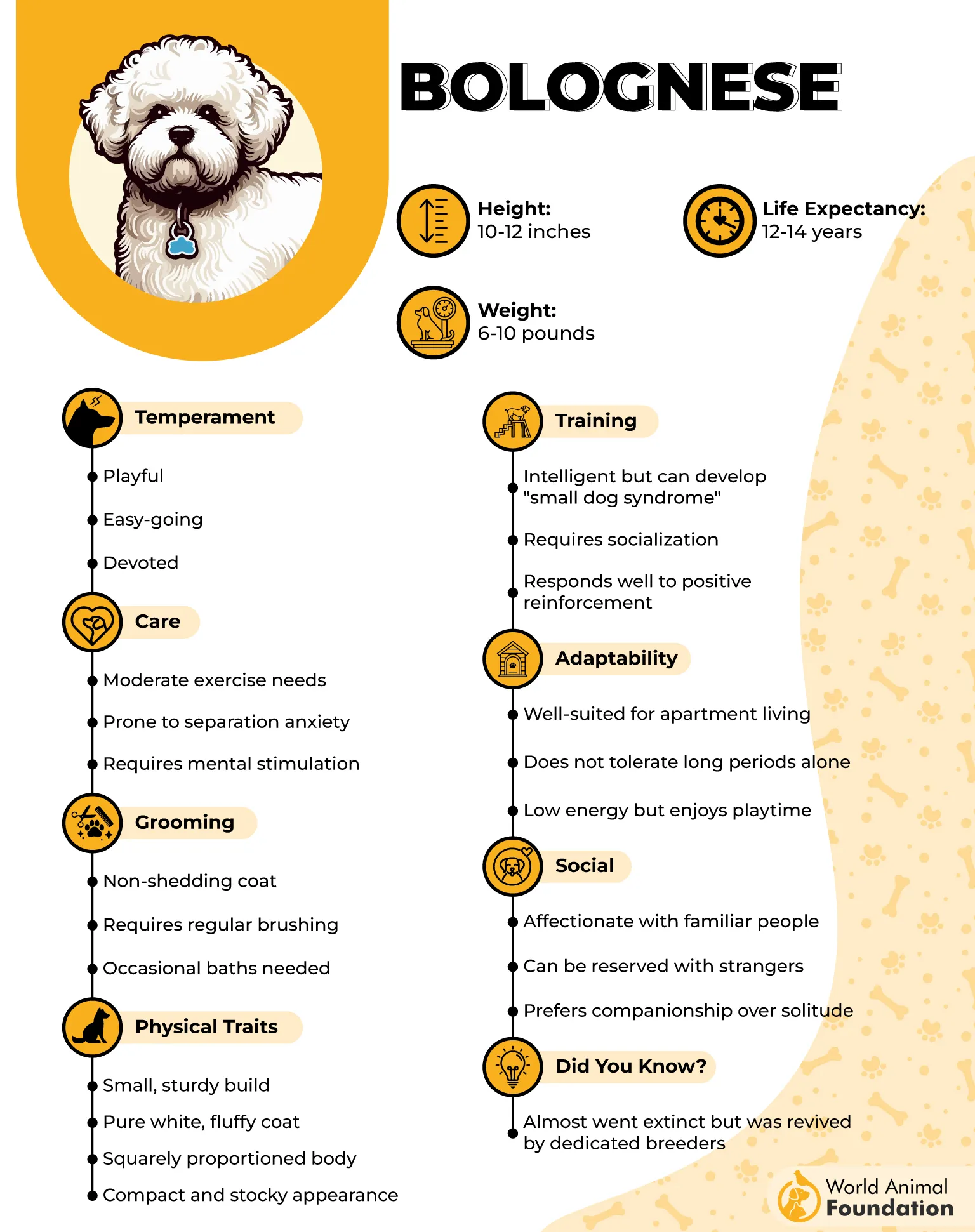
6. Bolognese
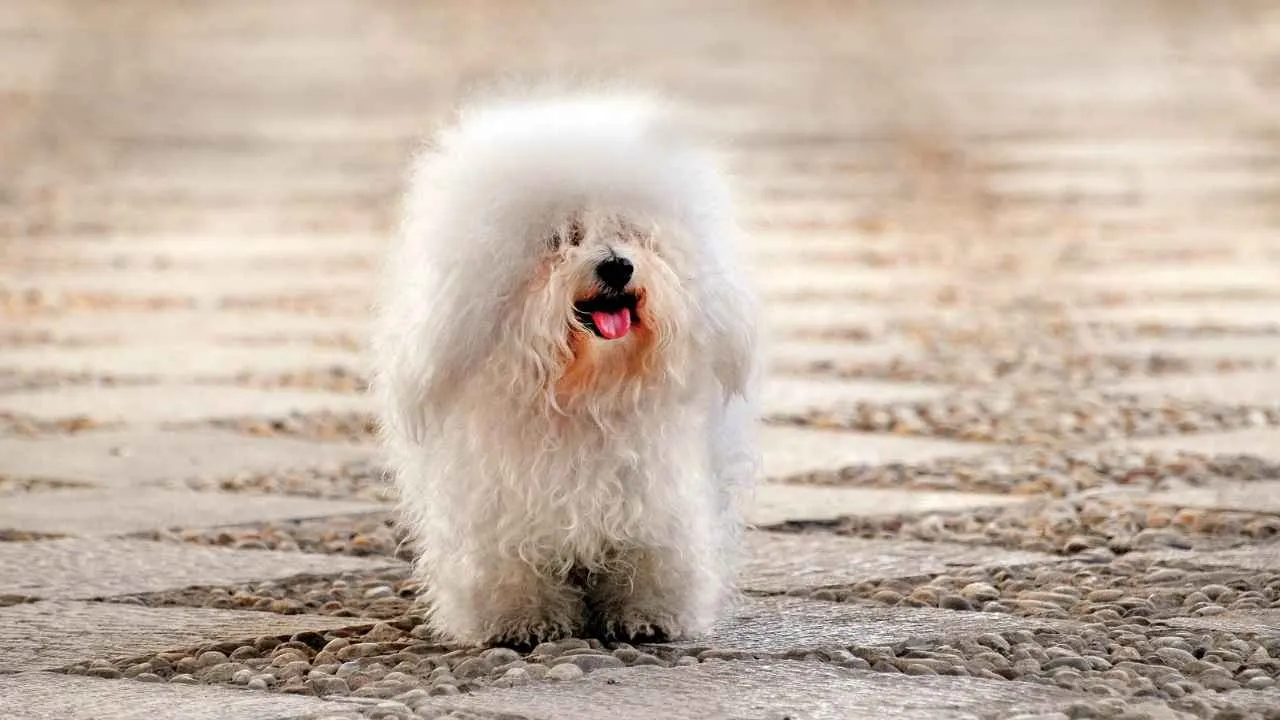
Bolognese is a small Italian companion breed recognized for its curly, ruffled white coat, floppy ears, and small dark eyes. Its close connection to the Bichon Frise earned it the nickname “Bichon Bolognese,” while the Maltese, Havanese, Coton de Tulear, and Löwchen are also part of its extended family.
Calm by Nature
They have a notably relaxed temperament and relatively low energy level, making their daily routine easier to manage than that of breeds bred for speed or demanding work. Their exercise needs can fit neatly into a quieter household routine without turning every day into an endurance session.
These simple activities suit that pace particularly well:
Two 20-minute walks each day
Indoor hide-and-seek games
Likes to chase a ball across the floor
A Less Messy Coat
Bolognese has a cloudlike white coat, yet individuals can shed relatively little compared with several other breeds with similarly abundant-looking fur. That combination gives the breed a distinctive appearance while keeping loose hair from becoming the main feature of everyday grooming.
7. Russian Tsvetnaya Bolonka
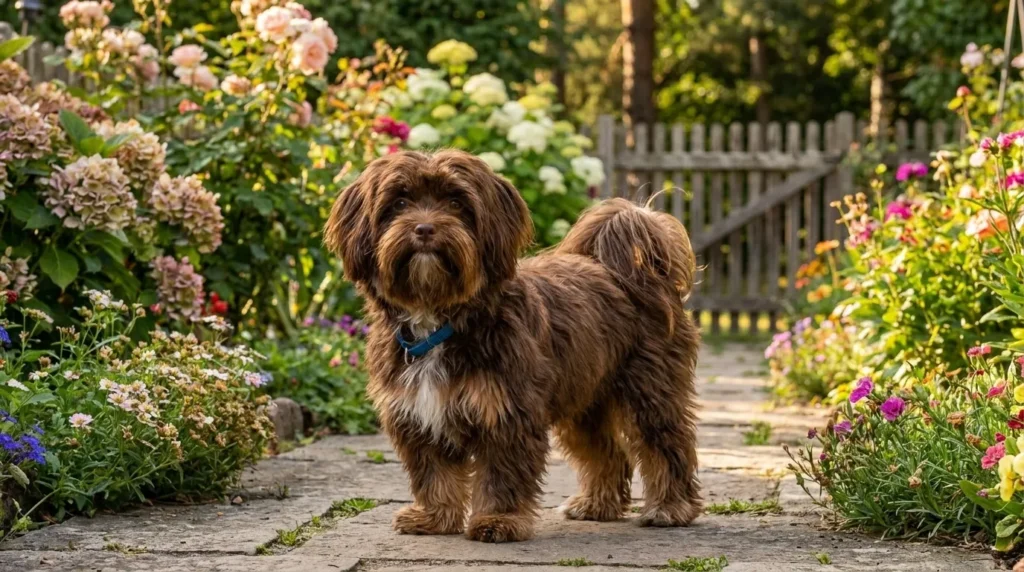
Russian Tsvetnaya Bolonka traces its early story to Saint Petersburg and Moscow, with its ancestors reaching Russian nobles as gifts from Louis XIV during the 1700s.
Later breeding involved Bichon Frise, Pekingese, French Bolognese, and Russian street dogs, creating the small companion breed known as the Bolonka.
Small, Yet Playful
This breed combines a compact build with an active appetite for games. Walks are useful, while indoor activities such as hide-and-seek, rolling a ball across the floor, and learning tricks can add variety without requiring lengthy outings.
A few practical details are worth knowing:
Good romp at least twice weekly
Quick learner during obedience training
Friendly with children and other dogs
Easy Coat Routine
Russian Tsvetnaya Bolonka has a long, curly, thick coat with a generous undercoat, yet its grooming routine is fairly manageable. Regular brushing and combing of the silky hair can be enough to keep its coat cared for between grooming sessions.
Conclusion
Selecting among the calmest dog breeds is not simply about finding a dog that spends most of its day resting. Even relaxed companions need exercise, attention, training, and opportunities to stay engaged. Some prefer short bursts of energy, while others are comfortable with moderate energy that fits easily into a quieter household routine.
The right choice ultimately depends on the dog’s temperament, grooming needs, and how naturally those qualities fit your daily life. For pet parents looking for good family dogs, these chill dogs can offer an enjoyable balance of companionship and manageable care. With thoughtful selection, a good low-maintenance breed can become a rewarding part of the family for years to come.
