




Bringing home your first dog is exciting, but let’s be honest: it can also feel a little overwhelming. Between choosing the right breed, figuring out feeding routines, learning the basics of training, and keeping up with grooming and vet visits, there’s a lot to think about.
Add a busy work schedule, family responsibilities, or a packed social life, and finding a dog that fits naturally into your routine becomes even more important.
The good news? Your first dog doesn’t have to make life more complicated. Some dogs are naturally more adaptable, easier to train, sociable, and comfortable with everyday routines.
In this article, we’ll look at some of the best dog breeds that can make the transition into dog ownership a little smoother. You’ll discover what makes each one beginner-friendly, from trainability and temperament to exercise and grooming needs.
Reliable Dog Breeds: A Beginner’s Choice Guide
1. Labrador Retriever
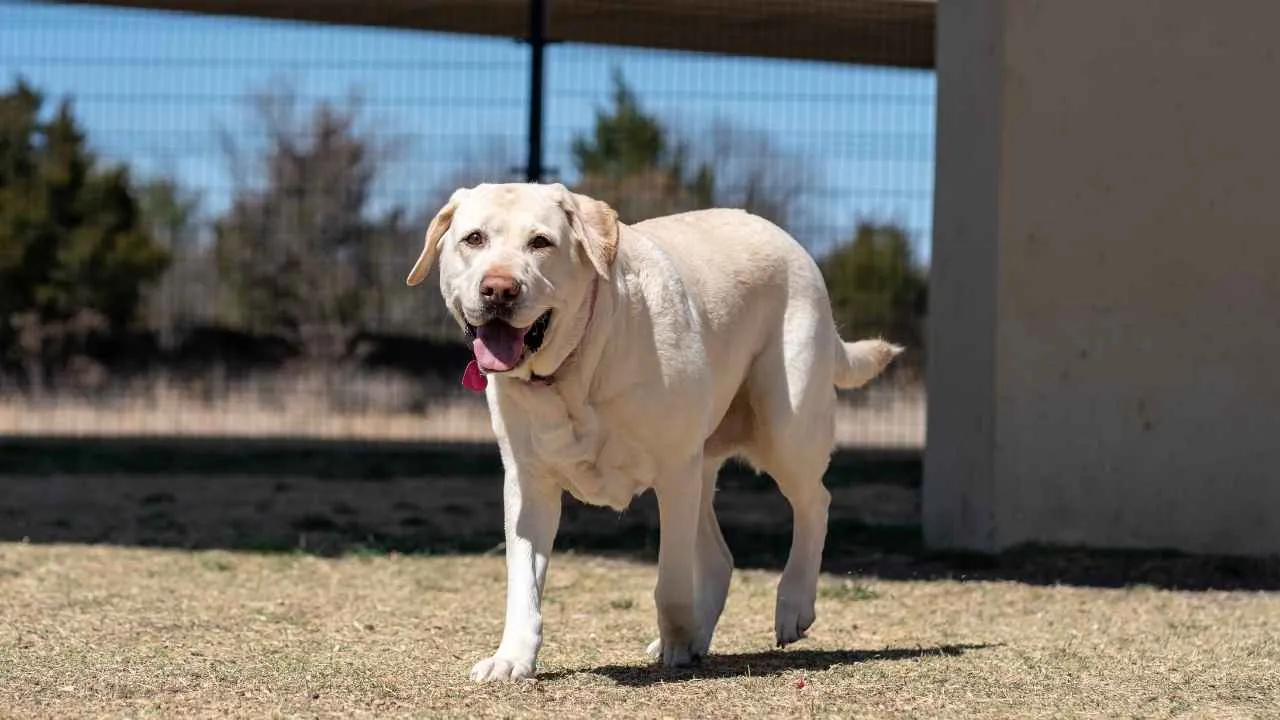
If you’re choosing your first dog, Labrador Retrievers can make the learning curve much easier. Originally bred as working and hunting dogs, they were expected to retrieve birds from cold water and keep working through long days.
This gave them an energetic, determined, and highly trainable nature. They are eager to learn and enjoy having a job, which makes training more rewarding for new dog owners.
Why They’re Great for Beginners
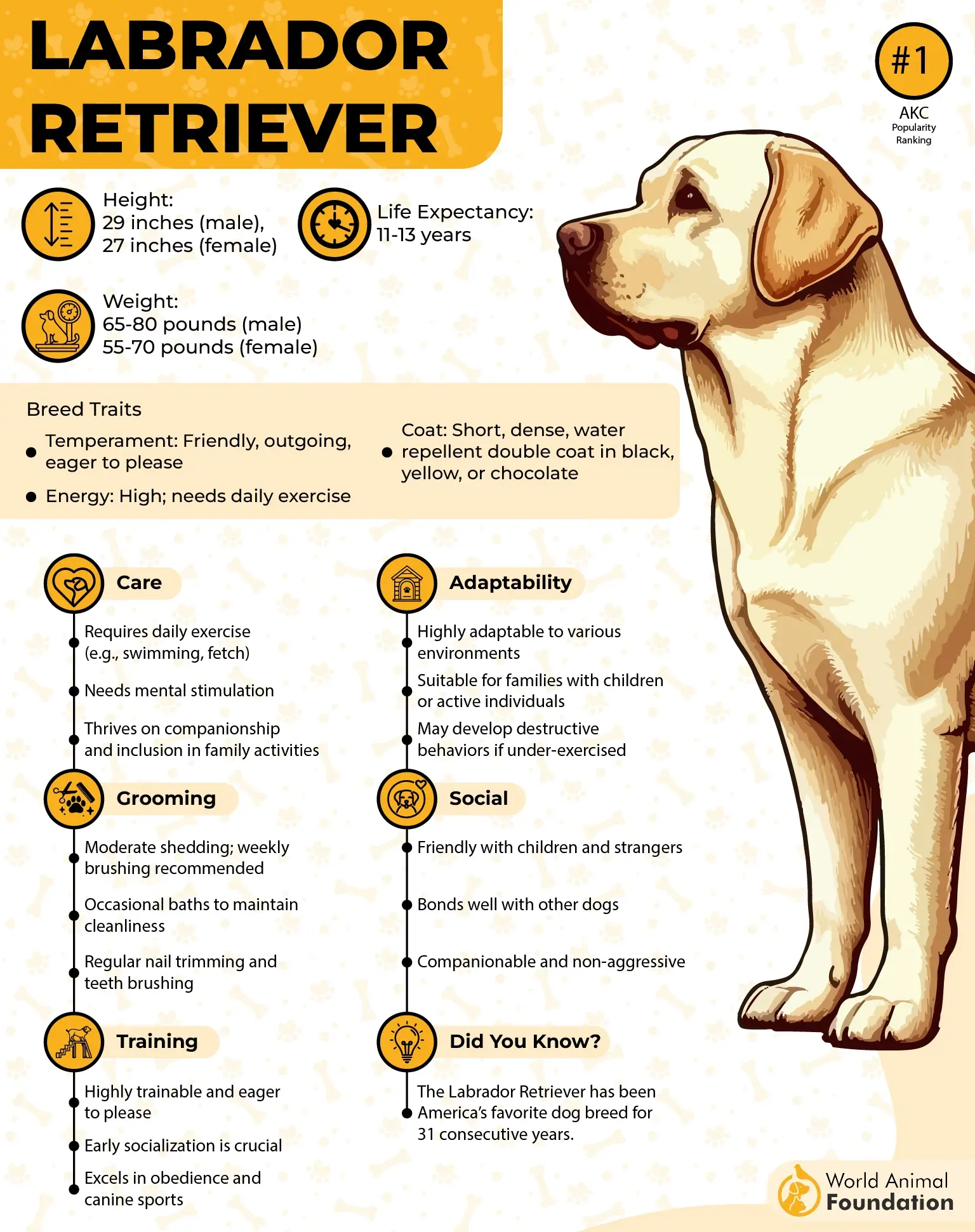
Labs are friendly, loyal, and easy-going, making them ideal companions for families. PetMD says they usually get along well with children, other dogs, and other pets, especially when socialized from a young age.
Their intelligence and willingness to follow commands also make them easier for beginners to train.
Labs are commonly trained as guide dogs, therapy animals, and service dogs, and they can also work in detection, tracking, water rescue, and search-and-rescue roles.
Exercise and Training Needs
Labradors are active dogs, so beginners should be ready to provide plenty of daily exercise and mental stimulation. They enjoy swimming, hiking, retrieving, and other outdoor activities.
Without enough activity, they can become bored and destructive, leading to chewing, digging, or excessive barking. Young Labs can also be strong-willed and overly enthusiastic, so early obedience training is important.
2. Golden Retriever
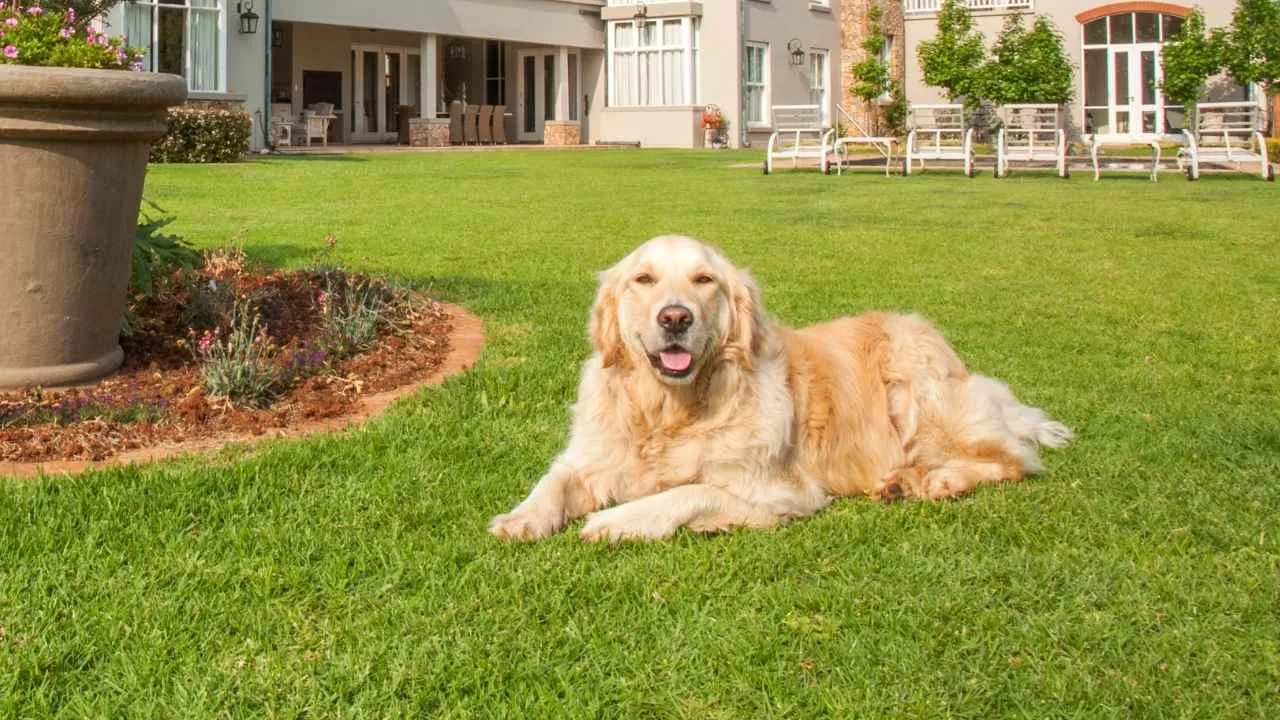
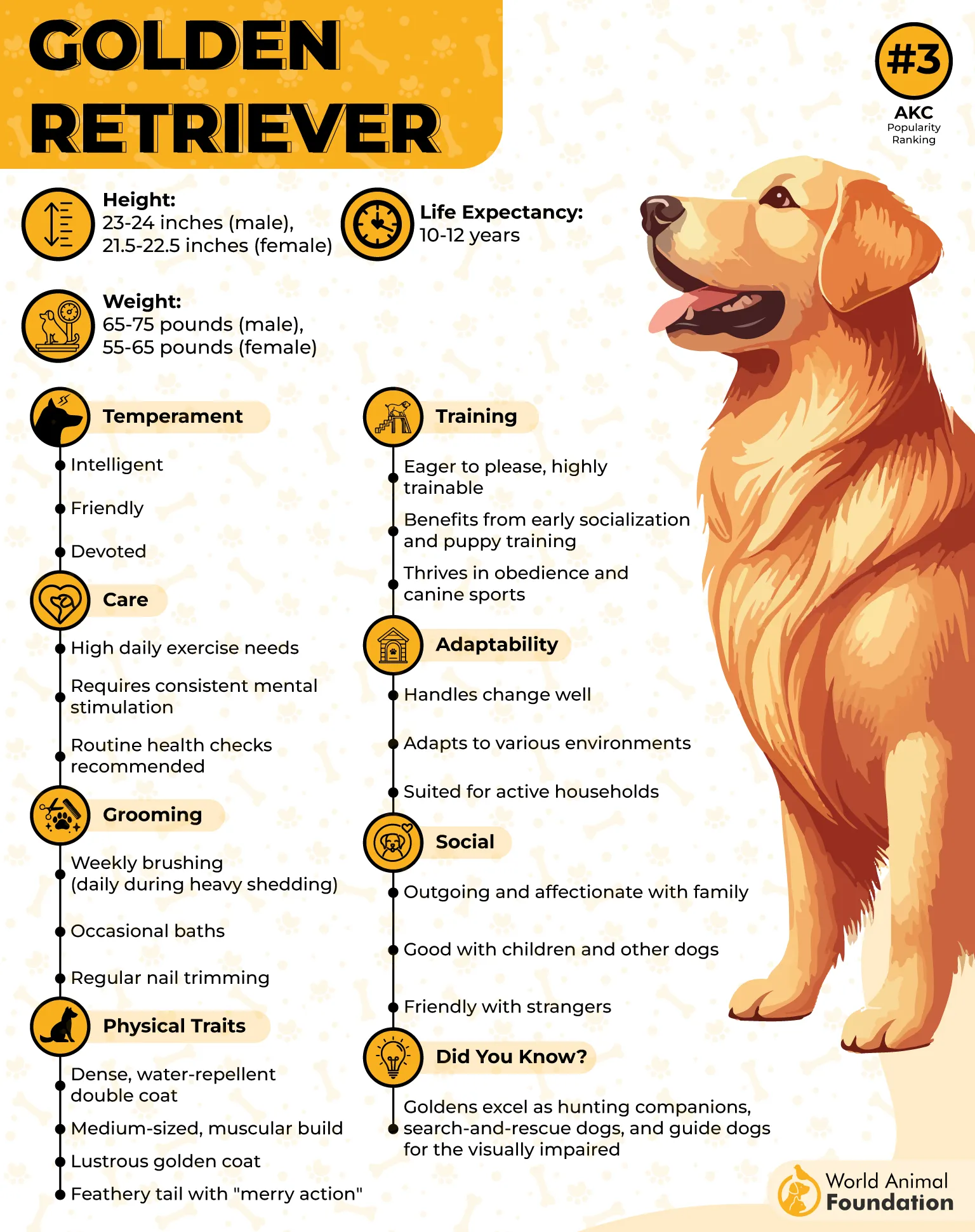
Golden Retrievers can be an excellent choice for first-time owners. They are intelligent, loyal, affectionate, and eager to please, which makes training easier for beginners.
Originally bred to retrieve birds on land and in water, they enjoy having activities to focus on but can also settle down when it is time to relax. Their playful and loving nature makes them especially suited to family homes.
Why They’re Great for Beginners
Goldens are generally friendly with people, children, dogs, and other pets when properly socialized. They are quick learners and are often trained as guide, therapy, and search-and-rescue dogs.
Puppies can be easily distracted during training and may also be mouthy while teething, so early positive training is important. With patience and consistency, beginners can instill good habits in them from an early age.
Exercise and Grooming Needs
Golden Retrievers have moderate energy and enjoy walks, running, swimming, retrieving, and play. They need regular exercise but can relax once their activity needs are met.
Their thick double coat sheds heavily and can become matted, especially behind the ears and around the hind legs. Regular brushing is therefore important.
3. Cavalier King Charles Spaniel
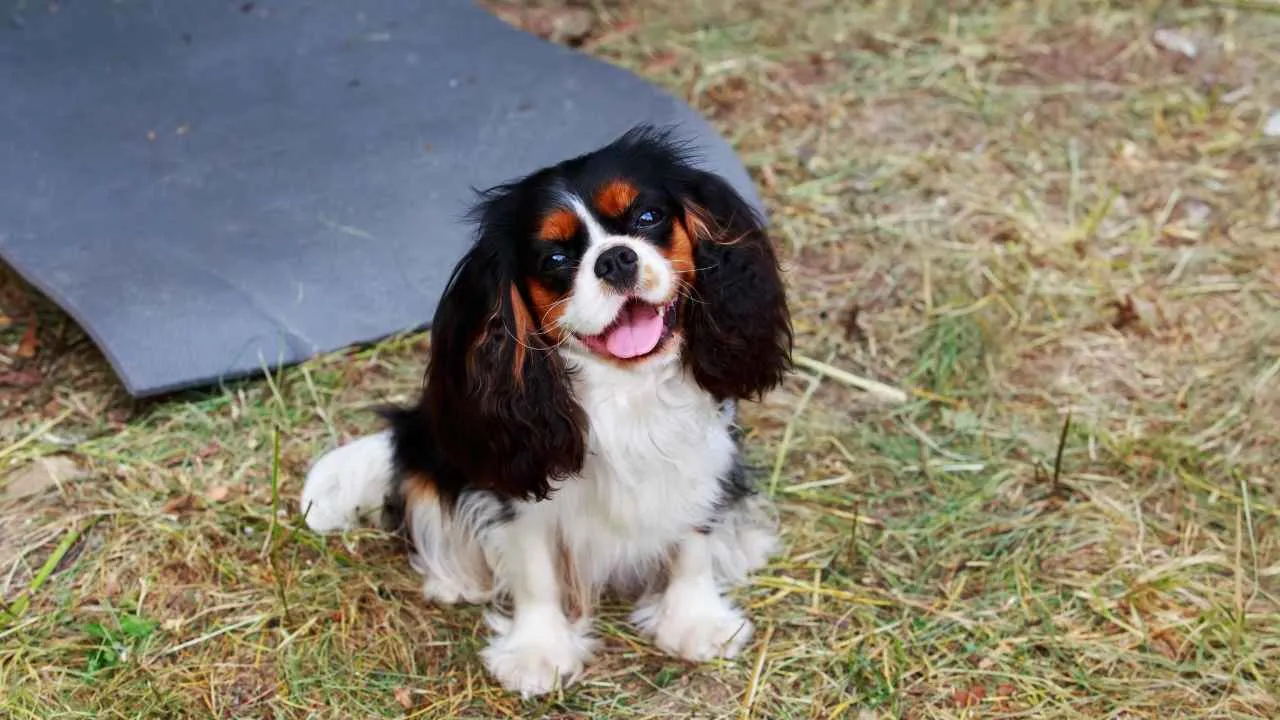
Bred as companion dogs, Cavalier King Charles Spaniels are gentle, cheerful, and happiest when they are close to their people.
They have a friendly nature with strangers and usually get along well with children, dogs, and other pets. Their moderate energy also makes them better suited for both active families and quieter homes.
Why They’re Great for Beginners
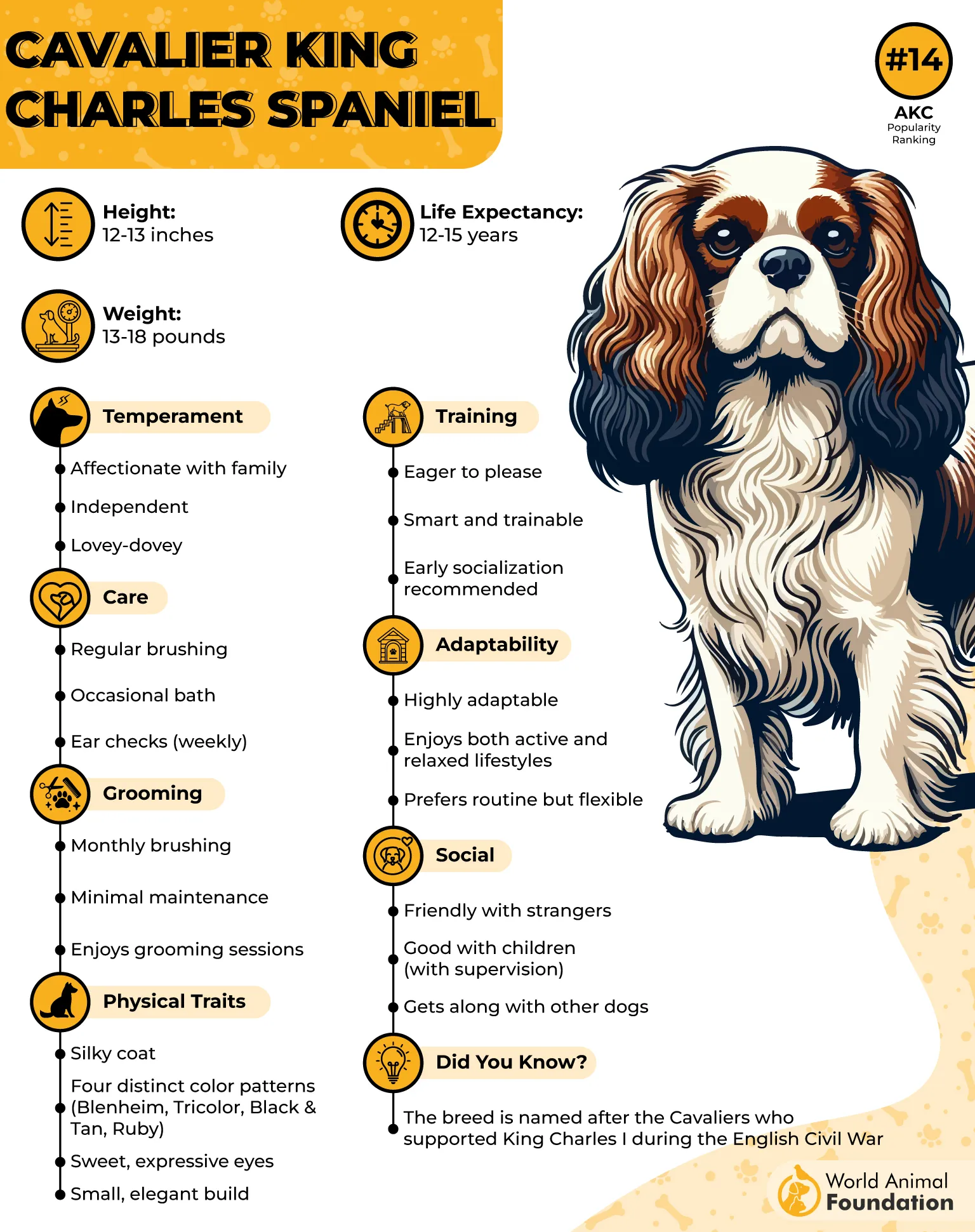
Cavaliers are intelligent, eager to please, and generally easy to train. They respond well to short, fun training sessions and positive reinforcement. Early socialization helps them become confident in new situations.
Their calm and affectionate nature makes them manageable for first-time owners, while their playful side gives families plenty of opportunities for bonding and fun.
Exercise and Care Needs
Cavaliers have moderate exercise needs and usually do well with two 20- to 30-minute walks each day, along with some playtime and mental stimulation. Once their needs are met, they are happy to relax with their families.
Their long, smooth coat does not shed excessively, but regular brushing helps keep it healthy and manageable. They do need plenty of human company and should not be left alone for long periods.
4. Poodle
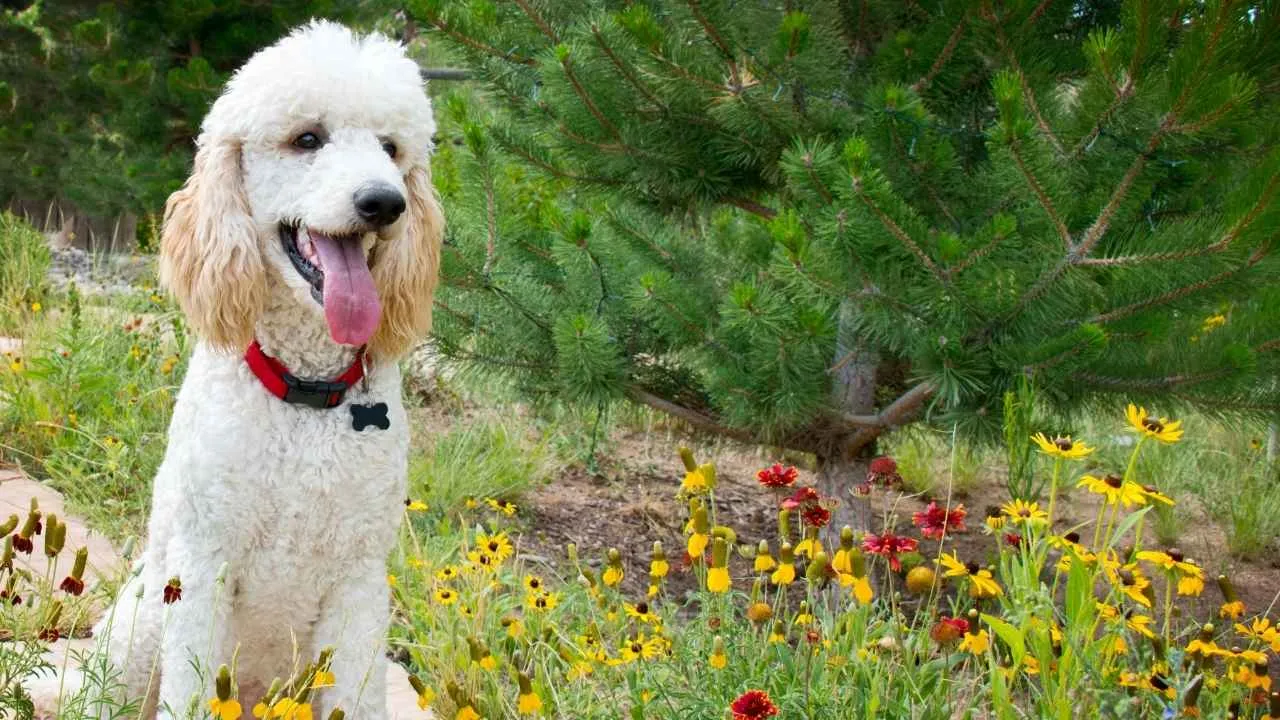
For beginners, Poodles offer a great mix of intelligence, affection, and adaptability. They come in Standard, Miniature, and Toy varieties, but all are known for being eager to learn and willing to please.
Originally bred as water retrievers, these friendly breeds enjoy having a job and are excellent at learning complex commands. Their intelligence also makes them successful in obedience, agility, and service work.
Why They’re Great for Beginners
Poodles are playful, friendly, and usually happy to spend time with their families. They can get along well with children and other pets when properly socialized.
Their eagerness to please makes training easier, but early socialization is important, especially for smaller Poodles that may be wary of unfamiliar people or dogs. According to Hill’s Pet, they can also become protective or develop nuisance barking if ignored or left alone for too long.
Exercise and Grooming Needs
Poodles are active dogs that need daily exercise, training, and mental stimulation. Toy and Miniature Poodles tend to be more energetic than Standards, but all varieties benefit from regular activity. Their curly coats require daily grooming, along with regular professional clipping and shaping.
5. Shih Tzu
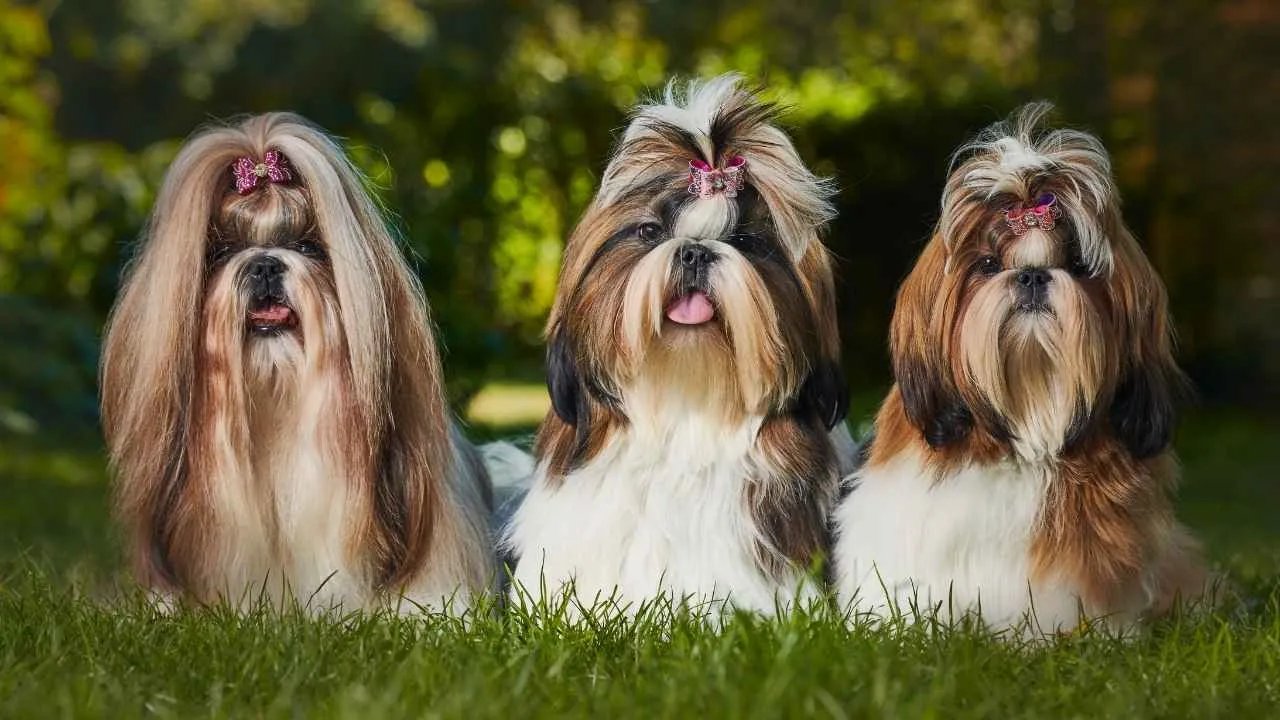
If you want a small companion that loves being part of the family, Shih Tzus can be a great option for beginners. Bred primarily as companion dogs, they are outgoing, playful, and affectionate.
They enjoy meeting people and usually get along well with other dogs and pets. They are just as happy joining you for a walk as they are curling up beside you afterward.
Why They’re Great for Beginners
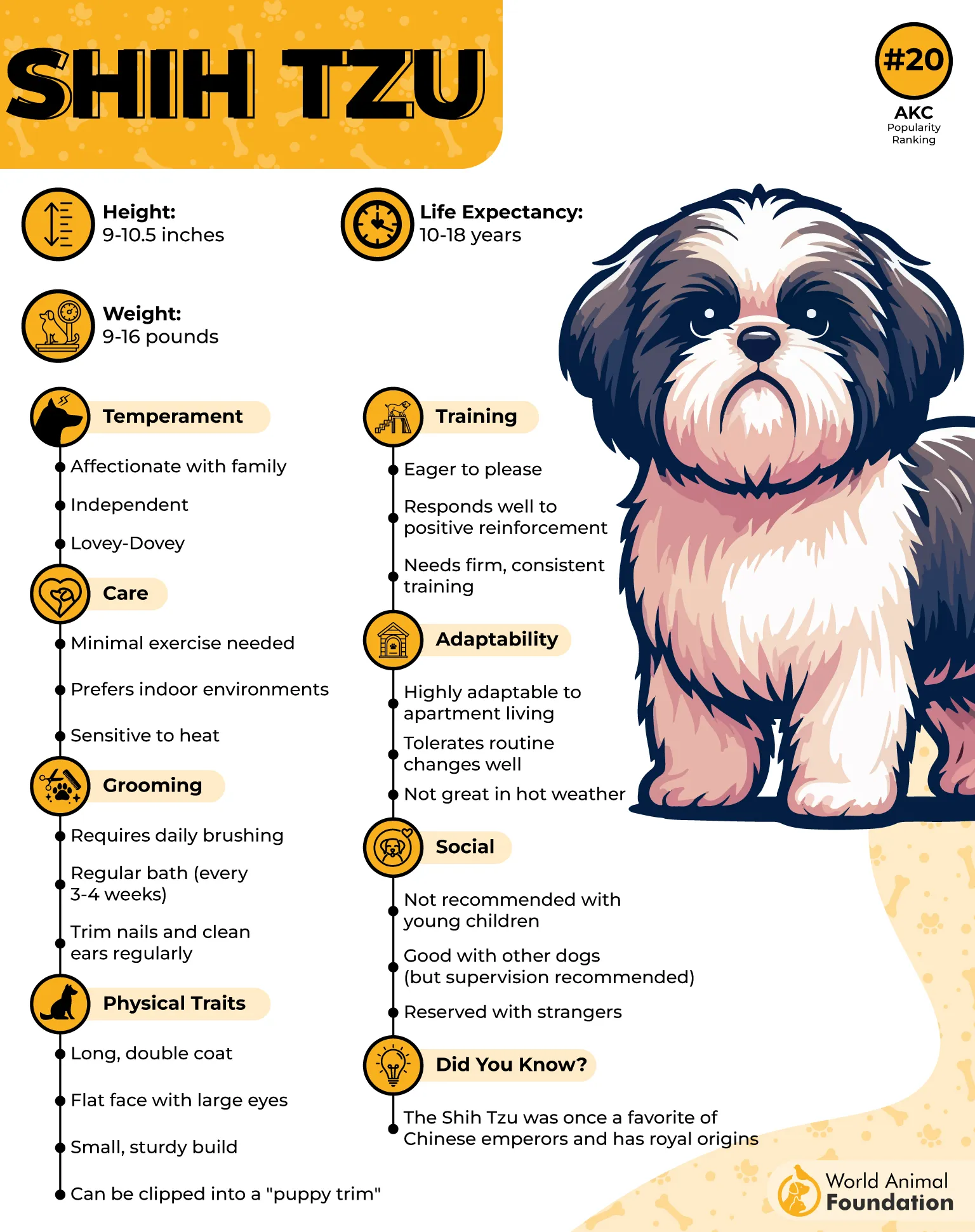
Shih Tzus have a friendly, nonaggressive nature and can fit well into many homes. They can be good with gentle older children and seniors, although their small size means they need careful handling.
They are intelligent and can learn quickly, but they may be slow to obey when they are not interested. Early socialization helps prevent problems such as excessive barking or digging. Most importantly, they prefer company and should not be left alone for long periods.
Exercise and Grooming Needs
Shih Tzus have moderate exercise needs and are often satisfied with a 30-minute walk and some playtime at home.
Their long coat is low-shedding but needs regular grooming to stay healthy and manageable. Because of their facial structure, a harness is generally a better choice than attaching a leash to their collar.
6. Bichon Frise
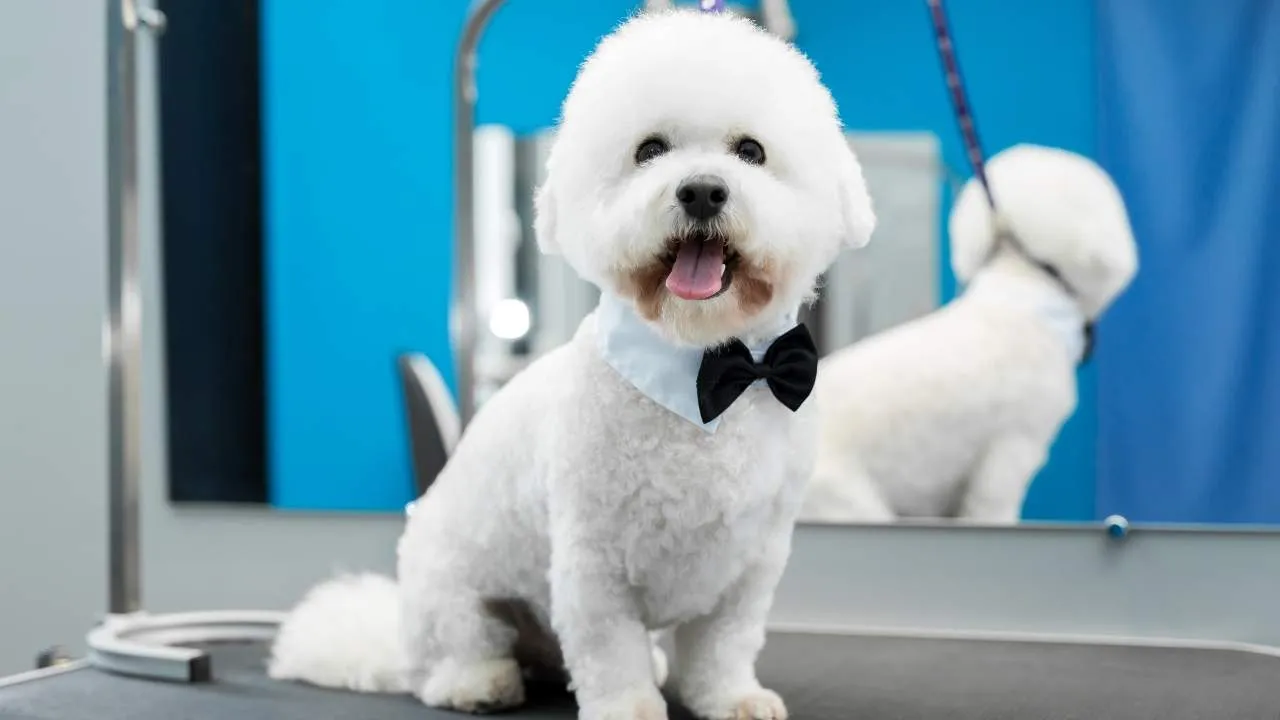
Bichon Frises are cheerful dogs that love people and usually get along well with children, other dogs, and pets.
They enjoy playing, learning tricks, and spending time with their families. Once their energy is used up, they are happy to relax on the couch, making them adaptable to many homes, including apartments.
Why They’re Great for Beginners
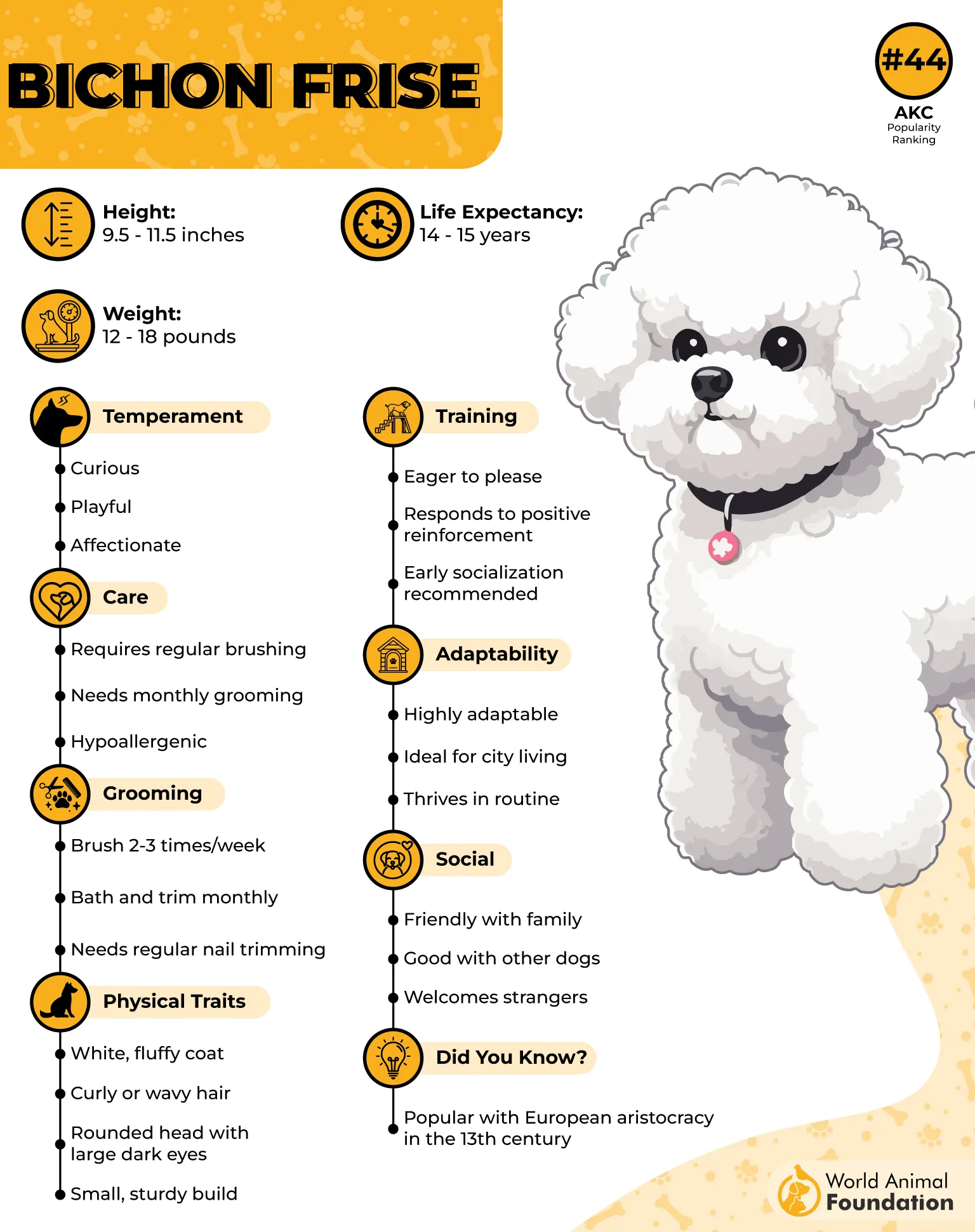
Bichons are eager to please and generally easy to train, which can make basic training less intimidating for first-time owners. Early socialization helps them become confident and well-mannered around different people and animals.
They may bark when they hear unfamiliar sounds and can become overly excited, but consistent training can help. They also love human company and should not be left alone for long periods.
Exercise and Grooming Needs
Bichon Frises are playful and need regular activity, but their exercise needs can often be met through play and short walks.
Their low-shedding coat can be a good fit for some people with allergies, although no dog is completely hypoallergenic. Their coat does require daily brushing, regular baths, and professional grooming.
7. Pug
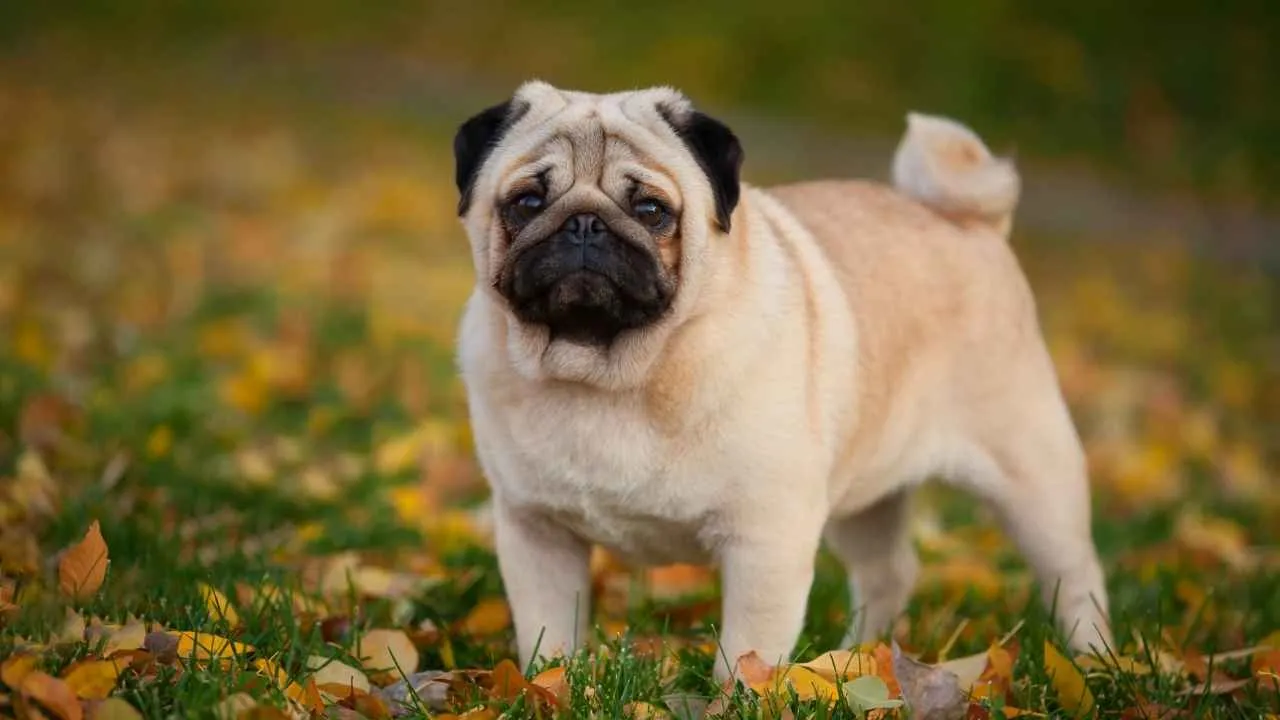
Pugs are friendly, playful, and happiest when they are close to their people. They usually do well with children, other pets, and strangers when properly socialized.
Their fun-loving personalities and love of attention also make them entertaining family dogs.
Why They’re Great for Beginners
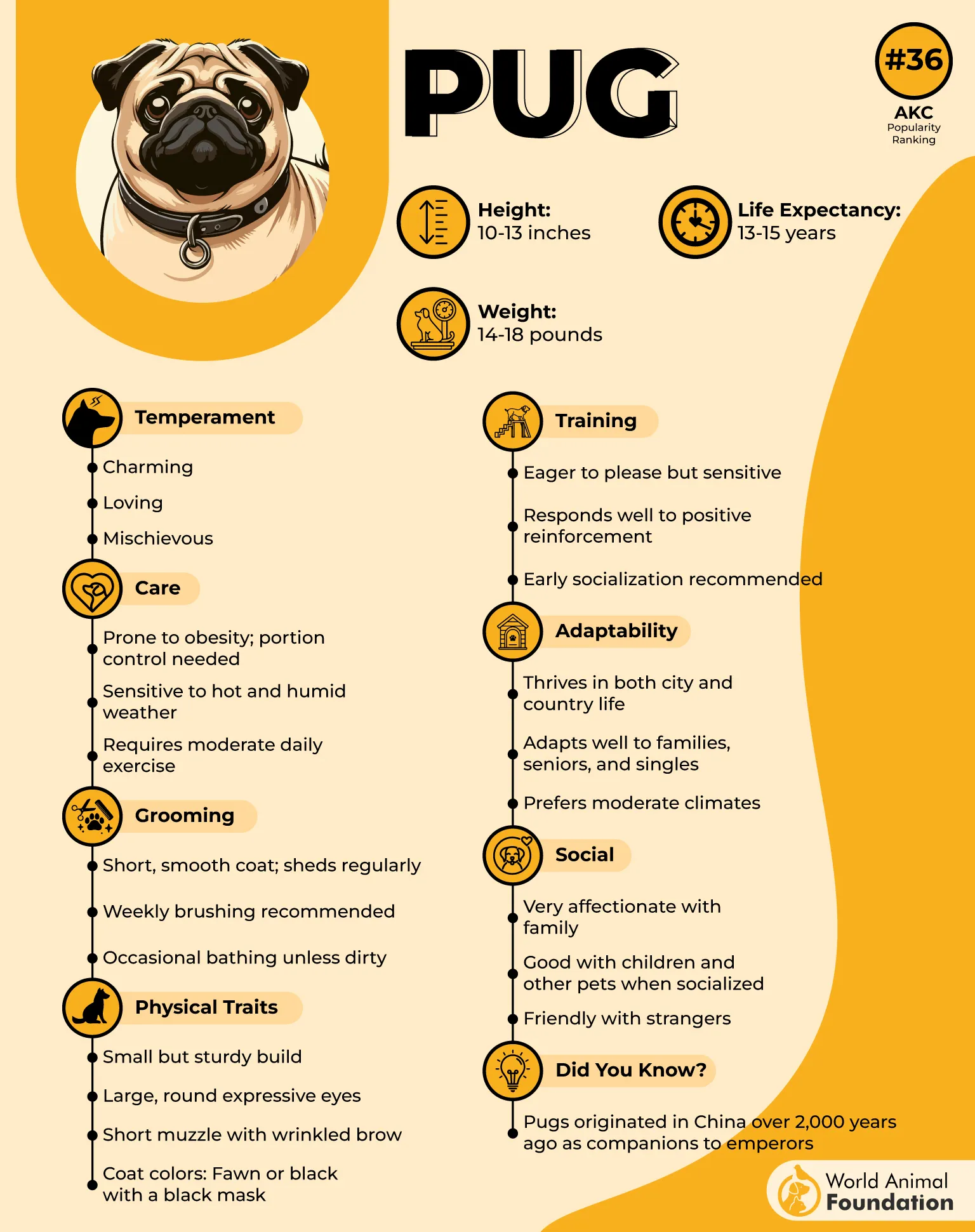
Pugs are generally calm, people-oriented dogs that enjoy being included in everyday activities. They do not need intense exercise, making them easier to manage for first-time owners.
They can be stubborn and learn more slowly than some breeds, but patience and positive training can help. They also tend to be easygoing with other pets, although children should be taught to handle their sensitive faces gently.
Exercise and Care Needs
Several short walks of around 15–20 minutes can provide enough exercise for most Pugs. They also enjoy relaxed play and plenty of couch time.
Because of their flat faces, they can struggle with heat and strenuous exercise, so outdoor activity should be kept short and controlled, as mentioned by Omlet.
Their short coat needs brushing a few times a week, with more during shedding seasons. Beginners should also keep their weight and food intake in check, clean their facial folds, and watch for breathing or overheating problems.
Conclusion
Choosing your first dog is about more than picking the cutest face. The best beginner-friendly dogs are those whose temperament, energy level, trainability, and care needs fit naturally into your daily life.
Whether you prefer an active companion or a calmer cuddle buddy, the right match can make those first steps into dog ownership much more enjoyable.
Before bringing a dog home, take an honest look at your time, routine, space, and ability to handle training and daily care. No breed is completely effortless, but a well-matched dog can make the learning process feel rewarding rather than overwhelming.
After all, the best first dog is not simply one that is easy to manage. It is one that feels like it truly belongs in your life.
