




![I will give you an article keyword and a dog breed name. Keyword: “[Eye‑Catching Great Pyrenees vs. Australian Shepherd Dog Breeds ]” Breed Name: “[Eye‑Catching Great Pyrenees vs. Australian Shepherd Dog Breeds ]” Based on the keyword and breed name, generate one ready-to-use Google Flow image prompt for a clickable Google Discover style dog feature image. The prompt must describe a high-quality, realistic, full-body [Eye‑Catching Great Pyrenees vs. Australian Shepherd Dog Breeds ] that clearly represents the keyword. Make sure the dog’s face is positioned toward the front of the frame, clearly visible, bright, expressive, and eye-catching, with shiny eyes, clear facial detail, and strong focus on the face. If the keyword suggests tiny, teacup, toy, pocket-sized, small, cute, or mini breeds, show the dog as visibly very small and adorable. If the keyword suggests large, giant, strong, rugged, guard, protector, mountain, brave, or powerful breeds, show the dog as visibly large, strong, and impressive. Match the dog’s gesture, pose, facial expression, and energy to the keyword, such as playful, cute, loyal, brave, protective, fearless, calm, fluffy, energetic, or strong. Choose a realistic background setting that directly fits the keyword. Do not use random greenery unless the keyword needs it. For example, use a cozy home for calm or toy breeds, a home gate or night street for guard dogs, mountains or campsites for adventure dogs, a soft indoor setting for cute tiny breeds, and a rugged outdoor trail for strong active breeds. Use slight depth of field, but keep the background realistic and visible, not overly blurred. Make sure the dog’s coat color contrasts clearly with the background so the dog stands out and does not blend into the scene. Keep the image natural, realistic, emotional, professional, and highly clickable. End the prompt with exactly: “vibrant, emotional, professional photography. Do not include any text, writing, logos, or captions in the image.” Output only the final image draw a black thin line in the centre of image](https://worldanimalfoundation.org/wp-content/uploads/2026/08/Eye‑Catching.webp)
Great Pyrenees and Australian Shepherds are both iconic working dogs famous for their thick double coats, high intelligence, and protective instincts. But these fluffy dogs actually differ a lot in their temperaments.
One is an independent, low-gear guardian that prefers to stay calm, while the other is a high-speed and focused athlete that needs constant motion or a job to do.
Great Pyrenees dogs were developed in the Pyrenees Mountains. Australian Shepherds, however, descended from herding dogs that were bred in the same region. This means the two breeds may share some ancestry. The history of the Australian Shepherd is still unclear, though.
Despite its name, the breed was actually developed in the United States, not Australia.
We will discuss the differences between Great Pyrenees and Australian Shepherd in this guide. You will learn how they differ in their origin, temperament, size, build, training, and multiple other factors.
So, if you are wondering which one is best to get, then read this guide because they were bred for different purposes.
Eye‑Catching Great Pyrenees vs. Australian Shepherd Dog Breeds
Origins, Background & Purpose
Great Pyrenees were bred in the Pyrenees Mountains between France and Spain as livestock guardians. Their primary role was independent defense and protecting their herd from predators. King Louis XIV named them the ‘Royal Dog of France’ in 1675.
In comparison, Australian Shepherds were developed in the United States, despite their name. They were not developed in Australia. The breed is believed to have descended from herding dogs brought by Basque shepherds who migrated to Australia and later to the United States.
They crossed them with local Border Collies, and then they were brought back to America in shipments. So people assumed they were bred in the place where the ship came from, and Basque dogs are Australian. However, they were bred as herding and stock dogs to manage the livestock.
Size, Weight & Physical Build
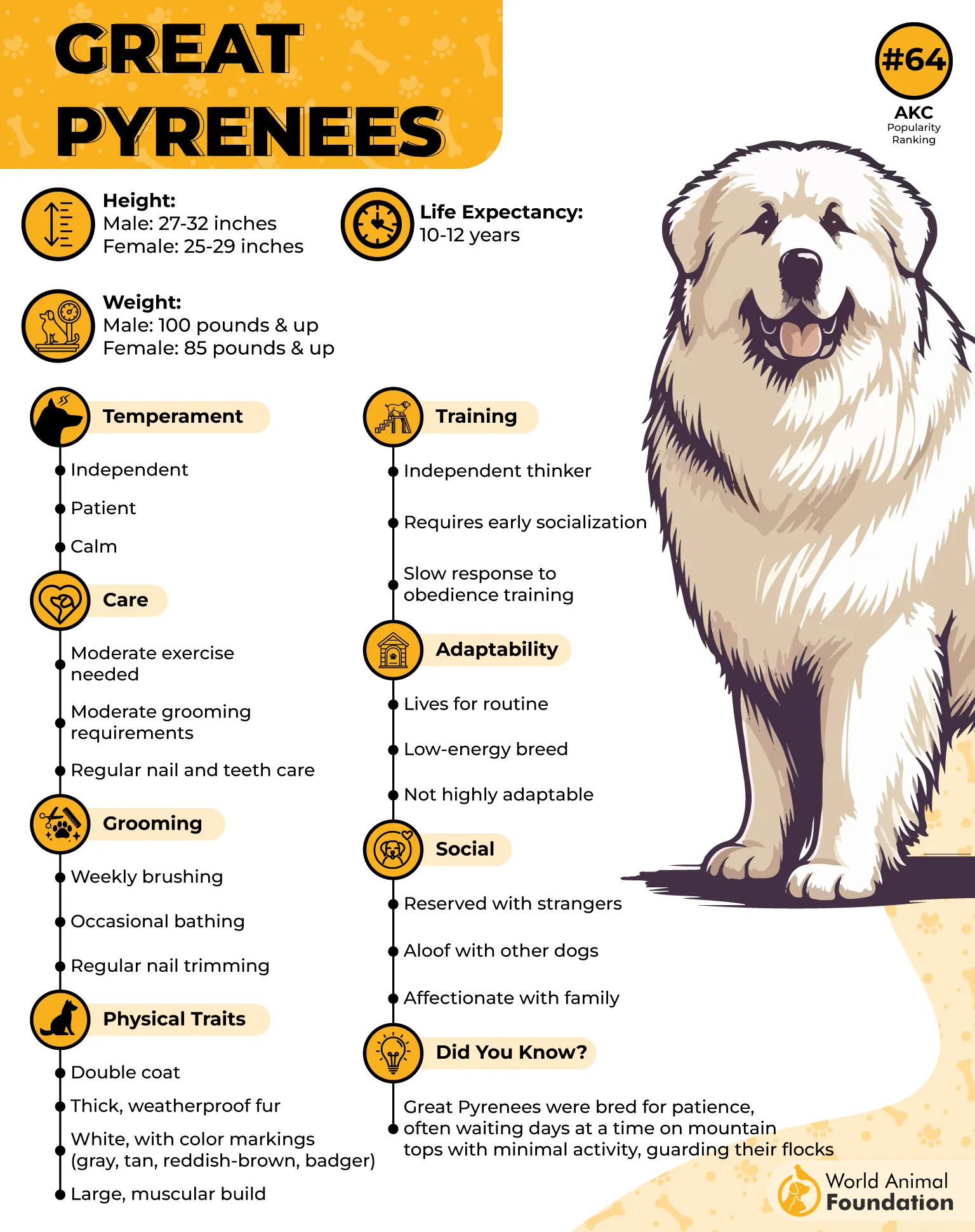
Great Pyrenees weigh around 100-160+ lbs with 27-32 inches, while females are 25-29 inches tall with 85-115 lbs. These giant dogs have broad heads, heavy bone structure, and deep chests. They also have unique double dewclaws on their hind legs.
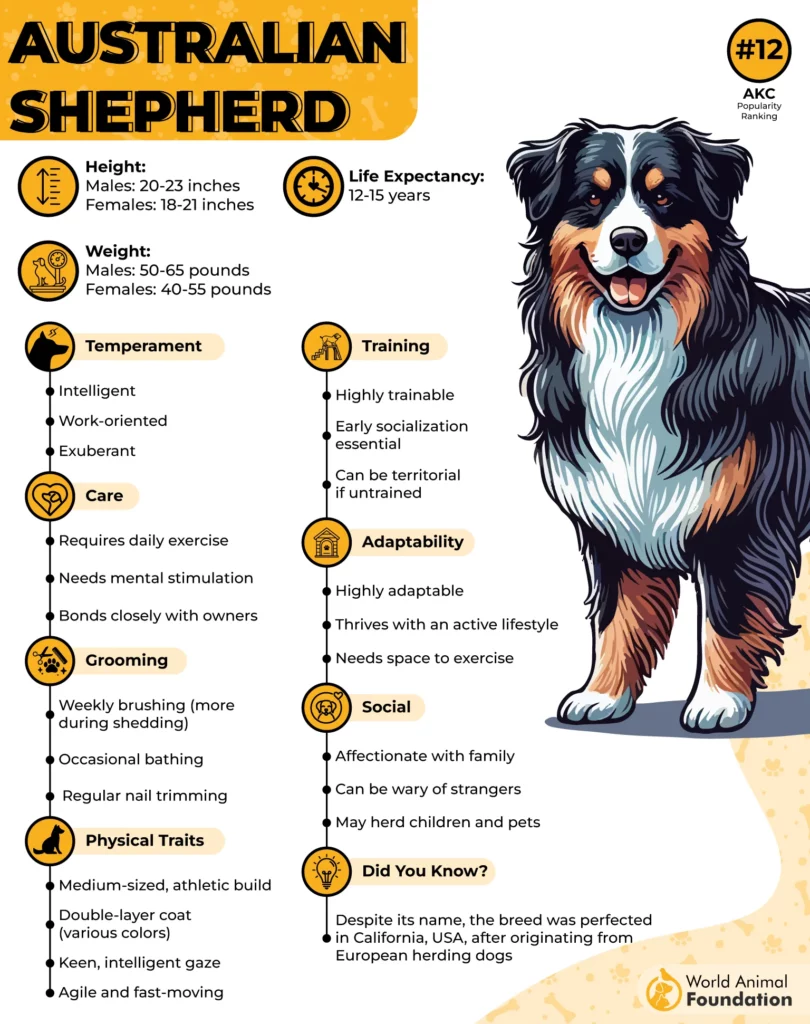
In contrast, the Australian Shepherds are 20-23 inches tall with 50-65 lbs, and females weigh around 40-55 lbs with 18-21 inches height. These medium-sized dogs have a compact, long-to-tall proportion, a level back, and well-aligned shoulders.
Aussies actually have muscle mass rather than heavy bulk. Great Pyrenees also have powerful legs and a muscular neck that give them maximum stability when they stand on the ground. So both of these dogs differ, as ASD have a lighter frame compared to GP.
Coat Types, Grooming & Maintenance
Great Pyrenees have a dense, weather-resistant double coat that protects them from a harsh environment. However, they do shed heavily throughout the year and also blow out their coat twice a season (spring and fall).
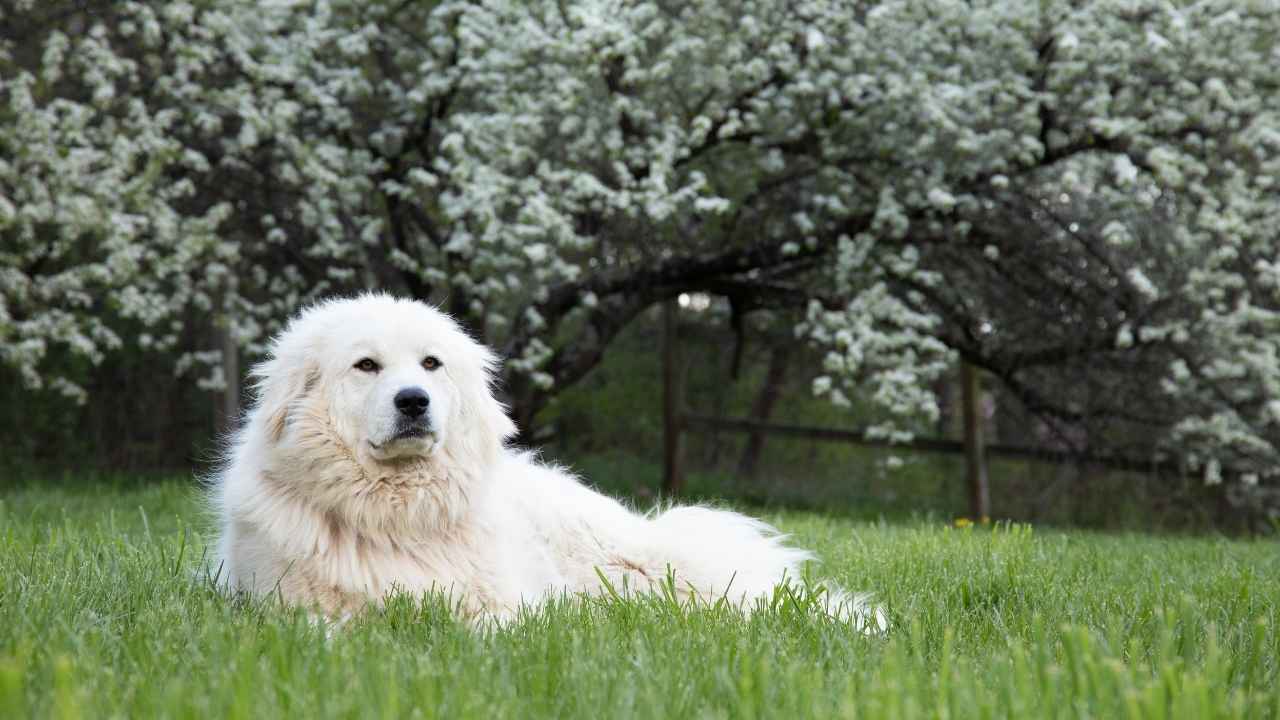
So you have to brush them almost weekly to manage shedding. Their brushing session take around 30 minutes, as per GPCA, and require baths only after 6-8 weeks.
In comparison, Aussies have a medium-length double coat that sheds year-round with heavy seasonal sheds. These dogs also require brushing almost 2-3 times a week and baths every 4-6 weeks to manage shedding.
Both of these dogs are not ideal if you are an allergic sufferer or are not ready to see fur all over the place.
Temperament, Personality & Behavior
Great Pyrenees are vigilant and protective dogs that stay composed under pressure. They are highly independent because they were bred to guard flocks, so they think for themselves.
“Pyrenees are usually gentle and calm dog around poeple they love” as per PetMD.
So this is what makes them perfect family pets. In addition, these are super affectionate around children and wary of strangers. These dogs are more alert at night and also bark to keep threats away.
In contrast, the Aussies are hyper-focused and loyal dogs.
They are also known as Velcro dogs and often require a job to do. Aussies will always be looking toward you for the next command. Although they are highly protective, they also prefer being beside you rather than standing at a distance alone.
Trainability, Obedience & Independence
Training Pyrenees can be a little tricky due to their independent nature. However, they do understand commands quickly but obey them only when they see a purpose in it. So keep their training sessions short and fun.
Motivate them with treats and rewards and focus on early socialization. They are sensitive giants, so avoid harsh corrections and be gentle around them.
In contrast, Australian Shepherds are generally receptive to training and learn quickly, as noted by the AKC.
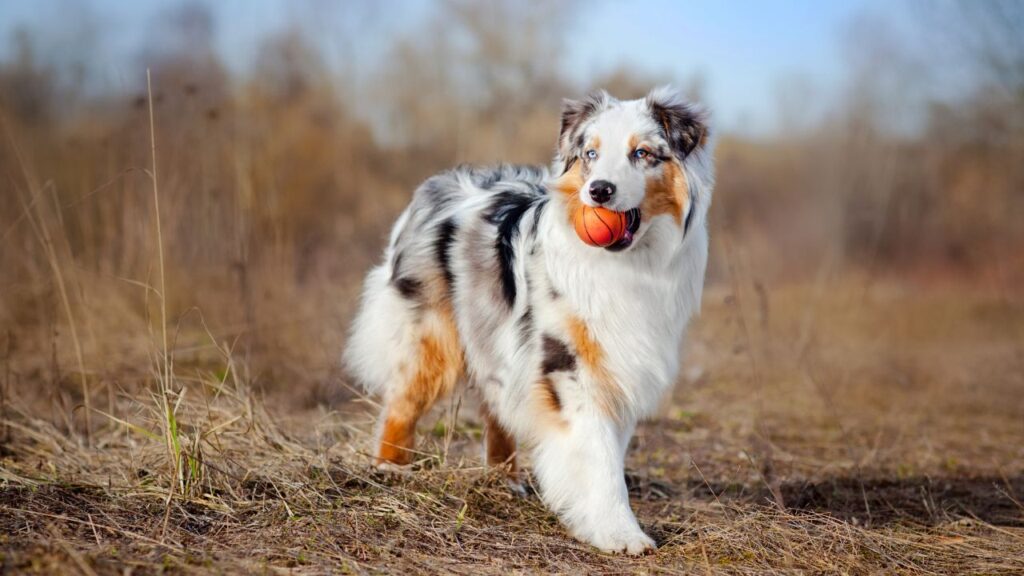
They are among the smartest breeds, so keep them engaged and use positive reinforcement to train them. Their eager-to-please nature makes training them relatively easier, but focus on early socialization to control their nipping habits.
Energy Levels & Activity Needs
Great Pyrenees are low-energy dogs with low to moderate exercise needs despite the massive size. They were bred to conserve energy and require around 30 to 60 minutes of daily activity per day. Pyrenees enjoy slow-paced walks and hikes in cold weather.
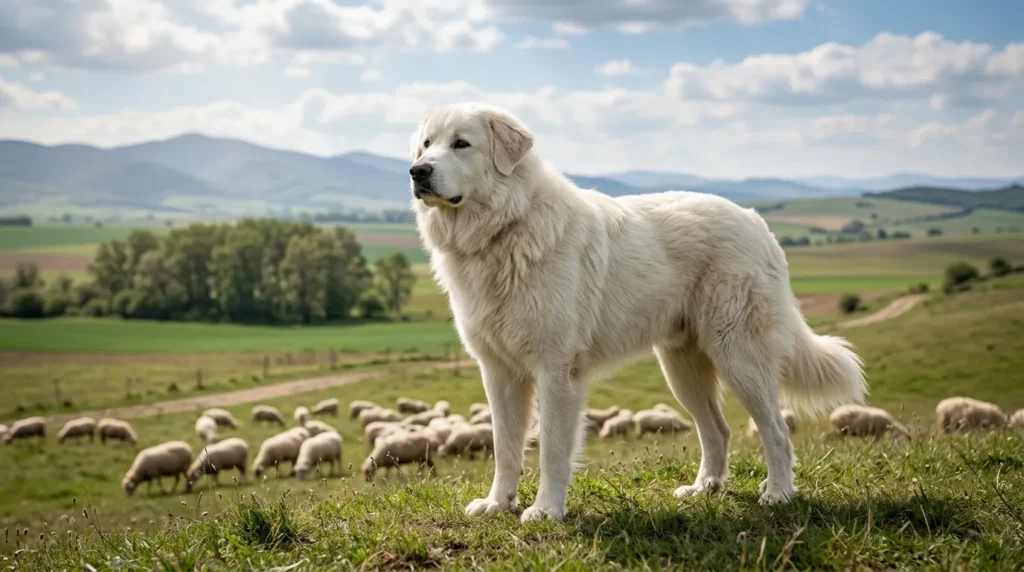
These big fluffy dogs enjoy their alone time. They are strong-willed dogs.
On the other hand, the Australian Shepherds have very high energy levels. They have high stamina, focus, and require intense exercise for mental stimulation.
Aussies require 1-2 hours of exercise, including running, walking, playing fetch, and interactive puzzle games in a fenced yard for physical and mental sharpness. They also excel in agility courses, flyballs and dock diving.
Health Concerns, Durability & Average Lifespan
Both Great Pyrenees and Australian Shepherds have their own specific health concerns and average lifespans. Pyrenees have an average life expectancy of 10-12 years compared to 12-15 years for Australian Shepherds.
GPs are likely to experience Gastric Dilation Volvulus (Bloat/ GDV), joint and bone disorders (elbow dysplasia or patellar luxation). They may also suffer from bone cancer, eye issues, NDG, or Addison’s disease.
In contrast, the Australian Shepherd is prone to eye problems, MDR1 gene mutation, epilepsy, joint issues, and cancer risks. Apart from this, they may also experience blindness and deafness at some point in life.
Working Roles, Primal Instincts & Traits
Great Pyrenees are livestock guardians, and their territorial and protective nature is their primary instinct. They are fearless, gentle, and tolerant, which is the sum of their traits. Great Pyrenees have a ‘Paw Habit’ where they use a single heavy paw to swat or reach out to grab their owners.
They also bluff to tell you that they are here.
In comparison, the Australian Shepherds are stock herding dogs. So they have herding, driving, nipping, and chasing instincts. They are quite workaholic and just like to stick to their owners.
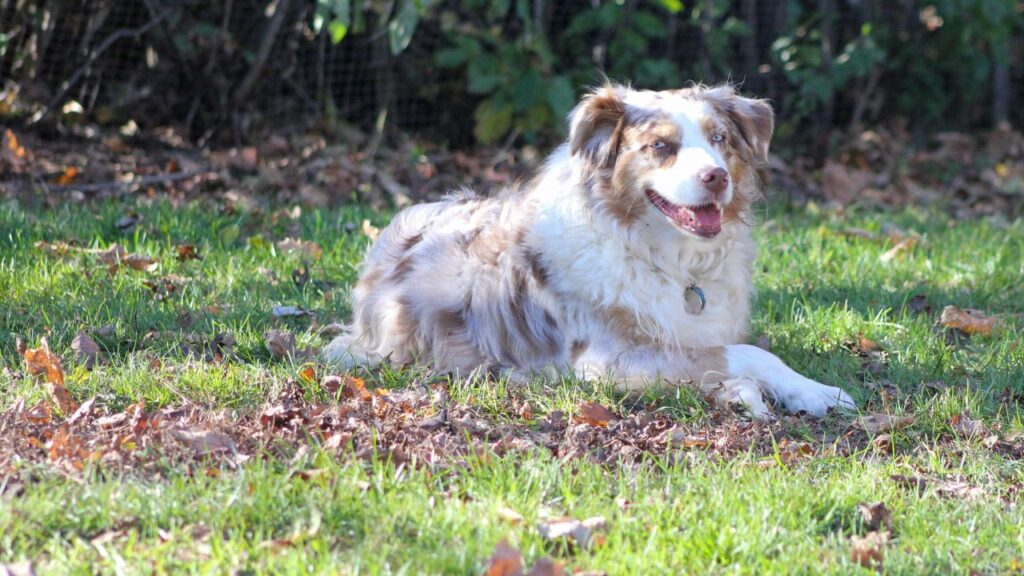
Apart from this, Aussies are highly responsive, quick to alert, and vocal only when excited or out of boredom. These smart dogs use their strong stare to deter intruders and also have a bummer lamb tendency where they shift from being a herding dog to being protective.
Owner Suitability & Lifestyle Compatibility
Great Pyrenees are perfect for calm and patient households when properly socialized and trained. They are perfect for families with children and who have a fenced yard. They also require experienced handlers. They are not recommended for apartments and urban living.
These dogs thrive in cold climates but can be prone to overheating in hot weather.
In contrast, Australian Shepherds require active families that can meet their high energy needs. They do well in homes with outdoor areas like where they have access to open space or running.
They also have a double coat and usually overheat in extreme summers. So make sure to provide them with fresh water, keep them in air-conditioned places, and take them for walks in the morning rather than in daytime to avoid sun exposure.
Conclusion
Great Pyrenees and Australian Shepherds are totally different when it comes to temperament, purpose, and energy levels. However, they do have similarities like they both shed and have a double coat. They both require experienced owners.
Make sure to read the differences before going with any of them. Choose a Great Pyrenees if you need a gentle guardian at home, but an Aussie is best for herding livestock.
