




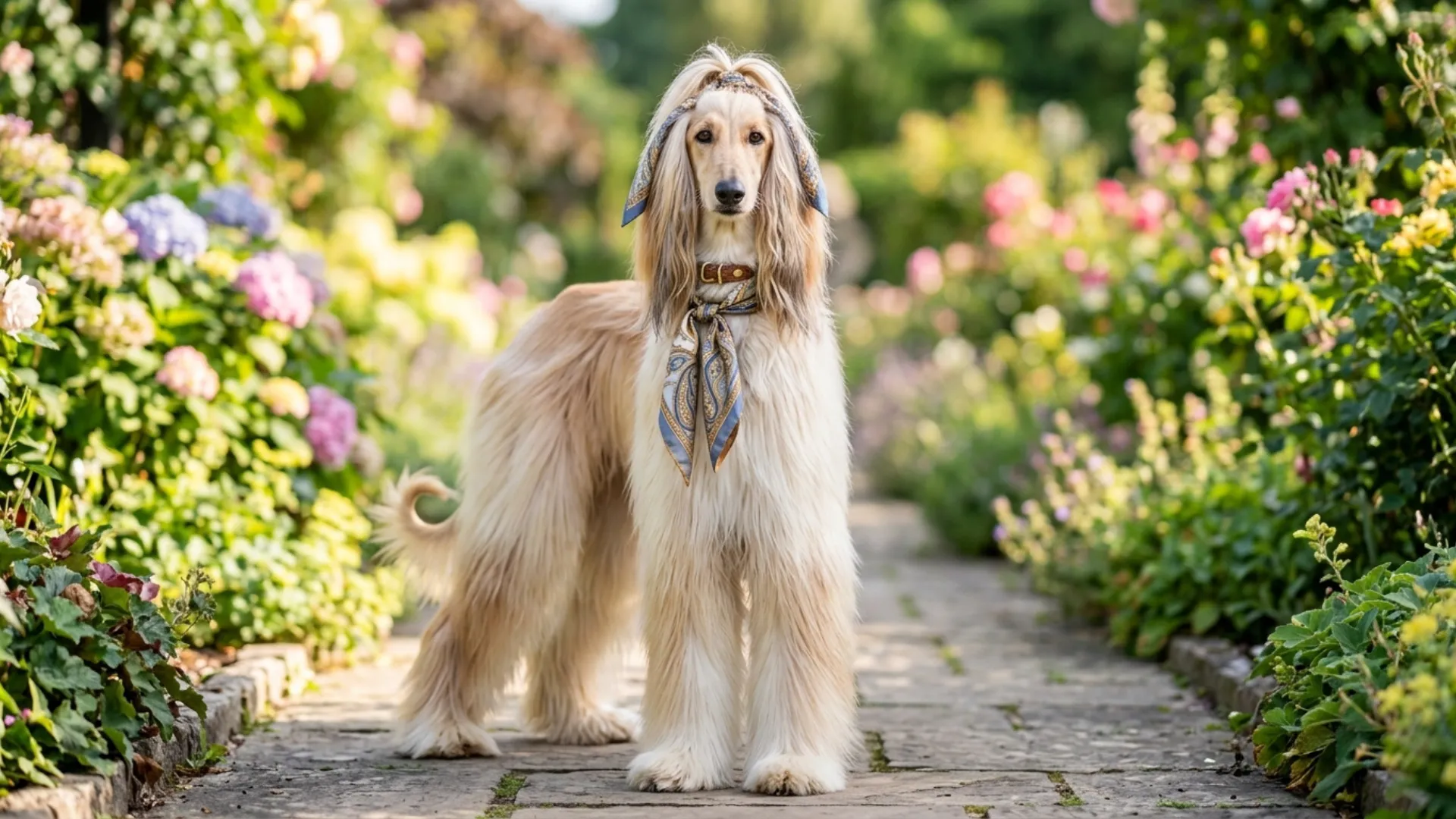
Some dogs enter a room quietly, while others arrive looking as though wind machines, professional lighting, and a full styling team followed them inside. Their dramatic coats, expressive faces, unusual markings, and confident movement can turn an ordinary walk into a spontaneous fashion show.
A dog’s appearance is rarely decorative by accident because coat texture, body shape, ear position, and tail carriage often developed around practical work. Thick double coats protected northern dogs from freezing weather, streamlined frames helped sighthounds chase game, and weather-resistant fur supported retrievers working around cold water.
Of course, gorgeous coats come with responsibilities that do not disappear once the photoshoot ends. Long-haired dogs need protection from mats, double-coated breeds shed seasonally, and even short-haired stars require brushing, nail care, ear checks, and sensible bathing.
The breeds below offer seven distinct styles, from aristocratic elegance to rugged ranch glamour.
Chic Dog Breeds With Unforgettable Looks
1. Afghan Hound
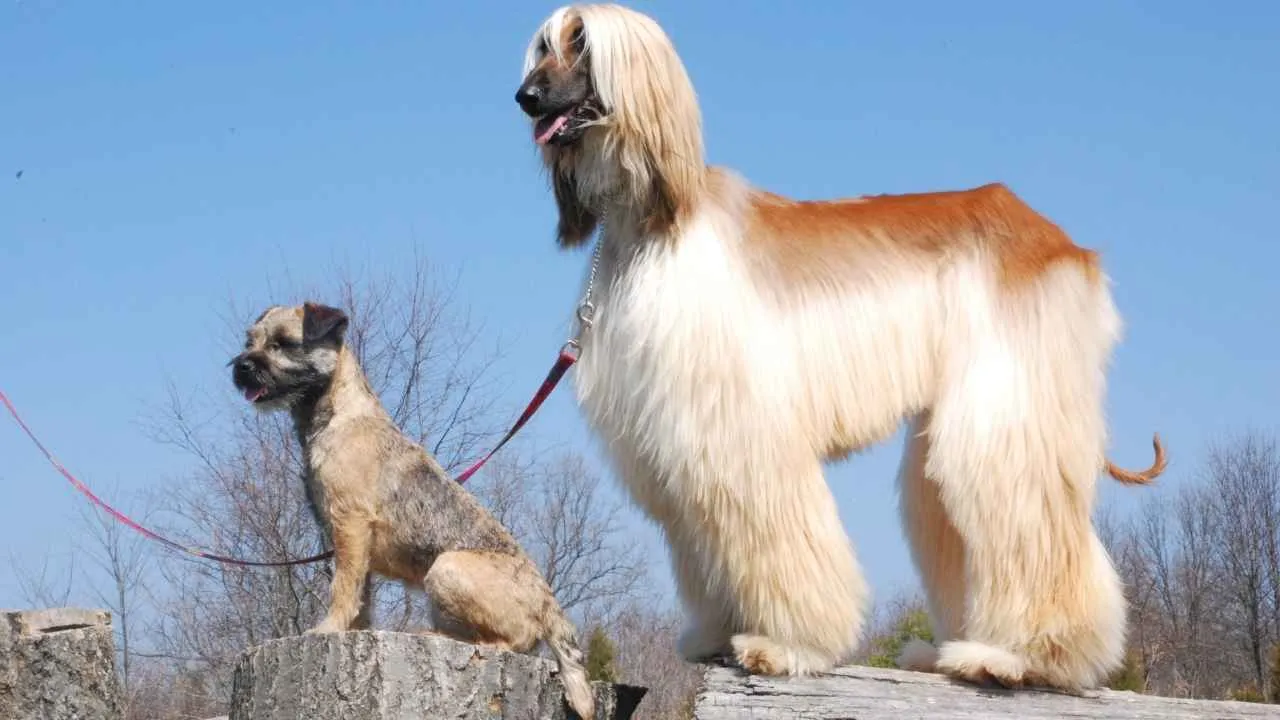
The Afghan Hound has one of the most instantly recognizable silhouettes in the dog world. Long legs, a narrow aerodynamic body, prominent hip bones, and an elevated head give this ancient sighthound an elegant outline shaped by demanding hunting work in Central Asia.
Its silky coat falls dramatically over the sides, legs, chest, and ears, creating movement with every step. A tousled topknot adds height around the head, while the distinctive saddle carries shorter hair across the back of a mature dog.
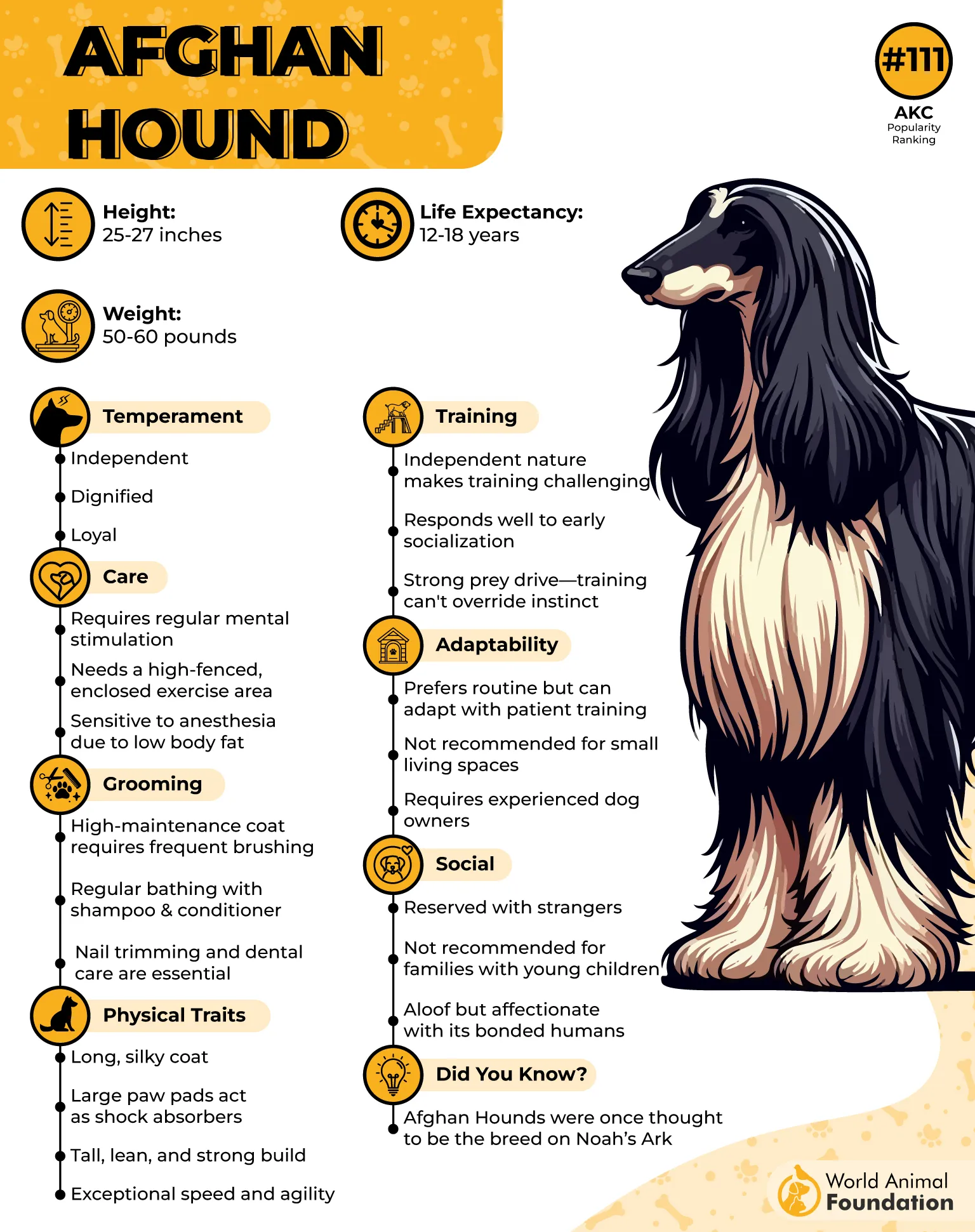
This beautiful dog breed’s face is equally memorable, as its long muzzle and dark, almond-shaped eyes create an aloof, thoughtful expression. These hounds, known to be some of the prettiest dog breeds out there with silky fur and bright eyes, are definitely worth having.
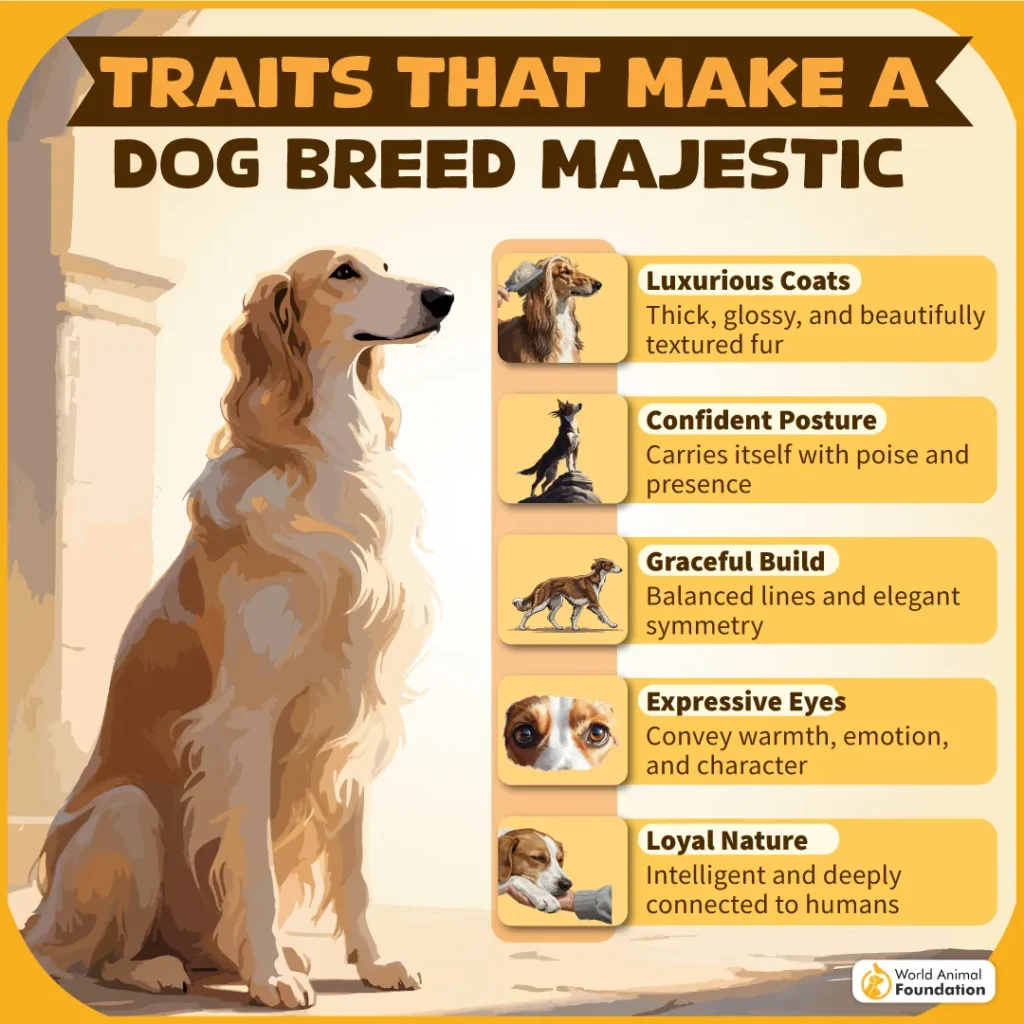
That supernatural-looking coat does not wake up flawless after rolling across a rug. These excellent family dogs require frequent bathing, careful brushing, and consistent coat maintenance, according to the American Kennel Club (AKC), to prevent tangles and keep their long hair flowing freely.
2. Siberian Husky
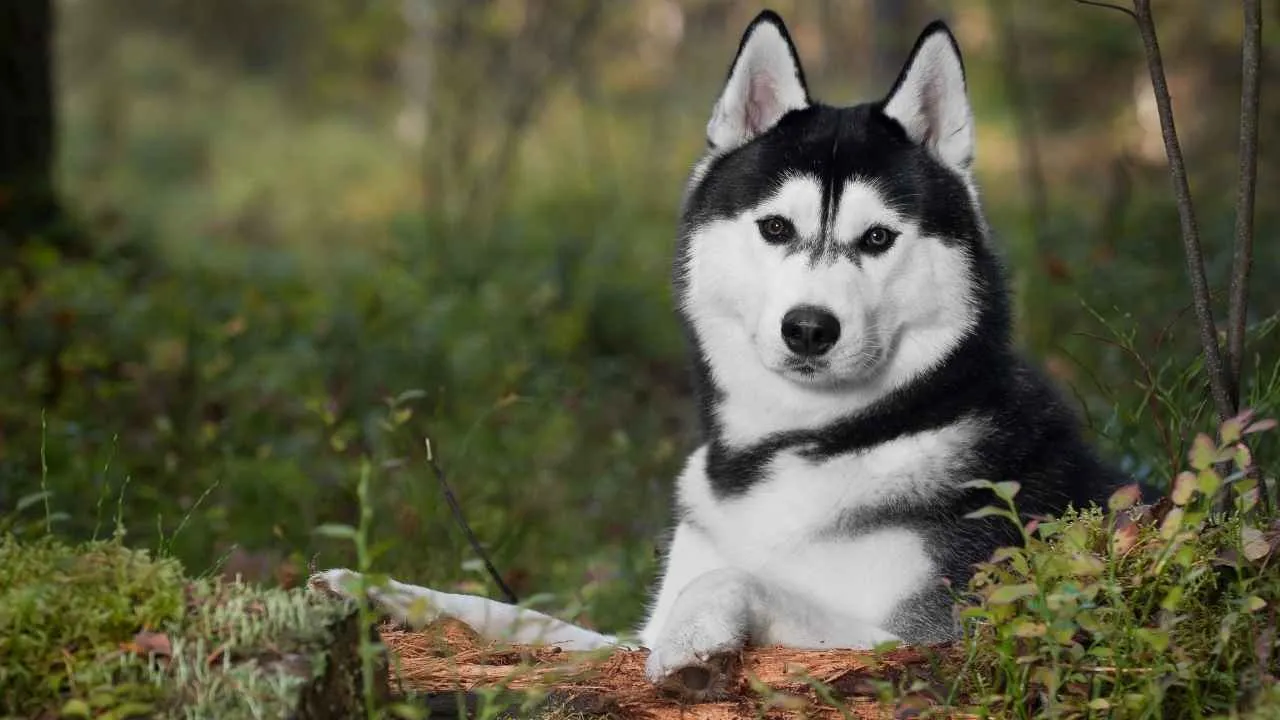
The Siberian Husky offers a completely different aesthetic built around symmetry, alertness, and northern athleticism. Their erect ears, wedge-shaped head, thick coat, and sickle-shaped tail immediately reveal the breed’s cold-climate heritage.
Coat possibilities include black and white, gray and white, red and white, sable and white, agouti and white, solid white, and several additional combinations. Facial markings may create bold masks, spectacles, caps, or almost perfectly symmetrical patterns around the eyes.
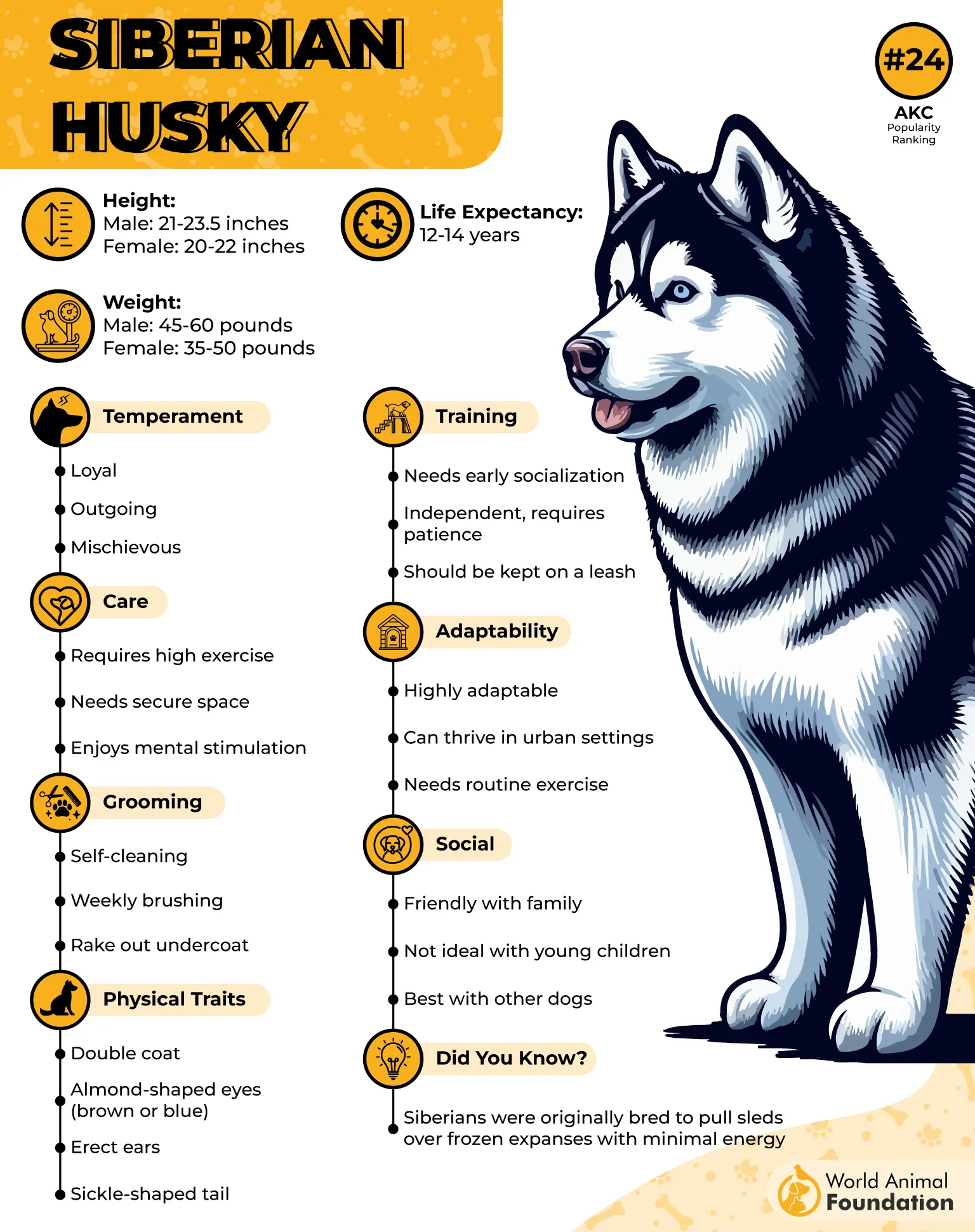
Then there are the eyes, which can transform an already striking face into something genuinely unforgettable. Huskies may have blue eyes, brown eyes, one of each, or different colours appearing within the same eye, and research has identified a breed-specific genetic association with blue eyes.
Their dense double coat gives the body a plush finish while preserving the clean lines an endurance athlete needs. Movement completes this large dog breed’s aesthetic because these dogs were developed to cover long, frozen distances while pulling light loads efficiently.
3. Samoyed
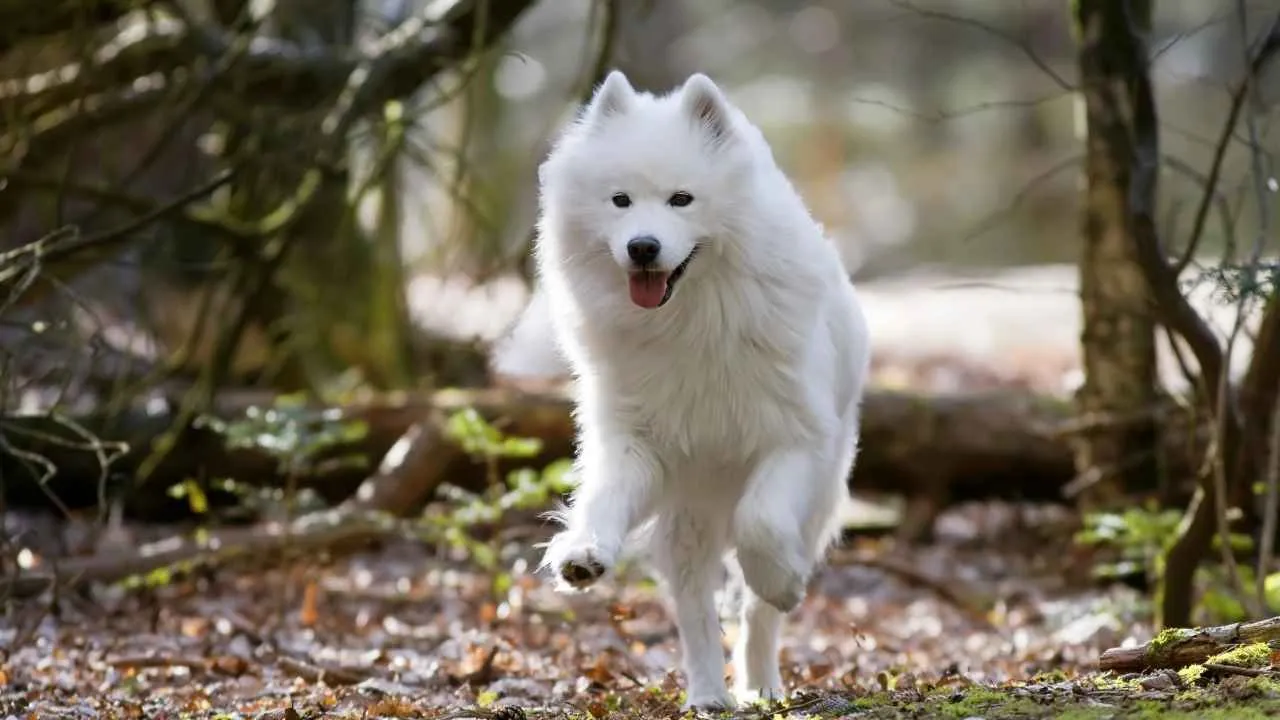
The Samoyed appears to have been sculpted from a cloud and then given a permanent reason to smile. The recognised coat colours include white, cream, biscuit, and white mixed with biscuit, although the luminous white look remains the breed’s visual signature.
That spectacular coat consists of a soft, thick, woolly underlayer beneath a harsher outer coat. Silver-tipped guard hairs can create an icy sheen, while the stand-off texture produces volume without hiding the dog’s substantial working structure.
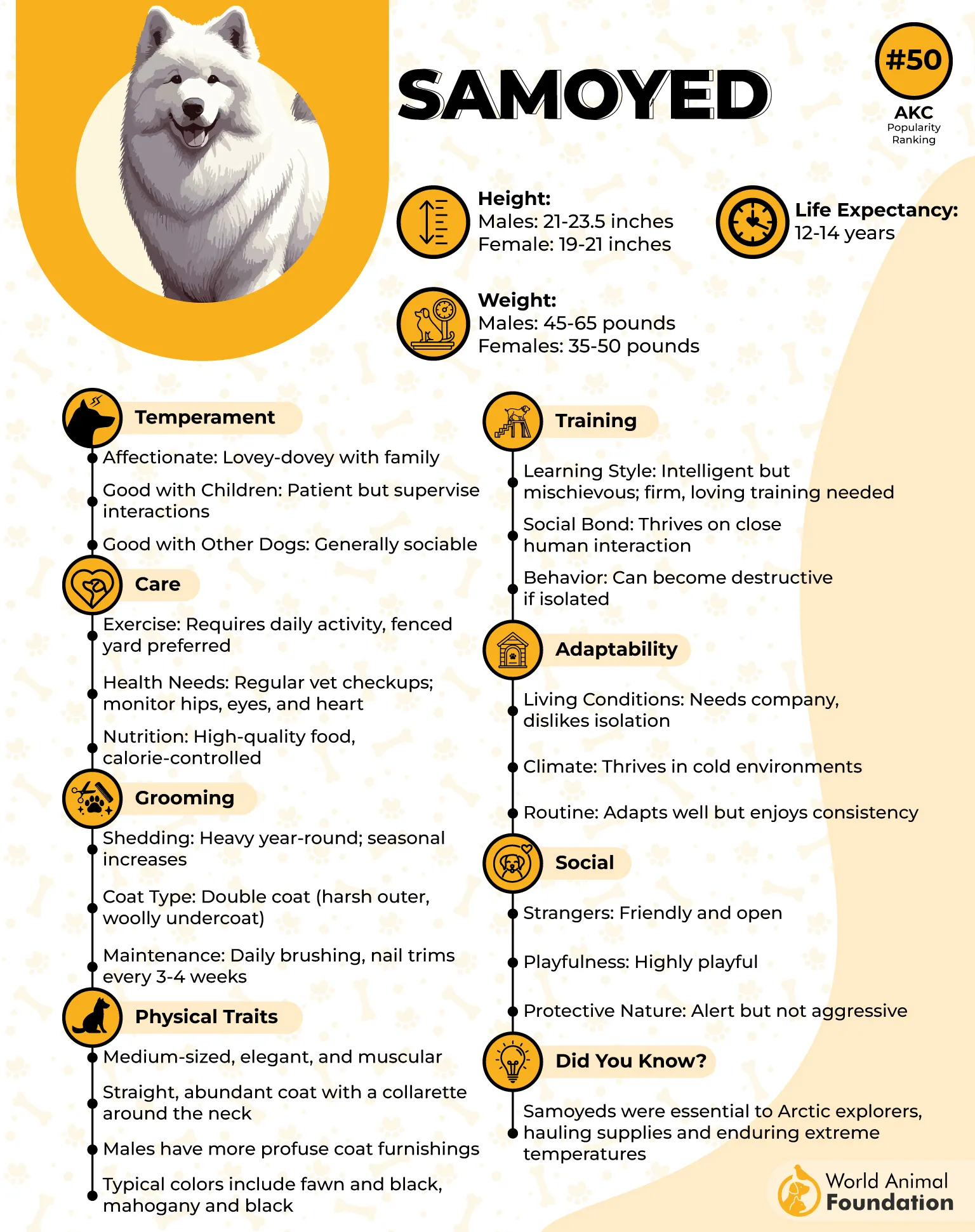
The famous “Sammy smile” comes from the naturally upturned corners of the mouth. That feature is not purely adorable because it helped reduce drooling, preventing icicles from forming around the face in freezing conditions.
Dark eyes, black facial points, triangular ears, and the plume-like tail create crisp contrast against the pale coat. Their expression combines alertness with sweetness, as mentioned by Purina, while their balanced frame prevents the profuse fur from making them appear clumsy.
4. Golden Retriever
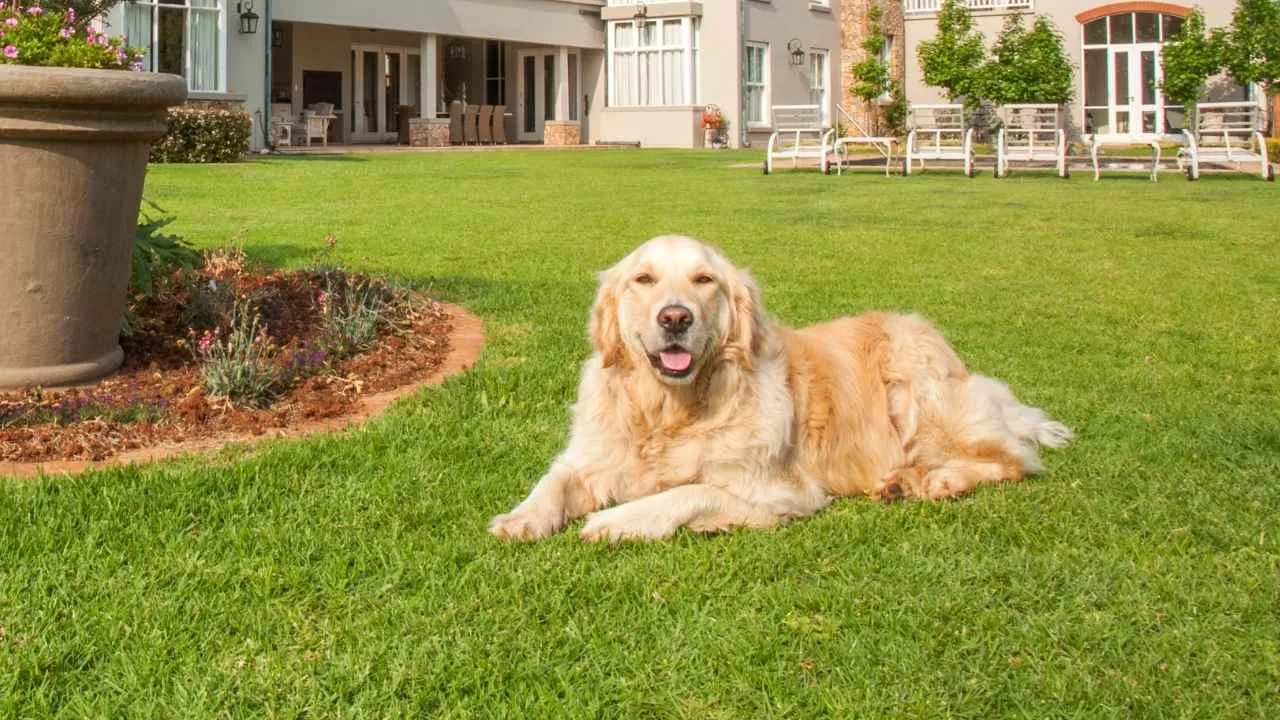
The Golden Retriever proves that familiar does not mean visually ordinary. Their sturdy medium-sized frames balance muscle and softness, creating an approachable look without sacrificing the athletic construction of a working retriever.
Their dense, lustrous coats appear in light golden, golden, and dark golden shades. Some individuals resemble pale champagne, others glow like warm honey, and the deepest coats approach burnished copper without leaving the recognised golden range.
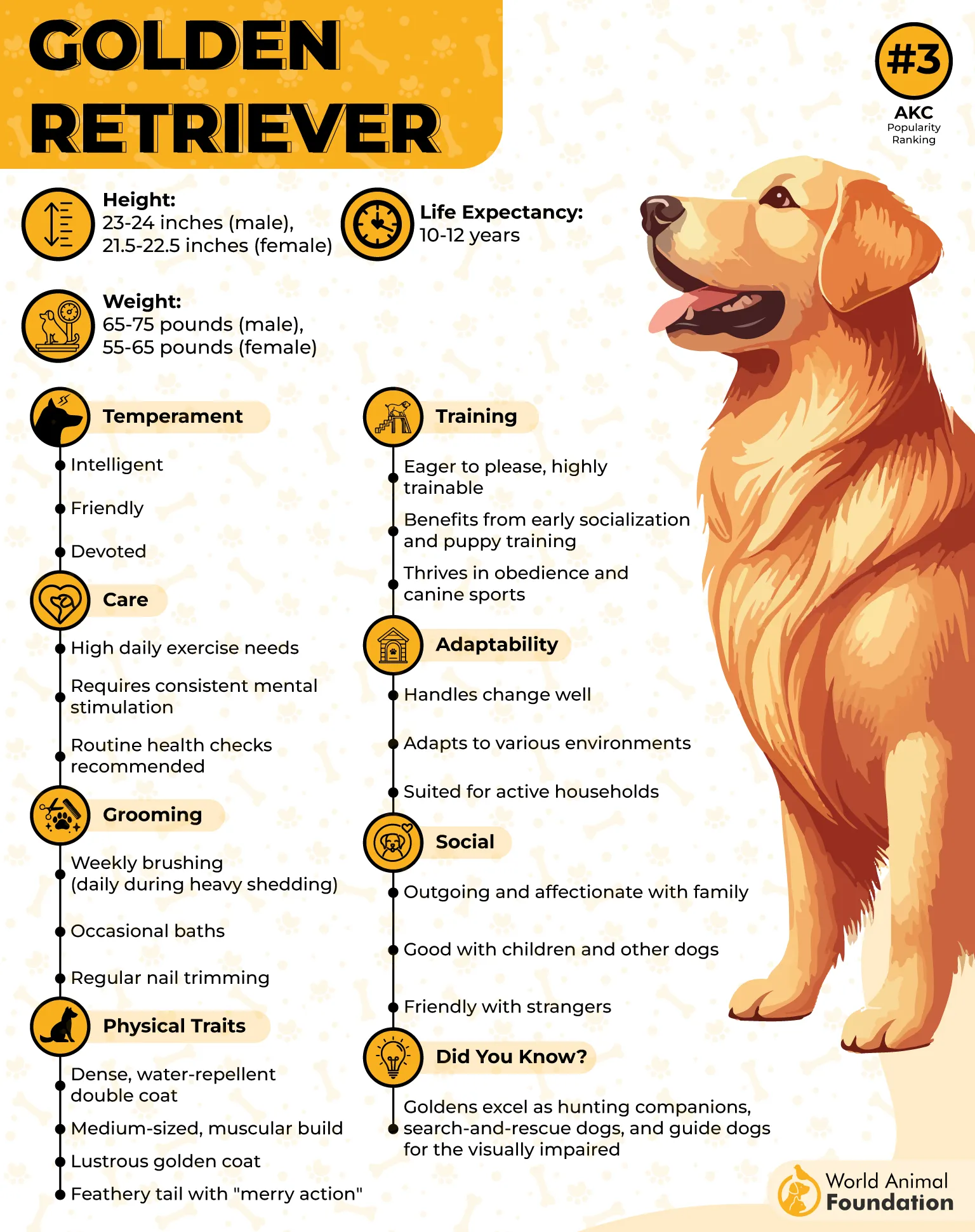
The face is one of the breed’s strongest visual features because the broad head supports short ears, a straight muzzle, and friendly, intelligent eyes. Unlike sharper northern or sighthound expressions, the Golden’s gaze tends to appear soft, open, and ready to approve whatever plan the family just suggested.
Feathering along the neck, chest, legs, underside, and tail softens the dog’s athletic outline. When a Golden moves, its powerful gait and flowing tail create the impression of controlled enthusiasm rather than stiff formality.
5. Border Collie
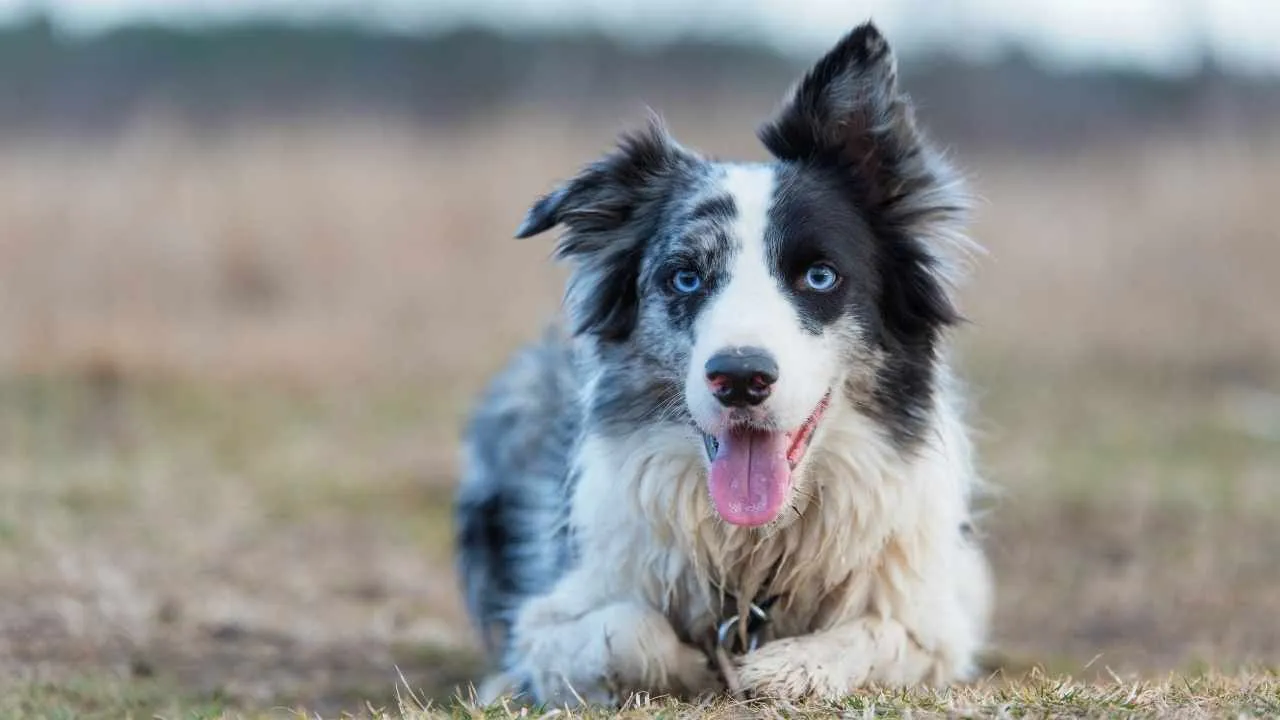
Border Collies have the kind of beauty that looks fast even in a photograph. Their silhouette avoids exaggeration, creating a practical, athletic elegance that feels more like a sportswear campaign than a formal evening gown.
PetMD says that this affectionate dog comes in both rough- and smooth-coated varieties, offering two distinct aesthetics. The extensive colour range includes black, blue, red, sable, lilac, brindle, gold, seal, multiple merles, and numerous combinations with white or tan markings.
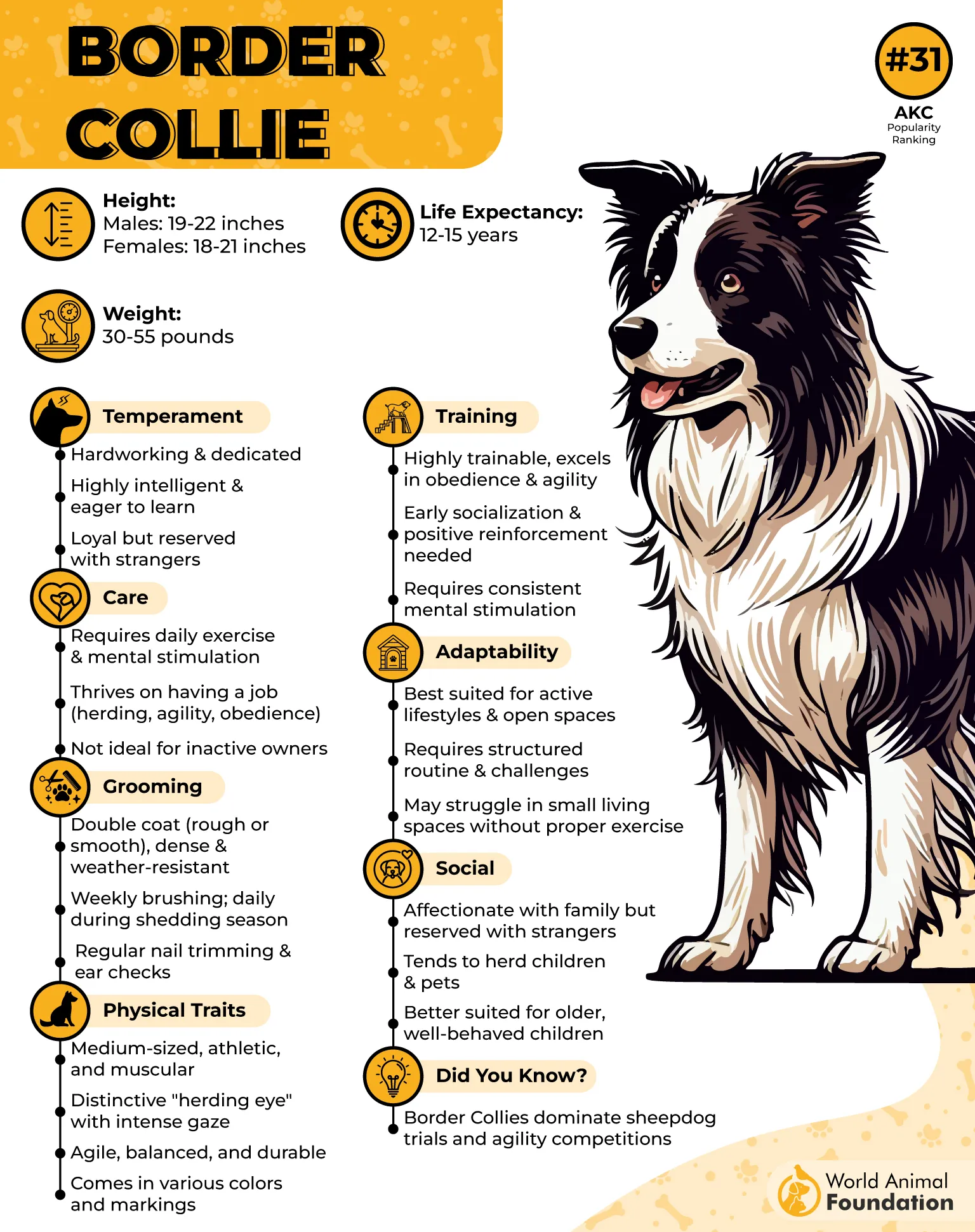
Its almond-shaped eyes create an intensely intelligent expression that can feel almost uncomfortably observant. The famous “herding eye” describes the concentrated gaze used to influence livestock, and it remains one of the breed’s defining visual characteristics.
Their beauty becomes especially obvious during movement because Borders are exceptionally agile, balanced, and durable. They often carry the head lower while working, creating a stealthy outline that contrasts dramatically with their explosive turns and sudden acceleration.
6. Australian Shepherd
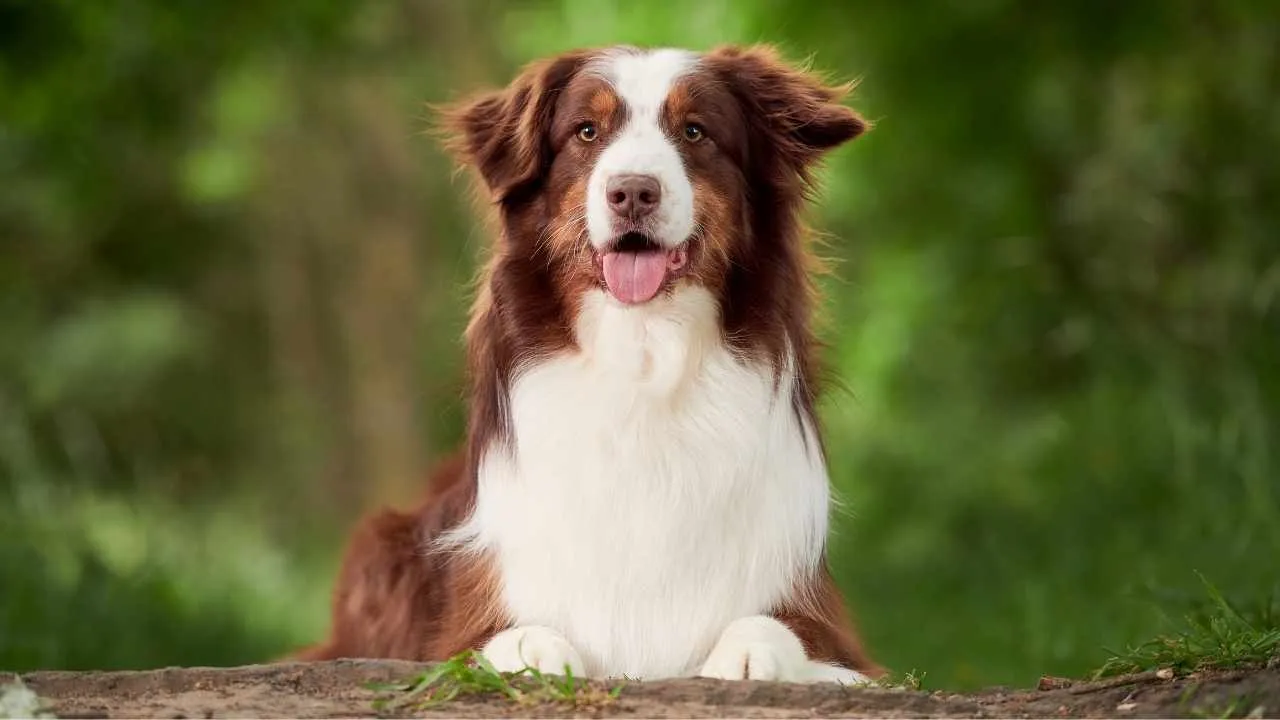
The Australian Shepherd looks like the official dog of a very fashionable ranch. Their medium-sized bodies are lean, tough, and agile, combining flowing coat texture with the balanced proportions of an all-day stock worker.
Recognized colors include black, red, blue merle, and red merle, with optional white markings, tan points, or both. Merle creates irregular areas of deeper pigment across a lighter background, meaning every patterned coat can appear individually painted.
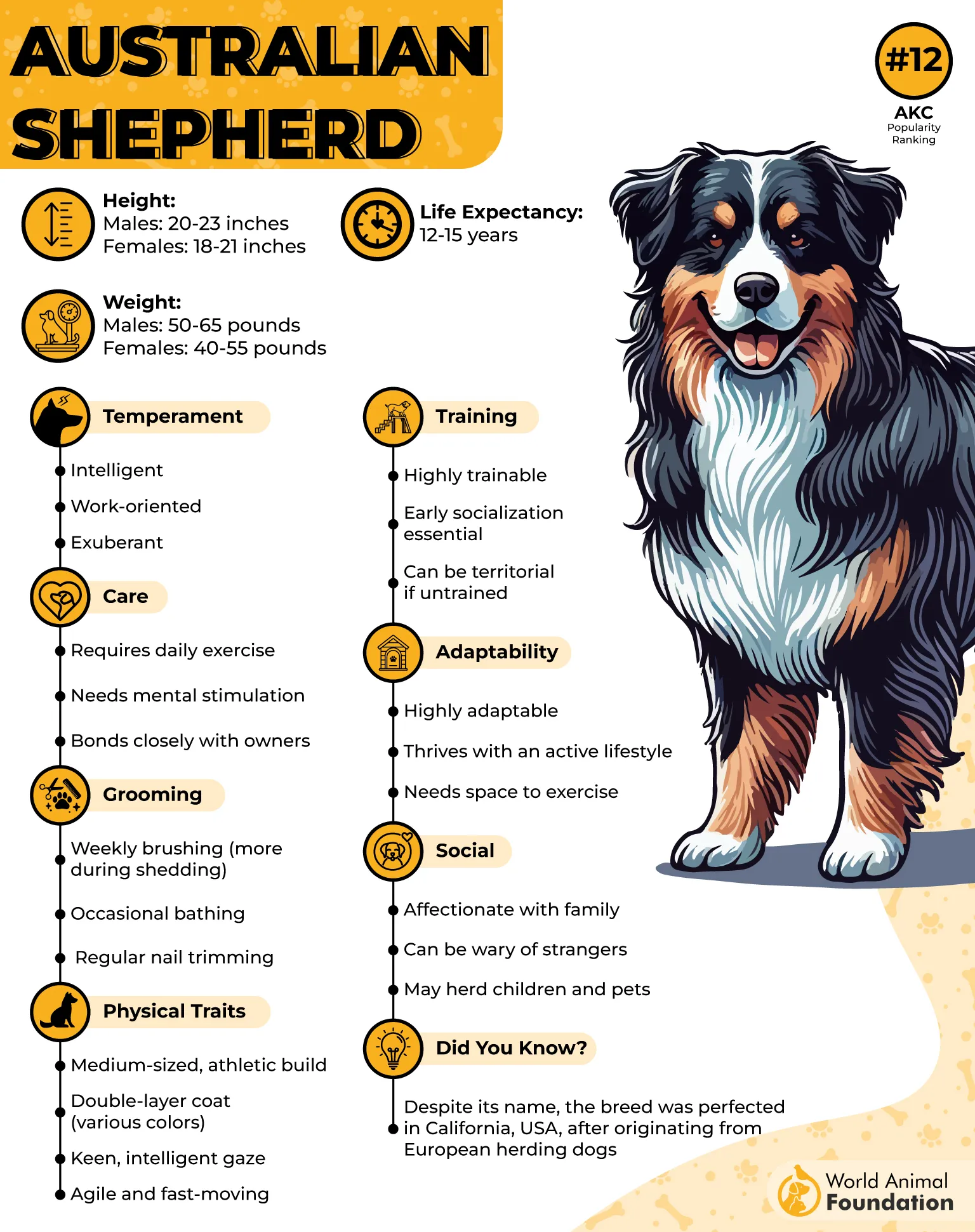
Aussie eyes can produce just as much drama as the coat. The breed may display brown, blue, amber, hazel, or green tones, and heterochromia can give a dog two differently coloured eyes or multiple colours within a single iris.
The medium-length double coat may be straight or slightly wavy, with fuller hair around the neck and feathering along the legs. Natural bobtails occur in part of the population, while other dogs have longer tails that add sweeping movement to the silhouette.
7. Labrador Retriever
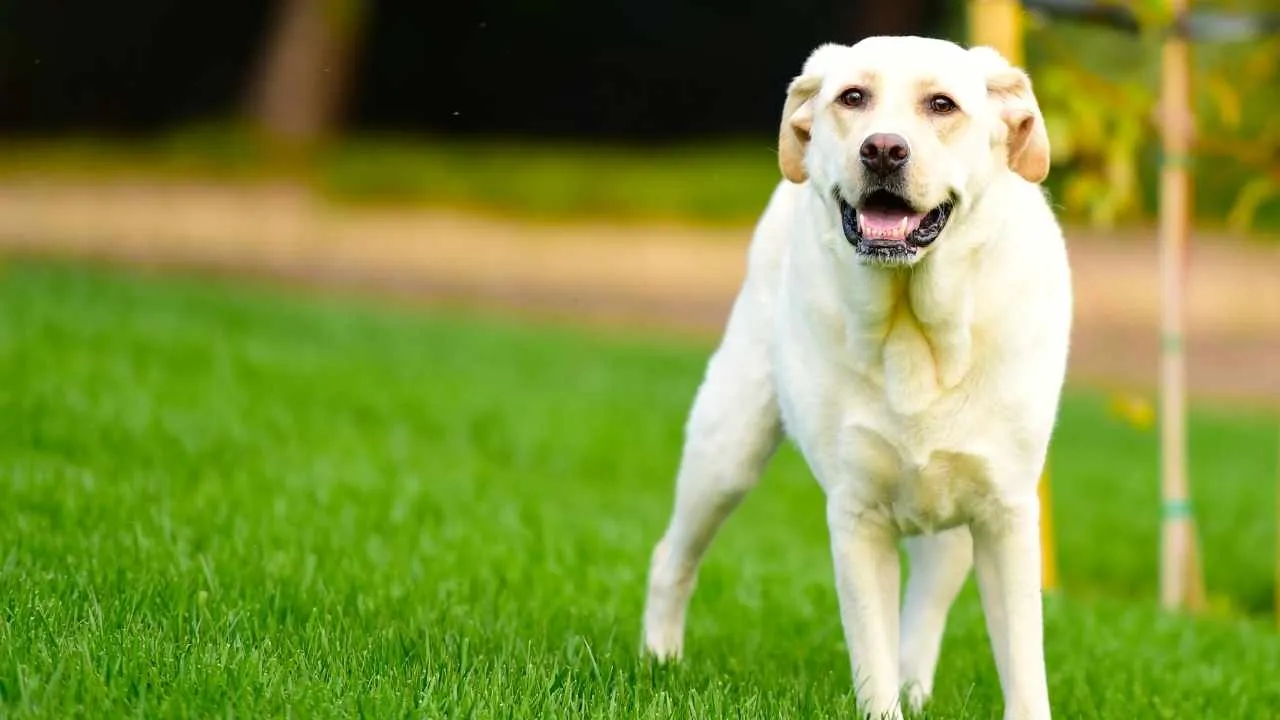
The Labrador Retriever may not wear floor-length hair or elaborate facial markings, yet its clean, athletic appearance has become globally recognisable. Their broad heads, strong bodies, and uncomplicated outlines communicate capability without looking overly heavy.
The short, dense double coat appears in three standard colours: black, yellow, and chocolate. Black creates a glossy, classic silhouette, chocolate adds rich warmth, and yellow ranges visually from pale cream to deeper fox-red tones. It is a limited colour menu, but every option meets the brief.
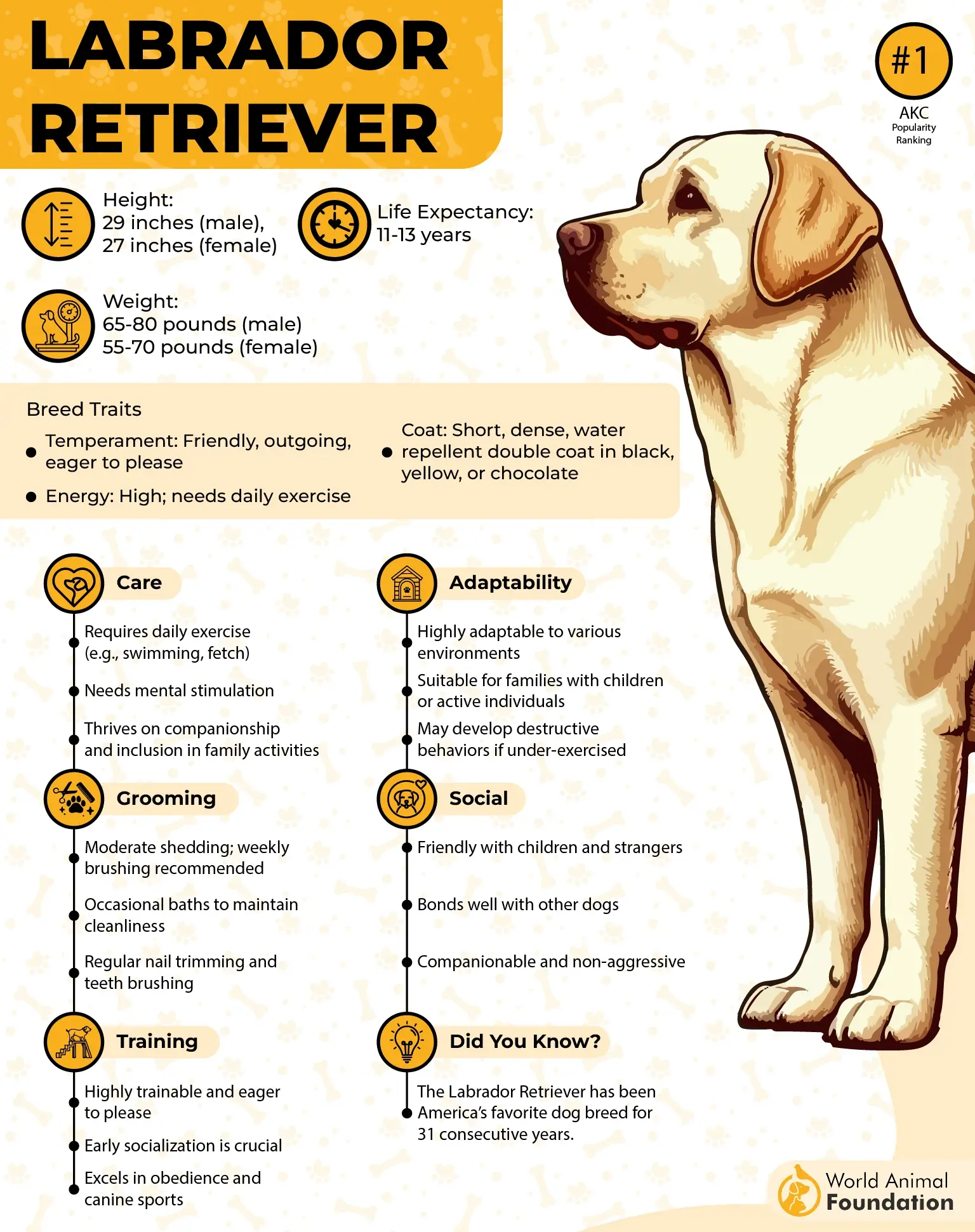
A wide head and kind, expressive eyes give the Lab its famously approachable face. The ears hang close to the head, while the strong muzzle avoids both extreme narrowness and heavy wrinkling. Add an open mouth and enthusiastic expression, and the dog looks like it has already decided the two of you are friends.
The thick, tapering “otter tail” is perhaps the breed’s most distinctive structural accessory. It acts as a rudder in the water, paired with webbed feet and a weather-resistant coat developed for retrieving and working alongside fishermen.
Conclusion
Beauty should never be separated from care. Flowing coats need detangling, double coats need brushing, athletic bodies require exercise, and striking genetic traits should come from responsible breeding. The dog deserves to feel as good as it looks.
Cavalier King Charles Spaniel, German Shepherd, Alaskan Malamute, Great Dane, Shetland Sheepdog, Doberman Pinscher, Pharaoh Hound, and Yorkshire Terrier are also some of the most beautiful dog breeds out there with really graceful movements.
Different wardrobes, different energies, and absolutely no forgettable faces.
